
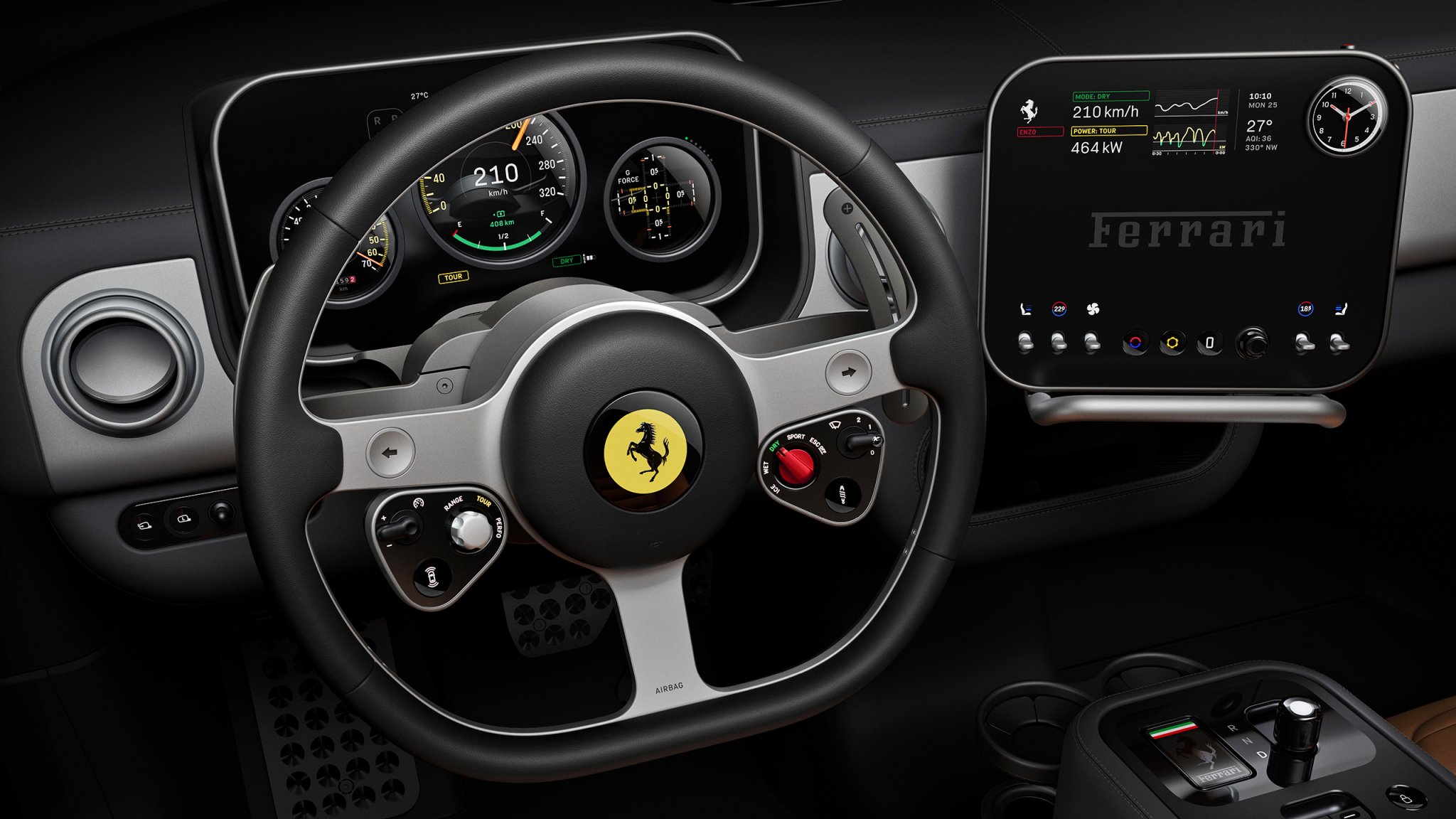
What you see here is the future of Ferrari, by way of two of the most influential designers of the 21st century. Today, the Italian automaker is revealing the interior of the all-electric Ferrari Luce, penned by Jony Ive—the former head of design at Apple responsible for the iMac, iPhone, iPad, and Apple Watch—and his partner Marc Newson. And man, there’s a lot to unpack here.
It’s been 13 years since Ferrari split with Pininfarina and brought design inside Maranello after six decades of relying on the influential Italian house to style almost every single one of its road cars. Overall reaction to the work of chief design officer Flavio Manzoni has been mixed since then, though it must be said that the company is still selling every single car it builds. But knowing that every little decision and detail in its first electric car will be scrutinized to no end, Ferrari called in the ringer of ringers and outsourced the interior to Ive and Newson’s firm LoveFrom.
This is what they returned: a retro-futuristic cockpit mixing classic influences from Ferrari’s past, loads of metal and glass (actually an unprecedented 40 individual glass parts, compared to 3-4 in a normal luxury car), an emphasis on tactile controls, and Ive’s trademark restraint and ingenuity. It’s an attempt to answer two big questions: can you design an electric car that feels like it has a soul? And can two industry outsiders who don’t know what they don’t know be the ones to do it?

Electric Ferrari Luce Interior
Steering Wheel
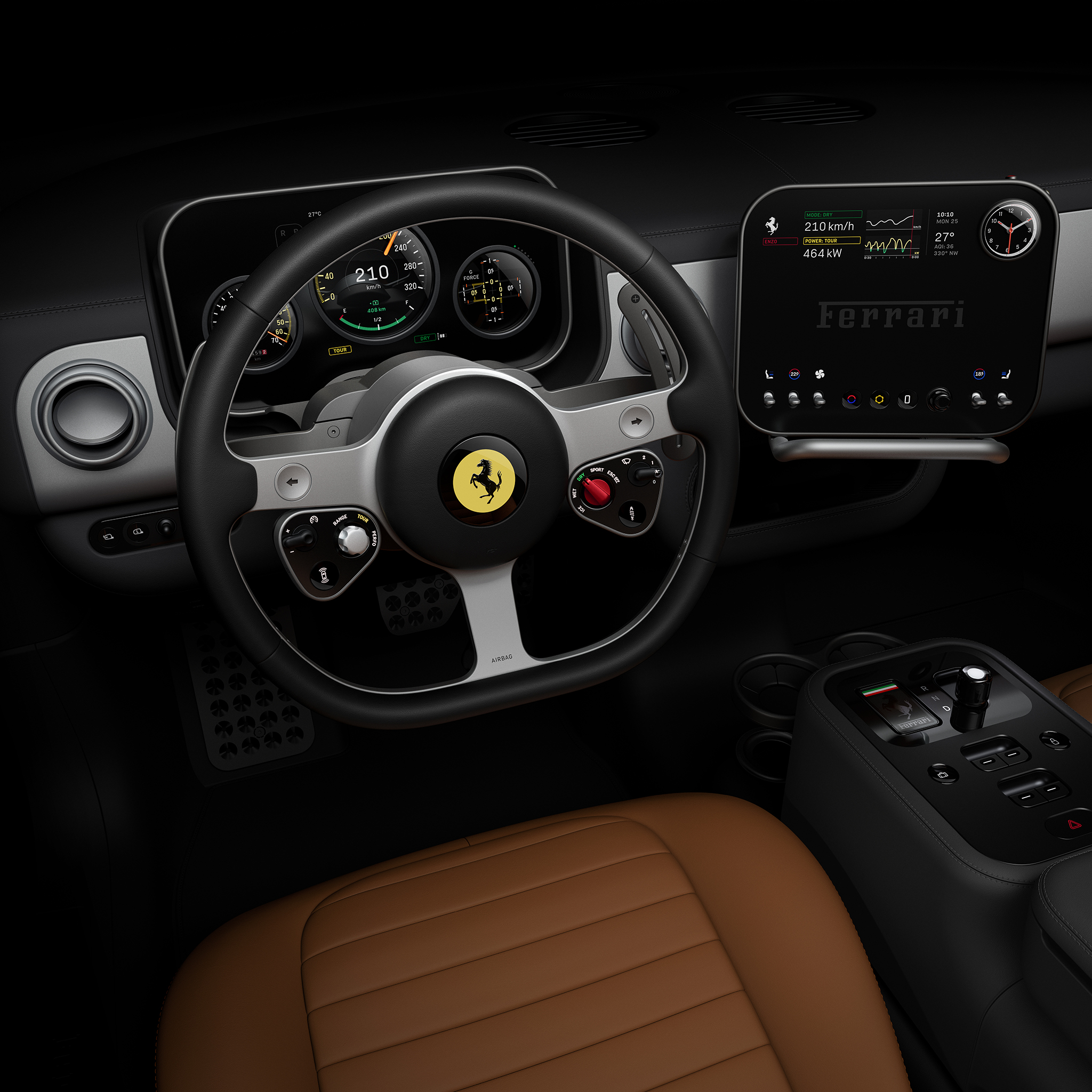
Inspired by the classic three-spoke wooden Nardi wheel from the 1950s and 60s, the Luce’s tiller is made of anodised aluminum wrapped in leather, and it’s a reminder that automakers have fooled us all into thinking they can’t possibly fit an airbag into a center hub this small. The two horizontal spokes have aluminum turn signal buttons, with more buttons and rollers for volume, track skip, etc on the back.
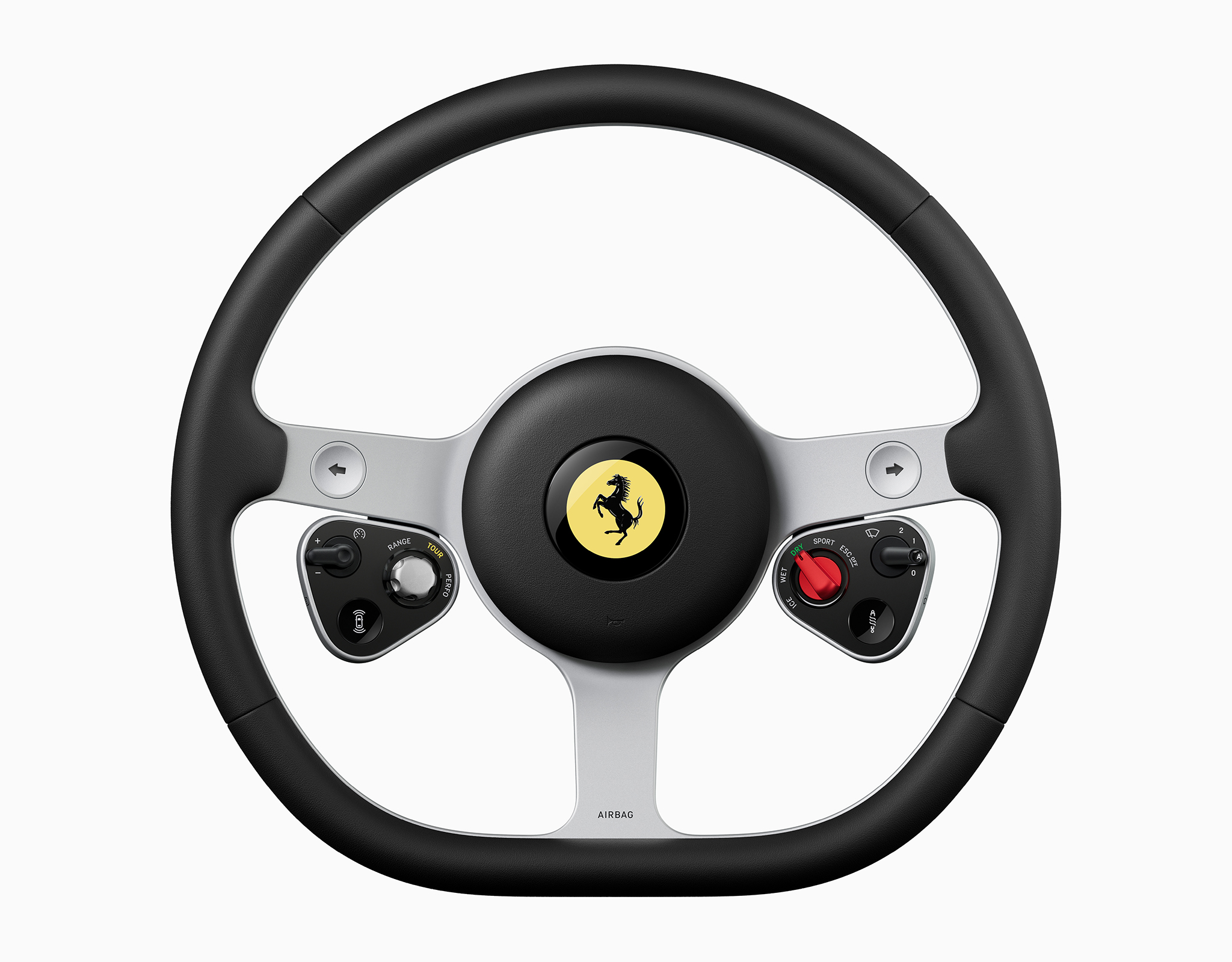
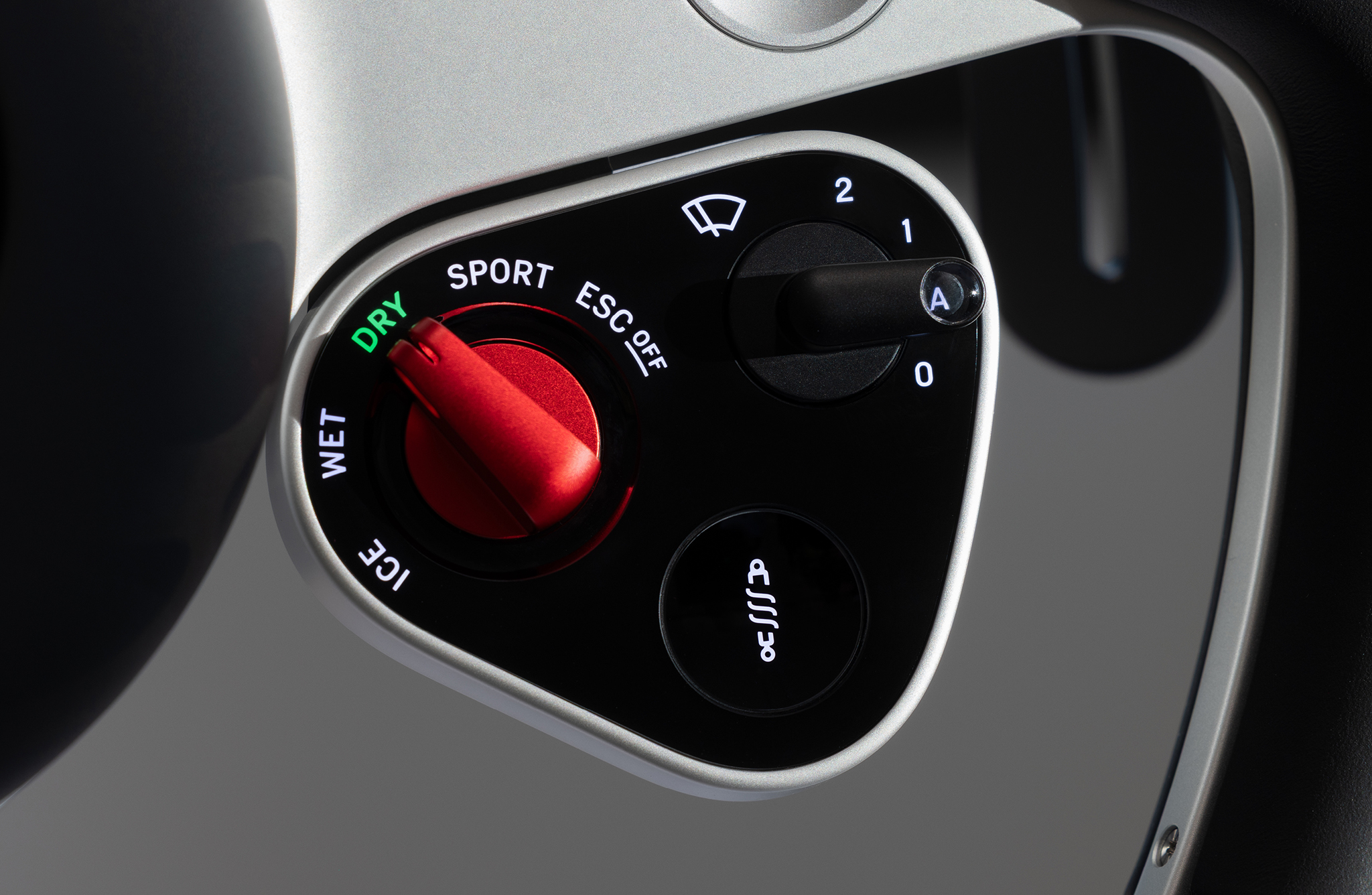
Underneath those are two control pods flanking the hub with more physical buttons and toggles—the left houses the cruise control and powertrain settings, and the right one has the familiar Manettino drive mode dial, windshield wiper lever with a little glass magnifier showing the selected setting, and suspension mode button.
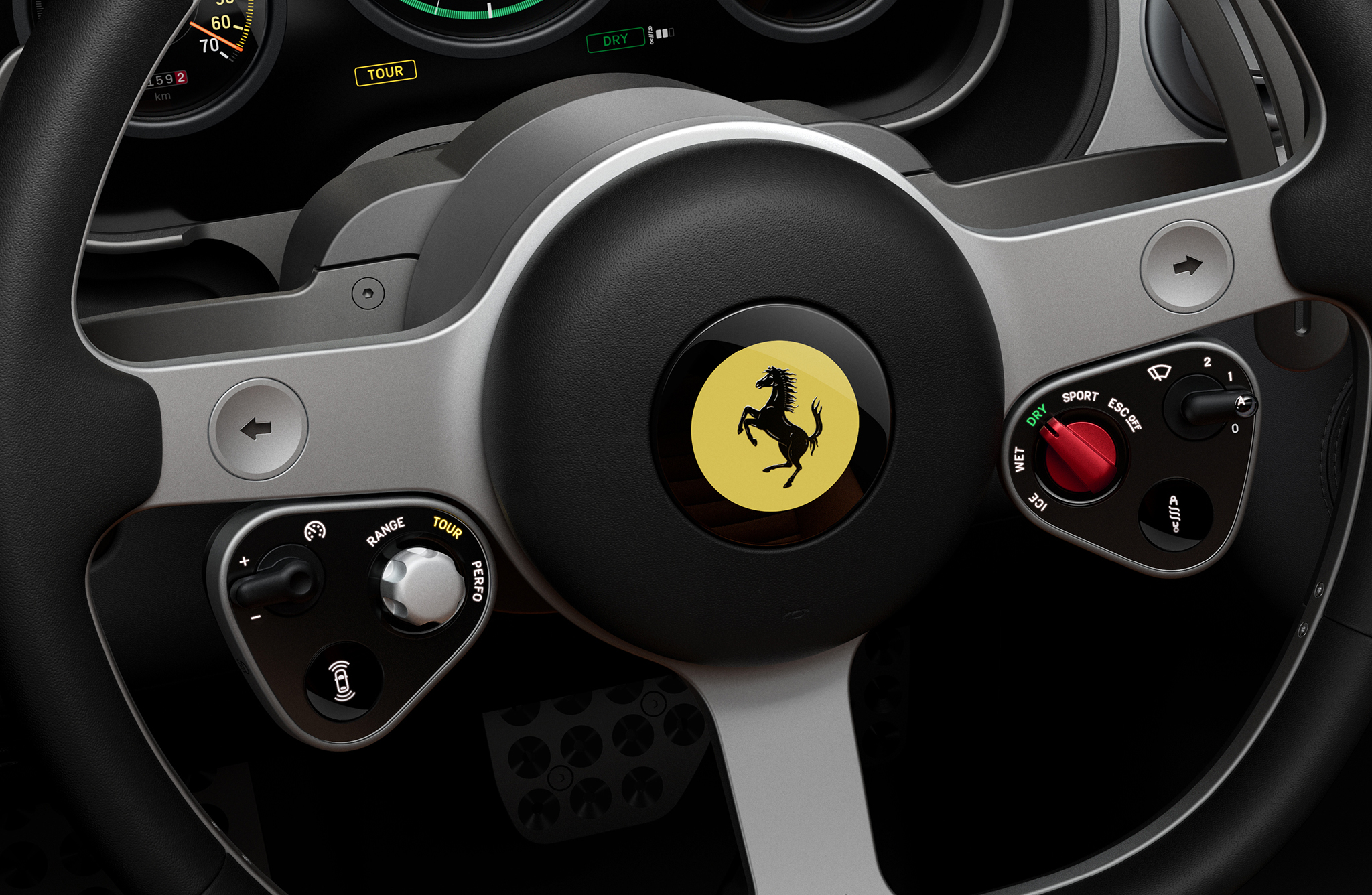
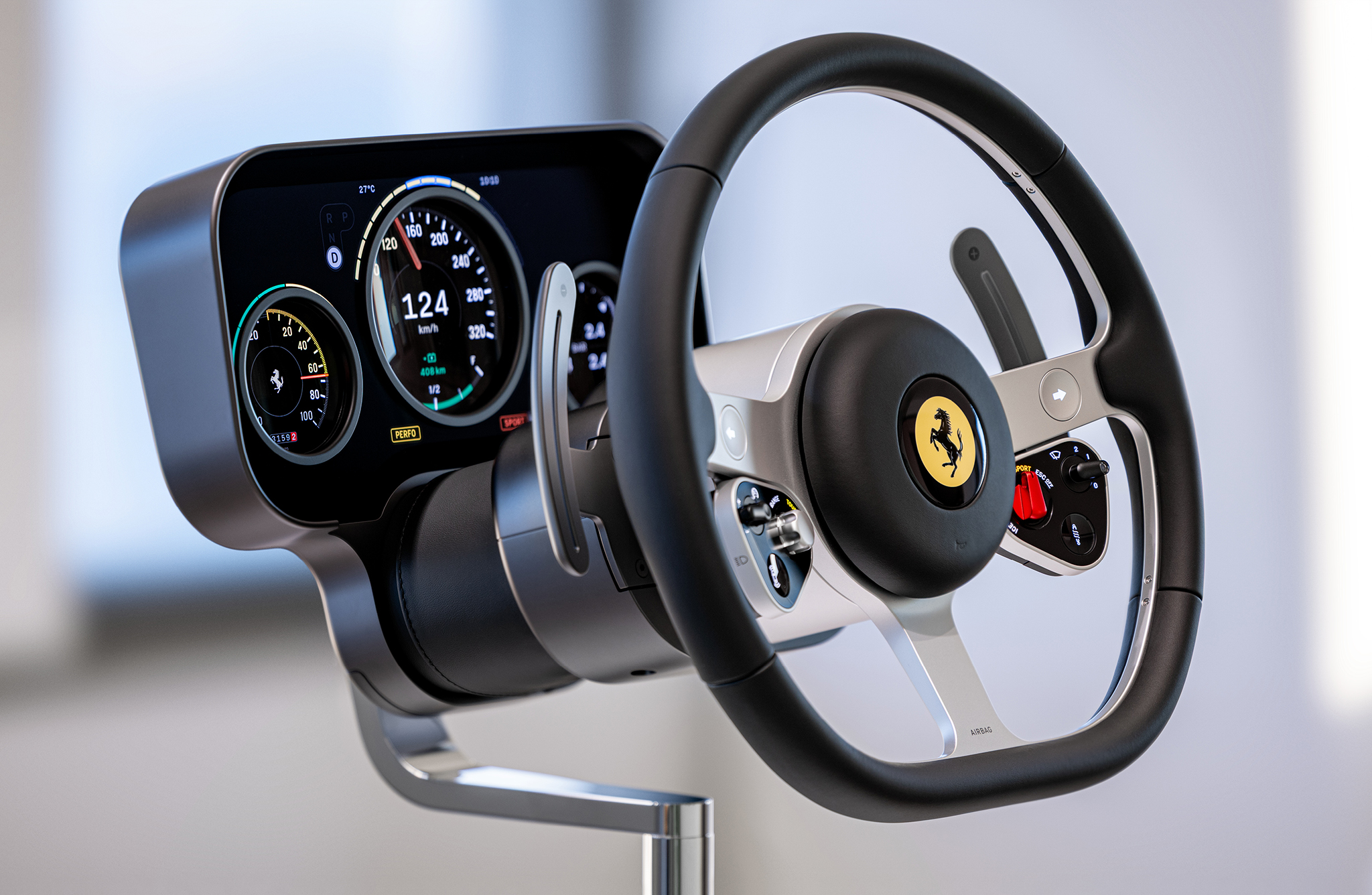
Two large column-mounted paddle shifters sit directly behind it, which will be used to control the Luce’s Torque Shift Engagement system. Ferrari really doesn’t want to call it fake shifts, instead focusing on how grabbing a paddle will change the car’s entire torque curve, but functionally, it’s going to be fake shifting.
Gauge Cluster
Definitely the biggest innovation in the Luce’s interior, the gauge cluster, or binnacle as Ive kept calling it, is the best use I’ve seen yet of screens for critical driving information. Samsung OLED screens give it super-rich contrast and the flexibility for Ive and Newson to pull off the biggest party trick: punching three holes in the 12.86-inch top screen to show the individual dials underneath. They look like three separate small screens, but it’s really a second big 12.04-inch screen back there to reduce complexity. The aluminum speedometer needle is attached to a ring gear surrounding the central dial, lit up by 15 LEDs and a complex reflector prism system, and can spin 360 degrees as part of the “startup ceremony.”
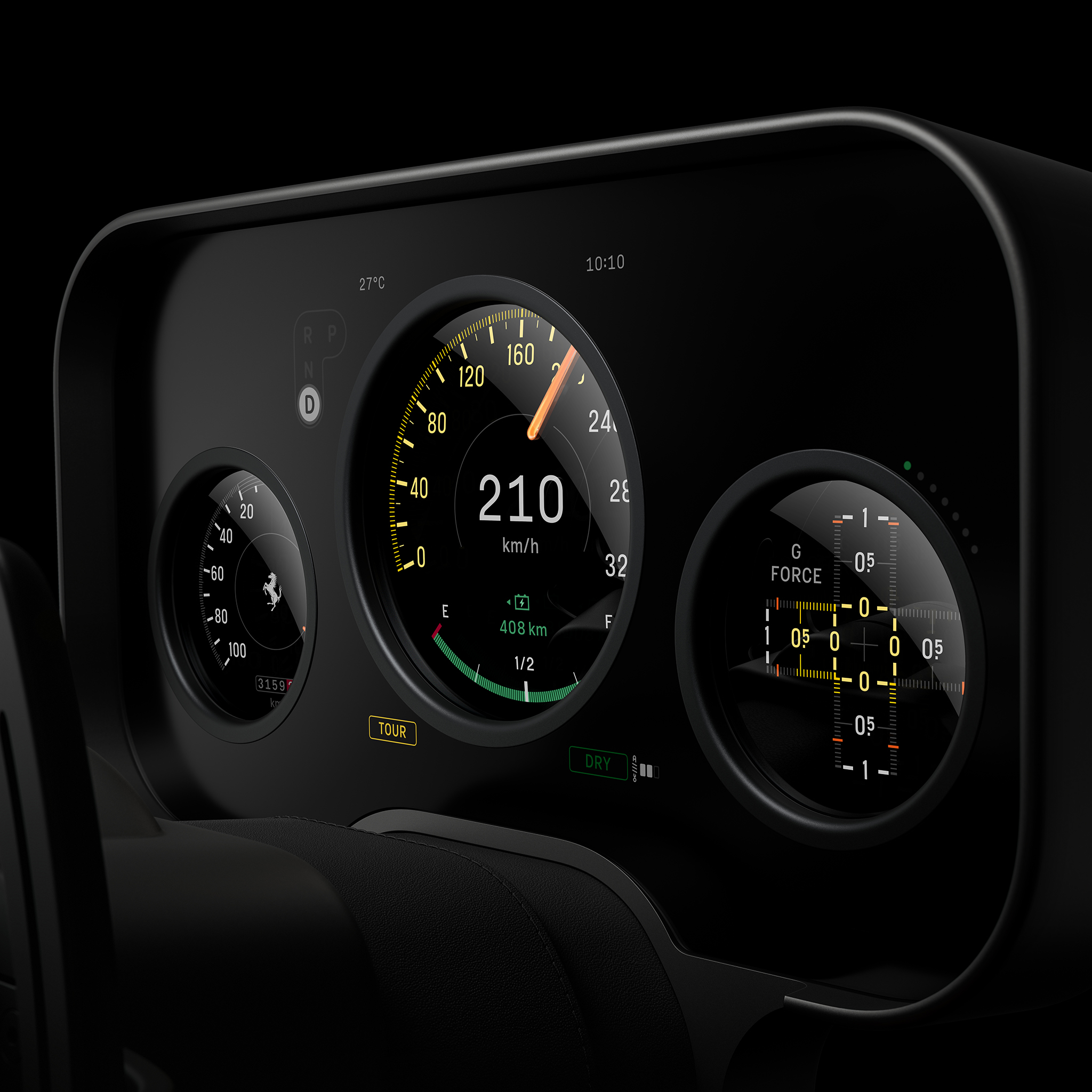
I’m a big fan of the yellow on the dials, the classic motif, and the new heritage-inspired font LoveFrom created that’s used both here and in the infotainment system. They’re enhanced with convex lenses that subtly warp the displays when viewed at an angle, delivering the all-important parallax effect that’s key to the sense of physical depth. Between that, the deep blacks enabled by the use of OLED tech, and the physical needle, the setup really does trick your brain into thinking they’re full analog dials.
But why is the whole thing shaped like a squircle, leaving all that empty space in the corners above the two side dials? The top left corner will show most of the warning lights, and the top right corner will relay turn-by-turn directions and other safety information. Also, the cluster is attached to the steering column and will move along with it when the angle is adjusted.
Center Screen
Yes, the 10-inch OLED screen in the middle looks like a big Apple Watch. No, I don’t think that’s a problem in and of itself, especially because more physical controls run along the bottom: aluminum toggles and glass buttons for the HVAC system, and a glass volume knob. It’s a solid piece of kit, and the swivel function makes all the sense in the world once you grab that aluminum handle and move it for the first time.
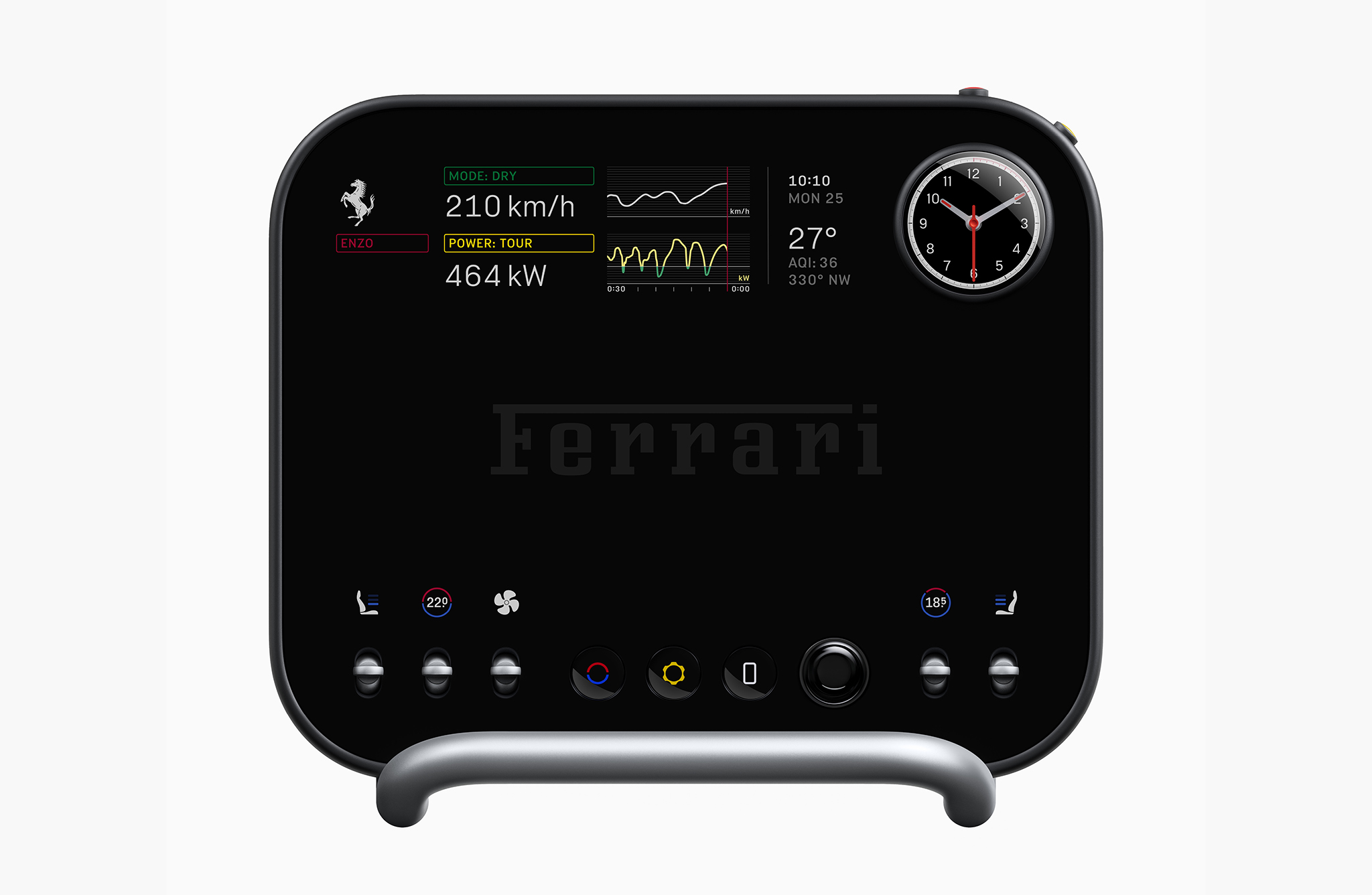
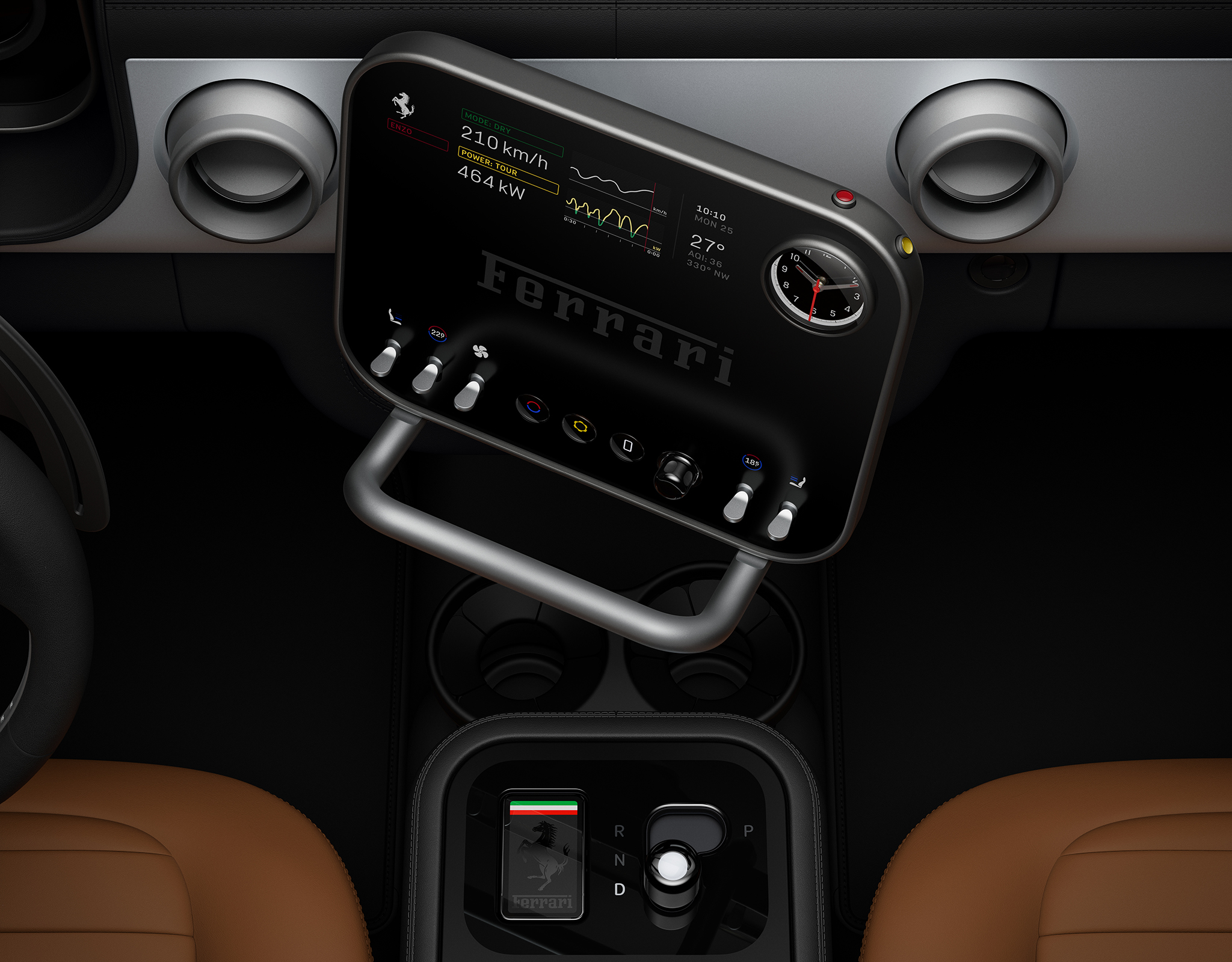
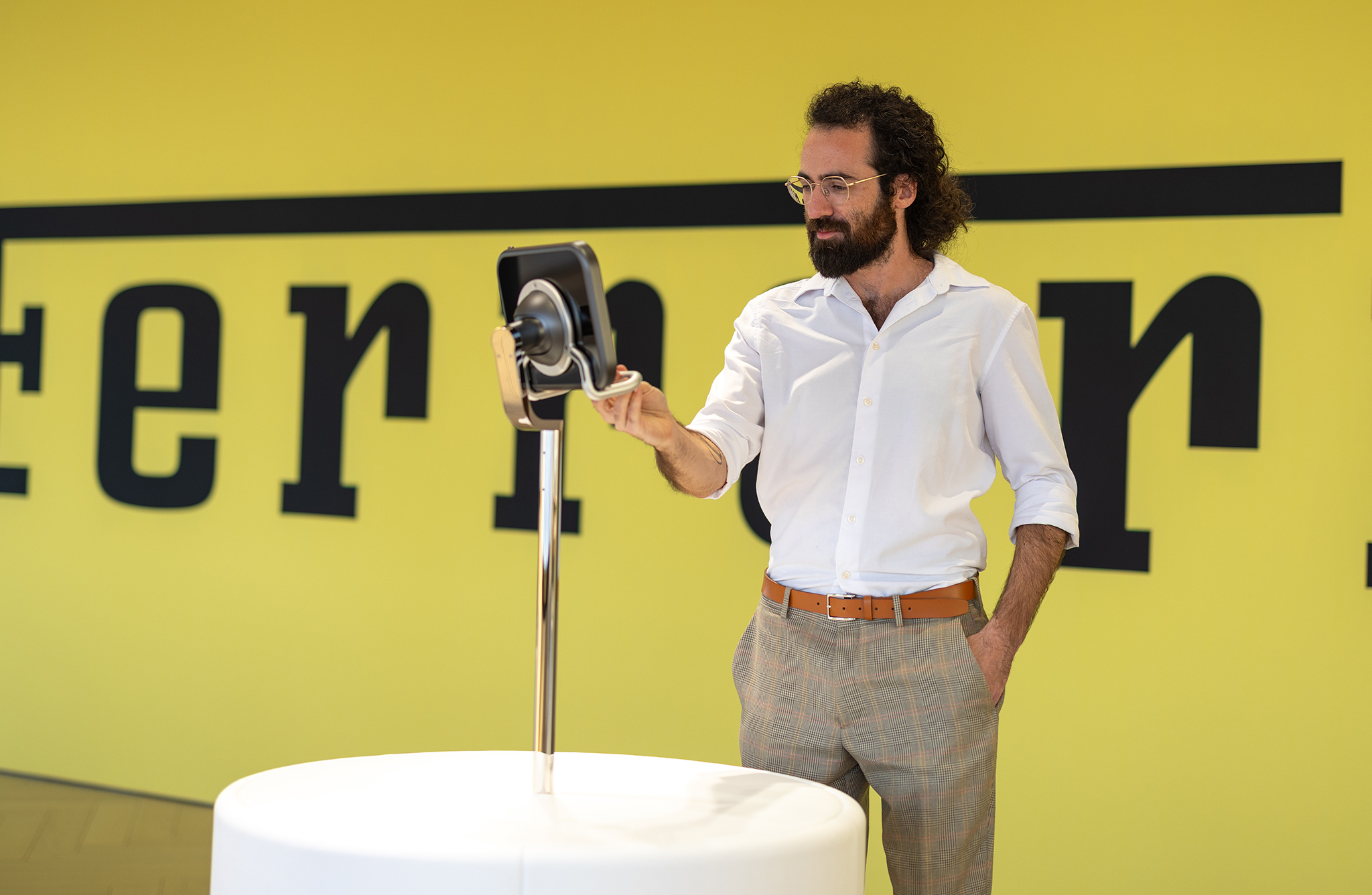
I didn’t get to see the software in action, though its operation smooth and crisp in the demo video Ferrari played at the event. Instead, we heard a lot about the physical clock in the upper right corner. Apparently it was quite a challenge to create a zero-maintenance movement that could allow all three hands to move 360 degrees independently in less than one second, as required for the transition to its stopwatch or compass functions. That’s what the two buttons on the bezel are for. Notably, the clock’s gears are some of the only pieces of plastic in the entire cabin.
The clock is also indicative of LoveFrom’s fanatical attention to detail. The team’s use of half pixels to create those tiny hash marks around the edge is so convincing, I thought it was a printed border until one of the designers explained the illusion to me.
Other Details
The center console is where I think the plot gets lost a bit. It’s very clean, and the use of glass for the surface, window switches, and shifter is a huge step up from piano black. The way Corning was able to create different texture on the polished shifter surround is impressive, and the microtexture on the rest of the console’s surface is designed to hide fingerprints; I can confirm it works as advertised. There’s also a nifty dock for the Luce’s fob, and when you place it there and press down to start the car, the color drains from the fob’s e-ink display and jumps over to the top of the glass shifter. You can also just press down on the dock and leave the fob in your pocket.
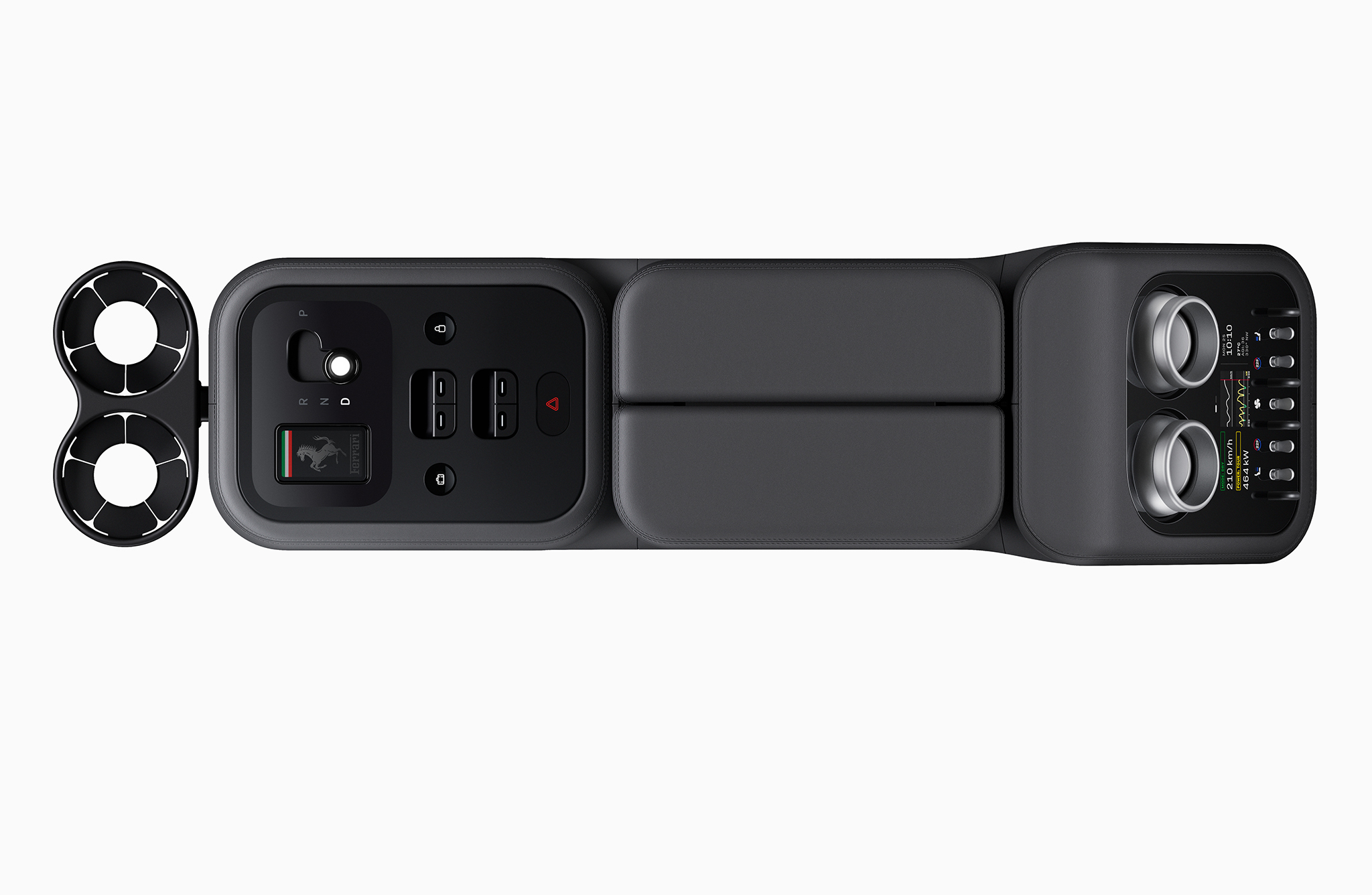
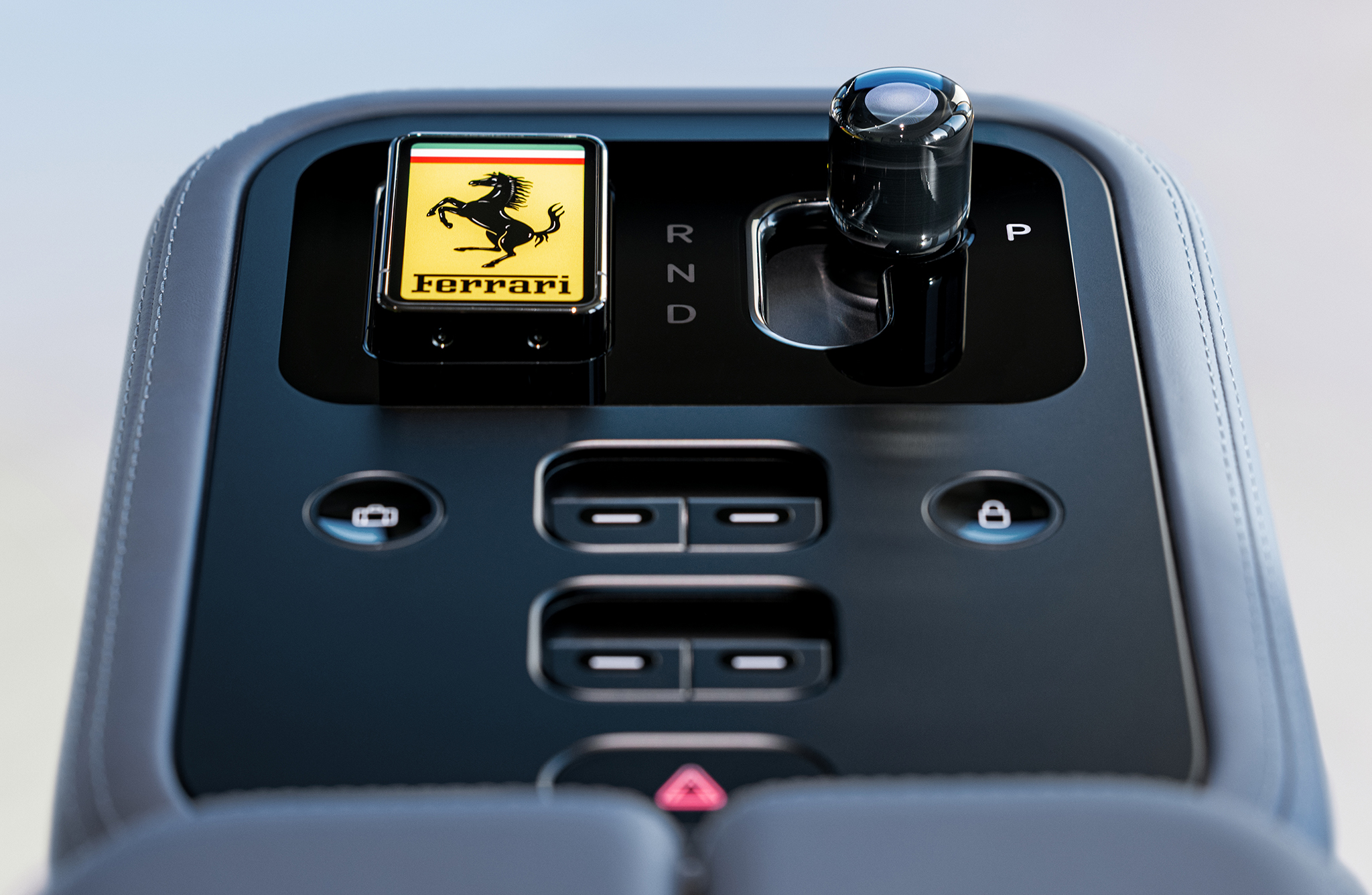
But as a package, it’s a little too simple. Because there’s no transmission tunnel, the console just kind of ends in front with a pair of cupholders under the center screen, leaving a flat floor between the two front footwells like in any EV, or less charitably, a truck. Corning’s reps didn’t have a lot of answers when I pressed them on how scratch resistant the glass will really be under daily use, other than that it’ll last longer than plastic, or if it’ll shatter if someone drops a Stanley mug on it. And the shifter action that LoveFrom spent eight months refining… it’s nice and clunky, but it’s also artificial. The console is also backstopped by another screen for the back seat passengers, and given the focus on tactility, I think it would’ve felt less like something to fill the space between the seats and more like an intentional part of the design if it tailed off into a more creative element.
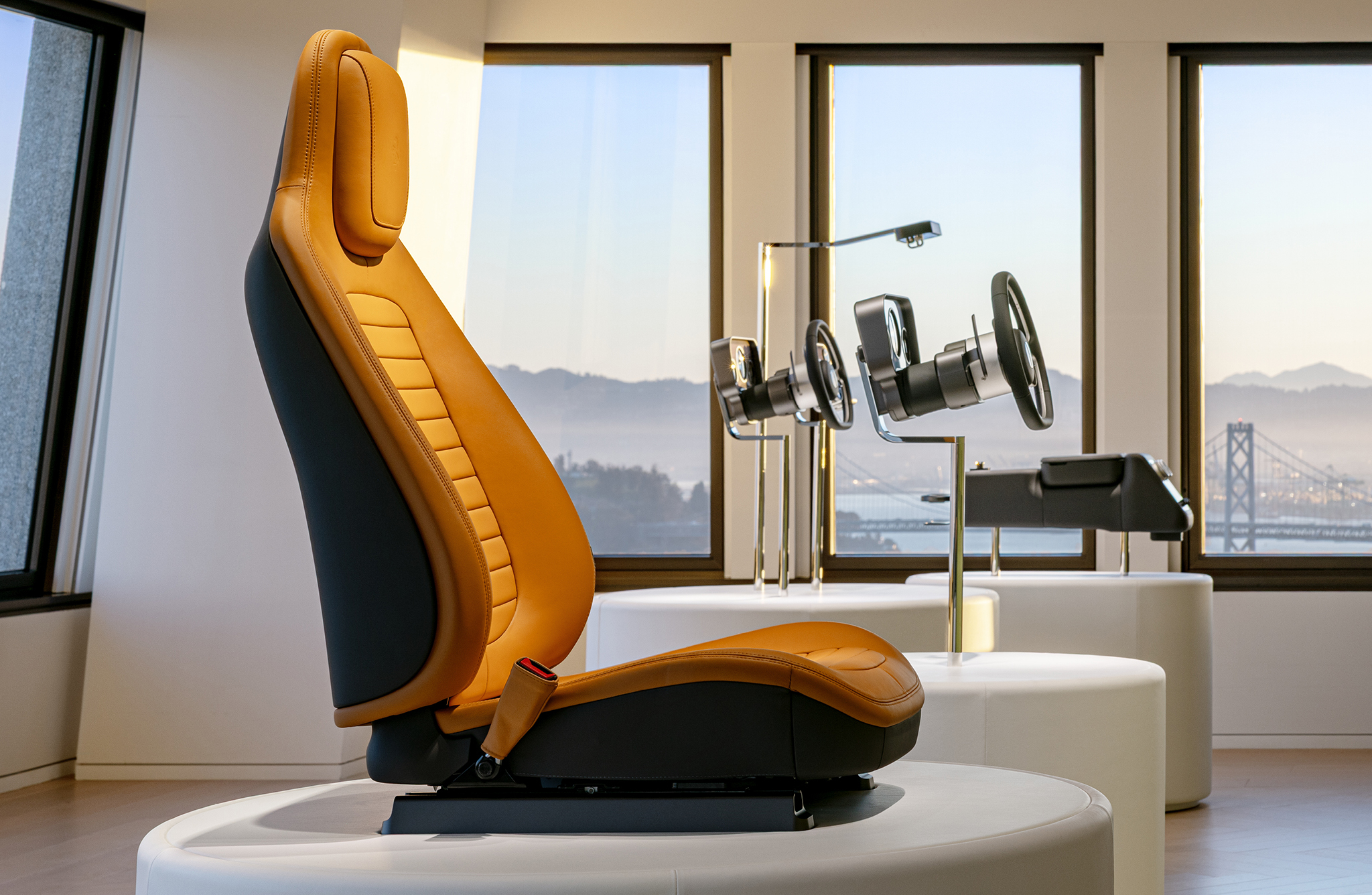
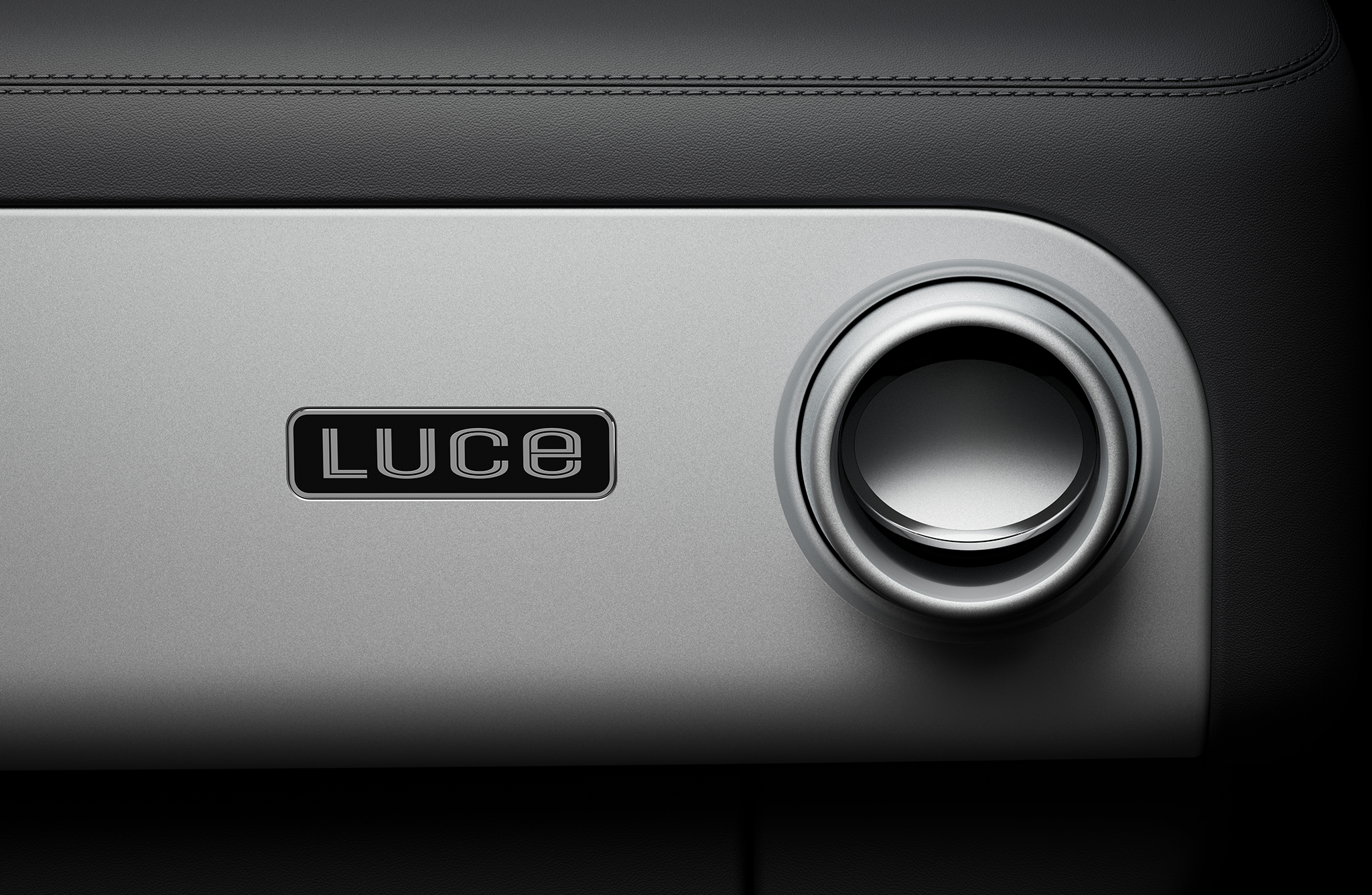
Speaking of seats, not much was discussed other than how they look, classic and comfortable and tan. And one more comment on the air vents: I love that they’re not controlled through a screen. I don’t love the passing resemblance to overhead vents on an airplane, or the shared twist-to-open operation.
The Soul of a Ferrari?
I’ve never been to a briefing like the one Ferrari put on last week to show off the Luce’s interior. Exploded-view displays of the inner workings of every element emphasizing how little plastic is used. In-depth briefings on the ring gear for the analog speedometer needle, the screen resolution needed to make the face of the physical clock look printed, and the special glass Corning developed for the center console and shifter. Ive and Newson walking around explaining how something like this is only possible with the fresh eyes of two designers who’ve never worked on a production car before.
The preponderance of rounded rectangles and aluminum bezels does make it tempting to call it the Apple Ferrari, though since the Apple designs it calls to were all Ive’s anyway, it’d more accurate to call it the Ive Ferrari. I digress. The design work done inside an automaker is iterative and evolutionary by nature; even revolutionary new models are drawing from an established body of work in structured ways. Regardless of how you judge the result of two legendary tech designers taking their first crack at a car, I think you’ll agree that Ferrari (or any company) couldn’t have come up with something like this by itself.
Not that my opinion matters here but personally, I’m mixed to warm on it. The simple design feels like a friendly mask on an incredibly complex product, a contrast Ive, Apple, and the whole tech industry have excelled at striking. That tech-product-in-2026 vibe overrides the spartan, self-assured beauty of a real vintage Ferrari interior that LoveFrom sought to emulate.
At the same time, though—finally, finally, someone figured out how to do an interesting digital gauge cluster with real depth. I guess it makes sense it took the father of modern screens to solve that one. The swiveling center screen is clever as anything. The thin aluminum steering wheel with its sleek control pods has more class and negative space than anything we’ve seen from a car company in a long time. And true to Ive’s word, the near-total absence of plastic makes every component feel far more solid and weighty than the design can communicate through pictures. And critically, opting for glass or metal in all those places where plastic would normally be found only added about 22 pounds of weight to the car, so it’s still in keeping with the Luce name.
All in all, there are some genuinely fantastic ideas the rest of the auto industry would do well to adopt, mixed with some overconfidence on Ferrari’s part that getting the guy who designed the iPhone to create the Luce’s cabin will placate people who would otherwise dismiss a clean-sheet EV with no real connection to the mechanical heritage every Ferrari has carried up to this point.
So will the Luce have a soul? Time will tell, and a brief interior preview sure won’t. But it’s clear Ferrari took a massive risk here, and that’s something worth applauding. We’ll see how it all comes together when the Luce is revealed in full in May.
Got a tip? Send us a note: tips@thedrive.com
Loading comments…
Comments couldn’t be loaded. Please refresh the page.