
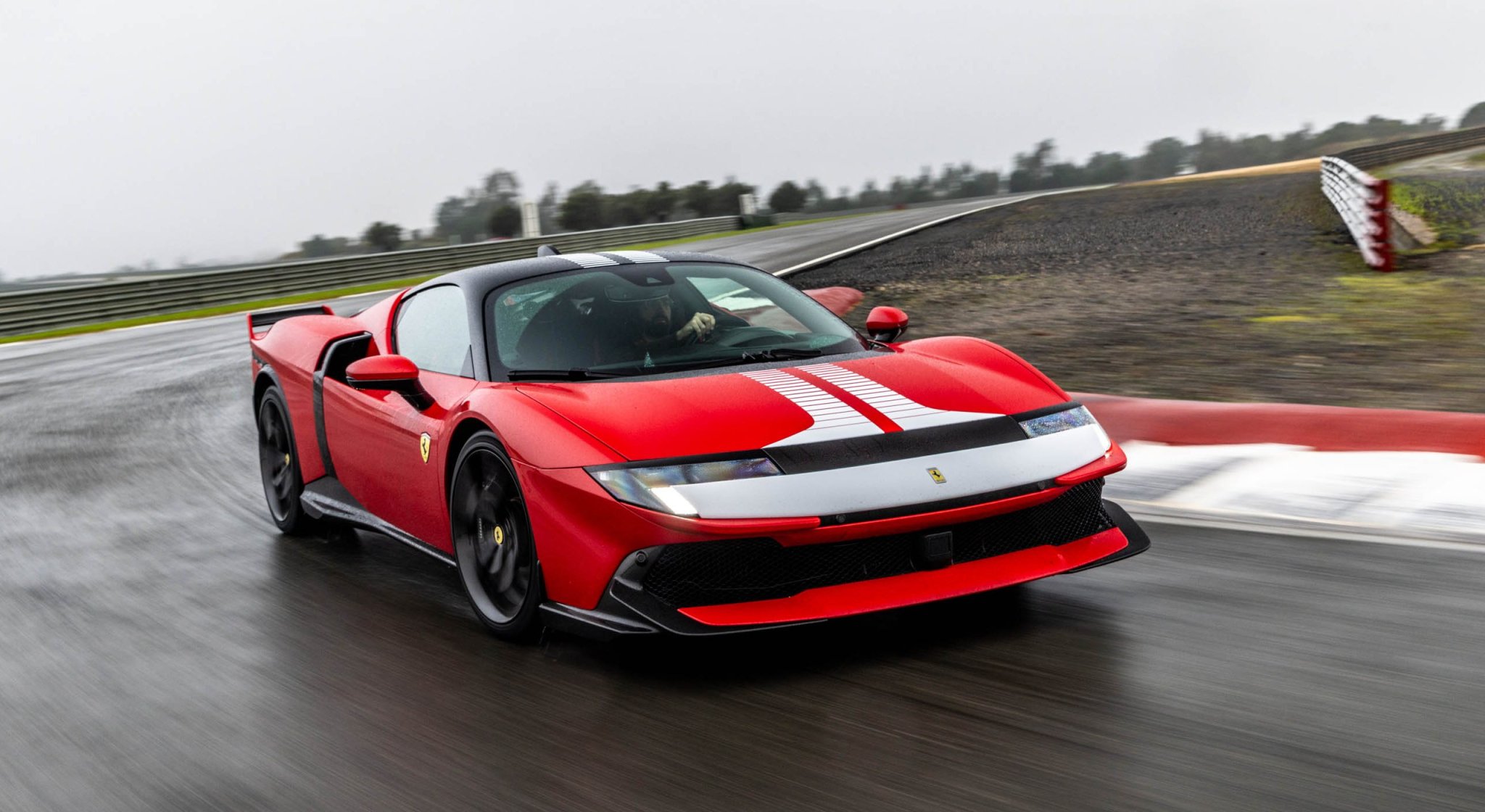
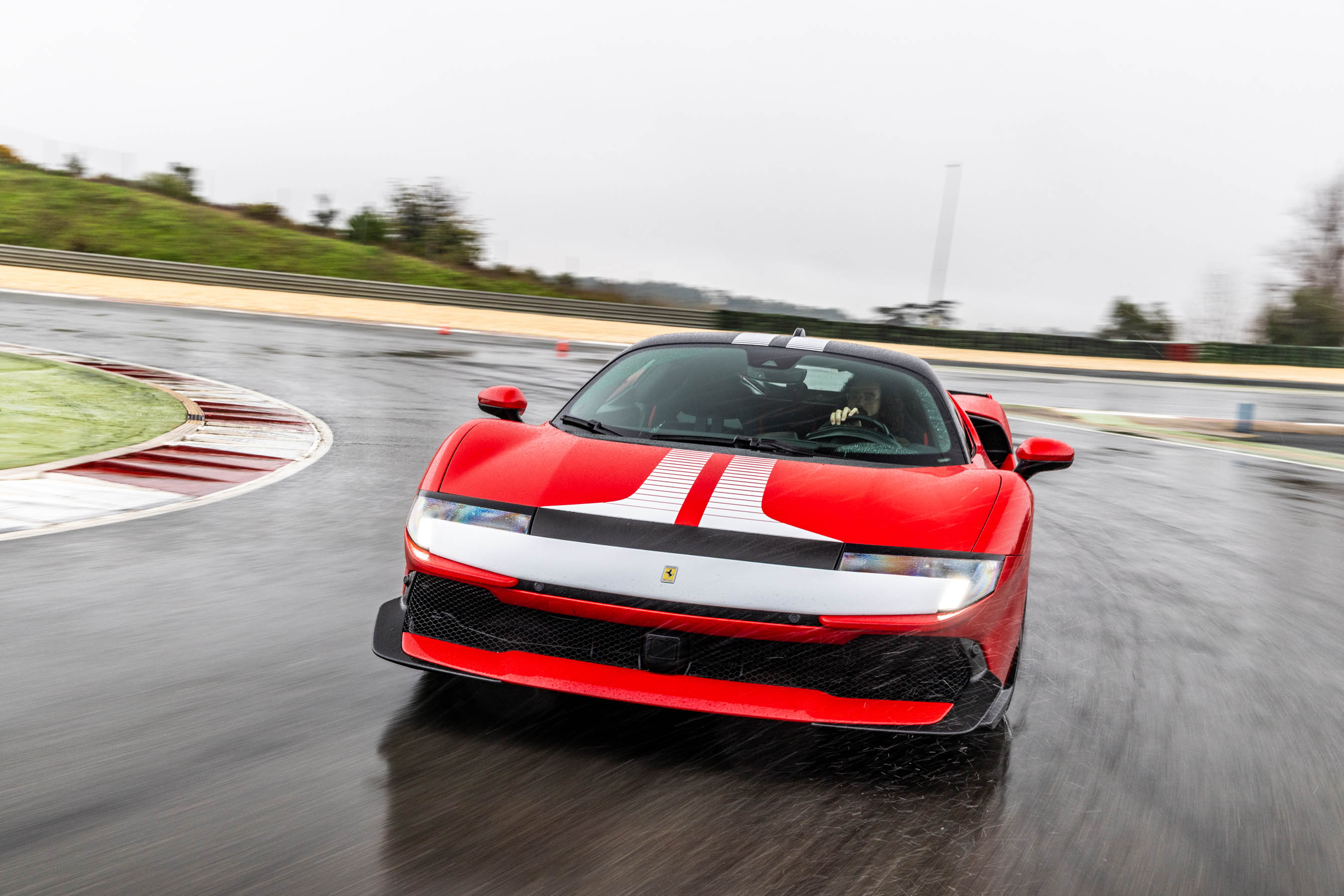
“OK, we’re going to pick it up here,” the Italian-accented voice of one of Ferrari’s lead development drivers crackles over the radio, as cheerful and unbothered as if we were ordering another bottle of wine at dinner the night before. Except, we’re not—we’re easing through the final turn into the front straight of Circuito Monteblanco in Spain, in a rainstorm, in a pair of $600,000 2027 Ferrari 849 Testarossas. I grip the wheel harder and make a stupid face.
Pick it up he does. One second he’s there, a physical form in the vague shape of a car about a hundred feet in front of me. Next, he’s a distant set of taillights twinkling through the roaring wash. I put my foot to the floor, desperate to keep sight of the only thing tethering me to reality. The chassis shimmies for a instant, then surges forward assuredly, the 4.0-liter twin-turbo V8 howling past 8,000 rpm behind my head as the tri-motor hybrid system unleashes 1,036 horsepower in a place where common sense would tell you that’s a bad play. Out of the corner of my eye, I can see the traction control light flashing. But all I’m feeling is unrelenting power.
And then he’s gone. I’m a pilot flying VFR in zero visibility. I do what you’re not supposed to and glance down at the speedometer, not that it matters since all my reference points have vanished, and in that brief moment it leaps from 143 to 151 mph. Still no taillights. Uh-oh.
But—la salvezza! Four thin red lines suddenly pierce through the wall of water as he reaches the braking point, which is… somewhere out there. I try to time my footwork, quickly realize I’ve screwed up, and fully expect the worst as the lead car’s silhouette materializes in front of me and I slam on the left pedal. But the Ferrari’s upgraded ABS Evo system, feeding off a complex digital control system called FIVE to judge the perfect amount of slip in each wheel for maximum braking performance, won’t let that happen. Like I’m Senna in the wet, the car scrubs speed in an impossibly short distance. Next thing I know, I’m moving into the circuit’s first turn again at a placid 35 mph.
Catching my breath, I think back to what one of the car’s engineers said earlier in the day. The Ferrari 849 Testarossa is technologically complex, but it’s not complicated to drive. And how, my Italian friend. And how.
Big Name, Big Promises
There are a few things worth saying up front. First, Ferrari as an automaker is no longer the purist brand whose cars prioritize raw, mechanical thrills over everything else, and whining about how the days of hot-and-bothered V12s and gated manuals are over is fruitless. Times have changed, Ferrari has changed. What hasn’t is the essence, even if the expression is completely different.
Second, as an all-wheel-drive, plug-in hybrid, twin-turbo V8 supercar sitting atop the company’s hierarchy of “range” cars—i.e. not super exclusive models—the 849 Testarossa shares almost nothing with its 1980s namesake except for the engine’s red valve covers. No side strakes, no pop-up headlights, no Don Johnson. Instead, it’s part of a new crop of hybridized mid-engine prize fighters with over 1,000 horsepower, replacing the Ferrari SF90 Stradale and going up against the Lamborghini Revuelto and soon the Aston Martin Valhalla. Heady stuff.
And third, as that engineer mentioned, the car is so complex that I could write 10 pages simply describing every little upgrade to hardware and software that Ferrari’s thrown into it before even getting to how it all adds up behind the wheel.
But I won’t, because you can read Ferrari’s extremely detailed press release to learn things like how it worked on the fluid dynamics of the turbocharger’s turbine vanes and borrowed a ceramic ball bearing from the F80 to minimize lag in the biggest unit it’s ever put in one of its “regular” cars. Or the exhaust manifold made from 100% inconel has a new flexible coupling also made from the same superalloy to account for thermal expansion. Or how a redesigned cylinder head with tumble-effect intake ports creates vortices in the combustion chambers that further improve efficiency. Or how all of that, plus more, allowed it to squeeze an astonishing 818 hp from the 4.0L V8 in the SF90 Stradale, and new gearbox control logic for the 8-speed dual-clutch transmission somehow creates sharper, barkier shifts and smoother power delivery.
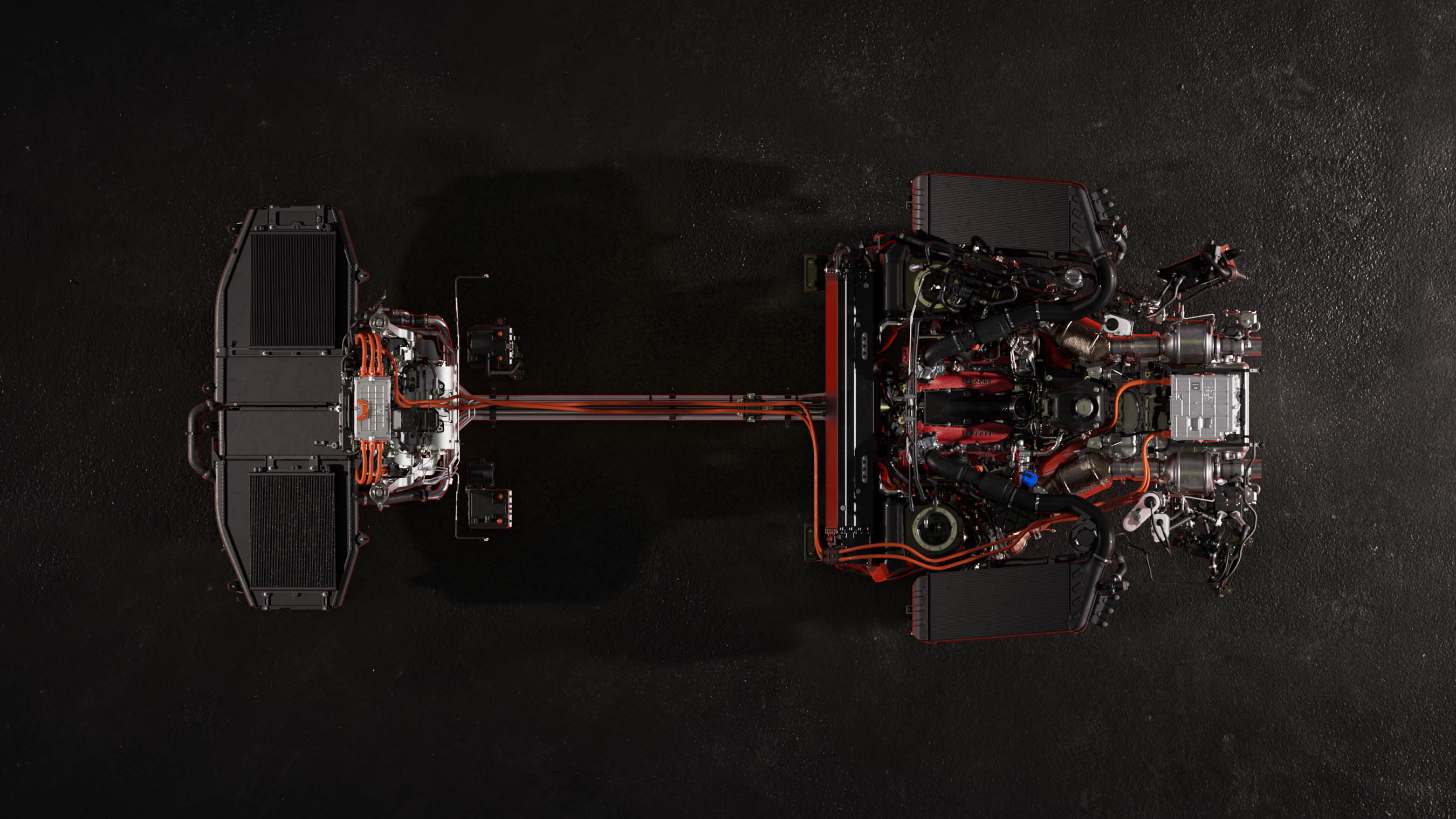
You know what? This is kind of fun. The three-motor hybrid system—two radial flux motors on the front axle, an axial-flux pancake between the engine and transmission, and 7.45-kWh battery delivering 15 miles of electric-only range—is lighter and even more mind-melded with the V8’s to make the handoff between gas and electric power more seamless at low, mid, and high RPMs. The underfloor aero is completely redesigned with a trio of cascading vortex generators for a 20% boost in downforce and 10% decrease in drag compared to the SF90’s bottom. Ferrari somehow found a 15% increase in cooling demanded by the more powerful V8 through larger intakes, asymmetrical radiators, and side intercoolers also pilfered from the F80.
Finally, a redesigned suspension reduces body roll by 10% from the SF90, optimizing the tires’ contact patches and further increasing lateral grip. Semi-active Magneride dampers are standard. Bigger brakes—which are brake-by-wire—with better cooling and the SF90 XX Stradale’s ABS Evo system join the party. Even the regenerative braking system has been overhauled with “anti-jerk” characteristics in mind to make it feel natural. All that with an aluminum chassis for the same dry weight as the SF90: about 3,500 pounds.
Even if you’re jaded by the Ferrari of today, you have to appreciate the insane, obsessive level of engineering that went into the 849 Testarossa. When I drove the 812 Superfast a few years ago, I wrote that it was incredible to feel Ferrari working the tiny margins that remained to squeeze every drop of performance from a front-engine, rear-drive car. Even as we enter this new hybrid AWD era, the same is true of the mid-engine V8 setup.
In both cases, doing so demands a huge dose of tech, and this is where I’m going to lose some of you. The 849 Testarossa’s nervous system is underpinned by the Ferrari Integrated Vehicle Estimator, a digital dynamic control system that takes in real time data like three-axis acceleration (longitudinal, lateral, and… up and down) and roll, pitch, and yaw. It essentially creates a virtual clone of the what the car is doing in a given moment, does the math to predict what’s about to happen, and tells systems like the traction control, AWD, and ABS Evo how to behave to maximize grip, acceleration, and braking. As a Ferrari spokesman put it to me, it’s basically the sensor of sensors in the car. Sounds like a gimmick, but I can assure you, it is not.
That is joined by more interconnected acronymic aids like Side Slip Control 9.0 (SSC) to dial in your optimum slip angle and Ferrari Driving Enhancer 2.0 (FDE) that complements the eDiff torque vectoring by selectively braking individual wheels in a high-speed corner.
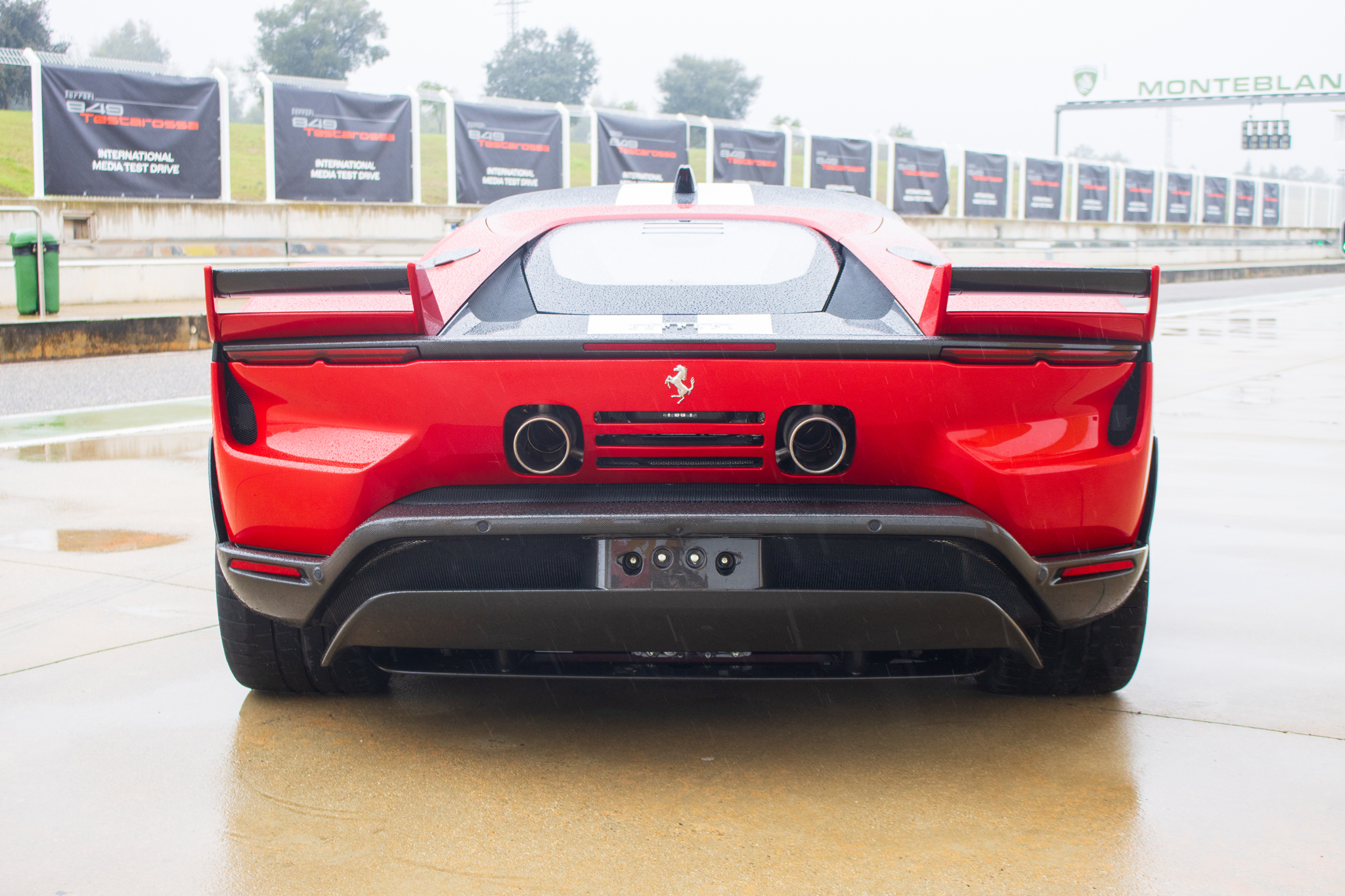
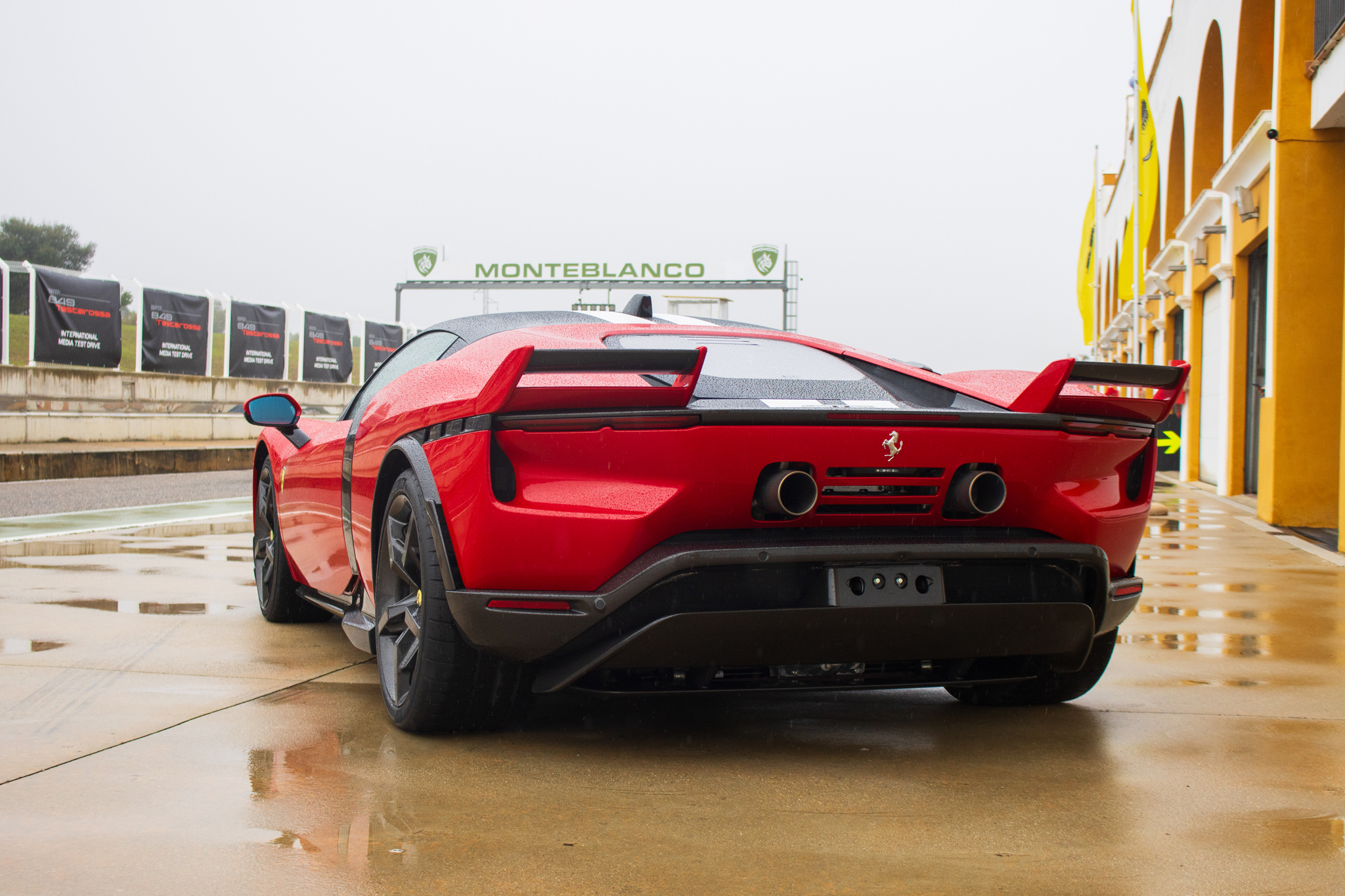
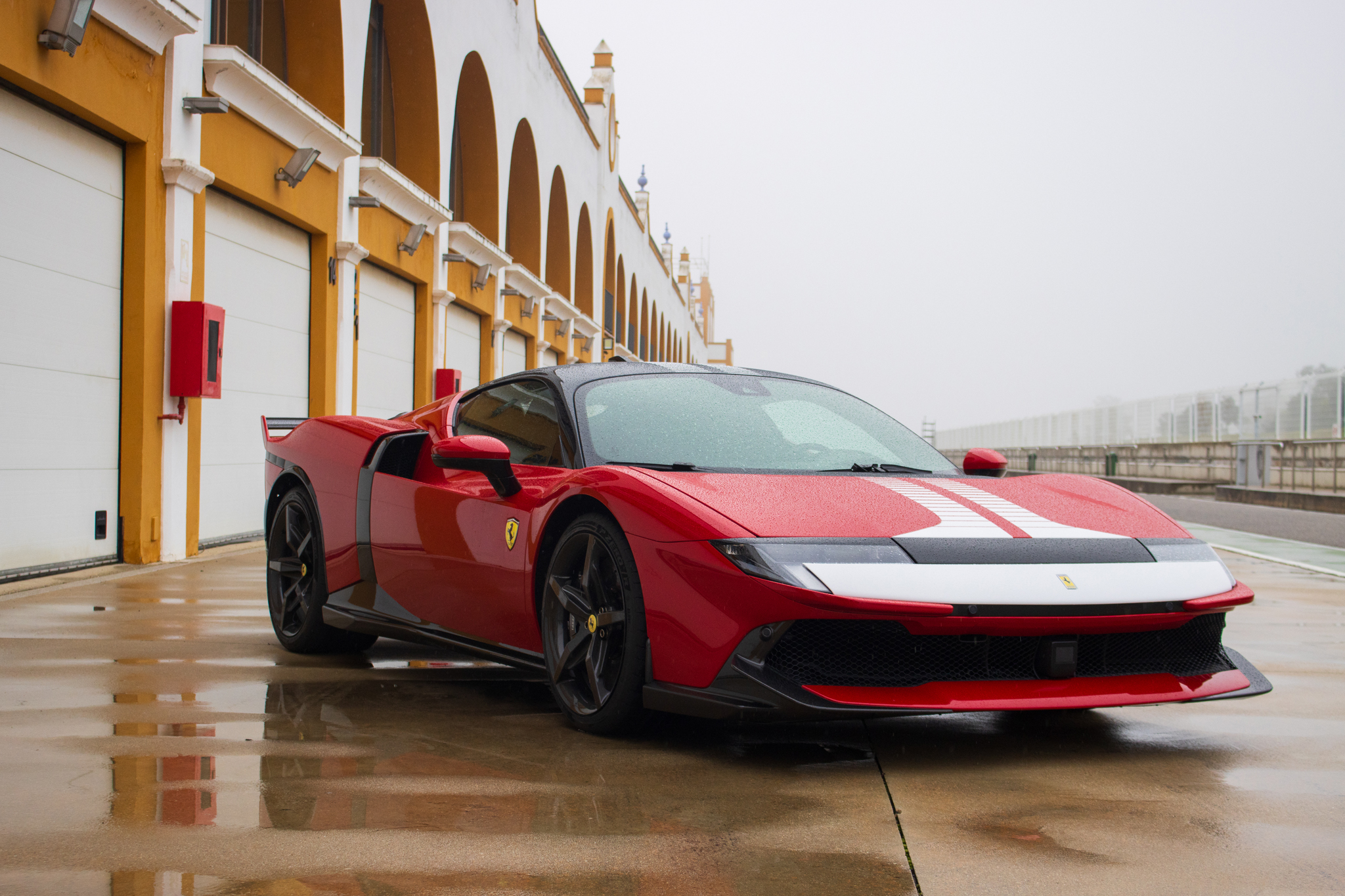
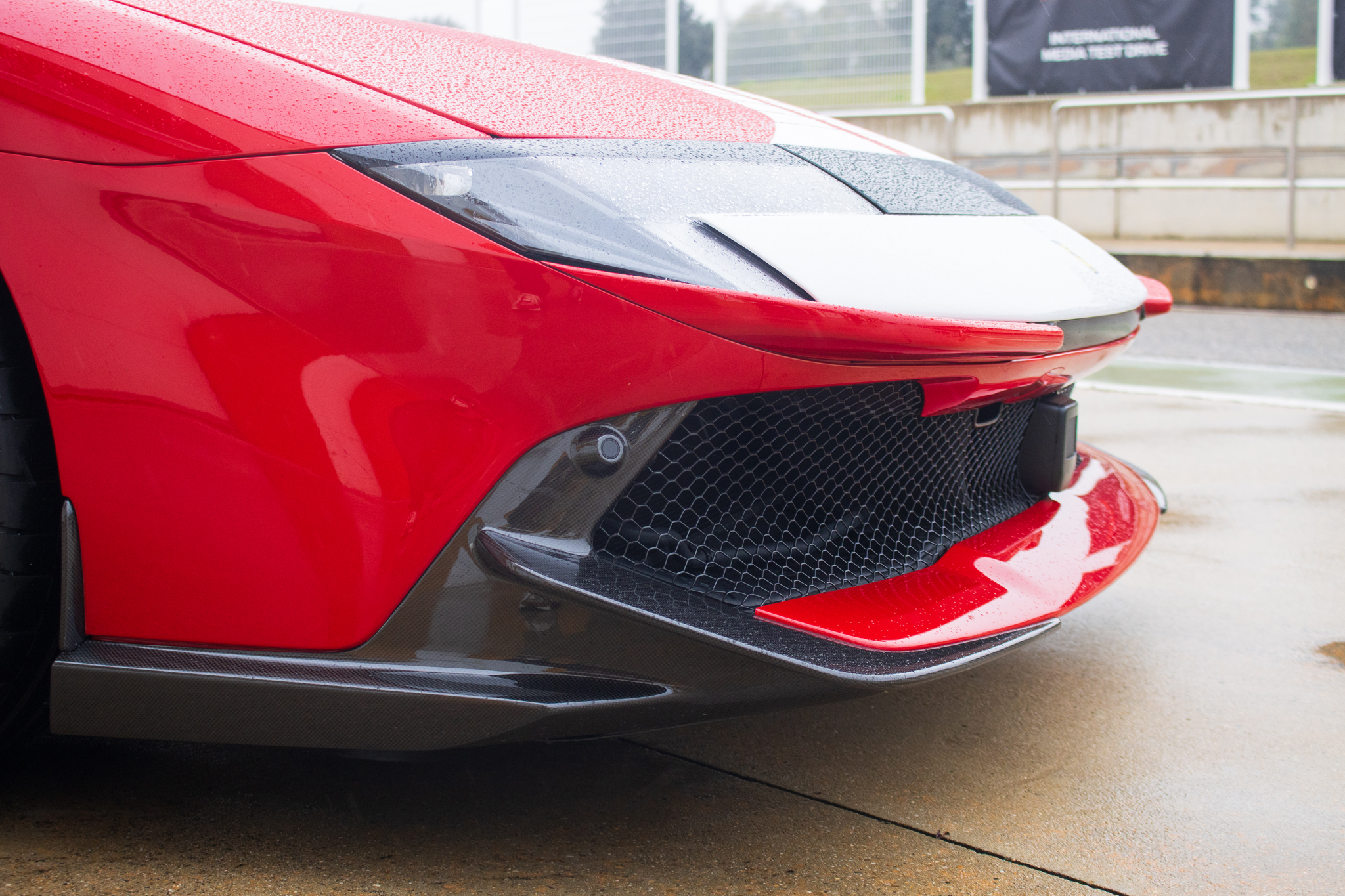
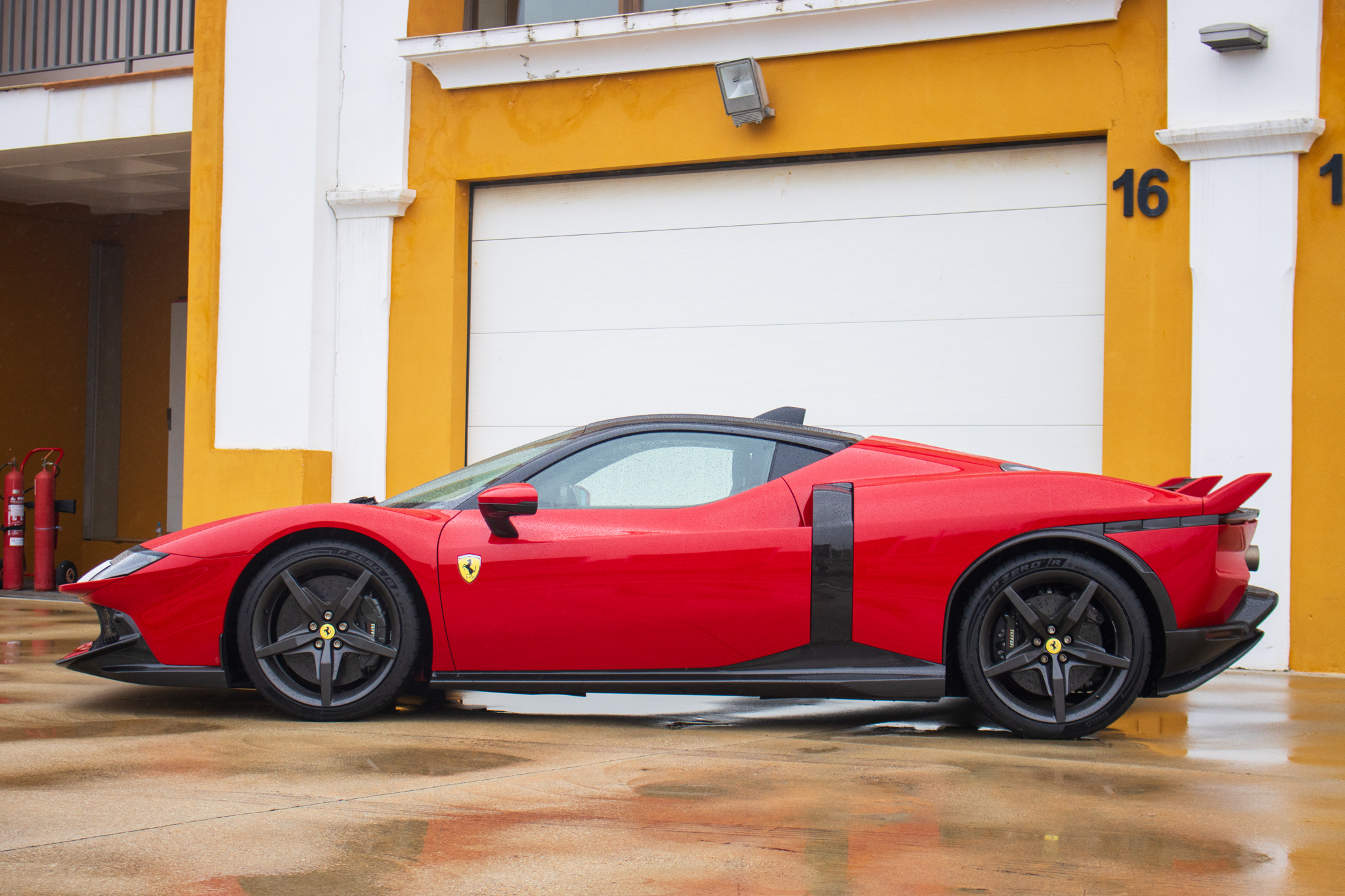
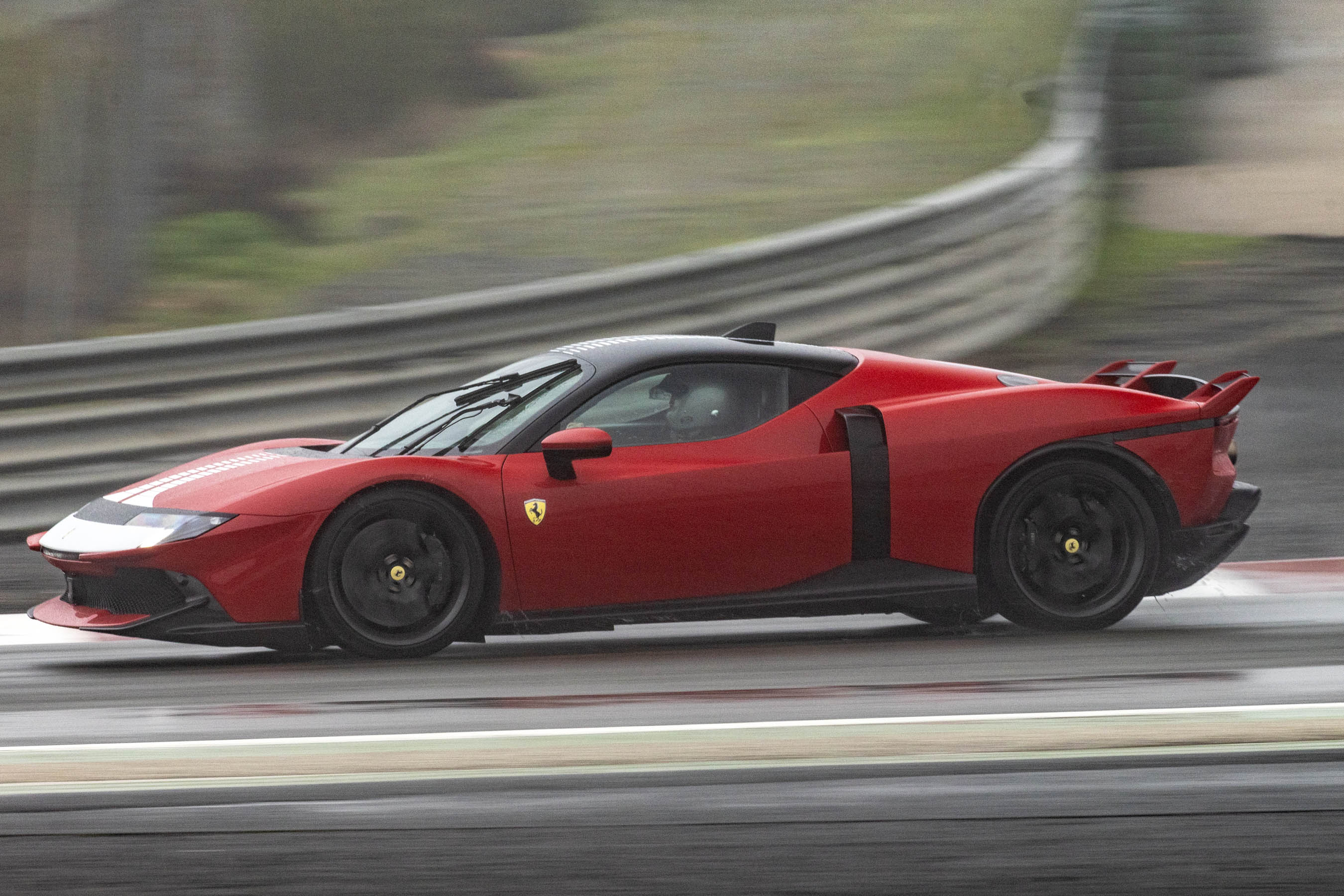
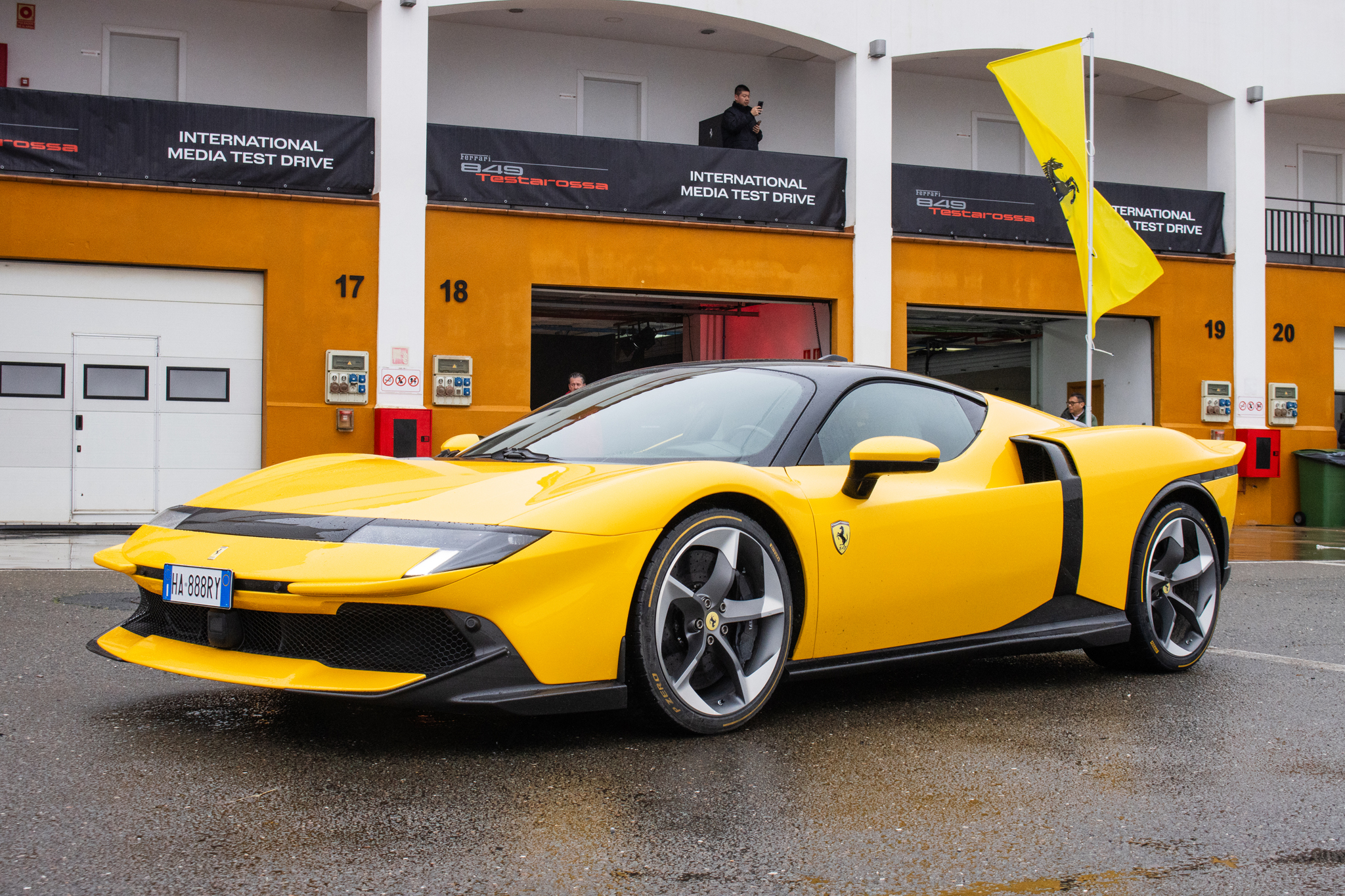
And the way it looks, well, there are few things people agree on less than the current state of Ferrari’s design language. Personally, I think it’s moving in a good direction, and this one in particular would’ve been received more positively if they didn’t call it a Testarossa and expect people not to draw comparisons to the 80s version. I like the retro black bar on the front end, the angled character line tracing from the front bumper all the way up to the twin-tail rear end, and the vertical bar behind the doors that pinches the body like a corset and outlines the side intakes. We should appreciate that the obsession with underbody aero has let Ferrari bring back smoother, softer panels up top. The only miss is the squinty taillights. Give me some circles any day.
Track Day Hero
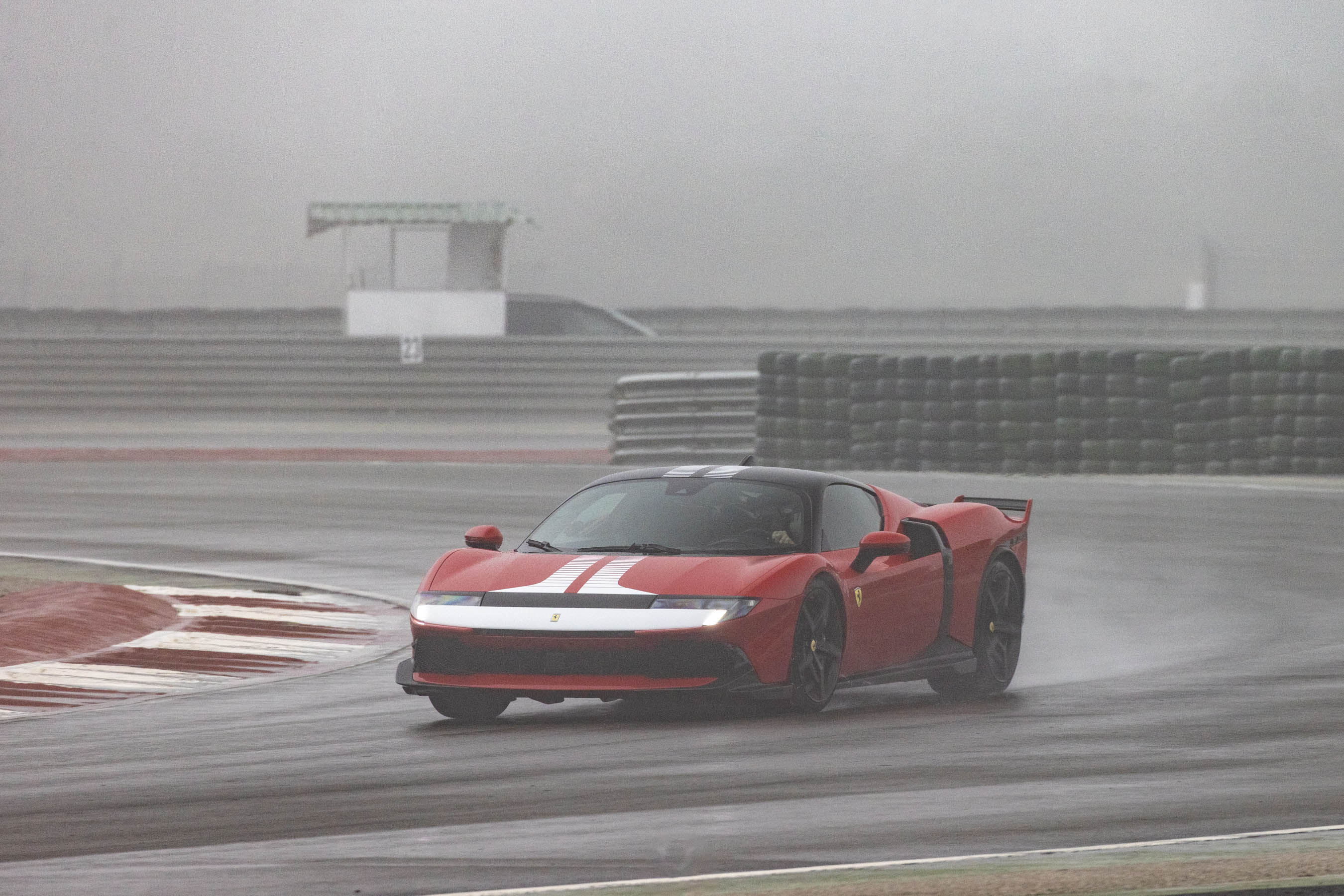
Back to the track. As I mentioned, my day at Circuito Monteblanco was marked by off-and-on downpours, heavy fog, and temperatures in the mid-40s—hardly the ideal conditions for buckling up the four-point harness in an 849 Testarossa equipped with the track-oriented Assetto Fiorano package, which saves about 66 pounds with carbon fiber wheels and lightweight seats, and adds more underfloor aero tricks and twin spoilers out back for even more downforce.
The instructions from Ferrari’s team consisted of leaving the Manettino drive mode dial in Wet mode for the first few laps to get a feel for the car. Meanwhile, the hybrid system has four separate modes itself to manage how the electric power is delivered and recuperated—full electric, Hybrid, Performance, and Qualify—and Performance was best suited for the conditions. Otherwise, just try to keep up.
Wet mode is aptly named: despite the rain and having a thousand horsepower at my command, the 849 simply refused to oversteer, even when I booted the throttle mid-corner just to see what would happen. What I quickly came to realize is that the suite of electronic aids and the hybrid system all act as what Motor Trend’s Angus MacKenzie and I later described as a stupidity sponge—soaking up and smoothing out even the dumbest of inputs.
Only once did an abrupt power cut feel like the traction control system was actively intervening. Otherwise, the 849 Testarossa’s brain makes the driving experience adaptable to conditions and driver skill in an astoundingly natural way. There’s that real-time magic. I’ve never experienced seeing a TC light flashing while burying the accelerator in the carpet in fifth gear and feeling nothing but unbroken acceleration well into triple-digit speeds. It is designed to make you believe like you are right on the edge of control, and it delivered the most visceral track experience I’ve ever had in this job.
There was certainly a lot of understeer, but mainly because there just wasn’t enough grip from the 265/35 R20 tires up front for the torque-vectoring electric motors to do their thing. Wet mode cannot defeat the laws of physics, and at some point you do have to back off. The steering itself was excellent—probably not enough feel for die-hards, but extremely direct and agile. The Assetto Fiorano package uses Multimatic shocks instead of Magneride, though Magneride remains an option, and it felt like the race-derived bit of kit it was, flat through corners and stable over curbs.
After facing my mortality in that first session, the development driver approached me to gently suggest that I was actually still braking too early, and I needed to trust the ABS Evo system more. Hit it late and hard and really lean into trail braking into a curve. That was a tricky ask, not because I didn’t trust it, but because the pedal was quite firm with a short stroke and it was difficult to modulate. The firmness is also adaptive, so it’s challenging to learn on the fly. I found myself wishing for more range to play with. When I did gather the courage to brake later than I thought possible, the 849 Testarossa came through and held the line, apart from more shimmying and shaking than a casual driver would appreciate.
On my last few laps, having learned the course, I switched the Manettino dial from Wet to Sport mode and was immediately greeted with a lot more oversteer, more aggressive intervention from the traction control, and a looser rear end under hard braking. A little more time and I could’ve adapted to it, but I had more business to attend to. The Ferrari team thoughtfully mapped out a two-hour drive through a totally empty, beautifully curvy road through the Spanish countryside to get a feel for the regular 849 Testarossa. Alas, it began to rain even harder, but it gave ample time to judge the car on its everyday usability.
Daily Drivability
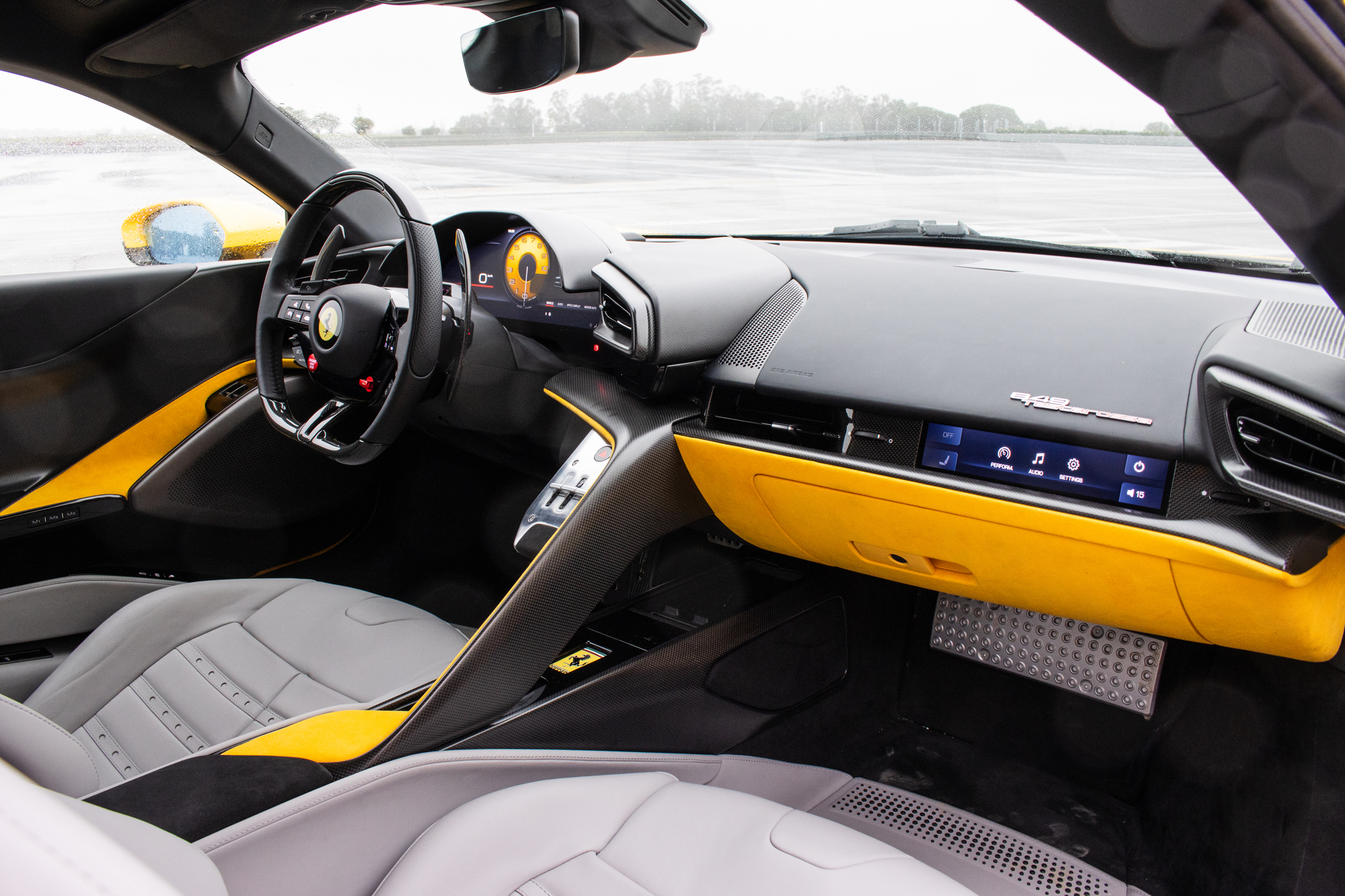
Slipping into the cabin of the street car felt like an immediate upgrade. The powered standard seat is a lot more comfortable, with adjustable bolsters and lumbar, not exactly soft but certainly easy to find a comfortable position. Forward visibility is excellent, with the front fender bulges making it easy to position the corners accurately. Even rear visibility is great because the V8 is mounted so low in the chassis.
Ferrari is quite proud of the fact that it added real buttons back to the wheel for navigating the single screen containing the gauge cluster and infotainment system, and you know, bonus points for that. The hybrid system selector is still the old touch capacitive nonsense along the bottom of the wheel, though, and only the current selected mode is backlit, so owners will have to get used to memorizing the order and spacing of each option. Otherwise, it frames the screen nicely, flanked by huge and satisfyingly clicky paddle shifters.
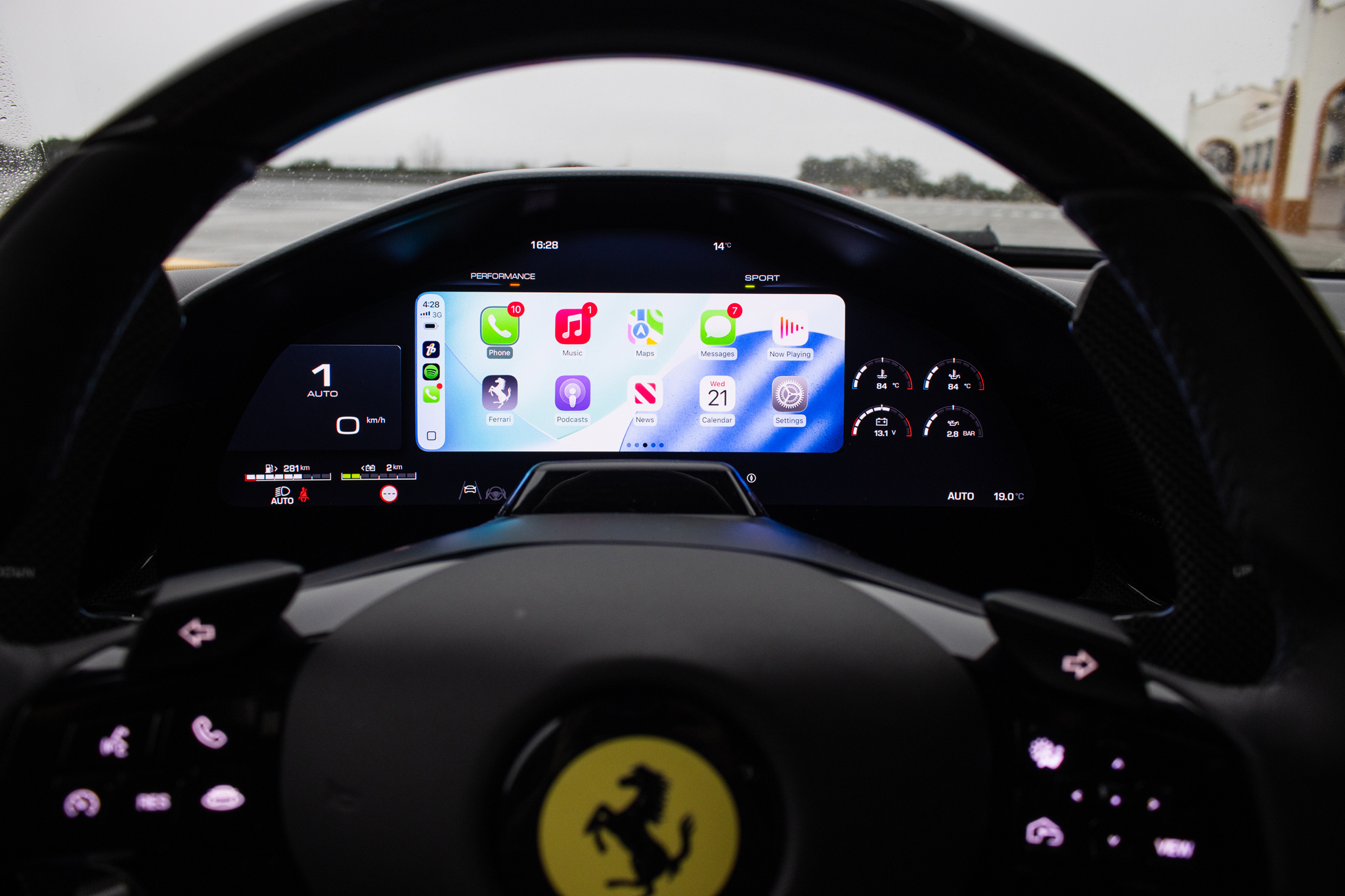
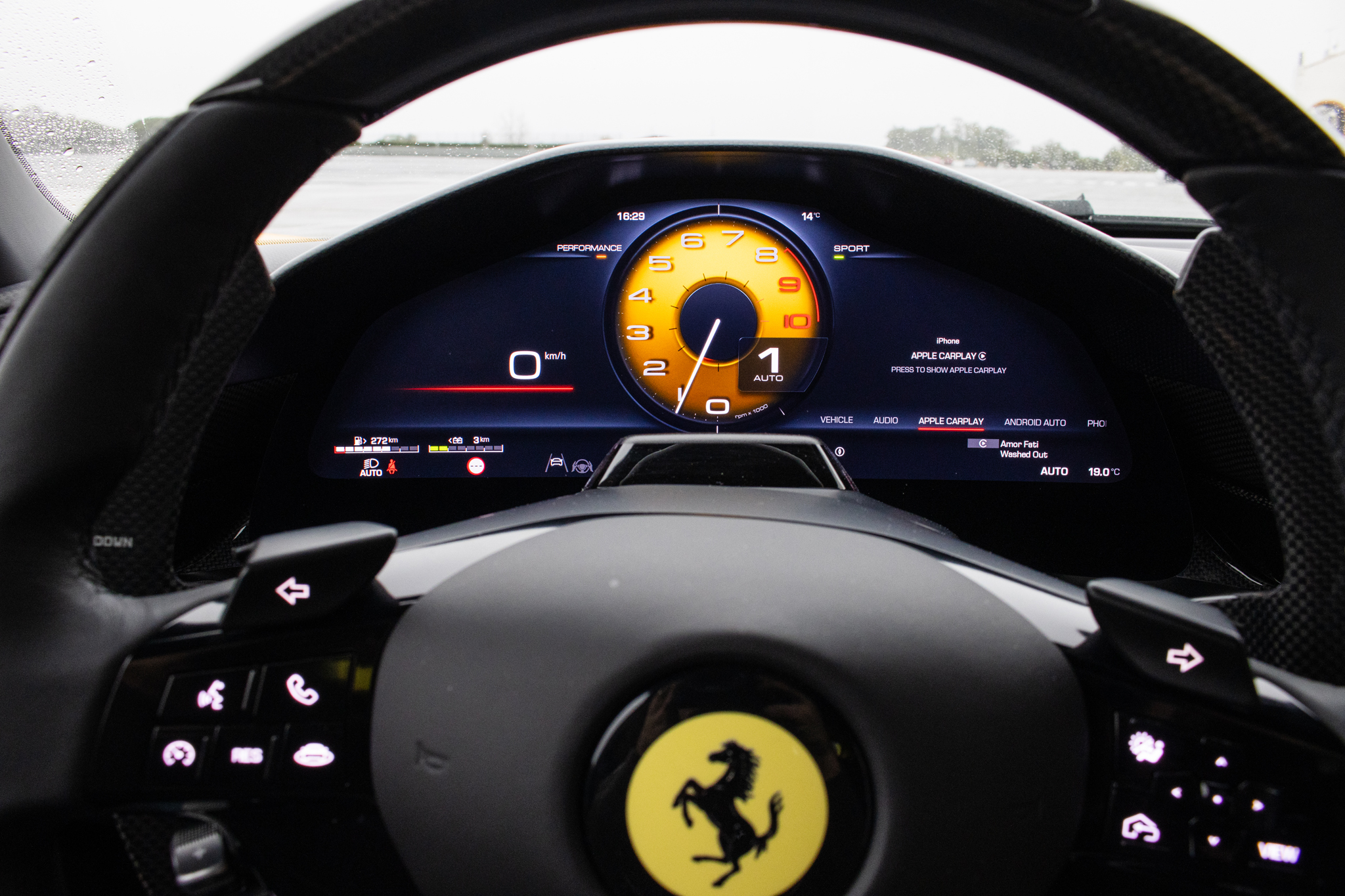
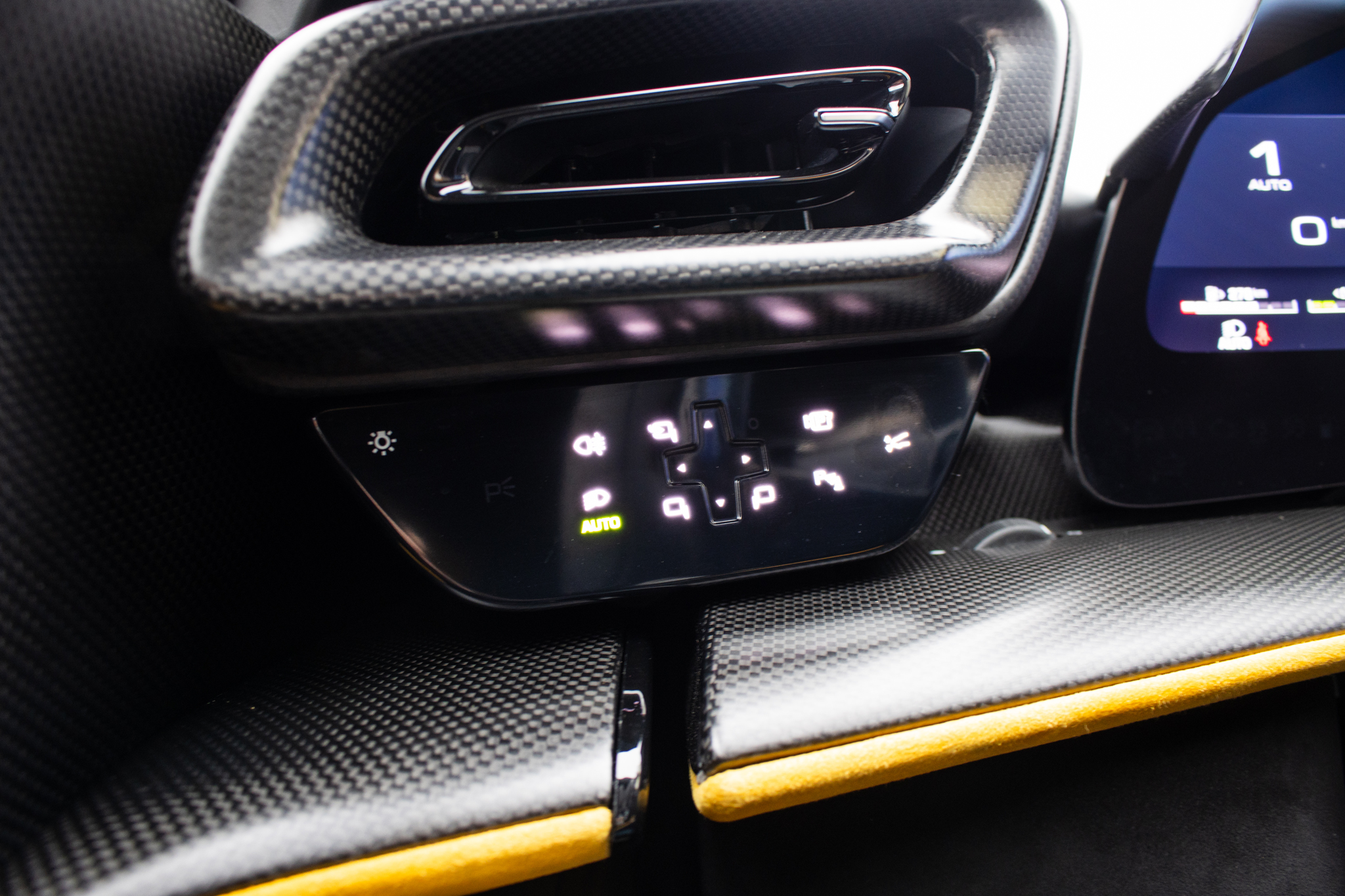
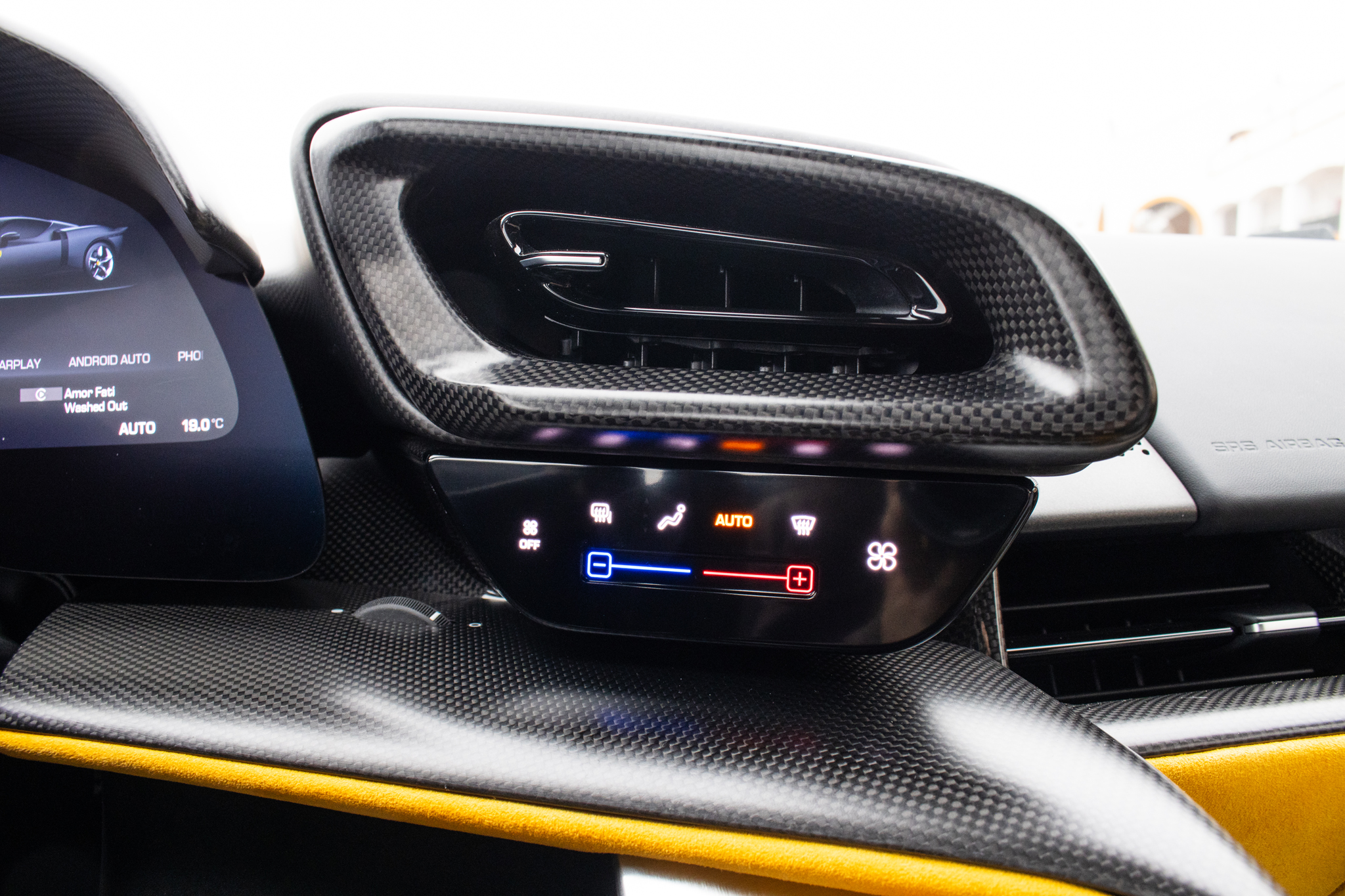
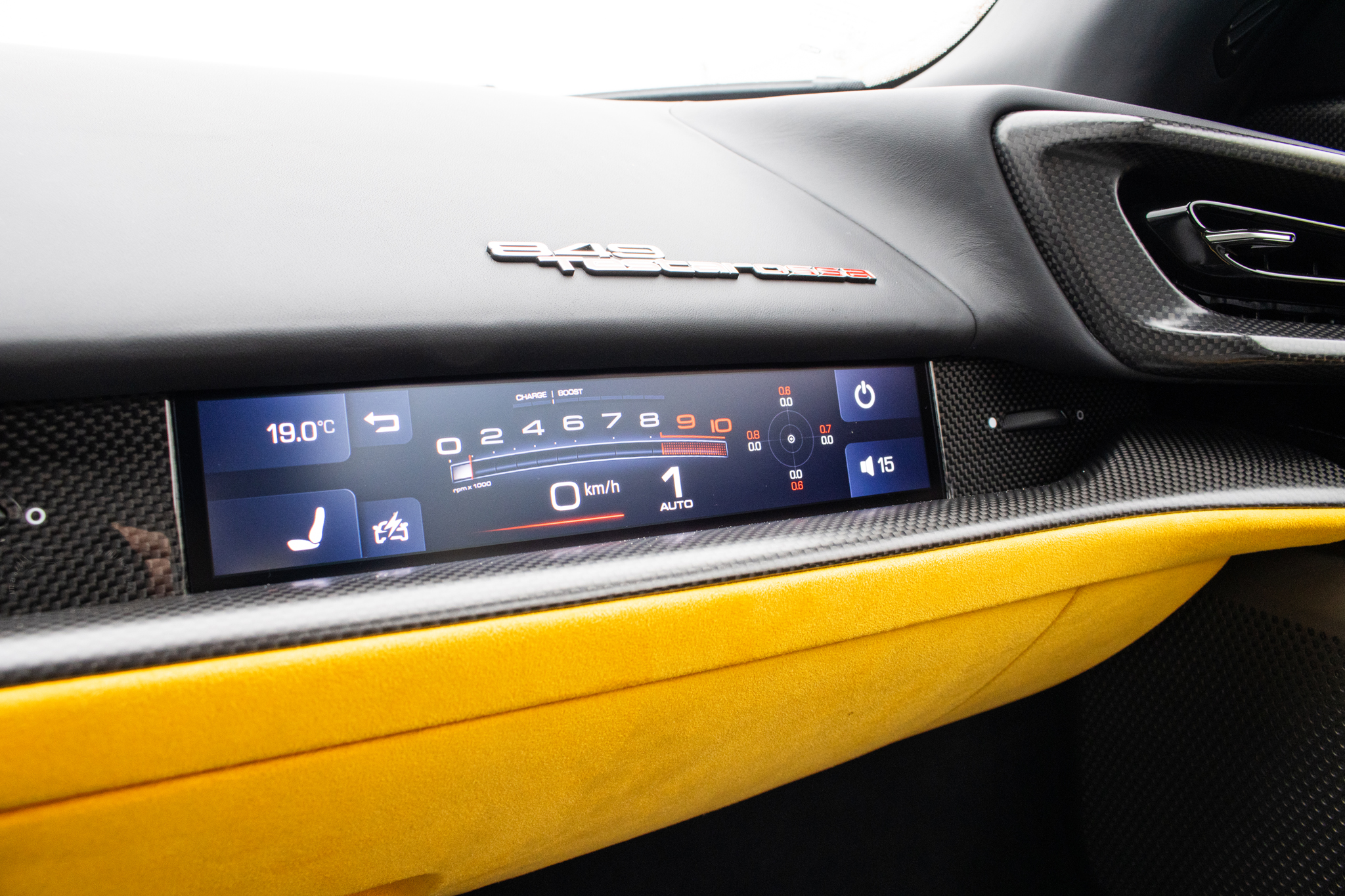
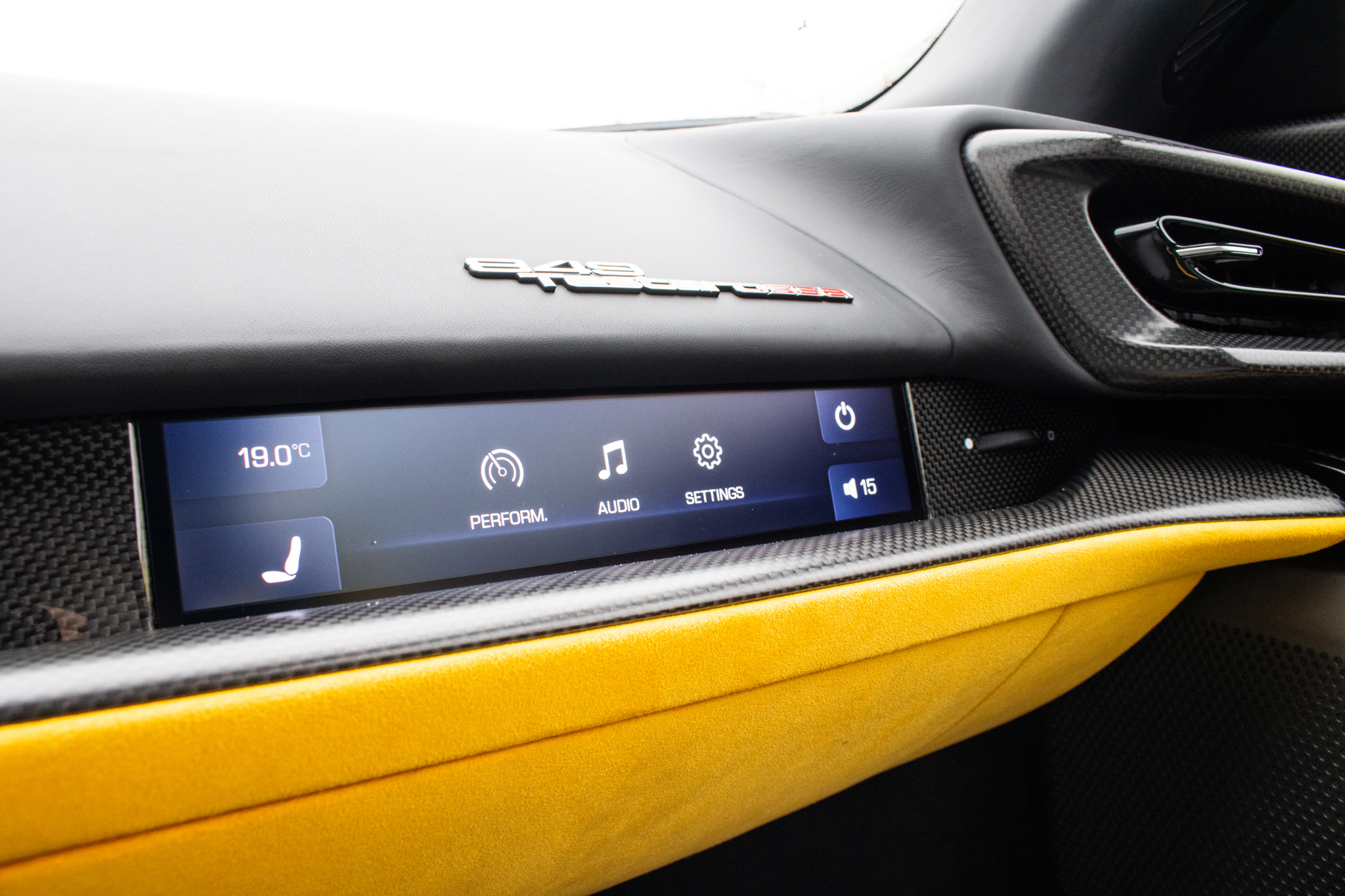
That said, I do have mixed feelings on the single-screen solution (not counting the standard passenger screen, which is useless to the driver). It certainly makes the interior feel more like a proper old-school cockpit, but navigating everything with steering wheel buttons is tricky and sometimes feels as dangerous as reaching over and being distracted by a central touchscreen. Especially when using Apple CarPlay, it just doesn’t feel intuitive. Certain apps “stack” their controls in different ways despite how it looks on the screen, so sometimes pressing the down button actually gets you to the thing you need to click, just below the menu option that’s currently highlighted, and sometimes pressing down actually sends you to the left.
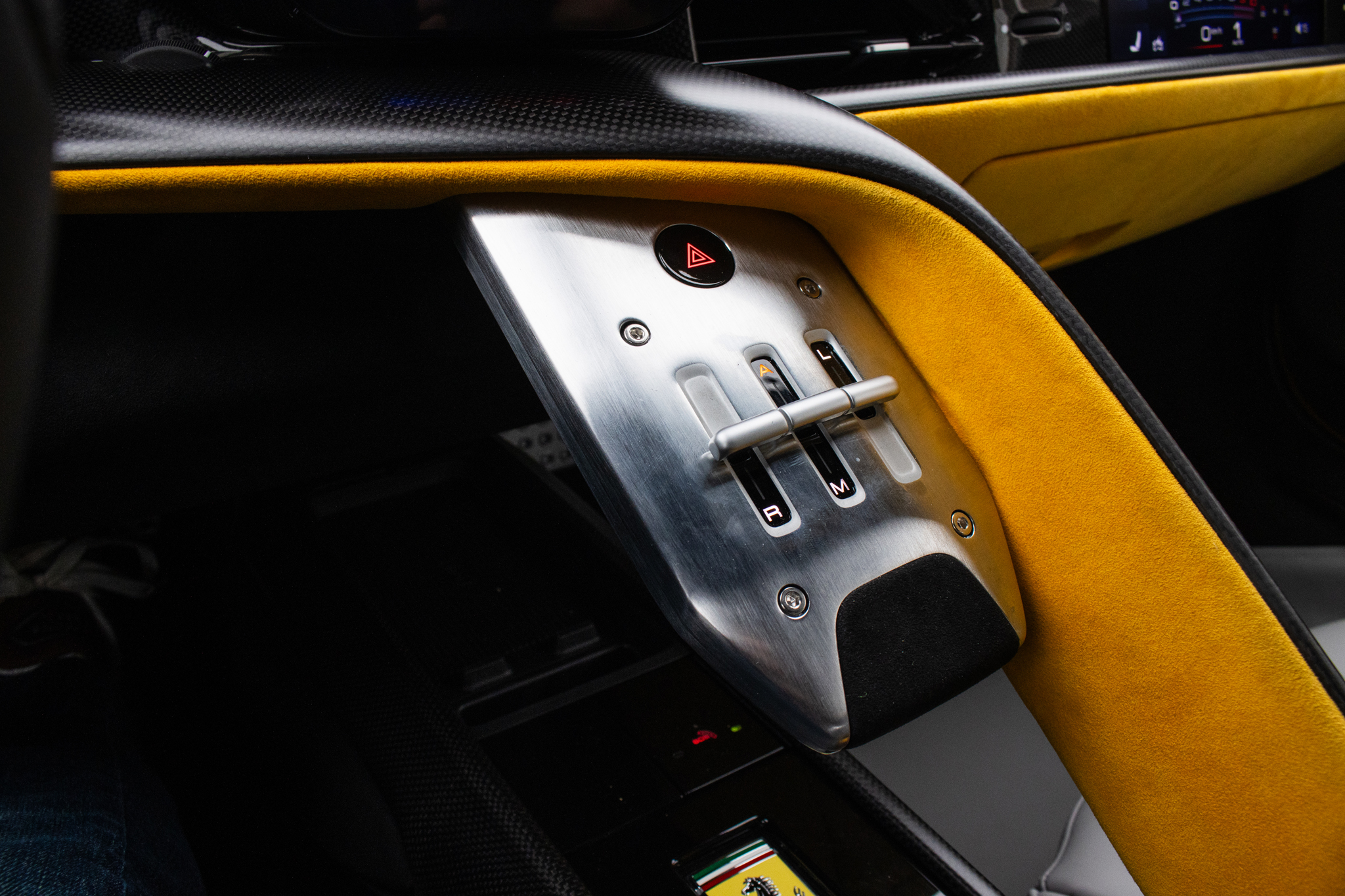
There’s one more thing that’s sure to polarize: there’s no gated manual shifter, but there is a gated manual shifter-looking thing that’s actually the selector for reverse, automatic mode, manual mode, and launch control. I can appreciate what they were going for, but having four options and two blanks on something that’s supposed to look like a six-speed shifter feels inelegant, and the short action on the little levers is weak. If you’re going to visually call back to something people sorely miss, at least try to recreate the experience more.
The blinding rain and guardrail-less road meant any chance to press the 849 Testarossa on the street was out the window, but again, the car never skipped a beat or felt too powerful for how I was using it. It stormed through standing water and muddy wash-overs, never slipped on road markings. The rear was utterly stuck in. The only negative I have to report is that in Sport mode, the transmission is a little too slow to kick down. There’s plenty of torque to surge forward in 5th or 6th gear, but punching the throttle doesn’t bring the drama of a quick drop to 3rd or 2nd like you’d expect.
The Magneride suspension was firm but yielding. Far from plush, but not punishing or over-aggressive, and it had enough ground clearance to never need the front-axle lift over Spain’s many speed bumps. And that brake-by-wire system with its adaptive pedal started to make more sense on the street, where there was less pressure to nail the right amount of force each time.
After a couple of hours of slow-speed fun, I got back on the highway for a half-hour blast back to base camp. The battery was full, having kept itself topped up in Hybrid mode, so I switched into eDrive to experience a silent Ferrari, minus a fair amount of road noise from the tires. The three motors by themselves put out 220 hp, and that certainly felt accurate given the decrease in passing power. Range is… not 15 miles when you’re doing 75 mph. I got about 8 miles before the battery ran out. But hey, it works.
Let Ferrari be Ferrari
Leave your preconceptions at the door, and the 2027 Ferrari 849 Testarossa is an astonishing machine. It is a genuine achievement in the way truly great cars are—surprising, delightful, enthralling, a bit scary, but most of all, fun as hell. If you worry that modern supercars are just way too intense to enjoy, find your way into one of these and see what a company like Ferrari has to say about that.
Because truly great cars are also a statement. In this case, technology can elevate a driving experience from a simulacrum of a more straightforward past into a future that’s truly connected to the things that made the past so special. Just like there’s no world in which screens will disappear from cars, no matter how many buttons we’re able to cajole automakers into bringing back, there’s no world in which modern supercars will ever be like the original Testarossa again.
But we can and should appreciate what Ferrari has done here: using technology to make a 1,000-horsepower plug-in hybrid that engages those same primal pleasure centers in our brains. It scratches that same itch. It has the same magic. The expression is different. But the essence? It’s still there, still intact. Let Ferrari be Ferrari, and great things will happen.
Ferrari provided The Drive with travel, accommodations, and access to the vehicle for the purpose of writing this review.
| 2027 Ferrari 849 Testarossa | |
|---|---|
| Base Price | $540,000 (est) |
| Powertrain | 4.0-liter twin-turbo V8 hybrid | 8-speed dual-clutch automatic | all-wheel drive |
| Horsepower | 1,036 |
| Torque | 621 lb-ft |
| Seating Capacity | 2 |
| Curb Weight | 3,461 pounds |
| Cargo Volume | 2.61 cubic feet |
| 0-60 mph | 2.1 seconds |
| Top Speed | 205 mph |
| Score | 8.5 |
Loading comments…
Comments couldn’t be loaded. Please refresh the page.