
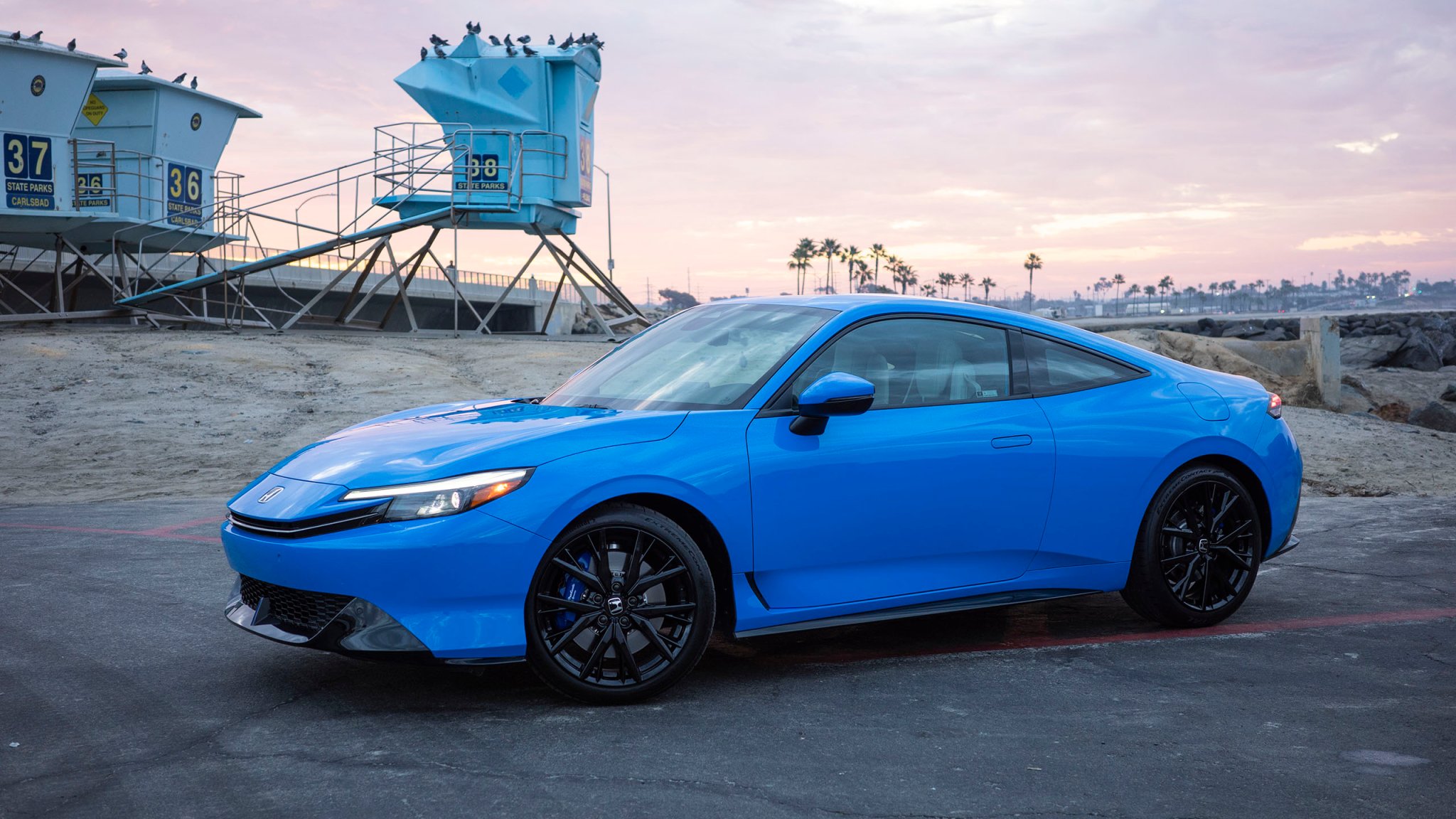
If you had a Honda Prelude revival on your Bingo card at the beginning of this decade, I am impressed, a little frightened, and have some investment questions I’d like to pick your brain about. Coupes are rare these days, and ones that aren’t out-and-out sports cars, rarer still. The 2026 Prelude may borrow its chassis from the Civic Type R, and it may look stunning, but the racetrack isn’t its natural habitat. It also costs $43,195.
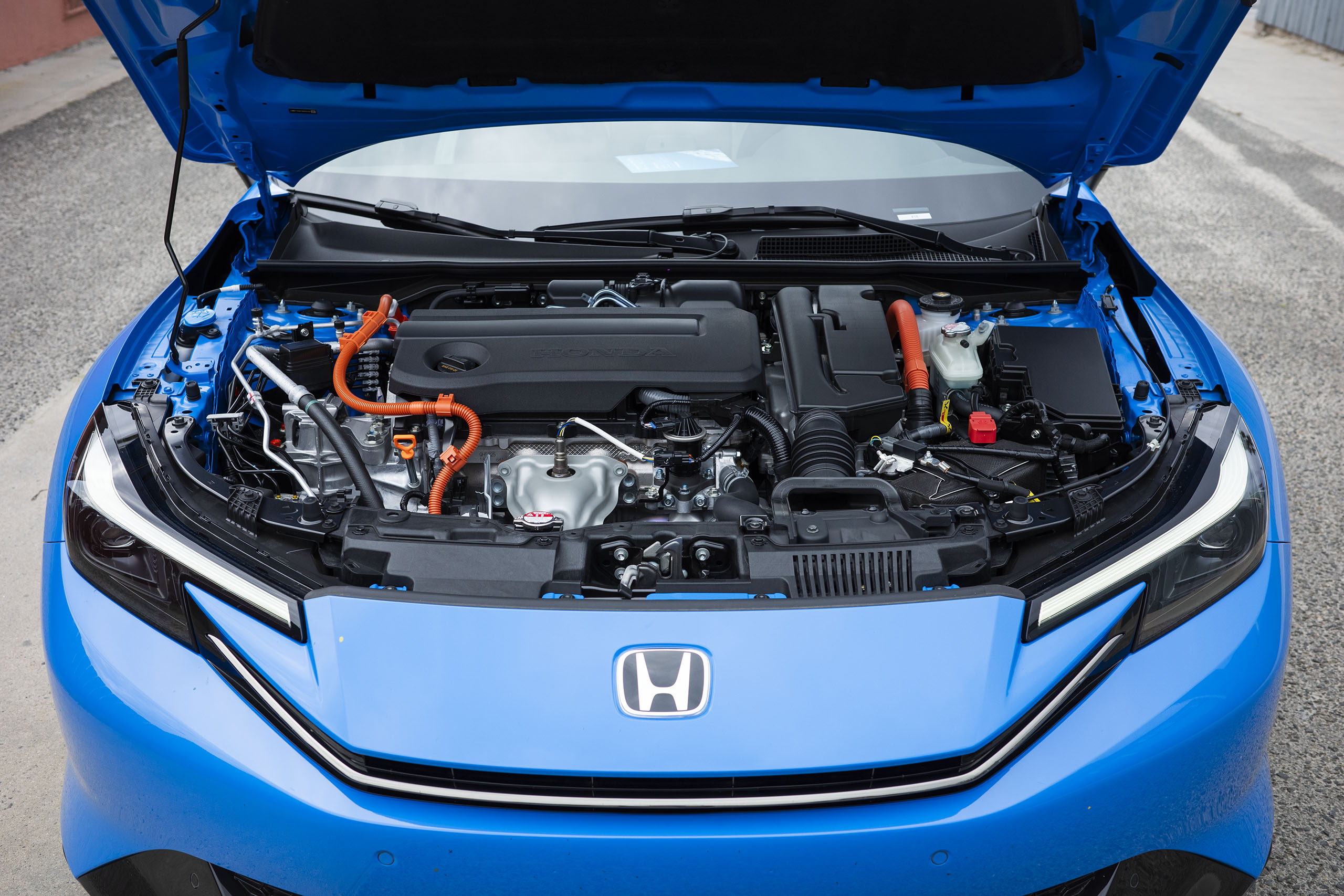
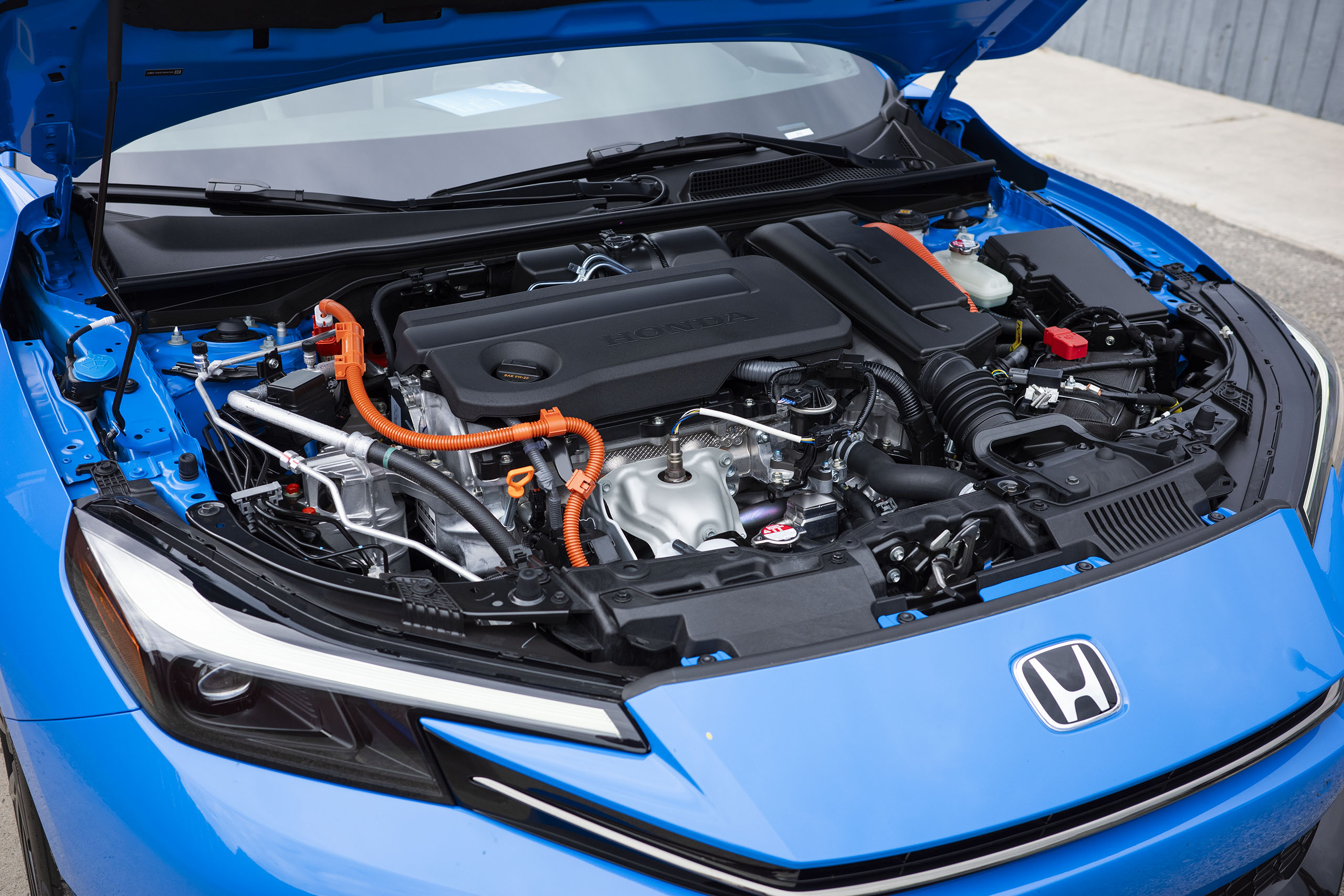
You’re going to see some numbers in this review, and many of them aren’t friendly to the new Prelude. For that money, the coupe features Honda’s two-motor hybrid system, incorporating a 2.0-liter four-cylinder engine that’s good for 200 horsepower and 232 lb-ft of torque. That power figure is identical to the last Prelude’s, which exited production 25 years ago and weighed about 300 pounds less than this one.
On the other hand, electric power means the 2026 incarnation is much torquier, and also, much better on gas. Honda estimates a combined 44 miles per gallon, which may as well make the new Prelude as poisonous to the environment as a bicycle, if you dare put it up against other sporty coupes. I wouldn’t. The Prelude is better than those numbers make it look, but it is very much its own thing. I just wish it were a bit better at that thing.
The Basics
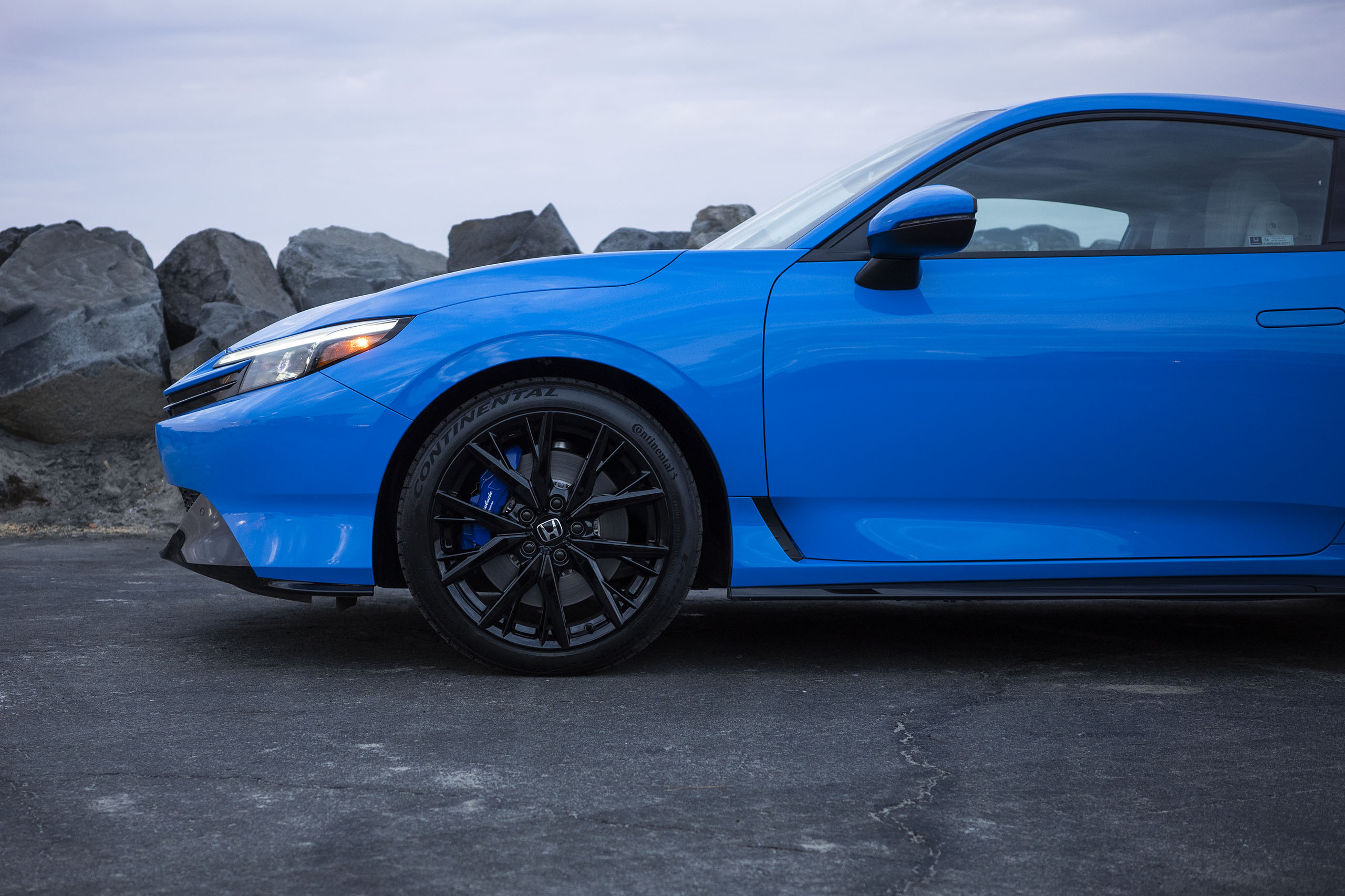
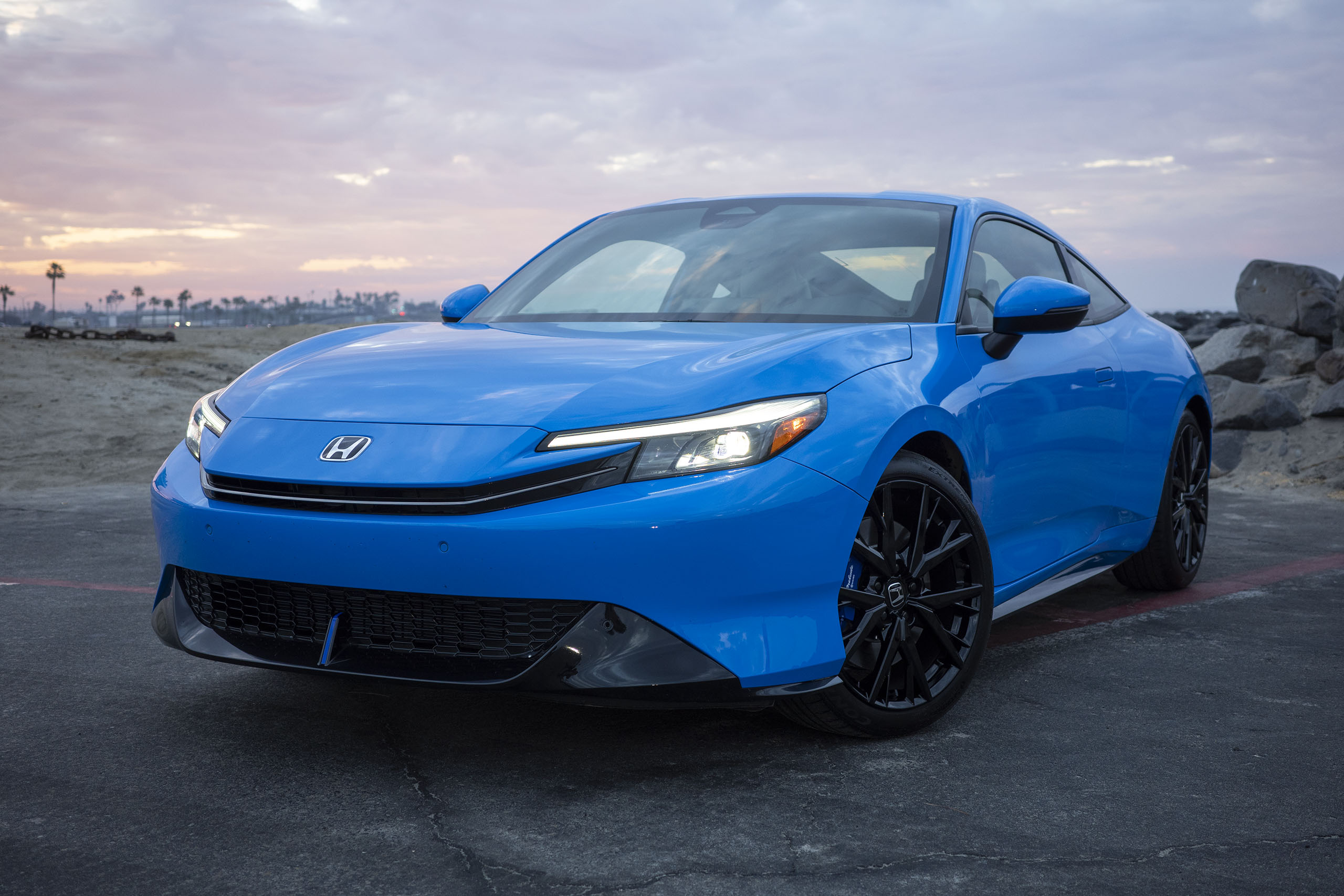
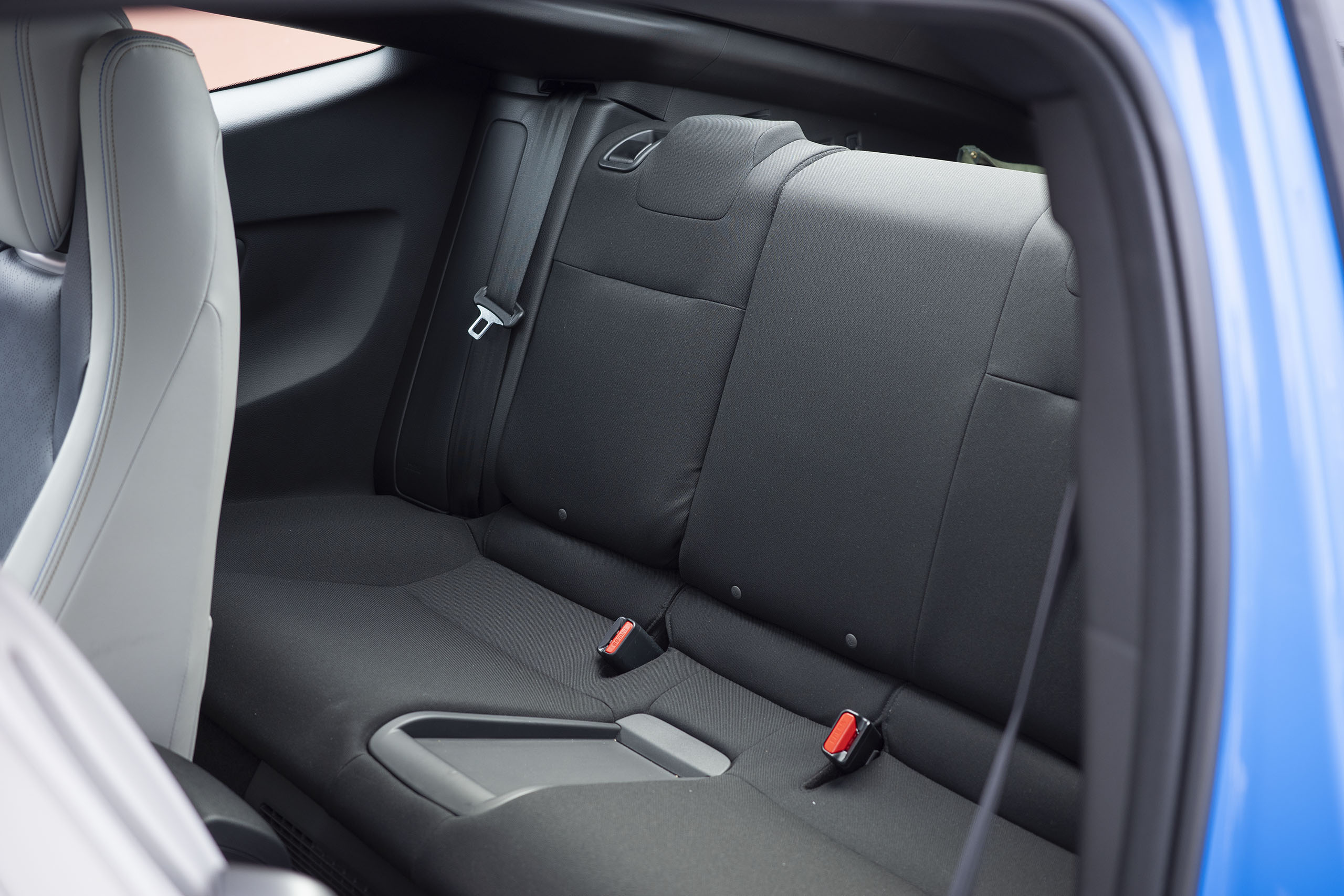
The formula for the sixth-gen Prelude is as follows: Take the Civic Hybrid’s powertrain, toss in the Type R’s dual-axis front suspension and four-piston Brembo brakes, and wrap it in a svelte body with a premium interior. Yeah, there are a few wrinkles, like Honda’s new S+ Shift system that will eventually make its way to other hybrids in the lineup, but that’s pretty much the gist. You’ve got two doors, and there is technically a backseat, but I wouldn’t call it fit for humans. My legs might’ve barely fit back there, but my head didn’t, and I’m all of five feet, 10 inches tall.
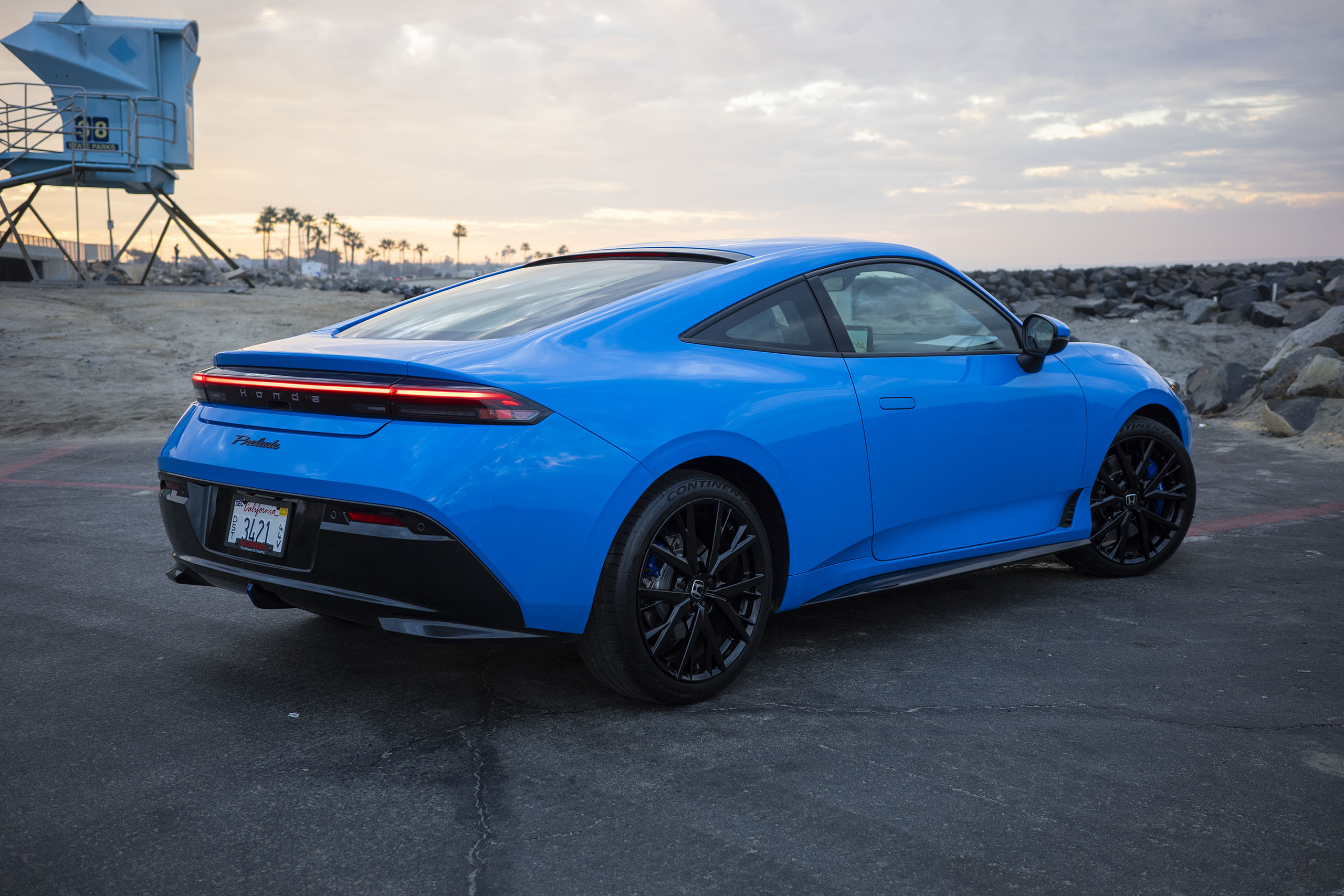
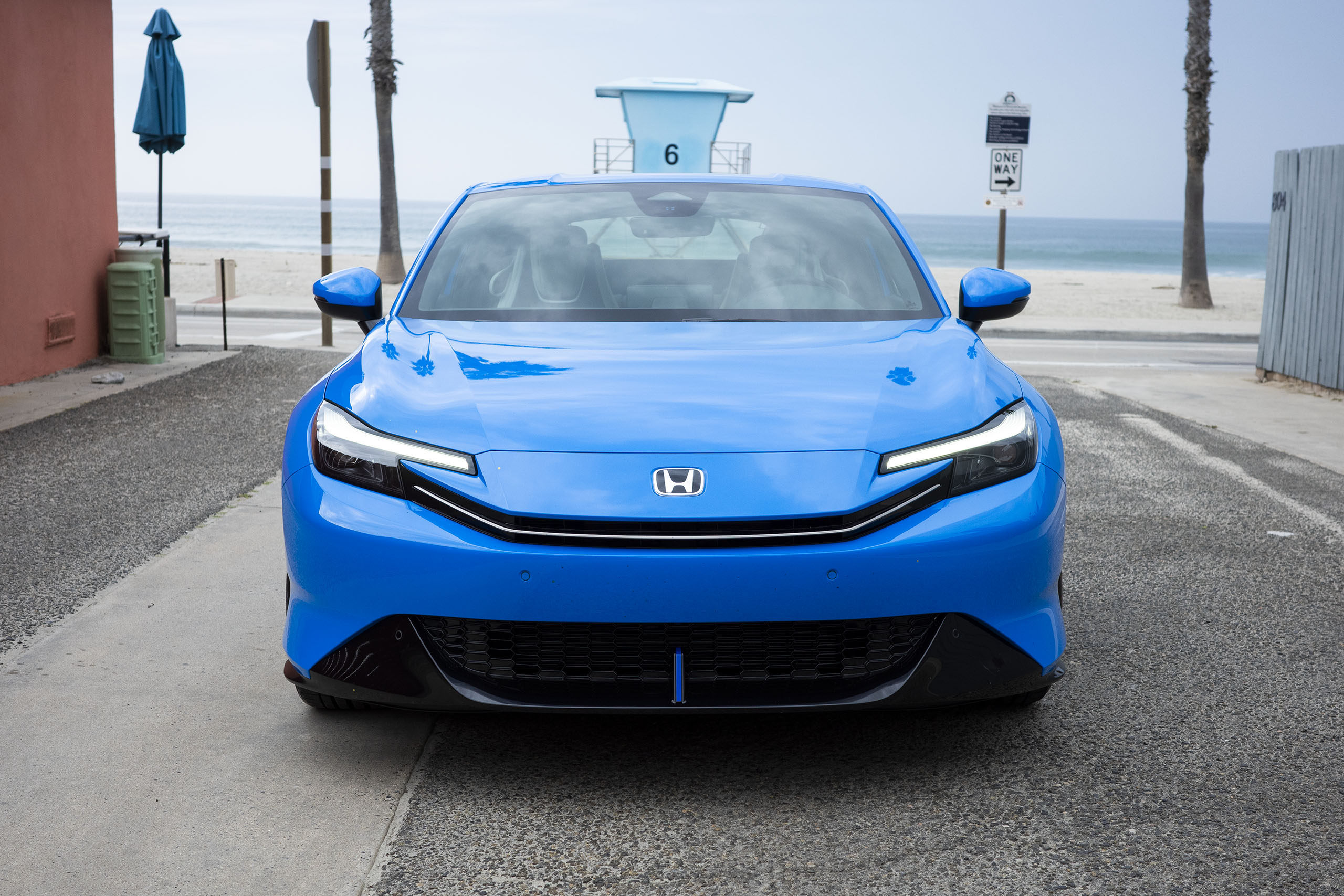
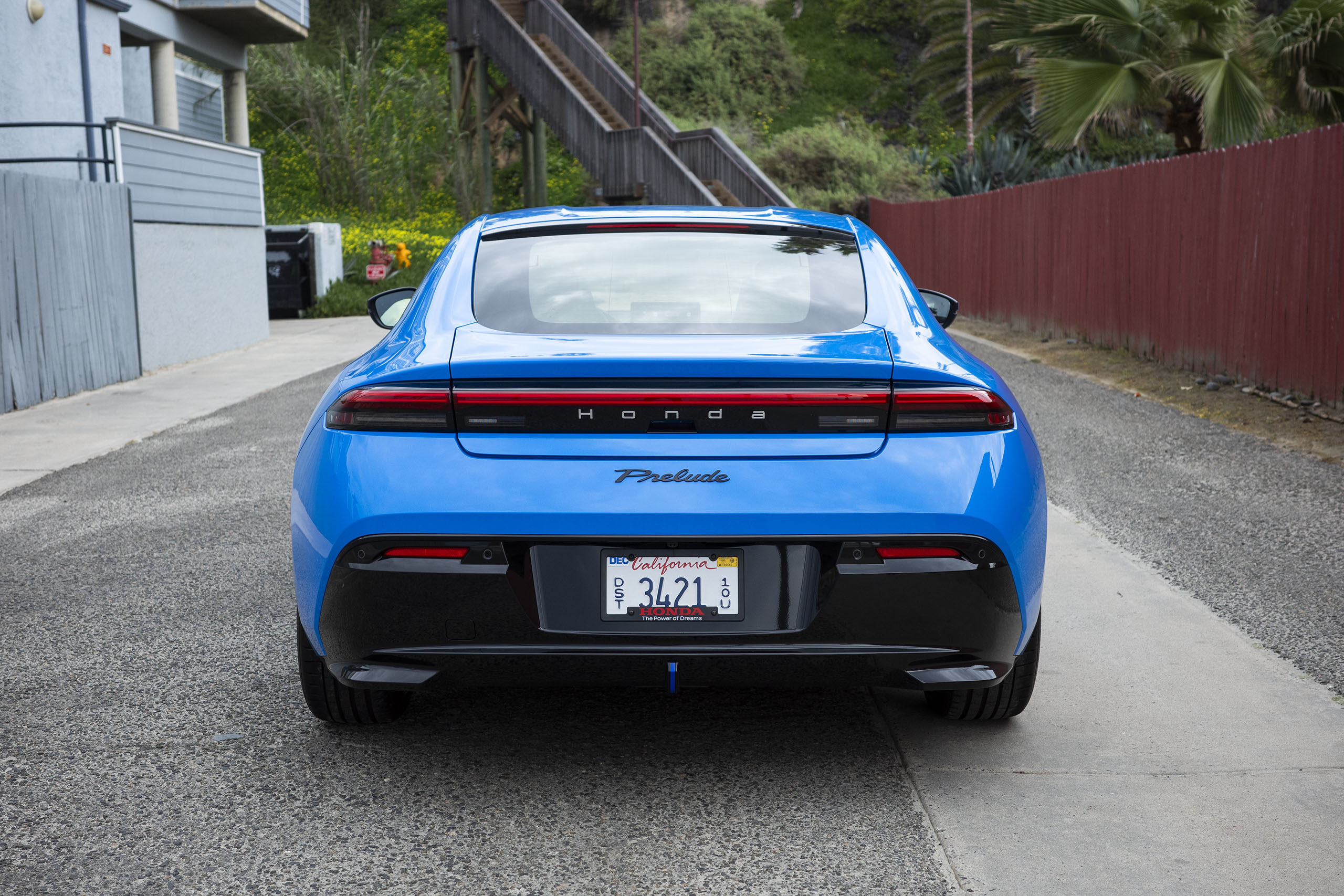
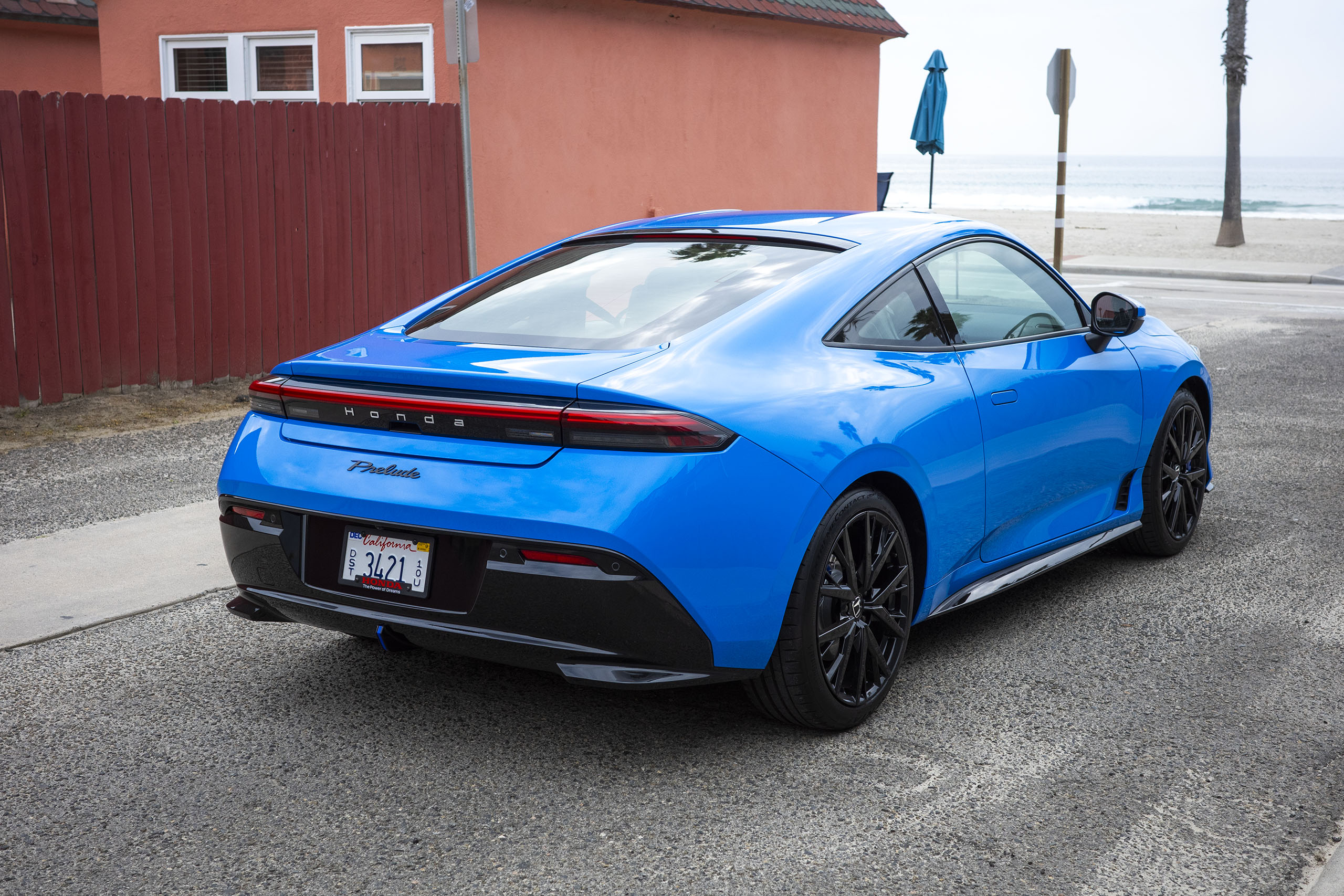
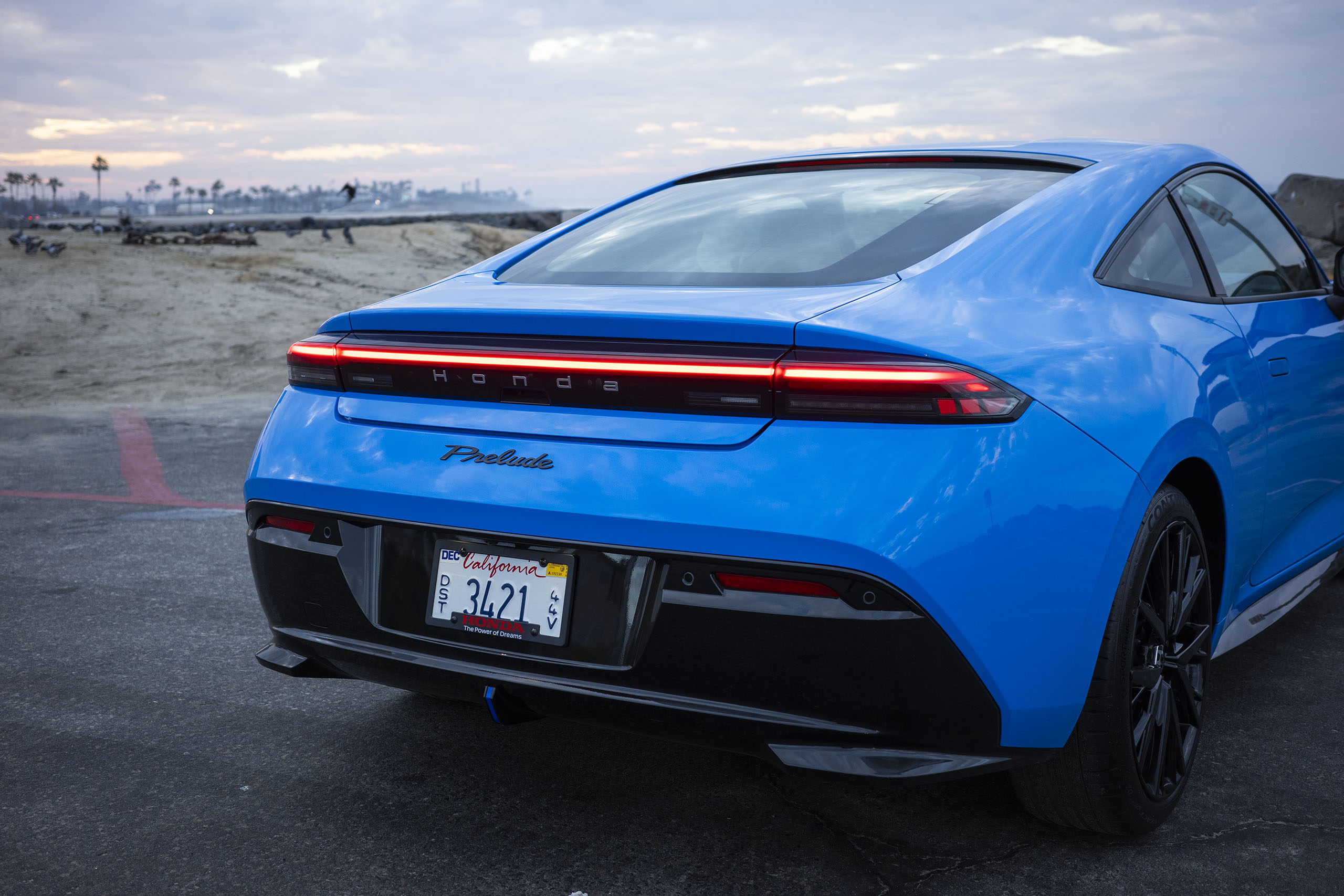
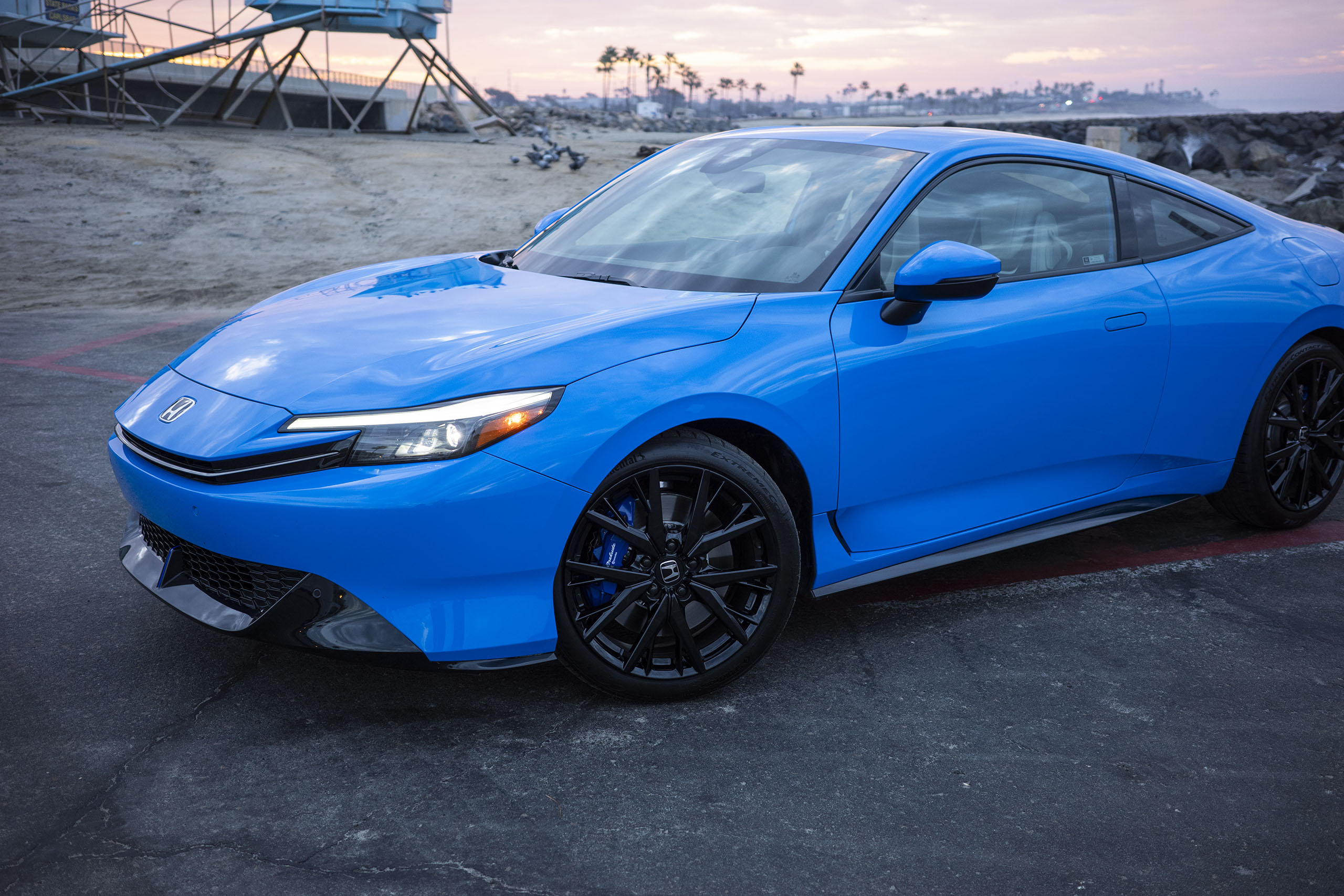
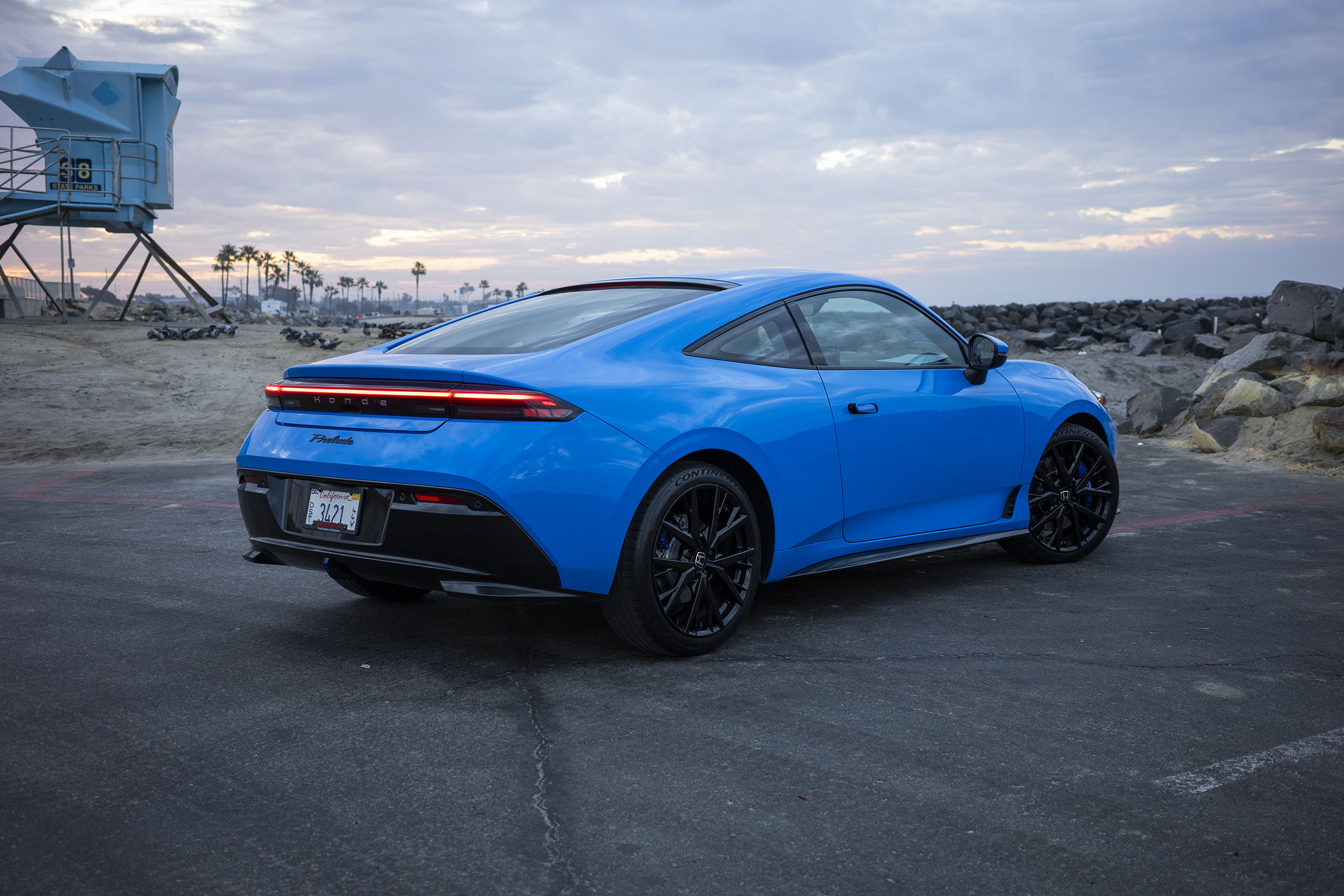
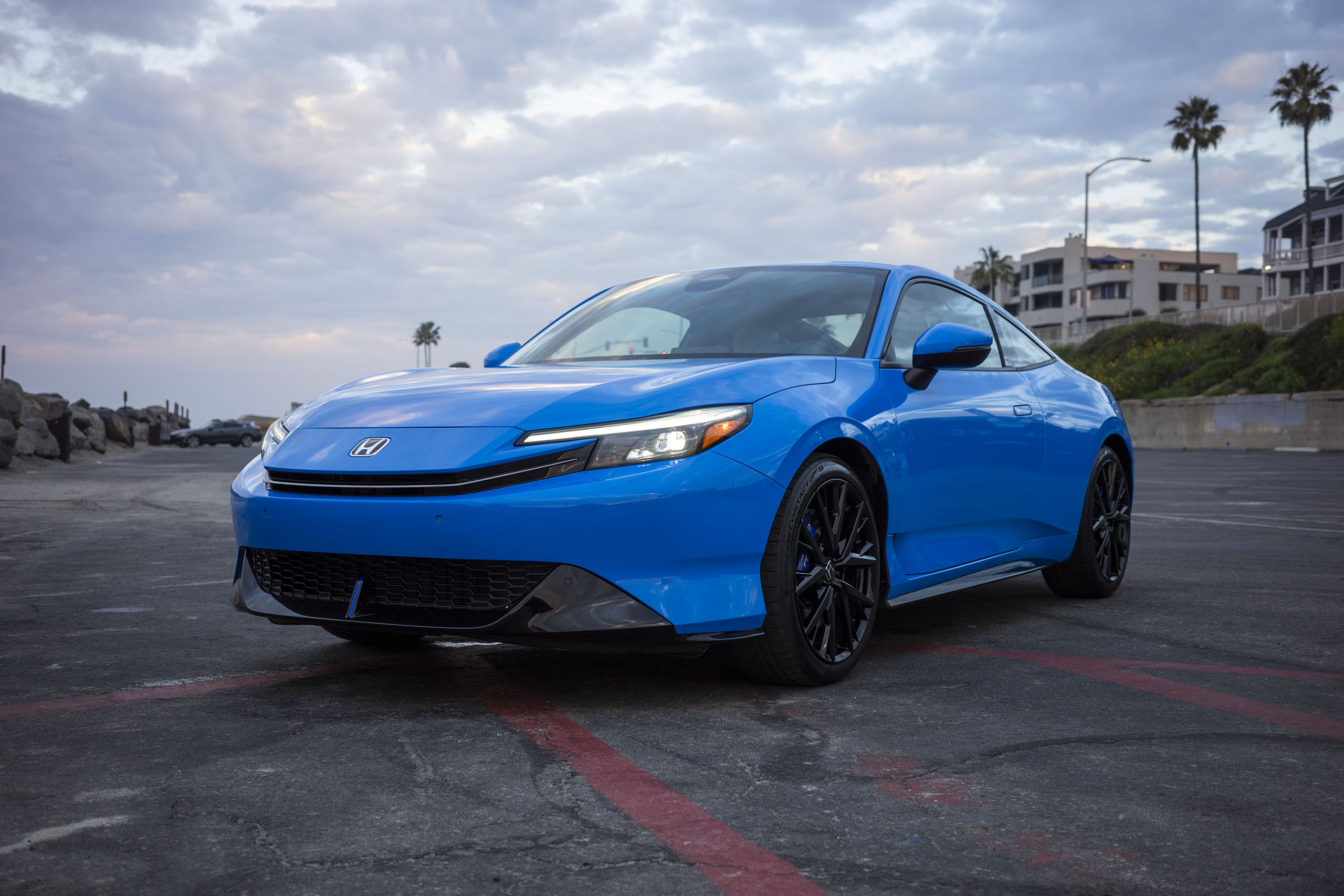
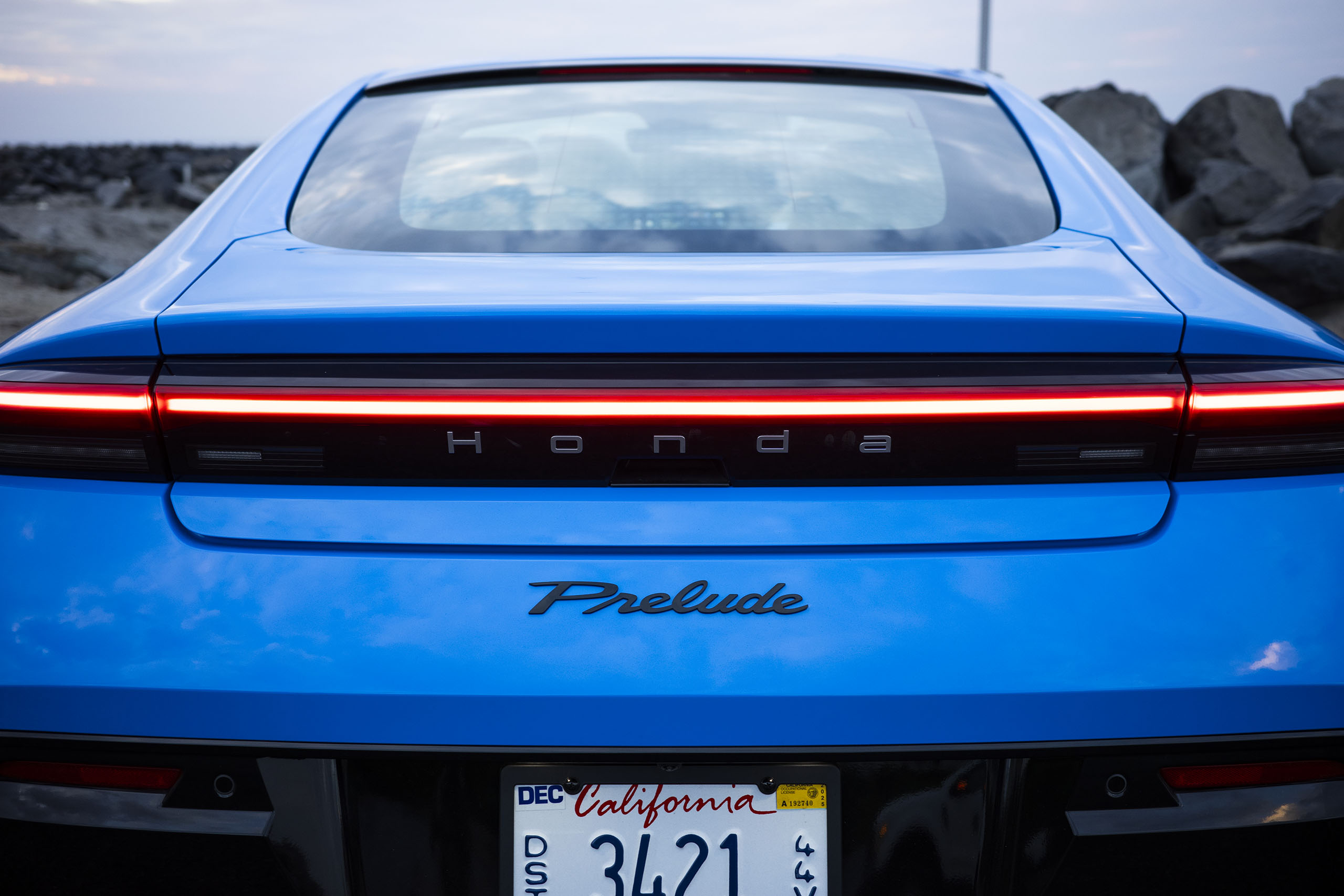
Then again, if you really wanted rear seats, you would’ve bought a Civic Hybrid and saved 10 grand. The Prelude is a coupe, unapologetically so, and the market could sure use more of those. It also looks fantastic. There’s a little Coke bottle to its wide stance and cinched midsection, and the long rake to its liftgate is pretty aggressive, especially for a $40K car. The rear-wheel-drive Toyota GR86 and Subaru BRZ might be more juvenile and exhilarating at speed, but even they don’t commit this hard to a silhouette entirely devoid of practicality.
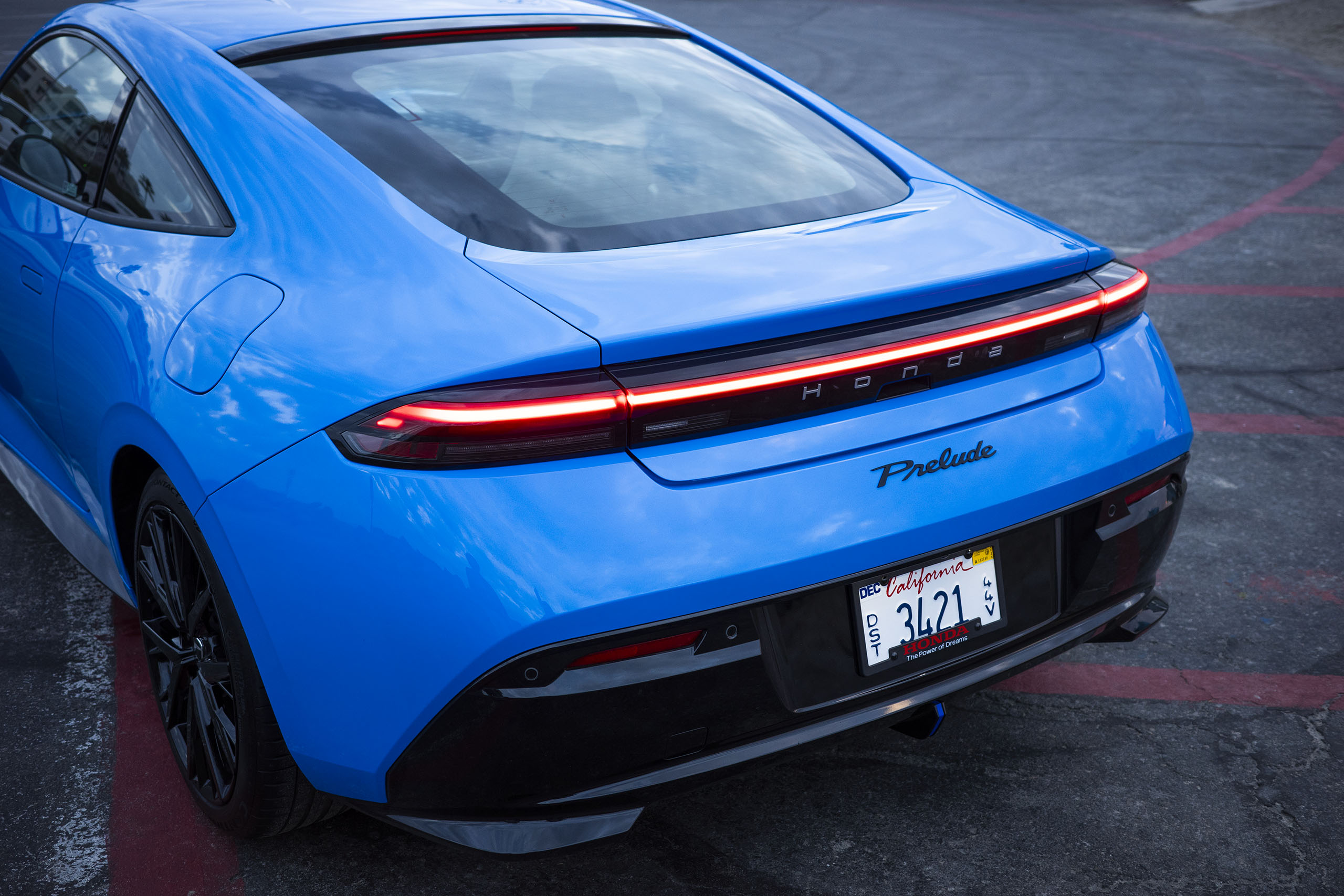
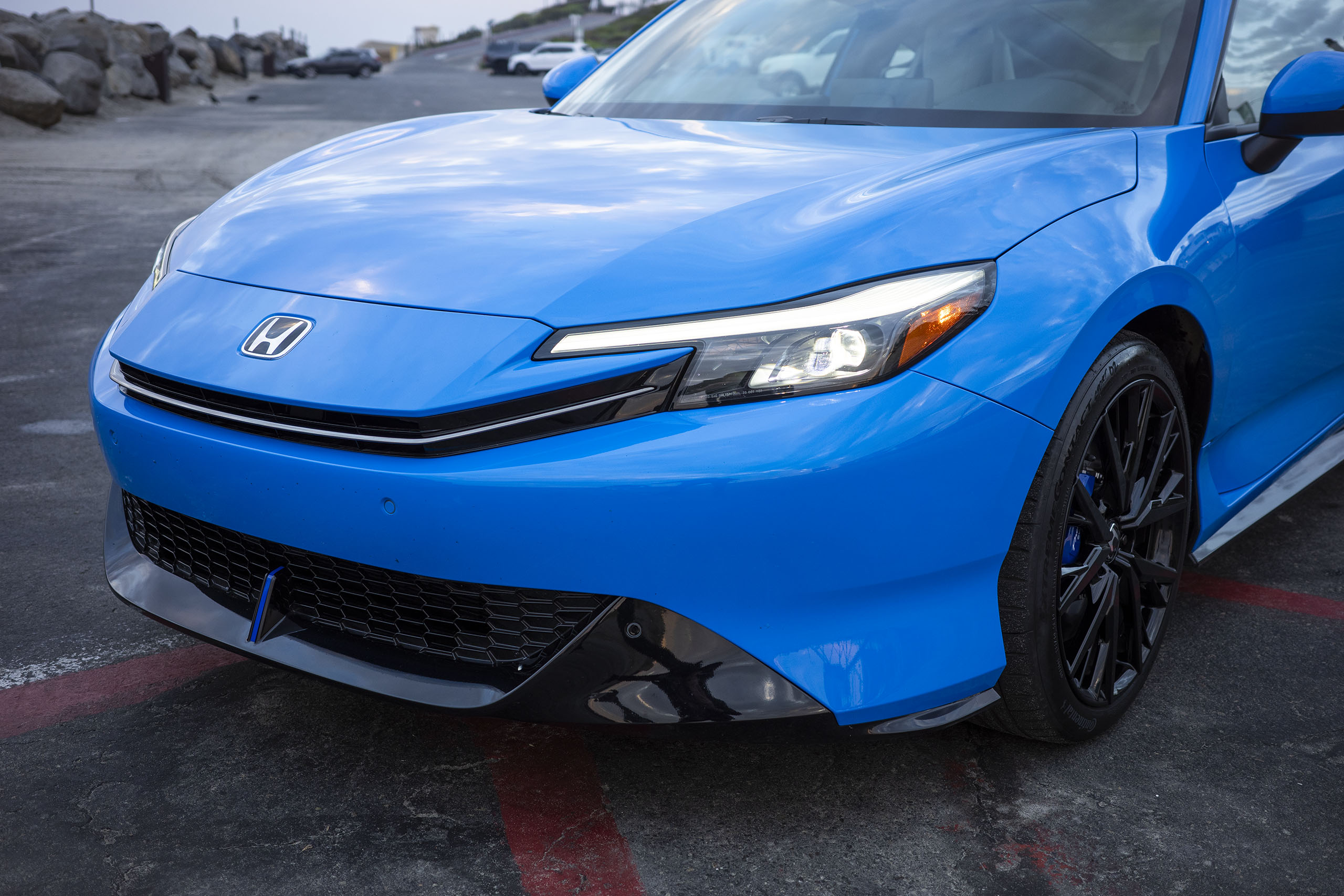
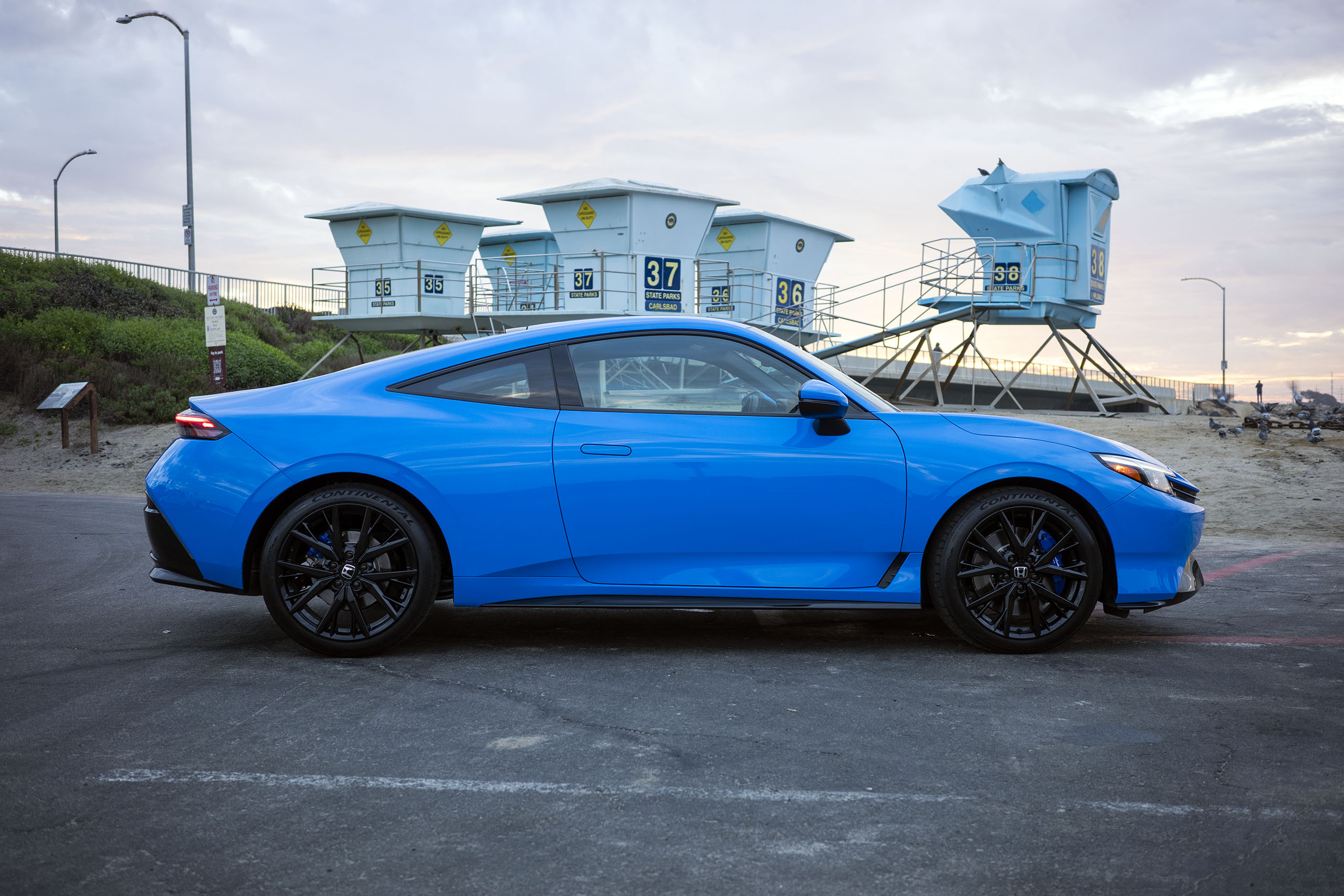
Though the new Prelude is merely 4 tenths of an inch longer than the final model in 2001, it is 5 inches wider. In Boost Blue, which isn’t even my favorite color, it looks like a teardrop—a tribute to all those “personal luxury coupes” of the ’90s, including not only the Prelude but also the Celica, Mazda MX-6, Ford Probe, and Mitsubishi Eclipse, to name a few. Cars that may have lacked edge, but still had a certain value because they were elegant and fun enough to drive. I want to believe those kinds of vehicles can still exist, and that the new Prelude is one of them.
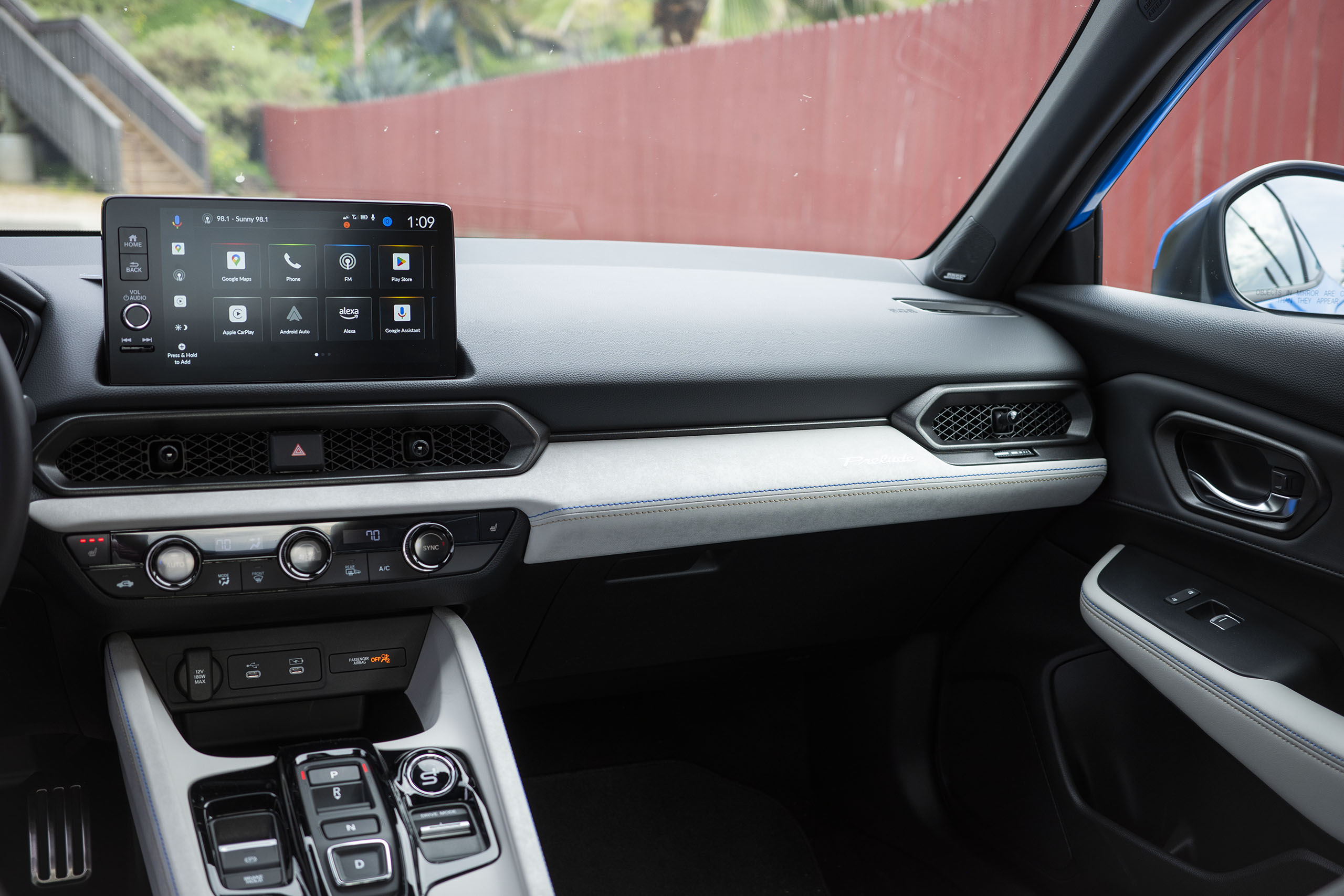
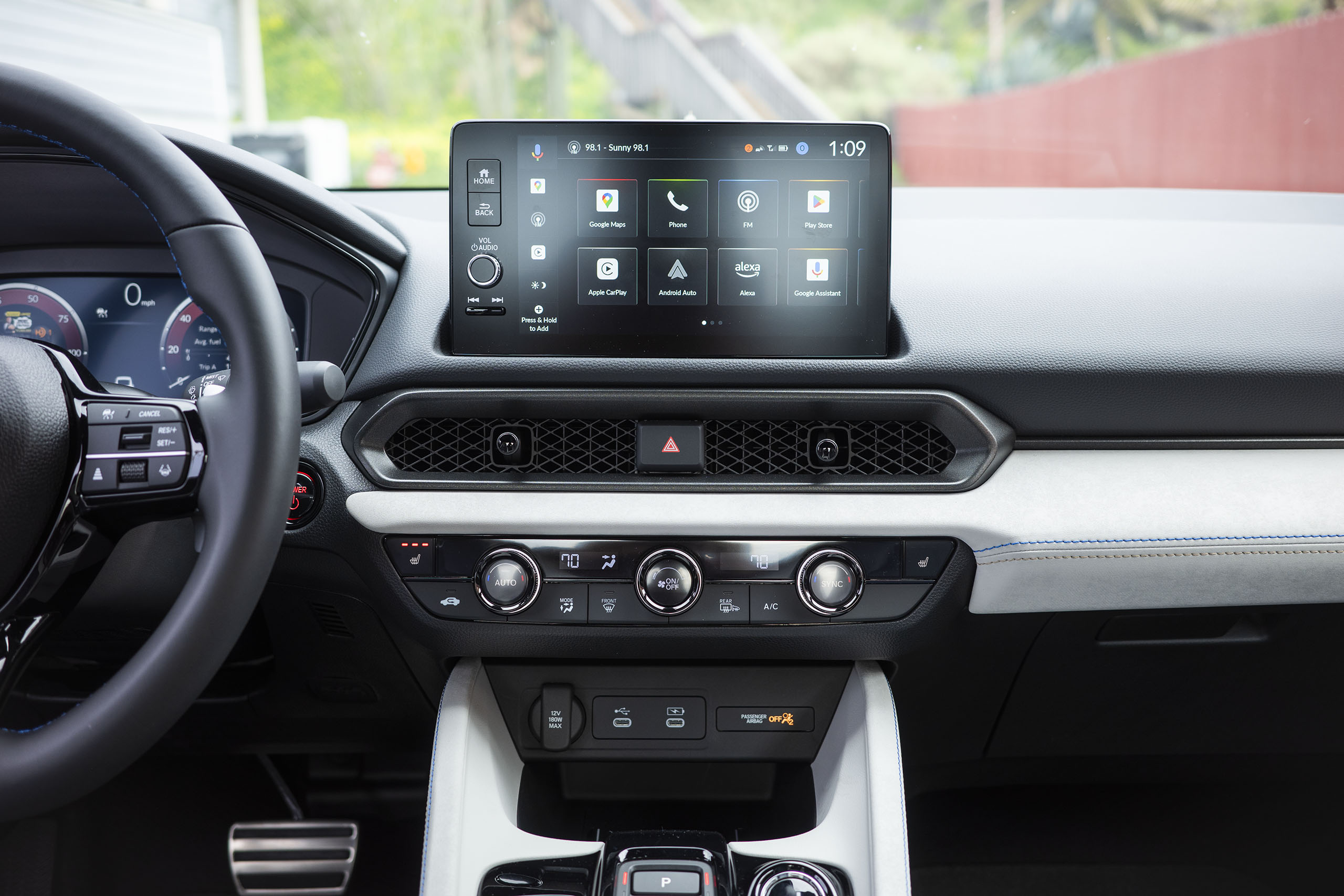
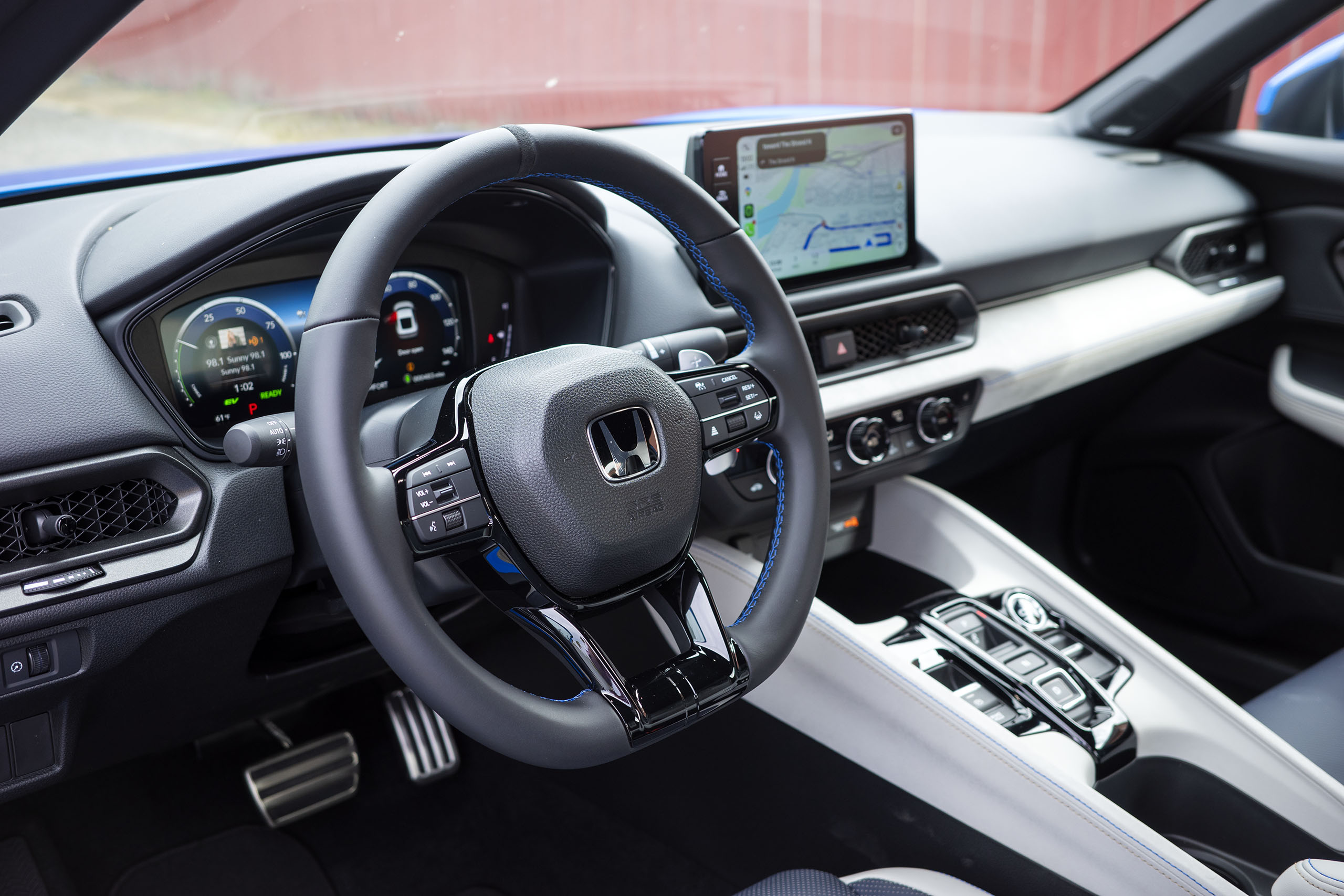
But there’s no personal luxury without luxury, and the Prelude mostly succeeds there, too. The seats are bolstered asymmetrically because the driver and passenger don’t have the same role in a car, so why should they have the same support? I love the navy and white leather colorway, and the Houndstooth-pattern perforations are a nice touch. (Side note, but I’m bummed that Honda won’t let you spec the Rallye Red exterior with anything other than a black cabin. Red, white, and blue are HRC colors!)
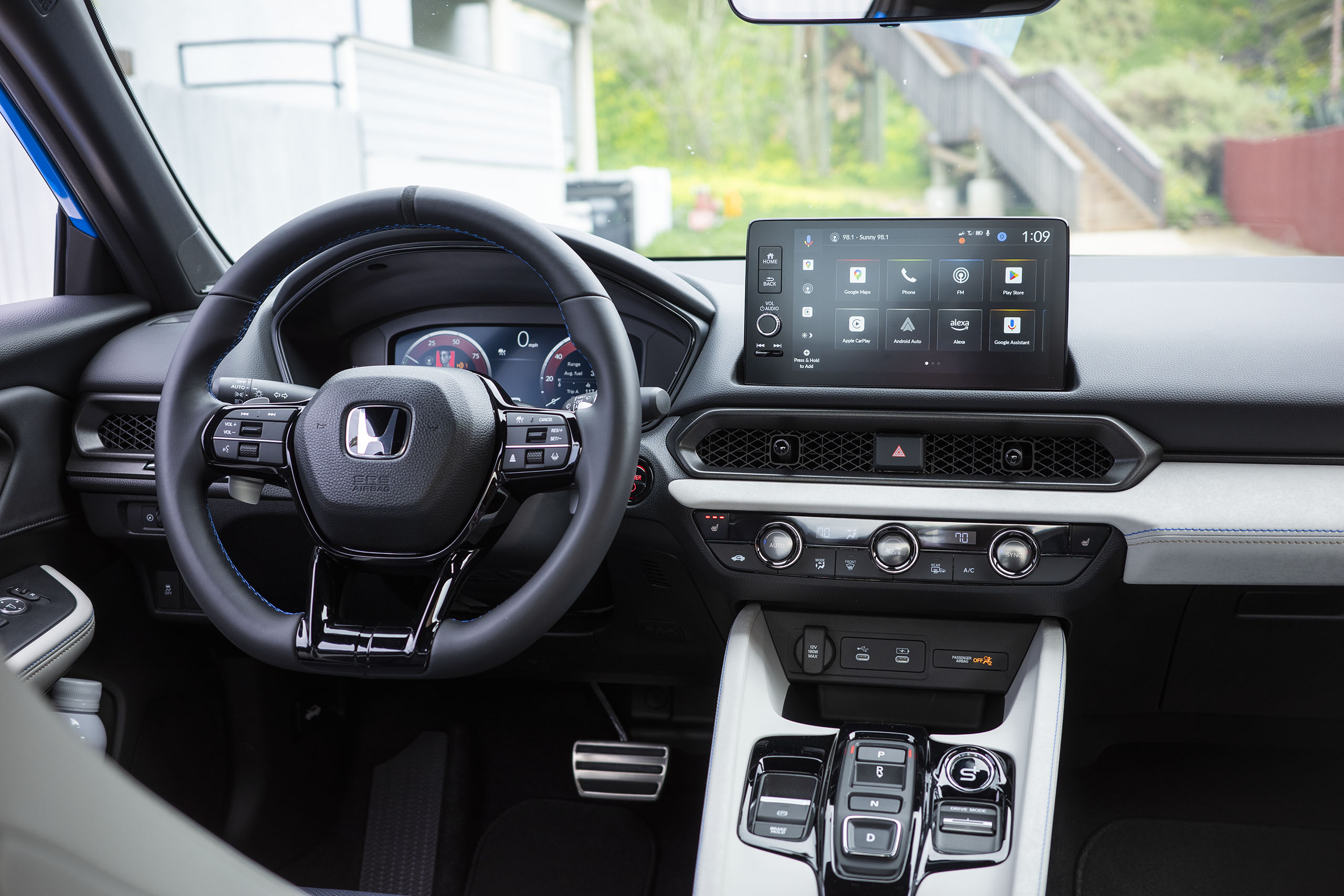
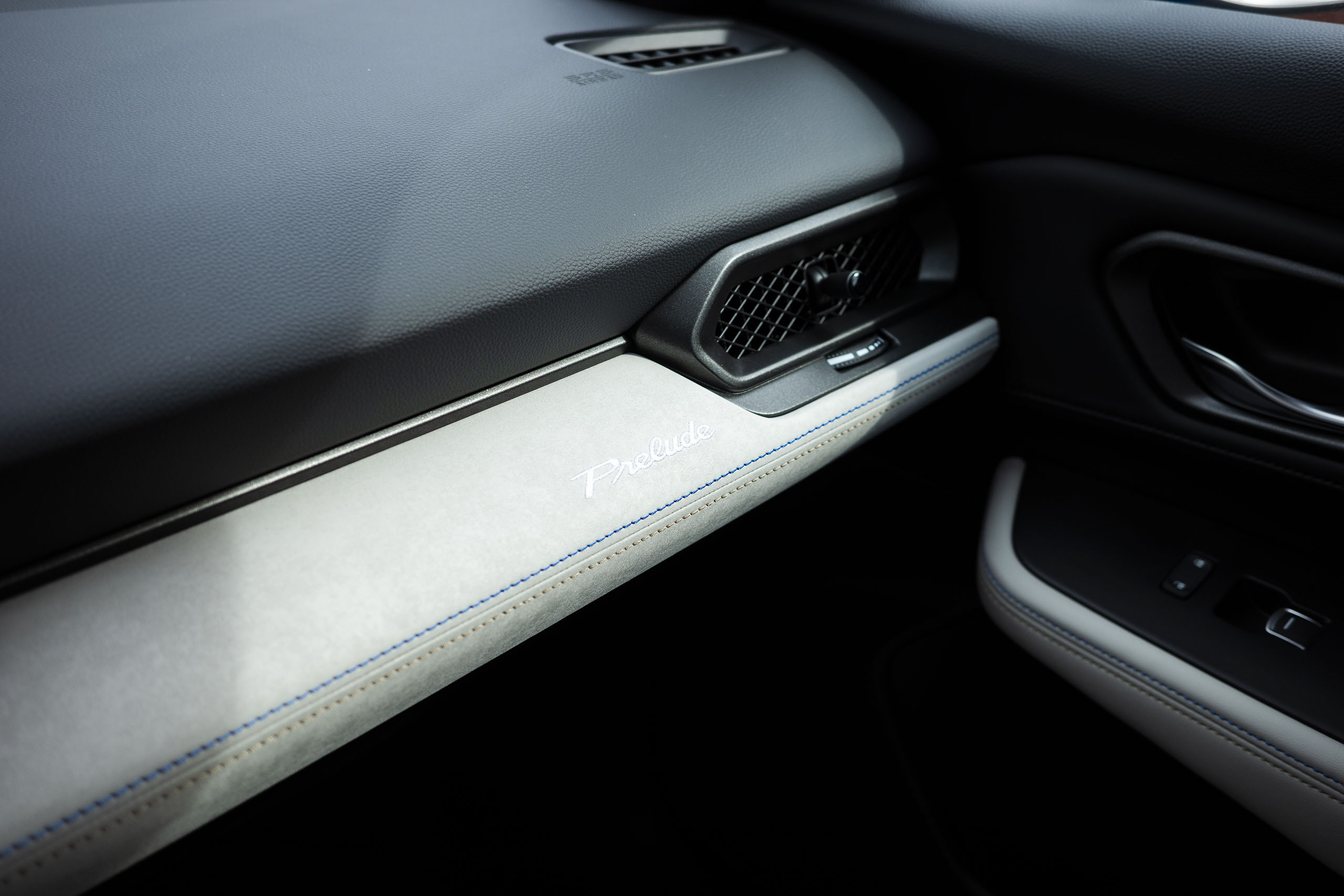
The suede-like fabric on the dash feels a little strange (it’s like a really fine-grain suede), but it looks good, as does the embroidered Prelude logo within it. And Honda deserves kudos for making the shift paddles out of metal, rather than reaching for the same plastic parts it’d use on any other model. Overall, the Civic’s interior was already a winner, and the Prelude kicks everything up with more premium materials—so long as you ignore the back not-seat, upholstered in some of the cheapest cloth you’ve ever seen in a modern car.
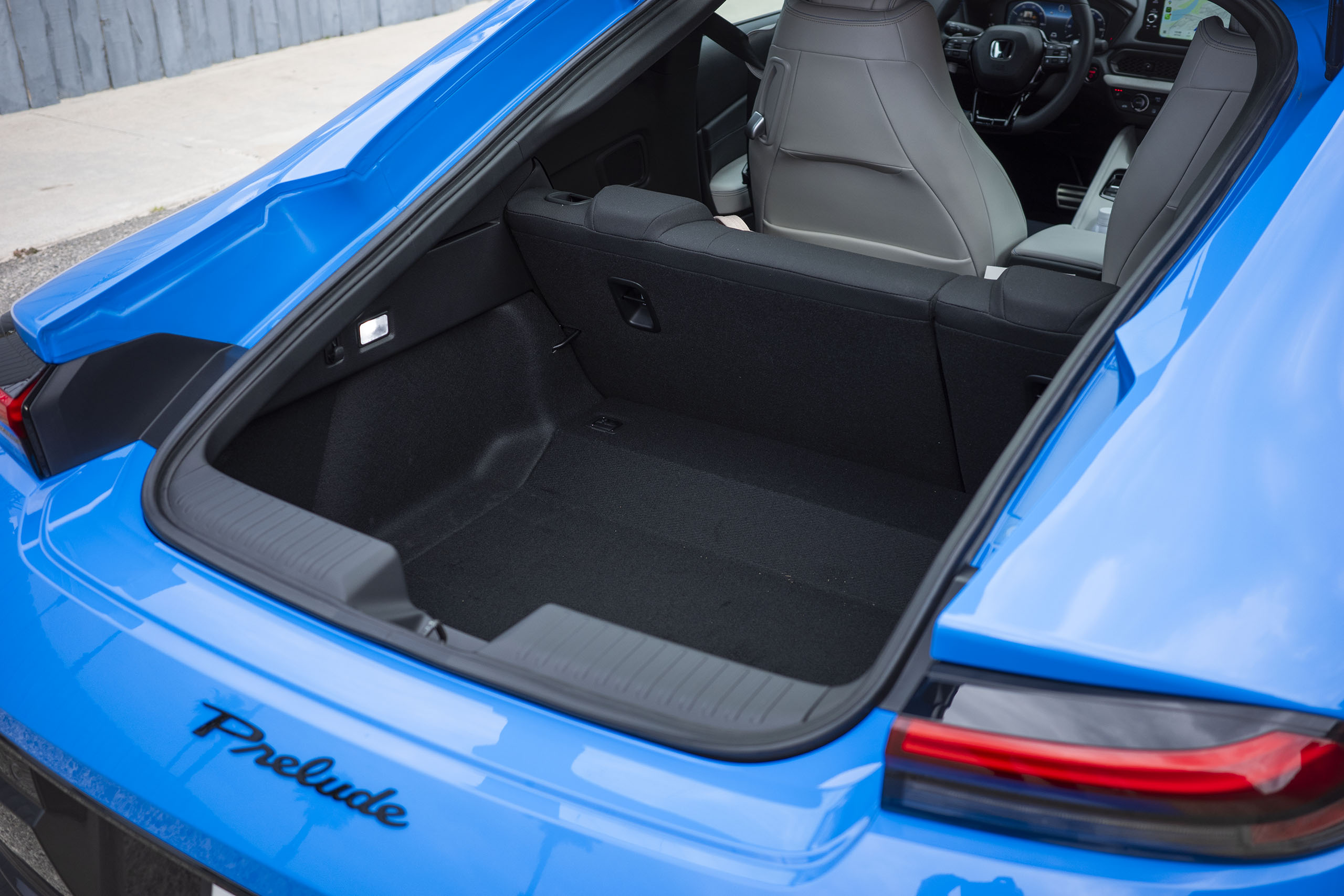
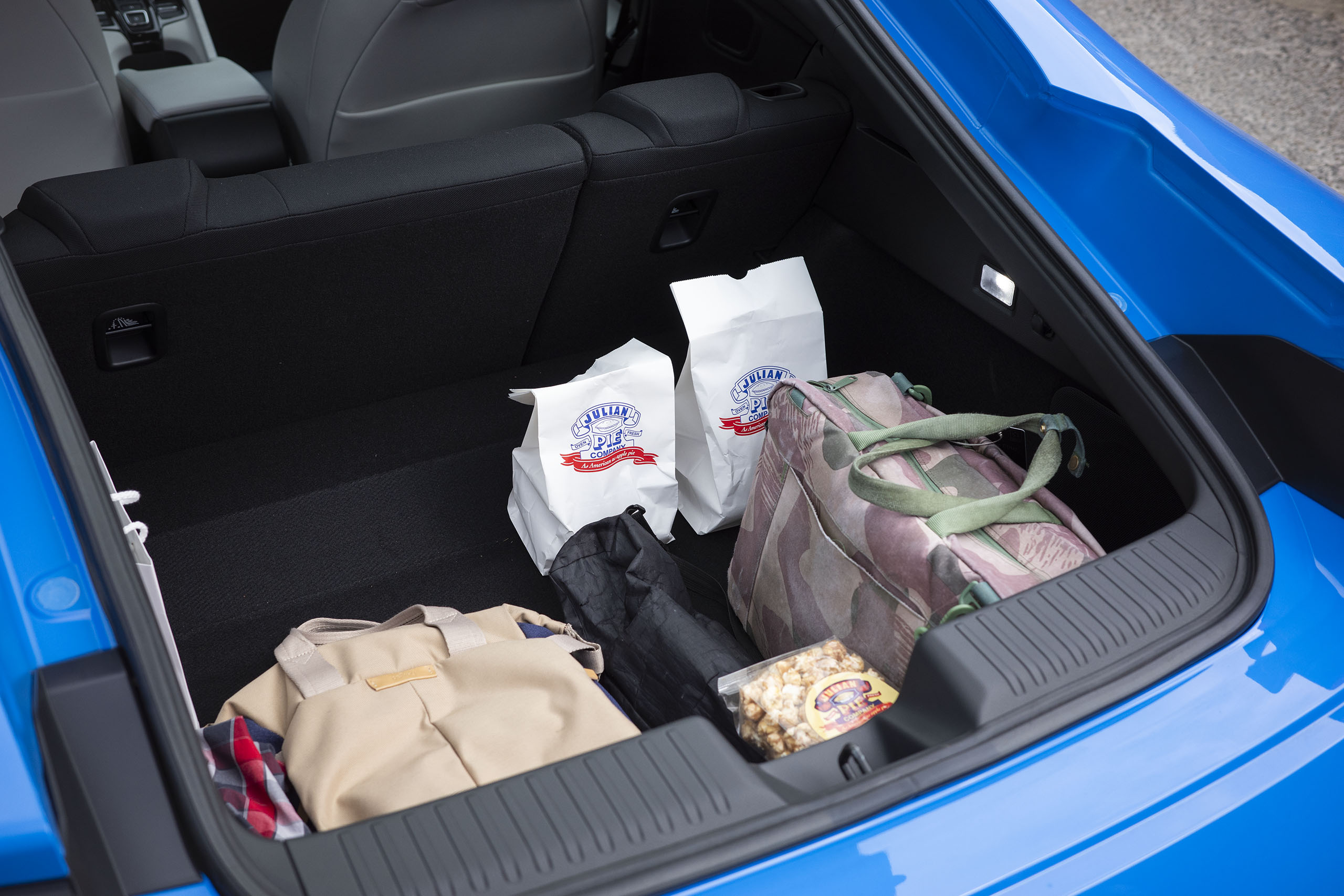
But that’s a nitpick, and this cabin is truly missing only one thing that matters. See, while the rear bench isn’t useful for people, it’s still very useful for stuff. To access it, you’re going to need to move the seats often, and a handy lever near the top of the Prelude’s thrones makes at least the act of folding them down easy. Unfortunately, returning them to the spot they were in will require some trial and error, because despite the coupe’s premium pretensions, it lacks powered seats.
Normally, I wouldn’t care about that, but this is a cramped car, and you’re going to be sliding those things back and forth a lot. Seat memory is a must, and frankly, I don’t know how Honda could overlook it at $43,000.
2026 Prelude Driving and S+ Shift Impressions
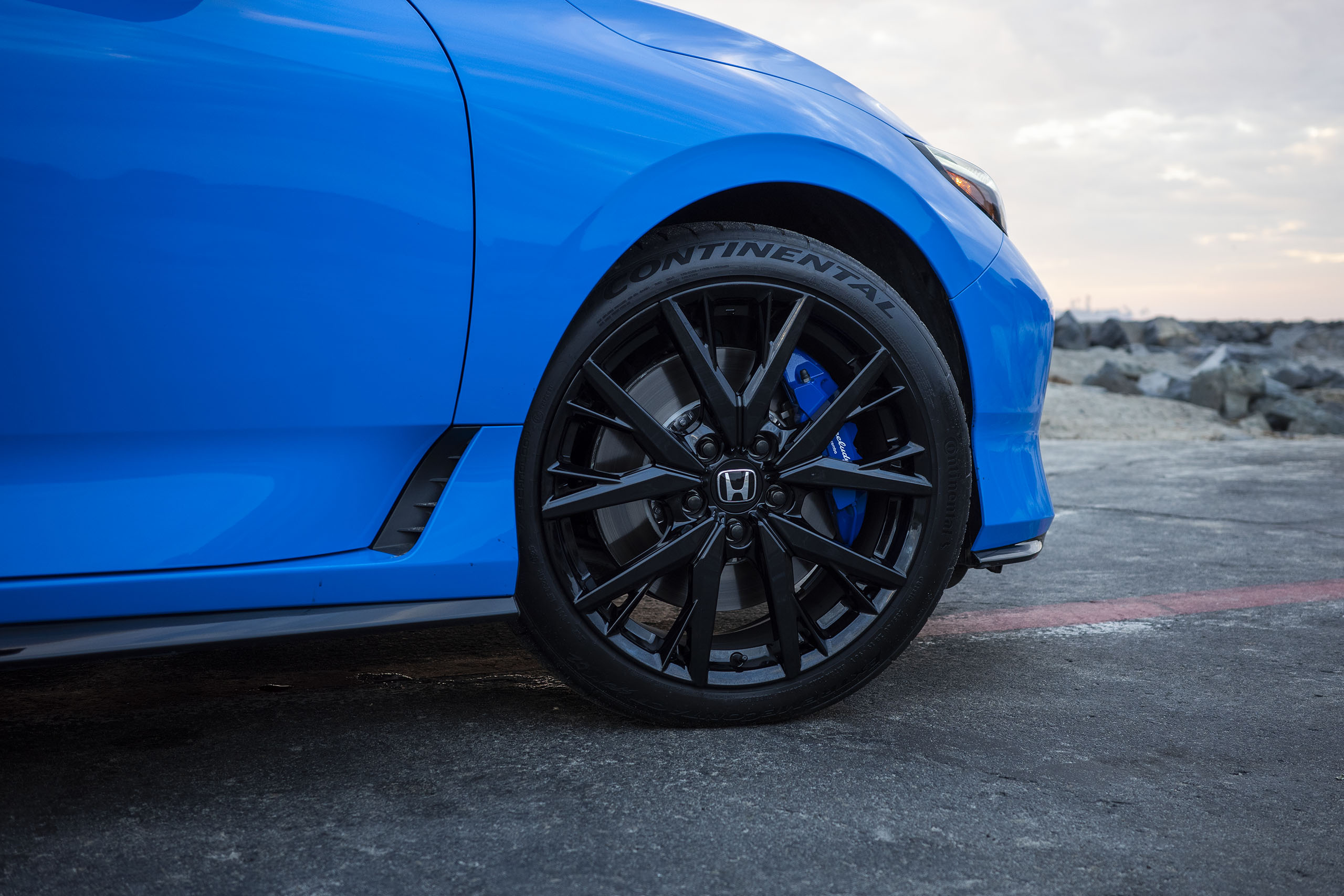
To get behind the wheel of the Prelude, Honda brought the media to sunny San Diego, which certainly fits the Prelude’s vibe better than the winter storm that swept from Texas through the Northeast last weekend. The fleet was riding on optional Continental ExtremeContact Sport 02 summer tires, but this car really doesn’t need ’em—quality all-season rubber would be fine enough.
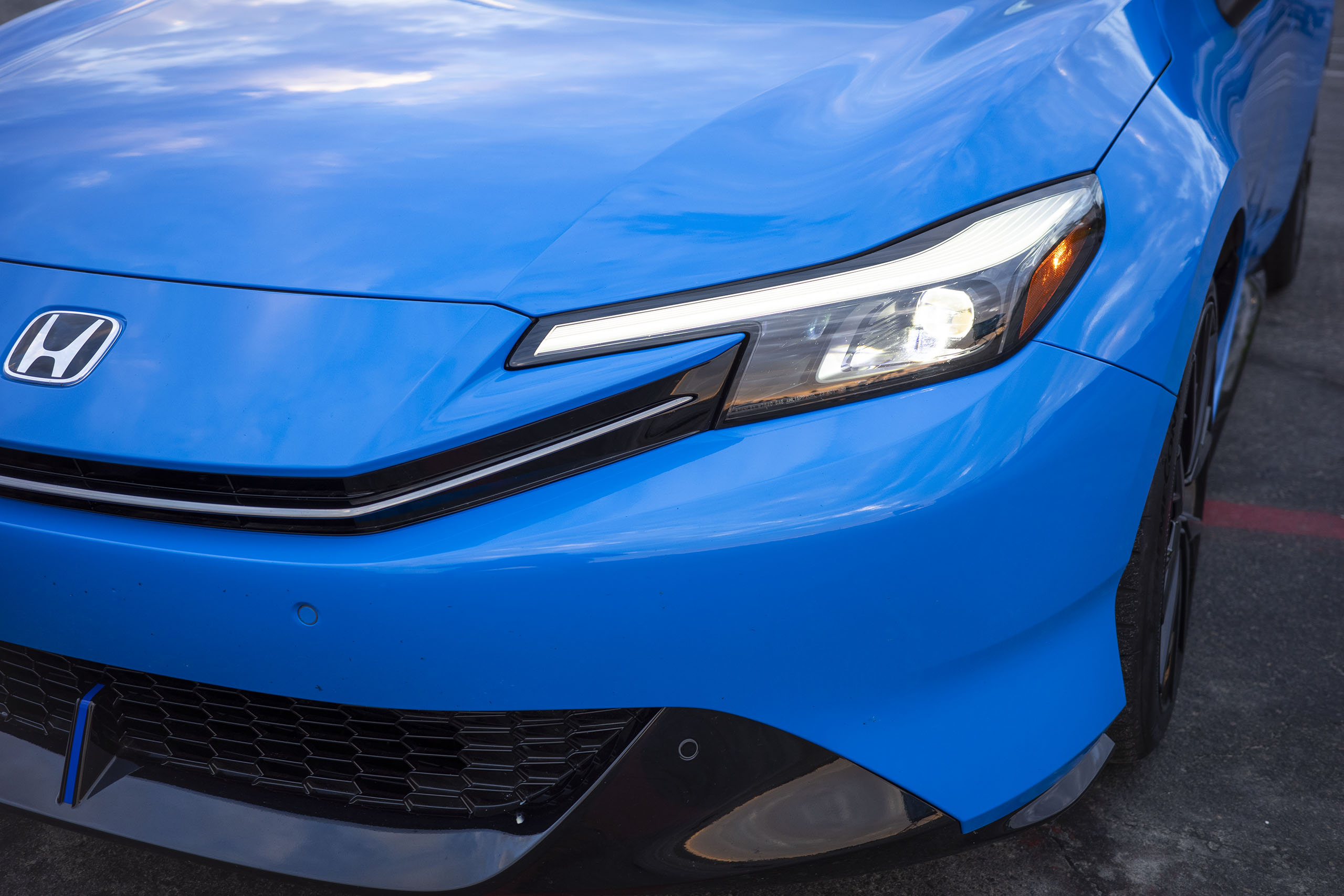
I say that because the Prelude feels, on these canyon roads, like a zippy car, but not a fast one. A car ideal for safe-speed darting around in. Initial steering response, weight, and mid-corner composure are sublime, but then why the hell wouldn’t they be? The parts responsible came from the Civic Type R, with a little tweaking. The steering rack, for example, has been made a touch faster for Prelude duty.
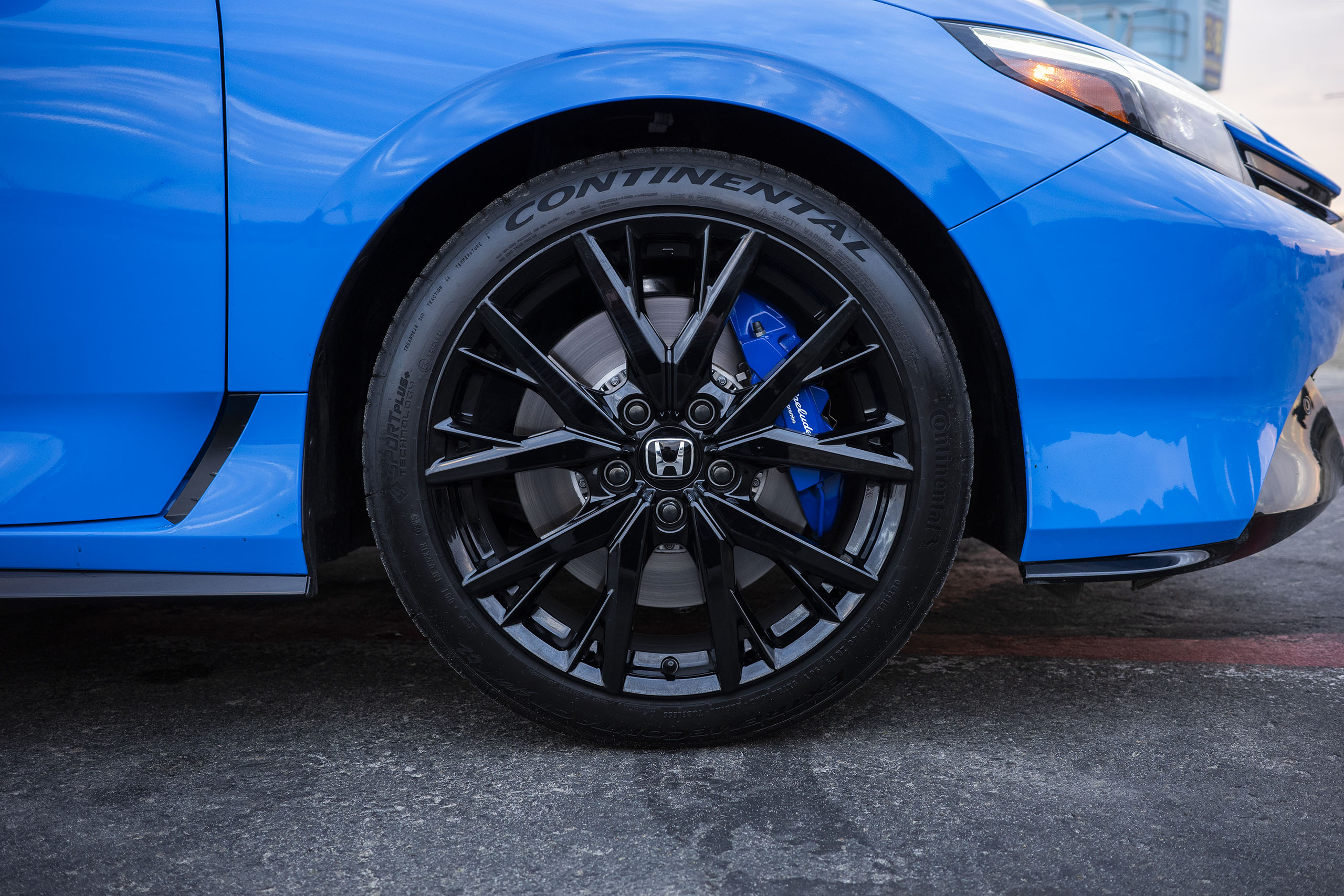
Much as with the Type R, a winding road in the Prelude is a frictionless experience. Everything responds exactly as you’d expect it to, and a sense of ease comes naturally. There’s no abstraction between your hands and the tires, no hiccups in the power delivery, and the brake pedal falls with just the right amount of pressure, offering up a whole lot of stopping force when called upon. The Prelude doesn’t throw its weight around so much as it carves. It’s a joyful and drama-free drive.
Likewise, the adaptive dampers fit very well with the baby grand tourer ethos Honda is pitching this coupe with. Keep your expectations in check; Comfort mode doesn’t turn this thing into a Continental GT, but it’s definitely more compliant than my decidedly not-adaptive GR Corolla.
Electric motors mean early torque is always comfortably within reach. It’s when you get up there, and press the accelerator down into the carpet when you’re already cruising, that the Prelude begins to feel less like a CTR and more like a CR-V. I don’t know how Honda could’ve massaged another 30 or so horsepower out of that hybrid system, but if it came at the cost of those big front brakes, I’d make the trade.
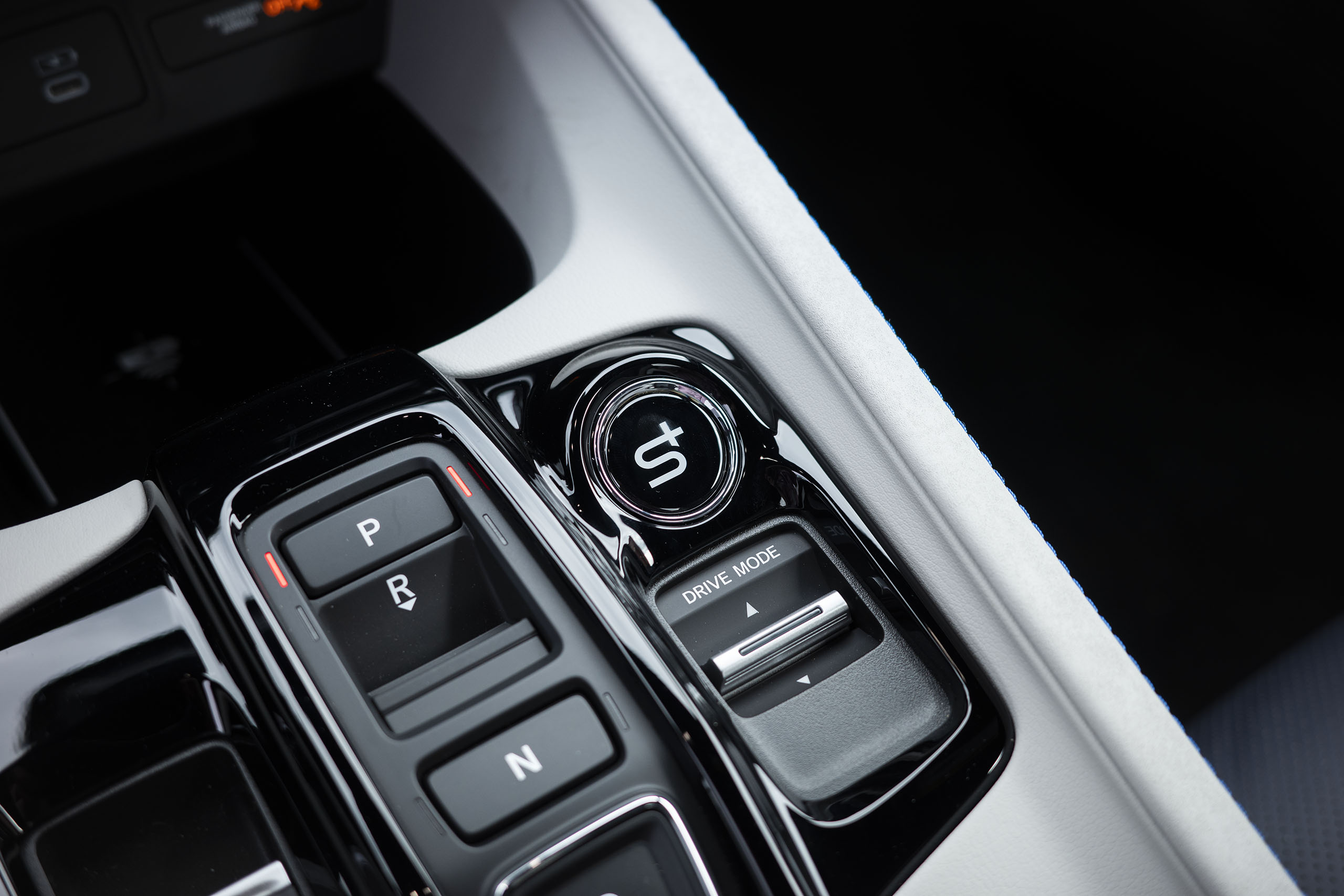
To perhaps make that aspect of the experience a little more exciting, Honda has introduced its S+ Shift system here in the new Prelude. See, these two-motor hybrids that Honda sells don’t have transmissions. Instead, the propulsion motor drives the wheels through a single-speed reduction gearset until about highway pace, when the engine takes over via a lockup clutch. S+ Shift simulates the behavior of a sequential manual transmission, specifically an eight-speed unit.
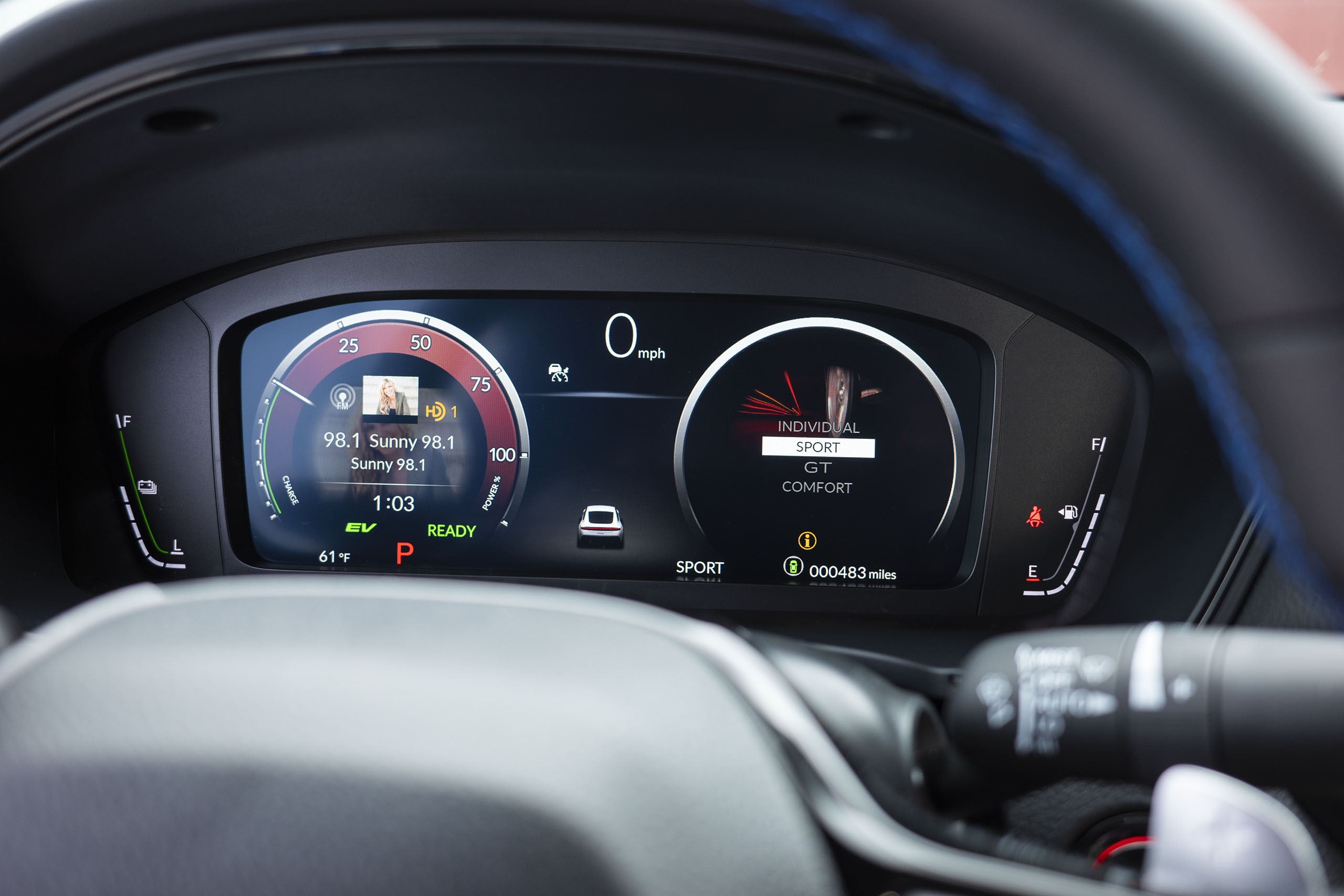
Frankly, if I could choose any number of fake gears at my disposal, eight is definitely too many and kind of a deal-breaker. But the system does a reasonable job of mimicking a manual process with software. It’s activated by a big S+ button next to the drive selector and works hand in hand with the car’s three basic drive modes—Comfort, GT, and Sport—to function differently depending on which one you’re in. For example, in Sport, the piped-in engine sound will be at its loudest, and downshifting, though “rev-matched,” will deliver more driveline shock.
The fake noise is pretty weak; it sounds like it’s coming from an engine in nearby traffic, rather than the one in your car. Also, the jolts are muted, and downshifting prematurely and redlining doesn’t elicit a sudden drop in acceleration so much as a light hitch. It’d go a long way toward a more engaging, realistic feel if Honda could amp those sensations up. Nevertheless, a lot of clever thinking has clearly gone into this feature. For example, to simulate the sludgy feeling of being engaged in way too high a gear for your speed, the generator motor actually switches into regen mode to increase friction against the engine, limiting drive power. How cool is that?
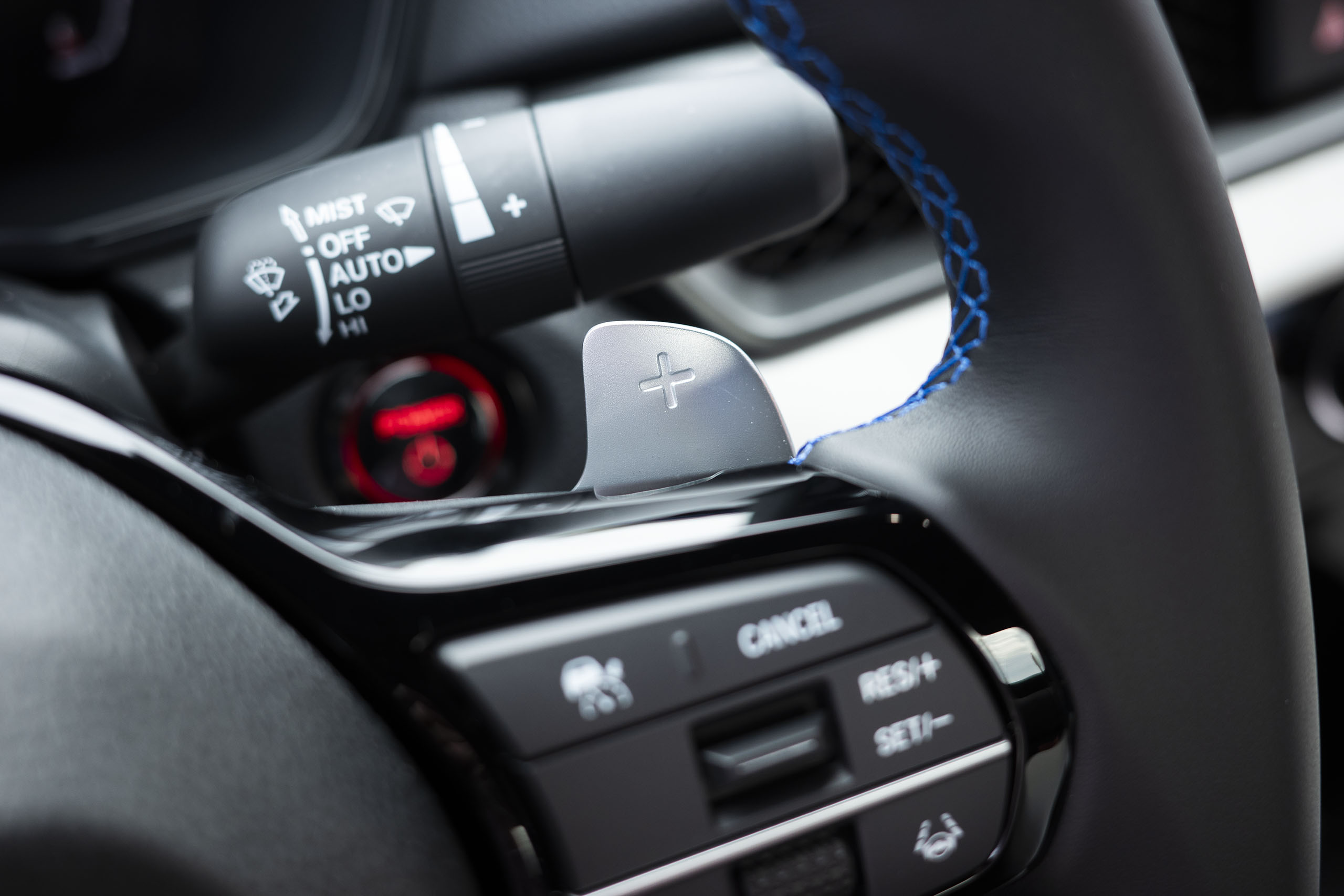
S+ Shift is neat, but it’s not compelling enough to lure anyone devoted to three pedals. That said, it would definitely stand a better chance if Honda designed it to let you handle the shifting at all times. No, really—after a period of inactivity, the fake transmission will start punching through the gears on its own, like you accidentally brushed one of the paddles in an Acura RDX.
The active drive mode dictates how much leeway the car will give you before stepping in, and I go into more detail about this in another article, featuring quotes from the Prelude’s lead planner, if you’re curious to know more. But discovering that Honda went to seemingly great lengths to engineer a fake manual mode only to prevent drivers from staying in it might just be the most bewildering thing about this car.
2026 Prelude Options, Fuel Economy, and Competition
The new Prelude only comes in one trim with practically everything you could want for $43,195, power-adjustable seats notwithstanding. The only choice you have to make before dealer add-ons is that of color. Boost Blue Pearl and Winter Frost Pearl cost an extra $455 and $655, respectively, and a Winter Frost/Black roof two-tone option is $1,155.
Honda rates the 2026 Prelude for 46 miles per gallon city, 41 mpg highway, and 44 mpg combined. That’s a smidge lower than the Civic Hybrid’s 50 city/45 highway rating or, for that matter, the 52 mpg across the board that most trims of the Toyota Prius get. And while I think it’s a little silly to stack the Prelude’s fuel economy figures against those of the Civic Type R or any other hot hatch—it trounces them all, obviously—I reckon the Civic Si makes for a fair comparison, given that it equals the Prelude in power and trails it in torque. The manual-only Si promises 27 mpg city and 37 mpg highway, but starts at $32,690, which is a $10,500 savings over the Prelude.
That brings us to price, which seems to be the hot topic surrounding this car, for good reason. When we first learned that Honda intended to sell the Prelude, many pegged it at $35K, if not a little higher. But once the coupe hit the Japanese market, it became clear that Honda didn’t envision things the same way.
$43,195 is a different territory. The GR86 starts at $32,395, and the BRZ at $37,055. An EcoBoost Mustang is $35,330, and a Nissan Z starts at just about a grand more than the Prelude. Those are just the coupes. The GR Corolla is $2,000 less; the VW GTI and Hyundai Elantra N are around $7,000 less. Even the Subaru WRX is getting significantly cheaper this year, undercutting the Prelude by five figures with the revival of its base trim.
True, those cars aren’t necessarily competition for Honda here, and they’re not going to the same demographics. But the buyer opting for a Prelude with all of that in the periphery will be choosing to pay more for, as far as I can tell, fewer doors, a smidge more comfort, and much better fuel economy. The power deficit wouldn’t even register as a consideration. Maybe they’ve only got eyes for the Prelude’s exterior, and that’s fair. I am sure these people exist, but I’m not sure how many of them there are.
The Verdict
Looking back, this has kind of always been the Prelude’s lot in life. It’s never been the fastest or the cheapest. Adjusted for inflation, the fifth-gen model cost $1,500 more than this one, back in 2001. The Prelude has a long legacy as an attractive stage for Honda’s latest technologies, like sunroofs, four-wheel steering, and VTEC. Now, the company is calling on it again to prove to the world that an unassuming hybrid powertrain can serve as the basis for a uniquely smooth and pleasurable driving experience.
That’s refreshing, especially while we bemoan everything morphing into a crossover. In spite of its powertrain, the Prelude is an anachronism in 2026—a small coupe less concerned with performance than poise. It makes some mistakes and costs too much, but it also looks fantastic, and handles just as well. Nobody makes cars like this anymore, because they don’t speak to everybody. If this one speaks to you, don’t miss your chance.
| 2026 Honda Prelude Specs | |
|---|---|
| Base Price | $43,195 |
| Powertrain | 2.0-liter four-cylinder | two-motor hybrid system | front-wheel drive |
| Horsepower | 200 |
| Torque | 232 lb-ft |
| Seating Capacity | 4 (technically) |
| Curb Weight | 3,261 pounds |
| Cargo Volume | 15.1 cubic feet |
| EPA Fuel Economy | 46 mpg city | 41 highway | 44 combined |
| Score | 8/10 |

Quick Take
While a little more power or a lower price certainly wouldn’t hurt the Prelude, this reborn coupe is more charming than it’d seem on paper, and truly one of a kind.

Honda provided The Drive with travel and accommodations, along with the use of a vehicle for the purpose of writing this review.
Loading comments…
Comments couldn’t be loaded. Please refresh the page.