
If you know deep down in your heart that the Toyota RAV4 Hybrid is the sensible choice, but you just can’t bring yourself to be one more in the sea of Uber drivers roaming the streets, Mazda’s got you covered—and is probably counting on a few of you feeling this way.
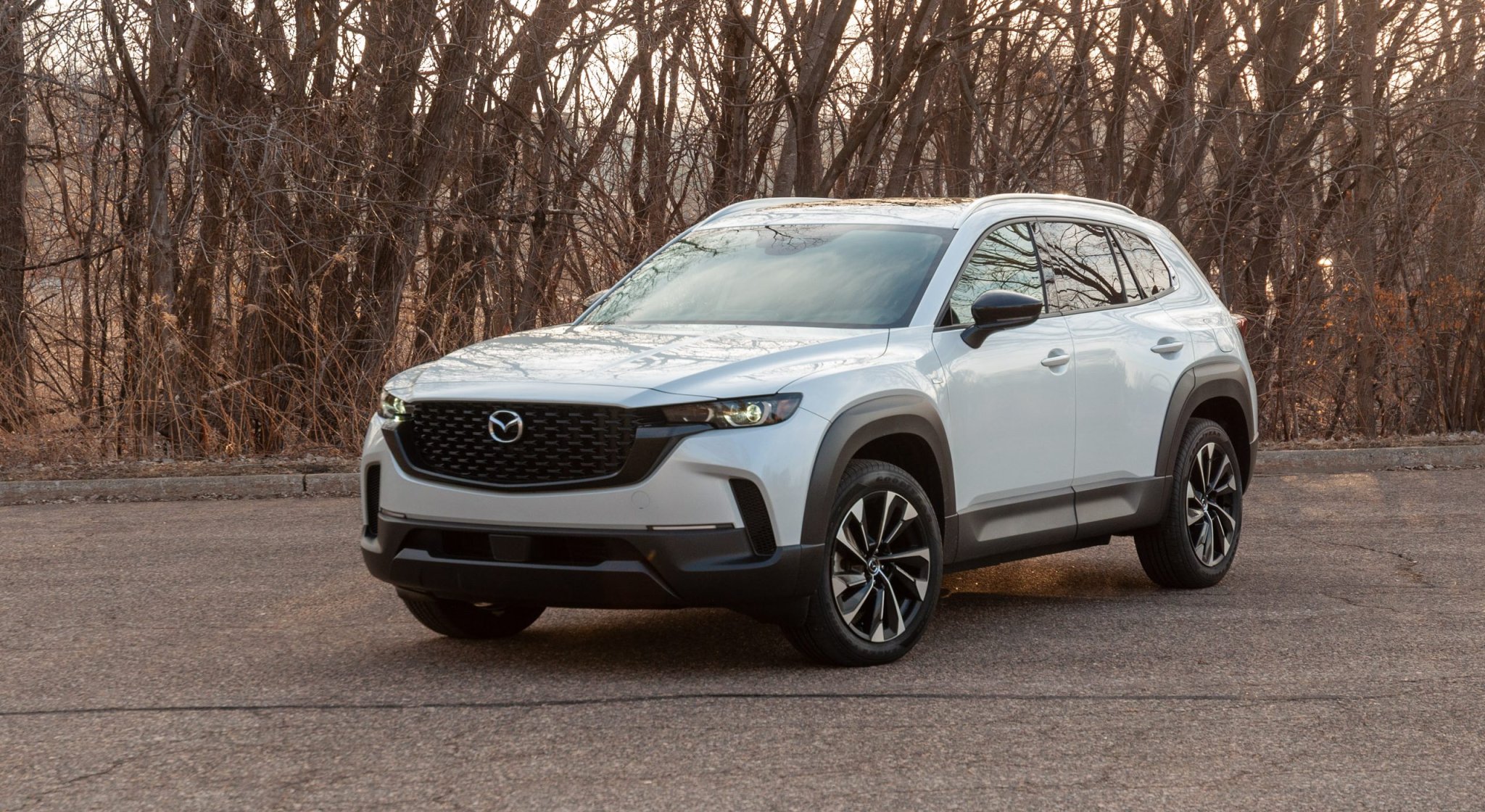
The 2026 Mazda CX-50 Hybrid shoves a fuel-sipping powertrain into the sharp-looking crossover with Zoom-Zoom vibes, yet is void of any character. The truth hurts, and here’s why and how it disappoints.
The Basics
Now in its sophomore year, the 2026 Mazda CX-50 is the automaker’s second compact in its small lineup. It sits alongside the more upscale, more premium, and better-driving CX-5, but its more aggro vibe targets a different demographic, according to Mazda. It’s convinced the two aren’t cannibalizing each other’s sales but actually increasing overall sales.
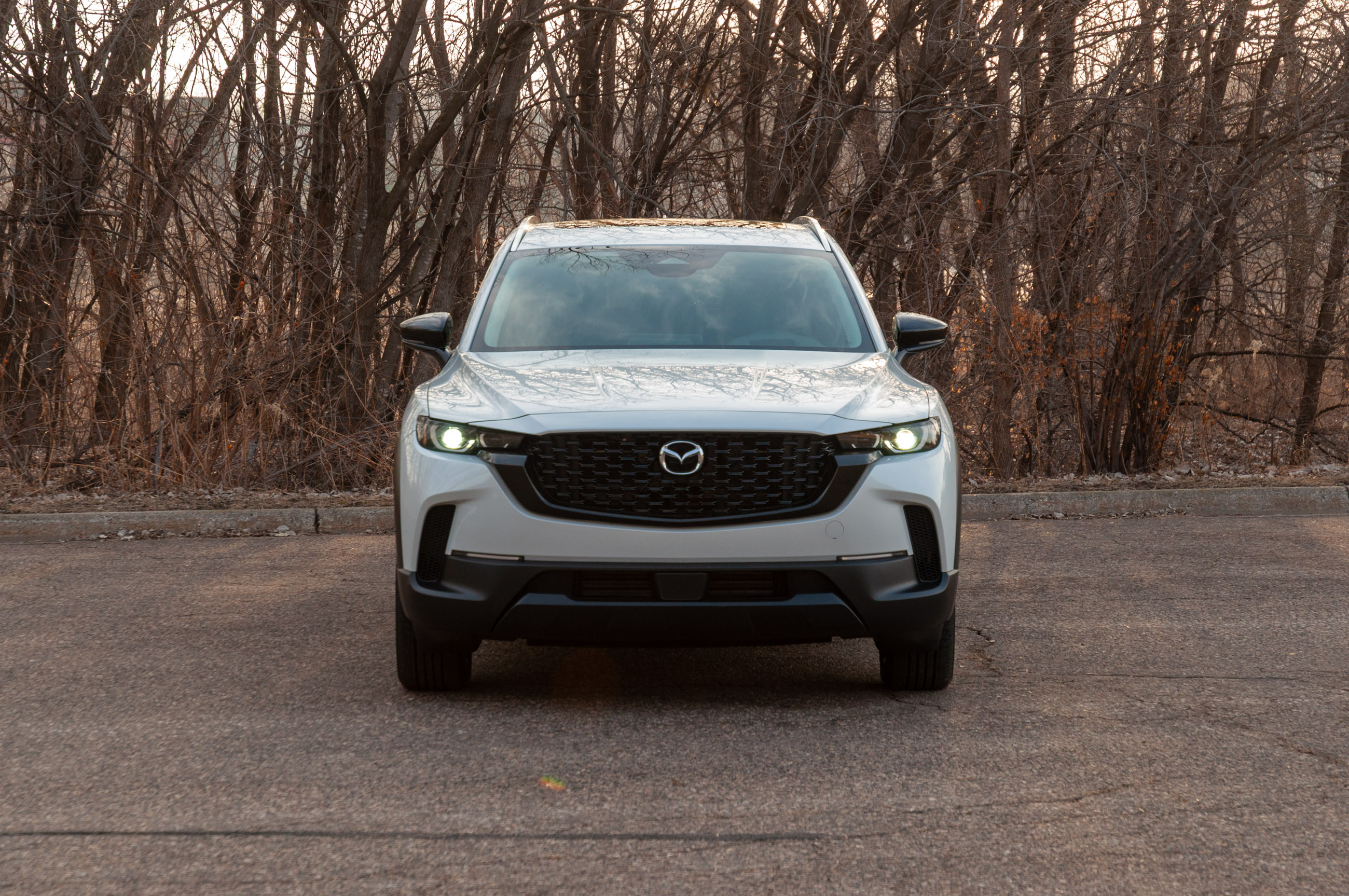
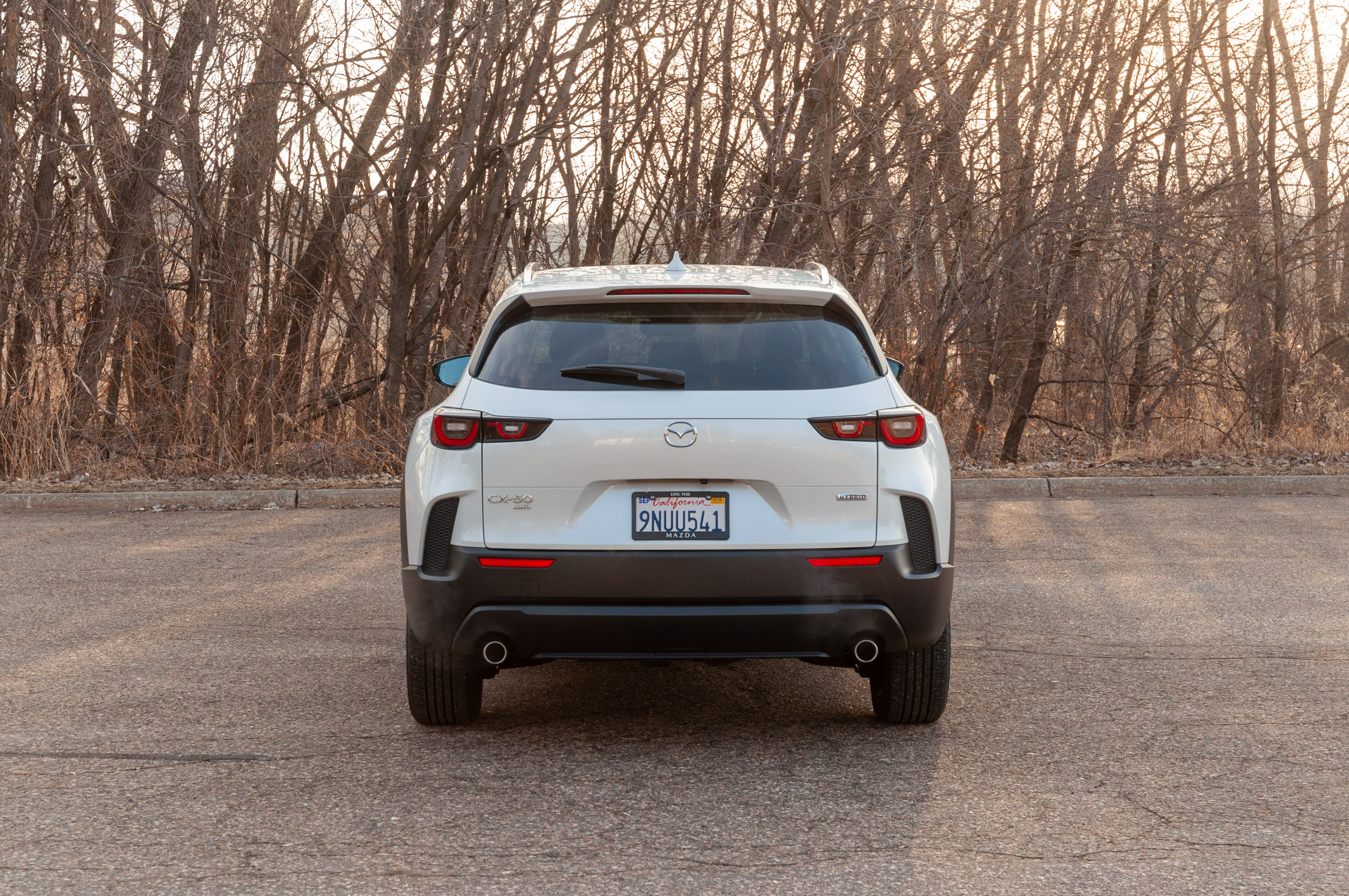
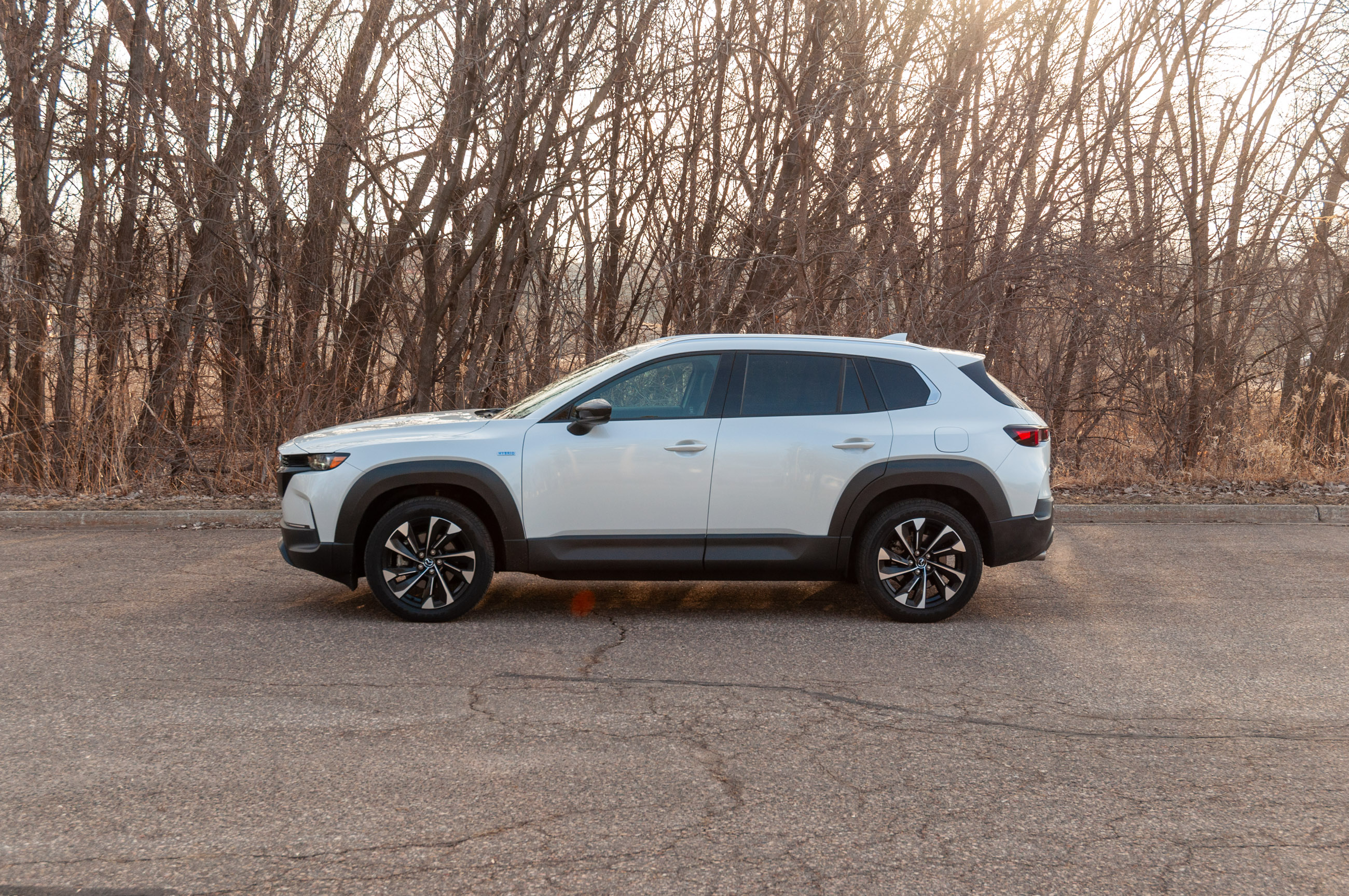
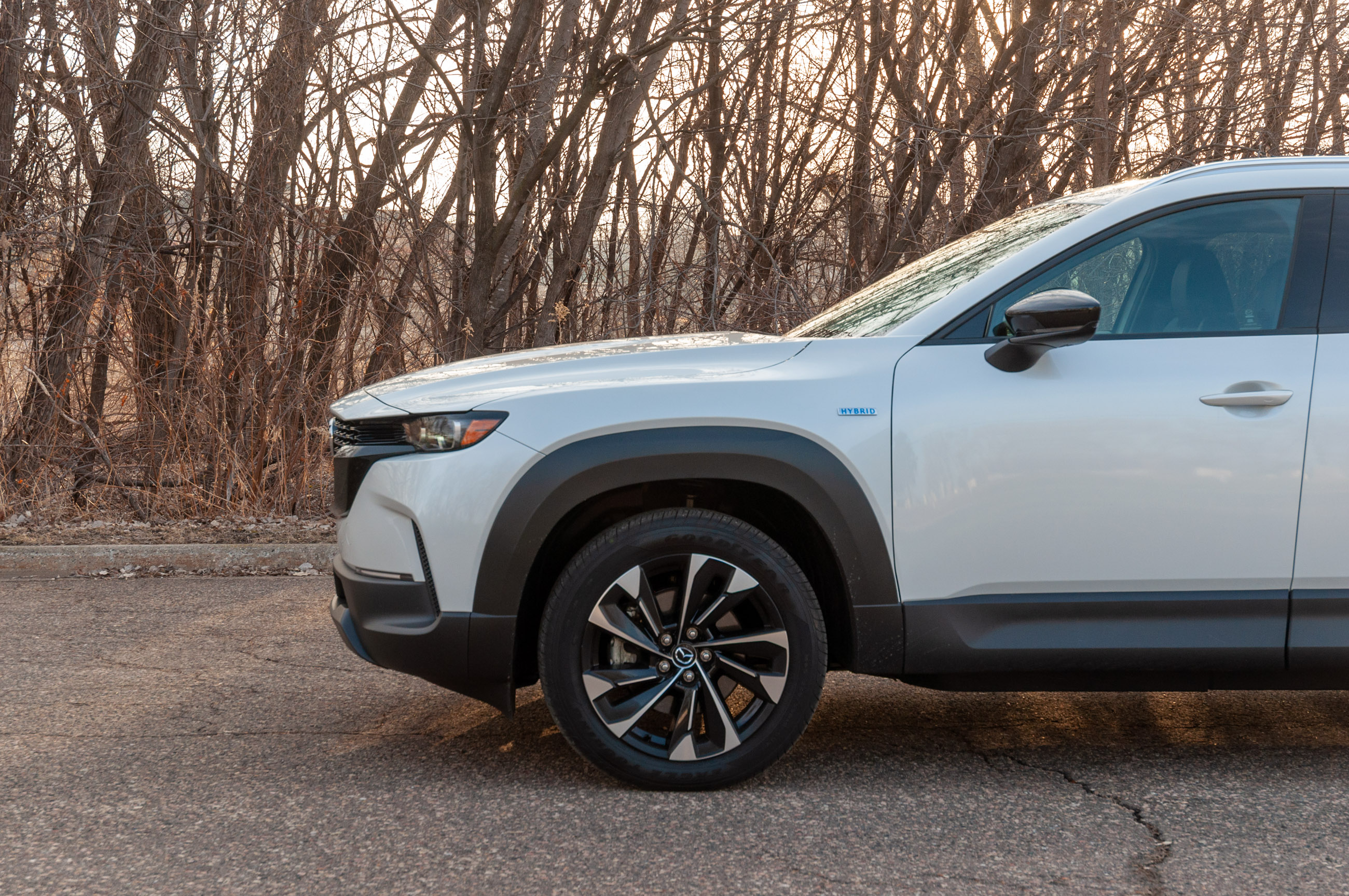
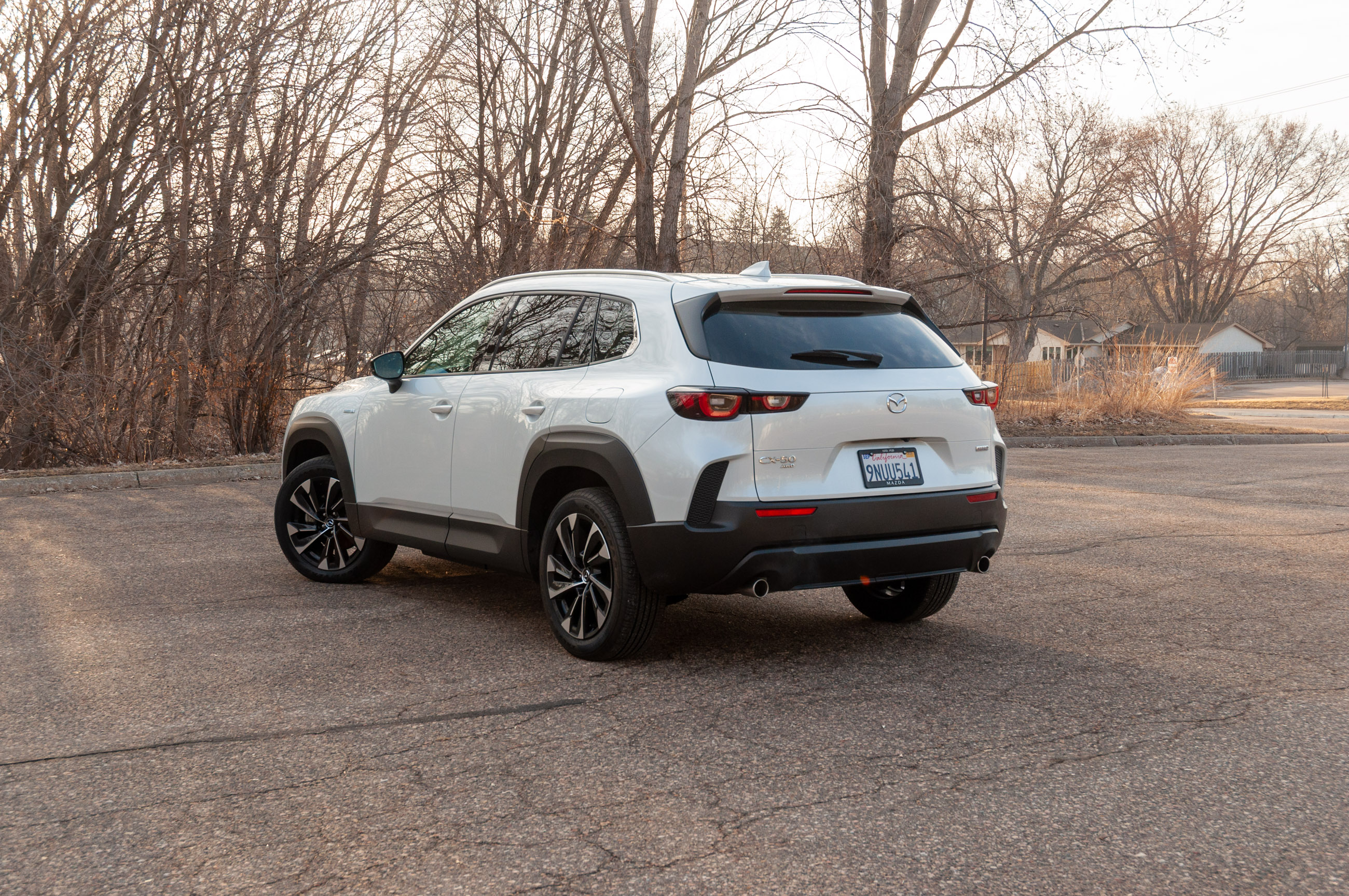
The exterior is distinctly Mazda, but like a CX-5 that has been squished. The greenhouse is more upright; the front and rear ends look wider; the sides are a bit less rounded and flowing; and the roofline appears lower and longer, with an almost tall, wagon-like look. There’s also plastic cladding, like on a Subaru. If someone stepped on a CX-5 and said, “Make it look tougher,” this would be it.
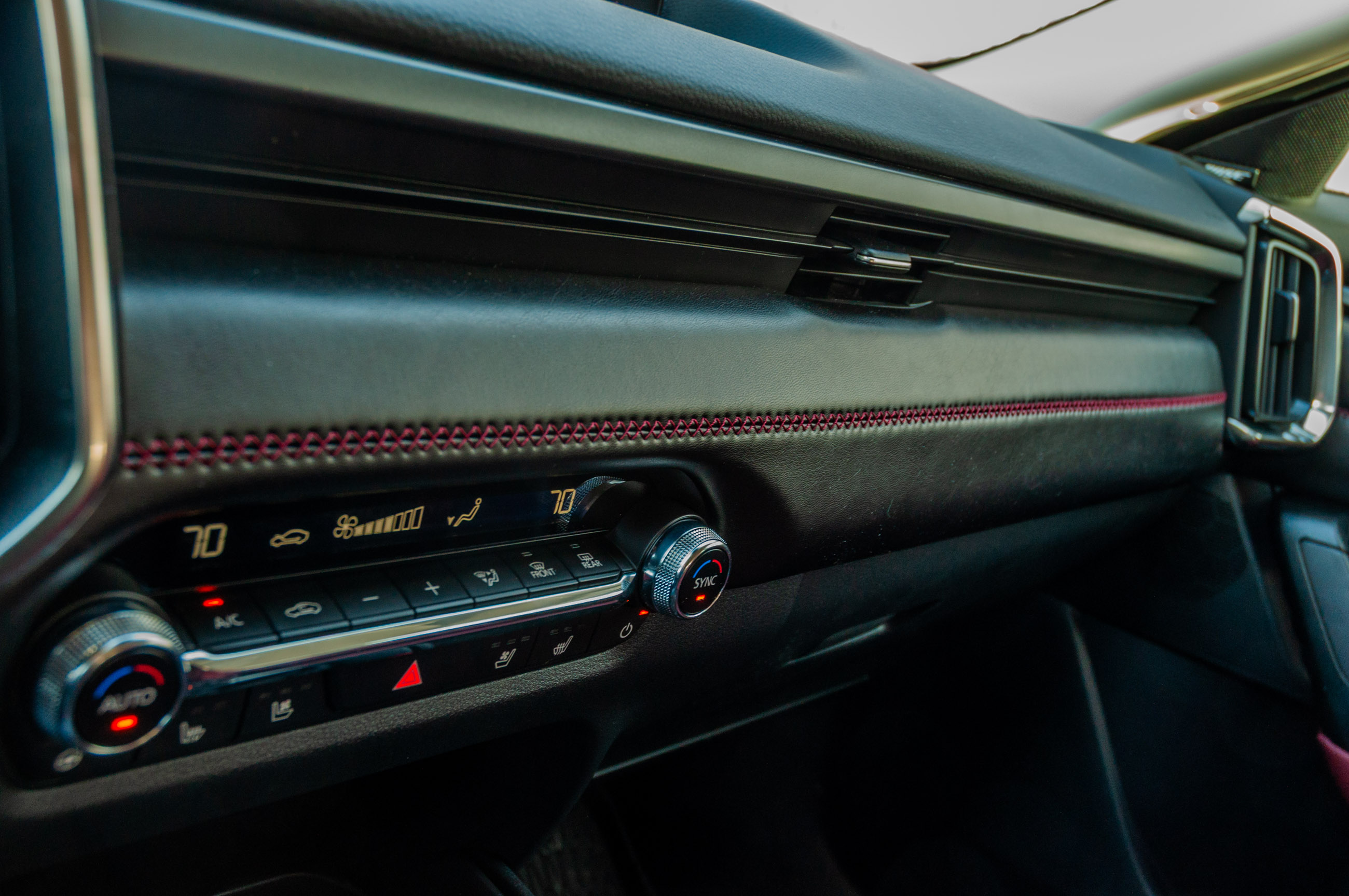
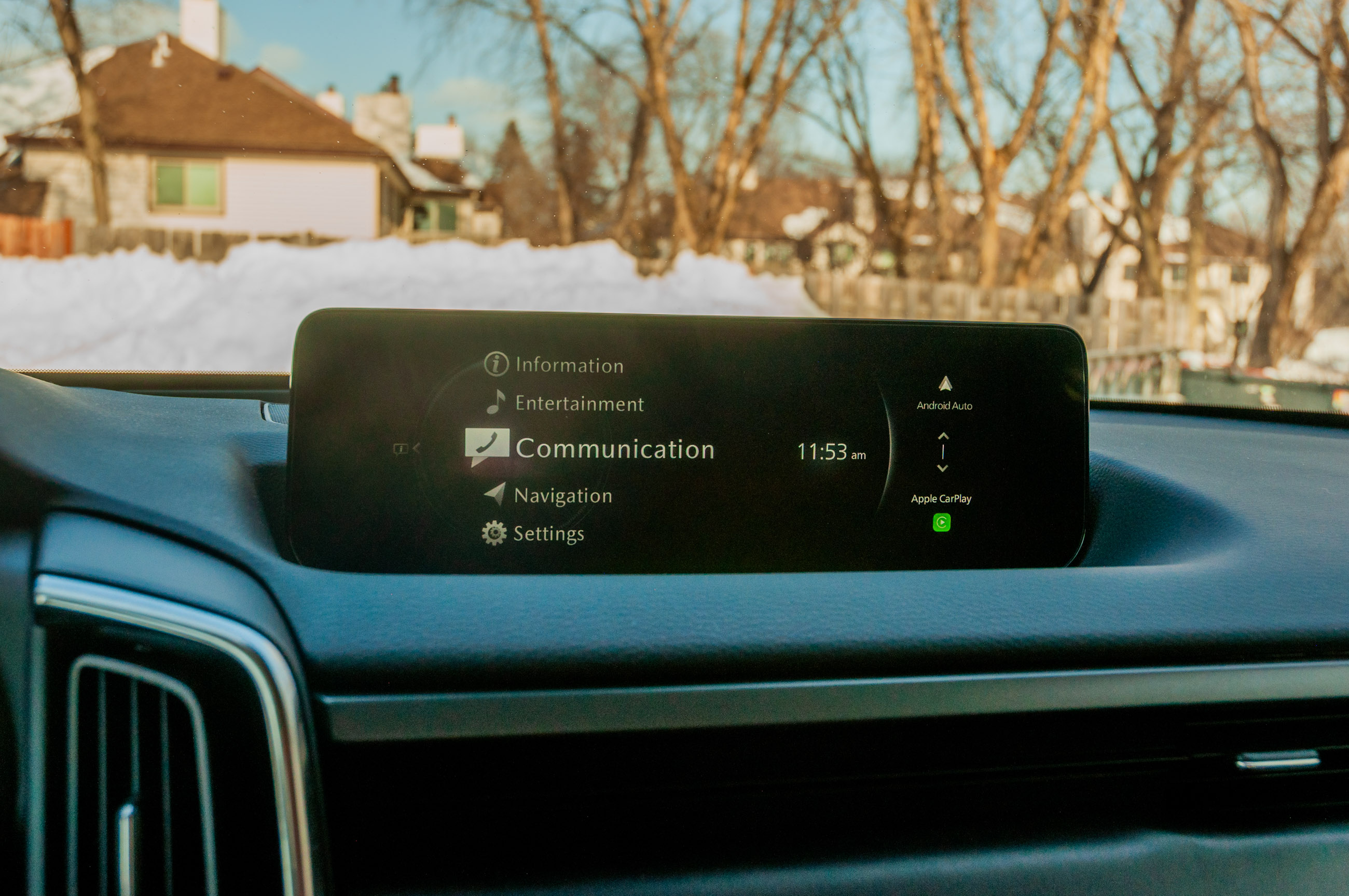
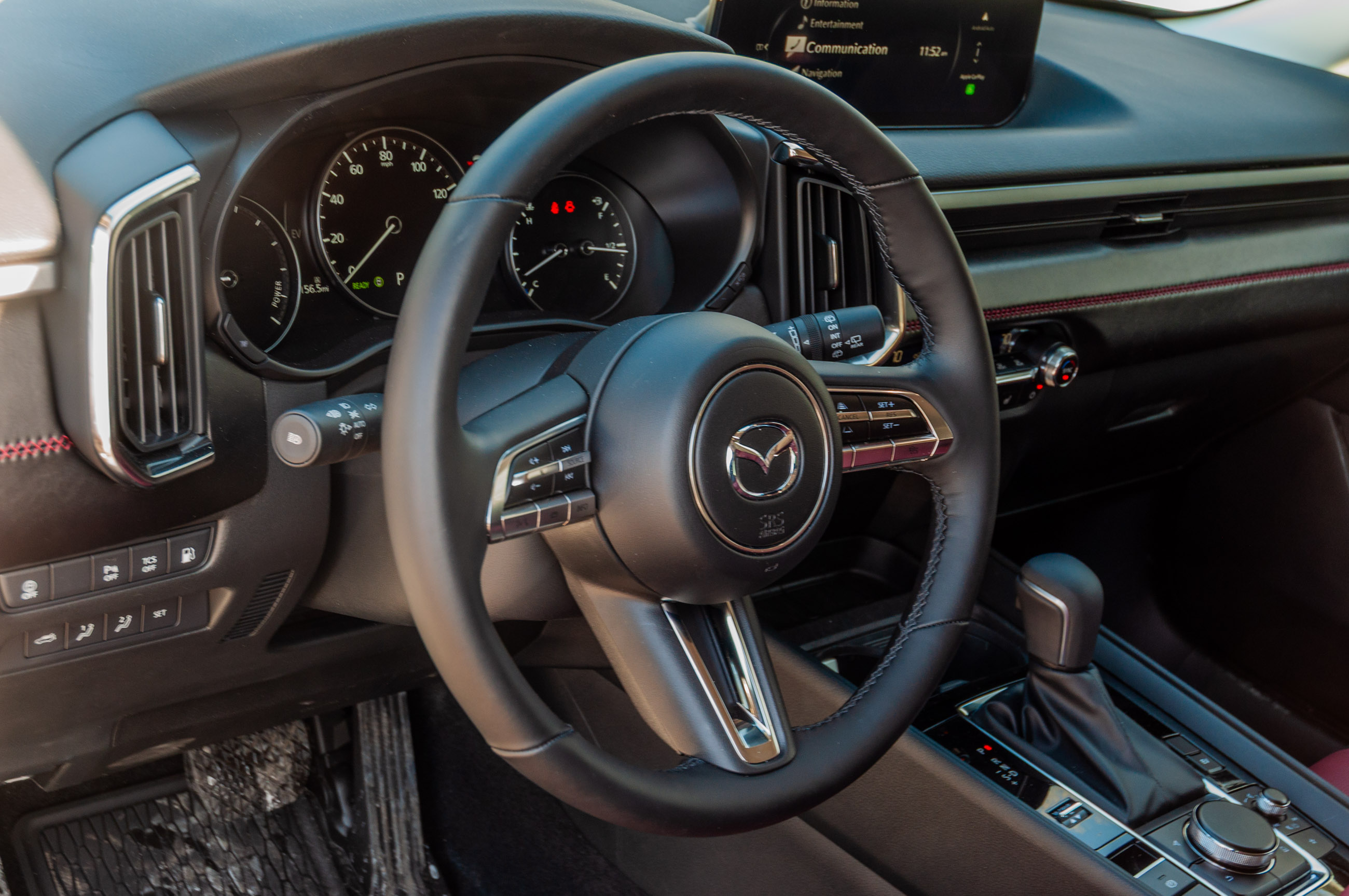
The interior remains the same as its non-hybrid sibling. It’s a more premium cabin than the Honda CR-V or any Toyota RAV4, with lovely stitching on the thin-rimmed steering wheel and across the soft-touch dashboard. The buttons and knobs for the climate control system feature knurling that’s just a lovely hint of class in a mostly pedestrian segment. The 10.3-inch infotainment screen rises from the dashboard like a tablet, and it’s controlled by the confounding Audi-like MMI scroll wheel on the center console, a setup the German automaker ditched over five years ago. Here’s how I feel about it.
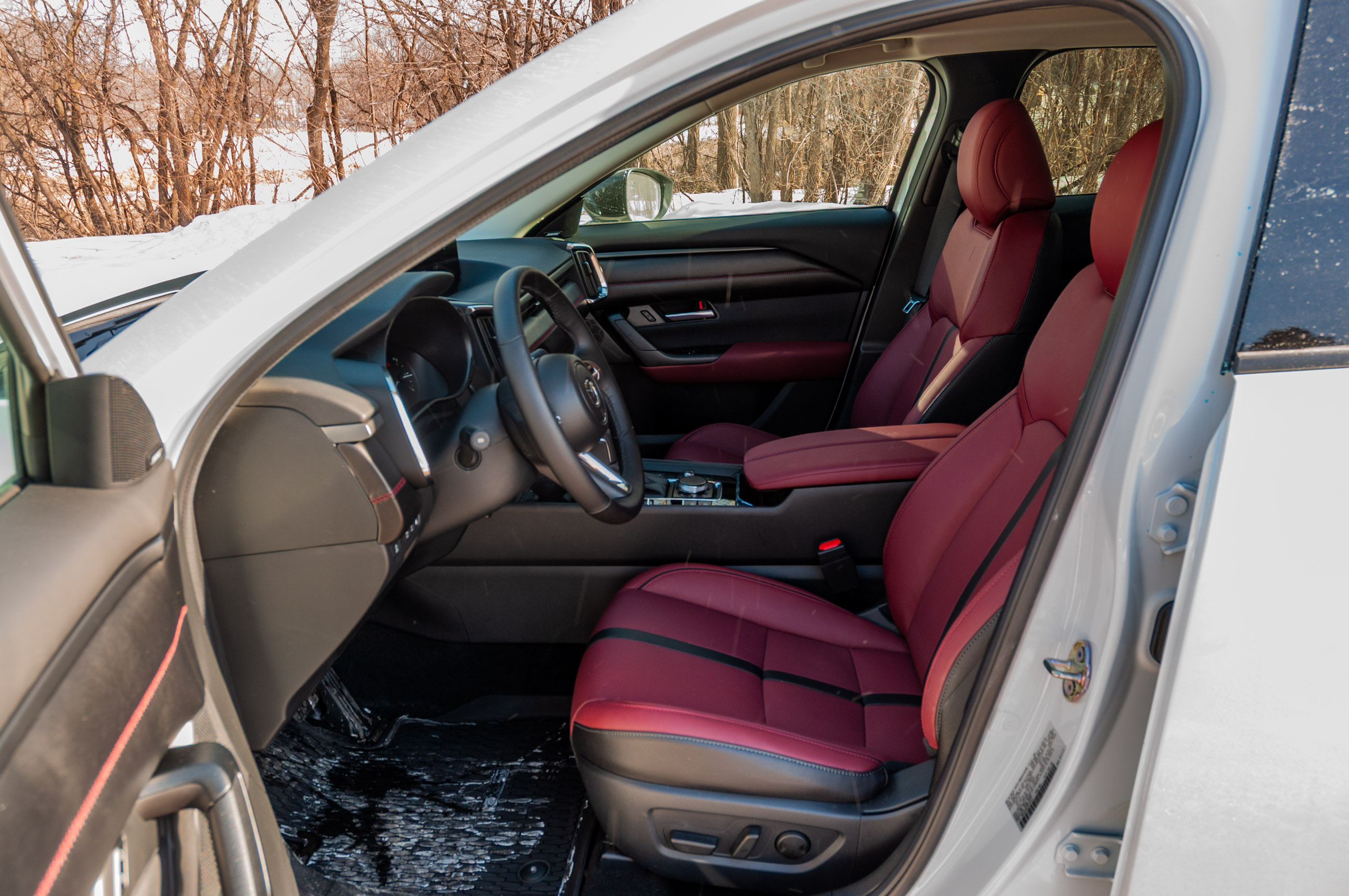
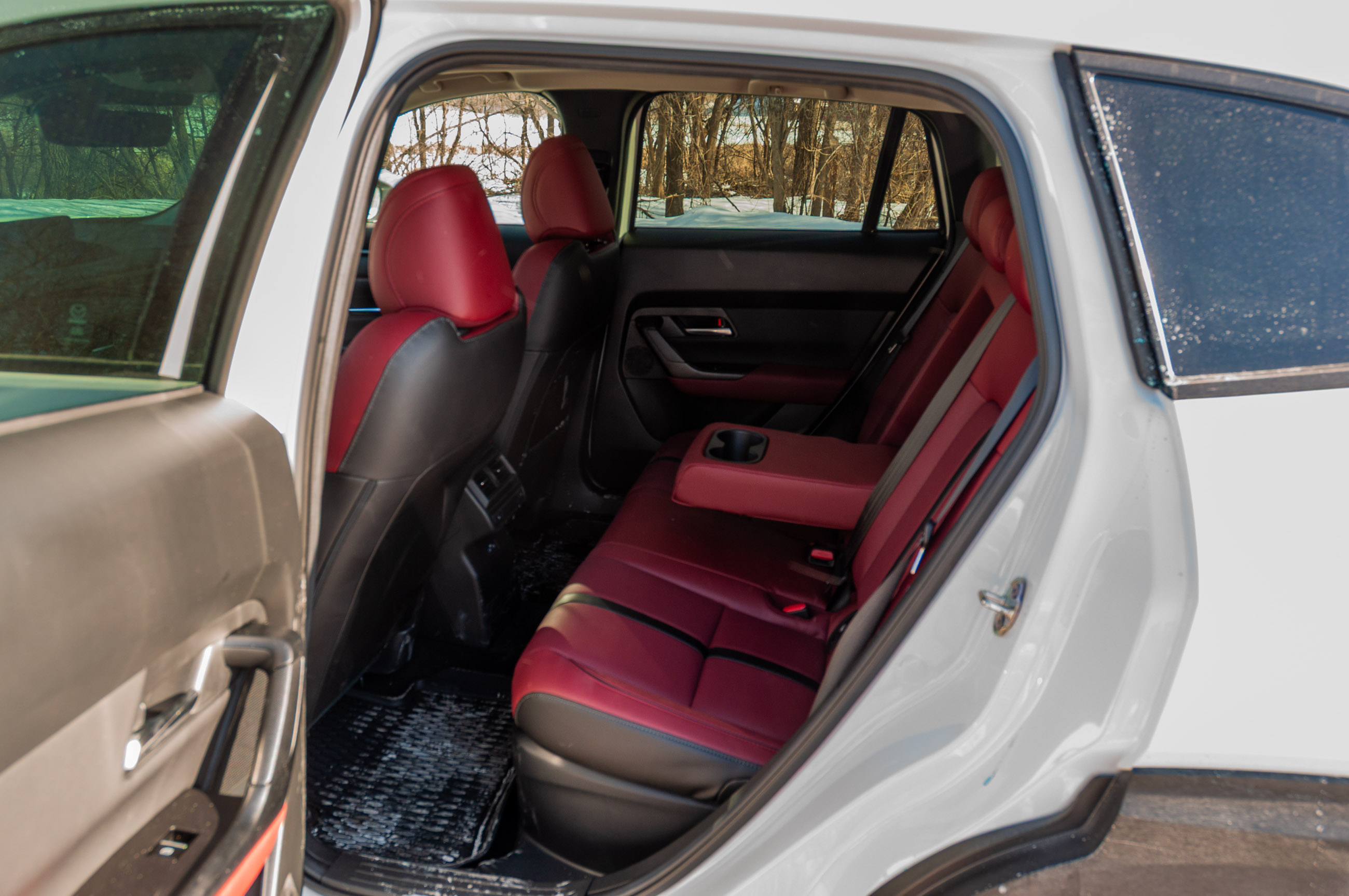
The CX-50, in general, has compromised packaging, with front seats mounted on brackets that eat into headroom. The second row is mounted stadium-style, placing rear-seat occupants higher than those in the front. My kids dislike this, and so do I. For the hybrid model, Mazda revised this, which results in the seat bottom putting occupants closer to the floor but higher from the ground in a confusing twist, thanks to the battery being mounted under the seat. The result? Less rear seat legroom in the hybrid than in the non-hybrid CX-50.
Driving the 2026 Mazda CX-50 Hybrid
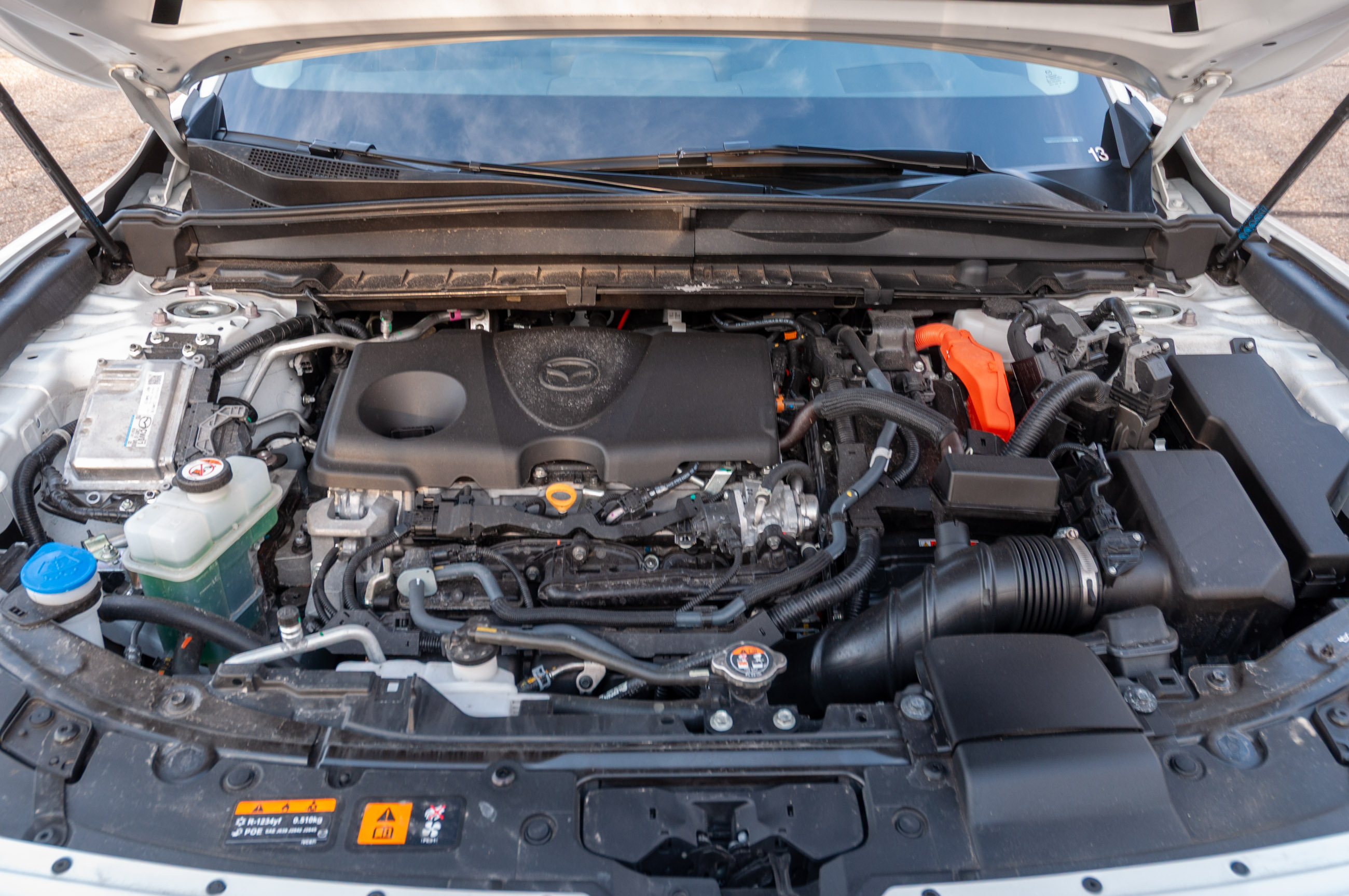
The CX-50 Hybrid cribs the Toyota RAV4 hybrid powertrain from the parts bin and shoves it into the CX-50. There’s a 2.5-liter inline-four under the hood hooked to a planetary torque-split hybrid system with two electric motors plus a third 54-horsepower motor for the rear wheels, along with a 1.59-kWh nickel-metal-hydride battery pack. Combined system output checks in at 219 hp and 176 lb-ft of torque.
The best way to describe the driving experience is fine, at best. Somehow, the experience is less refined than in the Toyota RAV4 with an on- and off-again quiver felt through the steering column. The powertrain’s noise and vibrations are felt throughout the cabin, and its lack of refinement is apparent.
The steering is a high point with more heft than you’ll find in any RAV4, but a semblance of what’s going on at the wheels is a big ask that goes unanswered. The cabin experience always gives occupants a rush, but not in the way one might expect of a Mazda. That rush is the sound of wind noise coming distinctly off the sideview mirrors and A-pillars at highway speeds.
EPA-estimated fuel economy ratings of 39 mpg city, 37 highway, and 38 combined make the CX-50 Hybrid easily the most efficient and frugal model in a Mazda showroom. Over the course of 165 miles of suburban driving, the CX-50 Hybrid averaged 24.2 mpg. Notably, that was in the frigid sub-zero Minnesota weather. In previous testing, over the course of 195 miles, when it was closer to 40 degrees outside, the CX-50 Hybrid averaged 34.0 mpg.
Quick Verdict
The 2026 Mazda CX-50 Hybrid costs $36,245, including a $1,495 destination fee, and it’s a nice place to find oneself for the money, design, and overall comfort and tech features. The top-spec CX-50 Hybrid Premium Plus trim I tested came in at $43,655 and added niceties such as adaptive front LED lighting, heated rear seats, a Bose 12-speaker audio system, and a head-up display.
For anyone looking for a sharper Toyota RAV4 Hybrid with a nicer interior, the 2026 Mazda CX-50 Hybrid makes sense. It’s efficient and sensible while feeling more premium than its powertrain’s twin. But the Honda CR-V Hybrid offers a better overall package. The CX-50 Hybrid feels like a step backward from the CX-5, and there’s a new, inbound CX-5 Hybrid with a powertrain developed by Mazda that seems like it might be a better option.
Mazda provided The Drive with a seven-day loan of this vehicle for the purpose of writing this review.
| 2026 Mazda CX-50 Hybrid Specs | |
|---|---|
| Base Price (Premium Plus) | $36,245 ($43,655) |
| Powertrain | 2.5-liter inline-four | planetary gearsets | all-wheel drive |
| Horsepower | 219 |
| Torque | 176 lb-ft |
| Seating Capacity | 5 |
| Curb Weight | 4,008 pounds |
| Towing Capacity | 1,500 pounds |
| Cargo Volume | 29.2 cubic feet behind second row | 56.3 cubic feet behind first row |
| Ground Clearance | 8.1 inches |
| Top Speed | 112 mph |
| EPA Fuel Economy | 39 mpg city | 37 highway | 38 combined |
| Score | 6/10 |

Quick Take
Mazda took a shortcut.
Loading comments…
Comments couldn’t be loaded. Please refresh the page.