
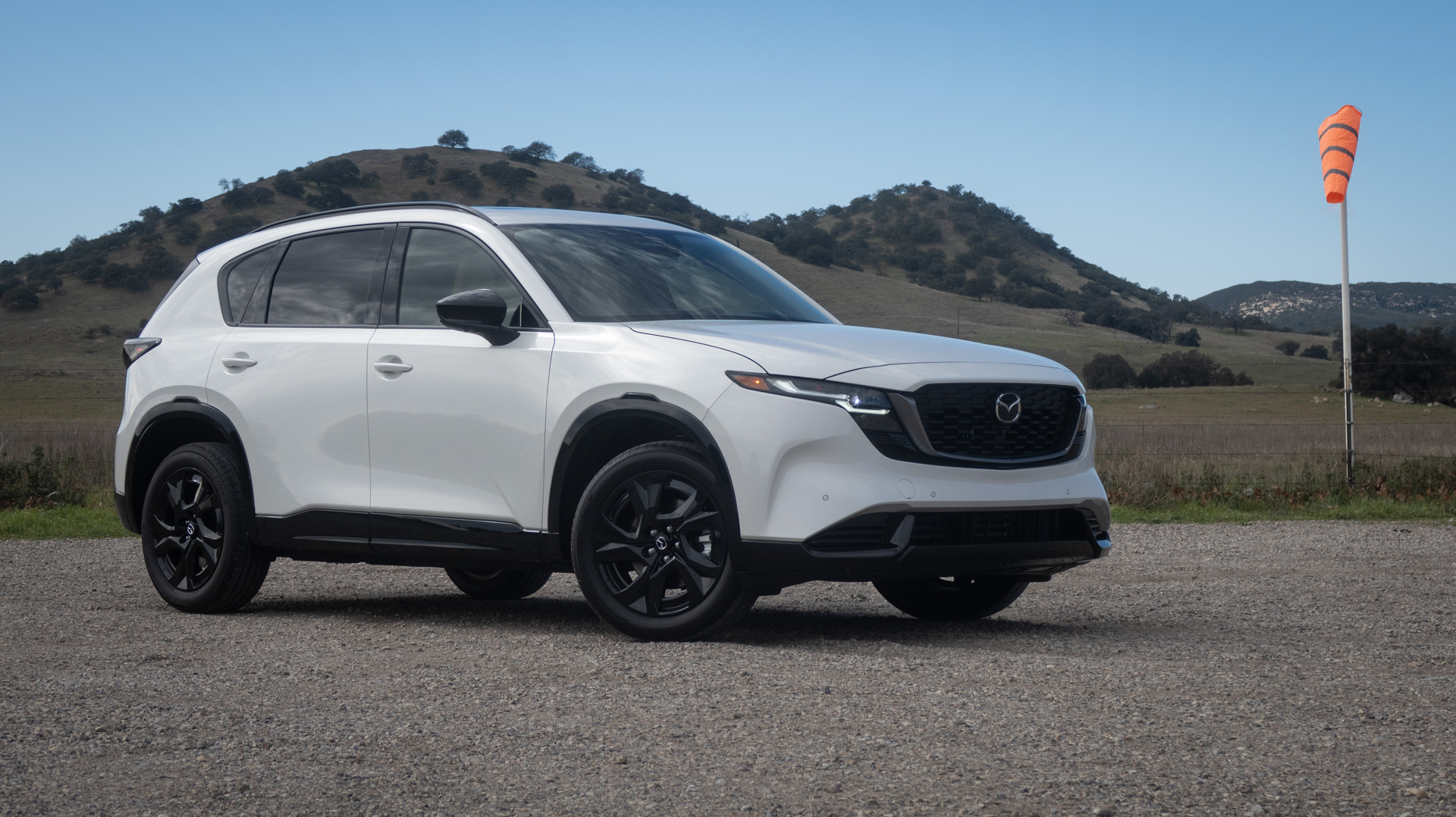
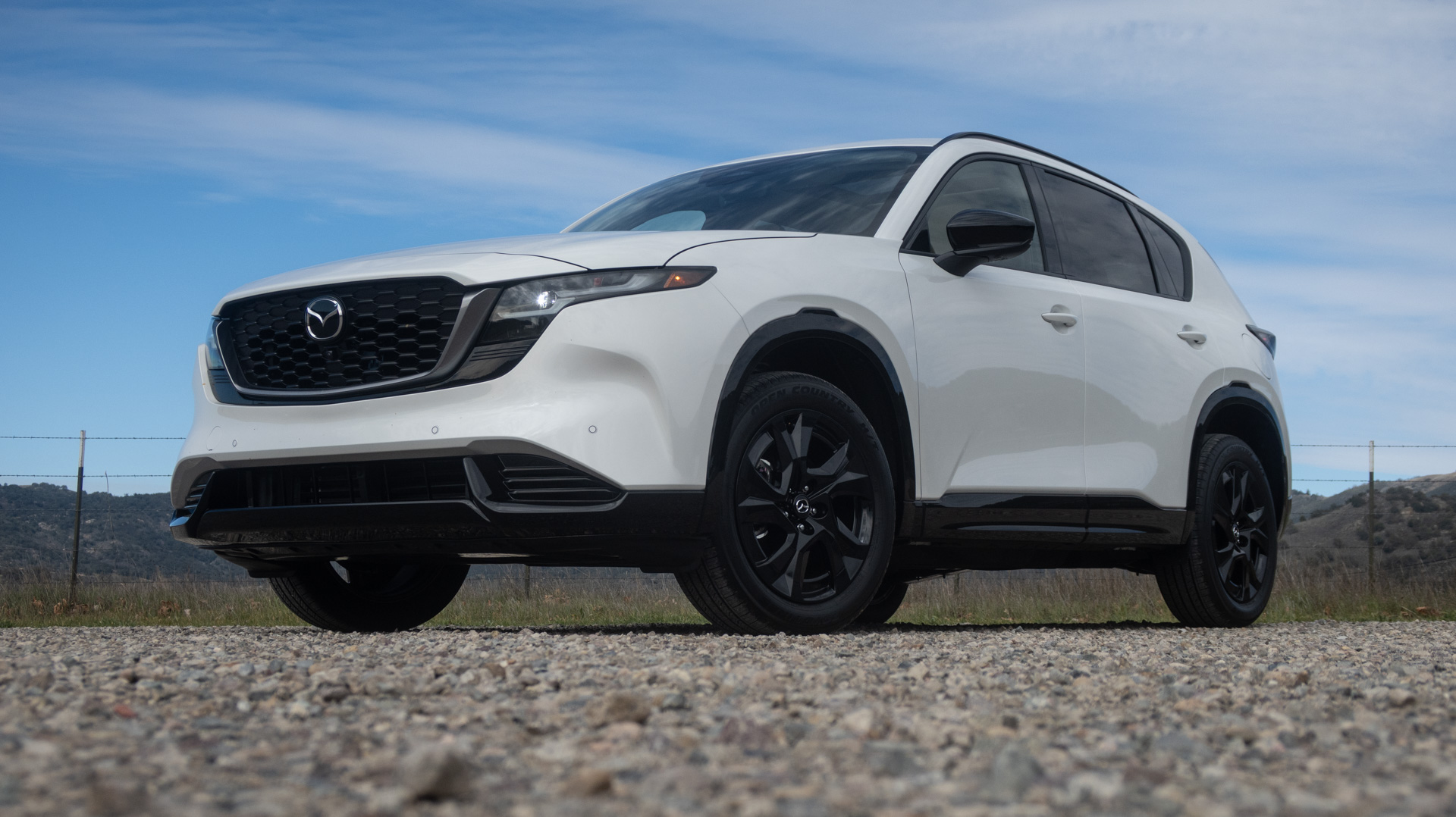
I’m pleased to report that the redesigned 2026 Mazda CX-5 still earns the description that many of us in this business gave its predecessor: “It’s the cheap crossover that doesn’t suck to drive.” But more importantly, it has now matured significantly in its design, practicality, and safety.
I drove both the first- and second-gen CX-5s when they were new—it’s been a treat watching this model evolve subtly but steadily over the years. The first was good; the second was significantly better. Today’s new CX-5 retains the best characteristics of the outgoing car, such as satisfying driving dynamics and competitive pricing, while adding genuinely useful features.
The Basics
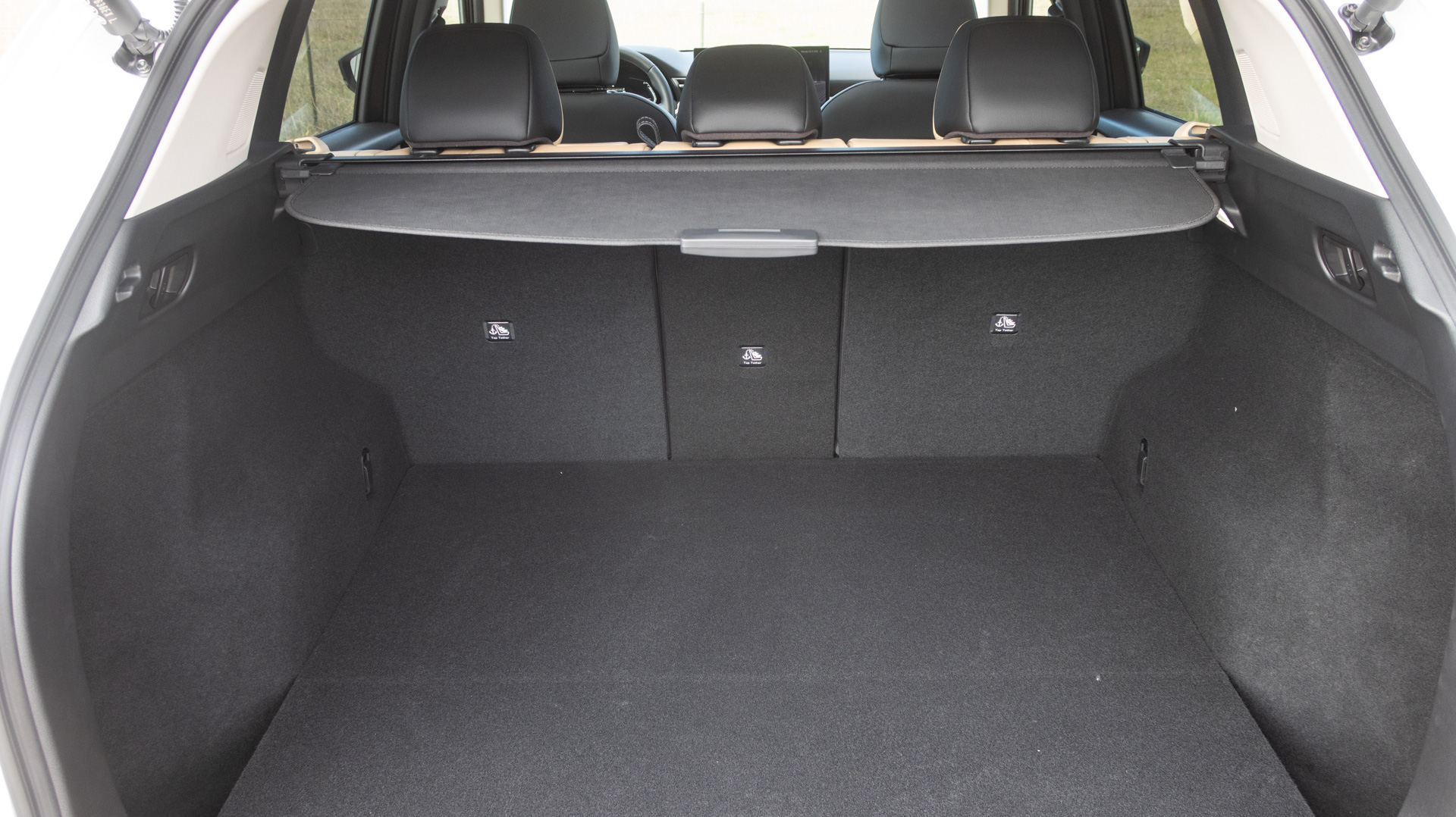
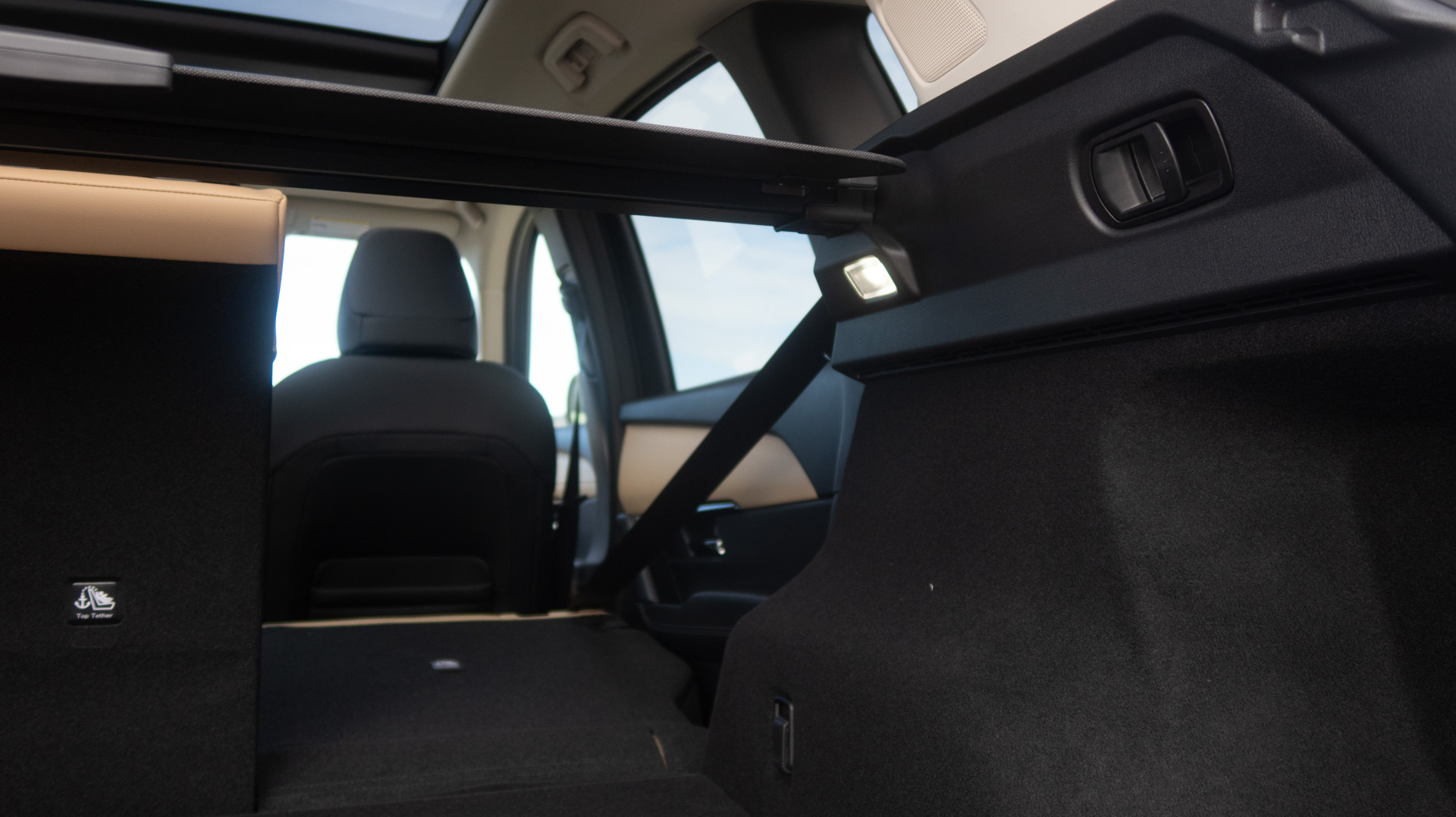
In terms of cabin feel, the 2026 CX-5 lands somewhere between small and medium, with realistic room for four adults and plenty of luggage, and a cargo hold that’s plenty big with the rear seats dropped down. Speaking of which, the second row of seats is split three ways, so you can drop the middle seat for long cargo like skis or a surfboard without sacrificing a full-size passenger seat.
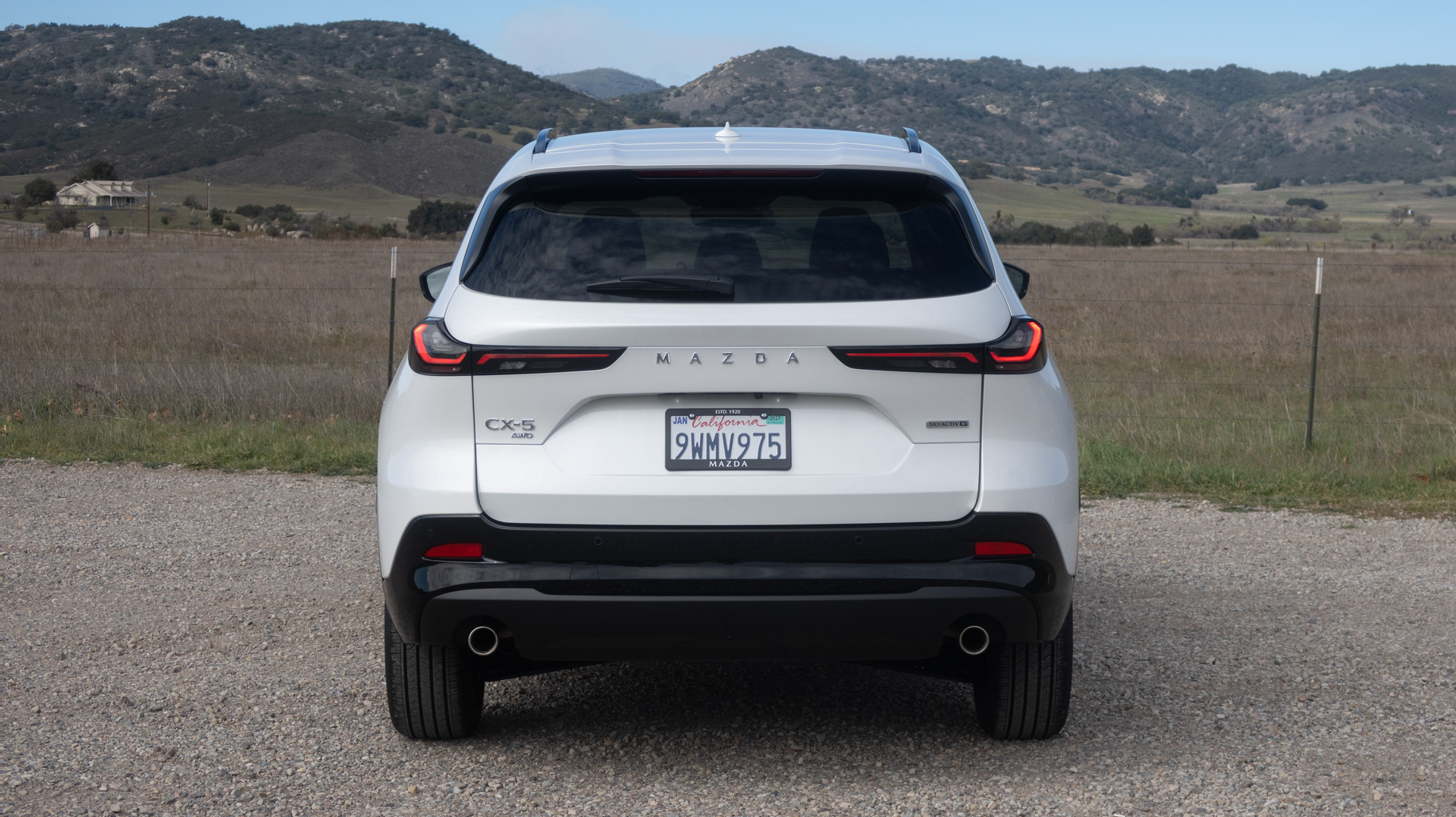
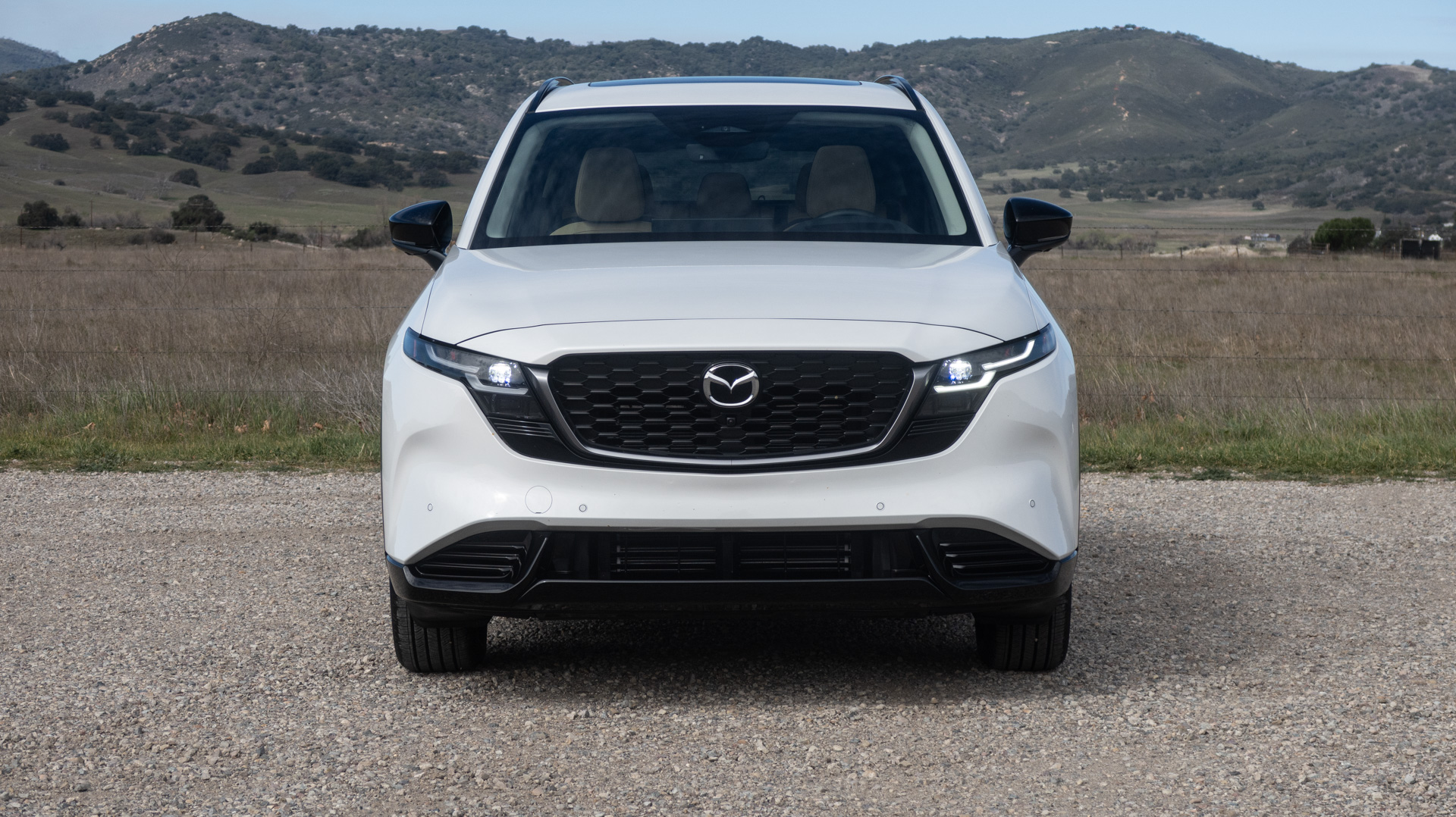

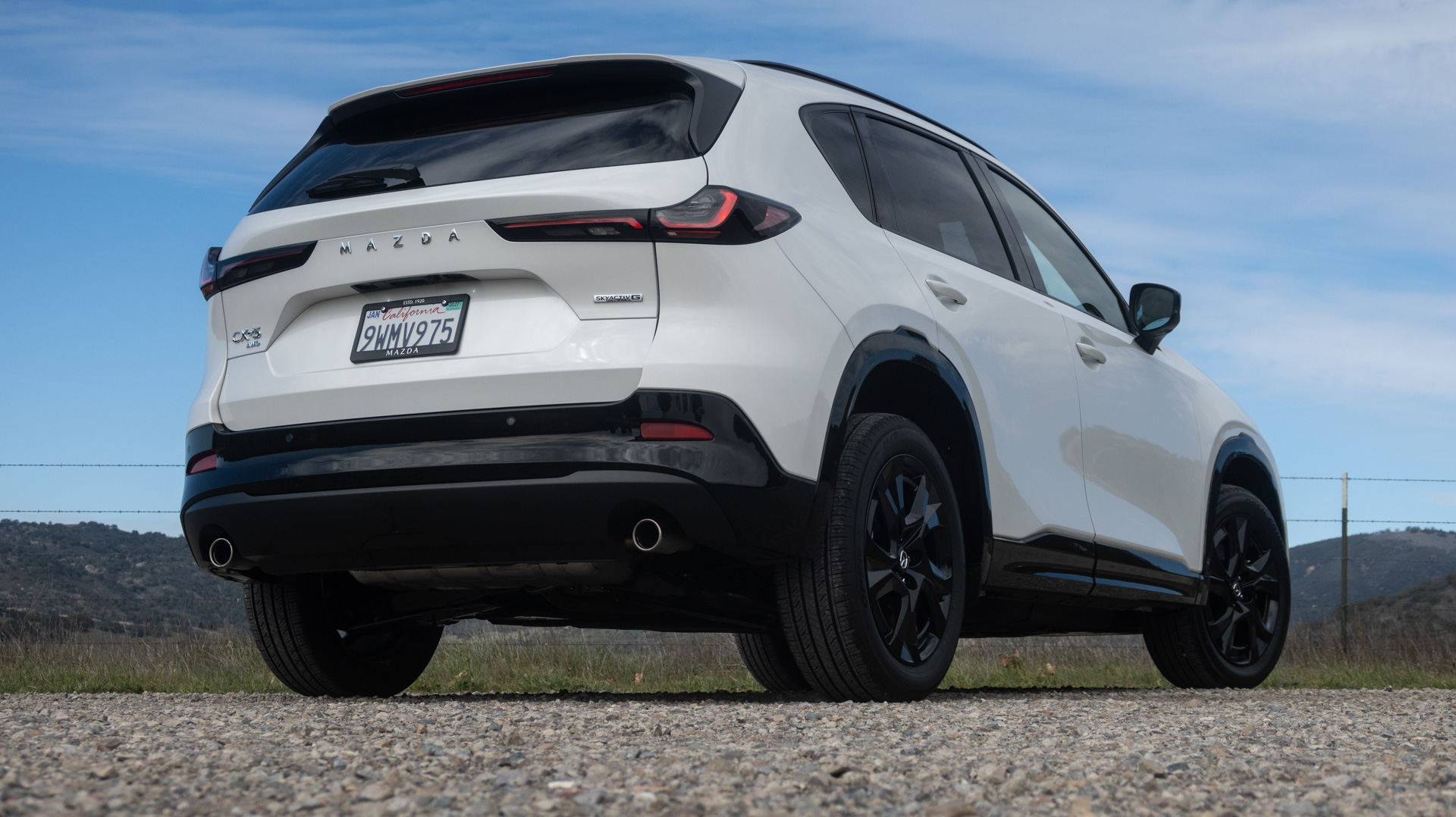
While the new model looks quite similar to the last-gen car, it’s actually 4.5 inches longer, with most of that going to increased rear passenger legroom and rear doors (or cargo room, depending on how you have the seats configured).
There are now five CX-5 trim levels, roughly priced between about $30,000 and $40,000 (destination amount is TBA):
- CX-5 2.5 S ($29,990)
- CX-5 2.5 S Select ($31,990)
- CX-5 2.5 S Preferred ($34,250)
- CX-5 2.5 S Premium ($36,900)
- CX-5 2.5 S Premium Plus ($38,990)
I recommend the middle one, S Preferred, for max value—I’ll explain why at the end of this review.
All 2026 CX-5s have a naturally aspirated 2.5-liter four-cylinder engine with 187 horsepower, a six-speed shiftable automatic transmission, and all-wheel drive. The powertrain is pretty much the same SkyActiv-G Mazda’s been using for years, with subtle tweaks like a slightly smaller exhaust-gas cooler to improve throttle response, and refined transmission logic to optimize shift points.
The new model’s longer wheelbase allowed for a larger torque coupling in the all-wheel-drive system, improving resistance to overheating. The practical benefit is that the vehicle never has to apply torque to protect the coupling, even in deep snow or other slippery conditions.
Important Invisible Improvements
The new CX-5’s steel structure has been reinforced to improve your odds of walking away from a wreck unscathed. And perhaps more importantly, it has a deeper bench of standard safety features than the last model, reducing the chances of a crash in the first place.
All trims, even the base model, now feature these:
- Turn-Across Traffic and Head-On Collision Mitigation
- Rear Smart Brake Support (SBS) with Rear Cross Traffic Alert and Pedestrian Detection
- Emergency Lane Keeping, including:
- Blind Spot Assist,
- Road Keep Assist,
- Head-on Traffic Avoidance
- Driver Attention Alert
- Vehicle Exit Warning
- Speed Limit assist
- Traffic Sign Recognition
Stepping up from the base model adds front and rear parking sensors, and the range-topping Premium Plus makes great use of its massive central display screen, featuring a high-resolution 360-degree camera view for low-speed maneuvering.
Brave New Screens
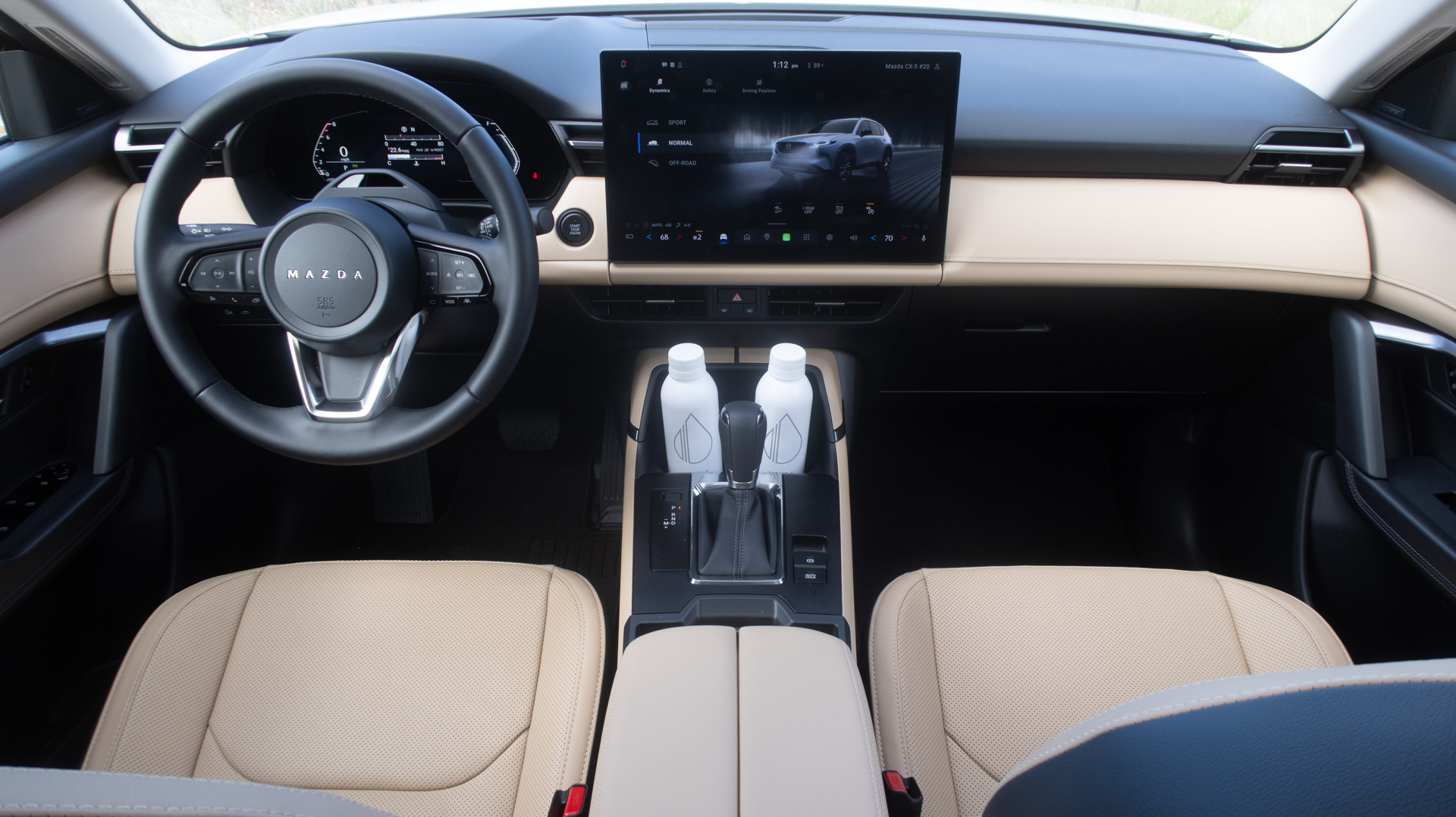
The 2026 Mazda CX-5 S Premium Plus can currently claim the largest screen in the segment—it spans a staggering 15.6 inches. While it’s large enough to be a meme about modern interior design, it’s mounted low enough that it doesn’t distract or interrupt the driver’s view. Mazda’s new UI is good now, but this monitor could be half the size without losing meaningful functionality.
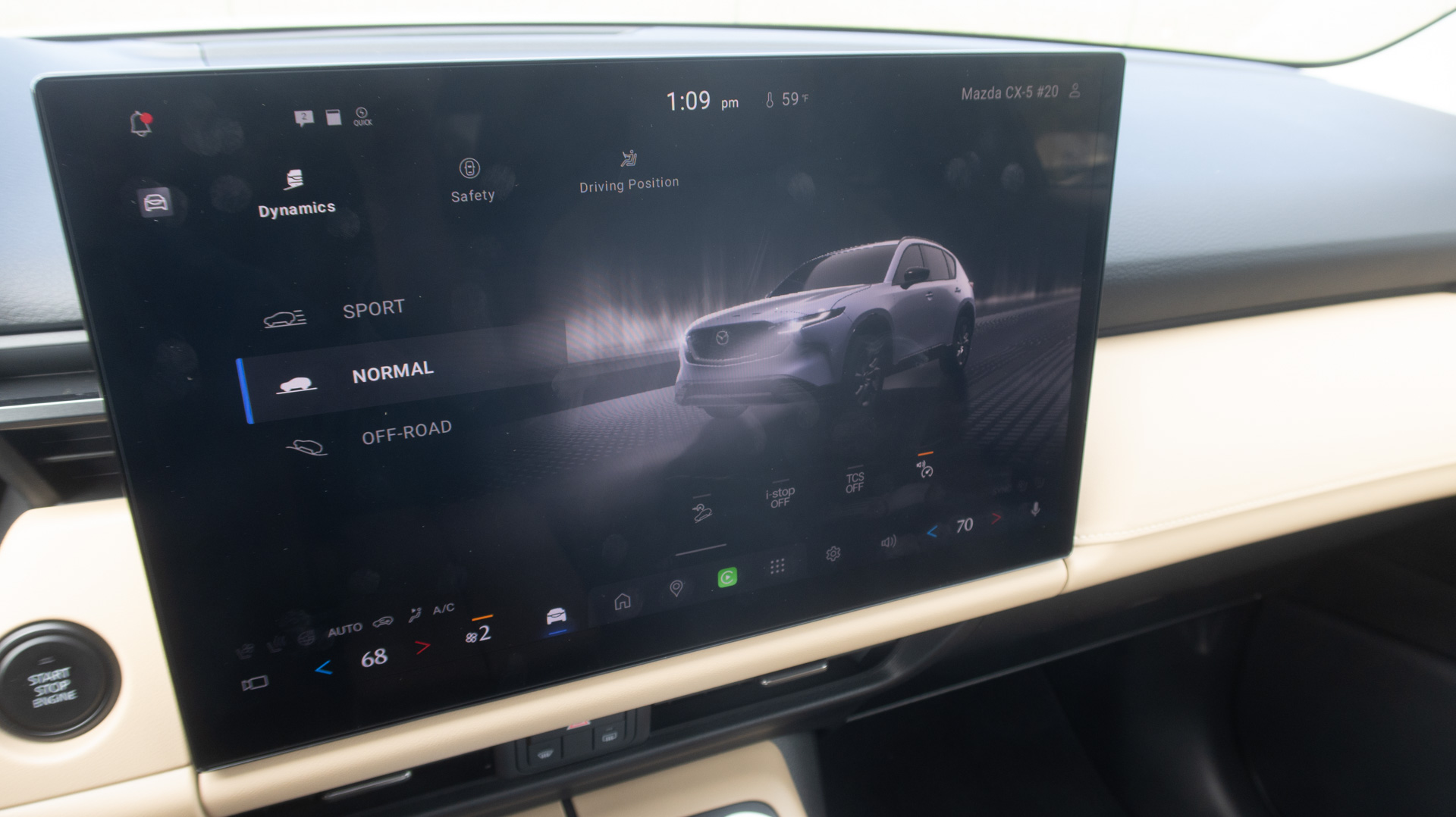
The interface has an extremely gentle learning curve. For example, if you want to change the temperature, you can either tap the blue or red arrow for hot or cold, or tap the number of degrees displayed to call up a slider, or slide across the number—all of those actions are viable ways to adjust the temperature.
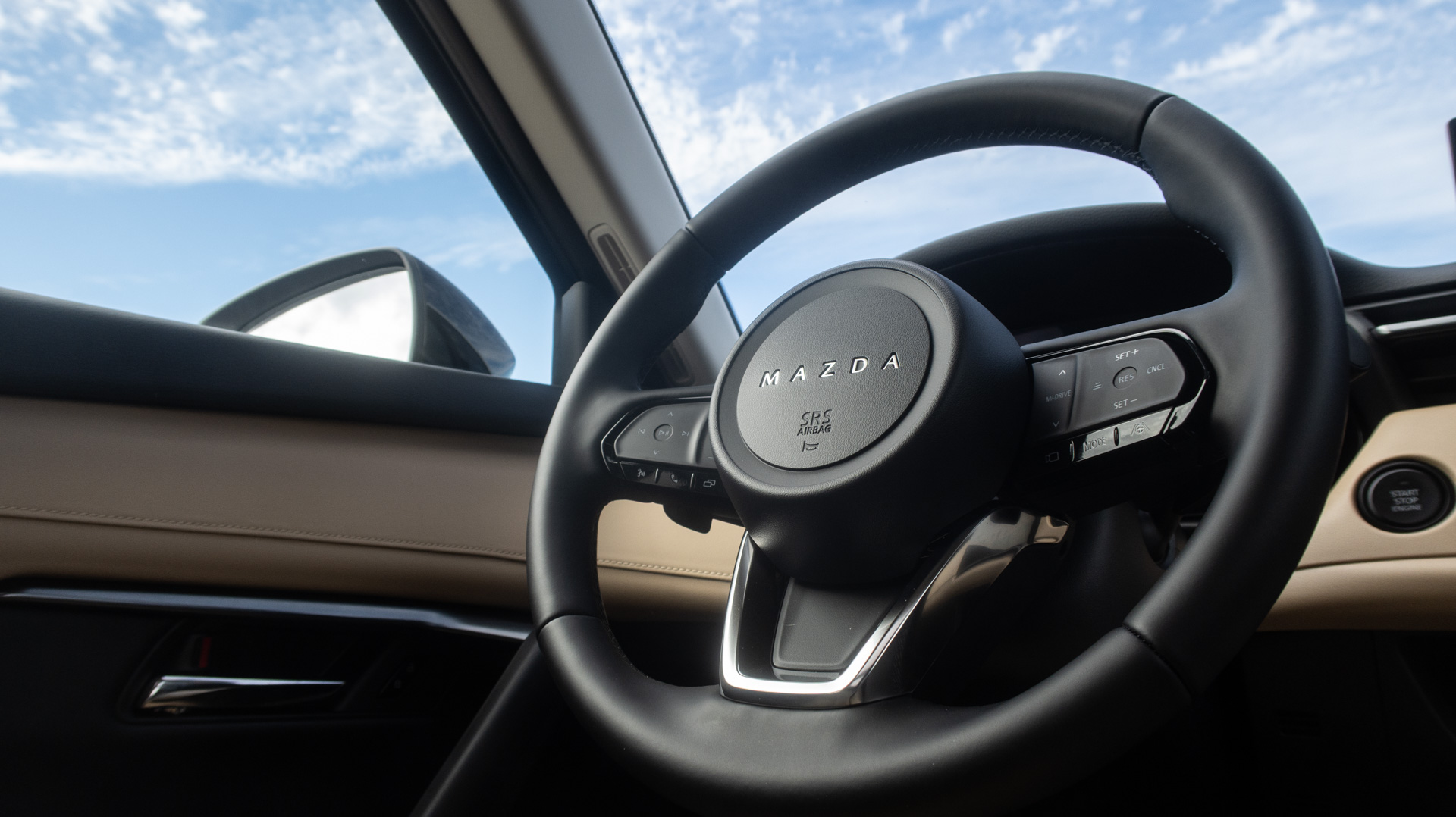
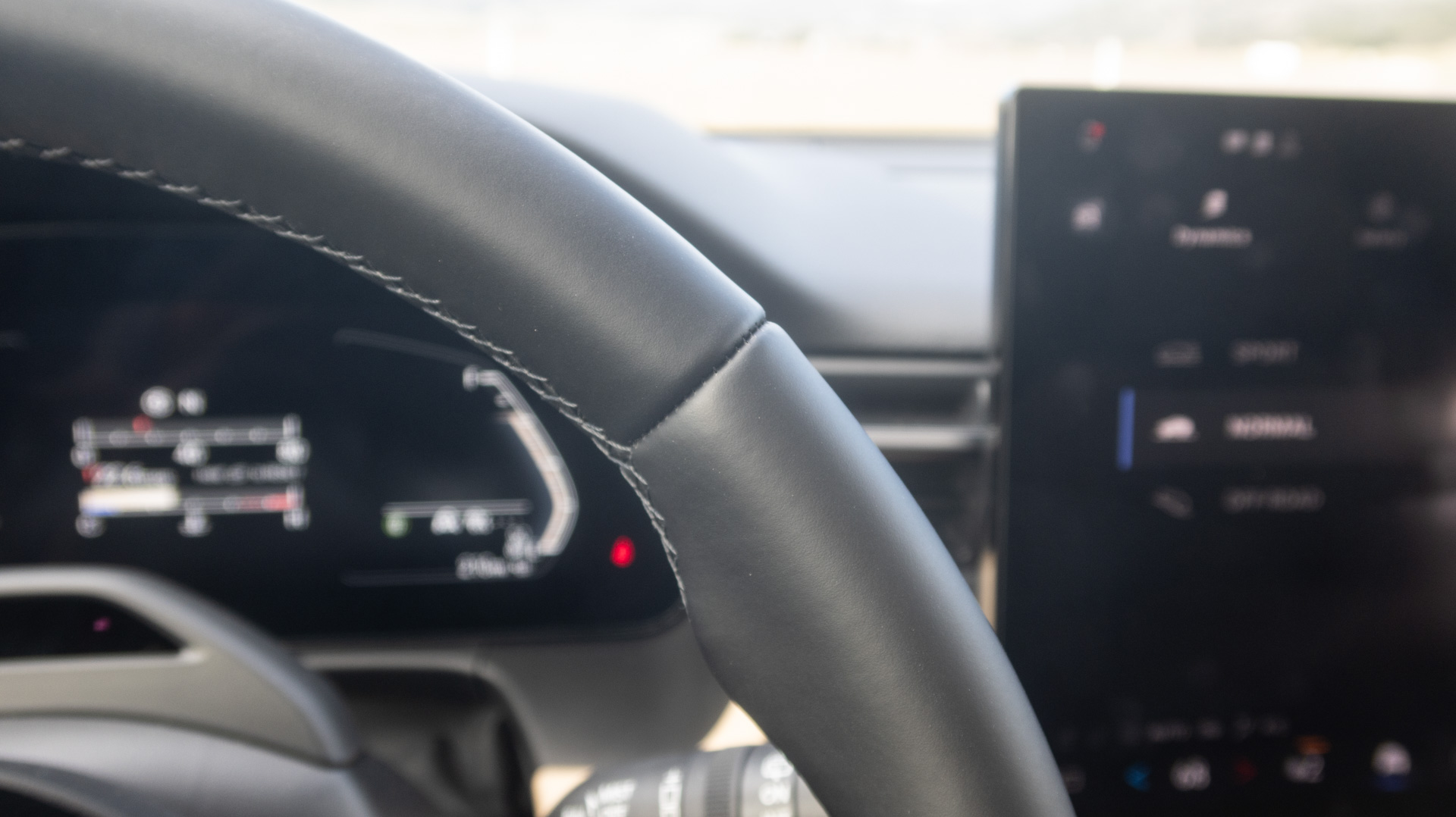
Mazda put the stereo volume control on the right side of the screen; its PR people pitched it as logical because it’s easier for the passenger to access while the driver can use the steering wheel controls. Personally, I still instinctively reached for a non-existent volume knob a handful of times during my test drive. The steering wheel controls are an ergonomic weak spot—they’re spread so wide across the spoke that I had to reposition my hand to get to the inner buttons, partially defeating the whole point of helm buttons.
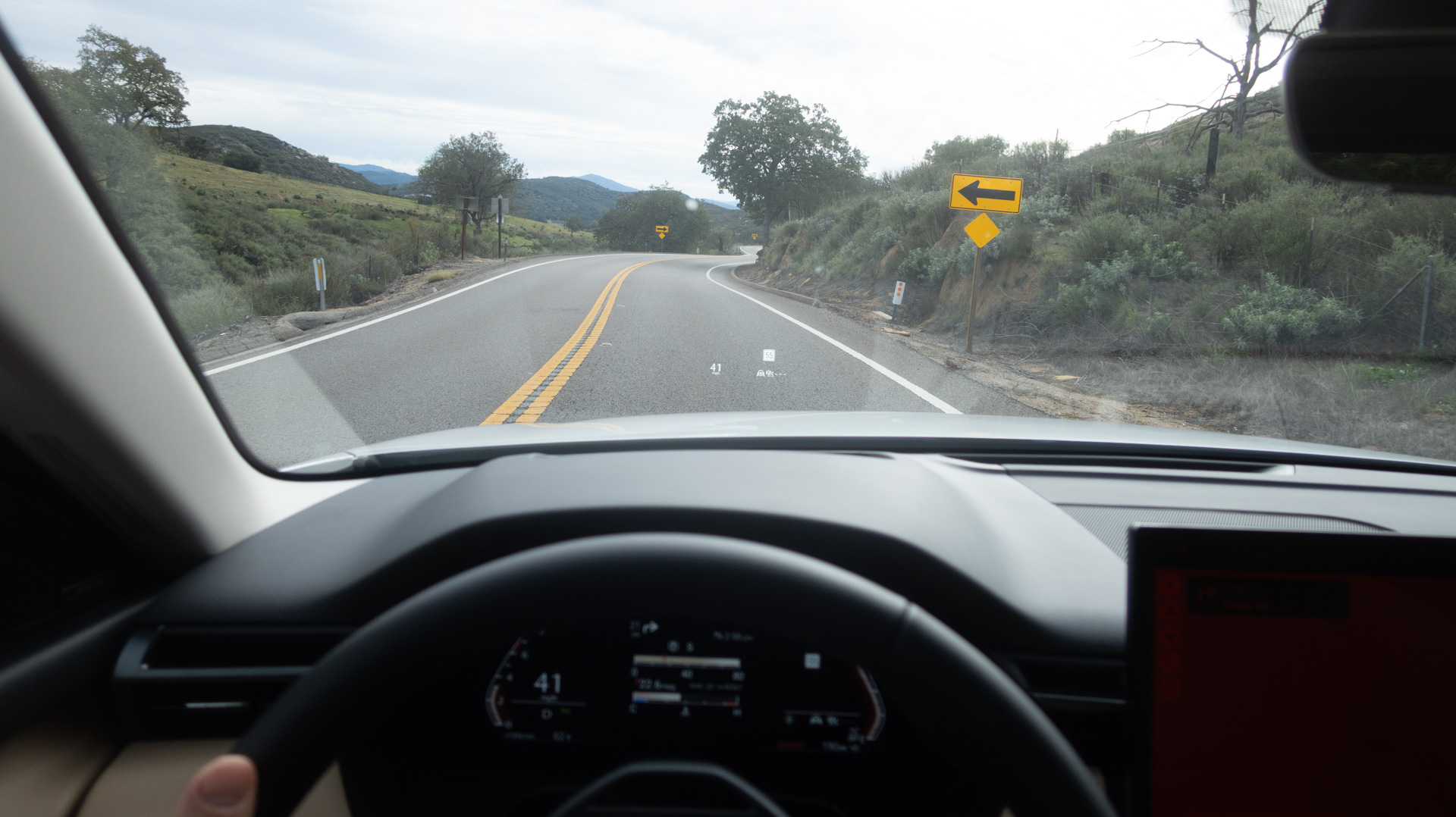
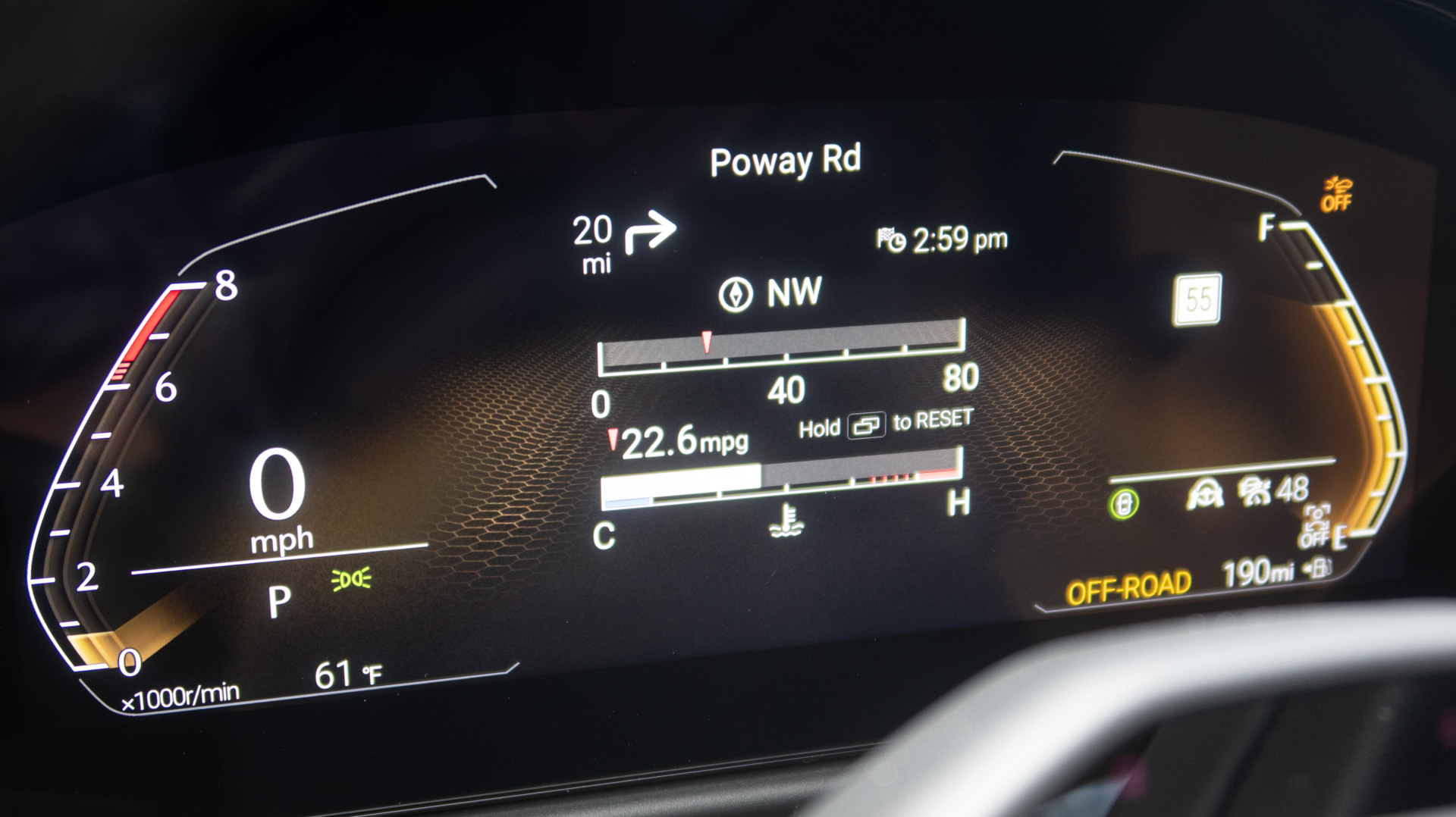
The gauge cluster screen is quite nice, though. It looks to me like people at Mazda cribbed BMW’s layout (external dials that cup other information, like parentheses), but made it much simpler.
You can configure your display with a range of widgets, but I don’t know why you’d want to. Do you really need a calendar staring you in the face while you’re driving? And when you’re parked, there’s an immense selection of apps to play with, but, again, when are you going to queue up YouTube here? For the five minutes you’re waiting outside a friend’s house when you’re picking them up? Still, I was able to use Mazda’s internal functionality (Google Assistant is native) with Apple CarPlay from my phone, in conjunction with each other.
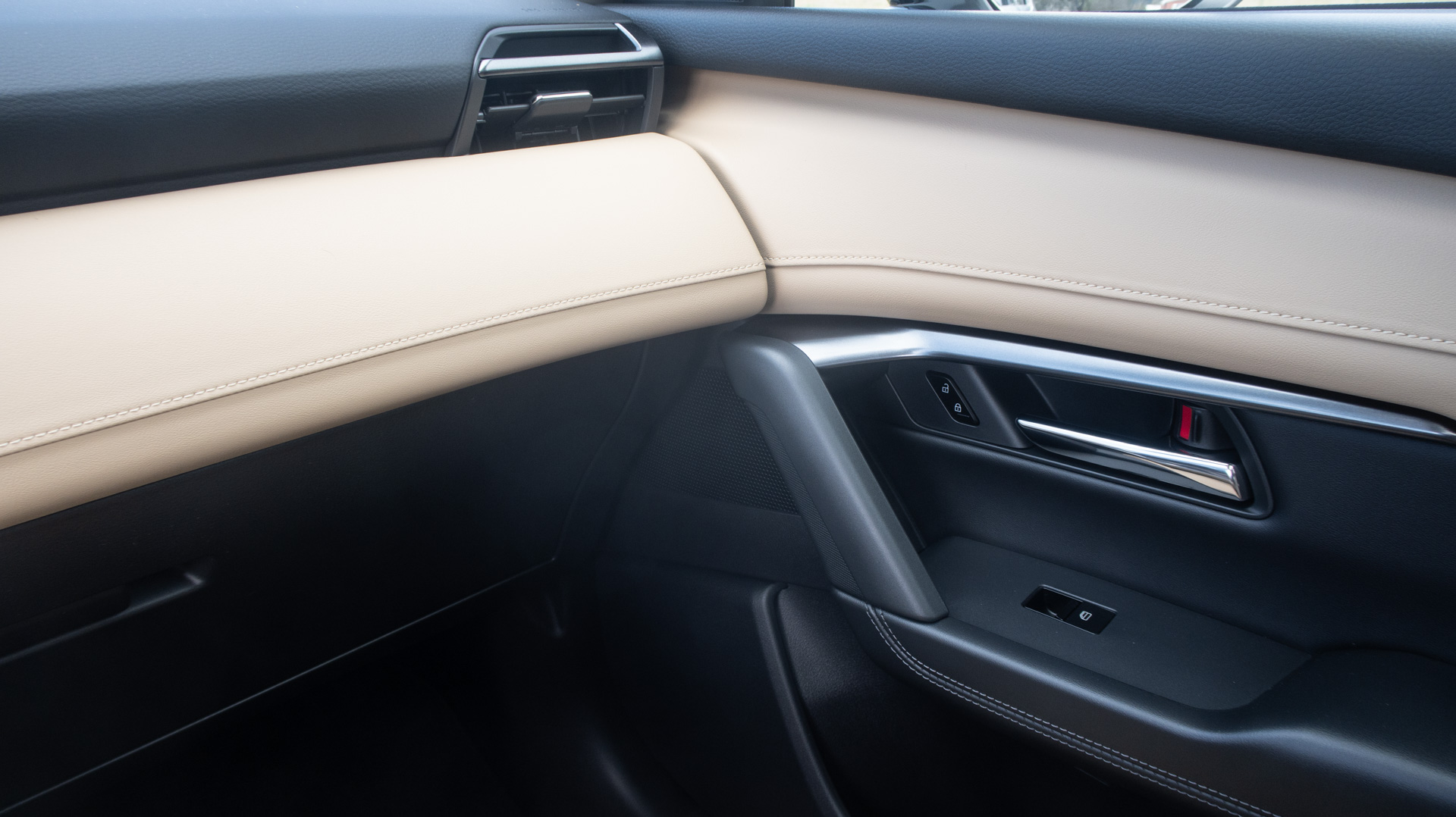
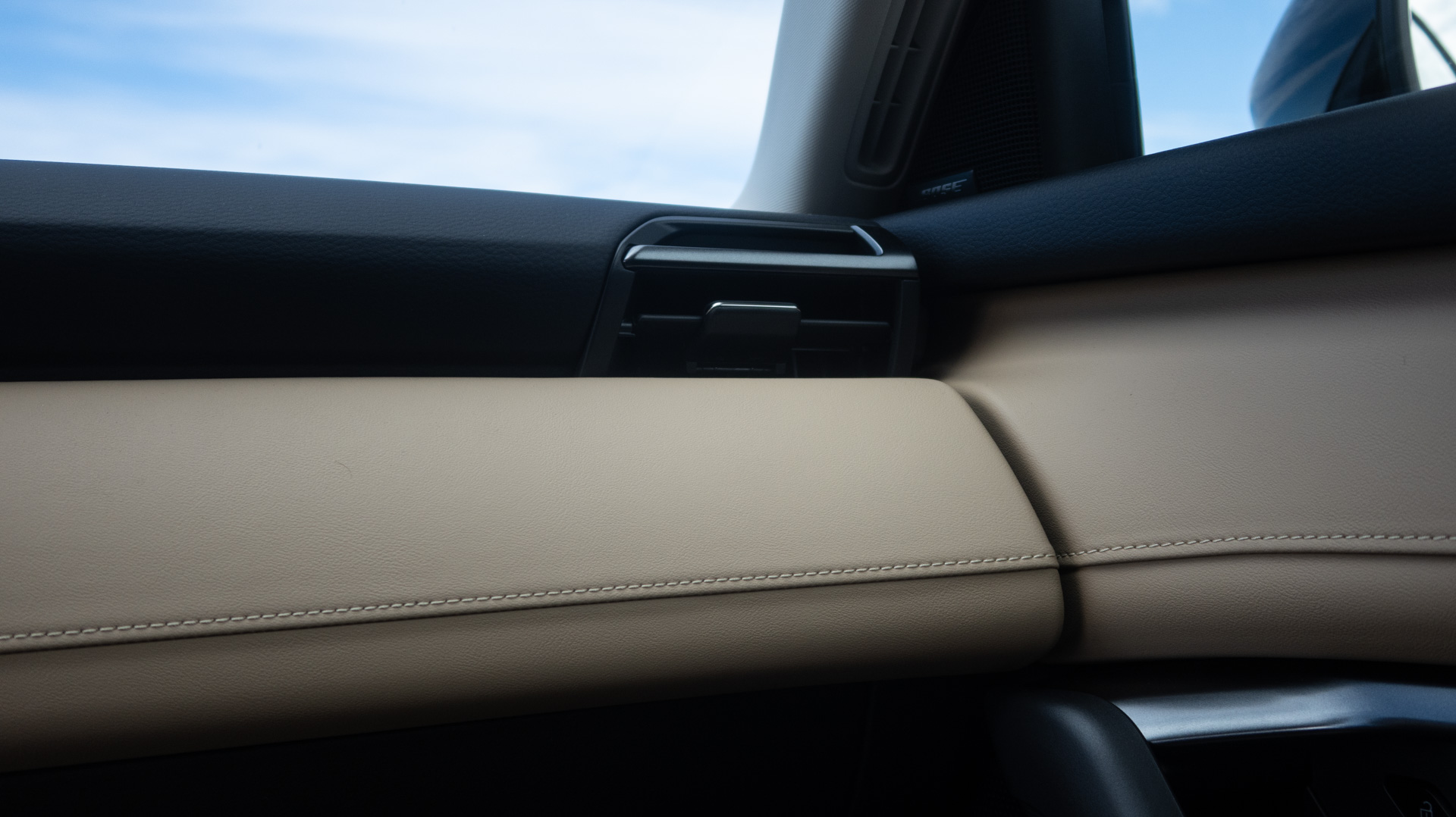
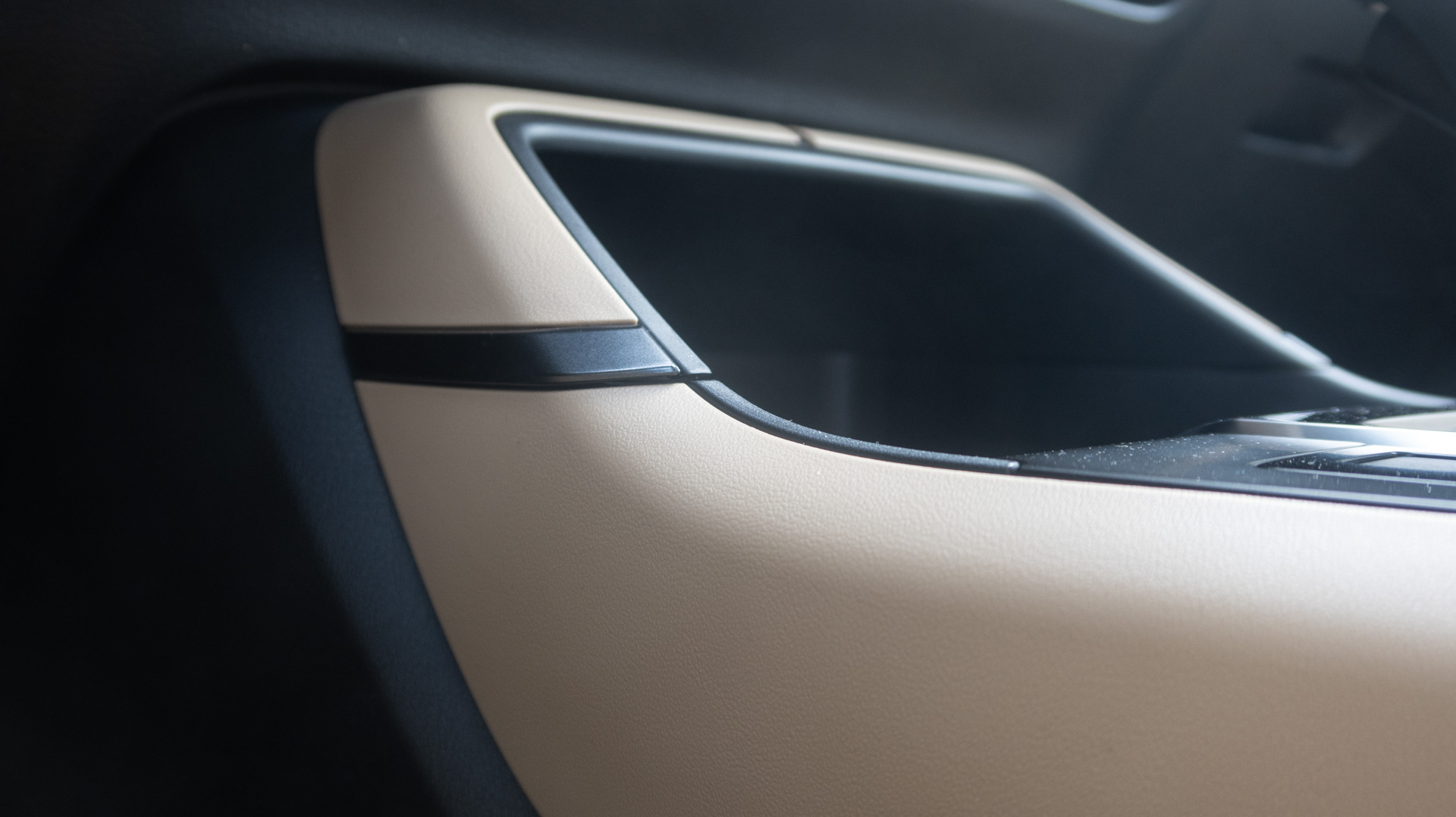
The downsides: the fancy-looking interior withers a bit under close inspection—you can tell the designers have good taste, but a limited budget for materials. Also, the ginormous screen is dumb. Despite one of Mazda’s execs specifically saying, “it’s not big just for the sake of being big,” I think that’s exactly what it is.
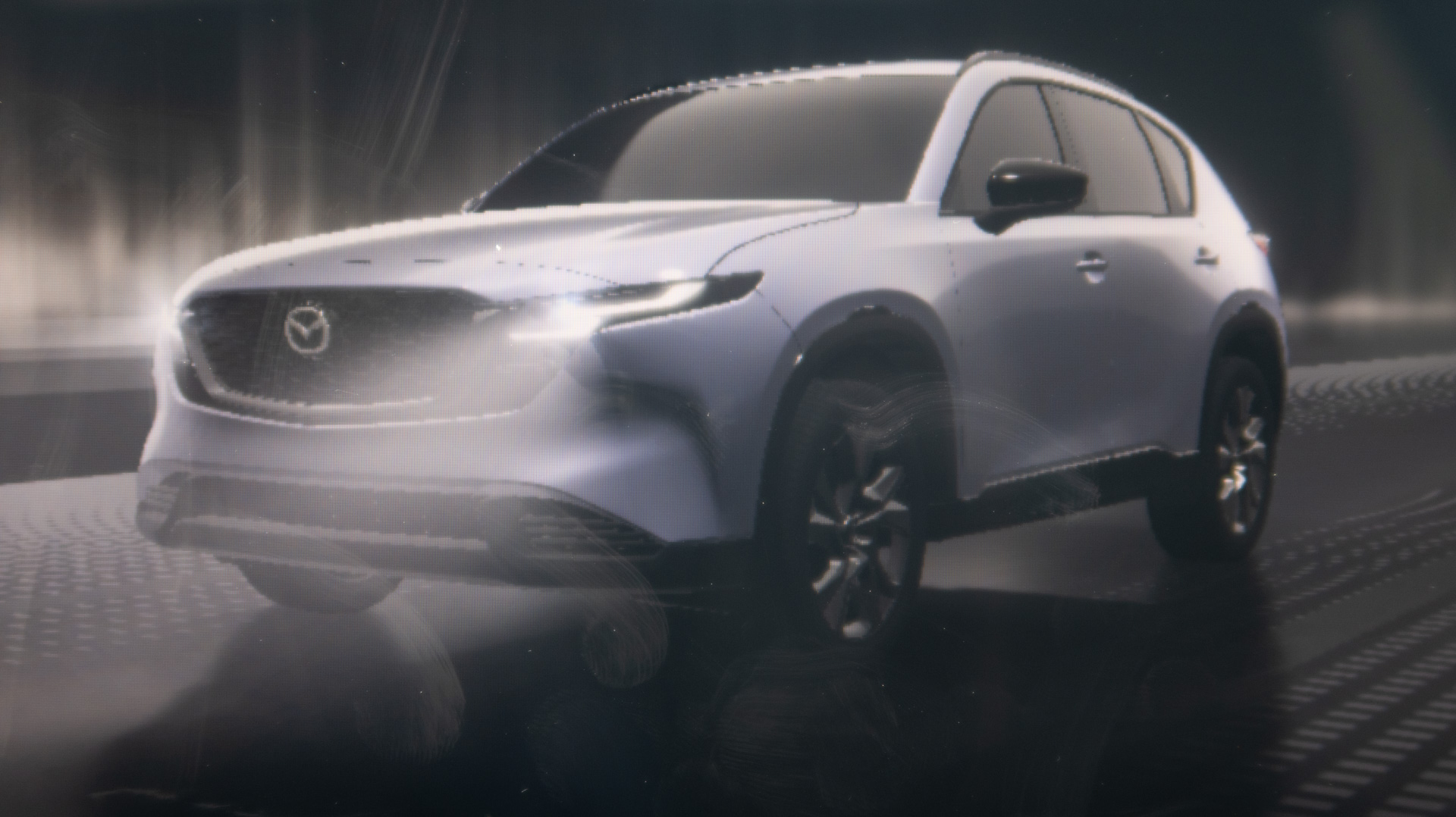
Finally, and this is kind of immaterial, but I want to call it out—the screen renders an animation of a CX-5 doing whatever your car’s doing (doors open, lights and blinkers synced) in certain display modes. It’s sort of cute, but the animation level is more Xbox 360 than latest-greatest resolution.
Driving the 2026 Mazda CX-5
It’s time to answer the question some of you have surely had since the intro of this review: “How the hell is it possible that a 4,000-pound crossover with 187 horsepower doesn’t suck to drive?” The short answer is suspension and chassis tuning. Oh, and transmission gearing.
I also loved the simple, old-school lever shifter—no waiting for an electronic system to engage a gear after you push a button. It keeps the engine revs where you want them in Sport and Normal modes (I didn’t really get to try “off-road”), and you can manually shift using the +/- slot, too.
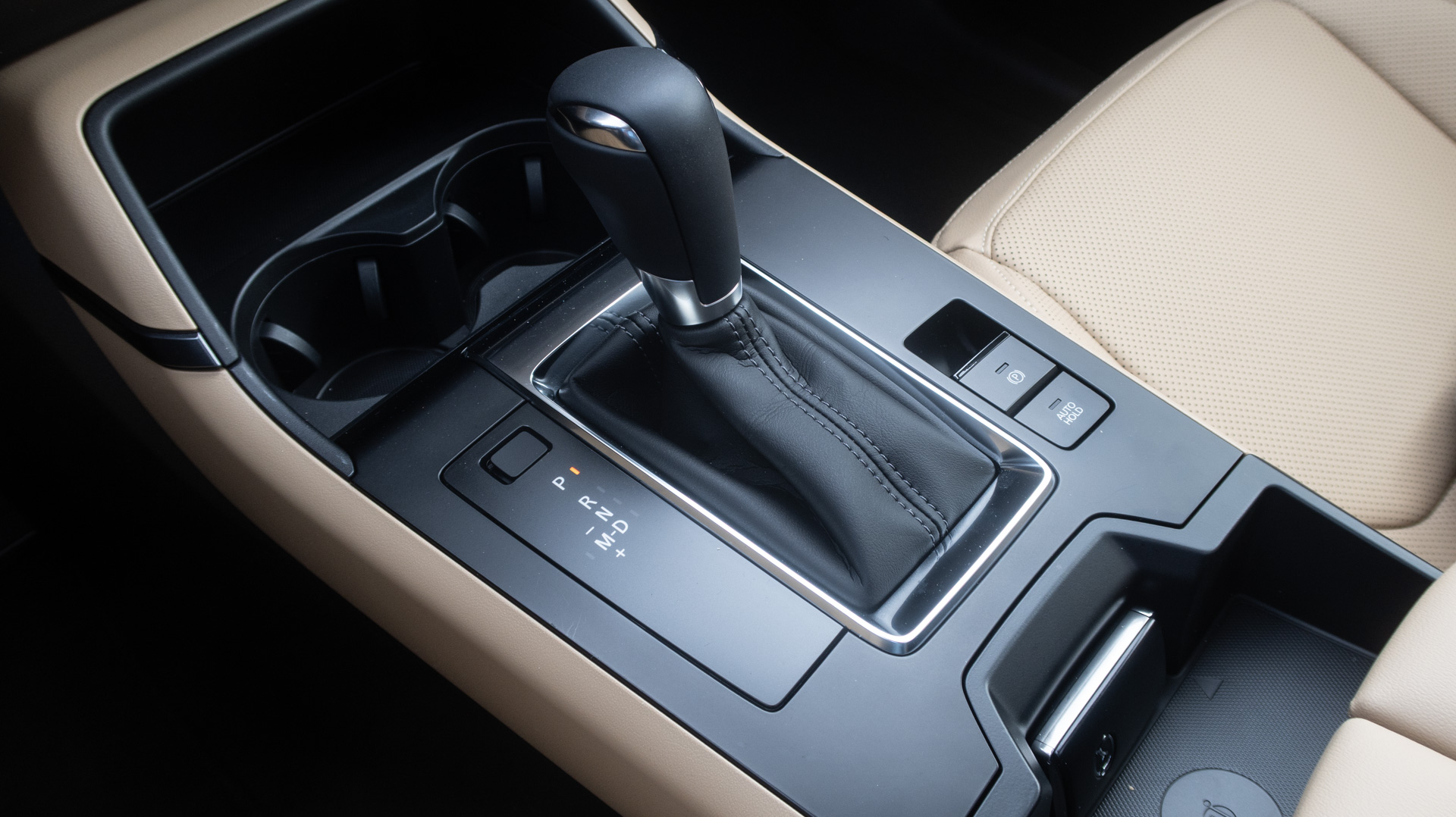
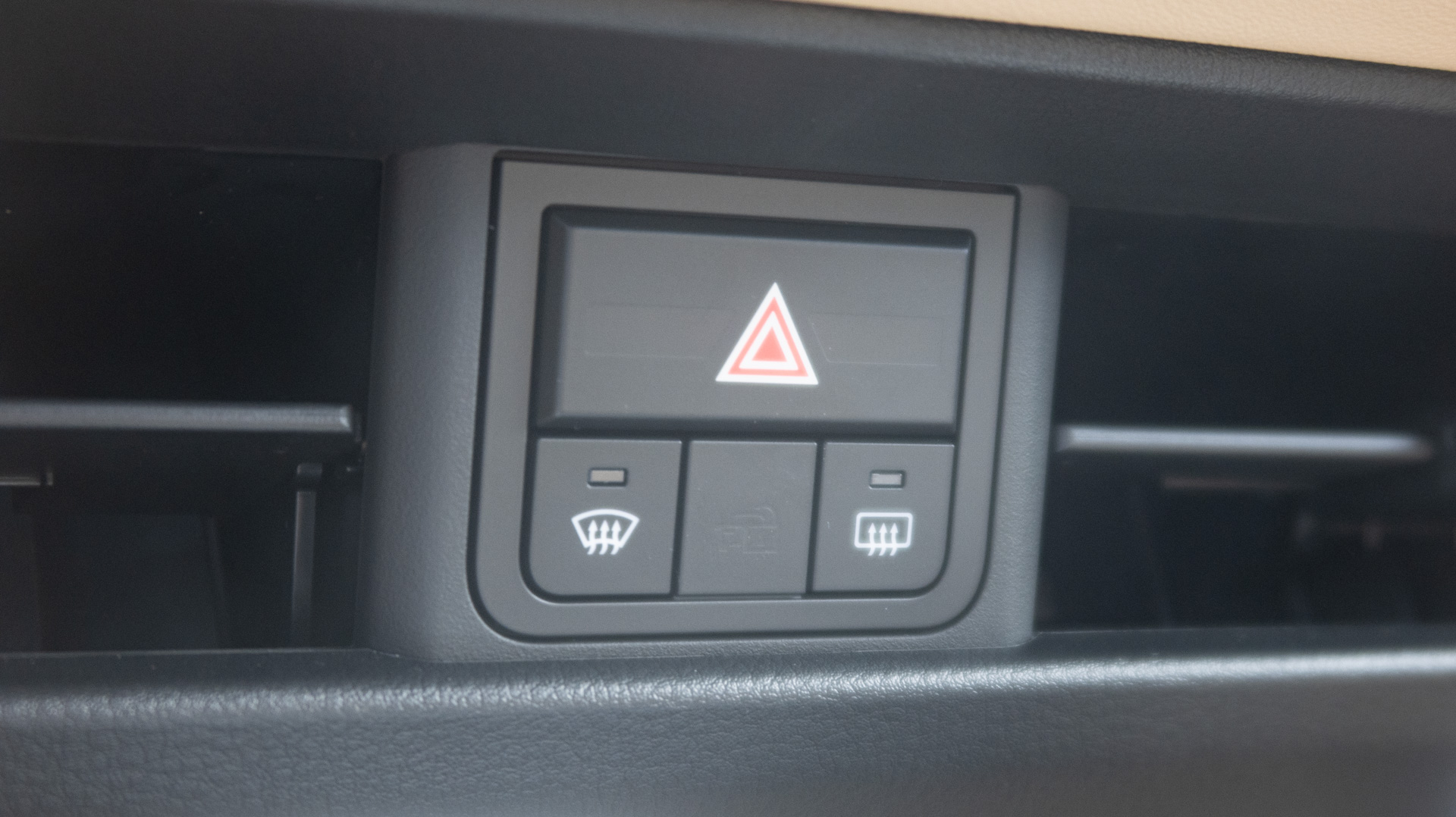
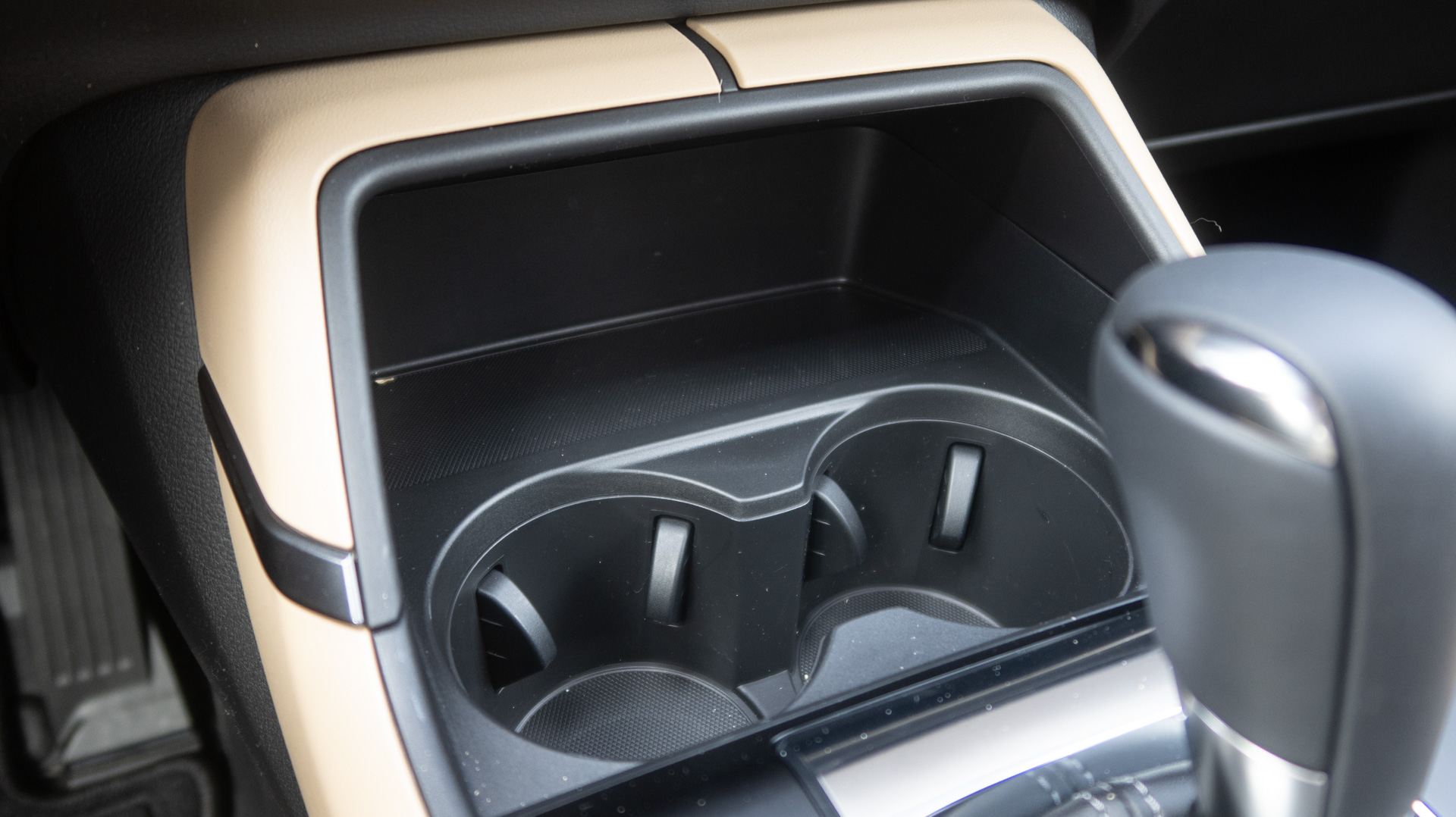
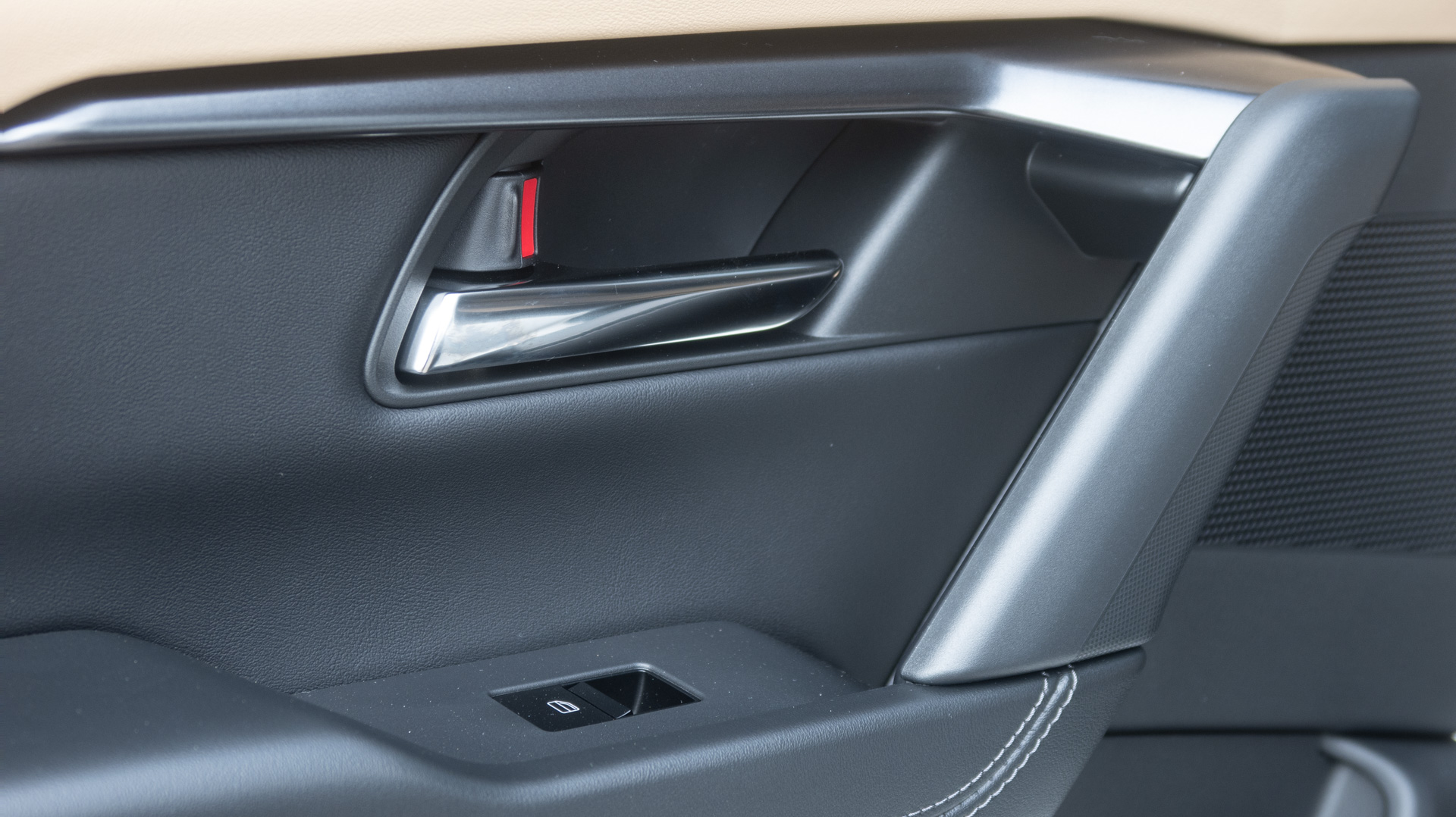
Make no mistake, this is not a fast car. It’s the way it consistently rolls through turns and delivers just enough steering feedback to be satisfying while prioritizing comfort that makes it a standout in its class. And to my genuine shock, it has a decent little exhaust note at wide-open throttle (my iPhone mic failed to capture it, sorry).
There’s quite a bit of suspension travel you’ll feel when you string turns together, but you do feel the vehicle under you—that’s the point I’m trying to make. The CX-5 does a really good job of communicating what it’s doing and where it’s going, something Mazda has been and continues to be good at, even with models other than the Miata.
Dave Coleman, Mazda’s Manager of Vehicle Dynamics, articulated some of the how-and-why really well in an engineering presentation, which I’ll share with you here:
“…from the high-level sort of driver’s viewpoint, we’re always looking at balancing these three sorts of conflicting elements of being fun to drive, confident, and comfortable. And what we wanted to do is keep the ‘fun to drive’ where it was, improve the comfort just a little bit, and really, really focus on the confidence so that it really feels precise and feels like you know exactly what it’s going to do in any situation.
“So our starting point was to start with the same basic geometry of the old car—the same MacPherson strut front, multi-link rear. That suspension worked really well for us. But we changed the tuning of it quite a bit. So in tuning the suspension, we actually followed the lead of the MX-5 (Miata). The MX-5 is actually one of our best riding cars on a rough road. This gives you really confident control, very smooth motion, and the ability to absorb large inputs.
“The other thing that we wanted to do on this car is really make sure that the steering communicates honestly what the car is going to do. So we have other algorithms, like G-Vectoring Control, which shifts a little weight to the front tires when you turn the wheel. And by shifting weight to the front tires, it makes the tires generate more force, which actually generates a real force that comes up into the steering that you feel in your hands. Similarly, with the all-wheel drive system, we tune the all-wheel drive system to pre-load that torque coupling so that as you turn, you’re feeling a little bit of resistance from the car trying to go straight as the front and rear wheels are trying to go the same speed. That resistance is a real force coming from the car. So what you feel in the wheels is not something that came out of the software, but it’s a real force.”
Price and Competition
Regardless of size, the crossover segment is a wild battleground in the car business. CX-5 competes with the Toyota RAV4, Honda CR-V, and Hyundai Tucson—basically, the most popular non-pickup truck vehicles in America. We could do a separate story that purely compares these models, but I’ll provide a high-level speed run to help inform the first stages of your comparison research.
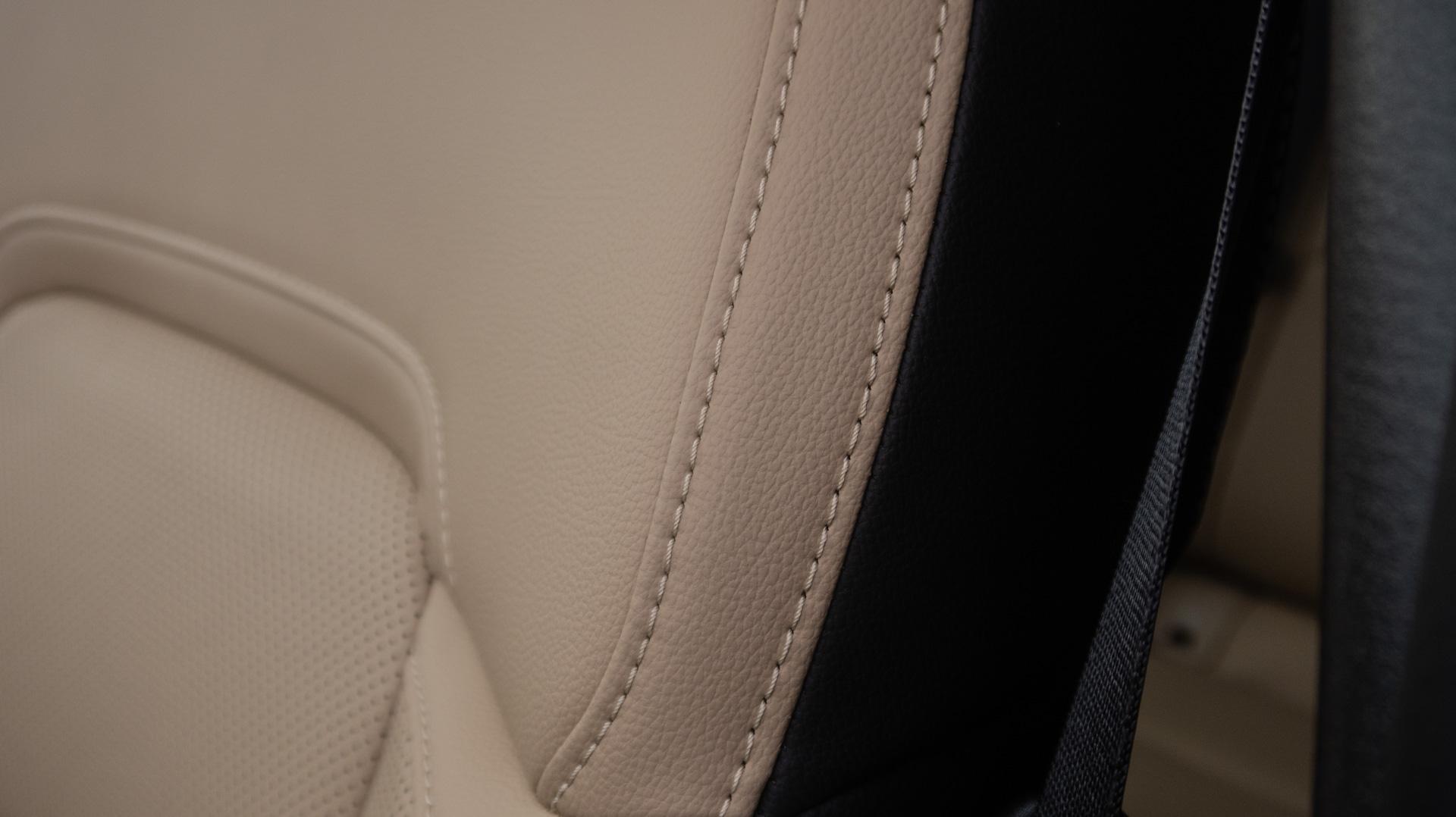
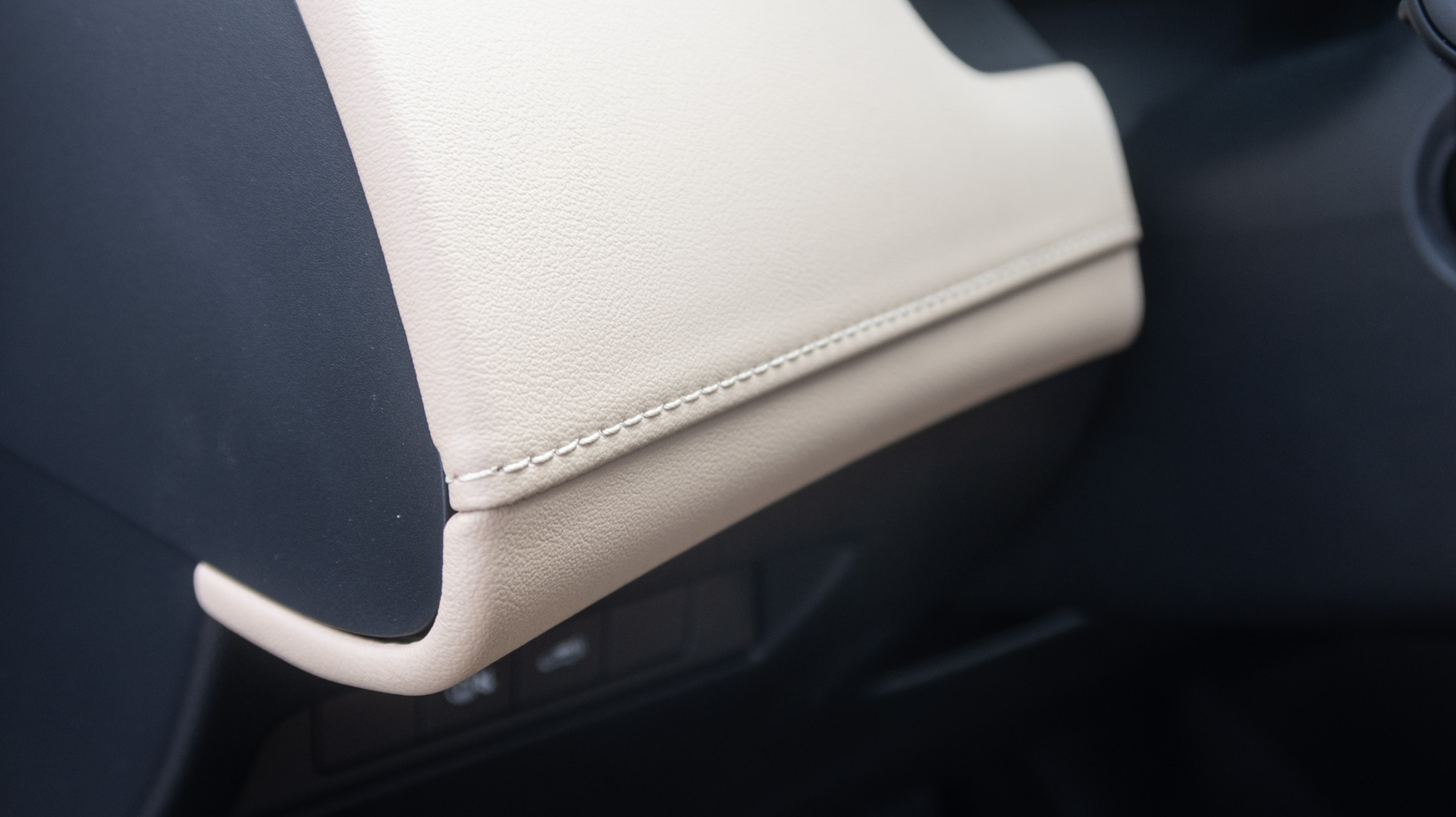
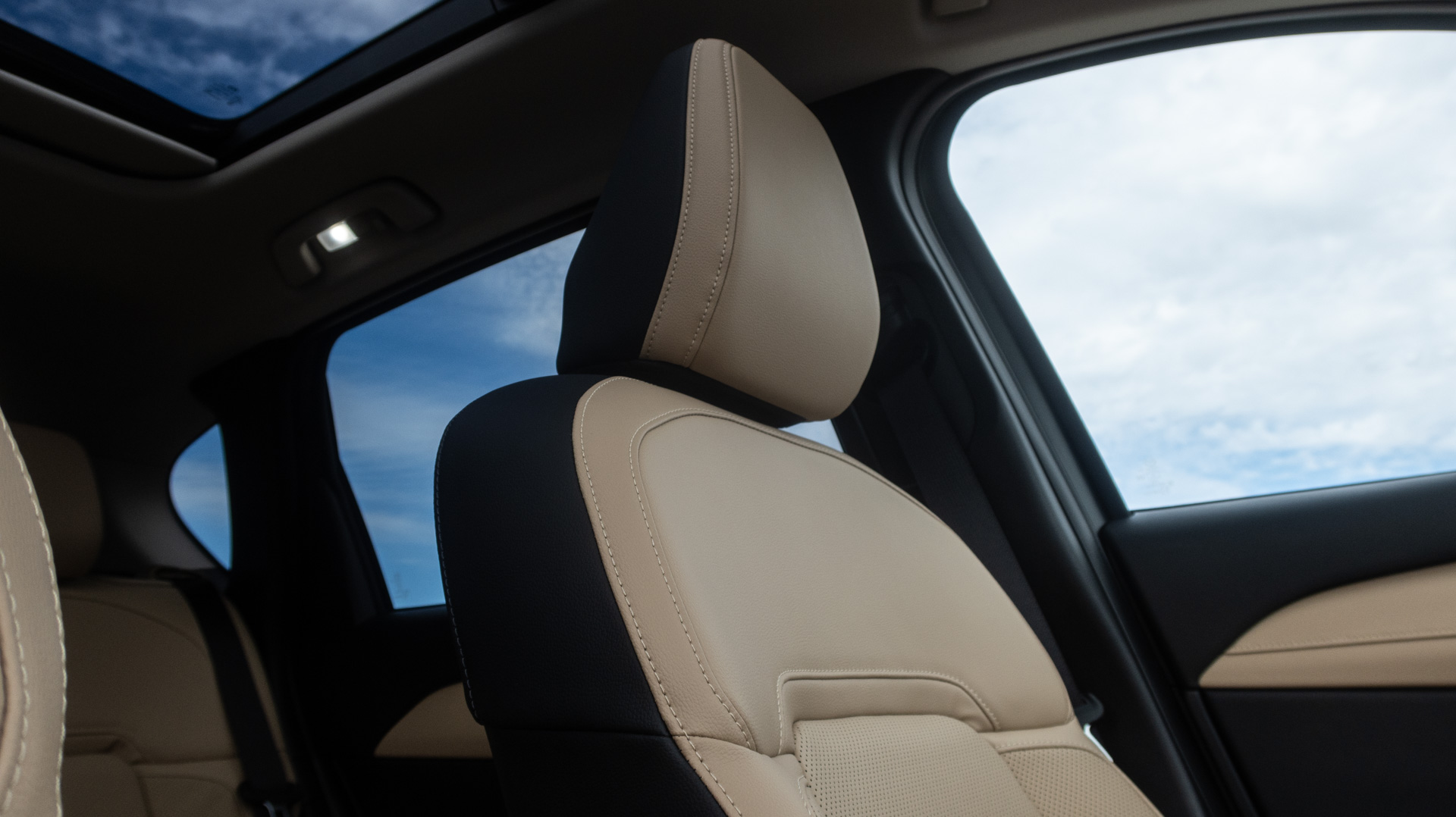
Mazda prioritizes design and driver engagement, for sure. It also undercuts competitors on price. But I still think Honda and Toyota have a non-trivial edge on assembly quality. Looking at a ’26 RAV4 Limited parked next to a ’26 CX-5 (Mazda had both staged for our examination), the paint job on the Toyota was appreciably better (smoother, deeper). And while the CX-5’s cockpit looks good, the materials are fine but not great.
Still, the CX-5 offers a compelling package for under $40,000. And with the new 2026 model running a slightly improved version of a proven powertrain, paired with significantly improved safety systems, there’s no reason to be scared of jumping from one of the other brands into this if you like the way it looks.
Value and Verdict
The 2026 CX-5 S Premium Plus is a great value at its list price of $38,990, and you do need to step up to that model to get the big screen you see in these photos, paddle shifters, ventilated front seats, heated rear seats, and the fanciest driver aids. That’s a pretty sweet loadout for under $40,000.
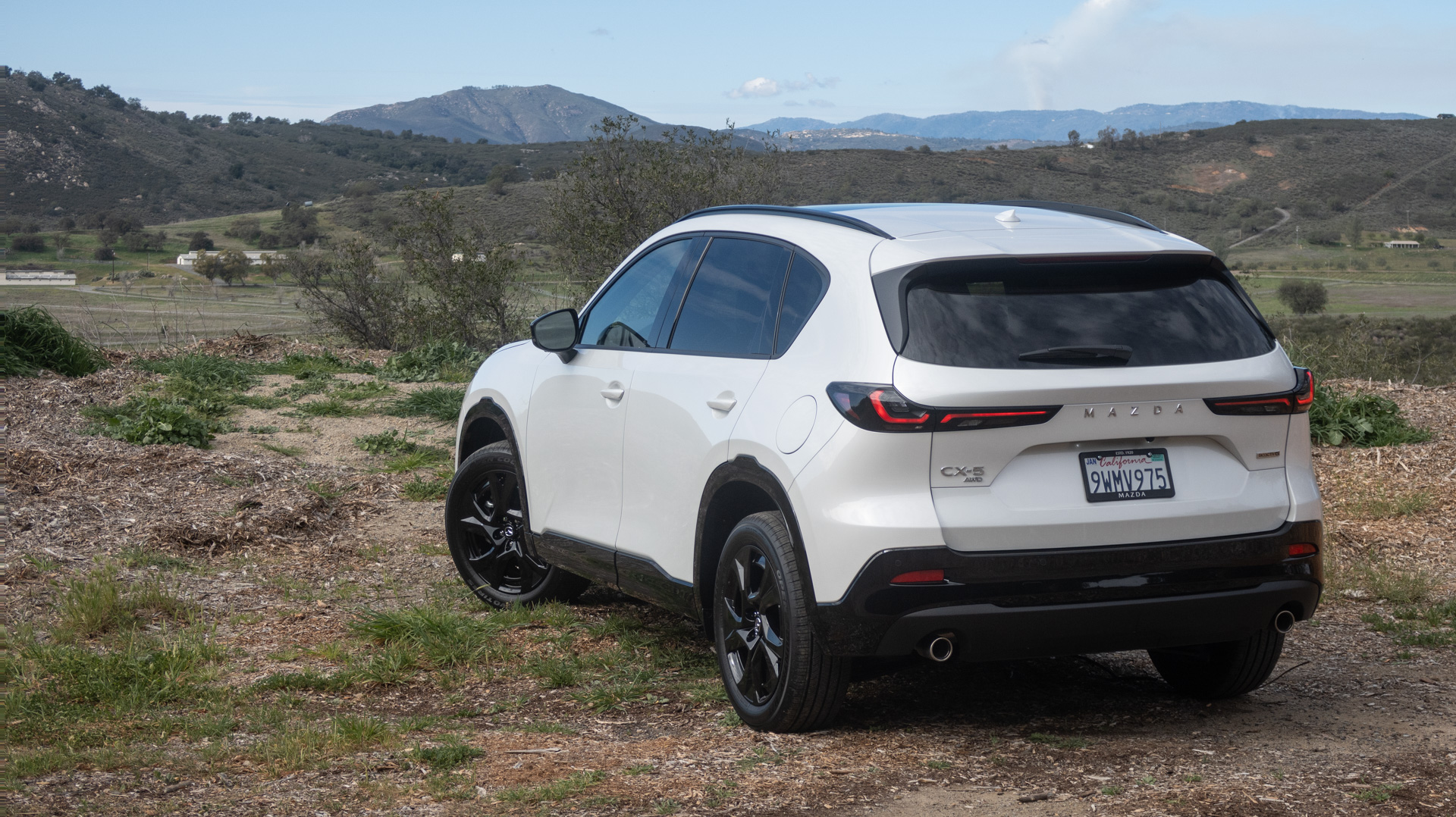
If you want to be more frugal without sacrificing too much, I think the Preferred trim ($34,250) is the way to go. That unlocks heated front seats and steering wheel, plus a power liftgate—two luxuries I pretty much consider essential—and some niceties like 19-inch wheels and digital gauge cluster. The slightly more expensive S Premium model includes a sweet panoramic sunroof, but the other elements of that package (leather seats, front-seat cooling) are less critical. The Bose stereo in S Premium and S Premium Plus is mediocre.
After a full day of driving the CX-5 on highways, in town, and through hill-country backroads, my initial impressions are overwhelmingly positive. It’s a nice-looking vehicle, inside and out, with a high level of functional practicality that also feels good to drive—can’t ask for a much better shakedown report than that.
The sacrifices made in paint quality and interior materials are a reasonable trade-off for the price they are listing at. The CX-5 should definitely be on your radar if you want a versatile, good-value machine.
Mazda provided travel logistics, including airfare, food, and a hotel room, for this review. This is standard practice for a new car launch.
| 2026 Mazda CX-5 Specs | |
|---|---|
| Base (S Premium Plus tested) | $29,990 ($38,990) + Destination & Delivery TBA |
| Powertrain | 2.5 I4 | 6AT | AWD |
| Horsepower | 187 @ 6,000 rpm |
| Torque | 186 lb-ft @ 4,000 rpm |
| Seating Capacity | 5 |
| Cargo Volume | 33.7 cu ft (seats up) | 66.5 cu ft (seats down) |
| Curb Weight | 3,856 lbs |
| EPA Fuel Economy | 24 city | 30 highway | 26 combined |
| Score | 7/10 |

Quick Take
Great mix of practical features, lovely design, and nice driving dynamics for the price.
Loading comments…
Comments couldn’t be loaded. Please refresh the page.