
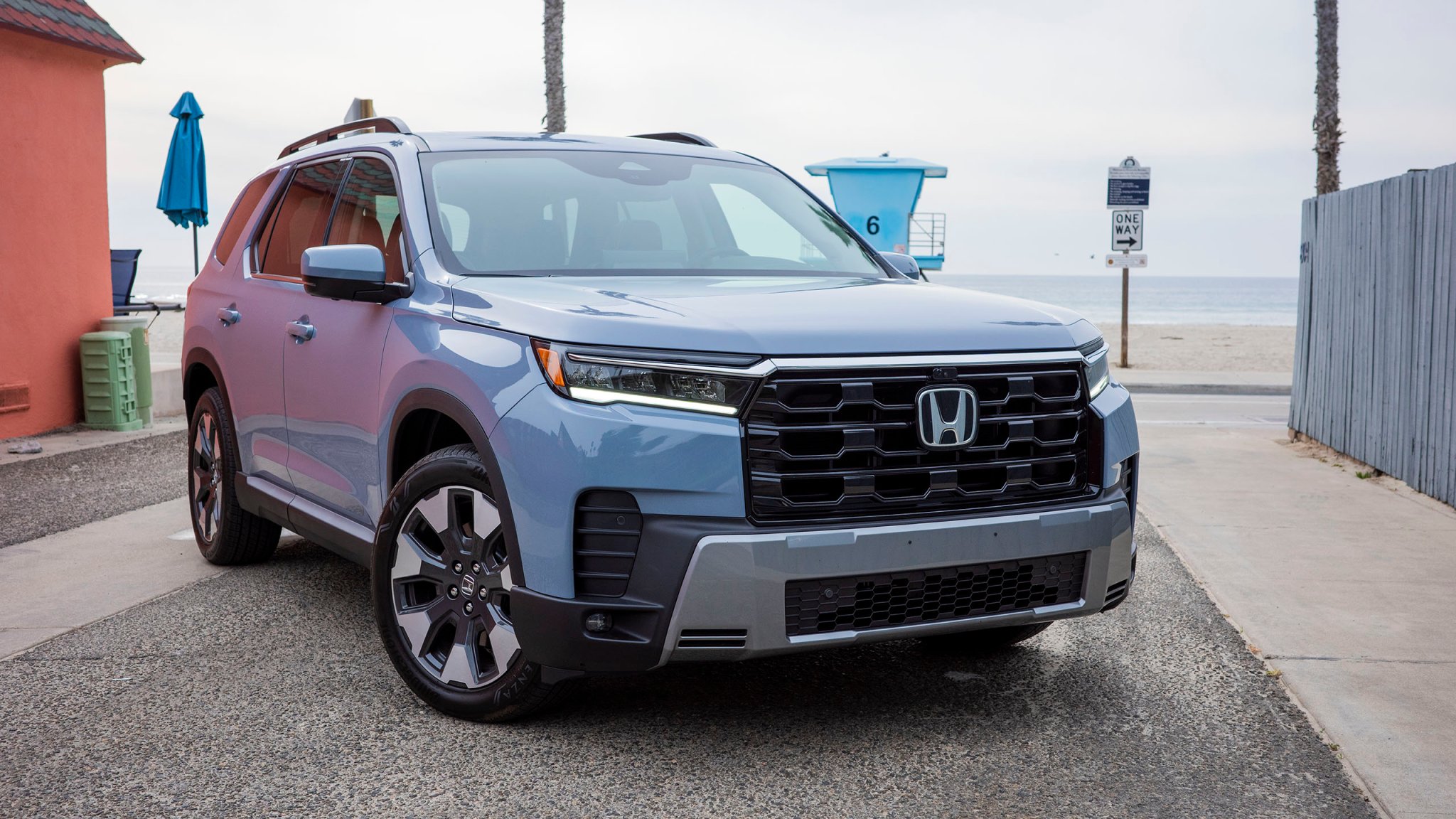
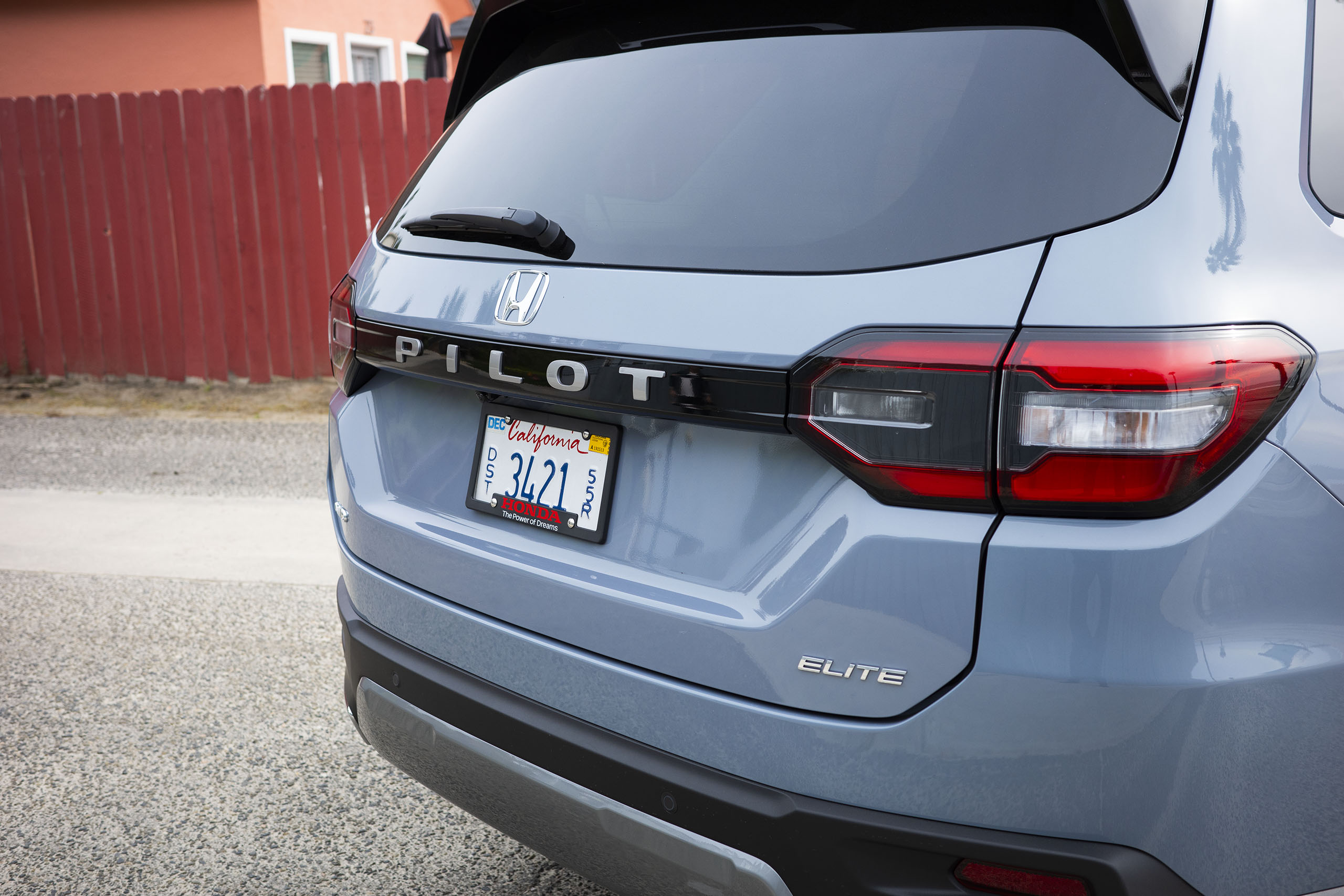
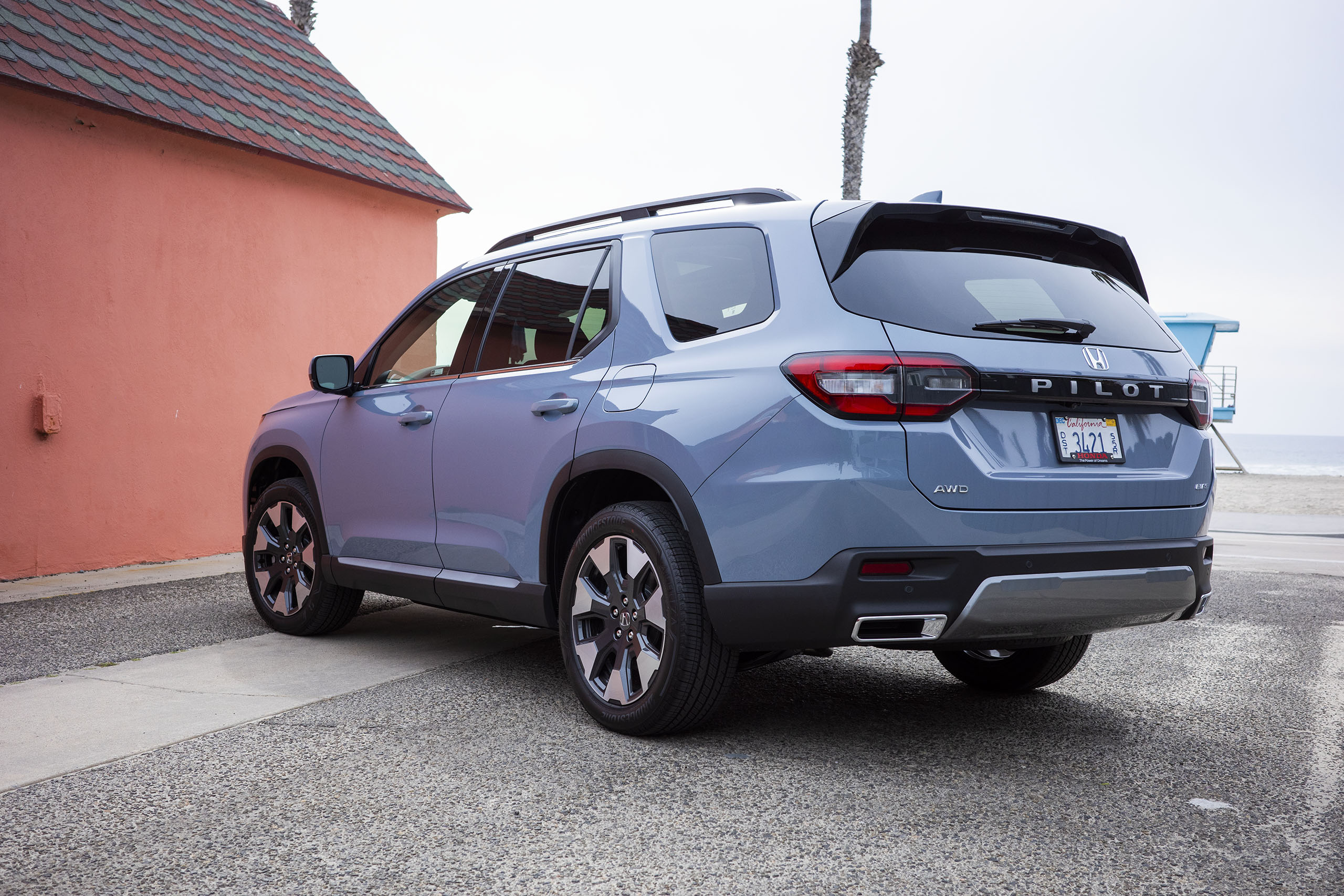
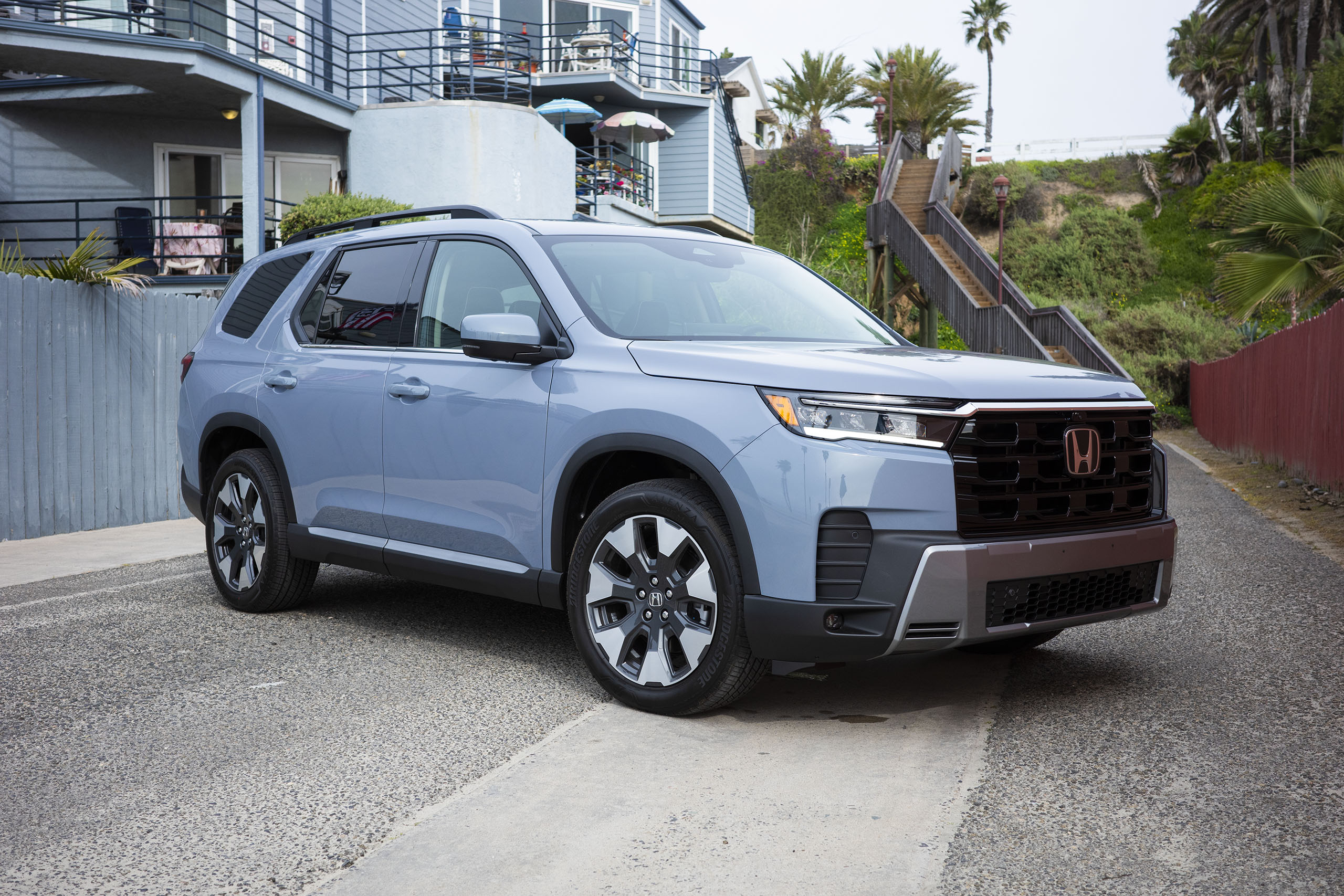
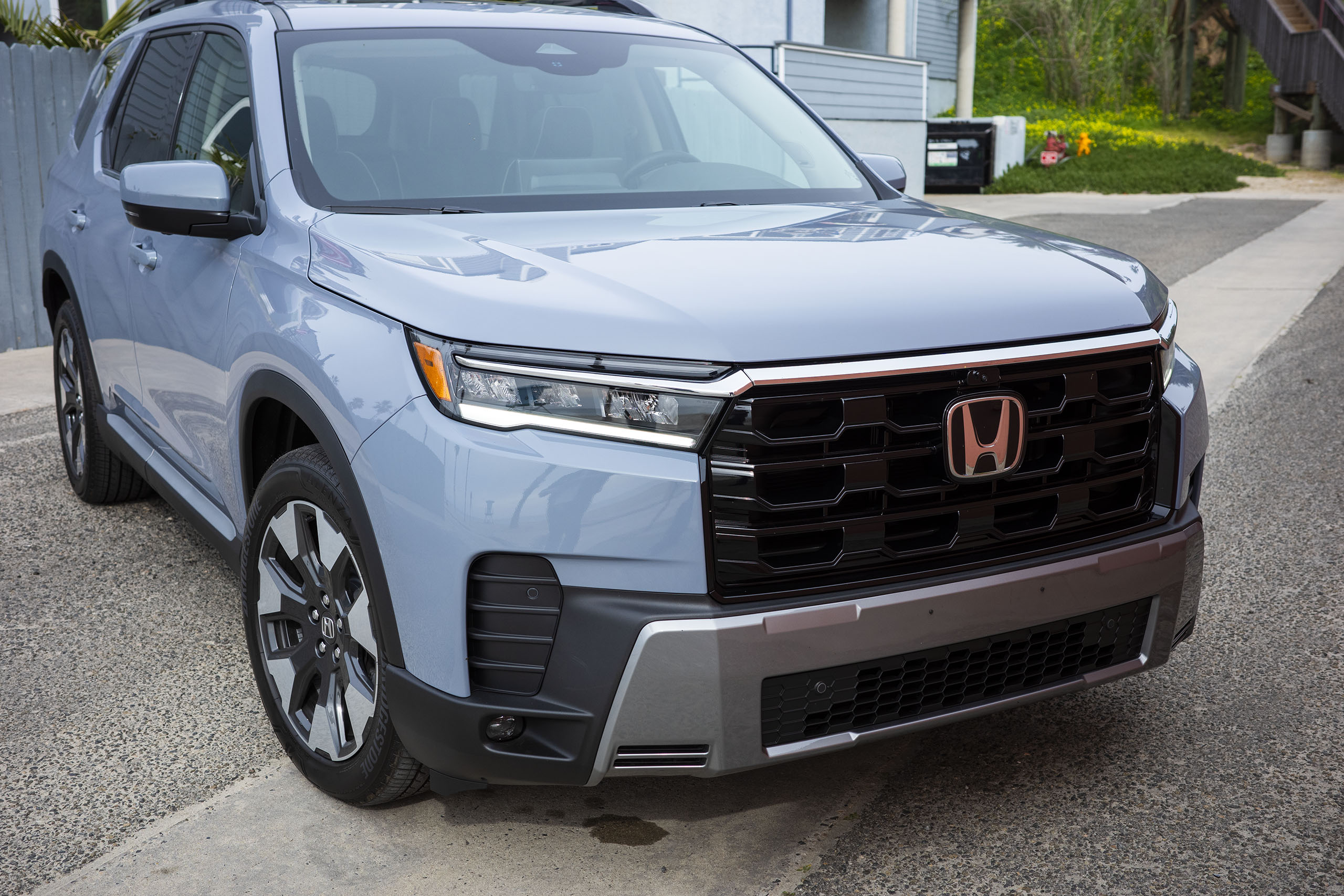
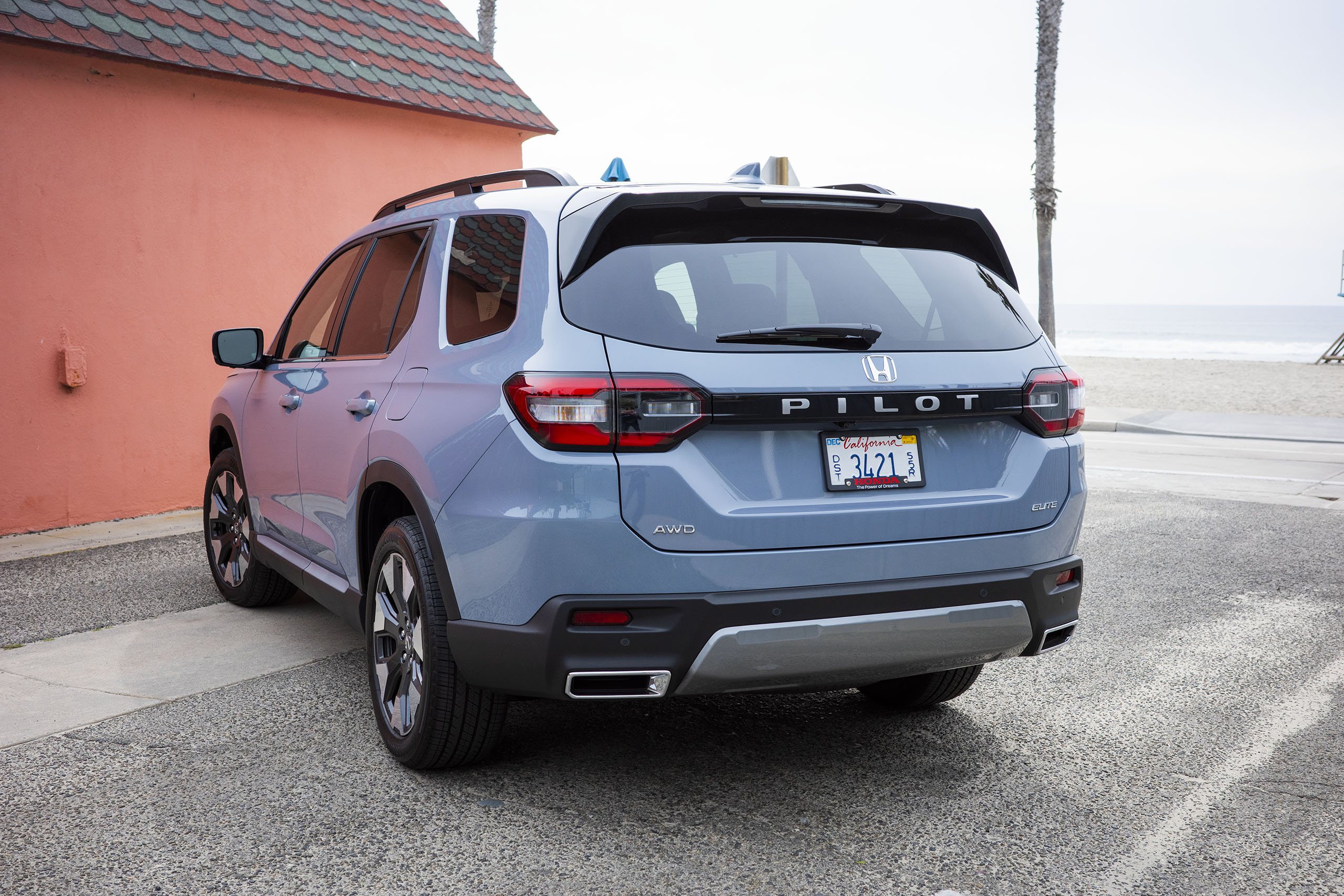
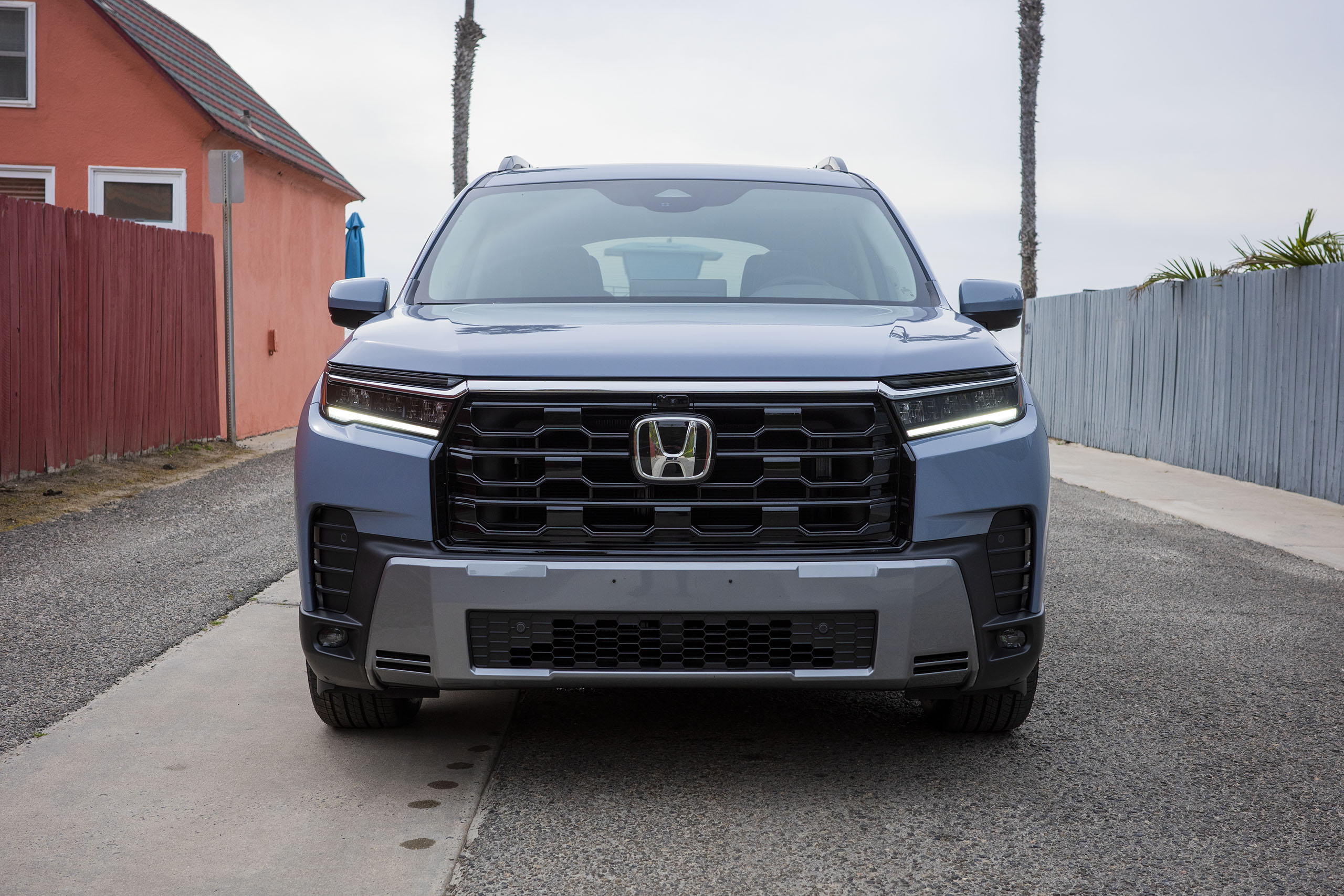
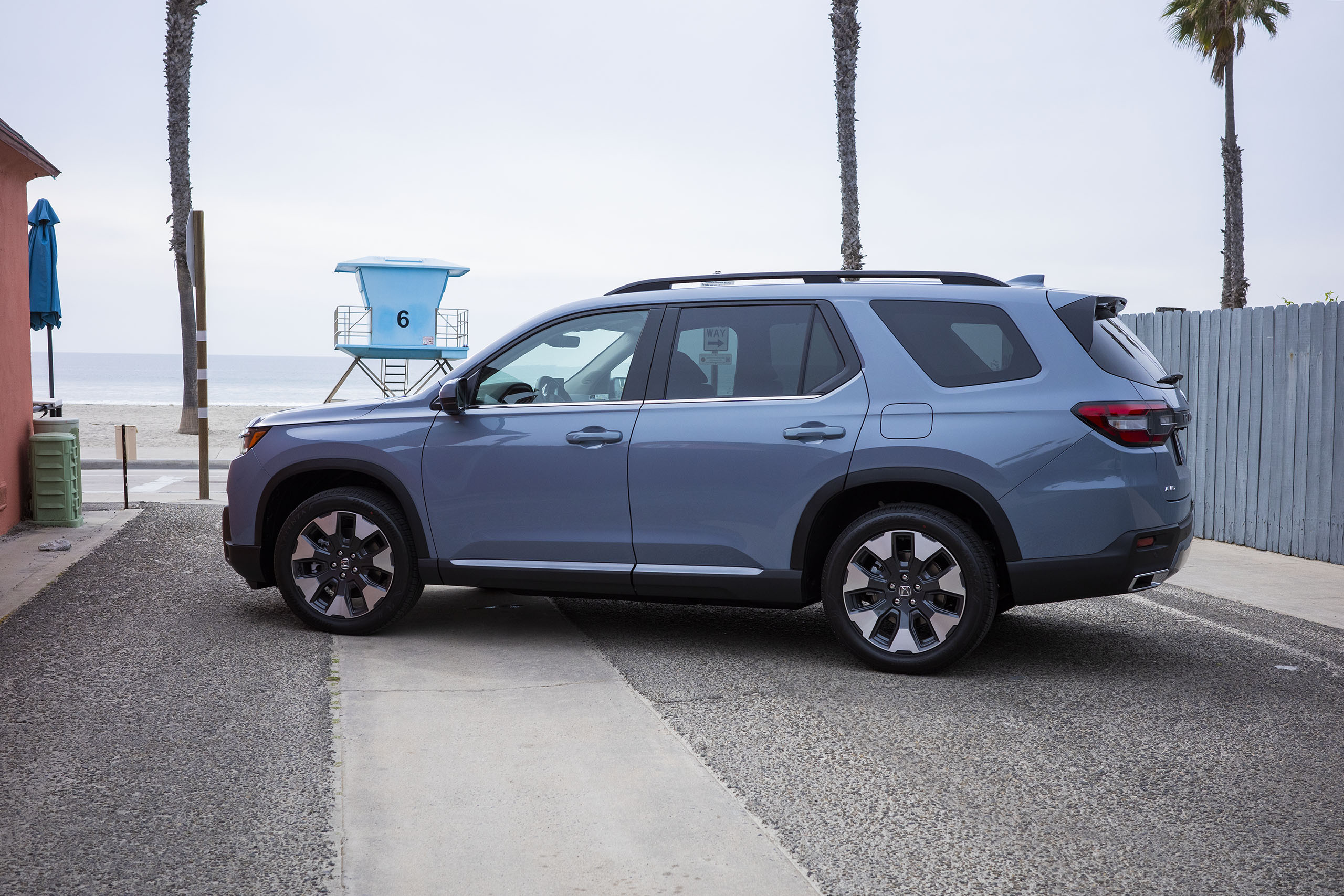
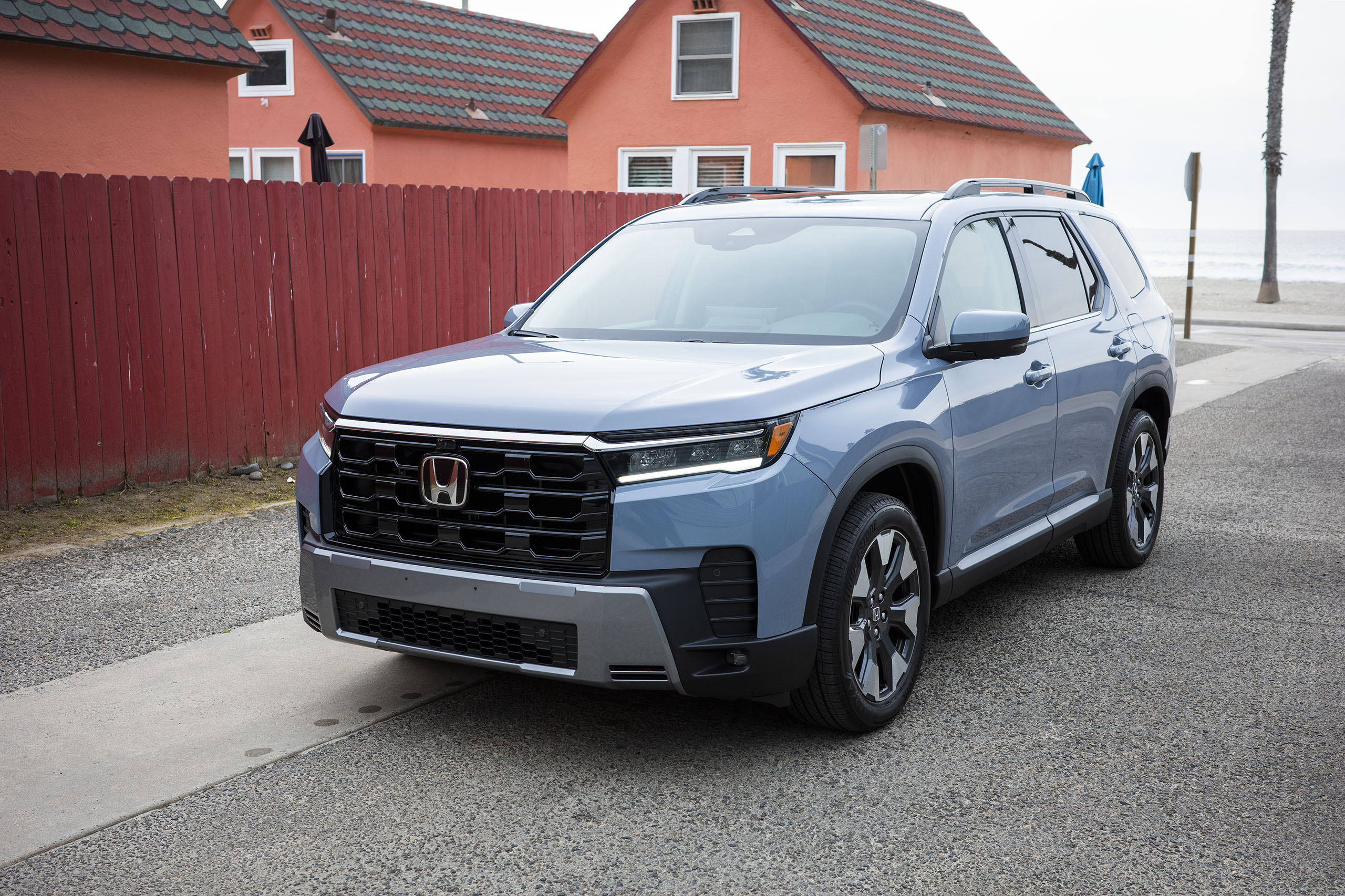
The fourth-generation Honda Pilot turns four this year, making now the ideal time for a facelift—particularly in one of the most crowded automotive categories, the midsize, three-row SUV. The new Pilot for 2026 features a more squared-off face that channels the Passport’s utilitarian yet modern look and includes a host of interior and driving refinements, as well as tech updates, to keep the SUV competitive. These tweaks haven’t made the Pilot a much more desirable family hauler, but they have made it a little better, and a little goes a long way.
What’s New in the 2026 Honda Pilot
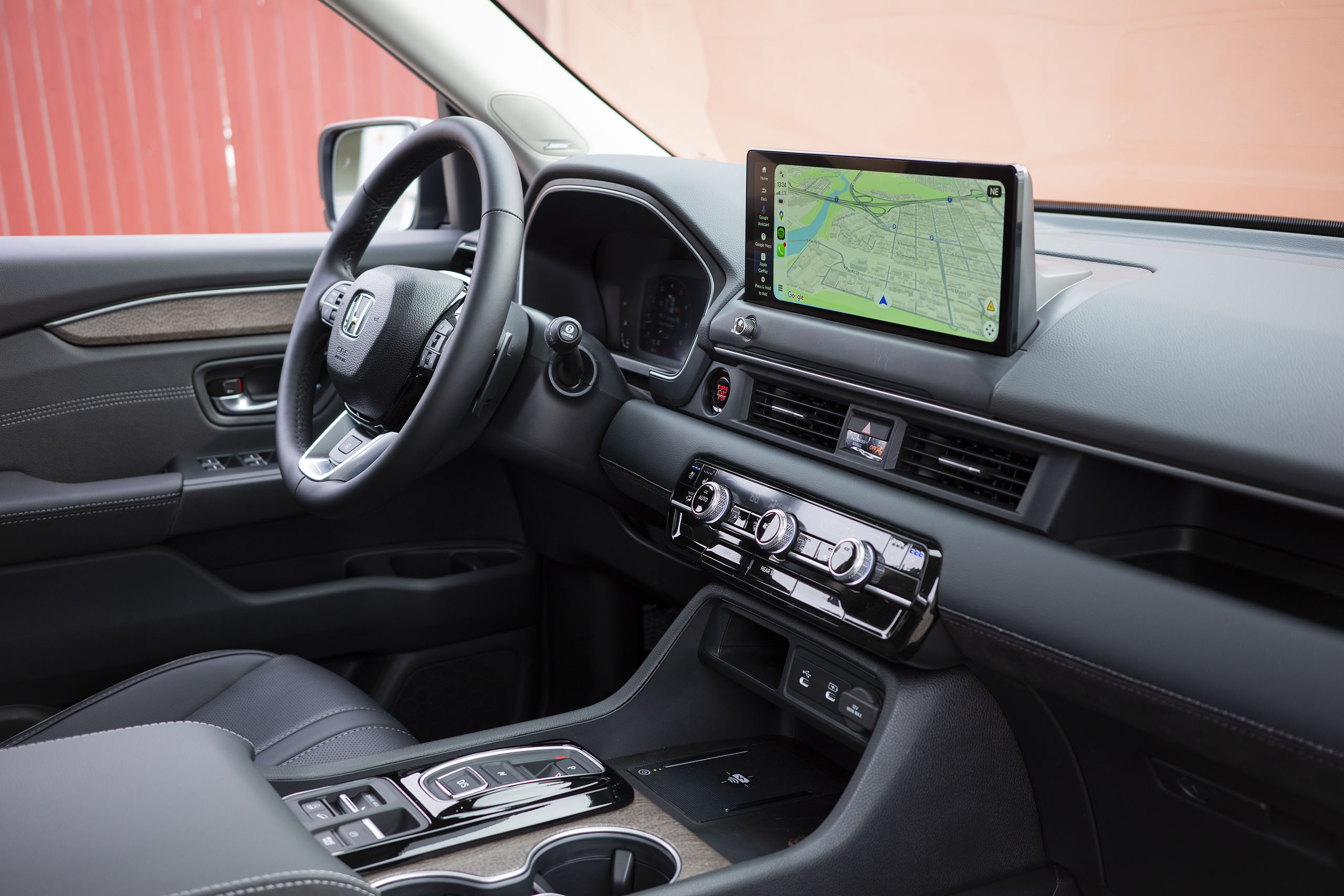
For 2026, the Pilot retains its 3.5-liter V6, producing 285 horsepower and 262 lb-ft of torque, which remains standard across all trims. The SUV starts at $43,690, including a $1,490 delivery charge. Optioning all-wheel drive adds $2,100 to the total. All models now receive a new, fully digital 10.2-inch instrument cluster and a wider 12.3-inch infotainment display, featuring wireless Apple CarPlay and Android Auto.
The center display was made larger in part by reclaiming space formerly occupied by hard navigation buttons and relocating the volume dial to the trim just below it. It’s resulted in a bit of a weird look, and I would’ve rather had the physical nav buttons stick around than a barely larger touchscreen, but this is the way of modern cars. The infotainment OS is Honda’s latest, and I found it sensibly laid out and snappy to navigate.
This cabin is also a quieter one, with new sound-deadening material that adds door, dash, and hood insulators to all trims, interlayer glass for the base model that previously lacked it, and enclosed fender liners on Touring and above Pilots. Honda says that altogether, these enhancements reduce interior noise by two or three decibels, which doesn’t sound like a lot, but the result is indeed a serene ride.
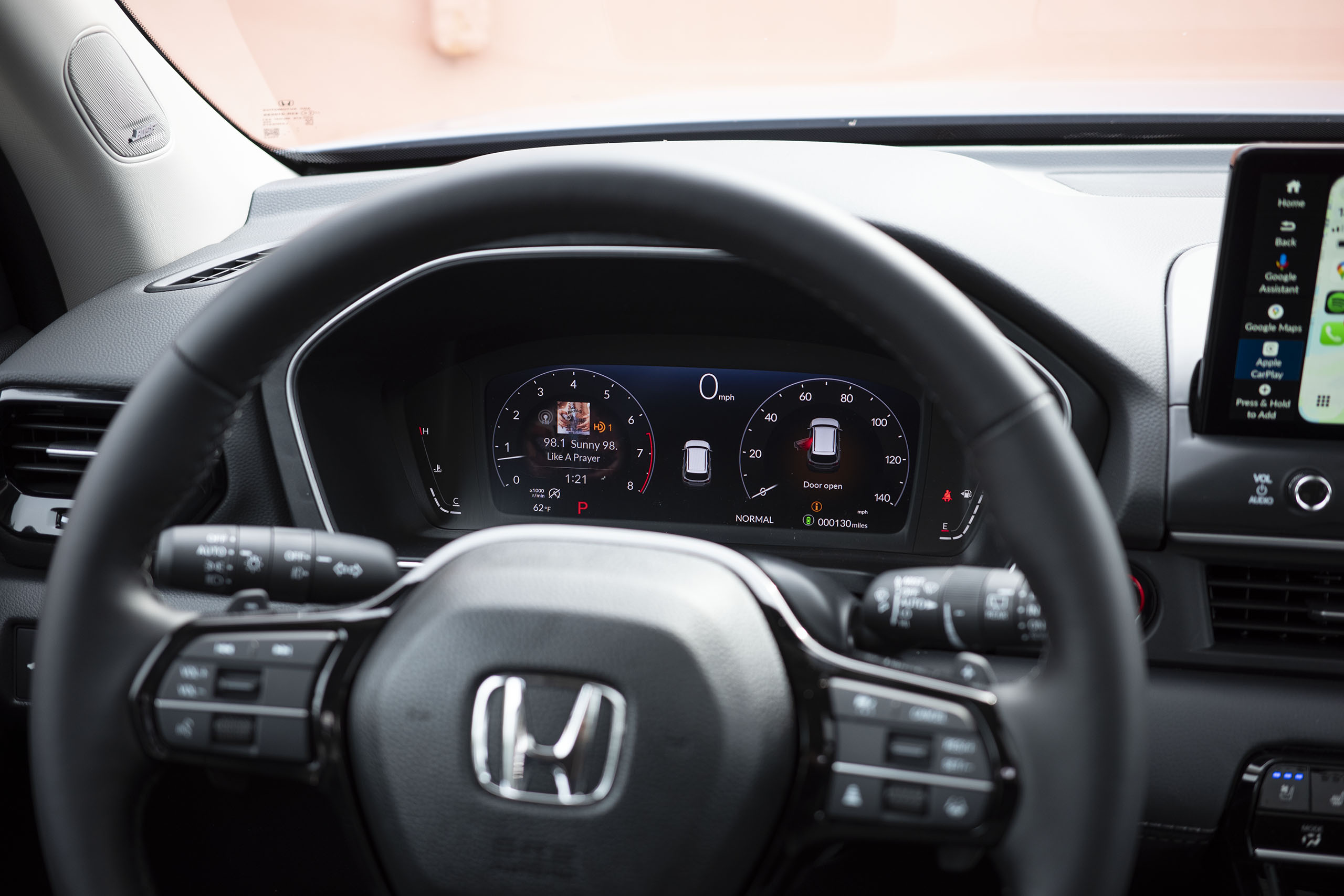
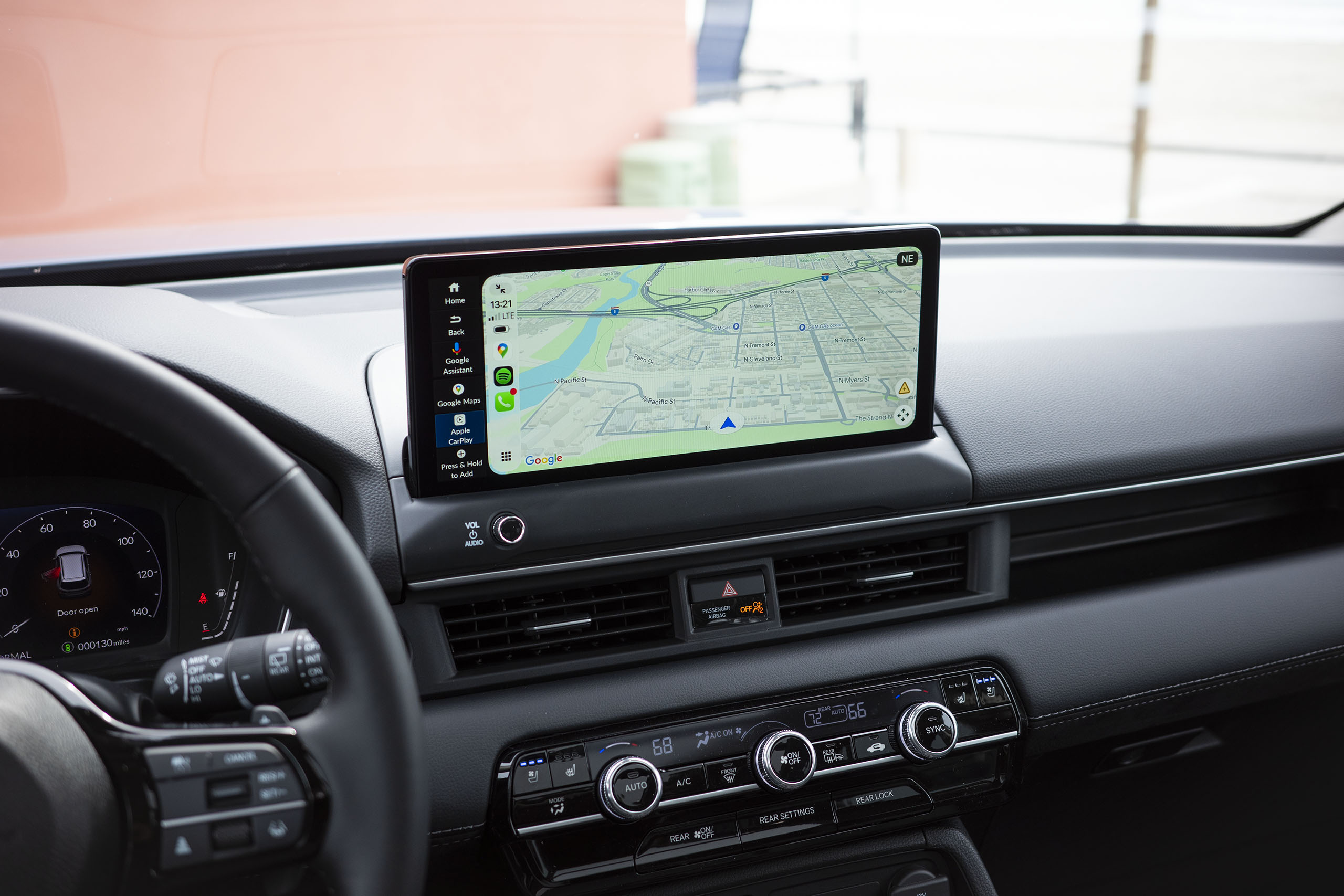
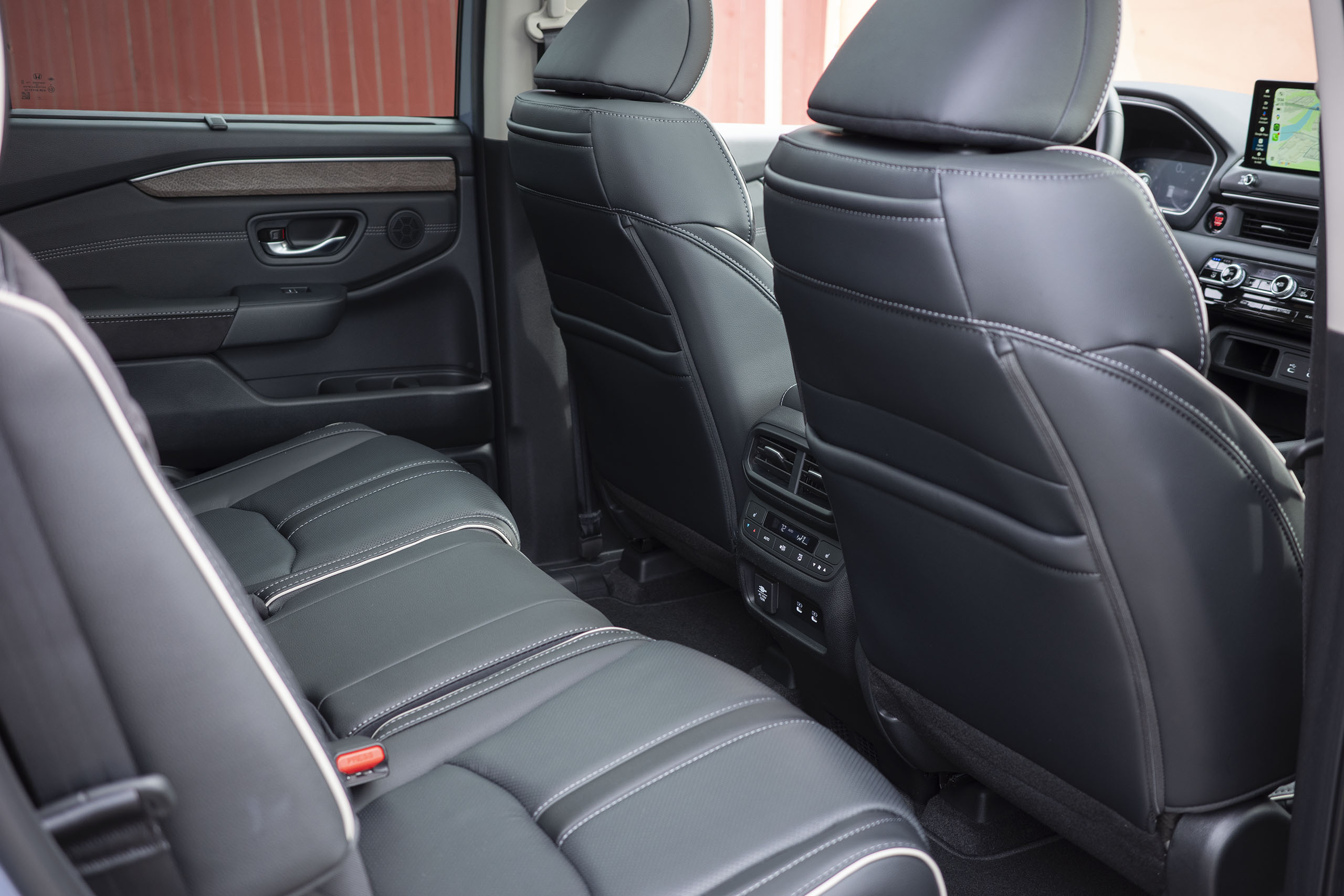
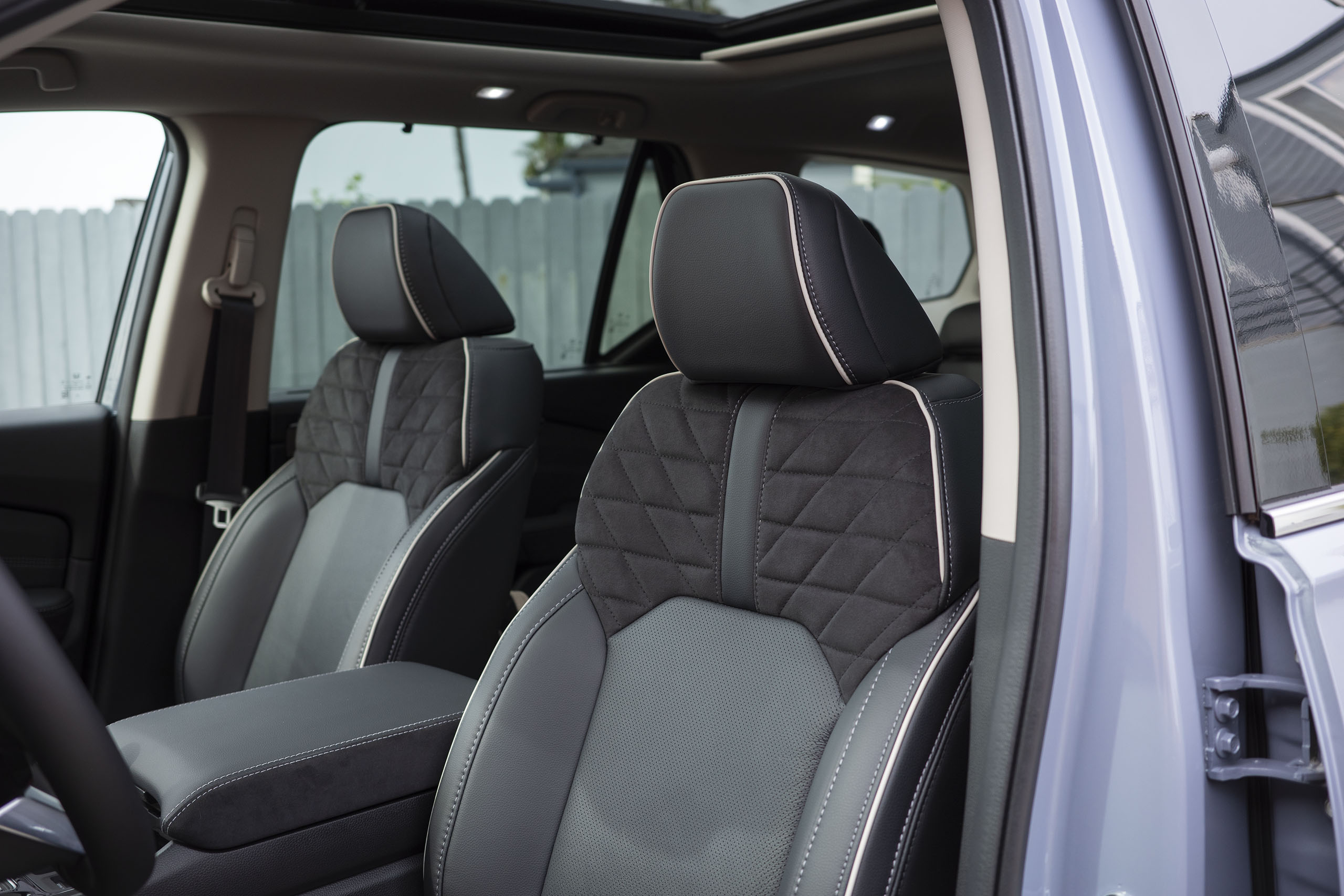
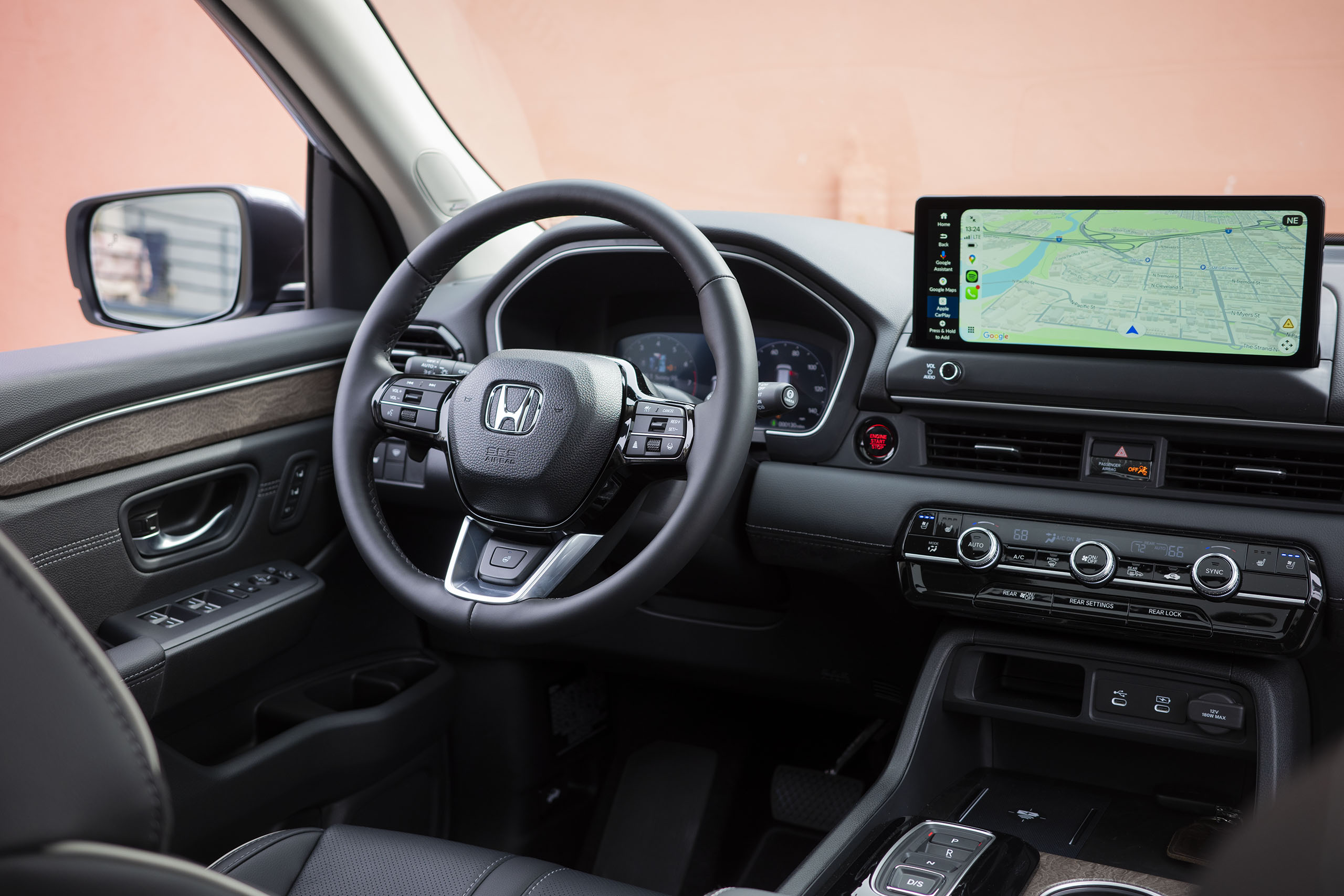
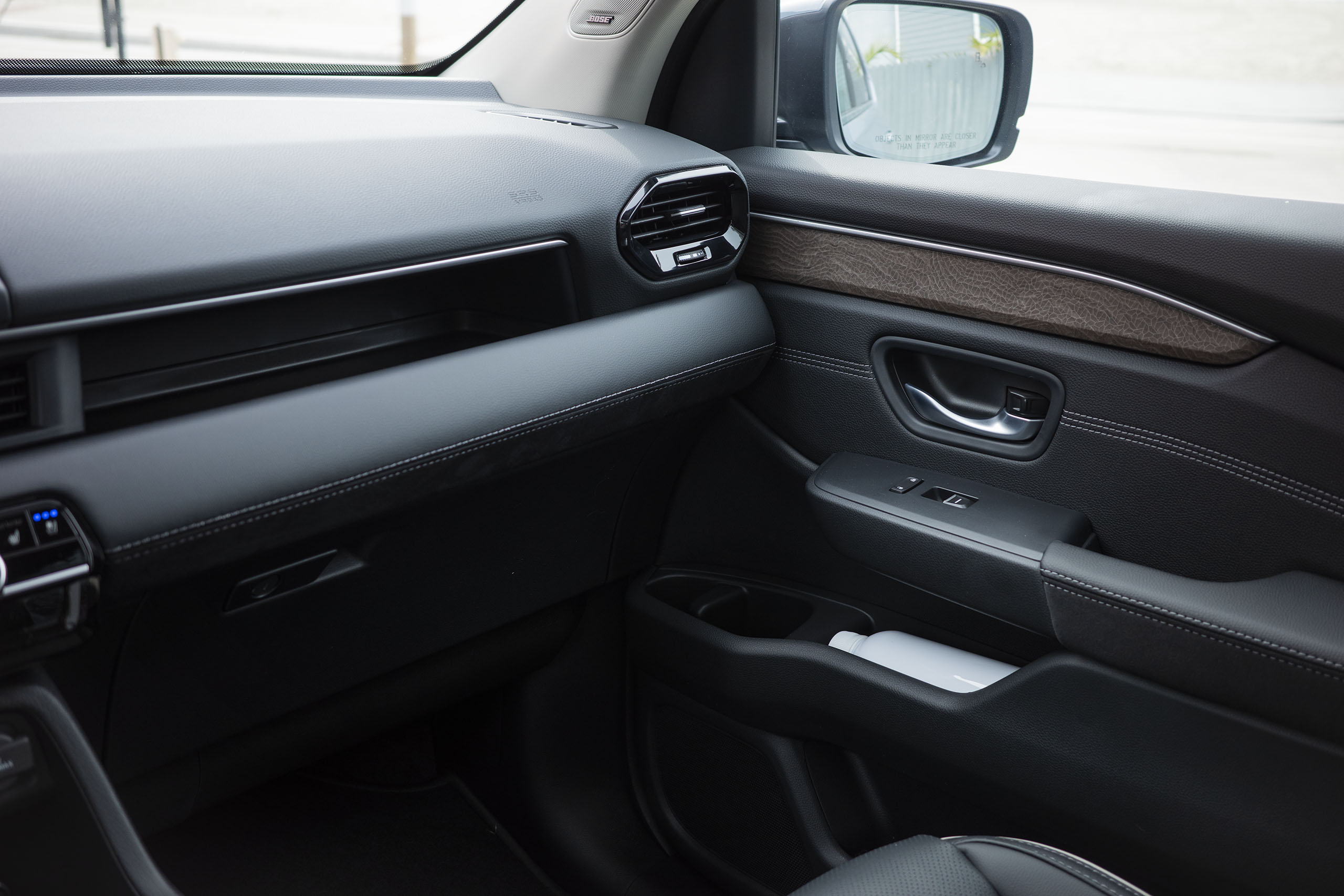
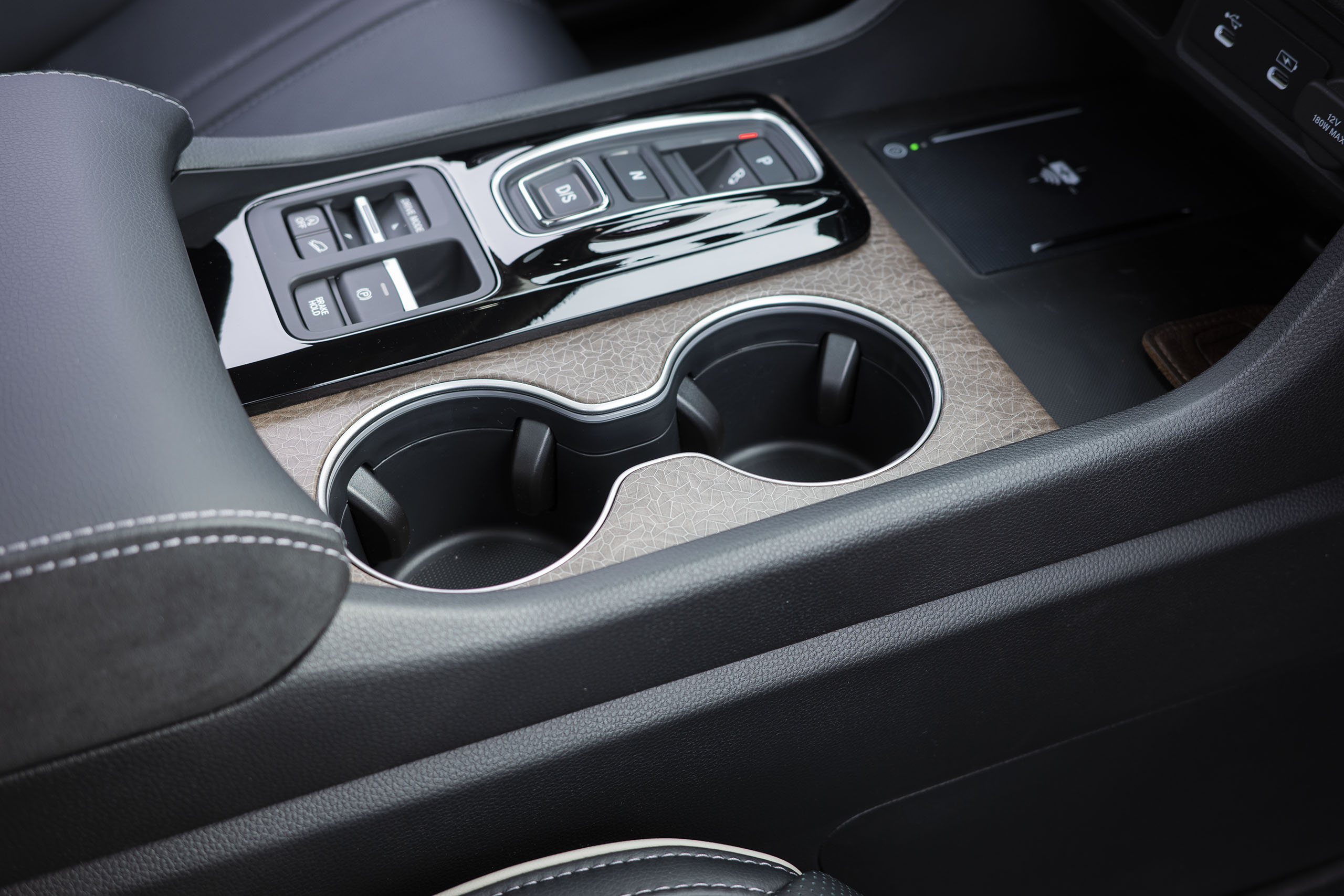
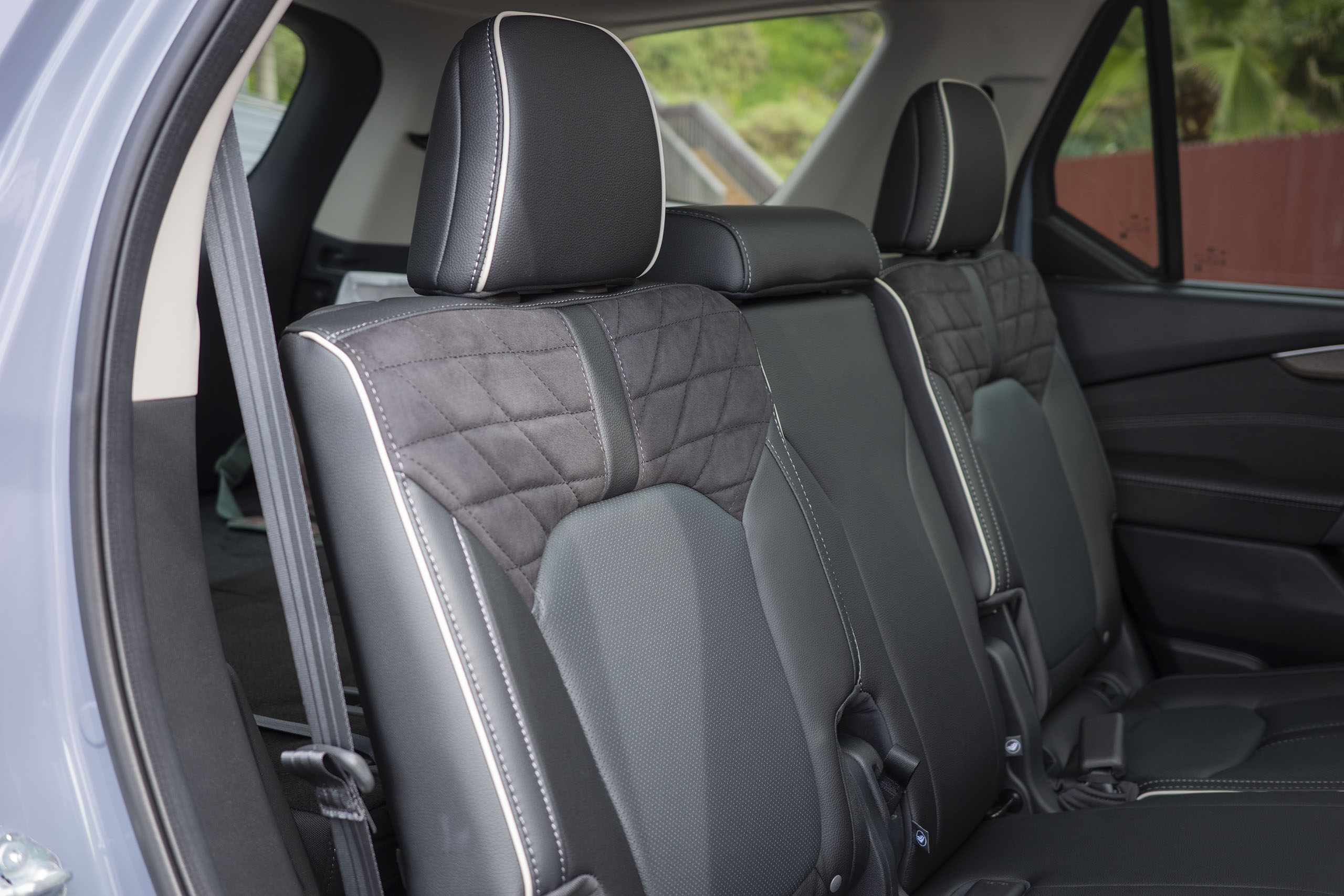
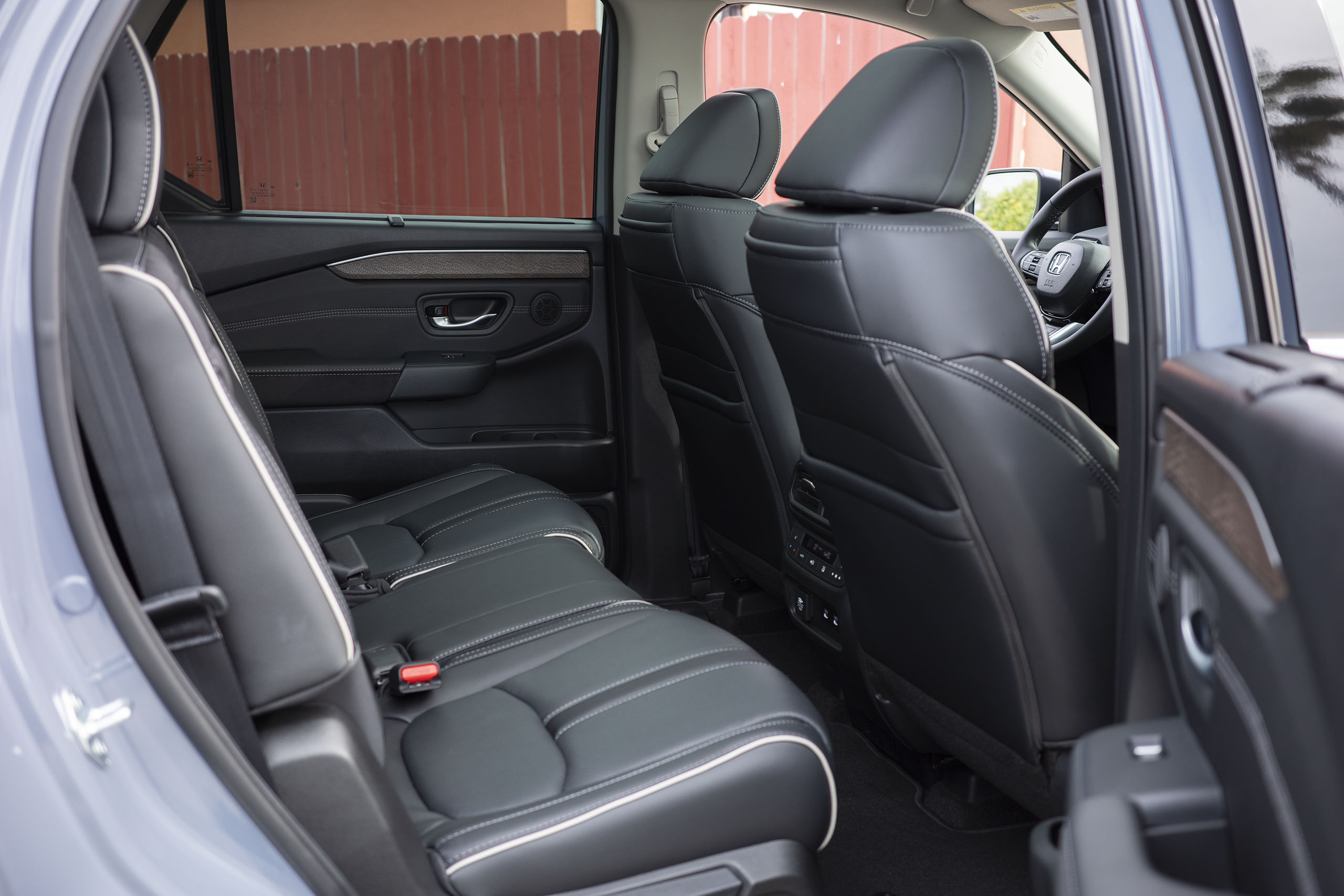
Post-collision braking now comes standard on every SUV, as does a power tailgate. The Elite and Black Edition trims get new, partially diamond-quilted leather seats that look fantastic; you can see them in this review. There’s also new brown trim to match that looks like fake wood with a silver inlay. That’s the only way I know how to describe it, and it’s a little weird, but certainly preferable to scratch-magnet gloss black.
Driving the 2026 Honda Pilot
The other significant change for the refreshed Pilot is the steering. Honda said it retuned the SUV’s power steering system to provide greater precision on-center and extra “support,” or assistive force, when well off-center. The old system was designed to require little driver effort to track straight, which sounds good in theory, but had the unintended consequence of making minor adjustments feel vague.
I never drove that Pilot, but I did drive this one. While I wouldn’t say the 2026 approach is poor, it still takes some getting used to. This SUV has got to have the lightest steering feel of any vehicle I’ve driven in recent memory. It’s not wayward, dangerously uncommunicative, or anything of that nature, but it’s clearly designed to be as airy as possible.
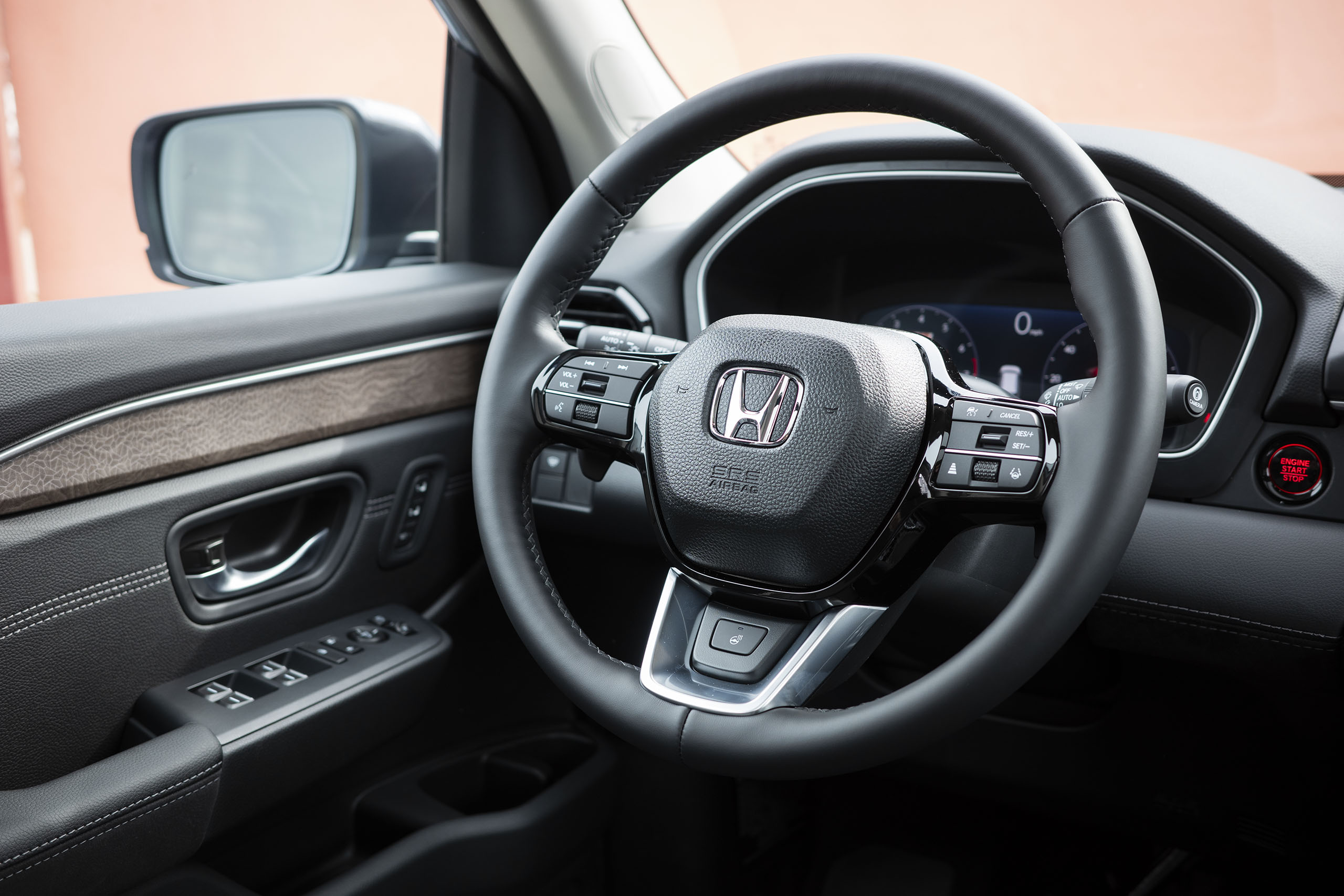
If you’re a parent shuttling the family around, I have to imagine it makes your life a little easier to steer a vehicle that is so mindlessly maneuverable, despite its considerable size. And look, I’m hardly Honda’s model customer here, being childless and in my early-30s. But if you have aspirations for the Pilot to be an engaging drive on any level, I recommend you check them at the door now. This vehicle isn’t designed for that kind of experience, and doesn’t deliver it.
The V6 and its 10-speed auto are stout, smooth, and, frankly, unremarkable. Again, that’s OK—not being observed or memorable is kind of the point, here. A day of Southern California canyon cruising resulted in a 21-mile-per-gallon average, which is bang-on Honda’s slightly underwhelming estimation. It’s rated for 19 mpg in the city and 25 on the highway.
That’s not the worst efficiency in the segment, but it’s not the best either. The base Toyota Grand Highlander is rated to outperform the Pilot by an average of 3 mpg, while the new Hyundai Palisade is about equal, which is reasonable given they produce similar power from similar displacement. A hybrid option would be ideal—all the midsize SUVs have ’em now—but the Pilot remains a gas-only affair. Better luck next gen.
The Verdict
Ultimately, a powertrain that you don’t think about, under steering you don’t realize you’re doing, in a vehicle producing sounds you don’t hear, kind of sums up the Pilot in this current moment.
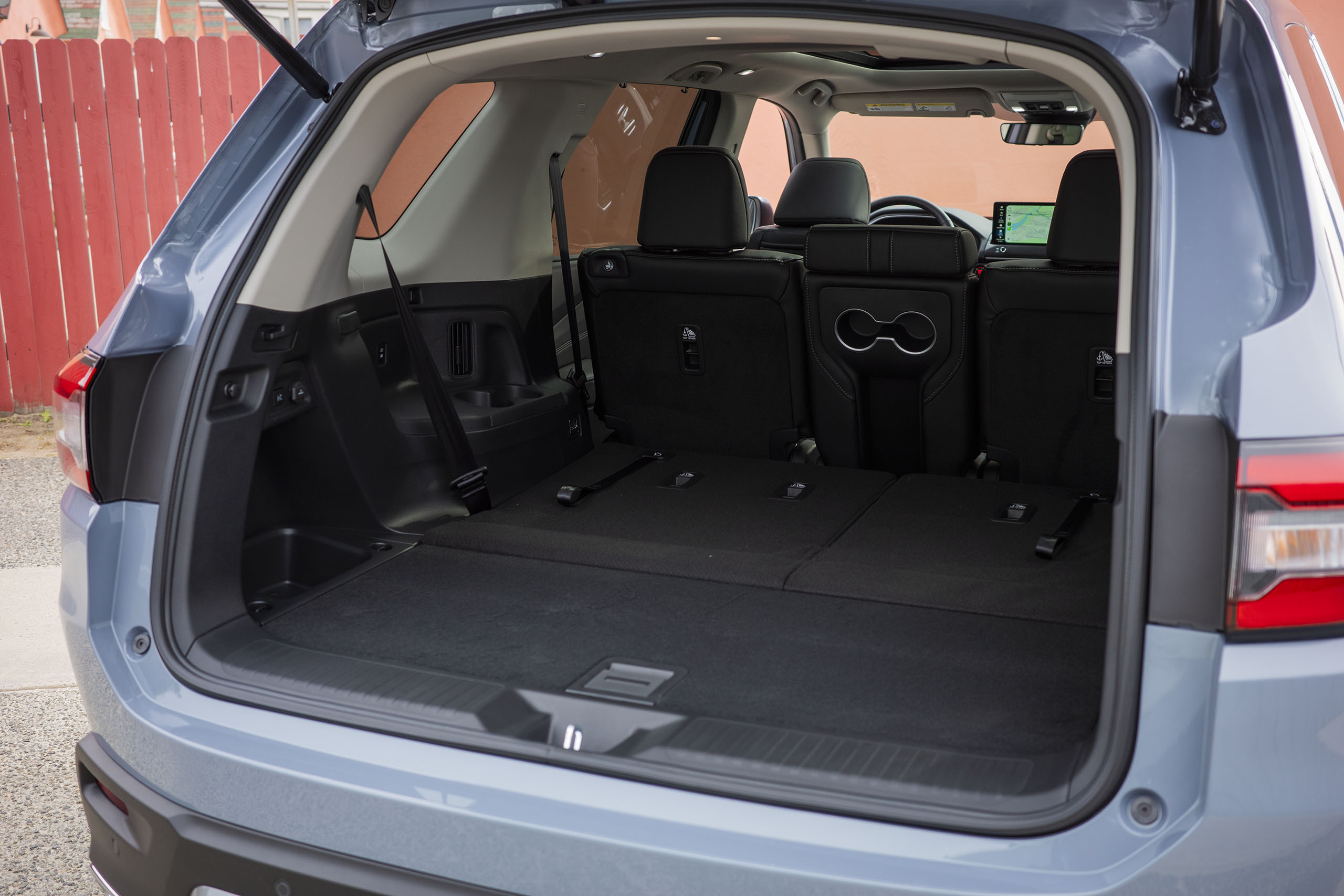
The Pilot may be well-screwed together with no glaring faults and gobs of interior space—I kept finding new cubbies in this thing all day long—but it doesn’t strike an impression. There’s nothing wrong with the interior, but it doesn’t aspire to the forefront of design like Hyundai and Kia’s competitors do, surprise you with pops of gold like the Grand Highlander, or have an avant-garde air about it like the Mazda CX-90.
Aside from the diamond seats—which are limited to the two highest trims—I’ve fumbled to find anything to write home about in the refreshed Pilot. But I haven’t complained much, either, and that’s the whole point of a utility: It reliably completes the tasks you give it. It just might not wow you in the process.
| 2026 Honda Pilot Specs | |
|---|---|
| Base Price (Elite as tested) | $43,690 ($55,445 as tested) |
| Powertrain | 3.5-liter V6 | 10-speed automatic | all-wheel drive |
| Horsepower | 285 @ 6,100 rpm |
| Torque | 262 lb-ft @ 5,000 rpm |
| Seating Capacity | 8 |
| Curb Weight | 4,678 pounds |
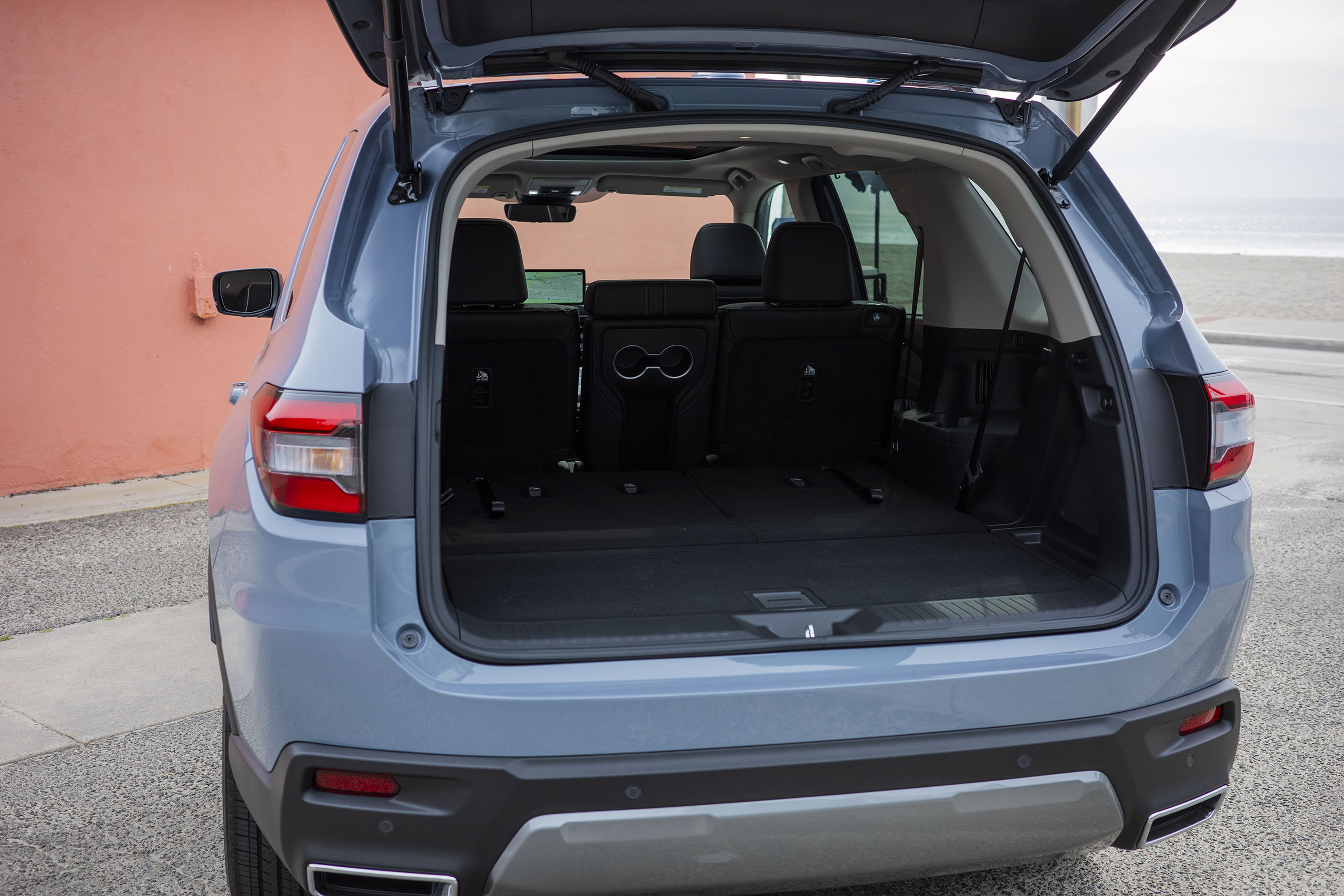
| Cargo Volume | 21.8 cubic feet behind third row | 59.5 cubic feet behind second row | 111.8 cubic feet behind first row |
| EPA Fuel Economy | 19 mpg city | 25 highway | 21 combined |
| Score | 8/10 |
Quick Take
The refreshed Honda Pilot has it all on paper, thanks to more standard features than before and interior refinements. Just don’t expect to be dazzled.
Honda provided The Drive with travel and accommodations, along with the use of a vehicle for the purpose of writing this review.
Loading comments…
Comments couldn’t be loaded. Please refresh the page.