
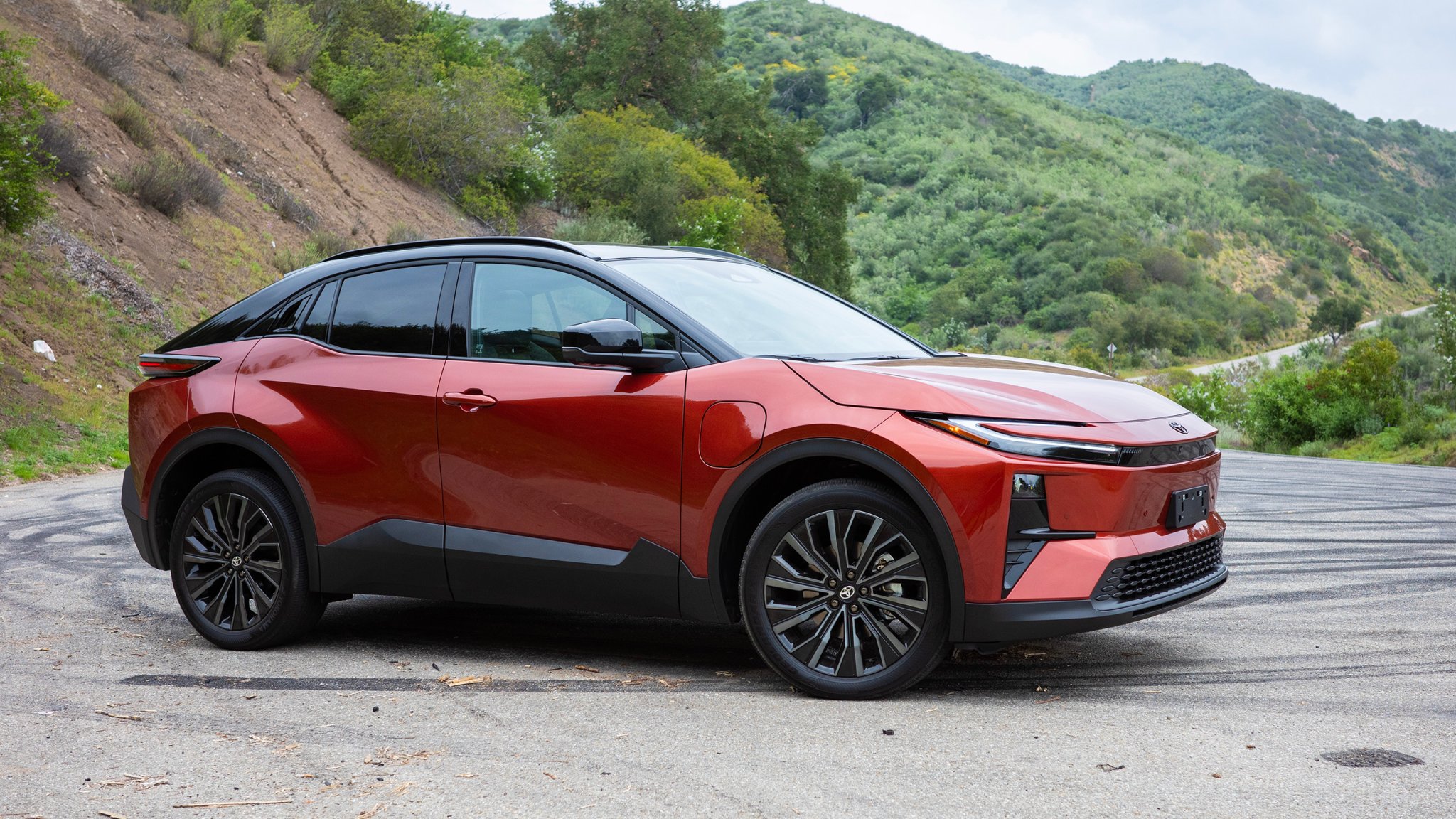
Four years after the rather forgettable Toyota C-HR left the U.S. market, it’s now returned as an electric vehicle. It’s still a high-riding small crossover with a coupe-like greenhouse, but this one aims to make a bit more of an impression. It’s $38,450 and comes standard with dual-motor all-wheel drive for a combined 338 horsepower and 323 lb-ft of torque.
That works out to 130% more power than the old C-HR had. And this one looks better too, taking the refined design formula of Toyota’s core electric SUV, the bZ, and shortening its wheelbase for a sportier stance. The result is an entry-level EV that’s going to surprise some people—especially if they can find an empty stretch of road to sample the C-HR’s five-second 0-60 mph dash.
The Basics
The C-HR might initially seem like the entry point for Toyota’s EVs, with the larger bZ and more adventure-oriented bZ Woodland wagon above it. But the C-HR comes standard with all that power and 287 miles of range, trading some space and utility for brisk acceleration and a relatively spirited driving feel. It starts at $38,450 for the entry-level SE grade, and rises to $40,450 for an XSE with synthetic leather, a powered driver’s seat, and additional driver-assist tech, including a 360-degree camera.
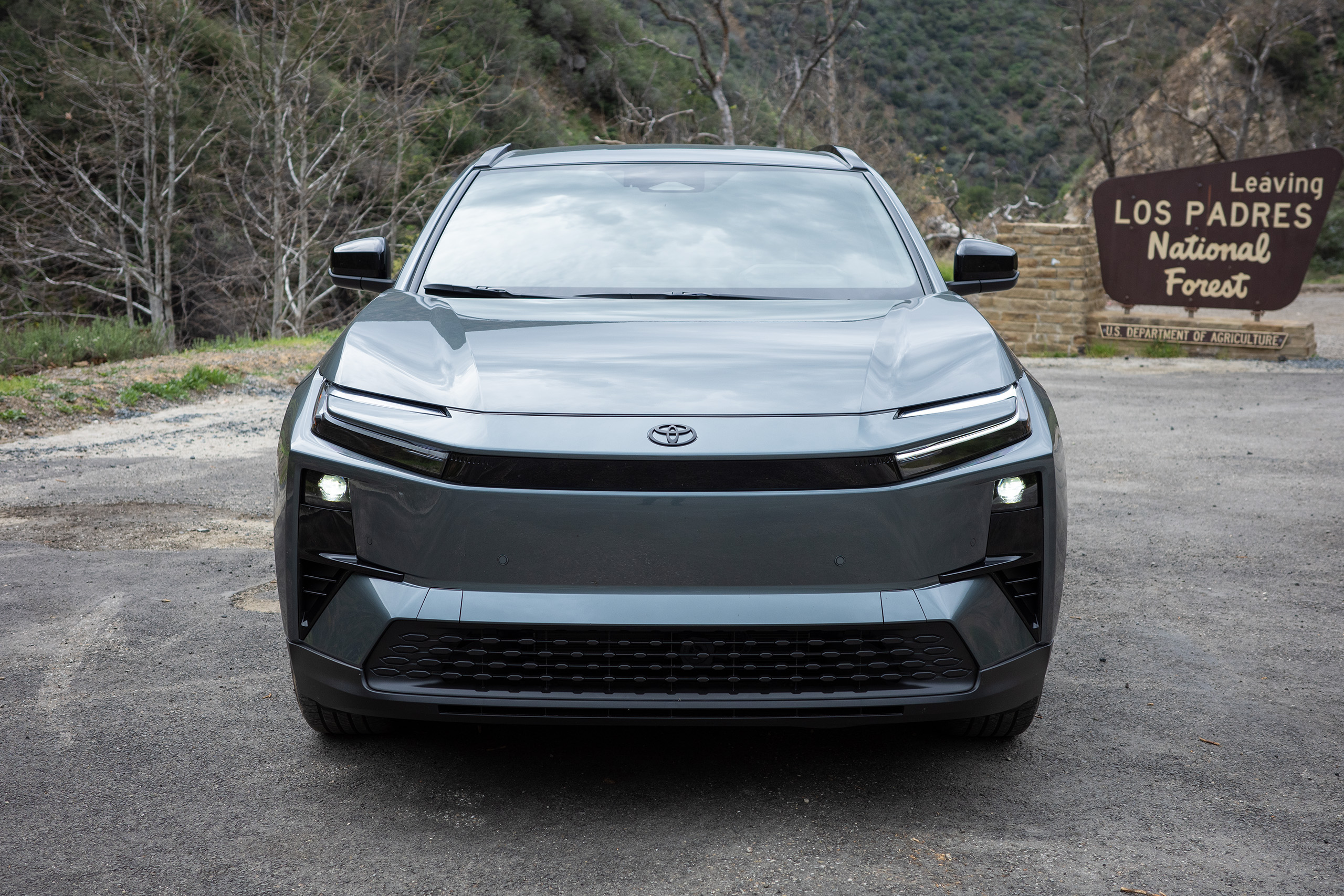
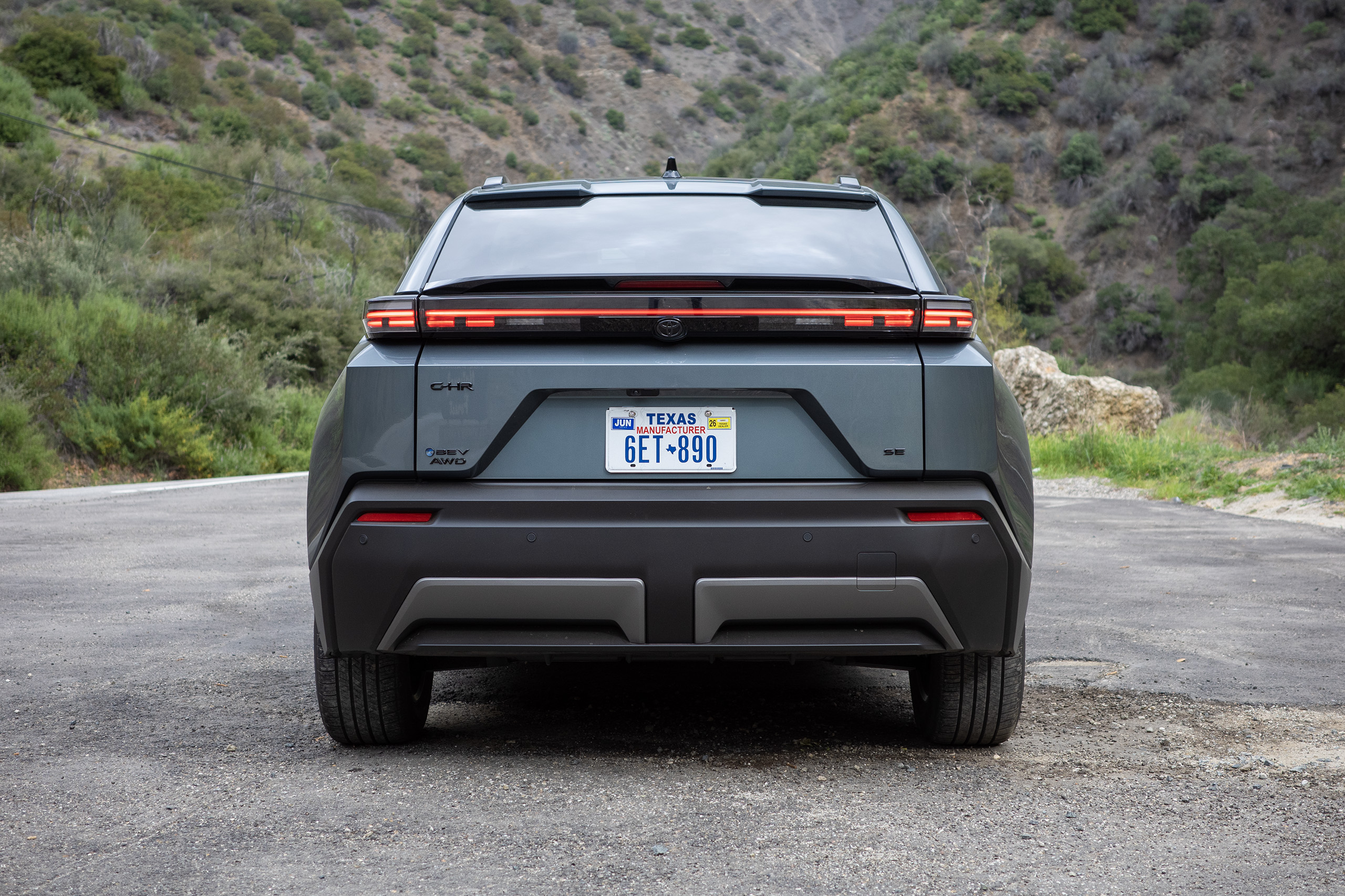
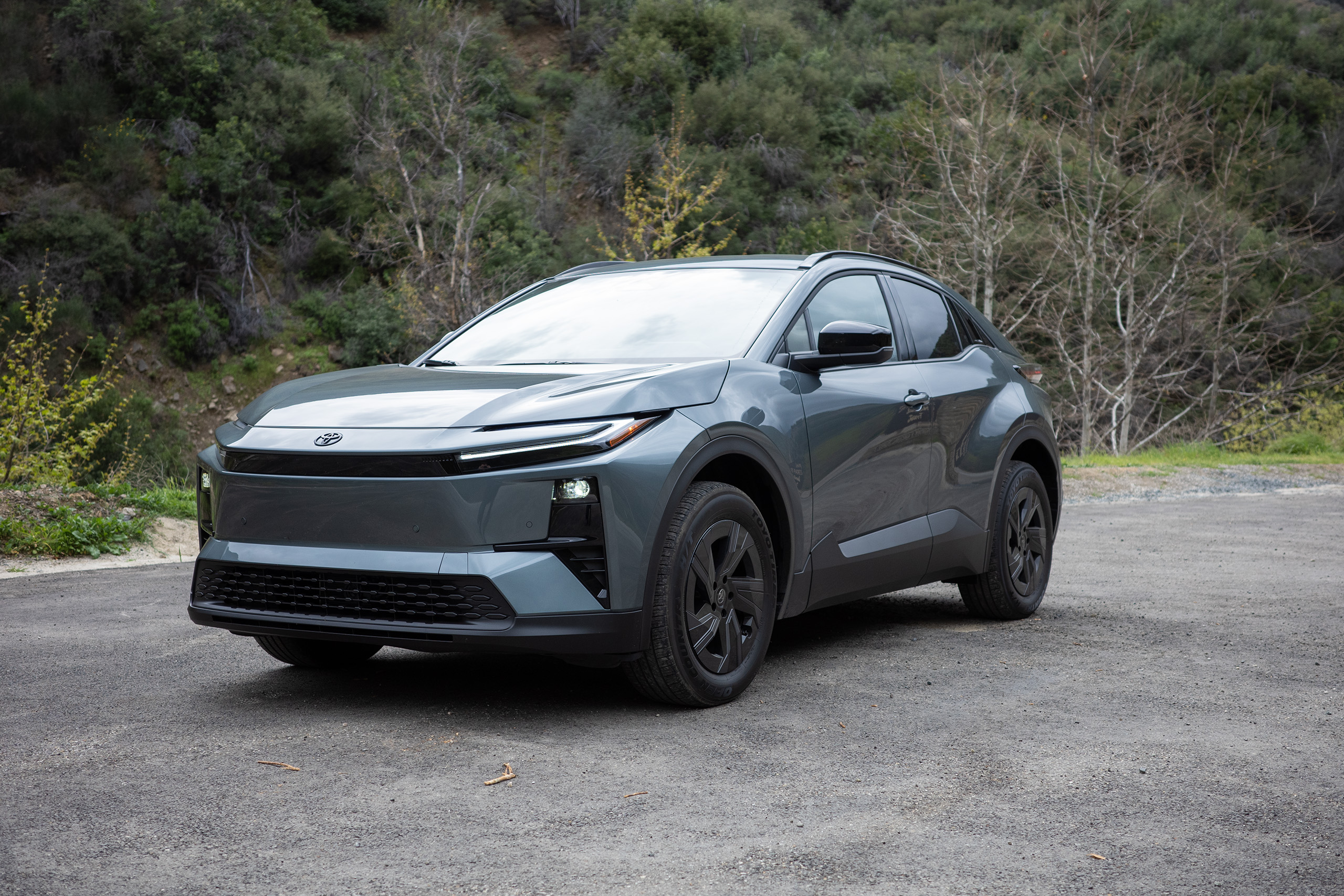
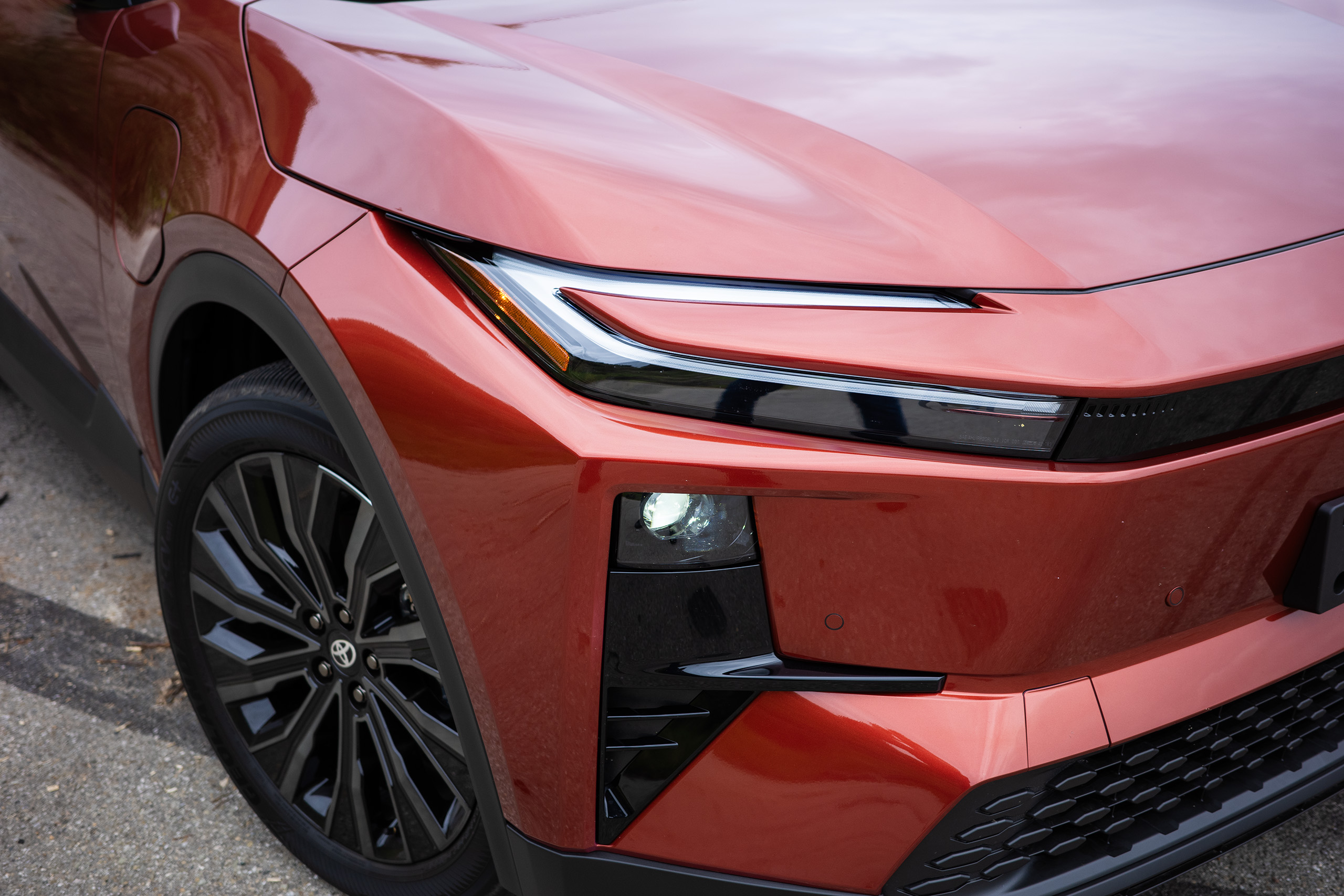
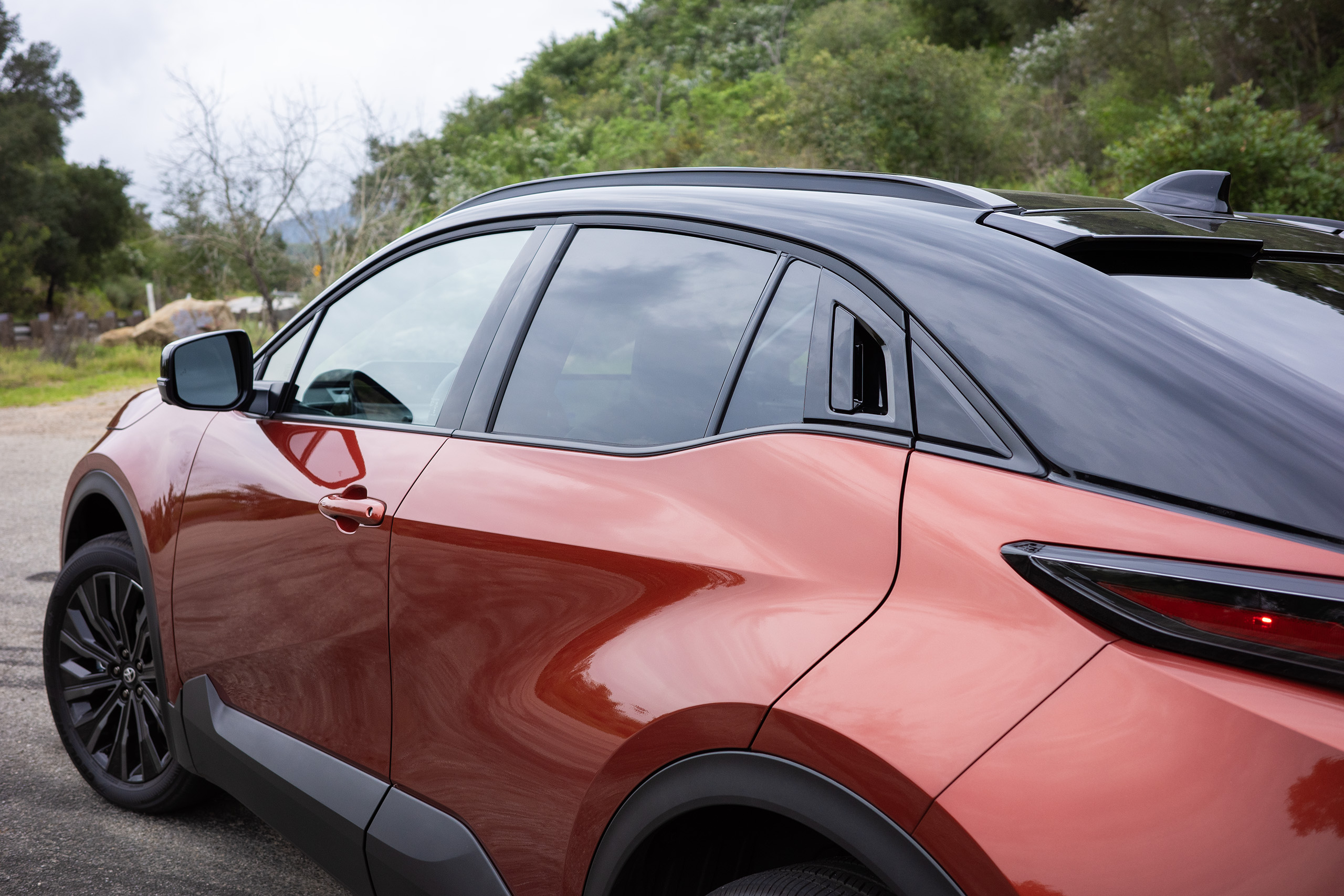
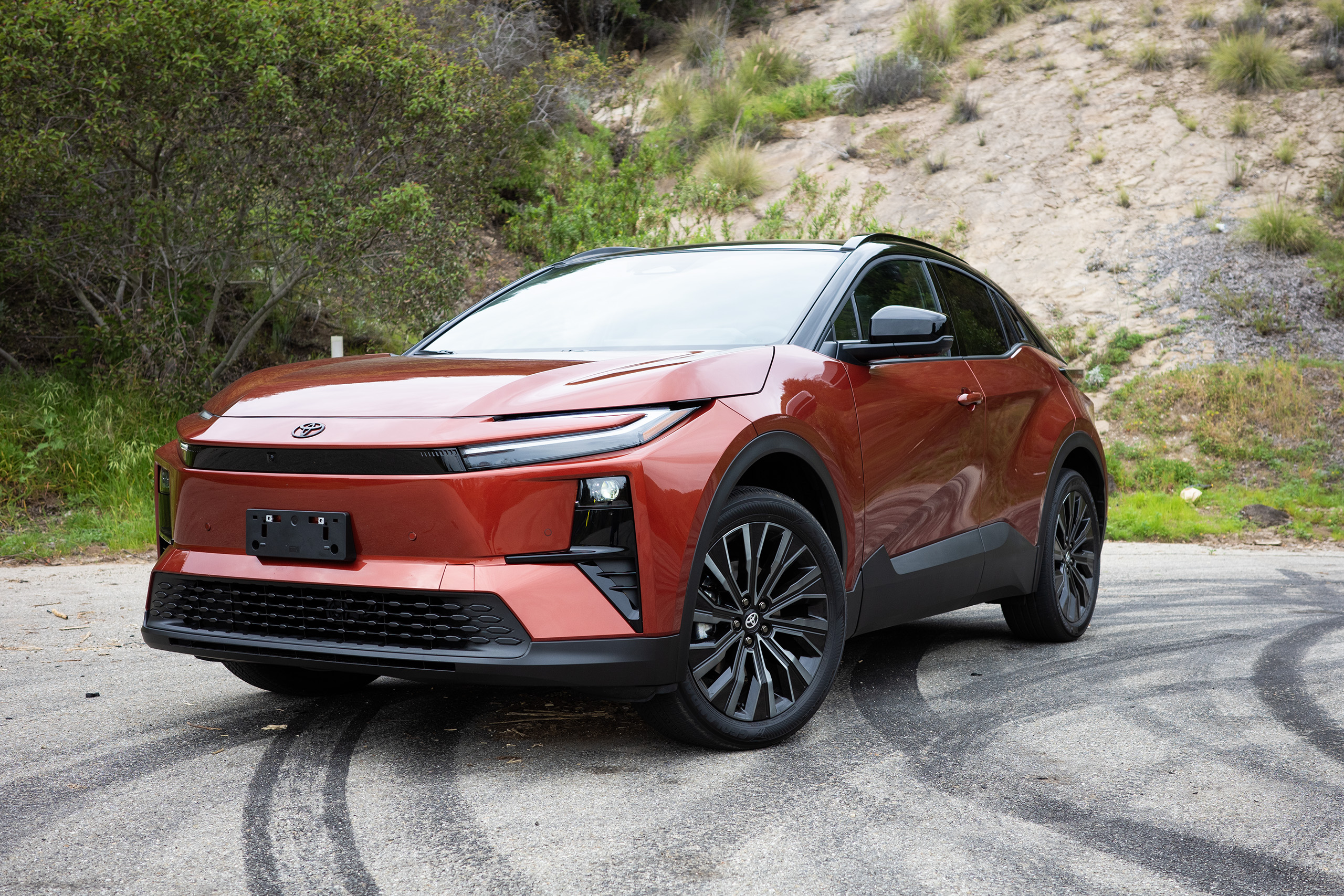
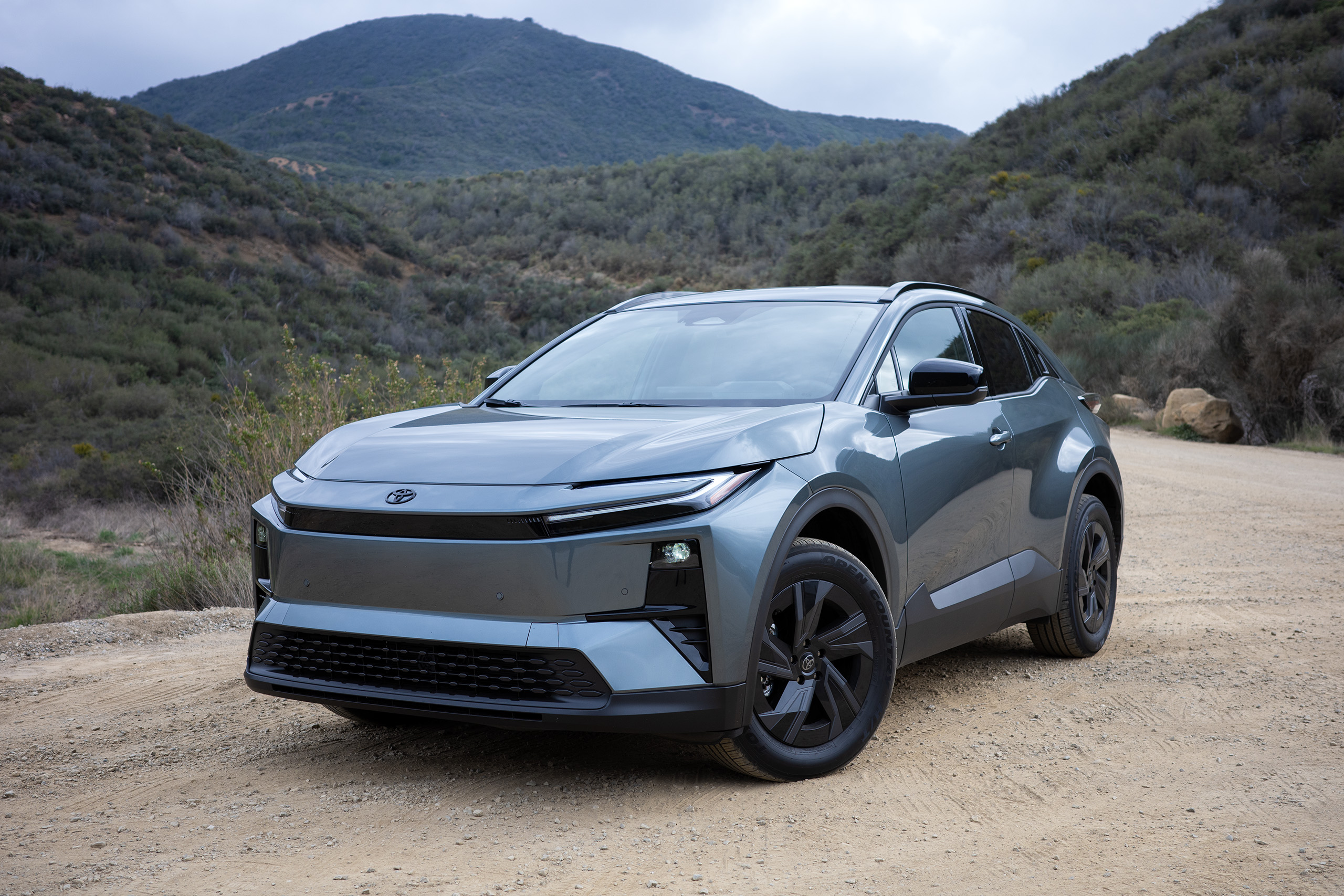
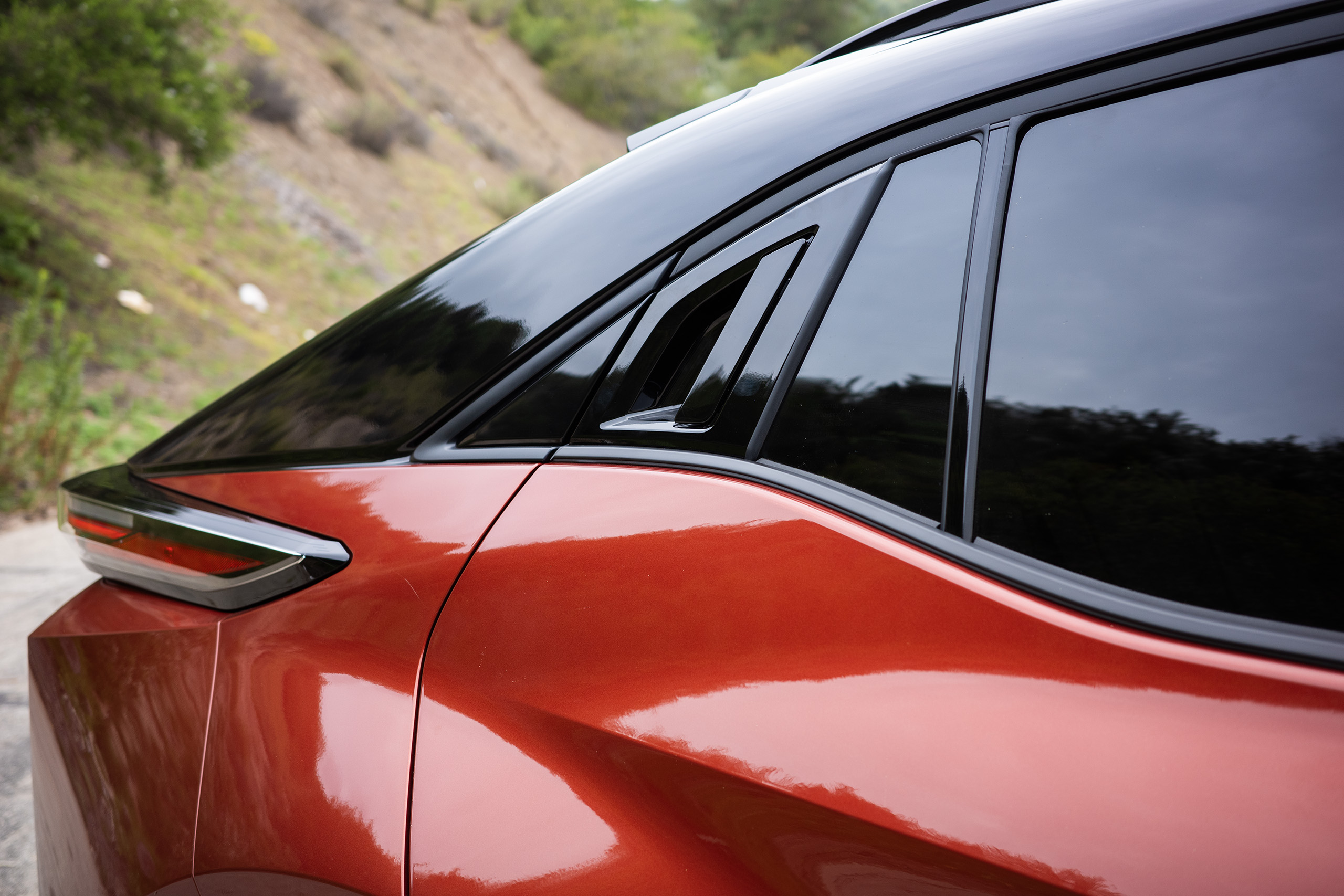
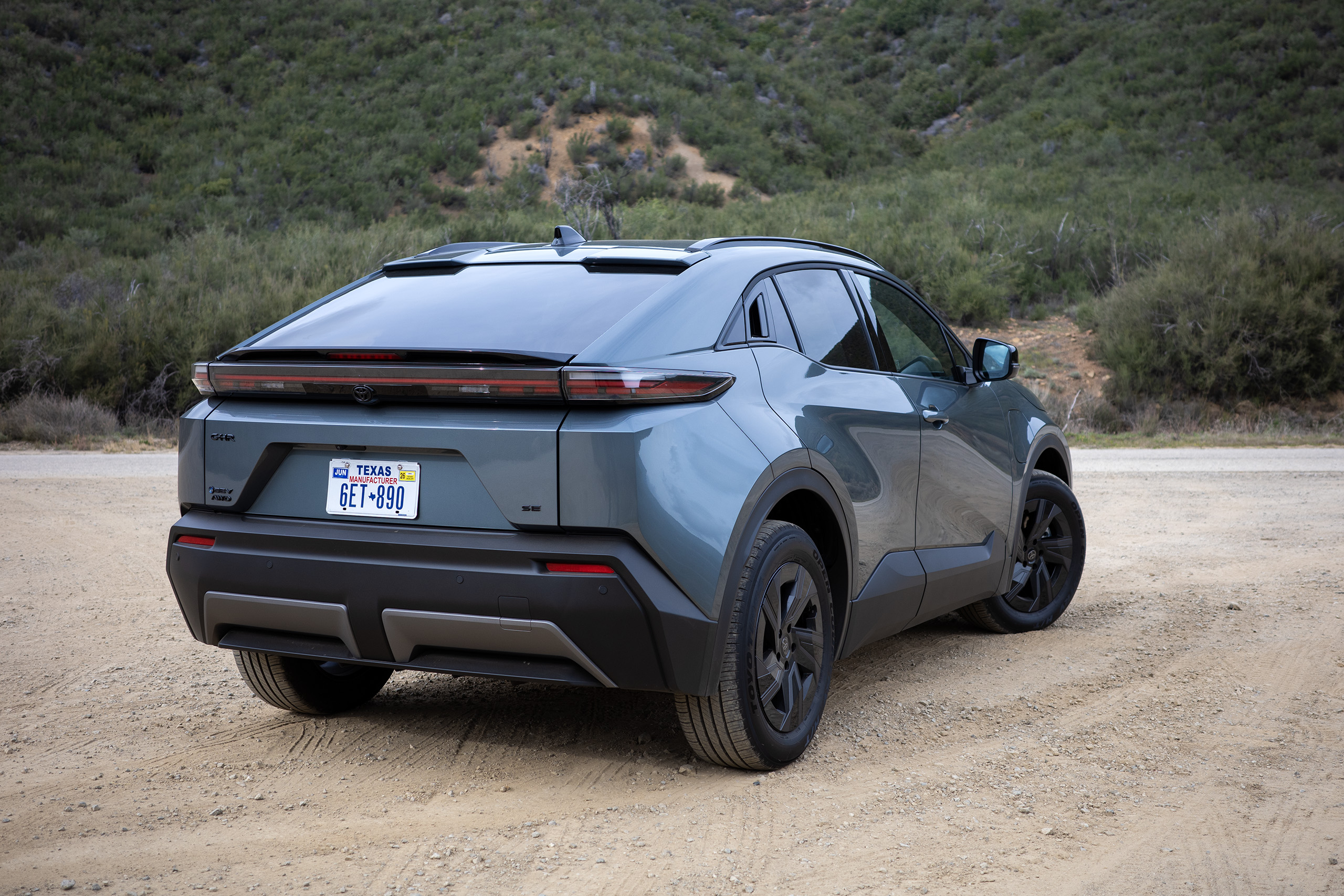
It also looks fantastic. I’ve really enjoyed Toyota’s design language on its smaller vehicles as of late. Split headlights may be done to death these days, but Toyota’s daytime lighting signature can stay. It’s purposeful yet clean, rather than austere or unnecessarily aggressive.
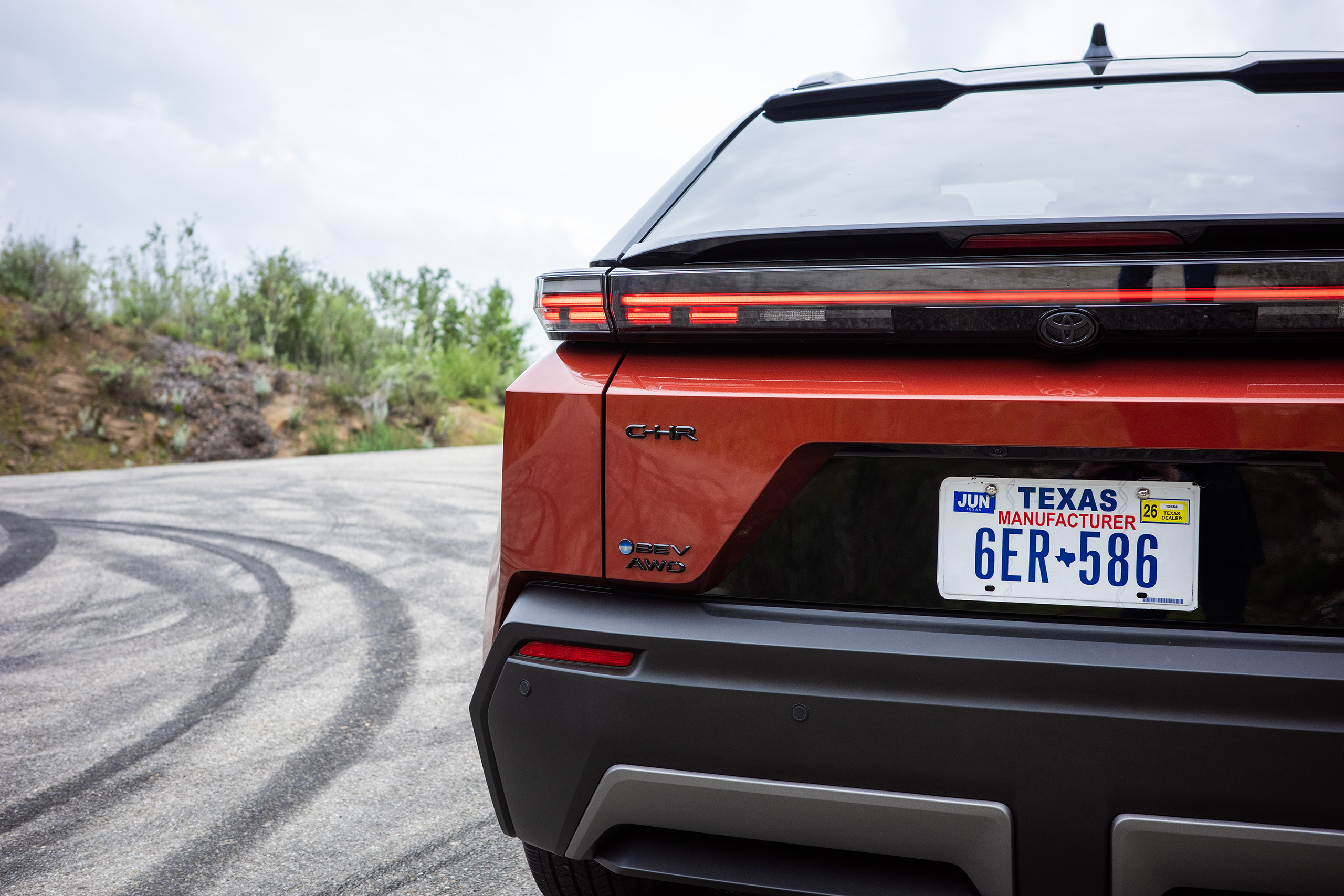
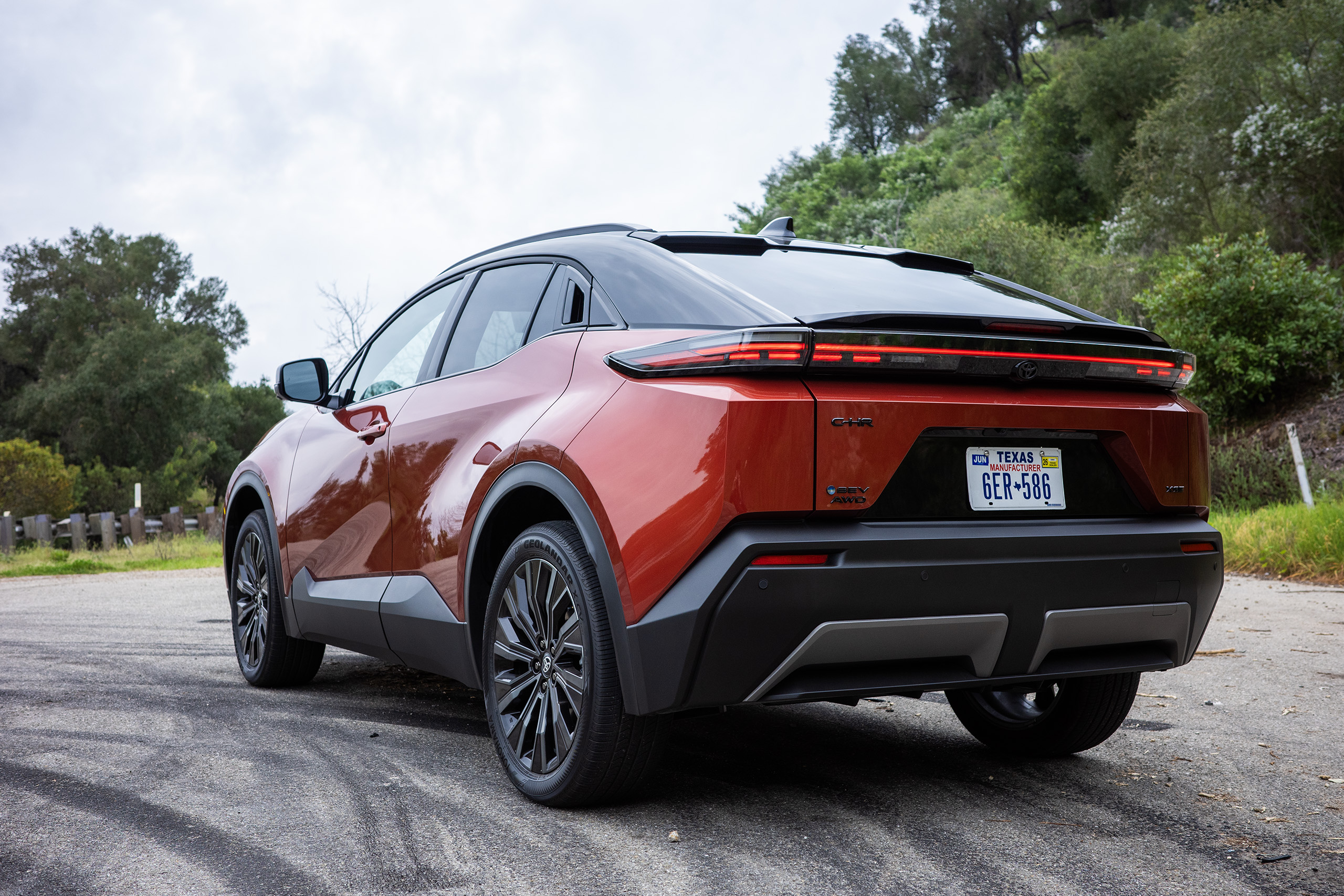
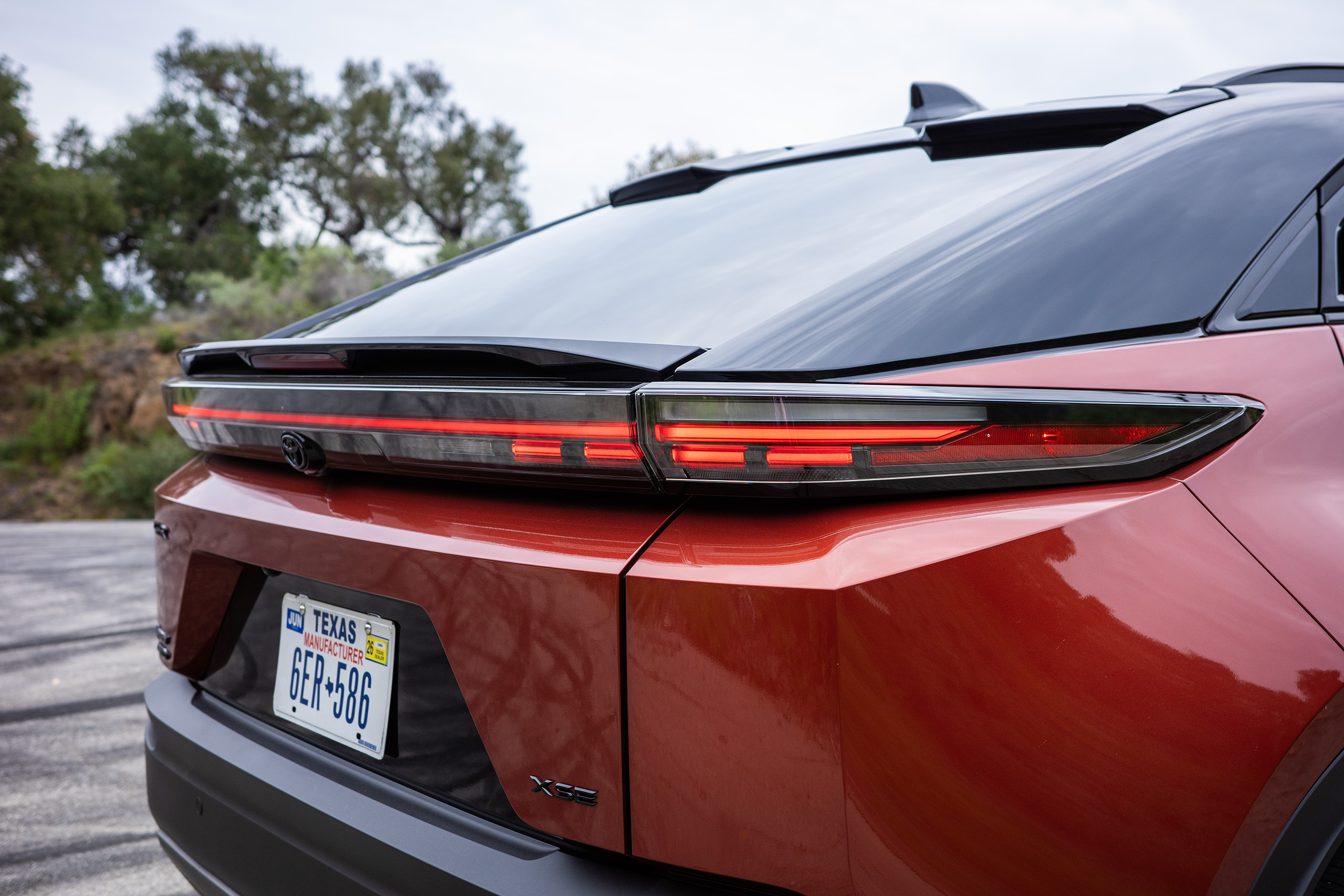
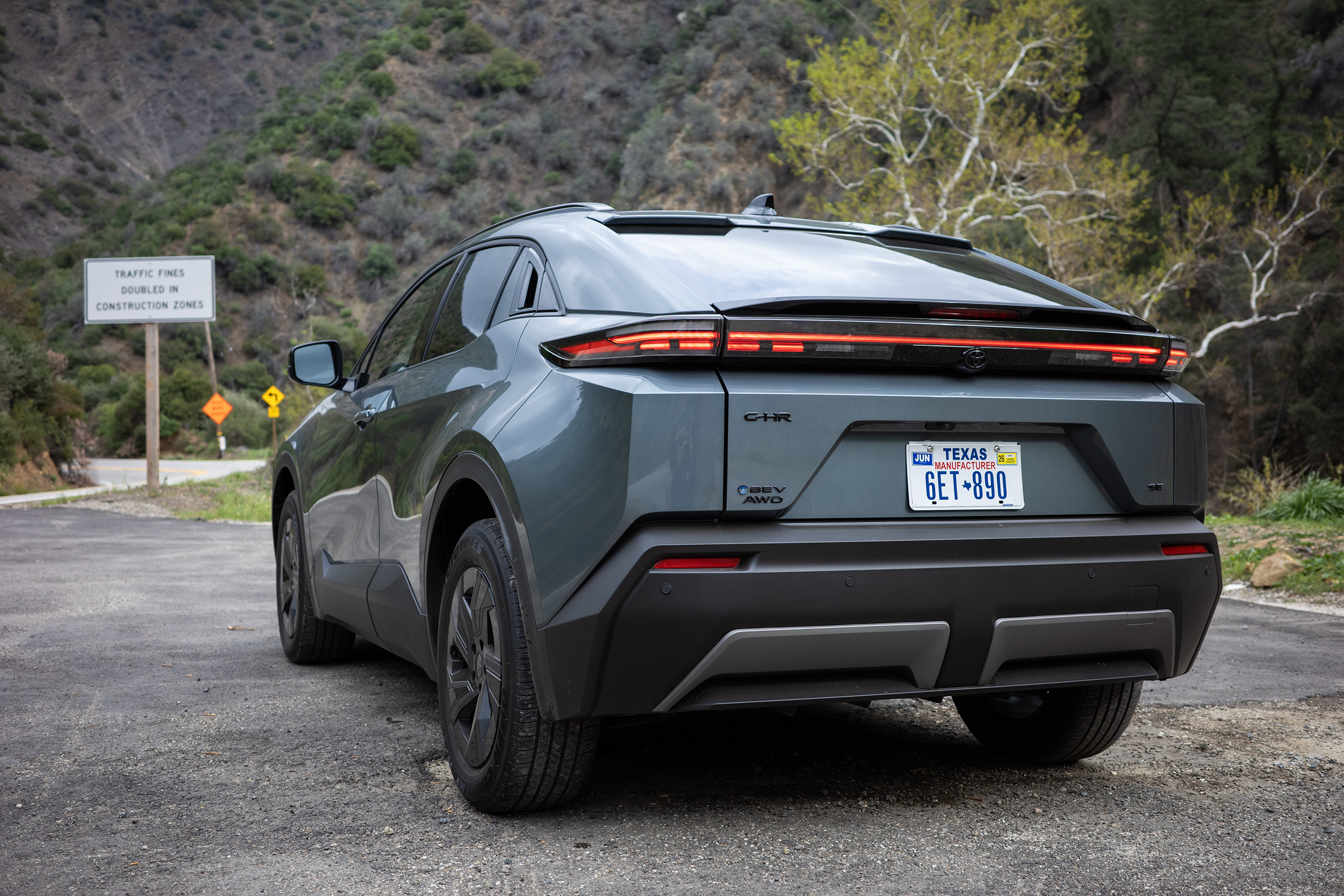
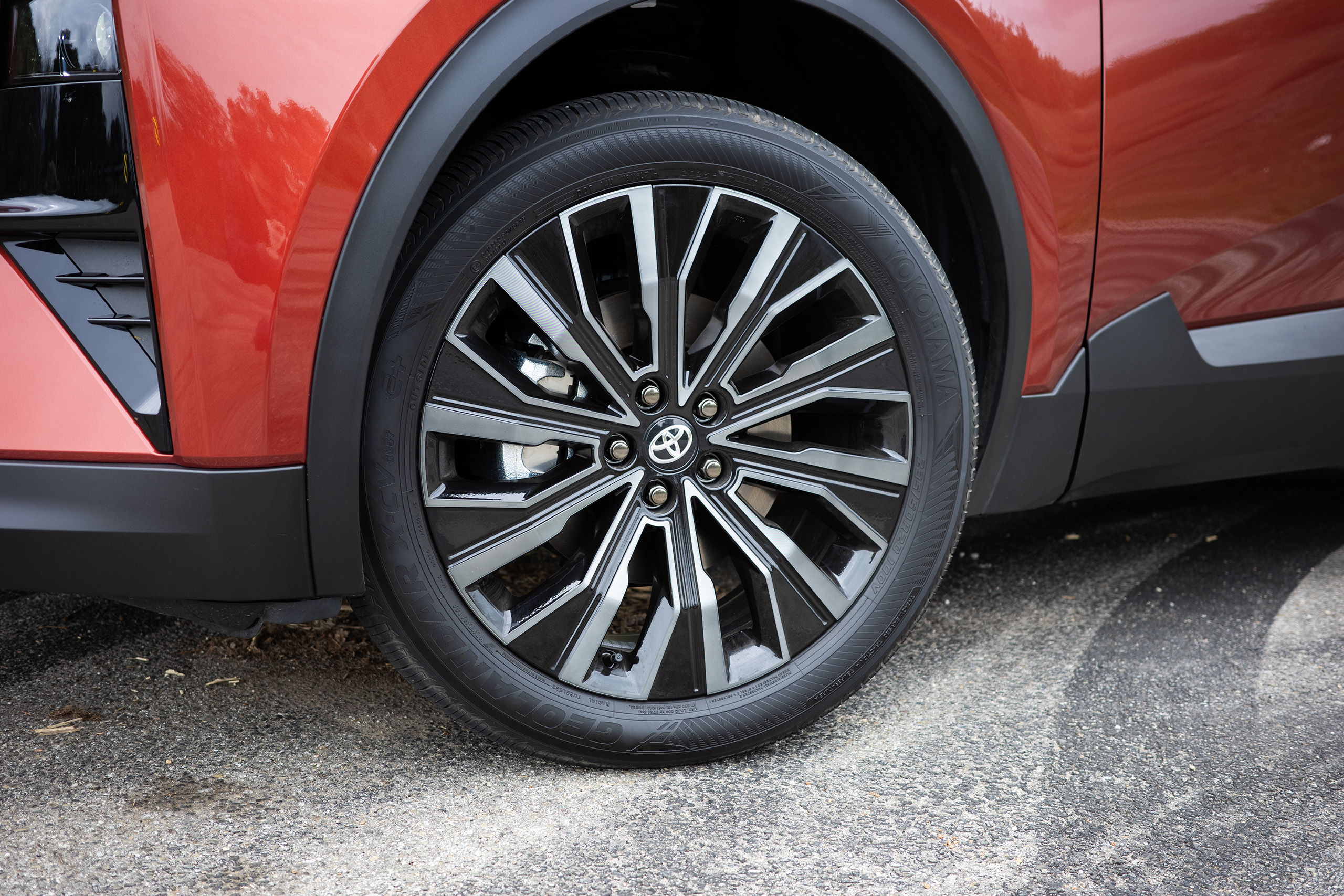
That sentiment sums up the entire exterior. Toyota smoothed out some of the launch bZ4X’s quirks, which was the right call, but there are attractive details here that command attention, like the rear light bar that juts out and stands apart from the tailgate. Optioned with the big 20-inch wheels, as the XSE trim has, coupled with the short wheelbase, it almost looks like a concept car. Passersby in Southern California seemed to like it.
One more thing: While it might seem odd that Toyota isn’t offering a front-wheel-drive C-HR, its friends over at Subaru will. The Uncharted is Subaru’s take on the C-HR, also coming soon, and it’ll start at about $2,000 less with a 221-hp front-axle motor only. An all-wheel-drive version will also be offered, at $41,245.
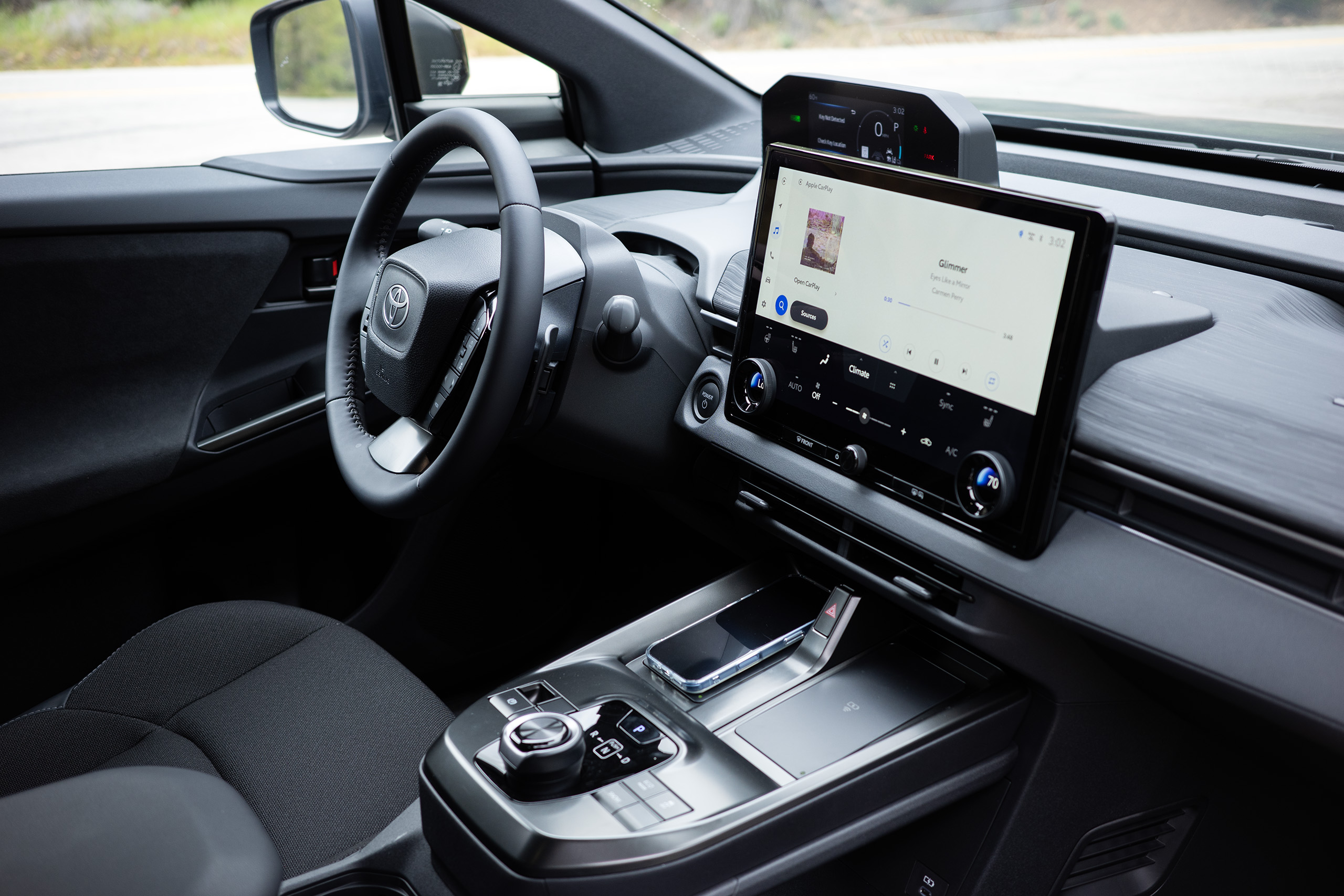
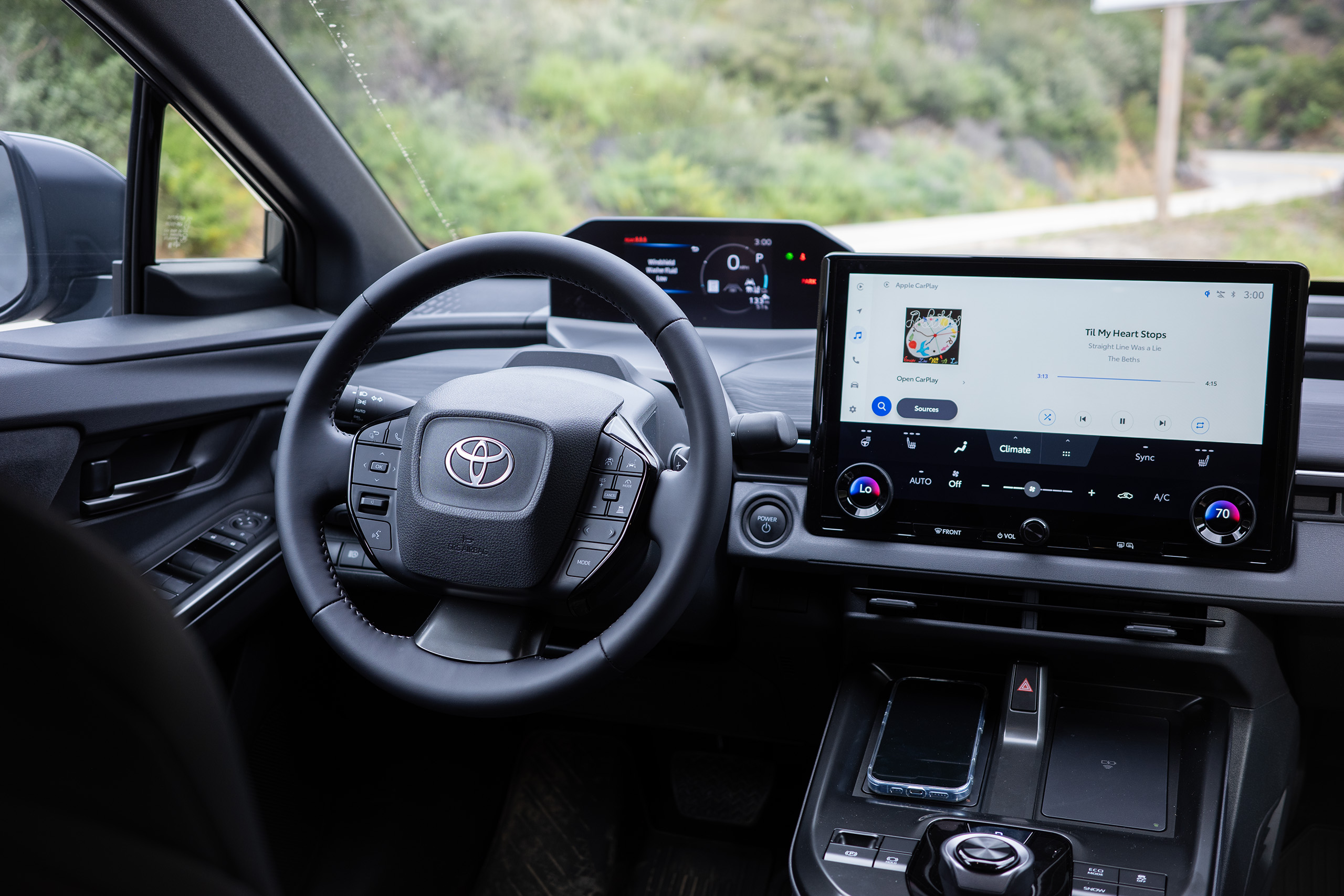
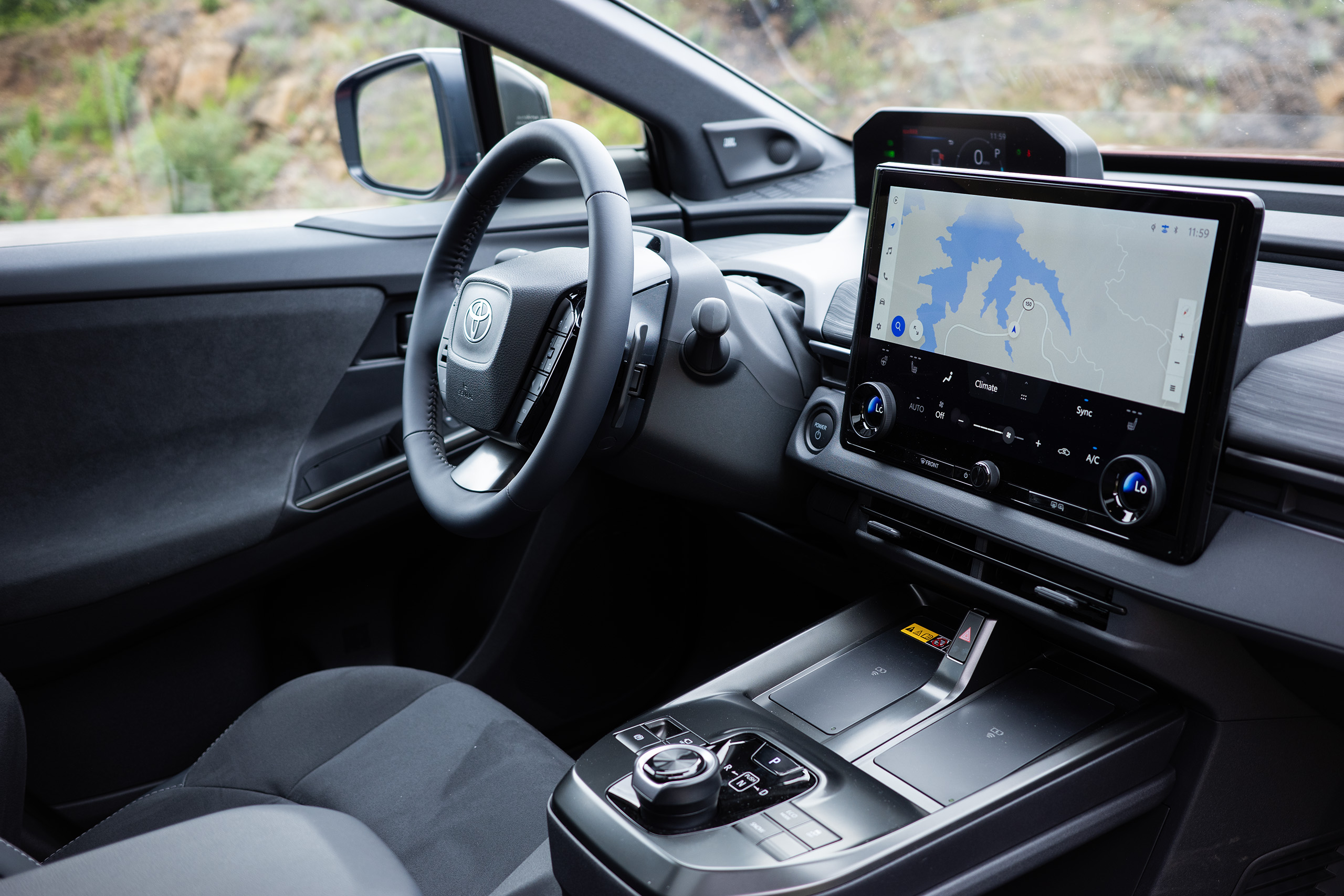
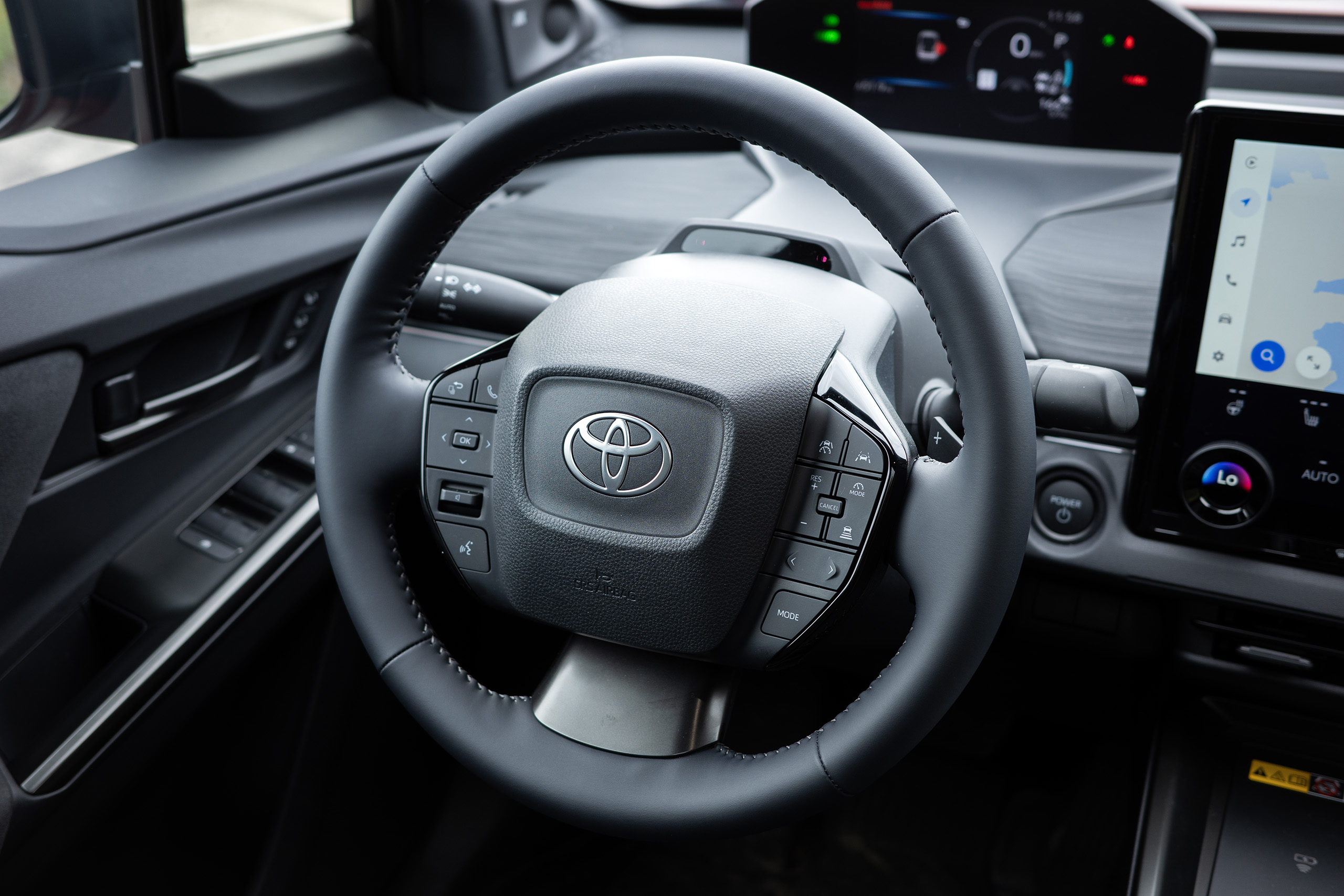
Inside, the C-HR is pretty much inseparable from the bZ and bZ Woodland, from its massive 14-inch central infotainment display to its strange instrument cluster situation. Yeah, Toyota decided not to amend that controversial design choice on the C-HR or updated bZ, and I’d argue that wasn’t the right move. The dash is quite low in these cars, but the steering wheel’s position tends to impede line-of-sight to the binnacle. You can get around it depending on how you place your seat, but then you’re reconfiguring your ergonomics to suit the car, and that’s not something drivers should have to do.
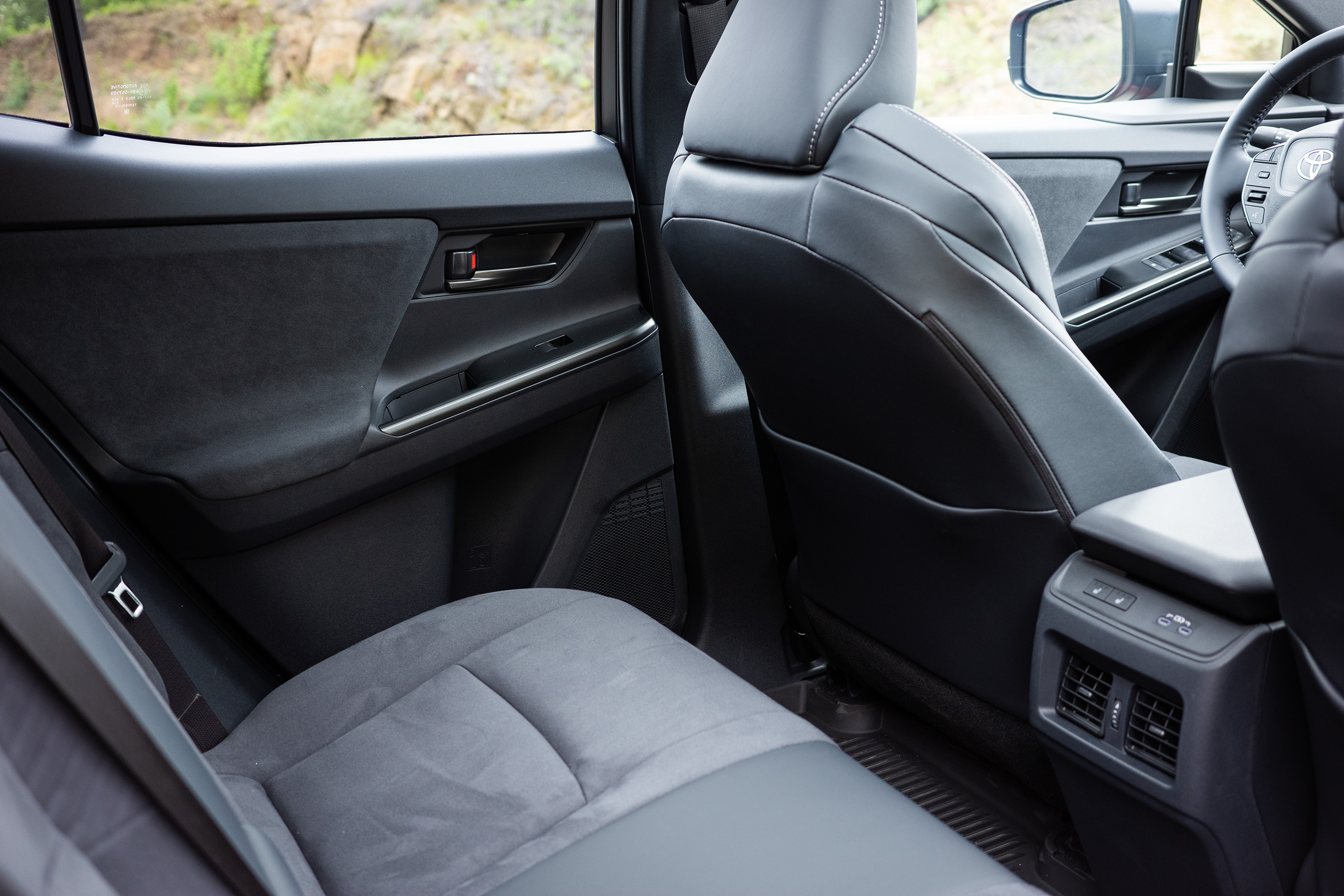
Otherwise, the C-HR’s cabin is distinctive and surprisingly roomy, but kind of a mishmash of materials. Some, like the almost suede-like door armrests and even the base cloth upholstery on the SE trim, are quite nice, making the C-HR feel like it’s punching upmarket. From the driver’s vantage point, though, you’re basically faced with a mile of plastics of varying textures and quality levels, from the top of the wheel all the way to that oddly-placed digital cluster. Much of it seems pretty chintzy, and none of it really goes together.
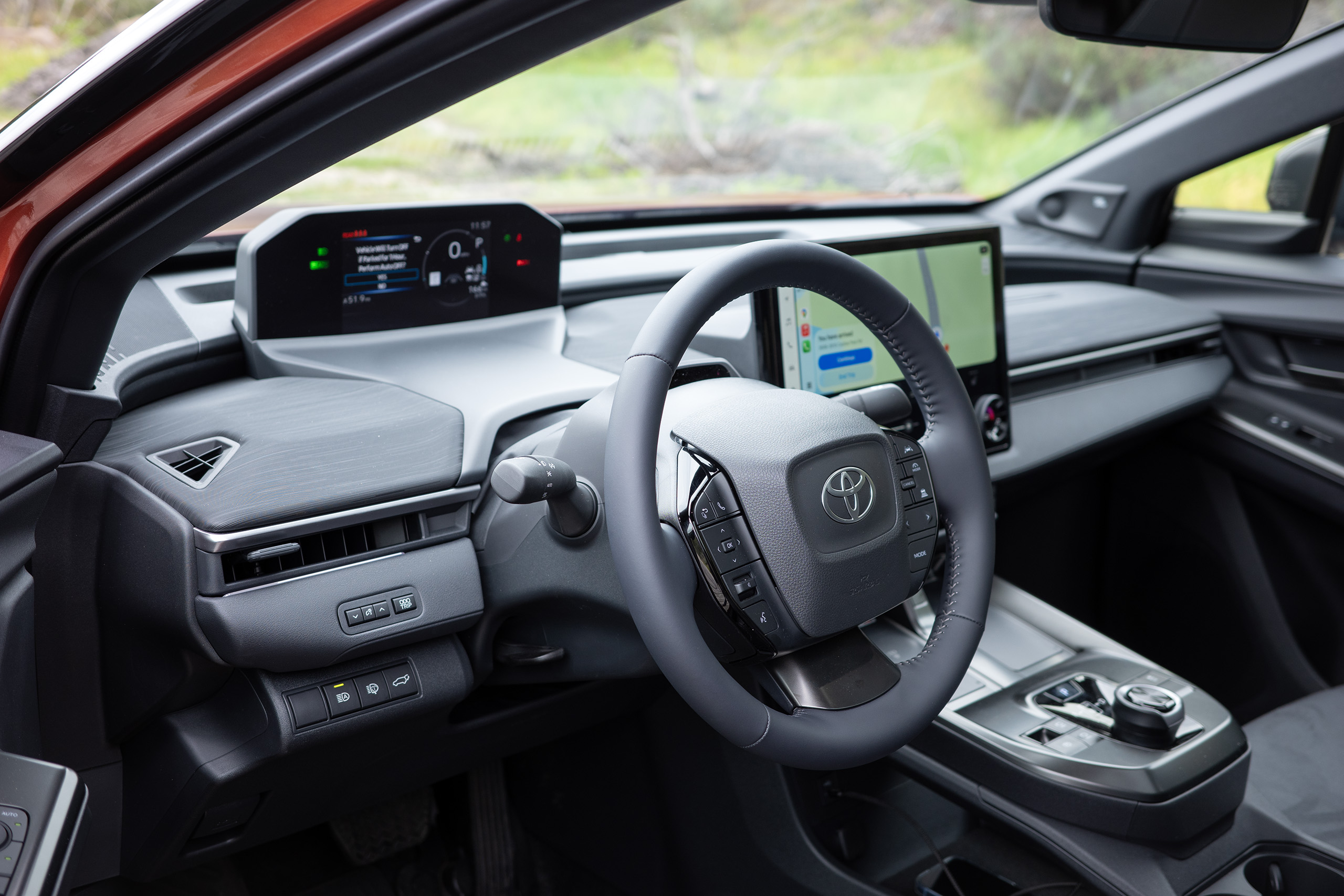
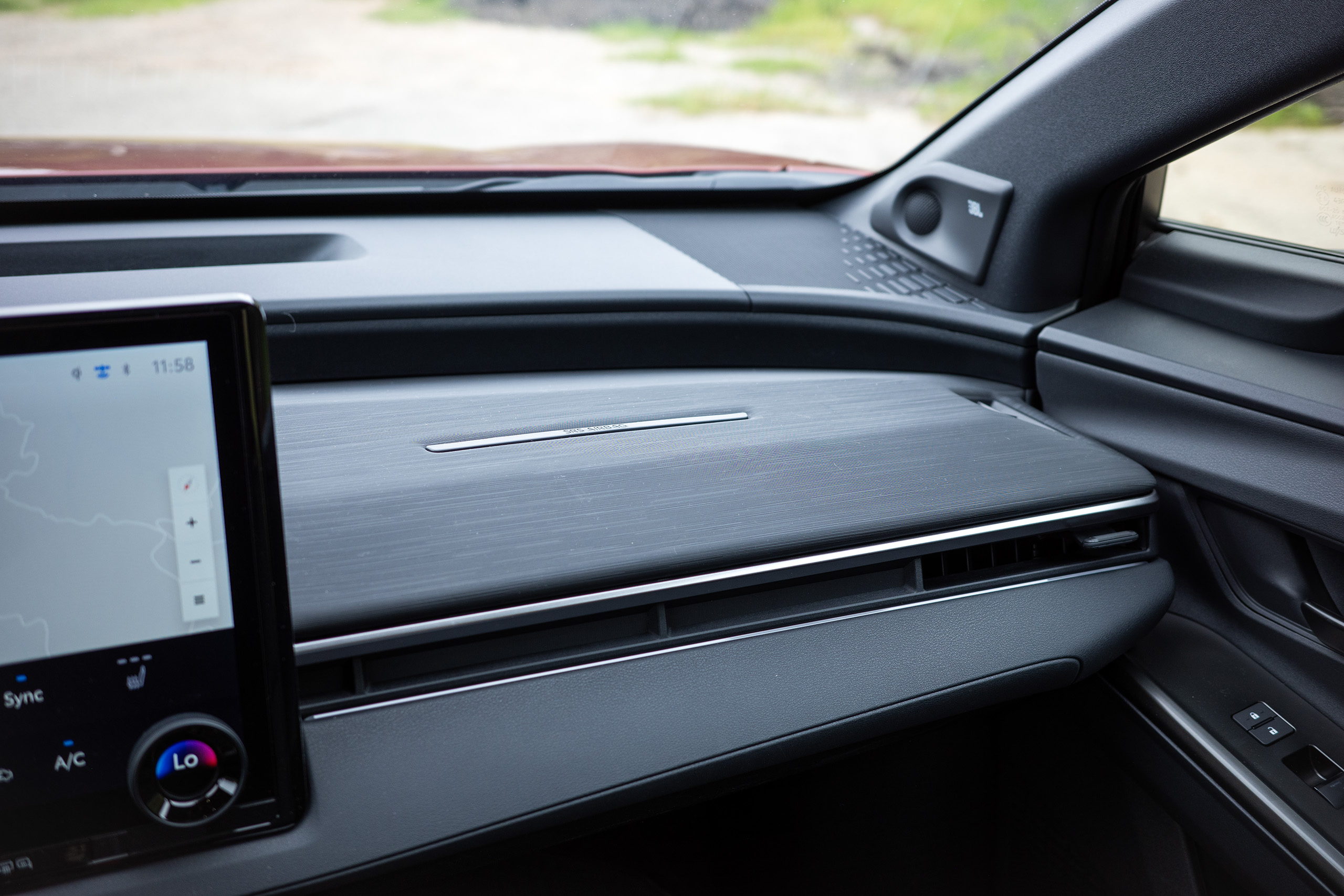
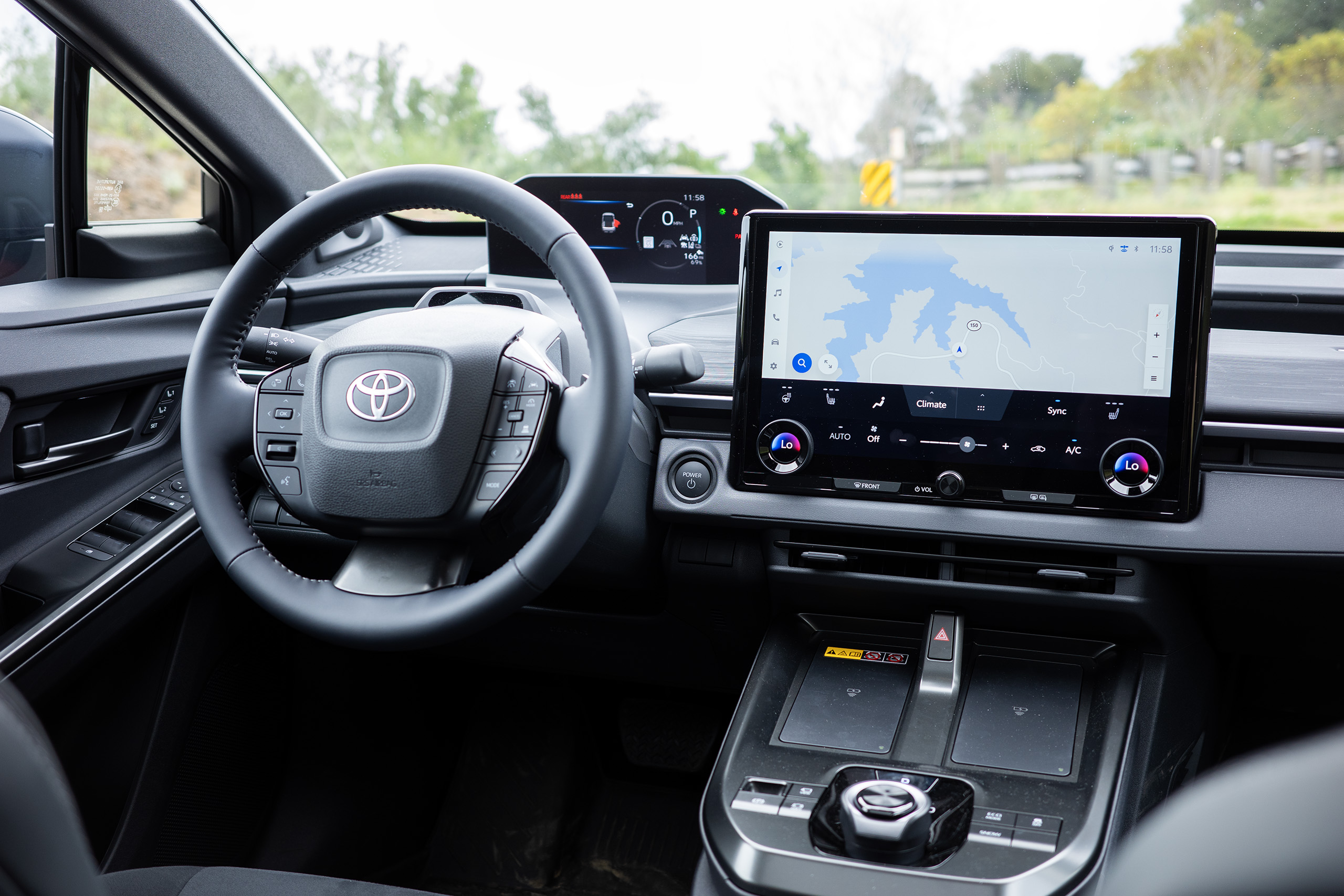
In an ordinary car with an ordinary dash, all of that would live behind the cluster and relatively obscured from view, or ignored. But the C-HR’s unusual layout draws attention to these things that remind you that you’re in quite a cheap car.
The large screen includes climate controls with limited physical input options, aside from two large dials for dual-zone temperature settings. The UI itself is pretty straightforward and barebones, as it is in most modern Toyotas, but it’s not very attractive or the most responsive. Some menus have squeezed text and oddly blurry graphical toggles; also, attempting to access more granular climate system settings required multiple taps in some situations. This isn’t the latest software available in the new RAV4 or the upcoming Highlander, which is a little disappointing. But hey, at least it has CarPlay.
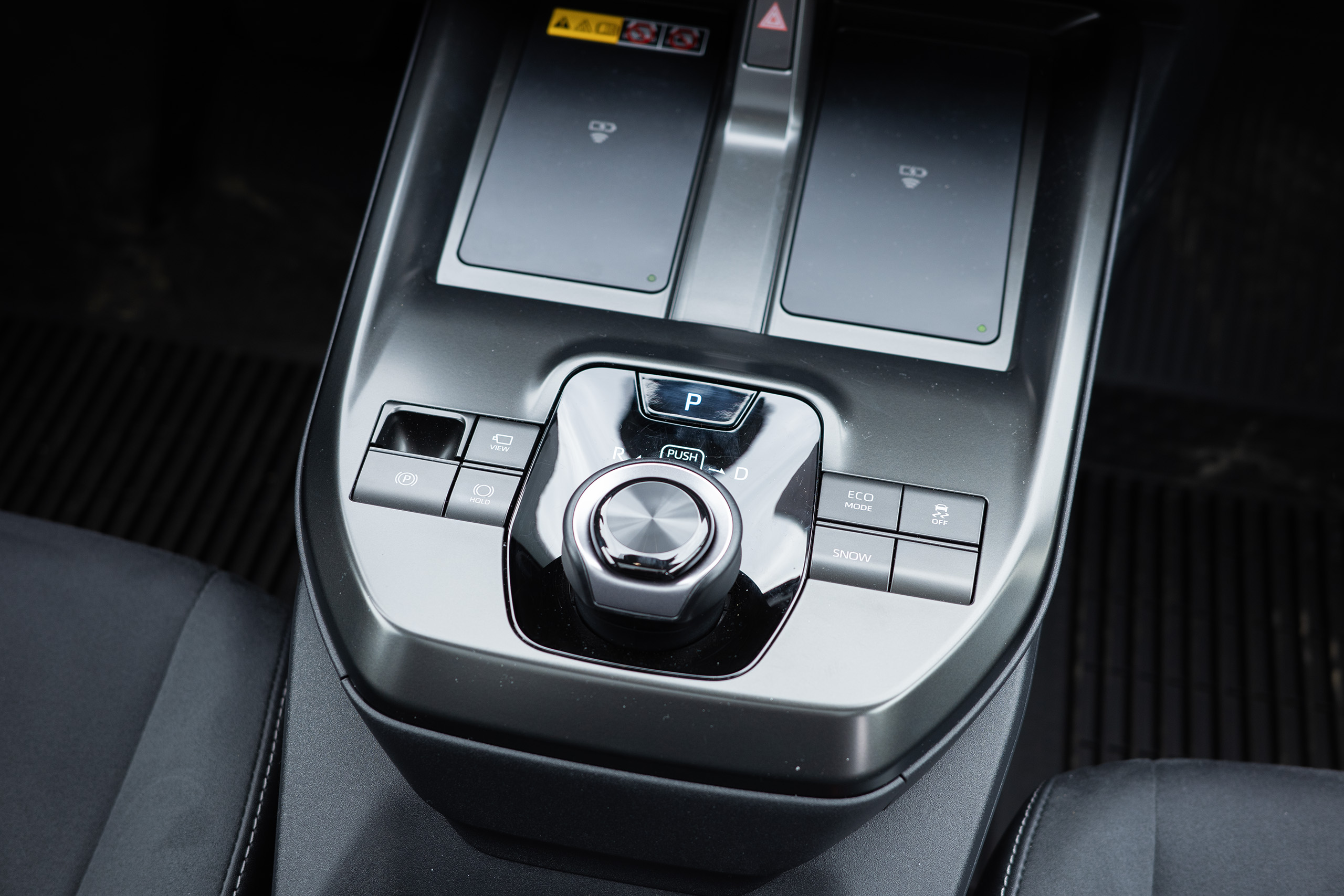
The center console devotes an inordinate amount of space to side-by-side wireless phone chargers. As someone who generally avoids wireless charging in every vehicle I drive, I don’t see much of a point to this. Credit where it’s due, though: These pads did effectively top up my iPhone’s battery and kept it in place. Under them is additional storage and USB-C ports, which is really fortunate because the C-HR, like the whole bZ family, lacks a glove box.
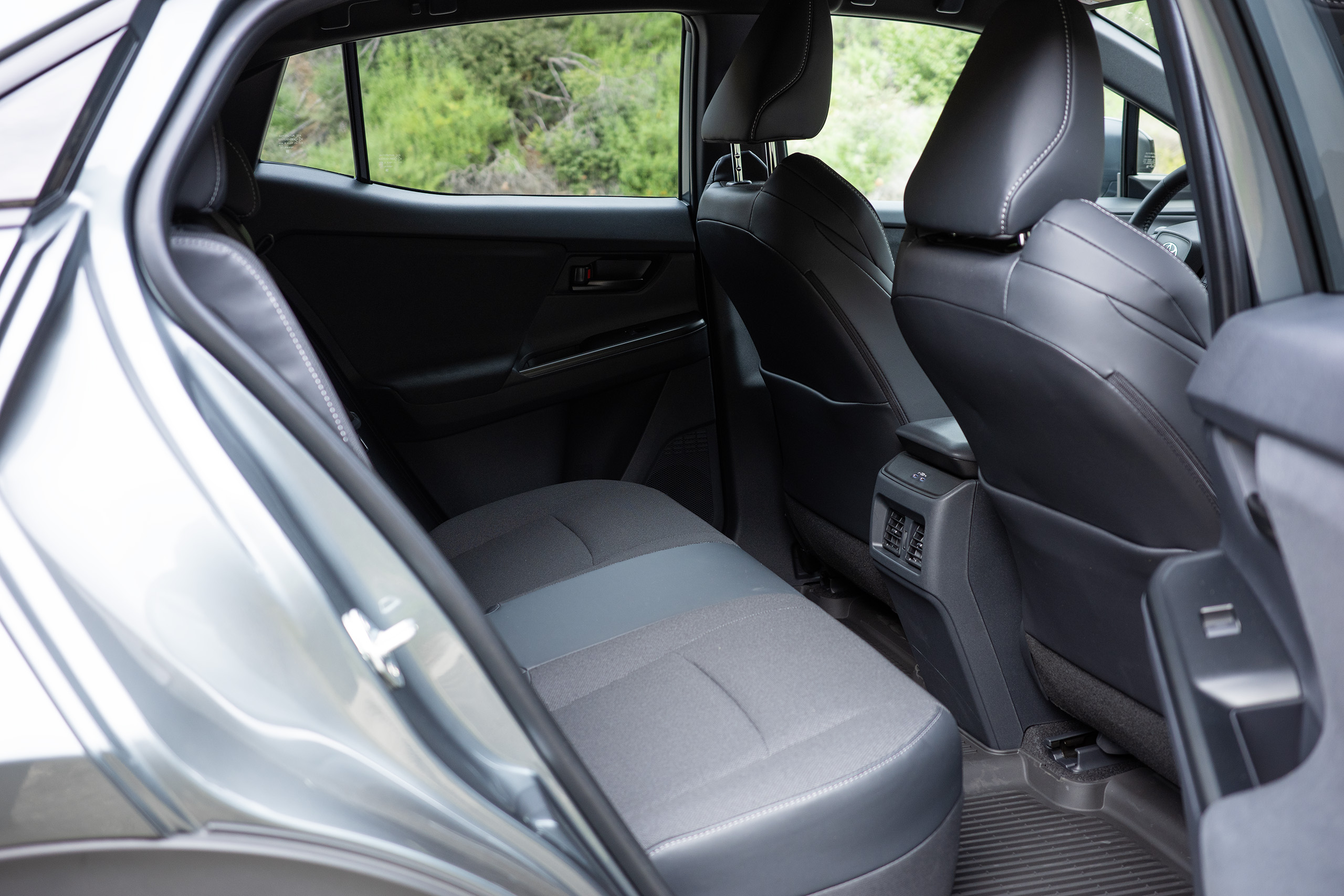
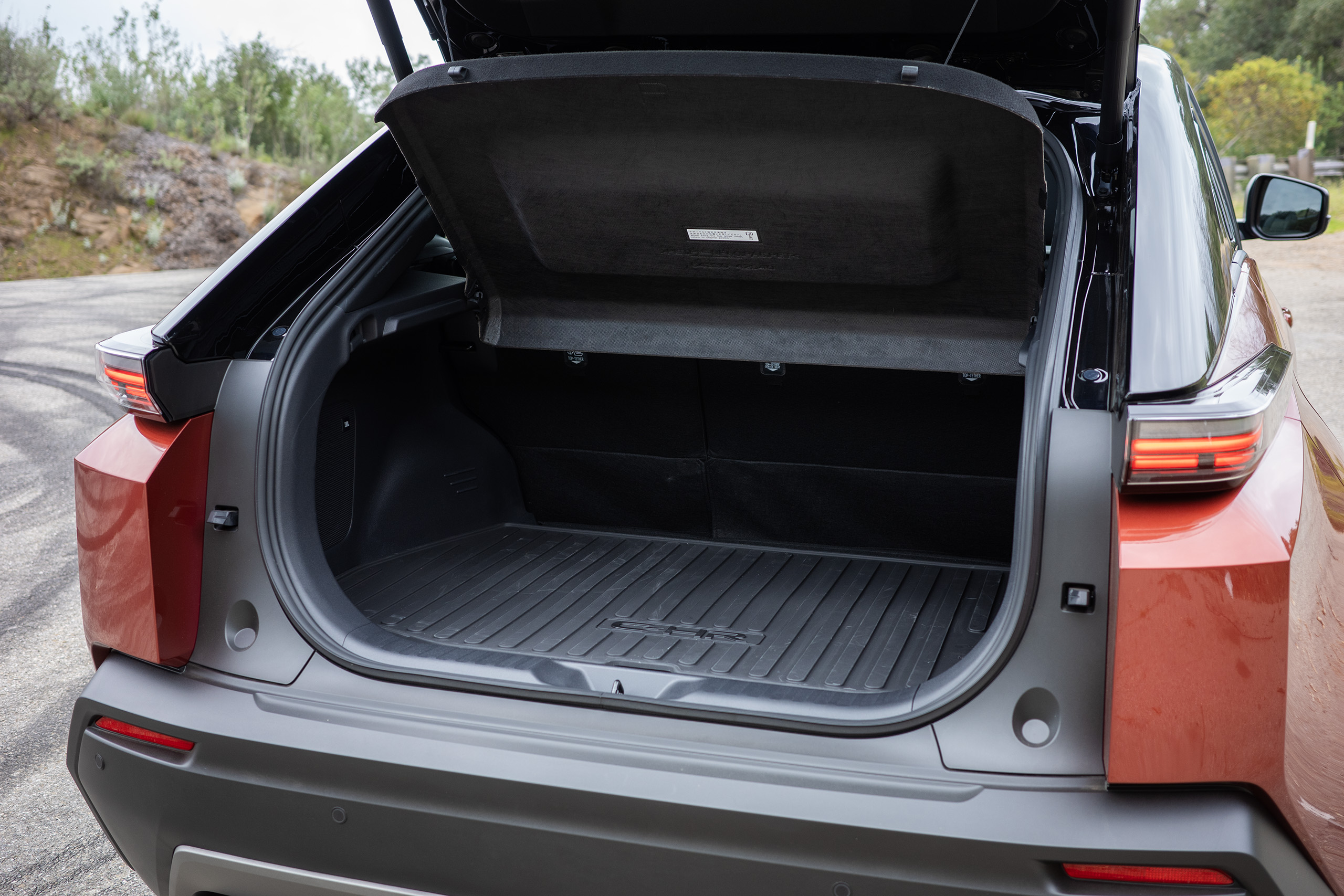
I’ll commend Toyota for designing a very accommodating second row, in spite of this car’s seemingly challenging proportions. With about 37 inches of headroom and 32 inches of legroom, space is quite good, and at 5’10”, I was able to fit comfortably in the back seat. Meanwhile, the rear cargo situation is certainly much better than in, say, a Corolla hatch, but if storage behind the seats is an important consideration, you’d be better served by one of Toyota’s larger EVs. Fair warning: There’s no frunk in any of them, even though there absolutely should be.
Driving the 2026 Toyota C-HR
You’re not here for all the room in the world, though; you’re here for a relatively inexpensive EV that’s got a little bit of spice, and the C-HR nails that brief. This is obviously no sports car, but with a 223-horsepower motor on the front axle and an 116-hp one out back, in tandem with compact proportions, the C-HR easily lends itself to spirited driving better than any other EV in Toyota’s range.
The C-HR will indeed hit 60 mph from a standstill in 4.9 seconds, which is dead-even, per the automaker’s own testing, with the GR Corolla, so it’s certainly got some hustle. The electric power steering has also been tuned to be a bit weightier, relative to what you’d feel in other bZ models. The steering fits the vehicle’s character well; it’s sharp enough and a little on the heavy side without requiring too much effort, precisely what you want in a fun daily.

The damping is also harsher than the bZ’s, but make no mistake, the ride’s still soft and generally comfortable, and this thing unapologetically rolls in the bends. Hustling up the twisty Route 33 in California’s Ojai Valley, the C-HR felt responsive, but the lateral pitching at speed, coupled with a 4,300-pound curb weight, discourages you from carrying a dumb pace into corners. Again, I think anyone hoping for an enjoyable commuter will like what they find here, but those pining for a Toyota EV that is dynamically deft had better wait for a GR version. For what it’s worth, I reckon the GR spec of this thing would be a hoot.
Range and Competition
The C-HR’s single powertrain option guarantees an EPA-estimated range of at least 287 miles on a full charge of its 74.4-kWh battery. That figure drops by 14 miles for the top-end XSE grade, which trades stock 18-inch wheels for 20-inchers. A standard NACS charging port makes Tesla Supercharger support a cinch, albeit up to just 150 kW, and there’s an included CCS adapter for other stations.
Over a Level 3 DC system, the C-HR is said to go from 10% to 80% in 30 minutes—under favorable conditions and a healthy charger, of course. Toyota also learned from the bZ4X and upgraded the SUV’s old 7.6-kW onboard AC charger to 11 kW for faster topping up at home.
The range, falling just shy of 300 miles, may not seem especially impressive, but it’s actually about the best you’ll find for the money from an all-wheel-drive EV. The least-expensive AWD Ioniq 5 that Hyundai offers can travel 290 miles on its slightly more capacious 84-kWh battery, but it also costs a fair bit more than a base $38,450 C-HR, at $42,600. On the flip side, the Ioniq 5 can recharge much faster, at up to 350 kW.
Then there’s the Chevrolet Equinox EV, which is roomier but less sporty than the C-HR. It excels with 307 miles in its cheapest AWD trim, but is priced at $40,095. And the less said about the $43,535 Ford Mustang Mach-E Select AWD—rated to offer a paltry 240 miles from a pack that’s basically the same size as the C-HR’s—the better. Tesla is perhaps unsurprisingly still the range king in this “segment,” if we generously expand the group to include low-riding sedans. But, even then, you can’t get into a 343-mile Model 3 AWD for less than $49,000.
Early Verdict
Toyota is delivering a unique proposition with the C-HR’s revival. Whereas most EVs in the sub-$40K domain emphasize space or range, here’s one that’s genuinely fun to drive with surprisingly stout performance and an attractive exterior that also happens to last pretty long on a charge, too.
No, the C-HR isn’t as practical a package as the Equinox EV, and it doesn’t prioritize quick charging like Hyundai’s EV lineup. The interior is admittedly a little all over the place. But not everybody needs those things, and now, halfway through the 2020s, it’s nice to see the mainstream EV market broaden to serve customers beyond the common denominator. It’s also nice to see Toyota finally get its EV act together, four years since the bZ4X first landed. If you want to prove to anyone how quickly the tech is advancing, just point to this car.
Toyota provided The Drive with travel and accommodations, along with the use of a vehicle for the purpose of writing this review.
| 2026 Toyota C-HR Specs | |
|---|---|
| Base Price | $38,450 |
| Powertrain | 74.7-kWh battery | dual-motor all-wheel drive |
| Horsepower | 338 |
| Torque | 323 lb-ft |
| Seating Capacity | 5 |
| Curb Weight | 4,510 pounds |
| Cargo Volume | 25.3 cubic feet behind second row | 59.5 cubic feet behind first row |
| Ground Clearance | 8.3 inches |
| 0-60 mph | 4.9 seconds |
| EPA-rated range | Up to 287 miles |
| Score | 7.5/10 |

Quick Take
The Toyota C-HR may not be perfect, but it’s the antidote to boring entry-level EVs, prioritizing performance and styling over versatility while keeping range in check.
Toyota provided The Drive with travel and accommodations, along with the use of a vehicle for the purpose of writing this review.
Loading comments…
Comments couldn’t be loaded. Please refresh the page.