
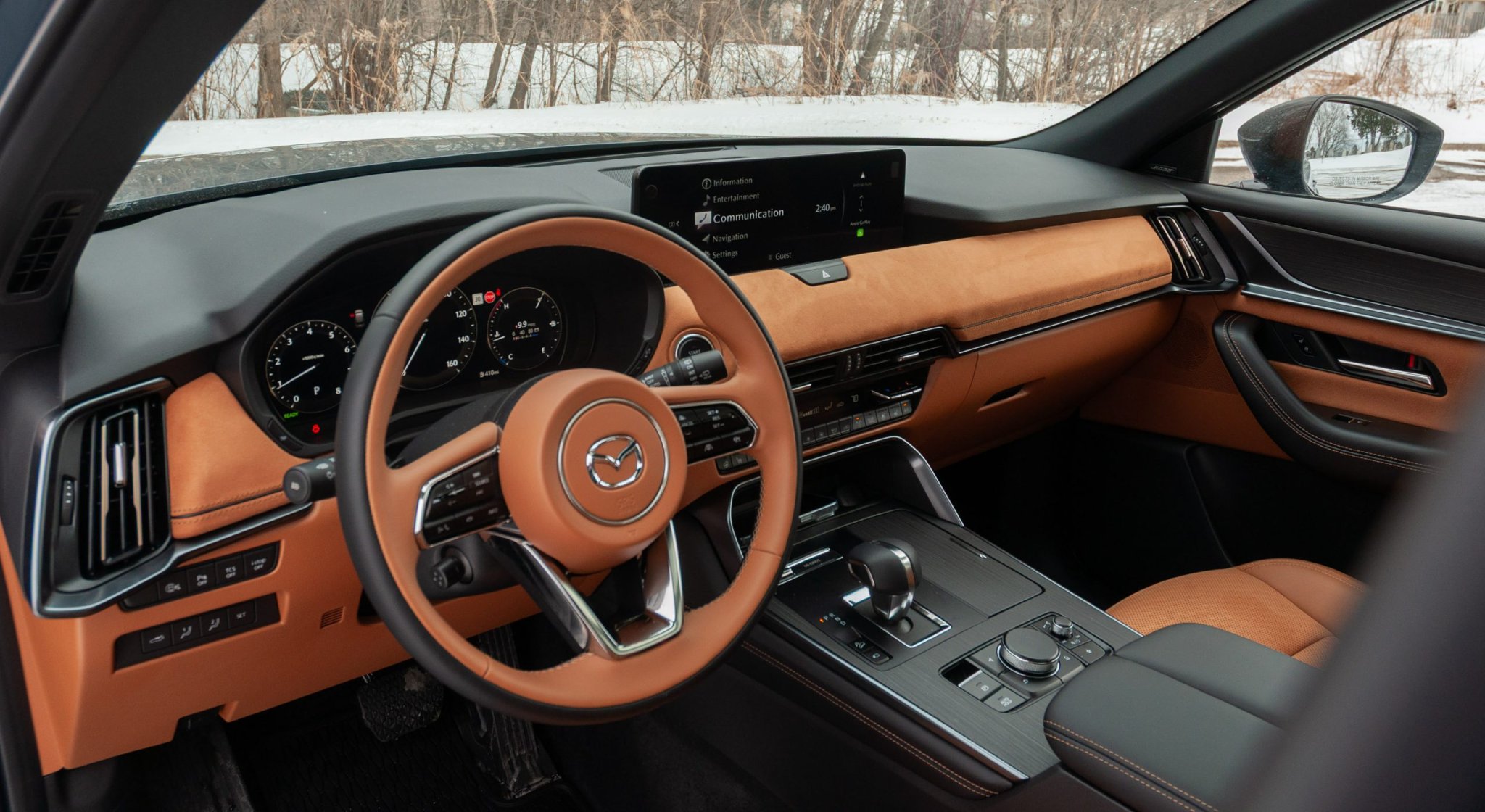
Back in 2023, I stood at a briefing about the upcoming Mazda CX-90. The new three-row crossover SUV was meant to lead the automaker’s lineup and serve as the flagship. Its infotainment system? Another touchless screen. Why? Because they are distracting and unsafe, I was told.
The CX-90, and then the CX-50 that followed, featured the automaker’s latest iteration of a scroll-wheel-controlled interface, which at best looks and operates like Audi’s MMI system, which moved to a touchscreen over six years ago. Now Mazda’s moving to touchscreens with the new 2026 CX-5, which means the automaker has caved and knows it was wrong.
In the last month, I’ve spent time in the Mazda CX-50 Hybrid and CX-70, and I’m currently driving the CX-90 plug-in hybrid. All three of these vehicles still have a tablet-like screen rising from the dashboard like an afterthought, controlled by a console-mounted scroll wheel augmented by a few action buttons that instantly pull up the navigation or audio system. It’s distracting and cumbersome, at best.
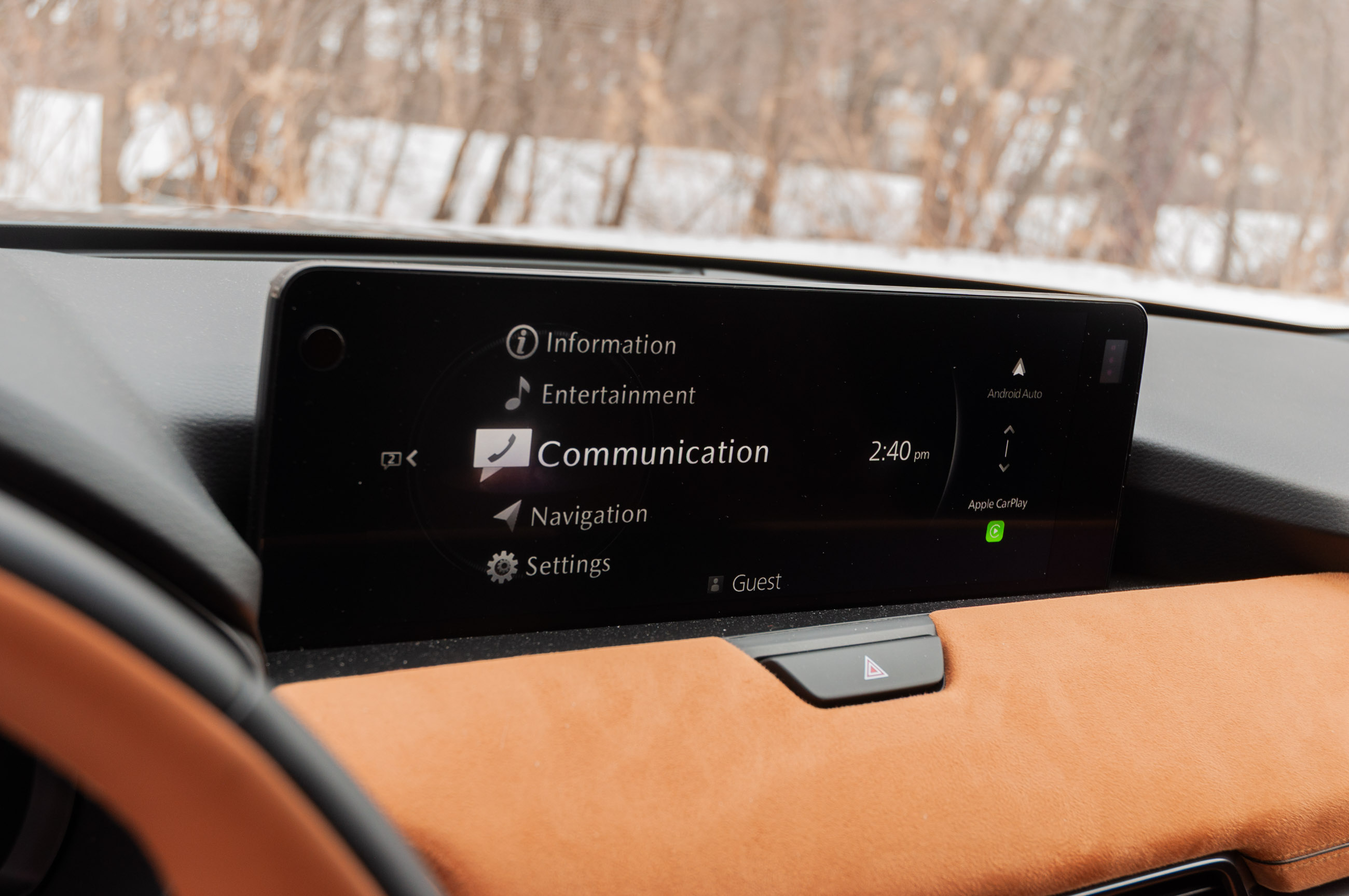
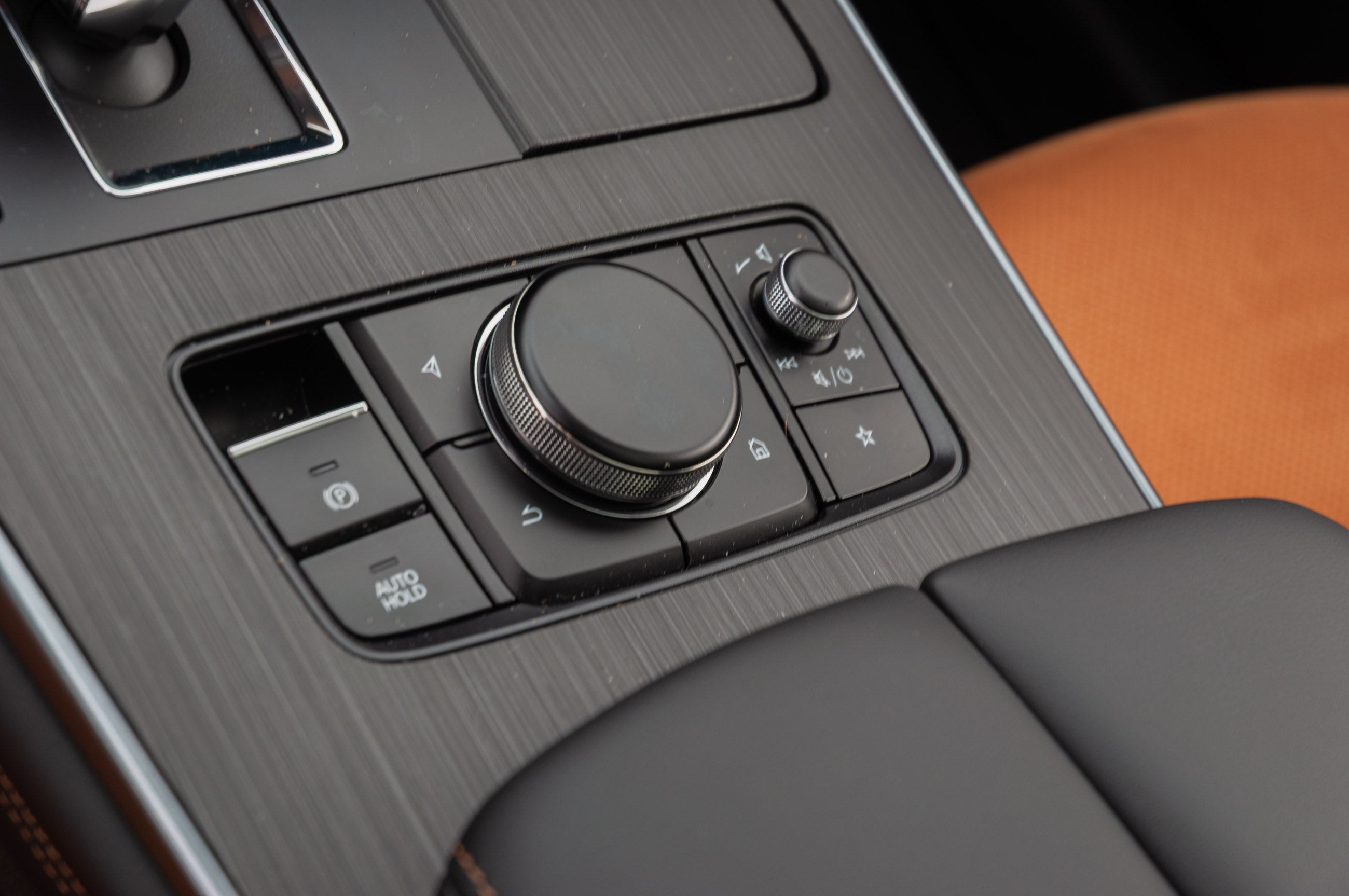
You navigate the system by scrolling up and down or around the screen with the wheel. A dedicated back button next to the scroll wheel lets you move backward through the menu system. The first to debut a concept like this? BMW’s iDrive in the 2001 E65 7-Series, 25 years ago.
The interface is bad enough that I, and I imagine most consumers, will just revert to using Apple CarPlay or Android Auto, which is wireless. But leaving Mazda’s interface for the familiarity of CarPlay doesn’t really solve the problem. CarPlay was never designed to be used with a scroll wheel and back button. Mazda just made it work because it had to. Moving throughout the system is clunky and time-consuming. Worse, it’s distracting while driving. Ironic, given the Japanese automaker’s reasoning for not moving to touchscreens in the first place. At least the hard buttons for jumping to the phone or music functions work well within CarPlay, making life just the tiniest bit better.
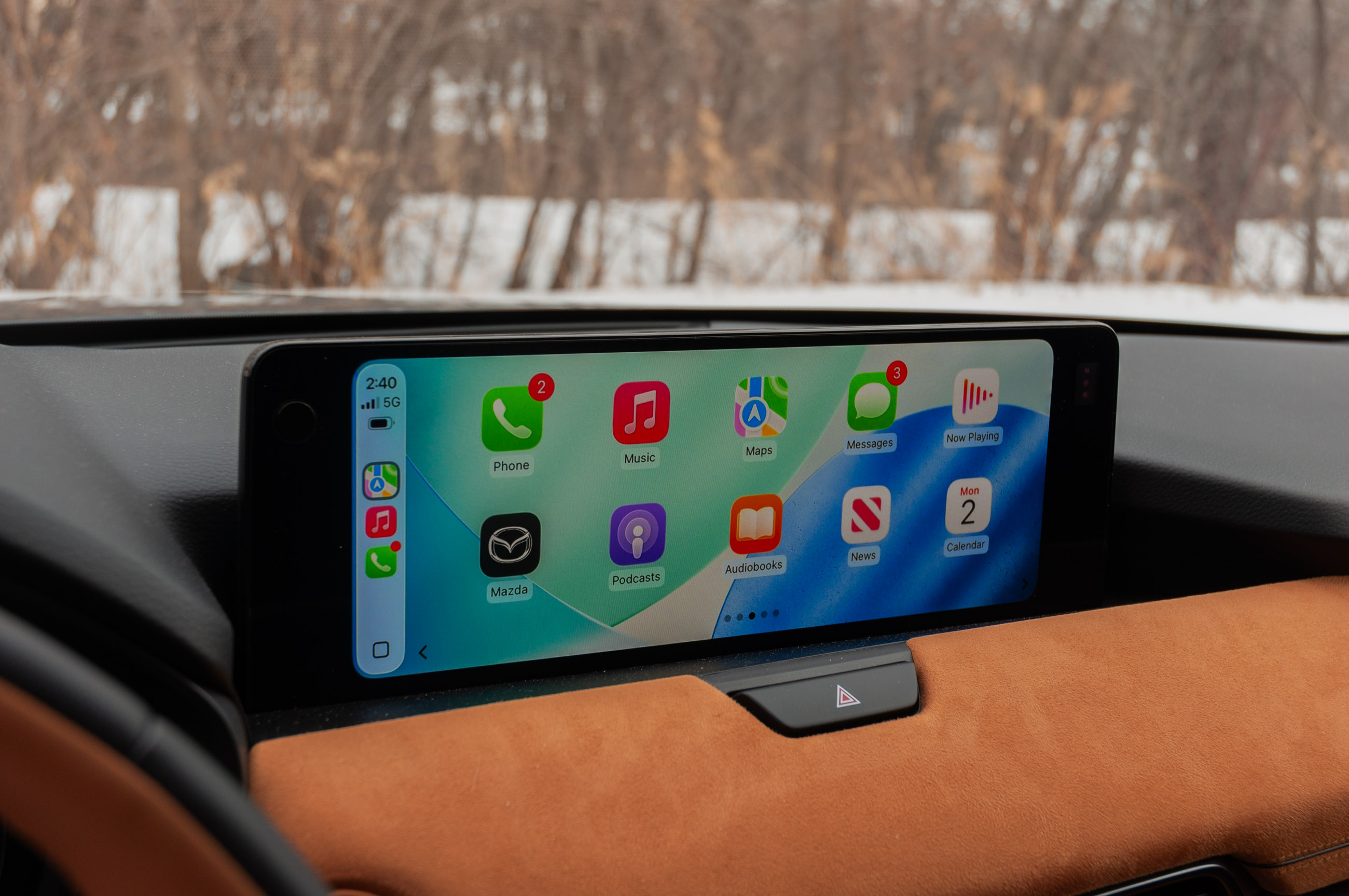
In a surprising plot twist, the screens in the latest Mazdas, including the CX-70 and CX-90, are actually touchscreens in upper-trim models with a 12.3-inch display. The touch-based operation only works when parked and while using CarPlay. Put the car in drive, and the touch function is disabled by default.
This can be turned off within the menu system, but again, only within the CarPlay interface. Likewise, the screen is mounted just a stretch too far for my 5-foot-10 frame to use comfortably while driving, because it wasn’t originally envisioned as a touch-based system. Use the Mazda interface; touch-based operation is disabled. It doesn’t have to be this hard.
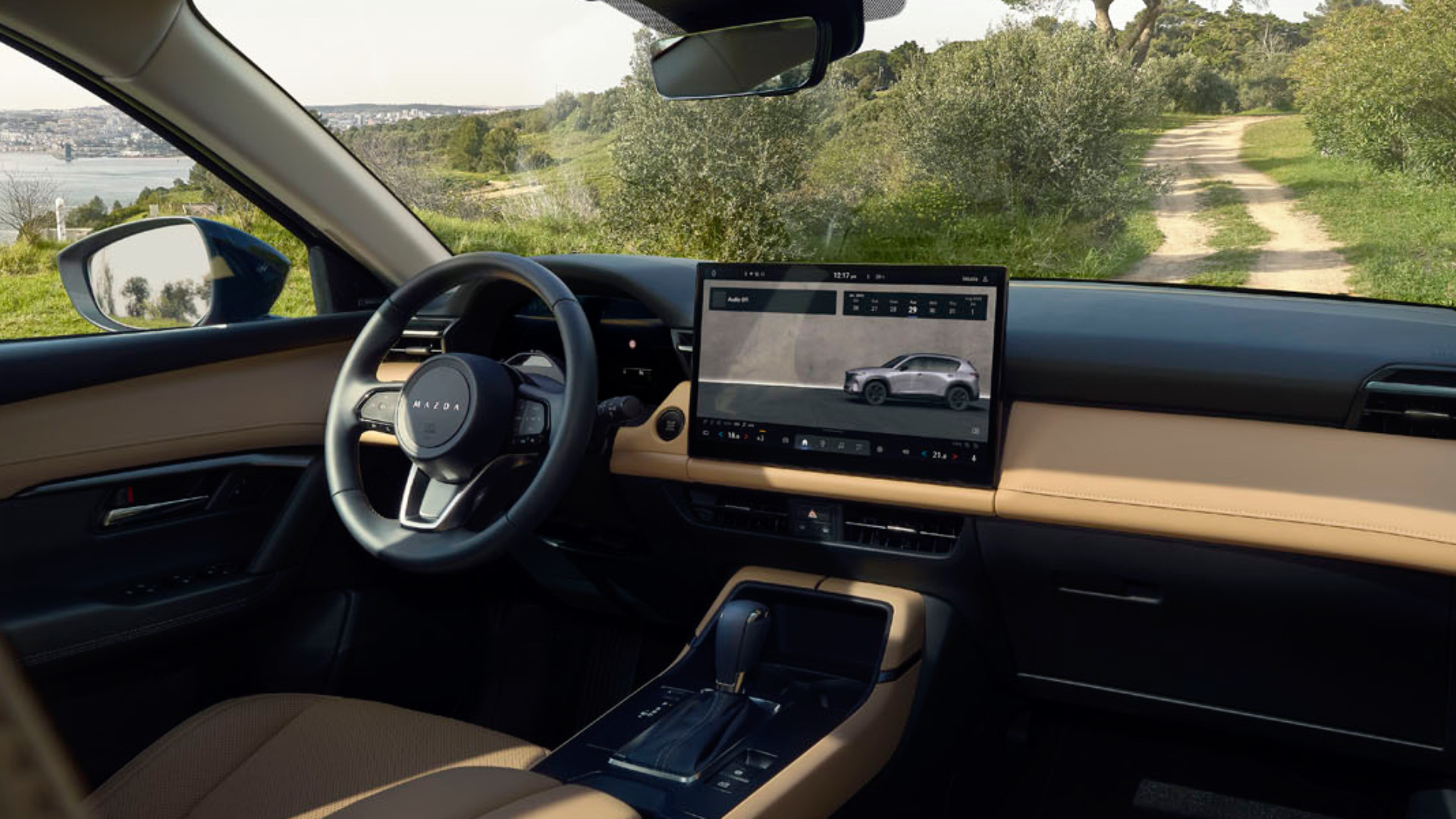
Mazda knows it, and now the new 2026 CX-5 ditches the current scroll wheel and screen for a new 15.6-inch touchscreen interface and no buttons. The automaker claimed that the new touch-based interface is safe and not distracting because, unlike touchscreens, core functions like climate-control buttons are locked to the bottom bar of the screen. Yes, just like almost every other automaker’s system, from Ford to Rivian.
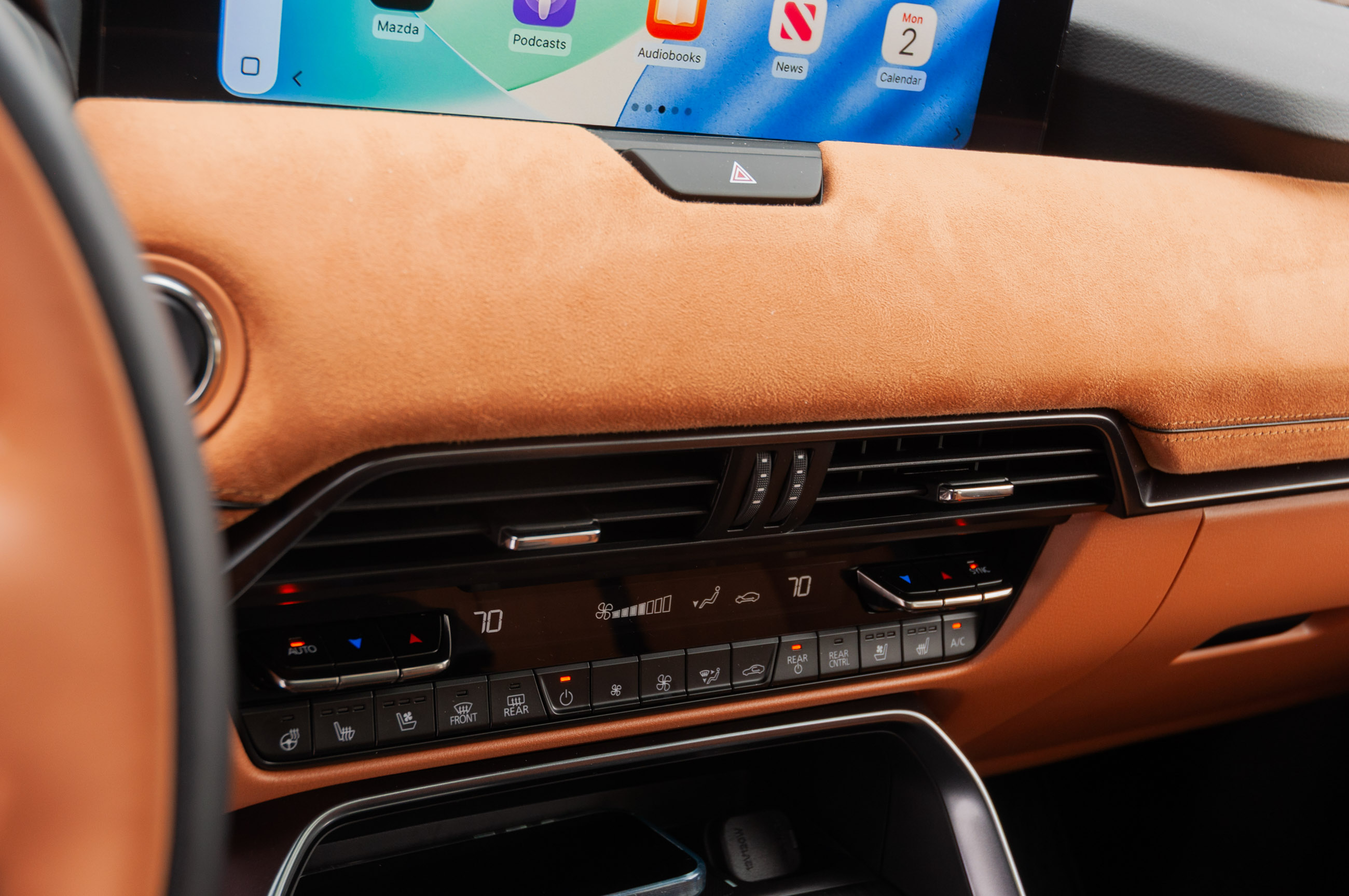
Notably, today’s models with scroll wheels and quick-function buttons have real climate-control buttons, knobs, and toggles. They are lovely with knurling and satisfying clicks. The new CX-5 does away with all hard buttons entirely. There isn’t a volume knob in the new CX-5.
We are about to move past the scroll and click wheel era at Mazda into a touchscreen buttonless era. Will it be better or safer?
Got a tip? Email us at tips@thedrive.com
Loading comments…
Comments couldn’t be loaded. Please refresh the page.