

It feels like every few months, an automaker with the resources, personnel, and experience to have seemingly known better comes out and says that it’s finally listening to customers and putting buttons back in its cars. Volkswagen, previously one of the worst offenders in the business with its all-capacitive steering wheel, was among the first to fold. Then, Hyundai said that its focus group testing found users “stressed, annoyed, and steamed” when forced to control a vehicle’s every facet through a touchscreen, and would walk back its all-digital interfaces. Now, Mercedes-Benz is following suit. It’s a welcome trend, but it leaves those of us who have been observing this sentiment for some time wondering, why now?
The move toward ditching all buttons and packing the features they used to control into software isn’t new. You could say it started with Tesla and the Model S in the early 2010s, and it left every existing automaker scrambling to be perceived in the same way—as a tastemaker on the forefront of technology. Honda even briefly nixed the volume knob in several of its models around the middle of the decade, only to bring it back to much fanfare. “Our customers and frankly, many of you, said, ‘We want a knob,’ so the knob is back,” former Honda North America exec Jeff Conrad said upon unveiling the fifth-generation CR-V in 2017.
So, automakers have had the evidence for a long time now that their customers want buttons. Why does it seem that they’re still learning that lesson? How many more times will they have to learn it before it sticks for good?
Money and Fashion
“The reason why the industry went down this path in the first place is because it’s expensive to put buttons and physical controls in a vehicle,” Sam Abuelsamid, Vice President of Market Research at Telemetry, told me over the phone. “There’s a lot of engineering effort that goes into it—to designing them, to validating all those components. And from a manufacturing perspective, it adds a lot of complexity to develop a dashboard or steering wheel that has physical controls on it.”
Abuelsamid cites Tesla in its early days—which, itself, was following Apple’s example with the influence of the iPod and iPhone—for demonstrating that there could be a viable path away from physical interfaces in cars. And as cars have gotten more complex, there certainly is an objective need for touch interfaces and software menus on some level, simply because you can’t create a button for every toggle in your vehicle’s settings.
“The logic was, you know, ‘We’re adding all these features, we can’t have 300 buttons on the dashboard,'” Abuelsamid said. “The touchscreen is the next logical step in that progression. But you’ve got to find a balance in there in between those extremes—all touchscreen versus all physical, if you’re going to have so many features in a car.”
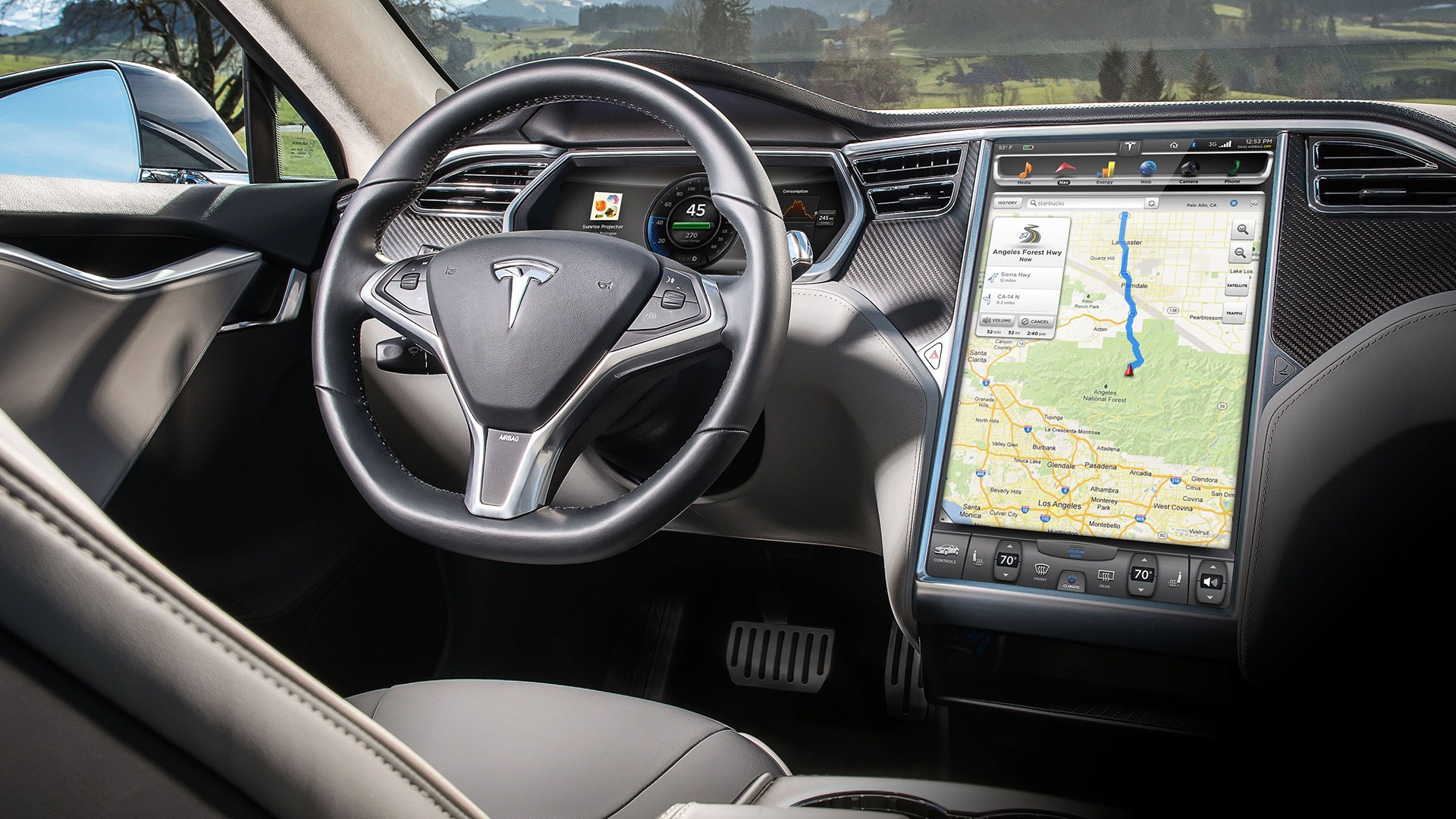
Now it seems automakers might be finding that balance. I recall a Google employee from the Android Automotive division telling me as far back as five years ago that the company operated a lab where it studied how people engaged with its infotainment software—where their eyes traveled and for how long, or how far they had to reach to touch something. Even then, that sort of insight was novel.
“I think when Tesla did it, you know, I don’t think they really did any research,” Abuelsamid said. “They did what they thought, what they wanted to do. I think for the rest of the industry, they should have done more human factors research to really see what was the right solution.”
The EV maker was, however, in a very unique position to benefit from a screen-first cabin, according to S&P AutoIntelligence Associate Director Stephanie Brinley.
“Tesla was an early pioneer in this area, but the Tesla products were developed from scratch and didn’t already have physical buttons in the parts list,” Brinley said over email. “For them, [going screen-only] also reduced components needed from the beginning.”
Robby DeGraff, Product and Consumer Insights Manager at AutoPacific, added that it’s not just that buttons have always been expensive. Displays, which were already quite cheap by the time smartphones and tablets came into favor, have only gotten cheaper.
“A big reason we saw this rush towards screens and smoother touch or touch-haptic surfaces is because the development costs of these screens plummeted over time,” DeGraff said in an email. “For some automakers, it was easier and cheaper to just throw a screen on the dashboard instead of designing a row of toggles or buttons.”
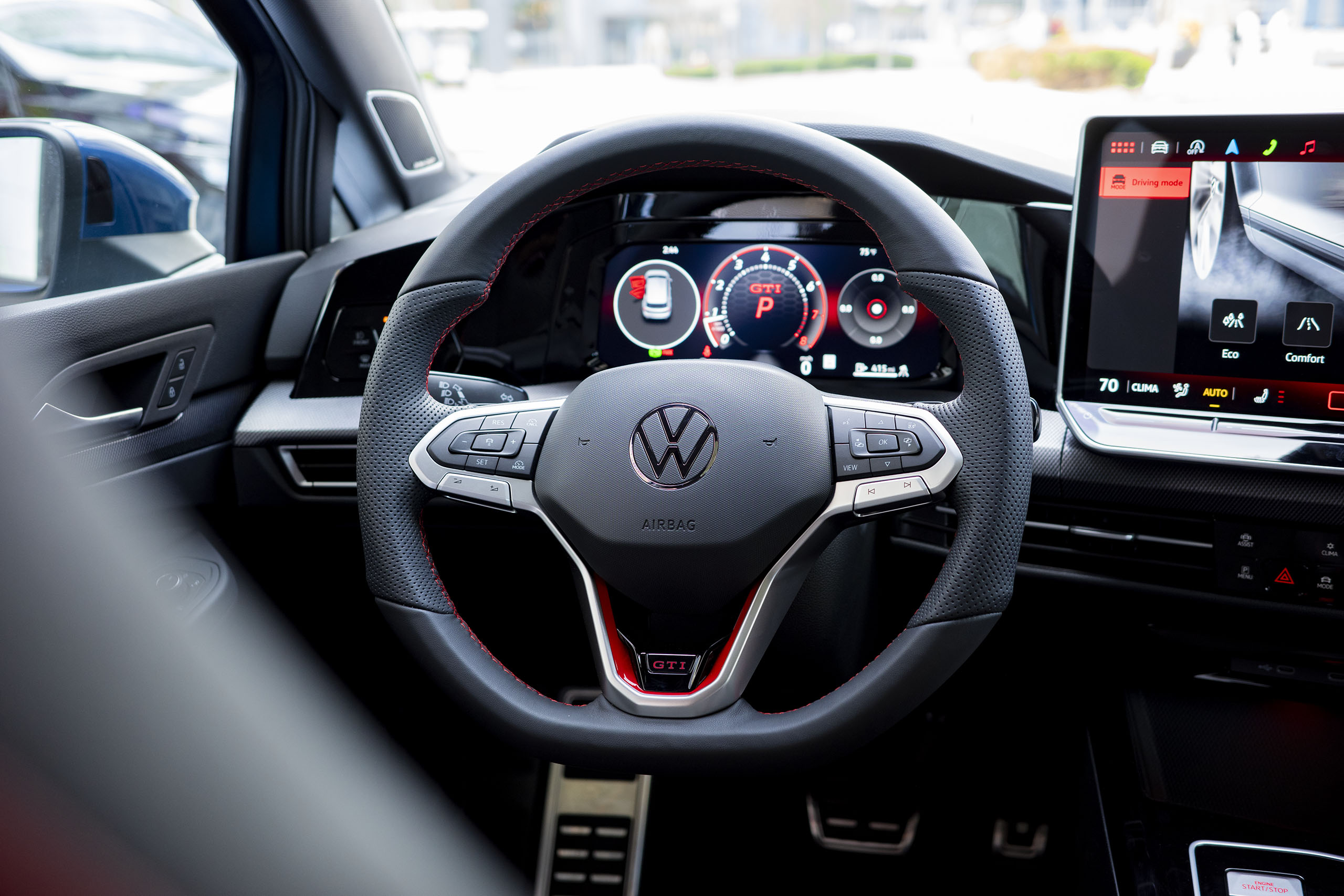
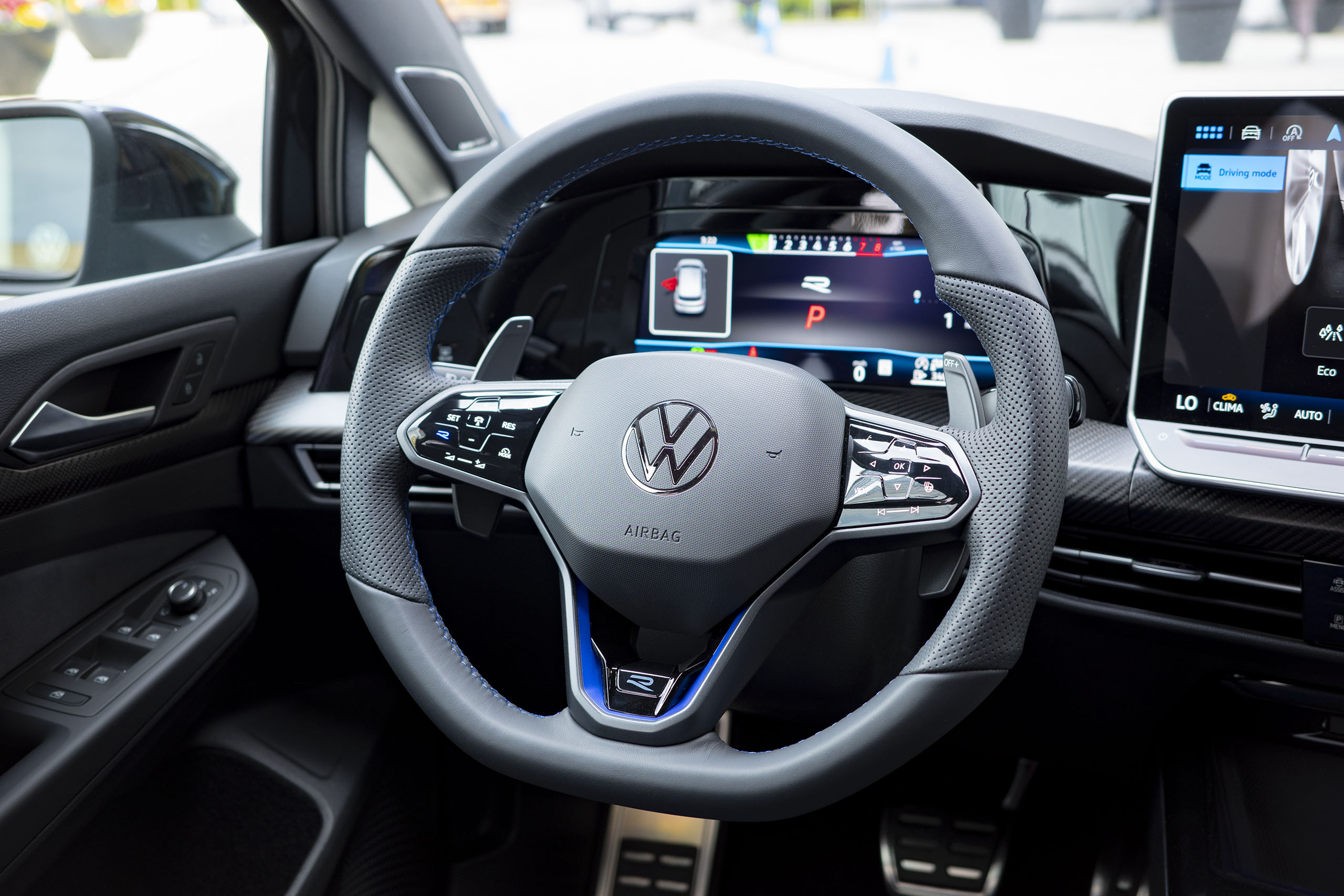
Some might find it hard to believe that corporations on the scale of Volkswagen and Hyundai could be lured by such penny-pinching, but the pennies add up. Earlier this year, I was surprised to learn that VW declined to put a steering wheel with real buttons back in the Golf R, even though it did in the GTI, because it would’ve been too expensive and time-consuming to tweak a circuit board and print a new piece of plastic. Car companies might covet Apple’s position as a tastemaker in consumer tech, but as Abuelsamid told me, their financials operate on a completely different basis.
“I keep in mind, you know, the auto industry is an industry unlike Apple’s, that does 35%, 40% profit margins. The auto industry is an industry that operates on typically loaded mid-single-digit margins. And particularly now, where there’s so much turmoil. [In] 2025, we’ve got the whole tariff situation, but even over the last couple of years, there’s been the shifting landscape between everybody was going to go electric, they’re backing off, and so suddenly, instead of doing all their investment in electrification, they have to go back and start reinvesting in internal combustion and hybrids again.”
What’s Next
All it takes is a few players to pave the way and recognize that customers aren’t happy with the status quo to begin a shift. People’s preferences don’t matter too much when every option on the market is designed similarly; they don’t have a choice. Now that some automakers aren’t holding the line, the pace to find a more reasonable solution to the industry’s interface challenges appears to be picking up. “This has always been an industry of fast followers,” Abuelsamid said.
The fear, then, is that this return-to-god moment will prove short-lived, or half-hearted. Fortunately, the experts I spoke to didn’t seem to think so.
“People are wanting the actual touch,” DeGraff said. “I’ve had a few conversations with interior designers at major automakers on- and off-the-record, who have pretty much guaranteed that we’re going to see a broader shift back to more analog-type interiors.”
DeGraff added that one of AutoPacific’s surveys showed that 48% of respondents would rather control their vehicle’s functions with dials or buttons than use a screen, and almost 50% stated that they “think vehicles have too much content displayed on screens and that’s not safe.” At the same time, 60% reported liking “the clean look of screens instead of buttons and dials.”
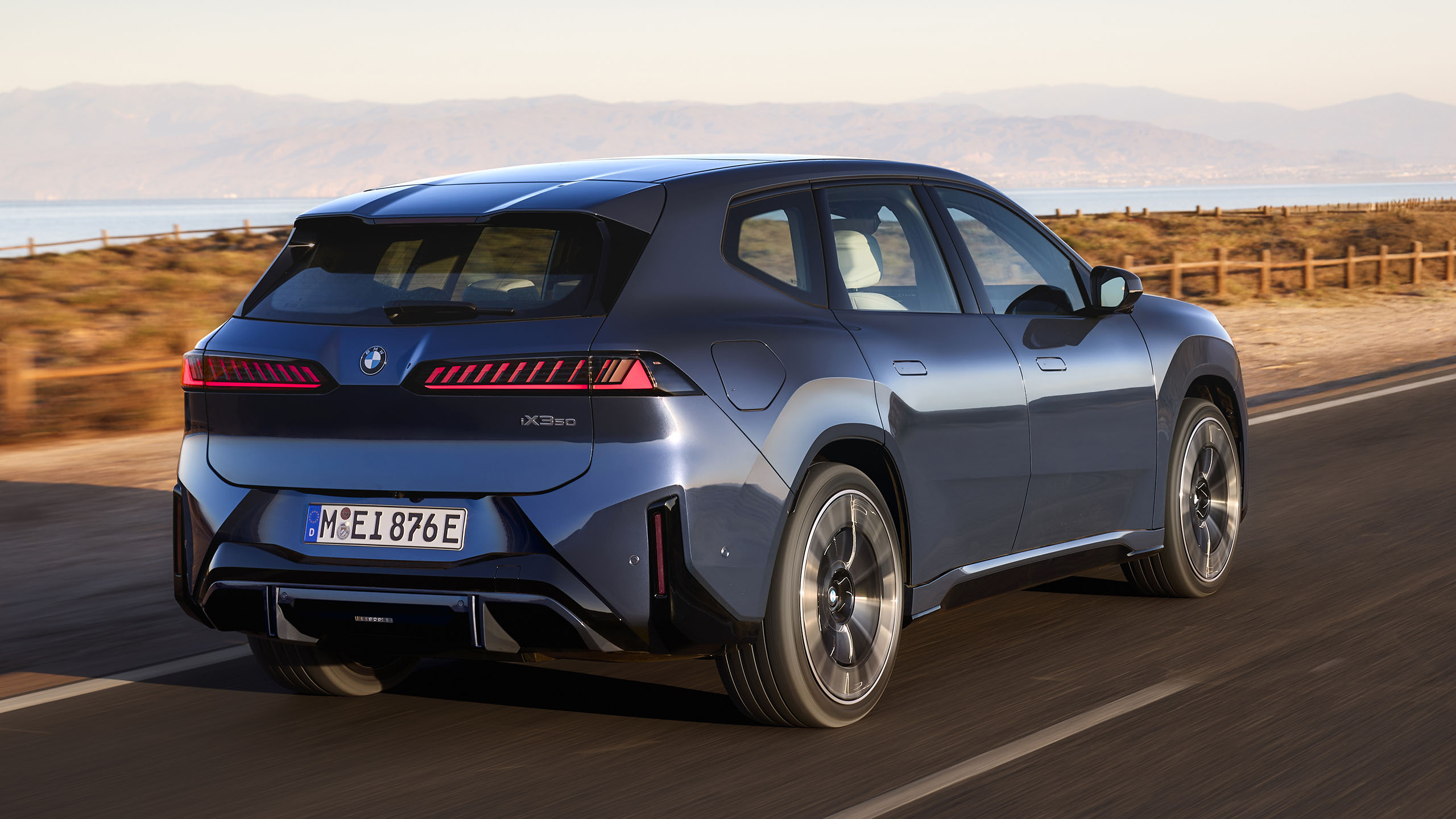
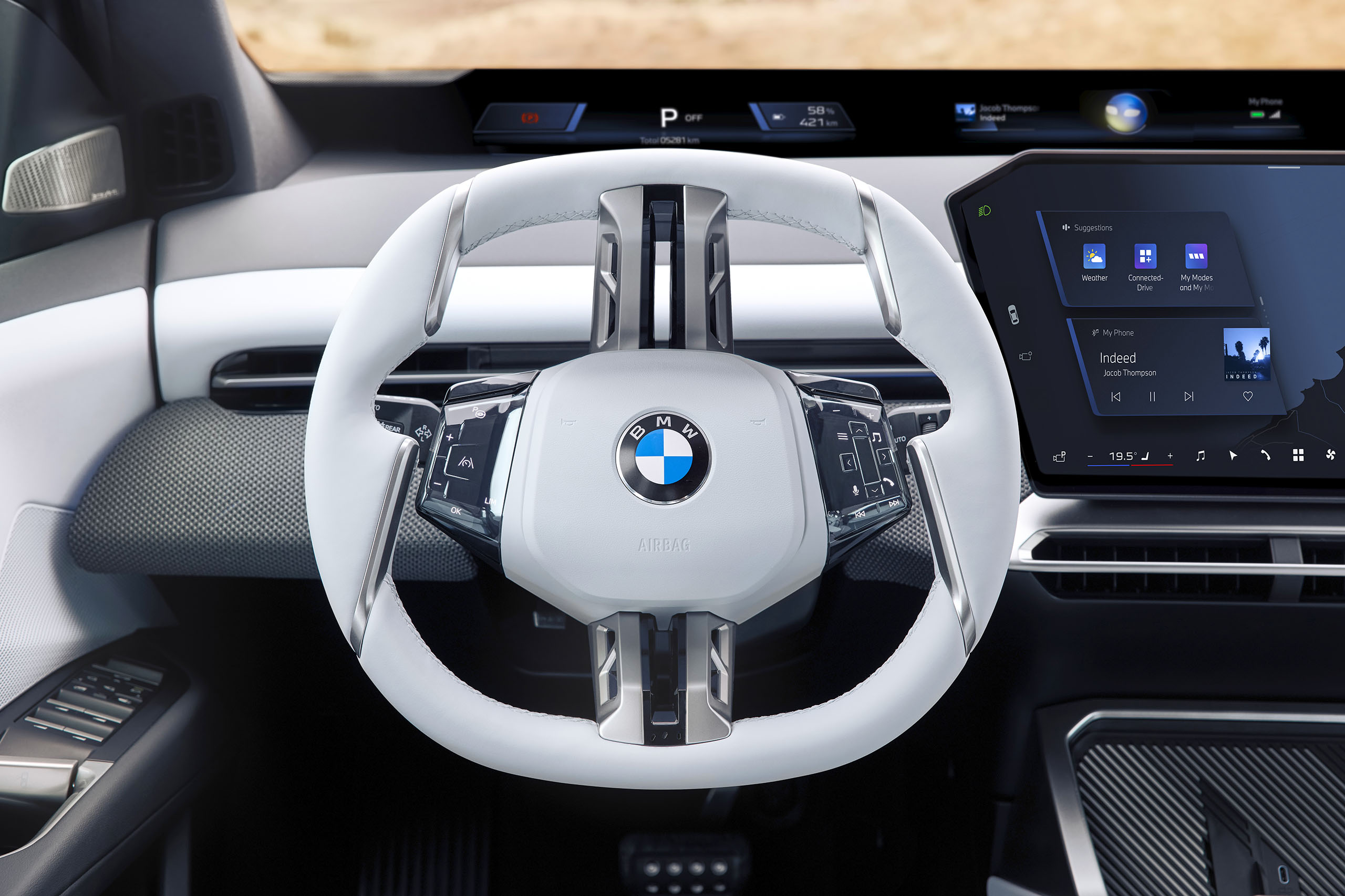
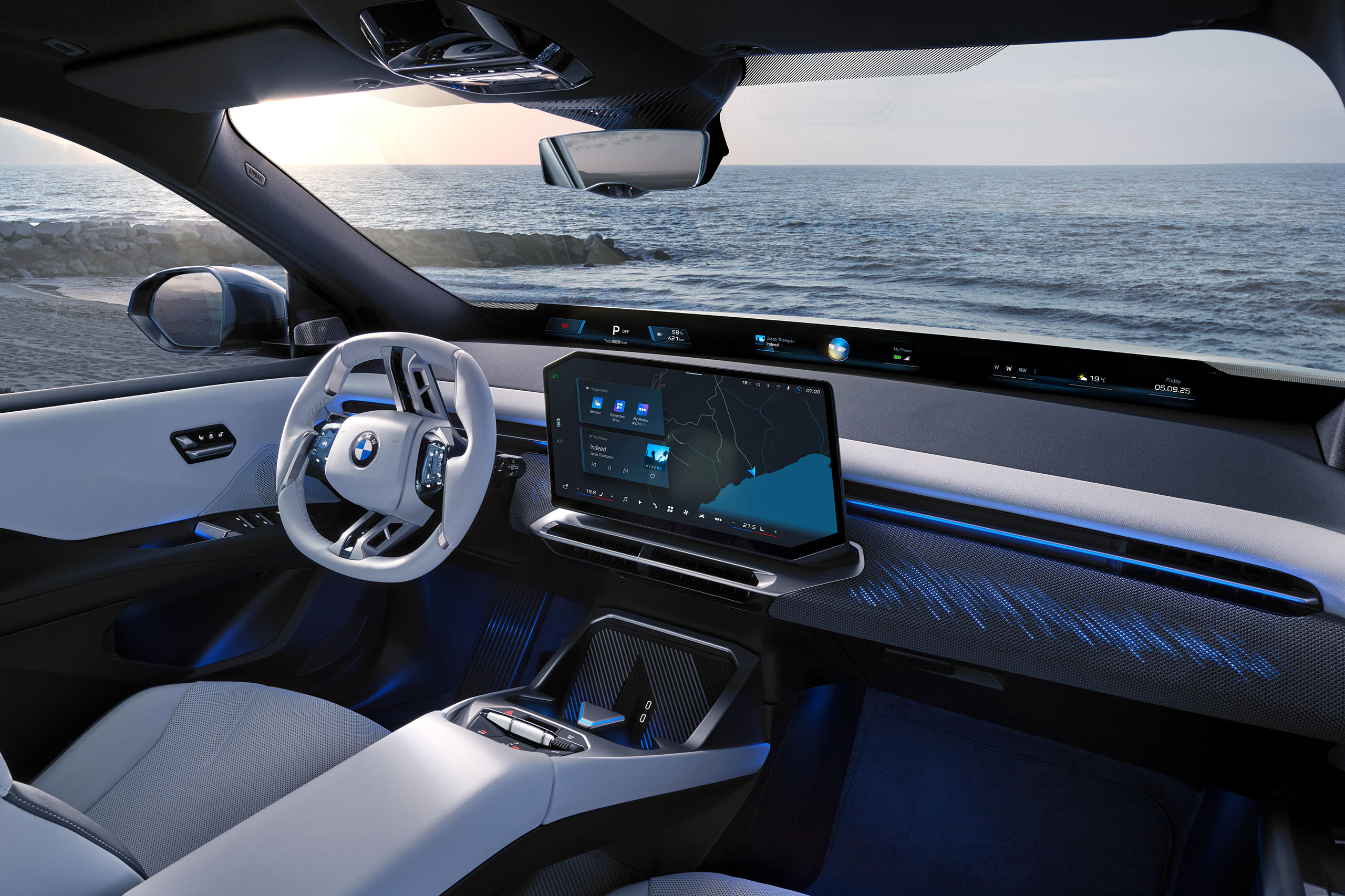
“I think we’re going to see the pendulum swing back to somewhere in the middle between the two extremes of all touch and all buttons,” Abuelsamid said, “and I think designers and engineers are going to be looking for that balance—trying to find the right balance of, ‘What do we need to have physical form versus what we can do virtually?’ It’s not necessarily going to be the exact same solution for everybody, but I think it’ll be closer to an optimum solution for most vehicles.”
And, at times like these, it’s worth emphasizing just how long it takes to develop a car, and how that can make car companies look oblivious to public sentiment.
“The long product lifecycles of cars is a significant factor,” Brinley said. “The center stack technology, even if the screen is placed differently in an SUV versus a sedan, for example, is designed to be a base for multiple products, and making a change affects more than one vehicle. Changes still need to be done where it makes sense for the full product lifecycle, which is typically five to eight years.”
If carmakers mean what they’re saying now, hopefully dashboards will look noticeably different come 2030 or so—in a welcome way.
Loading comments…
Comments couldn’t be loaded. Please refresh the page.