
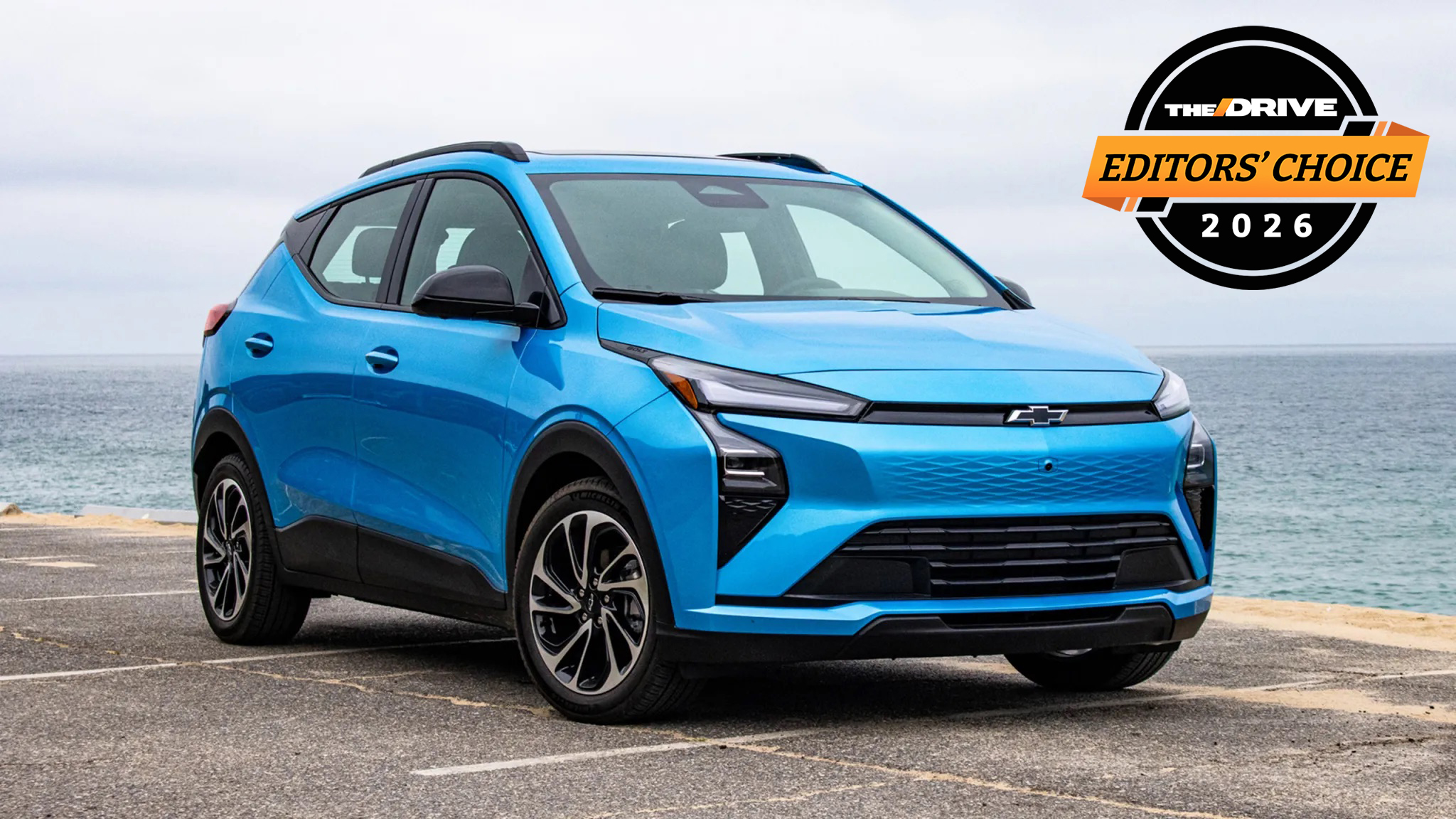
It’s rare for yelling on the internet to do much of anything, but don’t tell that to the 2027 Chevrolet Bolt. General Motors’ 2023 announcement that it was killing its cheapest electric car was met with such outcry that the automaker quickly turned around and promised the Bolt would ride again… somehow, someday. And after a three-year forced sabbatical the Bolt is back on sale, cheap as ever, and a better car—electric or not—than ever.
Here’s the Chevy Bolt’s recipe for value: take a simple, compact EV platform and let it proof for 10 years. Mix in the latest in-house electric motor and a modern, durable lithium-iron-phosphate (LFP) battery. Test for doneness, range should read 262 miles. Top with a standard NACS charging port and a fresh interior, dust with hands-free Super Cruise (optional). Serve around $30,000. Astonishingly simple and effective.
I don’t mean to make it sound like an easy thing to do, because the Bolt’s team will politely tell you that moving and calibrating the assembly line from Michigan to Kansas, engineering a new subframe for the battery and motor, stockpiling parts to hand-build prototypes, using virtual crash testing to speed development, and adding Tesla’s NACS charger was very much not.
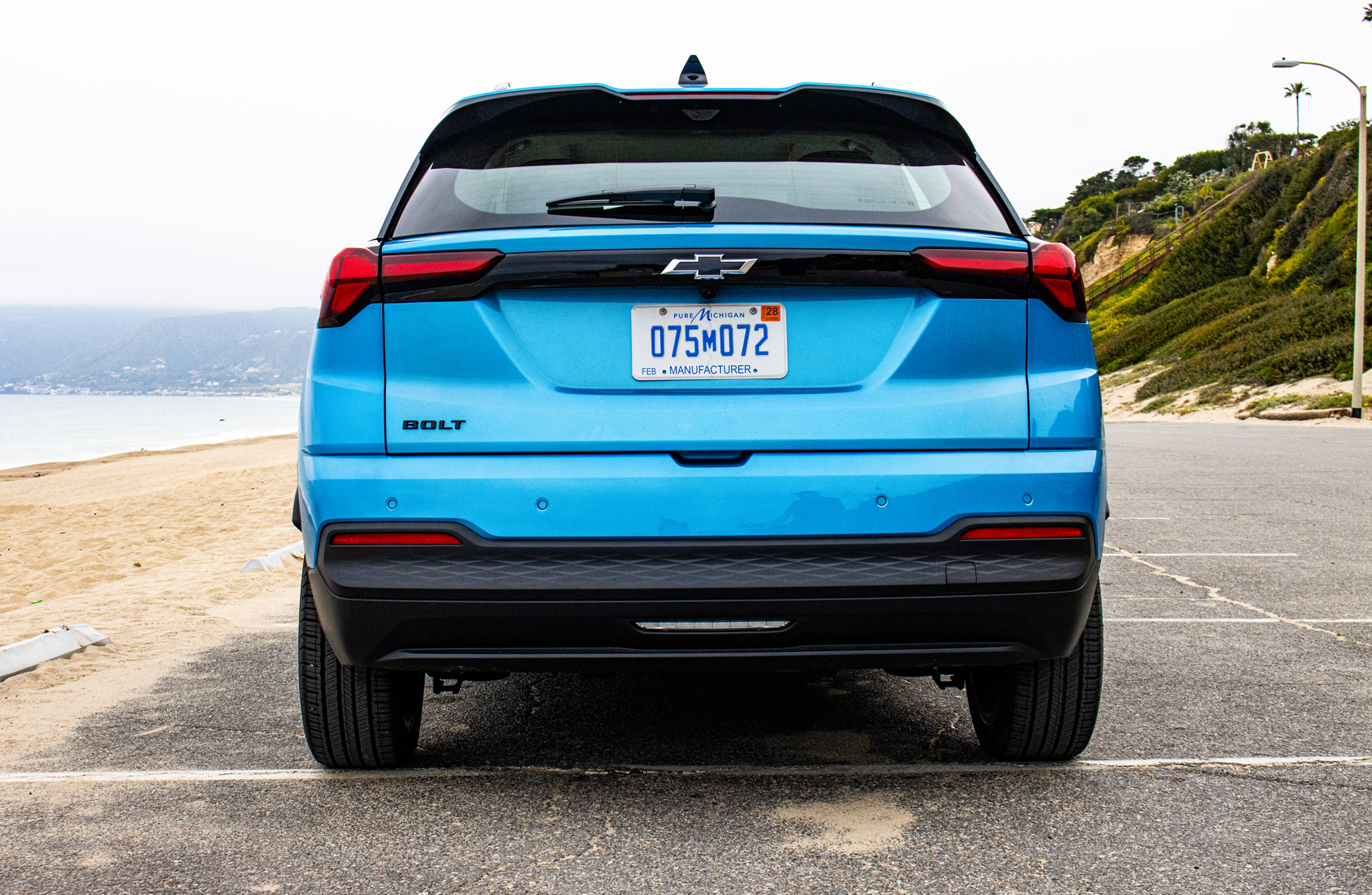
At the same time, the resurrection of the Bolt is proof that in many ways it is this easy for a non-Chinese automaker to build a sensible EV and sell it to Americans for a sensible price. The market does not need more breathlessly-hyped 9,000-pound electric SUVs and pickups with 1,000 horsepower and sub 3-second 0-60 times. It needs affordable, proven, human-scale cars like the Bolt. You are starting to see this realization take hold at places like Ford, Nissan, and others. The new-old Bolt is coming at the right time. Pardon the completely inappropriate comparison, but in killing the Bolt and bringing it back, it’s like GM tried to shoot itself in the foot and struck oil.
Old Bolt/New Bolt
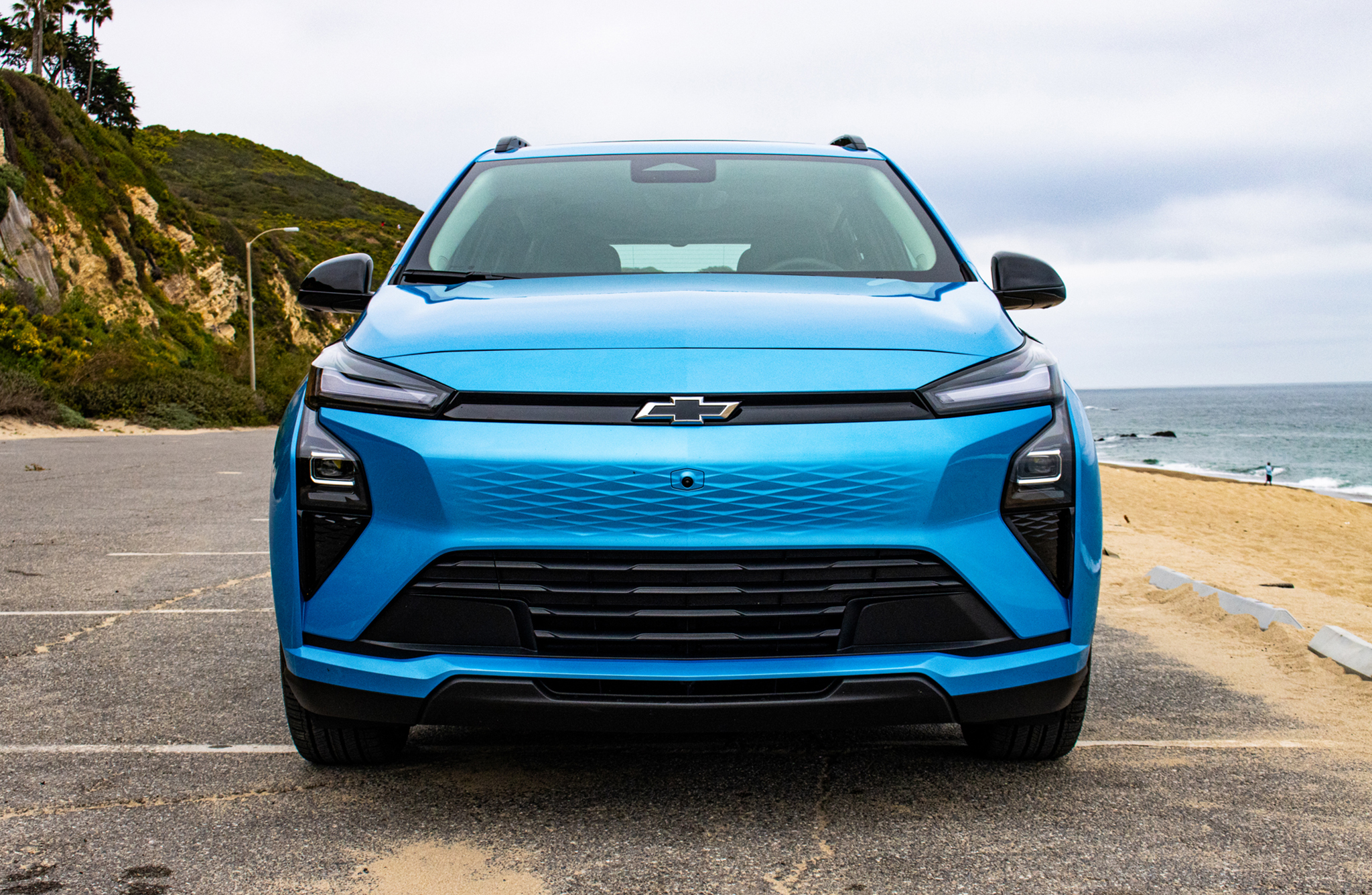
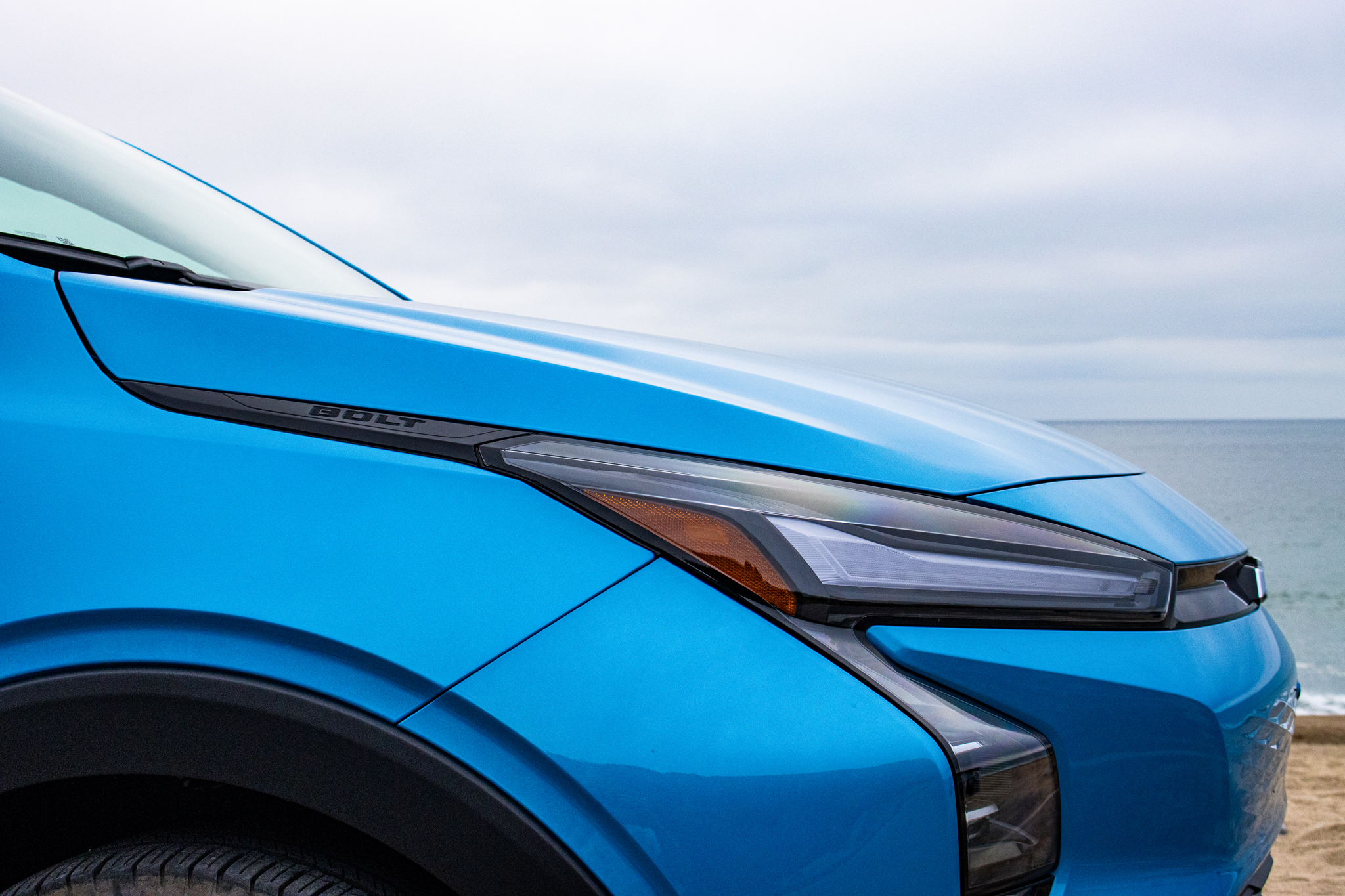
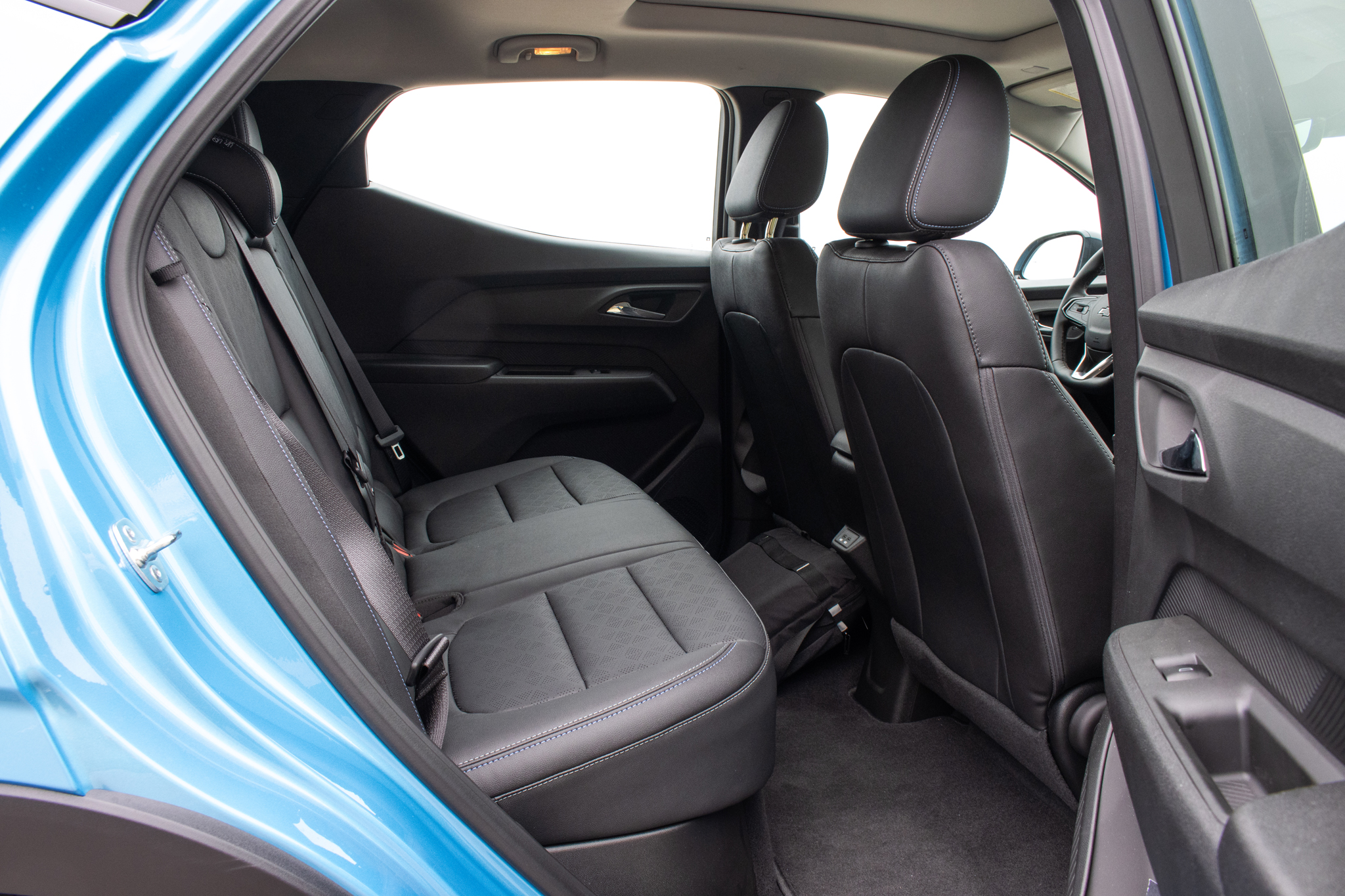
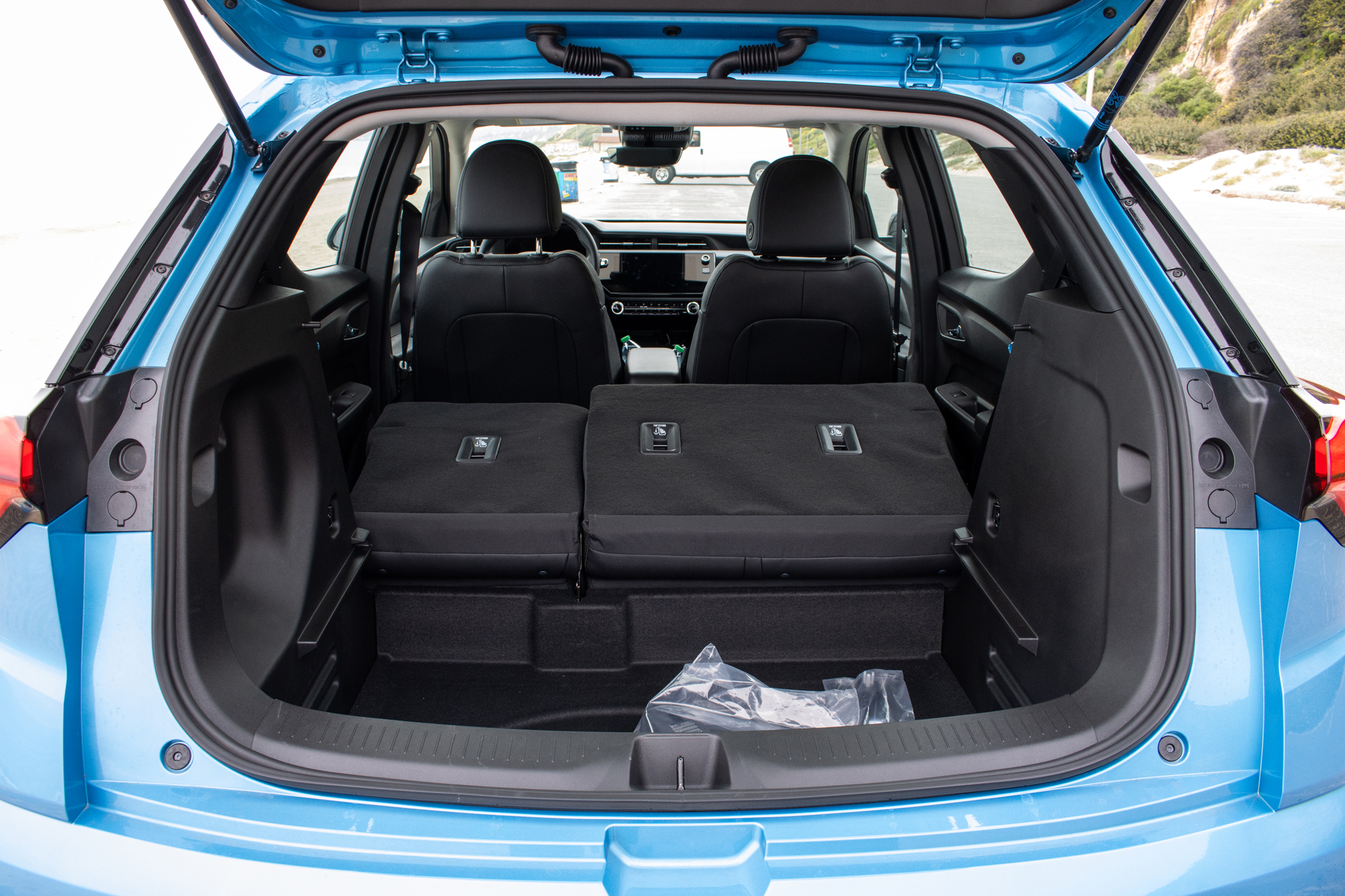
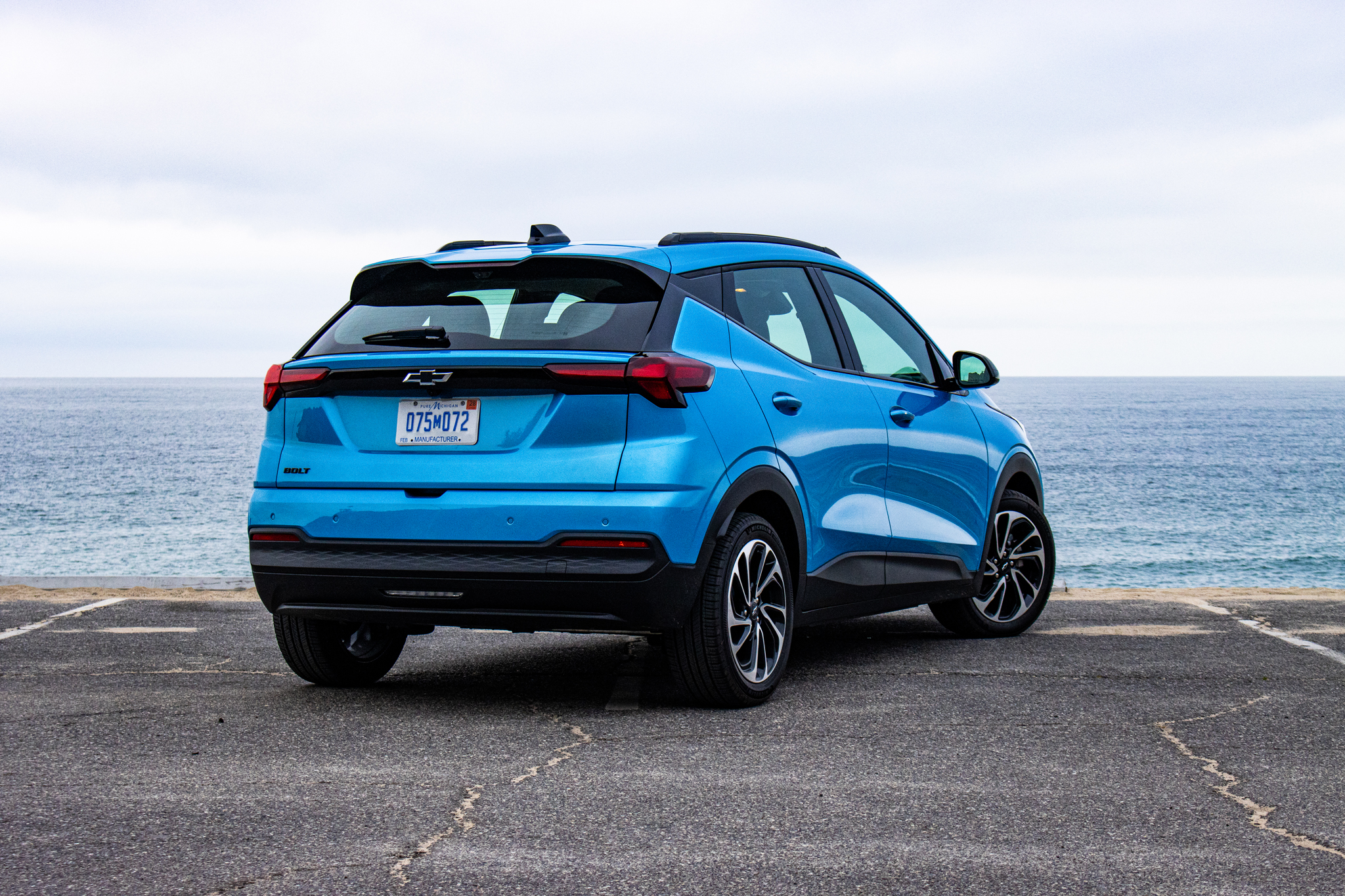
This is kind of a weird review because again, the 2027 Bolt is physically almost the same as the 2023 Bolt EUV. It occupies the same 169.9-inch by 69.7-in footprint, about a foot shorter in length than a Toyota Corolla. Its 96.6-cubic-foot cabin—a bit more than a Toyota Corolla Cross—still has a ton of space for junk even with the rear seats up, thanks to a deep hidey-hole under the cargo bay’s removable floor. There’s no frunk, but it doesn’t need one. The only physical difference from the outside is an updated front fascia with new headlights.
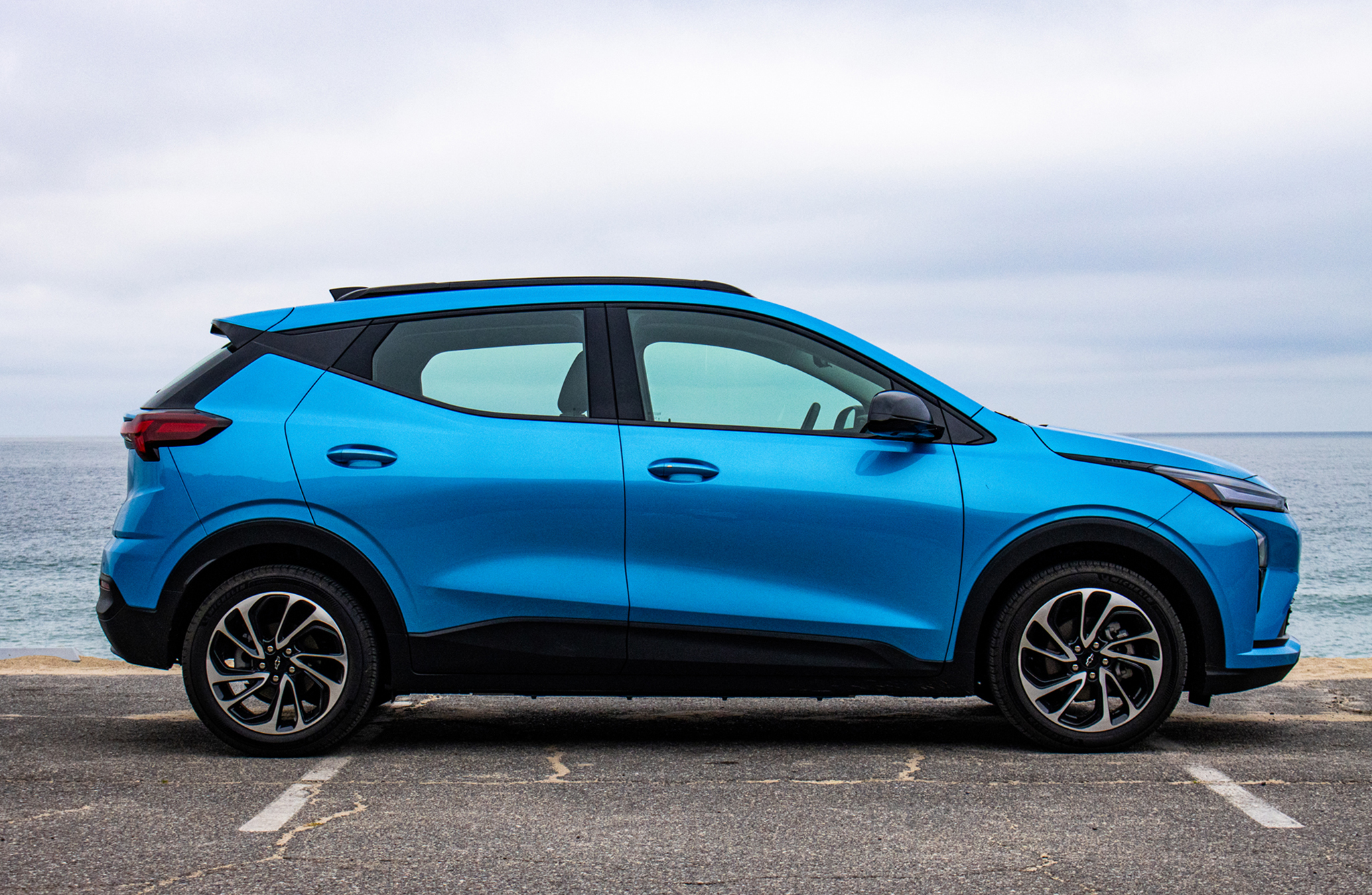
The EUV was the crossover-ified version of the original Bolt subcompact hatchback, which is unfortunately dead forever. But these are just labels. The 2027 Bolt rides and drives like a truly small car, greater headroom and higher h-point notwithstanding. The punchy X76 drive unit, developed for the larger Chevrolet Equinox EV, is paired with a 65 kWh LFP battery sending 210 hp and 169 lb-ft of torque to the front wheels. That’s actually a fair amount less torque than before, but it’s moderated by a higher final drive ratio.
Its strong acceleration even at highway speeds, planted feel, and surprising grip in fast turns are all better than before. Not mind-blowing, but come on! This is a $30,000 economy car. And it’s far more competent than it was, which itself was more competent than it needed to be. We are doing just fine here.
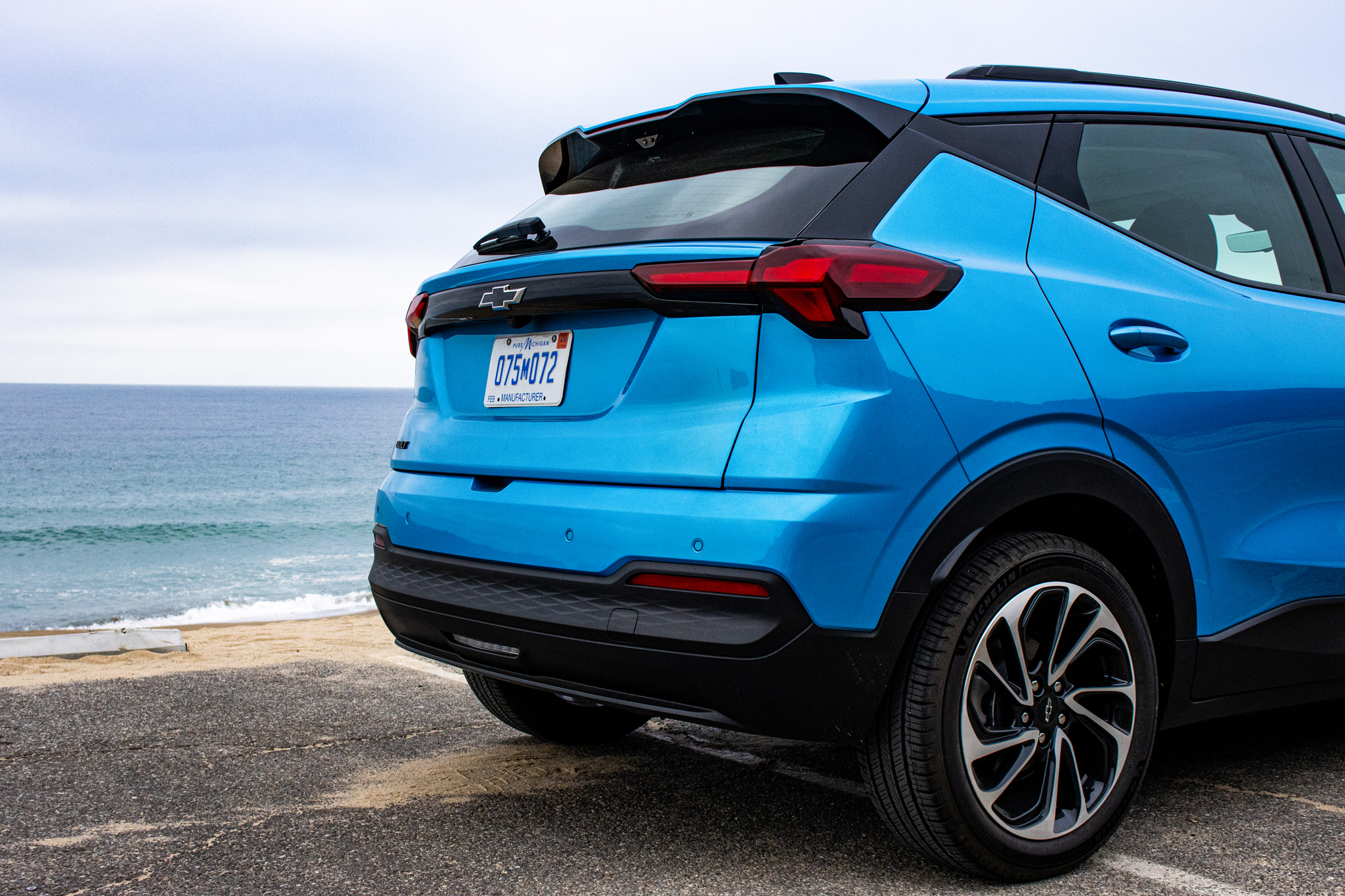
Its squint-and-it’s-a-hot-hatch dynamics are boosted by the short 105.3-inch wheelbase and a far superior set of Michelin 215/50R17 tires, which Bolt engineers point to as one of the biggest factors in the livelier handling. Tire tech has come a long way too, it seems. The old model was notorious for squealing at the slightest push, but an hour run through the Malibu canyons on my test drive was met with silence. The dampers were retuned and geometries adjusted to account for the 100 extra pounds the Bolt is carrying (3,776 pounds), but otherwise, the same independent MacPhearson front and torsion beam rear get the job done.
Safety-wise, the Bolt now has 20 standard features including adaptive cruise; automatic emergency braking for parking, normal driving, reverse, and crossing intersections; automatic high beams, and more. Of note in the optional kit is the HD Surround View camera system, which doubles as a built-in four-quadrant dash cam recording the front, rear, and side views of every drive. Then there’s Super Cruise, GM’s hands-free highway driving assistant that’s generally performed excellent in my testing across multiple models and really makes the Bolt compelling. Even though it’s only available as part of a $6,000 suite of options package, getting a Bolt with Super Cruise still rings up at $35,655 as the cheapest way to experience hands-free driving across America.
Much-Needed Improvements
So the Bolt is a better basic car, but it’s also a better EV, with the new electronic architecture, latest battery management and motor control software, vehicle-to-home power capability, 5x more processing power, and over-the-air update support. Memories of the disastrous battery fire issue and subsequent 2021 recall of every Bolt ever made are still fresh, and GM is going with a Chinese supplier instead of LG until its own Tennessee battery plant starts cranking them out by next year.
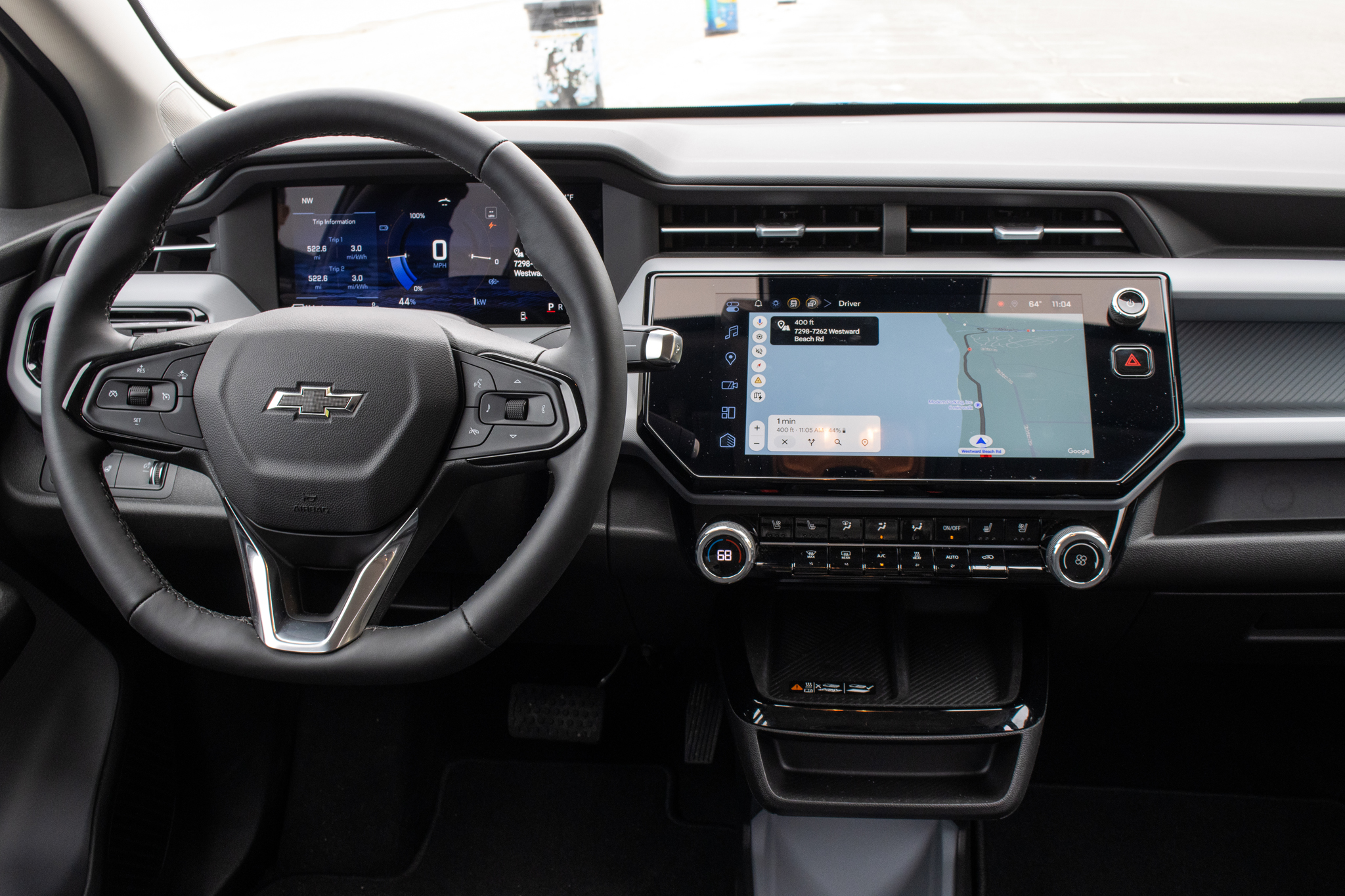
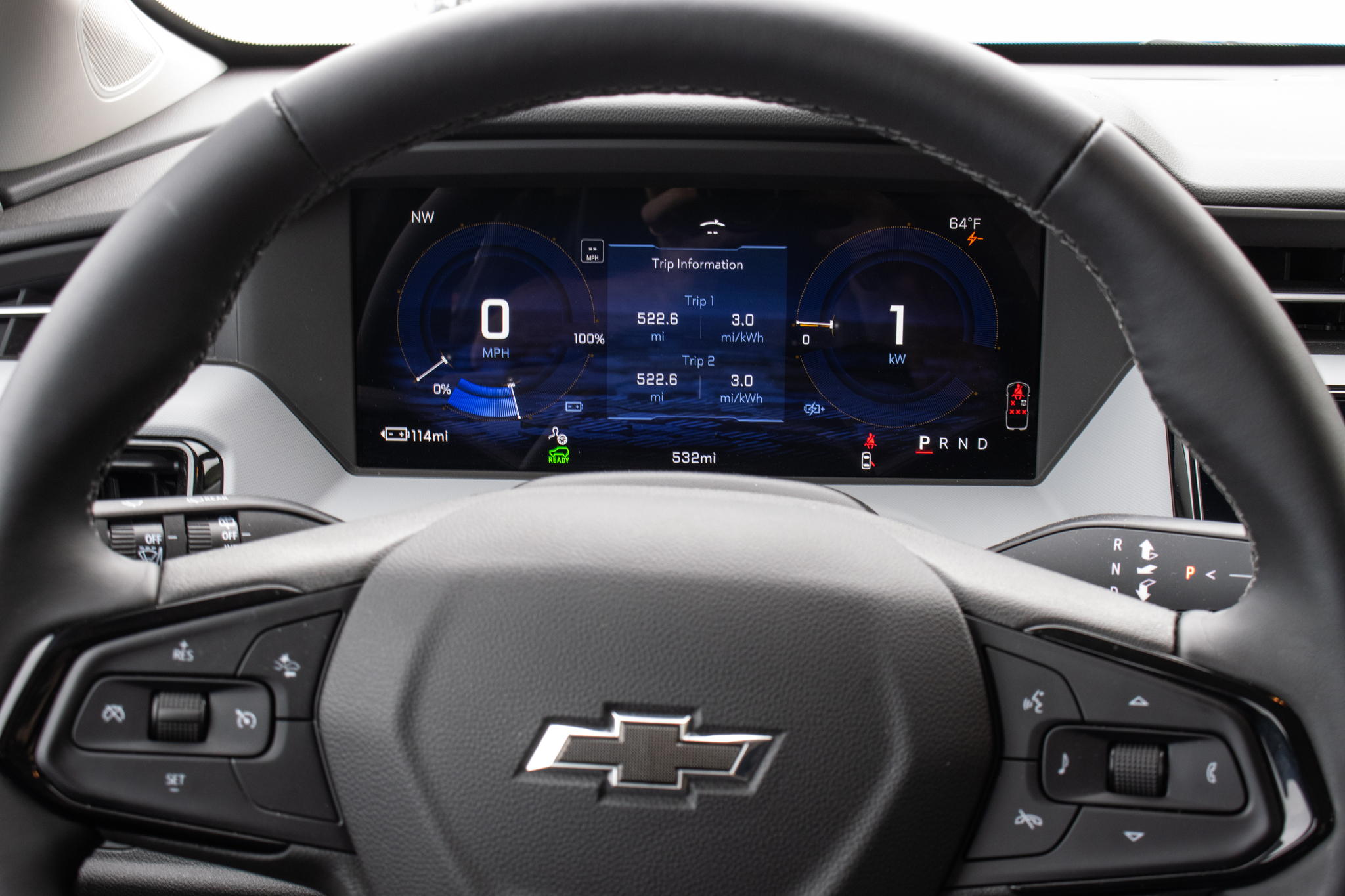
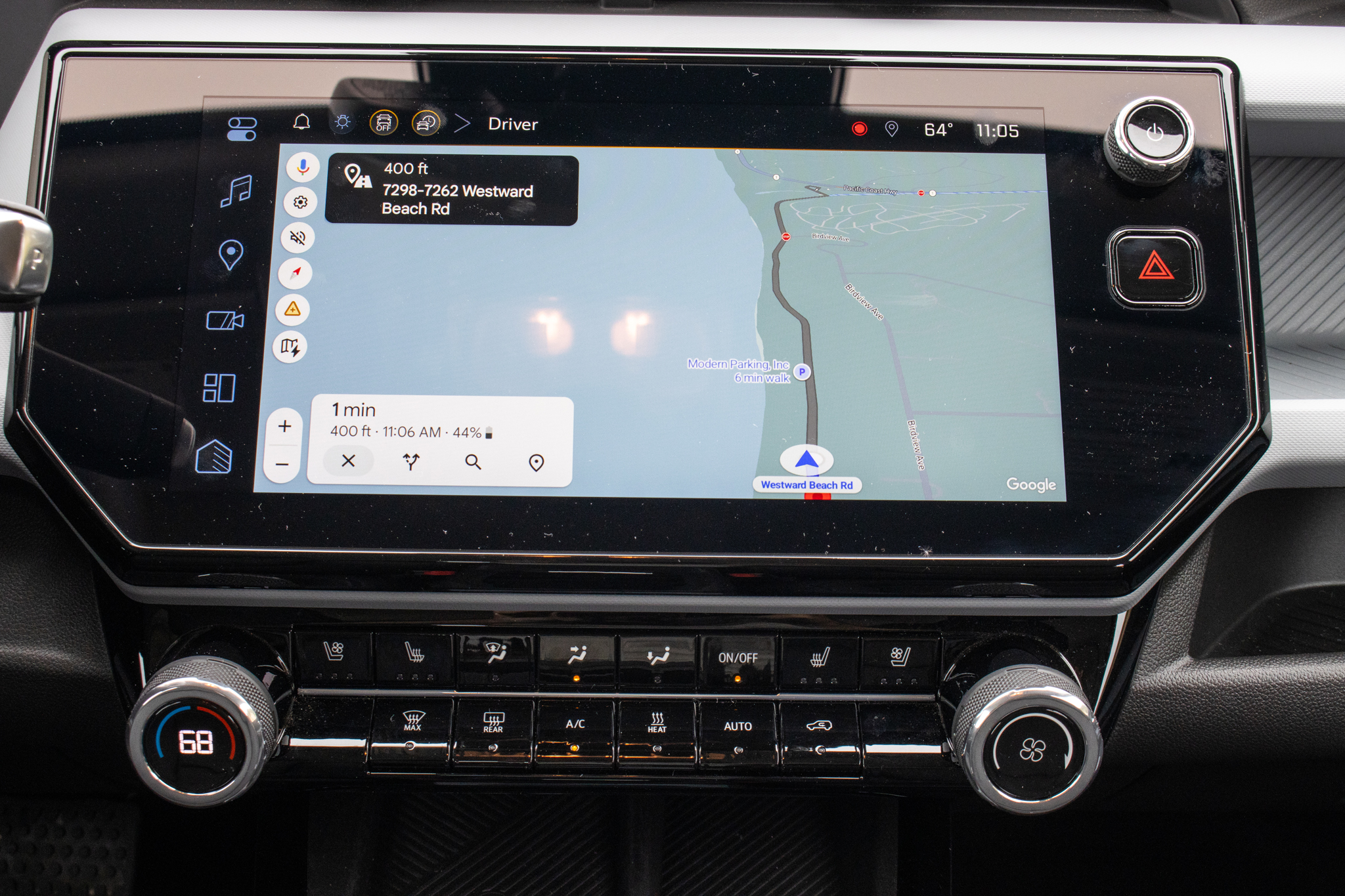
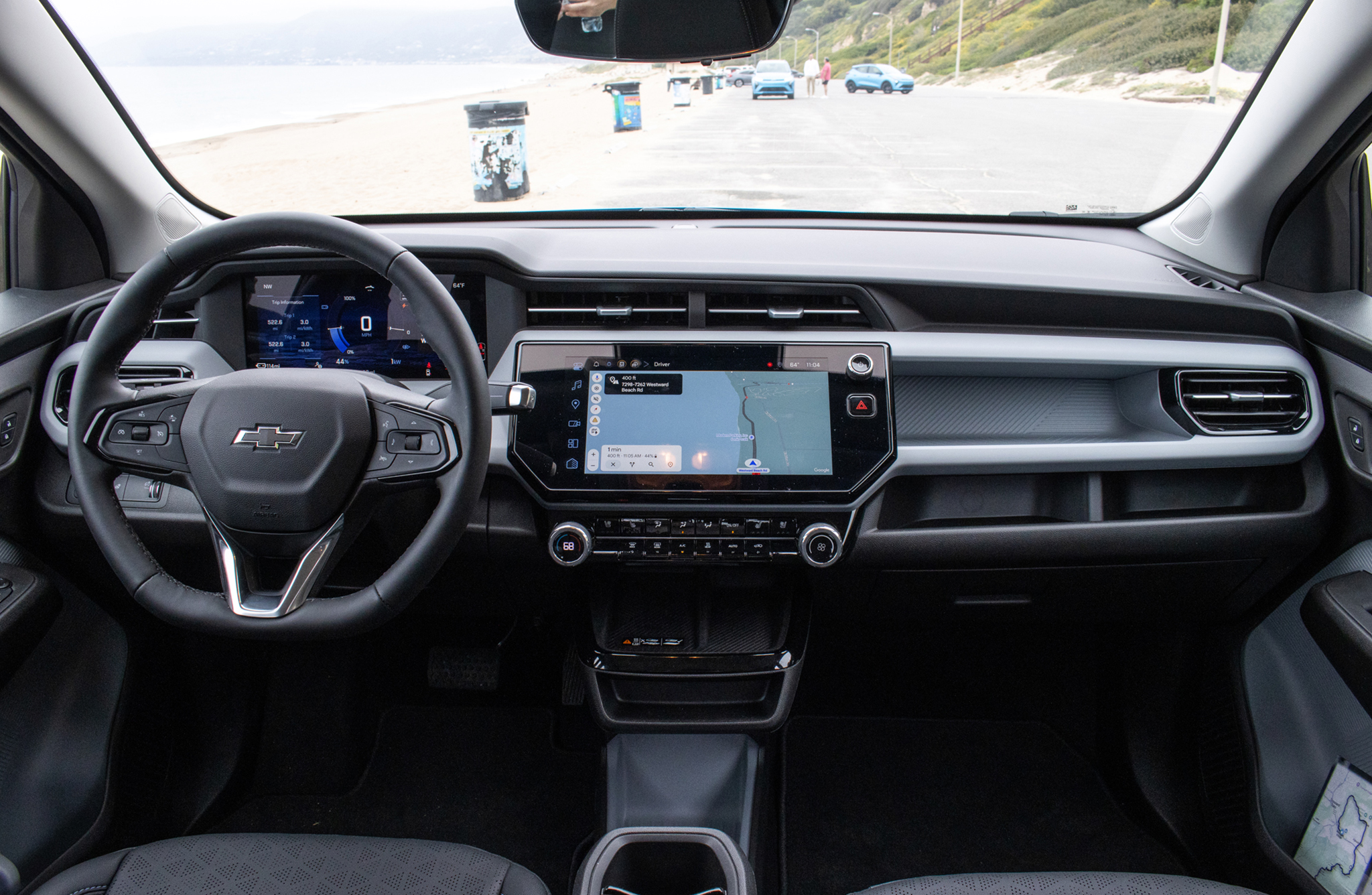
Speaking of, the battery can be topped up from 10 to 80 percent in 25 minutes with peak charging speeds of 150 kW on a Tesla Supercharger or CCS fast-charger. It’s only a 400-volt system, but that makes it cheaper, and it means it can still charge faster on a Supercharger than my 800-volt Hyundai Ioniq 5, which tops out at 126 kW. You can use Plug and Charge to make it all seamless, or pay through the Bolt’s 11-inch infotainment screen so you don’t need Tesla’s annoying app (another plus over my Hyundai).
That screen is part of an updated interior that looks a bit nicer and pretty similar overall, minus a few buttons (sigh) and Apple CarPlay/Android Auto support (bigger sigh), but plus a convenient wireless phone charger/junk tray underneath the dash. Of particular interest to weirdos like me is that GM finally removed the steering wheel mounted paddle to activate the regenerative brakes. I always liked it because it felt sort of like a handbrake on a motorcycle and added a weirdly fun dimension to the driving experience. When I asked the engineering team about it, they told me it only existed in the first place because they hadn’t perfected blending regen and friction brakes through the pedal, and they needed that paddle to get the car to its EPA-rated range. Market research showed most people only ever used it to cancel the cruise control, and they’ve optimized using the pedal to plow energy back into the battery, so they decided to pull it. Don’t cry because it’s over, smile because it happened.
The Right Time, for a Limited Time
Starting under $29,000, the Bolt is a straight-up unbeatable value for as long as GM continues to make it, and right now, it’s only committing to 18 months of production. The same way the Bolt was originally booted from its Michigan factory to make room for the Chevy Silverado and GMC Sierra EV pickups, it’s slated to be kicked out of its new Kansas plant for the gas-powered Chevy Equinox and Buick Envision crossovers that have to be onshored from Mexico and China because of tariffs.
That sub-$30K price is all the more precious now that the federal EV tax credit is kaput, and when I pressed GM on whether it would stay that cheap through the production run, a spokesperson replied “that’s the intention.” Well. You know what they say about the road to hell. I also asked if it was possible that Bolt production could be moved once more to another plant with spare capacity in 18 months, since they’ve apparently become pros at moving the assembly line. Through a tight smile, a spokesperson acknowledged that it’s physically possible to relocate it again and refused to comment further.
I don’t know about you, but I look at the 2027 Chevy Bolt, then I look at the 8,900-lb Chevy Silverado EV, the 9,100-lb Cadillac Escalade IQ, and the 9,400-lb GMC Hummer EV, and I think, how is this even the same company? Then again, it’s also the same company that built the GM EV1 30 freaking years ago with a calculator and paper clips. When GM is forced to think innovately, it can summon real, thoughtful, sometimes generational excellence.
I’m not saying the Bolt is revolutionary. It’s the opposite—it’s evolutionary. But in today’s market, that is precisely what gives it the potential to be excellent. Come on guys. More like this.
Chevy provided The Drive with travel and accommodations, along with the use of a vehicle for the purpose of writing this review.
2027 Chevrolet Bolt Specs
| Base Price | $28,995 |
| Powertrain | 65 kWh LFP battery | permanent-magnet motor | front-wheel drive |
| Horsepower | 210 hp |
| Torque | 169 lb-ft |
| Seating Capacity | 5 |
| Curb Weight | 3,776 pounds |
| Cargo Volume | 16.2 cubic feet | 56.3 cubic feet with rear seats folded |
| Max Charging Speed | 150 kW |
| EPA Range | 262 miles |
| Initial Score | 8.5/10 |

Quick Take
The value to beat in the EV market right now. Your move, Ford.
Loading comments…
Comments couldn’t be loaded. Please refresh the page.