
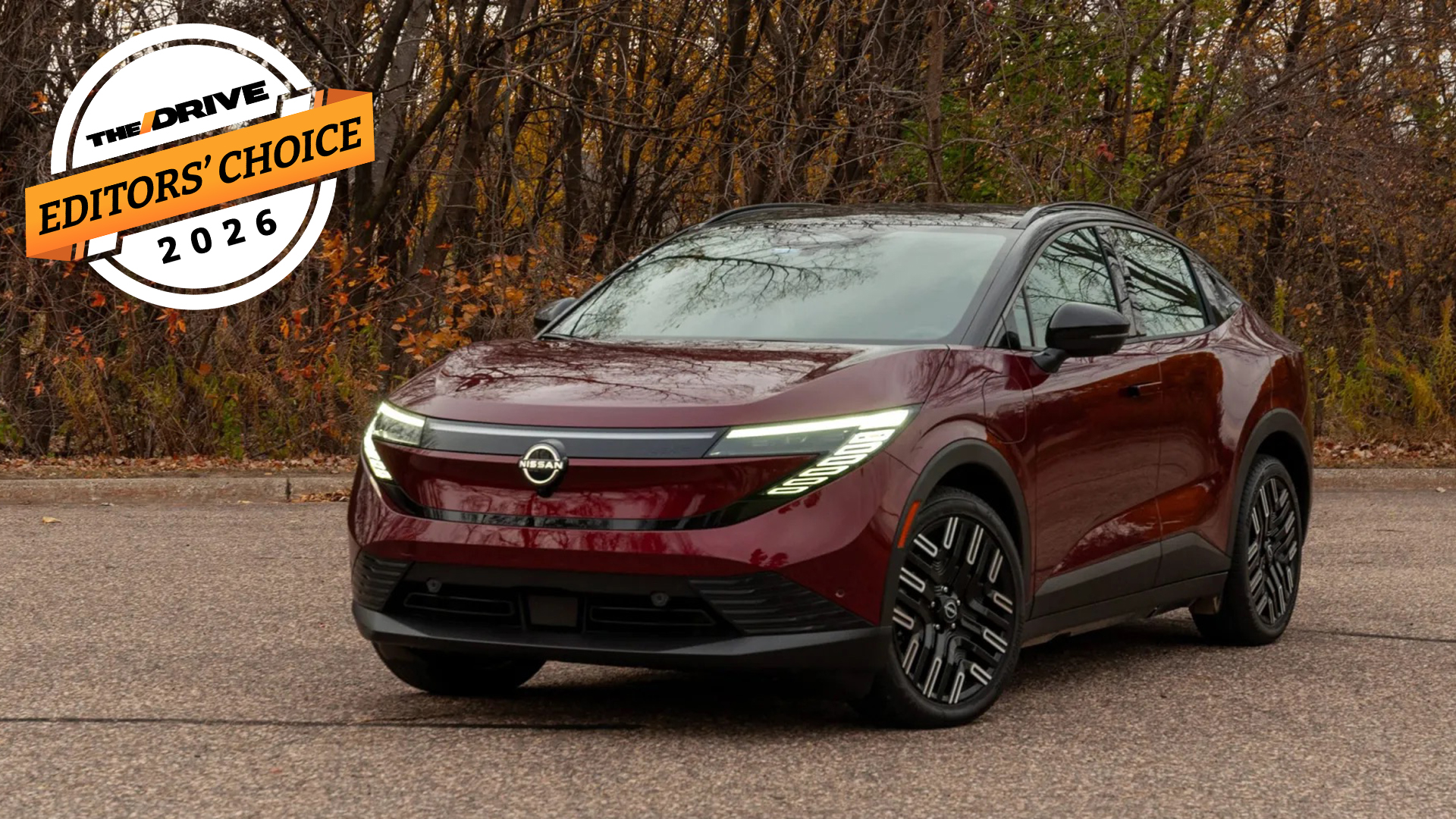
In these expensive times, there’s only one automaker offering an EV with 300 miles of range for $30,000, and it isn’t Tesla, Chevy, or Ford. It’s Nissan.
Those numbers are rounded, but the point stands. The 2026 Nissan Leaf heralds the second generation of the nameplate, but it also represents genuine value in the EV market, combining range and style while undercutting the $35,000 Tesla Model 3 that Elon Musk promised so long ago. And the value leader is where the Leaf is going to shine, because the more expensive trims put a damper on the range equation.
The Basics
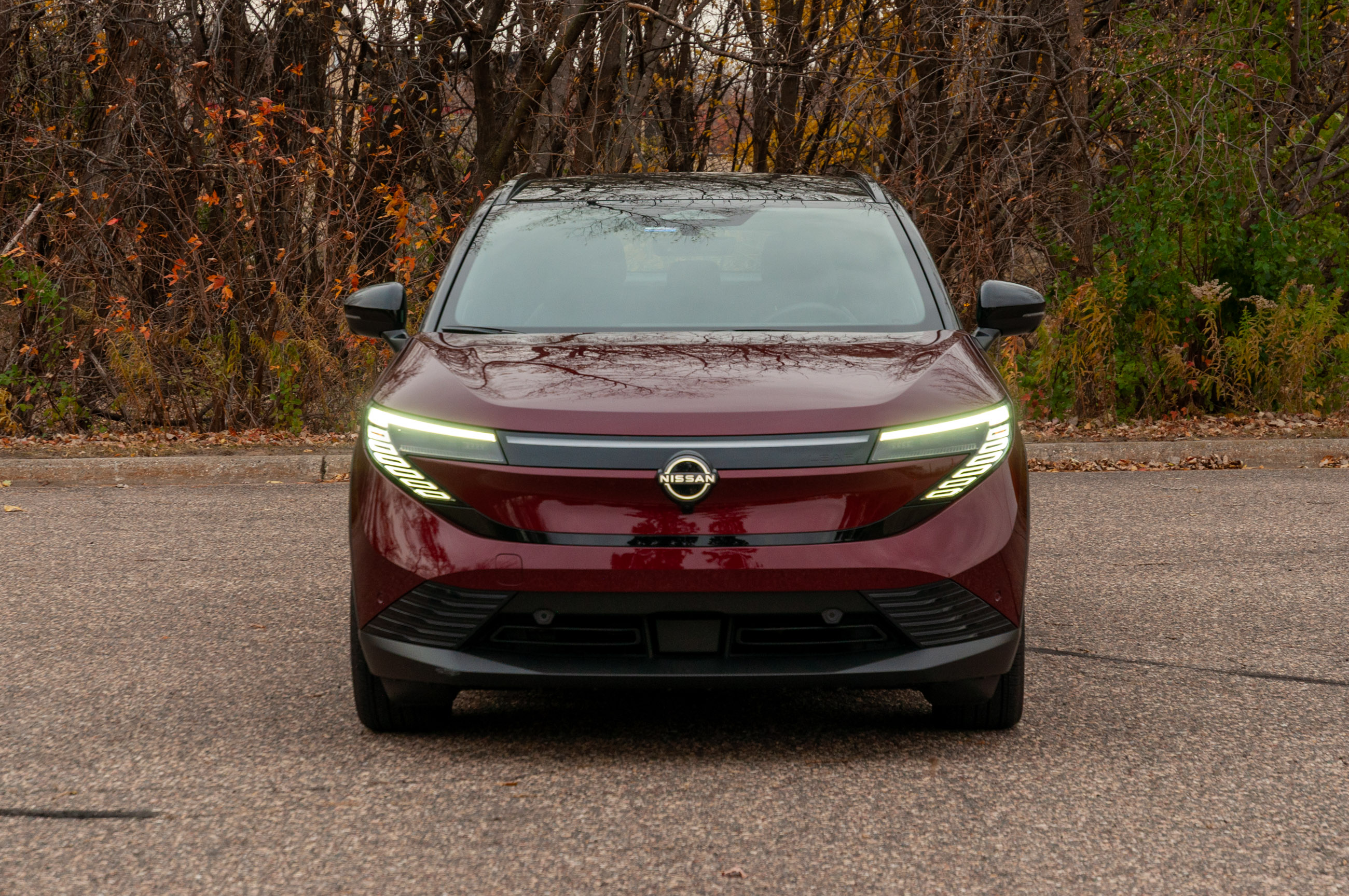
The 2026 Nissan Leaf is new inside and out. It marks the first true, full redesign of the automaker’s EV, and while overdue, it makes a compelling argument that is probably not getting enough attention in certain regards.
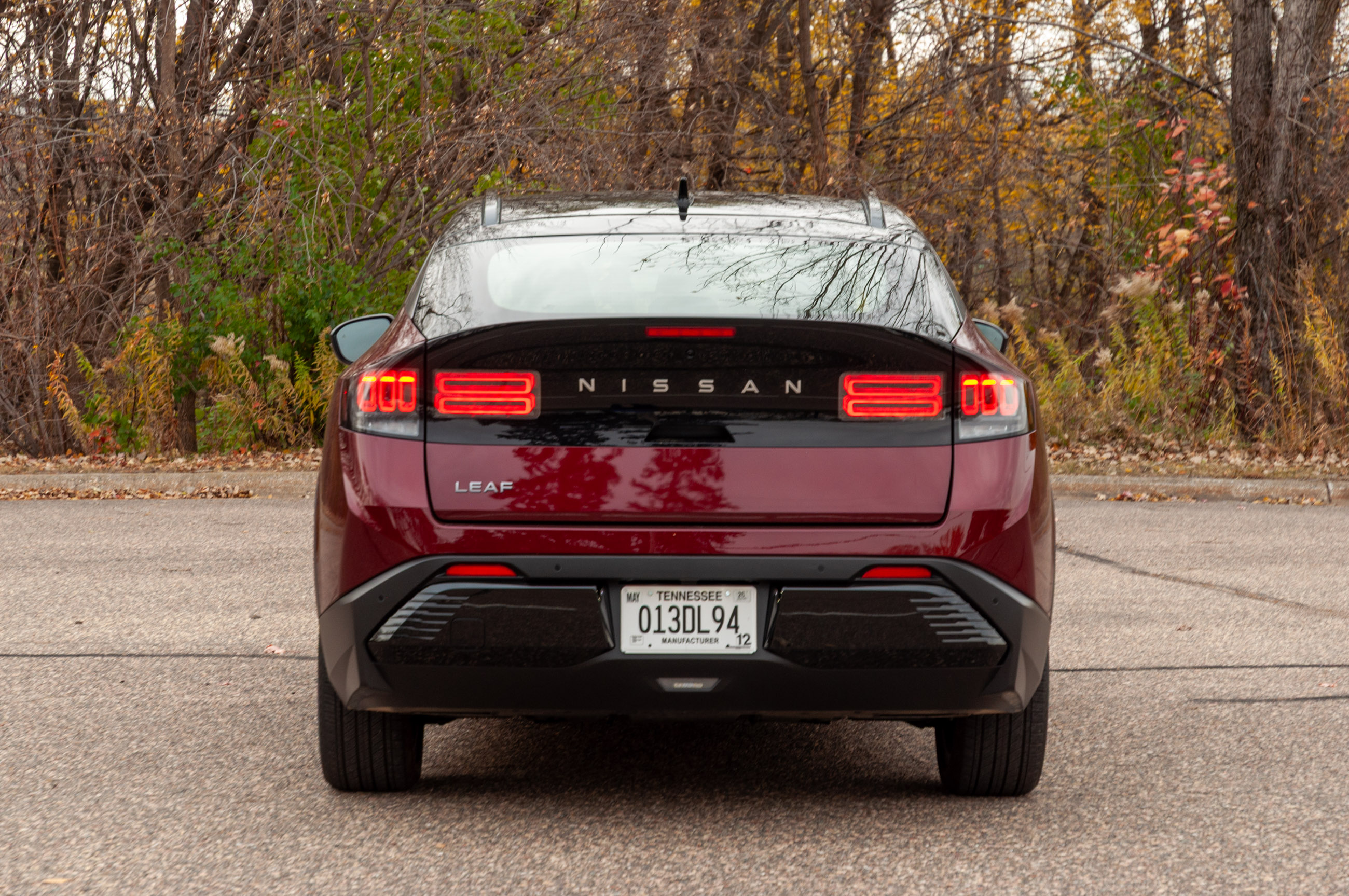
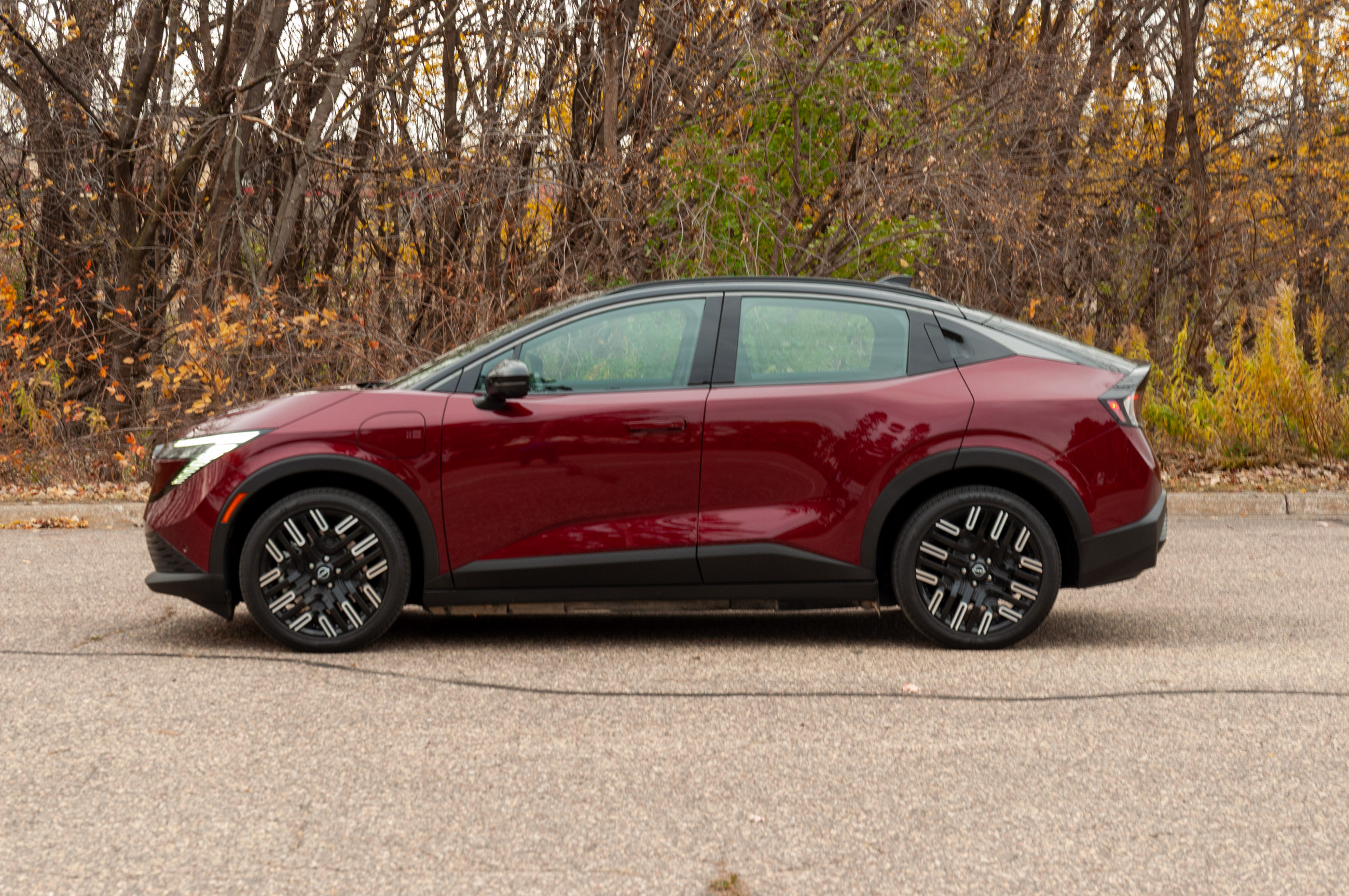
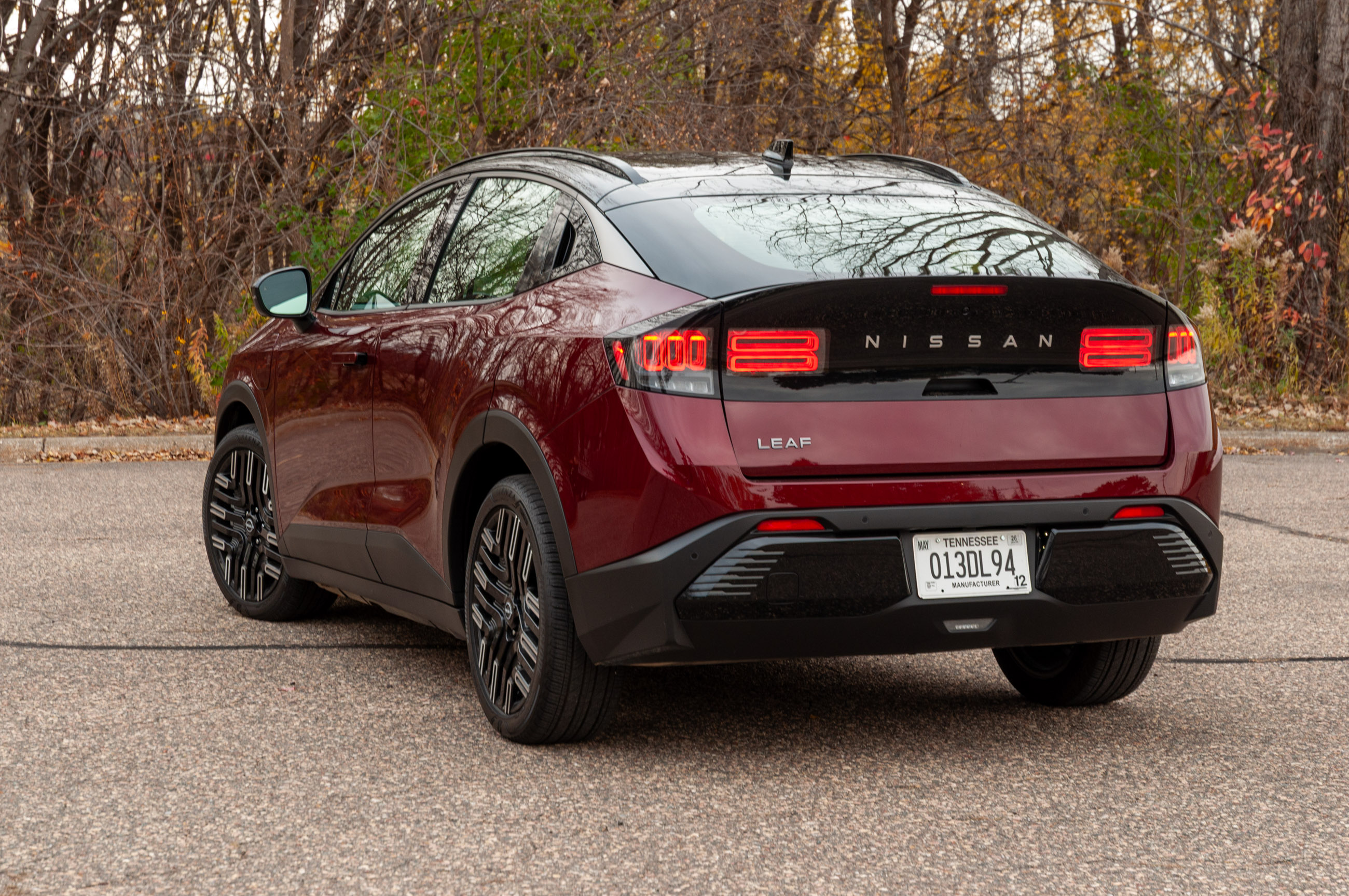
The exterior is both hit and miss. The flowing lines look good, and the entire package is less oddball-looking than the first-generation model when it debuted. The rear end leans into the Z’s ‘90s heritage, while the front’s horizontal motif hides its subtle retro nods. It’s more distinct and less bland-looking than a Model 3, but stubbier-looking with the short, tall snout and tall rear hatch. Notably, my kids strongly disliked the rear door handles that are integrated into the black trim near the C-pillar. Ironically, this is a design trait I adored as it harkens back to the original hardbody first-generation Pathfinder SUV my uncle had when I was a child. No one is going to call it pretty, but distinct? Sure. Boring, bland, and designed by committee? Absolutely not.
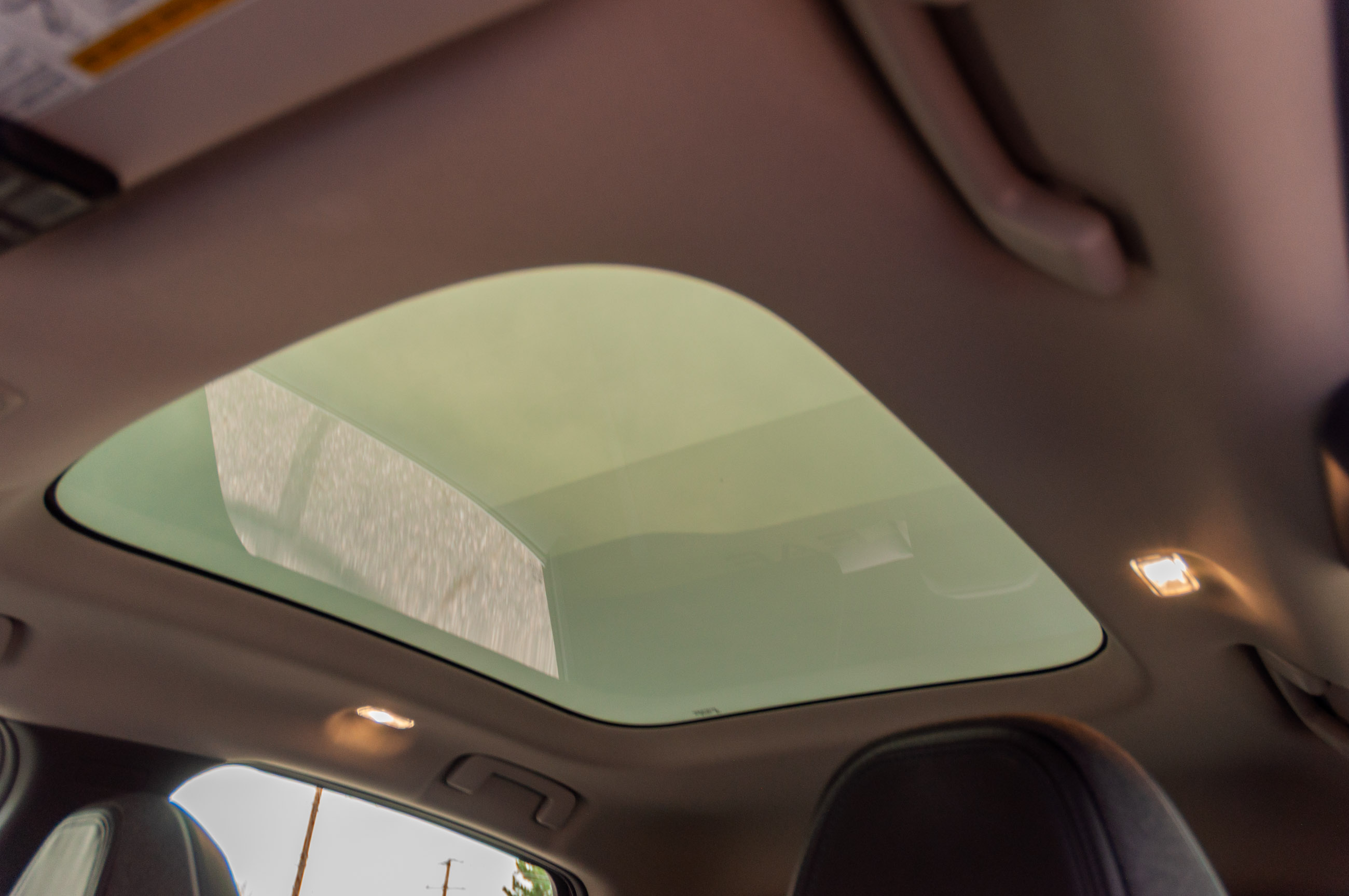
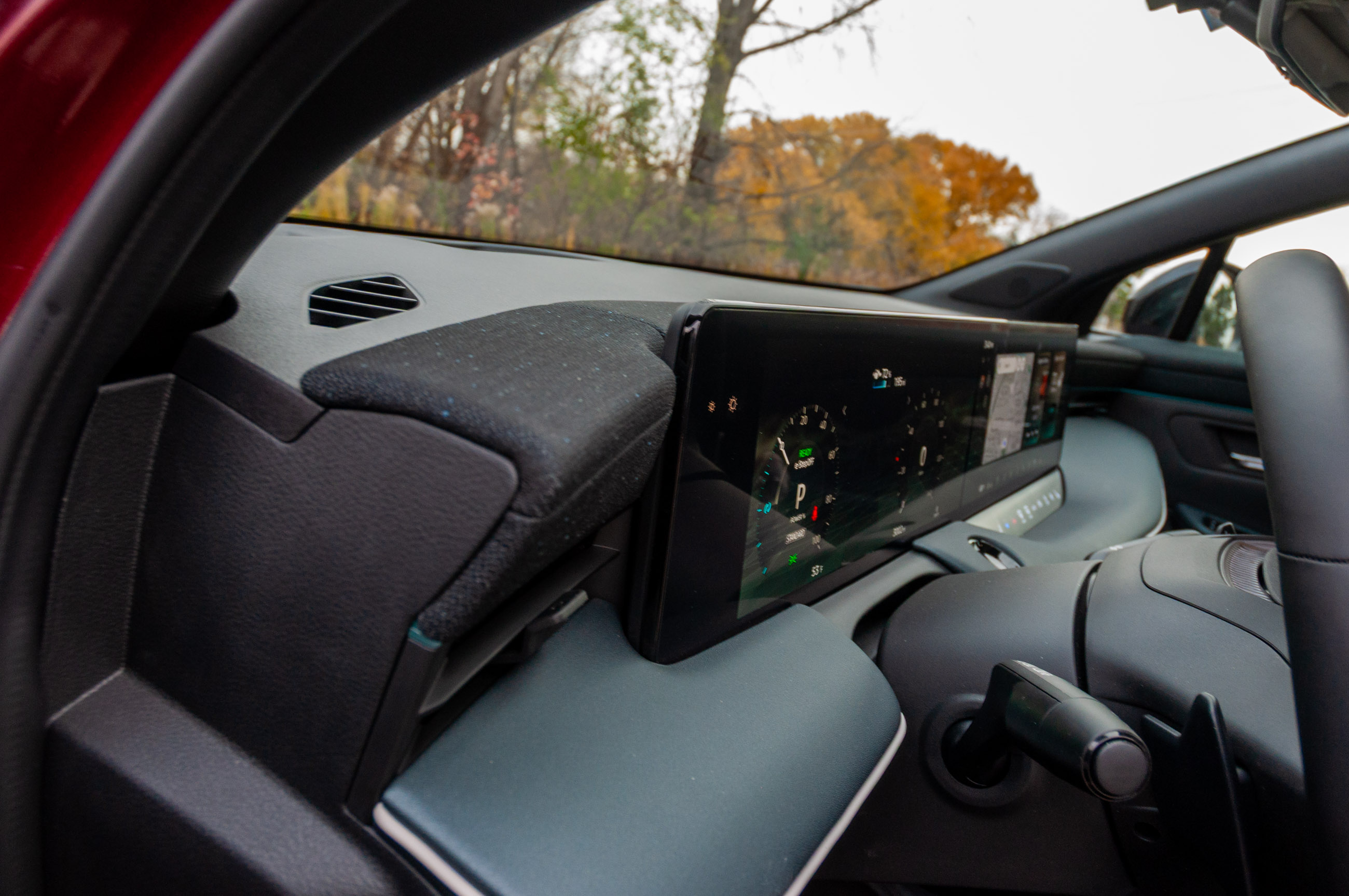

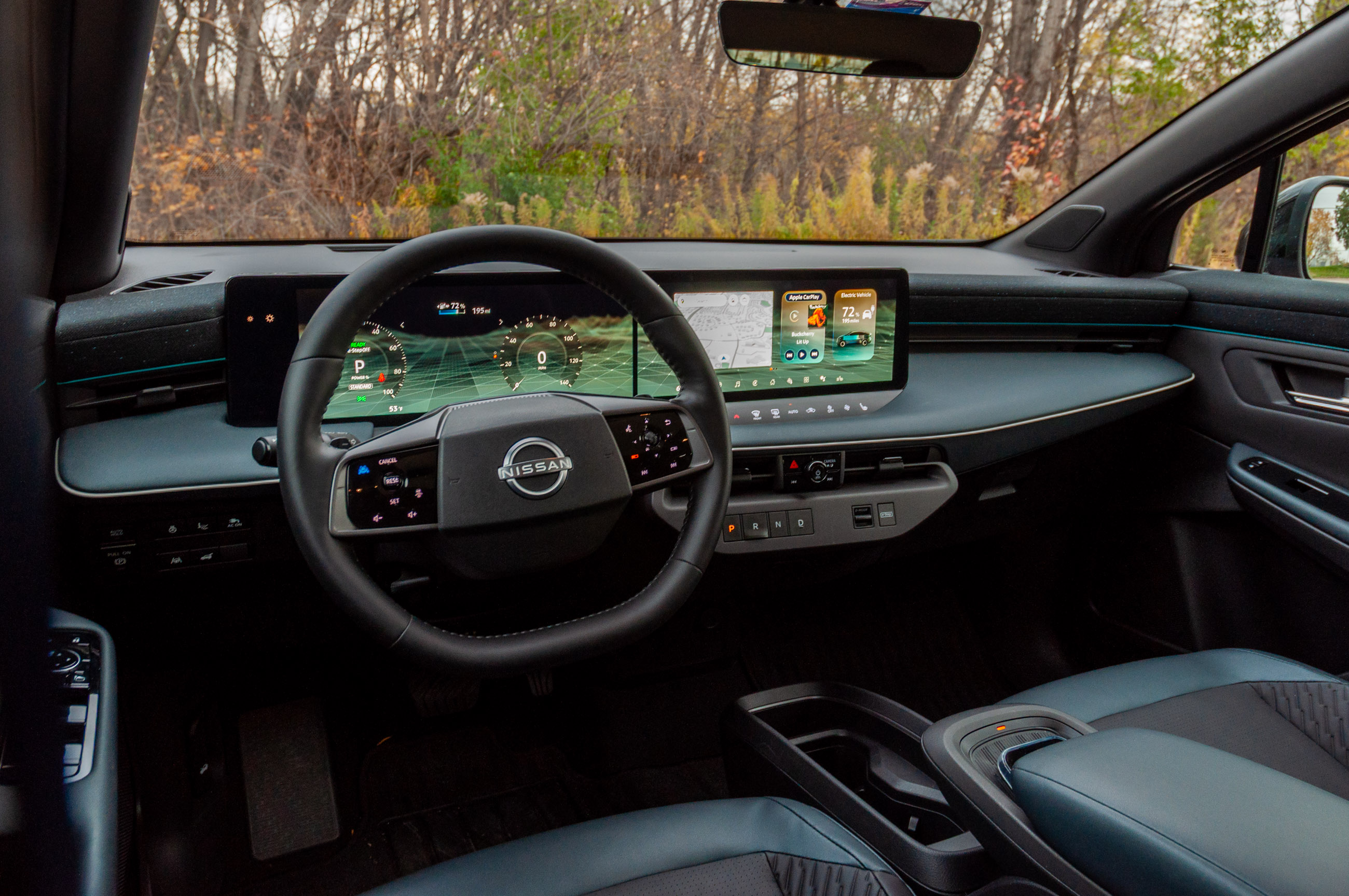
The cabin feels fresh and modern, and Nissan has ditched any semblance of the last-generation model’s futuristic and spaceship-like elements. The low-set dash features horizontal screens for the digital gauge cluster and a touchscreen with wireless Apple CarPlay and Android Auto. But it was the cloth trim, which also harkens back to ‘90s-era Z cars, that covered part of the dashboard and the upper trim sections on the door panels that caught my attention as a neat detail that added extra flair. Something not found in far more expensive Hyundai EVs like the Ioniq 5 or Ioniq 6, and certainly not in the Chevrolet Equinox EV. The loaded Platinum+ model tested cost $41,930, and its electrochromatic glass roof could, by section, go from clear to frosted to block out the sun at the touch of a button. A $122,200 Lucid Gravity and $167,505 Cadillac Escalade IQ can’t do that. Also, because we live in these weird times, I’ll note that there’s a volume knob.
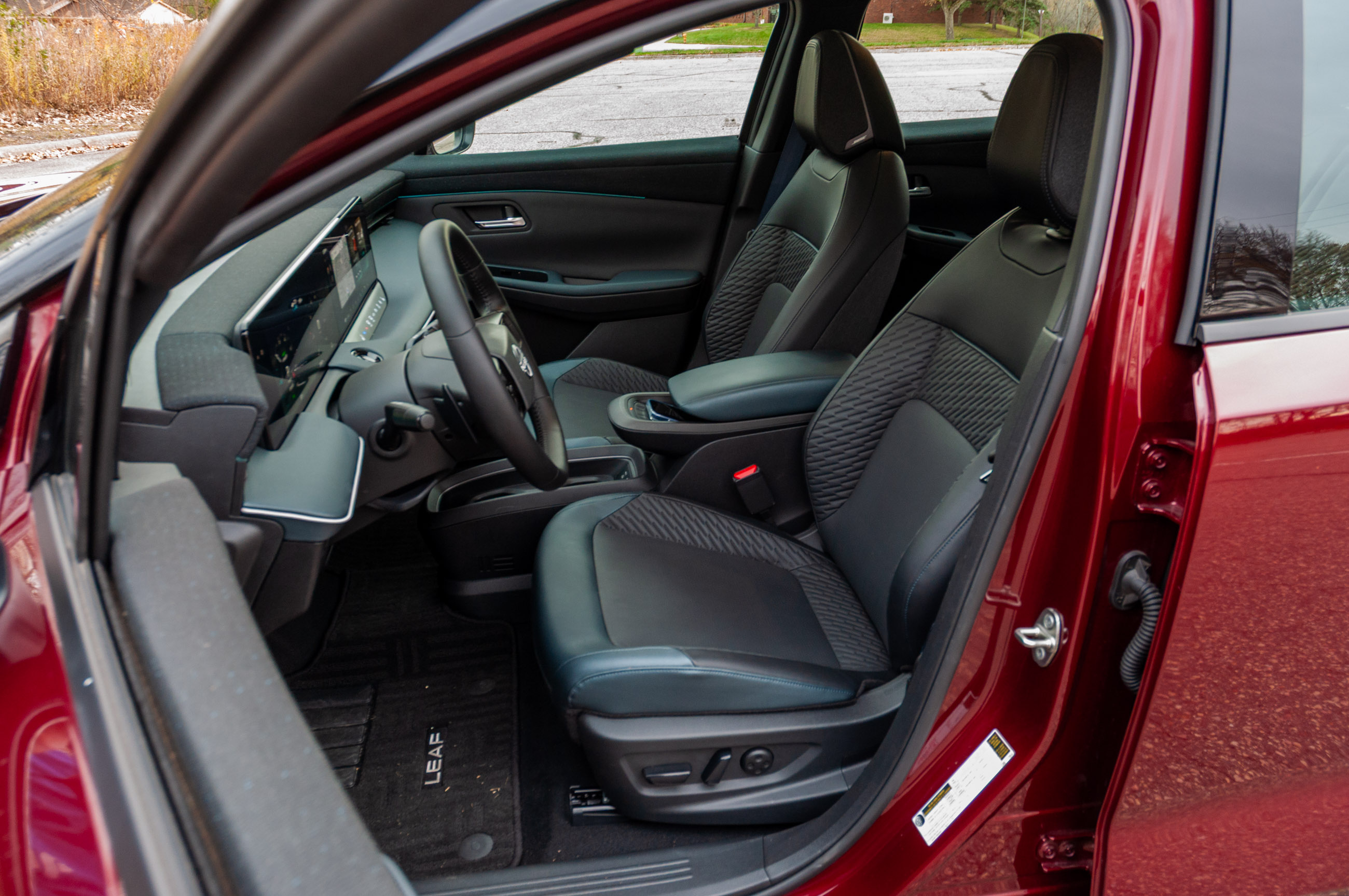
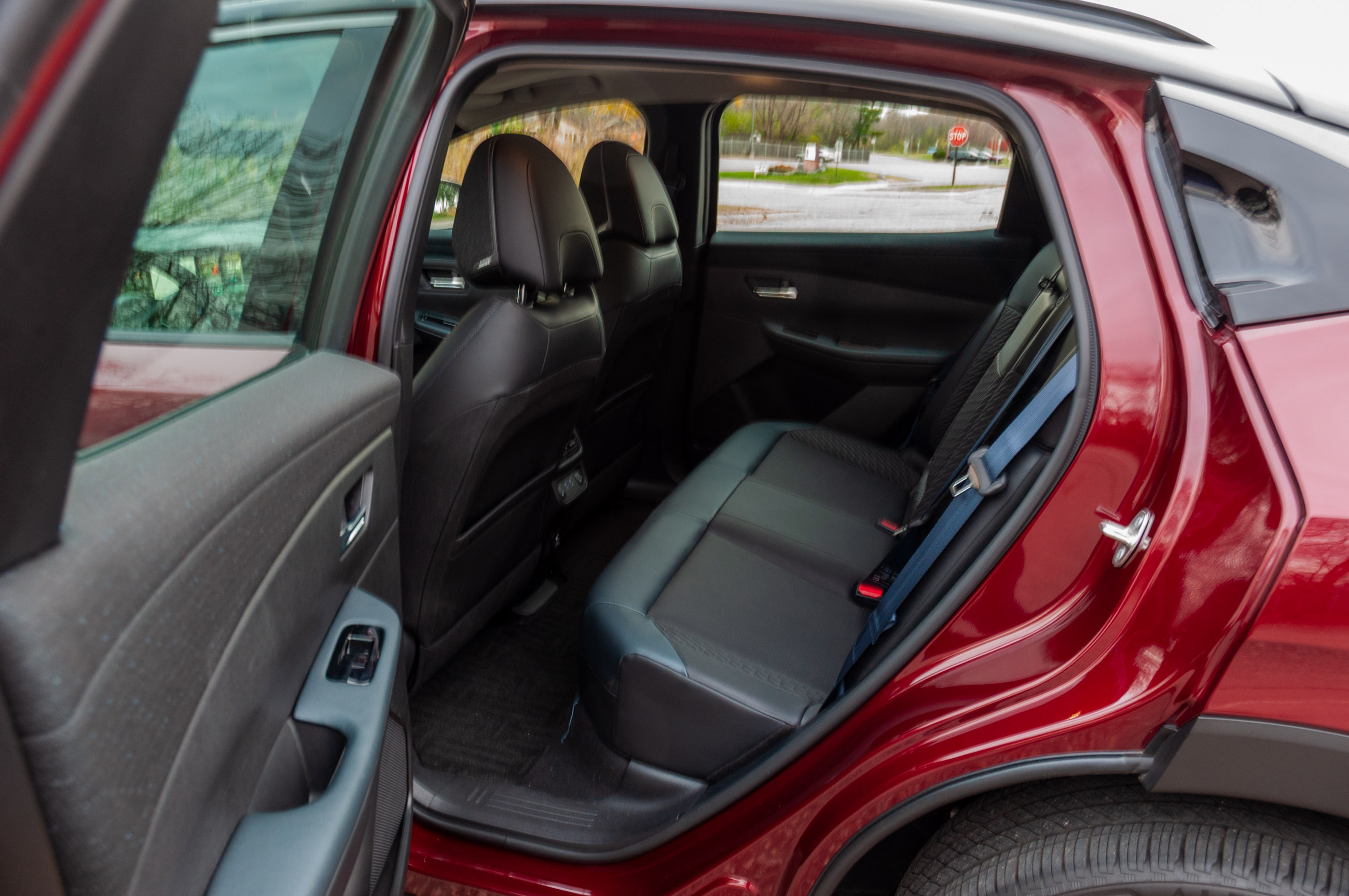
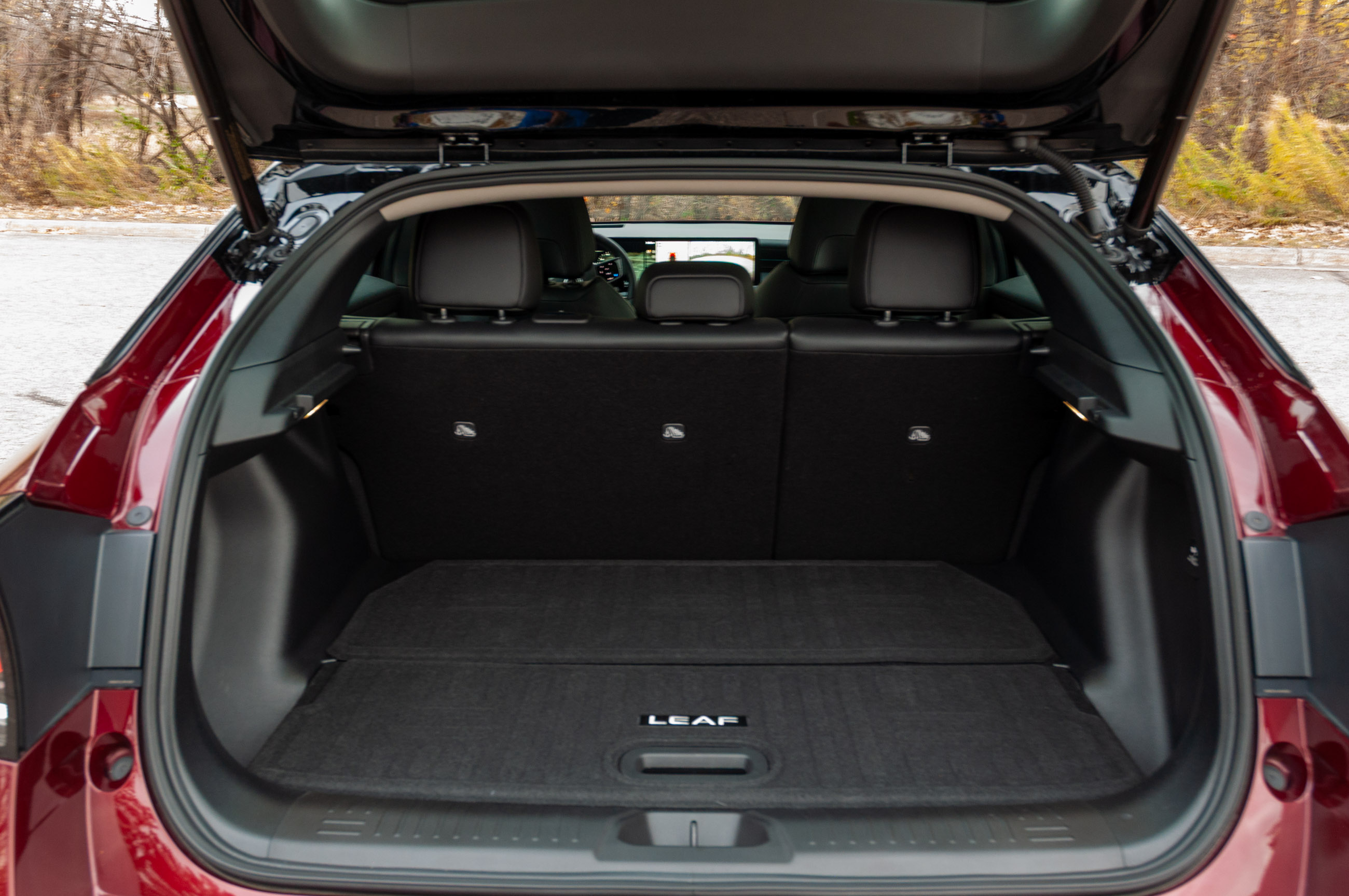
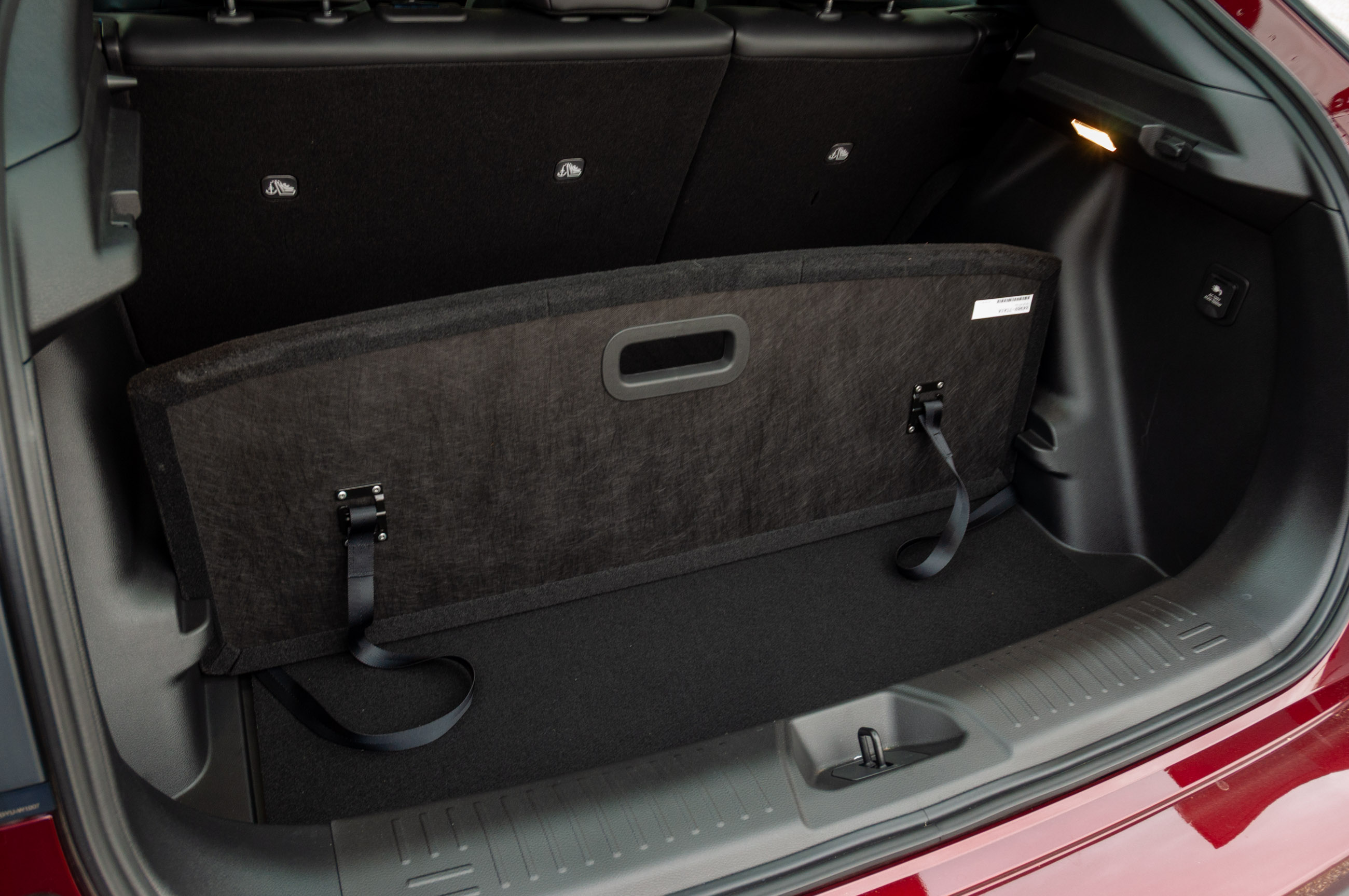
The front seats are comfortable, but my wife noted the lack of legroom for her as a passenger. The rear seat feels smaller than the Equinox EV’s, with less legroom and no toe room under the front seats. The hatchback design is extremely functional, with 20 cubic feet of cargo space and a large opening for loading items. That space swells to 55.5 cubic feet with the second-row seats folded down. But there’s no frunk.
Driving the 2026 Nissan Leaf
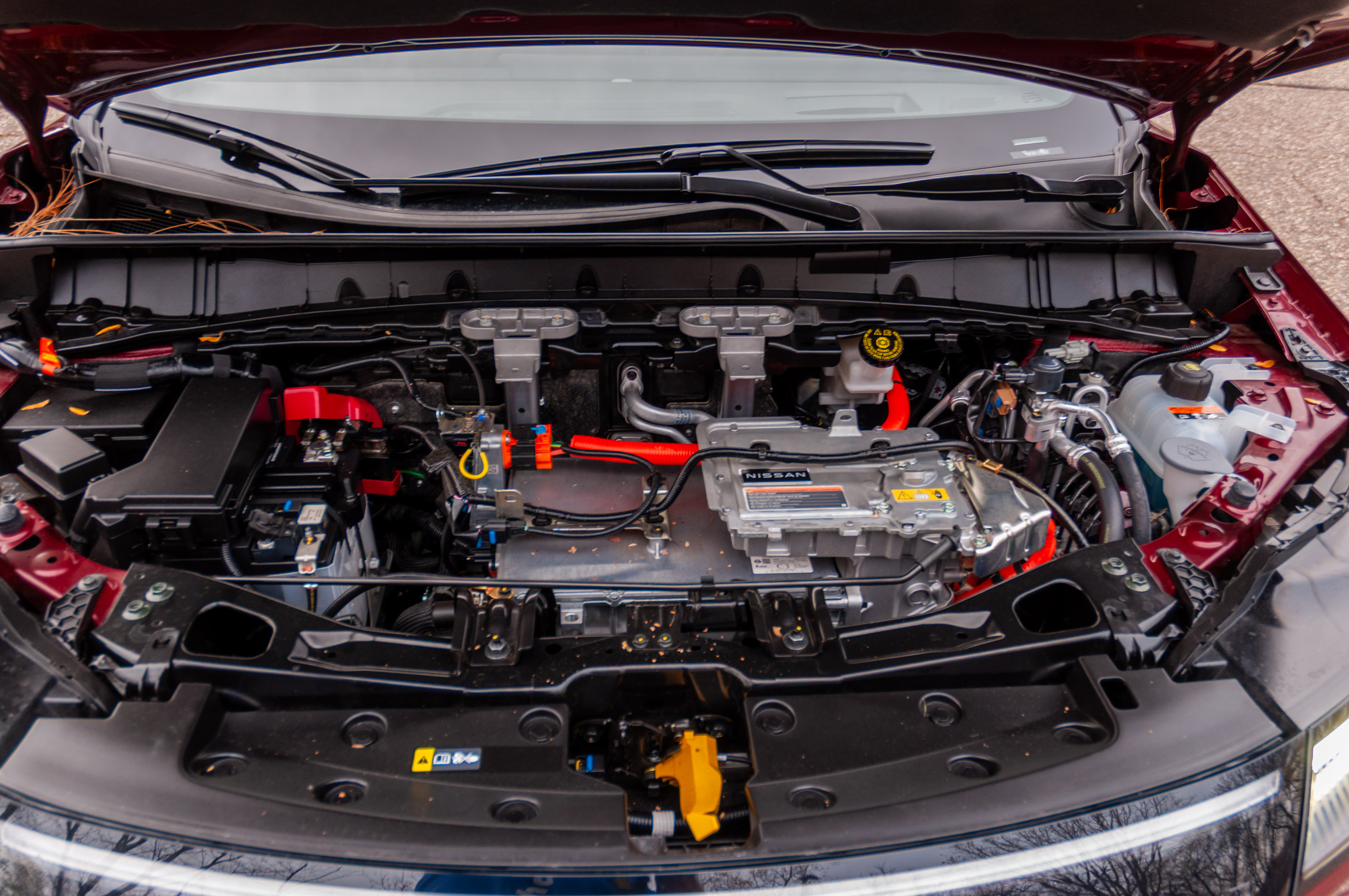
An even less expensive Leaf S model is in the works with a smaller battery pack and less power, but for now, every trim sold today has a single motor sending 214 horsepower and 261 pound-feet of torque to the front wheels with juice coming from a 75-kWh lithium-ion battery pack. No dual-motor all-wheel-drive models are available at this time.
No one is going to call the Leaf quick, but the torque hits instantly, and the car scoots off the line quicker than necessary with passing power in the tank. But power isn’t the notable part; the way it drives is.
The steering has a natural weight to it that is surprising and satisfying. The system doesn’t feel lifeless or overboosted, though asking for an indication as to what’s going on at the wheels is a stretch too far here. The suspension, which now features a new multilink setup in the rear, keeps the Leaf’s body in check while going around a corner, and impacts from the broken and heaving Midwest pavement in cold weather were muted. The Leaf doesn’t ride like a cheap economy car. One-pedal driving is available with the regenerative braking system levels controlled by the wheel-mounted paddle shifters.
I wasn’t a huge fan of the push-button gear selector setup that looks like oversized Chiclets on the dashboard, as it’s a clunky interface for gear changes in a parking lot or backing out of a driveway.
Range, Charging, and Efficiency
The base S+ Leaf has an EPA-estimated range of up to 303 miles, which is fantastic for about $30,000. But start stepping up the content to SV+ and the as-tested Platinum+ trims drop the rating to 288 and 259 miles accordingly.
In cold Minnesota weather, with ambient temperatures hovering in the 20s to 30s, the Leaf Platinum+ tested averaged 3.0 miles/kWh over 446 miles of mixed suburban driving. Notably, early in the week before ambient temperatures dropped, the Leaf was averaging closer to 3.8 mi/kWh when the weather was in the 50s. Regardless, it’s clear the Leaf is an efficient EV.
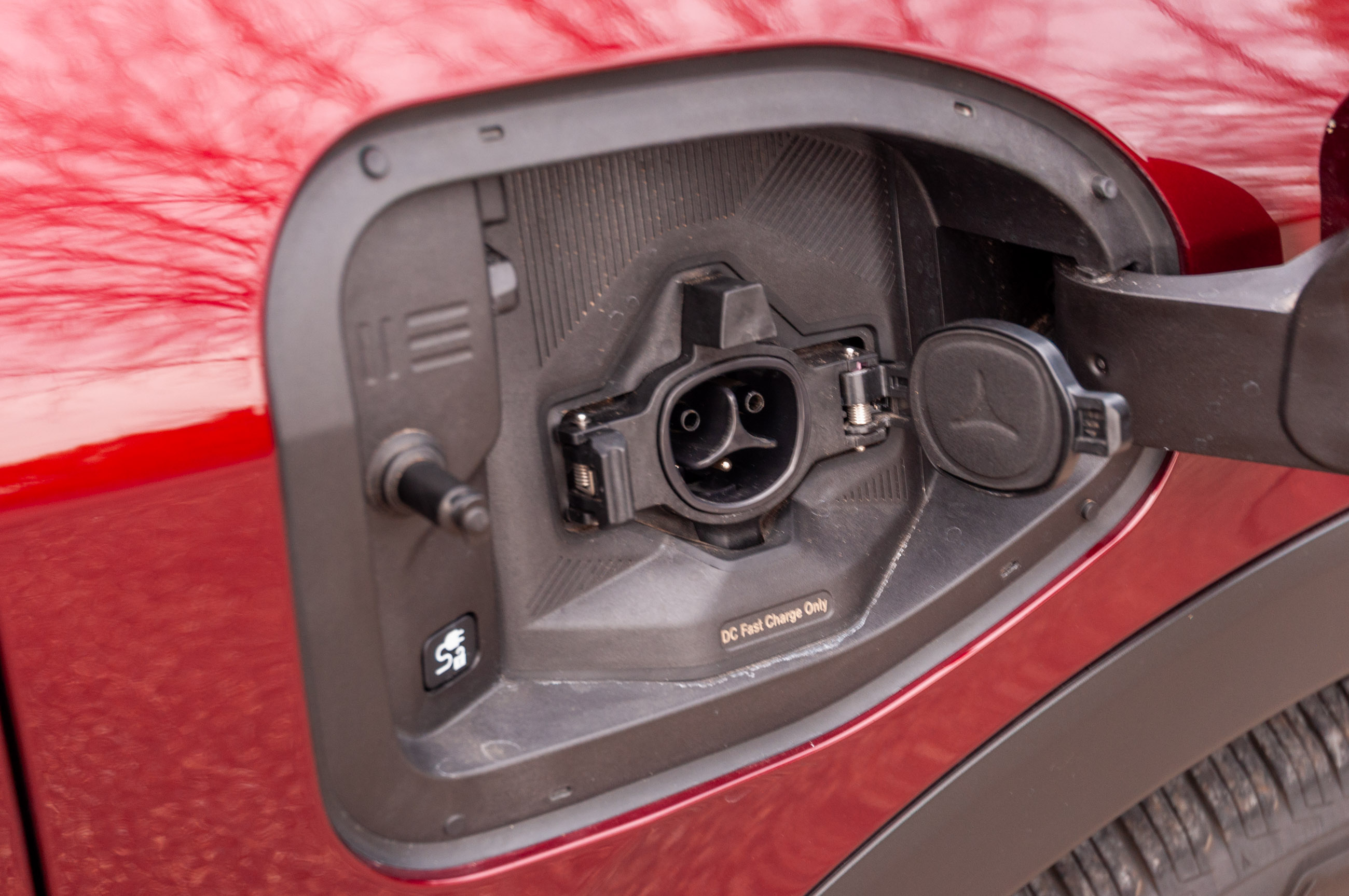
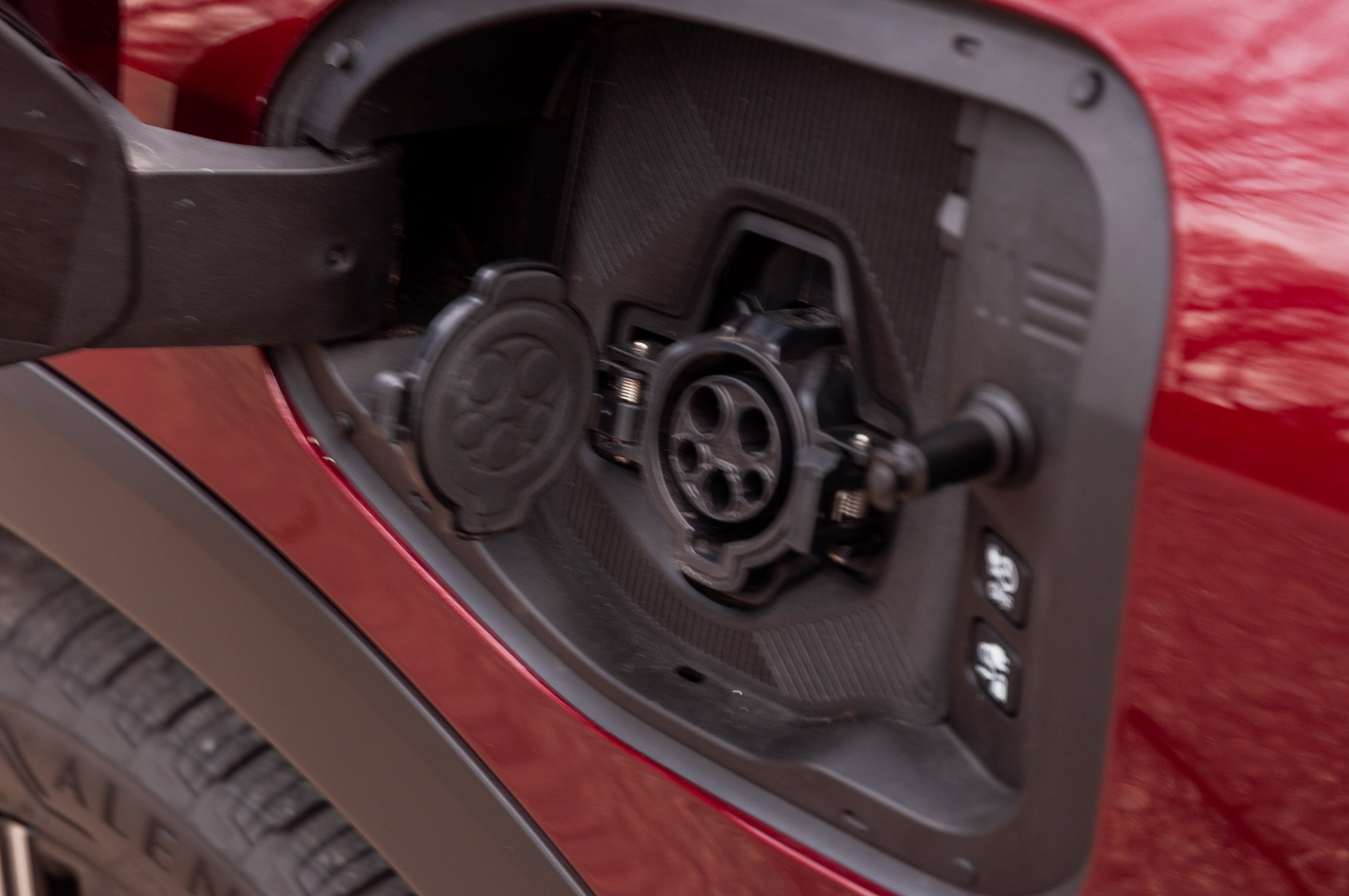
Notably, the Leaf has two charging ports. On the driver-side front fender, there is a J1772 port for Level 2 home charging, while a Tesla-like NACS port sits on the passenger-side front fender for DC fast charging. Nissan says the Leaf can charge from 10-80% in 35 minutes with a peak charge rate of 150 kW.
Verdict
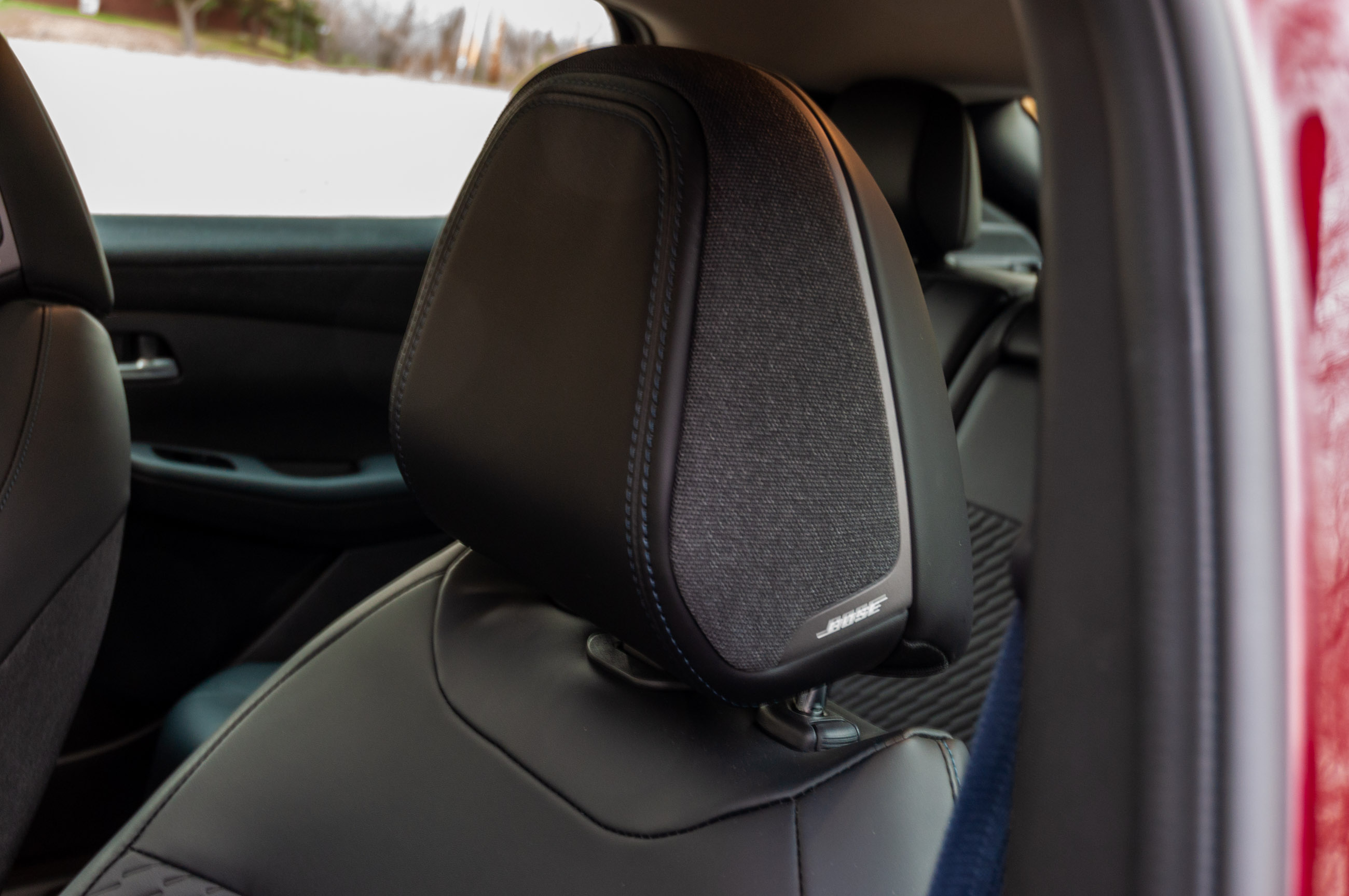
At a current base price of $31,485, including a $1,495 destination fee, the 2026 Nissan Leaf offers great value. Even the base car comes standard with a surround-view camera system, blind-spot monitors, adaptive cruise control, automatic climate control, and a 12.3-inch digital gauge cluster augmented by a 12.3-inch touchscreen. Frankly, the entire lineup is a solid buy, with a top-spec Platinum+ as-tested costing only $41,930, including heated leather seats front and back and a Bose audio system with speakers in the front seat headrests.
The issue is that the upper trims diminish the value equation compared to a Tesla Model Y or 3, because the range drops as the price climbs and features are added. And the Leaf can’t even be optioned with all-wheel drive like a Chevy Equinox EV.
Still, an even less expensive Leaf is on the way that could see the EV offered in the $26,000 range, though driving range is sure to be lower, thanks to the smaller battery pack likely checking in at 220-240 miles.
In base form, the 2026 Nissan Leaf delivers a value proposition that Elon once promised and delivered on for the blink of an eye. For anyone looking for a reasonably-priced car that is cheap to own and operate, it is hard to argue that the Nissan Leaf isn’t the value leader.
Nissan provided The Drive with a seven-day loan of this vehicle for the purpose of writing this review.
| 2026 Nissan Leaf Platinum+ Specs | |
|---|---|
| Base Price (Platinum+) | $31,485 ($41,930) |
| Powertrain | single-motor | single-speed automatic | front-wheel drive |
| Horsepower | 214 |
| Torque | 261 lb-ft |
| Seating Capacity | 5 |
| Curb Weight | 4,369 pounds |
| Cargo Volume | 20 cubic feet behind second row | 55.5 cubic feet behind first row |
| Ground Clearance | 5.3 inches |
| EPA-Estimated Range | 259 miles |
| Score | 9/10 |

Quick Take
The Nissan Leaf is now an underrated player in the EV game, swinging for the fences with a phenomenal value proposition.
Loading comments…
Comments couldn’t be loaded. Please refresh the page.