
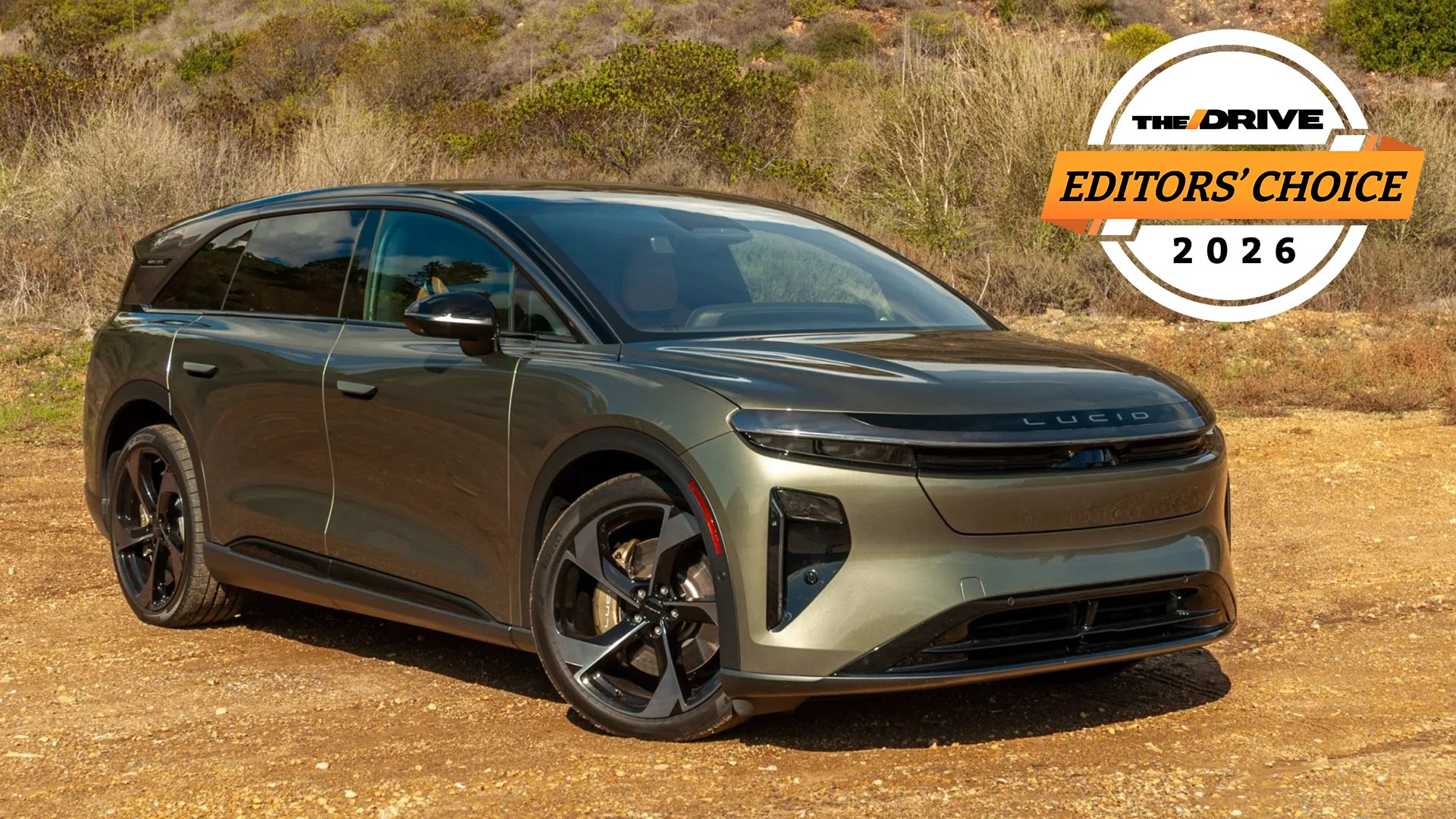
Lucid’s second act is a shape-shifting family hauler that everyone outside of Porsche—and perhaps even including Porsche—should be benchmarking heading into the new year.
The 2026 Lucid Gravity has arrived and, in theory, should launch the automaker into the public consciousness because the startup now offers a crossover SUV, which we all know America loves. The Gravity has three rows of seats, up to 450 miles of range, insanely fast charging, and real buttons and knobs. It’s everything everyone claims to want in a vehicle.
Time to pony up, America.
The Basics
I’m guessing if Lucid could rewrite history, it would’ve launched with the Gravity because it’s not a sedan like the Air. Hindsight is 20:20, right? Nearly every on-paper stat for this thing stands out, from range to power to charging speeds and space. But it’s all been covered exhaustively, so let’s just get into why this thing is incredible.
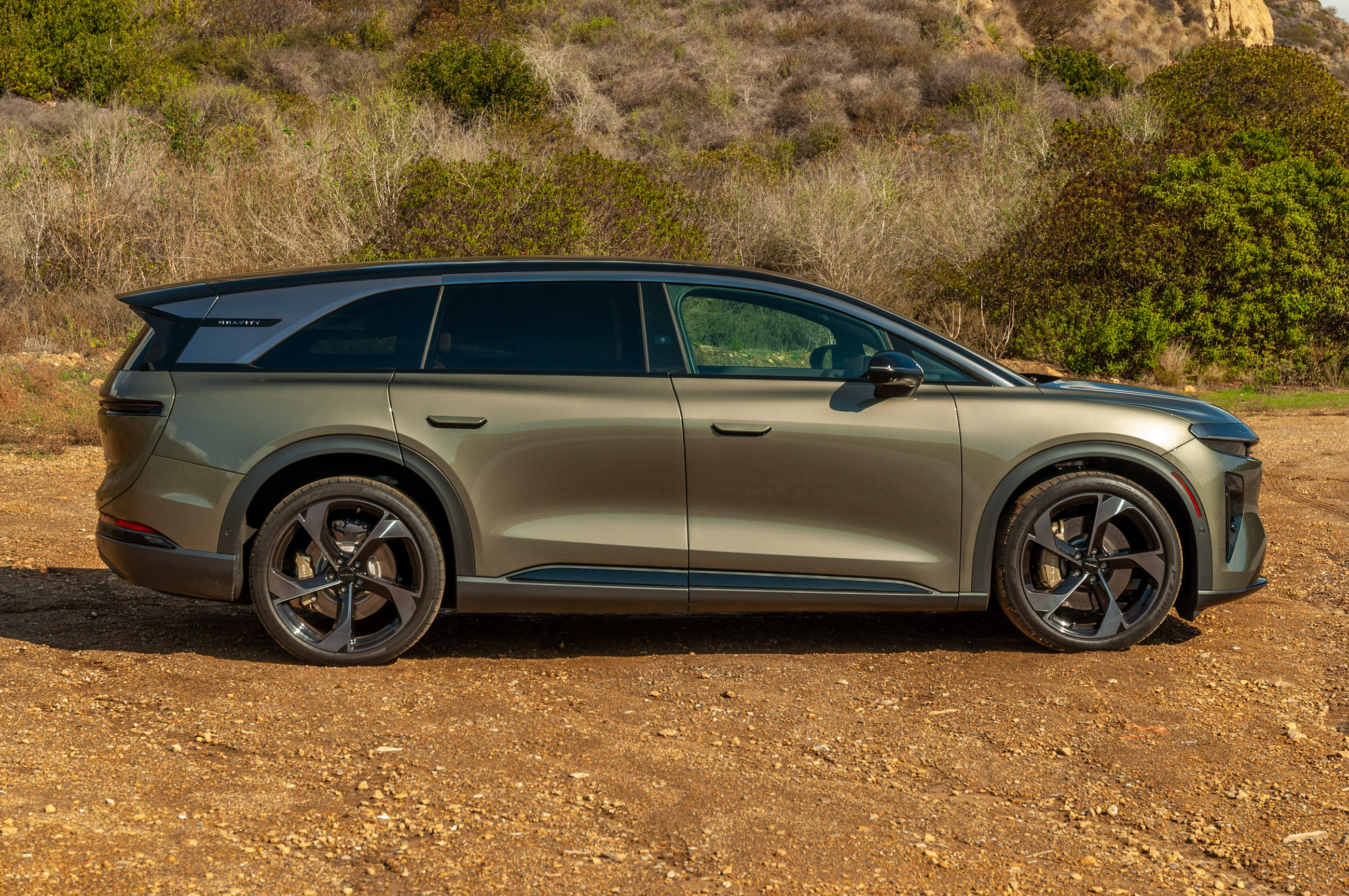
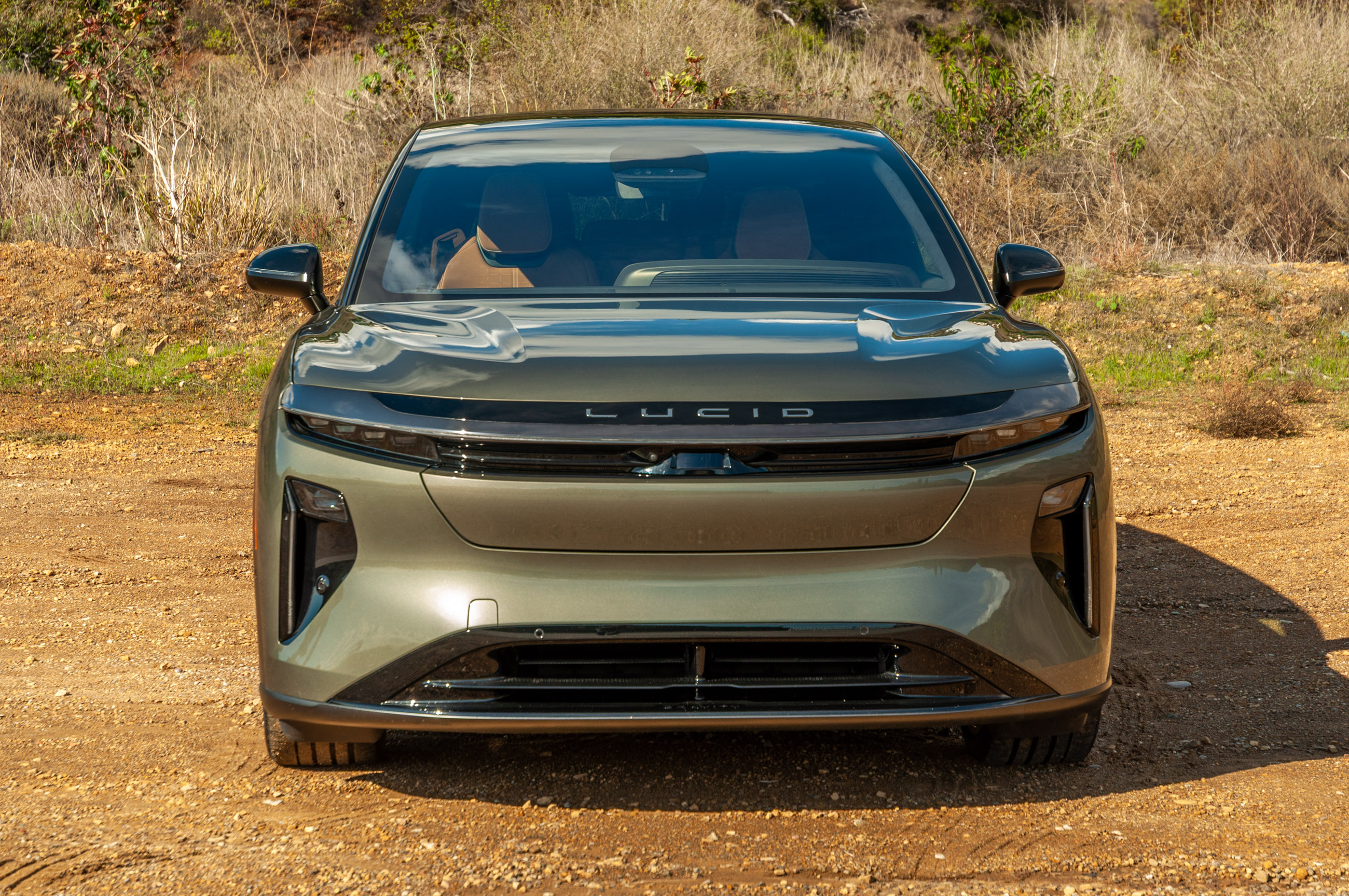
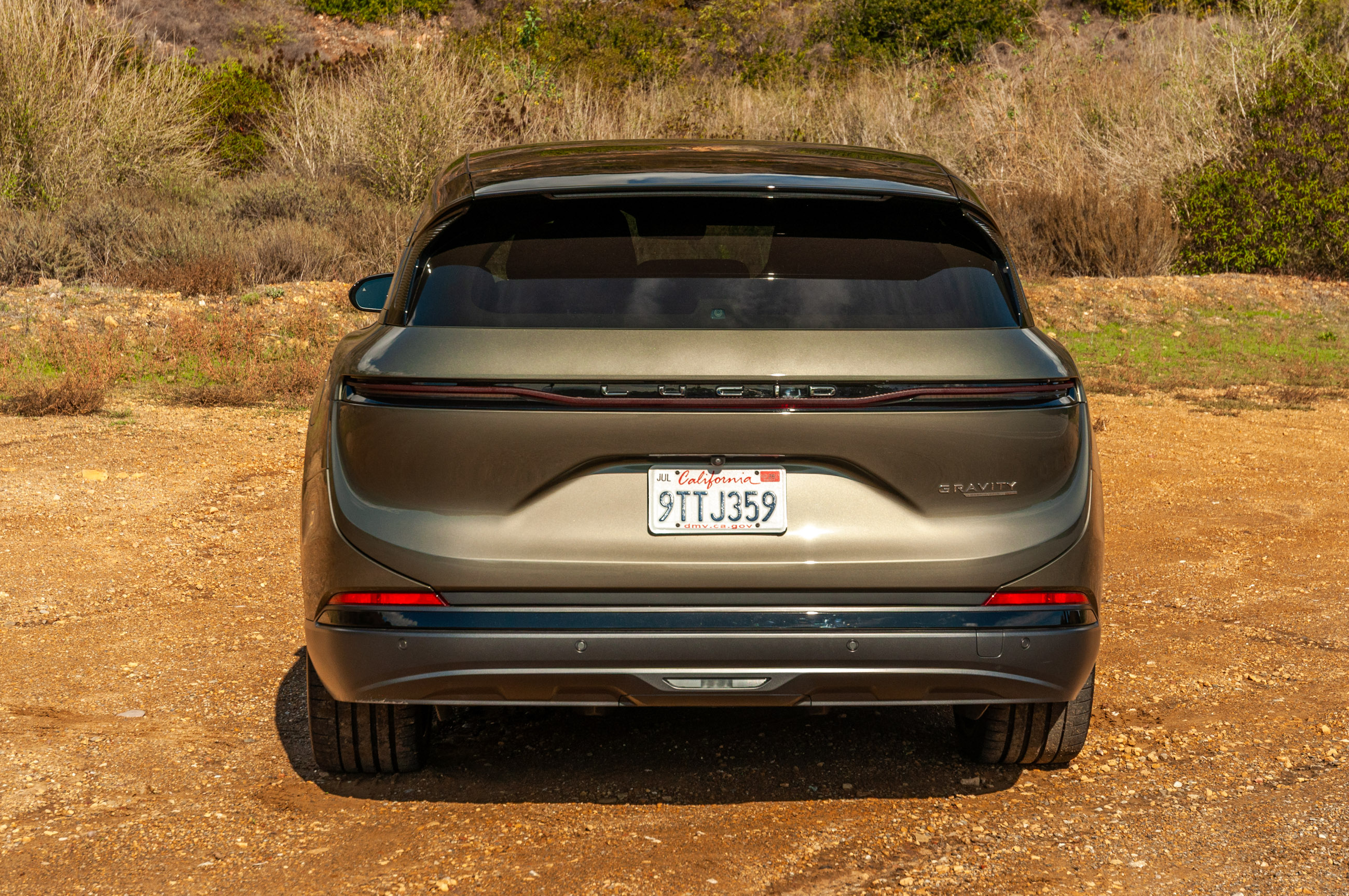
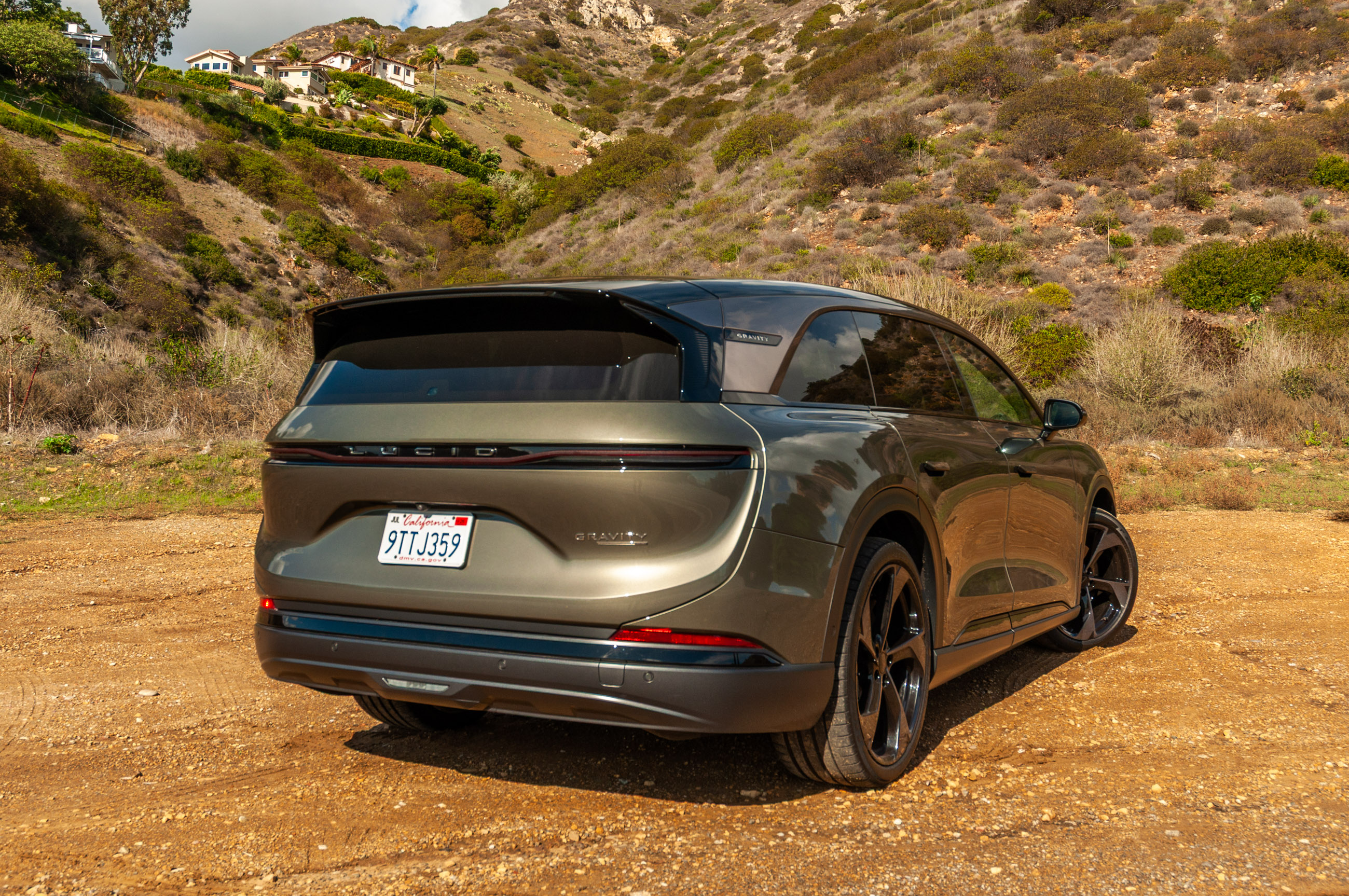
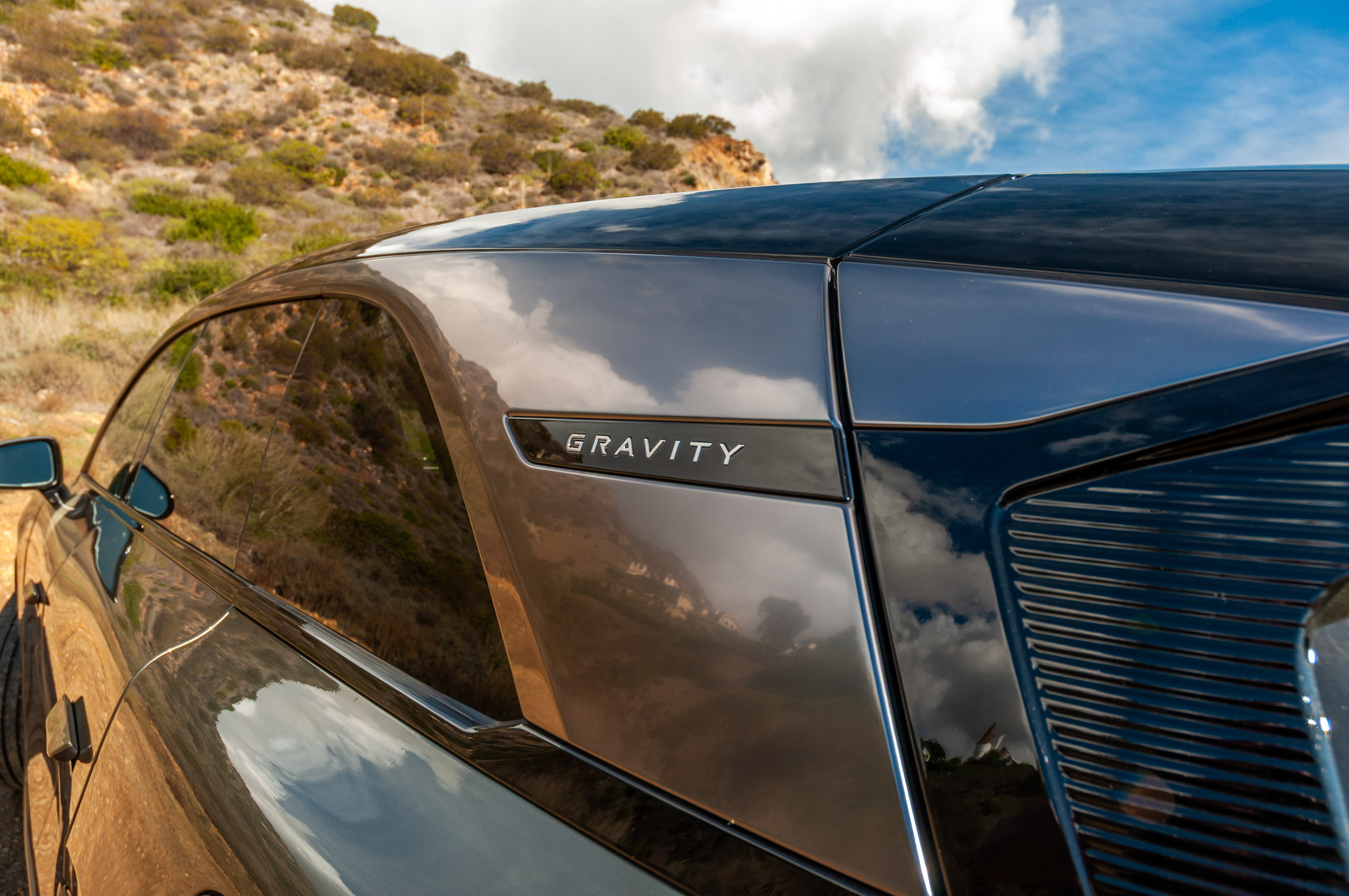
It’s a true shape-shifter. That’s a term rarely applied to production vehicles, but in the case of the Gravity, I’ve been saying it since the day I drove an early prototype. From some angles, the Gravity looks like an SUV; from others, it looks like a high-riding wagon; and at times, it looks like a minivan without sliding doors. I’m guessing that last one won’t resonate well with many people, so just look at it from a different angle. It sits lower and is less squared-off than the Rivian R1S or the Cadillac Vistiq, yet it doesn’t look like a beached whale like the Tesla Model X. Its sheet metal, from the hood to the doors, has gracious curves that help flow air around (and through) the Gravity as efficiently as possible. Its styling is definitely divisive, as my father and wife both noted it’s not their thing with too much of a minivan look; meanwhile, I love it because wagons rule. The rear three-quarter view is definitely the most awkward and minivan-like, so just skip that angle.
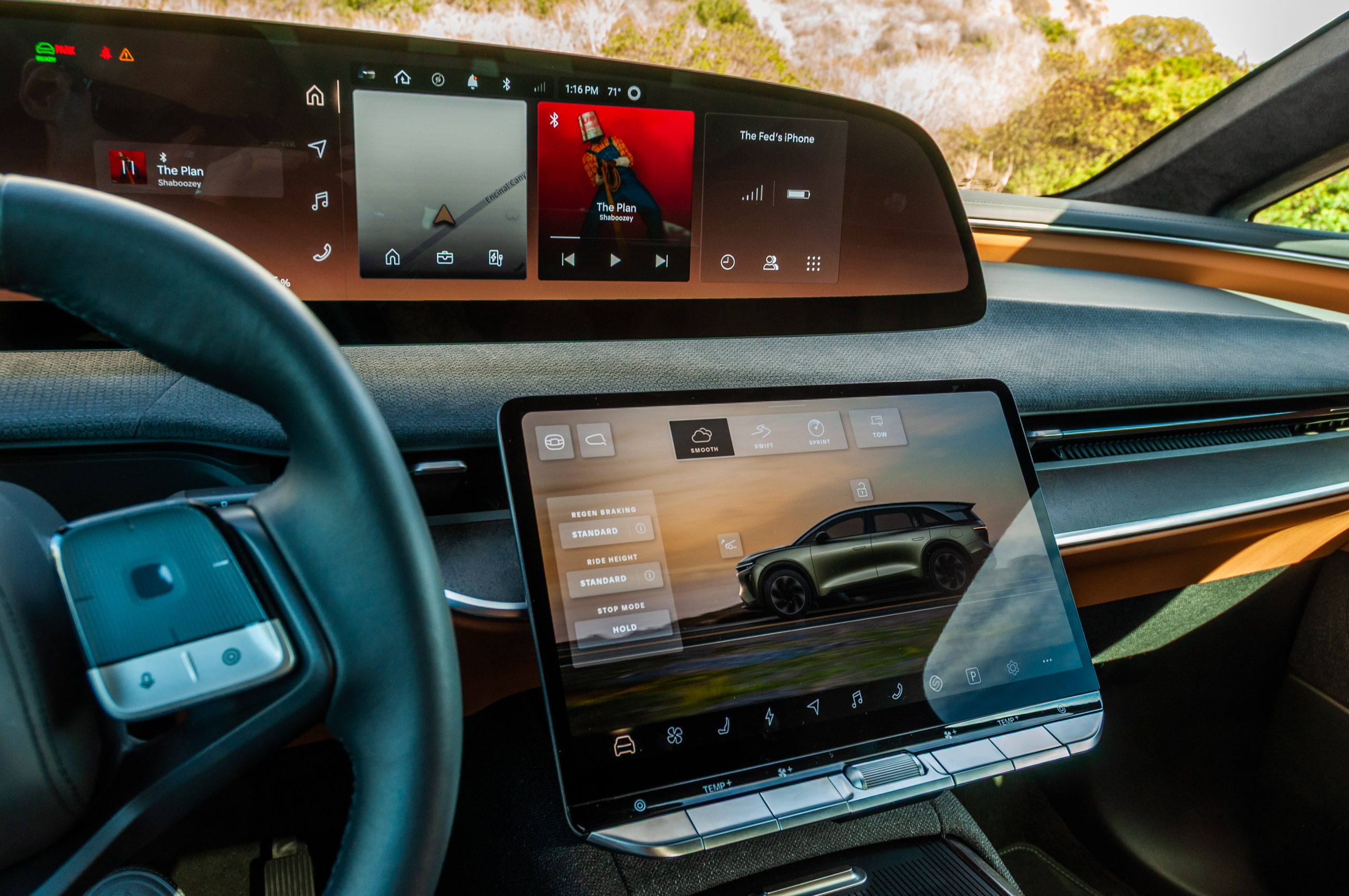
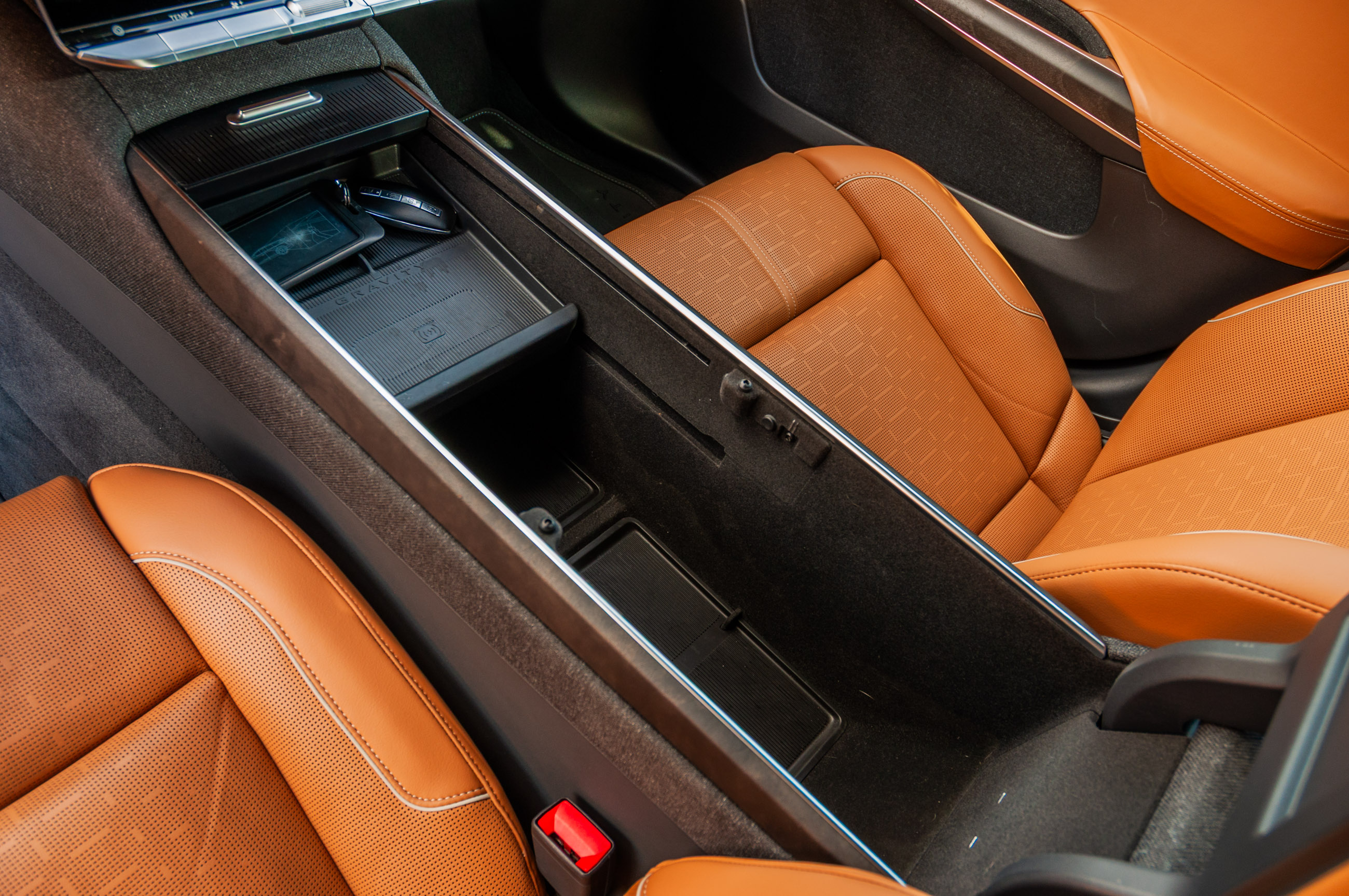
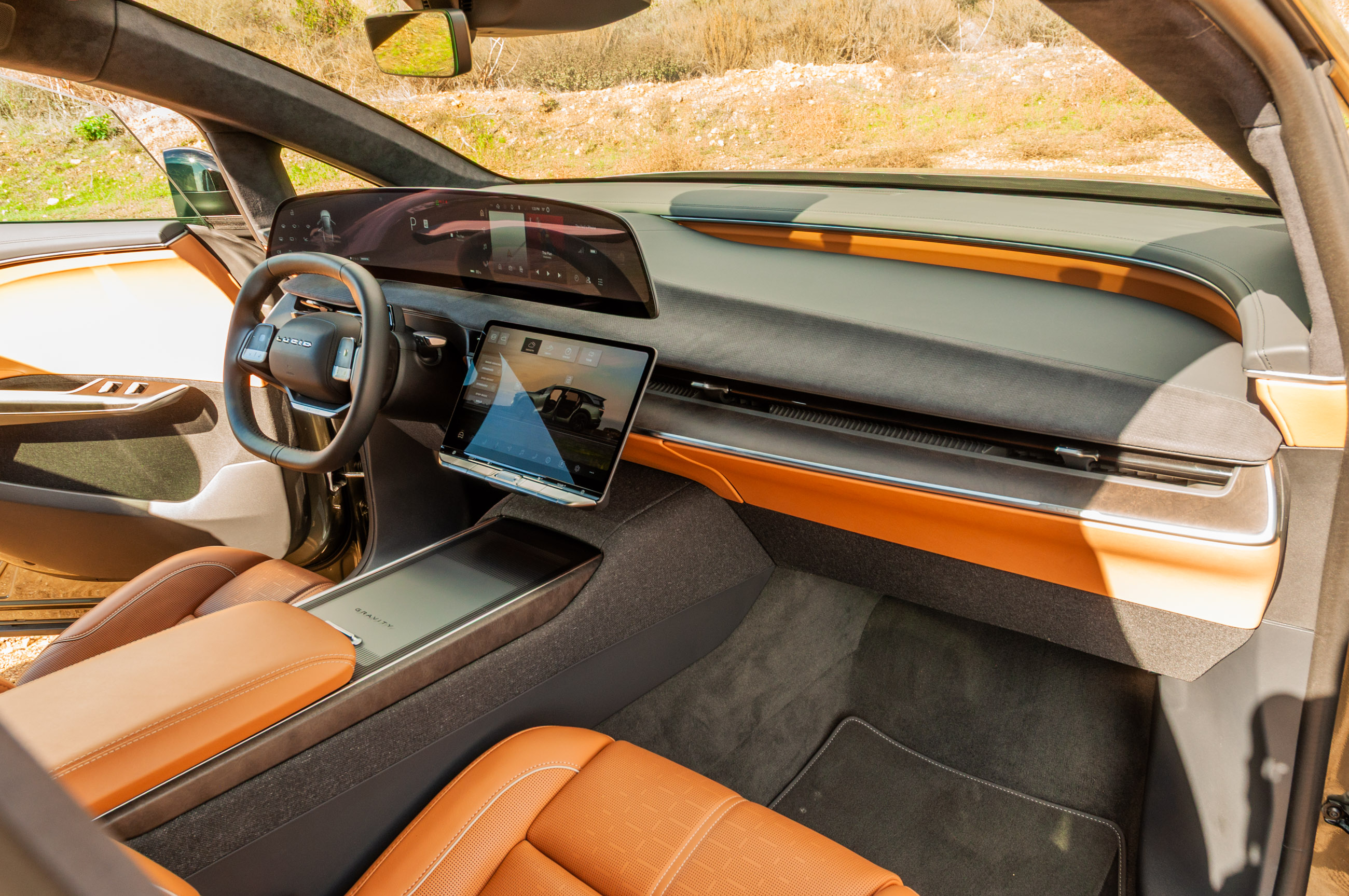
Inside, the Gravity is clearly related to the Air, but Lucid has taken advantage of the SUV’s extra space with a revised setup. A 34-inch curved glass display levitates above the dashboard and is similar, but larger in scale, to what’s in the Air sedan. The interface is similar as well, right down to the static cockpit panel with digital hard buttons for essential features like defrost and lighting controls. Instead of a portrait-style retracting screen on the center console, Lucid opted for a 12.6-inch landscape touchscreen floating on the dashboard. The interface is akin to that of the Air, easy-to-use and augmented by physical controls like toggles for the climate control system and a turbine-like volume knob. The center console is two levels with a sliding shelf, and the bottom section can hide a DSLR camera with ease.
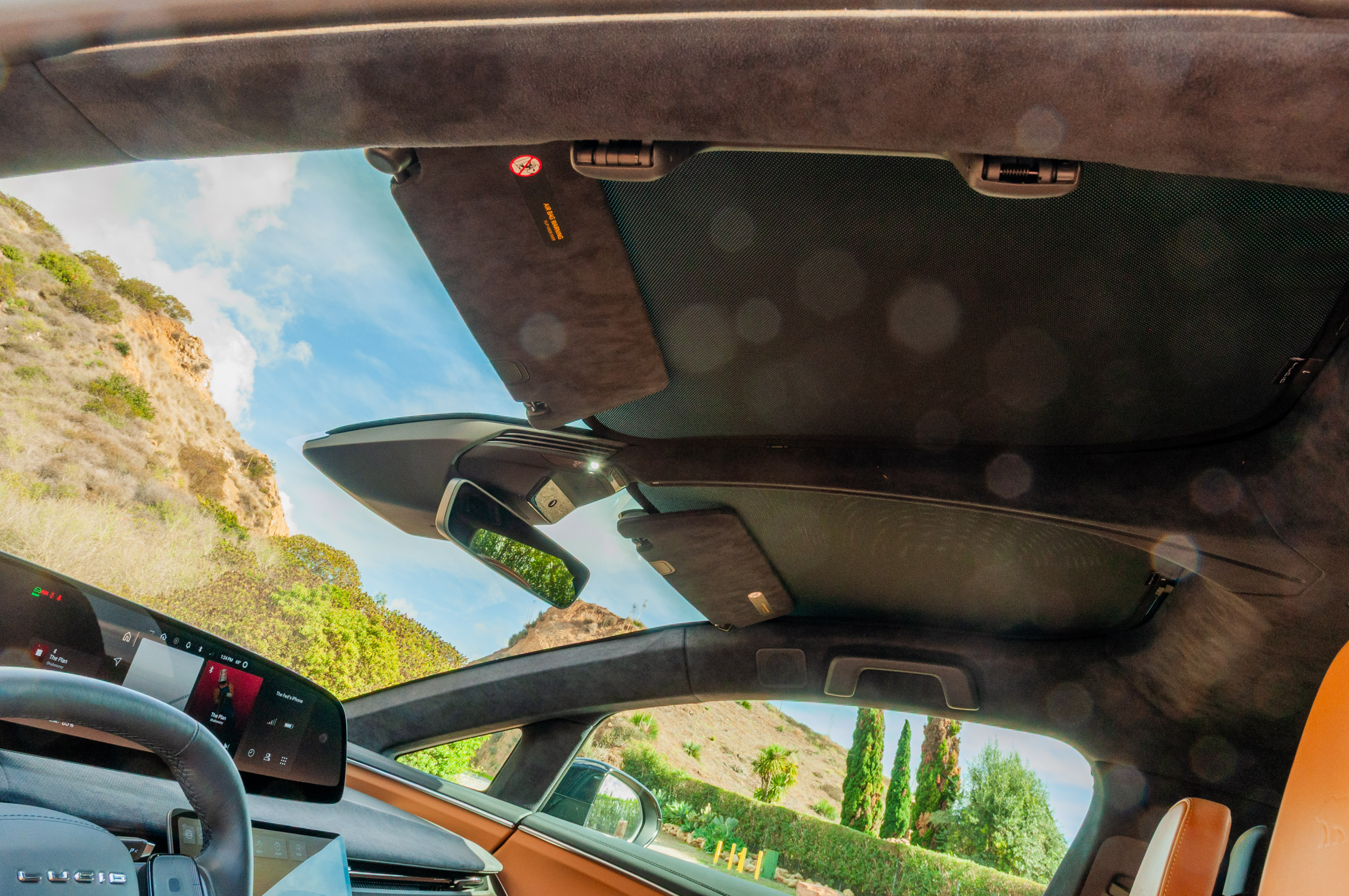
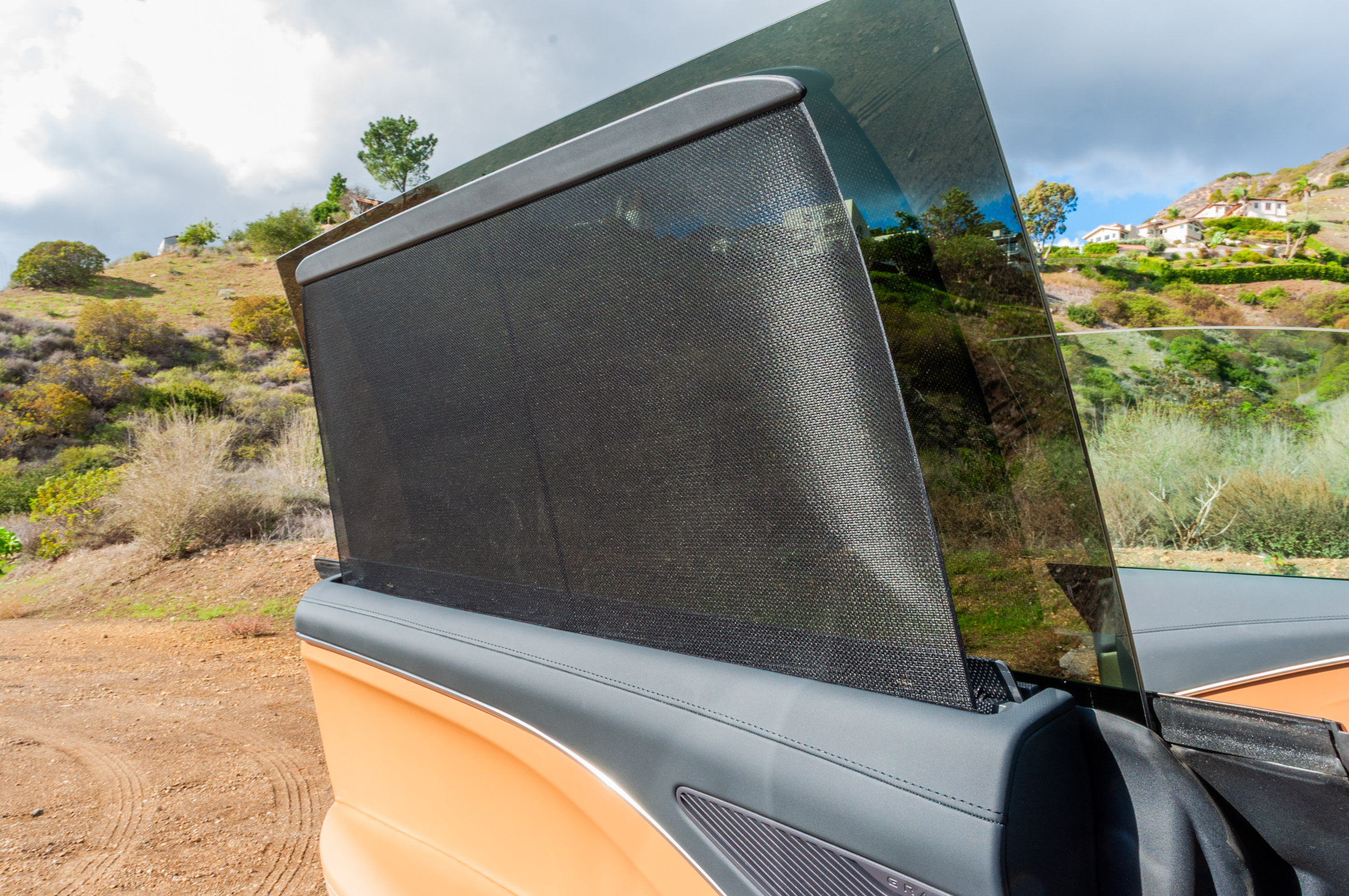
The roof on the Grand Touring is entirely glass, and it’s going to bake the cabin in the sun, as there’s unfortunately no electrochromic roof option. The car I tested came with a $250 clip-in cloth sunshade accessory that is a hilariously sad solution for a $100,000-plus car. It’s also a pain to get put in place as it absolutely takes two hands. The $130,000 Cadillac Escalade IQ suffers from the same issue, which means Team Lucid isn’t alone here.
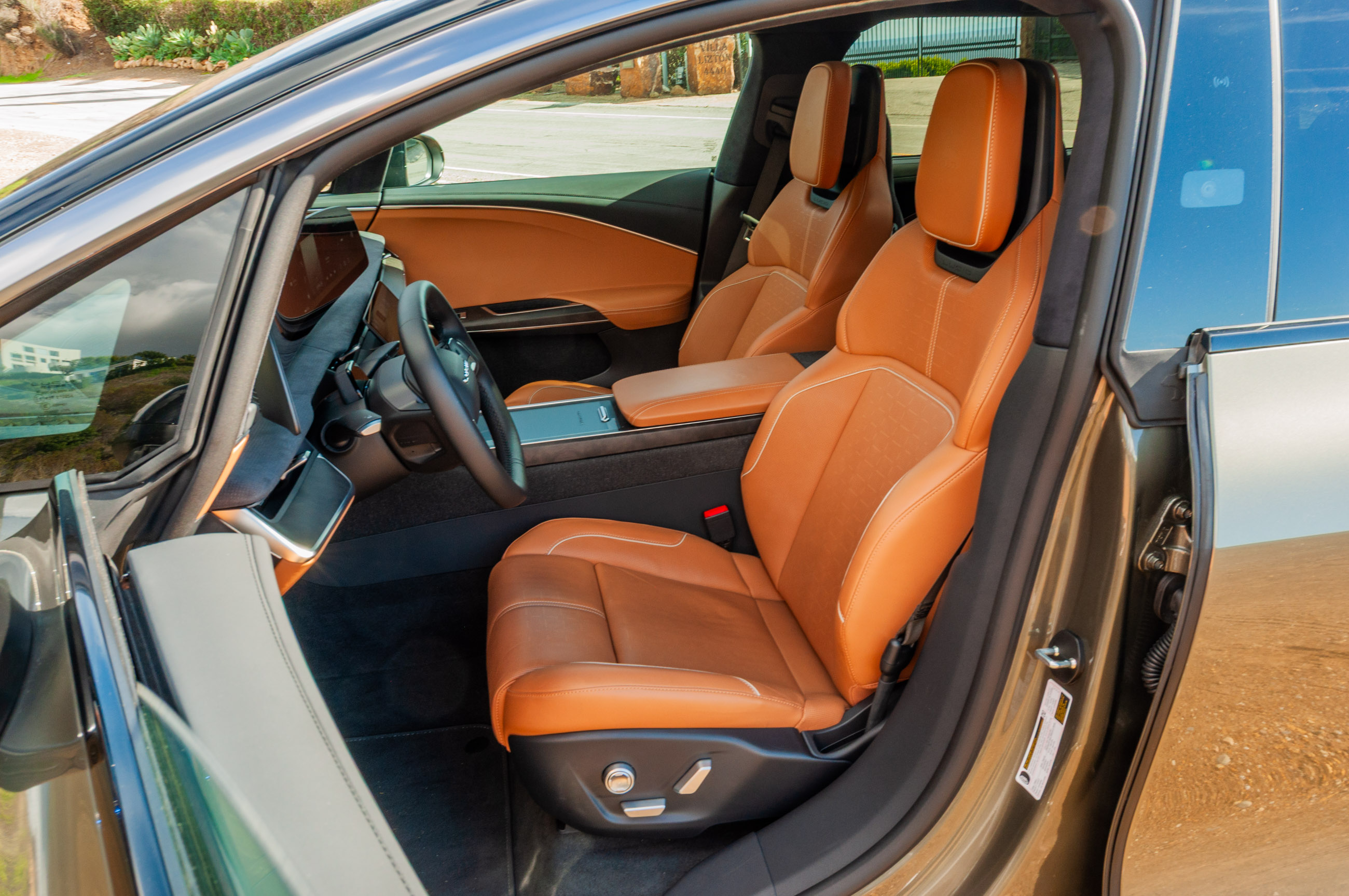
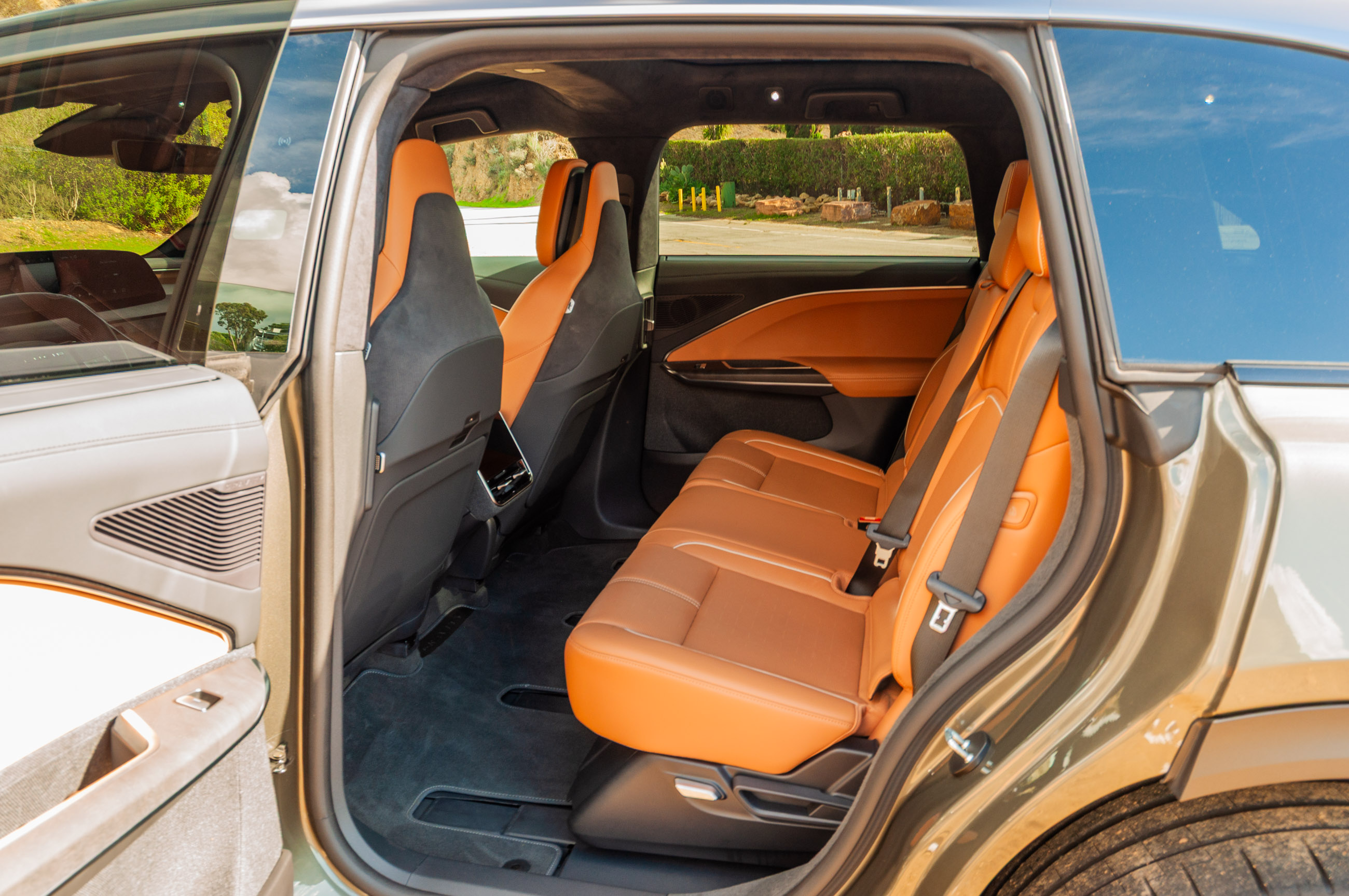
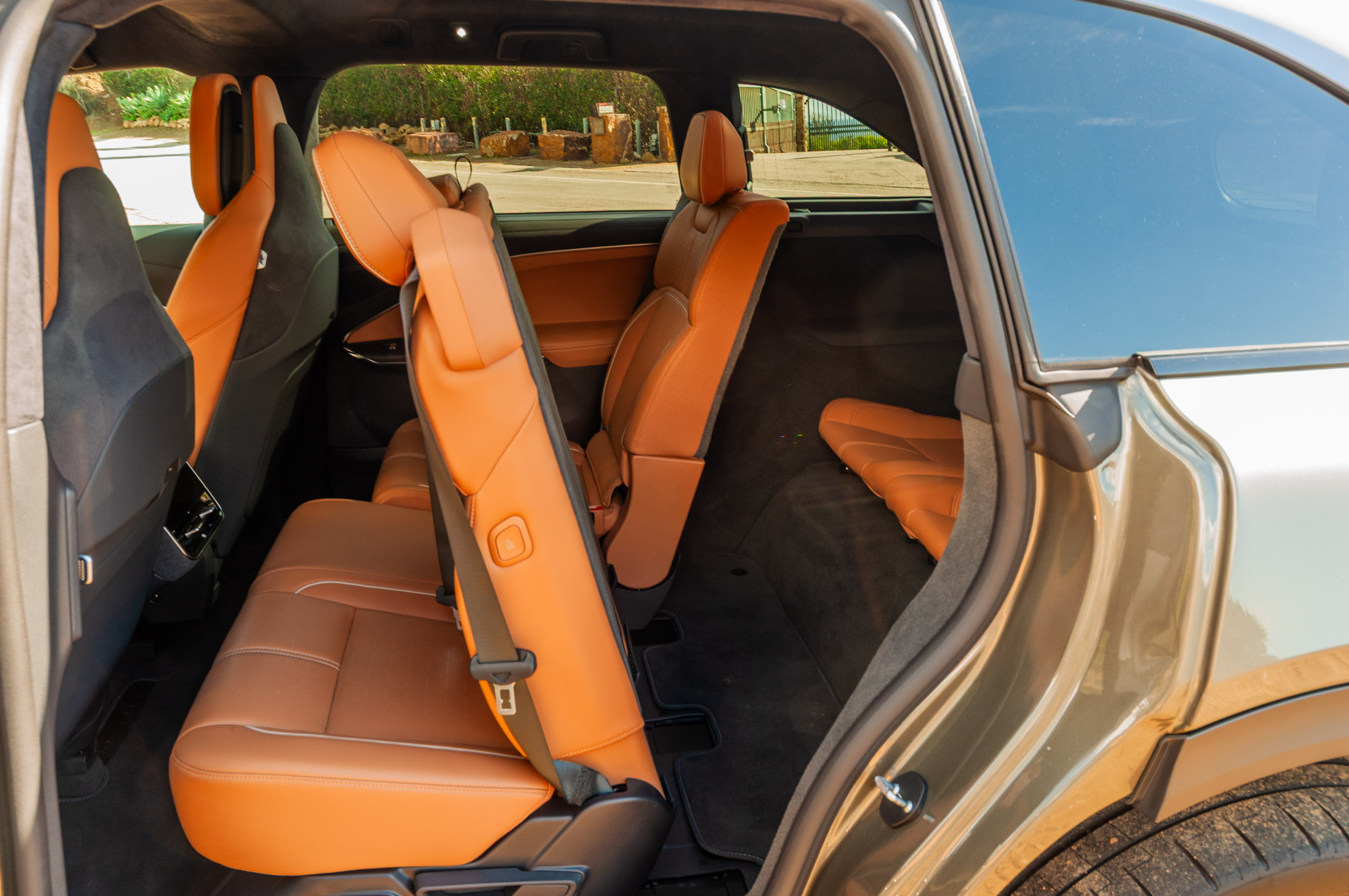
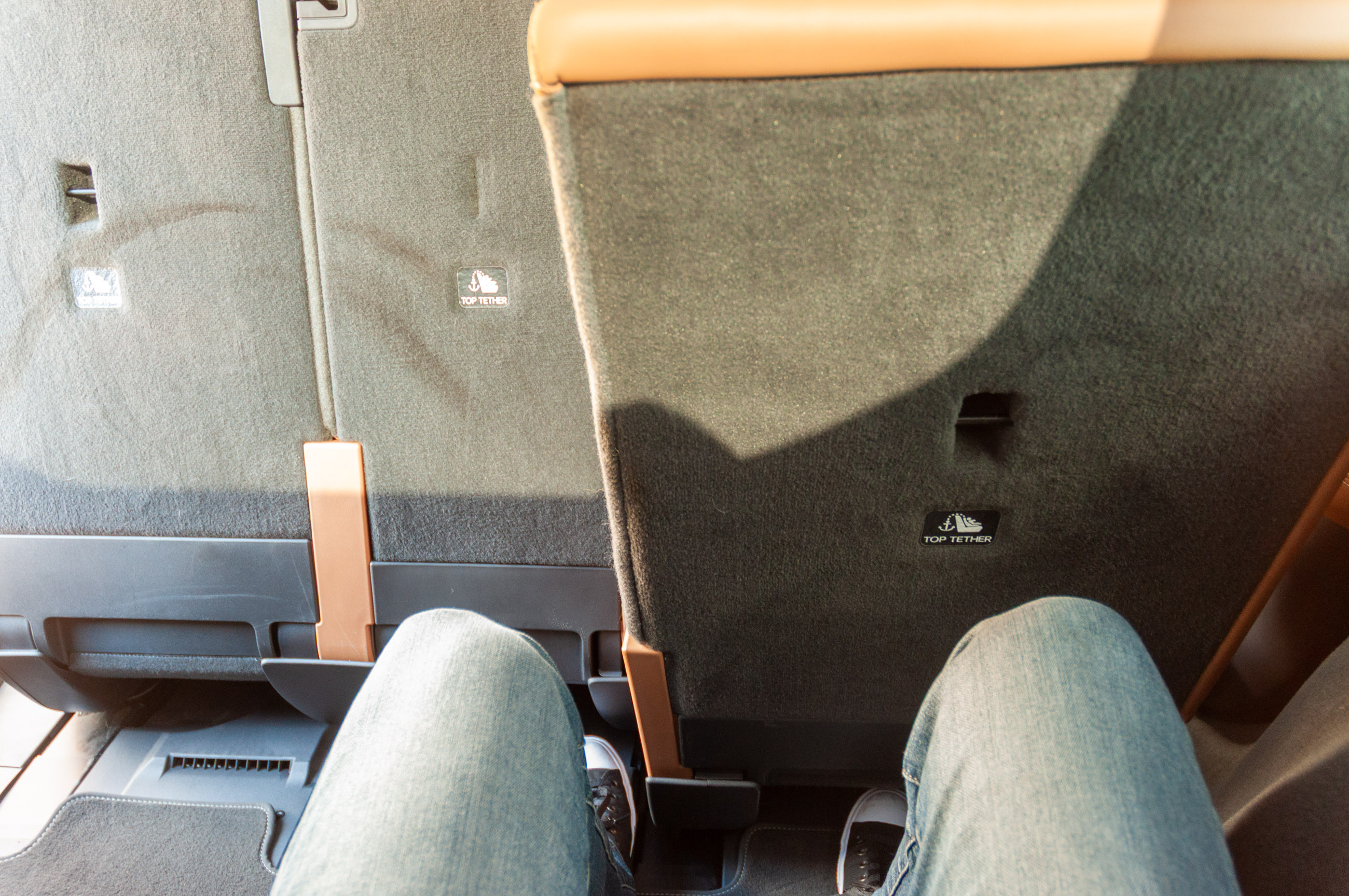
All three rows of seats are adult-rated. At 5’10”, I was able to sit in each row with the seats adjusted comfortably for my frame, with plenty of head, knee, leg, and foot room in each row. The front seats are supportive with great bolstering in all the right places, including solid thigh support. My Grand Touring model tested also featured massaging front seats, which were notably much better than the laughable massaging function in the Infiniti QX80 (which uses the lumbar support to just uncomfortably roll up and down the back). Hilariously, two of the massaging function options actually vibrated the seat. The power-operated tilt-and-slide function to access the third row wasn’t what I would call quick, though most power-operated second rows aren’t. The third row was comfortable and could easily seat a six-foot adult.
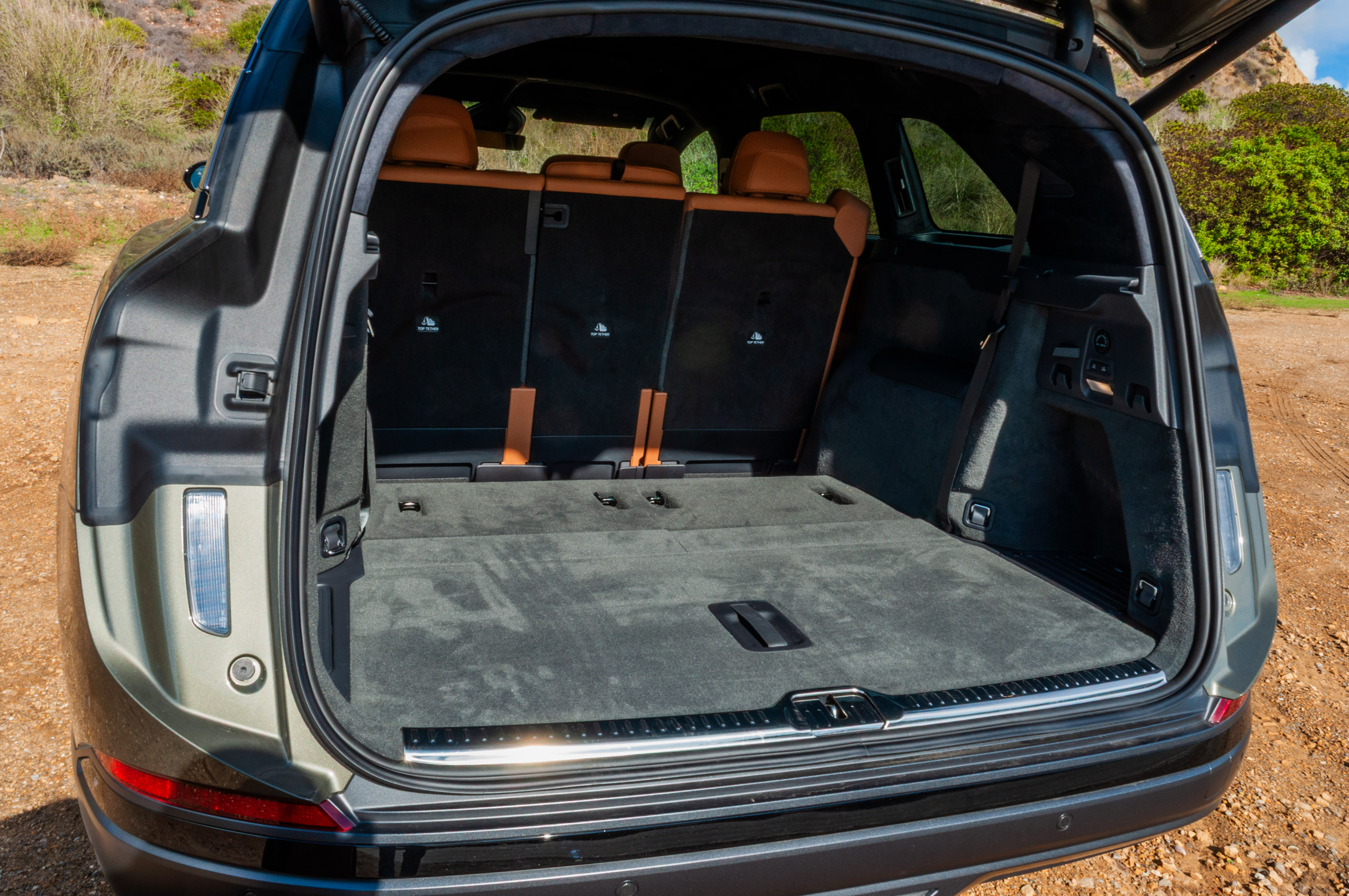
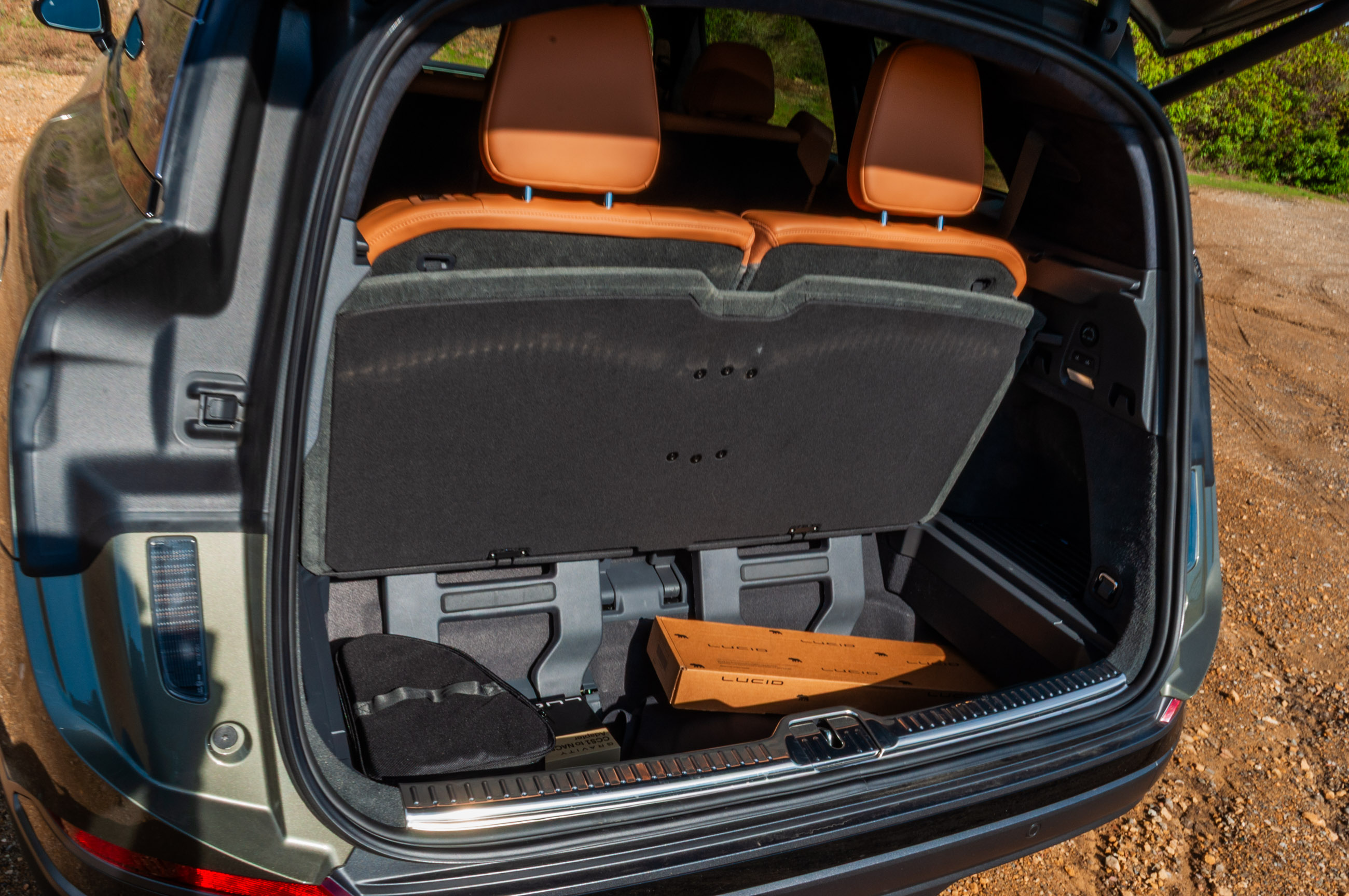
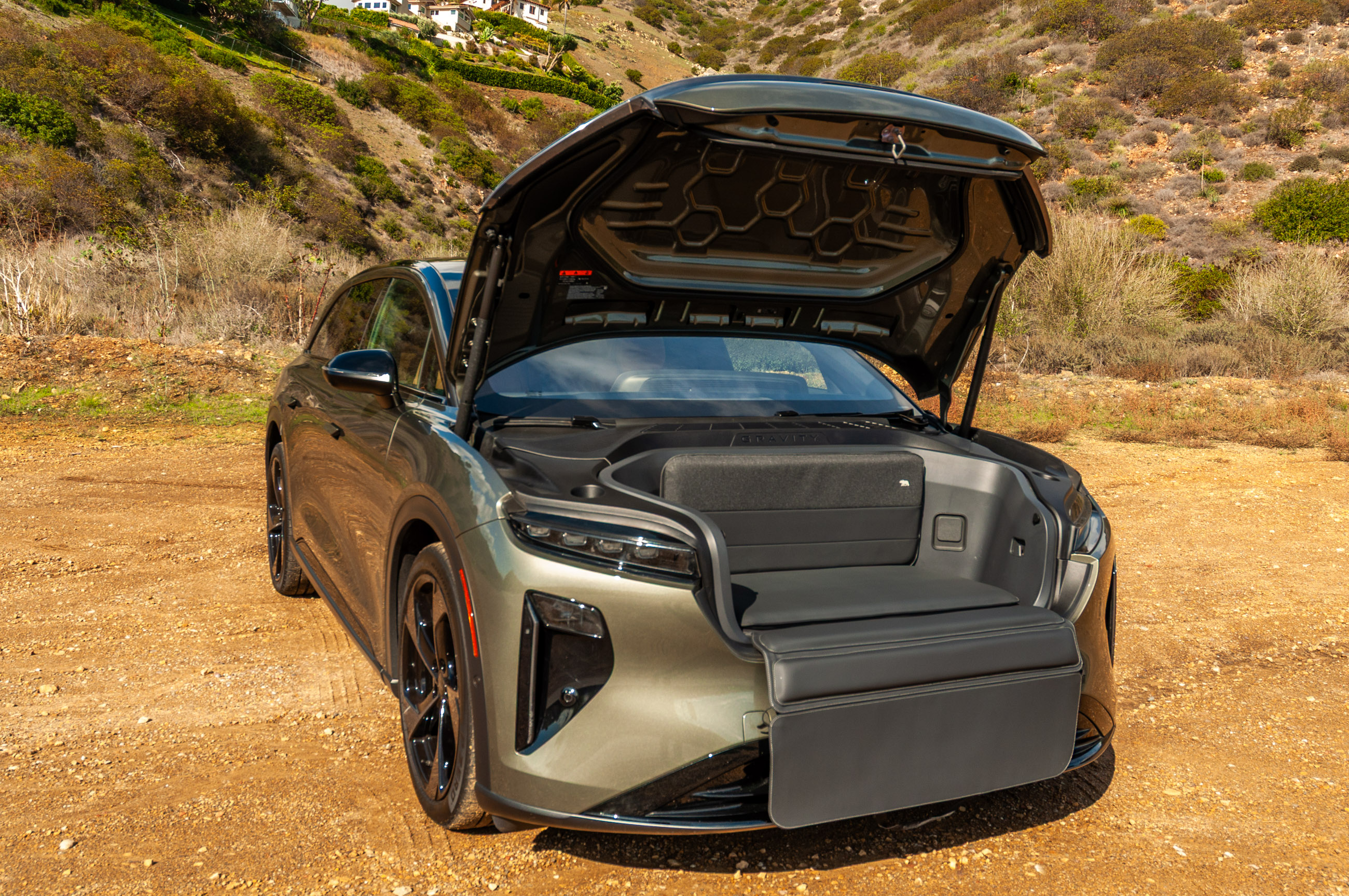
Notably, with the third row up, there’s a 6.2-cubic-foot hidden underfloor storage compartment. The third row itself is the only SUV in the world with a minivan-like folding mechanism, so it flips down into that hidden compartment when not in use. With the third row up, there’s a solid 21.3 cubic feet of cargo space. That swells to 56.2 cubic feet with the third row hidden. Fold both the third and second row, which go completely flat, and there’s 111.9 cubic feet of space. The huge front trunk adds another 8.1 cubic feet of cargo space to all this, and there’s an optional pad that turns the area into a two-person bench seat complete with built-in cup holders.
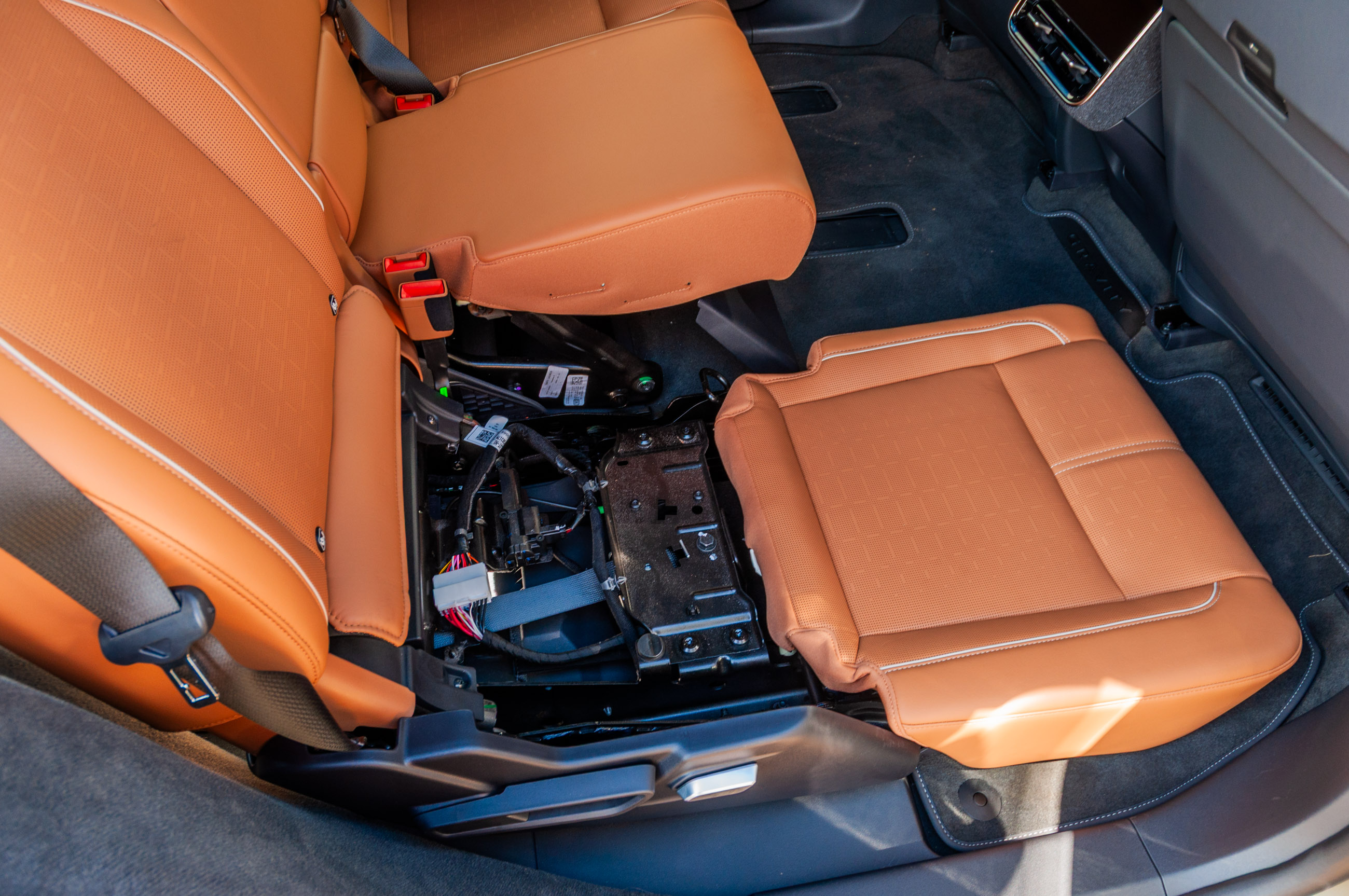
Two quick packaging quirks, one of which really needs to be addressed. When the second-row seat is folded, it’s a two-stage operation with the seat bottom flipping forward and down, and then the seat back folding down on top of the seat bottom. It’s reversed when putting the second row back in place for use, which, with the seat back upright, exposes the entire guts beneath the second-row seat bottom. It’s an ugly mess of wiring and cables unbefitting a $100,000 luxury vehicle. A cover should have been developed for this to make it hidden and pretty. The second? A trough-like void between the cargo area and second-row seat back that exists so when the third row is upright, people have space for their legs and a proper drop for their feet when seated. But with the third row hidden, there’s a huge void that stuff will just collect in. Owners will probably fill it with stuff that needs to be carried around at all times, but it’s still a weird packaging quirk. Worse, it exists even in five-seat two-row models. Lucid should create a cover that can slide onto this to hide the trough and make a completely flat floor.
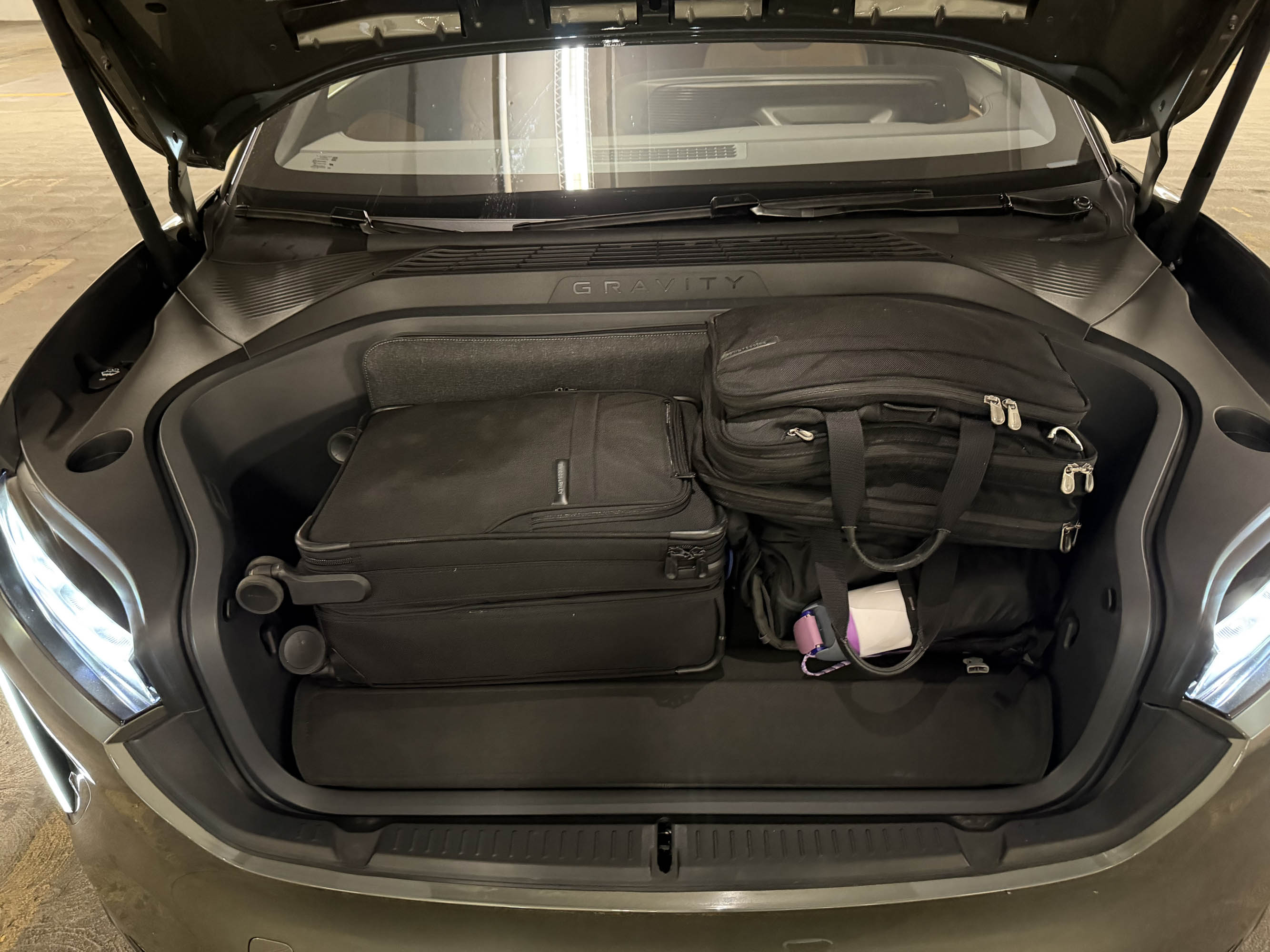
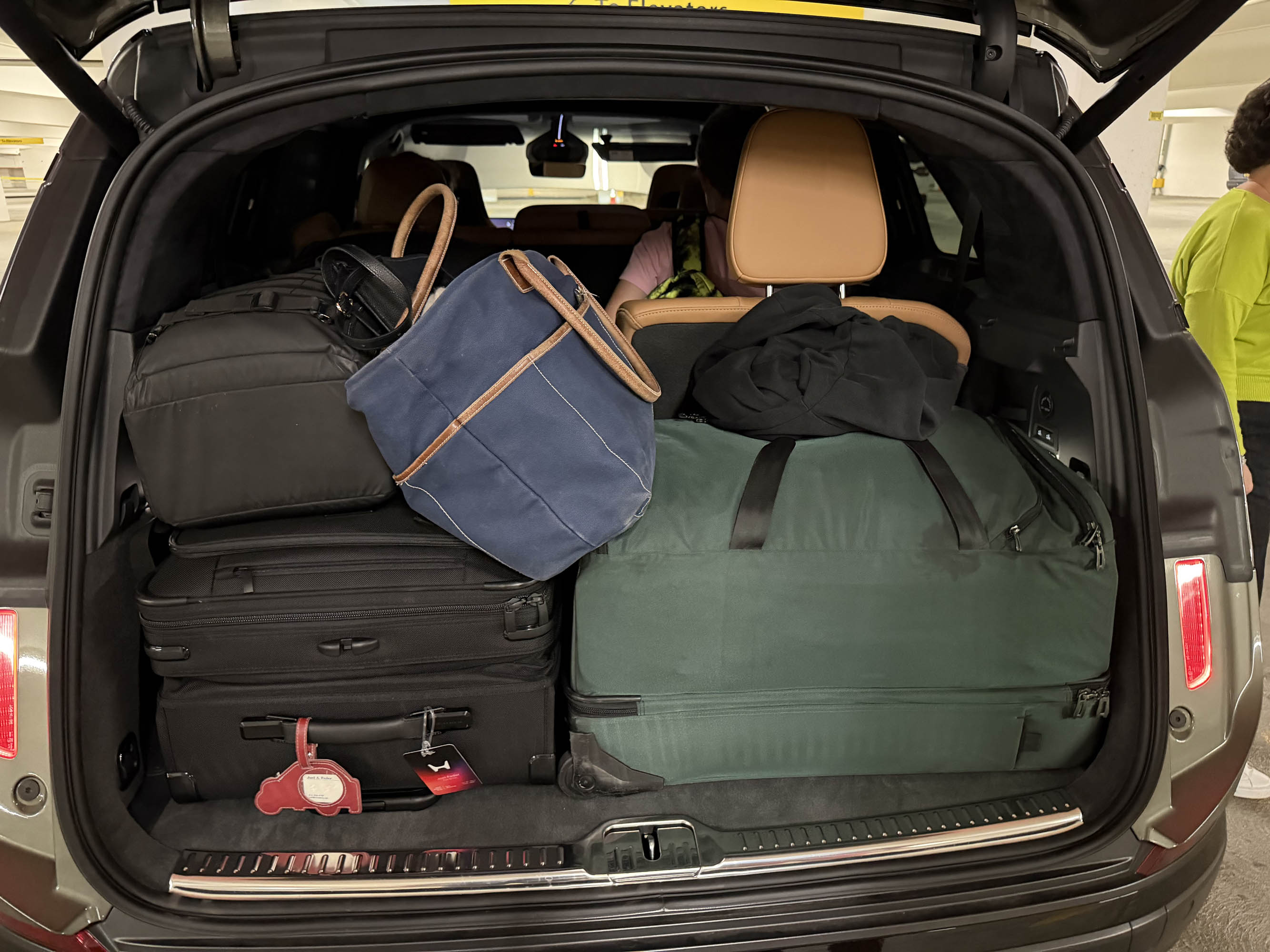
I was able to fit myself, my father, mother, wife, and two kids, along with four huge pieces of luggage, four computer bags, two backpacks, and a roller board in the Gravity comfortably.
Driving the Lucid Gravity
The top-shelf Grand Touring model I tested had a dual-motor powertrain delivering 828 horsepower and 909 lb-ft of torque, fed by a 123-kilowatt-hour battery pack and an insanely fast 926-volt electrical architecture. A less expensive Touring model just debuted with two motors, only 560 hp and 811 lb-ft of torque, an 89-kWh battery, and still crazy-fast 670-plus-volt electrical architecture. Every Gravity has all-wheel drive, for now.
The short version? Every Gravity is quick with Grand Touring models sprinting from 0-60 mph in 3.4 seconds and Touring models doing the deed in 4.0 seconds. But that’s just the party trick.
The real story is that the Gravity is hands-down the best-driving three-row SUV money can buy today. Yes, it’s quick and fast, but stoplight antics are just that. The Gravity’s a joy behind the wheel thanks to perfectly weighted steering that actually gave me a sense of what was going on at the wheels. In limited backroad canyon testing, there was feedback translated from the pavement and rubber to my hands and a sense of when the limit might have been approaching.
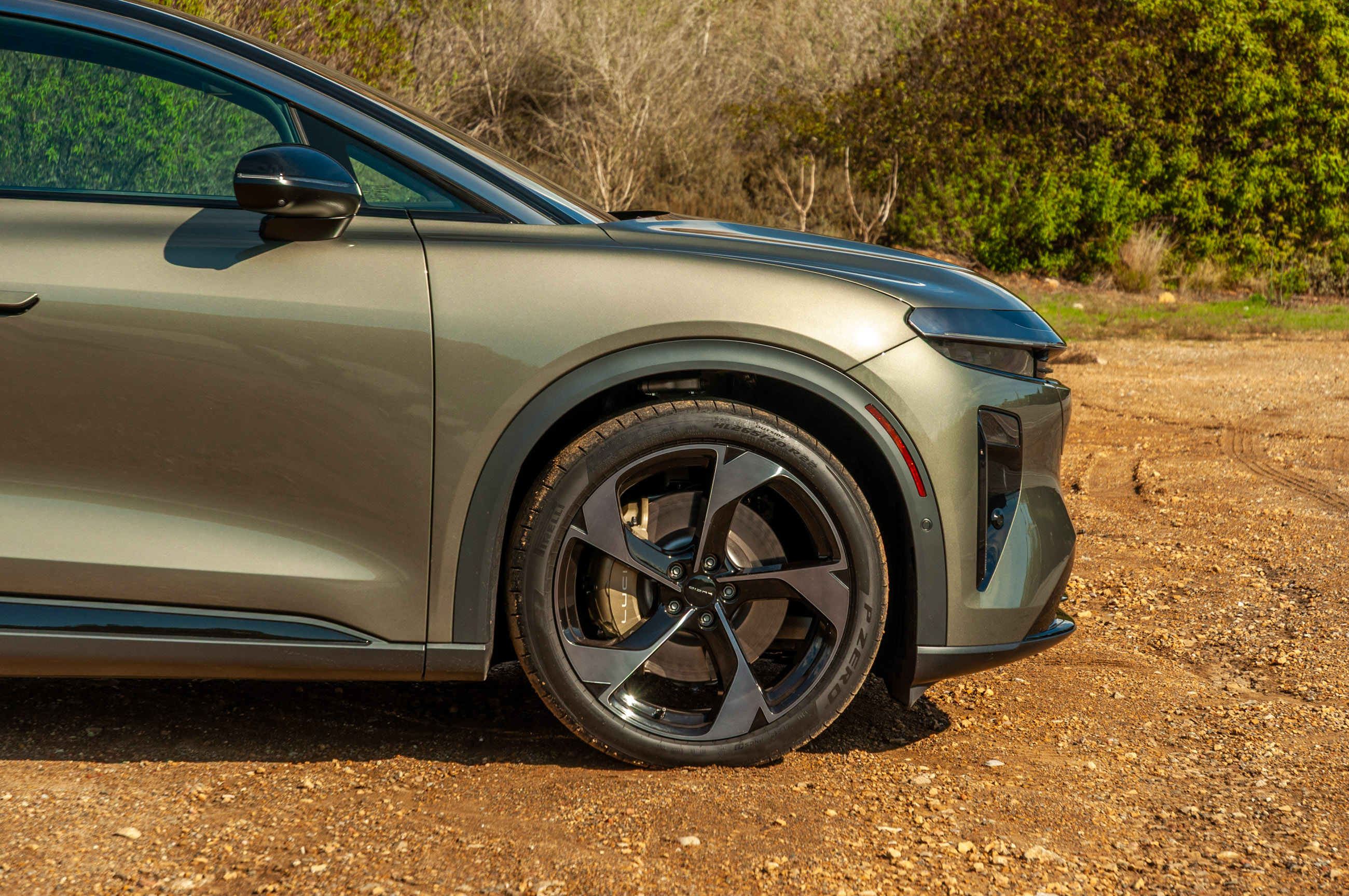
As tested with a $2,900 Dynamic Handling Package, which added a triple-chamber air suspension system and rear-wheel steering, the Gravity had a firm, controlled ride with minimal but natural body roll. It wasn’t gravity-defying (no pun intended) like some kinetic setups from Germany, but it carved around corners like only a Porsche does. The suspension never crashed over pot holes despite the wide staggered 22- and 23-inch wheels. The faster I pushed the Gravity the more confidence the SUV gave me to push the speed higher. There was a brief second I wondered if the Grand Touring had more power than brakes, but I never smelled burning brakes nor did I see smoke, which I saw and smelled with the Cadillac Lyriq V. A caveat to all this is the fact the Grand Touring model tested was rolling on what can only be described as borderline cheater tires that absolutely helped its dynamics with Pirelli Pzeros all around, which were wide at 265/40R22 up front and 285/35R23 in the rear.
I definitely look forward to getting into a Gravity without the triple-chamber air suspension system and narrower, smaller wheels and tires that aren’t as sticky to see what those dynamics are like.
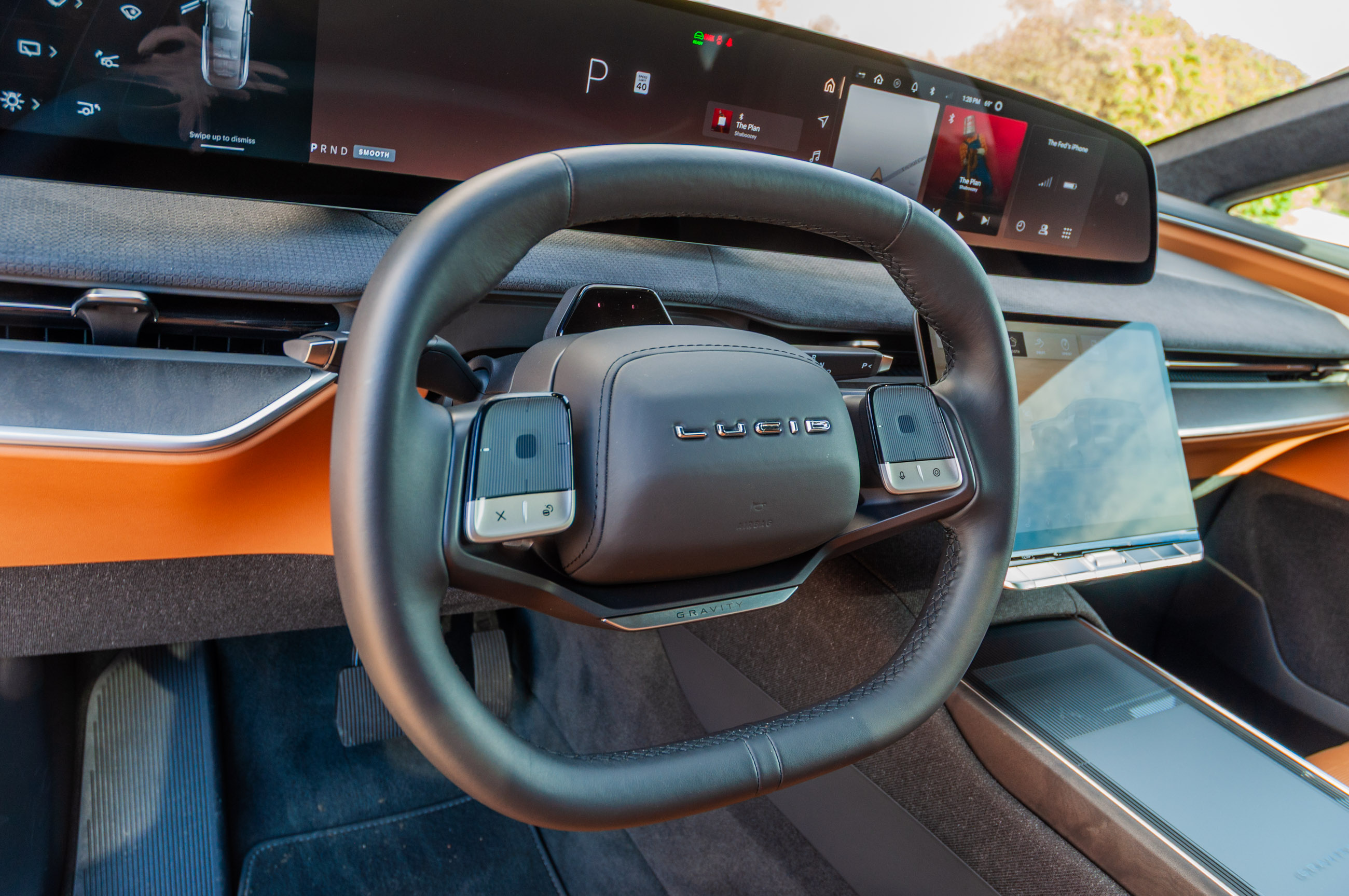
That squircle steering wheel takes a bit to get used to, as it forces proper 9-and-3 hand placement, and the flat top makes it so the digital gauge cluster isn’t obscured like in the Air sedan. But, in parking lot situations, the flat bottom and top can feel awkward even by the end of a week. The D-pads on the steering wheel look like they are touch sensitive, but thankfully are not and require force to be pushed as they are buttons. However, they are unlabeled buttons, and the driver has to learn their functions and then memorize said functions. I didn’t find it difficult, personally.

But for as noteworthy and astonishing as the Gravity’s dynamics were, the software experience was just as noteworthy for mostly the wrong reasons. It’s full of bugs and teething issues. Over half the time upon waking up the Gravity’s climate system would blast freezing cold air at full fan speed, and you can imagine my wife and kids’ tolerance and reaction to this situation when the ambient temps were in the 40s and 50s. Most of the people I talked to on the phone via Bluetooth said it was like I was speaking to them while driving through a tornado. My name isn’t Bill Paxton, and we didn’t have cows.
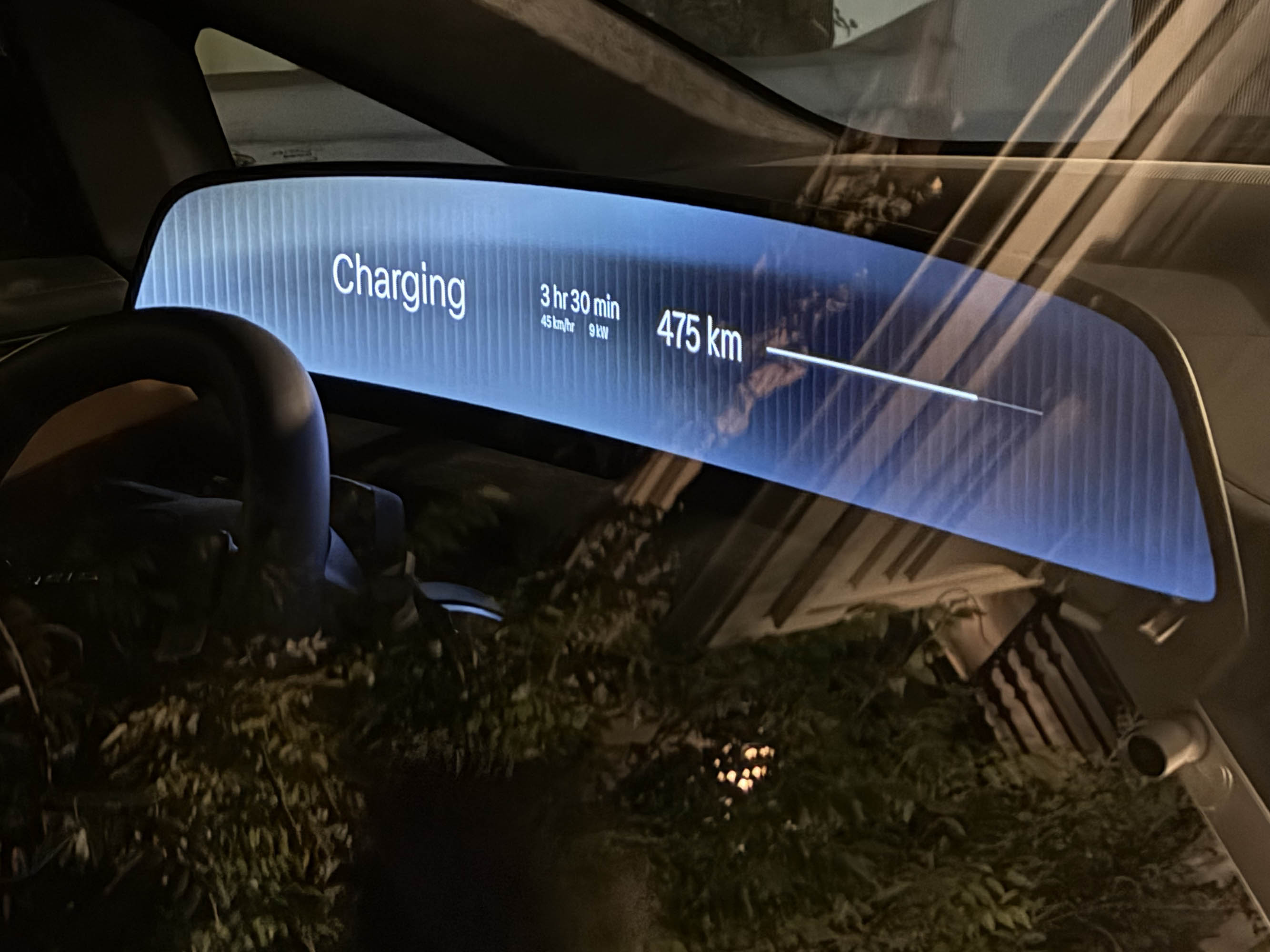
Regularly, if I was sitting in the car and taking photos, or notes, or waiting around, an alert would pop up on the driver’s cockpit noting the key wasn’t found, and it asked me to shake the fob (yes, it said shake). When I was charging one time on a Level 2 charger, the display read how long it would take in hours and minutes, but then displayed the range in kilometers despite the system being set to miles. Apple CarPlay and Android Auto aren’t on board yet, though they’re both coming. One evening, a headlight error popped up on the display, but I couldn’t tell what the issue might be; everything seemed to be operating fine, and the error never resurfaced. The mapping software struggled to zoom in and out properly while driving on a route, which led to a bunch of stoplights being crushed together on a map with no clear route data for the immediate road the Gravity was on. The rear seat climate control continuously displayed in Celsius instead of Fahrenheit. And overall, the entire system was just buggy.
Since I drove the Gravity, Lucid’s already released a large software update that is said to address many of these issues, including the climate control blasting cold air situation. We’ll have to report back once we get back into another one, but none of these things really dampened how this SUV drives, and all of it can theoretically be fixed via a software update.
Range, Charging, and Efficiency
We don’t typically talk about charging and efficiency in first drive reviews because they’re so top-level. With the Gravity, it’s hard not to mention this stuff. It’s that impressive.
The Grand Touring model has an estimated range of up to 450 miles per charge, while the Touring and its smaller battery sports an estimated range of up to 337 miles per charge. That first number is unmatched by any electric SUV on sale today.
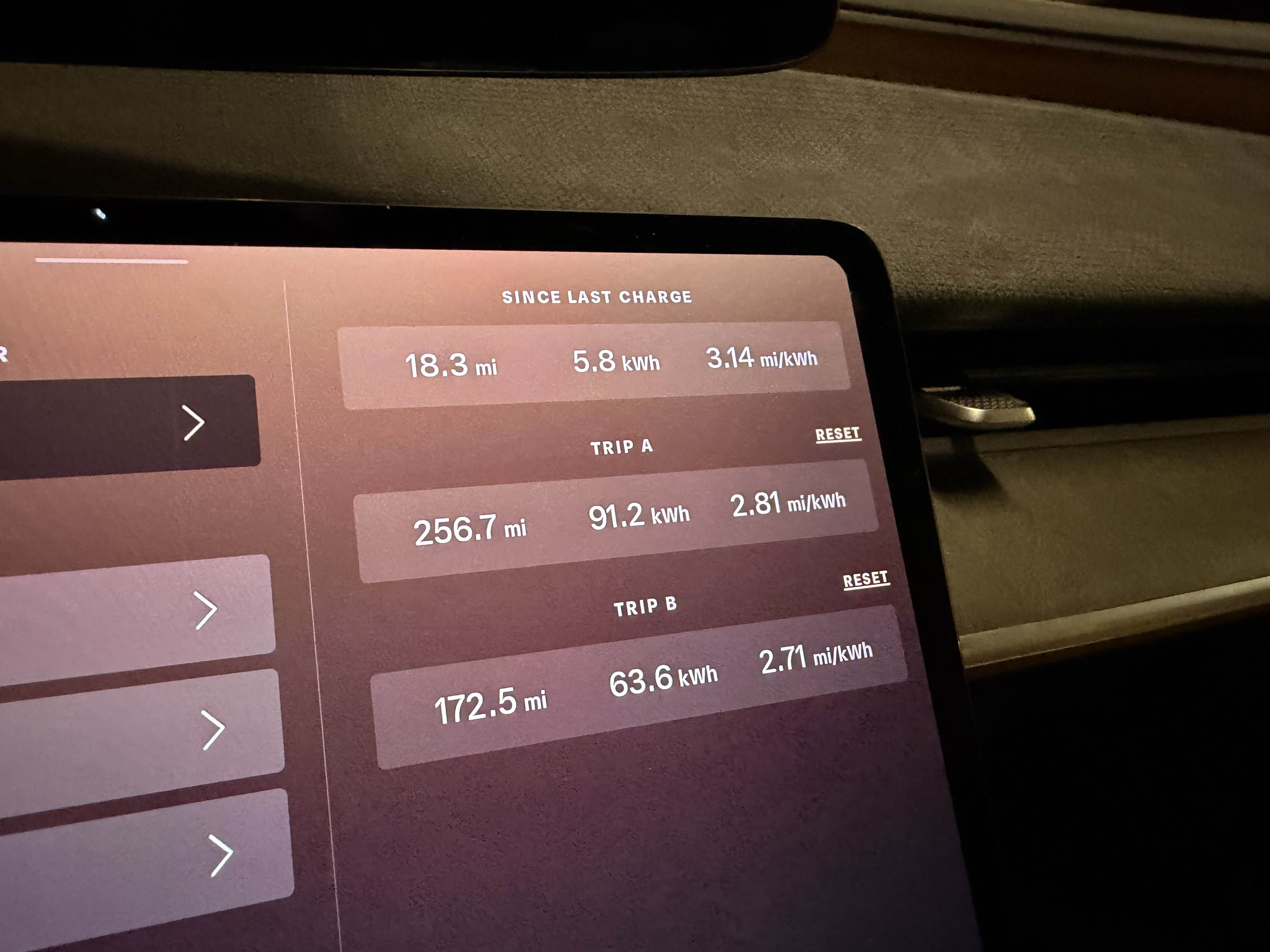
The Grand Touring tested with the larger wheels and sticky rubber had an EPA-rated range of 386 miles. In mixed LA driving conditions, which notably are not my normal routine at home, the Gravity averaged 2.81 mi/kWh over the course of 256.7 miles with ambient temps hovering between 40 and 65 degrees.
More impressive, the Grand Touring is a charging monster with a peak charge rate of up to 400 kW. (The Touring model drops that to a still impressive 300 kW.) Lucid said the Grand Touring can add up to 200 miles of range in under 11 minutes, while the Touring model can do the same in 15 minutes. This is all done via a standard Tesla-like NACS charging port.
2026 Lucid Gravity Features, Options, and Competition
The Touring model is the entry point to the lineup at $81,550, including a $1,650 destination charge. It’s well-appointed with those large screens, impressive performance, soft-close doors, five-passenger seating, 12-way power heated front seats, a heated steering wheel, and a four-zone climate control system. Stepping up to the Grand Touring model for $96,550 ups power output, charging speeds, and the tow rating from 3,500 to 6,000 pounds. As tested, the Grand Touring clocked in at $122,200 thanks to $6,750 for Lucid’s DreamDrive 2 Pro suite of driver-assist systems, Surreal Sound Pro 22-speaker audio system for $2,900, Comfort & Convenience Package for $2,500 adding acoustic and thermal glass, power-operated second-row window shades, soft-close doors, and a heated steering wheel along with second-row seats, the Dynamic Handling Package for $2,900, Aurora Green Metallic paint for $1,000, Tahoe Nappa Leather with Luxury Seating package for $4,200, third-row seat for $2,900, towing package for $750, and the larger staggered wheels for $1,750.
That standard pricing undercuts every single competitor, gas- or electric-powered, that comes close to this kind of performance. The as-tested price closes that gap and puts the Gravity squarely in kissing range of the Rivian R1S Quad, but still, as tested, is about $40,000 less than the slower and less-powerful Porsche Cayenne Turbo E-Hybrid. Rough. We’ll see what the Cayenne Electric costs when it arrives next year.
The Early Verdict
The Gravity arrives much later than Lucid needs, but hindsight is just that. We are here, the Gravity is as well, and families (and enthusiasts) in the market for a three-row SUV are better for it. With Porsche binning plans for a three-row electric SUV (codenamed K1) in favor of gas and hybrid powertrains, the Gravity is playing in an extremely small sandbox.
It charges faster, goes further, rips harder and quicker, and costs less than anything that comes close. It does all that while running circles around anything that dreams of competing on pavement. We, and Lucid, need more time behind the wheel and buttoning up software, but the Gravity holds promise that should make the competition nervous because no vehicle on sale today combines all these traits with this level of family-friendly packaging.
Lucid provided The Drive with an eight-day loan of this vehicle for the purpose of writing this review.
| 2026 Lucid Gravity Grand Touring Specs | |
|---|---|
| Base Price (Grand Touring As Tested) | $81,550 ($122,200) |
| Powertrain | dual-motor | single-speed automatic | all-wheel drive |
| Horsepower | 828 |
| Torque | 909 lb-ft |
| Seating Capacity | 5 to 7 |
| Curb Weight | 6,048 pounds |
| Towing Capacity | 6,000 pounds |
| Cargo Volume | 21.3 cubic feet behind third row | 56.2 cubic feet behind second row | 111.9 cubic feet behind first row | 8.1 cubic feet front trunk | 6.2 cubic feet underfloor storage with the third row up |
| 0-60 MPH | 3.4 seconds |
| EPA-Rated Range | Up to 450 miles |
| Score | 9/10 |

Quick Take
Unreal dynamics, unmatched range, and incredible packaging make the Lucid Gravity a new benchmark at first blush.
Loading comments…
Comments couldn’t be loaded. Please refresh the page.