
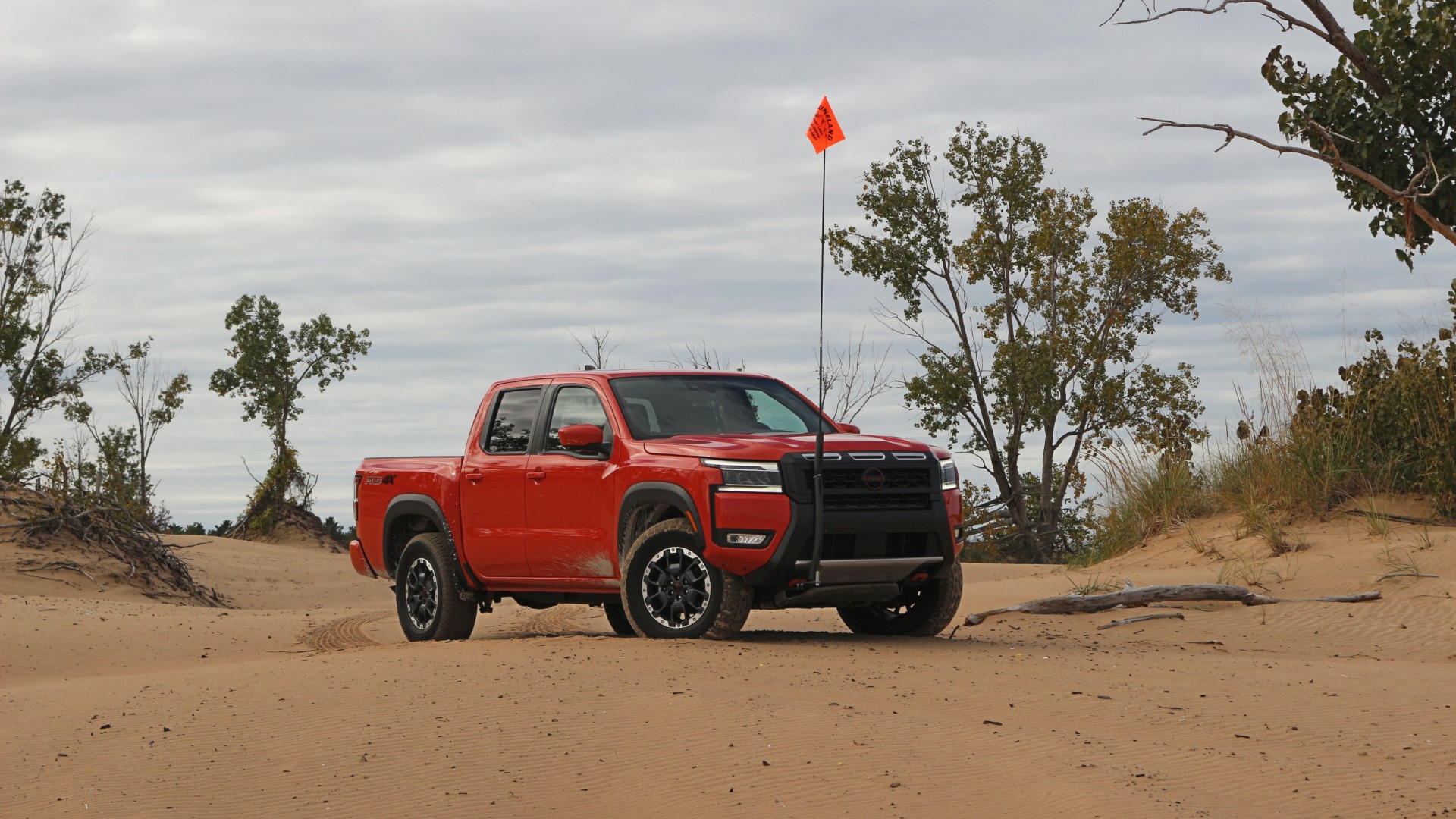
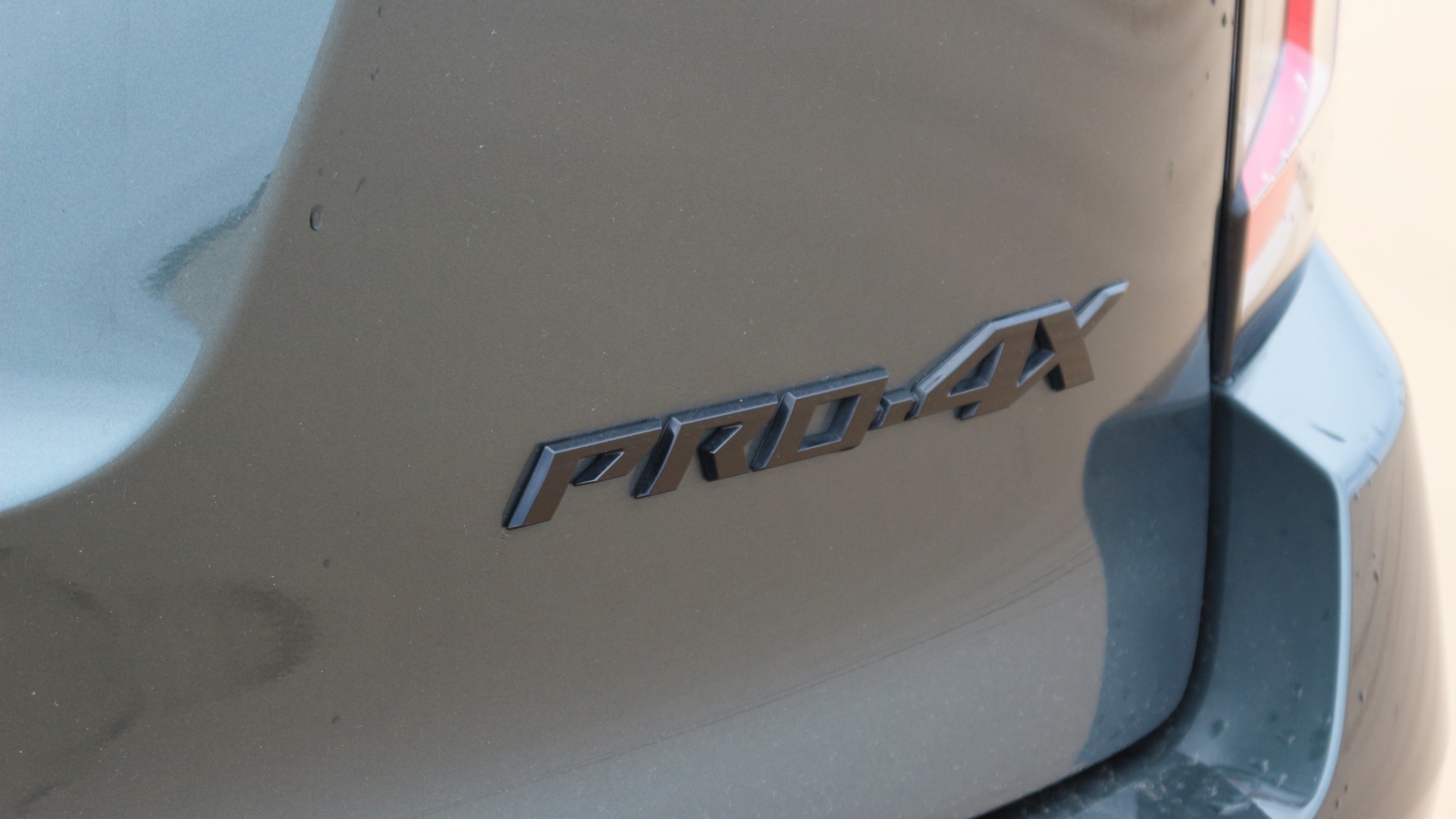
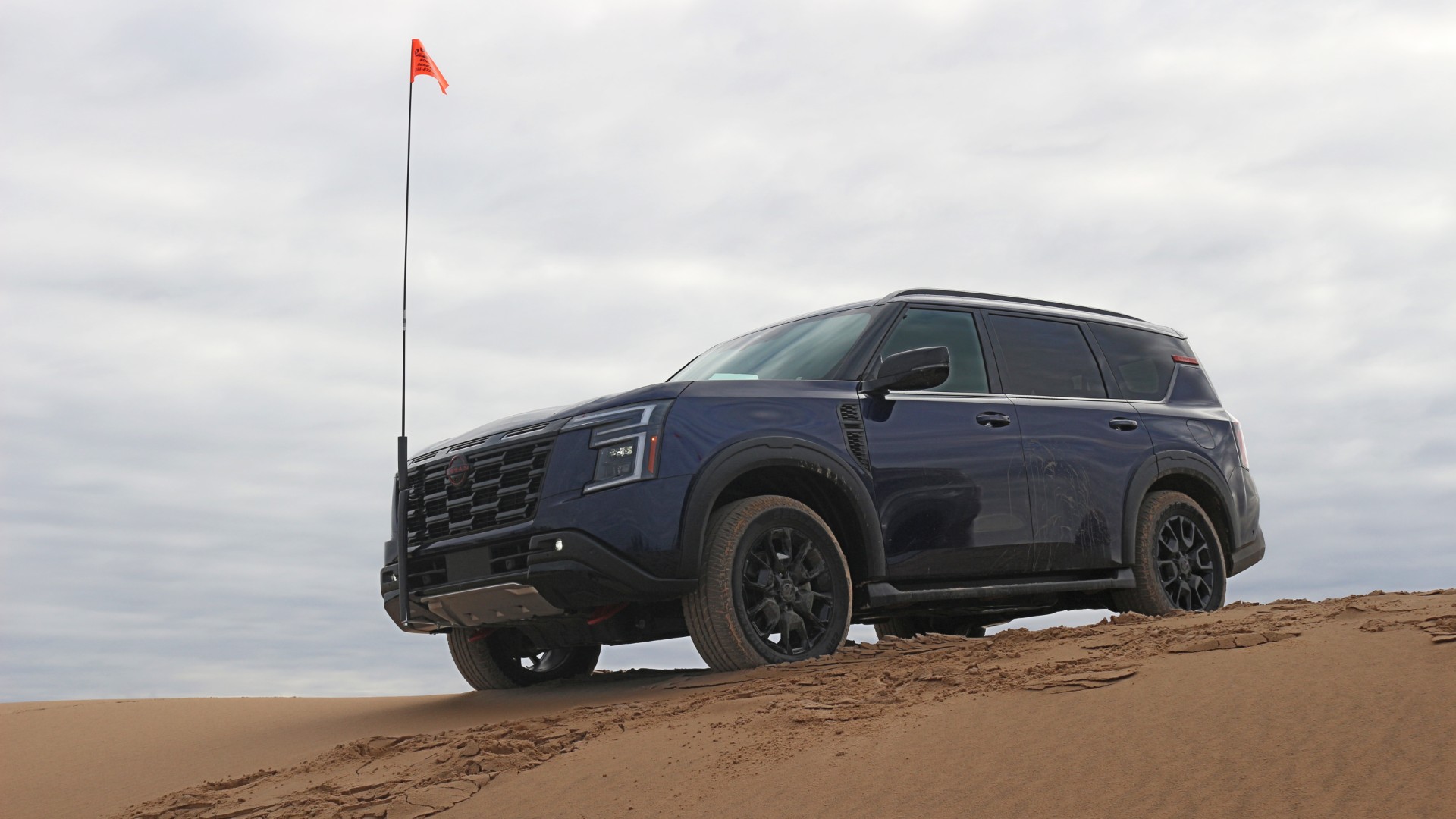
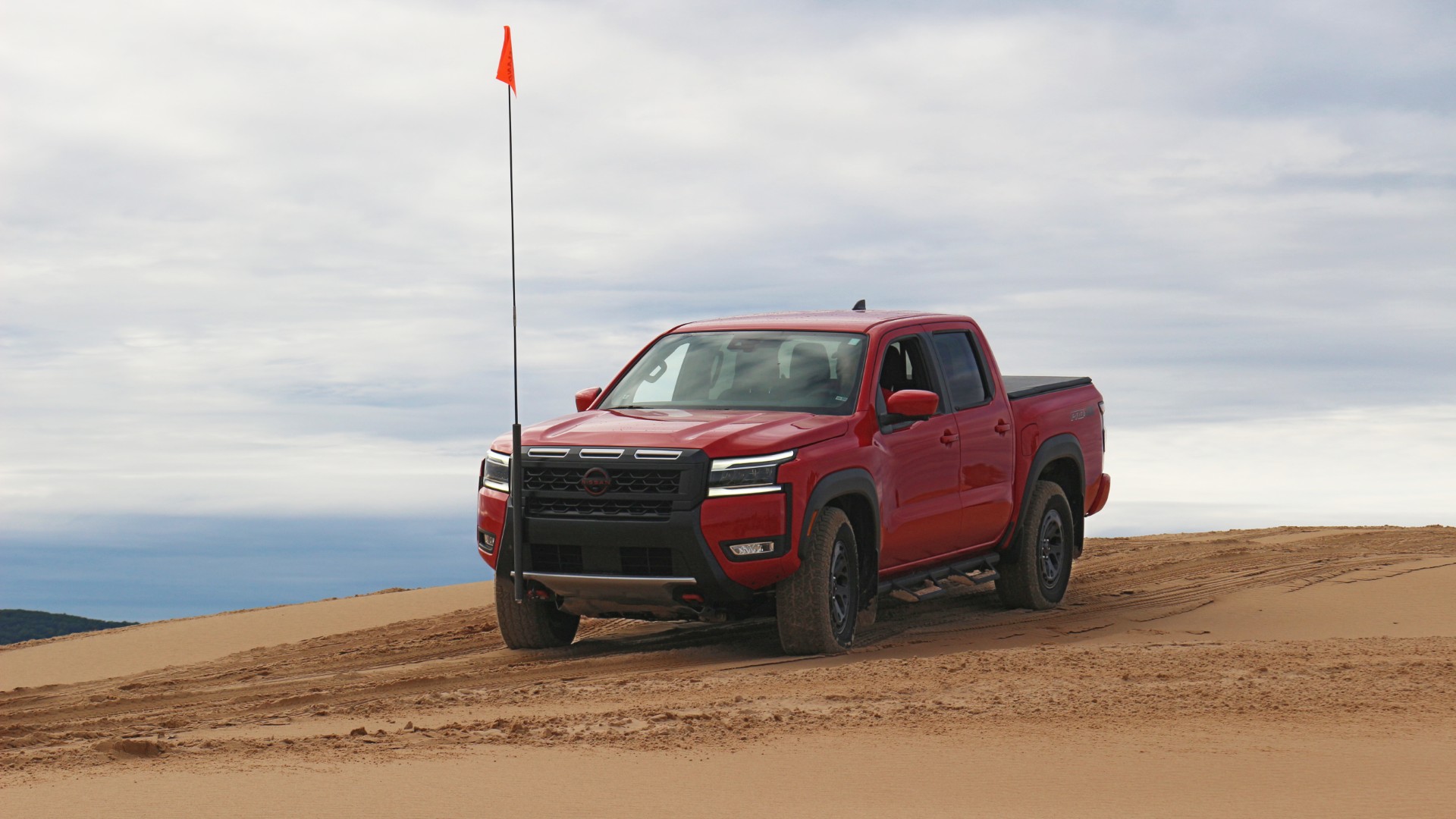
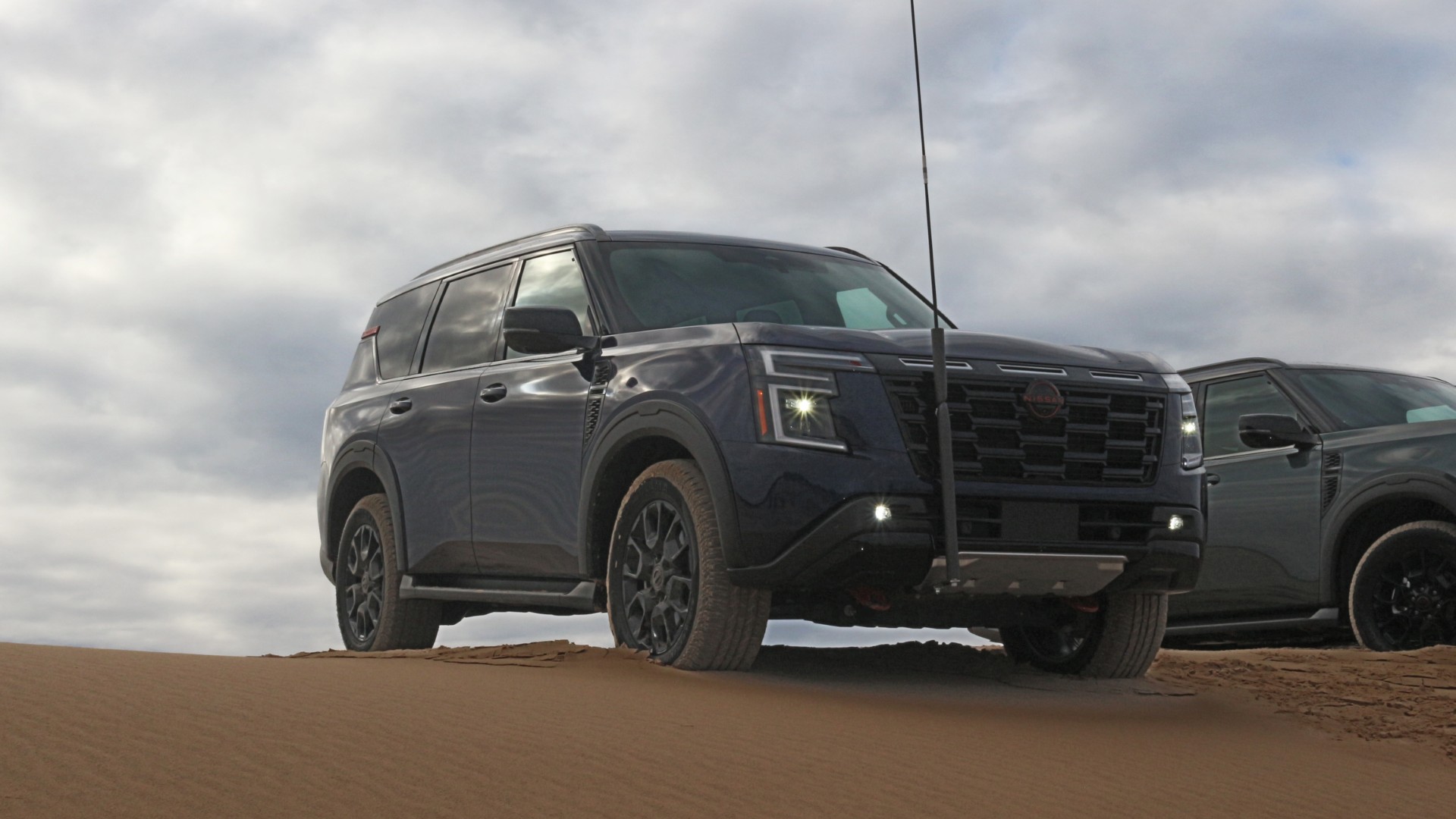
Pro-4X is Nissan’s dedicated off-road brand—a competitor to the Jeep Trailhawks and Toyota TRD Pros of the world. It’s synonymous with extra ground clearance, knobbier tires, and locking differentials—the sorts of things you want if you do serious wheeling. So when Nissan invited me to sample its lineup of 4×4-ready Frontier and Armada Pro-4Xes at Silver Lake Sand Dunes in western Michigan, I was immediately game.
What do all those mechanical upgrades translate to out here on sand? In a word: overkill. To be fair, we got lucky in the grip department. After a dry summer and early fall, our trip to Silver Lake happened to come on the heels of a burst of rain. Contrary to most other performance driving situations, water actually gives you better grip on sand, packing it heavy and tight beneath your tires. Dry sand behaves more like an uncooperative liquid than anything resembling a hard surface, gleefully flowing away from your contact patches. With enough grip, navigating Silver Lake comes down to ground clearance and a little bit of momentum—and the Nissans offer both in spades.
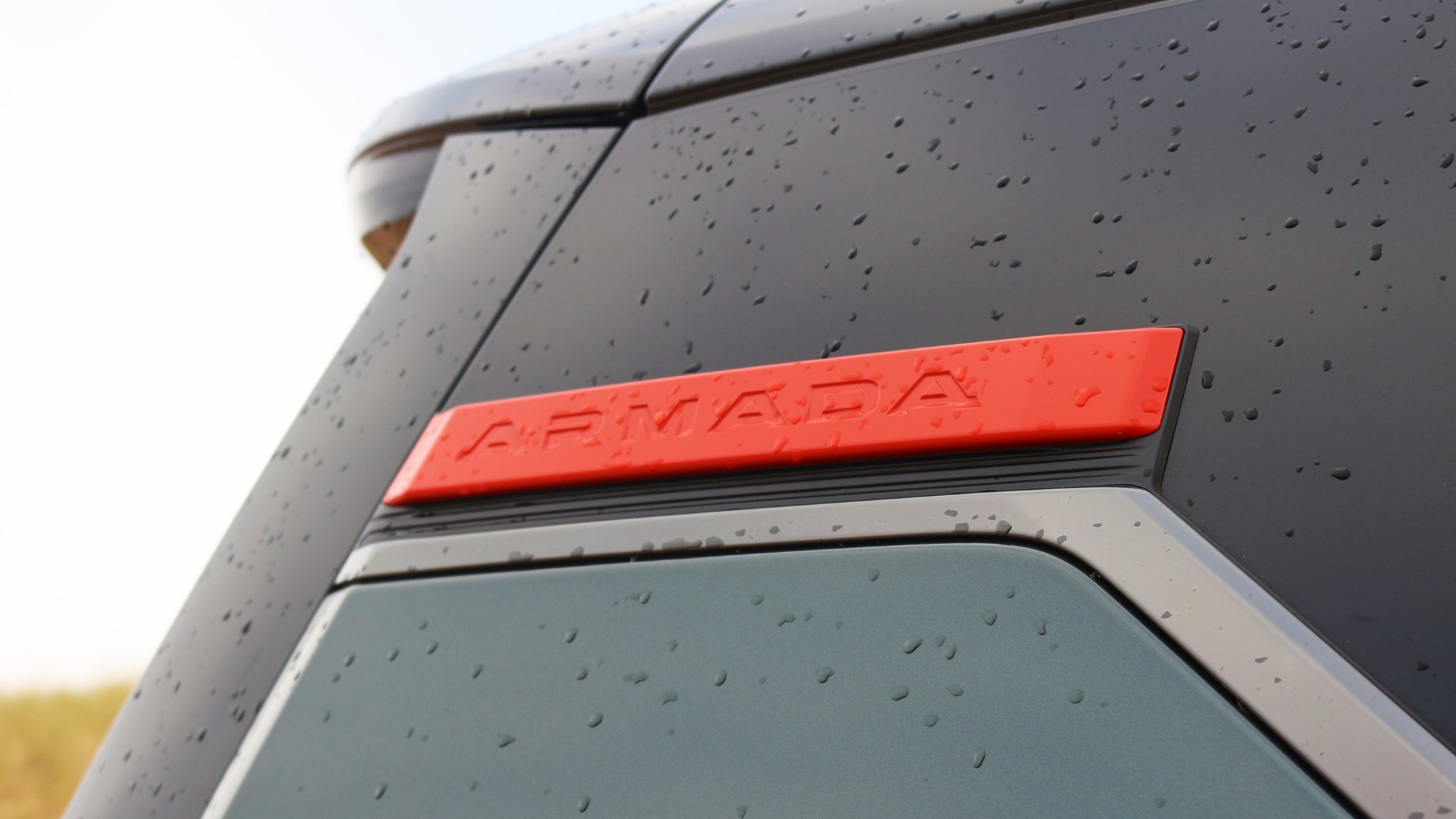
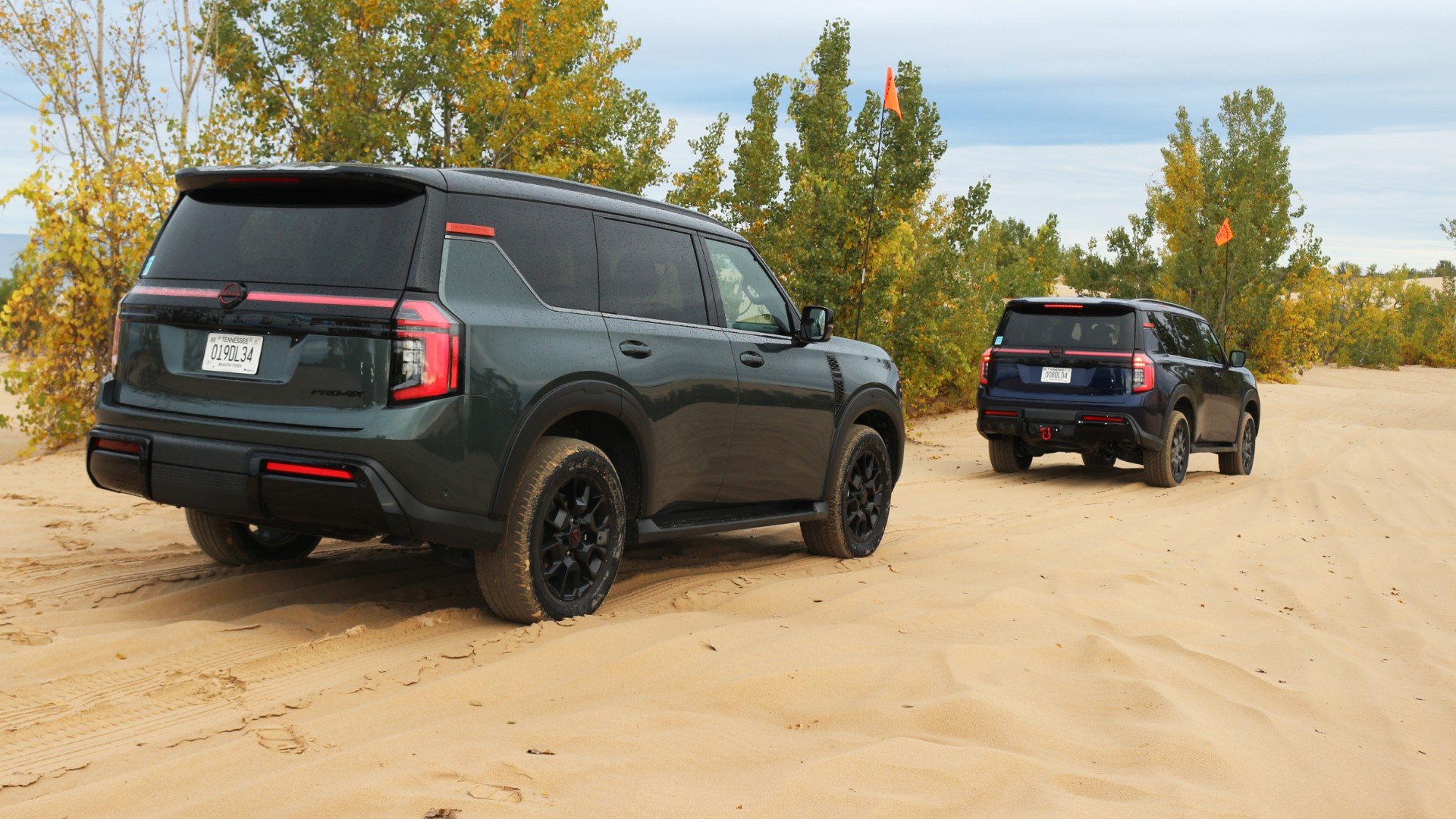
The former, of course, is baked in. In the case of the Armada, it’s further augmented by the settings of its fancy air suspension. You get between 9.6 and 9.9 inches of ground clearance with the standard car (and a bit less with the Nismo), but the extra lift baked into the Pro-4X and Platinum Reserve models provides another two inches on top of that, for a max of 11.6. The Frontier has to make do with a fixed ride height, but the Pro-4X has nearly an inch more ground clearance than the SV 4×4.
Momentum, however, is a different story. If you’re a racing fan, you might associate the term with cars that are down on power relative to their competitors and thus likely to struggle if they can’t capitalize on their typical advantages on technical courses. On track, momentum management can be the difference between finishing first and finishing last. Out here, it often determines whether you finish at all.
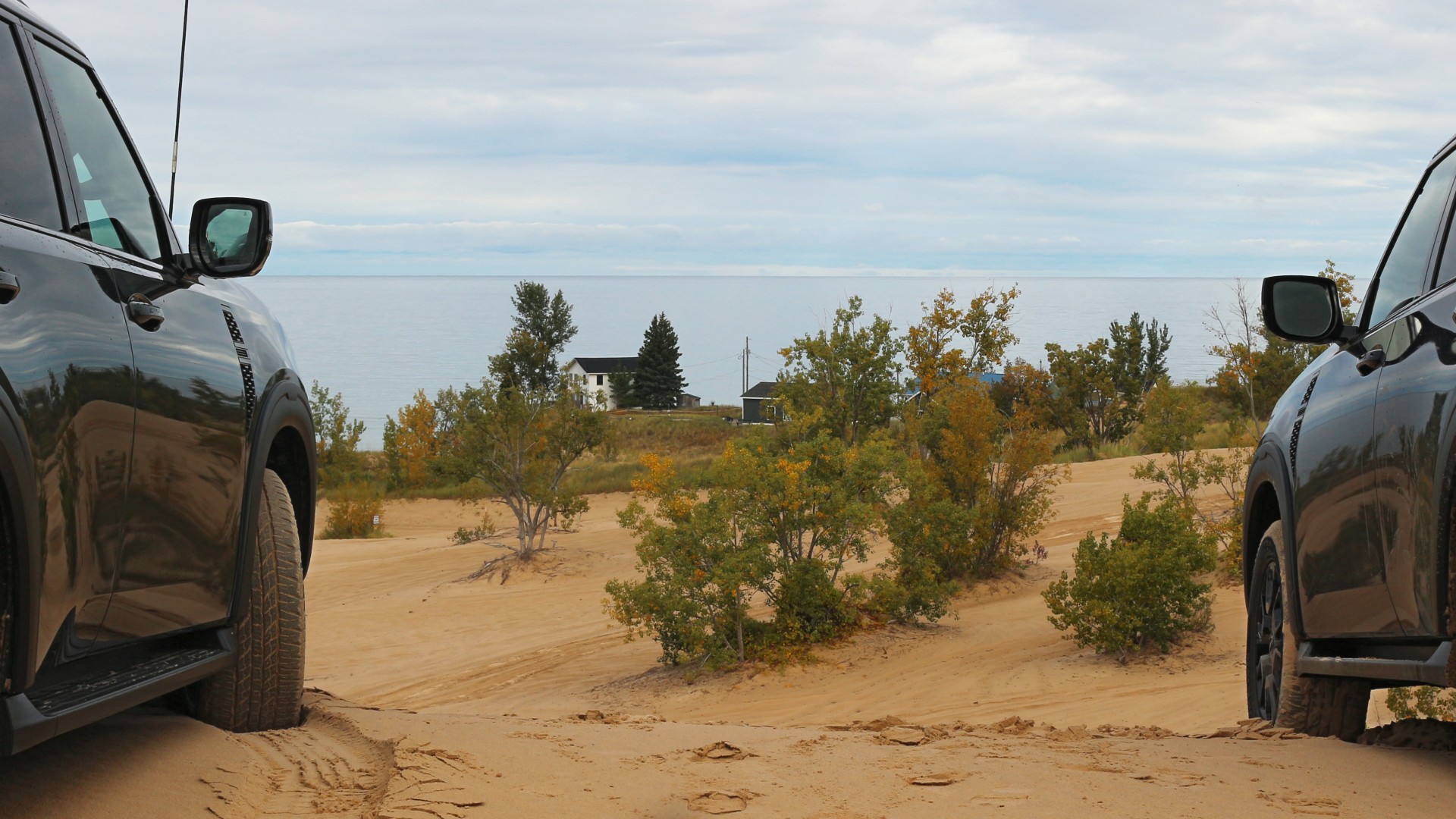
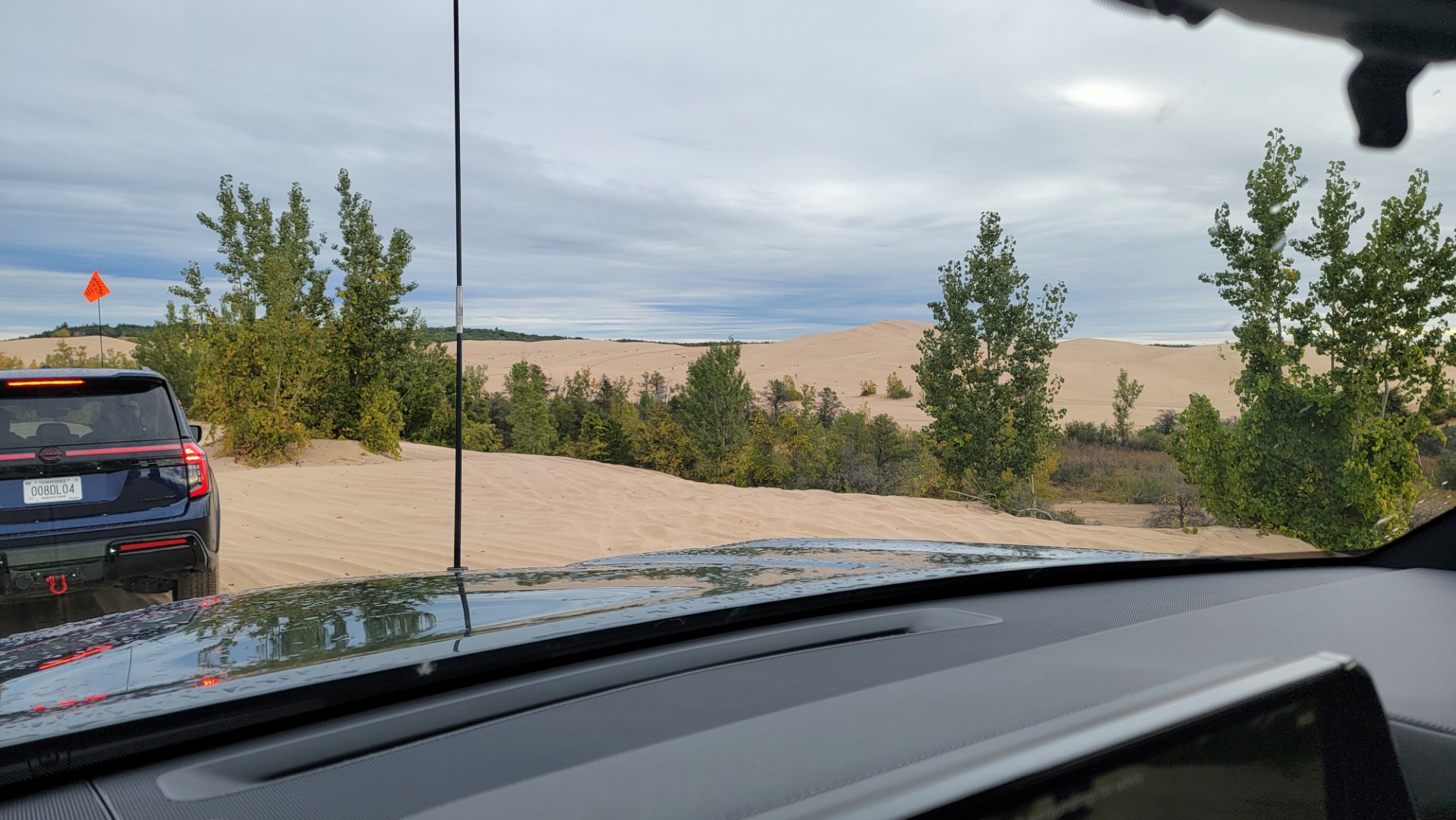
Despite my earlier allusions to wheel-to-wheel racing, this is what you might call more of a PvE (“Player vs. Environment”) type situation than PvP (“Player vs. Player”). That was especially true in mid-October, when we convoyed out to the dunes. By the time we arrived, the lakeside town had long cleared out for the season. 95% of the time, we had acres of park to ourselves in every direction. The effect was magnified after Nissan’s chase crew cut us loose with a radio and spoken assurances that they’d be able to locate us should anything go awry.
The rhythm of climbing sand dunes is simple to grasp but tricky to master. Ideally, you generate all the speed you need as quickly as possible, letting gravity bleed it off as you climb. If you time everything correctly, you’ll arrive at the peak with just enough inertia to tip your nose over the crest, but no more. Arrive with too little speed, and you’ll bog down before you reach the top. Get there too hot, and you’ll overshoot, which can send you ass-over-teakettle down the far side. I’ve seen it done, and frankly, I wouldn’t recommend it. Sand’s soft, but not that soft.
To make matters worse, the flow of the trail is constantly changing. Each trip up the dune is a hard reboot—a new surface potentially hiding new challenges. Driftwood? Small boulders? A cluster of millennia-old seashells? You never know what might get churned up—or worse, when somebody might get stuck and make a mess digging themselves free. And when inertia alone isn’t enough to get the job done, that’s when you call in reinforcements—in the form of torque, naturally.
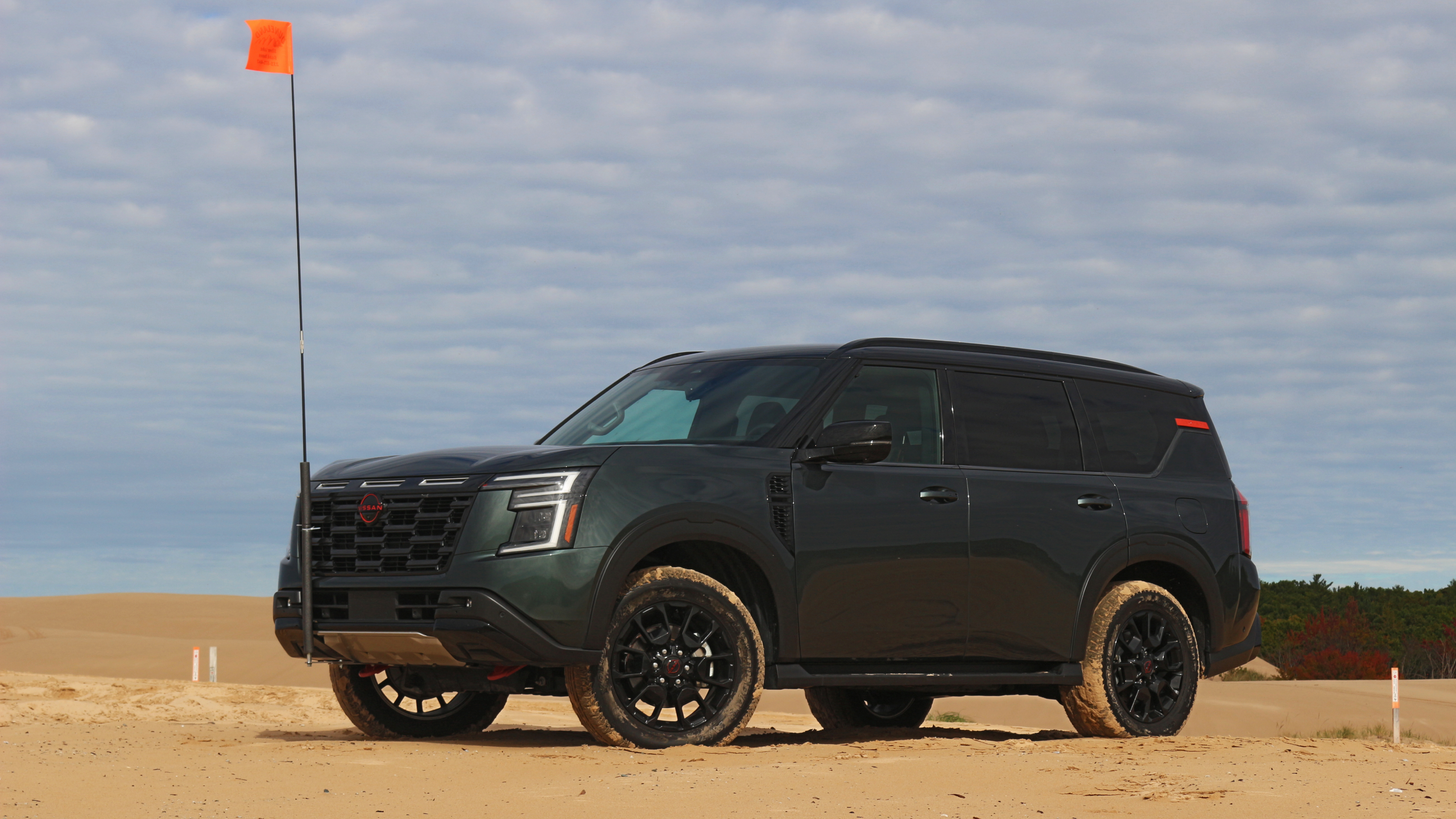
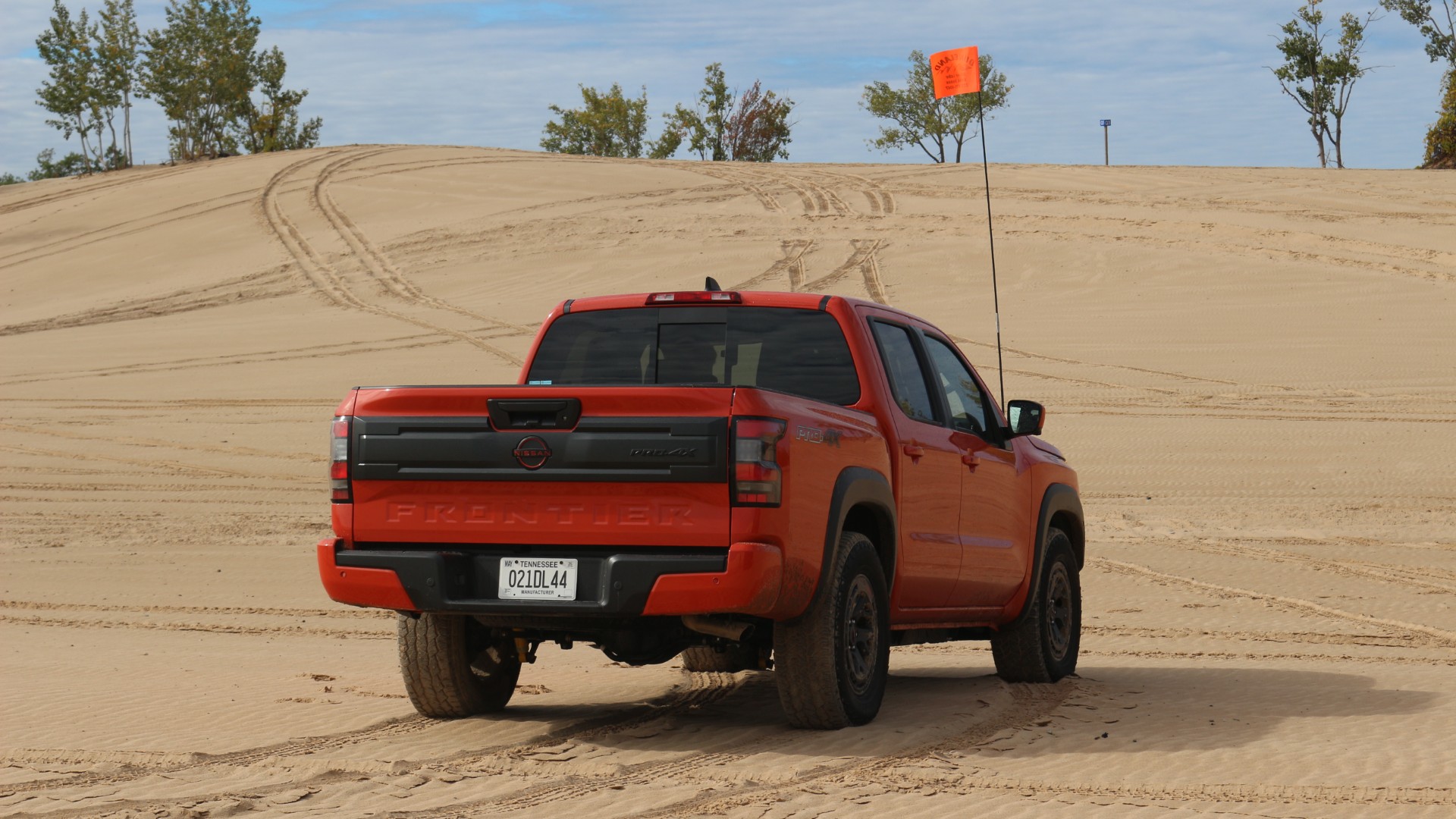
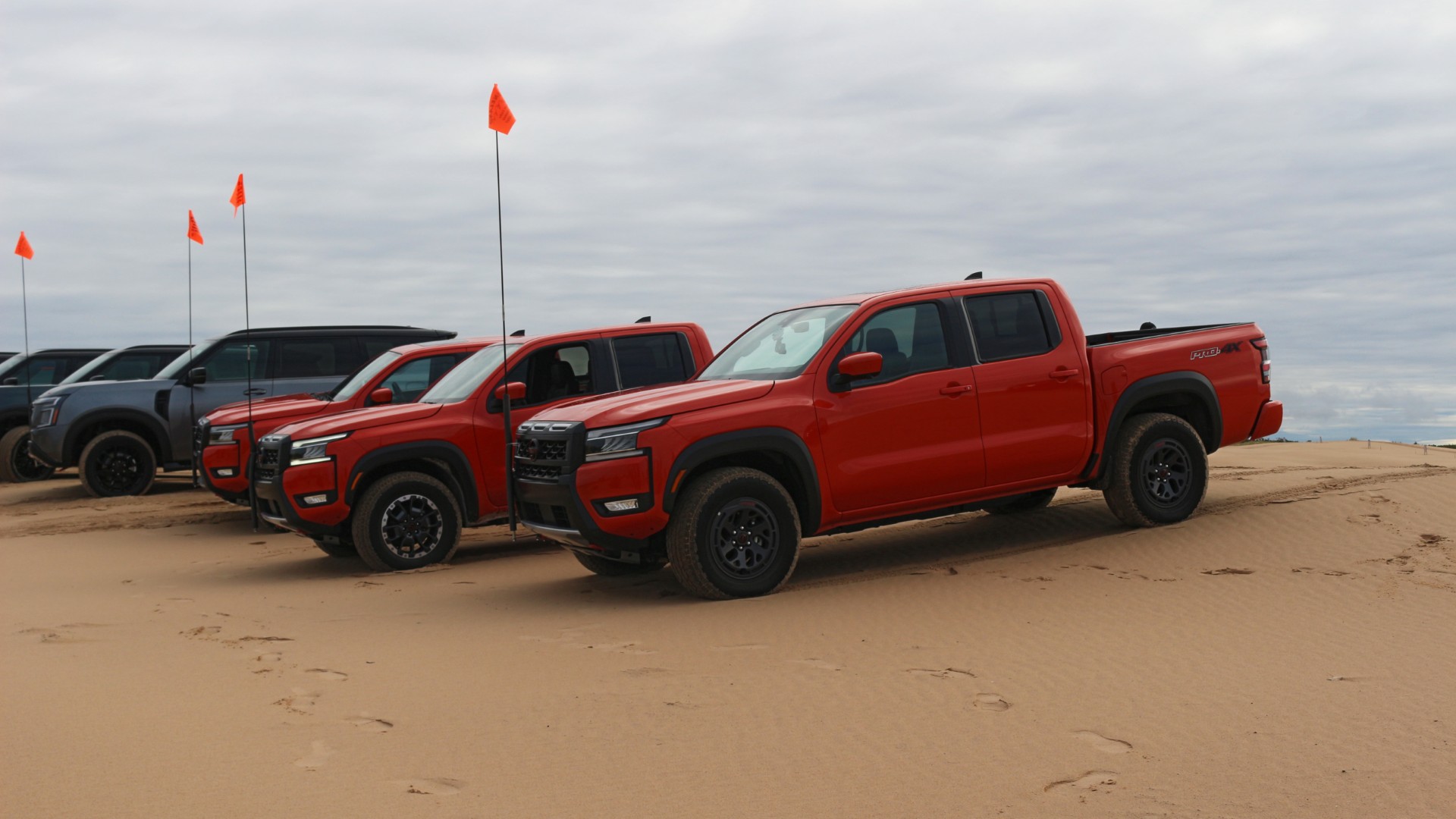
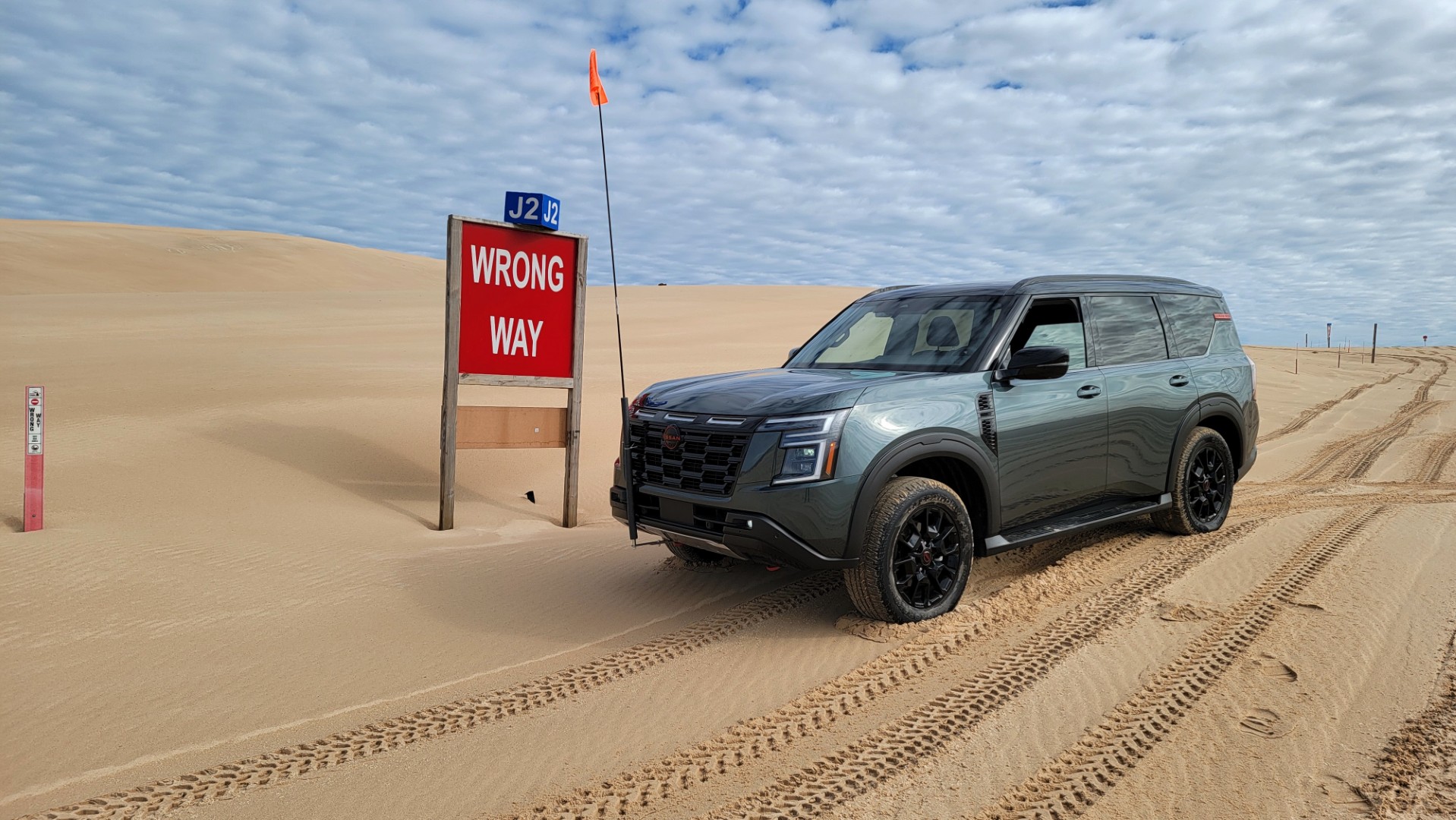

There are two levers to pull in order to increase your available torque: engine output and mechanical multiplication. The first is exactly what it sounds like: By stepping on the throttle, you feed the engine more air and more fuel, which it then converts into torque. The second is a five-dollar way of saying it all comes down to what gear (and range) you’re in.
Enthusiasts get all fizzy over two-speed 4×4 transfer cases for exactly this reason. By shifting into low-range, you multiply the torque going to the wheels at a given speed. This shortens all of your gears, meaning your engine spins at a much higher RPM than normal to achieve the same forward velocity. Translation? Lots more noise producing and a lot less forward progress. Sounds bad, right? Usually, it would be, but out here, it means you can produce WAAAAAH! levels of torque without WAAAAAH! levels of forward progress.
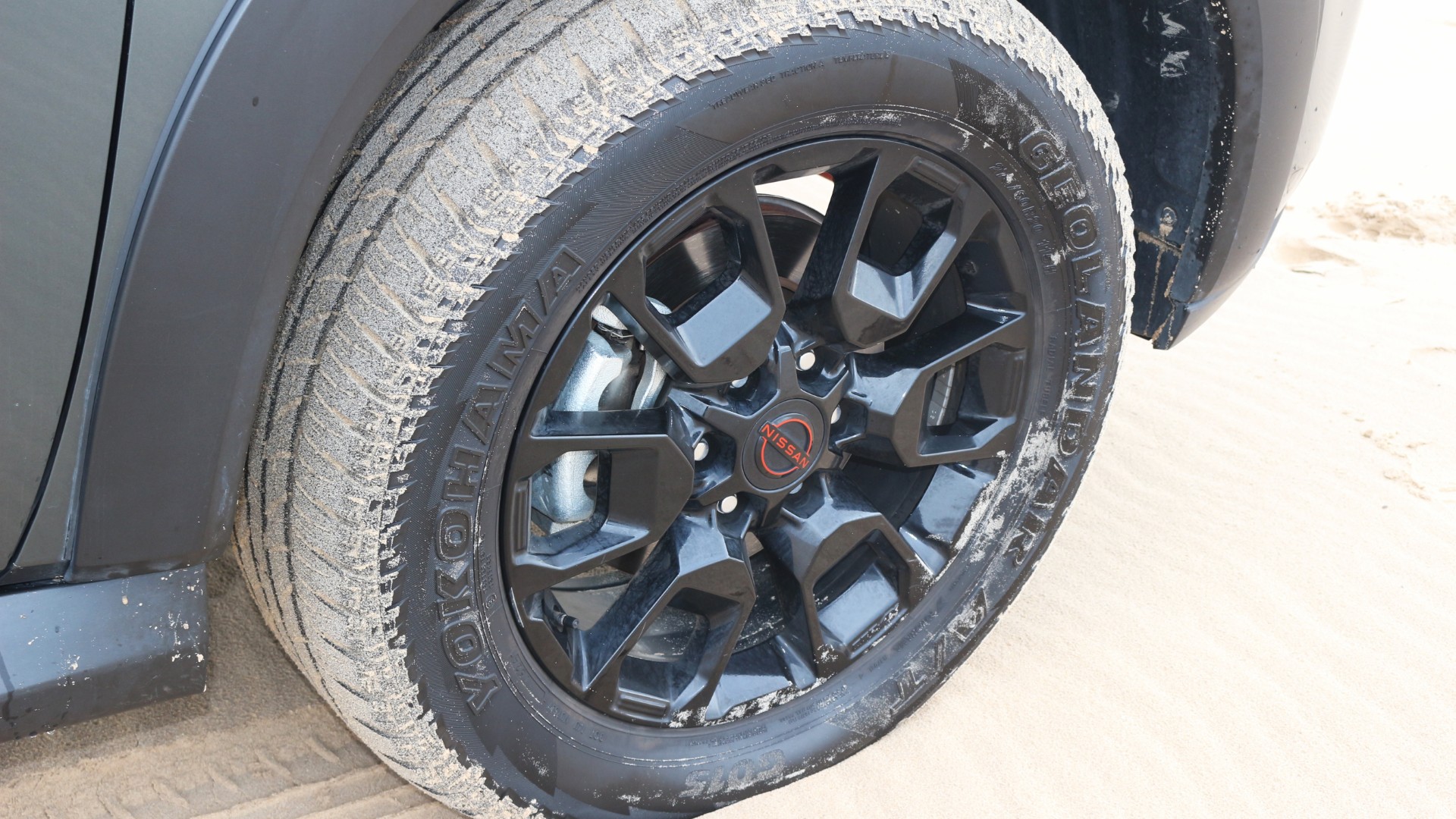
Normally, deep sand is exactly where you’d want a low-range gearbox and locking rear differential, which is why Nissan only bothered to bring Pro-4X models along for our outing. But with all the rain, the top layers of the dunes were packed solid, inviting tires to grab with very little drama. Four-wheel drive was still mandatory, but low-range proved unnecessary. Manually selecting second gear to keep the trucks from up-shifting into the torqueless abyss of fuel-efficient ratios proved more than enough to keep the engines operating within the meat of their respective power bands, and the tires were aired down to aid in keeping the trucks afloat on the crushed white quartz that emerges from eastern Lake Michigan.
My first stop on my solo expedition was the same one visited by countless others over the decades of 4×4’ing at Silver Lake: Test Hill. Its name says it all, really. If you can get up Test Hill, you can go anywhere in the park. It’s a climb of less than 200 feet, and if you do it right, you should complete it in seconds. Get it wrong, and you’ll gain new appreciation for just how high that really is.
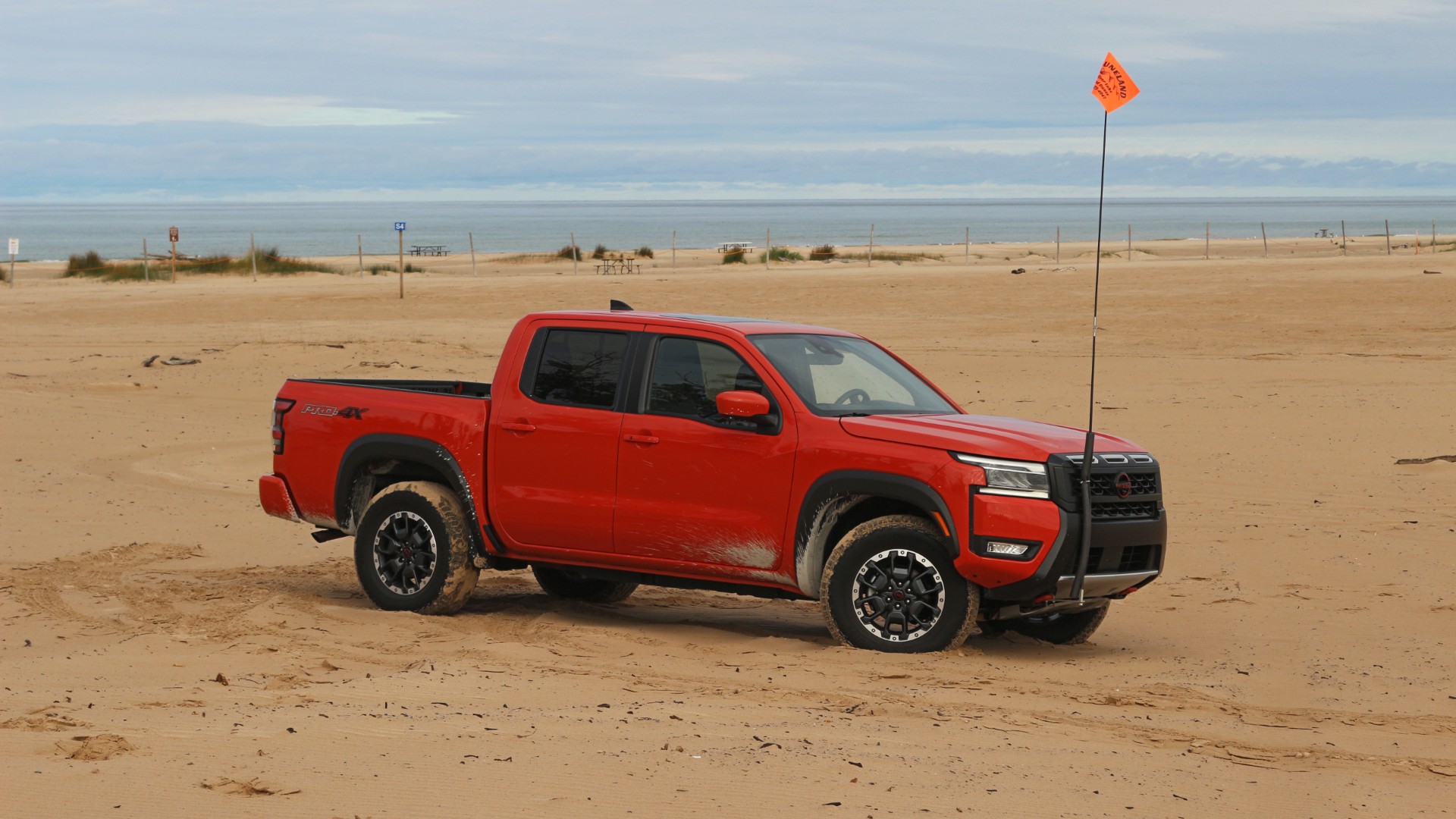
My first go was in the Frontier, which lacks the Armada’s turbocharged torque (516 pound-feet!). Still, 281 lb-ft is nothing to sneeze at, and like the SUV, the pickup allows for manual gear selection. I hadn’t driven this truck at all until today, and my familiarization with the powertrain came from the two-minute crawl from our beachside staging area to the base of Test Hill. A few hundred yards away, I could see one of our recovery trucks parked where its occupants could quickly deploy to the stickier spots should anybody need assistance. I decided then and there not to be that guy.
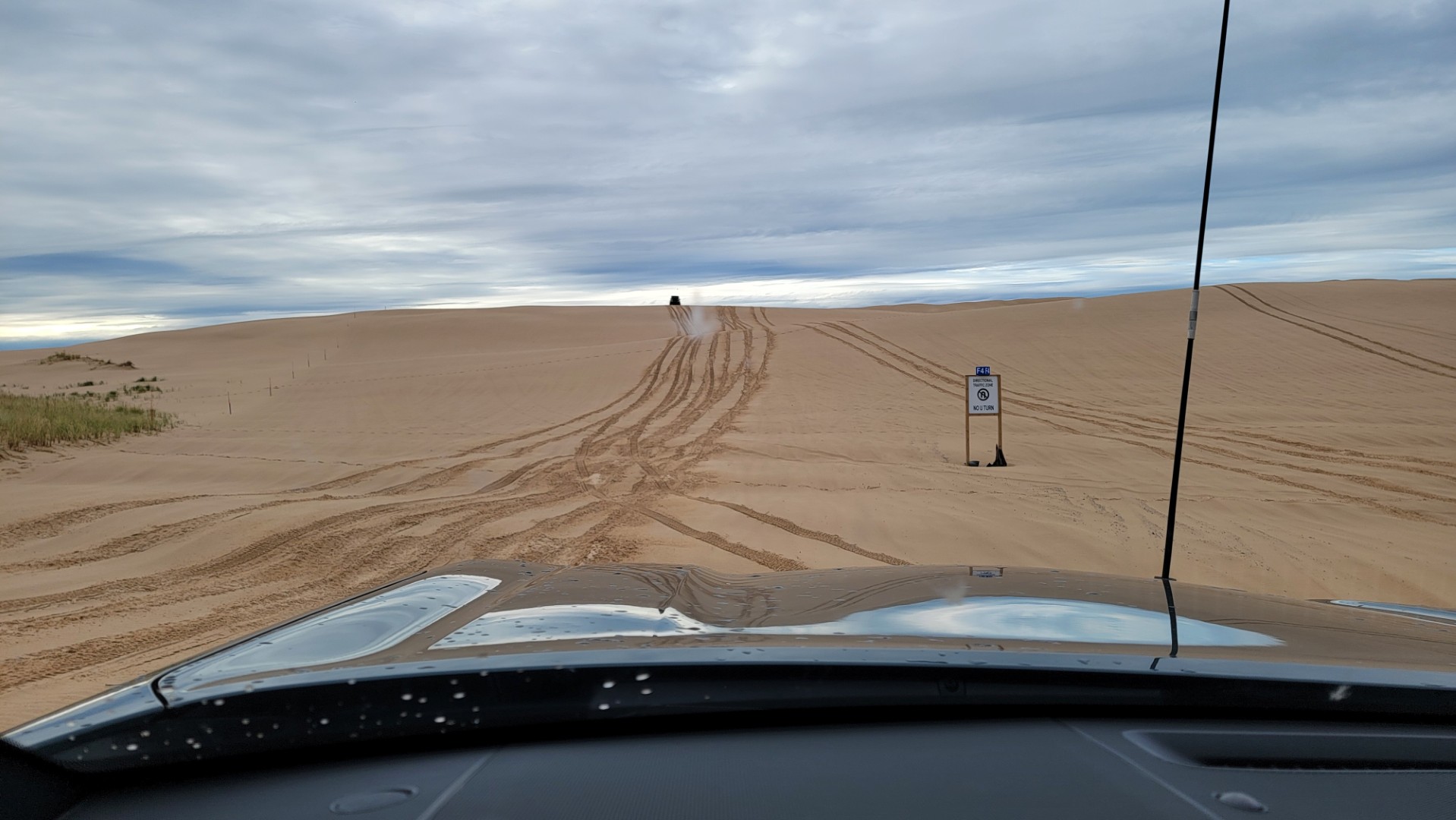
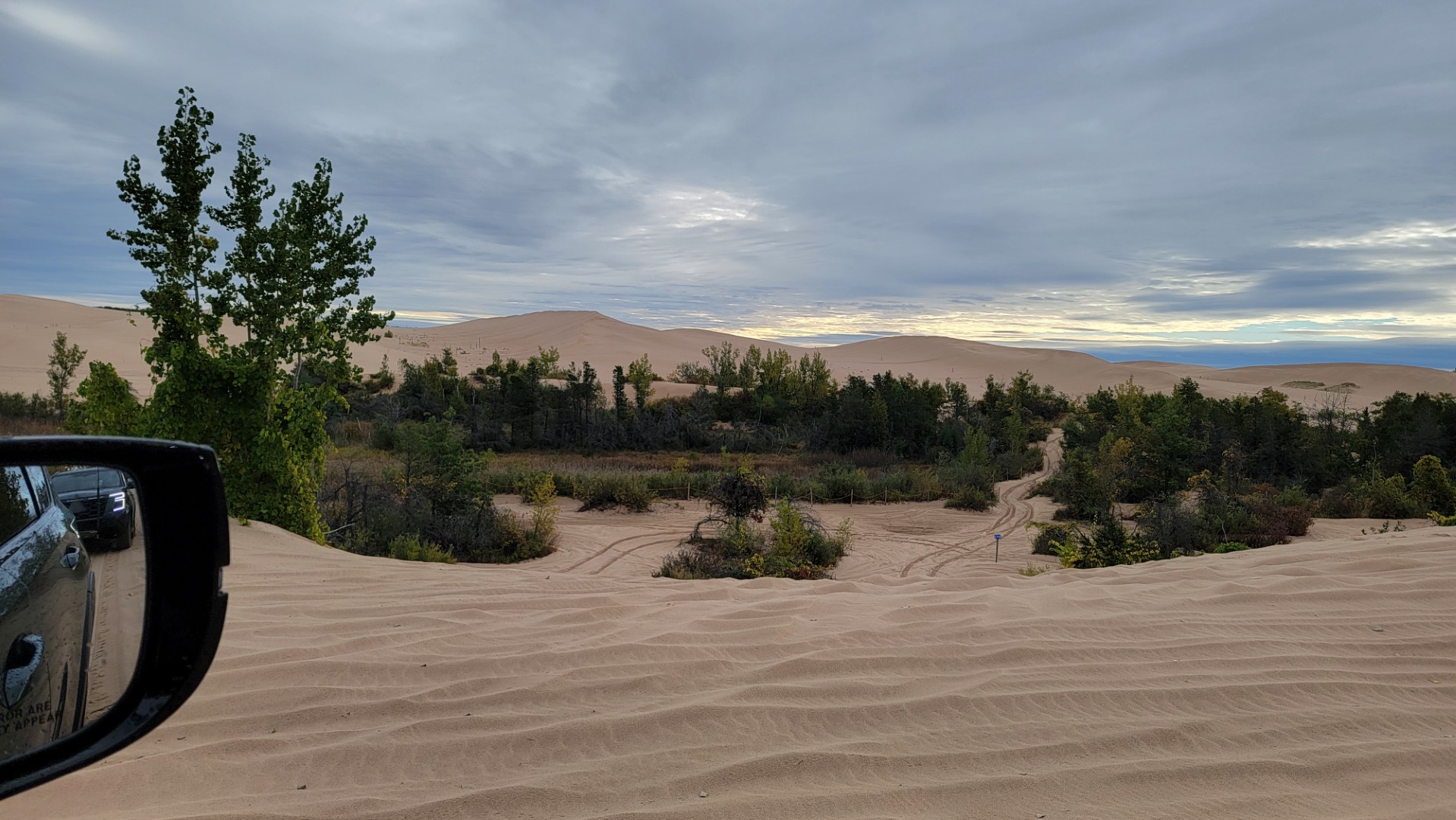


With that in mind, I gave the Frontier about 60% throttle and dedicated my attention to keeping it pointed straight ahead. It not only lacks the Armada’s grunt, but also its heft, especially over the rear axle. It bucked and wiggled its rear end under throttle, alternately biting and then bouncing free as the sand gave way beneath the tires, but with a little finesse and some patience, it found the ruts and settled—just in time for the top of the dune to disappear beneath the Frontier’s hood, followed by the brief sensation of vertigo as the front wheels gently tipped over the crest.
Not today, tow strap!
Committing to Test Hill means committing to several more massive crystalline undulations. This section of the park is one-way due to dangers that would be posed by blind, two-way traffic over the sky-scraping crests. Each successive dune is easier to clear than the one before it, but all are unique. One nearly bends over itself at the top—that’s one you really don’t want to take too hot. Counting the seconds until your wheels touch back down sounds awesome in the abstract, but it’s a bit dicier when your clenched cheeks are about to absorb the brunt impact.
After I concluded my tour in the Frontier, I made my way back to the staging area to find somebody looking to trade their Armada for the pickup. Before long, I was back at Test Hill in the big SUV, waiting on a small buggy of some sort to free itself from its high-centered perch atop the dune. I glanced toward where our recovery crew had been staged earlier and found them missing—probably checking in on another driver, as I’d heard nothing at all over the radio. So I sat while the recovery played out. Once the way was clear again, I saddled back up and charged at the dune in the big Armada—only to bog down completely just short of the crest.
No sweat, though—the trick is not to panic. Off-roading is a hobby defined by one of our best-known societal maxims: If at first you don’t succeed, try, try again. In this case, that means backing down the dune to the starting point and starting from scratch. It’s simple enough, but you have to be careful about keeping the thing pointed straight downhill. If you get too much steering angle, it’s easy to lay the truck on its side—or even roll down the hill completely. Yep, seen that too.
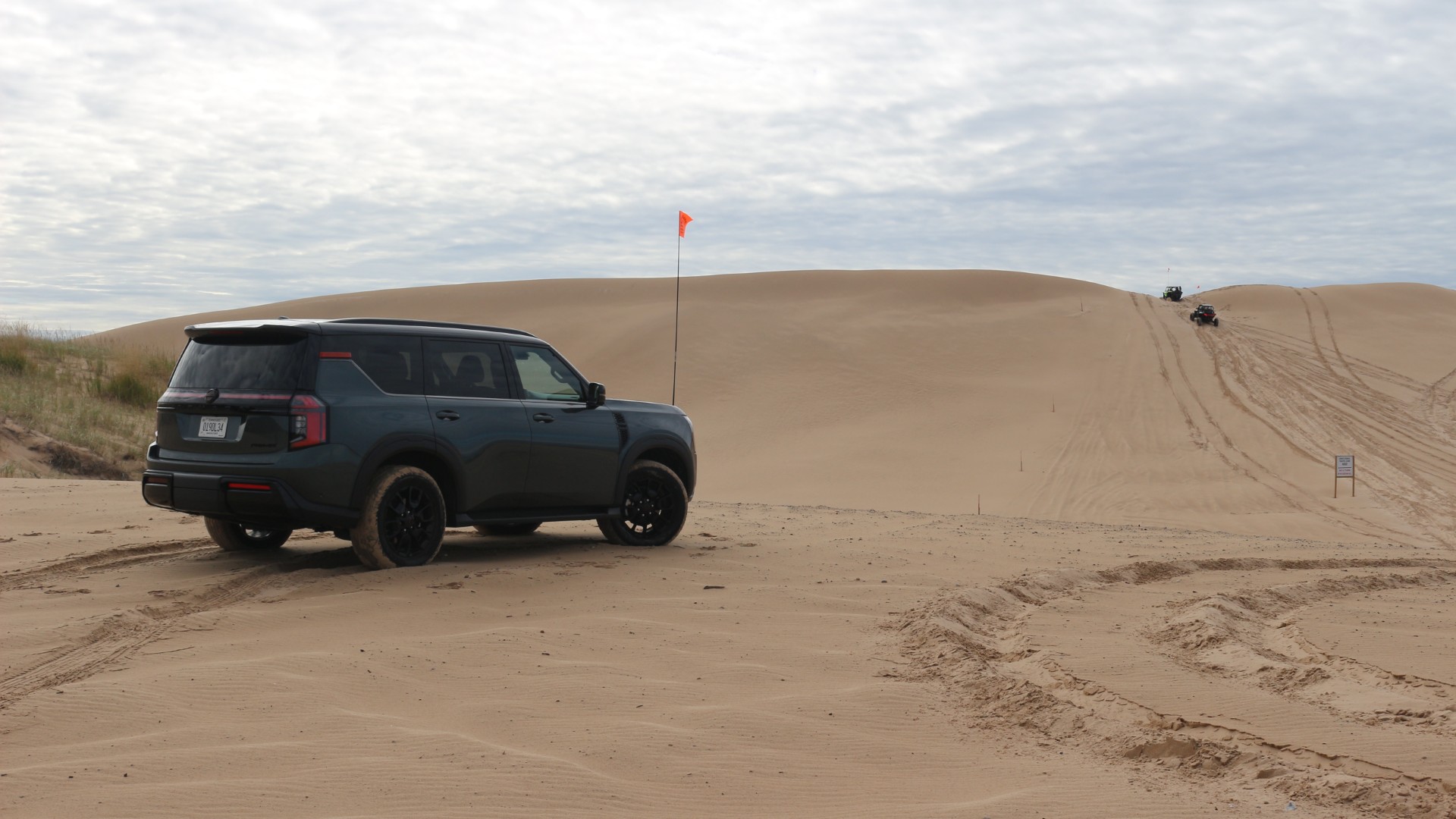
But 30 seconds later, I was back at the proper launch point, shiny-side-up and ready for another try. I glanced again to find that the recovery crew had returned to its perch with their truck facing Test Hill—like a turkey vulture curiously eyeing what might be a sick bull.
No chance, you ugly, bald f-
I sent some gnarly rooster tails up on the second go, and the way the Armada bit in, I knew I was golden. As I approached the crest, I saw the huge concave area that the buggy had scrubbed out. Just as it disappeared beneath the hood, I goosed the throttle for a fraction of a second to bring the nose up, hoping it would keep the front bumper from coming down on the crest and killing my momentum. It worked. By the time the nose rebounded toward the ground, the front axle was already dropping away beneath me, and with just a mild dab of brake to keep the rear end honest, I was once again gently descending in the right direction. High on the clean finish, I made my way through the park and back around for another go, which ended up being unremarkably trivial.
This is the second time I’ve visited the dunes. My first was at the wheel of a Ford F-150 Raptor R alongside The Drive’s indefatigable Joel Feder. While that’s a very different automobile from the two Nissans I drove this time around, the experience proved comfortingly familiar for one simple reason: Modern 4x4s are just stupidly capable.
Decades ago, a discussion of must-have factory off-road equipment usually began and ended with steel bumpers, upgraded axles, and two-speed transfer cases. Today, we’re constantly being bombarded by new tech that further trivializes what used to be car-thrashing obstacles. In today’s increasingly massive 4x4s, items like surround-view camera systems and hill descent control can actually enable trickier maneuvers than any commercially available lift kit.
As depressing as that reality may be for some, the simple fact is that the automotive industry has left the short-wheelbase, two-door 4×4 formula behind in favor of modern engineering solutions that allow OEMs to fit massive wheel and tire combinations to mid- and even full-size trucks and SUVs. Even AEV, which prides itself on offering capability without real-world compromises, is finding ways to stick 40-inch tires on anything with four wheels—and the resulting vehicles are genuinely more capable for it.
Can the same be said for Nissan’s Pro-4X lineup? In the case of the Armada, I say yes. Its air suspension keeps it from turning into a tippy mess on pavement and offsets the NVH impacts of its burlier tires. That’s a trade-off I’d accept in a heartbeat. The Frontier’s value proposition is a bit trickier since it doesn’t offer anything to offset the downgrade in creature comforts. For the pickup buyer, however, that may not matter much. It certainly wouldn’t around here.
Got a news tip? Let us know at tips@thedrive.com!
Loading comments…
Comments couldn’t be loaded. Please refresh the page.