
“I wish there was a way to know you’re in the good old days before you’ve actually left them.” – Andy Bernard
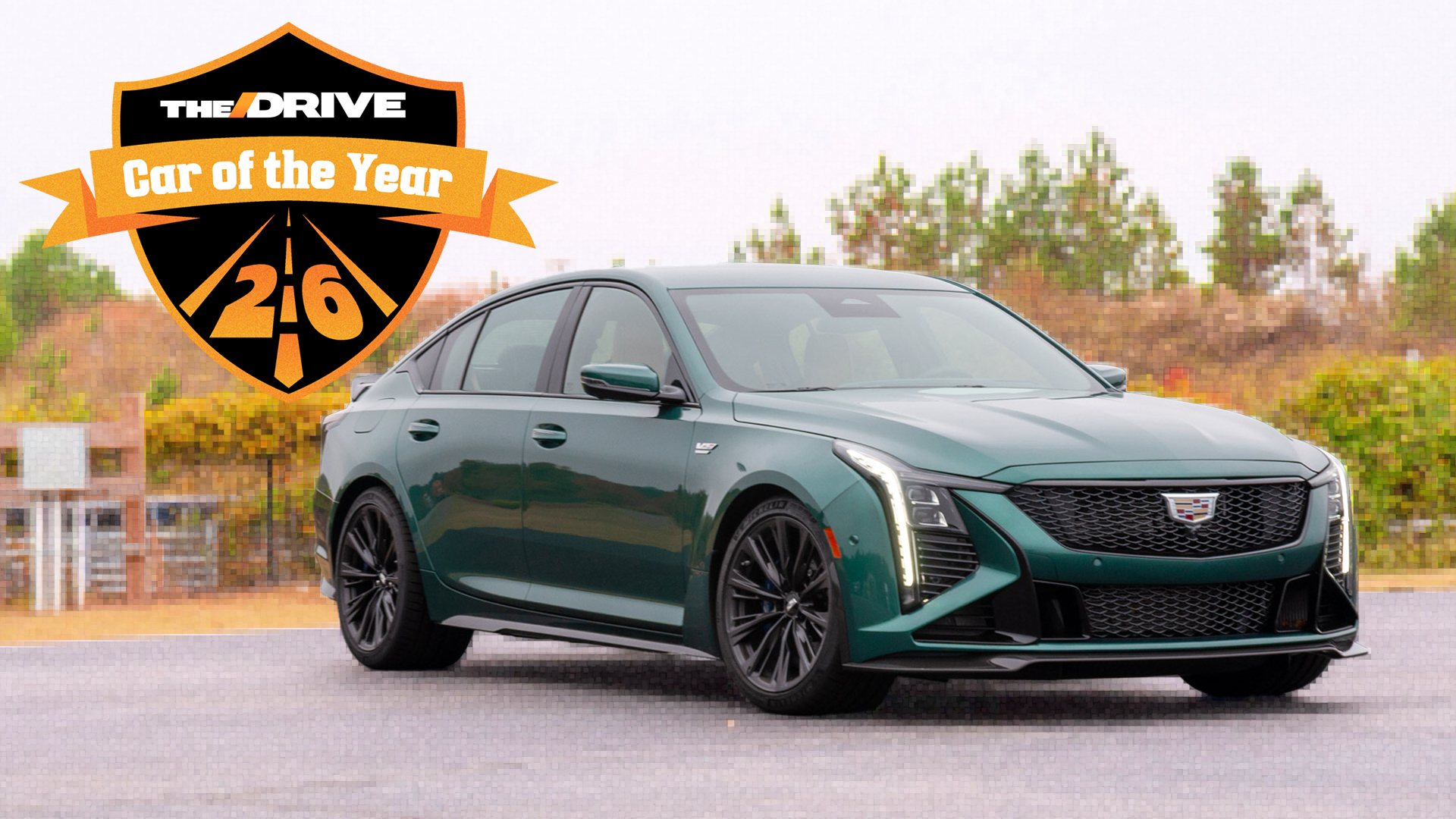
That quote from The Office series finale has lodged itself in pop culture as a perfect encapsulation of how hard it can be to appreciate the beautiful things in life right now until you’re far down the road. But apologies to Mr. Bernard: he’s wrong. There is a way to know, and it’s called driving the Cadillac CT5-V Blackwing, The Drive’s runaway winner for the 2026 Car of the Year.
By now, I don’t need to ramble on about how the auto industry is convulsing with massive and historic changes. You all live it every day. Electrification, software-defined vehicles, screens, crossovers, ugly designs, too-bright headlights, sky-high prices, death of the manual, monster-truck-sized pickups, et cetera. How could any reasonable person call this the good old days?
But that’s exactly my point. The good old days only become the good old days through the passage of time and the benefit of perspective, but the reasons you remember them that way are with us right now. So let me try to jump you 30 years into the future to the year 2056, when Chinese self-driving blobs have completely taken over American roads, 80 percent of the market is EVs or plug-in hybrids, stick shifts are actually dead, and car enthusiasts are seen more like, I don’t know, model train collectors. You pull out a dog-eared copy of Car & Driver from 2026 from a stack in your garage, gaze wistfully at a photo spread of the last rear-wheel-drive luxury sedan with a stick shift and a supercharged V8 ever made, and think Man. Those were the days.
They were, and boy, they are. Even with all the shit car people have to trudge through today, the Cadillac CT5-V Blackwing is one that makes the fight worth fighting. There is literally no other car like it left on the market: an absurdly engaging driving machine breathing a fiery 668 horsepower through eight cylinders of fury, controlled by a snickety-snick Tremec six-speed manual, all wrapped up in a classic luxury sedan form.
It is an apogee, a capstone, a monumental achievement for enthusiasts. And it’s also an end, as GM recently announced it’s going out of production this year. Grimly ironic timing given Cadillac’s new foray into F1 racing, but I digress. Knowing it’s almost over, we simply couldn’t let it slip out of our lives without first handing it our highest honor.
Runner-Up: Rivian R1T Quad
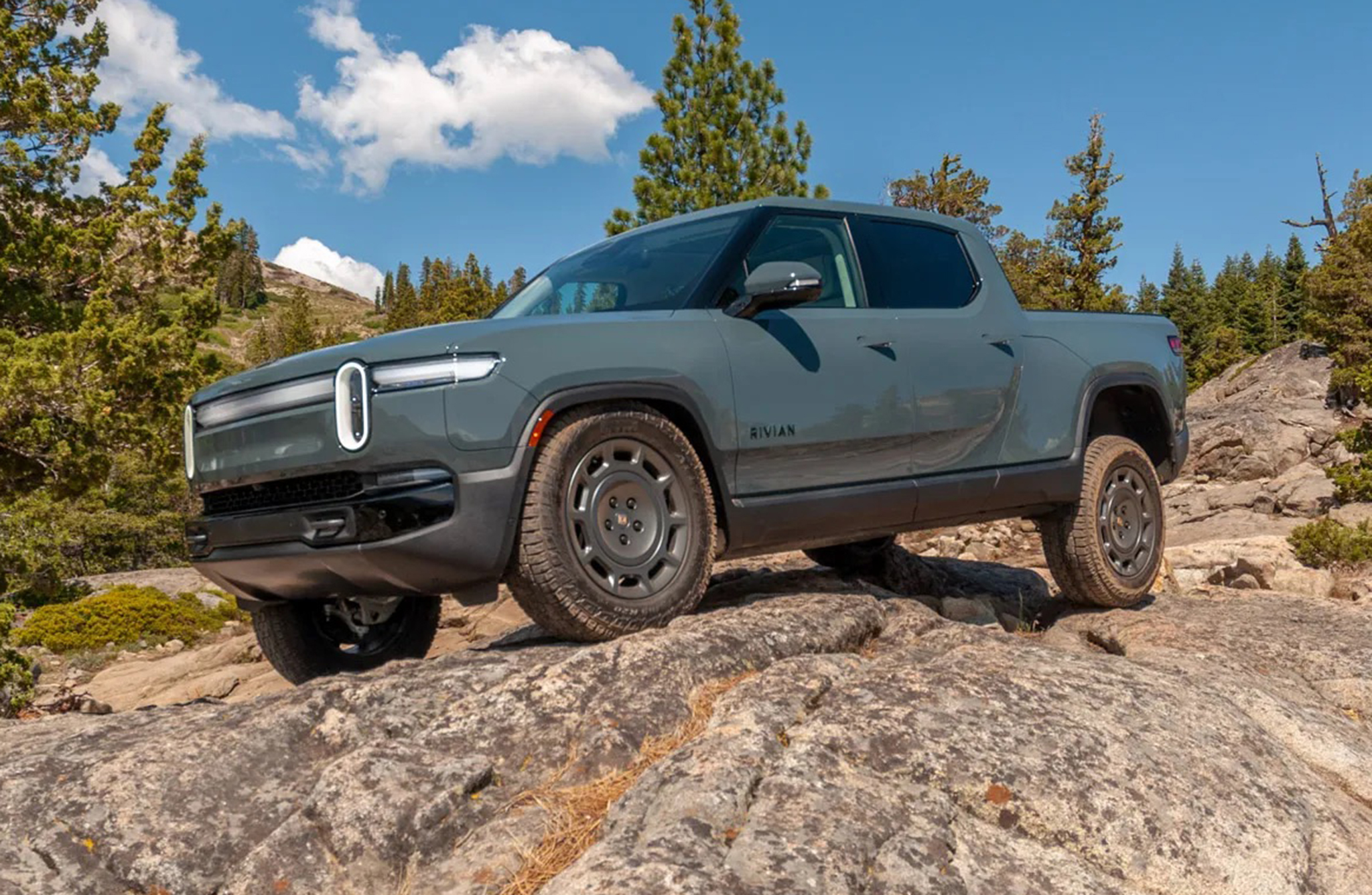
Another kind of publication—a less considered one, I’ll say—might’ve given its COTY award to the Rivian R1T Quad, also an incredible achievement that Joel just won’t shut up about. This new-generation Quad might not look all that different, but under the metal, Rivian completely upgraded it with four new oil-cooled motors that can actually stand up to off-road abuse, all-new electrical zonal architecture that allowed it to remove 1.6 miles of wiring and cut down the number of ECUs from 17 to seven, a NACS charging port, the RAD tuner for superfine powertrain adjustments, and the long-promised 360-degree Kick Turn function that can be used while in motion on tight trail turns.
Whew. That’s a lot. And so is the R1T Quad with over a thousand horsepower and over 370 miles of EPA-rated range. It’s almost too much, which is why it didn’t win The Drive Award for best EV or car of the year. But unlike every other vehicle on this list, it’ll only get better with time thanks to Rivian’s aggressive roadmap for over-the-air updates. Case in point: in December, Rivian announced the expansion of its Universal Hands-Free driving system from 150,000 miles of roads in America to 3.5 million for the Quad and other second-gen R1 trucks. (Free for now, but it’ll cost $49.99 a month or a one-time charge of $2500 starting in Q2.) And a new AI-powered voice assistant that can control just about every major feature in the vehicle is slated to roll out sometime this spring.
Runner-Up: Honda Civic Hybrid
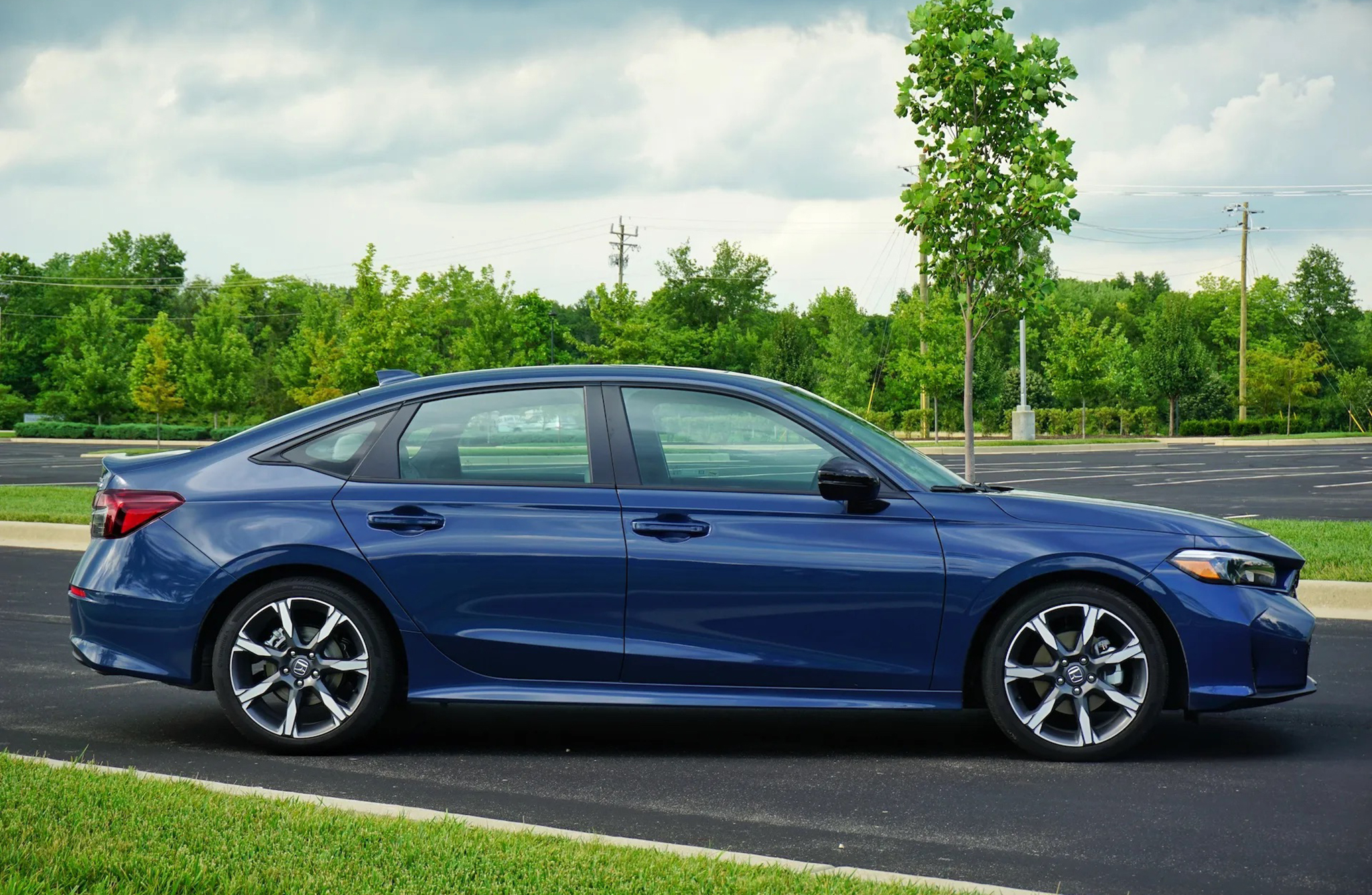
The Civic Hybrid was our car of the year last year, and you’d be well within your rights to think it deserves back-to-back wins. In another world where the Blackwing wasn’t on its final lap, it might. A 51-mpg fuel sipper in a sweet little package with a torquey powertrain that packs more punch than the Civic Si, the Civic Hybrid is a worthy pick with a starting price around $30,000
We’ve spent many pixels lauding its smart two-motor hybrid system that seamlessly trades off between gas and electric power for maximum efficiency and linear acceleration. Especially when the standard Civic has a conventional CVT, if you can afford the $5K step-up to the hybrid, there’s no reason not to if you care even the slightest bit about driving dynamics. We’ve said it before, and we’ll say it again—this should be the default answer when a normal person asks you which new car they should buy.
Runner-Up: Land Rover Defender Octa
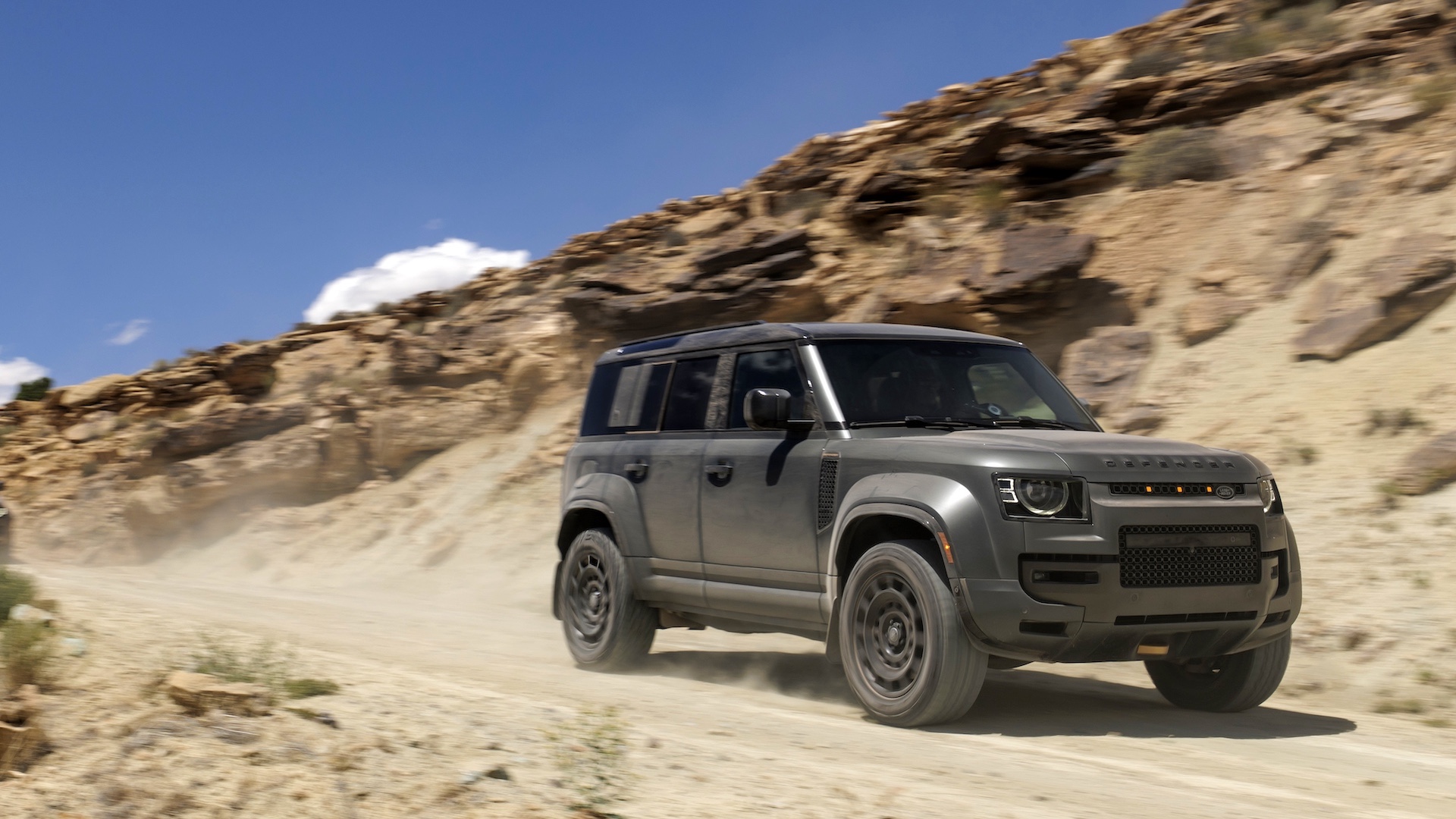
Credit where credit is due: despite Jaguar Land Rover being one of the more dysfunctional automakers right now, it summoned every bit of engineering excellence and decades of off-roading expertise it has and poured it all into the Land Rover Defender Octa and created one of the best SUVs not just of this decade, but arguably of this century.
You can spend a lot less and get something approximating its setup and performance as a super SUV in something like the Ford Bronco Raptor, sure. But this is one of those rare cases where an approximation just won’t do. The build is just that good. Land Rover took the 6D suspension system with hydraulically interlinked dampers from the Range Rover Sport SV, where it’s set up for track use, and re-engineered it to create an off-road god that can still take a high-speed corner. Throw in a twin-turbo V8 with 626 hp and 553 lb-ft of torque, over a foot of ground clearance, the ability to ford through 3.3 feet of water, and a luxury interior, and baby, you’ve got a stew goin’.
Runner-Up: Nissan Leaf
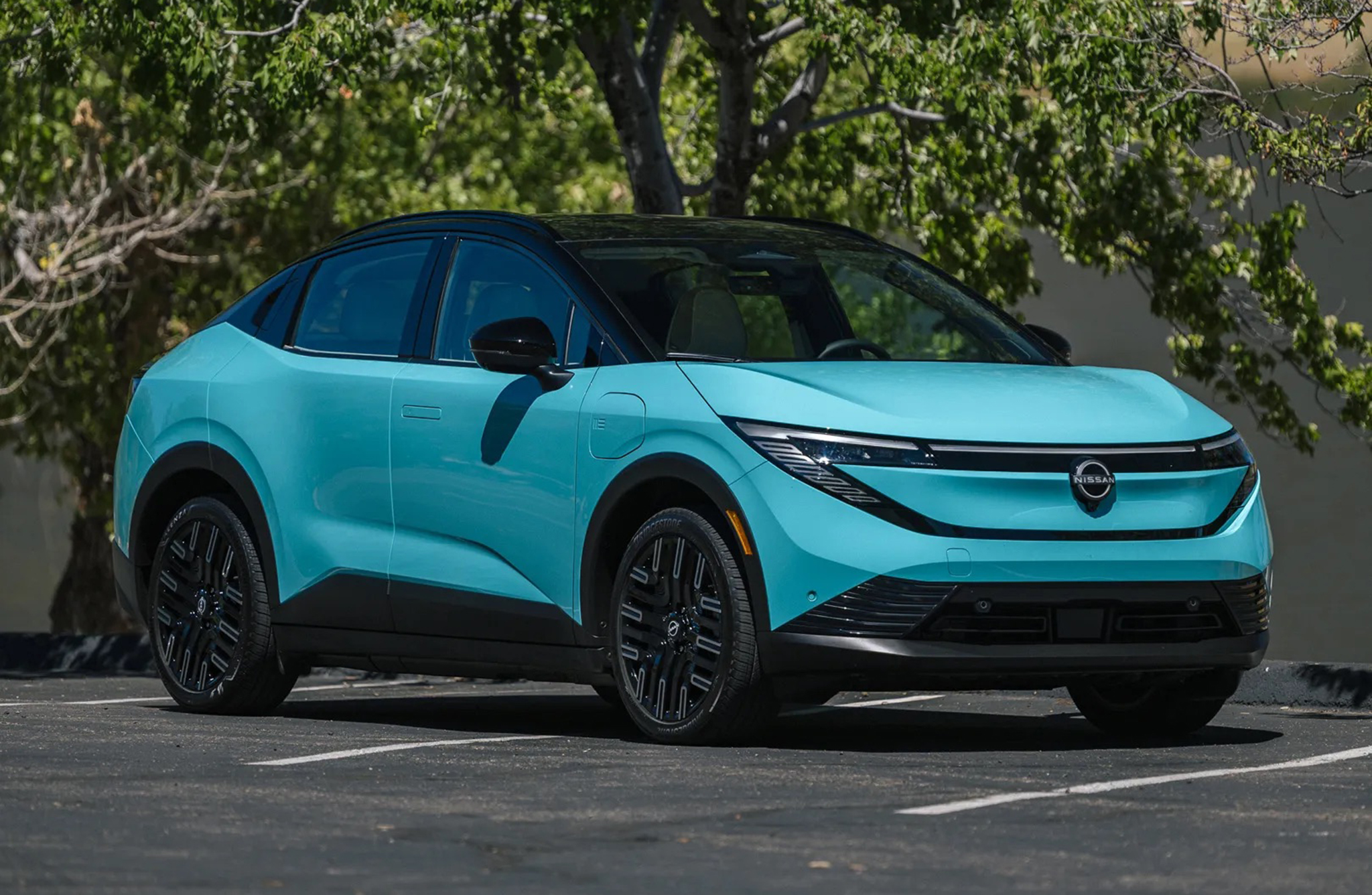
Even as automakers’ electric vehicle dreams have started to collide with the reality that people aren’t widgets and won’t be browbeat into making rational choices, every month brings more EVs with higher range, better practicality, more impressive technology, and faster charging times. But they’re all still focusing on the dwindling number of buyers in the $45,000-$80,000 range, leaving the low end of the market in the lurch.
Not so with Nissan. For a company that’s been short on cash, debating merging with rivals, and generally struggling to find its footing this decade, I’m not quite sure how it nailed the brief for a competitive $30,000 electric car with the next-gen Nissan Leaf. Especially after it squandered the early lead it had in launching the first leaf all the way back in 2010. Gone is the frumpy styling, the weak and cold-sensitive powertrain, and the embarrassingly low range, replaced by a sleek, boldly-styled crossover with NACS charging on the Tesla Supercharger network that’s genuinely fun to drive. It is exactly what the market needs right now.
Runner-Up: Hyundai Santa Fe Hybrid
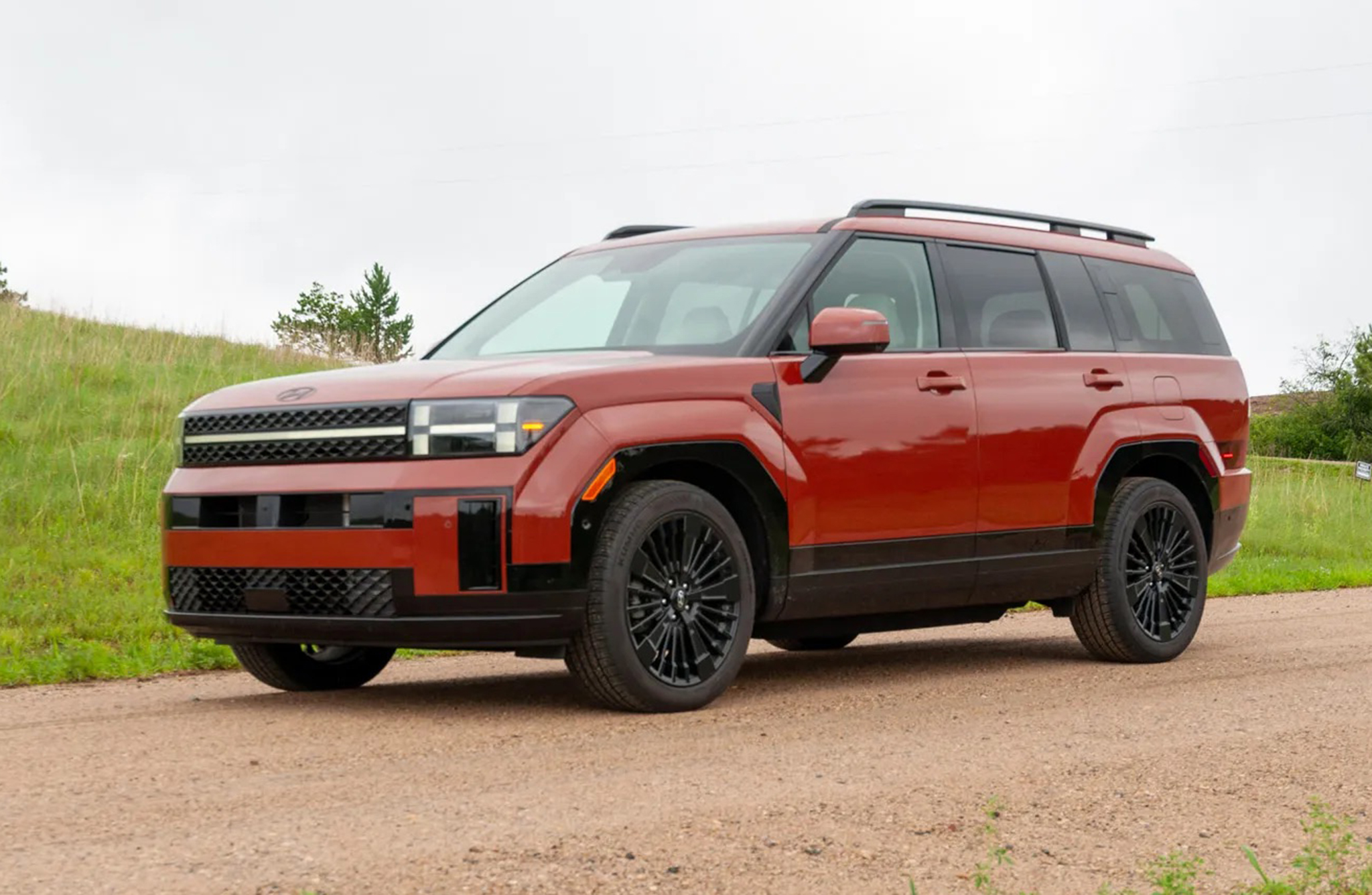
Don’t look now, but just as the Hyundai Motor Group has become the first stop for EV-curious buyers with the Ioniq 5 crossover, Ioniq 6 sedan, and Ioniq 9 SUV (not to mention the Kia counterparts) offering excellent value and nigh-unbeatable pricing, it’s also been stealing away boatloads of hybrid buyers. And it’s starting to pull away with the Hyundai Santa Fe Hybrid
Starting at $38,000 and topping out just over $50,000, it undercuts every rival in the segment without asking for a single sacrifice on your part. Three rows of seating with optional second-row captain’s chairs, loads of storage, buttons, a delightful boxy design, and a combined 34 miles per gallon all add up to the best family-friendly hybrid you can buy right now. Its 231-horsepower, 271 lb-ft hybrid system with a 1.6-liter turbo four makes it a bit slower than, say, a Toyota Grand Highlander Hybrid, but are we really going to judge crossovers like these on 0-60 times? Like the Civic Hybrid, it’s all the car most people will ever need, and then some.
Winner: Cadillac CT5-V Blackwing
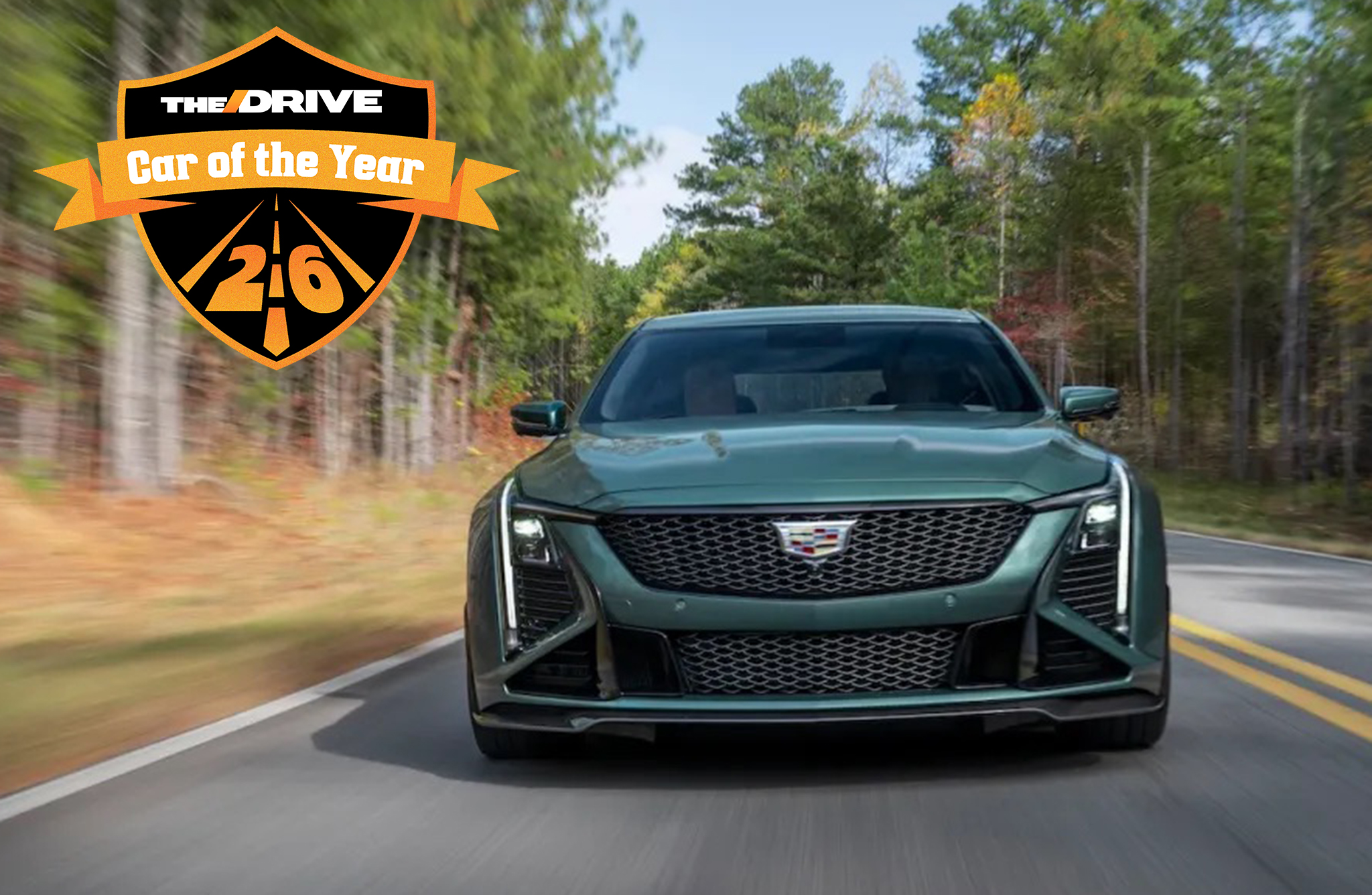
For the last two years, we’ve given the top prize to two excellent and economical hybrids for the overall value they presented in the market: the Honda Civic Hybrid and the Toyota Prius. Time to swerve, hard.
Empirically, the Cadillac CT5-V Blackwing isn’t the fastest thing on four wheels. It isn’t the fanciest, the best-handling, or the best-looking. But emotionally, and as a total package, I don’t know what else to say other than it is simply the best. It’s the only car I’ve driven in this job that I desperately wanted to buy, to have in my life day in and day out, to keep for the rest of my time on this planet.
There are two ways you can look at the CT5-V Blackwing, and both amount to labeling it a true legend. One, it’s basically a Camaro ZL1 sedan—same Alpha platform, same 6.2-liter supercharged V8, same gearbox, same Magneride suspension—but with a luxurious cabin you can actually see out of, four doors, a useful trunk, and a backseat fit for people with legs. The Camaro died because it was kinda ugly and always played second fiddle to the Corvette, but by God, was it a handler. So take everything great about that car and fix the things that sucked, and you’re telling me this isn’t a winner? Come on.
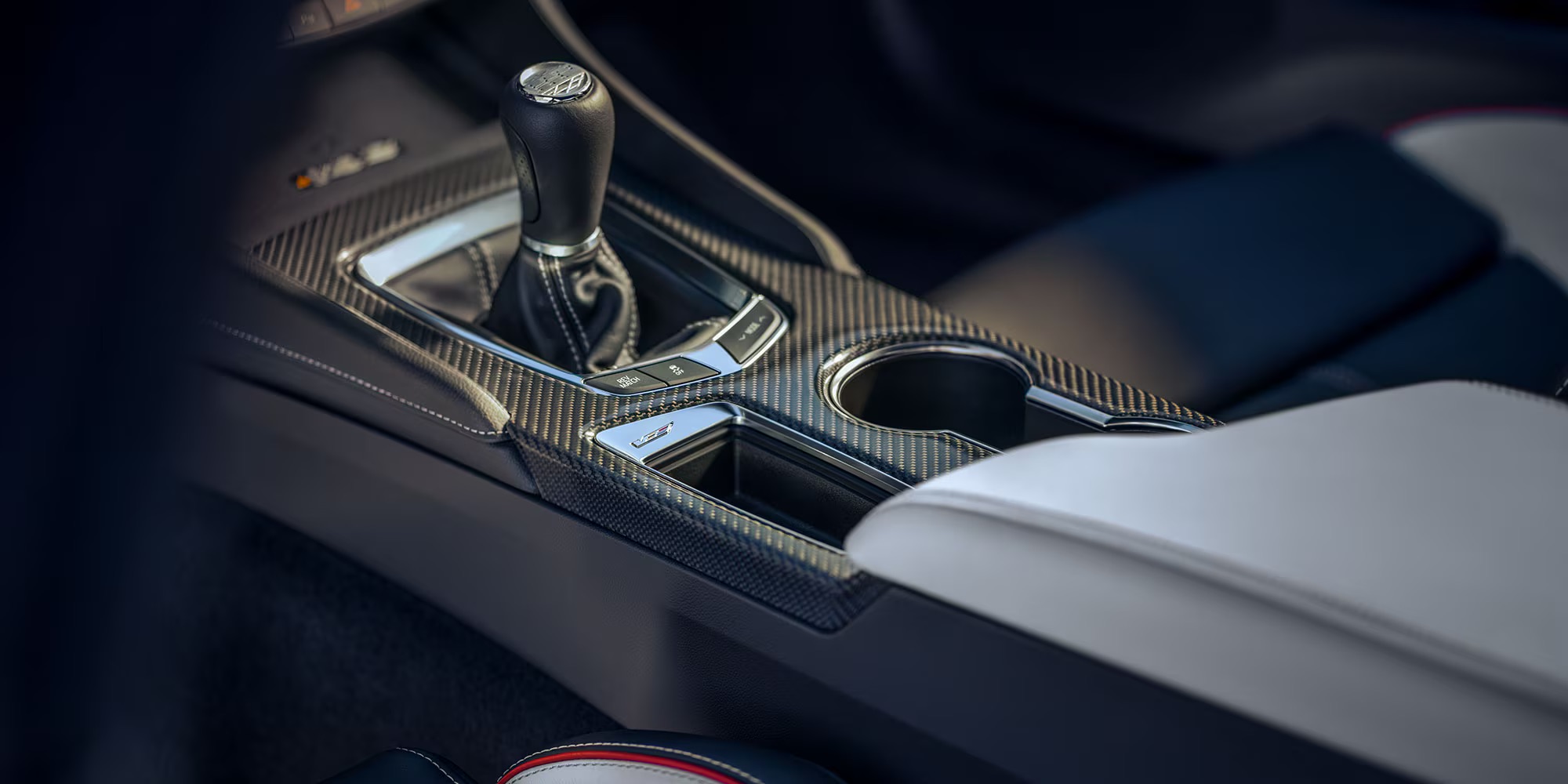
Two, the CT5-V Blackwing is the BMW E39 M5 of our time. It shares the exact same traits and characteristics that made the E39 the ultimate driving machine, adds an addictive supercharger for good measure, and subtracts the bank loans you’ll need to maintain a daily-driven 26-year-old German car. It might not look quite as timeless on the outside, and the interior has some parts bin qualities, but when you’re the one driving, who cares? One glance at the current M5, now a complicated PHEV weighing nearly 1,500 pounds more than the Blackwing, and you’ll agree that Cadillac finally did what it’s been trying to do for the entire 21st century and beat the Germans fair and square. A knockout punch is still a knockout punch, even if the other guy basically gave it up.
One more point, as if I haven’t made it perfectly clear that I’m hopelessly in love with this thing. The Cadillac isn’t a car you buy because you want to impress other people. Aside from the quad pipes and V badge on the trunk, there’s little that separates it visually from the regular CT5. Most civilians won’t see how special it is. Kids won’t flock to you at a gas station. But when someone does recognize it, and excitedly runs up to you to ask how it is, or ask you to rev it, or even race you on the highway, you’ll instantly know you’ve found a friend. It’s the kind of car that brings us weirdos together, and isn’t that what this is all about?
The good old days, indeed. Cadillac, The Drive salutes you.
Loading comments…
Comments couldn’t be loaded. Please refresh the page.