
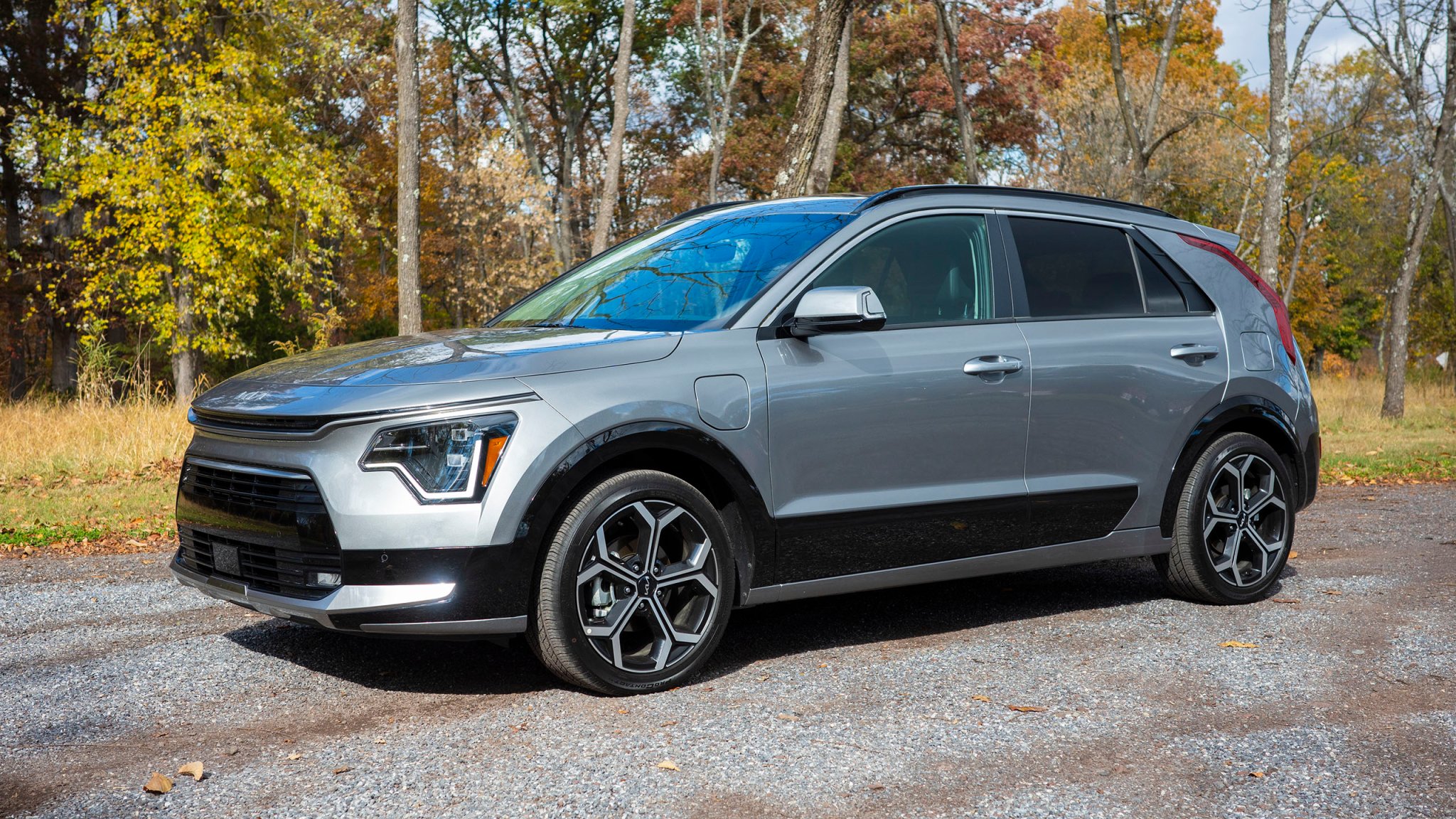
These days, if you want something inexpensive and fuel-efficient, you not only have a choice of vehicles, but a choice of powertrains. And then there are cars like the Kia Niro that give you three propulsion options within one model: conventional hybrid, plug-in hybrid, or fully electric.
The trouble with electrifying an economy car, though, is that oftentimes the further from internal combustion you stray, the more you risk the cost part of the equation spinning out of control. This is precisely the problem with the Kia Niro PHEV. It isn’t a bad car, and its fuel-sipping powertrain is indeed the star of the show. But given that it starts at $36,000, it’s already on the edge of what many would consider affordable—and splurging on options doesn’t make it feel any less cheap.
Kia Niro Plug-In Hybrid Overview and Design
The least expensive Niro that Kia offers is a standard hybrid for $28,435. The plug-in hybrid is the next step up, at $35,995, followed by the Niro EV at $41,045. My particular loaner was the PHEV SX Touring model, which adds some $6,500 in upgrades for a sticker of $42,565.
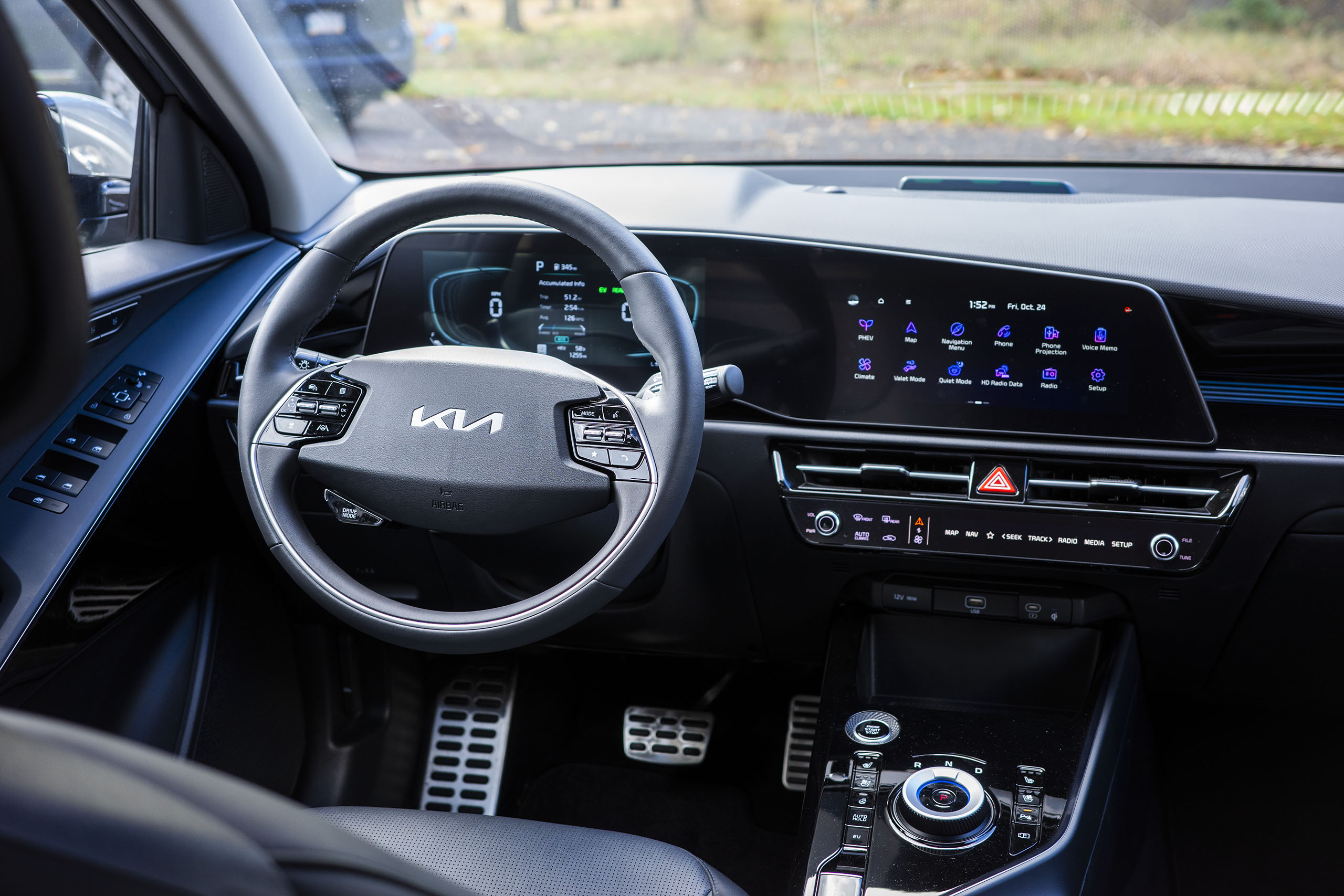
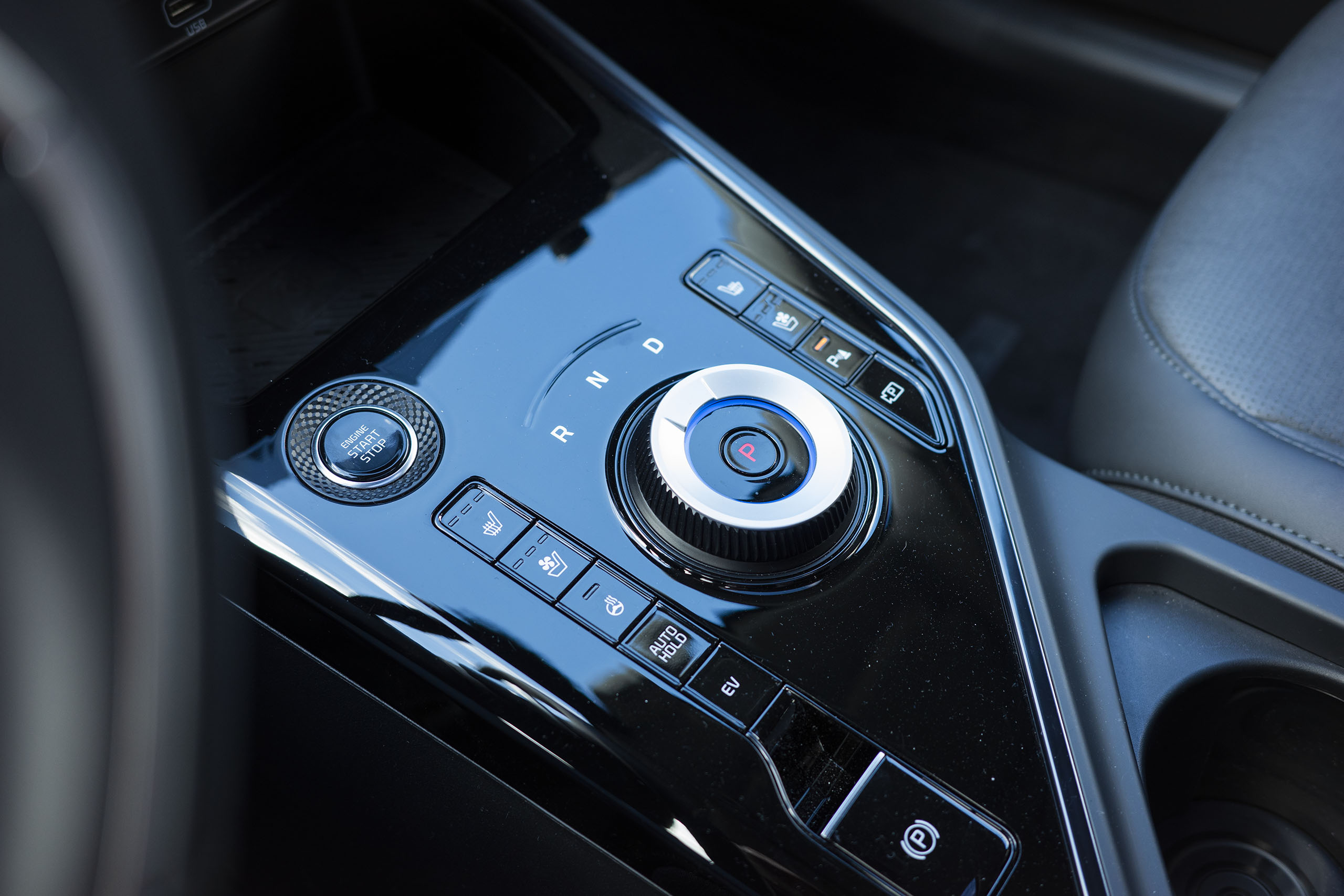
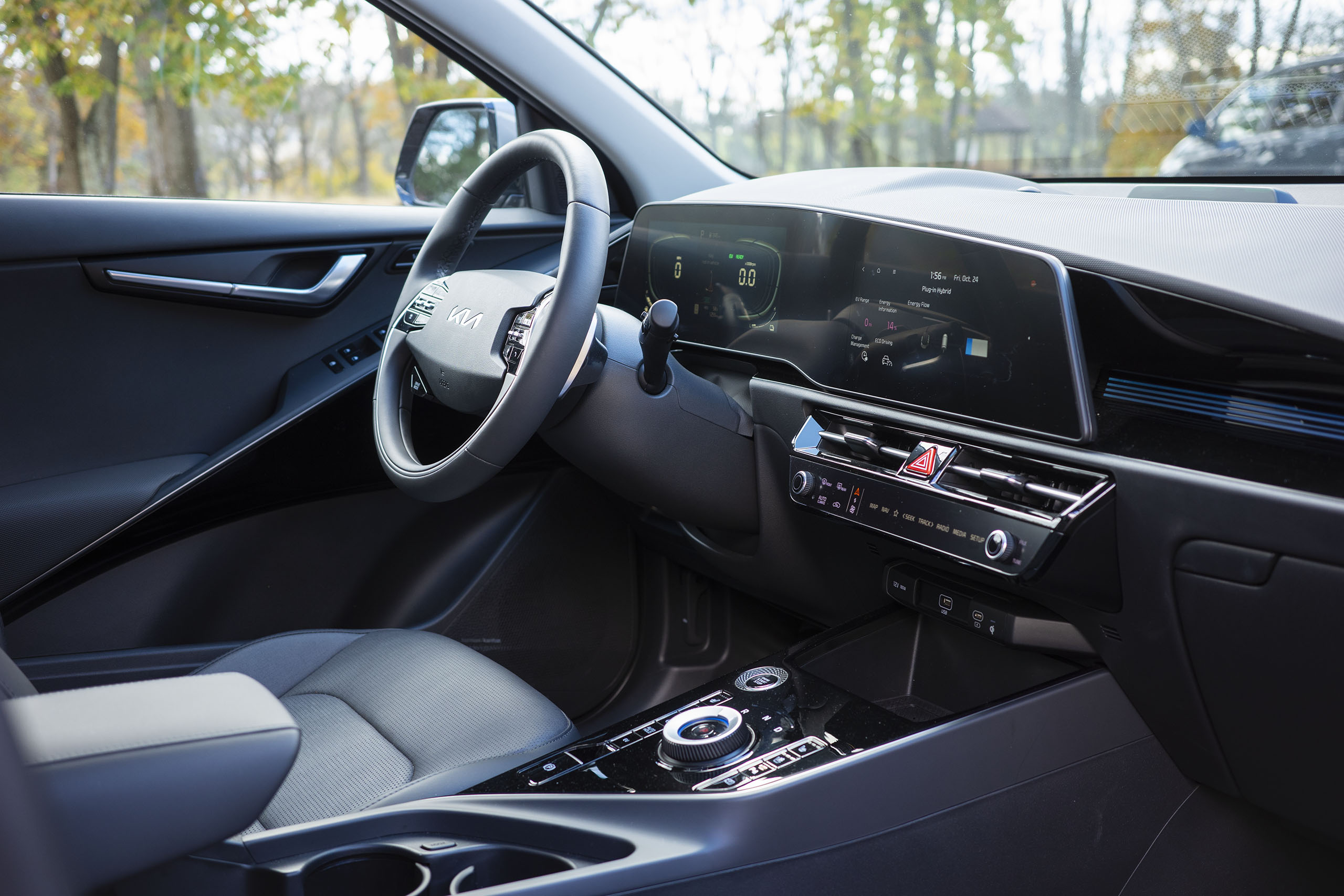
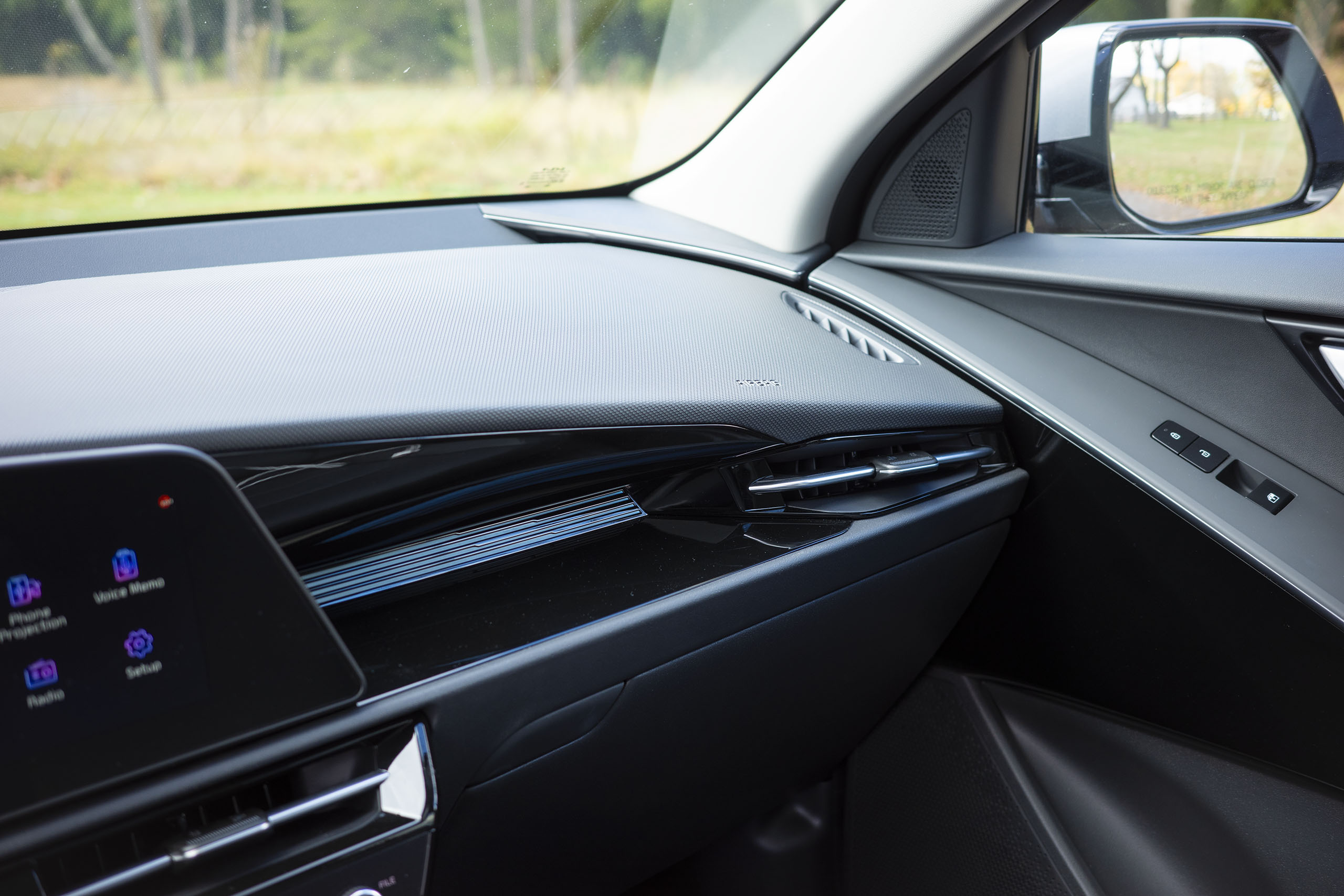
This, frankly, surprised me. The Niro PHEV does not feel like a $42,000 car. It barely feels like a $36,000 car, even though I know the average new car price has reached absurdity. The plastics aren’t nice enough, from the matte surfaces along the armrest to the scratch-magnet piano black around the shifter. The seats—a mixture of cloth and perforated faux-leather—may as well be lined with the same material track jackets are made of. And the premium sound system here, despite bearing the Harman/Kardon badge, sounds muffled and compressed no matter what’s coming through it.
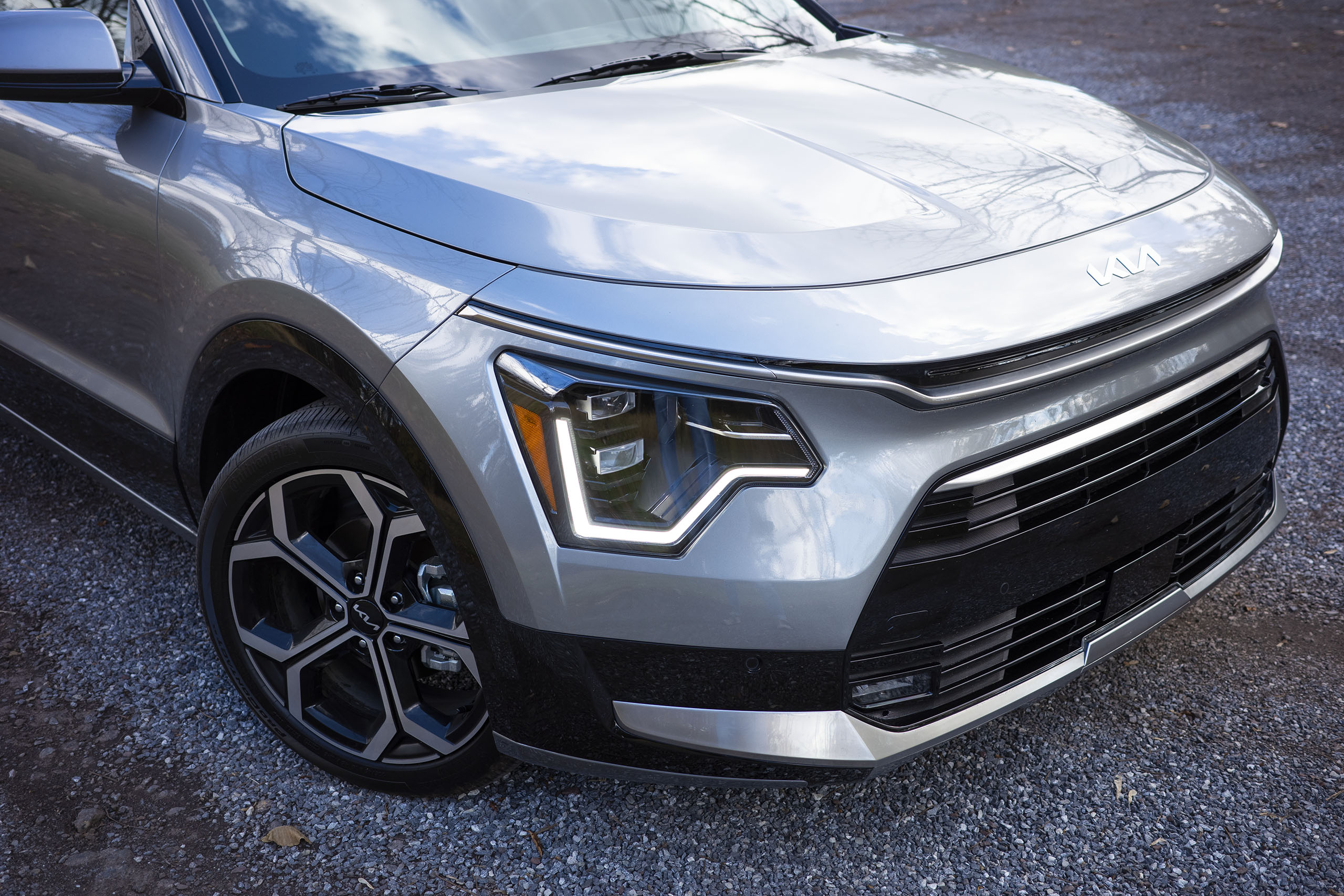
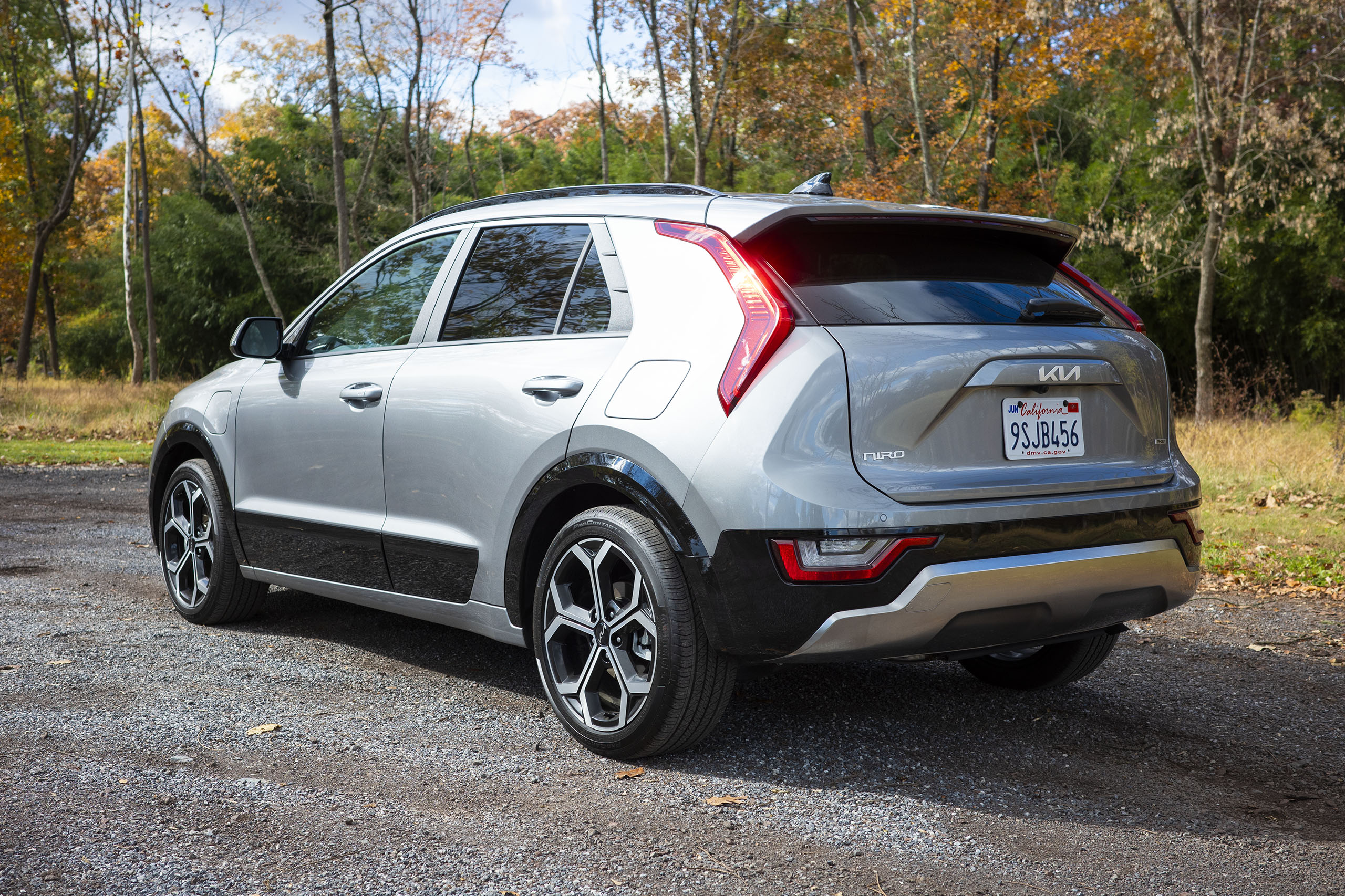
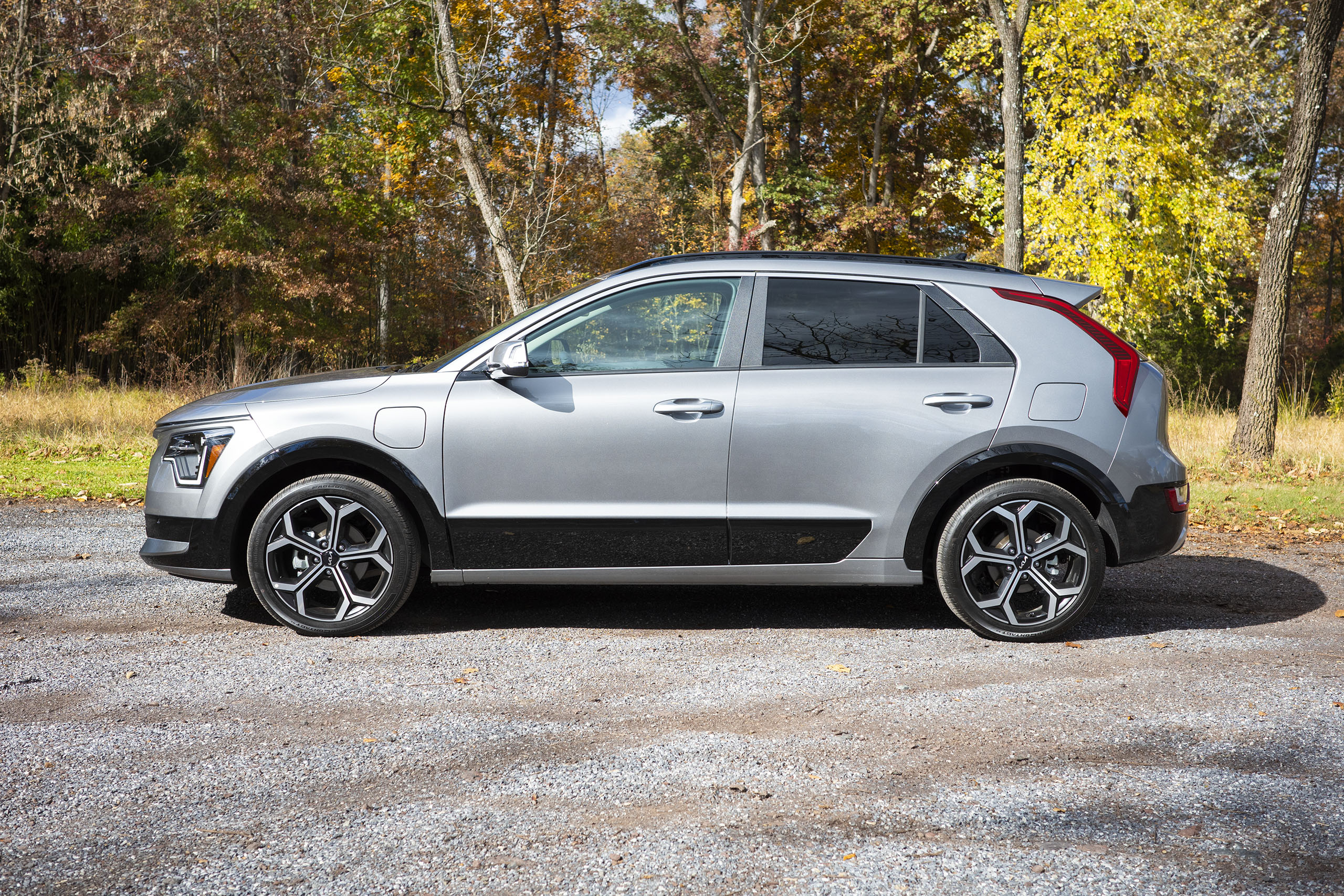
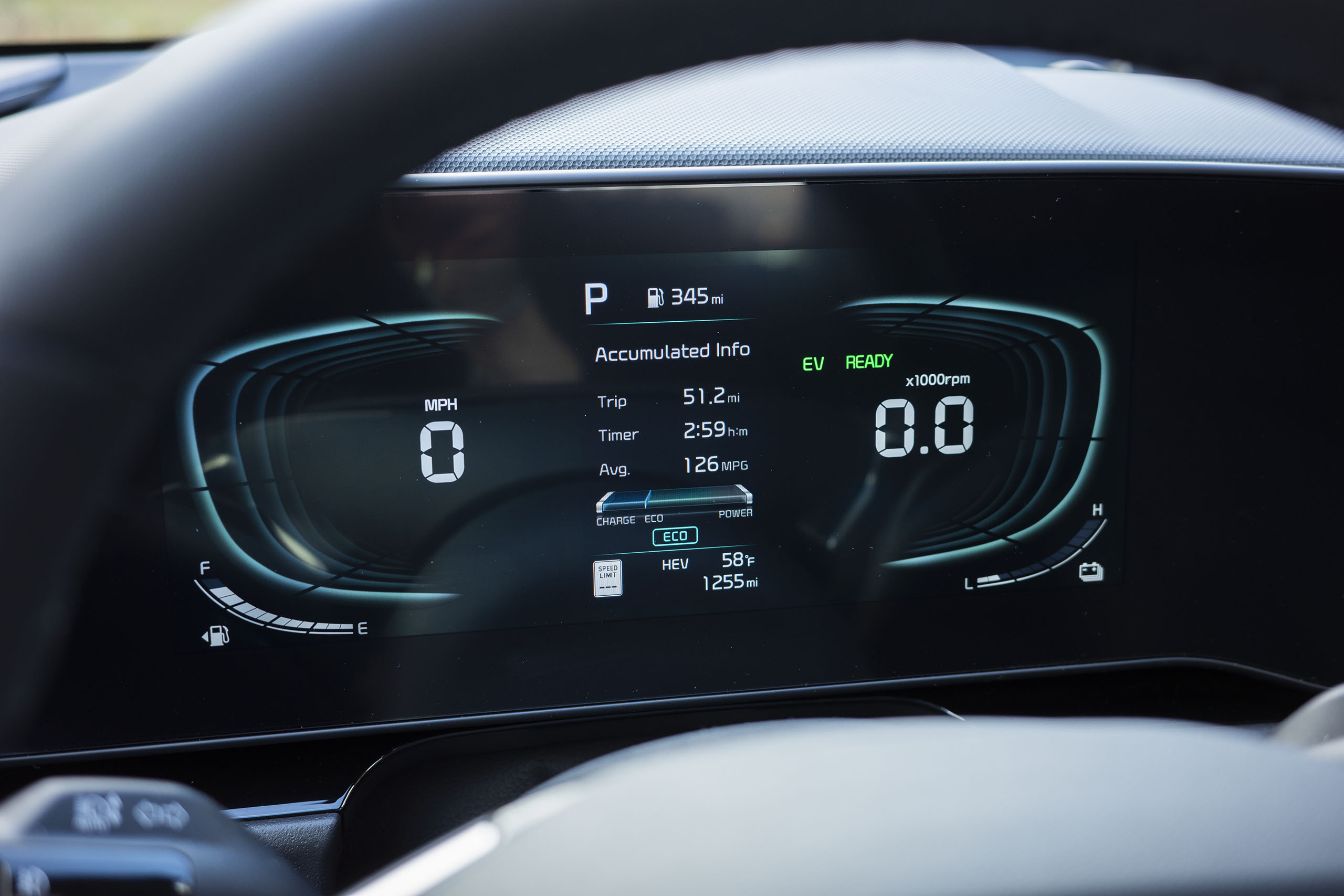
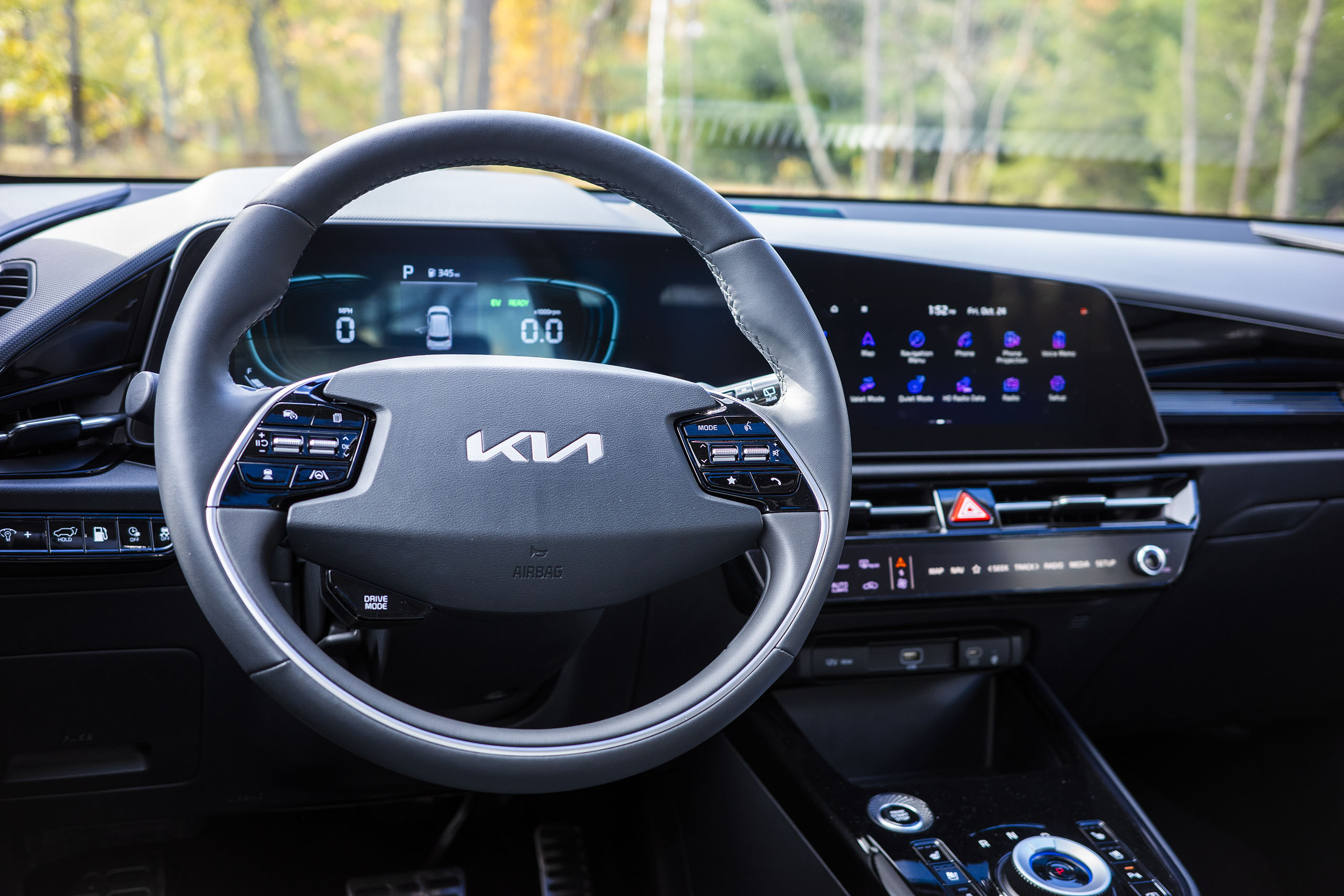
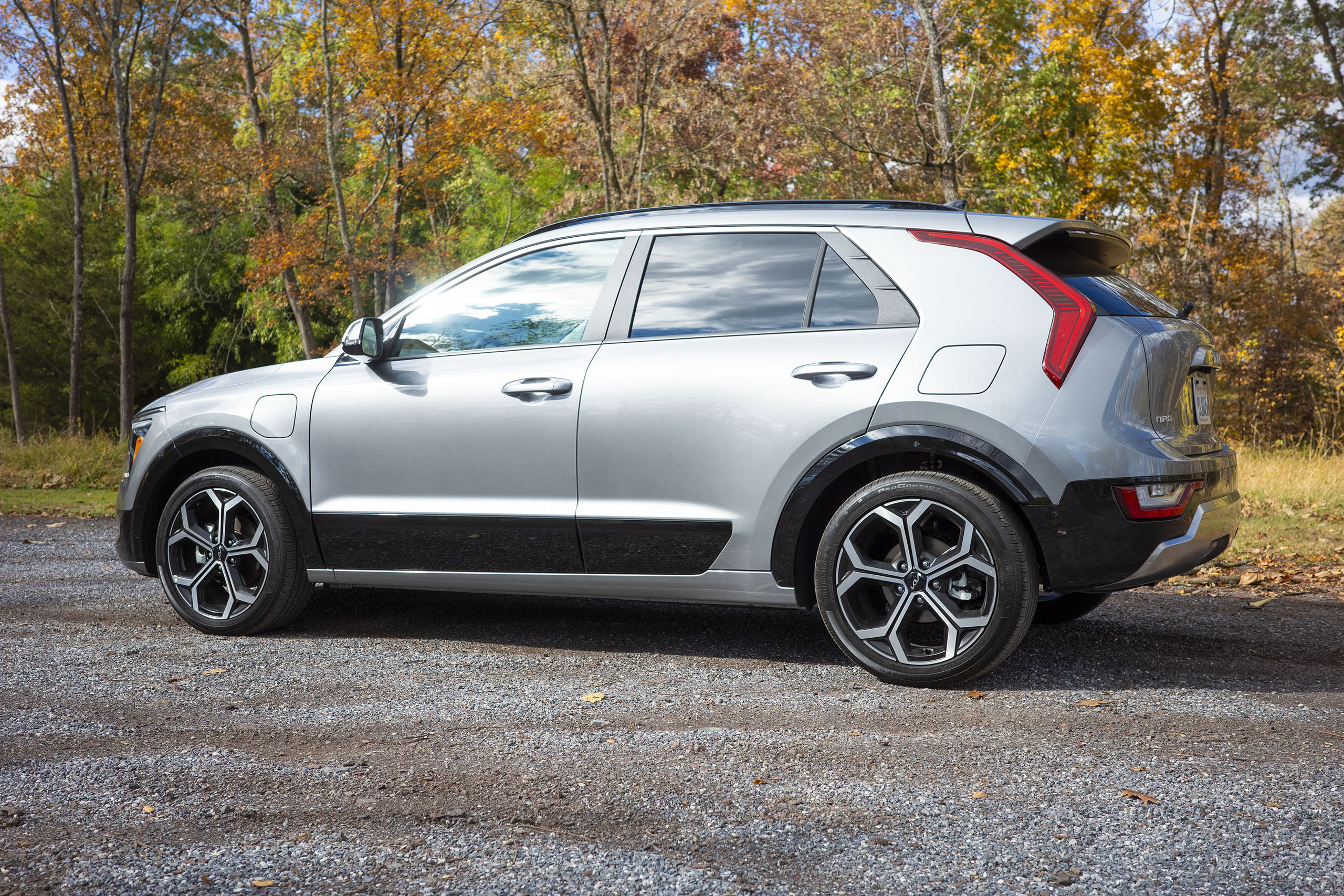
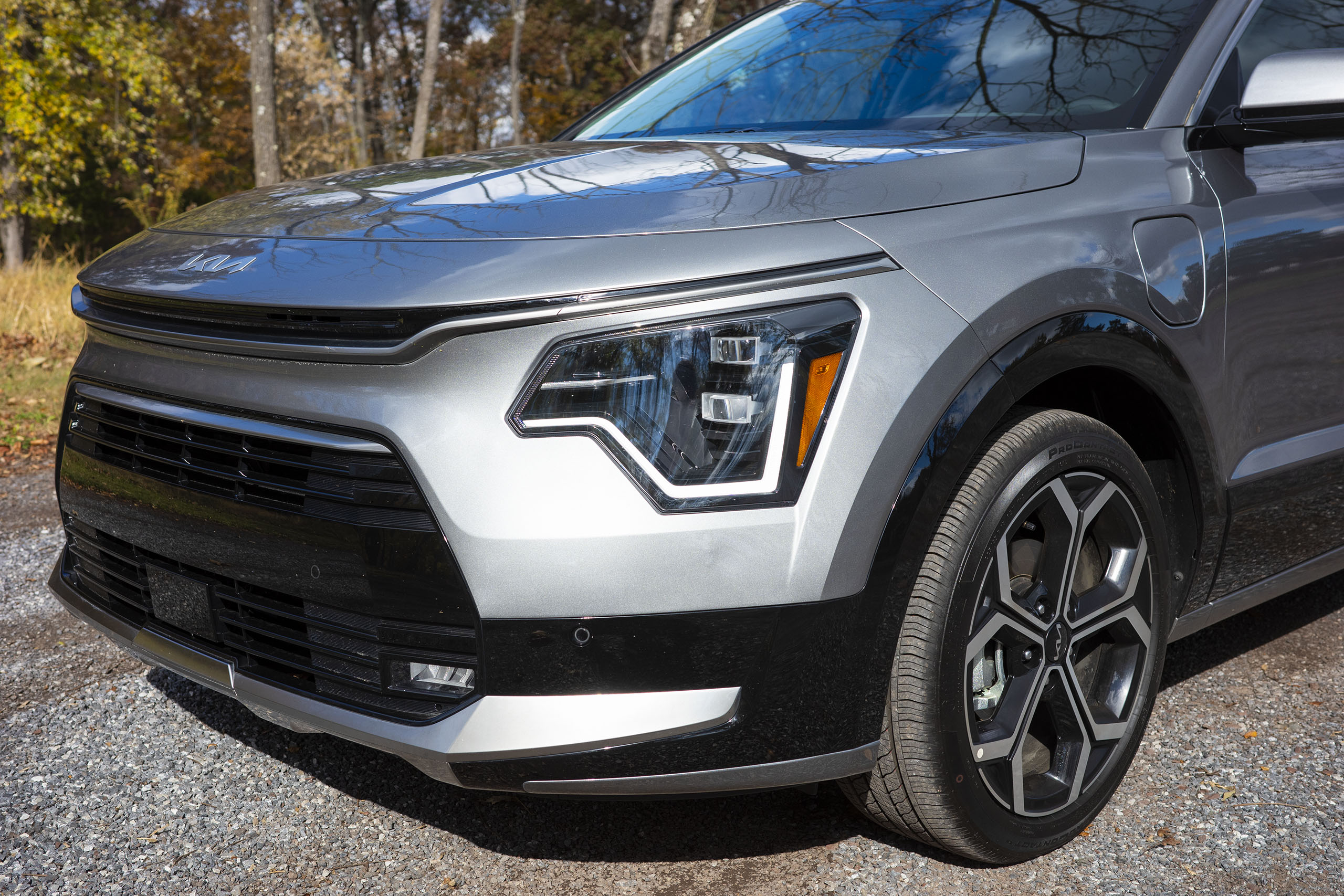
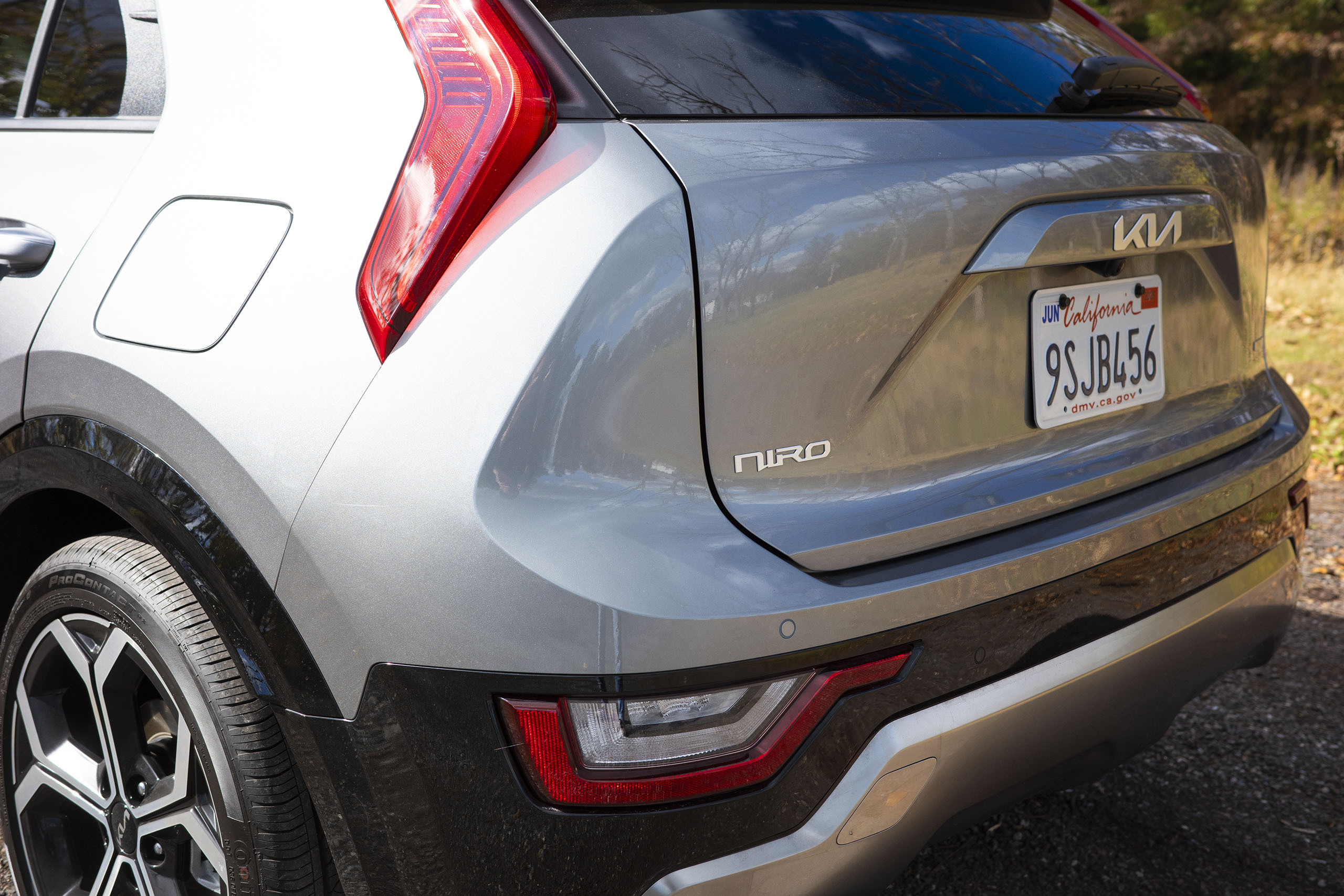
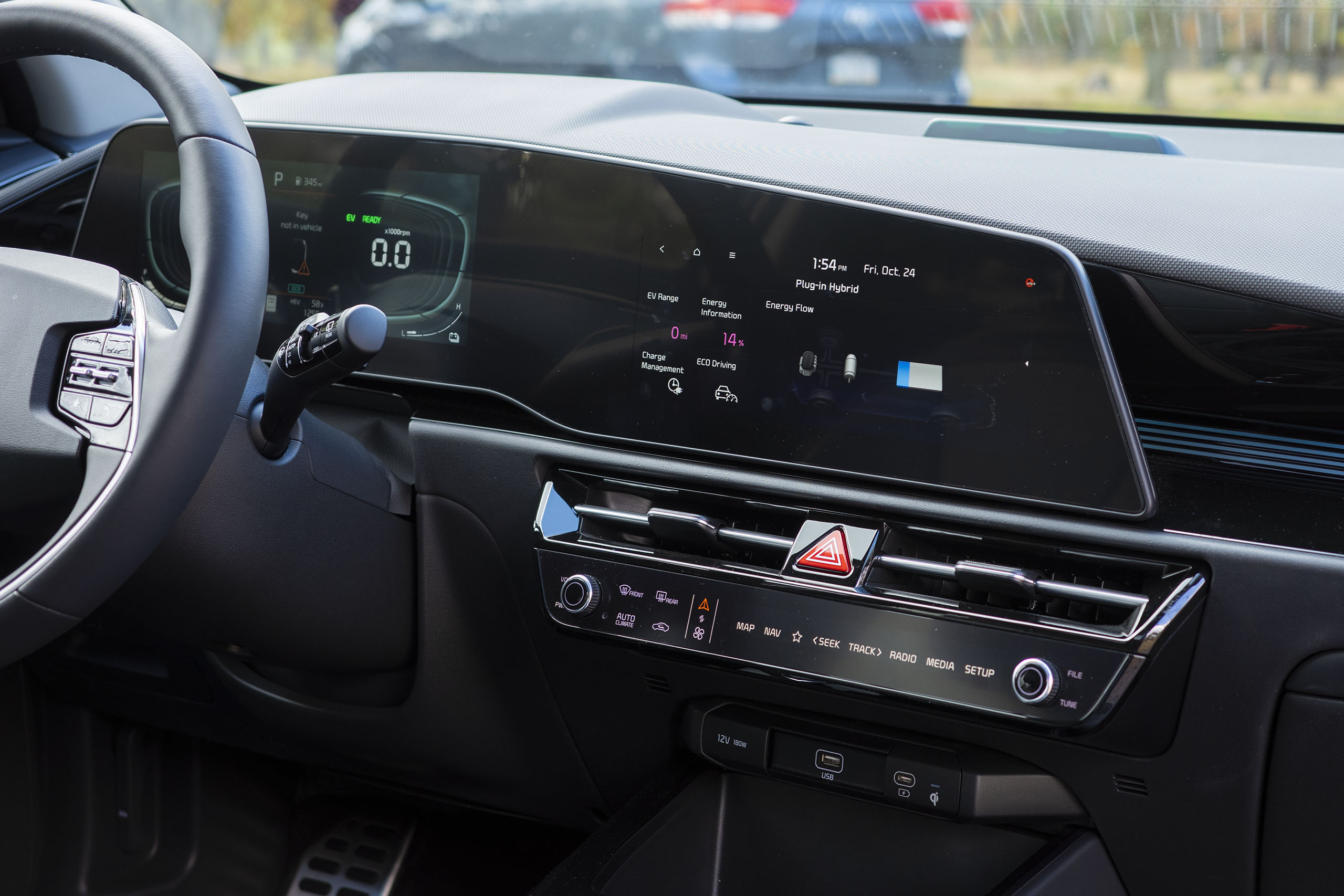
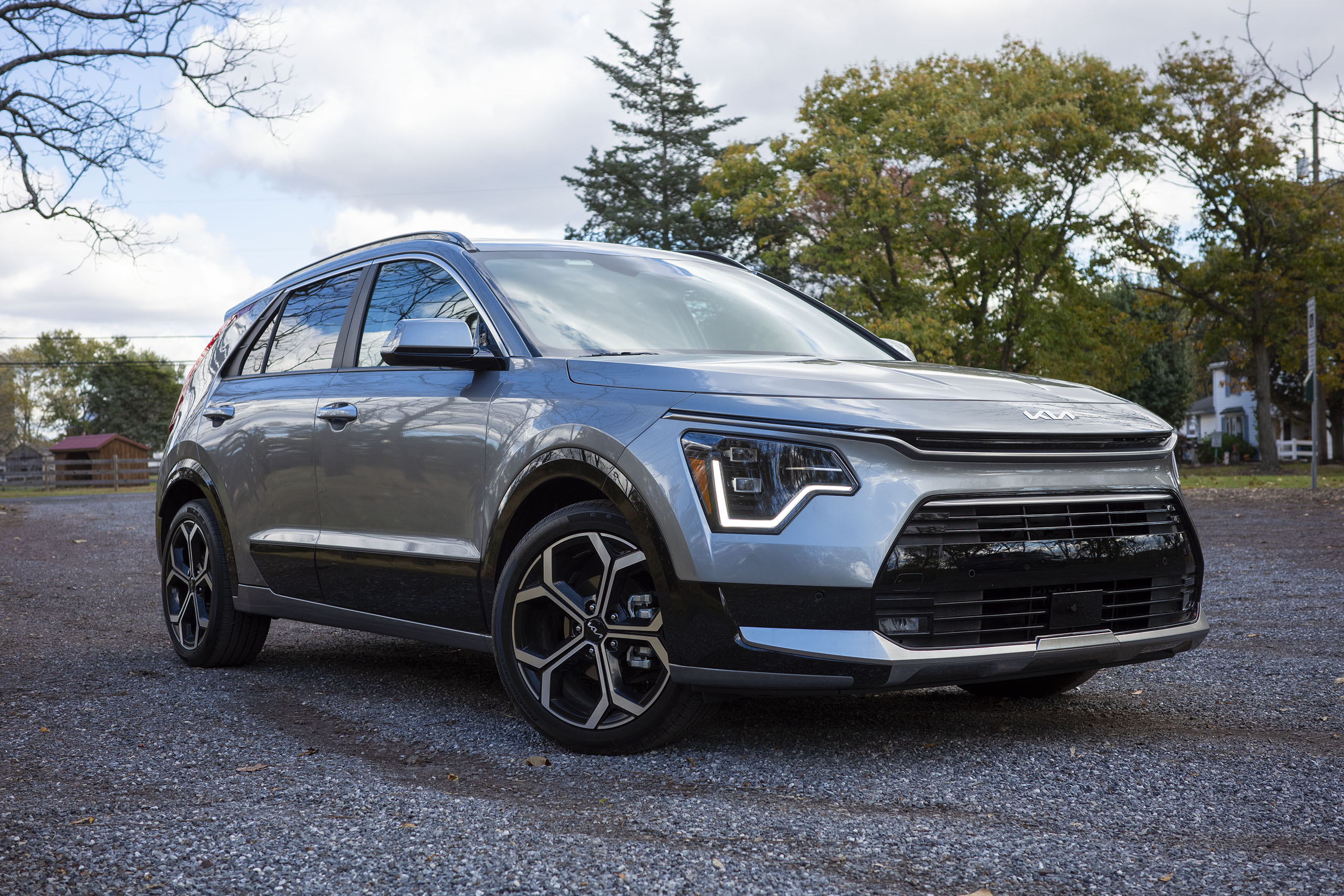
The infotainment UI looks like it belongs to a feature phone from 15 years ago, and the way Kia tried to tie the ’90s alarm clock instrument cluster to the central display a mile away is not a good look. Actually, while we’re on looks, I generally find the Niro to be hideous. I know it has its fans, but as far as I can tell, every single one of the design elements—be it headlights, taillights, gratuitous cladding, body lines, or otherwise—clashes with another. The haphazard front end, in particular, seems to have been penned to offend or disgust, because god forbid a small car look cute or stylish.
A Frustrating Interior
We’ll go back inside for a minute, though, because I want to call out a quirk of the Niro and some other new Kias that initially drove me crazy, until I learned how to fix it. The infotainment and climate controls are all software buttons that share a strip of screen below the vents. That inherently sucks, but what can make it worse is how the interface is designed. There’s a toggle for media or HVAC options, and my particular car was set to default to the former. So, after pressing the climate button, I’d make my adjustments, and then—seemingly within about 3 seconds of inactivity—the whole row would flip back to infotainment.
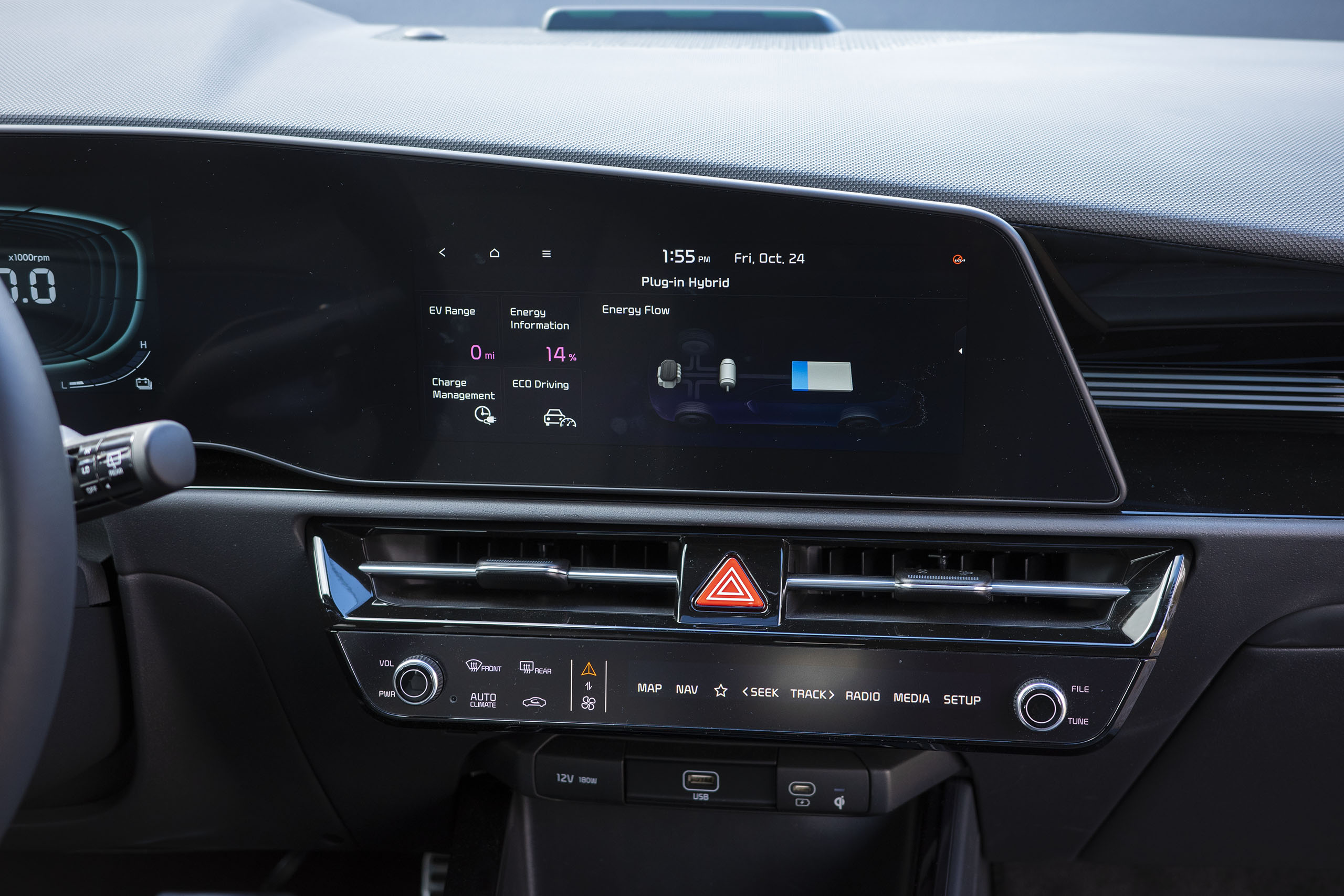
This infuriated me because I find the infotainment options mostly useless; I can do everything in them through the main screen and the buttons on the steering wheel, anyway. It turns out that you can actually set the HVAC controls to be the default by long-pressing on the little two-way arrow between them. I spent ages trying to figure this out myself, only for another journalist to share this vital information with me after I’d already given the car back to Kia. Hopefully, my frustration will spare someone else’s.
One more thing, before I promise to say something nice about this car: I recently called out some older Hyundai Group products for using antiquated USB-A ports for phone projection, while leaving the adjacent USB-C port for charging only. The Niro has this problem, too. But the good news is that, should there be a next-gen Niro, it’s guaranteed to get Kia’s new infotainment hardware and software. I sampled it in the K4 months ago, and it’s much better than what you’ll find here.
Driving the Kia Niro Plug-In Hybrid
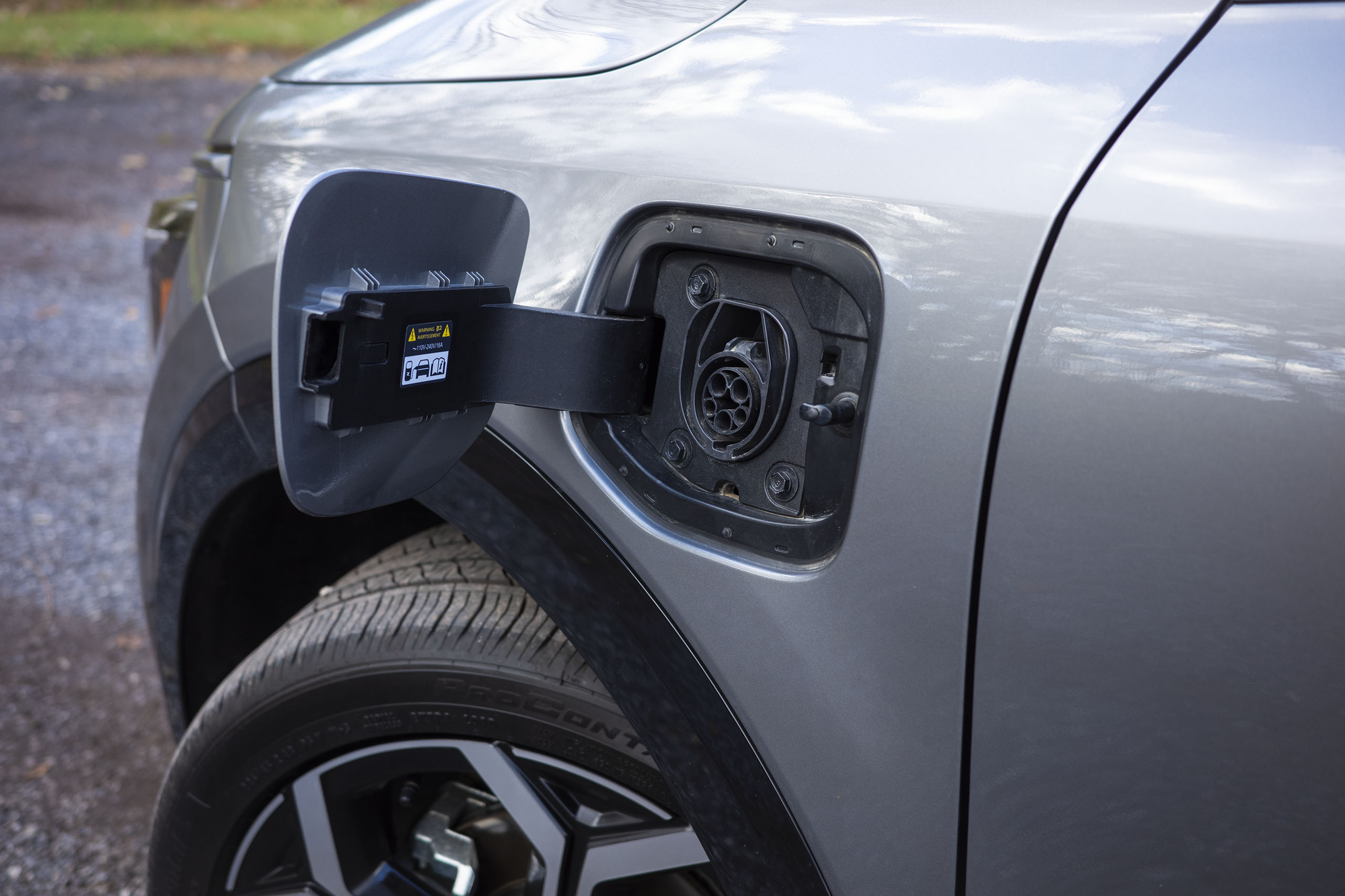
Really, this is why you’d buy the Niro Plug-In Hybrid. With a combined 180 horsepower and 195 lb-ft of torque on tap between the 1.6-liter four-cylinder engine and electric motor, you won’t get anywhere fast in this thing, though that’s quite literally the opposite of the point. When fully charged, the Niro can travel 33 miles on electric power alone, which covers most Americans’ daily commutes. It’s a very economical daily, and the powertrain’s behavior in handing off between power sources is seamless and very refined, as is the blending between regenerative and mechanical braking.
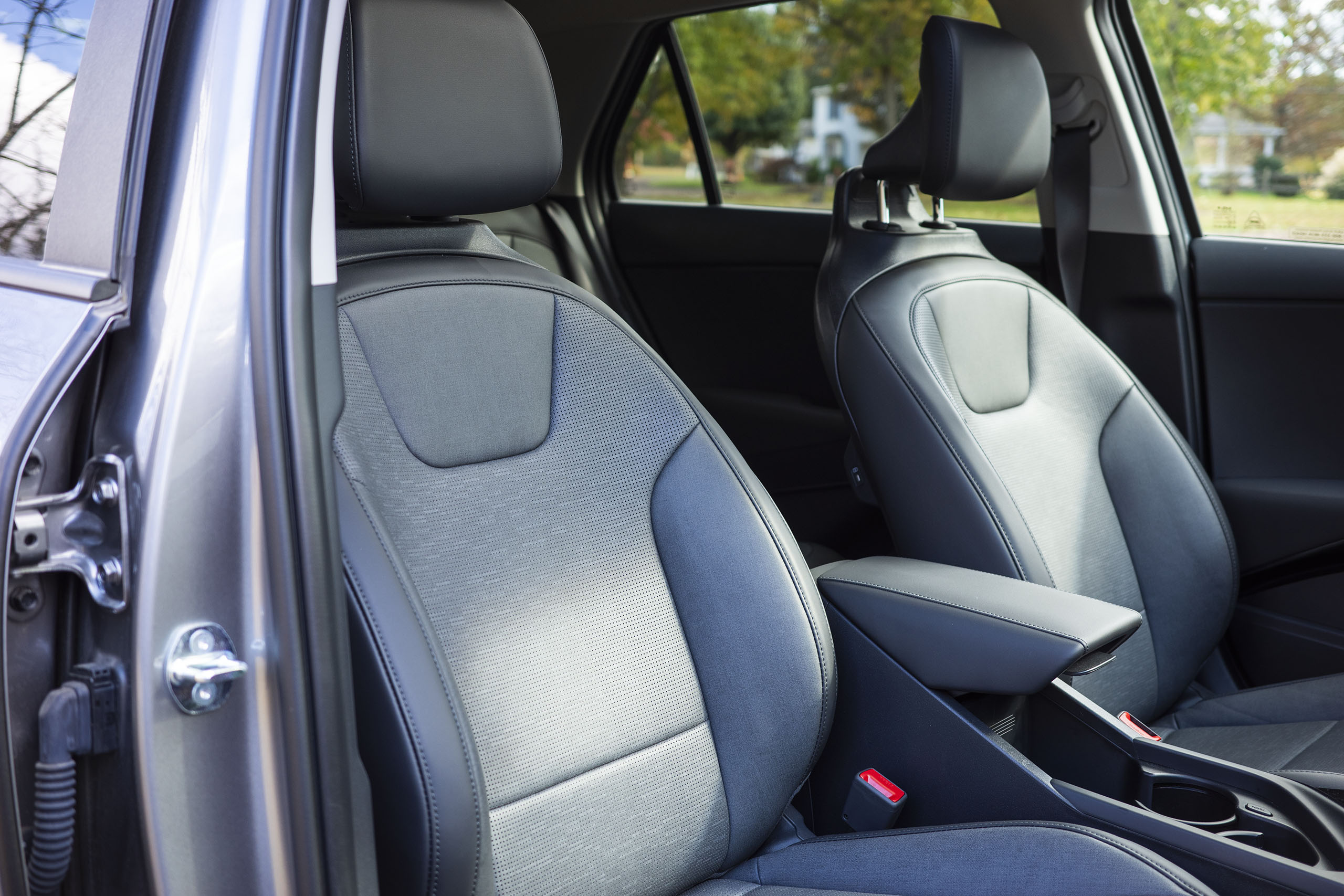
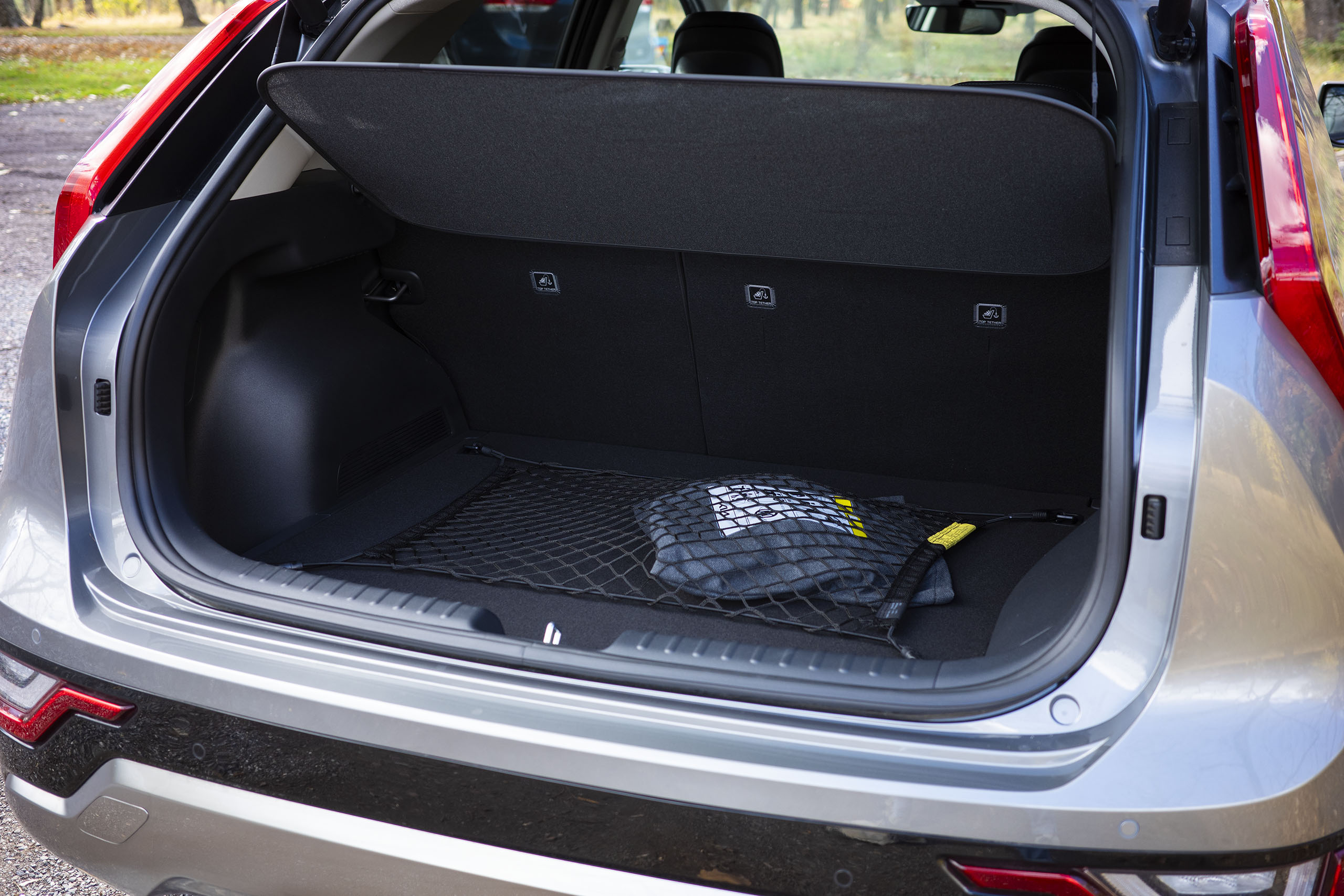
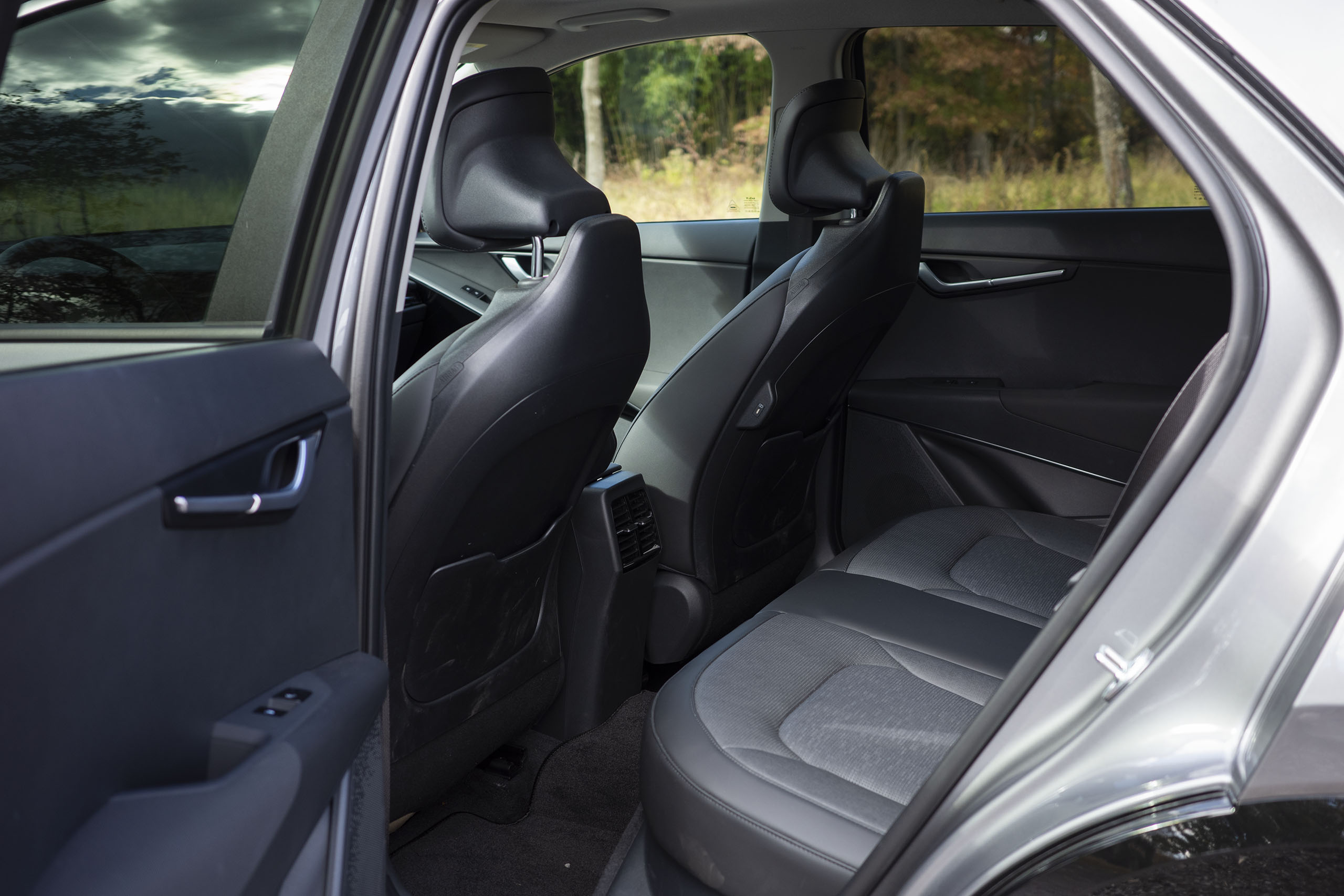
If anything, that refinement highlights how other aspects of the Niro’s driving experience decidedly are not. The steering is very light but also vague on center, the cabin is noisy at high speed, and the ride can be choppy. At least the seats themselves are comfortable enough, and there’s a good amount of room for rear passengers despite this SUV’s compact dimensions. The rear seats are even heated at this trim level, which is a welcome surprise.
Verdict
By now, I’m sure it’s pretty evident that the Niro Plug-In Hybrid really let me down. Some may contend that $36,000 is reasonable for a new car with a powertrain like this and all the benefits it brings, and I suspect that’s Kia’s whole rationale for positioning this vehicle. Because, while there are certainly far less expensive (and, I’d argue, better overall) subcompact SUVs, there isn’t a less costly plug-in hybrid SUV on the market.
In fact, the only plug-in that costs less is the Toyota Prius, which is a small car. Granted, the Prius beats the Niro’s all-electric range by 11 miles and delivers 40 more horsepower, for roughly a $1,000 savings. It also has a better interior and isn’t in the running for ugliest new car in America, and that counts for something.
The point is, paying a premium for the Niro PHEV’s efficiency only possibly makes sense if you go for the base EX model, and not this SX Touring, which adds very little of value. (I promise, you won’t miss the Harman/Kardon stereo.) In fact, if you must buy a Niro for whatever reason, I’d go even further and recommend the regular hybrid that has a price tag far more in line with this car’s level of quality and performance. Do not spend upwards of $40K on one of these things, especially not while the excellent K4 is right there.
I’ll close this by saying that after returning my test car, I was handed the keys to a fully loaded Telluride X-Pro. To spoil the review I’ve still yet to write, it had everything you could reasonably want in or from a big SUV. Very different kind of vehicles, yes, but the fact it was but only $14,000 more than this either makes the Telluride the steal of the century, or the Niro PHEV… a poor value, to put it in the gentlest terms I could imagine. And that’s kind of unusual for a Kia these days.
| 2025 Kia Niro Specs | Hybrid | Plug-In Hybrid | EV |
|---|---|---|---|
| Base Price (Plug-In Hybrid SX Touring as tested) | $28,435 | $35,935 ($42,565) | $41,045 |
| Powertrain | 1.6-liter four-cylinder hybrid | 6-speed dual-clutch automatic | front-wheel drive | 1.6-liter four-cylinder plug-in hybrid | 6-speed dual-clutch automatic | front-wheel drive | 64.8 kWh battery | single-motor front-wheel drive |
| Horsepower | 139 | 180 | 201 |
| Torque | >> | 195 lb-ft | 188 lb-ft |
| Seating Capacity | >> | 5 | << |
| Cargo Volume | 22.8 cubic feet | 63.7 cubic feet behind first row | 19.4 cubic feet | 54.6 cubic feet behind first row | 22.8 cubic feet | 63.7 cubic feet behind first row |
| Curb Weight | 3,247 pounds | 3,496 pounds | 3,803 pounds |
| 0-60 mph | 10.4 seconds | 9.6 seconds | 7.8 seconds |
| Top Speed | 102 mph | 104 mph | 103 mph |
| EPA Fuel Economy | 53 MPG city | 54 MPG highway | 108 MPGe combined | 113 MPGe |
| Combined Range | 588 miles | 510 miles | 253 miles |
| Score | 5/10 |

Quick Take
The Kia Niro Plug-In Hybrid is great on gas and quite spacious, but so are other cars, and it costs astonishingly too much for how cheap, ugly, and unremarkable it is.
Loading comments…
Comments couldn’t be loaded. Please refresh the page.