
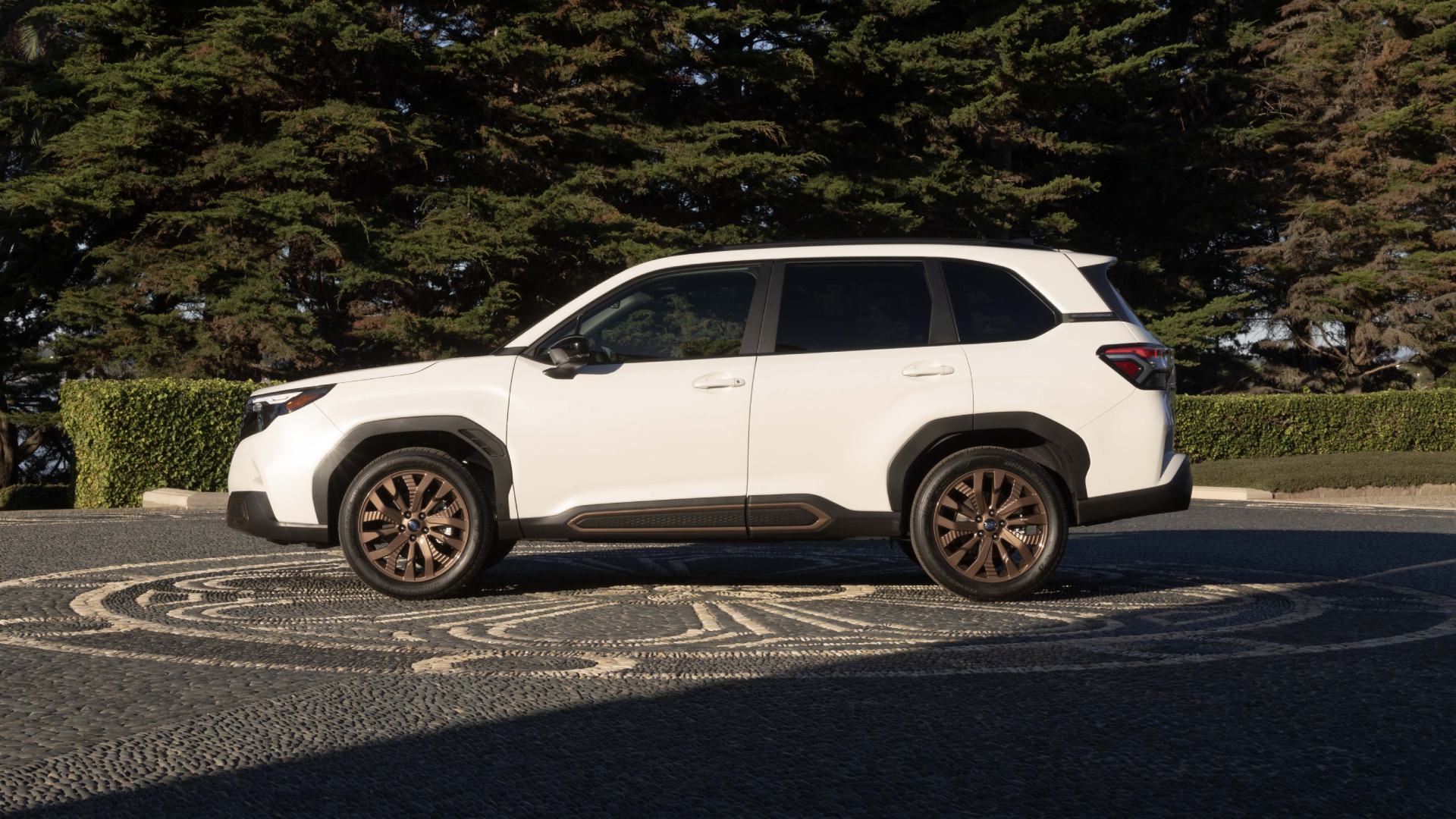
Being outdoorsy is all the rage with modern cars. It’s no longer enough to offer off-road capability; you have to be loud about it, too. Nobody has embraced this more than Jeep, which has recently gone all-in on the notion of pounding nature (or at least the local Starbucks drive-through) into submission. As a result, the perhaps naively old-school concept of treading lightly is up for grabs, and Subaru is perfectly situated to allow that mantra to fall gently into its lap.
After all, Subaru was outdoorsy long before it was mainstream—at times to its detriment. Between standard all-wheel drive and Subaru’s inclination toward offering considerably more ground clearance than its competitors, it has been setting itself up for success in today’s car market since many of its potential customers were still in diapers. And what better way to embody “tread lightly” than with a cleaner, quieter trail partner? That’s the Subaru Forester Hybrid in a nutshell—still the same Forester, only a little less reliant on its boxer engine. It’s better for it, by and large, but should you buy one right away?
The Basics
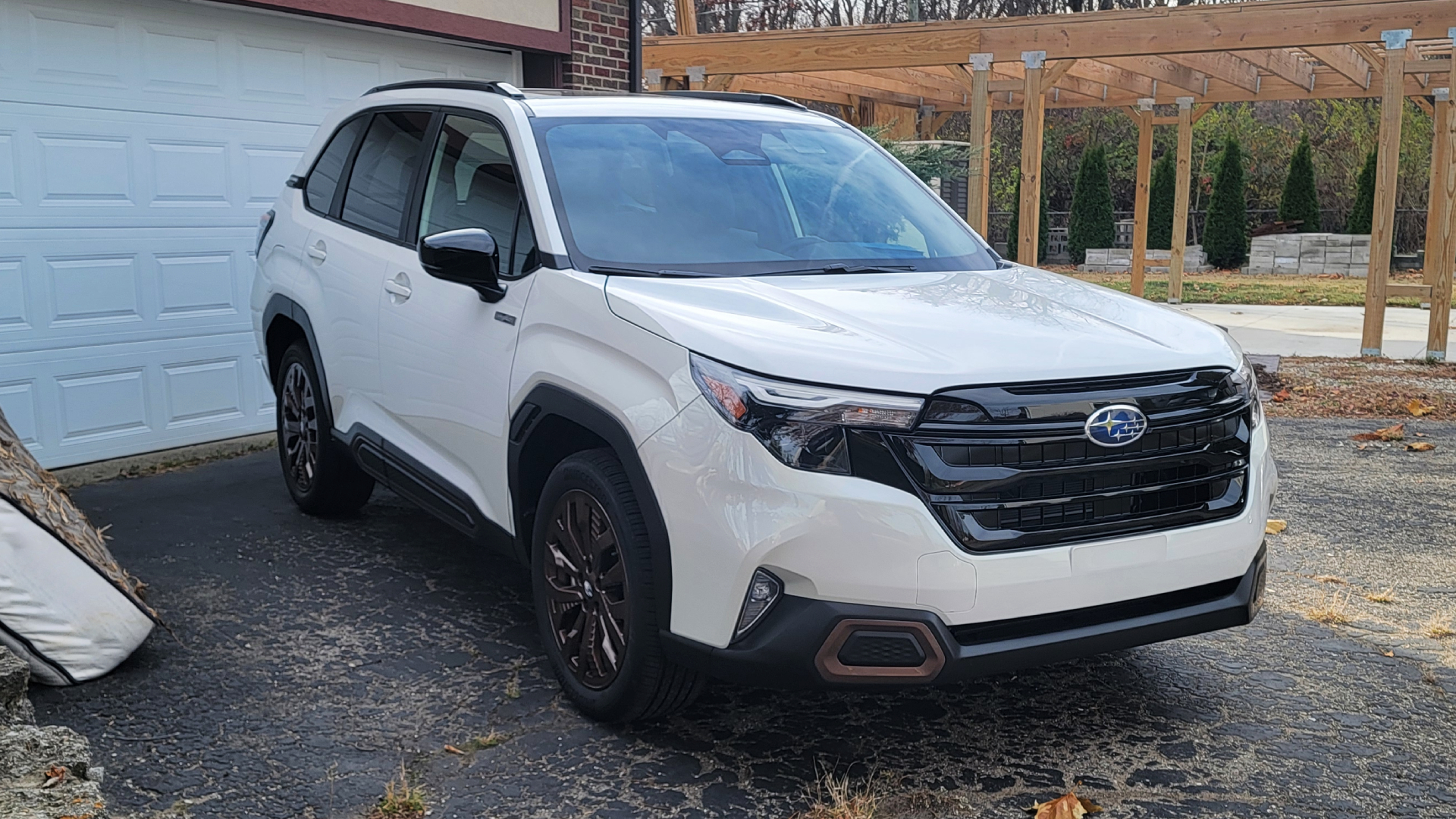
New for this year, the Forester Hybrid is one of those cars that just makes sense. At this point, it’s more common to offer a hybrid in the compact crossover/SUV segment than not. Fuel efficiency hasn’t ever been one of Subaru’s selling points, but that was a product of focusing its value proposition on being the all-wheel-drive brand—a distinction that carries much less weight today, figuratively speaking, but forces its cars to carry more of it in the literal sense.
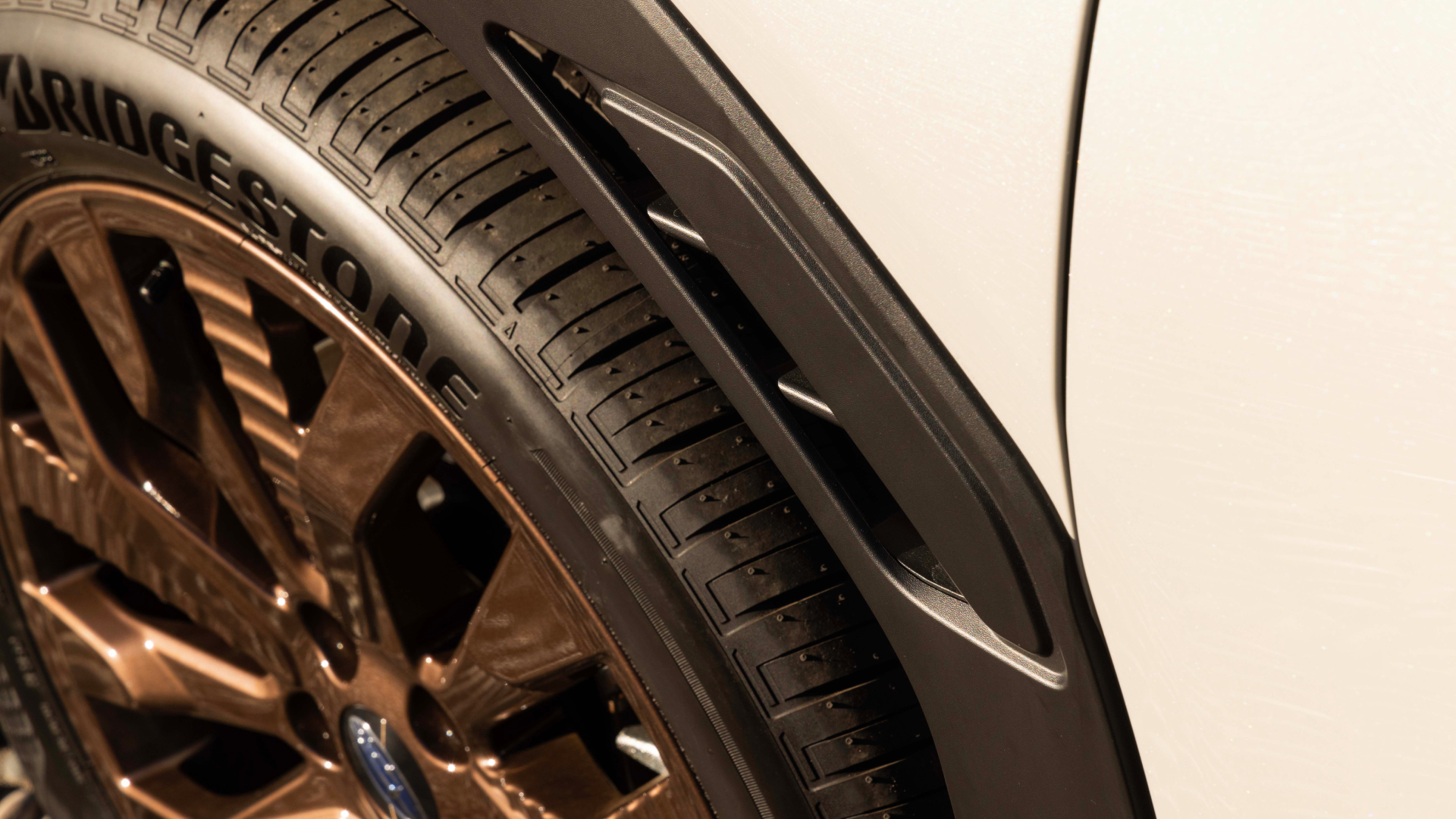
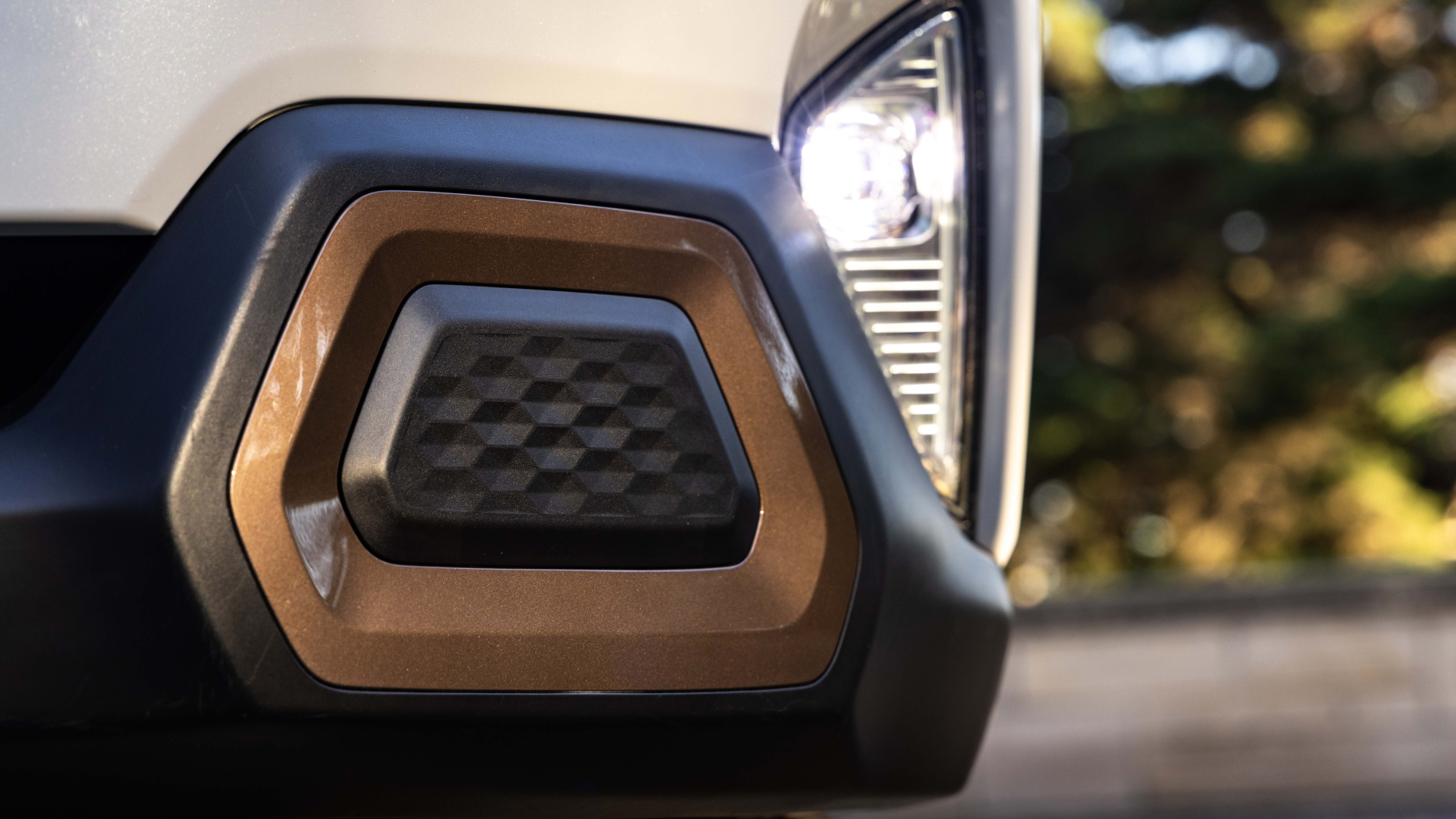
Subaru sent me a Sport, which leans in slightly with the bronze trim accents and wheels. But realistically, this is just a middle trim by another name—not quite as stripped down as the Premium, nor as well-optioned as the Limited or Touring. If there were a true base model (which there likely won’t be unless we see a change in trade policy), it would be dead in the middle of a lineup of five.

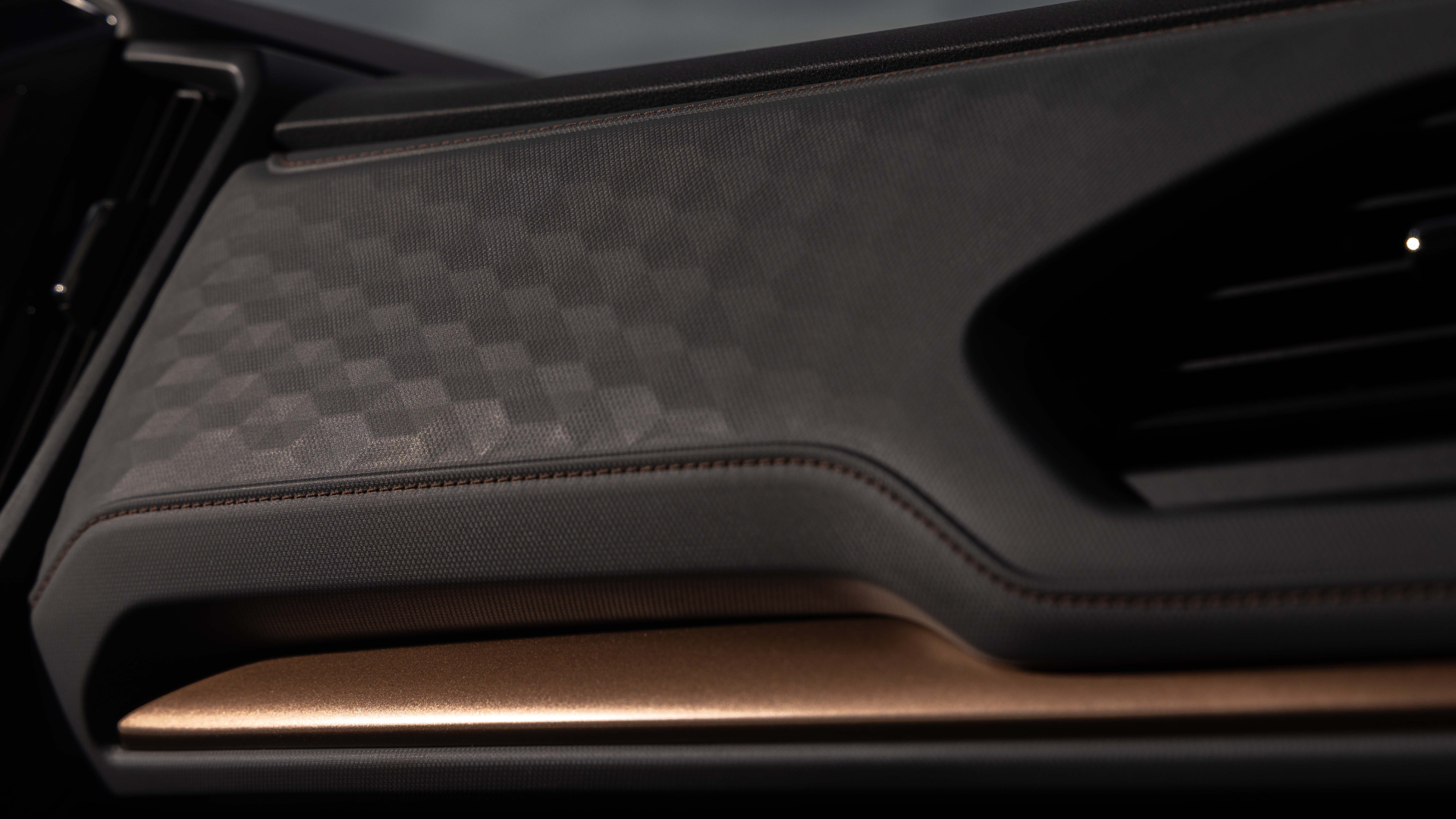
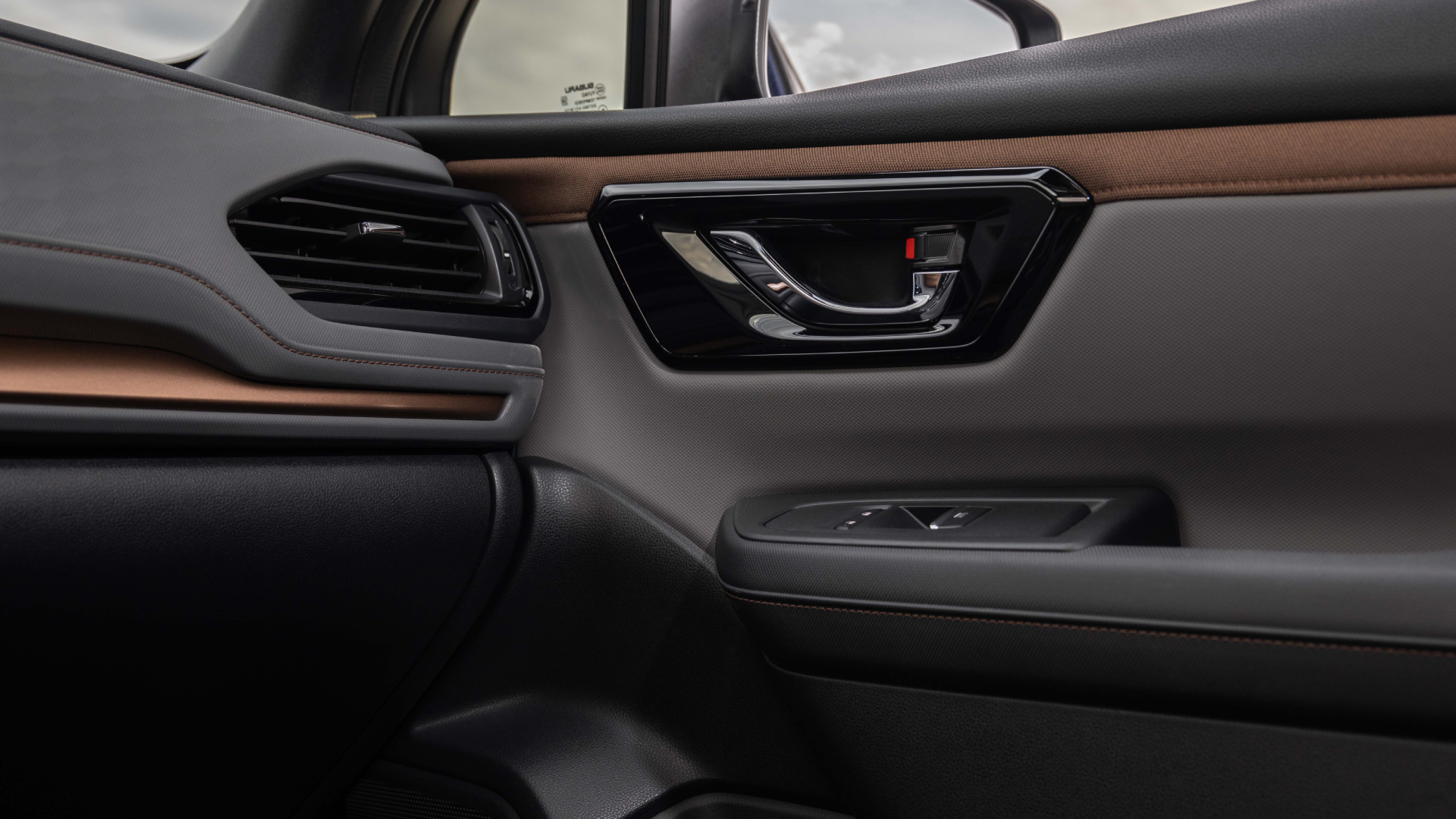
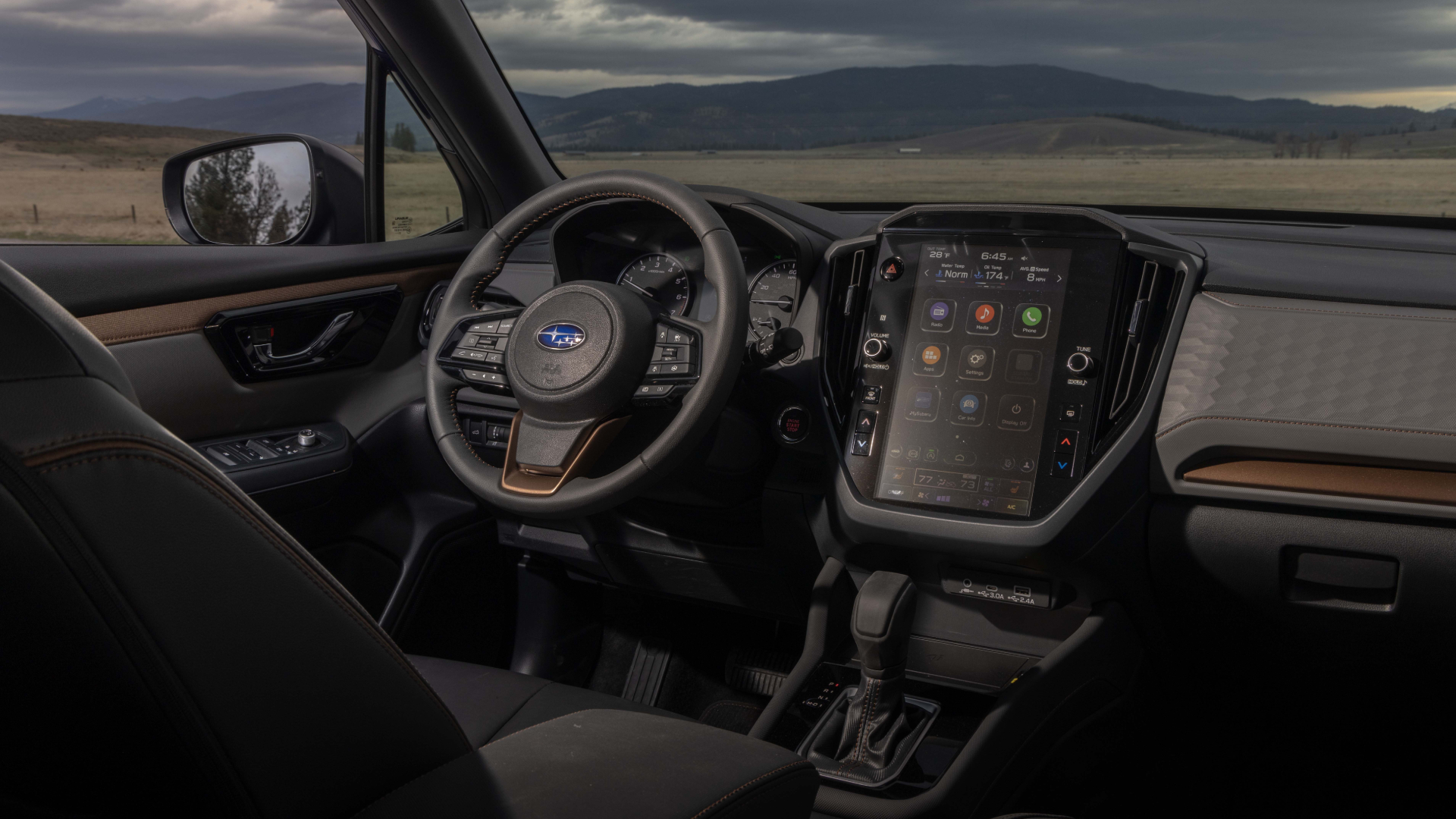
Inside, it feels every bit the middle child. The bronze motif carries through, though it’s admittedly a bit more brown than bronze on the flatter interior materials, and breaks up a thoroughly acceptable though not particularly exciting interior. The new Outback is a far more exciting place to be.
Driving the 2025 Subaru Forester Hybrid
At first blush, the hybrid’s weird—not bad-weird, just weird-weird. Subarus are so synonymous with flat-fours that hearing anything else at startup is strange, but hearing nothing at all is even stranger. It takes some getting used to, but nothing is what greets you more often than not when you first power it up.
Given the company’s cozy relationship with Toyota, you’d be forgiven for assuming that Subaru simply lifted the hybrid system out of a RAV4 and called it good. Such is not the case. Despite the tardiness of its bark, the Forester’s hybrid system is nonetheless based on a 2.5-liter boxer-four. When paired with the 88-kilowatt electric motor, it produces a peak output of 194 horsepower. Subaru doesn’t provide a combined torque figure, but the engine’s 154 pound-feet is augmented by the electric motor. Just know that it’s substantially more than the 178 lb-ft offered in the standard 2.5-liter Forester.
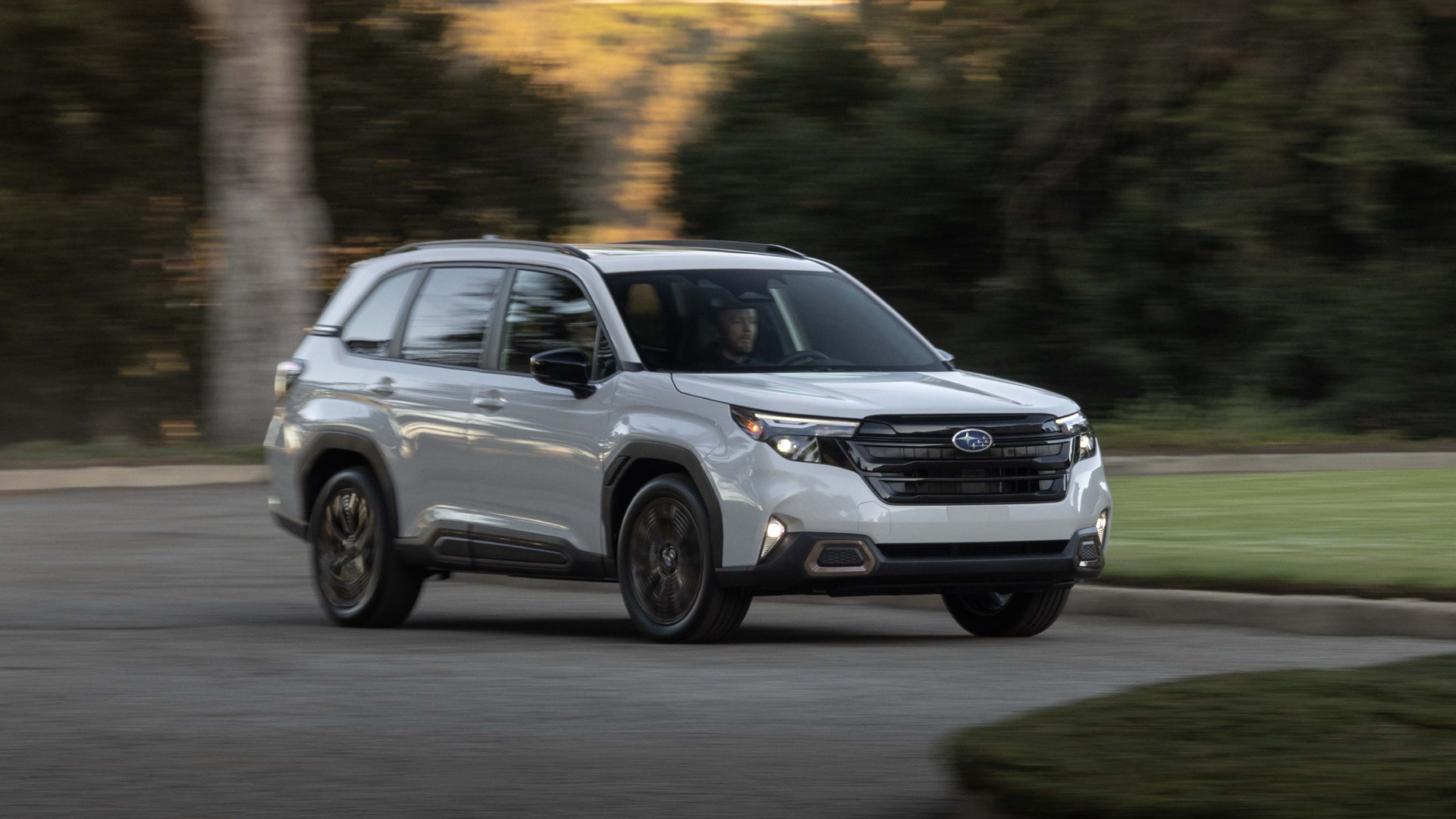
At this point, hybrids don’t really feel all that special to drive (either for better or for worse), and the Forester is no exception. But it does offer something we’ve been begging for in this chassis: more torque. Ever since Subaru dropped the turbocharged XT, there’s been a distinct lack of oomph in the Forester lineup. The hybrid’s potent electric motor just whets my appetite for that turbine-fed torque, leaving me hungry for a proper meal. It also leaves the Forester a bit heavier, by about 300 pounds. That’s a pair of medium-sized passengers in the back seat, more or less, and you do feel it in the corners. The 19-inch wheels seem like a miss to me too; they look fine, but they’re a bit clunky on broken pavement and they seem at odds with the hybrid’s frugality—and at times with its serenity.
The Highs and Lows
Typically, the Forester has two things going for it: a relatively low center of gravity and a decent amount of ground clearance. The Hybrid does nothing to upset that balance. Sure, it’s heavier, but the chassis does a decent job of muting the impacts. And since this isn’t a Wilderness, you don’t have to contend with stiff tire compounds or noisy tread patterns. It’s simply comfortable and quiet—quieter even than the standard Forester at times.
The Forester’s biggest letdown is the infotainment, and this is not unique to the Hybrid. The new Forester’s launch timing was unfortunate, coming just before Subaru started overhauling its tech. The Outback gets a sleeker, faster, better-looking screen with lots of promising but not yet polished features lurking beneath it. The Forester was a year too early to the party, and consequently has to make do with the old kit. This isn’t a deal-breaker, necessarily; the old system still supports both Android Auto and Apple CarPlay. Stick to your phone for navigation and you’ll avoid most of the infotainment’s clunkiest behavior, but that advice won’t get you anywhere if you need to futz with the climate control (which has a physical interface in the Outback).

2025 Subaru Forester Hybrid Features, Options, and Competition
Since there’s no “base” Forester Hybrid, the Sport is just one tick up from the cheapest model available, the Premium. Stepping up to Sport gets you the larger infotainment screen, the bronze interior and exterior accents, and the fancy X-Mode setup with hill descent control. Personally, I’d spend another $2,000 and opt for the Limited, which includes a 10-way adjustable power seat; it’s not available as an option for the Sport or Premium.
Since it’s neither the most frugal nor the most fun to drive, the Forester has to rely on something else to set itself apart—in this case, simply being a Subaru. Its owners tend to be quite loyal, and while the Forester doesn’t command the same following as the wagon-adjacent Outback, its Subieness is still a unique component of its value proposition.
Fuel Economy
Like the standard gas-burner, the Forester Hybrid is less frugal at the pump than its peers. The all-wheel-drive Honda CR-V Hybrid and Toyota RAV4 Hybrid get 5 and 6 mpg more on the highway, respectively, and even Mazda’s CX-50 Hybrid does better across the board. At 35 mpg city, 34 mpg highway, and 35 mpg combined, the Forester’s no slouch, but it could be better. I don’t feel like I got a good sense of its real-world fuel efficiency during my time with it, though as I’ve hinted at before, Subaru really had nowhere to go but up, and the Hybrid is about a third more efficient around town compared to the standard Forester—35 mpg vs. 26.
Value and Verdict
If value is your primary concern, the standard gas Forester is the one to get. If you’re brand-agnostic and simply must have a hybrid (for reasons I can’t fathom, but you do you), then you probably want the Honda or Toyota. That goes double if AWD isn’t a priority for you; the front-wheel-drive hybrids will clean the Forester’s clock at a lower price point. If you’re looking for something a little peppier and less reluctant to get off the line—or you simply want a Subaru with a hybrid engine in it—then the Forester is your jam.
But there is one big catch, and that’s the Forester’s infotainment. It has never stopped me from recommending the car before, and I only hesitate for one reason: Subaru has newer tech. It’s only in the Outback for now, granted, but in a segment as hot as this one, updates take less time to percolate. We could see the new infotainment in the Forester sooner than you might think.
| 2025 Subaru Forester Hybrid Specs | |
|---|---|
| Base Price (Sport as tested) | $36,415 ($39,415) |
| Powertrain | 2.5-liter flat-four | two electric motors | continuously variable automatic | all-wheel drive |
| Horsepower | 194 |
| Torque | 154 lb-ft (gas) 199 lb-ft (electric) |
| Seating Capacity | 5 |
| Cargo Volume | 27.5 cubic feet behind second row | 69.1 cubic feet behind first row |
| Curb Weight | 3,873-3,946 pounds |
| Max Towing | 1,500 pounds |
| Ground Clearance | 8.7 inches |
| Off-Road Angles | 19° approach | 19.3° breakover | 24.6° departure |
| EPA Fuel Economy | 35 mpg city | 34 highway | 35 combined |
| Score | 8/10 |

Quick Take
Not the best hybrid, but definitely the best Forester. Unless you need the Wilderness.
Got a tip? Send it in: tips@thedrive.com
Loading comments…
Comments couldn’t be loaded. Please refresh the page.