
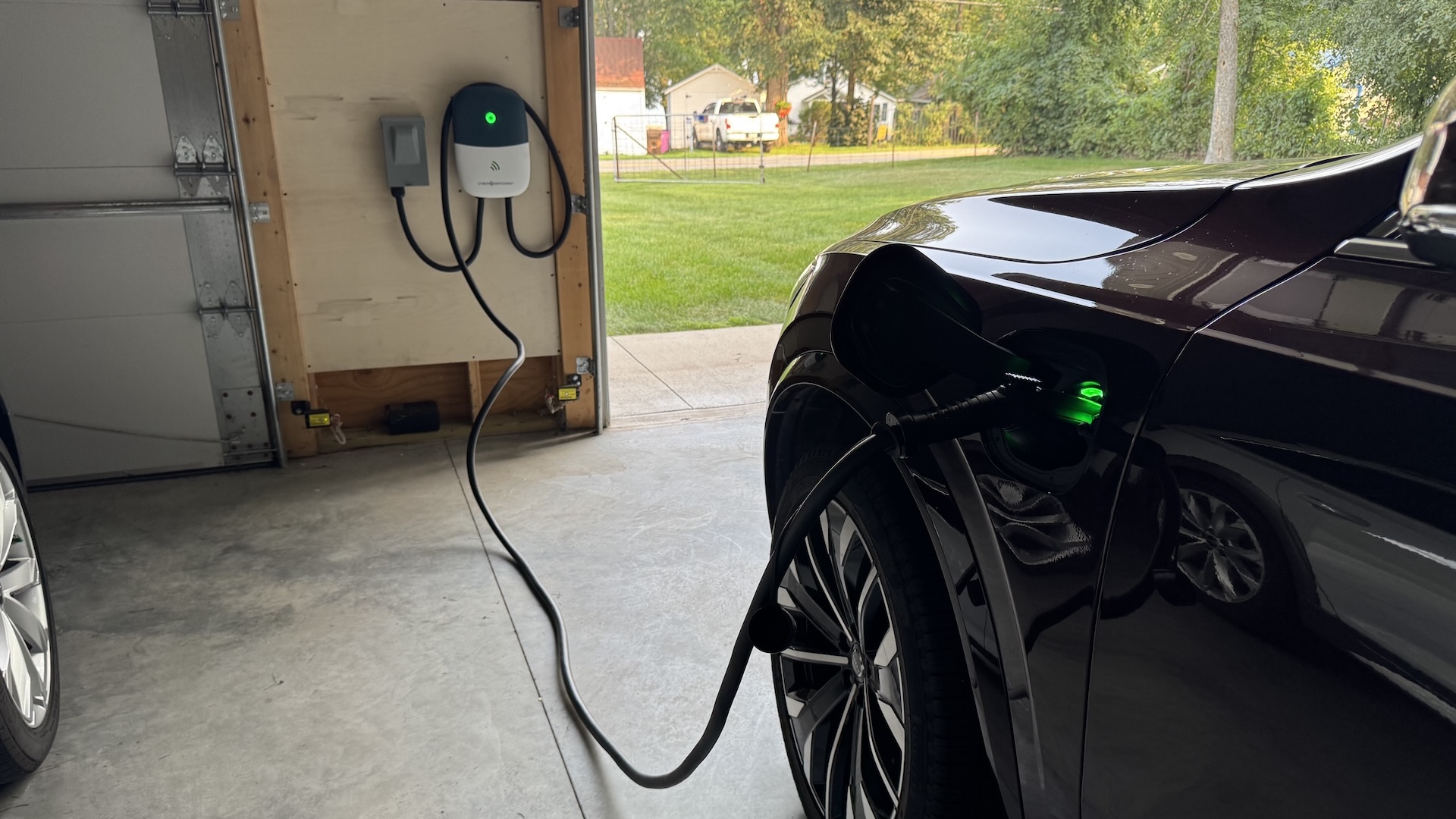
Just before the debut of the electric 2027 Volvo EX60 the Swedish automaker’s executives acknowledged the fact that some customers are not ready to buy an electric car, yet. For those customers Volvo’s working on providing the comfort of a gas-powered engine for backup and deems it as bridging technology.
On Wednesday, in Stockholm, Sweden, Michael Fleiss, Volvo’s Chief Strategy and Product Officer, told The Drive the automaker is preparing to update its complete product line when it comes to plug-in hybrids. Fleiss said the team describes these next-gen plug-ins as “an electric vehicle with a backup engine,” and the electric-only driving range will be roughly 100 miles per charge before the gas engine needs to fire.
“You have more or less the same performance sphere, like an electric vehicle, what customers really like. I mean, the fast acceleration. Decent, really good electric range, and then for customers who do not really have the opportunities to charge their cars either at home or on the way, we have this combustion engine as a backup,” Fleiss said.
All in, both between electricity and gas Fleiss said the next-generation plug-in hybrids will have a combined total driving range of 800 to 1,000 km (about 500 to 620 miles) while also having “good electric range,” the executive noted.
Fleiss reiterated what Håkan Samuelsson, President and CEO of Volvo Cars, told The Drive earlier in the day, that these next-generation plug-in hybrids will have about 100 miles of electric-only range. When asked if an electric-only driving range of 70 to 80 miles would be enough Samuelsson said, “at least.”
The upcoming plug-in hybrids will not be extended-range electric vehicles (EREVs) in the way we think of them today in terms of the upcoming Ram Rev (which was previously known as the Ram Ramcharger). The gas-powered engine under the hood of the Ram acts only as a generator to feed energy to the battery when the juice runs out. There’s no mechanical connection (or even the ability to clutch-in) to drive the wheels directly with the gas engine.
Volvo calls its upcoming plug-in hybrids “extended-range plug-in hybrids” because of their (approximately) 100-mile electric driving range. These plug-in hybrids are engineered to enable the engine to clutch in and out to power the wheels when the large battery pack’s juice runs dry. Typically, this will happen on the highway, where Fleiss said it’s simply more efficient to power the wheels directly than it is to feed energy to the battery pack to then power the drive wheels. The opposite is true in stop-and-go traffic situations.
Fleiss didn’t put an end date on when plug-in hybrids would exit the automaker’s lineup. “If the customer is not willing already [to buy electric], we are happy to continue with the plug and hybrids,” Fleiss said.
“This is our way of either satisfying our customers who are not yet ready to go to better electric vehicles, and I strongly believe when a customer drives such a car., the next car will be an electric vehicle, because they will probably charge or fill that car, three, four times a year, with fuel. The rest is electric. So it’s easier, and that’s why we call it bridging technology.” Fleiss said.
Got a tip about future product? Shoot us a line at tips@thedrive.com
Loading comments…
Comments couldn’t be loaded. Please refresh the page.