

Plug-in hybrids, or PHEVs, are often hailed as a more feasible half-measure between purely gasoline-powered and battery-powered vehicles for the majority of Americans, while leveraging more advanced technology than conventional hybrids for better efficiency and performance. But that really depends on how you use them, and a new study out of China reiterates the point that if you never plan on plugging in your plug-in, it’s probably best to just buy an old-fashioned hybrid.
The study, featured in an upcoming issue of the science journal Transport Policy, surveyed 500 daily-driven plug-in hybrid vehicles in Shanghai, factoring in different charging regimens. Early on, the researchers stipulate that you can simplify how PHEVs operate into two behaviors: Charge-Depleting (CD) mode and Charge-Sustaining (CS) mode.
CD is where you want to be as much as possible, because it means that the vehicle’s battery is being depleted through use. Here, you’re getting the full benefit of electric power, whether it be through all-electric range or instant torque. Once the vehicle switches over to CS mode, the combustion engine is being fully tapped pretty much all the time, diverting a small amount of energy toward the pack to maintain what little juice it does have, which is also supported via regenerative braking.
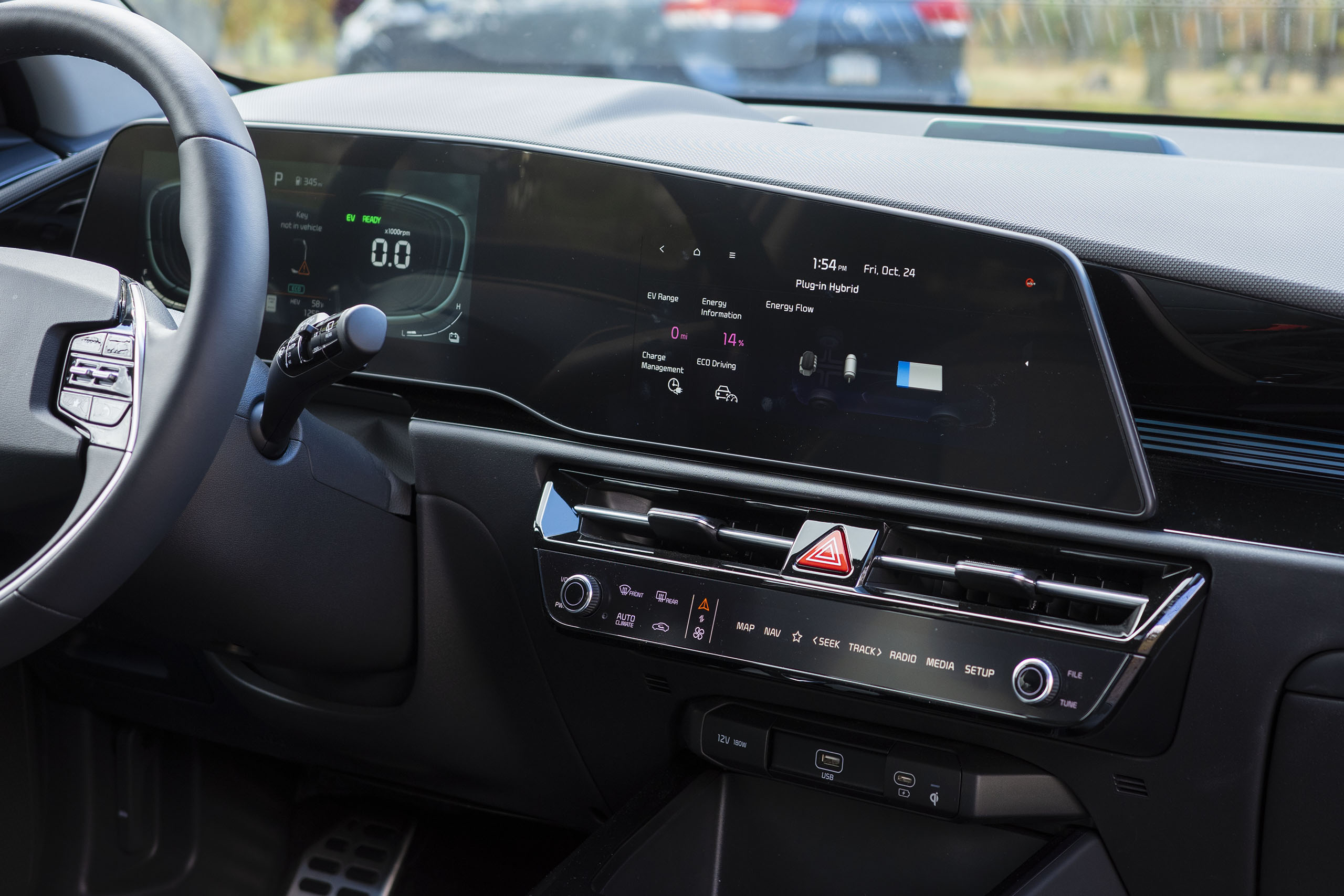
The efficiency gains of a PHEV operating in optimal CD mode versus a conventional hybrid can be significant—at least in a lab. Researchers have found evidence to suggest that PHEVs with batteries at a high state-of-charge may emit 40% to 60% less nitrogen oxide than traditional gas-burning vehicles in an urban use cycle. However, those numbers seem to pale significantly in the real world, looking more like a 20% reduction. And they go in entirely the wrong direction once that battery is spent, and it’s time to plug in again.
“Infrequent charging leads to a significant increase in nitrogen oxide, hydrocarbons, and carbon dioxide emissions,” the Transport Policy study explains. “In the worst-case scenario, where users never charge their PHEVs, emissions rise by 62% for nitrogen oxide, 70% for hydrocarbons, and 46% for carbon dioxide, respectively.” That’s relative to their output in a CD state, by the way.
In CS mode, the PHEV in question is operating with reduced performance and worse efficiency than a conventional hybrid. It’s lugging a heavy battery pack around, with no energy from that battery to help the cause. Consider that an ICE-only, all-wheel-drive Mitsubishi Outlander weighs 3,900 pounds, while its plug-in hybrid counterpart weighs 4,600 pounds. Meanwhile, a Kia Niro PHEV is 250 pounds heavier than a base, conventional hybrid version.
With an empty battery, the combustion engine in a PHEV is working harder and more of the time. That’s an inevitable recipe for worse fuel economy and, as the researchers explain, more pollution.
Plug-in hybrids indeed have their benefits, but, sort of like with pure battery-electric vehicles, they’ve got to fit your routine if you plan to actually get something out of them. The big difference is, if you’re not good about charging your EV, you won’t go anywhere; the owner has pretty much no choice but to adapt their usage habits. If you’re not good about charging your PHEV, you can still get around, but it’s going to cost you more than if you had never bothered to buy one in the first place.
Got a tip? Let us know at tips@thedrive.com
Loading comments…
Comments couldn’t be loaded. Please refresh the page.