
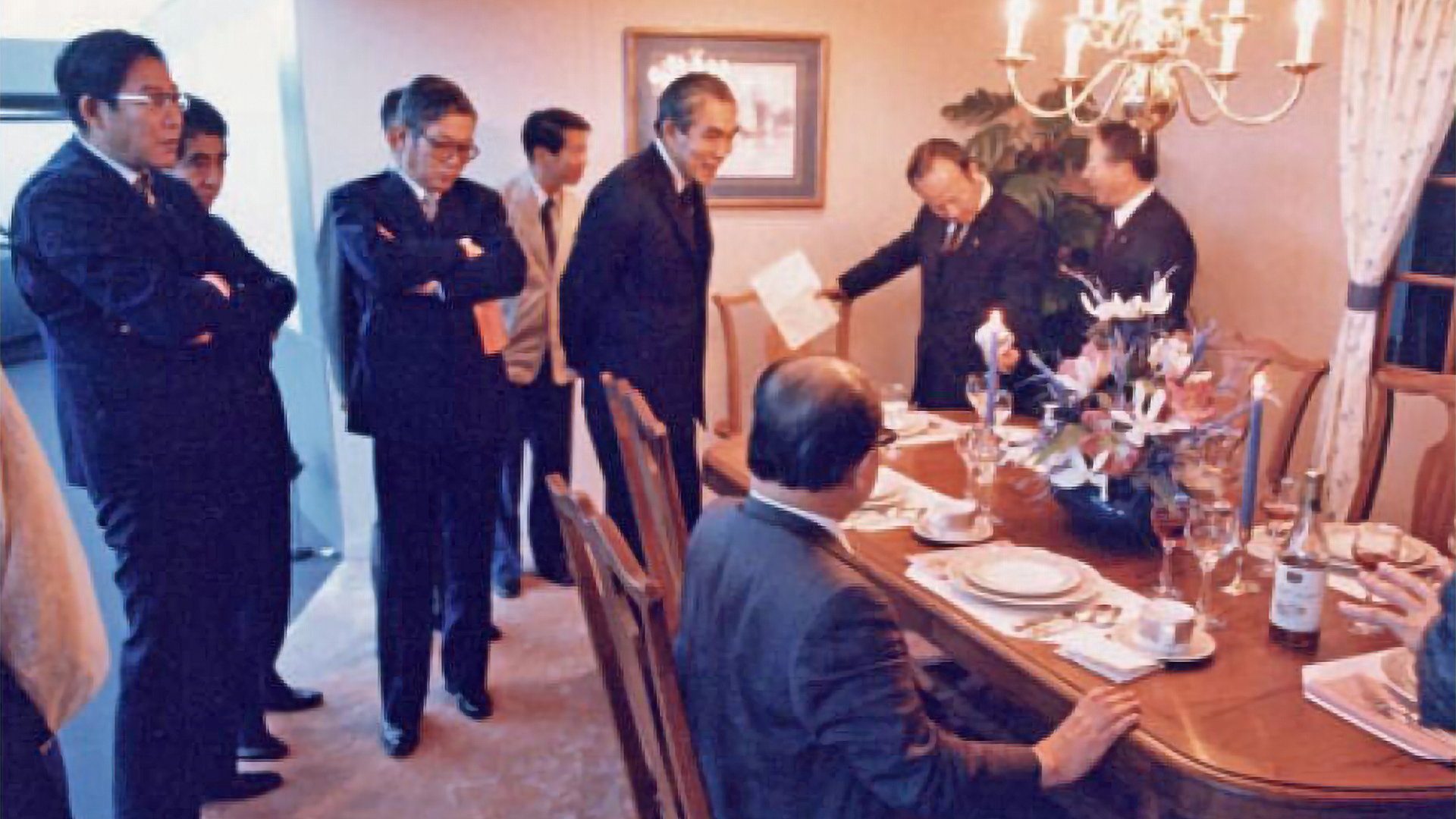
Every monolith starts somewhere. Forty years ago, Toyota was certainly a challenger, but it was not yet a colossus. Back then, the company claimed 8% of the world’s car market; for reference, Ford owned 12.5% and General Motors, 19%. The near future was uncertain, thanks to a particularly strong yen cutting severely into export margins. And that bore out in Toyota’s financials, where it reported a nearly 25% plunge in profits by the end of 1987.
But Toyota weathered that storm, and so many more—always learning along the way. Among those most critical of lessons was how best to cater to customers around the world. And here in the States, it was Calty Design Research, Toyota’s California studio opened in 1973, that helped corporate leaders back in Japan understand what American customers needed, in a rather unexpected way. It’s all detailed in a limited-run art book commemorating Calty’s 50th anniversary.
In Calty’s early days, one point of friction between itself and Toyota HQ was the concept of scale. Japanese employees—particularly those who had never made the journey overseas—didn’t understand why Calty’s proposals were sized as they were, with proportions that would never fly on Japan’s narrow roads. “On one occasion, Calty staffers took along soda cans to show the differences in size between beverage cans in the U.S. and Japan,” an excerpt from the book reads, “but this was still not enough to drive their point home.”
They made their point better in 1986, in a manner as elaborate as it was effective. Calty traveled to Japan with all the pieces to craft a model dining room typical of an American home. They set up a large wooden dinner table that seated six, with place settings to match, under a chandelier. The walls held wide windows looking out into suburbia, flanked by curtains of the proper length.
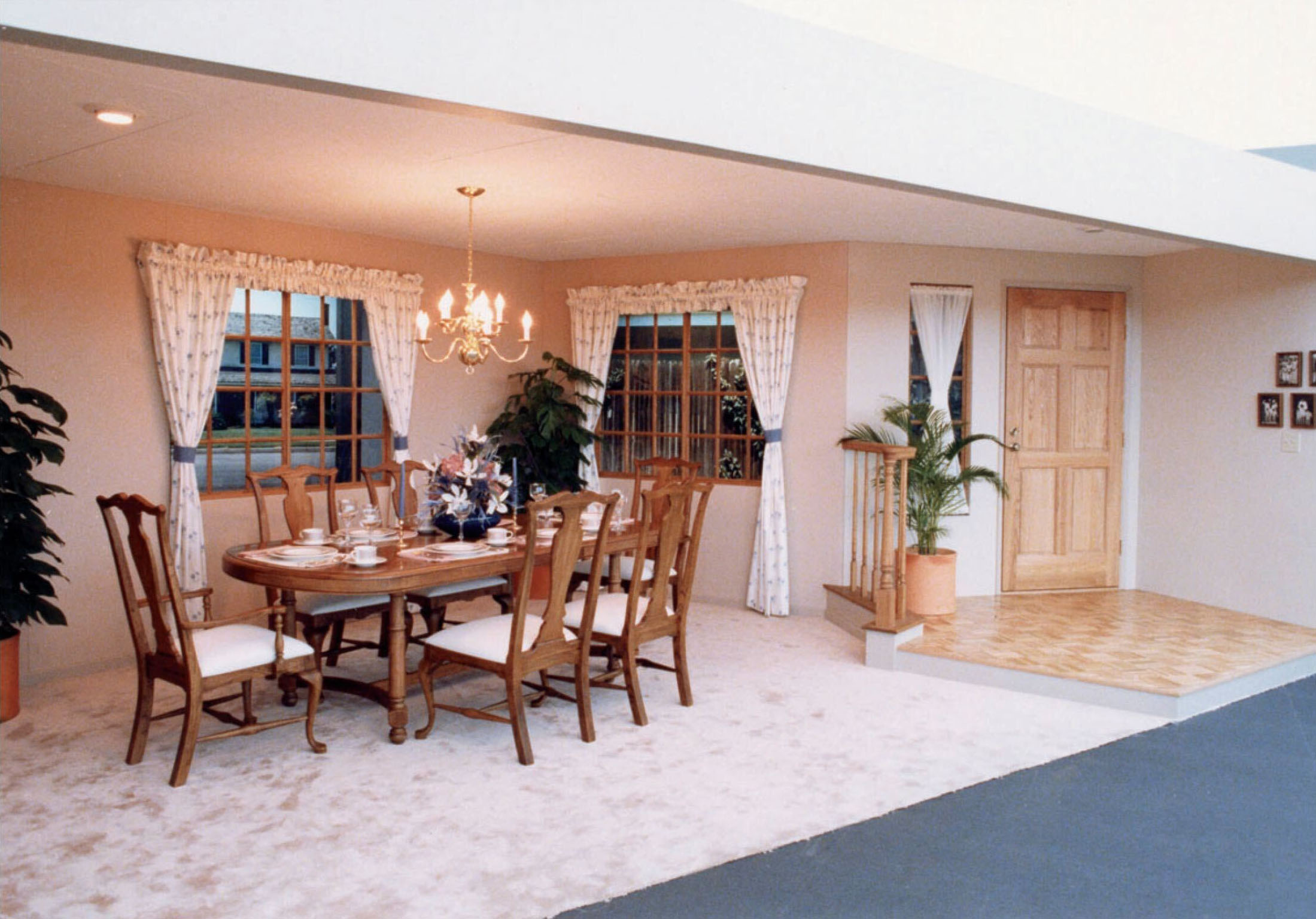
It was a veritable sitcom set. Everything from a front door to parquet floors, plants, and family photos was accounted for, all to help Calty’s Japanese colleagues understand who they were selling to—what these consumers were used to in everyday life, and thus, expected from their vehicles.
Naturally, this exercise was most useful for interior design, as American passengers were generally larger than their Japanese counterparts, requiring more space and larger seats. And Toyota learned from it, honing its products for Americans until the company truly took the market by storm in the following decade.
Around that time, Toyota’s then chairman and Akio Toyoda’s great uncle, Eiji Toyoda, had set his sights on accounting for 10% of the world’s car sales. ”I had hoped it would come true by the time I pass away, but my time is getting less and less,” Toyoda, then 73, said to The New York Times in 1986.
He had much more time than he knew. Toyoda lived until 2013, passing away at age 100, six years after his company overtook GM as the biggest carmaker globally for the first time.
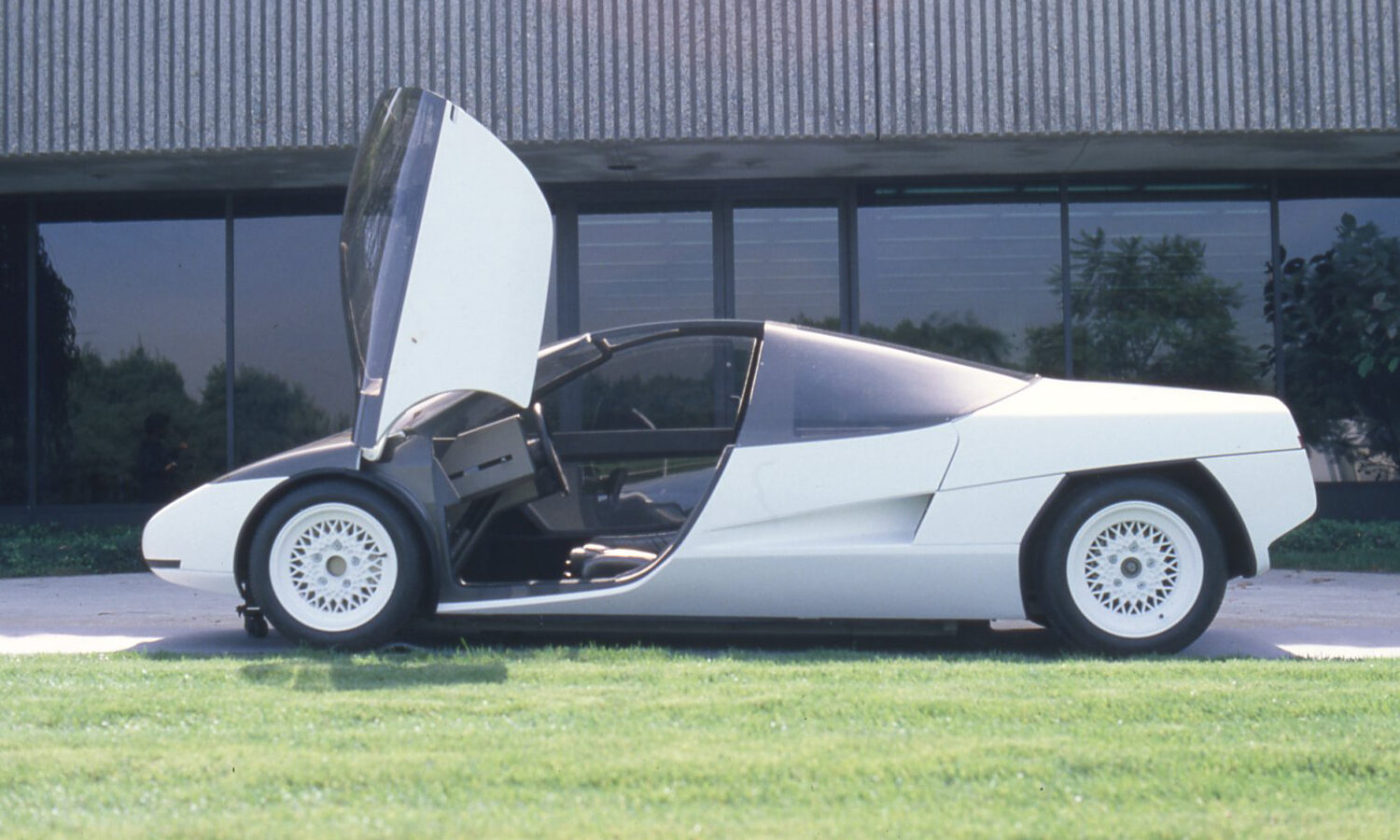
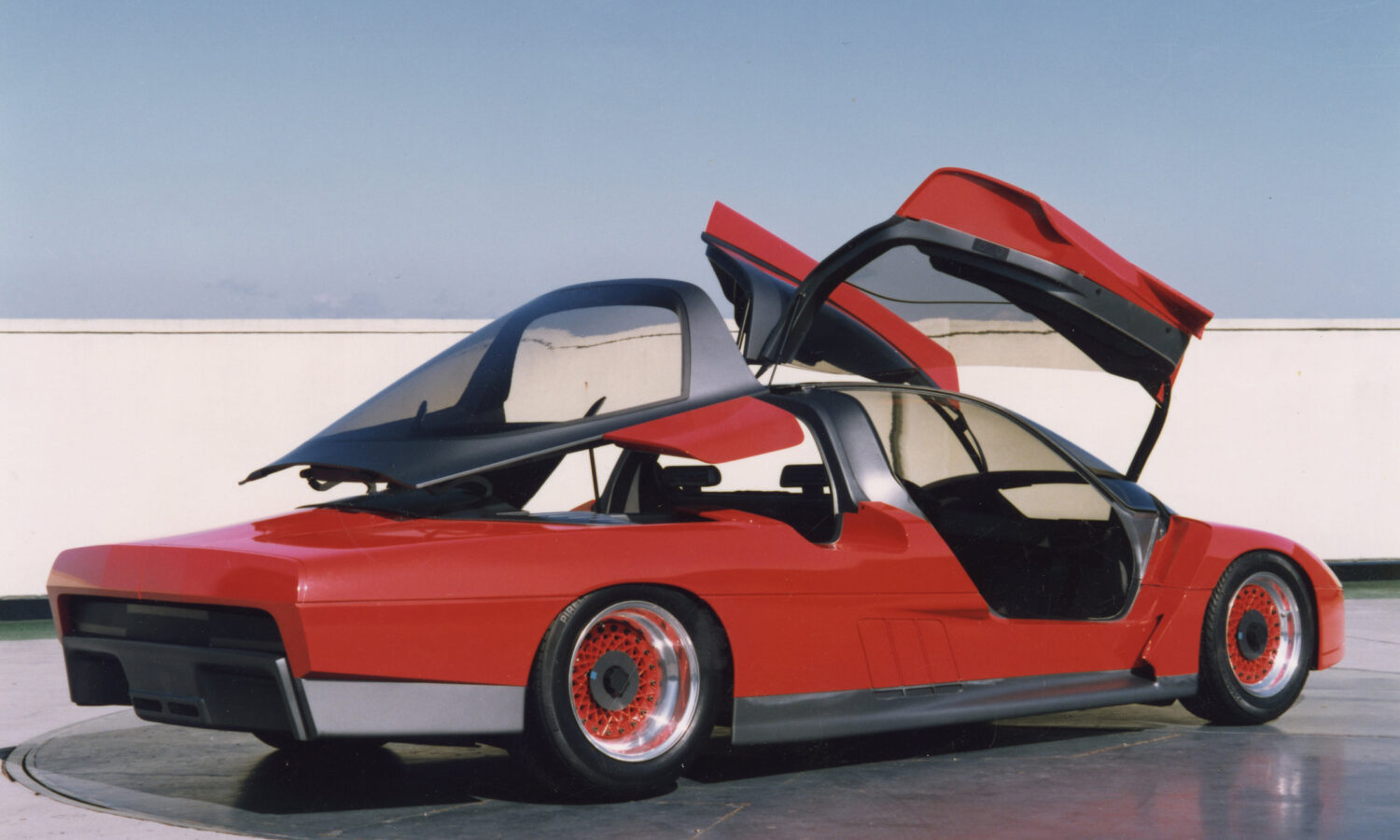
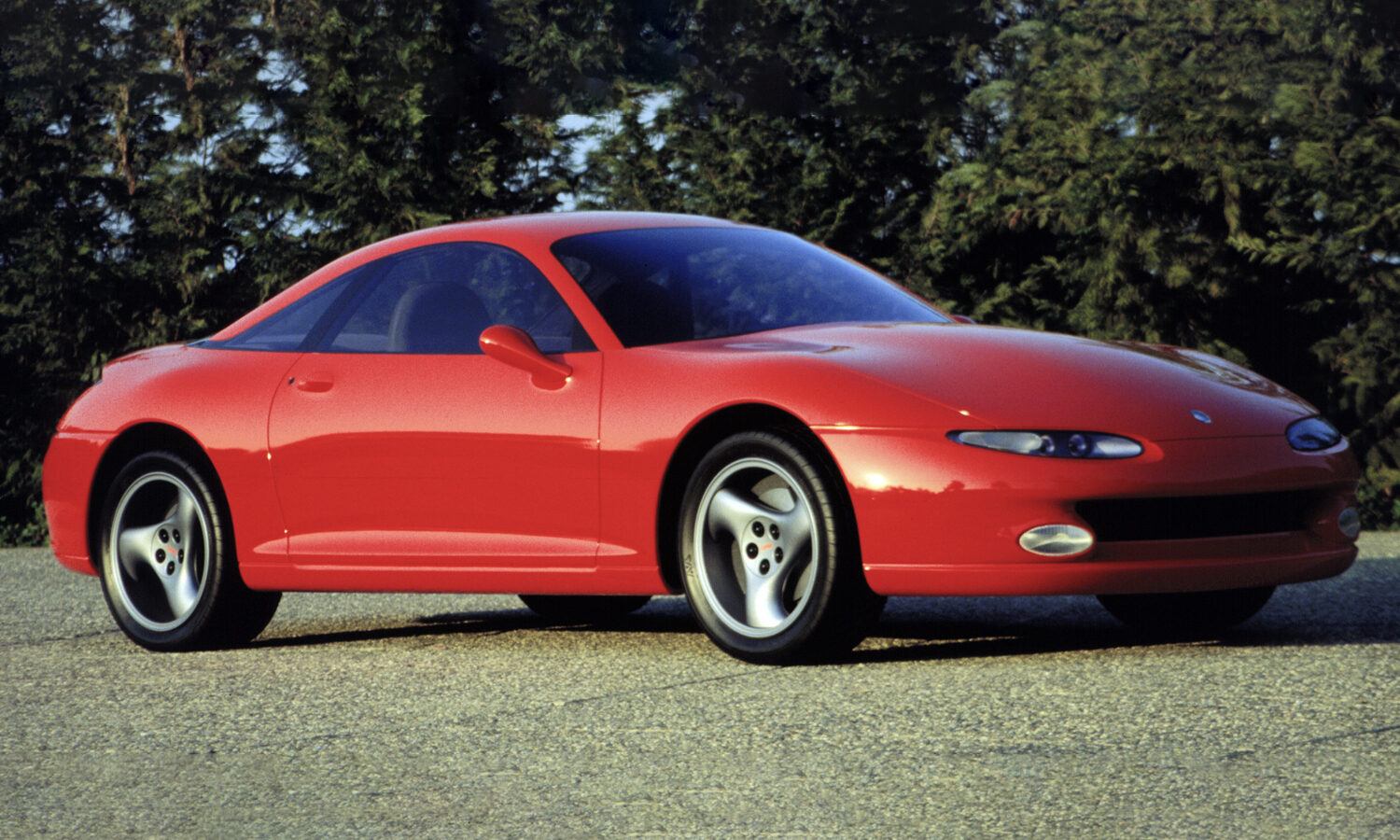
Few outside Toyota know about the dining room demo. A Calty representative told The Drive that it had only ever been shared in a coffee table book that the design studio printed in very limited numbers to commemorate 50 years in business. The book was made in 2023 but never sold to the public; it was part of the same campaign that unearthed a couple of never-before-seen sports car concepts, including an alternate design for the Mk IV Supra. Who knows what other gems are lurking in its archives?
Got a tip? Reach out to tips@thedrive.com
Loading comments…
Comments couldn’t be loaded. Please refresh the page.