

You know that clever arrow near the fuel gauge that tells you which side of the car the gas cap is on? For too long, we didn’t know who came up with it. One of the earliest iterations appeared in a Ford, based on reviews of the 1989 Thunderbird, but over the ensuing decades, the inventor’s identity remained a mystery to many.
The public only learned his name a few years ago. His name was James Moylan, and he worked for Ford in Detroit as an interior trim designer. He died last month at age 80.
The arrow’s origin story goes that Moylan got the idea while taking a company car to a meeting at the automaker’s Dearborn campus in 1986. The tank was running low, so he went to refill it. When he got out of the car, he had that sinking realization that’s familiar to all of us, that he pulled up to the pump on the wrong side.
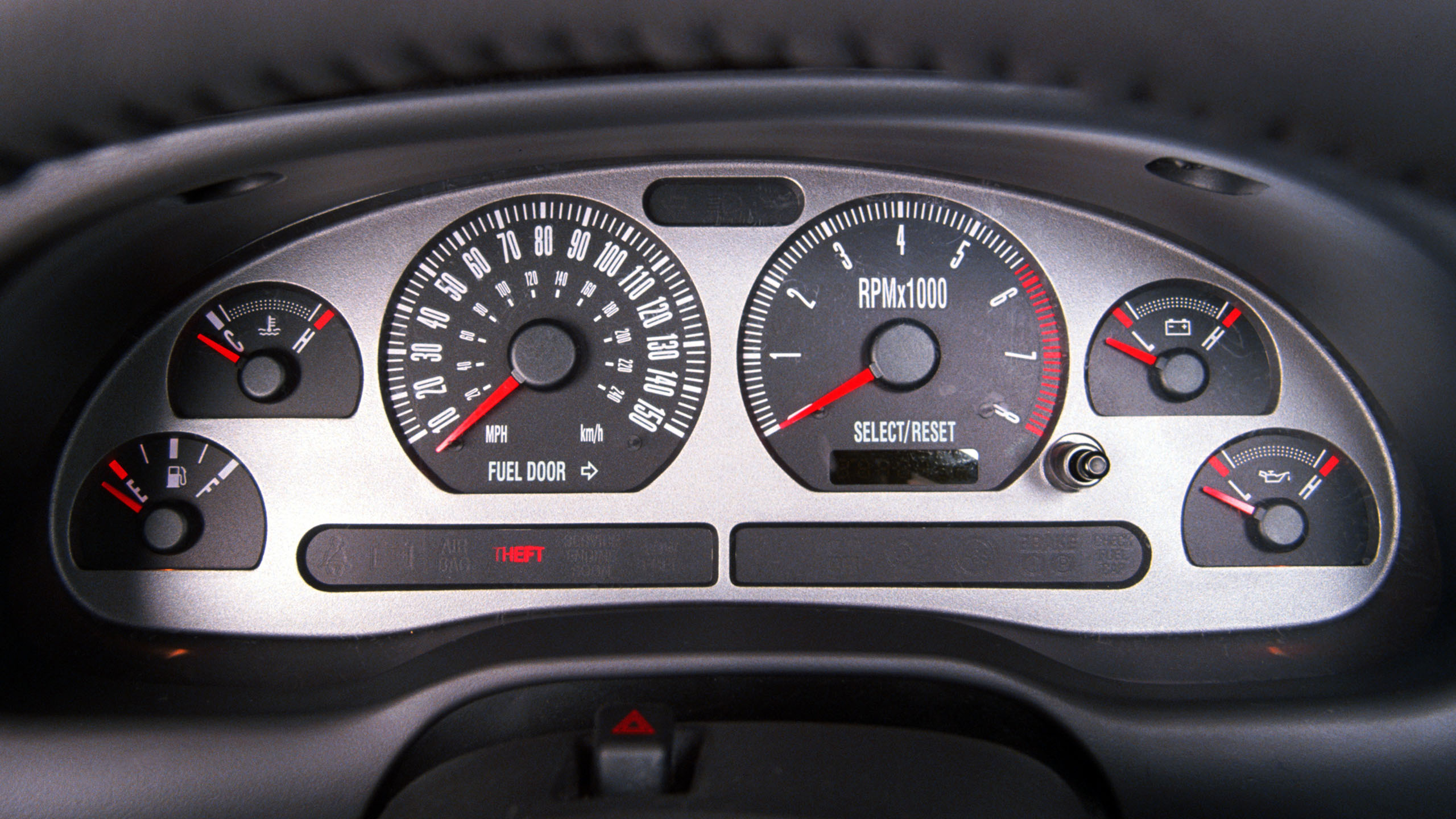
Immediately, Moylan hatched a solution. Later that day, he drafted a product convenience suggestion memo. “I would like to propose a small addition to future I/P cluster graphics in all passenger car and truck lines,” it read. “The indicator or symbol I have in mind would be located near the fuel gauge and simply describe to the driver which side of the vehicle the fuel fill door is located.”
Moylan’s original draft, as shown in this memo, featured a small overhead picture of a car with an oversized fuel door adjacent to the fuel icon. This would later evolve into a simple arrow. It debuted on the new Escort a couple years later, before expanding to Ford’s entire product portfolio, and eventually, those of Ford’s competitors.

Moylan apparently never requested any kind of acknowledgement from Ford about his invention, per the Wall Street Journal’s Ben Cohen. As a result, the public didn’t know his name until about seven years ago, when a podcast revealed it. A short while later, Moylan’s memo was rediscovered and digitized by Ford’s archivists. CEO Jim Farley tweeted it back in 2022.
It doesn’t look like Ford was the very first automaker to implement a fuel-filler indicator. Jason Torchinsky did a nice little obituary for Moylan last week on the Autopian, and mentioned that Mercedes-Benz had a low-fuel light in the shape of an arrow that came on when you needed gas in some models. But is seems safe to say Ford, and Moylan, can take credit for the mass-market proliferation of the idea.
The designer said he forgot about his idea right after firing it off, but its genius wasn’t lost on his bosses or their rivals, not to mention the millions of motorists around the world who have relied upon it in new or unfamiliar vehicles. I still remember when I learned about what’s been appropriately dubbed the “Moylan arrow”—my brother told me about it a few years after I got my license. I’m glad he did, because that information has proven invaluable in my career, getting into tens of press cars. May Moylan rest in peace, and may we all know and repeat his name every time we pass on that knowledge to a new driver.
Have another piece of little-known automotive history to share? Let us know at tips@thedrive.com
Loading comments…
Comments couldn’t be loaded. Please refresh the page.