
You’re a car enthusiast, you wouldn’t be here reading this otherwise. Whether you’re into beaters, normies, exotics, or some other weird subset of the automotive sphere, it’s safe to assume that you believe car culture matters. But what exactly is car culture, and how far does it reach? I won’t wax poetic and share an enthusiast’s manifesto a couple of days into the new year—it’s too early for that. However, I will share one of my favorite conversations about car culture from 2025, and I must admit, one of the things that made it so great was that it came entirely out of the blue.
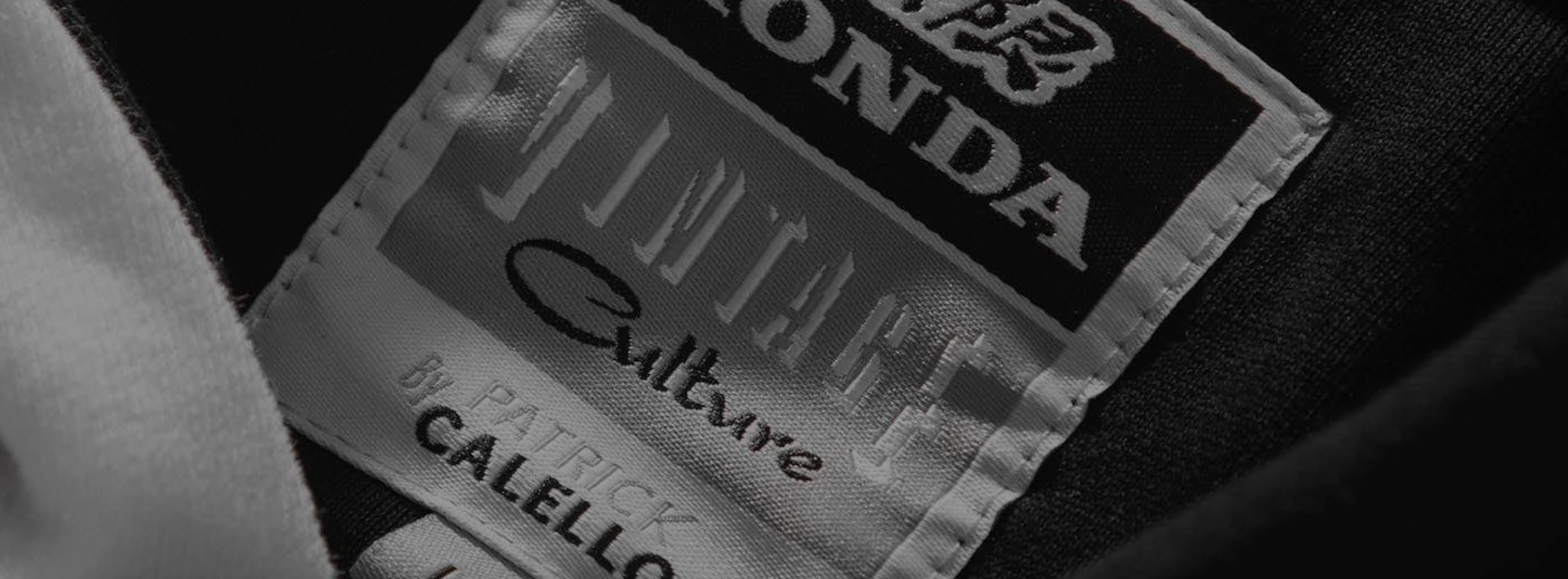
I’m talking about Patrick Calello and his business, Honda Vintage Culture. There’s a good chance you’ve been exposed to his brand on social media ads, or maybe you saw it as a sponsor on one of the best racing podcasts in the business, Beyond the Grid. Or maybe, just perhaps, you’ve never heard of it. If you stick around, though, you’re going to learn a bit about what makes Patrick an authentic innovator in car culture, and what makes him one of the coolest and most passionate racing enthusiasts I’ve ever met.
Beyond his background, I’m also going to share an anecdote that, quite frankly, would be a total shame if it went untold. It has to do with Honda’s 60th anniversary of its first F1 win at the 1965 Mexican Grand Prix, and how Patrick and his team painstakingly recreated some of the original gear worn by that team, so it could be used at a once-in-a-lifetime celebration in Mexico last year, which I was lucky to attend.
From Designing to Licensing
I connected with Patrick after Monterey Car Week in 2024, when I covered the story of Honda’s first winning F1 car doing an exhibition run at Laguna Seca. Some of the team that traveled with the vehicle from Japan wore some of his creations, so that’s how we got to talking. However, he’s been chucking out cool stuff since he was a kid. From tinkering on his Macintosh computer to designing logos for recording artists at 15, he enrolled at Carnegie Mellon University to study graphic design, industrial design, and business. Oh, and he claims to have owned upwards of 40 Hondas and Acuras.
Having created a successful line of wooden car toys called Automoblox—some of you reading may have owned some of these as kids—he connected with Honda about teaming up on a new model. And, funny enough, it was with one of Honda’s less-exciting vehicles that the journey into licensing and creating cool stuff with the Japanese automaker really began.
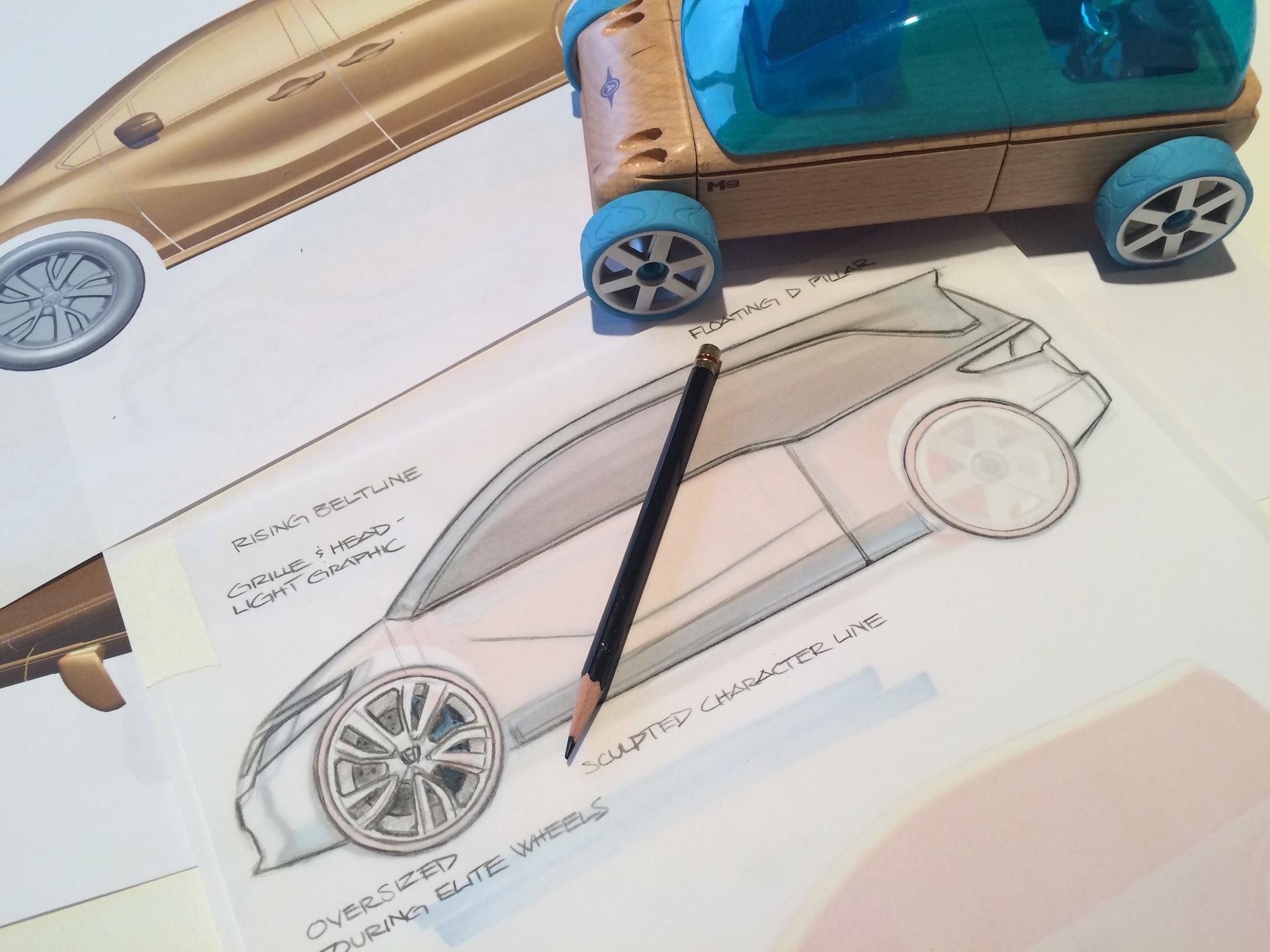
“When I went to college, I was toying with the idea of actually becoming a car designer,” Calello told me. “I had a subscription to Car Styling Magazine, which was like the car industry’s official design magazine. They were like $25 an issue or something back then. I moved on from that, but later on, with Automoblox, I was able to circle back to these dreams and ideas about designing cars, which led to Honda.
“My idea or pitch was: ‘Hey, how cool would it be to be able to get into the living rooms of Americans?’ These big companies spend so much money trying to connect with consumers, and they spend lots of money on TV and other stuff, right? So, what if someone who bought a new Honda Odyssey also got an Automoblox Odyssey? What if an Odyssey Automoblox came with the car?
“One really cool aspect of that Automoblox project was that Honda gave me the CAD file for the Odyssey, like a year and a half before anyone had even seen it! The project ultimately didn’t happen, but the overall idea was to get the Honda brand into America’s living rooms and connect consumers with the brand; that’s really my expertise,” he added.
In some of our chats, Patrick shared that he eventually saw a need to give Honda enthusiasts something to wear, something to show their love for Honda, but in a way that was exciting. Funny enough, he explained it along the lines of, “I wanted a fan to wear a Honda shirt or hoodie, but I didn’t want others to wonder why someone was wearing a shirt or hoodie of an Accord or Odyssey. It had to be about Honda’s cool side, so I focused on its rich racing history.”
As a result, Patrick’s products, which you can browse here, range from vintage Acura tees to HRC jackets, vintage F1 gear, and even wall posters. If you’re a Honda/Acura enthusiast, or even just a car nerd in general, you’re bound to like a lot of this stuff. And no, this is not a sponsored blurb.
But that’s where the journey started, and it’s led him all the way to 2025, when he set out to create some truly special gear for the 2025 Mexico City Grand Prix.
A Honda Fiesta
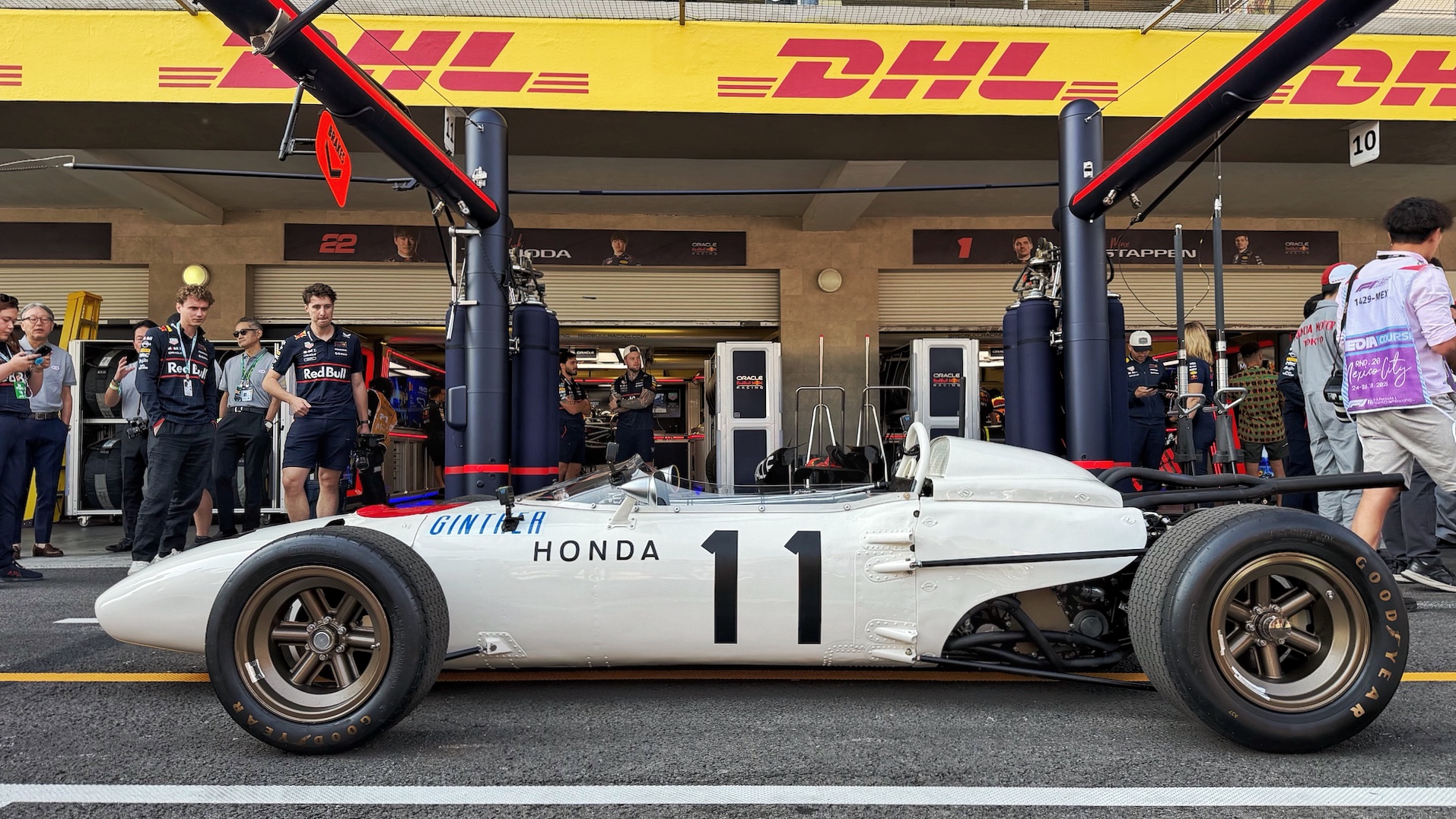
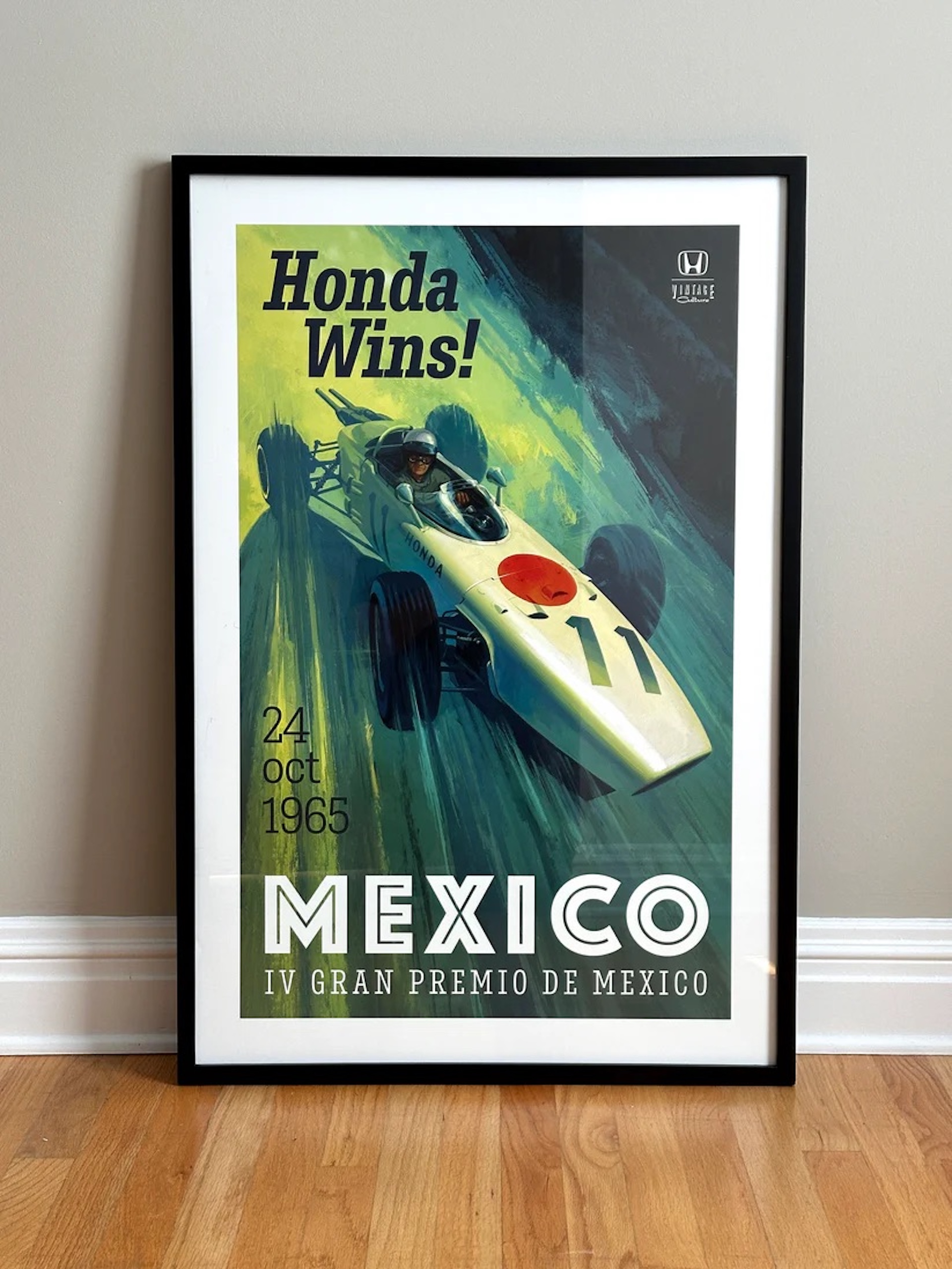
Honda won its first Formula 1 race back in 1965 at the then Mexican Grand Prix—nowadays called the Mexico City Grand Prix. American racer Richie Ginther piloted the Championship-White, V12-powered RA272 to victory, claiming the first-ever F1 win for a Japanese manufacturer. It was a massive moment for the company, which, up until that point, had mostly focused on motorcycle racing.
To commemorate the milestone, Patrick got to work on several unique, limited-edition designs based on the gear worn by the 1965 crew.
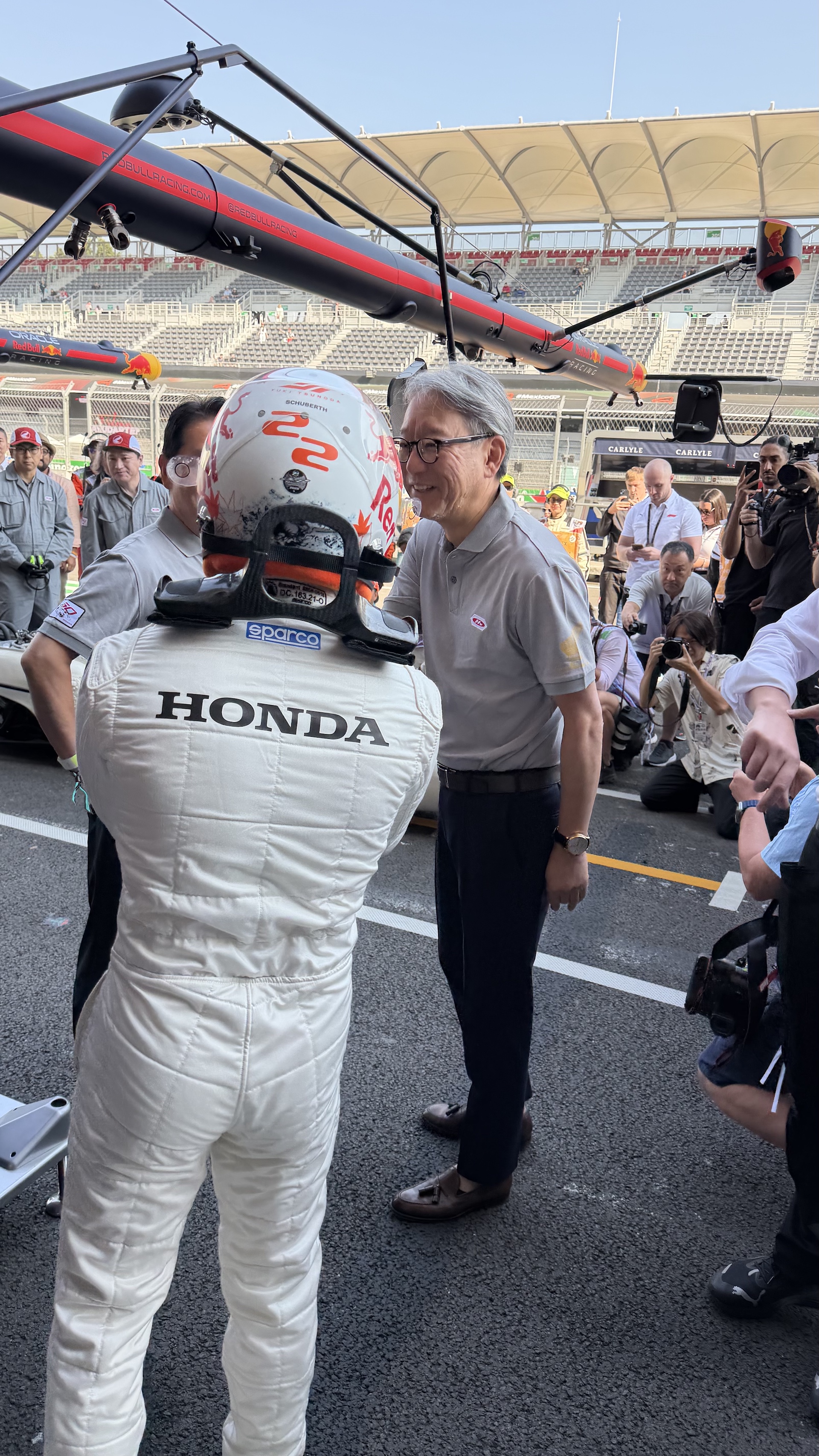
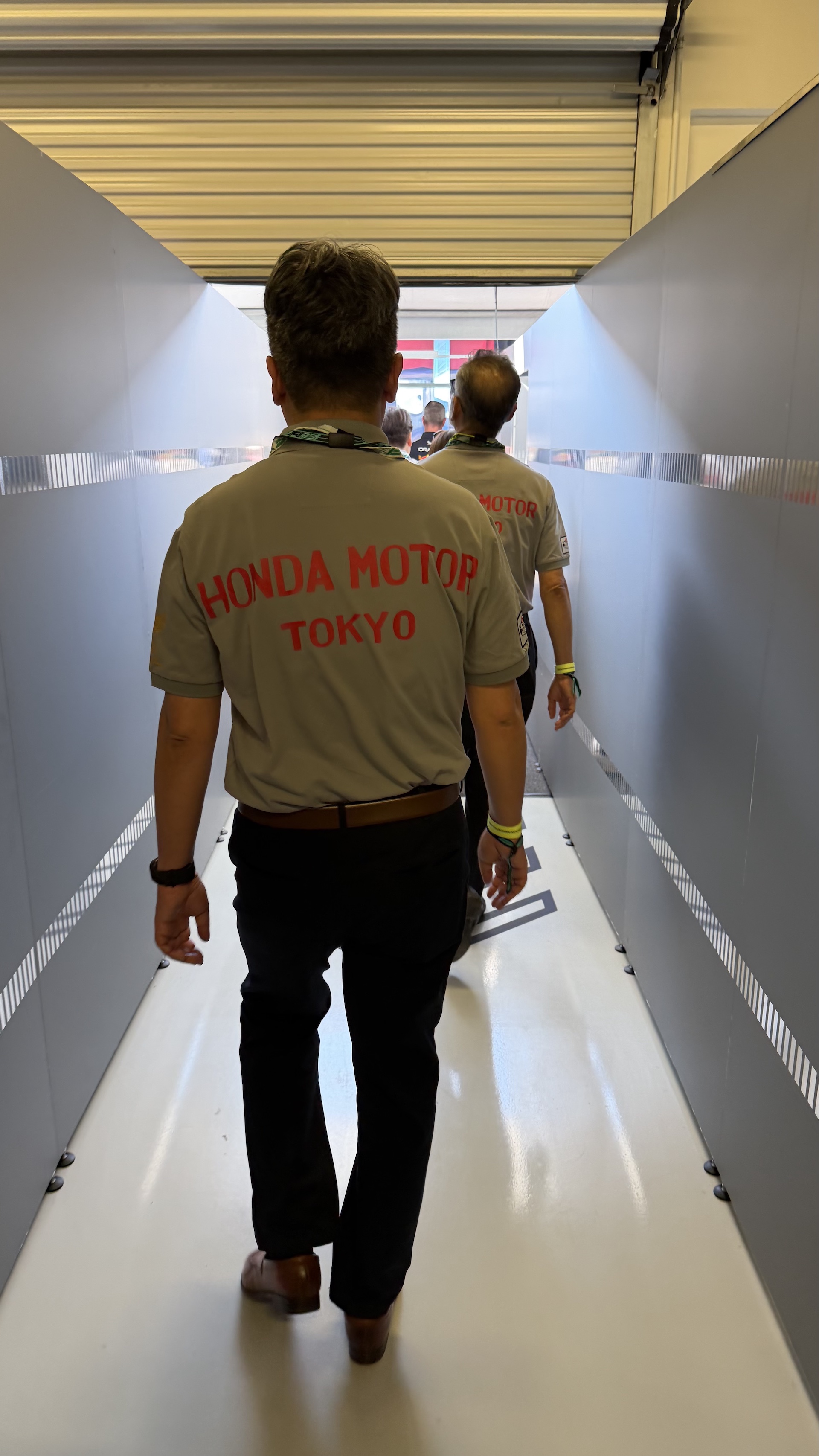
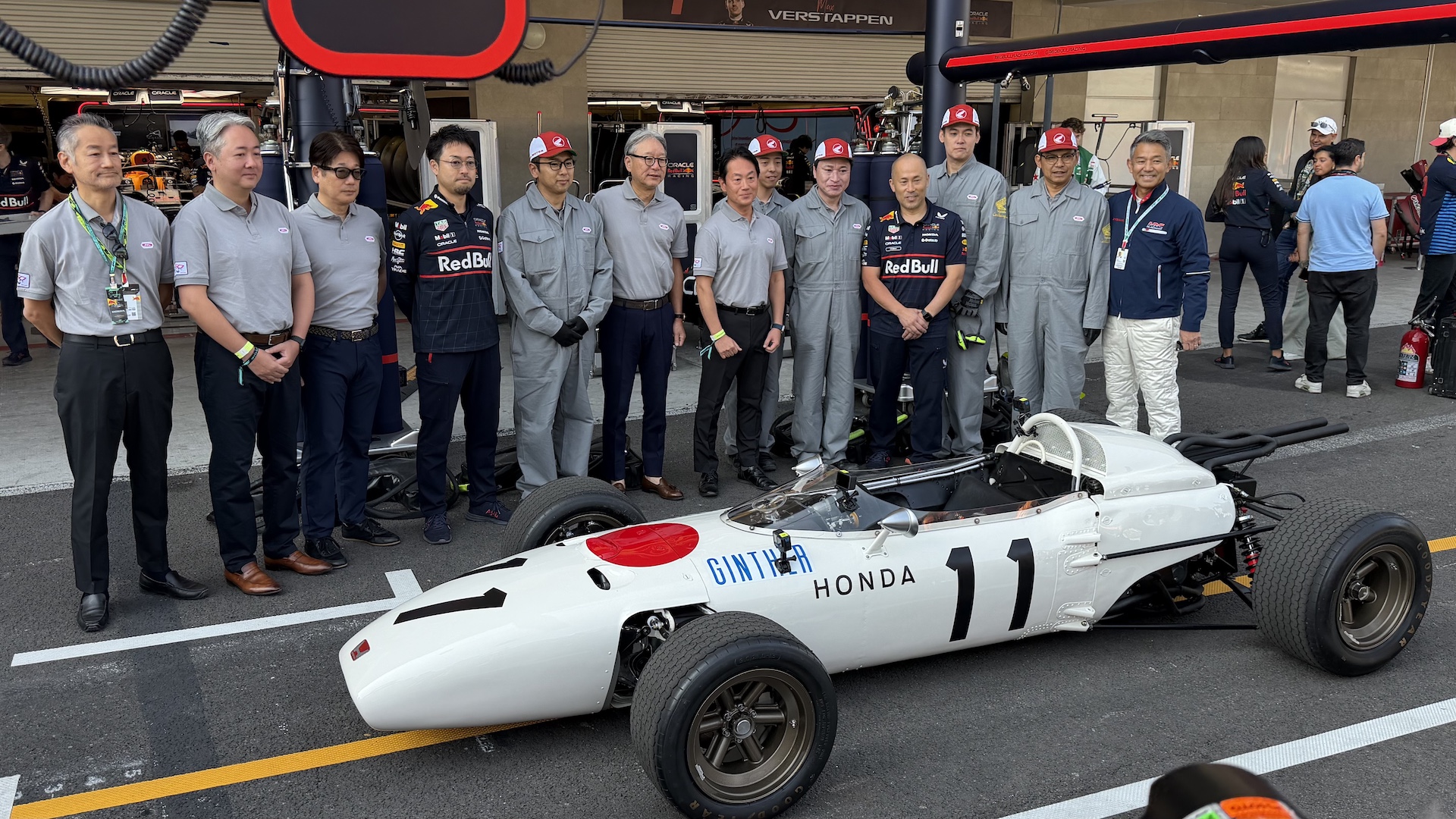
“I reached out and said, ‘Listen, the 60th [F1 anniversary] is coming up, and I’m here to support you,” Calello told me. “I have some ideas of things you can do.’ I found probably 30 to 40 original photos of a Honda team jacket from the ’60s, but I focused on 1965 in particular. So, I made the [replica] jackets, and they asked if I could have them ready for the race.
“After the jackets, the idea of the polos came up, so the executives could wear them in Mexico, and then we threw that together, and it worked out great. However, the crown jewel of the project is the coveralls, and my enthusiasm for them goes way back to the very beginning. I knew I had to do massive research,” he added.
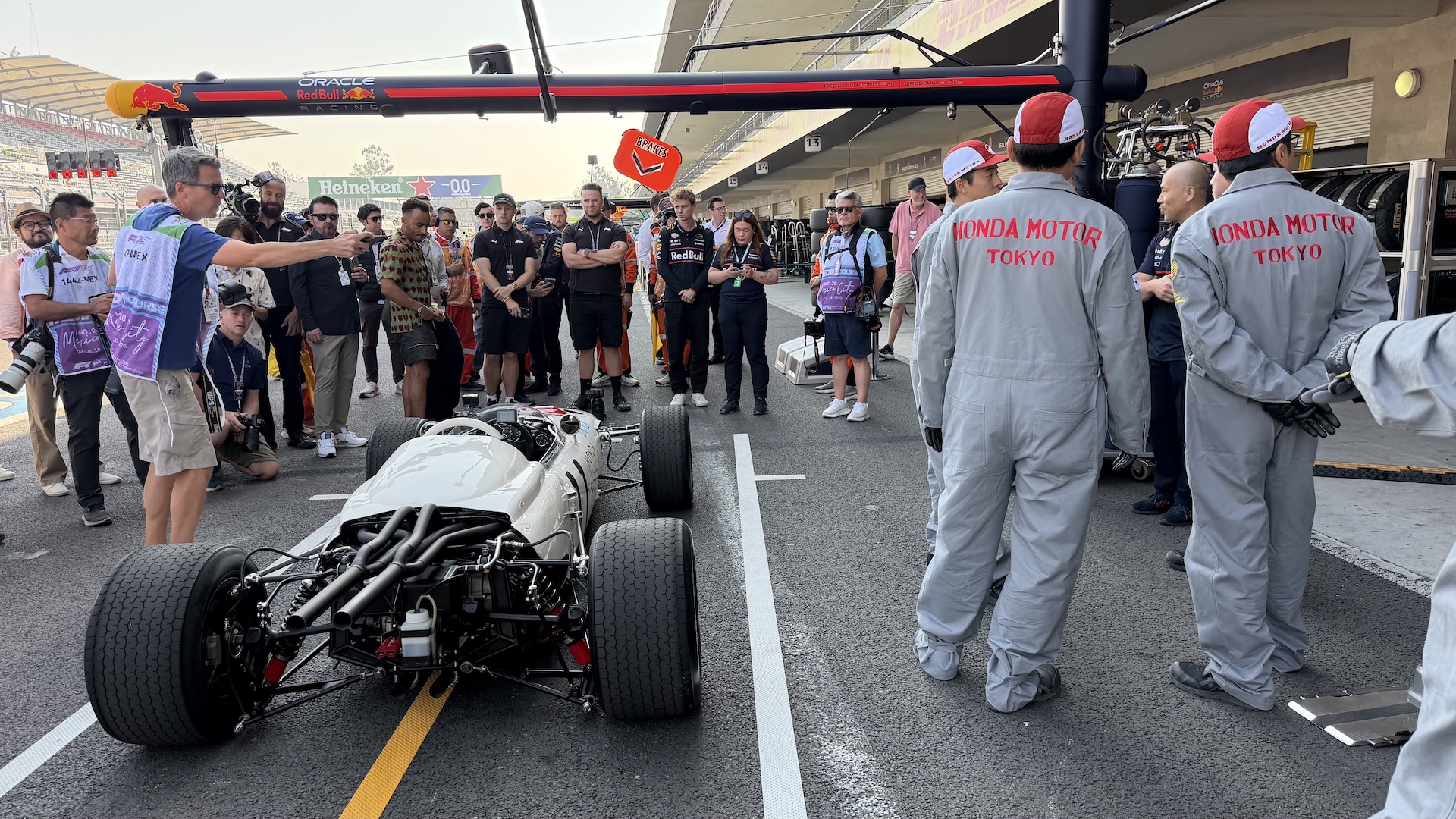
You can see in the photos here that Honda CEO Toshihiro Mibe and HRC President Koji Watanabe are wearing those shirts and jackets. Likewise, you can see the RA272’s crew wearing the period-correct, replica coveralls and hats.
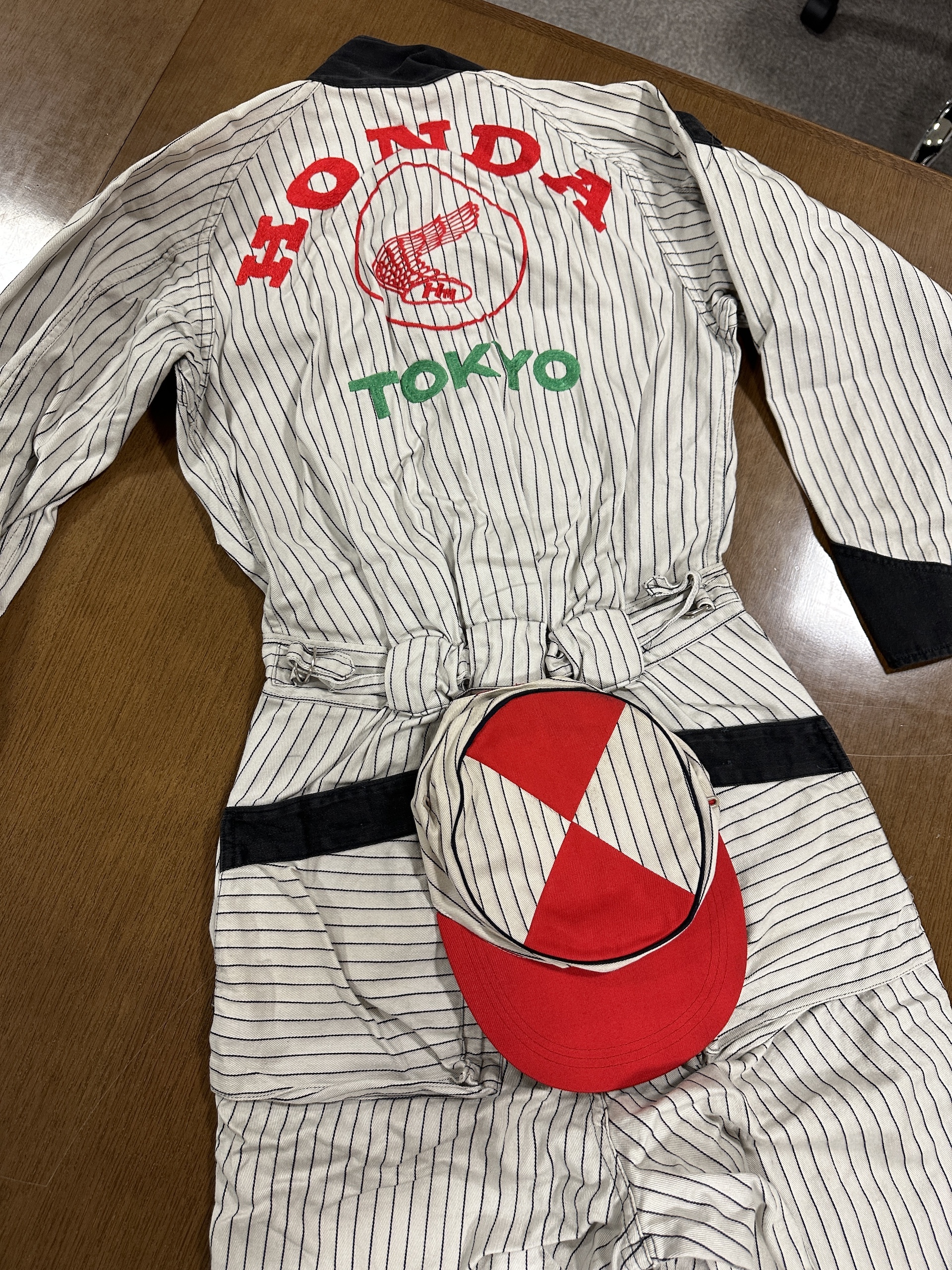
“I connected with Motorsports Images and got a license with them, so I was able to dive through their archive photos. I went through probably tens of thousands of images, and the moment I saw these 1960s overalls, I was like, ‘These are incredible. This is absolutely incredible.’ The team wore these coveralls from 1964 to 1965. But what I discovered through my research, which includes dozens and dozens of books on Honda, is that the same overalls were worn by the motorcycle team as well. They had been wearing those since the ’50s—probably like ’58 or ’59. The difference is that one said car racing team on the sleeve because they wanted to differentiate,” he added.
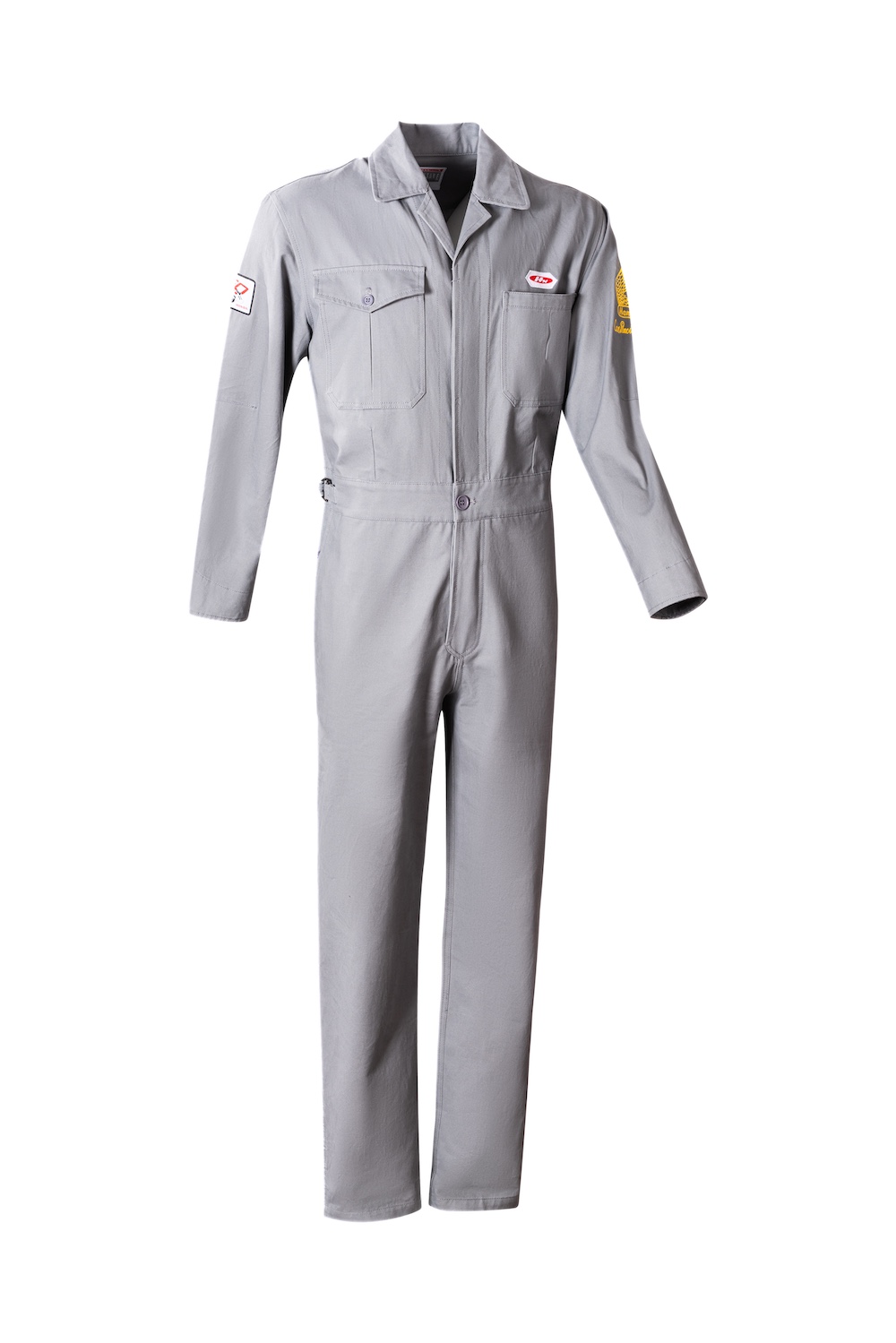
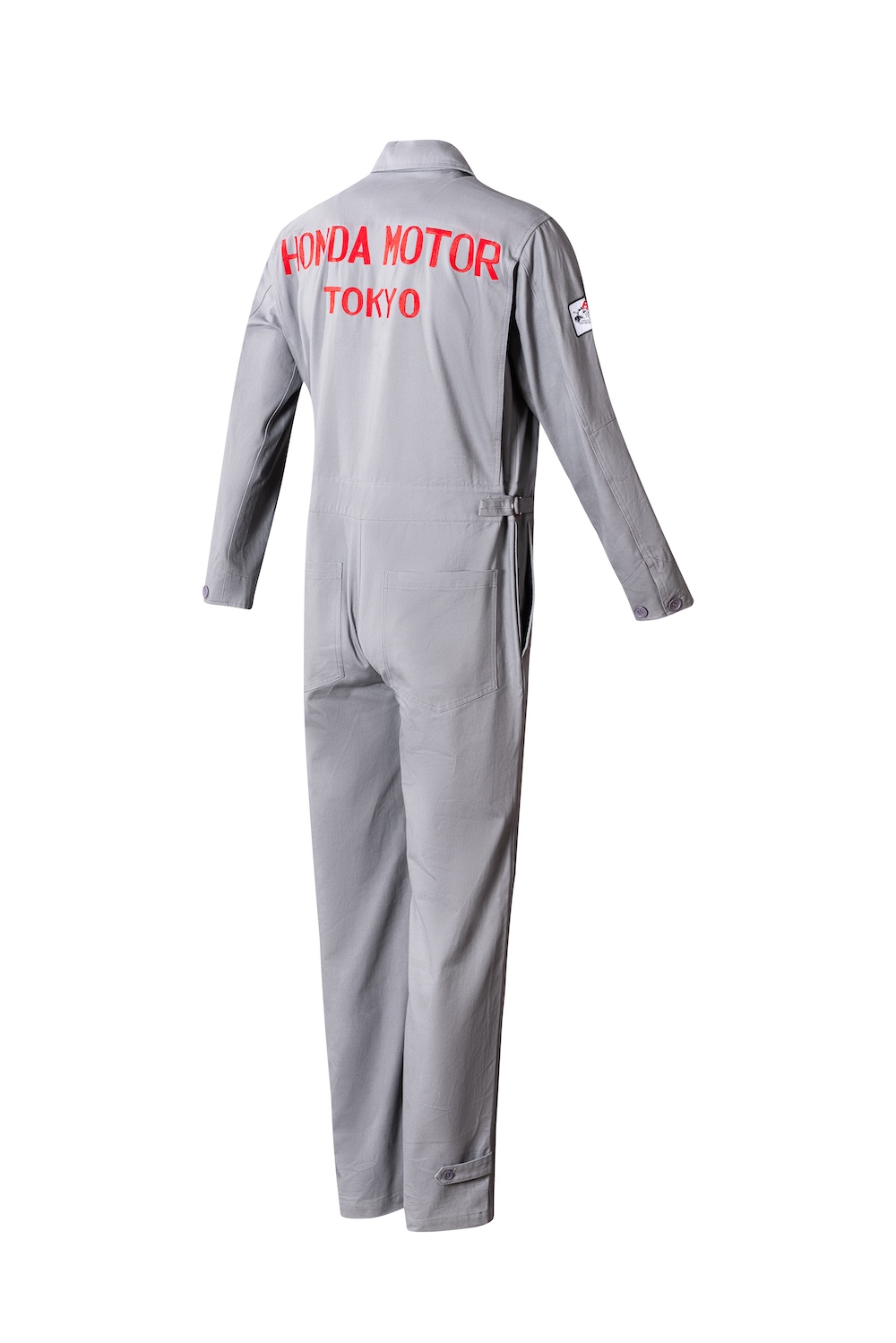
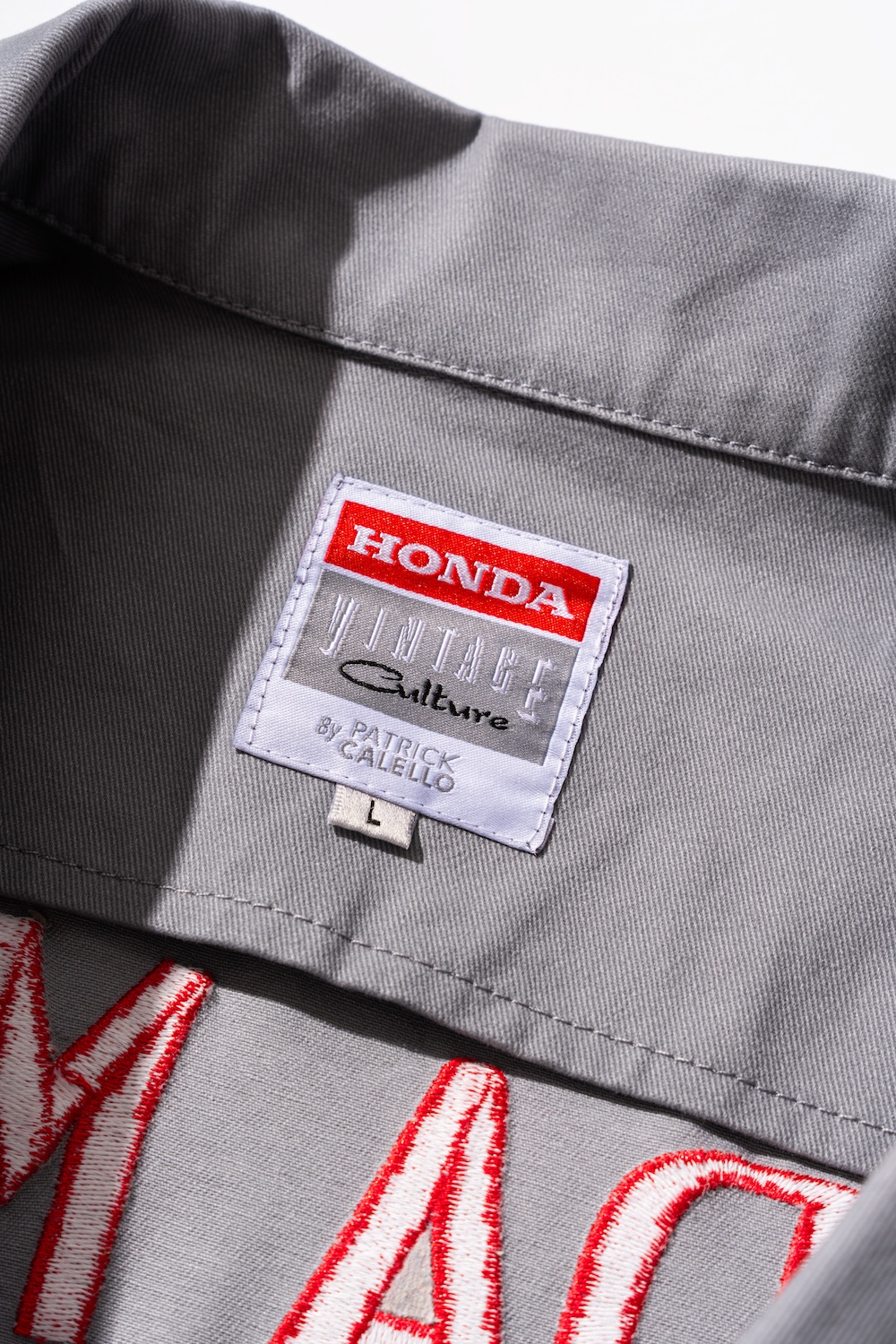
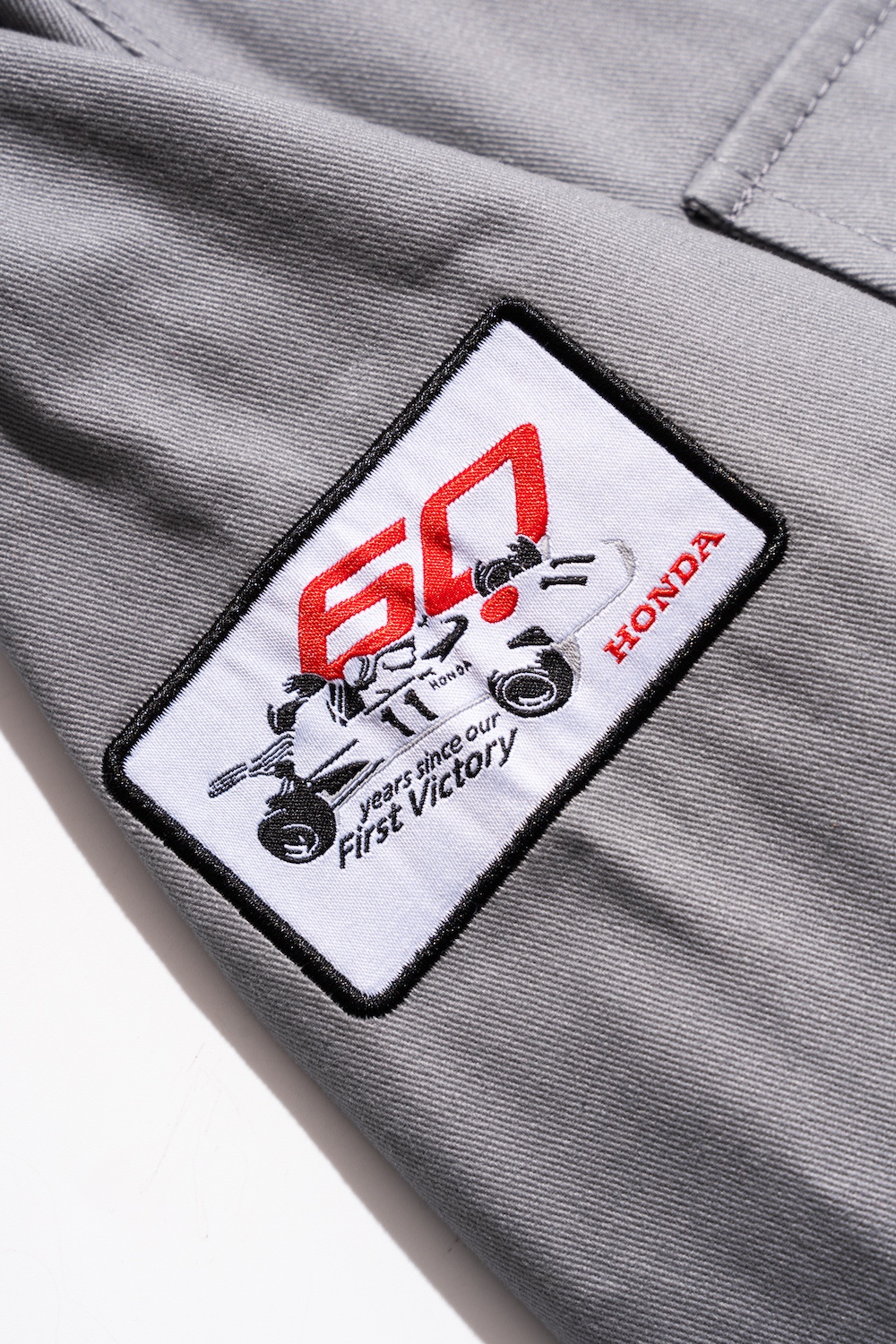
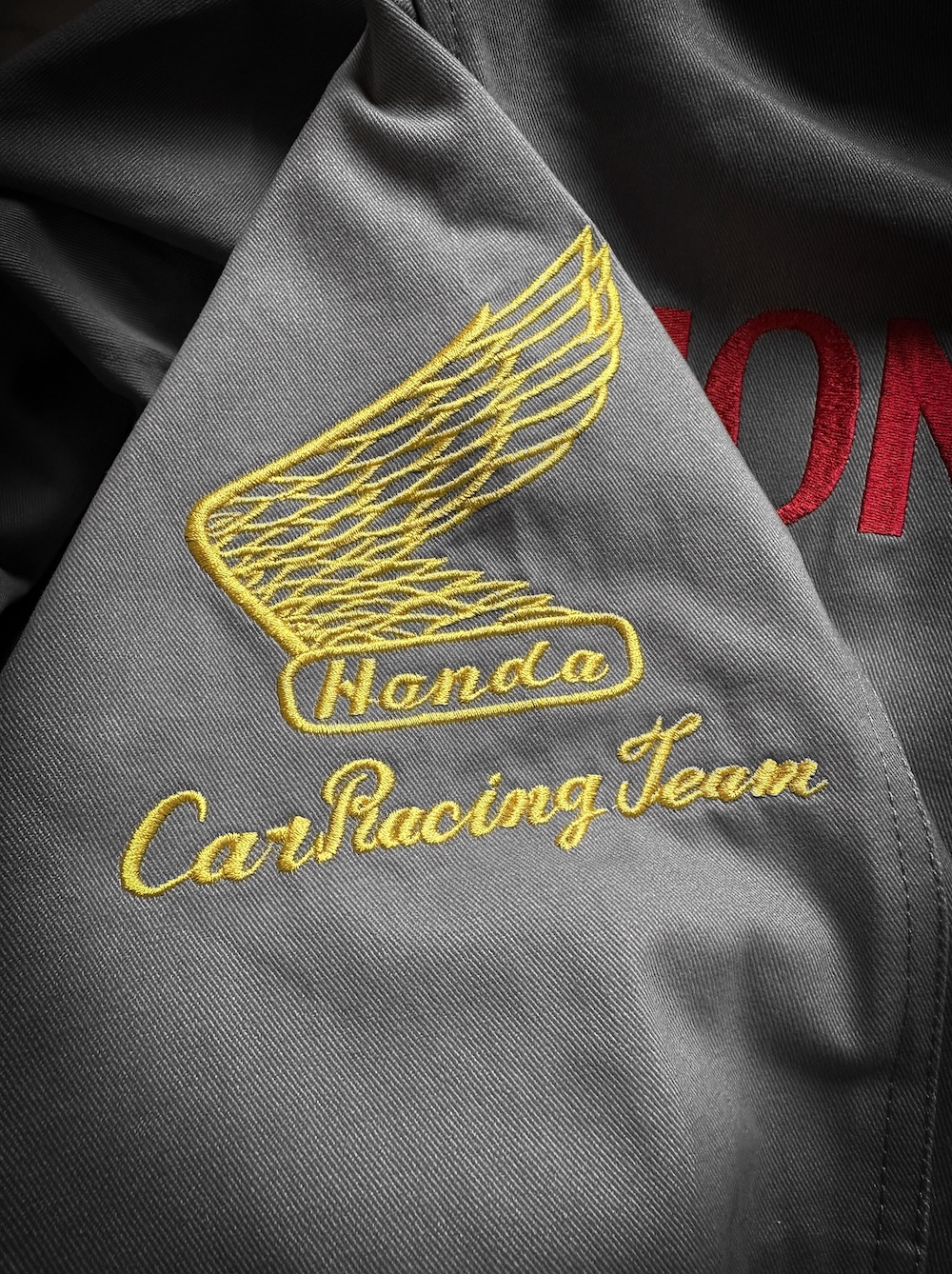
“Eventually, a Honda associate in the licensing group showed me a photo he had of these coveralls on display in the museum [in Motegi]. And they were like behind a case, and I’m like, ‘Oh my god, this is incredible.’ I was granted access to their archives, and they brought out these coveralls for me. Most were no longer on display in the museum, but they brought them out for me to analyze. And I looked at them, and I took a million photos, hoping to one day make them. They also brought out two Senna suits, but they weren’t allowed to take those out of the airtight bag they were in—but to hold those in my hands, wow.
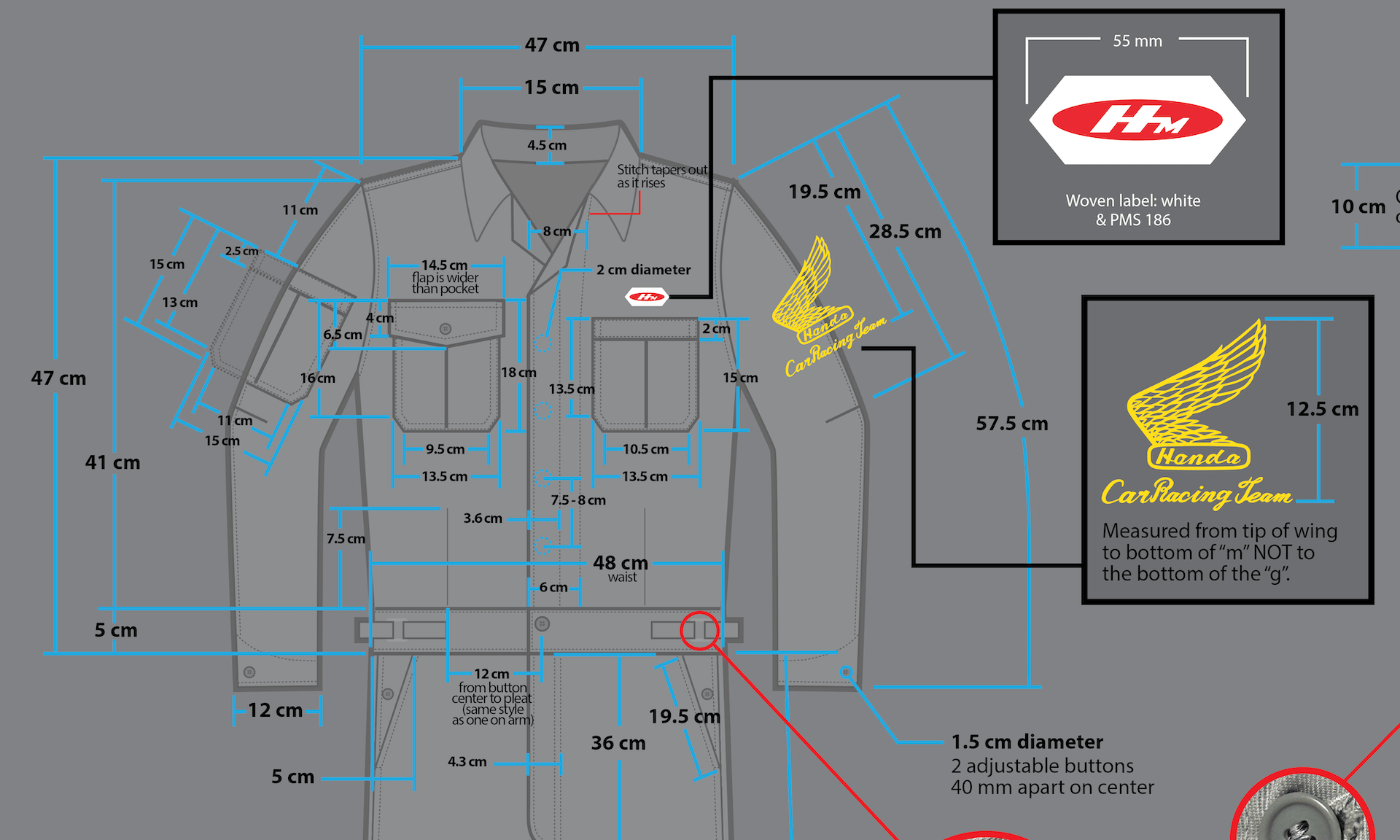
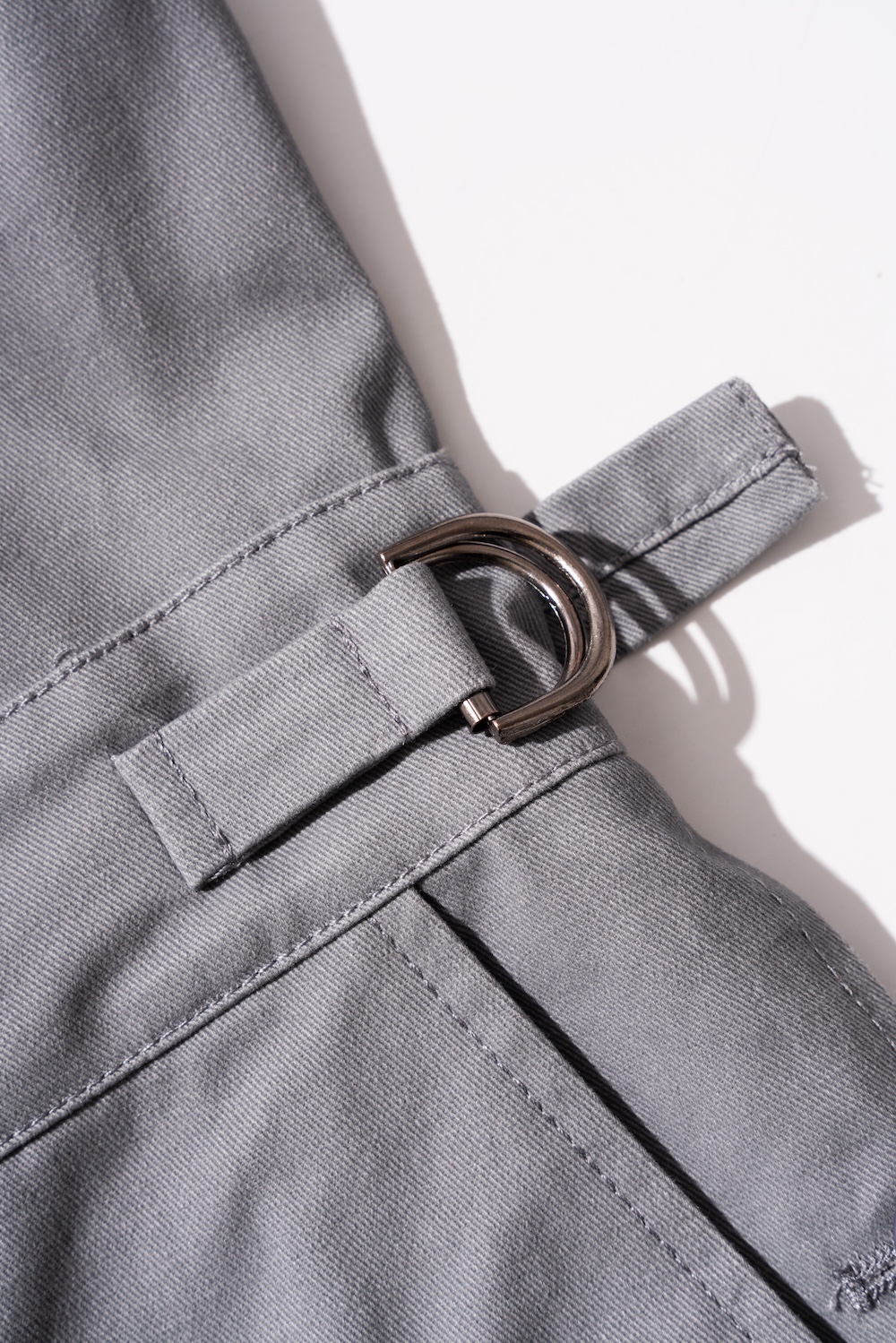
“I planned to use the photos for reference and to make the fit with whatever common coveralls they’re using in America now. So, my first sample was based on a pattern from a mainstream brand, and I didn’t love it. Then I took a second trip to Japan, took a billion more photos of every tiny detail, and took hundreds of measurements of everything so I could copy the exact pattern. They took the artwork on the back of them—the Honda Motor Tokyo— and the bit on the sleeve, and put it on a flatbed scanner for me, so the art is legit identical. In fact, the artwork on the originals is so old that it’s slightly imperfect, but I decided to reproduce it exactly as it is. Back then, the local company that stitched these just used whatever lettering from the local mechanic shops, so there weren’t CAD files for these. Furthermore, it wasn’t always easy to tell the exact color because most of the photos are in black and white—the same goes for the actual materials; were they cotton, etc,” said Calello.
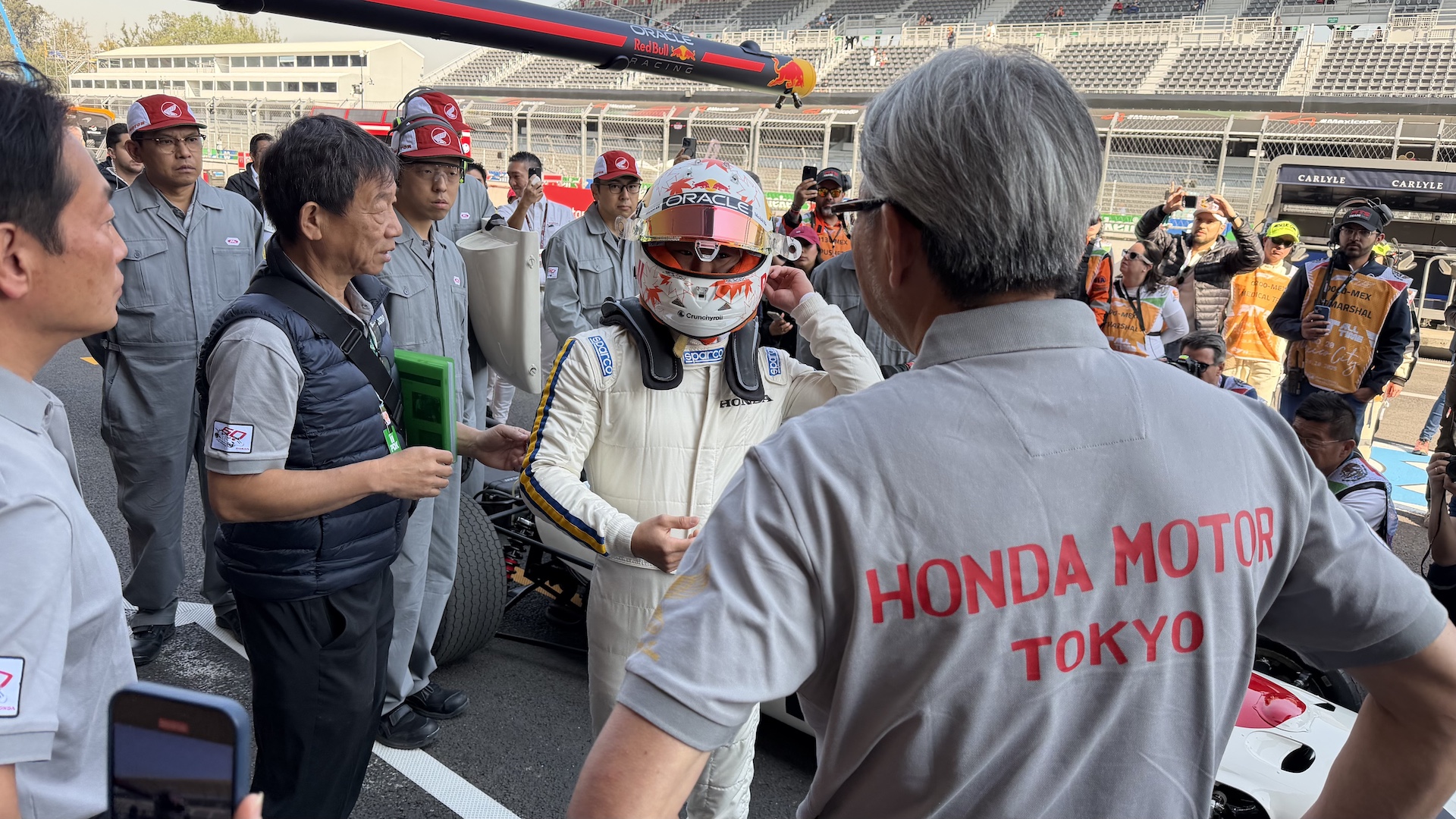
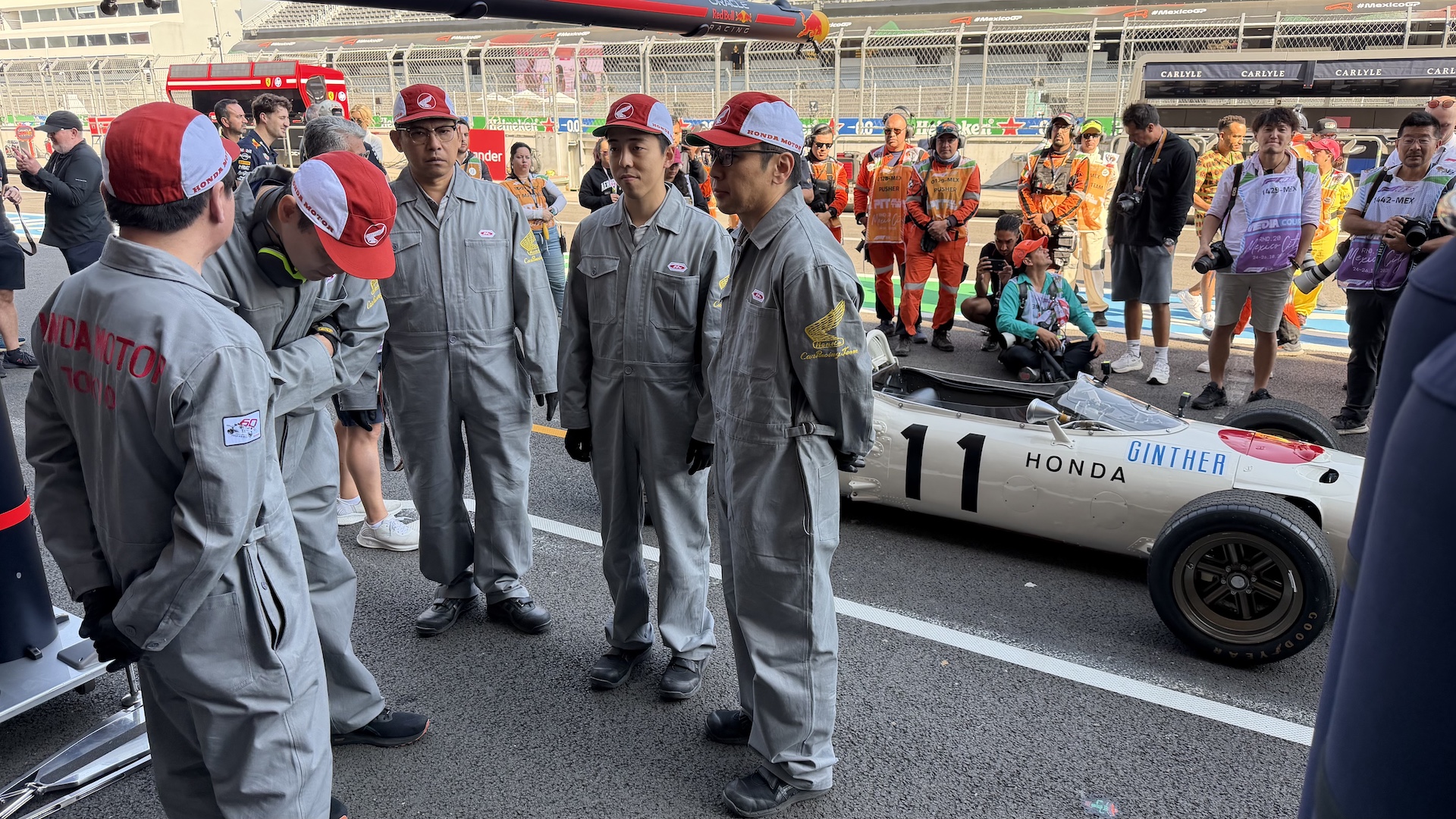
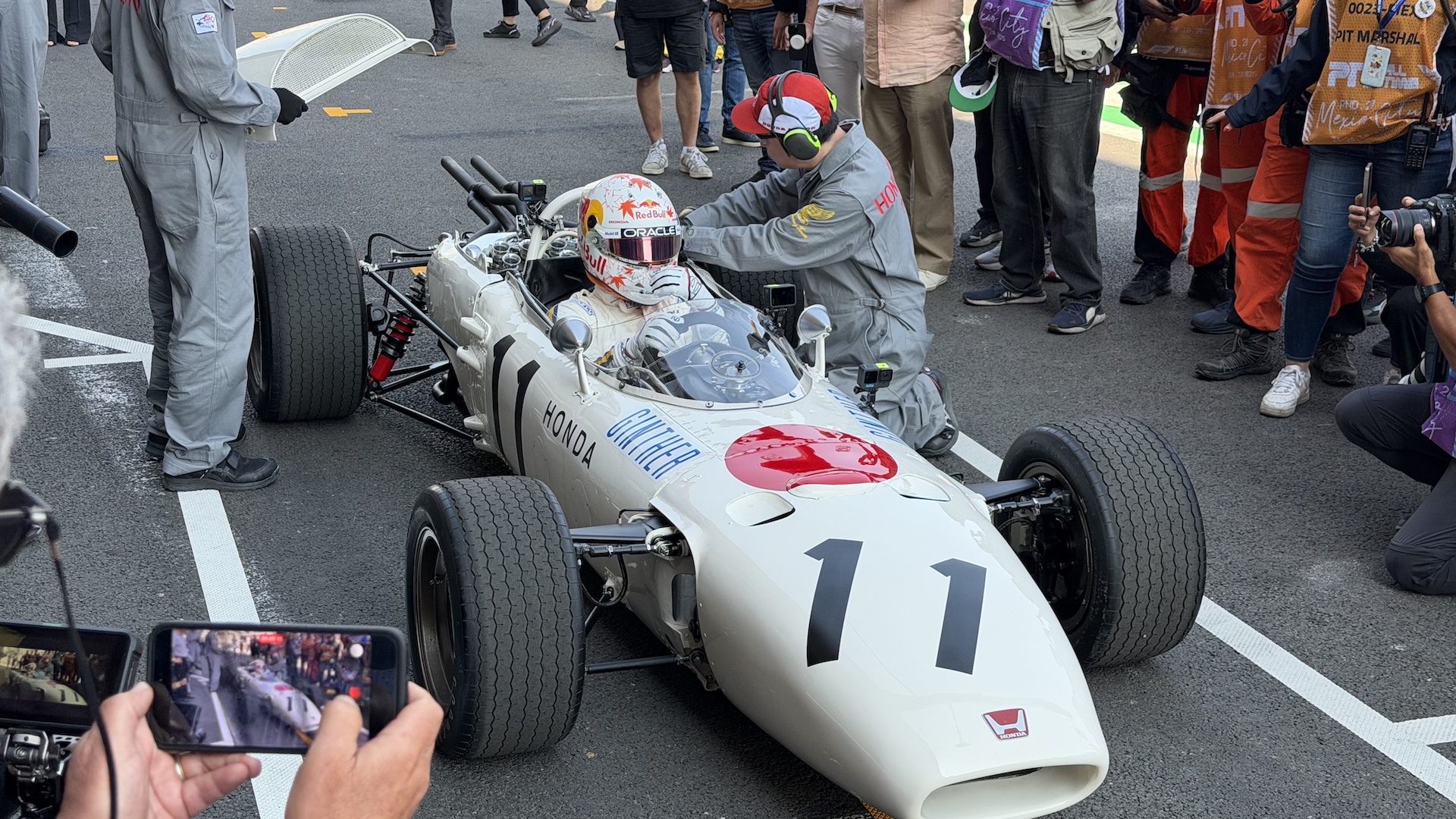
“I pulled together like a billion measurements of everything. I mean, how wide the stitches are, the pattern of the stitching, there are so many details like the exact dimensions of the buckles and the straps. I’m pleased with how it came together and with having a great partner in my suppliers, as they created an incredible pattern in a tight window.”
With former Red Bull Racing driver Yuki Tsunoda at the wheel, the RA272 stole the show in Mexico, blasting its 13,000-rpm redline on the same track where it made history 65 years before. It was a lovely reminder that Honda is and will always be an automaker with racing in its DNA, and not just any form of racing, but open-wheel racing in its most complex and competitive form.
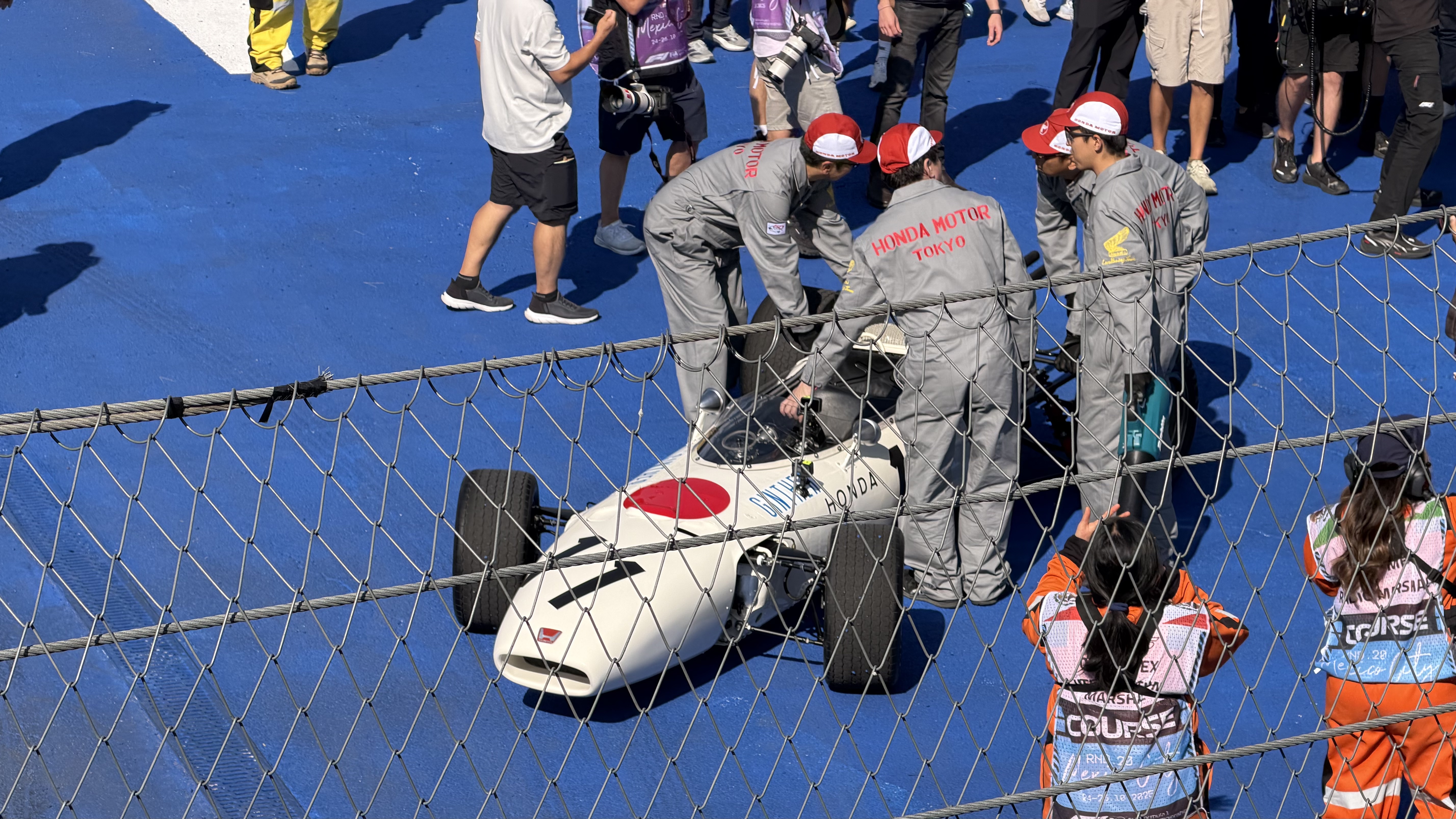
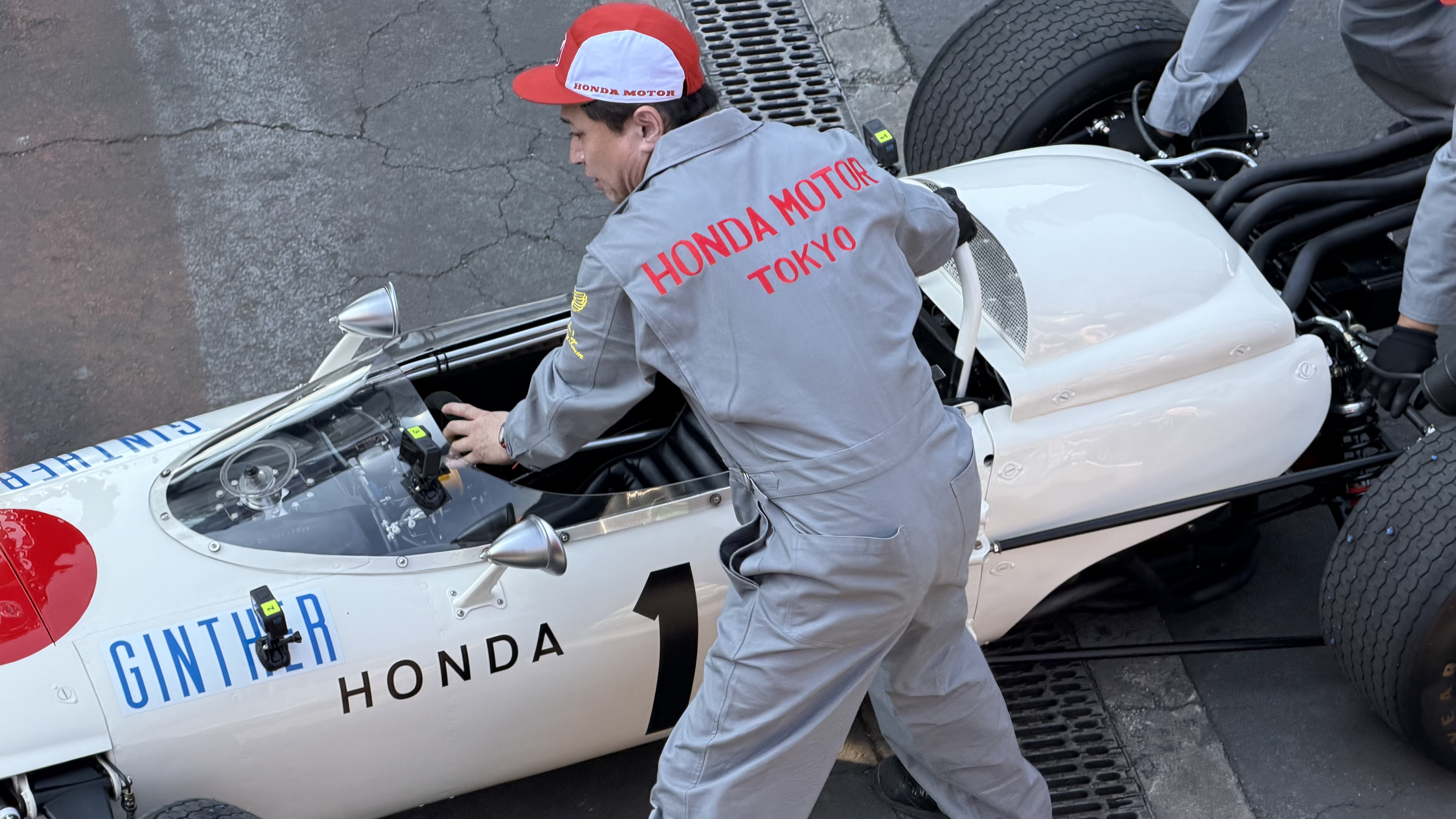
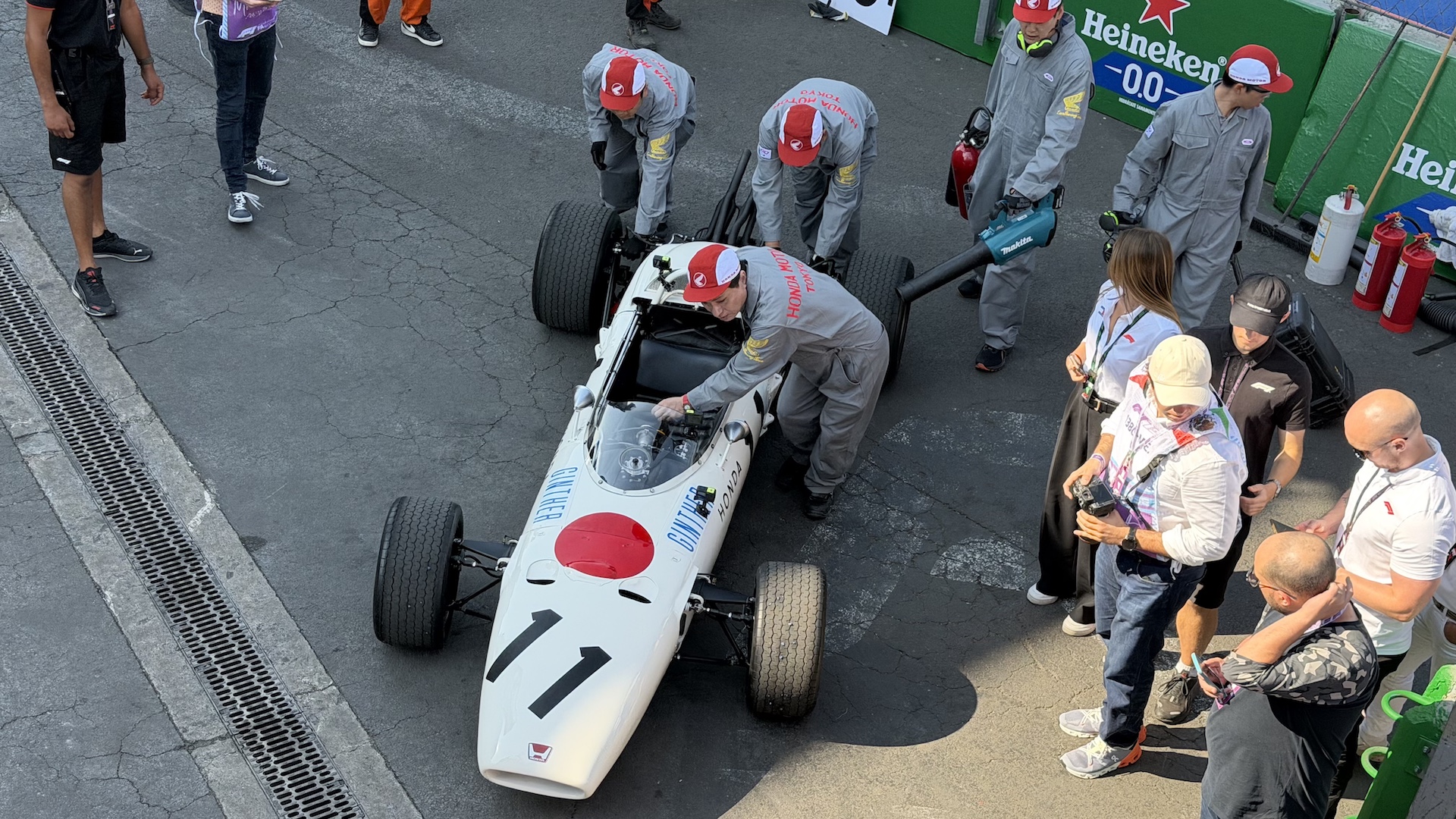
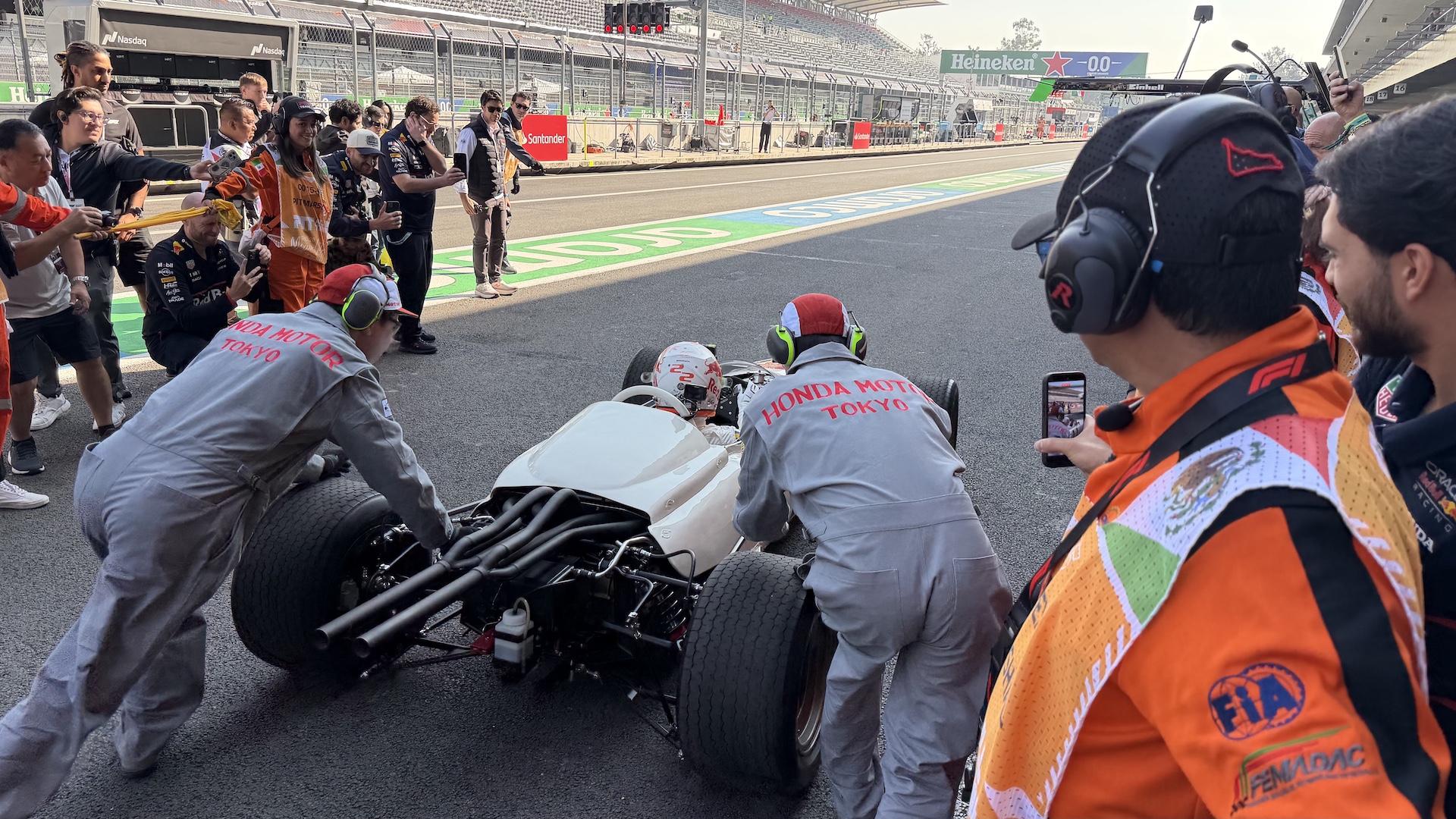
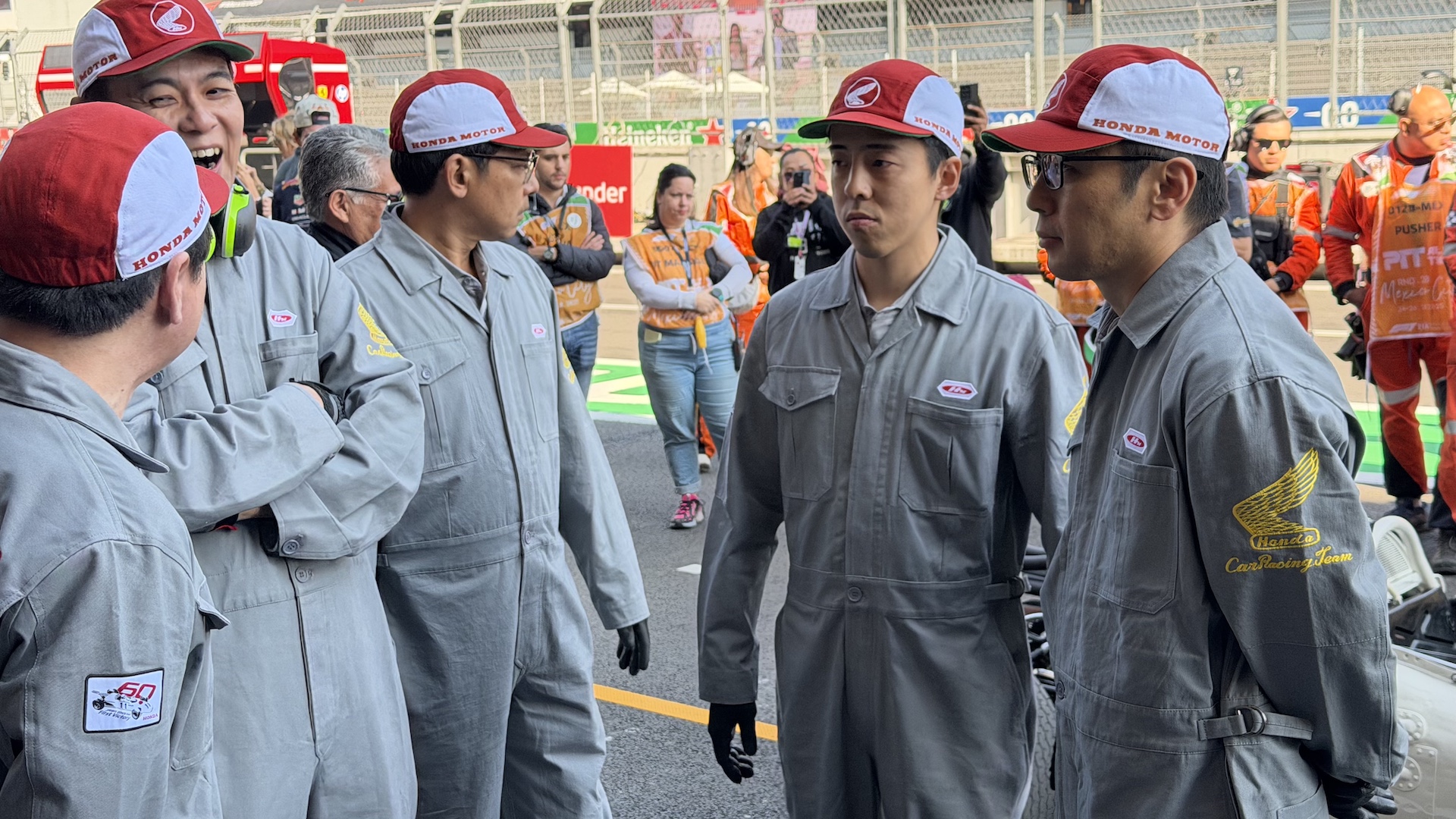
As for Patrick’s designs, they also stole the show, giving the whole event an air of authenticity and nostalgia. Had those mechanics and execuvitves been wearing different gear, it just wouldn’t have felt as special. And, boy, it truly was a special moment, especially for this author, who calls Mexico City its hometown.
“I’m incredibly grateful for my connections in the licensing department for all the help they’ve given me,” said Calello. “Also, the people at the Honda Heritage Collection Museum were incredible. They’ve been incredibly supportive. We got the coveralls delivered via air freight to Japan on time, and, as you saw, the executives took them to the track in Mexico and couldn’t be happier.
“I couldn’t do this without Honda’s enthusiasm, and I’m super grateful for that. Honda’s been wearing my gear when they run other vintage equipment, including Nigel Mansell’s ’80s Williams F1 car. I think it’s important to tell this story because none of Honda’s competitors in Asia can tell a similar story. Hyundai can’t make up a history that didn’t exist, and certainly none of these Chinese brands have this. I think leveraging this brand equity is so critical to the future of enthusiasts,” he said.
Bravo.
Email the author at jerry@thedrive.com
Loading comments…
Comments couldn’t be loaded. Please refresh the page.