
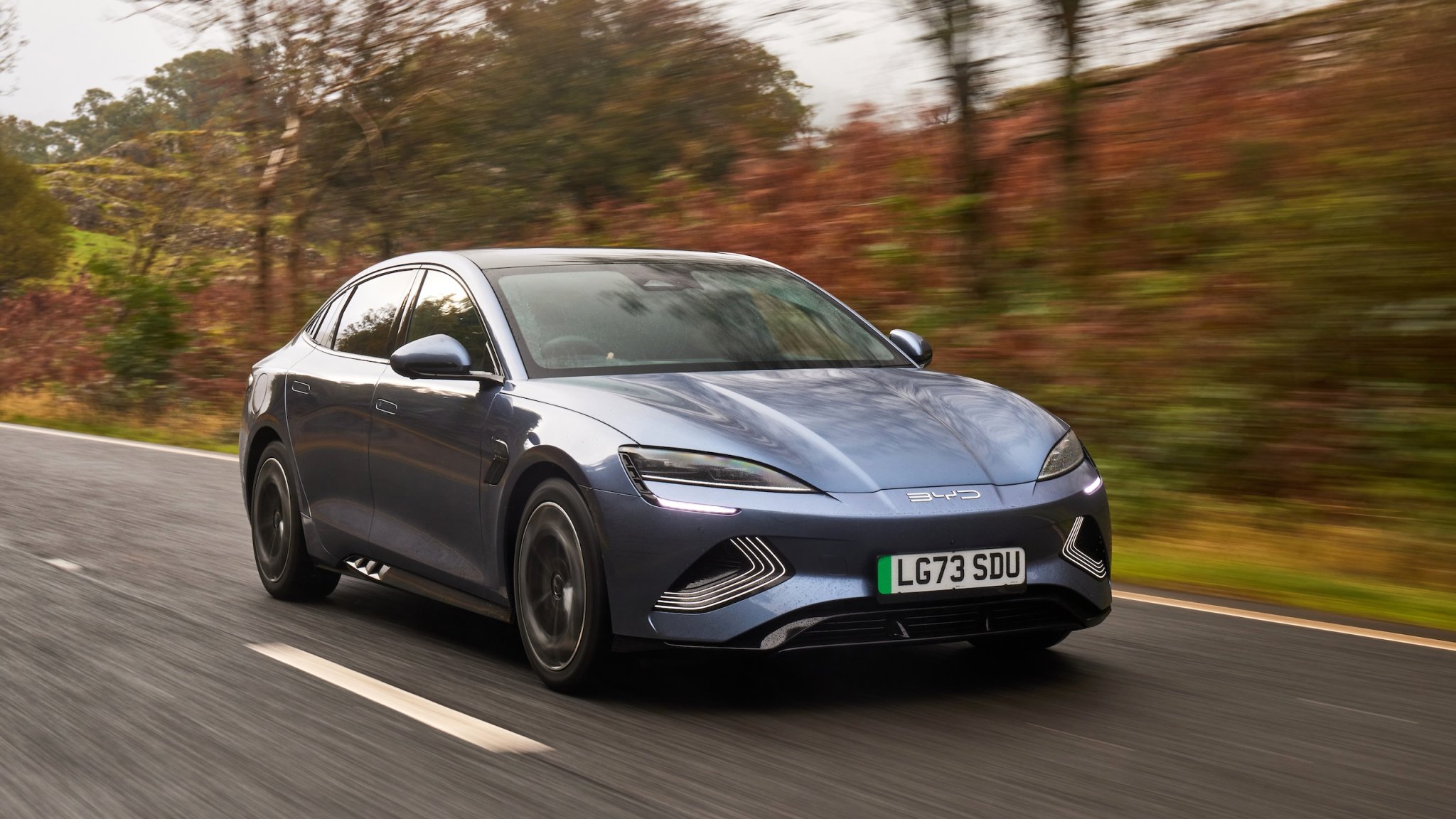
If you feel like Chinese cars are suddenly right around the corner, you’re not alone. The notion has received a groundswell of both direct and indirect support lately, and as affordable new cars drop like flies from U.S. lineups, American consumers are becoming more open-minded about the prospect of allowing Chinese OEMs to enter the market.
Given the political climate, it’s no wonder that dealers feel caught a bit off-guard by this development. And now they’re getting vocal about it.
According to Automotive News, NADA (National Automobile Dealers Association) CEO Mike Stanton has harsh words for the prospect of Chinese cars being sold in the United States:
“It’s bad for our industry, it’s bad for our country, it’s bad for consumers.”
Despite the Trump administration’s strong anti-China rhetoric, it has remained silent in the face of warning signs that Chinese cars are making their way to America. Our national neighbors to the north have already caved, setting off alarm bells in some U.S. operations, and now NADA is hoping to amplify that warning.
Stanton says he has support from Congress, including Ohio Senator Bernie Moreno, who allegedly told Stanton (via text) that Chinese cars would be allowed in America “over his dead body.”
Congress may seem a fickle ally, but there’s bipartisan support in the legislature for curbing China’s automotive ambitions here in America. And beyond that, Congress has shown virtually no interest in dismantling America’s tangled web of dealer franchise laws.
“I’m not surprised that NADA would be opposed to letting Chinese OEMs into the U.S. market,” said Sam Abuelsamid, Vice President of Market Research at Telemetry. “Any new players in the market are probably going to want to sell direct to consumer and NADA hates that for obvious reasons in general, but especially in this case, as the Chinese will likely be undercutting existing brands on price.”
Navigating America’s tangled web of state-level direct-to-consumer-sales bans has been a logistical nightmare for both domestic and international startups who want to skip the traditional dealer model—a model which Stanton insists adds value. But while Stanton promised that NADA would continue supporting policies that keep Chinese cars out of America, he also indicated it would stop short of banning its dealers from owning or purchasing a franchise from a Chinese automaker.
By focusing its efforts on defending the franchise structure, NADA is exposing its flank to Chinese OEMs who are willing to play by their rules, and there are abundant opportunities to exploit that opening.
Last year, when Carvana bought its second Chrysler-Dodge-Ram-Jeep franchise (this one in Texas; its first was in Arizona), I speculated that the company might be investing in brick-and-mortar dealerships as a hedge against its online-only business. But as the company continues to expand its on-the-ground operation across multiple U..S states, its franchise footprint expands with it, giving it an established toehold that might be a ripe target for an emerging automaker—perhaps an emerging Chinese automaker?
But even with an established dealer network, Chinese OEMs can’t succeed without customers, and analysts we consulted told us that there’s an audience out there for inexpensive Chinese cars.
The panic from the NADA is of course expected because it’s a wake up call,” said Robby DeGraff, Product and Consumer Insights Manager at AutoPacific. “The products of today’s Chinese automakers (whether ICE or EV/NEV) are undoubtedly compelling, impressive, and enticing to even the American consumer.”
“We have data that supports consumer interest and consideration for Chinese auto brands is rising, and I expect those numbers to continue to climb in the coming years. Rather than fearing the competition, the NADA should welcome it and take advantage of it, preparing and being ready to sell vehicles from Chinese manufacturers when they do arrive because there will be plenty of Americans interested,” DeGraff said.
“Note that that’s a ‘when,’ not an ‘if,'” DeGraff added.
“Affordability is a genuine issue and limiting new competitors that may target the entry level of the market takes pressure off the established players and it also potentially hurts the profitability of dealers.” Abuelsamid said. “I think for consumers it would be better to let them in, especially if they are incentivized to produce in North America.”
H/t to “gerald” for helping connect some dots back in October! Got a news tip of your own? Let us know at tips@thedrive.com!
Loading comments…
Comments couldn’t be loaded. Please refresh the page.