
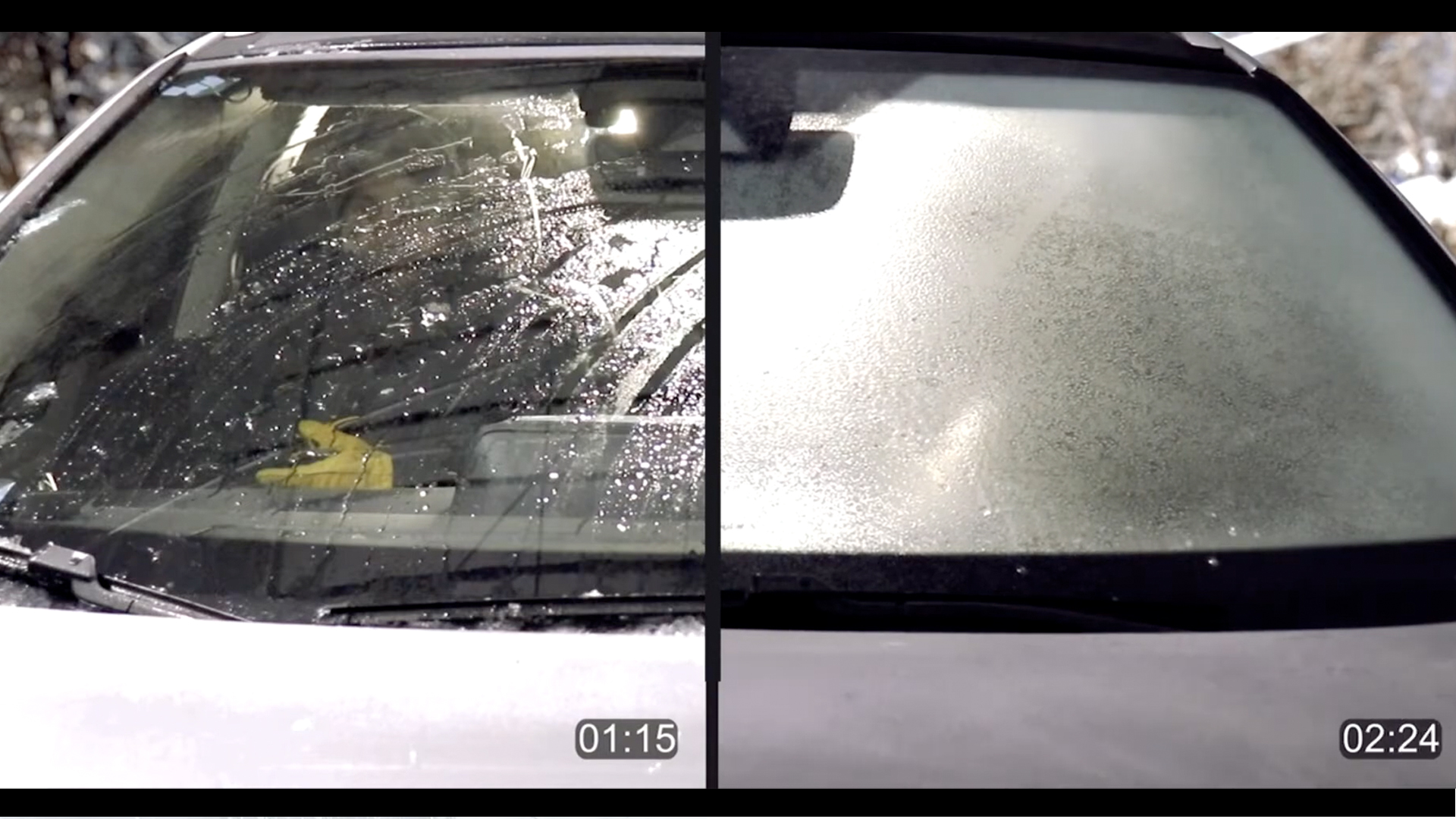
Most cars use engine coolant heat to blast up from dashboard vents and melt windshield ice in winter. Some have small electrified lines running across the glass. But today I learned about a Canadian company with a neat solution for windshield de-icing that requires no engine heat at all, making it particularly effective for EVs, but can also work almost anywhere that ice needs melting.
Ontario-based Betterfrost has been out in the public since 2020, and won the 2022 “Create the Future Design Contest” (in the Automotive/Transportation Category). Major Tier 1 automotive part supplier Denso announced a collaboration with the company in 2024. It landed on our radar this week thanks to Automotive News Canada, which is indicating that more automakers may be looking to adopt the technology.
Betterfrost describes its tech as “pulsed electro-thermal deicing (PETD).” With a combination of sensors and a directional application of heat, the basic idea is that Betterfrost melts just a thin layer of the ice to break the bond between it and the surface it’s on. Once that’s been melted to water, larger chunks of the ice slough off much more easily. You could call it concentrated penetration—by more efficiently focusing on melting only a thin layer of ice, apparently, this tech can defrost a windshield far more quickly than the conventional methods of air-blasting.
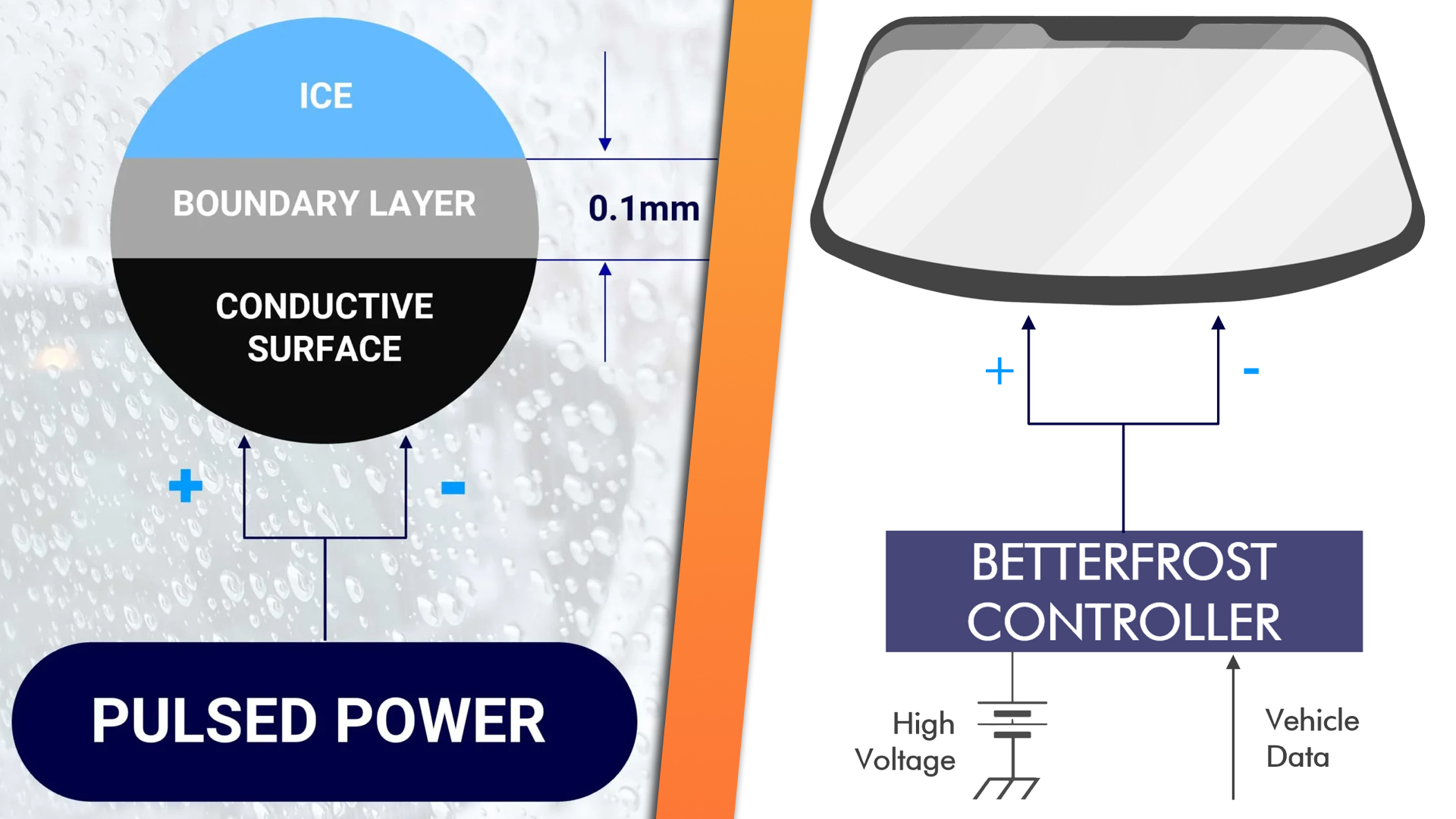
It works on other conductive surfaces, too—Betterfrost has also been trying it out with airplane wings and coil tubes.
There’s a system on a computer chip that controls the process, which works in conjunction with low-emissivity glass coatings that allow for electrical pulses.
AN Canada shared insights from company CEO Derrick Redding, who told the publication that this approach uses “95 to 99 per cent less energy than HVAC deicing.” Benefits have been quantified as extending “the range of an EV by 38 km [about 24 miles] on an average commute in winter. This range is worth $600/vehicle in battery pack cost to automakers.” But those numbers are from 2022, so those metrics might have shifted. Still, it seems like a really good idea, not just for EVs, but for anything where ice buildup can be a pain.
All of Betterfrost’s promotional material seems to be about EVs, but I feel like this could just as easily be applied to gasoline cars. I hate having to wait for the engine to warm up to use my defroster, even in our relatively mild Hudson Valley, New York winters.
Betterfrost has been working with the Ice Research Laboratory at Dartmouth College in New Hampshire to master the science of ice-melting. Here’s a demo of how well its melting powers work using a Lexus RX:

Betterfrost Defrost Demo Video
Got a tip? Drop us a line at tips@thedrive.com.
Loading comments…
Comments couldn’t be loaded. Please refresh the page.