
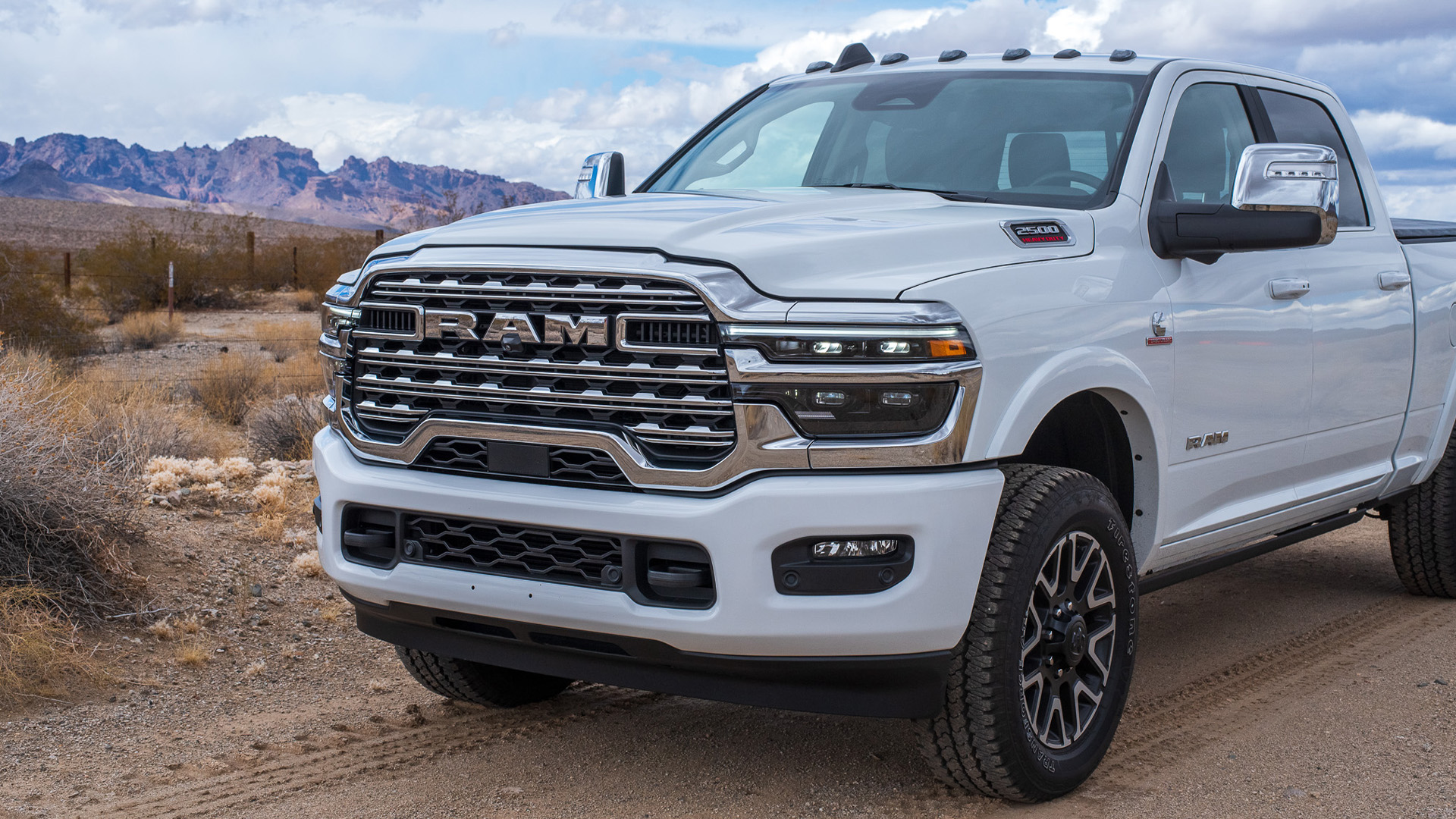
The diesel truck rumor mill is ever-churning. Whether it’s hearsay about a new manufacturer joining the fray or a tall tale about emissions deletes becoming legal, people love to talk. Arguably, the most frequent rumor I see is that we’re about to get a larger Cummins, Duramax, or Power Stroke engine in the next generation of Ram, GM, and Ford pickups. To find out if those claims have any merit, I asked the engineers who developed those powertrains: Would that even make sense?
Some folks believe that more displacement is the answer to increasing power while keeping tailpipe emissions in check. The theory is that larger engines operating at lower stress can make more output without relying on diesel particulate filters to capture as much soot or diesel exhaust fluid to remove as much nitrogen oxide. As it turns out, there’s some merit to that idea, but it’s far from a silver bullet.
Detroit’s Big Three haven’t changed the size of their diesel engines in a long while. Ford has been working with 6.7 liters of displacement since the 2011 model year; Ram went from 5.9 liters to 6.7 liters in 2007.5; and GM has been at 6.6 liters since the first Duramax was introduced in 2001. Even still, they’ve increased power drastically. The Ford Super Duty’s first 6.7-liter Power Stroke made 400 horsepower and 800 lb-ft of torque, and now, the high-output variant makes 500 hp and 1,200 lb-ft of torque. That’s crazy!
What’s even more impressive is that all three manufacturers have increased power so much while meeting stricter emissions regulations. Love it or hate it, this is made possible by higher-performing systems that utilize selective catalyst reduction. That would be the DEF, in case you weren’t tracking with me.
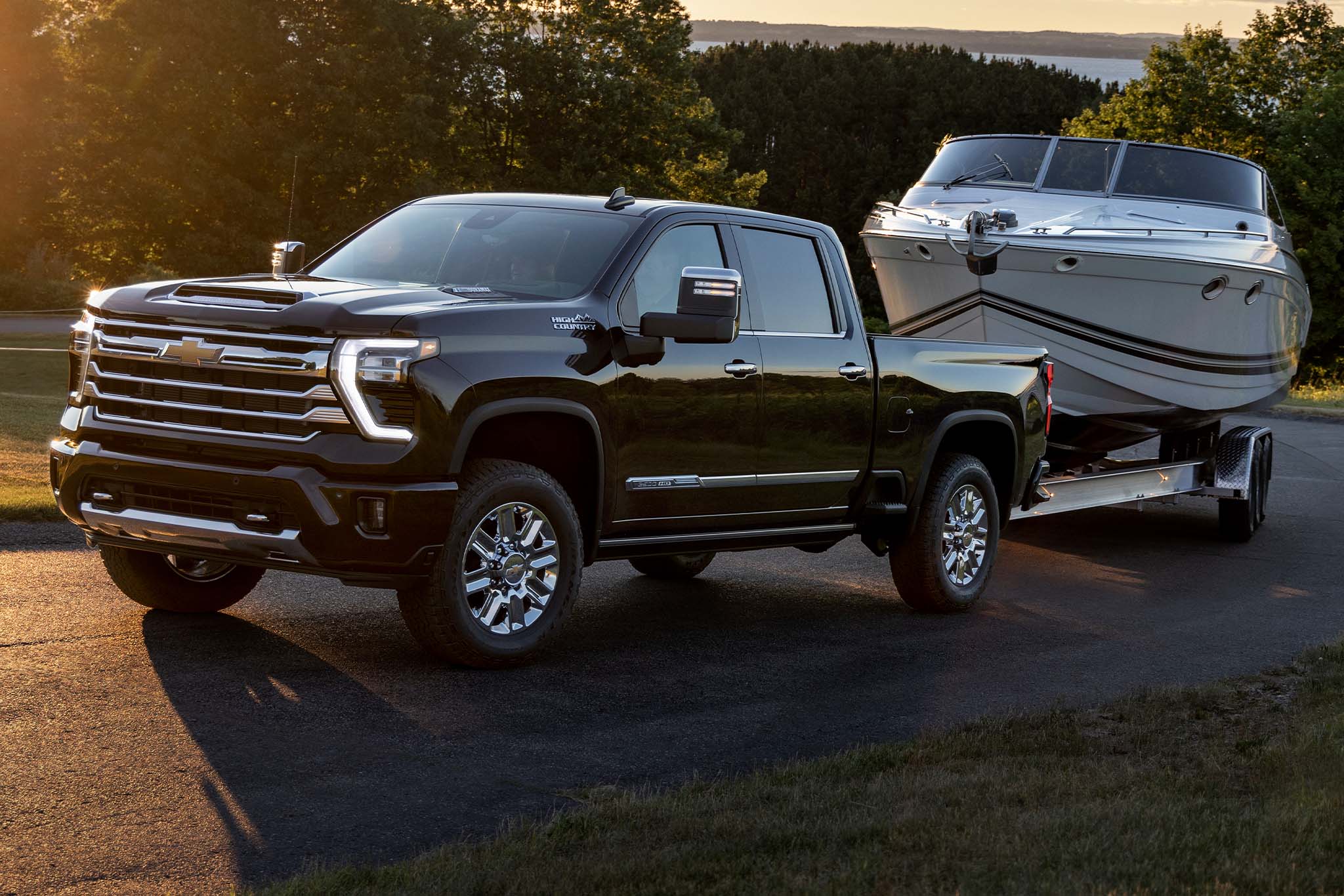
GM Duramax Assistant Chief Engineer Rob Moran explained it like this:
“If you look at our emissions level now [compared] to where we were 10 years ago, you know we’re not only making more power, but we’re being certified at a lower emissions level. The only way we can do that is to have a very efficient aftertreatment system. Back in the early days, when we didn’t have a diesel particulate filter on the engine and we didn’t have SCR, what came out of the engine was what came out of the tailpipe.”
I pressed Moran on whether or not larger engine displacement would be a benefit here, and he was largely cold toward the idea. “There’s always going to be trade-offs,” he explained. “Anytime you have fewer emissions [out of] the engine, the aftertreatment doesn’t have to work as hard. But to be honest, the aftertreatment systems today are very efficient.” According to Moran, they’re able to capture somewhere between 90% and 95% of NOx emissions.
One key factor in helping emissions systems run optimally is temperature. For them to perform at their peak, they need to operate in a “sweet spot” that allows for maximum NOx conversion without melting any hardware. In that way, larger displacement engines could actually be less beneficial for emissions, as Ford Research and Advanced Engineering Specialist Daniel Styles told me.
“Increased displacement can actually run a bit cooler, [which] can make it more difficult to meet emissions,” Styles said.
Ford has gone through pains in this department, moving the SCR system closer to the engine for more heat. Upping displacement would almost be counterintuitive in that regard. Styles continued to say that a larger engine’s negative effect on operating temperature could be exacerbated by people’s driving habits.
“We think of the Super Duty 6.7-liter pickup truck hauling a 40,000-pound trailer up Eisenhower Pass [in Colorado], but a lot of people use them to get the groceries as well,” Styles said. “Some of the regulatory cycles are actually more focused on typical around-town driving.”
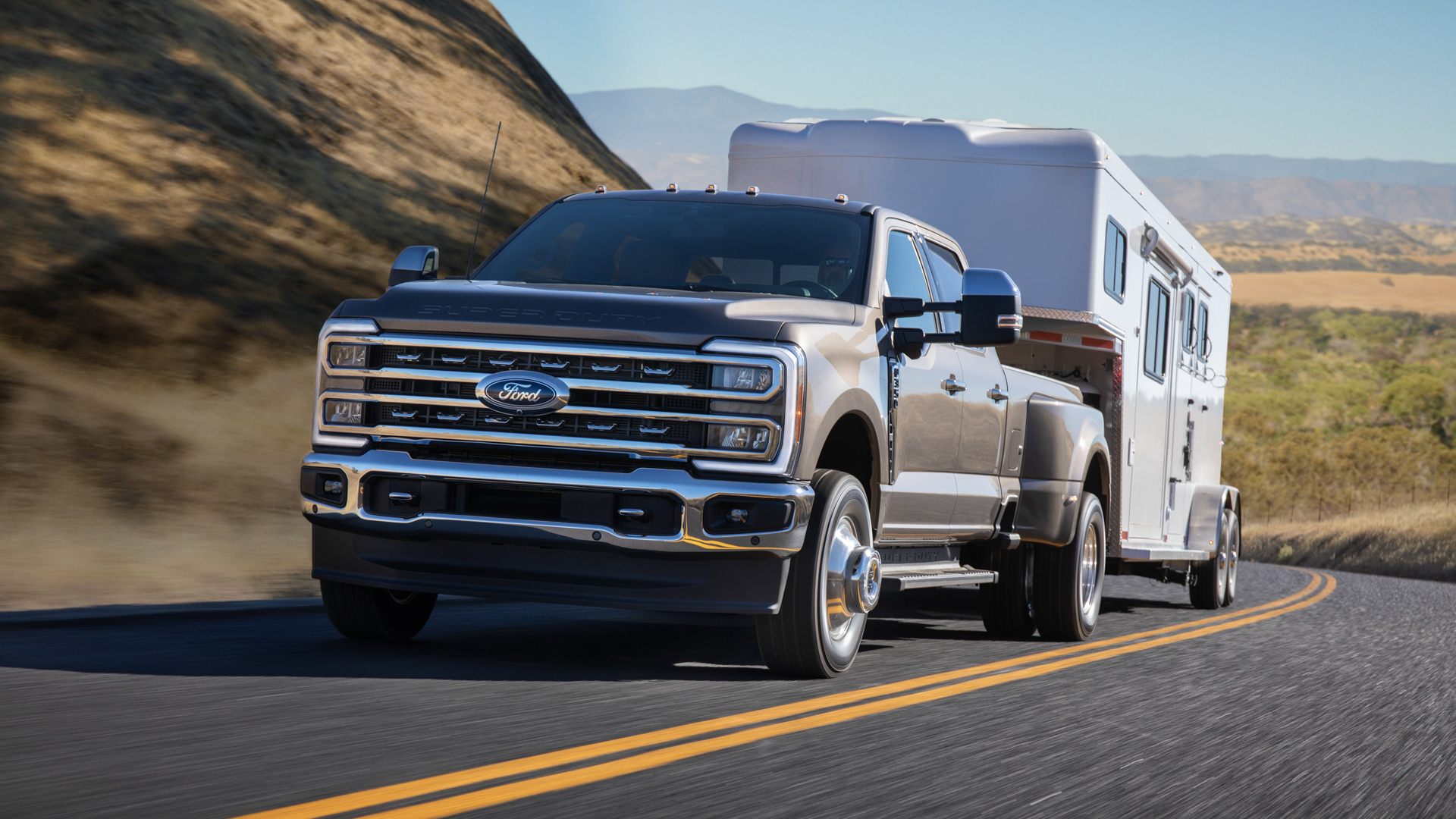
Styles continued, “Diesels like to be run hard, right? Fortunately, most of the people who buy a diesel are buying it for that reason. They’re towing or, you know, [hauling] heavy payloads. A lot of them are used in businesses for commercial applications, but yeah, that’s the best thing you can do for diesel is get out on the freeway and really punch it.”
Of course, even if you ran a larger diesel at full-tilt 90% of the time, you’d still be left with the tough task of cooling it. That was one of the main points addressed by Kerk McKeon, Cummins lead engineer for the Ram pickup platform, during our conversation. In a way, that’s the biggest blocker to introducing bigger engines to this truck segment.
“People always ask me how come the front end of a Ram heavy-duty has to be so big. It’s the thermal piece,” McKeon told me. “You can only fit so much radiator in there. And if you throw a 36,000-pound trailer behind a truck in 100-degree heat, go run a hill with air conditioning on full blast, there’s only so much liquid that you can fit in the front of that rig.”
McKeon is referencing the SAE J2807 certification, which is how manufacturers rate their vehicles’ max tow capacity. To say that a truck can pull a certain amount of weight, they have to prove it by towing up Nevada’s Davis Dam grade in triple-digit temps with the air conditioner on full blast, all without dropping below 40 miles per hour (or 35 mph for dually pickups). McKeon remembers working as a cooling engineer on the 6.7-liter Cummins when it was first introduced, and he said the challenge with that was “creating a large enough radiator and a large enough charge air cooler.”

Now, typically, automotive PR people and engineers get squirmy when you start asking about future product. Either that, or they shut it down right away. My conversation with McKeon and others at Ram was interesting because they specifically addressed the rumor about Cummins’ 7.2-liter being destined for pickups.
“It simply won’t fit unless we do, like, a Class 8 size front end,” Ram spokesperson Nick Cappa said.
Talking about increasing power, McKeon continued, “If you can hit the rating with the same [displacement], there’s so much benefit to that. From the standpoint of the size of the product, the weight of the product, and [asking] quite honestly, ‘Do you need to engineer a completely new engine?’ versus upgrade the engine. So, there are a lot of benefits to keeping it within today’s real estate.”
McKeon said the demands would have to be major in order for a larger engine to be worth it:
“At some point, you could say, ‘Okay, you want 8,000 horsepower, and the only way to get there is to melt the exhaust manifold and turbo off the side of the engine. Or, you increase displacement.’ And at some point, you would have to increase displacement.”
“You’ll hit a physical barrier, but it’s only really after that point that you’d say, ‘OK. Now, we have to go to a higher displacement.’ It’s not something that you necessarily yearn to go to,” McKeon added.
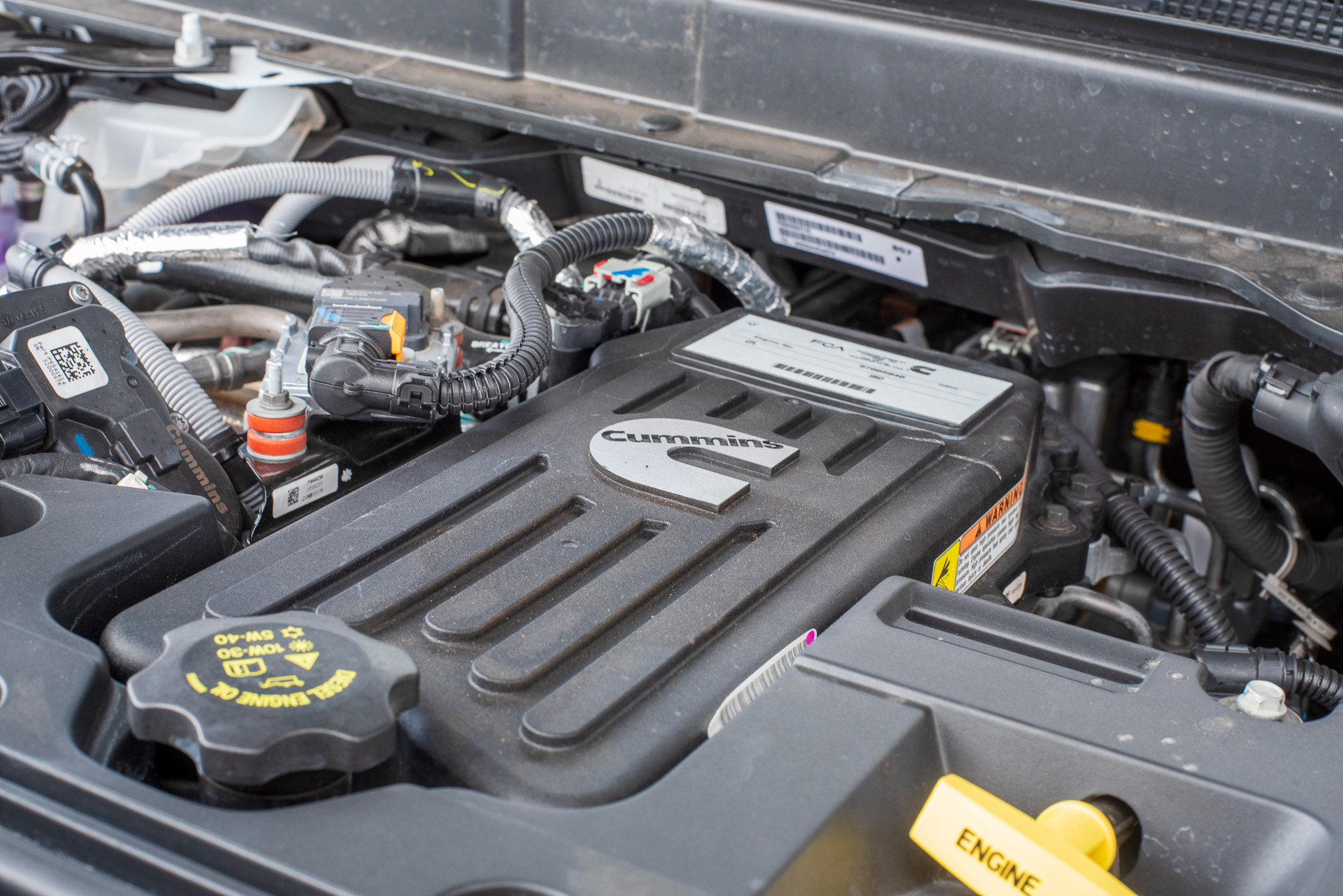
Having spoken with experts from the three major diesel pickup engine manufacturers, I’m not sure we’ll see larger power plants anytime soon—if ever. The cost and complexity of upsizing seem like more trouble than they’re worth, especially as emissions systems perform at increasingly higher levels. And as each guru I spoke with explained, displacement isn’t as much of a limiting factor in diesel engine power as it is in gasoline engines.
So the next time you see some jibber-jabber about an 8.3-liter Duramax, an 8.0-liter Power Stroke, or a 7.2-liter Cummins headed for tomorrow’s dually, slow down and ask yourself: “Could that be true?” Everything here seems to indicate, “Probably not.”
Got a tip or question for the author? Contact them directly: caleb@thedrive.com
Loading comments…
Comments couldn’t be loaded. Please refresh the page.