
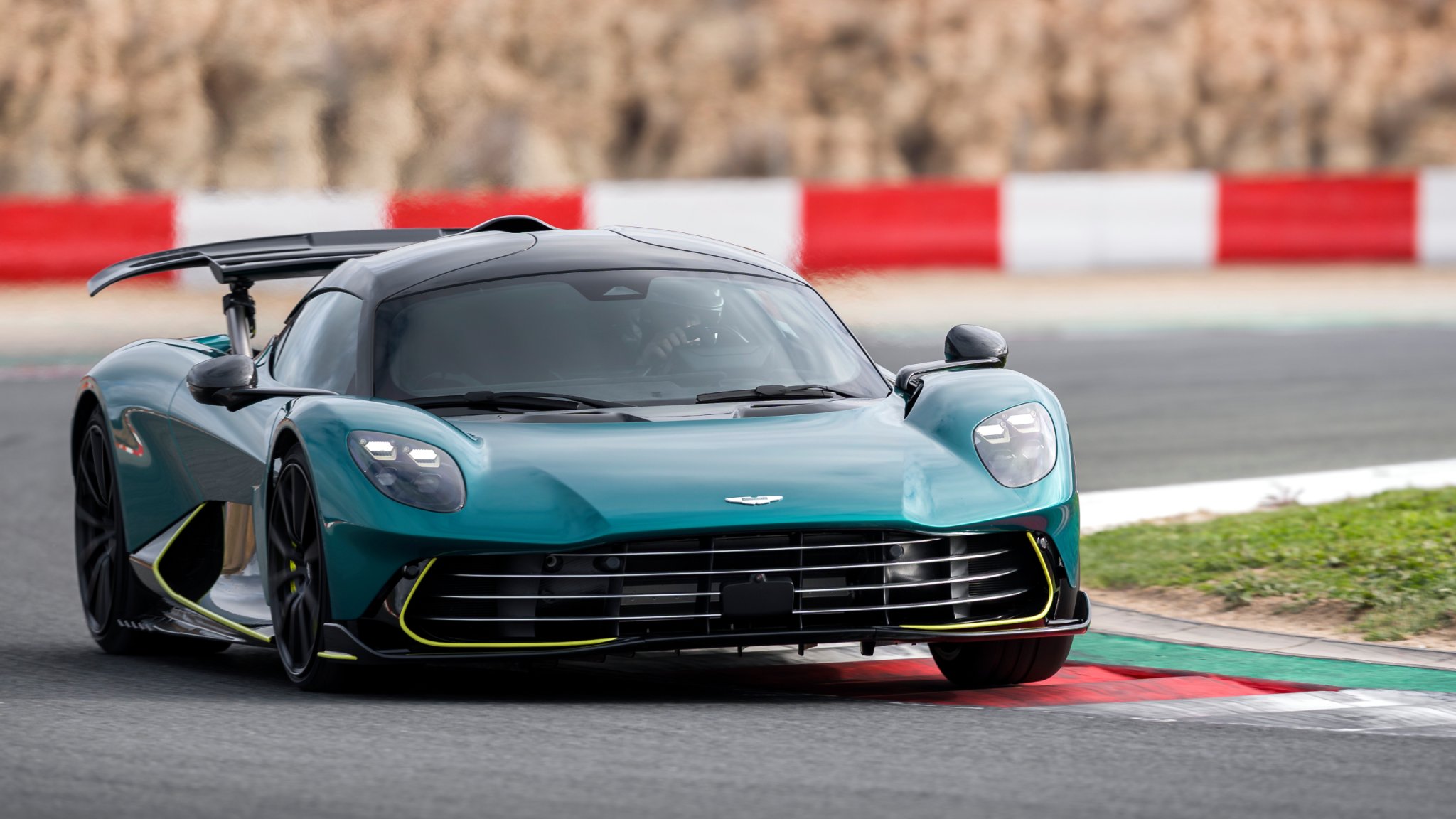
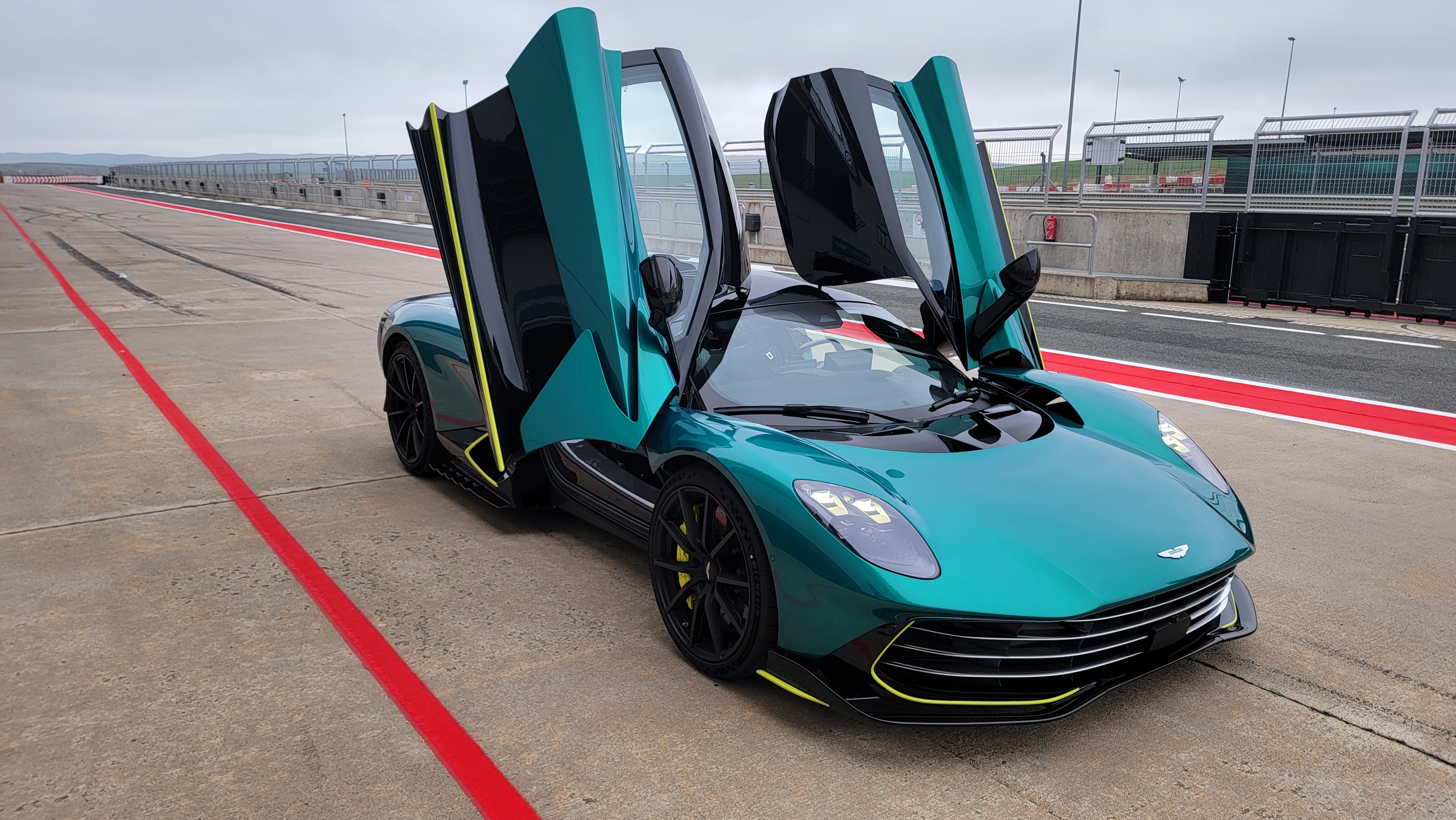
Circuito de Navarra is a recently renovated track on the edge of Spanish Basque Country. It holds a Grade T1 FIA License (meaning it’s allowed to host testing for Formula 1) and a Grade 2 license for competitive two- and four-wheeled racing of all kinds. It’s what you might call a big-kid track, but those certifications mean it’s also designed to a very high degree of safety, so the margins are a bit more forgiving than what you might encounter at your local HPDE or open track day. That’s of some comfort behind the wheel of an Aston Martin hypercar carrying a $1 million dollar price tag.
I’m driving the 2026 Valhalla—Aston’s new, 1,064 horsepower plug-in hybrid. One might argue that it lacks the sheer ostentation of its predecessor, the Valkyrie. I’d argue it’s still there, just presented differently. Valkyrie was a thunderous, 12-cylinder, 11,000-RPM crescendo, certainly, but the Valhalla’s electrically augmented flat-plane-crank V8 makes a full-throated case for itself. In combination with three electric motors (two up front; one integrated into the 8-speed DCT), it cranks out 811 lb-ft of torque to go with its four-figure horsepower total. It’s a formula we’ve seen elsewhere before, but not quite like this.
“Valhalla” conjures images of a glorious afterlife. Given Aston’s recent struggles, it wouldn’t be unreasonable to read some amount of irony (or perhaps even cheek?) in Aston’s commitment to the nomenclature. Is this the aftermath of a reciprocating-engine Ragnarok—the beginning of a new era where electrification overshadows tradition?
Out here, with the pedal to the floor and the V8 screaming and the pavement disappearing behind me, that conflict becomes completely irrelevant. There’s no discerning one from the other; it’s just Valhalla.
The Track
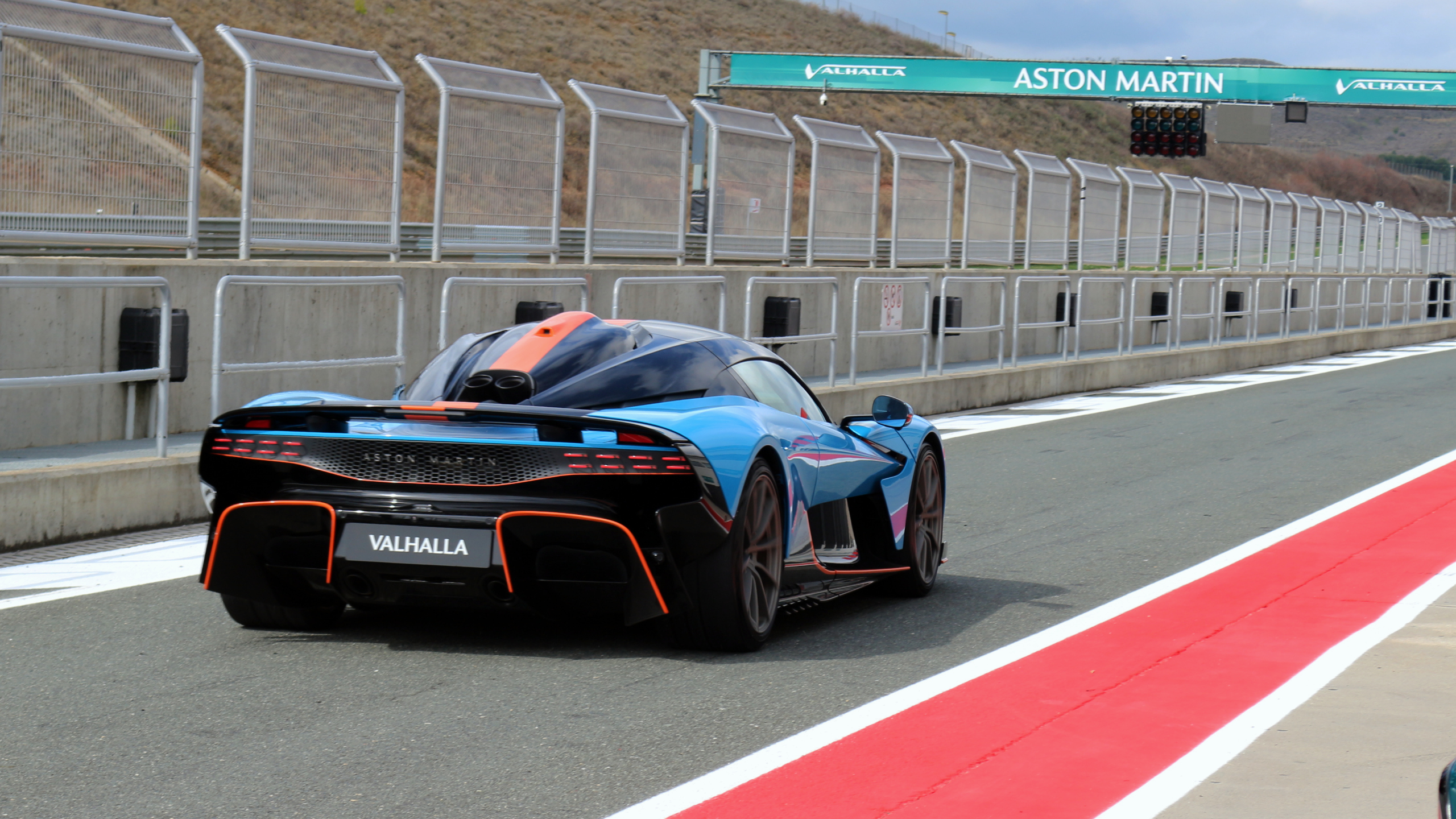
You blend into Navarra circuit along the front straight just before turn 1; if there’s no traffic, you can stay hammer-down as you move wide left to climb the uphill right-hander toward turn 2. On an out lap, you won’t need much brake here, but if you’re on a flyer, this is your first left-pedal zone of the lap. You bleed off just enough to get pointed at the entry for turn 3, then give it a good boot of throttle before hauling it down hard for the borderline U-turn. Let it run wide but don’t commit until you’ve nosed it to the right to set up for turn 4. You might be tempted to brake here, but you don’t need to. Breathe off just enough to get the nose pointed back toward the paddock and then reunite the right pedal with the Valhalla’s carbon tub.
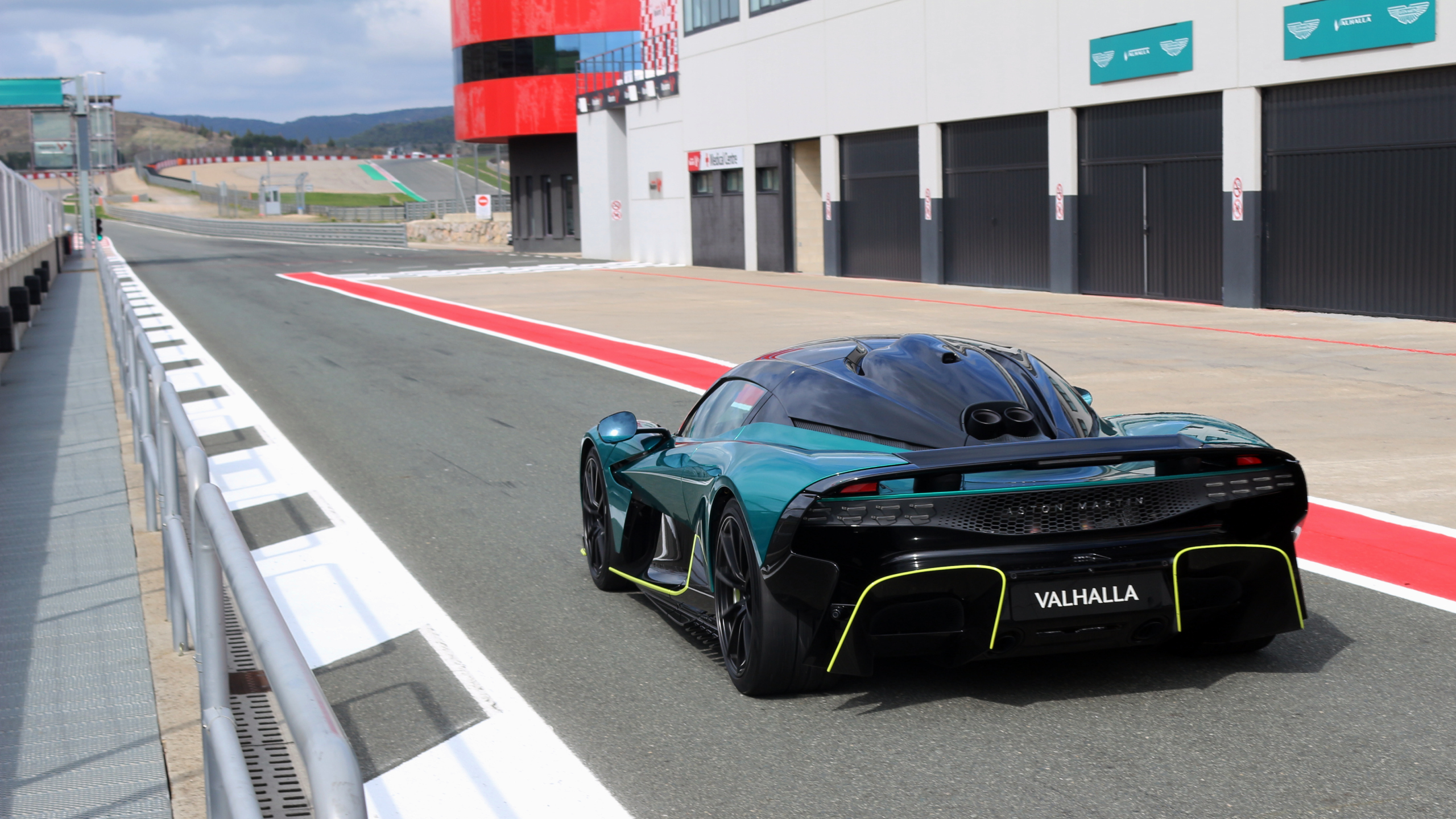
Turn 5’s a hard, quick stab of brake followed by maintenance throttle and a whole lot of patience through the uphill left. Get it right and you can lift to point the nose in turn 6 with the car gaining grip on the steep climb. Nail the turn 6 apex nice and late and the Valhalla will unload perfectly into the flat right-hander at turn 7, letting you throttle all the way to the flirt-with-ABS threshold for the downhill, 90-degree turn 8. You’ll have it completely on its tippy-toes here; you can get the rear end to rotate just by thinking about it. Get it just right and the weight falls back on the rear end just as you begin to unwind for the straight. Breathe. Check your instruments. Laugh maniacally as the speedometer climbs quicker than you can process—doesn’t help that this one’s reading in kilometers. It’s like counting monopoly money.
OK, time’s up; less break, more braking. Turn 9 has a lot of tire marks that vanish into the gravel. It’s an easy braking zone to overshoot if you get lost in the Valhalla’s intoxicating acceleration. I’ll do so once or twice myself before the day is out—though not by anything approaching the pucker-inducing standards of the folks who left rubber telltales behind. This is a corner where inches will cost you. You want to nail the exit through the sweeping turn 10 to grab every ounce of speed you can before the double-90-degree turn 11 complex. Unwind patiently. Trust that wing and keep it flat as you tuck in to the right.
Turn 11 starts uphill, flattering the Valhalla’s already over-achieving brakes. The track has been paved wide and there’s tons of gravel run-off before the wall, plus there’s a safety marshal’s station and easy access to infield services should things go horribly wrong. If you’re going to experiment with braking distances, this is the turn to do it. Push hard enough and you can feel the Valhalla’s all-wheel-drive work in tandem with the aero to quell the rear end’s innate desire to swap places with the front.
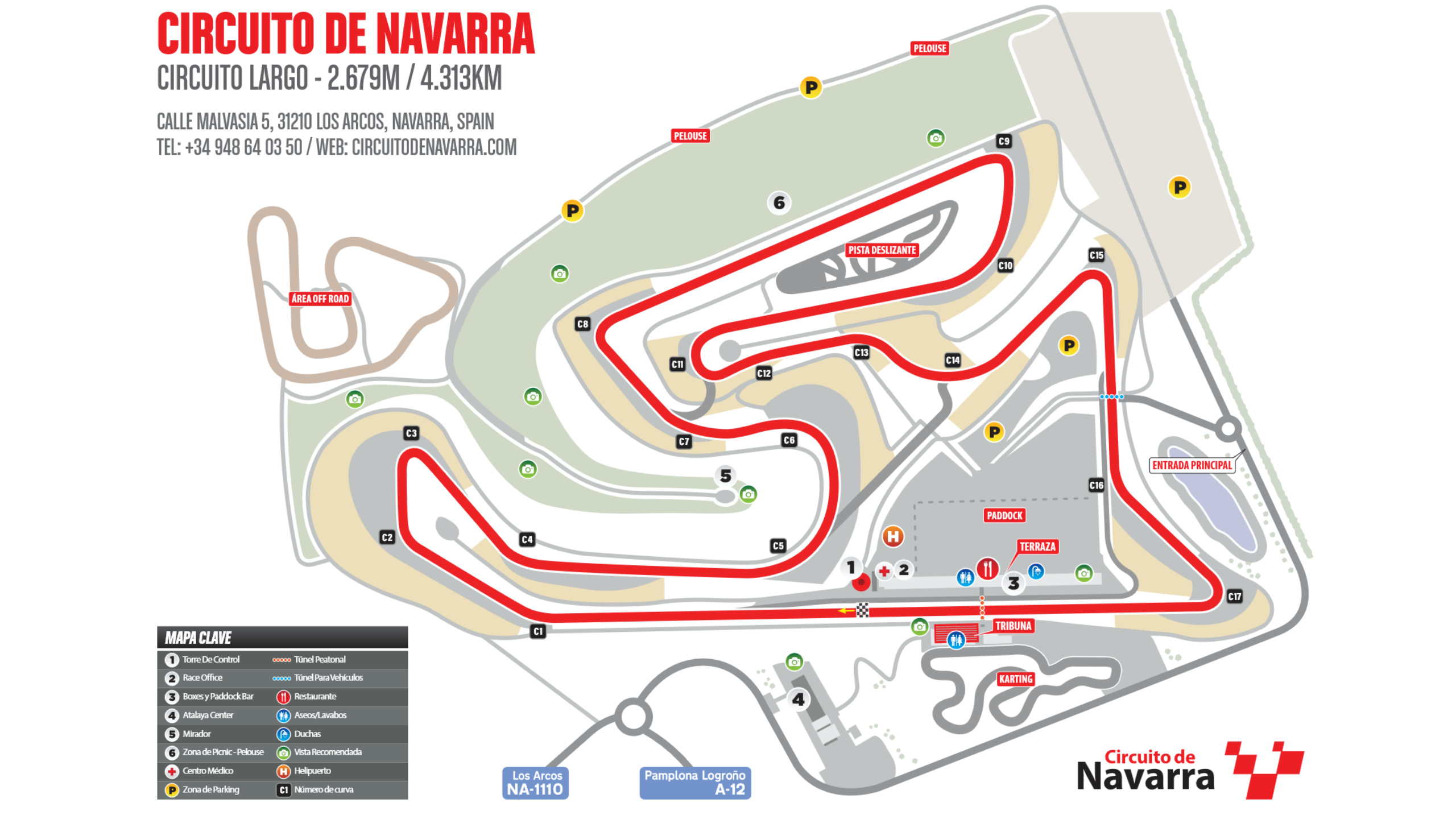
With the track coming up at you through the start of 11, you have all the traction in the world to get the nose hustled around once the rear end settles. But do it quickly, because the exit goes downhill immediately. Nail the turn 11-12 transition at just the right speed and the falling track will reduce your grip enough to induce the world’s most natural four-wheel drift. Use all of the track on the right side, but don’t commit until you get the nose pointed at something besides the wall. You can get some WOT before the esses and you’ll need less brake for turn 13 than you think, but don’t push too wide through the following flat, left-hand sweeper at 14 or you’ll be out of position for the last real brake-stomp of the lap at turn 15. This is another tighter-than-90 with a crucial late apex. Like turn 9, it’s followed by a moderate straight that arguably extends all the way to turn 17 if you’re brave enough to take the kink at 16 flat-out.
Cornering theory 101: The most important turn on a race track is the one that precedes the longest straightaway. Here, that honor goes to turn 17, which leads into Navarra’s front straight. It starts out a lot like turn 11, only mirrored to the right. You should be flat up the hill out of the kink (assuming you weren’t already) and wide left. The uphill approach deprives you of a clear line-of-sight to your exit until just about the last possible second, so it’s easy to make costly (in terms of time and speed; the safety margins are again generous) mistakes. The tight radius will tempt you to brake more than the forgiving uphill climb requires, and the poor visibility can lure you into an early apex. A pinched-off line here will cost you precious time in the midcorner abyss before you can slam the Valhalla’s throttle back to the floor for another blurry-speedo charge past pit lane. Breathe. Check your instruments. Wave to the start/finish flagger. Don’t lift until you’re headed uphill into turn 2.
If you can execute on that plan even somewhat competently, you should be able to get the Valhalla around Navarra in about 2:00, our hosts say. I log a peer’s flying lap at 2:03 by standing at the start-finish with a stopwatch app. May not be their best; may not be their worst. Last year’s Ferrari Challenge drivers were generally logging laps in the 1:45-1:50 range in the same track configuration, should you want a bit of context.
The Car
While AMG ostensibly provided most of the Valhalla’s powertrain, the reality isn’t some parts bin arrangement. Aston Martin overhauled the engine from top to bottom, redesigned the gearbox and repackaged the electric power units. Only the 6.1-kWh AMG battery pack remains truly off-the-shelf; it even offers similar electric range to the Mercedes-AMG GT63 S E Performance—about 9 miles. All of that re-engineering was expensive, which was certainly felt by a cash-strapped Aston Martin, but the resulting packaging benefits made it worthwhile, the company says.
While the Valhalla’s plug-in hybrid system certainly adds complexity and weight (it checks in at 3,649 pounds dry), Aston Martin found ways to make the system additive where it could, and to optimize where it couldn’t. The dual front motors allow for fully autonomous torque vectoring and the hybrid’s regen relieves the hydraulic braking system of the bulk of its regular duties.
On the optimization front, Aston found clever ways to interweave the Valhalla’s propulsion systems. For example, it has no physical reverse gear. That’s handled instead via the electric front axle. When in reverse, this 1,064-horsepower hypercar is constrained to just 247 hp and front-wheel drive. But to be fair, FWD in reverse has the same benefits as RWD in drive. Still, we’d recommend you confine your racing to the Valhalla’s forward gears.
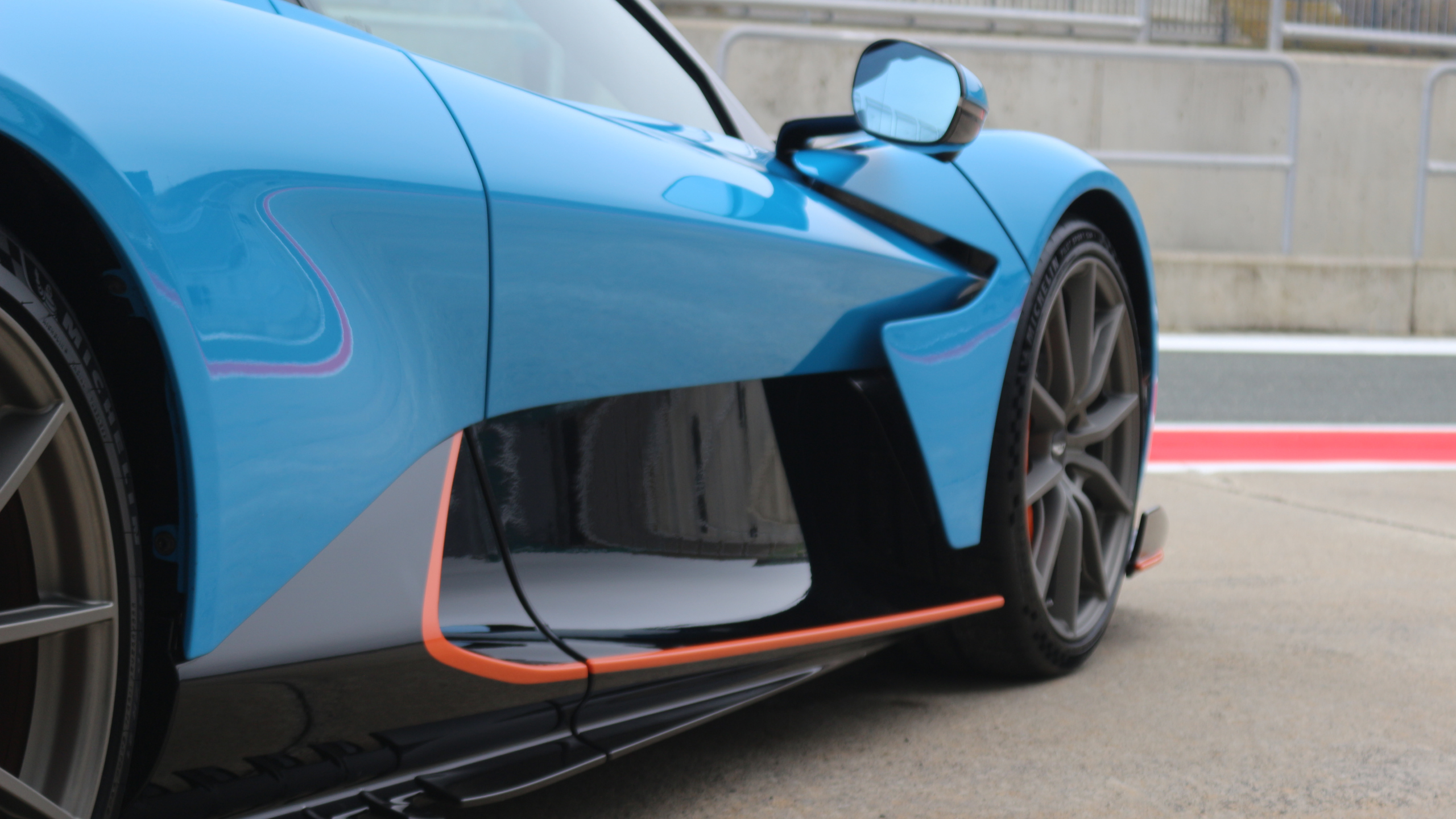
Aston Martin found other ways to do without, most notably when it comes to the Valhalla’s chassis. There’s not much suspension wizardry at play here. Sure, the horizontal hardware is showy, but you’re looking at a simple double-wishbone setup up front mated with a traditional multi-link rear with a physical anti-roll bar. There’s no fancy hydraulic or air-spring setup to be found here. The front end is fitted with a 25 mm (1 inch) axle lift for clearing speed bumps or low driveway approaches, but that’s it. The Bilstein adaptive dampers are fully integrated into the Valhalla’s drive modes, firming up as you advance from Sport to Sport+ and then Race.
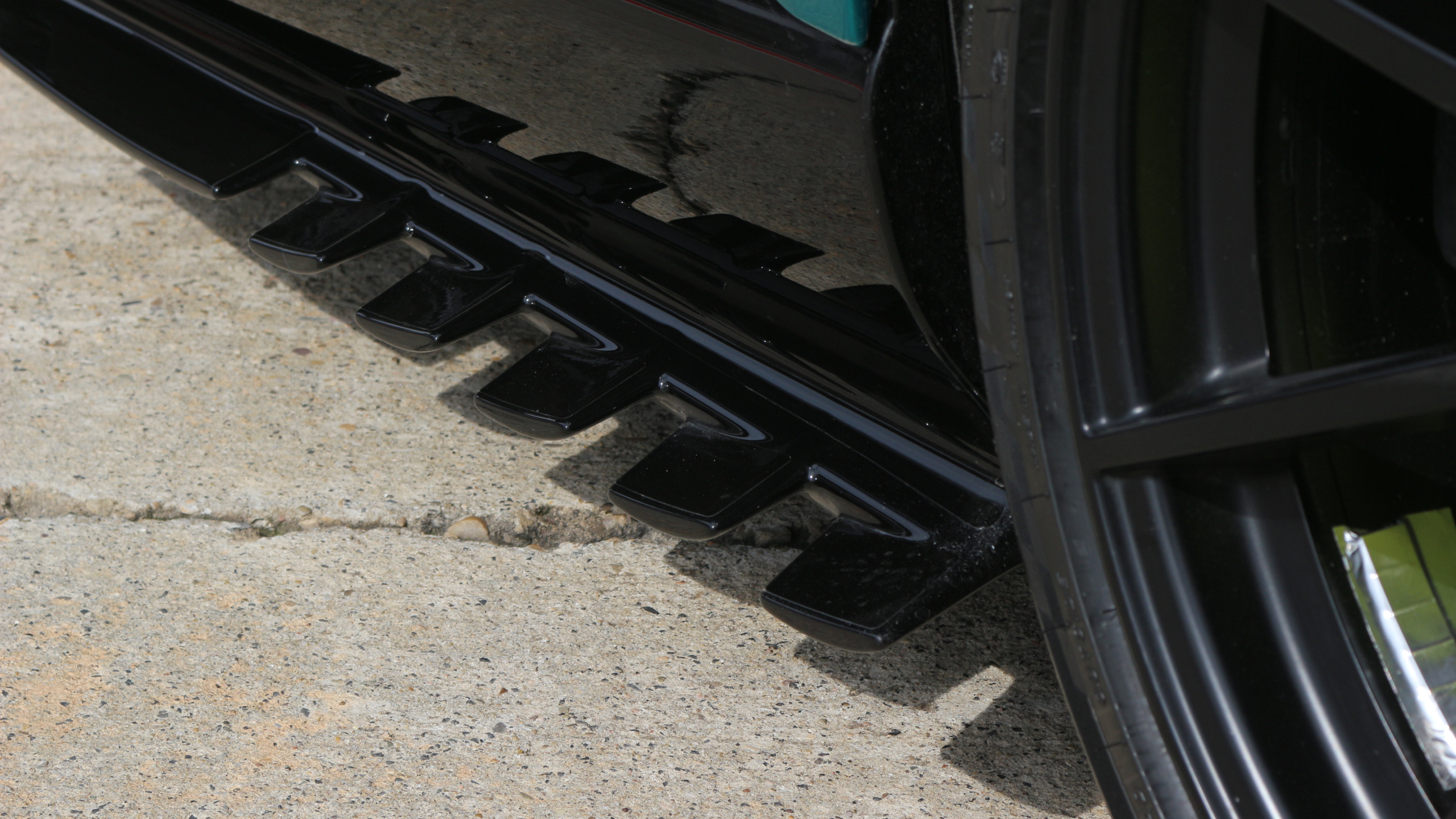
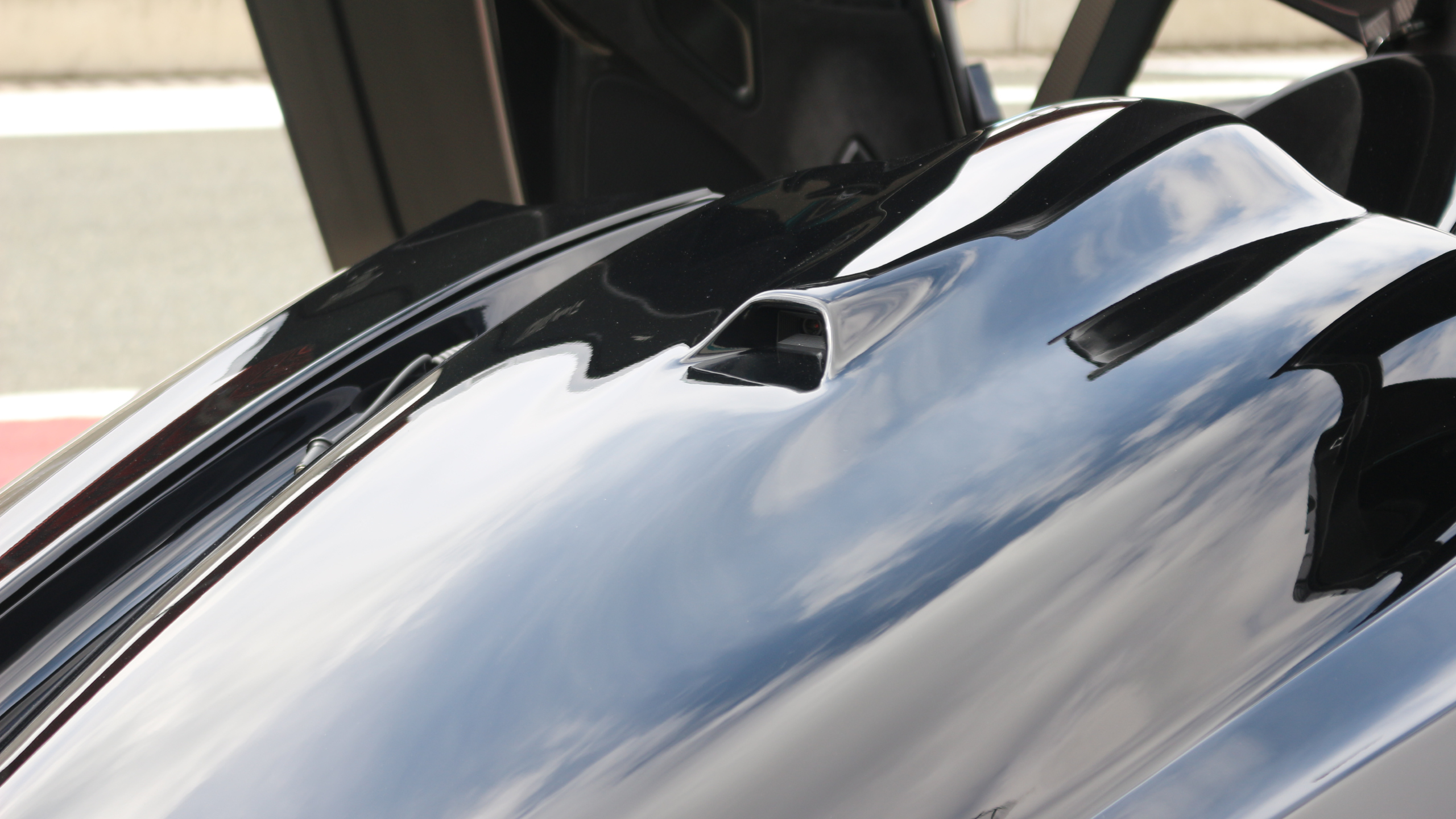
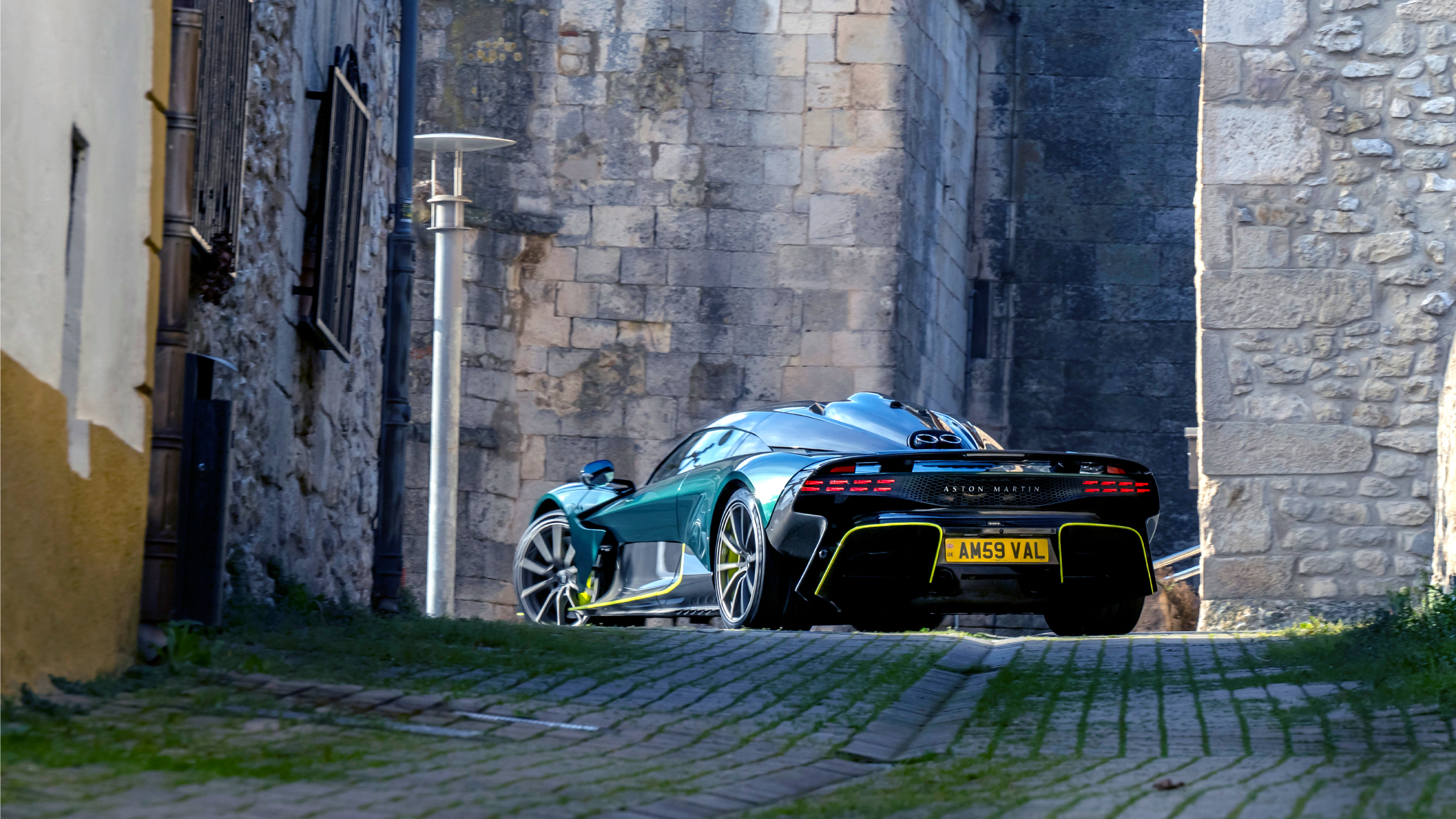
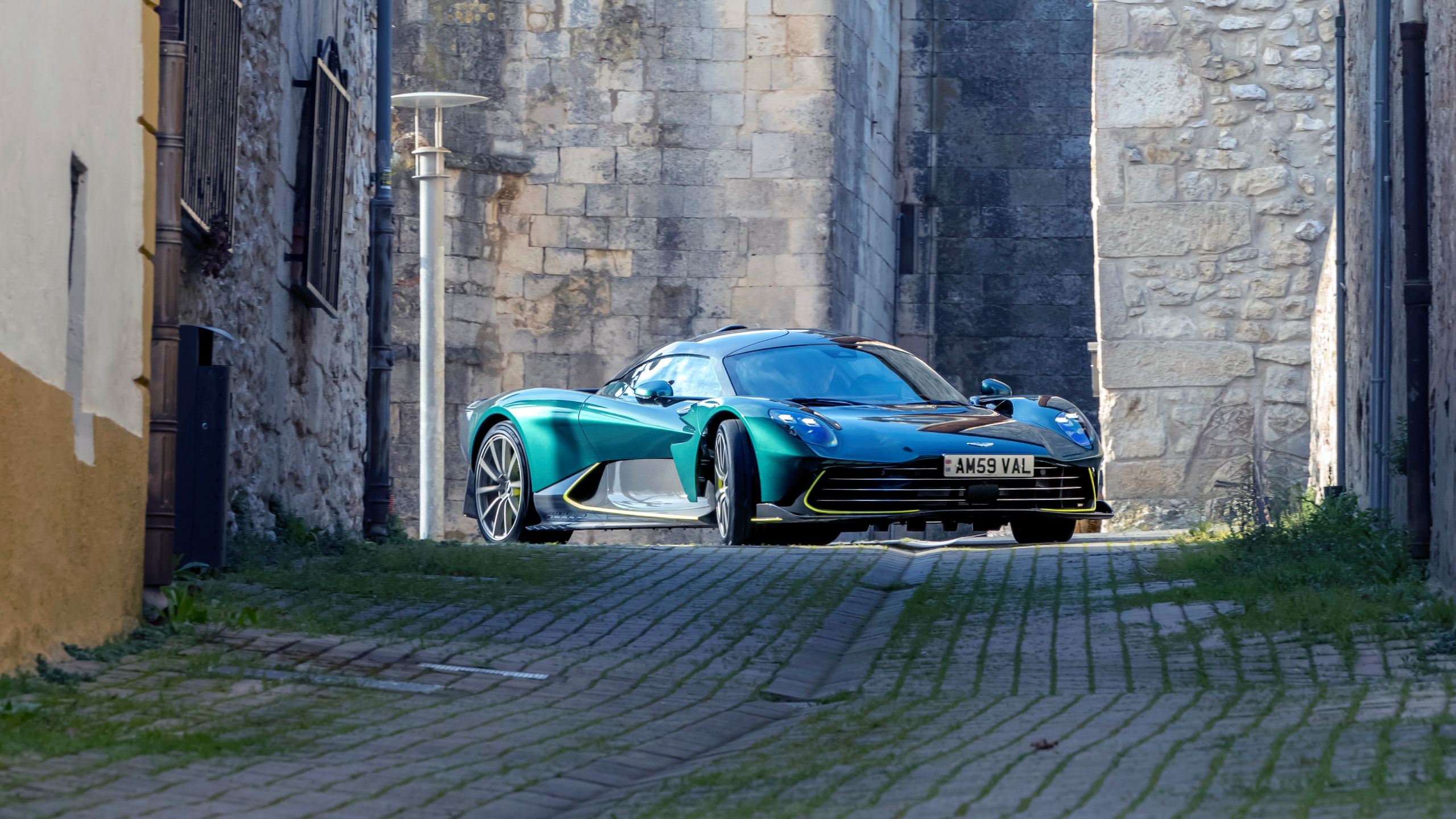
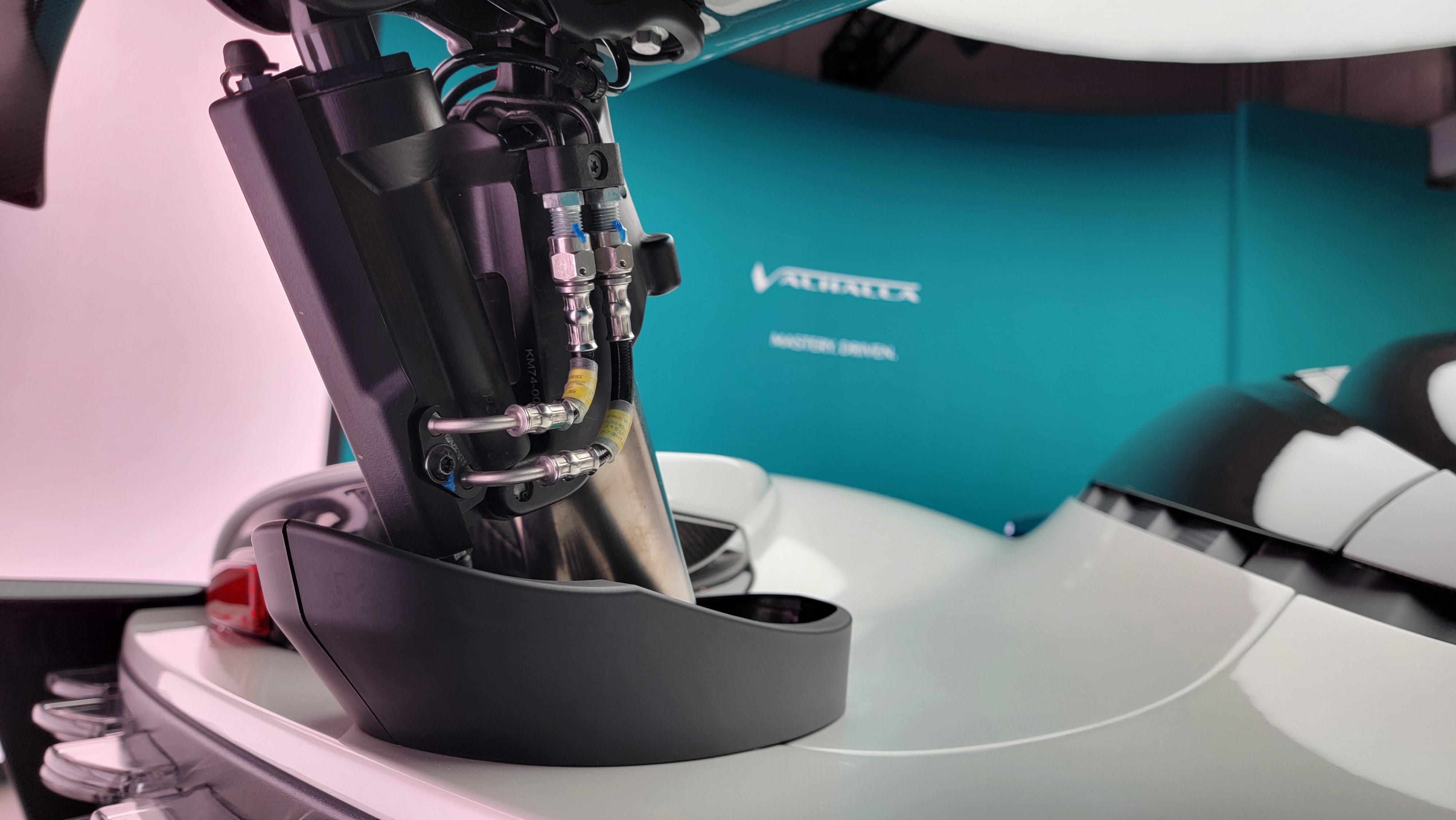
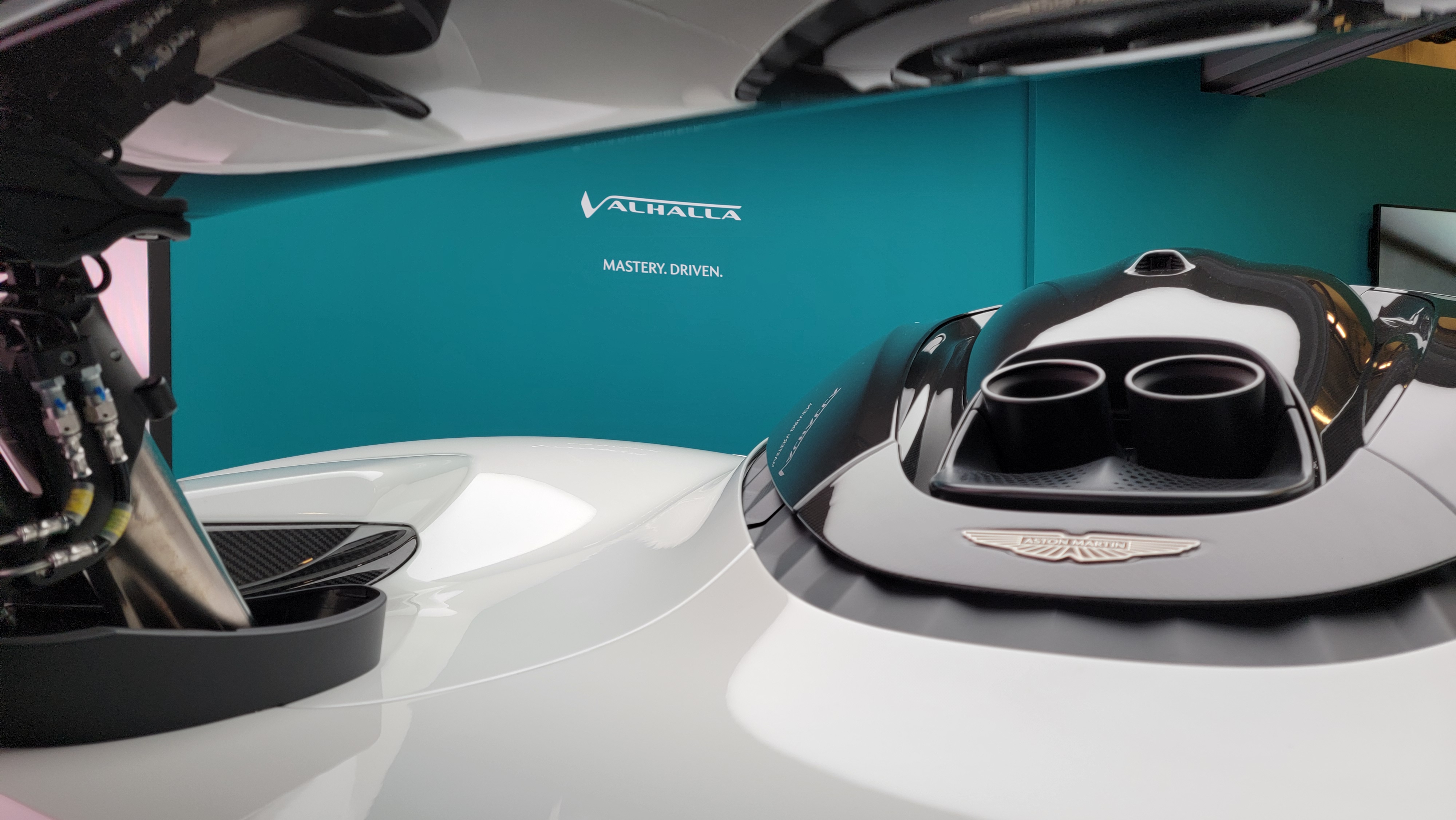
The last of those is where things get really interesting, because while the Valhalla’s suspension may not be hydraulically augmented, its aerodynamics package is. The Valhalla has active elements in both the front and rear of the car. The front wing, located against its undertray beneath the nose, deploys to direct airflow around the underbody. At high speeds, it also routes some incoming air around the Valhalla’s cooling elements to reduce drag when natural airflow is more capable of handling the car’s cooling needs.
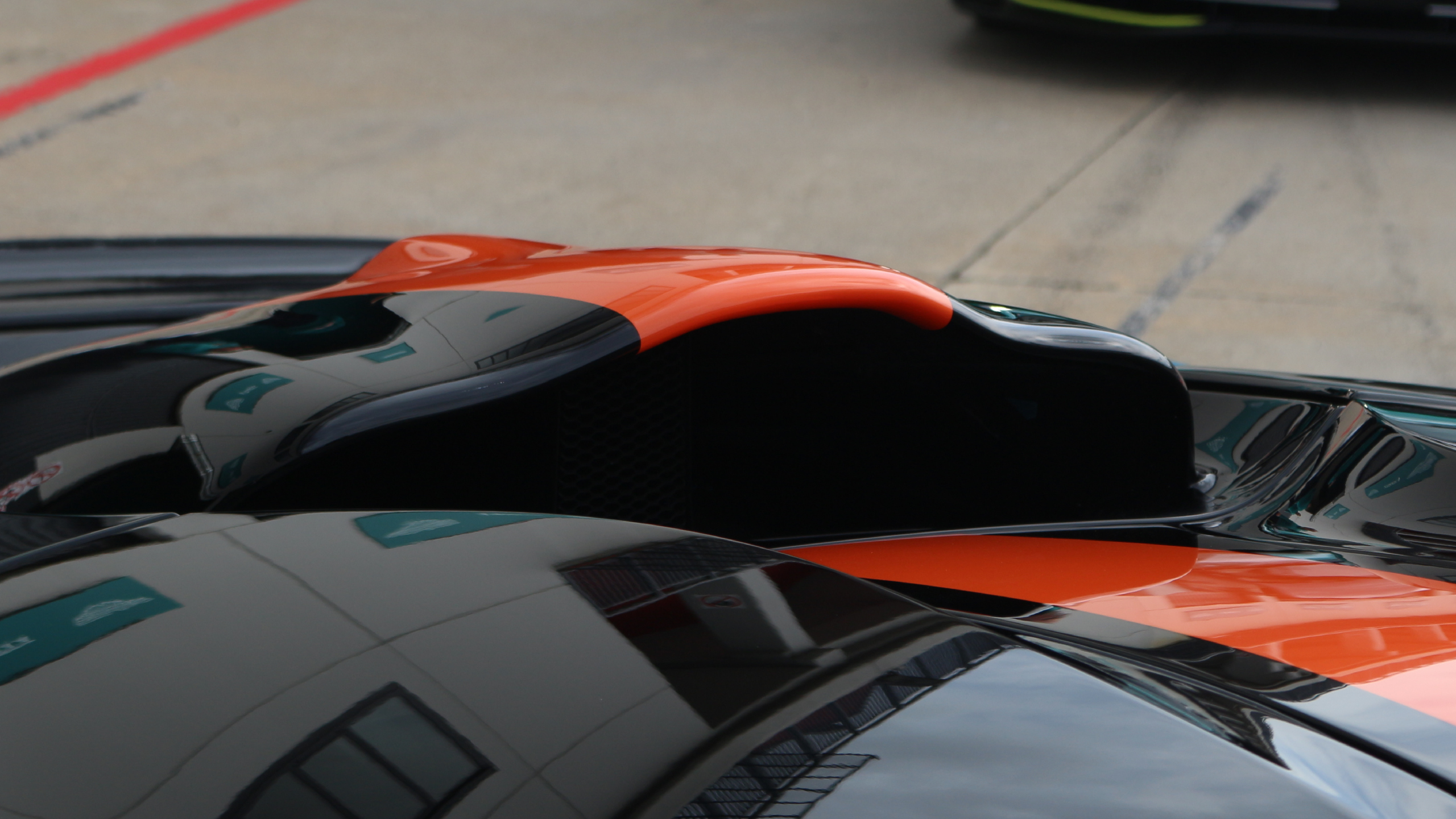
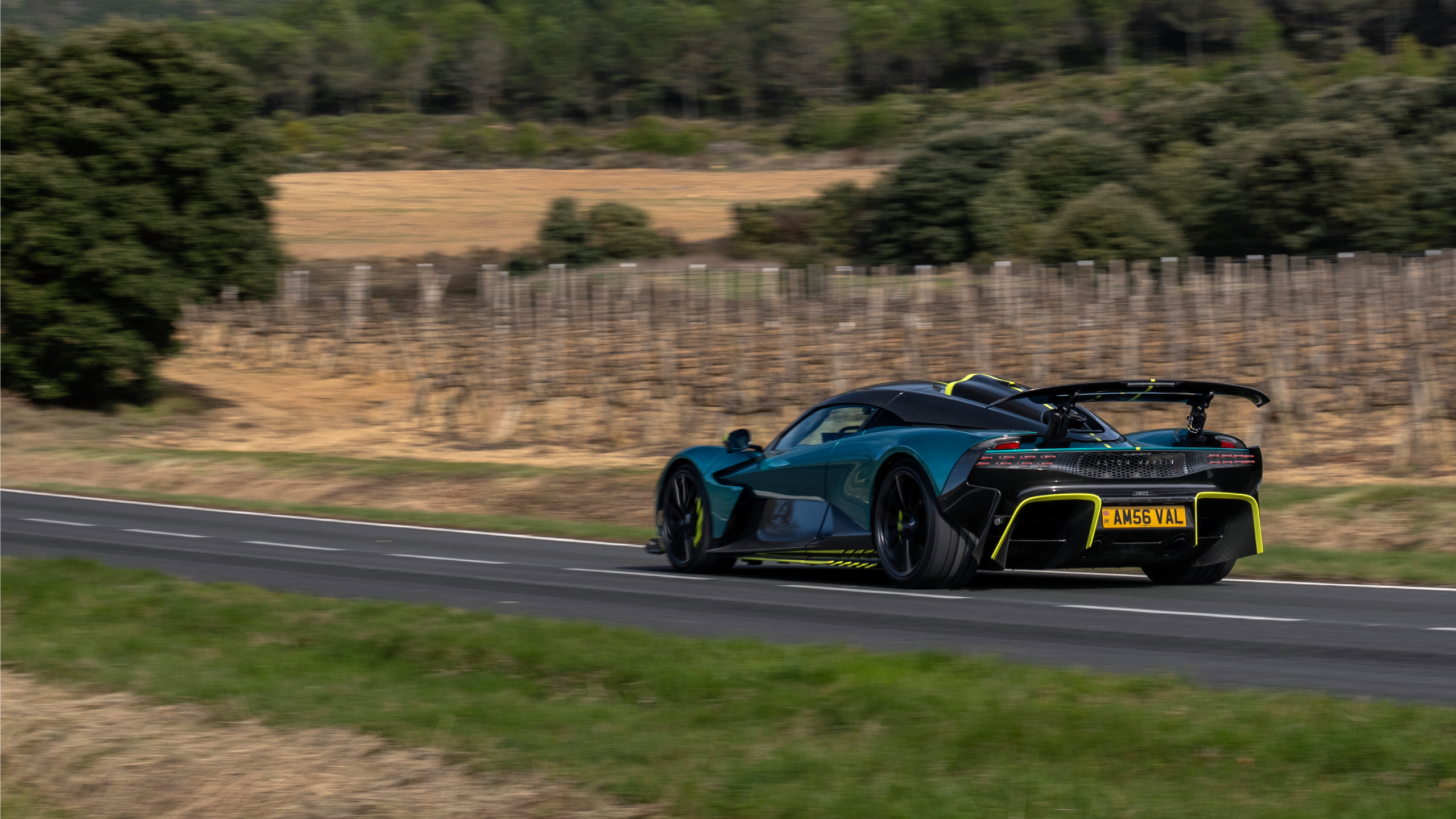
The active rear wing can be deployed at variable angles depending on the needs of the moment, but Aston says its primary function in Race mode is to act as an air brake and help stabilize the car against forward weight shift. It also has a DRS (Drag Reduction System) function for wide-open straights. The front and rear active elements have been tuned to deliver up more than 1,300 pounds of downforce from 149 mph all the way up to the Valhalla’s top speed of 217 mph, and you’ll need an awfully long straight to get there if the aero is constantly trying to push you into the ground.
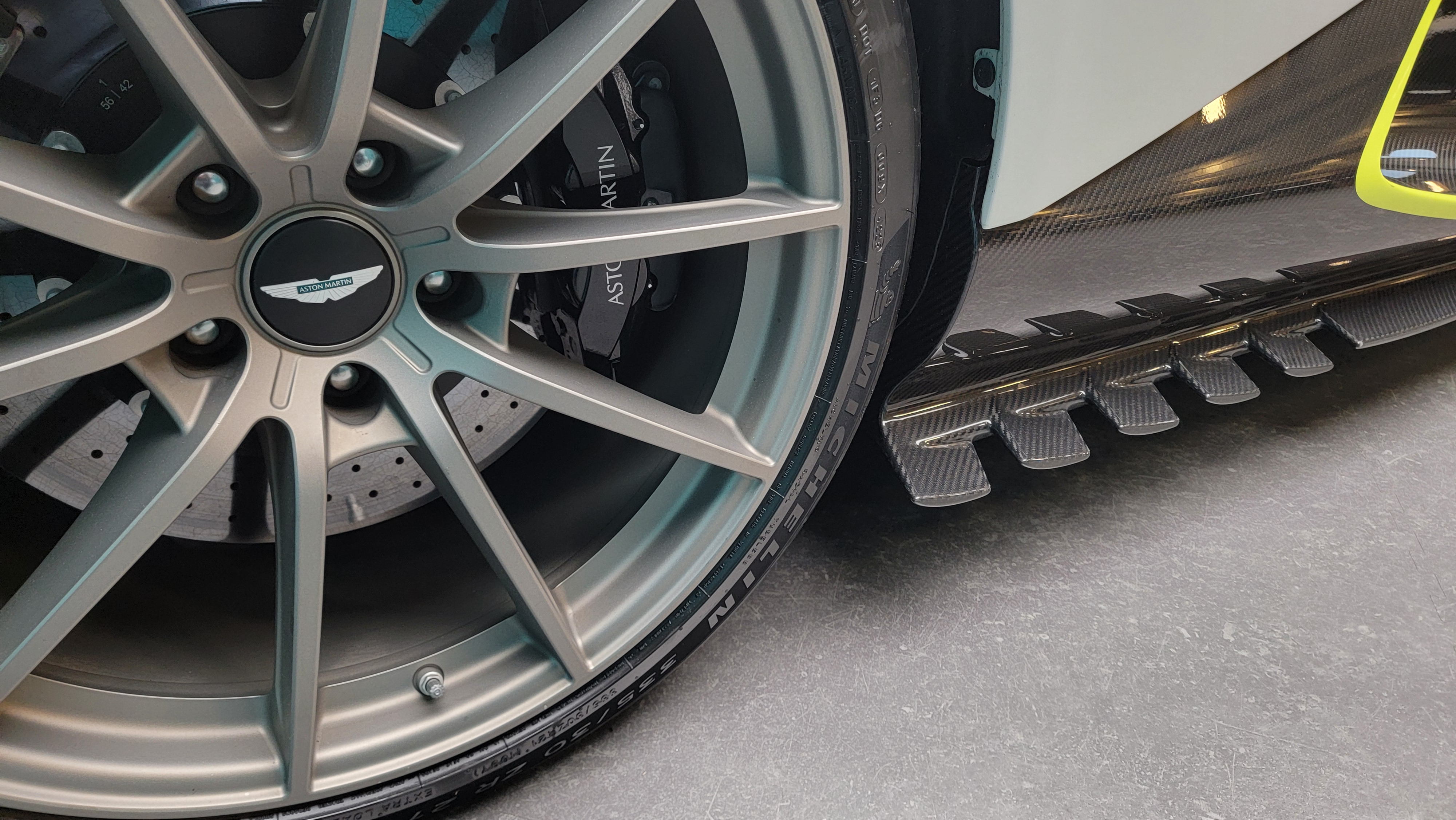
That downforce punishes in other ways too. As you approach its peak effectiveness, the aero is making the Valhalla about 35% heavier. This is usually countered with a firmer suspension, but Aston wanted the Valhalla to remain compliant even when being pushed—a nod to the maker’s touring tradition. The resulting ride quality is indeed commendable, and while you’d think the softer ride would make the Valhalla’s handling spookier at the limit, that’s not the case. It remains predictable and progressive right up to the point where the Michelin Pilot Sport Cup 2s start to relinquish their hold on the world.
In fact, if there’s anything spooky about the Valhalla, it’s how imperturbable it feels at speed. Its inherent proclivity to rotate about its mid-mounted V8 presents not as instability, but merely an eagerness to change direction on command. The Valhalla’s all-wheel drive is constantly working to predict, prevent and correct mistakes. If you want the car at its most playful, I’d suggest leaving it in Sport+ mode rather than Race; you’ll get a looser caboose that way. You can further dial things in with 10 levels of traction control adjustment.
Aston doesn’t allow its drivers to manually deploy the rear wing just for low-speed peacocking, but there’s nothing stopping you from using Race mode on the street. You’ll simply need to be driving fast enough for the wing to deploy. How fast? Hmm. On second thought, perhaps I’ve said too much already. Wouldn’t want to give the Cars and Coffee crowd any ideas—not that you’re likely to see many of these around the way. Aston’s only building 999 of them. I feel compelled to point out that dialing 999 is the UK equivalent of dialing 911 in the States. Take from that what you will.
The Drive
On the track, the Valhalla moves with poise. It may be heavy by race car standards, but it weighs no more than a bog-standard Corvette Stingray. If you’re expecting the ponderous, numb responses of your typical big-battery plug-in hybrids, think again. The Valhalla’s front axle snatches at the pavement greedily, only surrendering to understeer when ham-fistedly pushed well beyond reasonable limits. That’s doable on a racing surface, but would require near-superhuman stupidity effort on public roads. Do feel free to challenge me on that one; we love a good wrecked supercar post around here.
If you’re so fortunate as to be one of the 999 people who will have the opportunity to drive one of these, rest assured that your investment will not go unnoticed. In the little countryside town of Los Arcos in Spain, the Valhalla possesses all the subtlety of a low-flying Apache Longbow. Sure, the EV mode allows it to glide through town in auditory anonymity, but in an area where even Audis and Volvos are few and far between, the Valhalla draws lingering, slack-jawed stares from any and all you encounter.
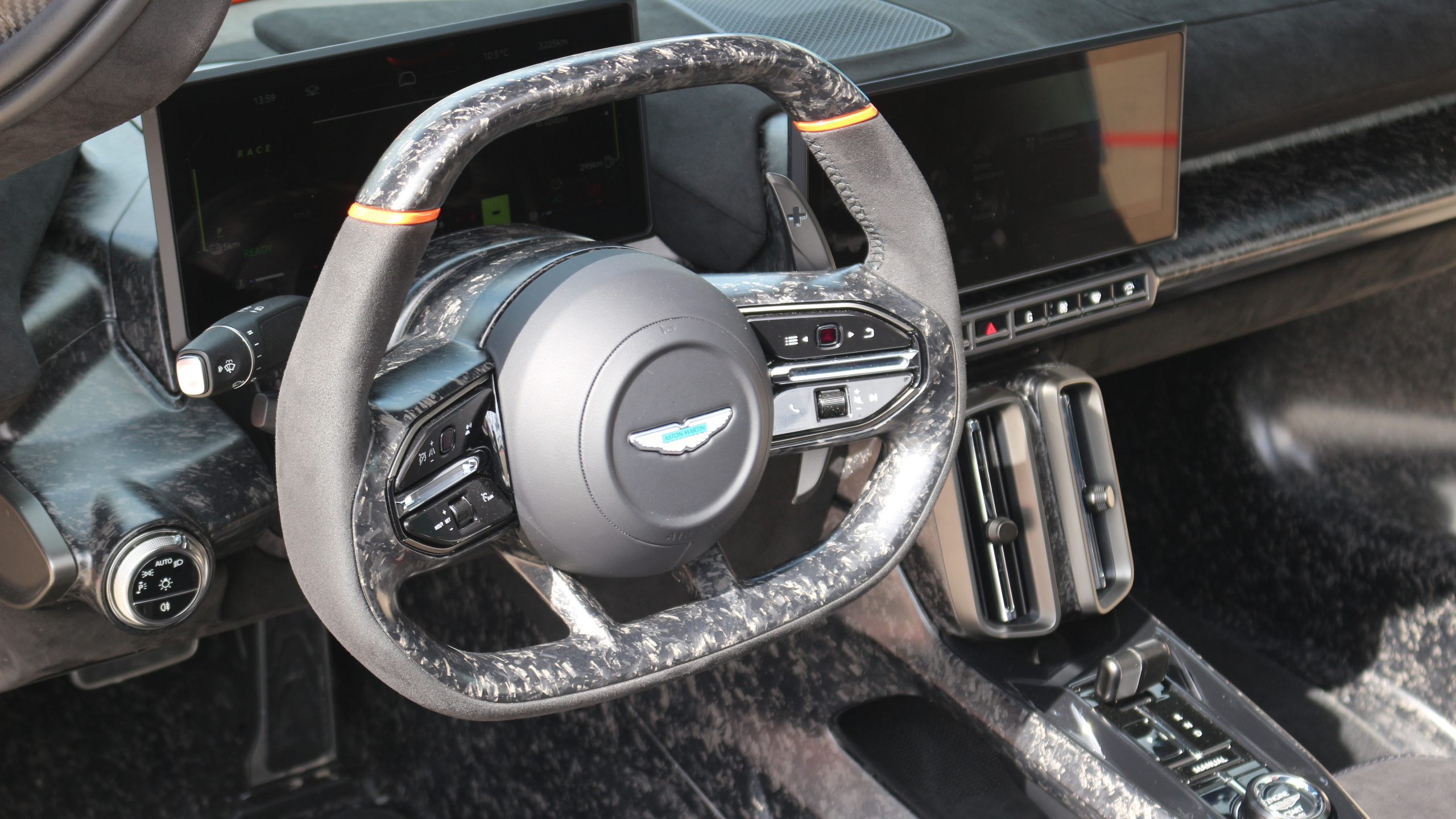
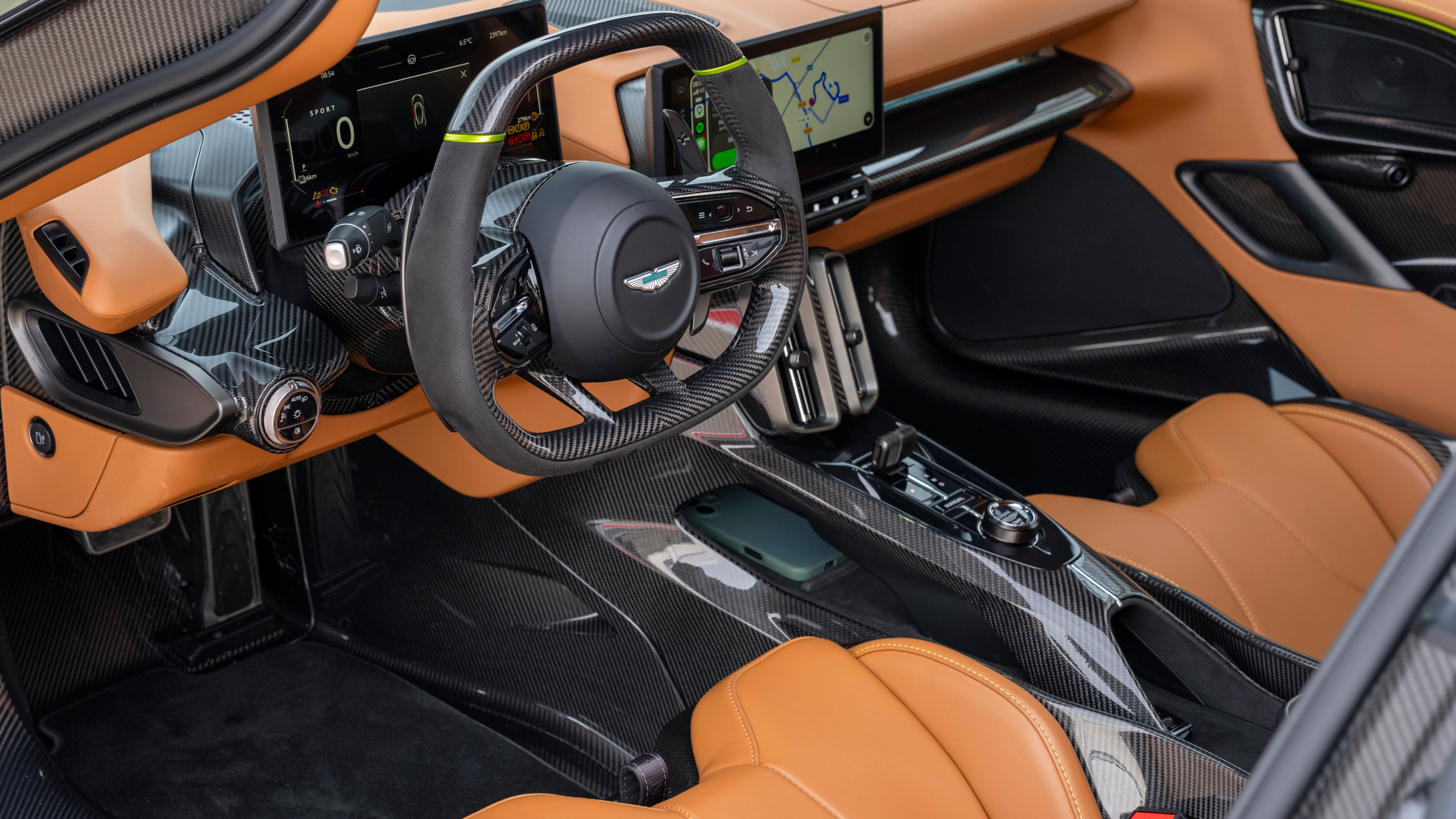
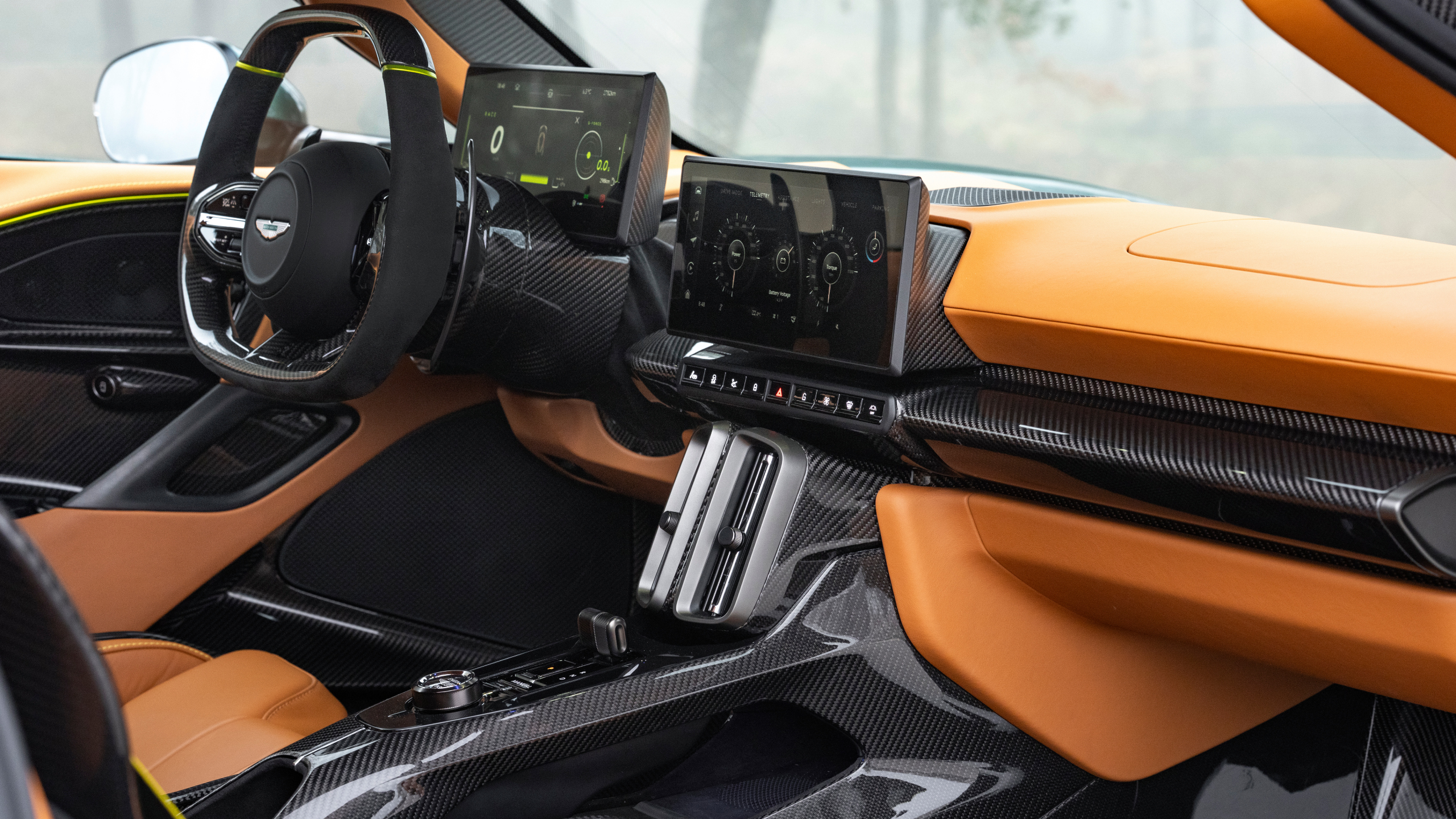
Such attention isn’t always positive, of course, and a hypercar in distress can draw a crowd in a hurry. But the Valhalla never gets into its own way. The navigation system unerringly guides us from one waypoint to the next. The cabin is simple, elegant. Perhaps a bit sparse, yes, but clean and functional. The primary controls are all physical; the secondary controls are integrated into the touchscreen. It’s less of a concern here than in “normal” cars; this thing doesn’t go hard on everyday add-ons and consequently there really aren’t many features with which to fiddle. I find myself barely touching anything at all besides the wheel and paddle shifters after setting off, except to cycle the drive modes. Even the axle lift system sits unused; it’s simply unnecessary.
The real challenge imposed by the Valhalla is that to one’s self-restraint. This is an awful lot of car and it wants to be driven awfully fast. What feels like walking speed turns out to be more like 45 mph; accelerating briskly from the outskirts of town feels harmlessly playful, but a glance at the speedo reveals speeds that could land me trying to explain myself to local authorities in a language I speak best after two or three shots of coraje líquido. So I do my best to act like a human being, at least while I remain in eyesight of the locals and the occasional wandering livestock.
Even when the narrow village streets give way to winding hill country roads, I’m constantly conscious of just how much car I have my my disposal. It’s trivial to breeze past 70, 80, 90 mph just goosing the throttle between hairpins. The term “too much car for the street” gets thrown around a lot; this is one case where it unquestionably applies.
It was also commendably well-behaved in every sense. Not once, either on the road or on the track, did it exhibit any, shall we say, stereotypically British idiosyncrasies. Every component, mechanical and digital alike, performed as expected when called upon. That’s commendable for any early production example of something this sophisticated and low-volume, regardless of its manufacturing origin.
The Verdict
Whenever an opening appears, I make the move. These rolling roadblocks I encounter on the country roads surrounding Navarra would probably frustrate me in any other context, but today, they serve as important reminders that we’re not often constrained by the limitations of our vehicles in day-to-day driving. We’re far more likely to run afoul of the law (not to mention the limits of common decency) long before we run out of capability. Anything more than you can reasonably and regularly use is just for bragging rights.
The Valhalla certainly buys you those, and in abundance. Aston could have left it there. It would be easy to forgive Aston for saying, “What more could you possibly want?” Instead, the team just kept piling on even more. The result is a car that does everything but somehow still feels built to a purpose. Perhaps that purpose is simply to be an Aston Martin.
No matter how you look at the Valhalla—as a technological tour-de-force, as a $1 million investment, a 1,064-horsepower track monster, as a mere symbol of being able to afford one, or even more reductively as a mere icon of excess—the fact is, you’re both right and wrong. Because at the end of the day, nobody buys a Valhalla because they need a car. They buy it because they want this car. What it represents to them is all that matters.
And to Aston Martin, it represents the future. This isn’t Armageddon. It’s what’s next.
Aston Martin provided The Drive with travel, accommodations, and access to the vehicle for the purpose of writing this review.
Aston Martin Valhalla
| Base Price | $1.1 million (est) |
| Powertrain | 4.0-liter twin-turbo V8 hybrid | 8-speed dual-clutch automatic | all-wheel drive |
| Horsepower | 1,064 |
| Torque | 811 lb-ft |
| Seating Capacity | 2 |
| Curb Weight | 3,649 pounds (dry weight quoted) |
| Electric range | 8.7 miles |
| 0-60 mph | 2.5 seconds |
| Top Speed | 217 mph |
| Score | 9.0 |

Quick Take
Aston Martin’s new hypercar is an approachable plug-in powerhouse.
Loading comments…
Comments couldn’t be loaded. Please refresh the page.