
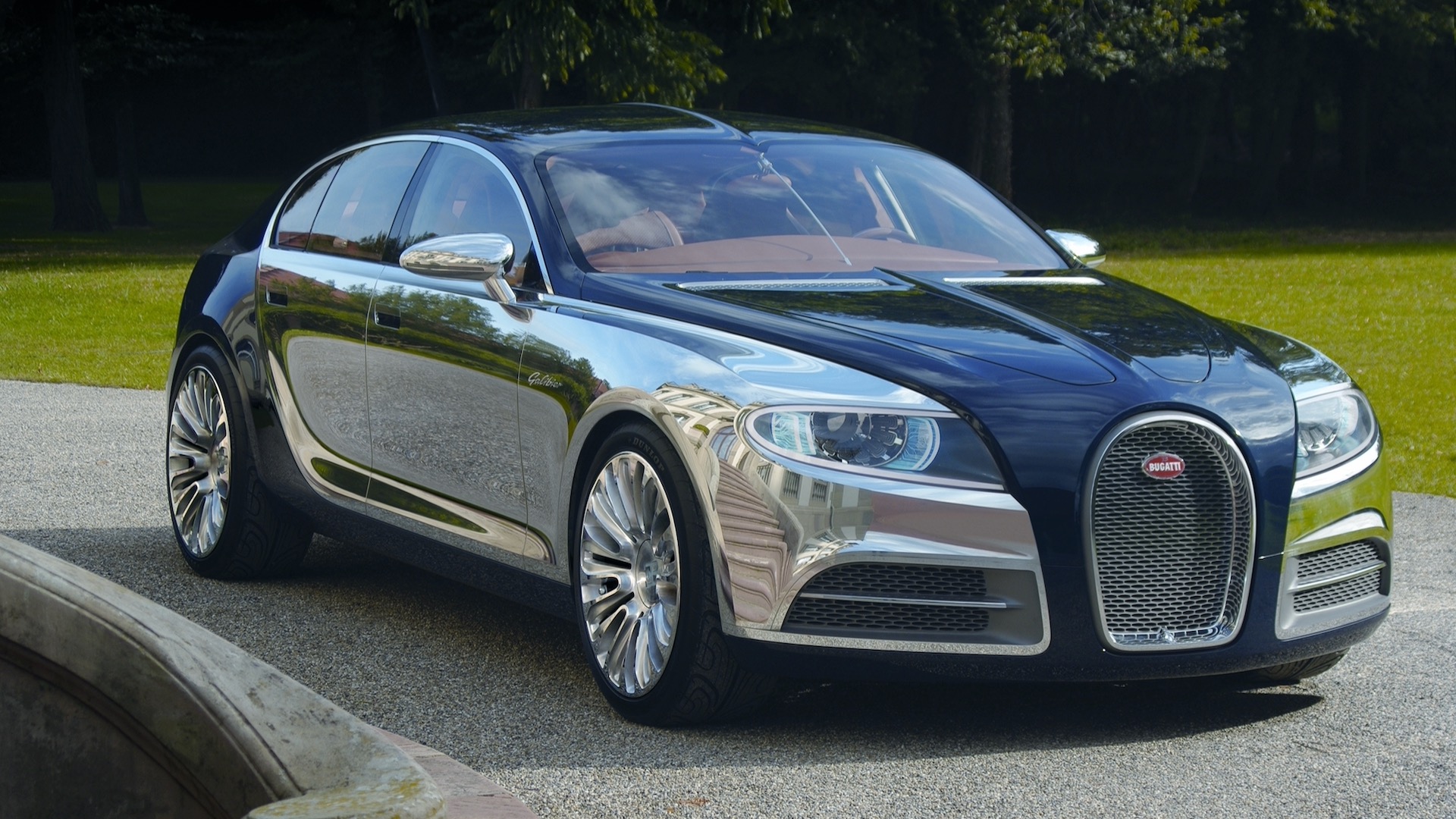
There’s no denying that the past decade and a half has gone well for Bugatti. The Volkswagen Group’s crown jewel proved that the Veyron wasn’t a fluke, following it up with the Chiron and, under the stewardship of Mate Rimac, the sensationally nerdy Tourbillon. So it’s easy to forget that in 2009, Bugatti unveiled a sedan concept powered by a version of the Veyron’s W16. That car just resurfaced to remind us of what might have been.
The Bugatti 16C Galibier concept debuted at the automaker’s factory in Molsheim, France, 17 years ago, but has been mostly out of public view since then. It currently resides at the Autostadt, the visitor’s center and museum at VW’s main production site in Wolfsburg, Germany, where YouTube channel Horsepower Hunters recently got an up-close look.
Unlike many concept cars, the Galibier was made from working components. It’s based on a Bentley Arnage, but powered by a two-stage supercharged version of the Bugatti 8.0-liter W16 estimated to produce 1,000 horsepower. In the days before tri-motor electric sedans, that was unthinkable for a four-door from an OEM. And it’s about the same as what the Veyron made with quad turbos. The Galibier also has all-wheel drive like the Veyron, but was designed to run on ethanol, which was all the rage at the time.
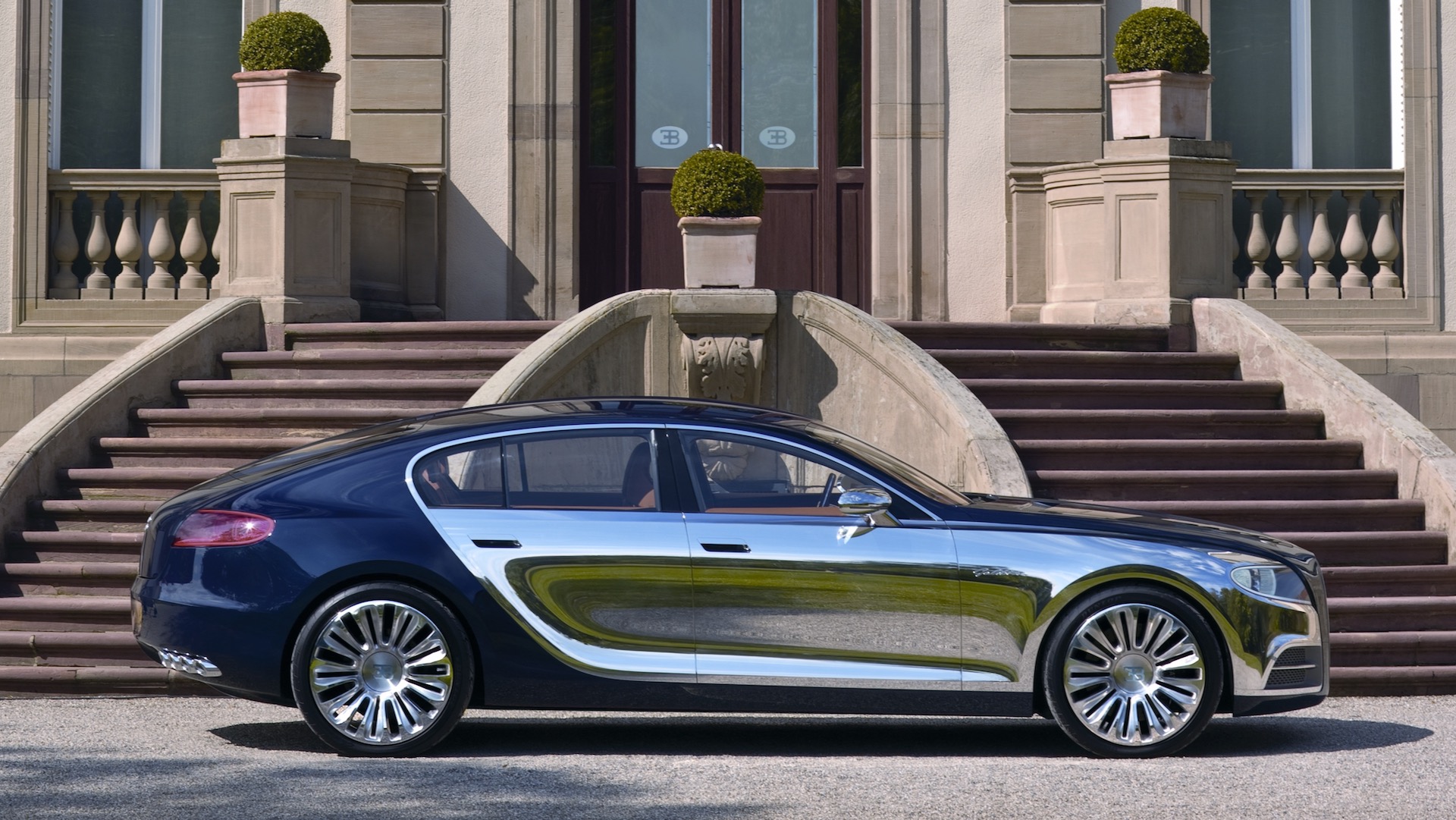
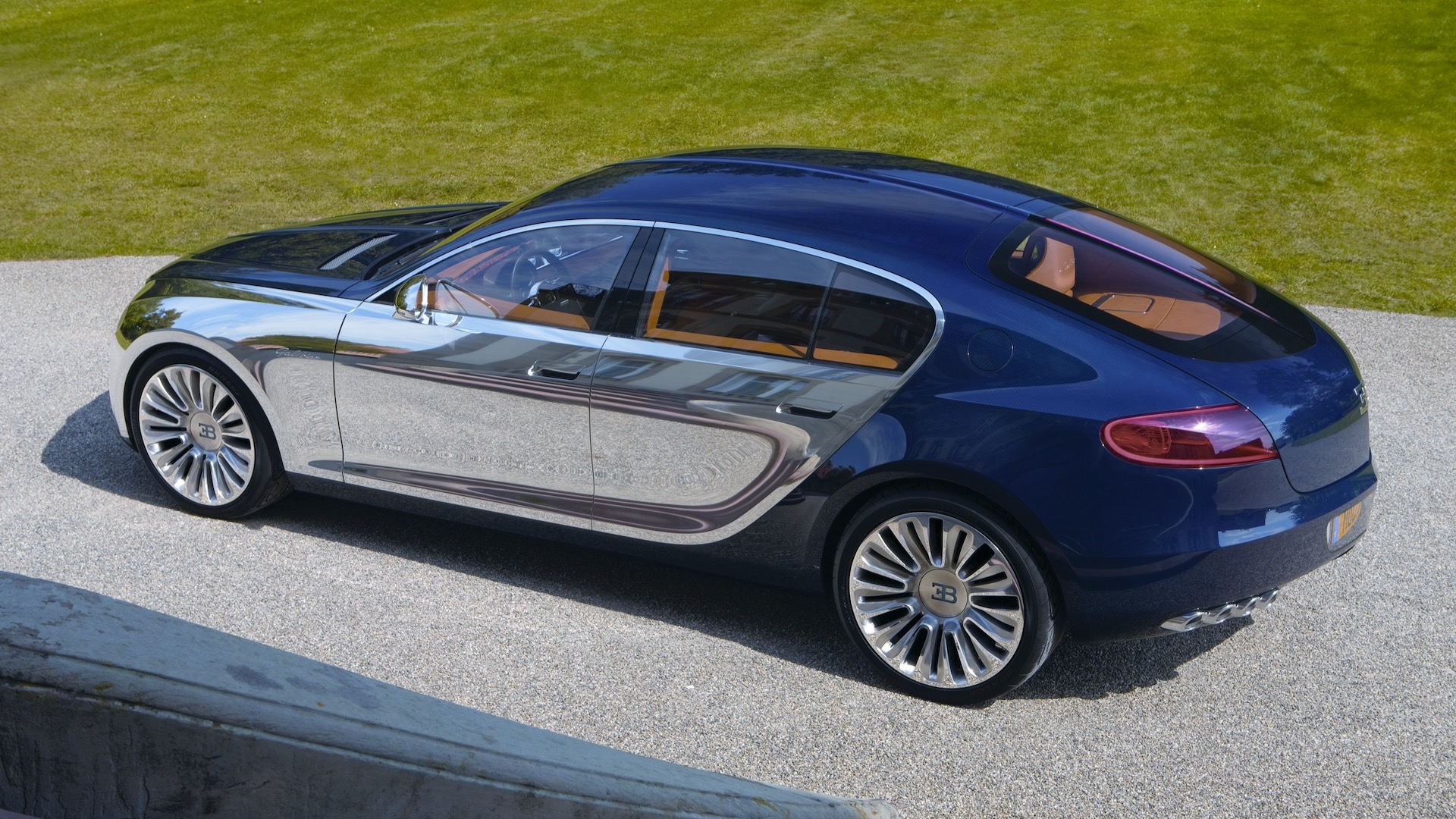
That powertrain is wrapped in appropriately over-the-top bodywork. The hood has a 1930s-style piano hinge, which forms part of a spine running along the centerline that recalls the Bugatti Type 57 Atlantic coupe. An enlarged version of the Bugatti horseshoe grille and a C-shaped piece of trim around the rear doors stylistically tie the Galibier to the Veyron.
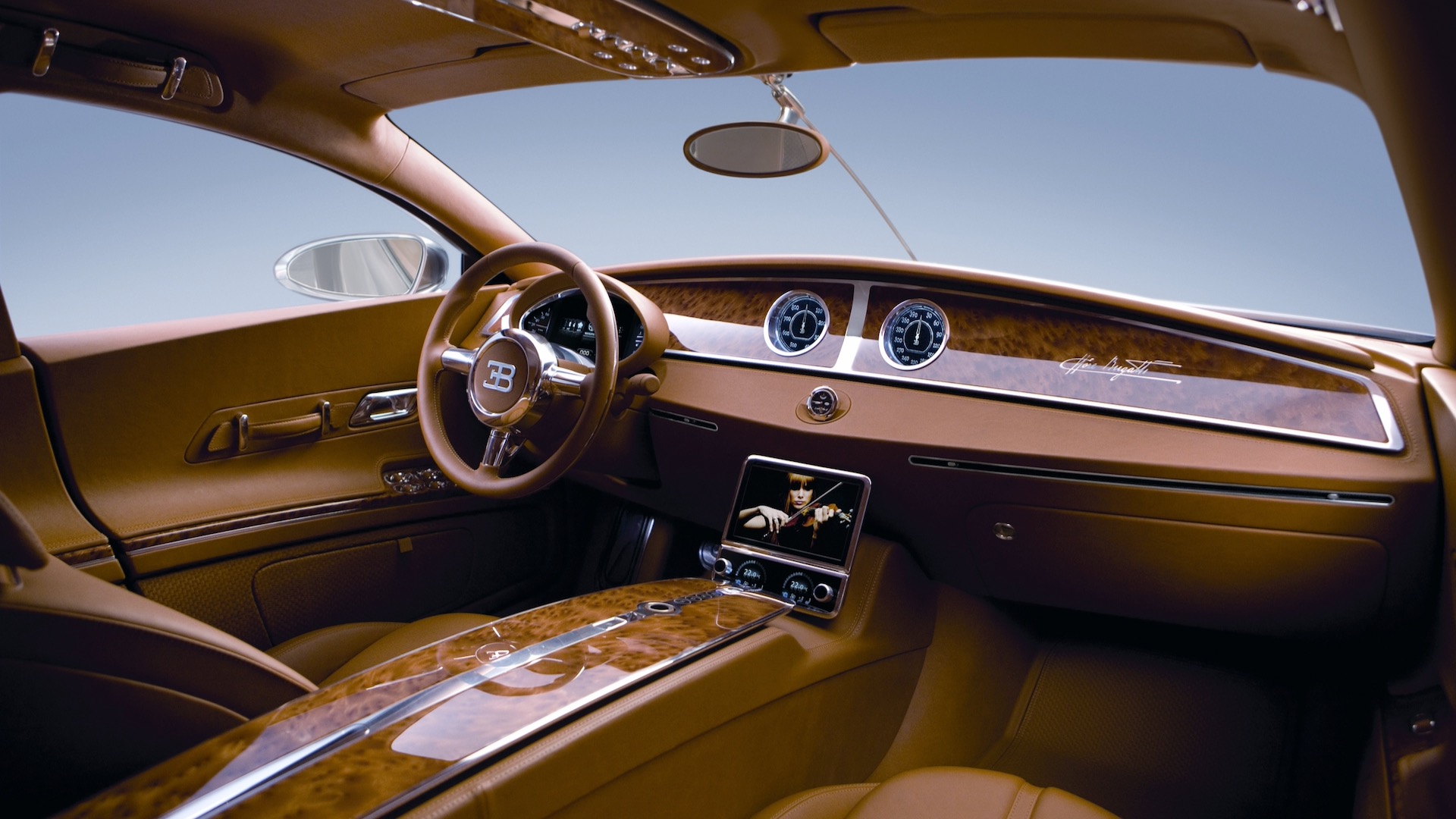
Inside, a hidden compartment in the dashboard contains a watch from Swiss firm Parmigiani that serves as the dashboard clock, but can also be worn on your wrist. The four-seat cabin features sophisticated-for-the-time LCD screens, including one for rear-seat passengers that pops out of a slot in the center console and rotates into position.
Bugatti may be known primarily for supercars and race cars, but the Galibier wasn’t without precedent. Its name, while shared with an alpine pass that makes up part of the Tour de France, was actually taken from a four-door version of the Type 57. And during its pre-VW revival in the 1990s, Bugatti built another stunning four-door concept. The EB 112 was unveiled at the 1993 Geneva Motor Show with a 450-hp, 6.0-liter V12 under its rounded hood.

The Secret 1000bhp Four Door Bugatti Veyron – Exclusive Review of the Galibier!
When it was unveiled, then-Bugatti President Franz-Josef Paefgen said the Galibier represented one of several different concept studies for the future of the brand following the Veyron. The project was effectively dead by 2013, but the Galibier did have some influence on Bugatti’s subsequent development. The Atlantic-inspired central spine was incorporated into the Chiron, and the Parmigiani timepiece predicted the watch-guy theme of the Tourbillon.
Rumors of a new Bugatti sedan in the vein of the Galibier have been spun as recently as 2021. They’ll likely continue as Bugatti looks for ways to expand without having to resort to an SUV—although the automaker has hinted that the end product could take the form of a front-engine grand tourer without the extra set of doors.
Loading comments…
Comments couldn’t be loaded. Please refresh the page.