
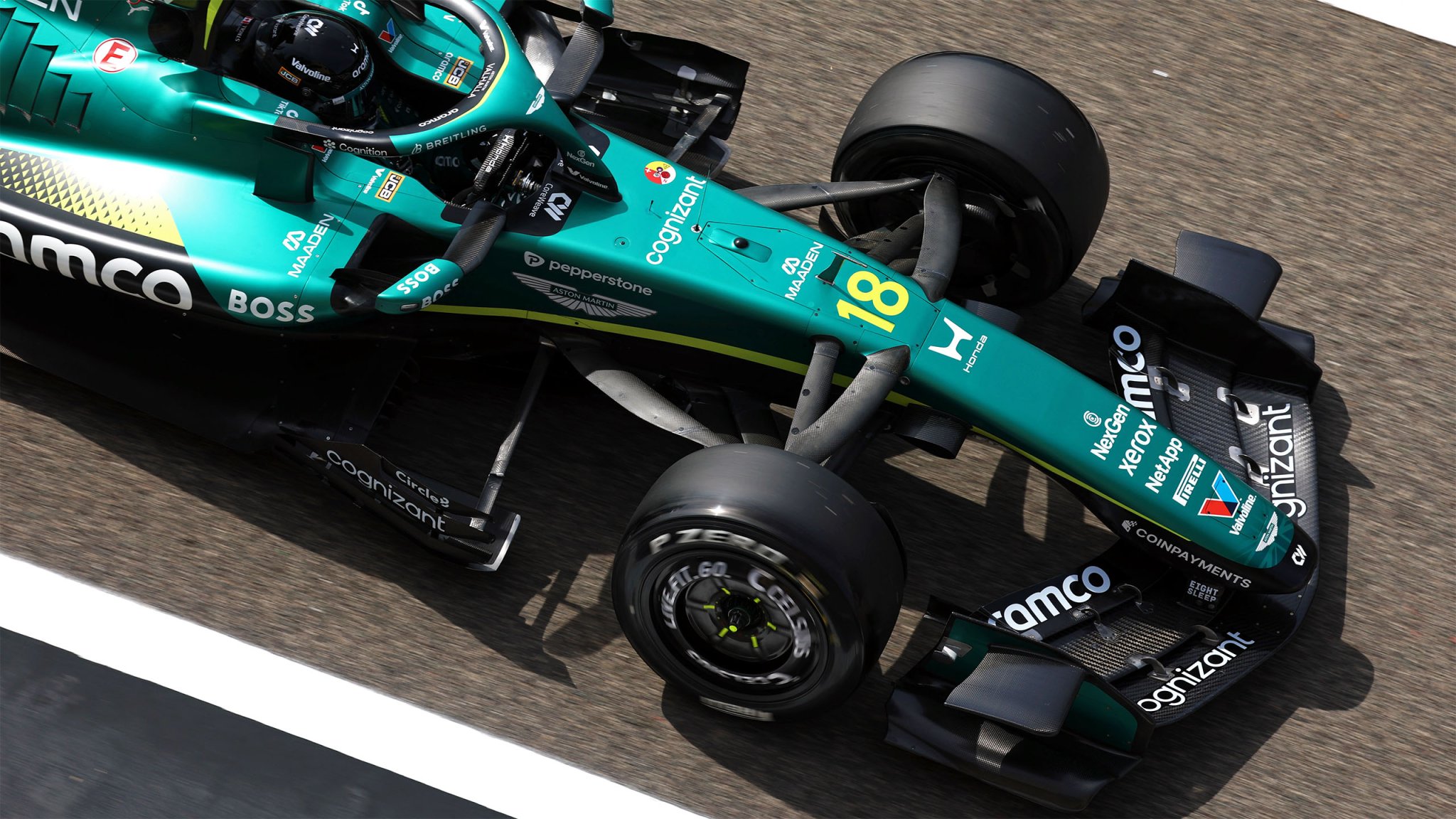
Honda’s Formula 1 power unit effort is effectively starting over from scratch with new partner Aston Martin. That’s naturally going to lead to some teething problems as it gets up to speed with the competition, in addition to the new 2026 engine regulations presenting uncharted territory for everyone. Among those problems are nagging vibrations that, according to Honda Racing’s powertrain boss, are shaking the hybrid system’s batteries to death.
Ikuo Takeishi, who runs HRC’s power unit operation, told the media that Aston had to call off a day of testing in Bahrain earlier in the month because of “abnormal vibrations” that damaged the battery system.
“We stopped the car because we felt it shouldn’t continue running in that state,” Takeishi said to Motorsport.com. “It wasn’t that an accident was imminent or anything like that, but we stopped the car because it was dangerous.”
Not imminent—just dangerous. Worse yet, Takeishi said the crew hasn’t yet been able to pinpoint precisely where the vibrations are coming from. It could be the powertrain, or the chassis, or a combination of both. What he is sure of, though, is that the battery is being rocked around in its cage, and the team’s been faced with a hefty fact-finding mission.
“You could think of it as the battery pack being shaken within the vehicle body. Essentially, the area where the battery pack is attached is vibrating,” Takeishi summed up, adding that, “If the cause were pinpointed to something like the transmission or the engine, it would be much easier to tackle. However, I suspect multiple components are interacting to generate the vibration. Given that, it’s unclear whether fixing one part alone will resolve it, so we can’t rule out the possibility of this dragging on.”
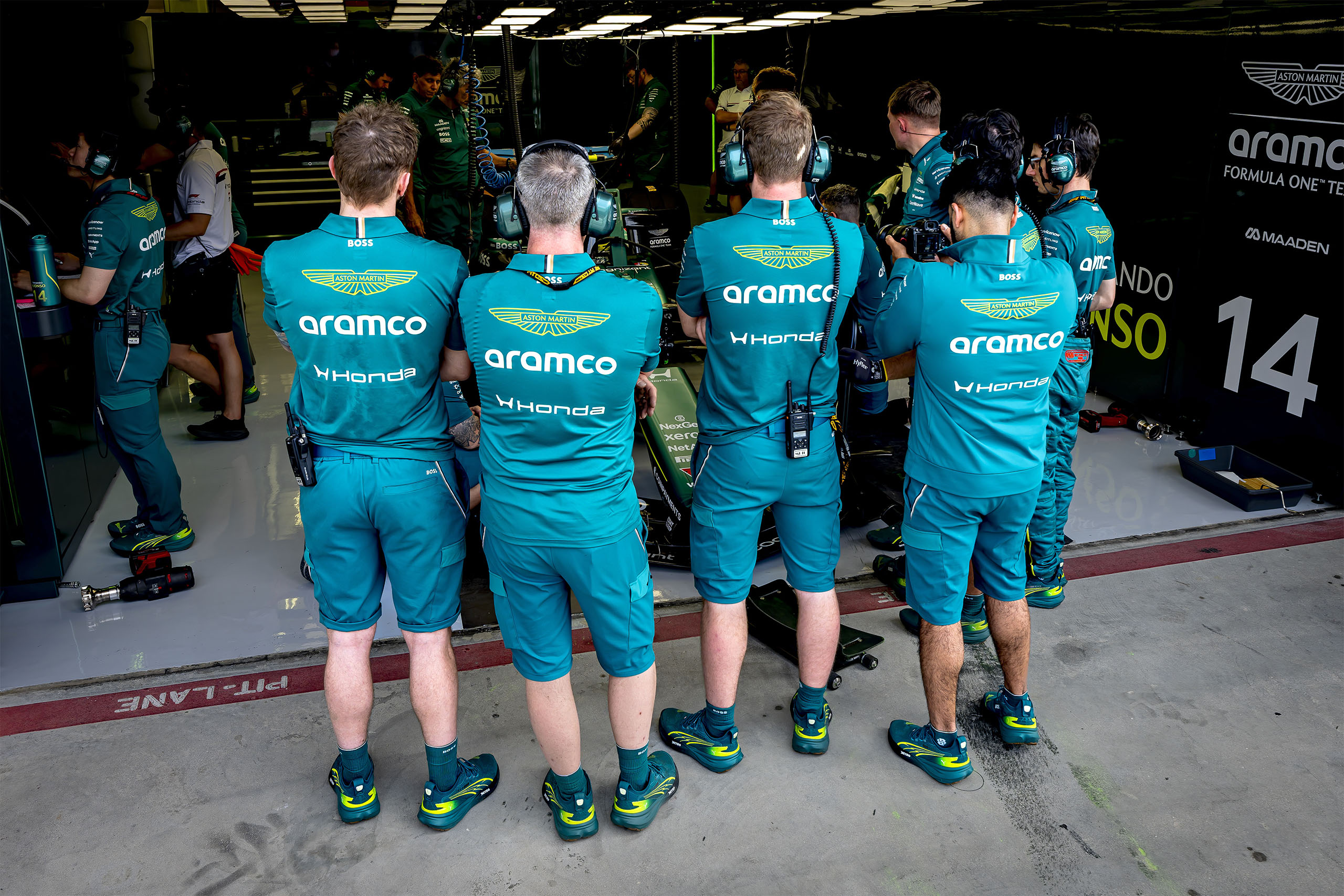
The trouble is, the damage has already been done to Aston and Honda’s pre-season testing, as the team was able to amass only about 1,300 miles across all testing sessions—practically a tenth of Mercedes’ total, and well below everybody else’s after ripping through all its spare batteries on the last day in Bahrain. Now it’s a sprint to mitigate the problem as much as possible before the season begins in Australia next weekend. It sounds like Honda’s homecoming race at Suzuka at the end of March, however, poses a more likely timeframe for a solution.
“The recent pre-season tests in Barcelona and Bahrain were, frankly speaking, extremely challenging for us,” HRC president Koji Watanabe said. “We were unable to achieve the performance levels we had anticipated, and a complex set of issues became apparent. However, these tests were also a crucial process in that they allowed us to visualise these challenges.”
Still, Watanabe stressed that Honda is in this for the long haul with Aston Martin, saying that he believes the two sides “are united in our desire to resolve matters as one team.” The early days ahead might be tough—ask anyone who’s stuck around the company since its foray back into F1 a decade ago with McLaren. But if the two parties can push through, they might just discover glory in the end. Honda’s got the recent hardware to prove it, after all.
Got a tip? Reach out to tips@thedrive.com
Loading comments…
Comments couldn’t be loaded. Please refresh the page.