
There’s been a lot of talk about EV battery recycling, and even some big contracts between automakers and recyclers. That’s definitely a good thing, because recycling means less mining of new raw materials for batteries, helping to further lower EVs’ environmental impact. But being a nice idea isn’t enough to ensure that battery recycling takes off. That’s where a new Colorado law comes in.
Signed into law by Governor Jared Polis last week, the Promoting Responsible End-of-Life Management of Electric Vehicle Batteries Act is the first of its kind in the U.S. As explained in a blog post from the Union of Concerned Scientists (UCS), it not only requires that batteries get recycled if other uses can’t be found, but makes automakers responsible for that. It also sets out recovery rates for critical battery materials and reporting requirements to show that recycling is actually getting done.
The law first and foremost requires automakers to reuse or recycle battery packs in their possession as well as those from third parties. Crucially, this means that when an EV heads to the junkyard, the automaker will have to collect its battery pack free of charge and arrange for recycling or a second-life use such as stationary power. End users will be able to keep batteries if they want, but this ensures unwanted batteries aren’t simply thrown away.
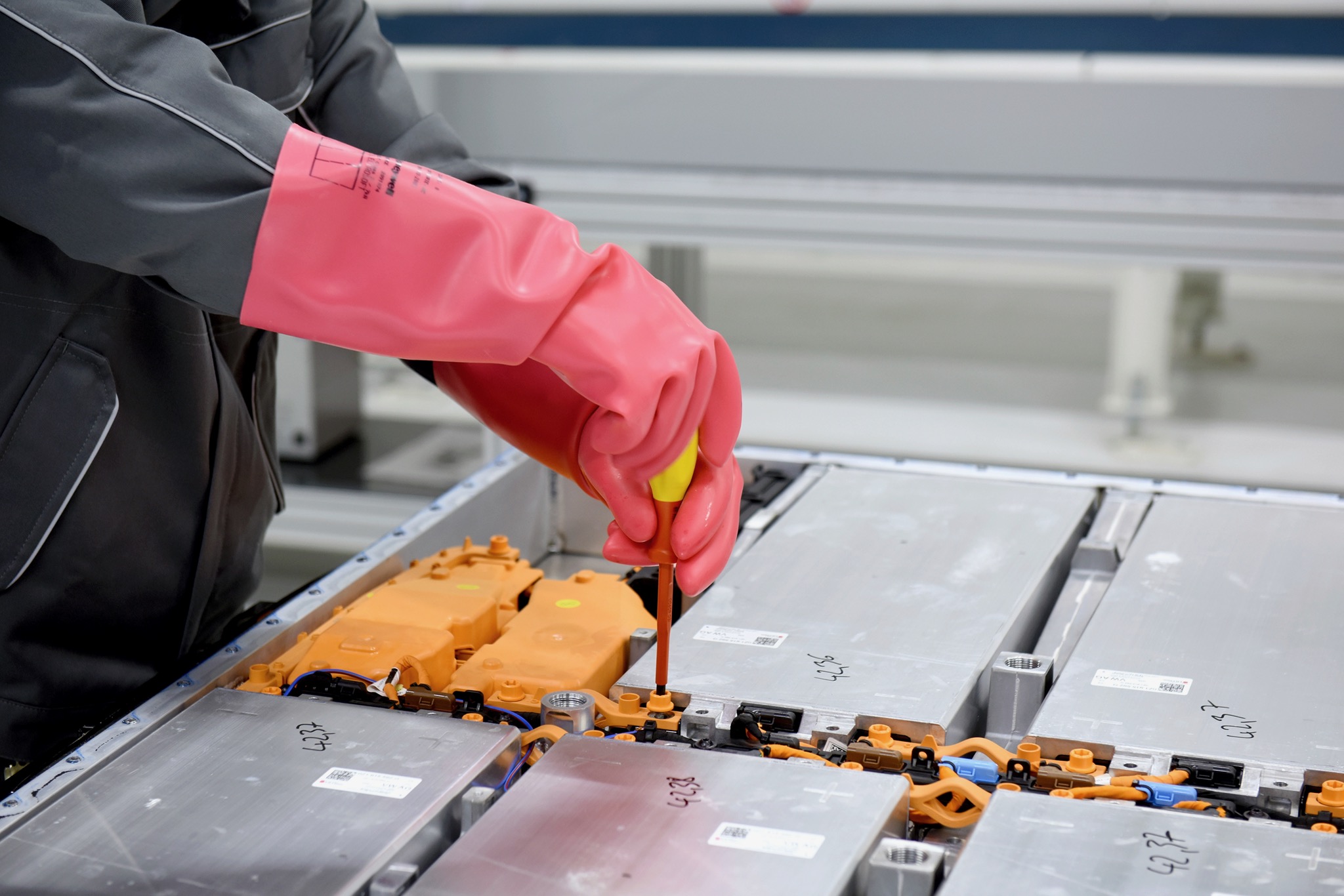
For recycled batteries, 90% of nickel and cobalt, as well as 50% of lithium, must be recovered (the latter increases to 80% in 2031) in intermediate form, the so-called “black mass” stage before materials are fully separated. This effectively rules out smelting, which produces higher levels of emissions for lower levels of material recovery, according to the UCS.
Automakers must also report to the state on the number of batteries recovered, rates of materials harvested from recycling, and other metrics. New batteries will also be labeled with essential information such as chemistry, capacity, hazardous substances, and recall details to aid recycling. And battery health information will be made available to third parties for tracking so that users can better decide whether to repurpose a battery or have it recycled.
Getting hold of more batteries is vital to making recycling viable. In 2021, research firm Wood Mackenzie predicted that there wouldn’t be enough used batteries to support large-scale recycling until 2030, and slowing EV sales resulting from Trump Administration policies could push that back even further. Over the past few years, several automakers—including Audi, BMW, Ford, Toyota, and Volkswagen—signed recycling deals with Redwood Materials, the recycling company founded by ex-Tesla CTO JB Straubel. If the supply of recyclable batteries is too small, the amount of recovered material won’t make a dent in the demand for raw material for new battery production.
The Colorado law ensures that as many batteries as possible will be available. While it’s not exactly the biggest new-car market, Colorado is fairly EV-friendly, so there will be a meaningful number of battery packs available as more EVs hit retirement age. The reporting requirements should also help answer the question of whether to recycle or reuse by arming people with the information to determine which is better, rather than having advocates or one or the other compete for the same supply of batteries.
California is usually the state leading the way in EV policy, but this time, Colorado is setting the example. Similar legislation—Senate Bill 615—was passed by the state legislature in 2024 but vetoed by Governor Gavin Newsom. Battery-recycling bills also failed in Florida, Massachusetts, Nevada, New Mexico, and Washington State. And for the foreseeable future, it’s unlikely that anything will happen at the federal level. For now, Colorado is providing a template for the rest of the nation to follow.
Loading comments…
Comments couldn’t be loaded. Please refresh the page.