
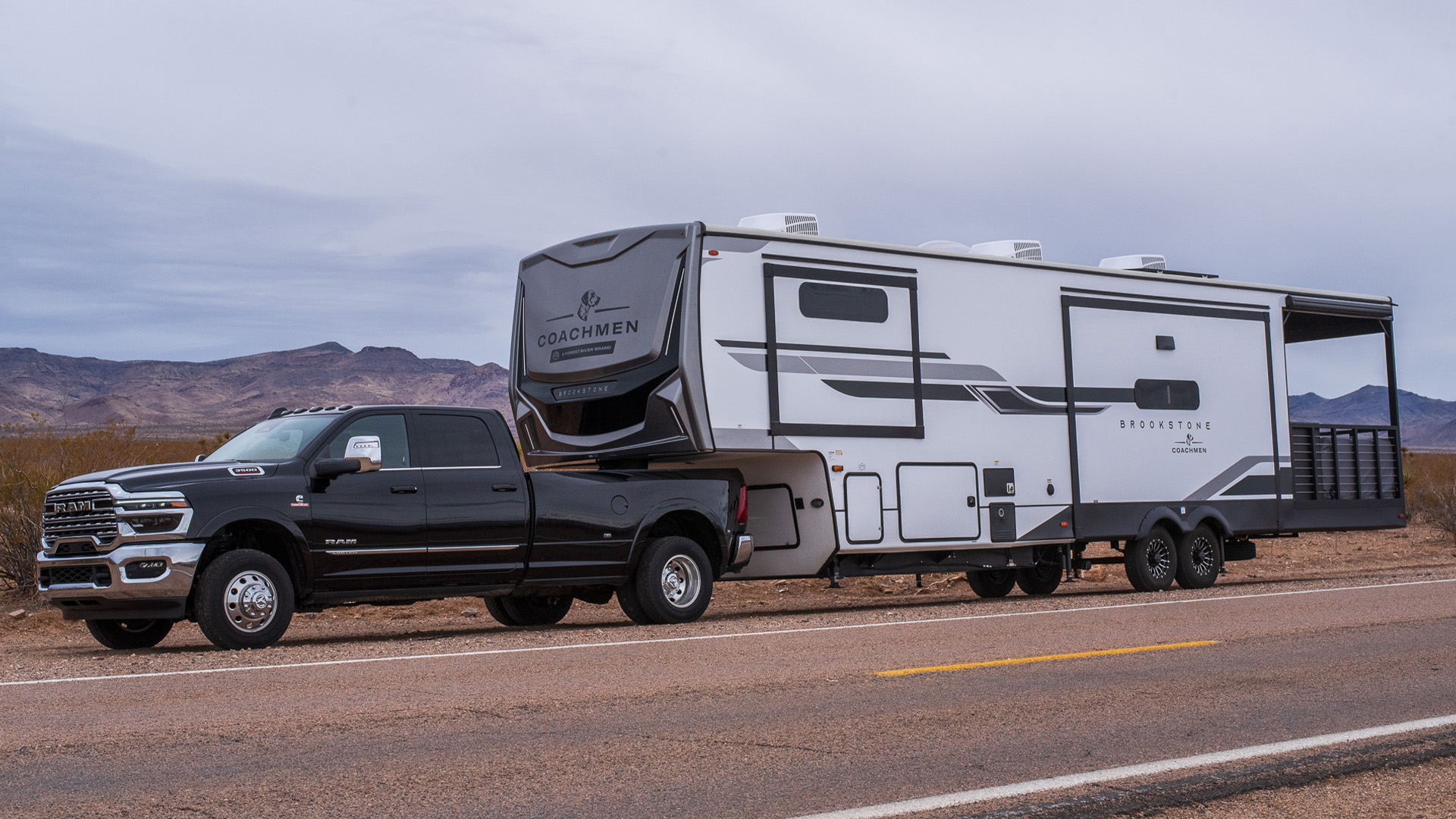
If someone gave me the money, I could walk into a dealership and buy a new Chevrolet Silverado 3500 that maxes out at 36,000 pounds of towing capacity. Or if I wanted more than that, the most capable Ram 3500 can pull 36,610 pounds behind it. And if I really needed as much as I could get, I could buy a Ford Super Duty that’ll drag 40,000 pounds when properly equipped.
The thing is, dually pickup trucks didn’t always tow this much. Why do they need to now?
This is a question that’s often overlooked in favor of more ogling, more bench racing among people with the cash to buy one but no real reason to. It’s a valid curiosity, though. At the turn of the century, heavy-duty pickups from Detroit’s Big Three couldn’t tow half of what they do now, capping out just above 14,000 pounds. Technology has obviously come a long way since then, but is that alone the reason for the arms race we see in today’s truck space? Or is it the target customer that’s changed?
After talking with Chevrolet, Ford, and Ram, I learned that the answer is a little bit of both. More on that in a minute.
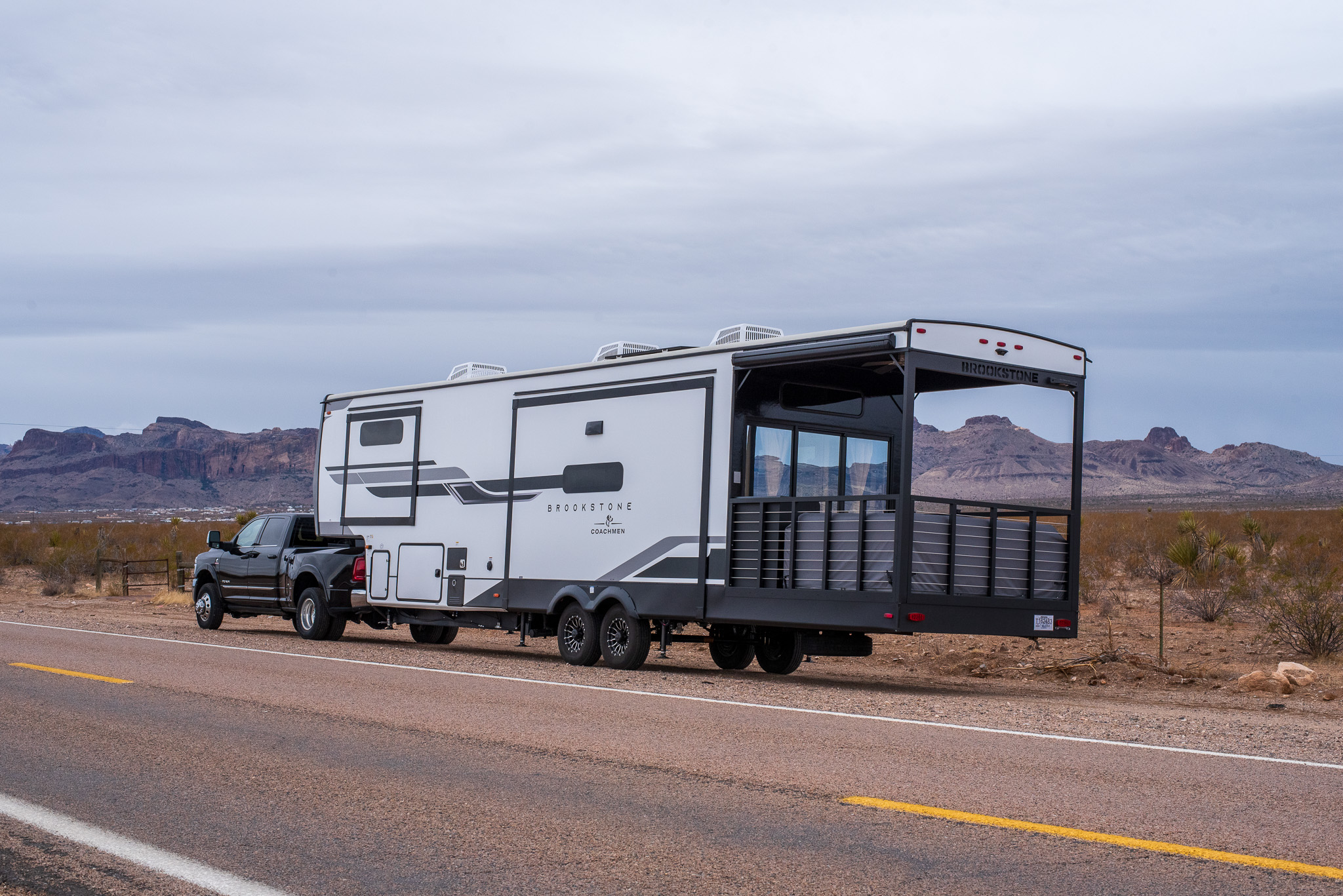
To understand the context of today’s truck market in comparison to 25 years ago, you have to zoom out. The toys they’re built to haul are a lot larger and heavier than they used to be. Look no further than fifth-wheel camper trailers, which used to be significantly shorter and lighter. A 30-foot Coachmen would’ve been a pretty sweet setup at the time, weighing a skosh under 9,000 pounds dry. Nowadays, 40-foot campers with king-size beds and two AC units on the roof are common, with some longer models even touting triple axles to support nearly 20,000 pounds. That’s before you load your stuff in them.
This is where Ram spokesperson Nick Cappa chimed in:
“If you need to carry a gallon of gasoline across the garage, you will use a container larger than one gallon. The same goes for hauling. You buy a Ram truck that has a buffer in case you decide to pick up a rust-free SRT 10 you found on the side of the road on your way back from Arizona. Or maybe you packed a fifth-wheel trailer to the gills and forgot to drain the black tank after a two-week camping adventure, and you’re approaching the Appalachians. Big travel trailers and boats may not weigh very much, but you certainly want the power, weight, and stability of a Ram 3500 dually when facing head- or crosswinds with that much sail in your rearview.”
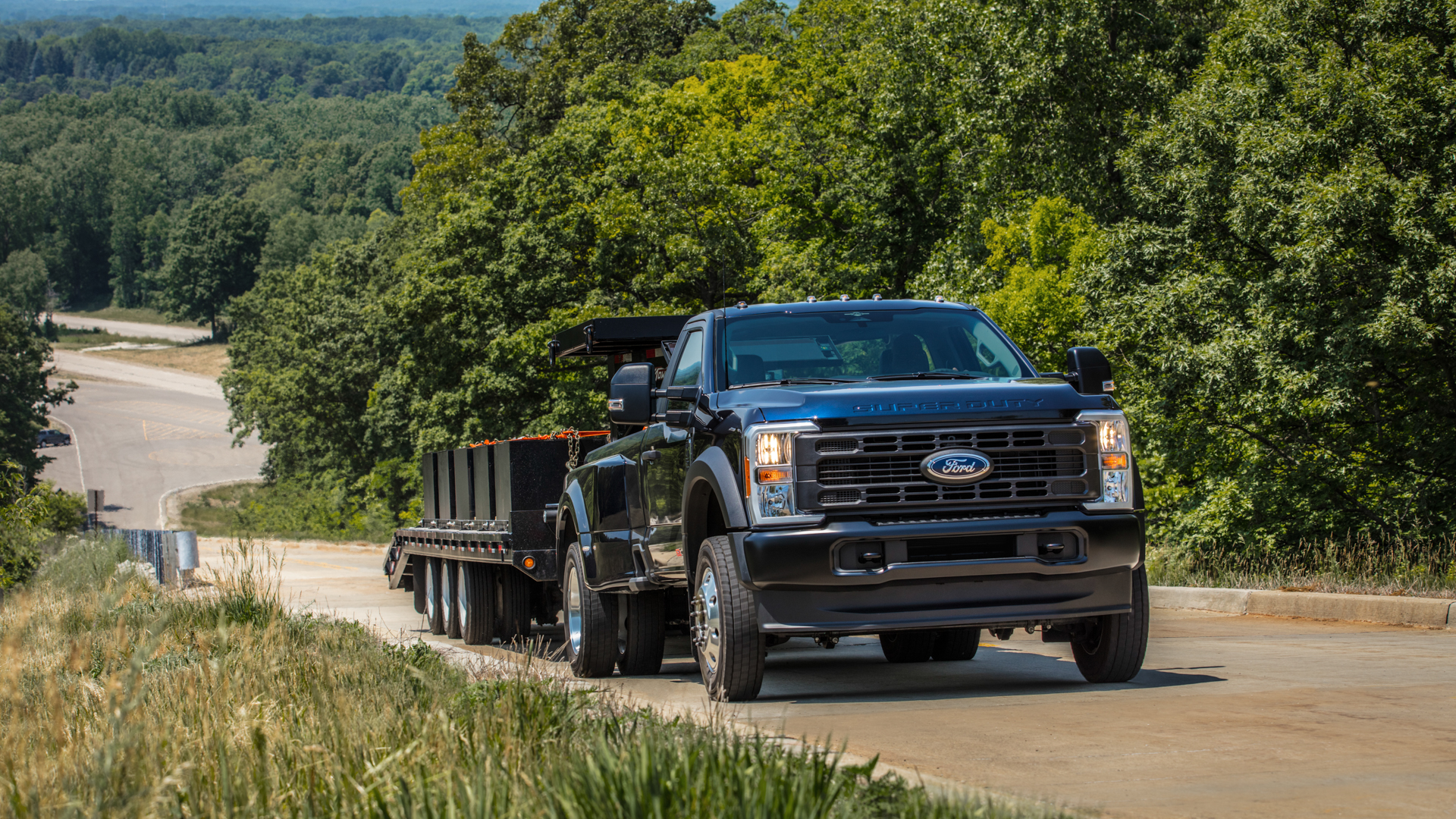
Then there’s the fact that people use their pickups differently than they used to. Whereas it’s always been typical for dually drivers to tow a skid steer or some similar piece of equipment with their rigs, now hot-shot truckers are loading up three and four cars on long ol’ goosenecks. The trailers alone weigh more than 8,000 pounds, and then you have to figure 3,500-5,000 pounds per vehicle on top of that. All those dually pickups you see hauling multiple cars are often loaded to 25,000 pounds or more, and they rack up the miles unlike almost anyone else. It’s not uncommon to see a hot-shot Super Duty or similar with 600,000+ miles on the odometer despite being less than five years old.
“Customers have asked for more capability out of their heavy-duty trucks,” explained Brian Rathsburg, Ford Super Duty product and brand marketing manager. “The more capable the truck, the more it enables trailer manufacturers to develop bigger fifth-wheel and gooseneck campers, flatbeds, car haulers, horse trailers etc., allowing customers to do more without the need to stair-step upward to vehicle classes that may exceed their needs.”
He brings up a good point. You could argue that folks are better off buying a Class 8 truck that will pull the same weight like it’s nothing, and you might be right. But a semi isn’t a pickup. It doesn’t have the same luxury, and more importantly, it doesn’t offer the same maneuverability. Crowded car lots are not always easy to navigate with a trailer on, and that’s doubly true if you’re in a gigantic commercial vehicle. Meanwhile, a pickup can pull it off a lot easier with less stress. And you’ll never make it past the height stopper at a McDonald’s drive-thru in a Peterbilt, but unhitch the wagon from your Ram or Chevrolet, and you’ll be just another happy camper grabbing a McDouble.
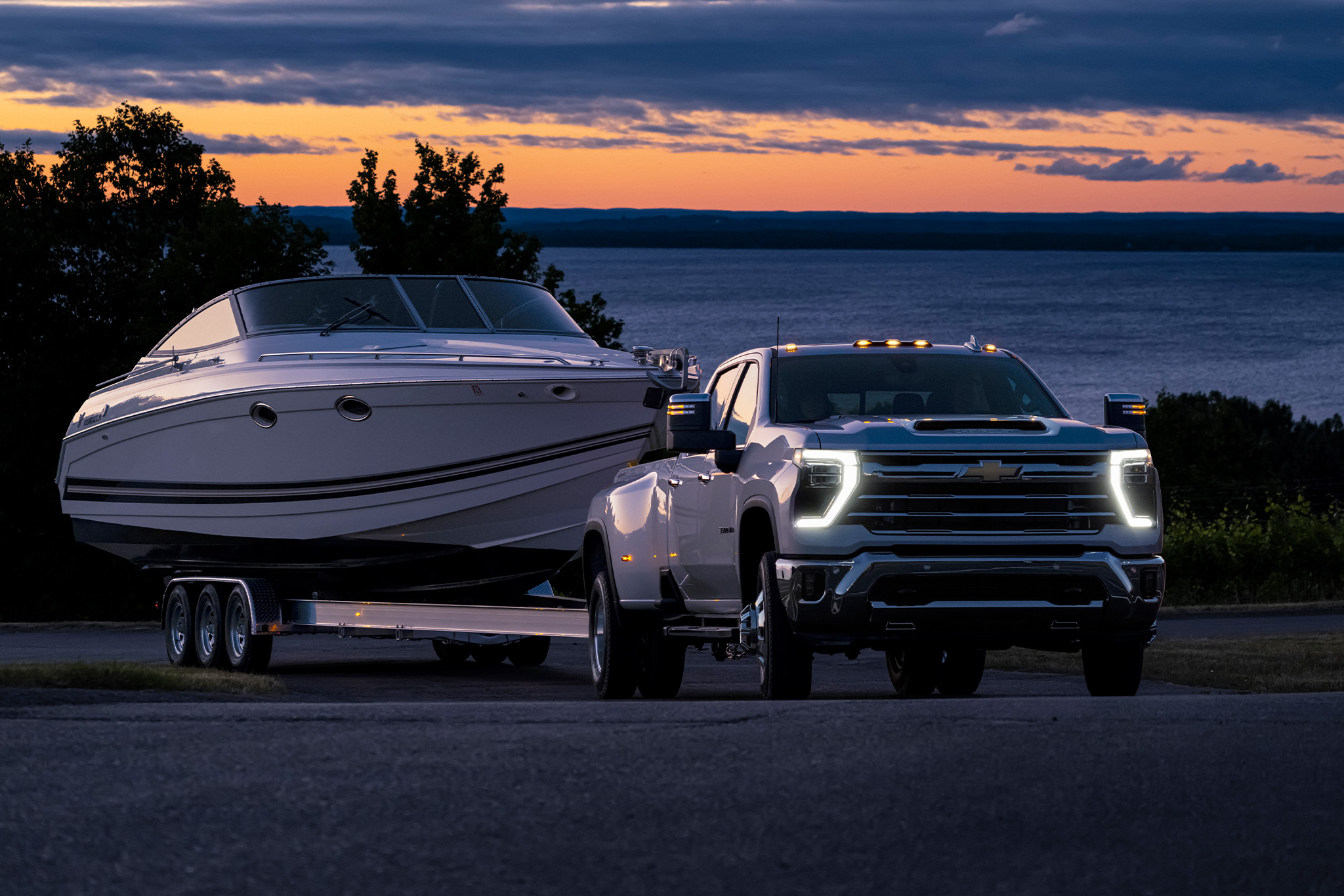
In all, it’s arguably best summed up with one word: confidence. Truck buyers have proven they’re willing to spend exorbitant amounts of money—up to and even above $100,000—on a pickup that has everything they want. And while it’s easy to chide them for wanting massaging seats or TV-like touchscreens, the truth is that customers for these types of trucks want the capability to tow nearly anything under the sun without a worry.
“Current HD Chevy trucks can tow and haul more than ever,” Chevrolet spokesperson Shad Balch wrote to me. “This not only meets the needs of truck customers who increasingly tow larger and heavier trailers, but more importantly, higher ratings give higher confidence to drivers while towing–regardless of how much they’re pulling. An HD Silverado with the max tow package makes hauling just about anything a breeze.”
Just because someone may never touch their truck’s max tow capacity doesn’t mean that massive, unfathomable number won’t affect how they experience it. And in reality, some of the most popular pickups—crew cab 4x4s with lots of options—are rated to pull several thousand pounds less than the advertised max. It’s better to learn that before you buy, instead of learning the hard way like some others do.
“The most important message: Always buy a truck with room to grow your toy and equipment fiefdom,” Cappa from Ram concluded.
I think that says it all, don’t you?
Got a tip or question for the author? Contact them directly: caleb@thedrive.com
Loading comments…
Comments couldn’t be loaded. Please refresh the page.