

Pickup trucks are inescapable in America, and not just on our roads. Country music, the most distinctly American genre of them all, is as well-worn by mud tires as the parking lot at your local Walmart. The music has become so saturated with mentions of four-wheel drives and tailgates that you can’t listen to a country station or playlist without hearing them. That these artists are obsessed with Bowties and Blue Ovals is an easy observation to make, but harder yet is identifying how this infatuation started.
And it is an infatuation. Just look at modern hitmaker Hardy’s discography, which includes chart-toppers with titles like “Truck,” “Truck Bed,” and “4×4.” He also has a number one collab with country star Lainey Wilson called “Wait in the Truck.” And for her part, Wilson’s breakthrough moment came by way of her 2022 single, “Heart Like a Truck.”
Maybe now you can see what I’m getting at.
There were many before them, like Lee Brice with “I Drive Your Truck,” Tim McGraw and his rabble-rousing “Truck Yeah,” and one of my favorites, “That Ain’t My Truck” by Rhett Akins. It’s not a new trend of the “Bro Country” era, even if today’s artists are somewhat caricatured because of it.
You could argue that the songs themselves are overly simple, and to be sure, some do. But to dismiss them immediately would mean discrediting not only the people who make and listen to country music, but why they do. The long-held tradition among rural folks (like me) to sing about their truck and what it means to them is something worth investigating.
I had to know the history of country music and pickup trucks, two cultural and commercial juggernauts that have forged a relationship as profitable as it is personal for the folks who love them. To do so, I reached out to three experts who know the songs like the back of their calloused hand: Bill C. Malone, the world’s leading country music historian and author of the seminal work Country Music USA; Jocelyn Neal, department chair of music at the University of North Carolina and director of UNC’s Center for the Study of the American South; and Aaron A. Fox, associate professor of music at Columbia University.
What I learned is nothing short of fascinating.
(If you’d like to listen along with this story, check out the Spotify playlist embedded below with every song that’s referenced here!)
Pickup Trucks: A Valid Form of ID
We start with the not-so-simple concept of music and identity. In a lot of ways, country music is America’s genre. But what that means precisely is harder to peg. Which America does country music belong to? Is there more than one? This isn’t a new conundrum, and that’s what colors the genre’s history.
We’ll get into this more as we go along, but for now, I want to give voice to Dr. Jocelyn Neal. She’s a musician herself who teaches courses in music theory, country music and culture, songwriting, and more at UNC. As she explained to me, mentions of pickup trucks in pop country seriously increased during a movement 30-some years ago with the widespread “southernization” of American culture.
“This early ’90s shift in country songwriting and lyrics is when driving a pickup truck becomes a very shorthand way for a songwriter to evoke that whole sense of who the protagonist of the song is—a celebration of southern masculinity and independence,” Neal said.
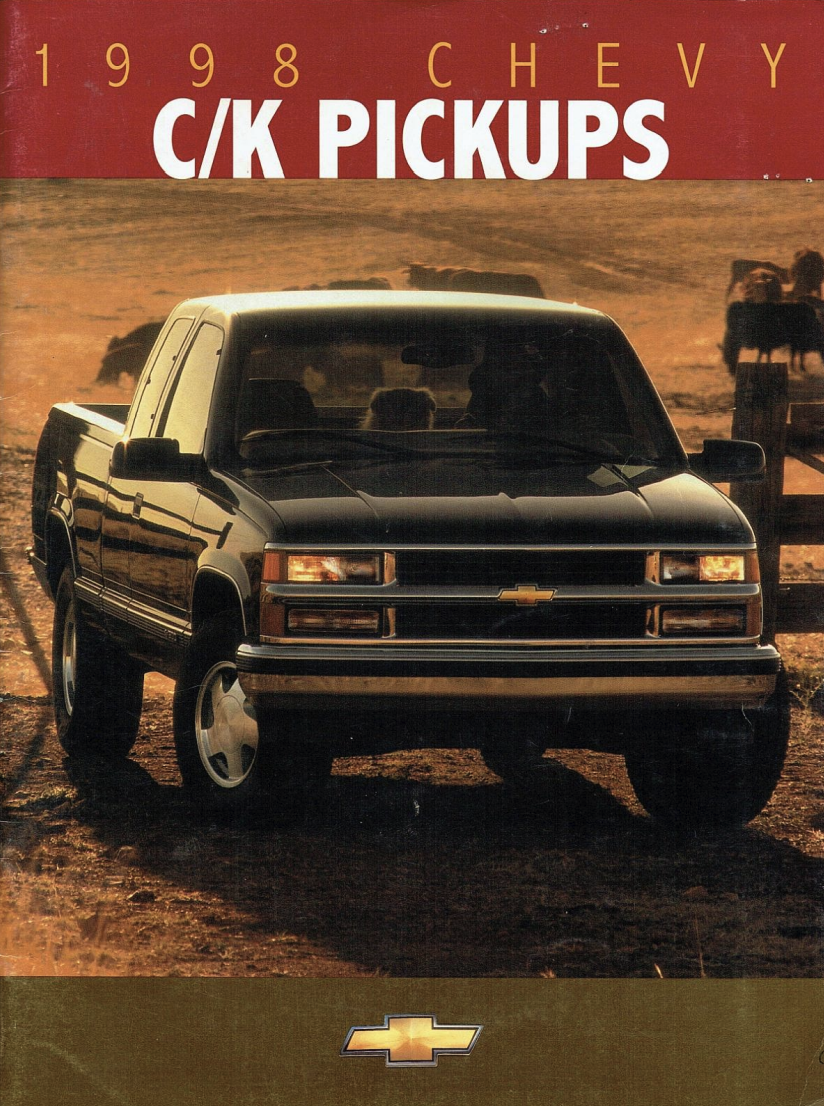
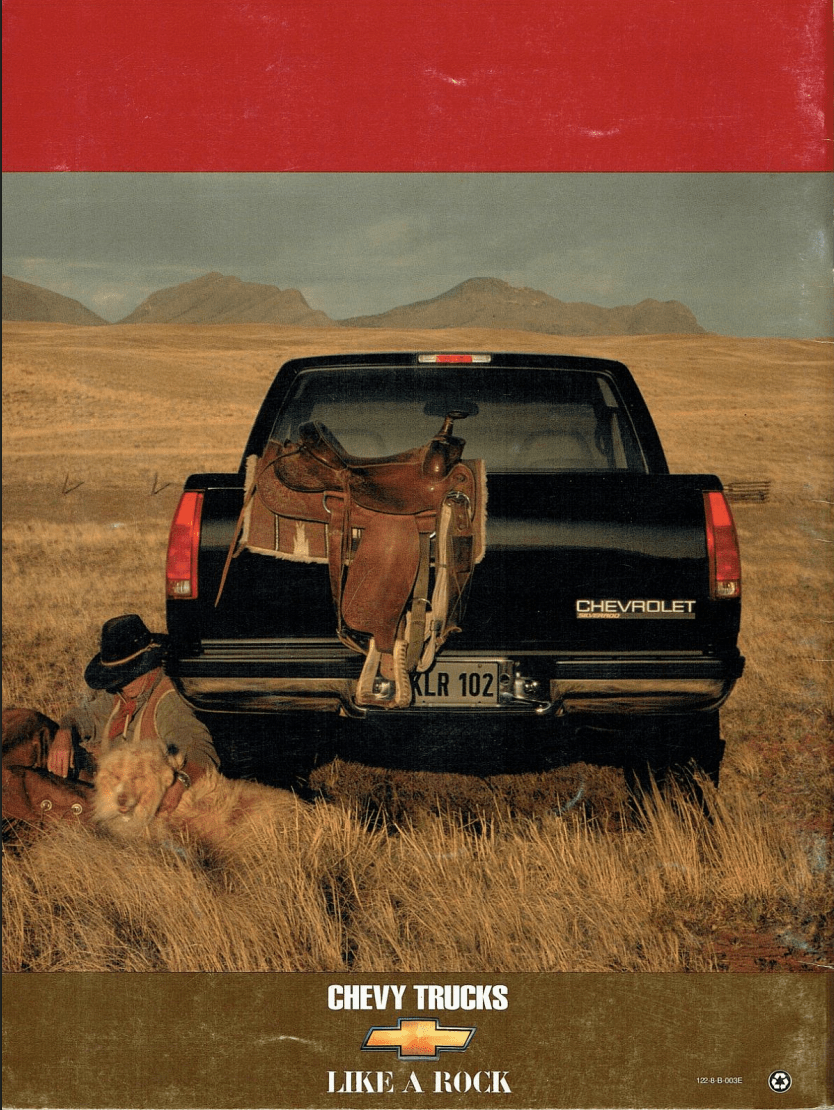
“Within this larger sense of the genre, the pickup truck represents a particular identity,” she continued. “And that identity is a deep respect for working-class life that is tied to a rural past, a kind of agrarian past. And that comes from the practical associations of trucks with being a tool for farm work or for ranch work. It becomes a representation of that in the song lyrics. And so when someone sings a lyric of ‘I drive a truck,’ or ‘I drive an old truck,’ or ‘I drive a pickup truck,’ what that sentence does in the song lyric is not just give us a visual image of this person driving a vehicle, but it represents a much deeper presentation of identity that is connected or condensed down into just this idea of a truck.”
This becomes incredibly clear in two songs from that era: “Ain’t Goin’ Down (’til the Sun Comes Up)” by Garth Brooks (1993) and Joe Diffie’s “Pickup Man” (1994). Neal drew my attention to the Garth Brooks song for a moment:
“I think there’s a subtlety in the lyrics, where the chorus has the phrase, ‘Going around the world in a pickup truck.’ And that’s a very powerful visual image that anywhere you go, wherever you’re going, your identity is literally encased in a pickup truck.”
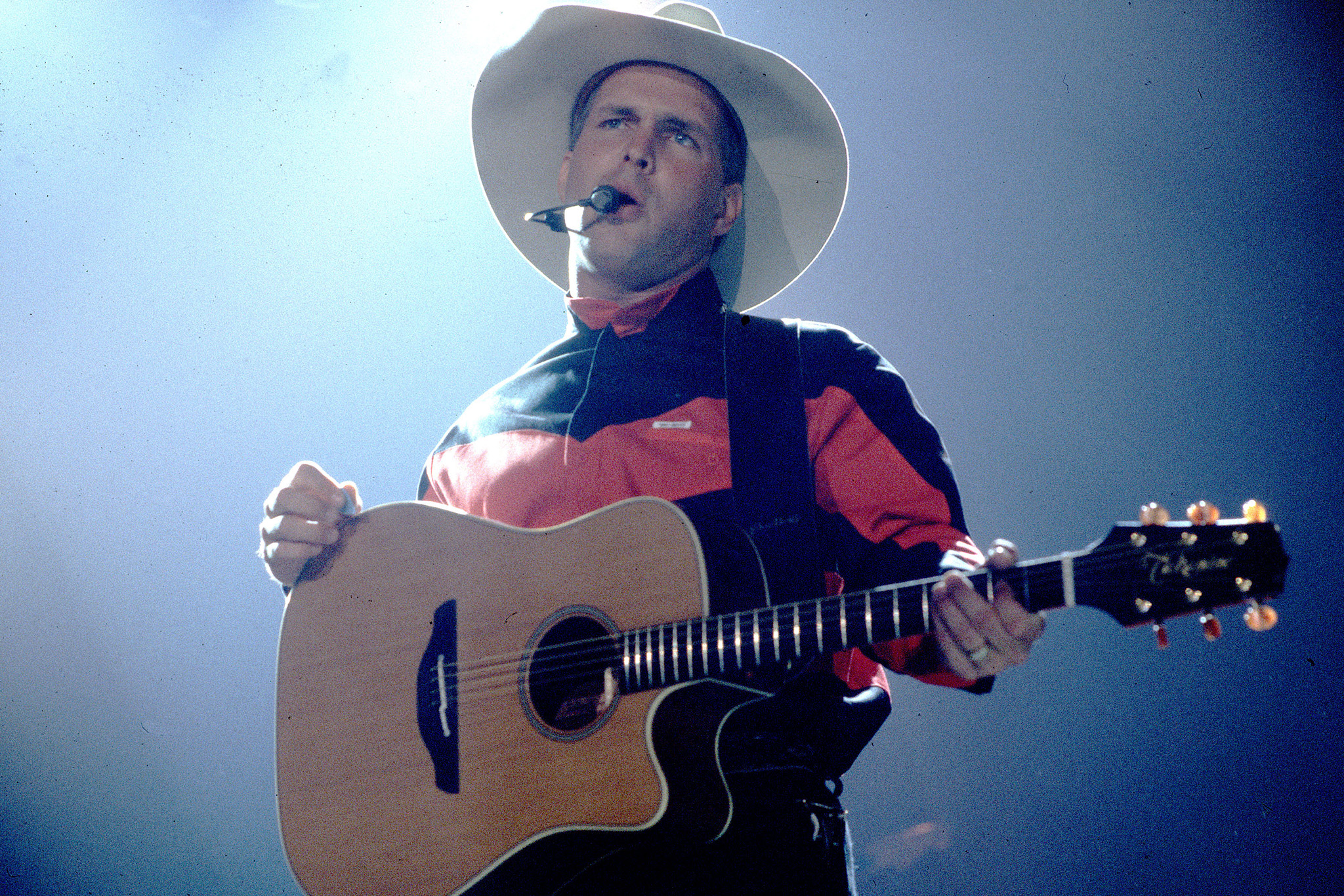
The effectiveness of that image is obvious. It helped the song become a number one country hit, catapulting Brooks’ album “In Pieces” to certified Diamond status with more than 10 million copies sold. Such commercial success can surely be attributed to the way Brooks connected with his audience through the use of familiar imagery. In that sense, people felt like they could identify with Brooks.
That collective identity continued forming throughout the 1990s. It was a resurgence, of sorts, as explained to me by Fox, himself a longtime lover and player of country music. The white working class had been dwindling in cultural centrality since the 1970s, largely due to globalization. Then, when tragedy struck on 9/11, it exploded in an impassioned mix of patriotism and nationalism.
“Many blue-collar men’s livelihoods and identity were intertwined around the masculine virtues that country music celebrates—hard work, hard play, and having your work sort of shade into your cultural identity. And thus, the truck that you drive for work is what you drive at home too,” Fox said. “All that stuff was in serious decline politically in the Clinton era and the first George W. Bush era, even. And 9/11 had this very profound impact, I would say, on white working-class consciousness.”
That terrible moment berthed a country music boom as artists like Toby Keith cranked out one patriotic ballad after another. The white working-class image was amplified significantly over the course of the decade, and all the while, those artists never dropped pickup trucks from their songwriting repertoire. Rather, they simply added more Red, White, and Blue, linking those themes inextricably.
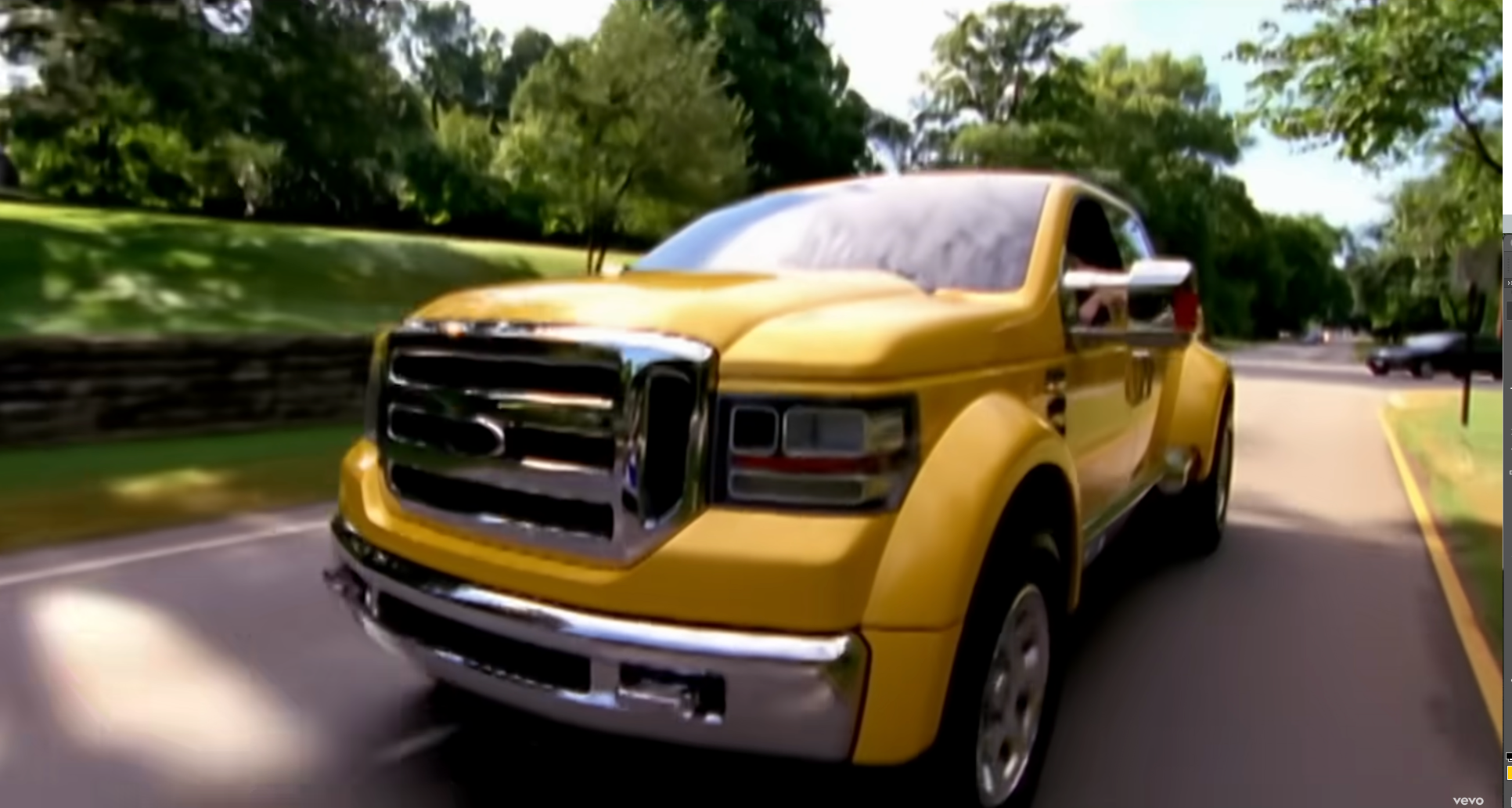
In fact, as Toby Keith belted out songs like “American Soldier” on USO tours in Iraq and Afghanistan, he was simultaneously signed on with Ford to sing in its commercials. (Remember this ditty?) Then there was the 2003 Ford F-350 Tonka truck concept that starred in his video for “Who’s Your Daddy?”

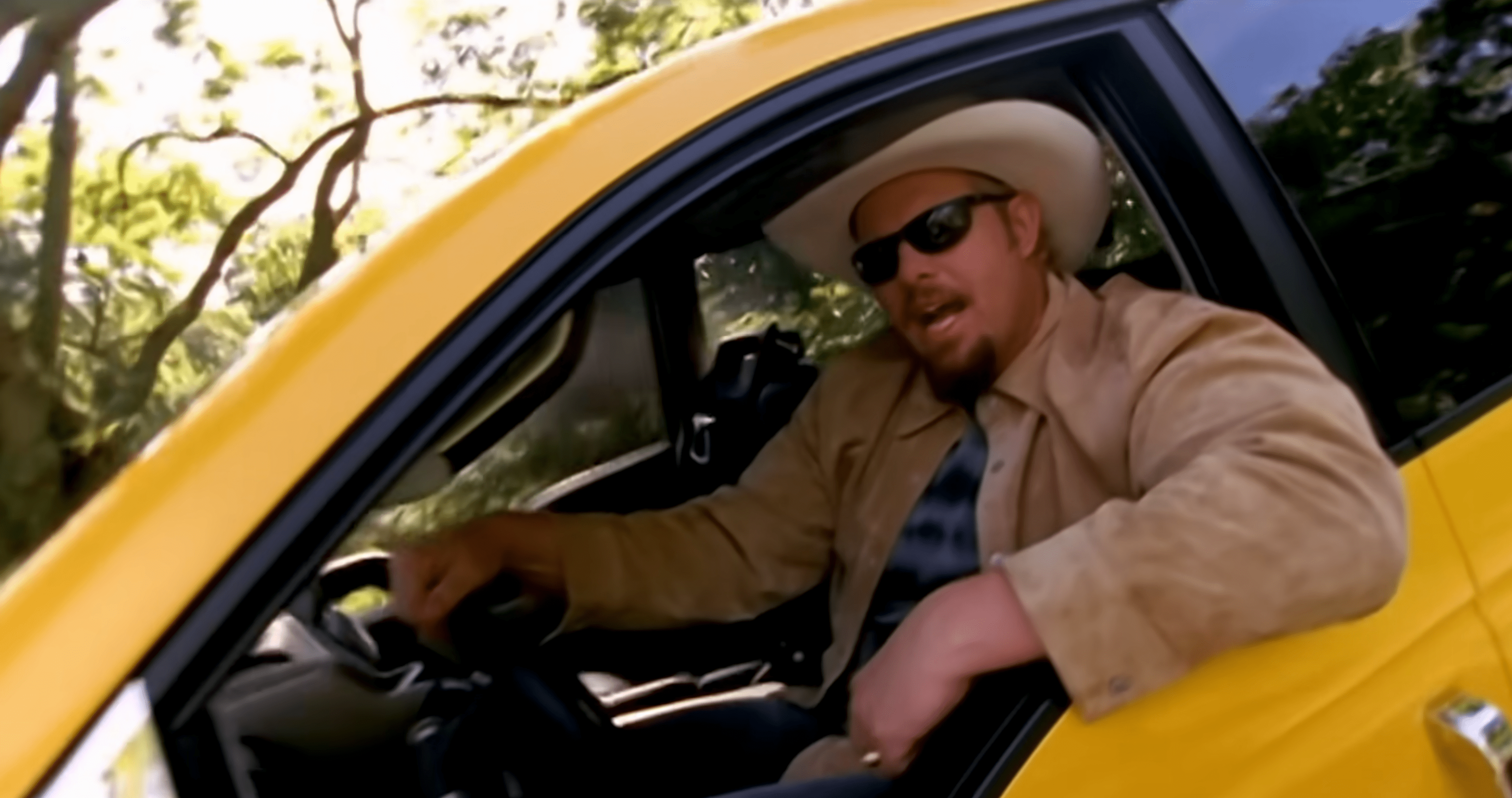
More and more, the white working class attached themselves to country music as it celebrated the themes that resonated with them so strongly.
Of course, the genre has roots outside of that demographic, too. Even the instrument that emits country and western music’s most emblematic sound, the pedal steel guitar, was borrowed. It originated in traditional Hawaiian songs, and Americans were infatuated with the islands in the late 1910s and early 1920s. Before long, country songwriter Elsie McWilliams played the Hawaiian steel guitar on Jimmie Rodgers’ famous 1927 tune “My Rough and Rowdy Ways.” The rest, as it’s often said, is history.
All of this was swirling as country music, then referred to as hillbilly music, began commercializing. The songs hitting radio waves in the 1920s and 1930s were sung by the likes of Fiddlin’ John Carson and the Carter Family, but the influences weren’t nearly as monochromatic. Indeed, from the very beginning, country music has been shaped by all kinds of kinds.
A People on the Move
Rather than country music belonging to one American ethnicity, then, you could argue that it’s the soundtrack of all Americans who have ever been on the move. It’s easy to see how pickup trucks tie into that, though before we can appreciate the connection fully, we need a bit more context. Here’s Fox again:
“I always start off by showing a graph of the U.S. census from 1920 to 1930. In the 1920 census, the U.S. was over 50% rural, as over half the population made their living in some ways subsisting off of natural resources and land and mining and the like. By 1930, that had switched around, and over half the population was now demographically urban and urban adjacent, beginning the long path of conversion to an industrial and then a service economy.
“It’s exactly in that 10-year period—somewhere in the middle—that hillbilly music coalesces into a genre.”
Fox pointed out that country music didn’t always sing about living an ideal, rustic life, but rather the longing for that in the face of modernization.
“The nostalgia had elements of sadness and loss, disappearance of something, the close-knit family, the local community, the closeness to nature, the supposed cultural virtues of rural community life,” Fox continued. “But also something being left behind: Dire poverty, hard work and little opportunity, and little access.”
Before pickups, all these feelings were tied up in other on-the-go images: trains and semi-trucks. On the one hand, locomotives represented the mobilization of a people who had struggled with lack and were (hopefully) on their way to a life without it. On the other hand, semi-trucks represented self-made success in which rural people could blaze their own path to prosperity.
Truly, trains and semi-trucks in country music deserve their own written histories (and, to some degree, they have them). Country musicians and listeners alike were well familiar with the former by the 1960s, which is about the time Dave Dudley and Red Sovine grew wildly popular singing about the latter. “Trucker Country” became its own sub-genre, with tunes like “Six Days on the Road,” “Teddy Bear,” and “Convoy” reaching number one in a hurry.
Neal explained that, for decades, that’s what musicians were talking about when they mentioned the word “truck”:
“Up to the 1970s—so, the ’40s, ’50s, ’60s, and into the ’70s—the country music songs that talk about trucks, most of the time, are talking about long haul truckers, professional truck drivers, and a culture of a person whose vocation is ‘trucker.’
“That’s different than the song lyrics that still are using the word ‘truck,’ but are talking about personal ownership of an individual vehicle—a pickup truck of some sort—which starts to show up in the ’80s more regularly.”
It’s only natural that this imagery developed as personal transportation became more attainable for rural folks. And you could argue that it’s specifically because pickups weren’t widely viewed as aspirational that they thrived in popular country music culture. The nostalgia for simple and agrarian living is what tinges the genre, whether the connection to such a lifestyle was real or perceived for musicians and their audience.
By the ’90s, when Fox was hopping from one Texas honky tonk to another as part of a country band, pickup truck allegiance was as thick as the August air in Austin.
“All the pedal steel guys would put truck emblems from the brand of truck they preferred on their pedal steel guitars,” Fox recounted. “So if you were a GMC truck driver, you had a GMC emblem on the front of your pedal steel.”
They were on the move, alright. And thus, pickups and country music became all the more entwined with people who treasured them both.
The Hillbilly Highway, and Other Time-Tested Tropes
Country music is absolutely loaded with tropes. I don’t say that as any sort of slight, either; it’s simply true that the genre’s musicians love to speak figuratively. And if you ask Bill Malone, who has dedicated the vast majority of his 91 years on earth to studying the art, most of them tie back to two core themes: “home” and “rambling.”
“Home is an important metaphor or image for people who have lost their home or moved away from it—moved away from mama and daddy,” Malone explained. “And the other image, the reverse side of the coin, is rambling—the desire to get away from that existence to hit the road and have new experiences.”
He continued to elaborate on what he calls “the rambling impulse.”
“In the 1920s, a lot of southern people moved to Detroit to work for Henry Ford or for other industries. Then, in the ’30s, you have that massive movement to California spurred by the Dust Bowl and economic dislocation. Then along comes World War II, which pushed a lot of other people.”
Malone’s own family relocated post-war, moving from a farm in East Texas to 20 miles west of Tyler. “It was the war that uprooted us from that existence,” he said. “I guess I should say it was a willing uprootedness for a lot of people. A lot of men, particularly, were glad to have new chances for employment.”
This shared experience provided endless fodder for songwriting. In the 1940s and ’50s, country musicians and their listeners alike trod the wagon trails not unlike their cowboy idols did decades prior, living the journey in their own type of way. It may not have been pioneering in the literal sense, but it certainly was in an economic and sociological sense.

Speaking of cowboys, that’s another key trope that laid the groundwork for contemporary country’s pickup truck obsession. Sure, there’s the obvious connection of cattle farmers and the like driving Chevys, but it’s even deeper than that.
“The cowboy was there from the beginning of country music, and not only in songs but in the way he dressed—or the way he was perceived to dress,” Malone explained. “He’s romantic. He’s the embodiment of the individualist dream, and so they all dressed like him. But beyond that, the cowboy just seems to symbolize the freedom, the independence that people wanted but didn’t necessarily have.”
The trucker was quickly co-opted as a modern cowboy-style trope. He was self-made, self-governed, and self-motivated to stick it to anybody who thought they’d tell him what to do. Six days on the road meant he was going to make it home tonight, even if he needed little white pills to keep his eyes open wide.
This laid the groundwork for country musicians and audiences who would soon begin romanticizing pickup ownership. They found themselves akin to their cultural heroes by daily driving a truck, albeit in a microcosmic way. So what if their rig had a Bowtie on the front instead of a Bulldog? It was still a truck, dangit.

Simply Put, It’s Not So Simple
As you can see, there are decades of context to consider when looking at country music. Beyond the simple passage of time, our nation—which defines the genre, for better and for worse—has gone through a lot during those decades. The music is a reflection of that, and while many are quick to write off the whole genre as simple or uninteresting, they must first consider this question:
Am I an insider or an outsider?
Like with country music as a whole, there’s more to that question than it seems. It’s actually an entire concept within ethnomusicology. Neal brought it to my attention during our convo, and more than anything else we’ve discussed so far, I believe it goes a long way in helping us understand country music’s love for pickups.
“The same phrase can carry very different meanings to people who are working within a shared cultural understanding and space versus people outside of it,” Neal explained. If someone doesn’t consider themselves a country fan, or doesn’t find affinity or self-reflection in the music, then they most certainly won’t identify with the songs or their subject matter.
Neal likened it to a Jeff Foxworthy joke, in which the Blue Collar comedy star makes his audience the punchline. Jokes like, “If you own a home that is mobile and 14 cars that aren’t, you might be a redneck.” To an outsider who doesn’t identify with the humor, they might find that insulting to rednecks. But if you’re an insider? Well, that’s funny enough to join literally millions of your fellow rednecks in buying Foxworthy’s book full of one-liners.
“A lot of the songs that you may be exploring in your project right now sit in that different space where, for someone who doesn’t connect to the music or the cultural context around it, it could be seen as many of these words in the negative: simple, pandering, dismissive, cliche.
“And to people who find affinity with this music, there are many more nuanced interpretations of those same lyrics, those same stories, those same sounds that work differently for an insider.”
It’s not like country artists are ignorant of this. They’ve long joked about the perceived simplicity of the songs they sing. Perhaps the most famous example of this is David Alan Coe’s 1975 hit “You Never Even Called Me By My Name,” written by Steve Goodman. In it, Coe recounts an exchange he had with Goodman, who believed he’d written the perfect country and western song. Coe insisted that he hadn’t, because it didn’t make any mention of “mama, or trains, or trucks, or prison, or gettin’ drunk.” To that, Goodman replied with a final verse that satisfied all those demands in short order. It goes like this…
“Well, I was drunk the day my mom got out of prison
And I went to pick her up in the rain
But before I could get to the station in my pickup truck
She got run over by a damned old train.”
This, paired with Coe’s goofball imitations of Waylon Jennings, Charlie Pride, and Merle Haggard in the song’s second verse, succinctly summarizes the way country music works. It’s almost like a tip of the cowboy hat. Through means of make-fun imagery and familiar themes, the songs say, “If you know, you know.”
As best as I can tell, that’s how country music became so infatuated with pickup trucks. And no matter how you feel about the genre’s contemporary radio hits, there’s simply more to it than meets the eye. Or is it ear?
Want to talk more about trucks and country music? Email the author: caleb@thedrive.com
Loading comments…
Comments couldn’t be loaded. Please refresh the page.