
As some lawmakers have proposed measures to completely lock Chinese automakers out of the U.S. market, and automotive industry lobbyists have supported those efforts, Ford executive chairman Bill Ford is singing a different tune: It’s time for U.S. automakers to rise to the challenge.
“We have to go toe-to-toe with China,” Ford said at an Axios event in Washington, D.C. on Tuesday, per the Wall Street Journal. “We can’t expect to keep them out forever, and we have to be able to beat them at their own game.”
It’s an understandable stance, though not one that necessarily appears to be popular within Ford. CEO Jim Farley told Fox News back in April that “we should not let them into our country,” referring to Chinese EVs, and expressed concern over the subsidies China’s auto sector receives from its own government, which he argued makes competing with them “not a fair fight.”
Ford is also a member of the Alliance for Automotive Innovation (AAI), a lobbyist group that specifically endorses the Connected Vehicle Security Act proposed by Senators Bernie Moreno of Ohio and Elissa Slotkin of Michigan that seeks to ban China-built cars and their technologies from the U.S. market.
“We need to make sure we’re all playing by the same rules, but Chinese automakers are flooding markets around the world with cut-rate vehicles,” John Bozzella, president and CEO of AAI, said in a statement weeks after Farley’s Fox interview. “Sens. Moreno and Slotkin don’t want that to happen here. They’re right. The legislation they introduced today sends a clear message: The U.S. will not throw open the doors to Chinese automakers to manufacture or sell here.”
The EVs in question have already been welcomed into Mexico and, more recently, Canada, under a new rule that allows for a limited quota of imports. And there are already cars sold in America with Chinese ties. Volvo was recently given an authorization by the Commerce Department to continue doing business in the States despite being owned by Chinese conglomerate Geely; its sister brand Polestar was strangely not so lucky. And specific models from some established brands, like the Lincoln Nautilus, continue to be sold in the U.S. while being manufactured in China.
Amid all the upheaval and seemingly inconsistent interpretation of rules, Bill Ford appears to be asking for a strategy beyond exclusion that also might withstand a regime change or two. “Our lead times are longer than political lead times. I think an industrial policy that is a bipartisan one—which, as I say today, even saying that might sound difficult—we really need that,” Ford said.
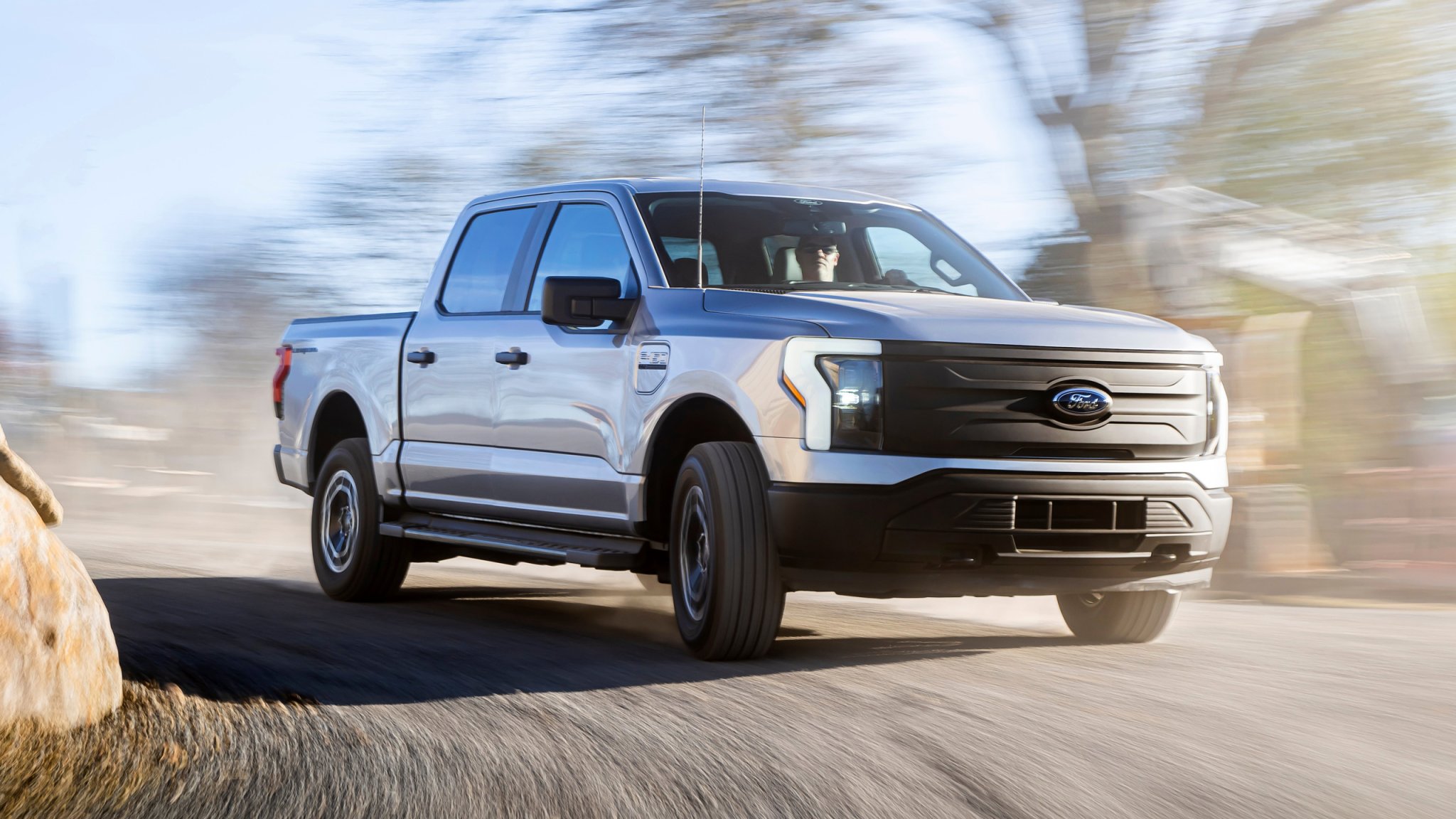
To Ford’s credit, the company is attempting to preempt the threat of Chinese competition with product, in the form of a $30,000 electric pickup. Answering the moment with a truck is very much like Ford, but it’s not alone; startup Slate is attempting to do the same with an even smaller, cheaper vehicle. If Chinese automakers manage to break in somehow, despite the legislation brewing in Congress to thwart them, it’ll be interesting to see how they compare. Though, the way Bill Ford talks about it, that’s less a question of “if,” but “when.”
Got a tip? Reach out to tips@thedrive.com
Loading comments…
Comments couldn’t be loaded. Please refresh the page.