
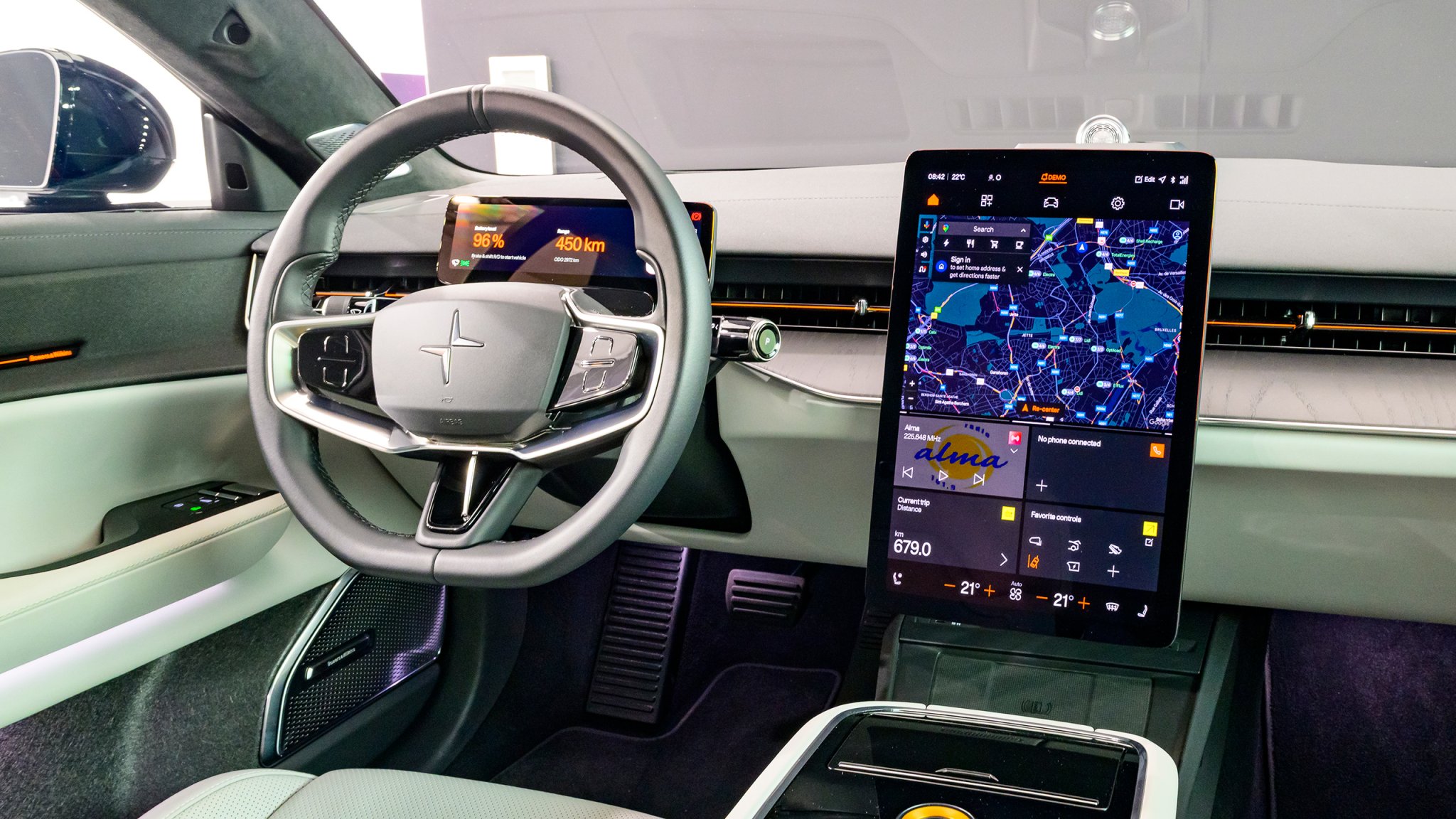
There’s plenty of motion in government right now to lock out vehicles with China ties, either through investment or tech, out of the U.S. market. Yesterday, a Senate committee approved a bill to ban manufacturers that are more than 15% owned by Chinese entities. Meanwhile, a different measure seeks to eliminate components made in China from cars sold here. That’s the reason why Polestar is packing up and leaving. Unfortunately, it figures to make the cars that remain even more expensive.
A new report from Reuters explores the efforts at one automotive electronics startup, based in Ohio, to scale up quickly enough to fill the demand that’s sure to be coming its way when carmakers can’t turn to China for as many parts. They’re called Eagle Wireless, and companies like them are going to become increasingly valuable if the government holds to its plans to cut out certain China-built hardware from U.S.-sold cars beginning in 2030. (A separate ban on software, which comes into effect next year, is the reason for Polestar’s exit and Volvo’s waiver.)
Eagle recognizes the opportunity facing it, but there’s plenty of work to do—not simply to scale up manufacturing, but also, to reach some semblance of cost parity. Per the company, its modules still cost 5% to 15% more than the equivalent parts from China. The components that the law will target mostly pertain to communications and location tracking. One former Detroit auto executive told Reuters, “My jaw dropped when I looked at the price increase” when comparing the invoice for an ADAS system produced outside China with one imported from China.

As you’d guess, this has the potential to lift prices of new cars in the U.S., which of course have already seen a massive jump since the start of the decade and COVID. Cox Automotive quoted the average transaction price of a new car this past May at $49,456.
Some automakers will be more at risk than others. The software chief for Rivian, for example, told Reuters that he believes the electric truck maker can weather this storm better than some, because it can more nimbly shift between suppliers. Naturally, the number of cars you sell impacts the weight of this challenge, which may explain why Ford sought an authorization to continue importing models like the Lincoln Nautilus, which is built in China.
That effort may have failed, however, as Republican Senator Bernie Moreno of Ohio, who co-authored the investment ban bill, said Wednesday that Ford had agreed to move production of such vehicles to the U.S. after all.
Complicating the issue is that even locally manufactured parts sometimes rely on licenses from elsewhere—like, from Chinese companies—and the hardware ban accounts for those, too. Just last month, Ford began producing batteries out of a plant in Michigan using technology licensed from CATL, which is based in China. Completely excising China from the supply chain of today’s complex vehicles presents an obvious struggle, but the trouble is, we won’t really know how bad it’ll be until we’re years into the middle of this.
Got a tip? Reach out to tips@thedrive.com
Loading comments…
Comments couldn’t be loaded. Please refresh the page.