
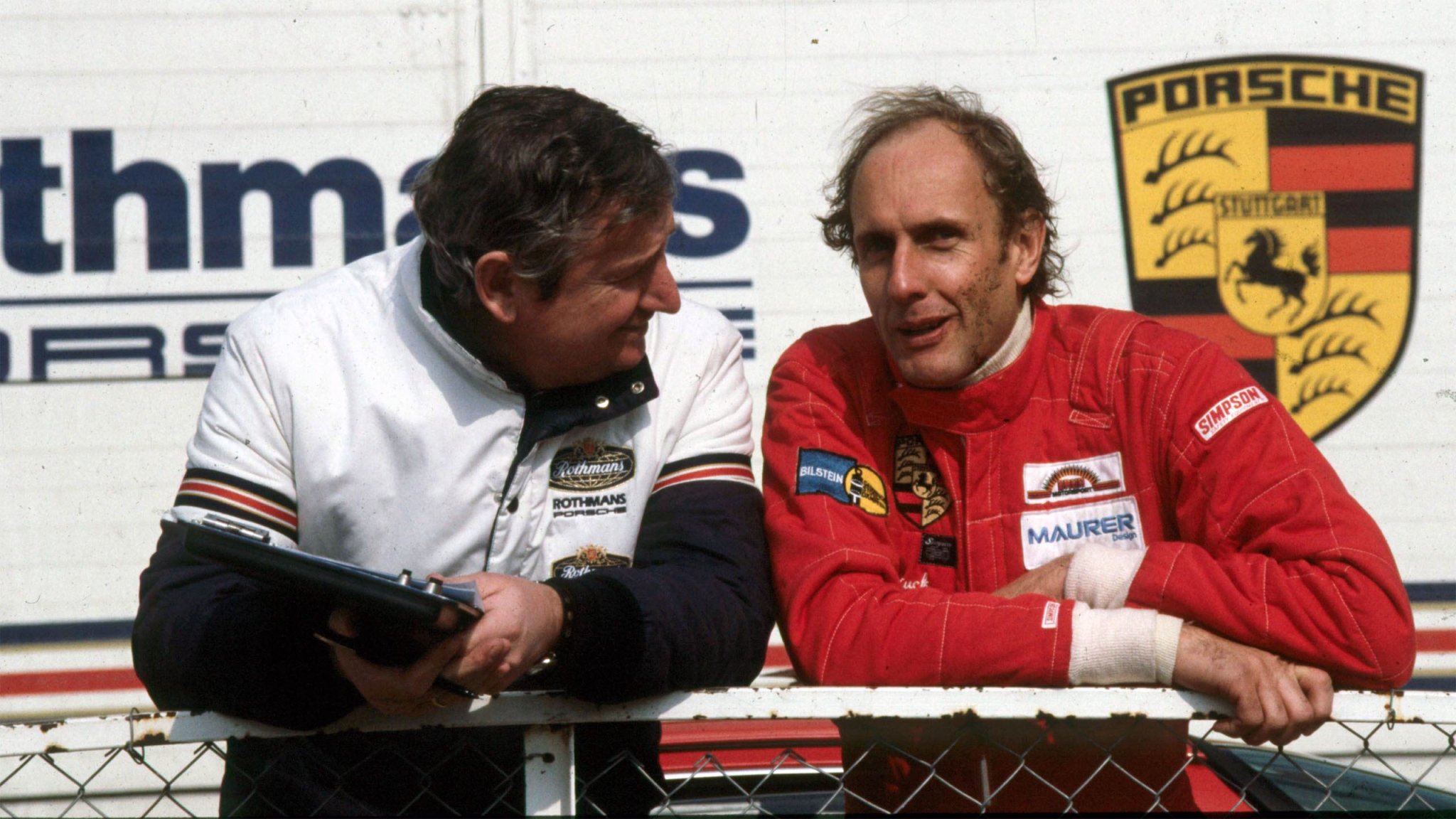
“Sebring always was an adventure to me, because it had the unexpected,” Hans-Joachim Stuck recalls.
The German sports car racing maestro they call “Strietzel” won the 12-hour race twice overall and claimed a class victory in 1993—each time in Porsche machinery. This year marks the 40th anniversary of his first Sebring victory in 1986 behind the wheel of a Porsche 962 he shared with late teammates Jo Gartner and Bob Akin.
Reflecting on his achievements there ahead of this year’s running, Stuck still considers Sebring a “real” racetrack. “It was an old airfield, which still, up to now, [has] the same concrete,” he said. “And it requires a lot of experience, a lot of braveness to drive fast there.” He credits his Porsche engineers for making his experiences on the infamously bumpy circuit not only successful, but safe. The way Stuck sees it, those two facets are intrinsically linked.
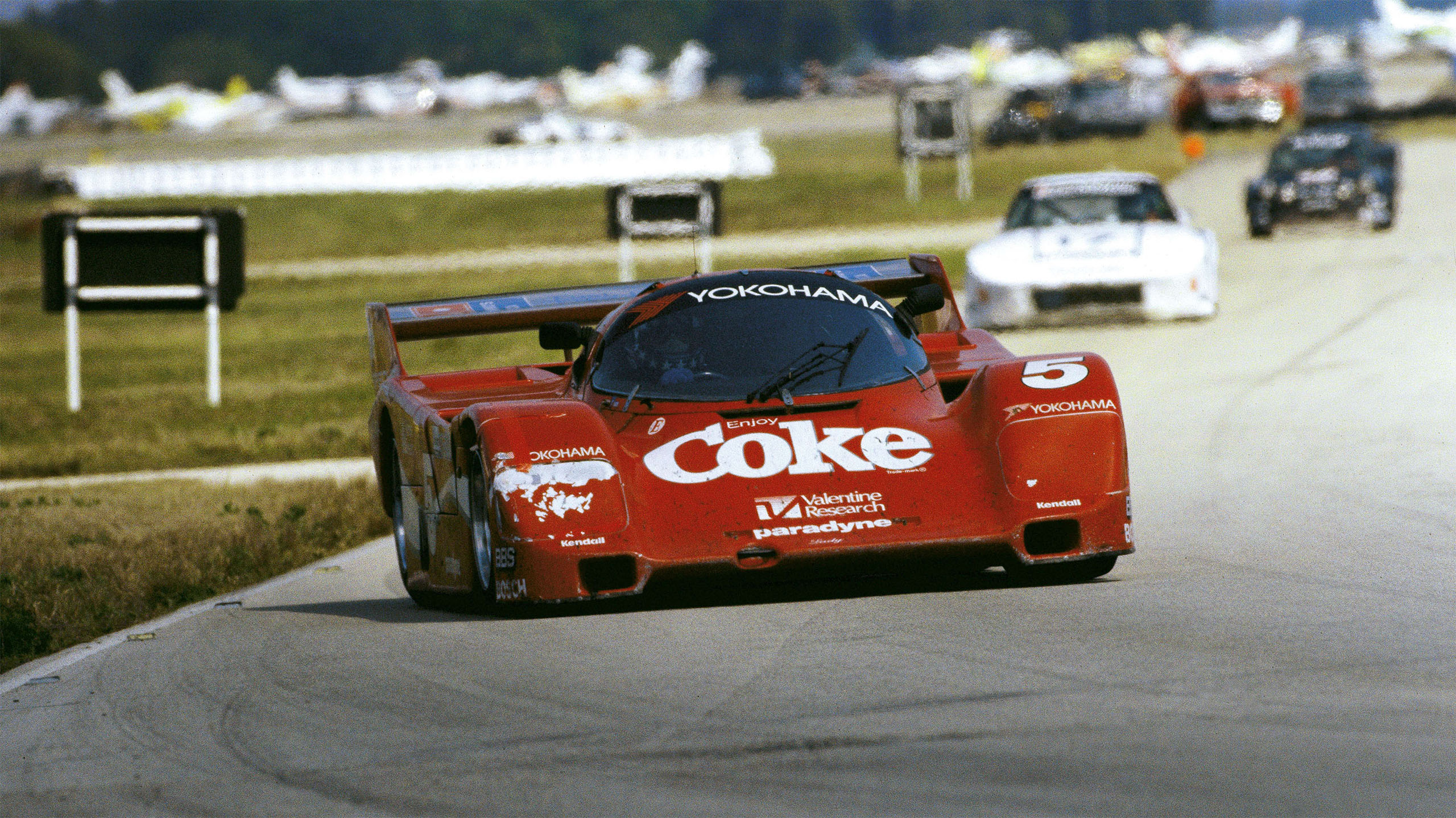
“With the Porsche [962], we always had to make—thanks to [engineers] Norbert Singer and Roland Kussmaul and the other guys—a very special setup for Sebring,” he said. “And the cars, being a Porsche there, it was not only fantastic, but it was also insurance, because Norbert Singer, who built those cars and created those cars, for him, driver safety was number one.
“So it could be safe that no wheels are falling off, like other cars I drove in my career—wings were falling off, things like this. Here, sitting in a Porsche was kind of insurance, and you could really concentrate on the high-speed racing that was fantastic for a driver. Otherwise, you’re feeling anxious about losing this or that, or that breaks. You could really go 100% with the car and not think about these funny things.”
Stuck recalls a similar feeling at Le Mans, which may lack Sebring’s spine-shattering concrete, but, of course, makes up for that with terrifying long-distance speed. And remember—he was there before they put chicanes on the Mulsanne.
“Le Mans is sort of a normal road, and any other race car I drove there, I always had to concentrate in a straight line,” Stuck said. “In the Porsche, you could take the hands off the wheel and it went, because Norbert Singer created a special suspension with track and toe for Le Mans, that the driver could really concentrate on driving.”
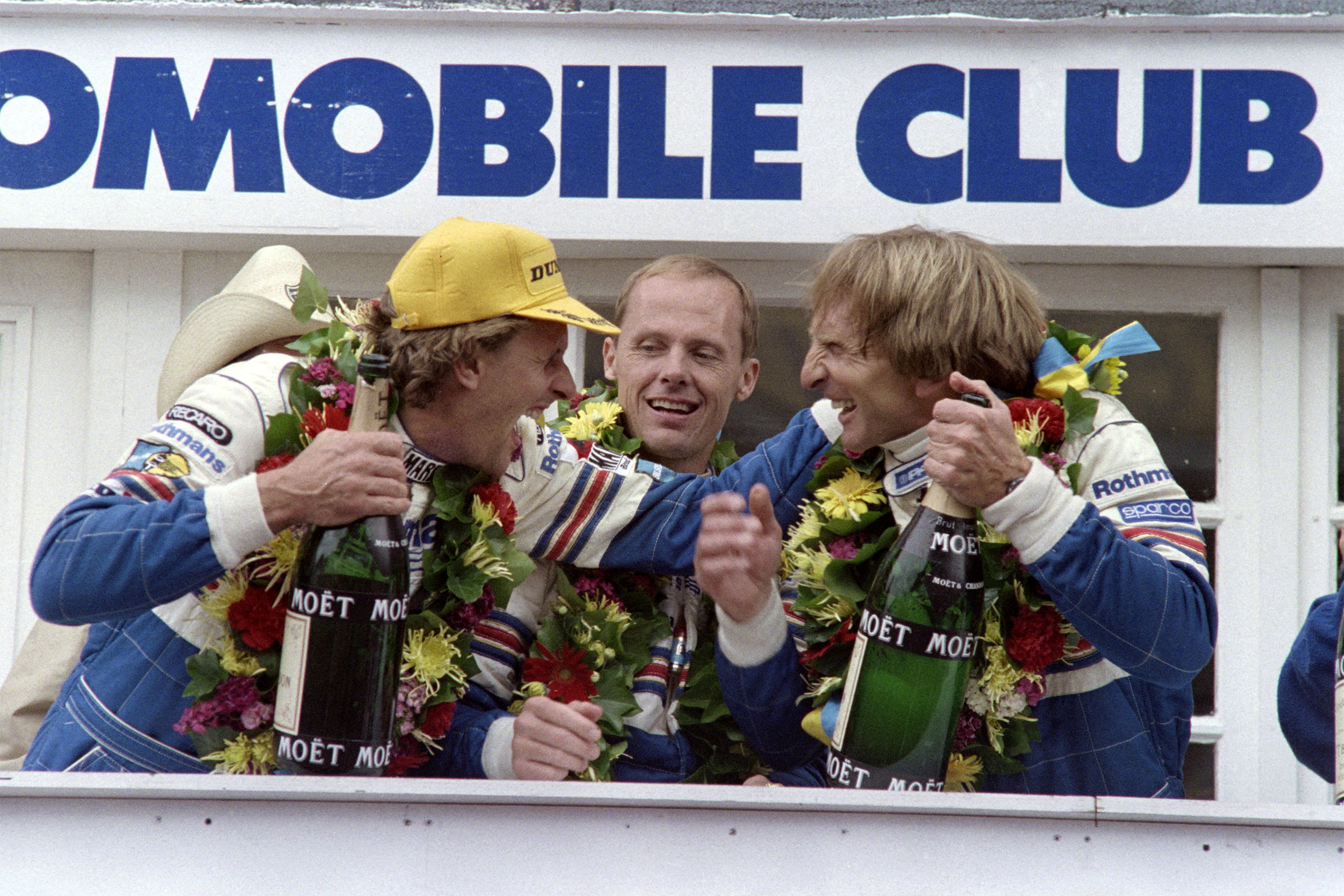
Stuck ultimately won both the 12 Hours of Sebring and 24 Hours of Le Mans overall for the first time in 1986. He remembers the Sebring victory especially fondly because of who he shared it with.
“I must say, the [1986] one with Jo Gartner and Bob Akin was really fantastic because, you know, Jo Gartner, we had a special friendship, and the more I regret when he was killed at Le Mans,” Stuck said. “Jo wasn’t only a good friend—he was a very good driver. He was a driver that also listened to others. He learned, he wanted to know what to do, and he obeyed rules that we made, especially for Sebring: Be careful with the overtaking, with the lapping, it’s a long race. Jo was fantastic.”
Just weeks after that Sebring triumph, Gartner was tragically killed in a crash partway through the 24 Hours of Le Mans, competing with Stuck in a different team’s 962.
“When you see how many drivers and friends we lost in the days of Group C, because of all kinds of things that happened—I mean, imagine, we had aluminum chassis, you know?” Stuck said. “Now you have carbon-fiber chassis, which is always a life insurance. But you had to adapt yourself to what you had and take your chances and decide yourself how many percent out of 100 you wanted to go. And this is always a personal thing, and it depends also on the race situation.”
Stuck said he was able to simply “switch off and go” when he was suited up and in the car. Only afterwards would he actually consider the close calls and brushes with danger.
“When the race is over, you sit and talk to the guys and go, ‘Jesus Christ, I was totally crazy, but it worked,’ you know, and I’m lucky I was one of the guys that survived,” Stuck said. As awful as some of his crashes were, he also notes that they could’ve been worse.
“When I had an accident, I was lucky not to hit something with the front; it was mostly with the rear,” Stuck said. “It could’ve been the other way, and I wouldn’t be here.”
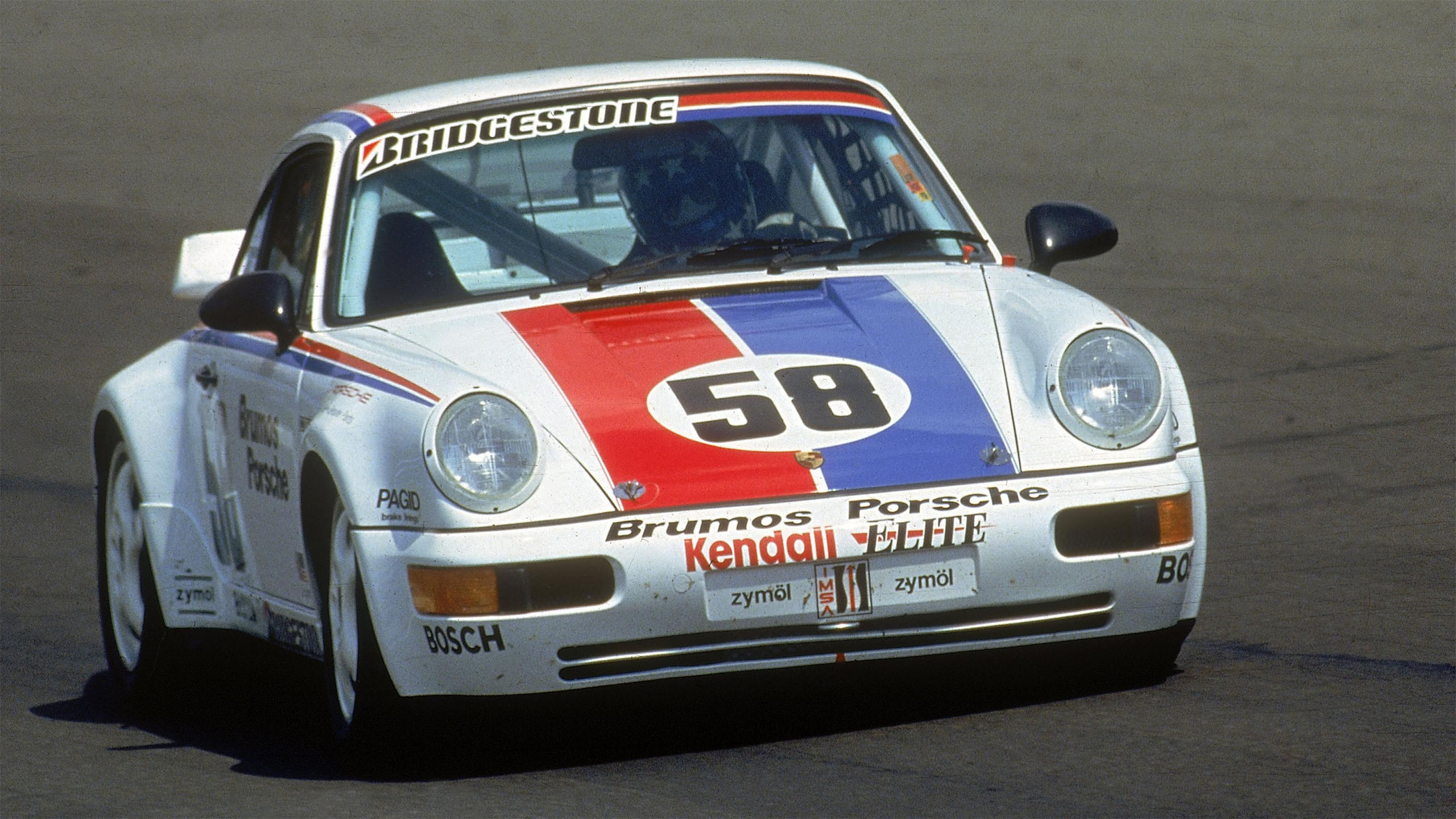
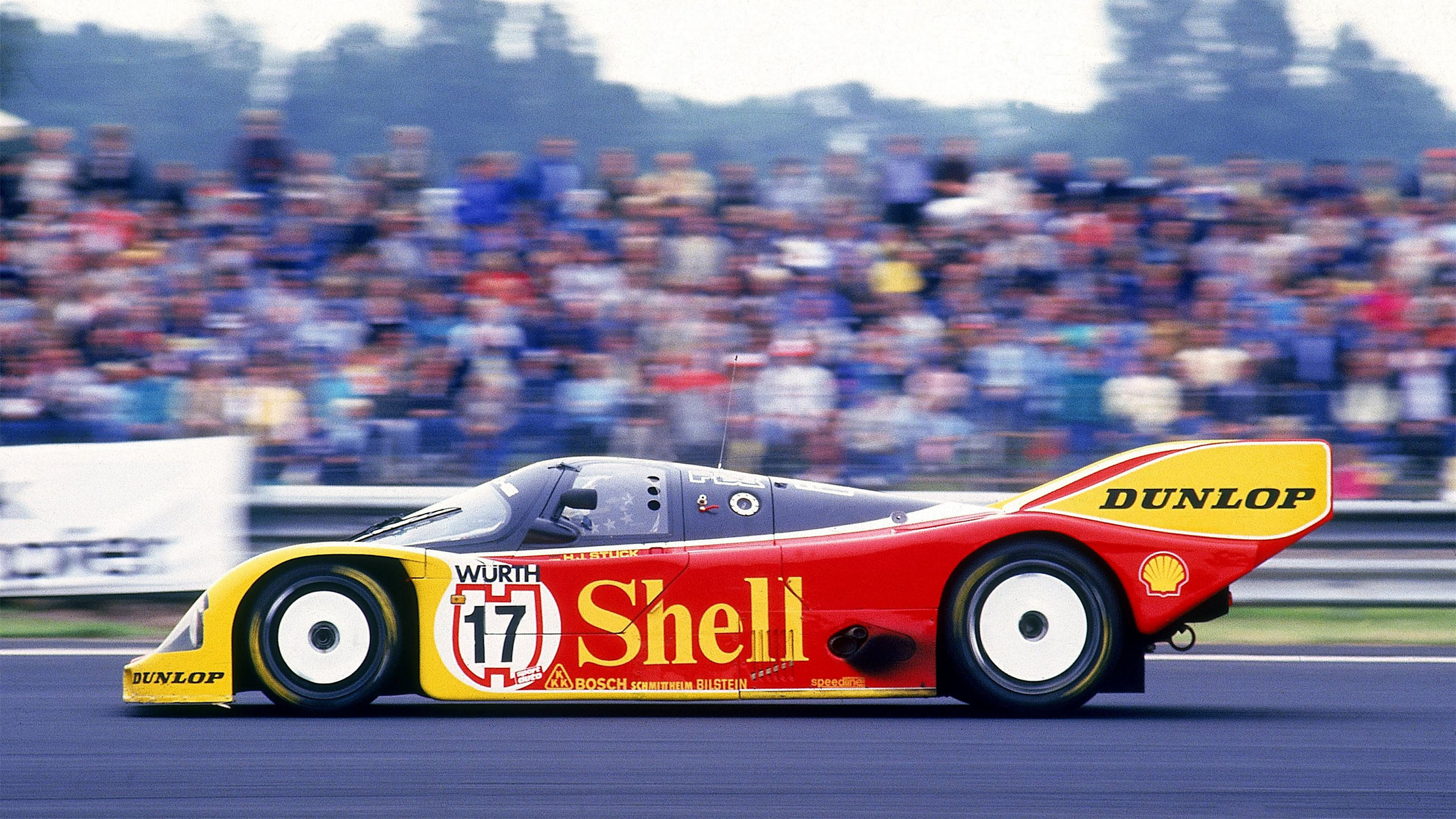
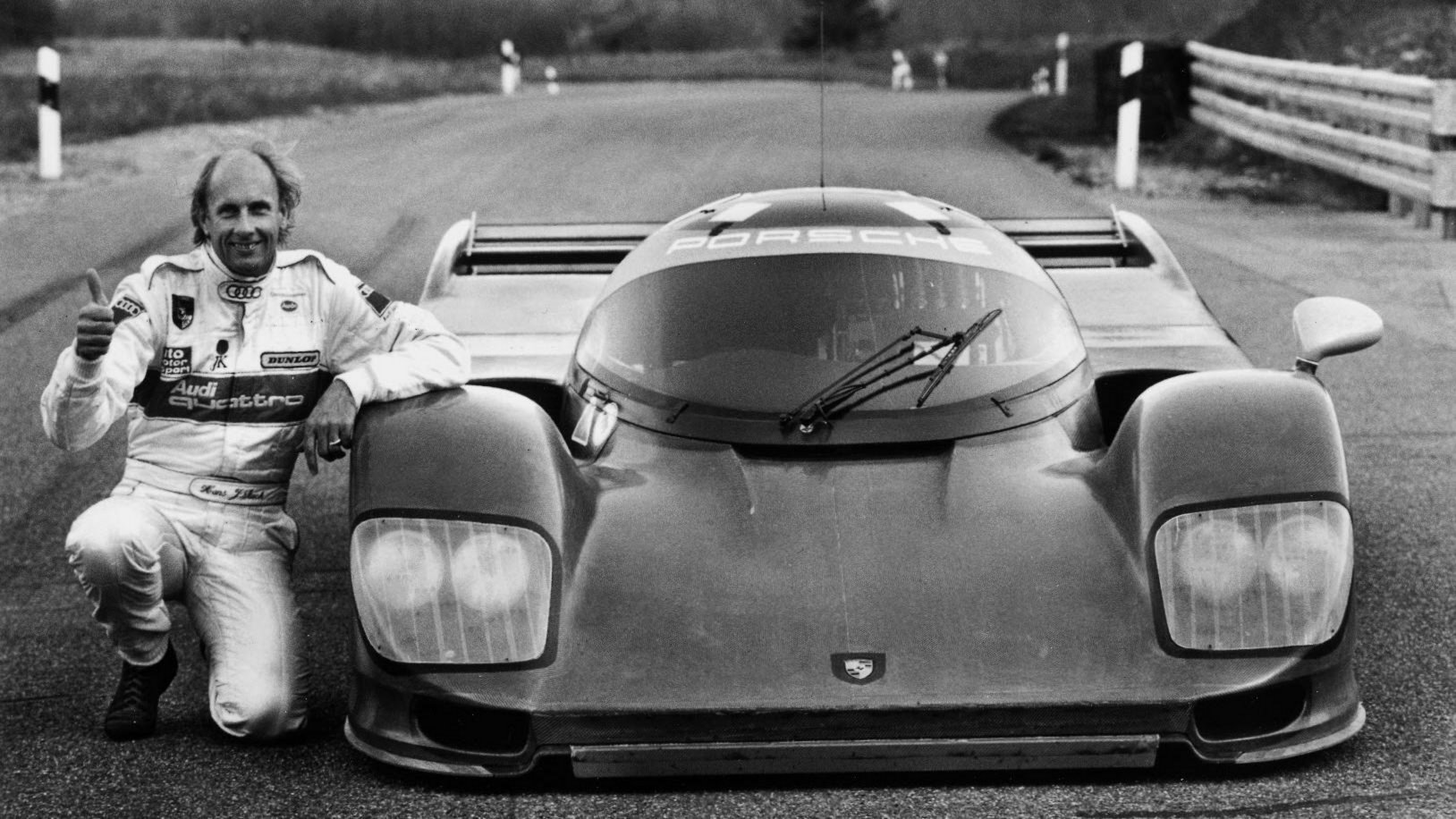
Sports car racing began to change in the mid-’90s, as Group C dissolved and the GT1 class entered the spotlight. Stuck turned the bulk of the laps at Porsche’s test track to help dial in the 962, playing an instrumental role in shaping it into the titan that it became. He returned to Weissach to create its successor, though the process was different.
“GT1 was a completely different story because, when we started, the first GT1 was a 911 body, then it was cut off behind the seats, and a 962 engine was put in there. Did lots of testing and development there. I mean, it was not always easy, but very interesting.”
Hearing Stuck reflect on his long experience across multiple eras and all the development work he undertook for Porsche, it’s his attitude that impresses me more than anything else. Here’s a veteran driver who knows the rigors of racing firsthand. If anyone is in a position to decry how motorsport has transformed over five decades, this is the guy. And how many of us could argue with him?
But Stuck is open to all of it—alternative fuels, electrification, the lot, at least where it makes sense. He’d prefer new racetracks cool it with their “hundred-meter run-off areas,” provided they’re still safe, of course. “When you talk to drivers, why do most drivers love Monaco?” Stuck asked. “It’s because it’s road car driving. You have to be 100% precise.”
But he’s definitely not one to oppose change. Hell—Strietzel has been itching to have a go in the Porsche 963, the brand’s current IMSA GTP competitor that claimed Porsche’s first Sebring victory in 17 years last season. There’s only one thing stopping him, and at 75 years young, it’s not what you’re probably assuming.
“I couldn’t fit into the car—I was too tall, so this was out of any consideration,” Stuck said. “I think I would love to drive one of these cars nowadays! It must be fantastic, to be able to rely on all these fantastic [technologies].”
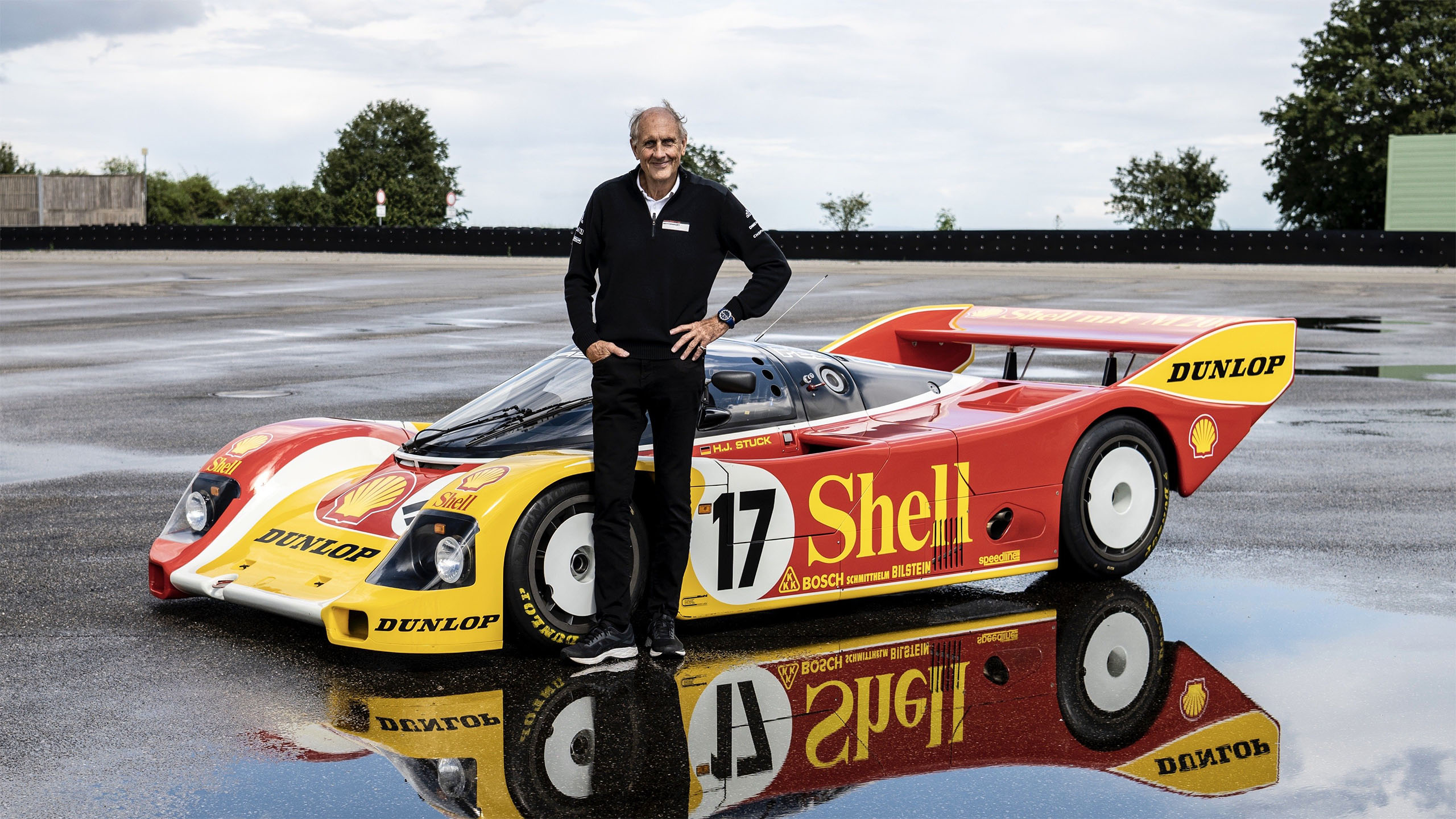
And, on the flip side, Stuck reckons that a 963 driver jumping into a 962 for the first time would be “positively shocked” by what the gladiators of 40 years ago achieved in their machines.
“When I was a child, my dad was teaching me how to race. He said, ‘Hey, my friend, there are a few number of races, and at least you have to win one of them: It’s Le Mans, the Monaco Grand Prix, Sebring, and Indianapolis,” Stuck said. “So I can be proud to say, ‘OK, I won Sebring, and I won Le Mans.'”
Got a tip? Reach out to tips@thedrive.com
Loading comments…
Comments couldn’t be loaded. Please refresh the page.