
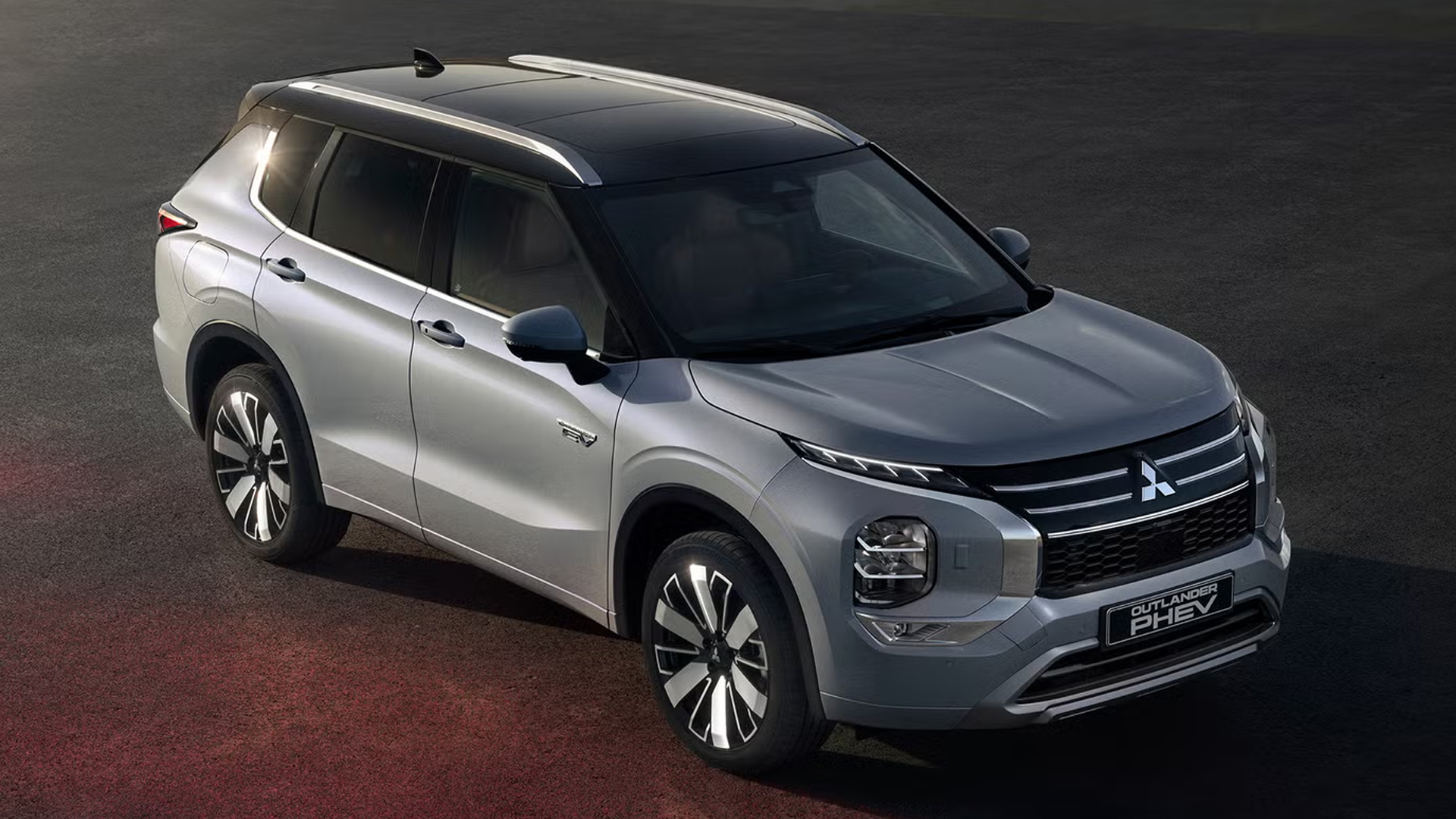
The 2026 Mitsubishi Outlander PHEV (plug-in hybrid) has found a little niche in the new car market. Thanks to an upgraded battery, the SUV now claims 45 miles of EV range, more than almost every other PHEV in its class. And unlike all its rivals, it still has three rows of seating.
Outlander PHEV pricing is up considerably for 2026 (now starts at $43,245 before fees; the 2025 model started at $40,445). But Mitsubishi offers a 10-year/100,000-mile powertrain limited warranty, a five-year/60,000-mile new-vehicle limited warranty, five years of roadside assistance, and free two-year 30,000-mile maintenance. That’s a pretty healthy value package.
Here’s a little grid I made to contextualize where the new Mitsubishi PHEV lands against other similar plug-in hybrids. (All these models have much-cheaper non-plug-in versions, too.) While the 2026 Outlander’s starting price is a little higher than other similar vehicles, its new 45-mile EV-range spec puts it into a neat Goldilocks zone of (theoretically) lower gas-engine engagement and high seating capacity. The Mazda CX-90 is not a direct competitor (it’s bigger), but I’m including it here because there are very few three-row PHEVs in this pricing neighborhood at all. There are many other hybrid SUVs, but not so many plug-in models that can be treated like pure battery EVs like these.
| Model | Seating | MPGe | EV Range | Approximate Starting Price including Fees |
|---|---|---|---|---|
| 2026 Mitsubishi Outlander PHEV | 3 Rows | 73 | 45 Miles | $44,990 |
| 2026 Toyota RAV4 Prime (PHEV) | 2 Rows | 102 | 50 Miles | $42,950 |
| 2026 Kia Sportage PHEV | 2 Rows | 84 | 34 Miles | $41,985 |
| 2026 Hyundai Tucson PHEV | 2 Rows | 77 | 32 Miles | $42,425 |
| 2026 Mazda CX-90 PHEV | 3 Rows | 56 | 27 Miles | $52,620 |
What jumps out to me here is the parent appeal—my mother would have been the perfect customer for this car when I was a kid. She was constantly shuttling my friends and me around sprawling suburbs. Having 45 miles of electric range and seating for six little brats would have made for an excellent low-running-cost car; she was in motion constantly but rarely racked up more than 50 miles in a day.
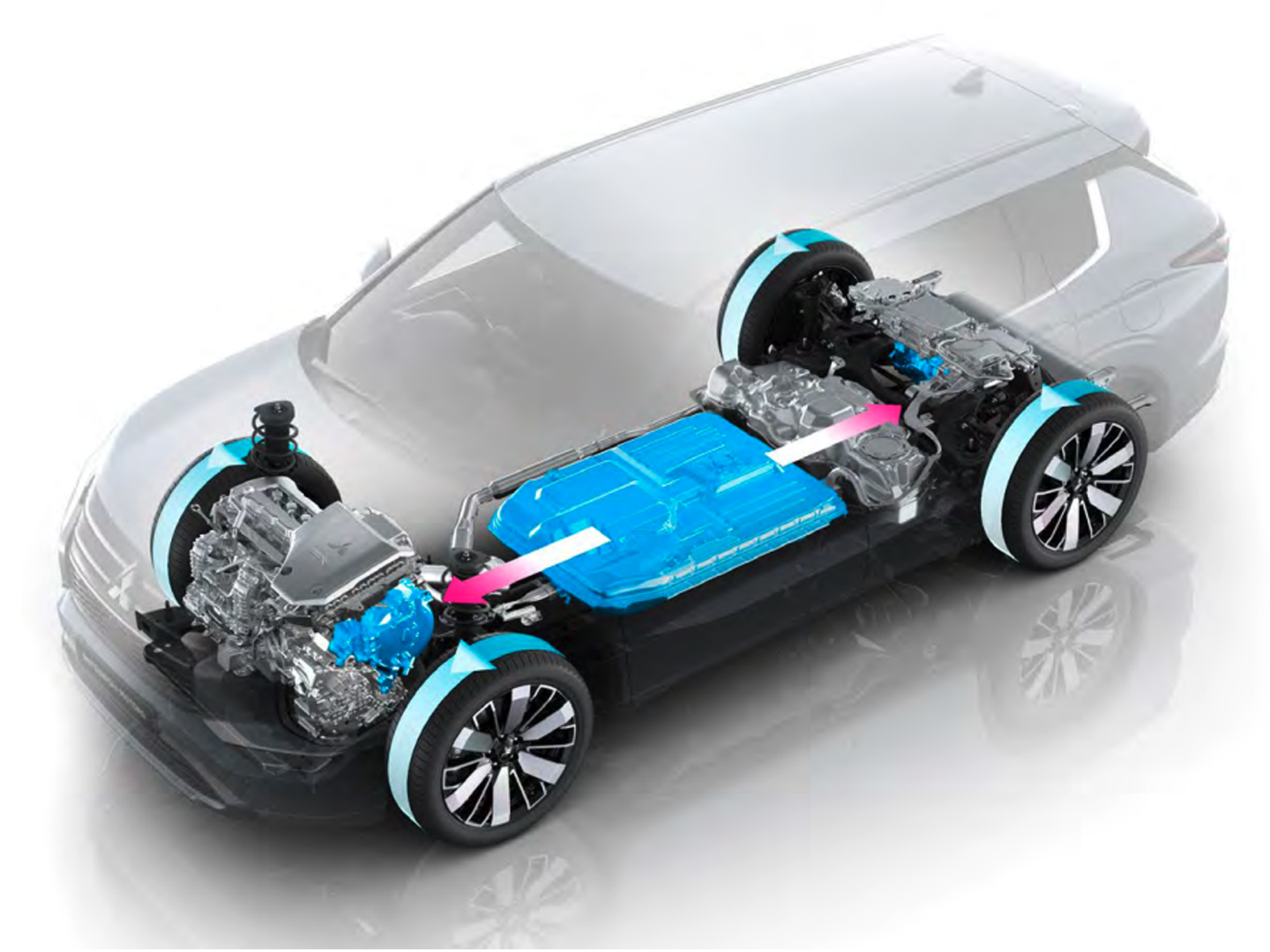
The new Outlander PHEV’s increased range comes from a battery upgrade (now 22.7 kWh, up from 20 kWh in the 2025 car). Mitsubishi shared that the new battery “…delivers a 15% increase in capacity, but the combination of a new cooling system and improved thermal management deliver a 60% increase in power output. Electric range is increased to 45 miles, total system power output is increased to 297 horsepower, MPGe increases to 73, and electric operation is now available in more driving scenarios. Steering and suspension tuning have both been revised, to deliver a more engaging and confidence-inspiring driving experience,” in a press release.
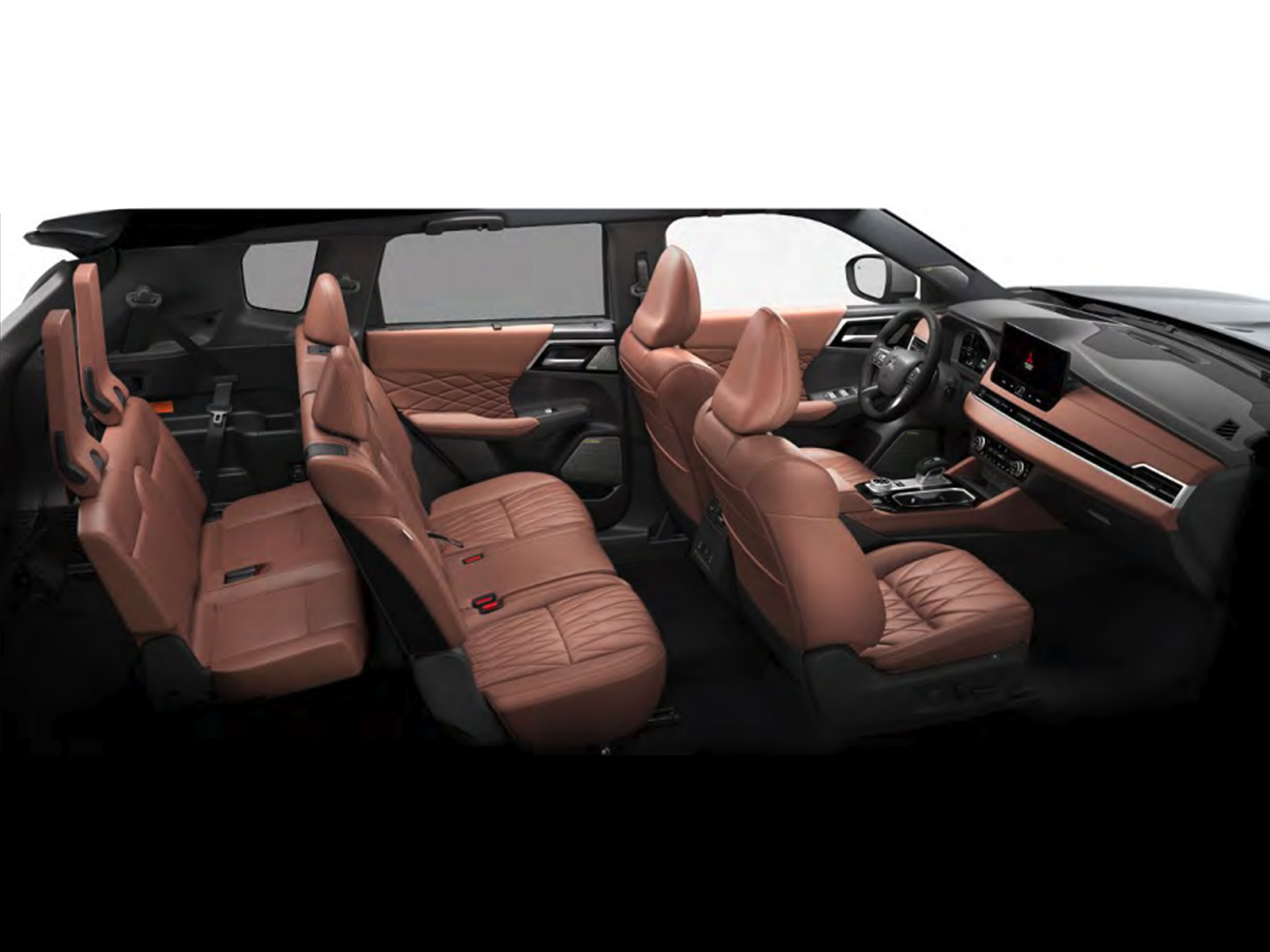
The car has 420 miles of total range; the fuel tank was downsized to just 14 gallons to make room for the new battery. However, Mitsubishi says the battery doesn’t intrude on cabin space because it’s tucked under the floor between the vehicle axles.
Annoyingly, Mitsubishi has barely any viable images of its products on its media site. But here’s some more technical context the automaker provided on the new powertrain:
“There are two electric motors in the Outlander Plug-in Hybrid, one for the front axle and one for the rear. Rear drive in the Super-All Wheel Control all-wheel-drive system is entirely electric, as there is no mechanical connection between the front and rear wheels. The hybridized operation of the internal combustion engine and the electric motor only happens on the front wheels. Every Outlander PHEV offers three rows of seats, made possible by unifying the rear motor control unit with the rear motor to secure enough space to allow installation of the third row seat. Positioning the rear motor controller and the motor itself on the outside of the passenger compartment reduces the system’s inherent high-frequency noise, resulting in a quieter interior environment.”
The brand also shared that the Outlander PHEV “can operate as both a series or a parallel hybrid. Series mode uses the gasoline engine to generate power that charges the drive battery, while driving the vehicle with the electric motors. Parallel mode uses the power of the gasoline engine to drive the vehicle, assisted by the electric motors.”
There are seven drive modes on this thing—Mitsubishi still calls its all-wheel drive system “Super-All Wheel Control (S-AWC)” which is supposed to be exceptional in snow. The new Outlander does offer an “Innovative Pedal” mode that is supposedly “similar” to one-pedal EV driving and should help in low-traction situations, but we’ll have to learn more about that to judge it.
Some of my industry colleagues dismiss Mitsubishi as an “also-ran.” I have some superfan bias because I’m still in love with Mitsubishi’s 1999 lineup (Montero, 3000GT VR-4, Eclipse GSX?!). But jokes aside, I’m optimistic about what the brand might do in the near future. Rumor has it the brand is looking at making a proper off-roady 4×4 with a Nissan platform, and if it can add some layer of innovation (surprisingly good fuel economy, perhaps?), it could be primed for a comeback.
2026 Outlander PHEV Charging Speeds
These are the charging-speed specs claimed by Mitsubishi; we have not tested them yet.
- Level 1 charging (from conventional 120-volt power, using the included charging cable): Charge time from fully depleted is approximately 16.5 hours
- Level 2 charging (from a 240-volt outlet using a J-1772 plug): Charge time is approximately 6.5 hours
- Level 3 charging (DC fast-charge on the CHaDeMo network): Charge time is approximately 29 minutes to 80% state-of-charge
Got a tip? Send us a note at tips@thedrive.com.
Loading comments…
Comments couldn’t be loaded. Please refresh the page.