
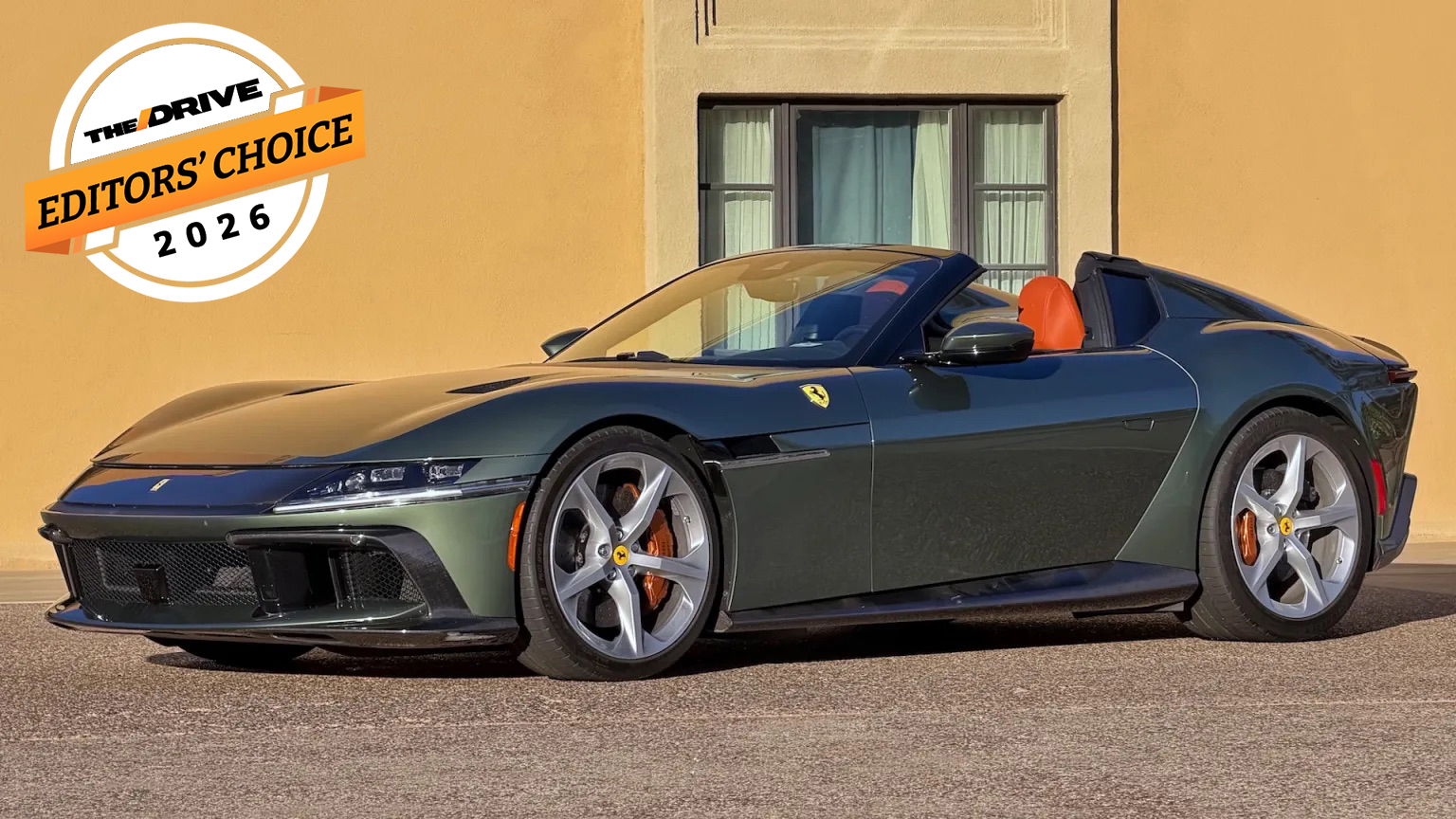
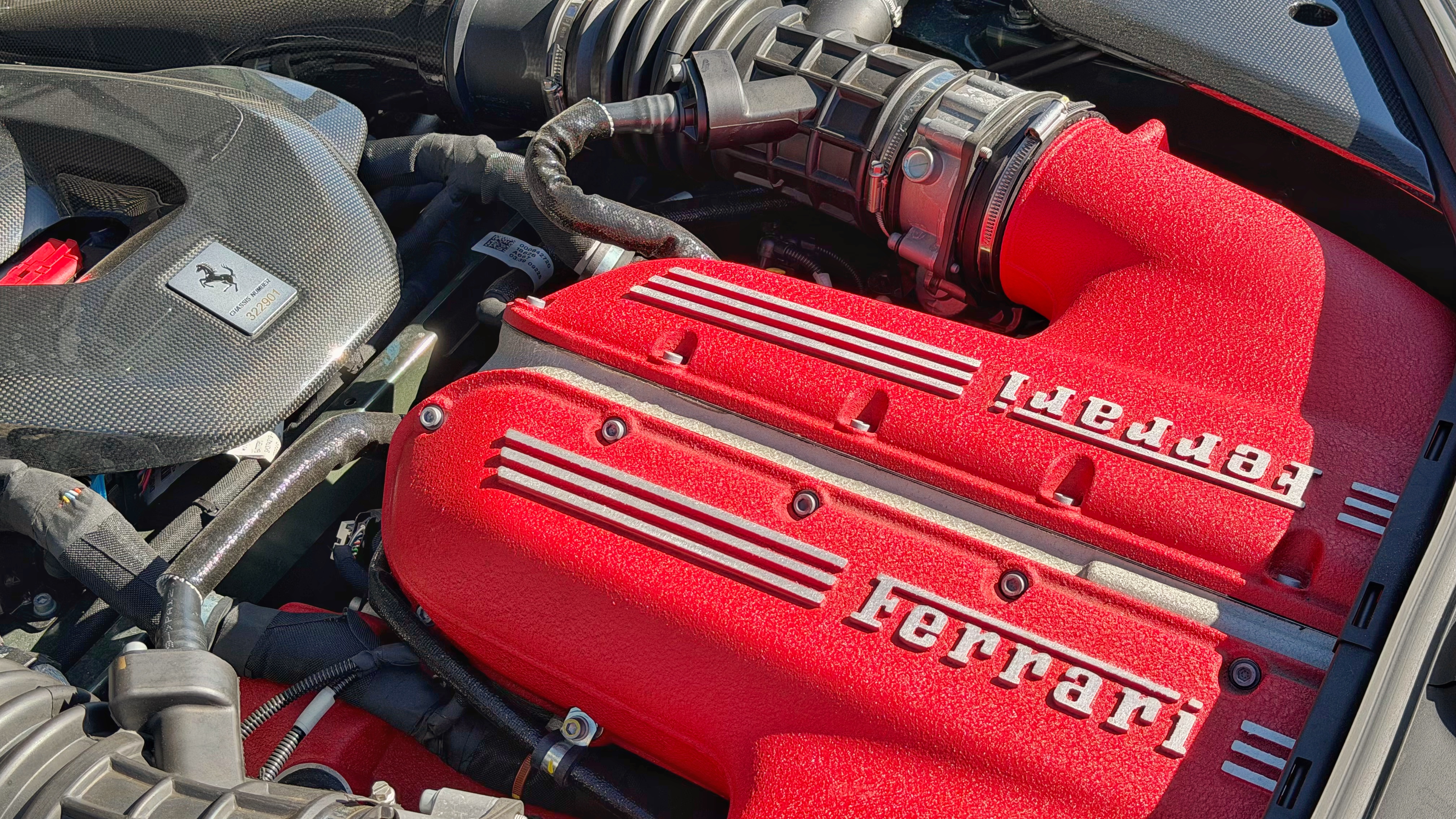
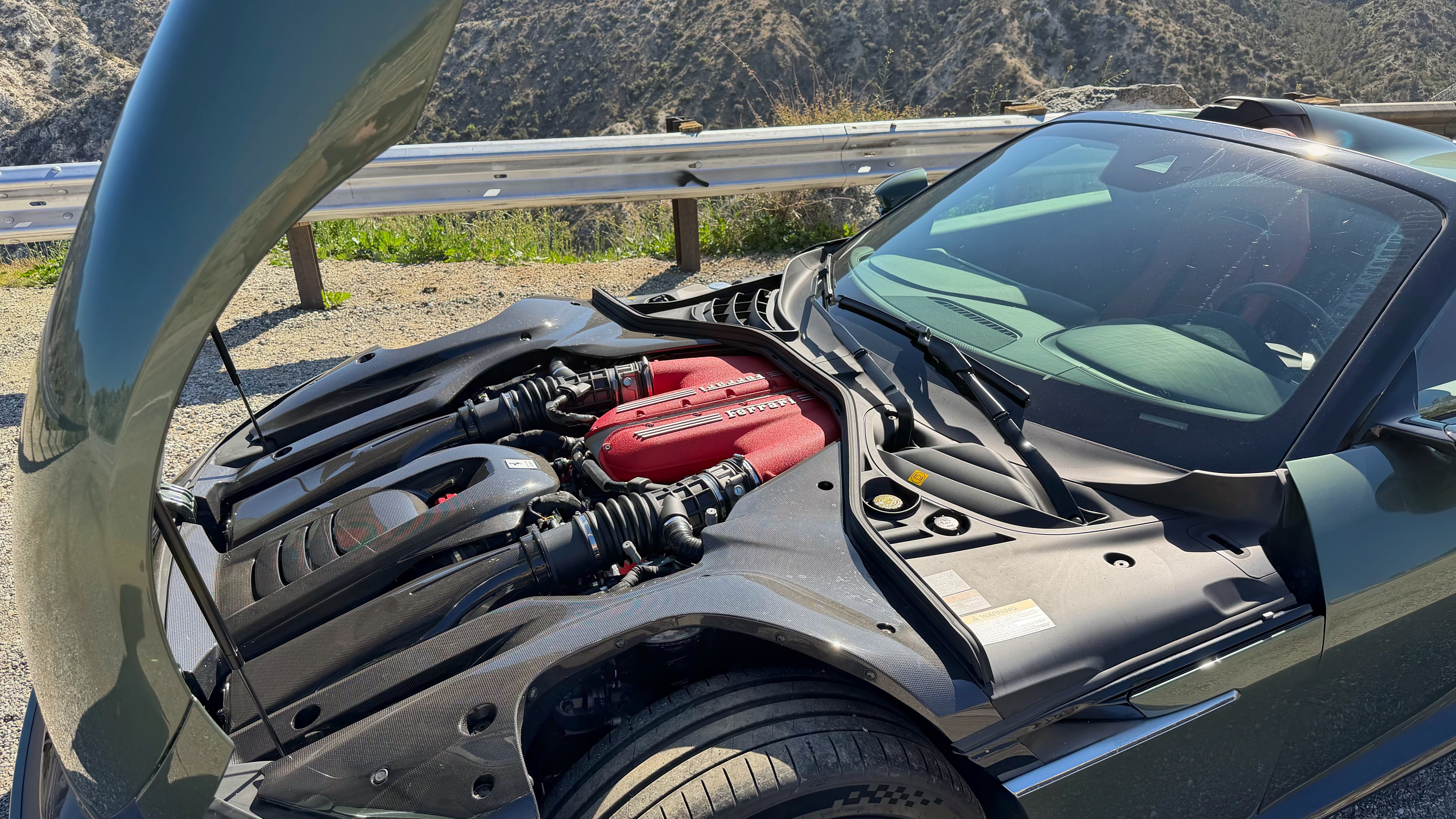
One run up the gears with my foot almost flat on the accelerator, and my brain begins computing reasons it’d be logical to spend $661,000 on the Ferrari 12Cilindri Spider I’m sitting in. The naturally aspirated, 6.5-liter V12 sandwiched between me and the front axle is screaming with fury as the tach’s needle nears 9,500 rpm. The melody coming out of the exhaust is akin to that of a ’90s F1 car—far higher-pitched than the convertible’s robust body leads you to believe.
This is a car for driving. This is a car for the heart.
It’s not just the 12Cilindri Spider’s performance that quickly makes you consider corruption for the sake of fast cash. Even while standing still, it wows you in ways that other supercars can’t while in motion. Fire up the engine and stab the throttle, and the revs spike so quickly that you’re forced to recalibrate your expectations—and how quickly you must move your foot so they don’t linger in the stratosphere longer than they should. A 40% reduction in rotating mass, titanium con rods, and new alloys in the V12’s crankshaft make this responsiveness possible.
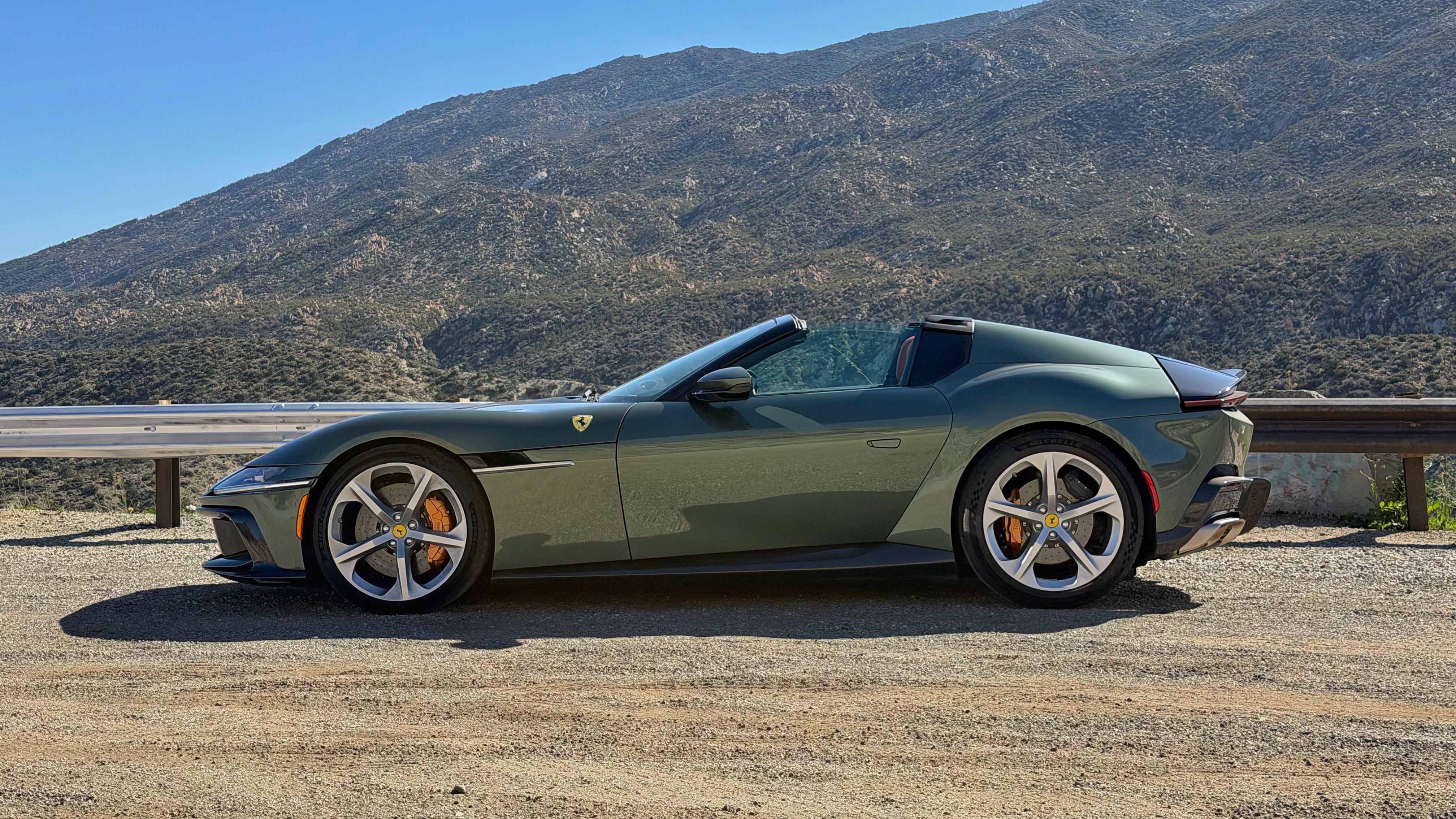
Yet, despite its 819 horsepower, 500 lb-ft of torque, 211 mph top speed, and abundant engine, chassis, and aero management software, the 12Cilindri Spider delivers an analog and almost retro driving experience when it counts most. Because, despite what some automakers want you to believe, driving a stupidly fast computer isn’t very fulfilling at all.
Design
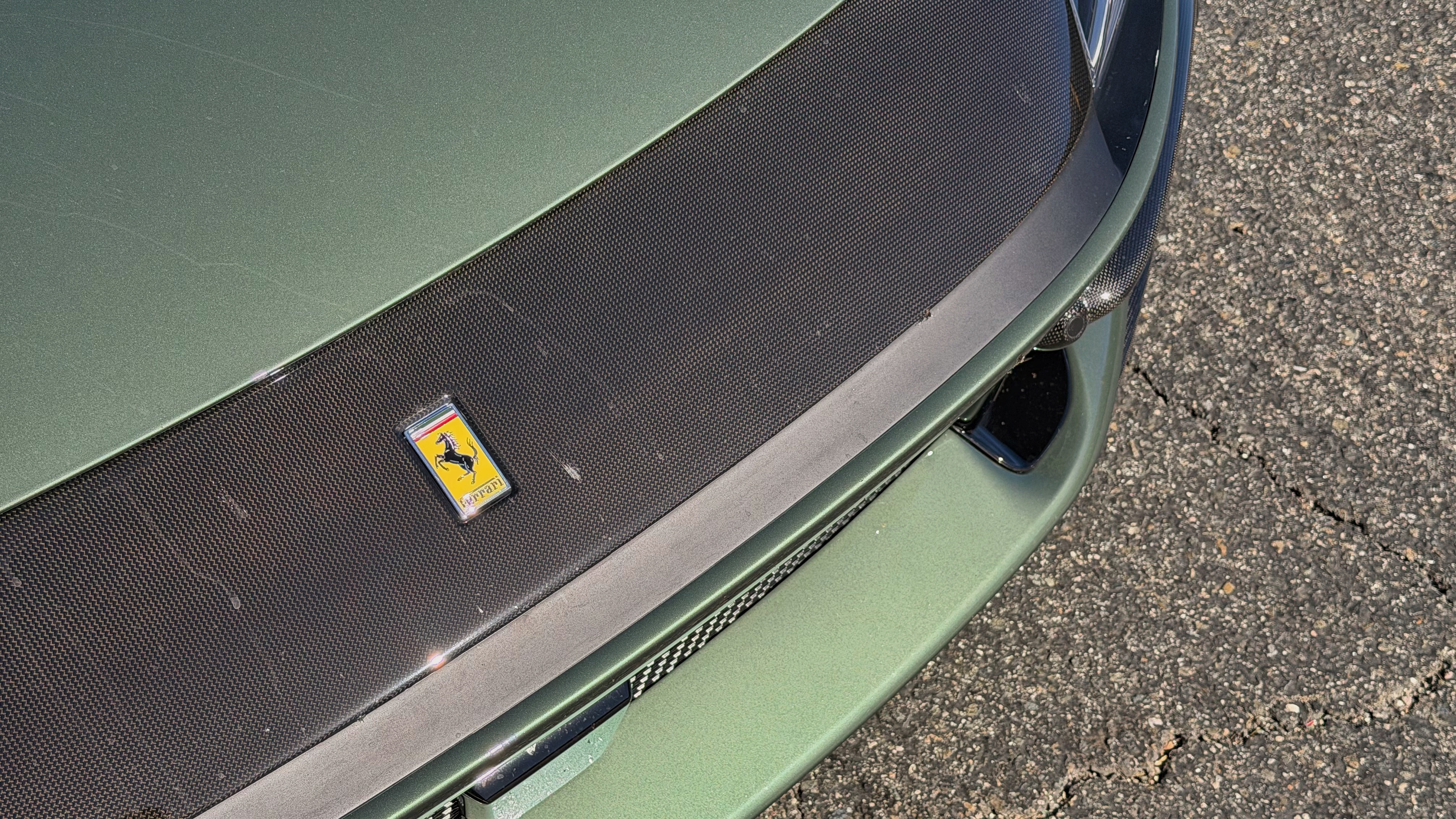
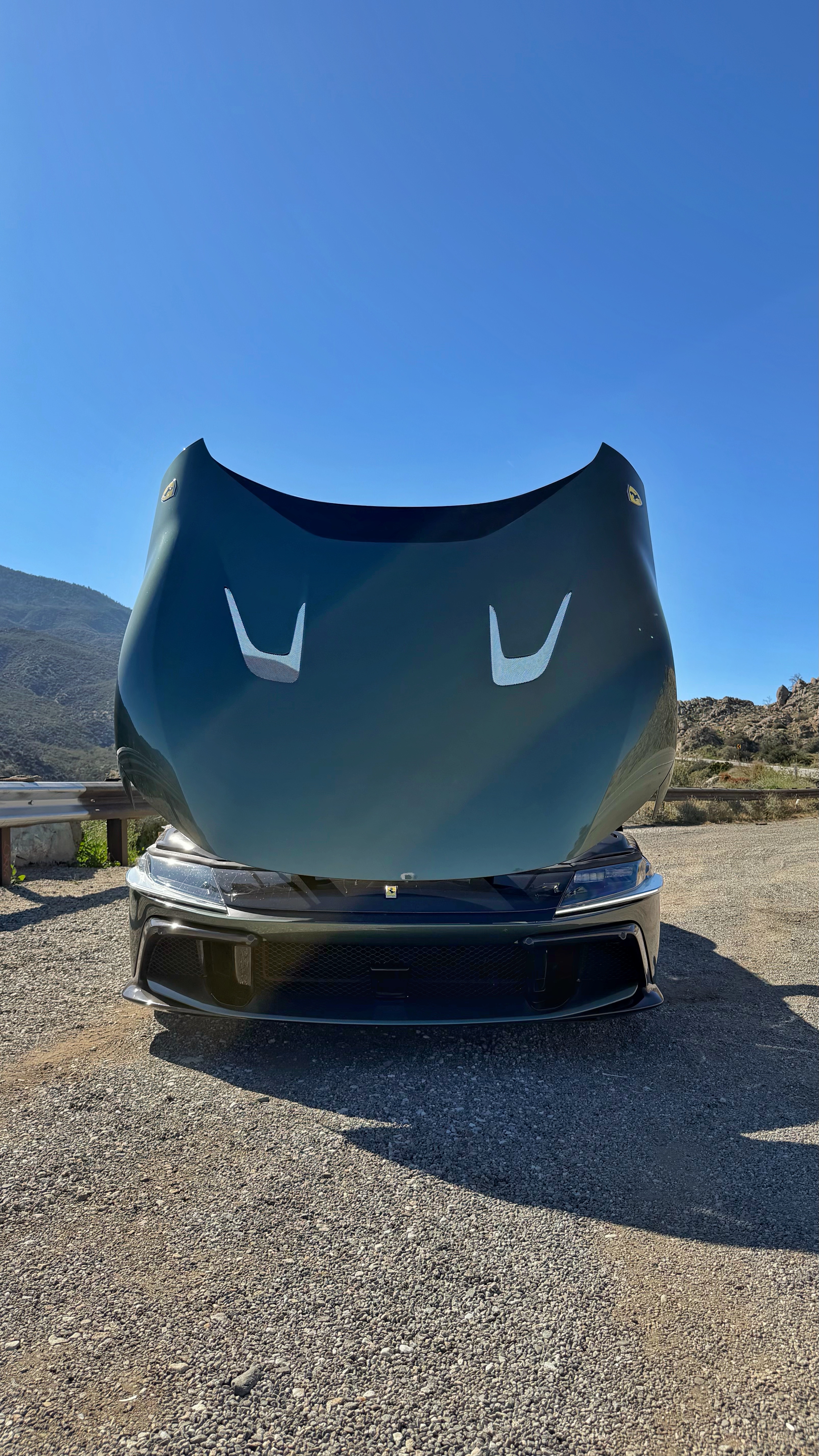
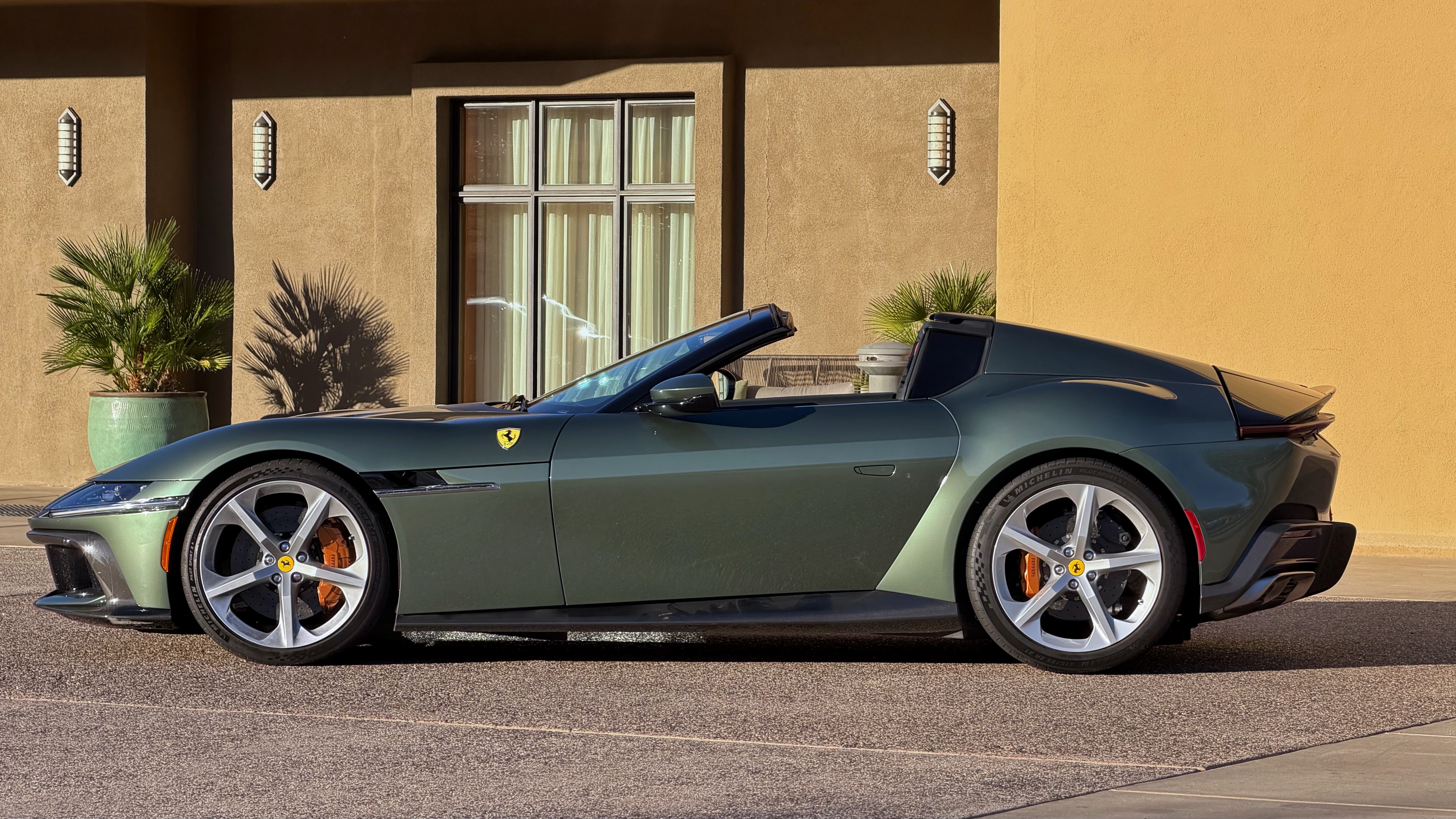
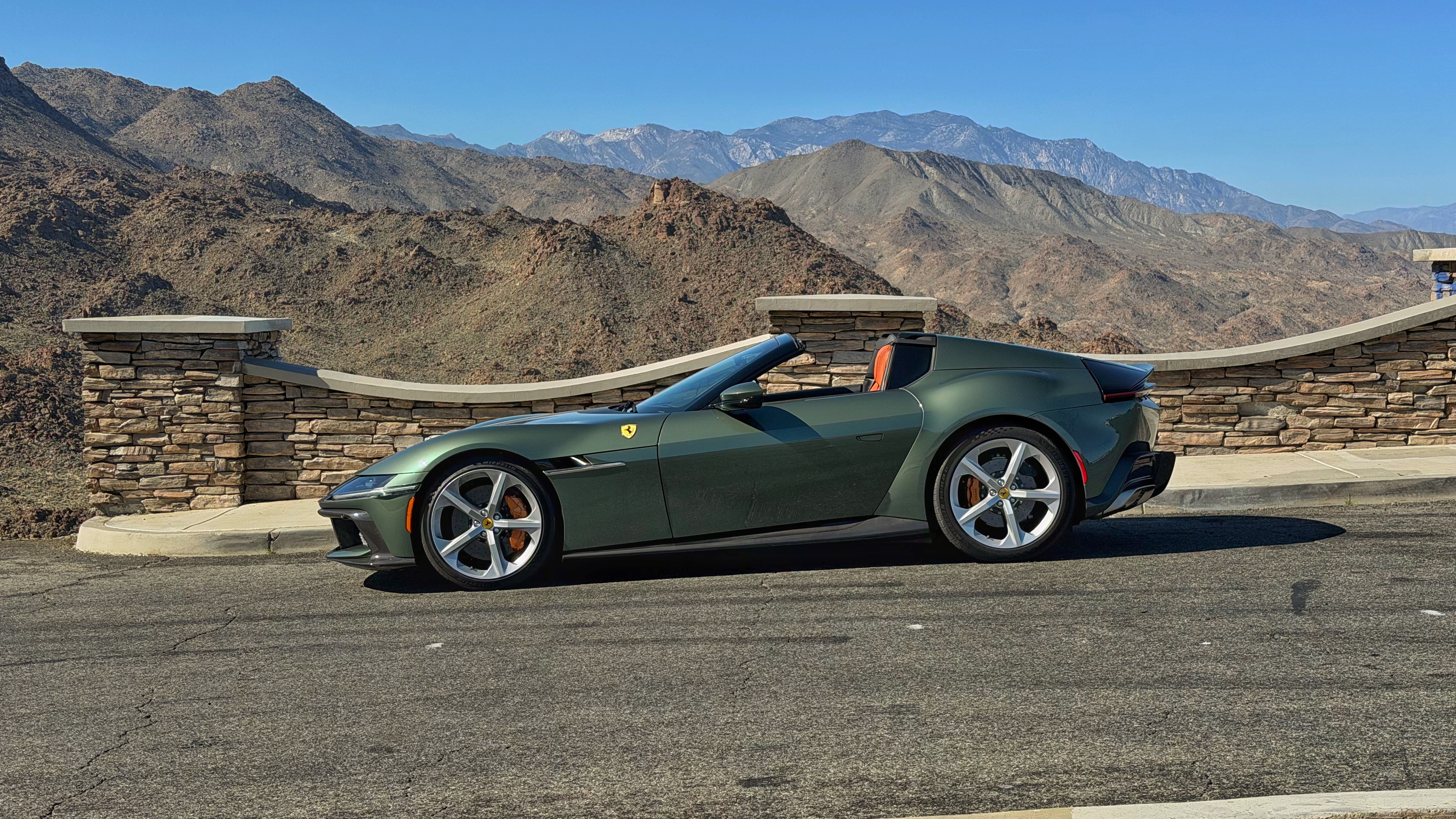
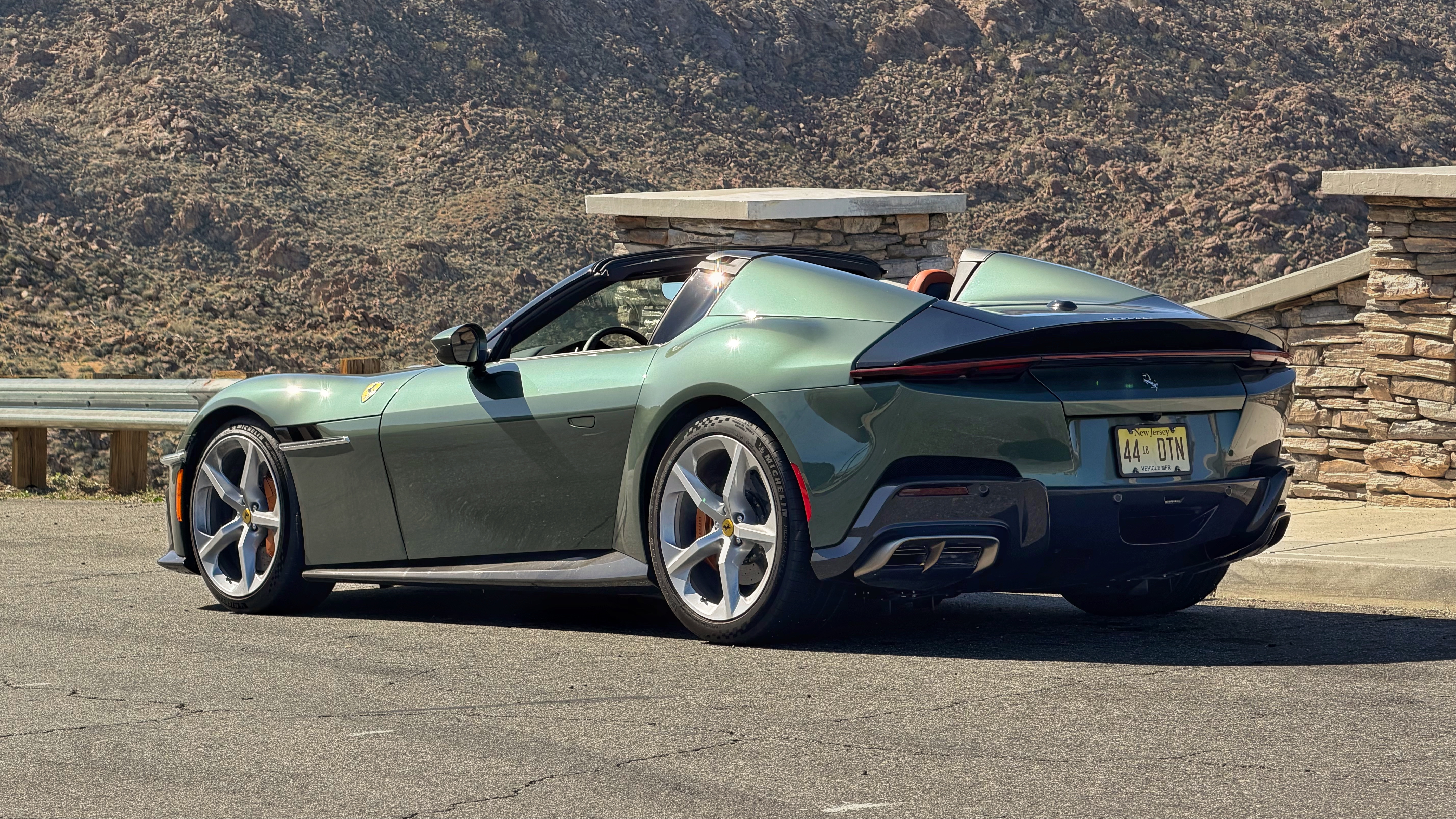
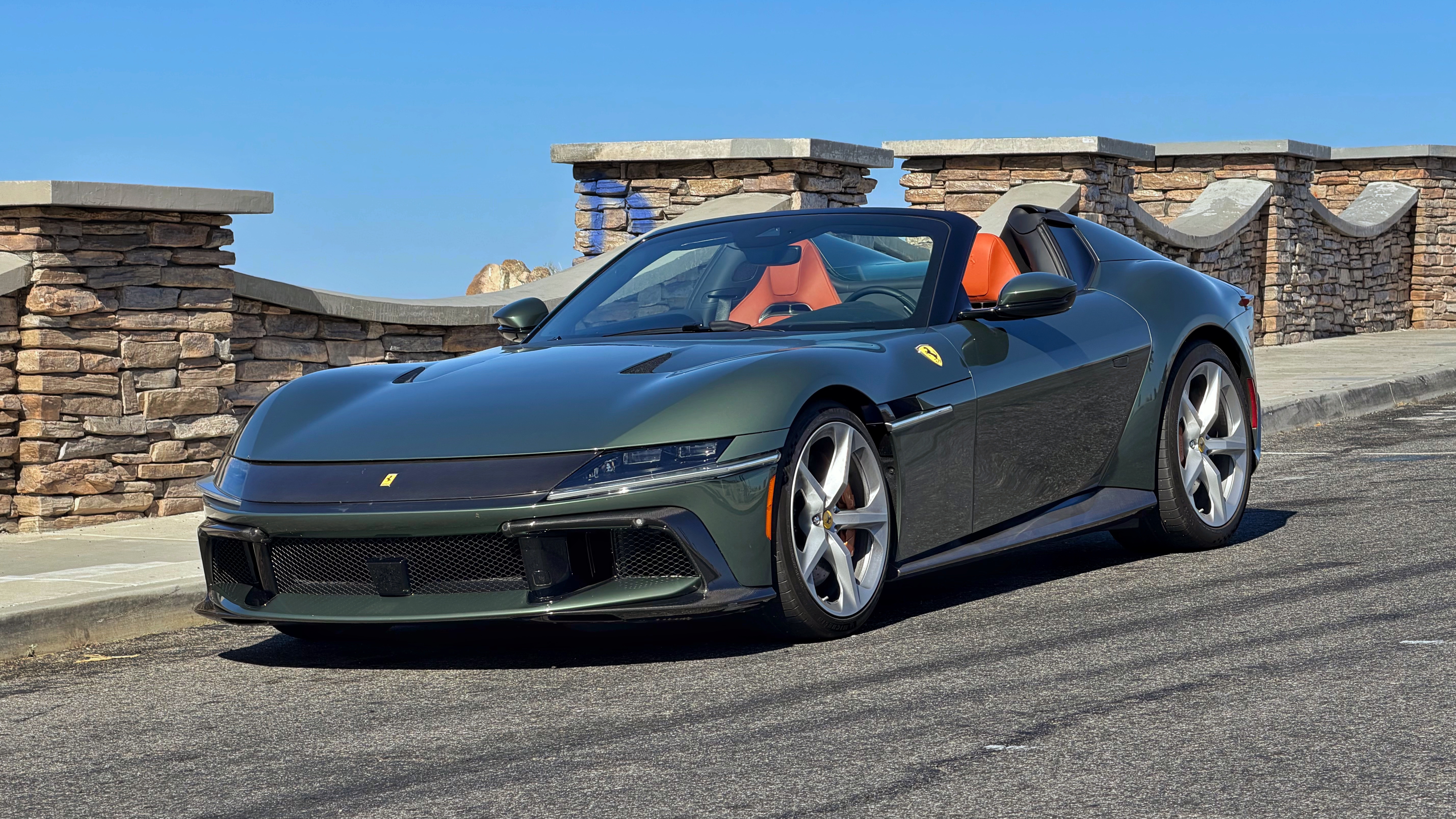
If you think Ferrari chief designer Flavio Manzoni went out of his way to create something entirely new in one of Maranello’s most beloved segments, the front-engine V12 car (technically mid-front), you’d be right. To some, it’s striking; to others, too hard-edged. To me, it’s a combination of the two. But what’s impossible to deny is that, despite its new-age persona, the long, sculpted hood, floating cabin, and protruding flying buttresses pay tribute to Mille Miglia legends like the 335 S.
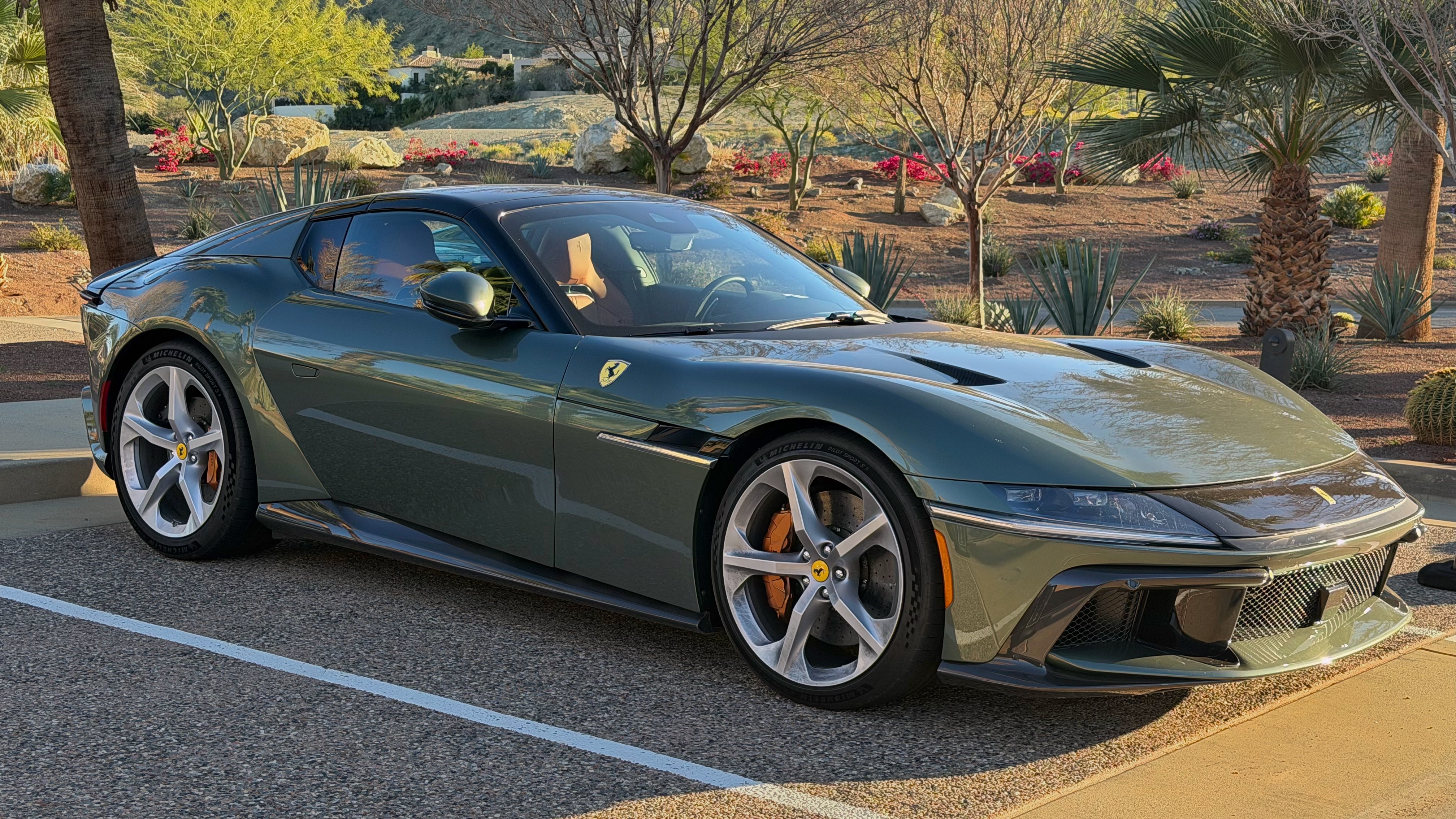
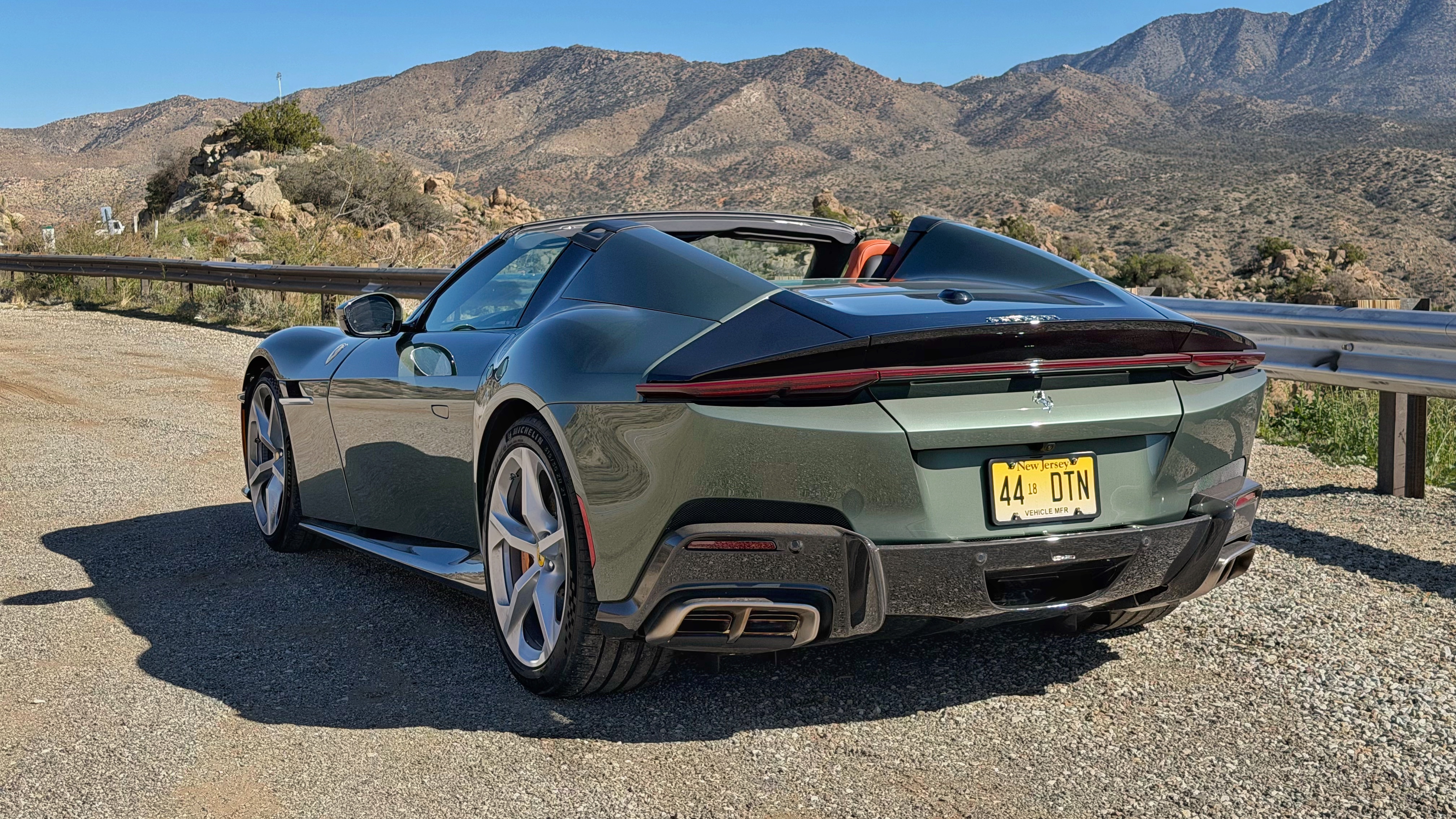
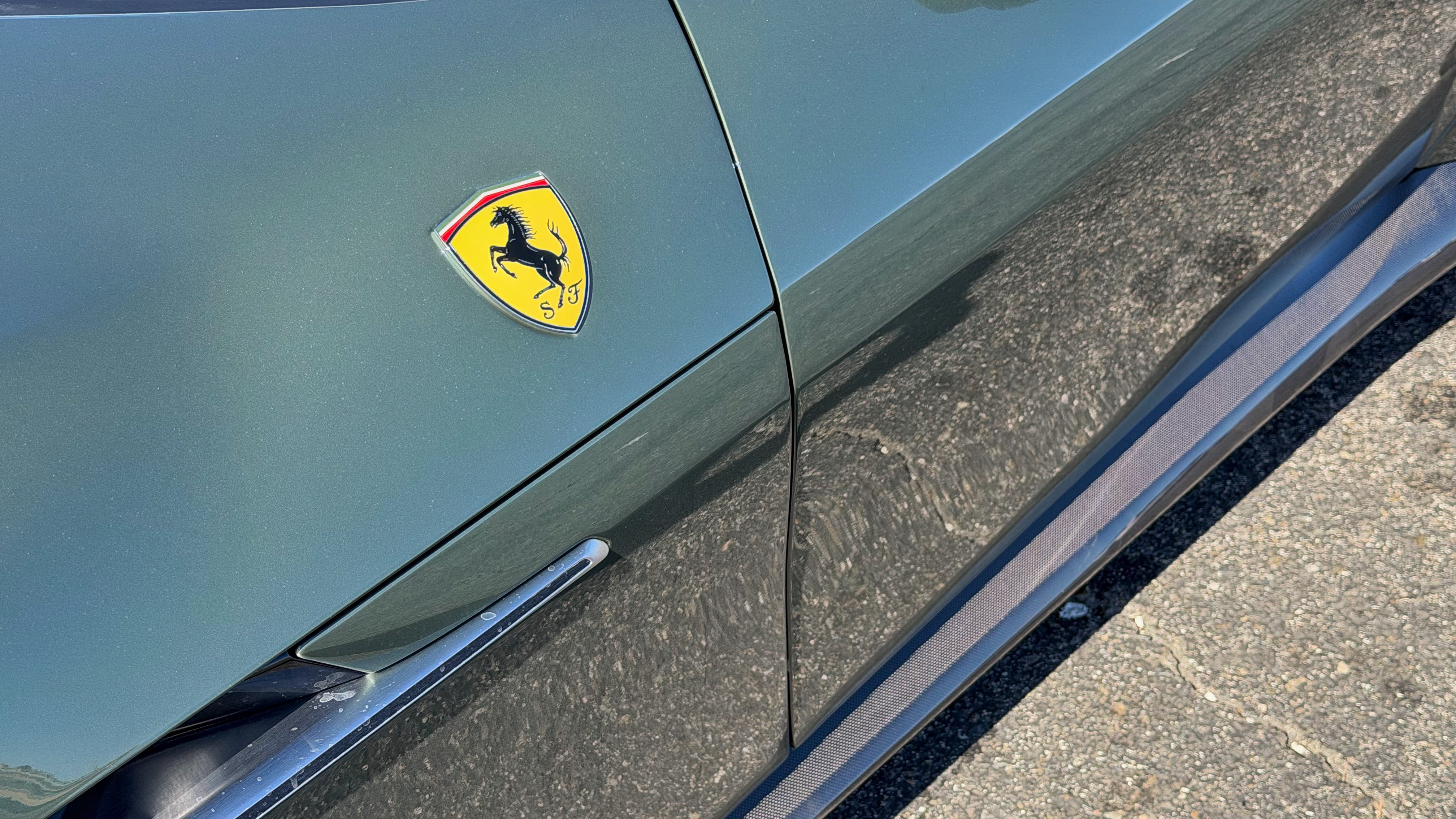
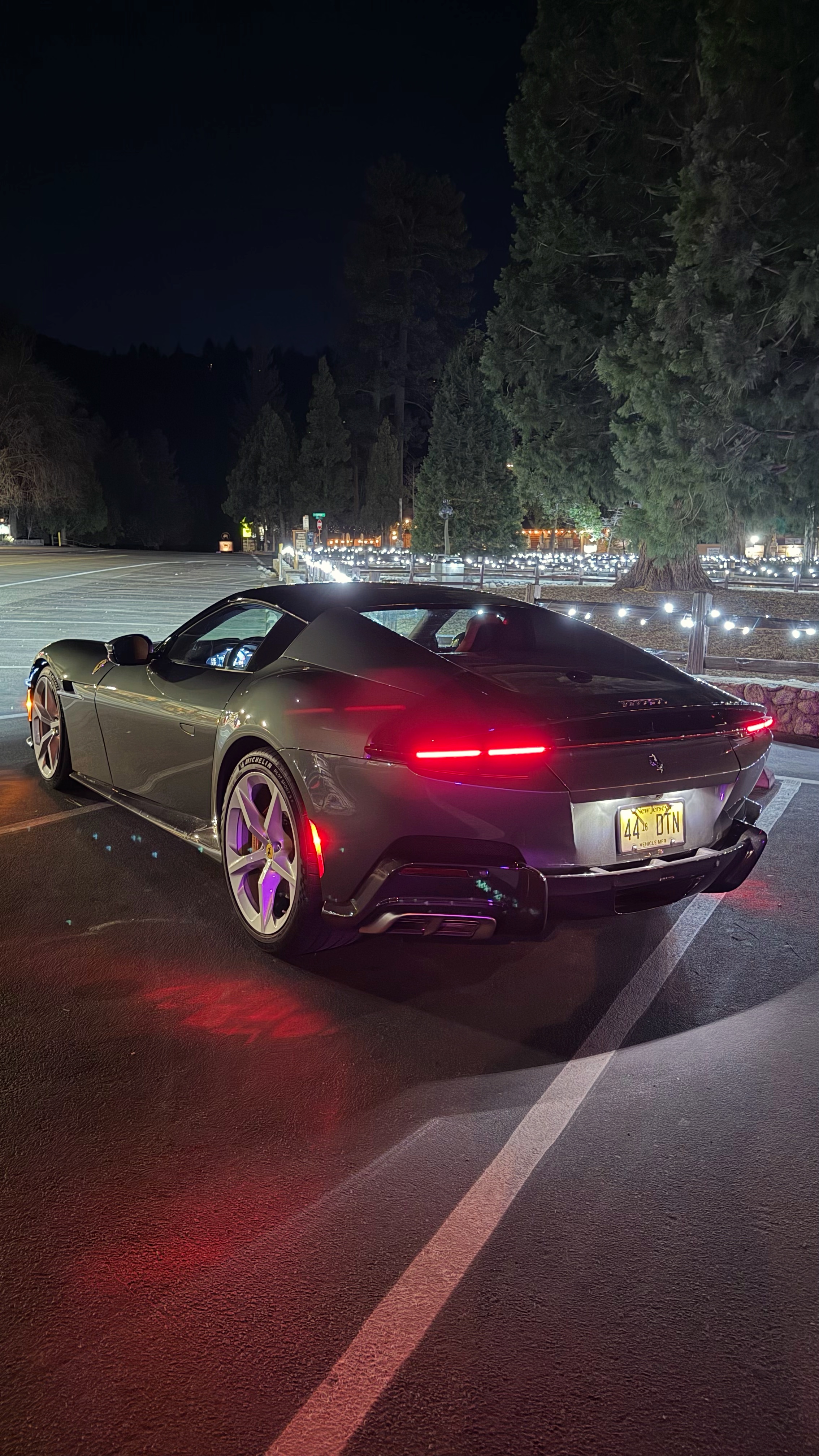
Whether the power-folding top is affixed and protecting you from the elements, or neatly stowed between the rear seats and trunk, the raked cabin stands out with its aggressive angles and fighter-jet-cockpit look, especially from a distance. From up-close, it looks and feels softer, likely because of how low it sits. And that’s the 12Cilindri Spider’s visual trick: depending on how you look at it—up close, afar, front, back, profile—it dazzles you with little details that, somehow, someway, you didn’t catch before, especially in my tester’s silky Verde Toscana hue. Maybe it’s the light marker underneath the headlamp that runs beyond the housing, skips over the tire, and continues toward the door panel as a strip of satin aluminum. Perhaps it’s the active aero flaps that sit flush on the corners of the trunklid, but move up and down independently as you tackle corners, or the throwback dual headlights hidden into the Tron-esque rear lightbar. The more you look, the more it speaks to you.
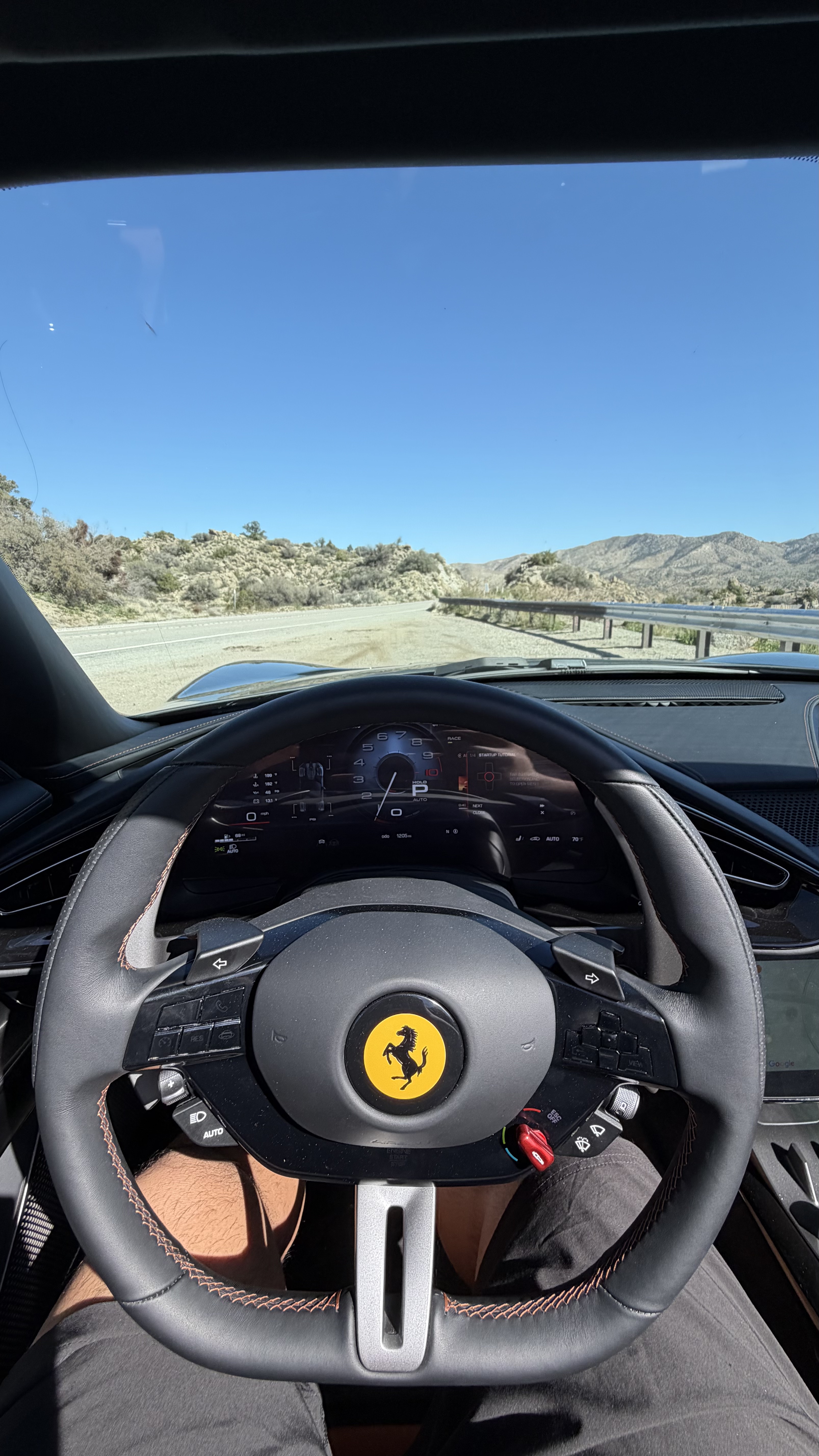
Of the Ferraris I’ve driven, the 12Cilindri Spider’s cabin is the most straightforward in terms of design, user-friendliness, practicality, and comfort. It’s even friendlier than the Purosangue’s, in which I once road-tripped across Italy with my dad and a trunk full of luggage, or the blindingly-quick 296. The horizontal layout essentially splits the dash in two: an upper portion that houses the driver-centric controls in the gauge cluster and the passenger’s display, and a lower portion with a central 10.25-inch touchscreen. It’s all carefully laid out so it doesn’t feel mainstream despite the screen in the middle of the dash. The way I see it, you can use it if you want to, but you don’t need it to operate the car’s basic functions. If you want to focus on driving, you can do most things, if not everything, through the digital gauge cluster.
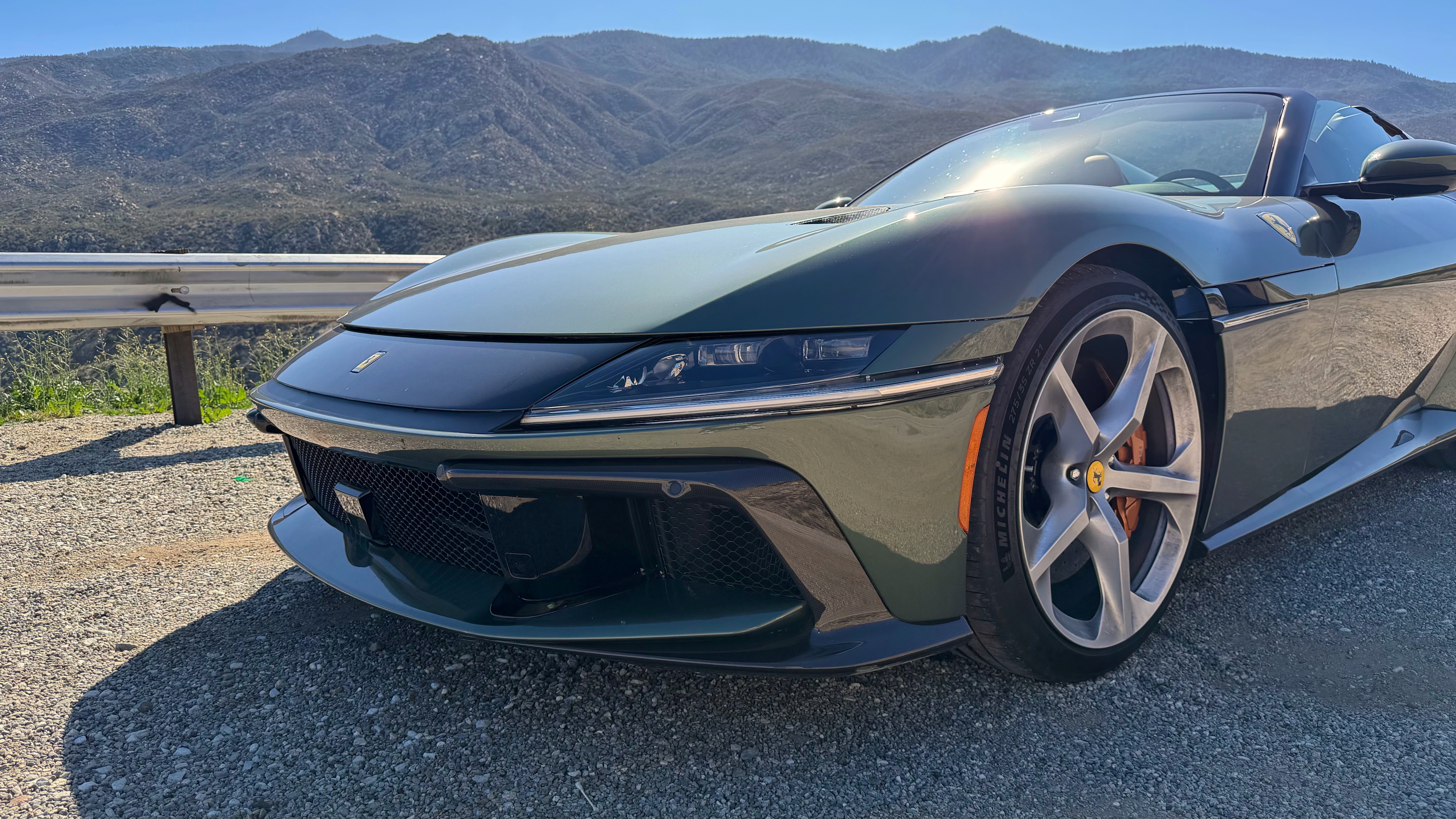
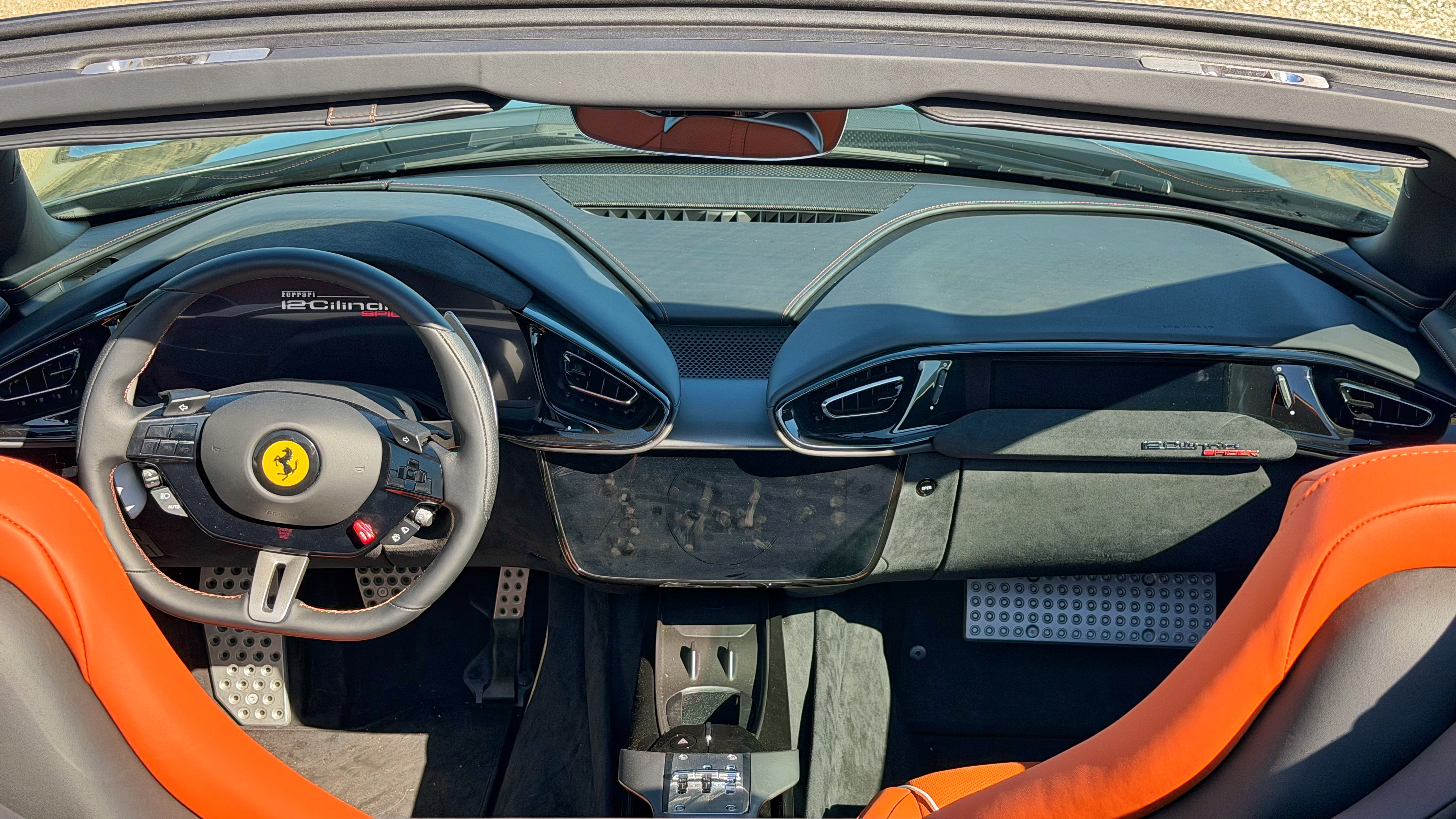
Ferrari describes the interior as a dual-cockpit setup, and that’s pretty accurate. The driver can stick to driver things by operating the car from their little bubble, while the passenger can do the same thanks to their own screen with media, comfort, and other features. Two different roles, two separate zones. Then there’s the center display, which serves as a sort of middle ground for both. And I’m thankful for it, because during everyday driving, you do wish the Purosangue or 296 had a screen as comfortably sized. It’s just practical, especially when parking, searching for a destination, browsing music, and tweaking overall settings.
The optional Goldrake seats wrapped in terracotta-colored leather were ideal for the 12Cilindri Spider’s purpose. Supportive and firm without feeling overkill in the corners or downright miserable on longer drives. I can’t say the same for the choice of material for the speaker grilles. More on that later.
Driving the 12Cilindri Spider
Inside the 12Cilindri Spider, there are two wolves—er, horses. One is chill, the other is possessed. Luckily, you get to choose which you prefer at any given moment.
Let’s start with the first horse. It may be chill, but he’s no slowpoke. Ferraris don’t have Normal or Comfort driving modes (though they do have a Wet mode). It begins with Sport and goes up from there, because it’s a gooddamn Ferrari. If you want a more relaxed experience, buy a Maserati.
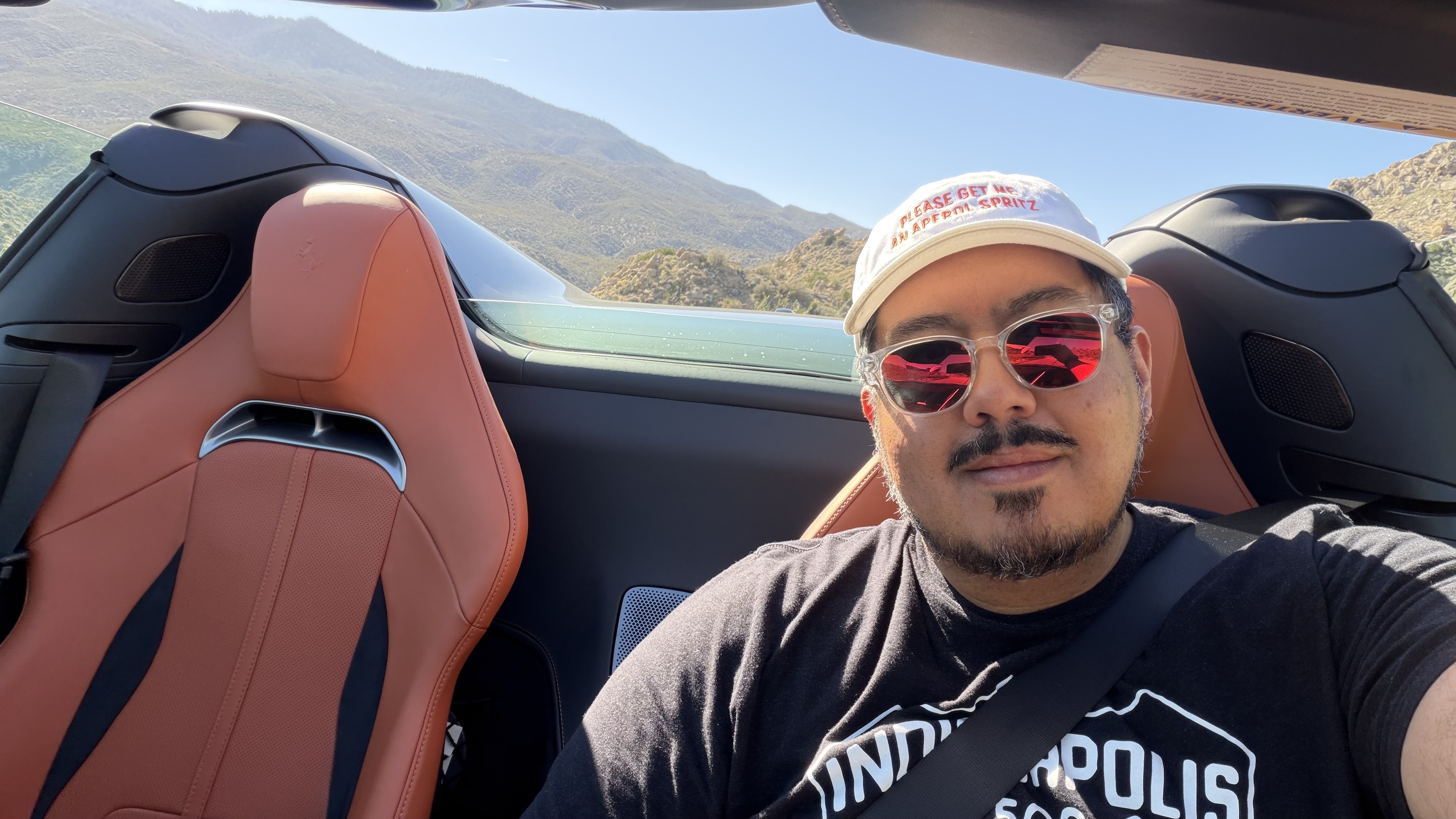
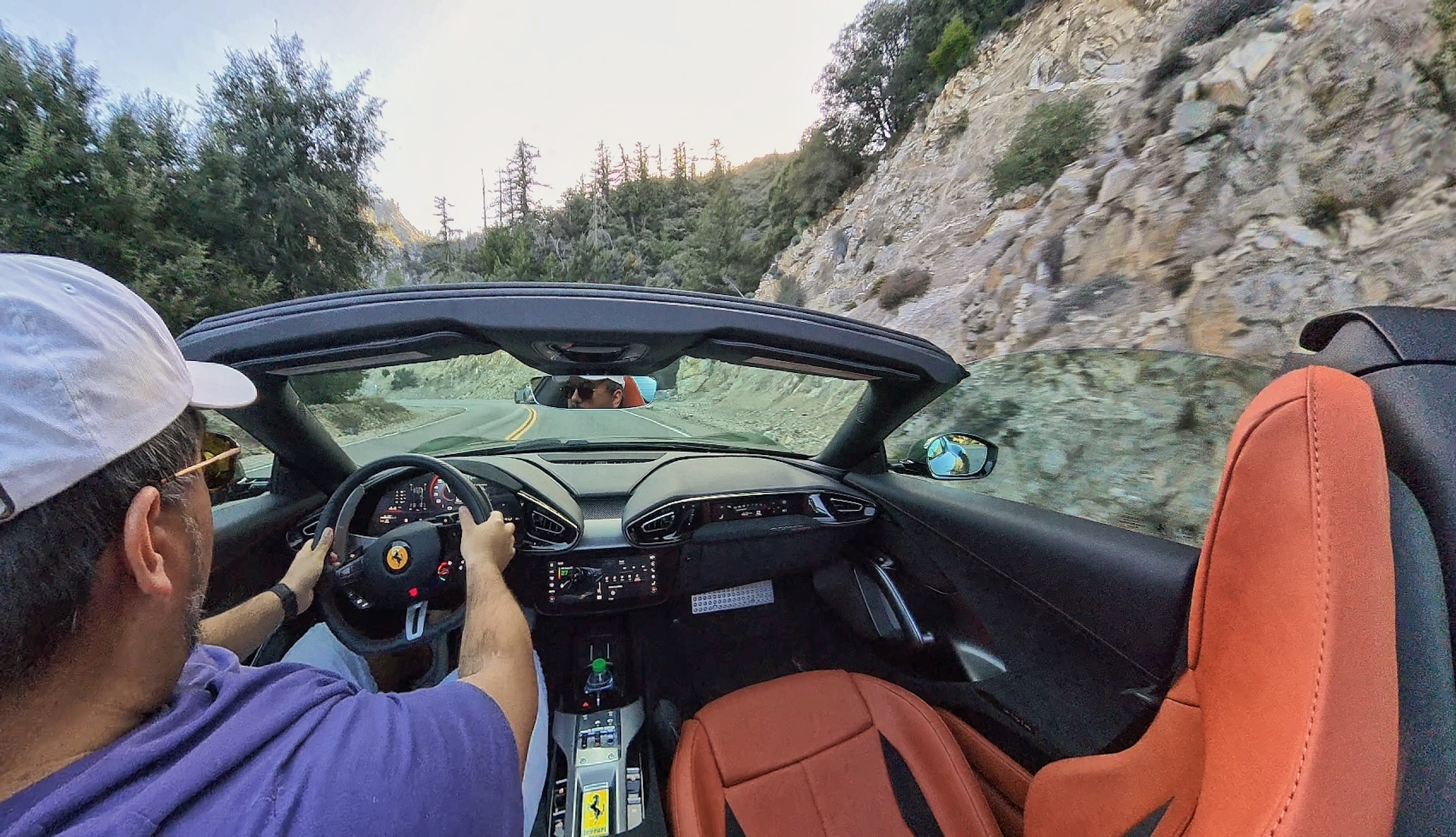
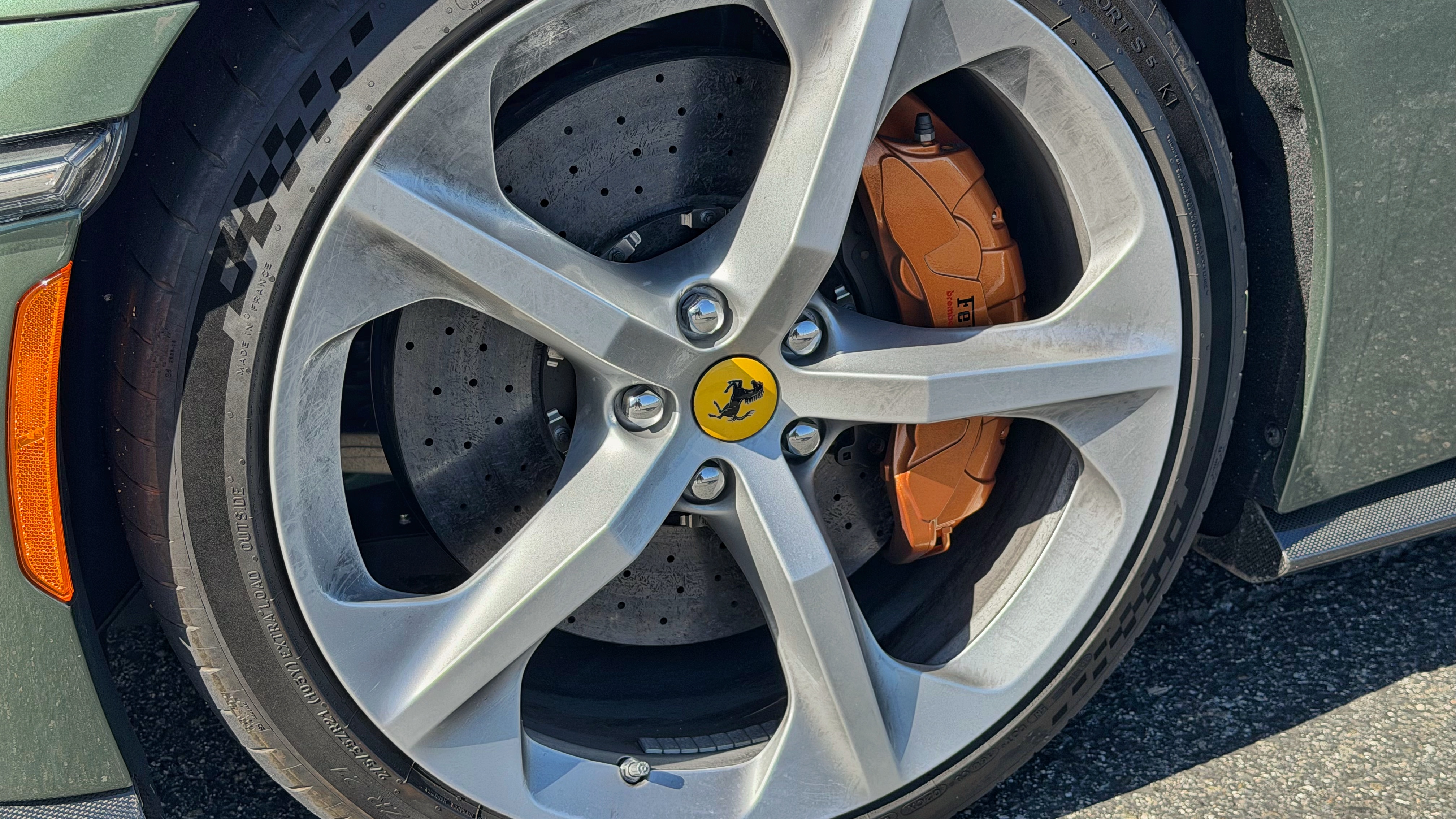
In Sport mode, the 12Cilindri Spider exudes the brilliance of a supercar but keeps any fear-inducing dynamics to a minimum. Step on the gas from a standstill and you’ll still be treated to a loud bark and maybe even a tiny bit of wheelspin, but not much more than that. Suspension is firm but compliant, and steering is direct and as communicative as you’d want any steering wheel to be, but keeps on the lighter side, especially at low speeds. Four-wheel steering comes in handy in urban scenarios. Perhaps the only variable that isn’t greatly affected by your choice of driving modes is braking. Step on the pedal and it feels like you’re pushing a crate full of bricks with your foot, followed by The Hulk grabbing the brake rotor and pinching it to a stop. To say that braking force is strong is an understatement, and it’s not always so easy to modulate this when driving in stop-and-go traffic—even after four days and several hundred miles of driving.
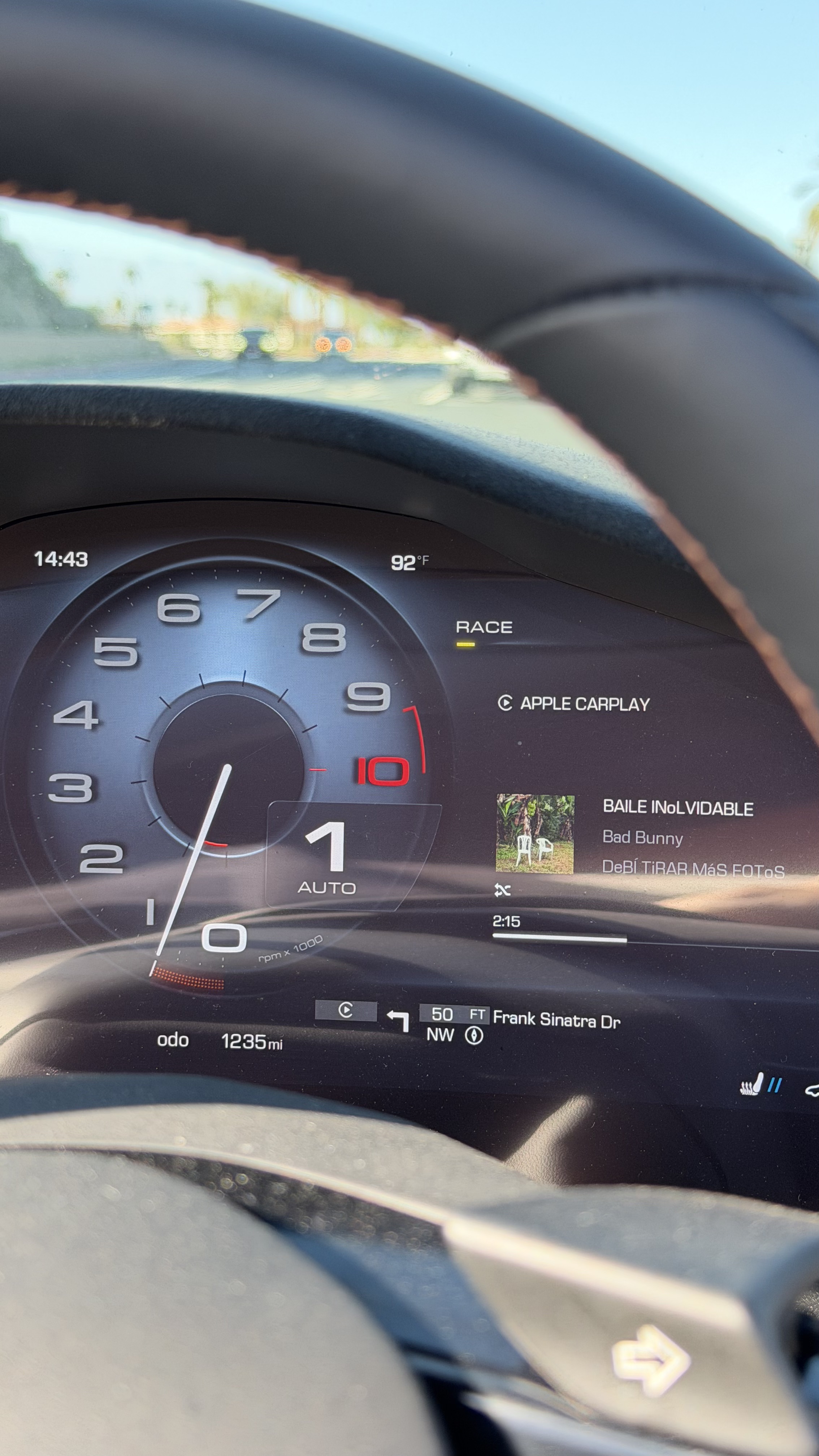
In Race mode, the chill horse goes to its stable while the possessed one flamboyantly appears. It’s intimidating at first, but with enough palle and seat time, you learn to keep things under relative control. The exhaust yells louder under throttle and gets angrier under deceleration. Goosebump-inducing growling ensues when you lift off the throttle, and loud pops when you downshift under hard braking. Regardless of driving mode, 819 hp will always blow your socks off, but in Race mode, the pedal calibration is much more sensitive, meaning you have to be ready to react with your eyes and hands to what happens after you give it the faggioli. Not being able to keep up will end poorly.
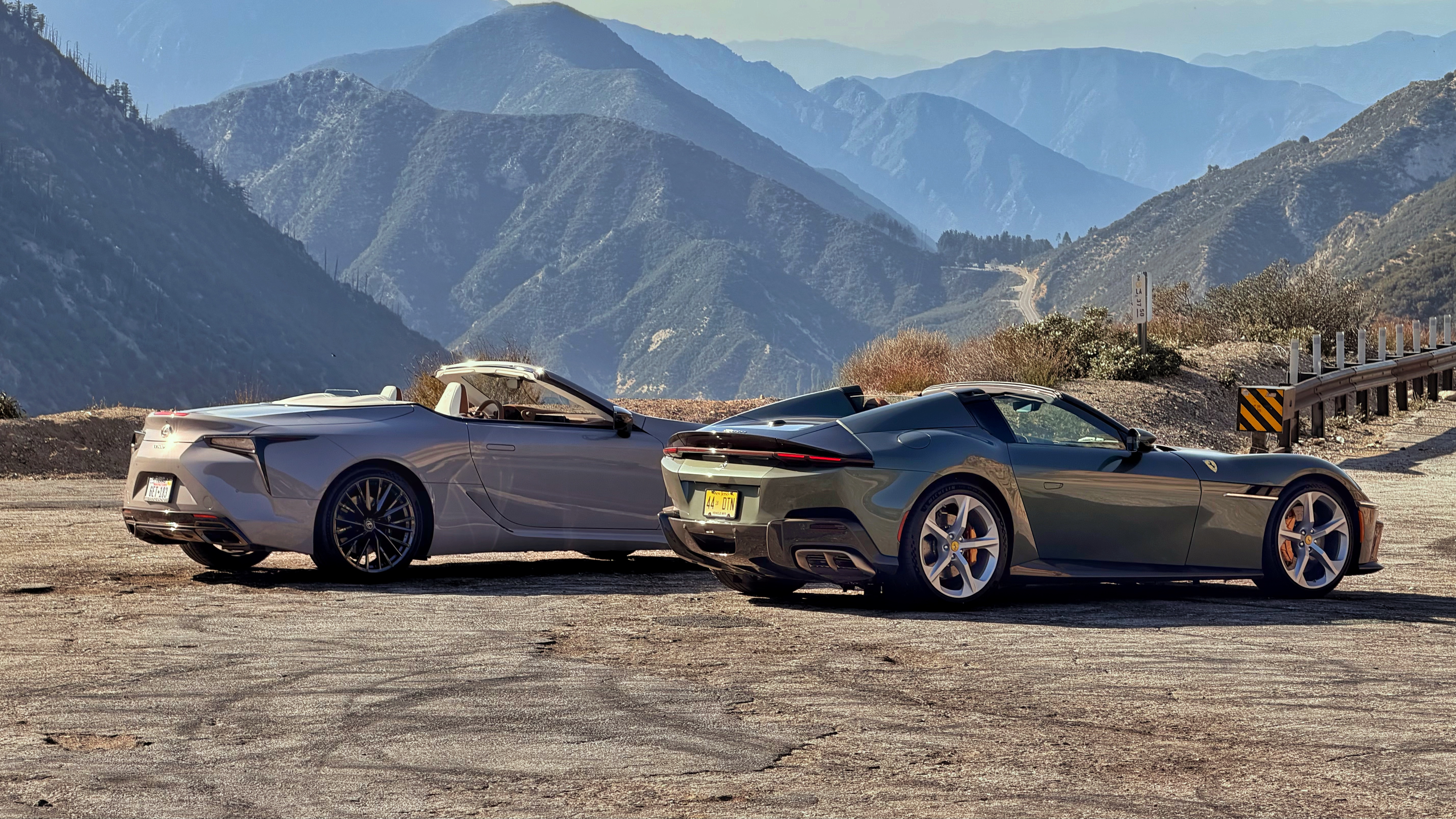
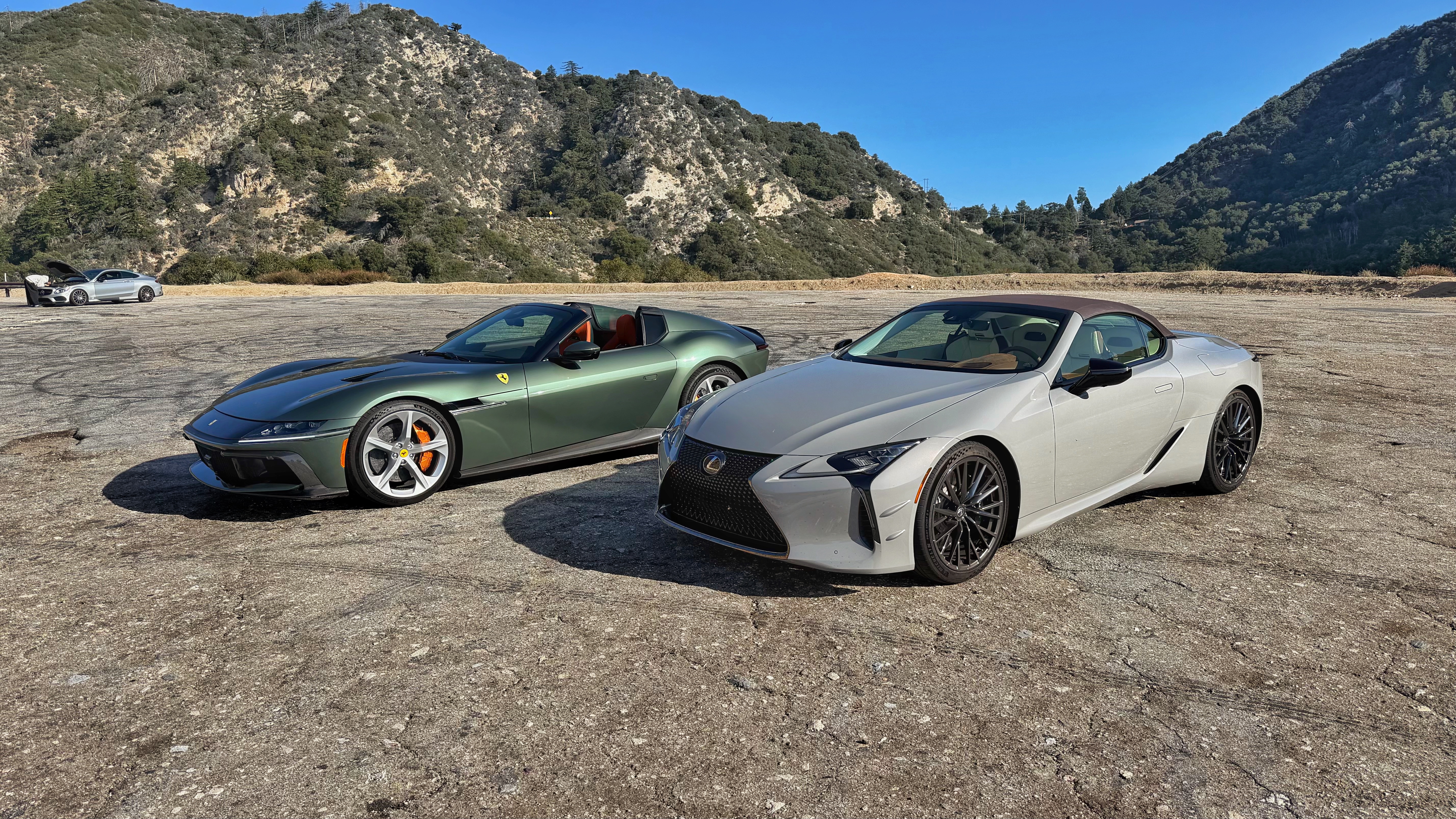
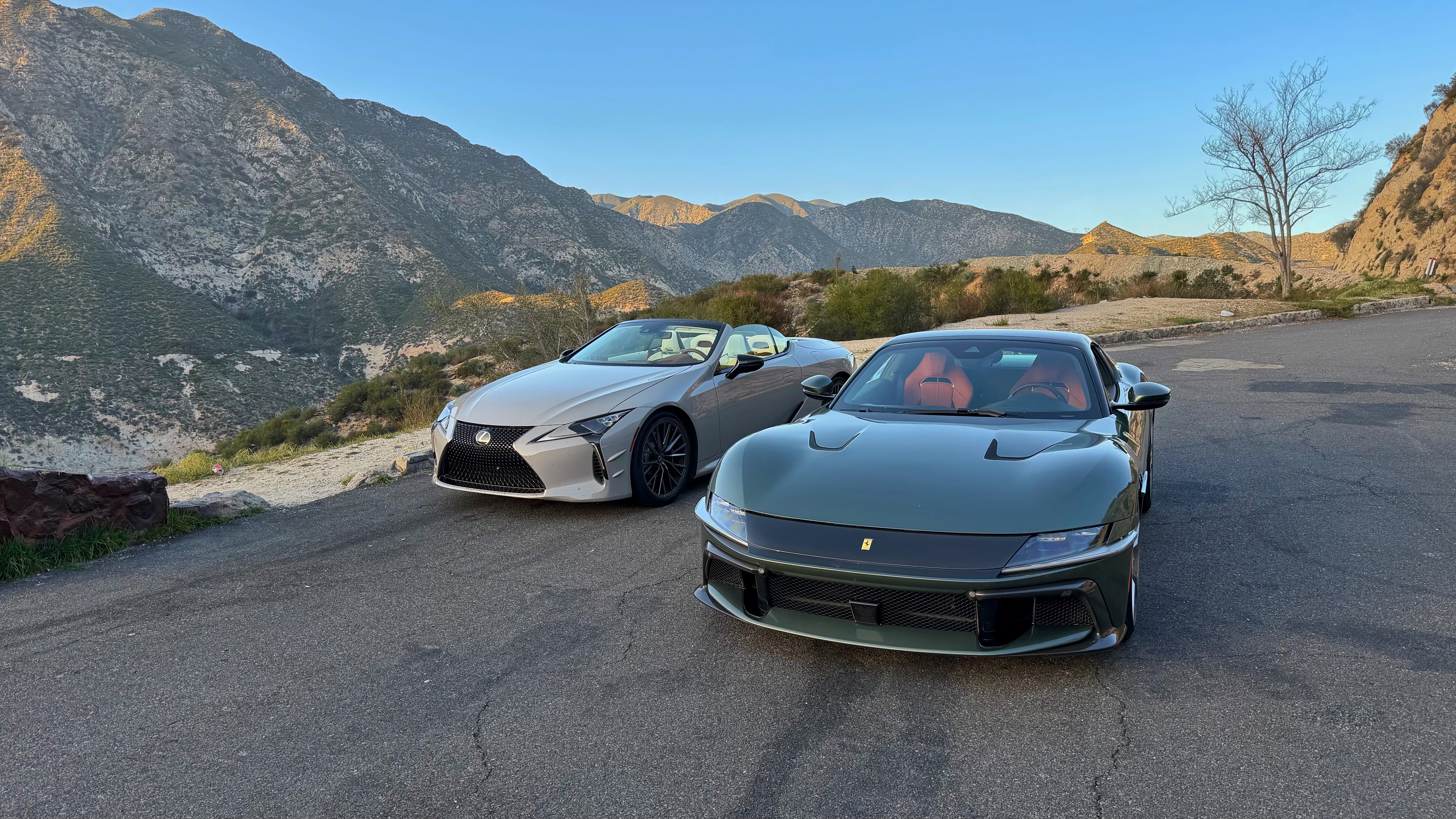
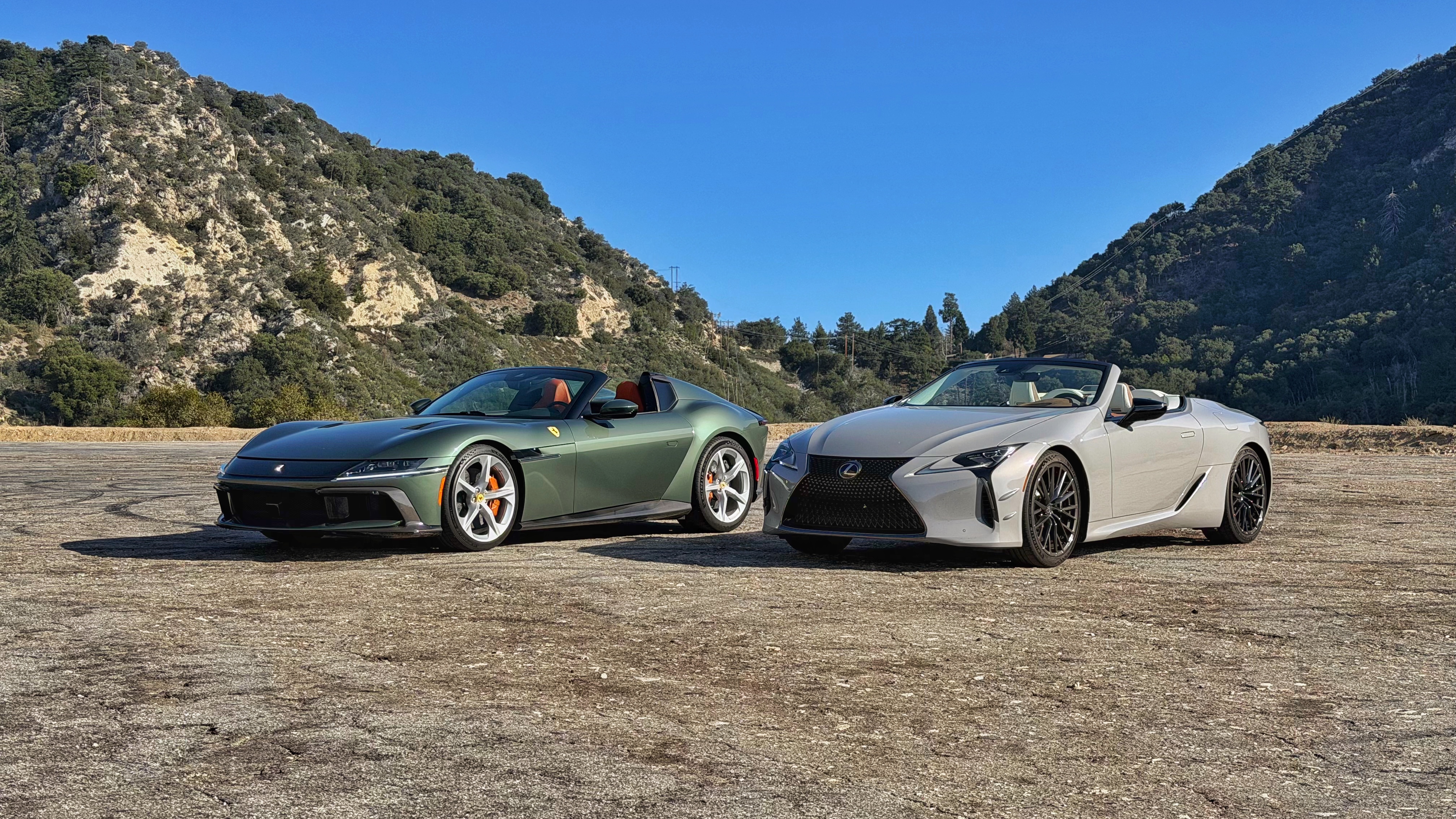
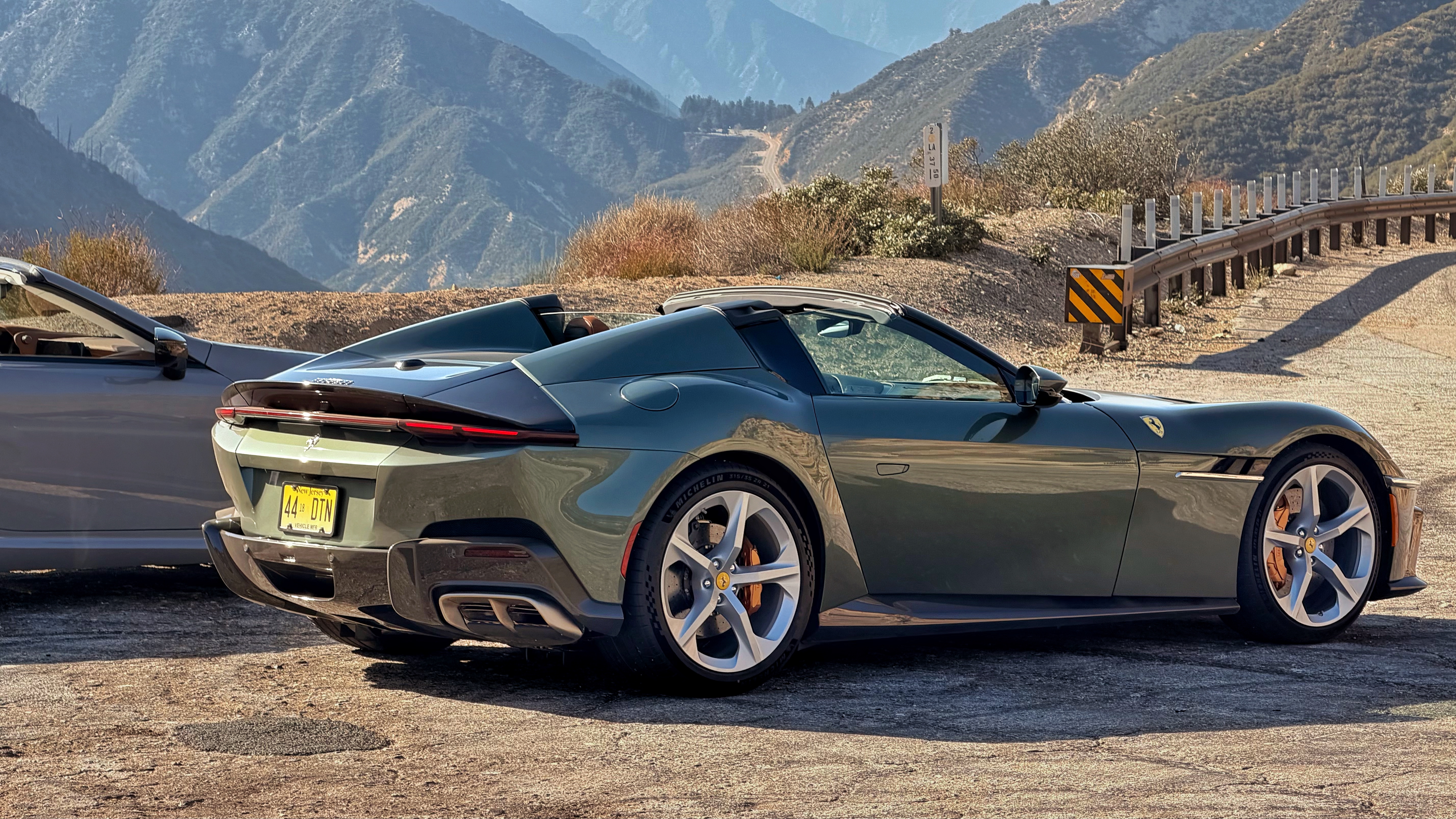
After tooling around in Los Angeles traffic for a day, exploring the car’s capabilities on Angeles Crest Highway with the help of my friend (and former TD writer) Chris Rosales was next on the list. I stuck to Sport for the first run up the hill to get familiarized with the car’s dynamics, which immediately did not disappoint. Despite its large footprint and honkin’ engine, the 12Cilindri Spider is just 380 pounds heavier than the defunct F8 Tributo, a smaller, less powerful, and less luxurious V8-powered supercar. More impressively, it’s only 330 pounds heavier than the hybrid 296 GTB. No one without an FIA super license could actually figure this out without comparing spec sheets, of course, but it shows how ruthless Ferrari must’ve been when engineering the 12Cilindri; managing to pack so much tech and luxury without a massive weight penalty.
After an hour of staring at the rear of Chris’s LC 500, I clicked the Manettino to Race and retracted the top. I was ready to feel and hear this Cavallino Rampante. Because when you’re driving a convertible Ferrari, you put the damn top down. Those two actions did not disappoint. I had adjusted my perception of the car’s cornering capabilities, as I found myself turning in too soon into a corner, thinking the car’s length and heft would make its movements a tiny bit lethargic. Nope. I could almost count one-mississippi from the moment I thought I had to turn in to when I needed to. The steering is quick without making the car feel twitchy or nervous at speed. Four-wheel steering also played a huge role in my flawed perception, making the 12Cilindri much more maneuverable in the corners, especially hairpins.
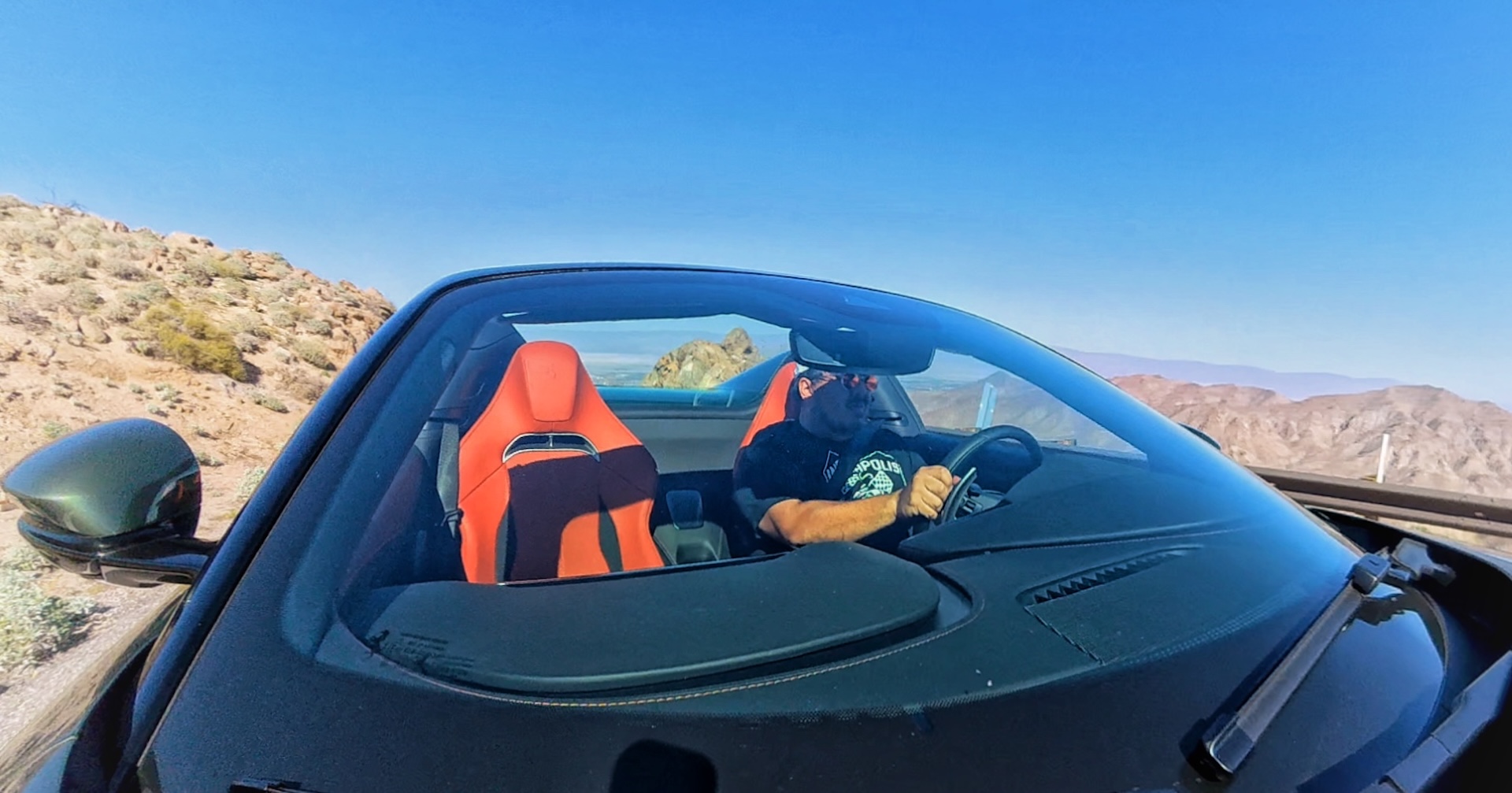
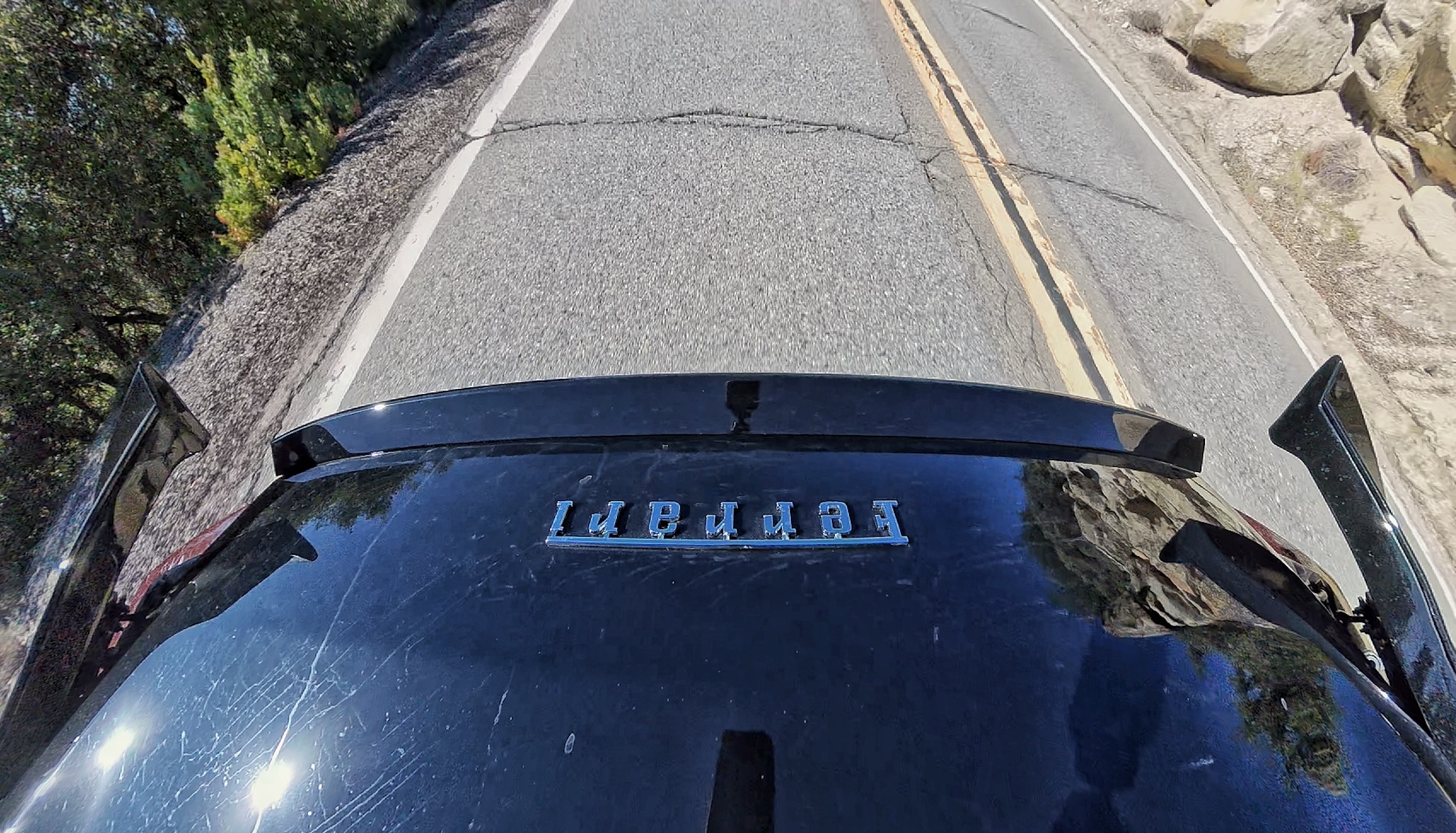
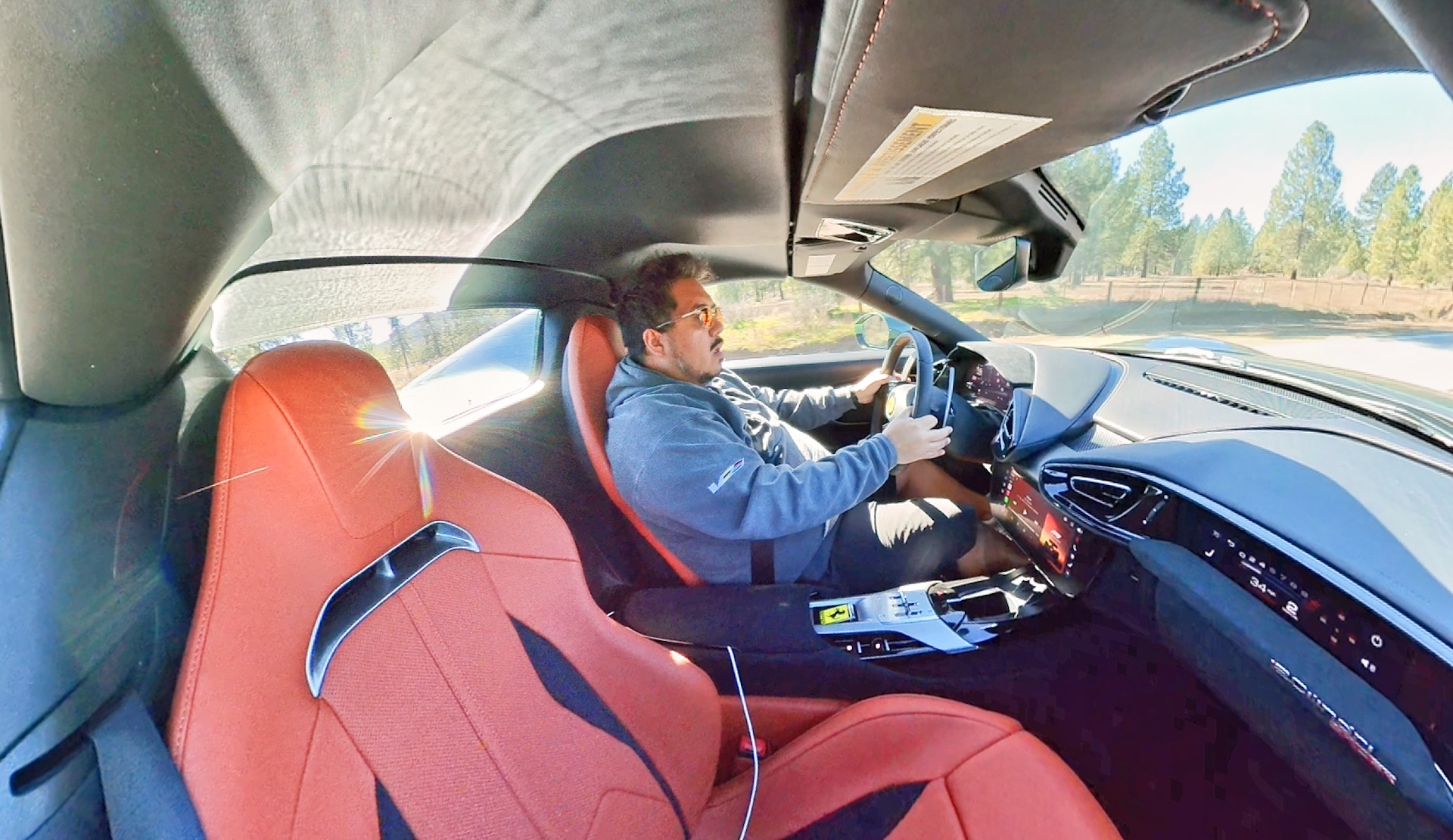
Ferrari’s new Aspirated Torque Shaping system enhances driving engagement by altering the torque curve in the mid-range. Given that the road I was on was primarily tight corners, followed by miniature straights—not exactly the ideal playground for a large V12 car with 800+ hp—ATS actively enhanced the torque curve only in third and fourth gears. This meant I could enjoy more linear torque delivery as I bounced around those two gears, almost as if I were using the entire spread. In a supercar without this feature, you constantly feel like you’re being held back or punished for not using the other available gears—even though you just can’t because of the type of road.
In a jaunt to Palm Springs and back, I experienced longer stretches of road and wider corners. Some of them almost too good, where the 12Cilindri Spider could easily rocket through at triple-digit speeds. But while ATS enhances torque in the lower gears, the only way to get that glorious Italian sound screaming at you is by winding up the revs.
Even in a magical pony like this one, there’s always something that can put a dent in an otherwise perfect execution. In this case, it was the metal speaker grilles in the doors. While they look great, the circles milled in what I believe is aluminum are actually extremely sharp. I graced my fingers while reaching for the door-release button on the door handle a couple of times, and each time it left bits of skin and fingernail on the grilles. Even worse, the lower speaker, closer to the footwell, is positioned in a way that my knee rested on it while driving. This led to a bruise on the first day, a bigger bruise on the second, and by the end of my time with 12Cilindri Spider, I had a nasty-looking and very bloody scrape from my skin being grated by the decorative metal. Maybe it’s a built-in cheese grater. Parmesan, anyone?
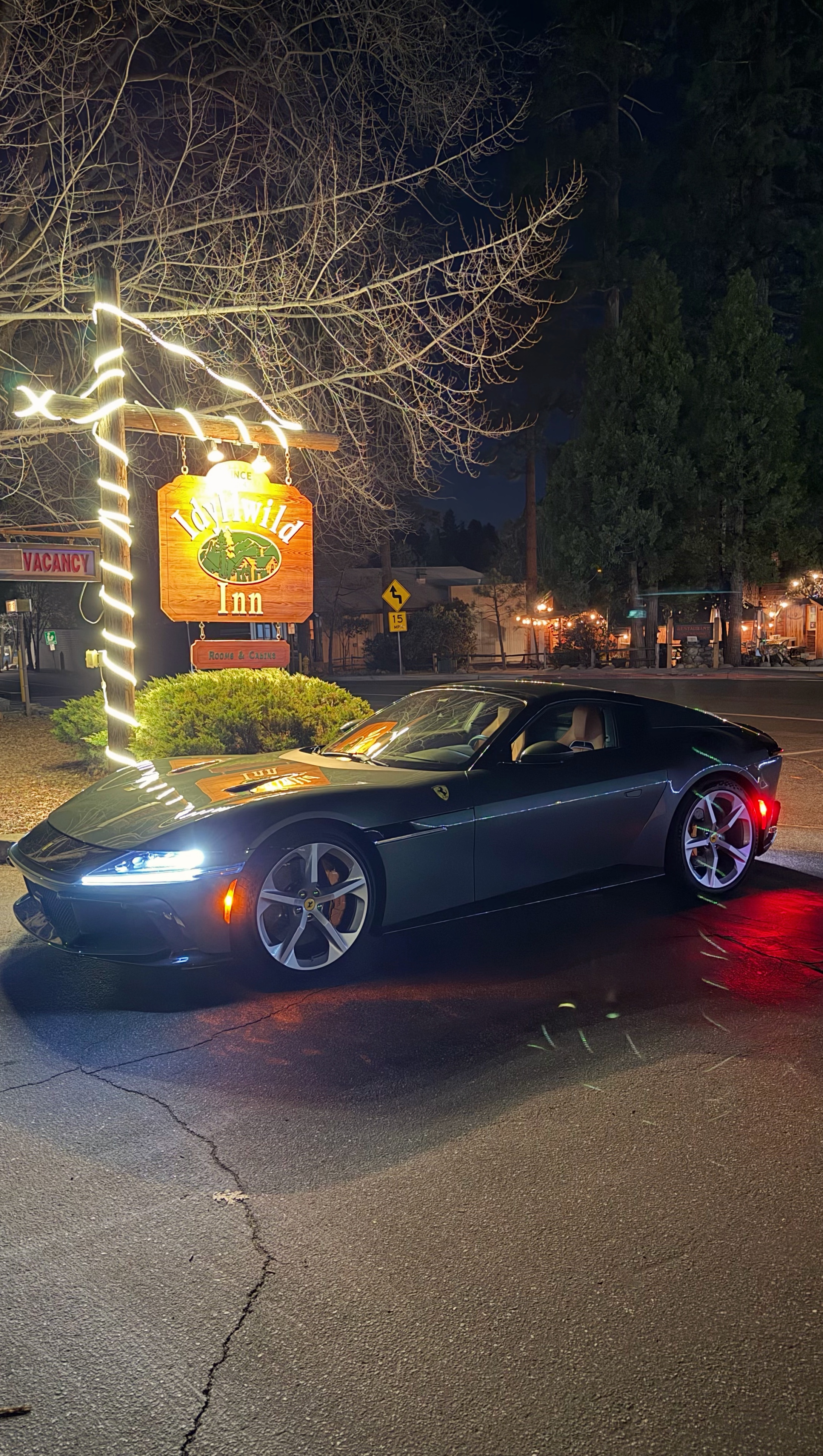
Not a One-Trick Pony
No one goes into a Ferrari review thinking it’s going to suck at being a supercar. You already know it’s going to be fast, handle well, and tempt the author to explore silly speeds even if it means risking jail time. What you probably don’t expect is for it to be a multi-faceted means of transportation—yet, that’s exactly what the 12Cilindri Spider is.
Between carving canyon roads around LA and speeding up and down mountain passes near the Anza Borrego desert, there were endless mundane moments where the $661,000 Ferrari had to prove it could handle life. I’m talking about reversing in and out of parking spots, which meant relying on its many sensors and cameras. Speaking of, having the rearview image fed to the center screen rather than the gauge cluster, as other Ferraris do, is a much-welcome improvement. I also tinkered with putting the top up and down endless times while driving or while stationary; hopping in and out of the car without Apple CarPlay freaking out; and heating up the cabin, using the defroster, and running the heated seats and steering wheel in the mornings, followed by the AC and cooled seats in the afternoon. And I sampled the massaging seats—a first for me in a Ferrari. These and many other things are a piece of cake for my Honda Passport, but that hasn’t always been the case for the top echelon of Italian supercars.
Verdict
I practically hate myself for saying this, but I must: They just don’t make them like this anymore, and I mean that literally. There are only six V12 cars on the market today, and just two are naturally aspirated. The other five are either turbocharged or hybrid. The holy duo? The 12Cylindri and the Purosangue.
The hybrid V12 in the Aston Martin Vanquish is mighty, and the twin-turbo V12 from Rolls-Royce is a work of art, but they simply don’t stack up to a Formula 1-inspired 6.5-liter V12 that revs to the moon and back quicker than your eyes can follow the tach. It’s a thing of beauty, and that alone is worth the price tag on this prancing horse.
Driving a 12Cilindri Spider for several days and hundreds of miles on some of this country’s best roads was like going on a spiritual retreat and taking ayahuasca until coming face to face with a higher power. It reconnected me to the love of driving. It also reminded me that, despite earning a fortune every year by plastering its logo on endless crap, Ferrari builds incredible cars that ooze history and passion and are downright soulful.
The 12Cilindri Spider is a love letter to driving, and there are no ifs, ands, or buts about it.
Ferrari provided The Drive with a four-day loan of this vehicle for the purpose of writing this review.
2025 Ferrari 12Cilindri Spider Specs
| Base Price | $514,994 ($661,364) |
| Powertrain | 6.5-liter V12 | 8-speed automatic | rear-wheel drive |
| Horsepower | 819 @ 9,250 rpm |
| Torque | 500 lb-ft @ 7250 rpm |
| Seating Capacity | 2 |
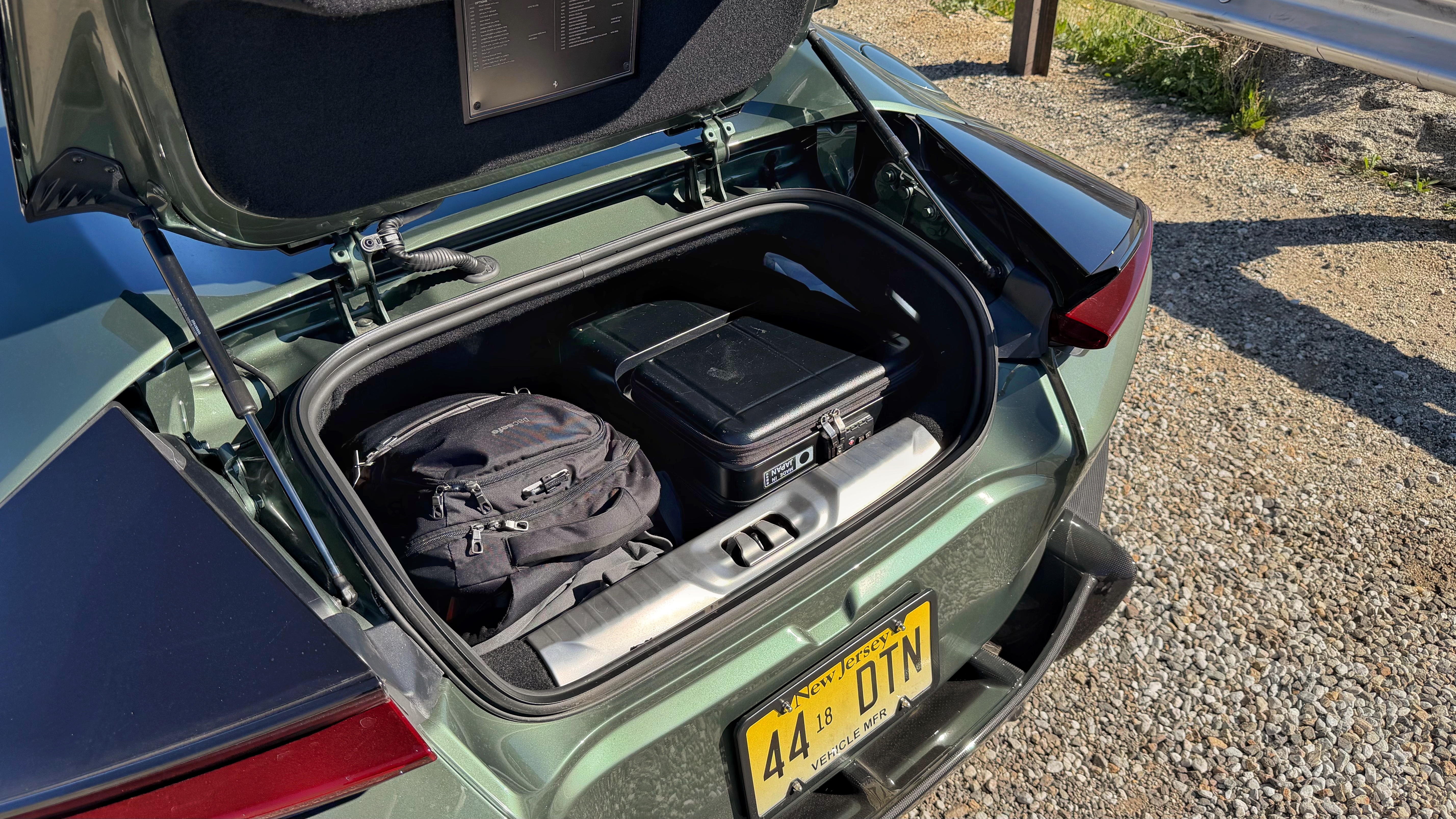
| Cargo Volume | 7.0 cubic feet |
| Curb Weight | 3,571 pounds |
| 0-60 mph | 2.8 seconds |
| Top Speed | 211 mph |
| EPA Fuel Economy | 12 mpg city | 19 highway | 14 combined |
| Score | 10/10 |
Email the author at jerry@thedrive.com
Loading comments…
Comments couldn’t be loaded. Please refresh the page.