
Key Takeaways
- Ford’s stance on Right to Repair raises concerns. CEO Jim Farley suggests repairs should be done at a ‘reasonable cost’ but discourages DIY repairs due to complexity.
- Potential impact on independent mechanics. Restricting repairs to dealerships could eliminate independent options, raising service costs.
- Legislation may be necessary. Without legal protection, consumers could face limited repair choices and higher expenses.
- Farley’s comments spark debate. His remarks suggest Ford’s preference to control repair processes, raising questions about consumer rights.
AI assisted, editor reviewed
Just days ago, President Trump met with auto execs from Ford and GM to discuss “Right to Repair,” a critical concept that will ultimately affect every car owner in America. The exact outcome of that mini-summit remains murky. But one follow-up comment from Ford CEO Jim Farley should raise your eyebrows.
Basically, having the Right to Repair means consumers should be allowed to choose their own mechanics. There’s been a long-standing debate in government regarding whether or not to codify legislation around this. Big corporations typically want to own all servicing rights exclusively for that sweet, sweet recurring revenue. Small business owners and consumers don’t want to be under the heels of monopolies.
It’s important to understand that Right to Repair is not just about dudes like me tinkering on old trucks in our driveways. If automakers are allowed to wall off auto repairs to a corporate-only business, independent mechanics will get squeezed out of existence. If that happens, your only option for service will be dealerships. And if you think their hourly labor rates are high now, what do you think’s going to happen when there’s literally no alternative?
Shortly after the White House meeting, the Detroit Free Press caught up with Mr. Farley at an event sharing a “$5 million joint investment from Ford Motor Co. and Bloomberg Philanthropies” to modernize and expand the Detroit Public Schools Community District Foundation’s auto technician program.
The conversation moved to Right to Repair, on which Farley made a comment that sounds like complete filler to me:
“I think Ford’s position is very reasonable. We’re really a big advocate for the ability to repair a vehicle, but it has to be done at a reasonable cost, and—”
Freep’s journalist then jumped in with the same question I would have wanted to ask: “But you don’t want people repairing their own vehicles?”
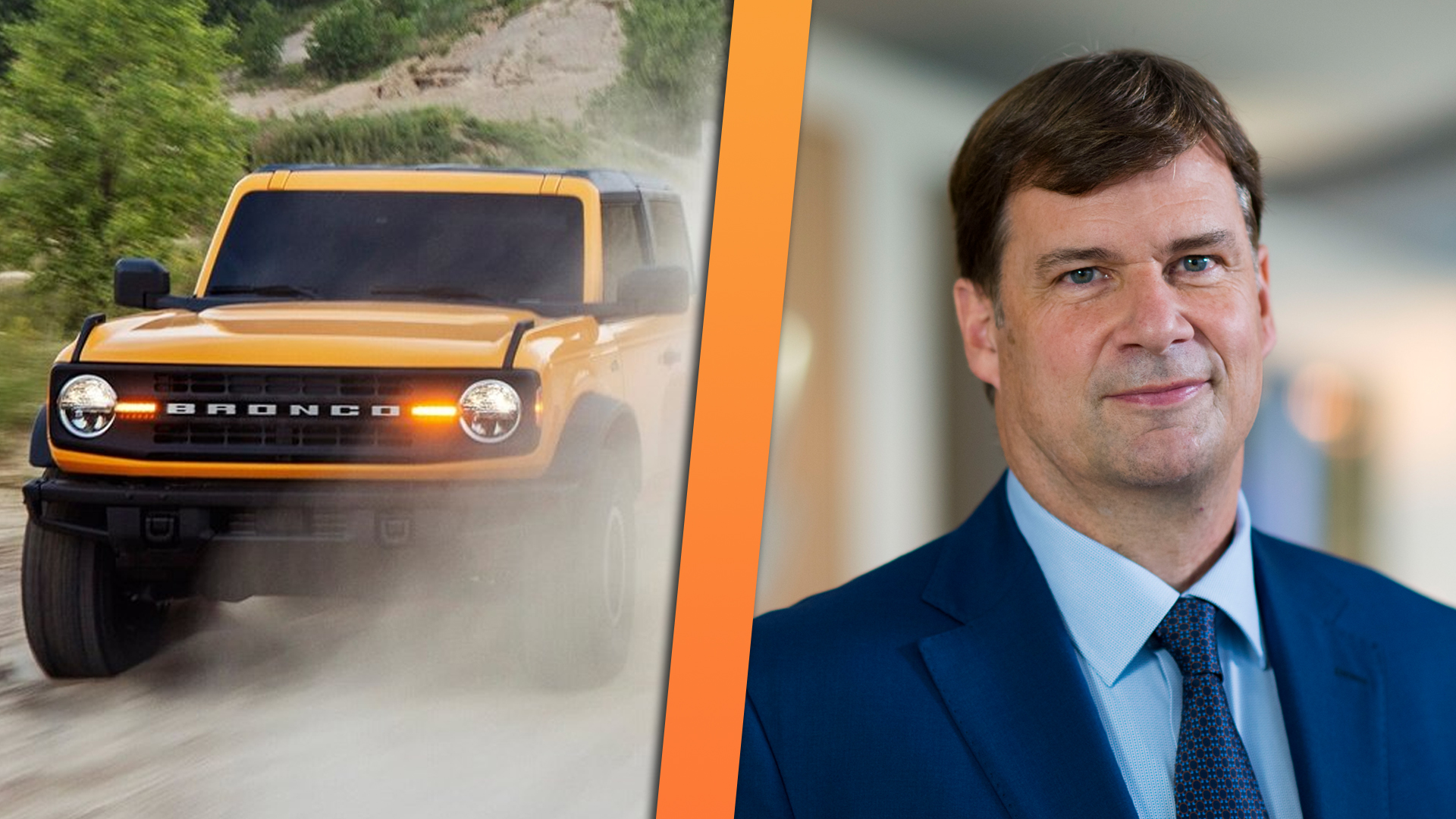
Farley’s reply: “No, that’s, that’s fine, not for warranty work, though. These are very complicated cars, and we don’t think that’s safe, for many of the repairs on our vehicles, someone at home like myself could never do it. I have no problem working on a ’73 Bronco, but to work on a brand-new Bronco? I need all sorts of specialty tools. That’s something that, um, you know, we would put people’s lives at risk.”
Road & Track presented that as “Ford CEO Jim Farley clarifies automaker’s position on ‘Right to Repair’ rules,” my read is pretty much the opposite. What “position” was he referring to? What the heck did he mean by “reasonable cost”?
As far as “specialty tools” go, the 2026 Bronco does have a few features you might not want to touch as a DIYer—things like ADAS calibration come to mind. But even that kind of technology is pretty commonplace today, and should be serviceable by an independent shop. The Bronco was a particularly weird example to call out, because by and large, the new Bronco is one of the most primitive new cars you can buy right now. (Don’t get me wrong, I absolutely love it.) The only way real barriers to non-factory service could be required to work on a ladder-frame gas-engine truck would be if the automaker intentionally loaded it with proprietary nonsense.
Farley’s comments make me nervous because I’m already feeling the pain of “factory fixes only” corporate culture with my Cub Cadet lawn mower. Last summer, I bought new grass-cutting blades for my ZT1 42E, and talking to the company’s customer service line was like a hostage negotiation. They really did not want to give me the torque spec on a part I had purchased directly from the manufacturer. And good luck finding anything beyond a basic user manual online.
I dropped Ford’s PR team a line to ask for clarification, and have heard they are sending me an official statement, but we haven’t seen it yet. I’ll update this space if and when it comes through.
I also reached out to Jeep about this. Stellantis was notably not represented at the Trump meeting, and I was kind of hoping somebody at Jeep would take the opportunity to say something like “hell yeah, brother, you’ll always be able to fix a Wrangler with Zip-Ties, duct tape, and WD-40.” To Jeep’s credit, it did send me a crafted statement, but it was a lot less exciting: “Jeep vehicles are built, shaped, and continually reimagined by the people who own them. And that deep, authentic customization culture is what sets the Jeep brand apart,” a spokesperson wrote. More marketing speak than a political stance, but at least it acknowledges the significance of the relationship between enthusiast vehicles and hands-on owners.
As it stands, my read on Farley’s words and body language in the video is that Ford would love to not let you work on your own vehicle, but he knows he needs to tread lightly because saying that out loud will bring out the pitchforks. That’s my opinion, not a statement of fact. I welcome challenges and other interpretations, if you have one.
If you have any expertise or insights on Right to Repair, I would love to hear about it. Hit me up at andrew.collins@thedrive.com.
Loading comments…
Comments couldn’t be loaded. Please refresh the page.