
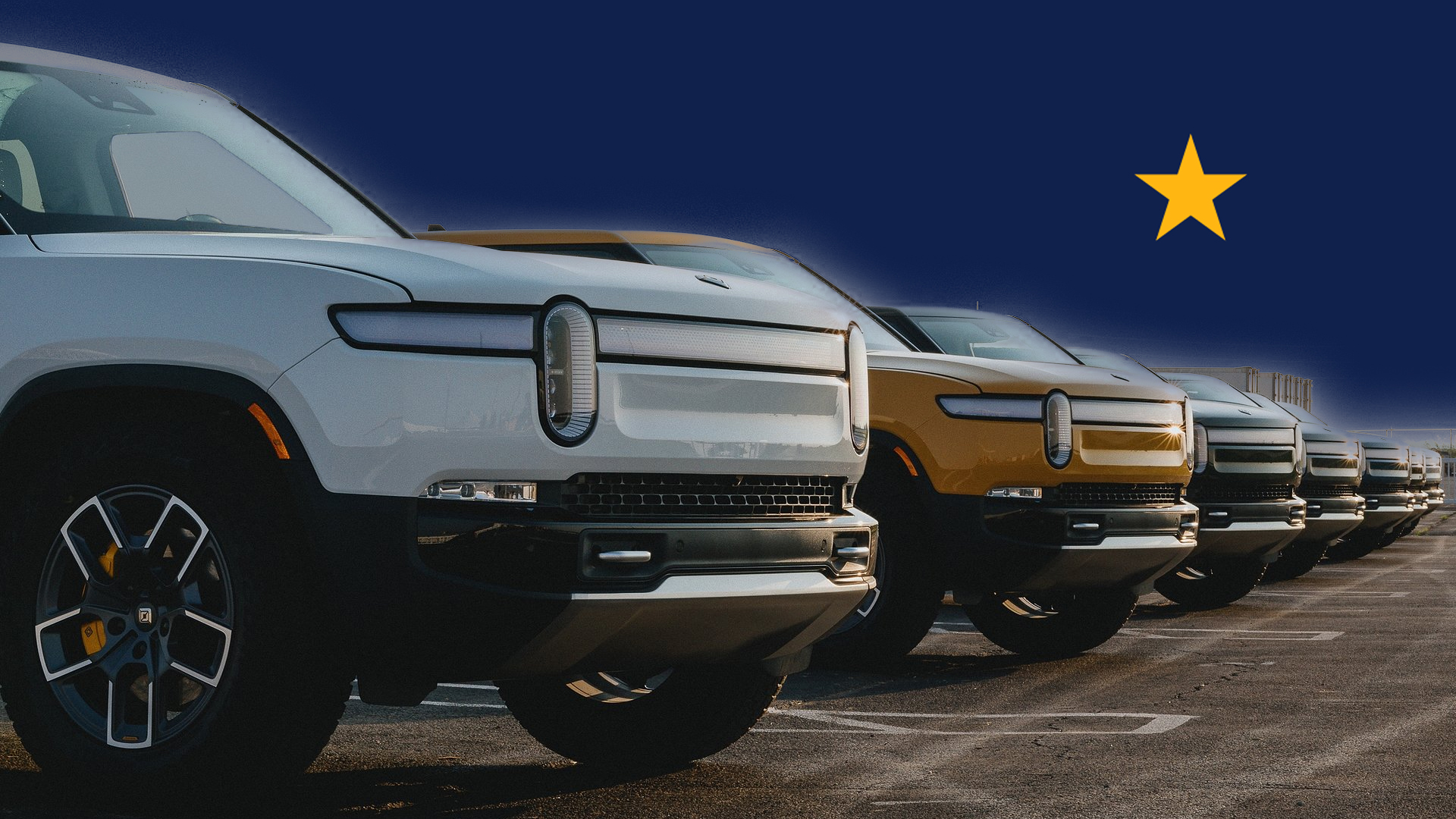
A Rivian owner in Alaska needs warranty work on his 2024 R1T. Rivian will only do it at its nearest service center in Seattle—a big inconvenience in the best of times, but right now, it’s a bona fide logistical quagmire. Commercial barges won’t take EVs out of Alaska since one caught fire last summer, and passenger ferries will only take them in extremely limited quantities. Even if you’re willing to cough up a couple of grand to send your EV on the boat ride, the lead time for a slot is months, not weeks. Rivians in the land of the midnight sun are currently caught in a perfect storm of a super-limited service infrastructure and impossible shipping stipulations.
The R1T driver who reached out to us has been understandably frustrated that he can’t access the warranty work he’s entitled to. A few seconds of searching on Reddit revealed that while some Rivian service in Alaska has been handled by mobile technicians and authorized third parties, getting work done at the Seattle center has been arduous. Rivian does promise “complimentary emergency towing to transport the inoperable Vehicle to either the nearest authorized Rivian service location or to a mutually agreed-upon location for warranty-related issues,” but there are asterisks, and being far as hell from a service center appears to be one of them.
On the positive side, the same person who flagged this issue for us is optimistic that Rivian will figure out a solution and indicated that the Seattle service team seems committed to helping the Alaskan contingent, but even so, it’s a logistical puzzle with a lot of expensive pieces.
Overland transportation is impractical at best, and not even possible at worst. Some population centers in Alaska (Juneau, for example) are completely inaccessible by road—you must take a ferry to get there. Even if you’re not on an island, the costs to ship an inoperable EV across Canada are well over $5,000. See, lithium-ion batteries are classified as Class 9 Dangerous Goods. Under Transport Canada and US DOT (49 CFR) reciprocity, any vehicle with a “potentially compromised” or “defective” battery requires a whole litany of special considerations because it’s treated like hazmat hauling.
I dropped Rivian’s communications people a line to ask about potential solutions, and will update this story if they have any official insight to share. This isn’t the company’s fault, really, but it’s not a great look for a vehicle billed as an off-road adventure machine. Still, a Facebook group, Alaska Rivian Collective, recently researched and posted the total count of Rivians registered in the state: There are only 80. On one hand, that doesn’t bode well for the company building out a much bigger service infrastructure up there; on the other, it might increase the odds of the automaker making exceptions to standard policies to help out such a small group of pioneering owners.
Even if the vehicles technically require servicing with specialized tools that might only be set up at a Rivian center, surely an improvisational fix could be executed via a mobile tech with some kind of computer override.
Obviously, owning a cutting-edge vehicle 2,200 miles from its nearest dealerships comes with inherent practical risks. But the boat-transportation snafu is creating a uniquely painful situation for the folks brave enough to drive these things north of the 60th parallel right now.
Why EVs Are Stuck in Alaska: Explained
Here’s the specific breakdown of what’s happening and why EV owners in Alaska are up a bit of a creek right now.
The Core Crisis: The “Barge Ban” of 2025
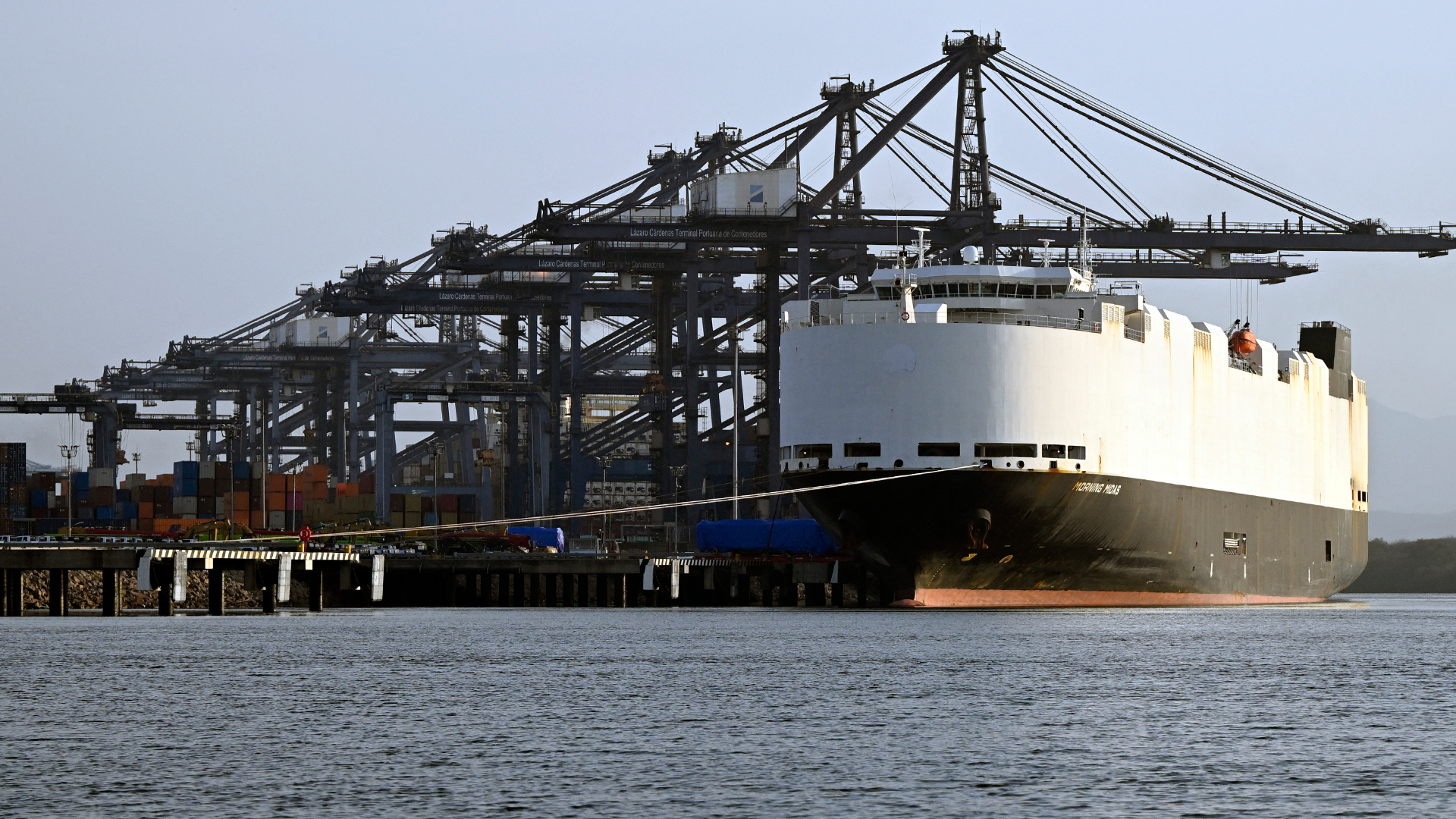
In June, 2025, the cargo vessel Morning Midas had to be abandoned off the coast of Alaska while carrying about 3,000 cars due to an uncontrollable battery fire. After that, pretty much every private carrier in the cars-to-and-from-Alaska shipping business said “no more EVs.”
- Alaska Marine Lines (AML): Enacted a total ban on EVs and PHEVs as of September 2025. They cite “astronomical insurance costs” and the inability to safely manage thermal runaway at sea.
- Matson & TOTE: Both major carriers suspended EV shipments indefinitely, leaving no commercial barge option for owners in Juneau, Ketchikan, or Sitka.
The Bottleneck: Alaska Marine Highway System (AMHS)
With barges off the table, the state-run ferry is the only remaining route. Demand is high, and slots are limited.
- The “Two-EV Limit”: Due to fire safety protocols, each ferry sailing is strictly limited to two electric vehicles.
- Safety Requirements: EVs must be parked in designated spots with extra physical buffers and are monitored with specialized fire blankets.
- The Booking Gap: As of this month, “EV slots” for the Bellingham–Juneau route are sold out through August. A motorist needing warranty work in Seattle today faces a three– or four-month wait just for a ferry reservation.
The Rivian Warranty Problem
Chevrolet, Ford, Nissan, Tesla, and even Porsche have dedicated service centers in the state of Alaska. You’d still be screwed if you needed one towed out of Juneau, but if you can get one of those cars to Anchorage, you can get service. Not the case for Rivians, though.
- Service Center Scarcity: The nearest major service center for an Alaskan Rivian is in Bellevue, Washington.
- Logistical Costs: Because barges are banned, owners are forced to use the ferry or specialized “low-boy” ground transport through Canada. That Reddit thread I linked earlier confirmed a $6,500 for a one-way transportation bill from Alaska to Washington.
- The Policy Conflict: Rivian’s warranty typically covers the repair, but shipping is often only covered if the vehicle is deemed “undrivable” due to a failure, and even then, Rivian has reportedly pushed back on covering the extreme costs of “limited-capacity” maritime shipping.
If we were talking about getting a gas-powered Ford F-150 from Alaska to the contiguous U.S., it’s not cheap, but it’s not really an issue. You could call a barge company today and have the truck in Seattle by next week for about $2,000.
For a Rivian, the situation is unprecedented as owners are effectively blockaded by maritime insurance polices because the 2,500-mile overland ride down the Alcan Highway is impractically expensive (and impossible with an inoperable truck). The private sector refuses to carry lithium-ion batteries, which has forced a high-tech vehicle population into a state-run ferry system that is physically and legally unable to handle the volume.
So, where does an Alaskan Rivian owner go from here?
Got any advice for folks up north with Rivans? Leave us a comment or drop me a line at andrew.collins@thedrive.com.
Loading comments…
Comments couldn’t be loaded. Please refresh the page.