
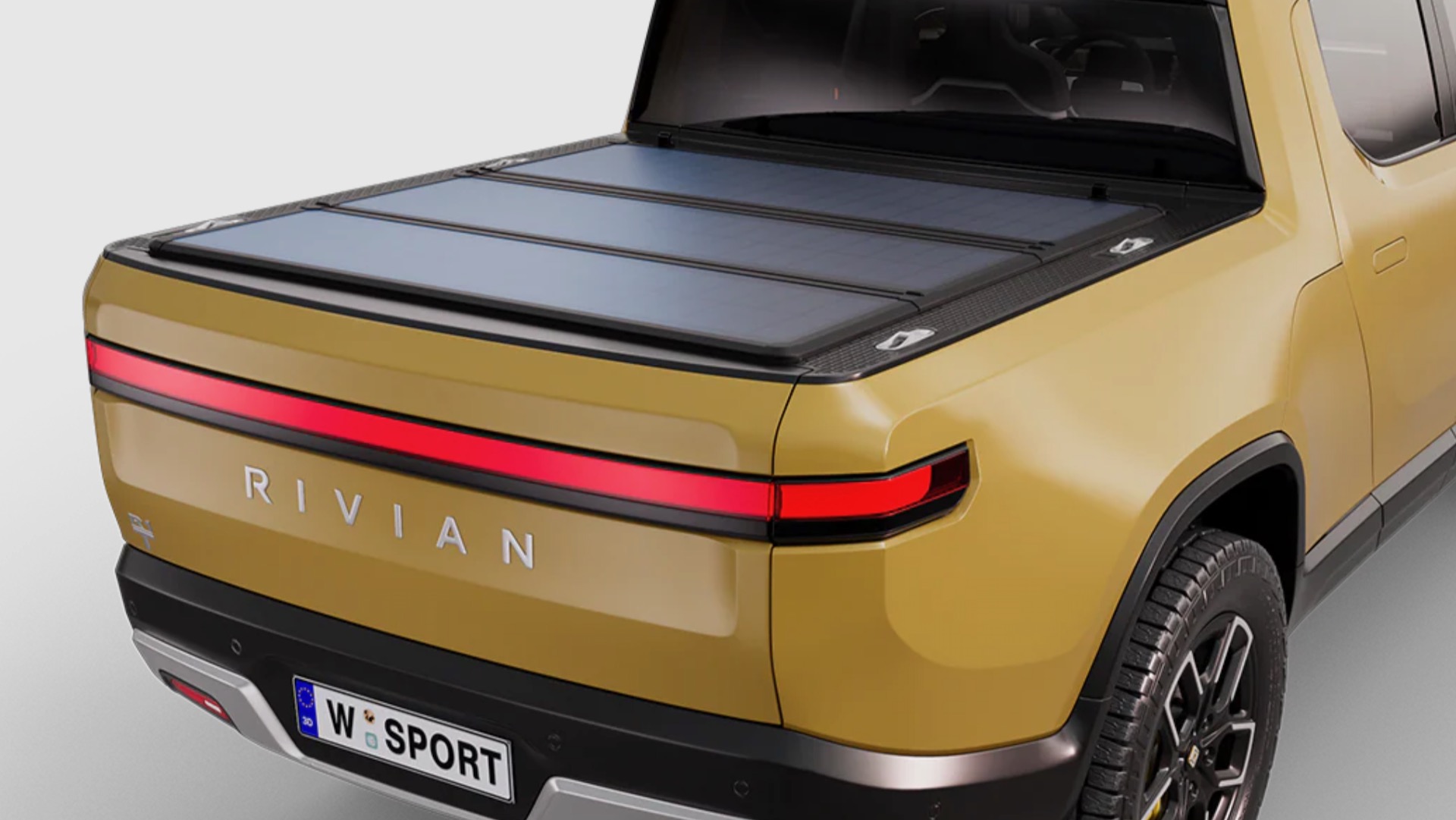
Whether it’s camping gear that needs juice or smartphones, the Rivian R1T pickup truck has got you covered with plenty of built-in outlets and wireless device chargers. But why rely on the truck’s battery power if you don’t have to?
The Worksport Solis tonneau cover folds out over your truck bed like a conventional cover, but it’s also covered in solar panels that can send power to a big accessory battery in the bed. We first saw it at SEMA 2025 and wondered, “Why didn’t somebody think of this sooner?” At the time, Worksport was marketing it for internal-combustion pickups of all sizes, from the Ford Maverick all the way up to heavy-duty trucks. Now it’s confirmed availability for the R1T as well.
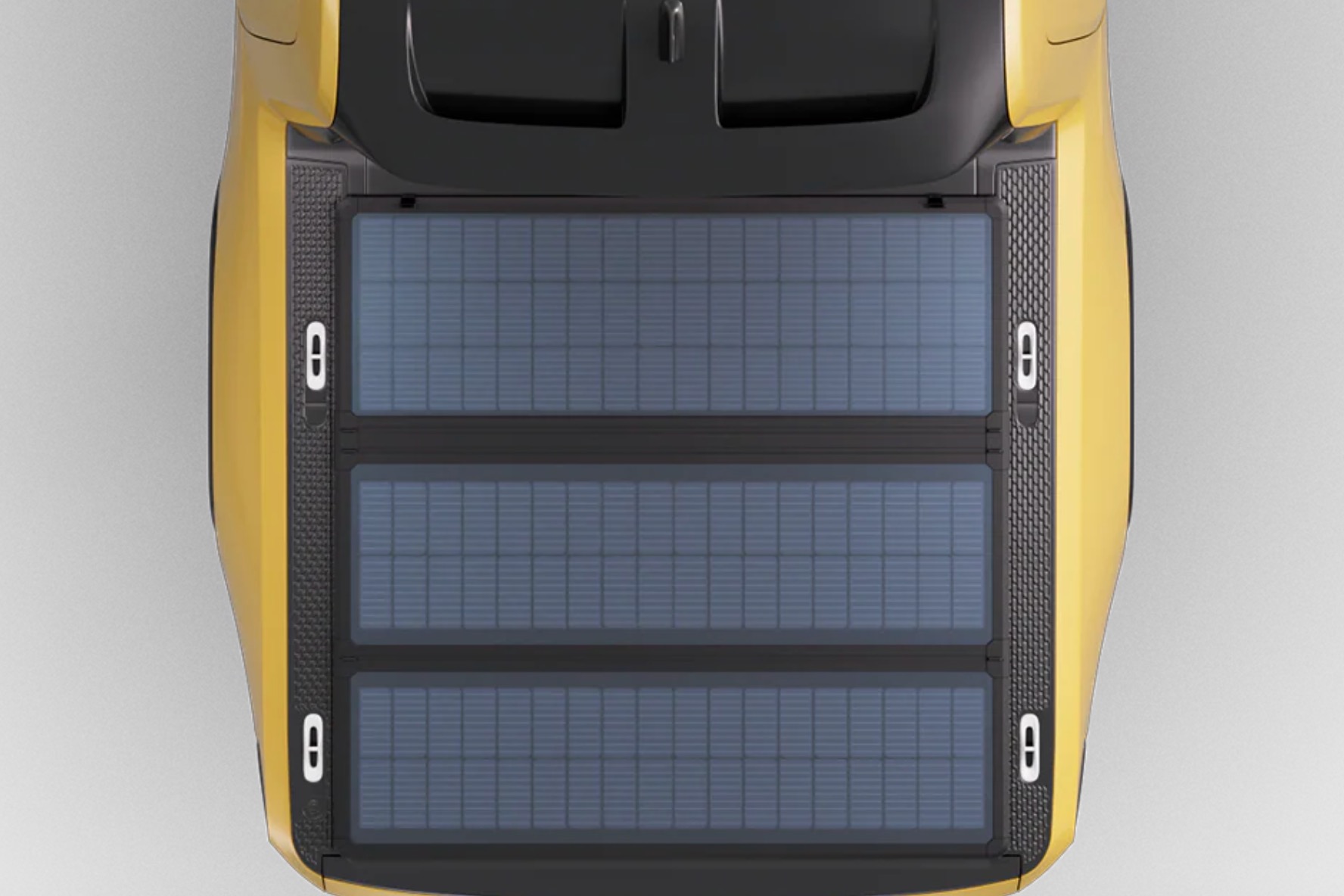
The Rivian version will provide approximately 250 watts of onboard solar generating capacity, according to a Worksports press release. The company estimates that this will charge its portable accessory battery in about four hours. That battery can then be used to power tools, electronics, camping equipment, or whatever else you might need in an outlet-free locale.
Worksport is accepting orders, with the first customer deliveries expected in January. Pricing for the R1T tonneau cover starts at just under $2,000 at launch, but the full price will be about $2,500 after that. That’s not bad considering Rivian charges $3,300 for its own power tonneau cover without solar panels. However, the accessory battery and its inverter cost an additional $1,313.87, although the kit is currently on sale for $949.
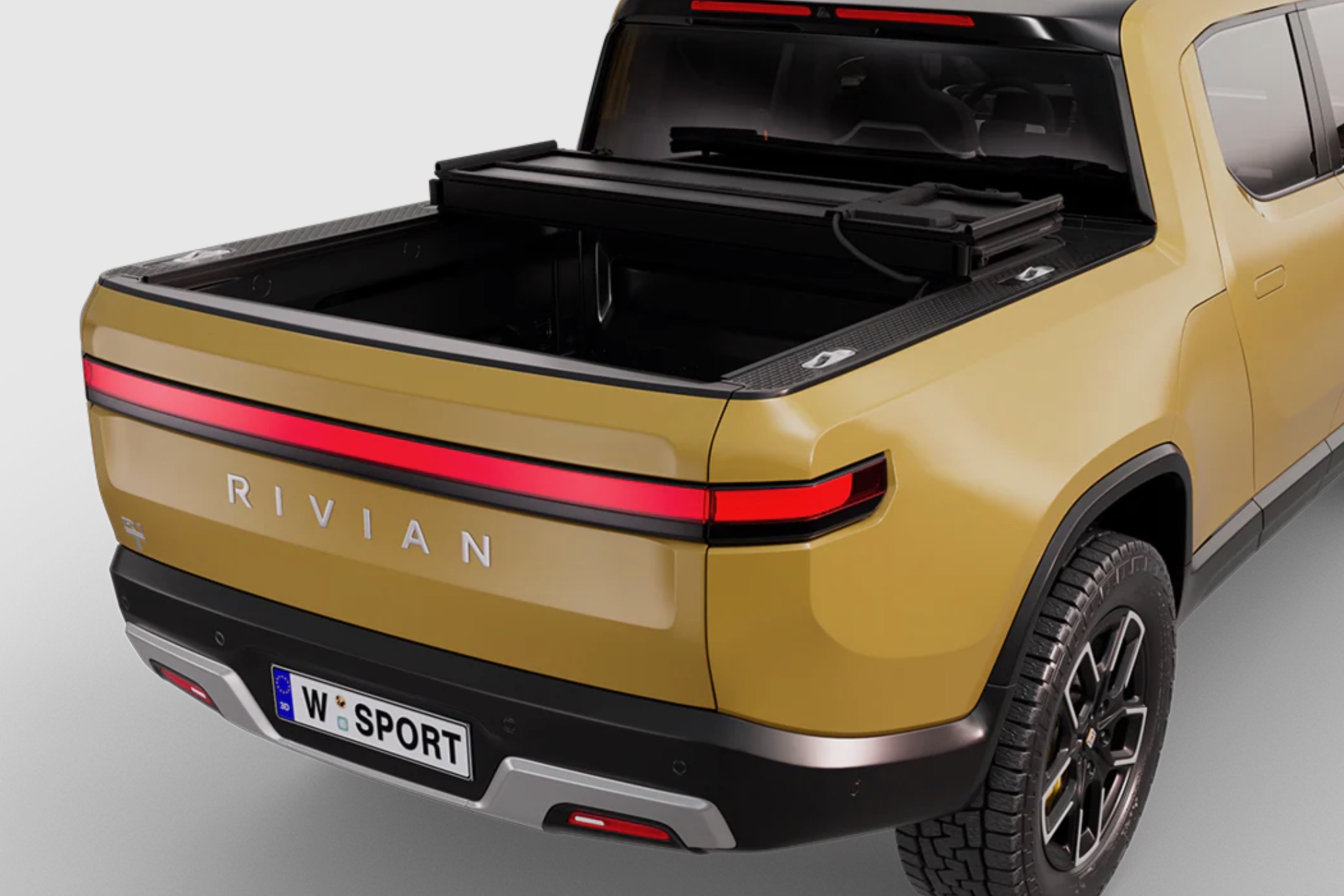
A handful of production cars, like the Hyundai Sonata hybrid and Toyota Prius plug-in hybrid, have solar roof panels that provide a smidge of extra electricity on sunny days. Startups Lightyear, Sono, and Aptera have even tried to build EVs covered in solar panels as a way to reduce charging needs, but without much to show for it owing to the cost and relative inefficiency of solar cells. Using solar panels to provide power for devices—rather than the vehicle itself—is a more realistic goal.
Rivian hasn’t played around with solar panels, but its engineers have come up with an interesting tonneau cover of their own. A patent filed in the United States earlier this year showed a multipurpose cover that could be converted into an awning. Come to think of it, adding solar panels to that would make for a pretty sweet camping setup.
Loading comments…
Comments couldn’t be loaded. Please refresh the page.