
Key Takeaways
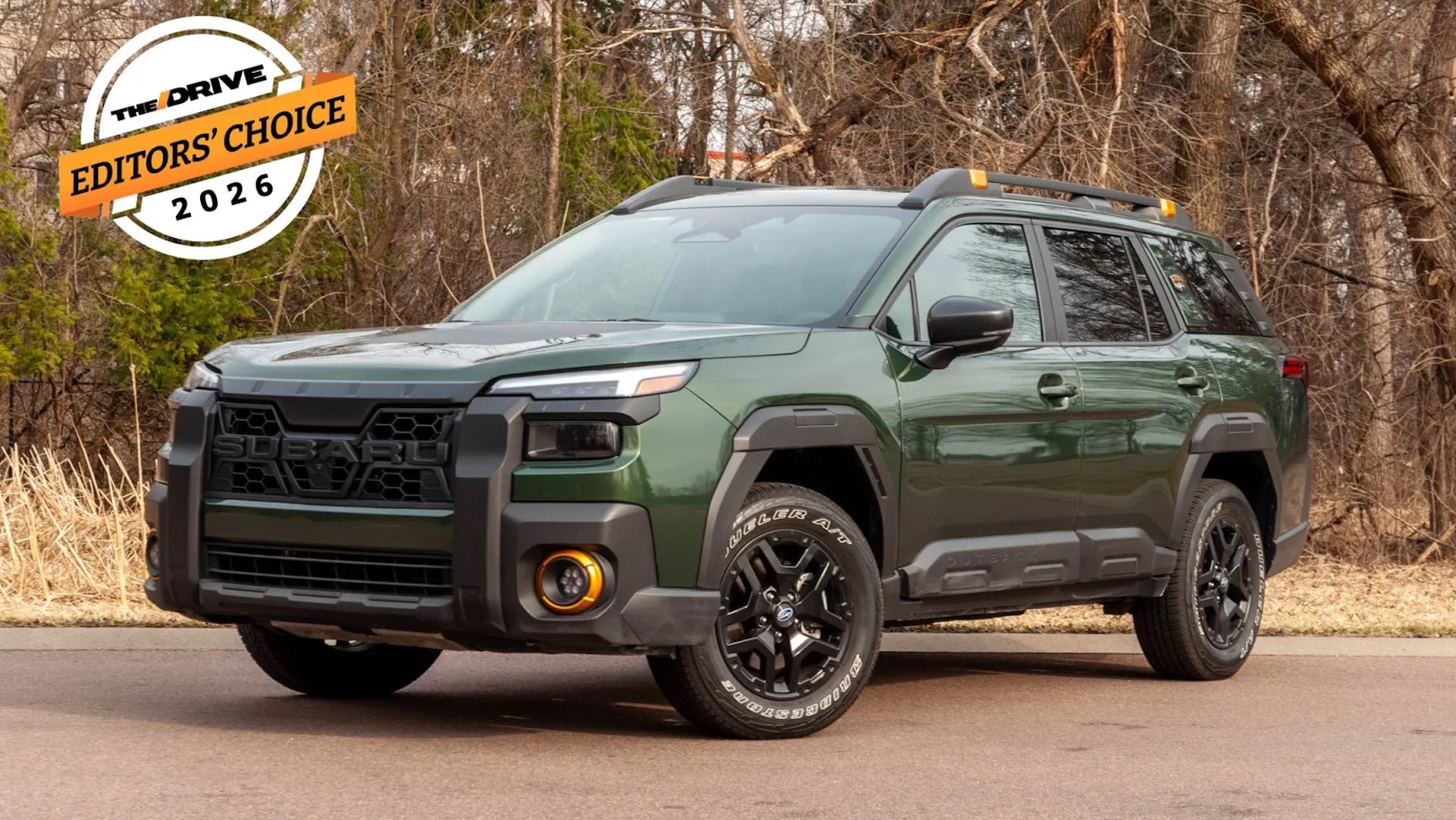
- Back to rugged roots. The 2026 Subaru Outback Wilderness embraces a squared design, reminiscent of classic models.
- Enhanced interior tech. Features a 12.1-inch touchscreen and improved infotainment system with wireless Apple CarPlay.
- Turbocharged performance. Equipped with a 2.4-liter turbocharged engine and adaptive dampers for a smooth ride.
- Spacious and practical. Offers generous cargo space and excellent visibility, catering to family needs.
Bottom line: The 2026 Subaru Outback Wilderness combines rugged design with modern tech, delivering a versatile and capable vehicle for adventurous families.
Everyone wants an SUV, and it seems that no one (except wealthy enthusiasts) wants a wagon. That’s the vibe, and Subaru got the memo.
The 2026 Subaru Outback arrived late last year with a more upright and squared design, modern tech, a boxer engine, and all the functionality you’ve come to expect, while the Wilderness model kicks things up a notch.
The Basics
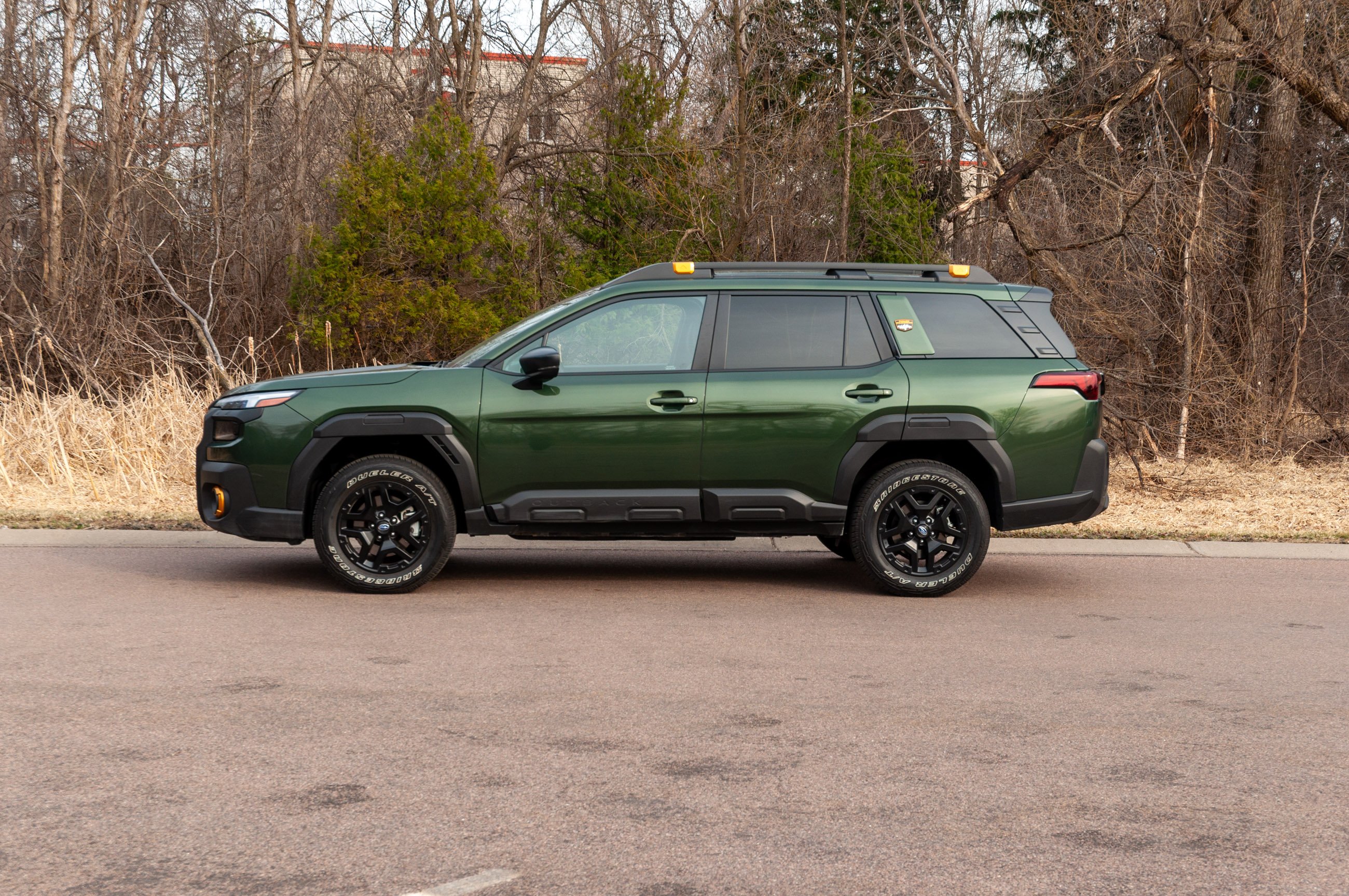
When the first spy shots of the new 2026 Outback came out, I argued with a Subaru spokesperson about whether it would still be a wagon. When the Outback debuted at the 2025 New York Auto Show, I walked up to them and said, “Fine, if you squint real hard, it’s still a wagon, but it’s as square as an ‘80s Volvo.” We are bordering on crossover territory here, folks. The reason? The roofline’s been raised 1.4 inches, and it plays mind tricks with you.
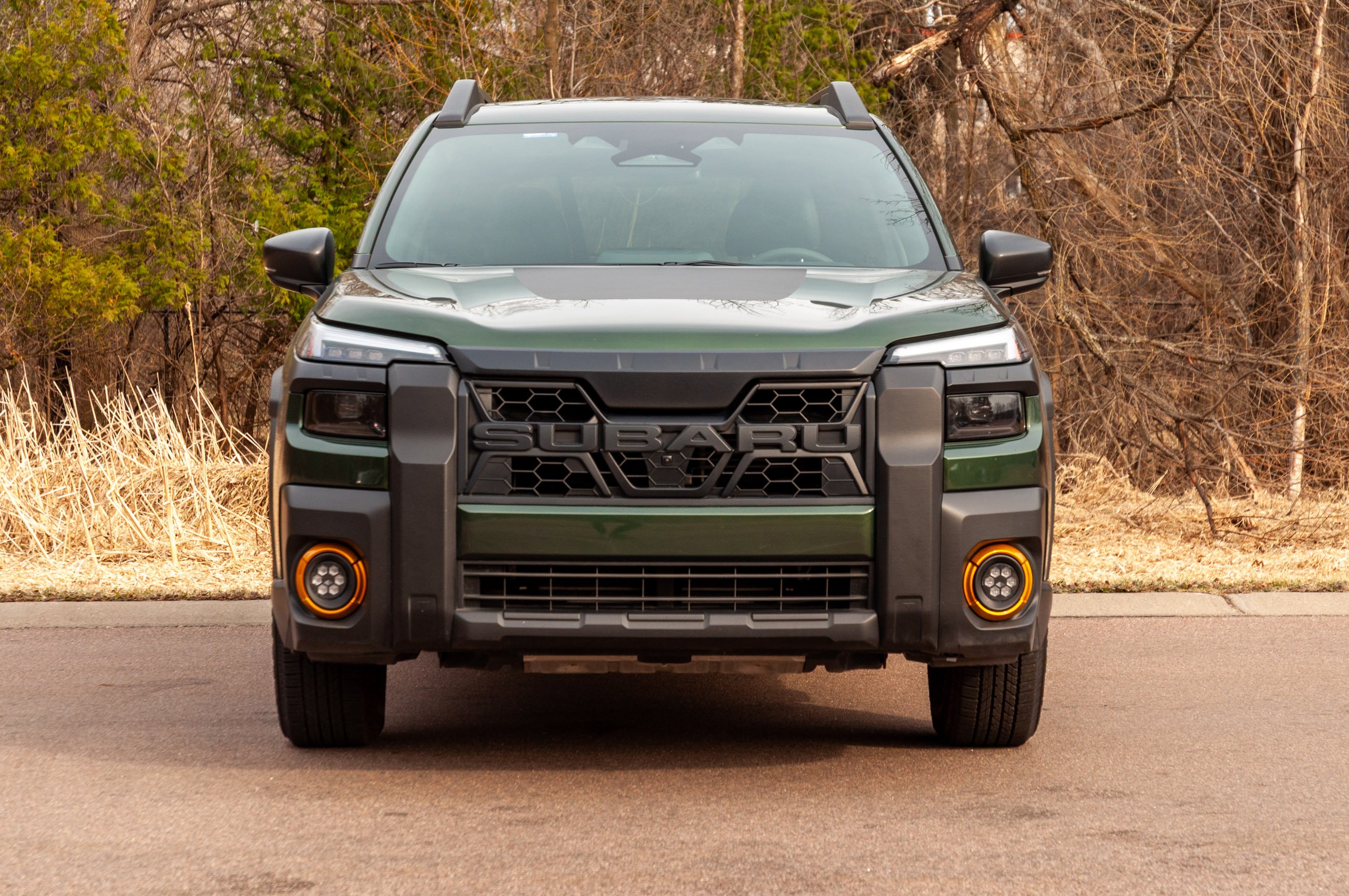
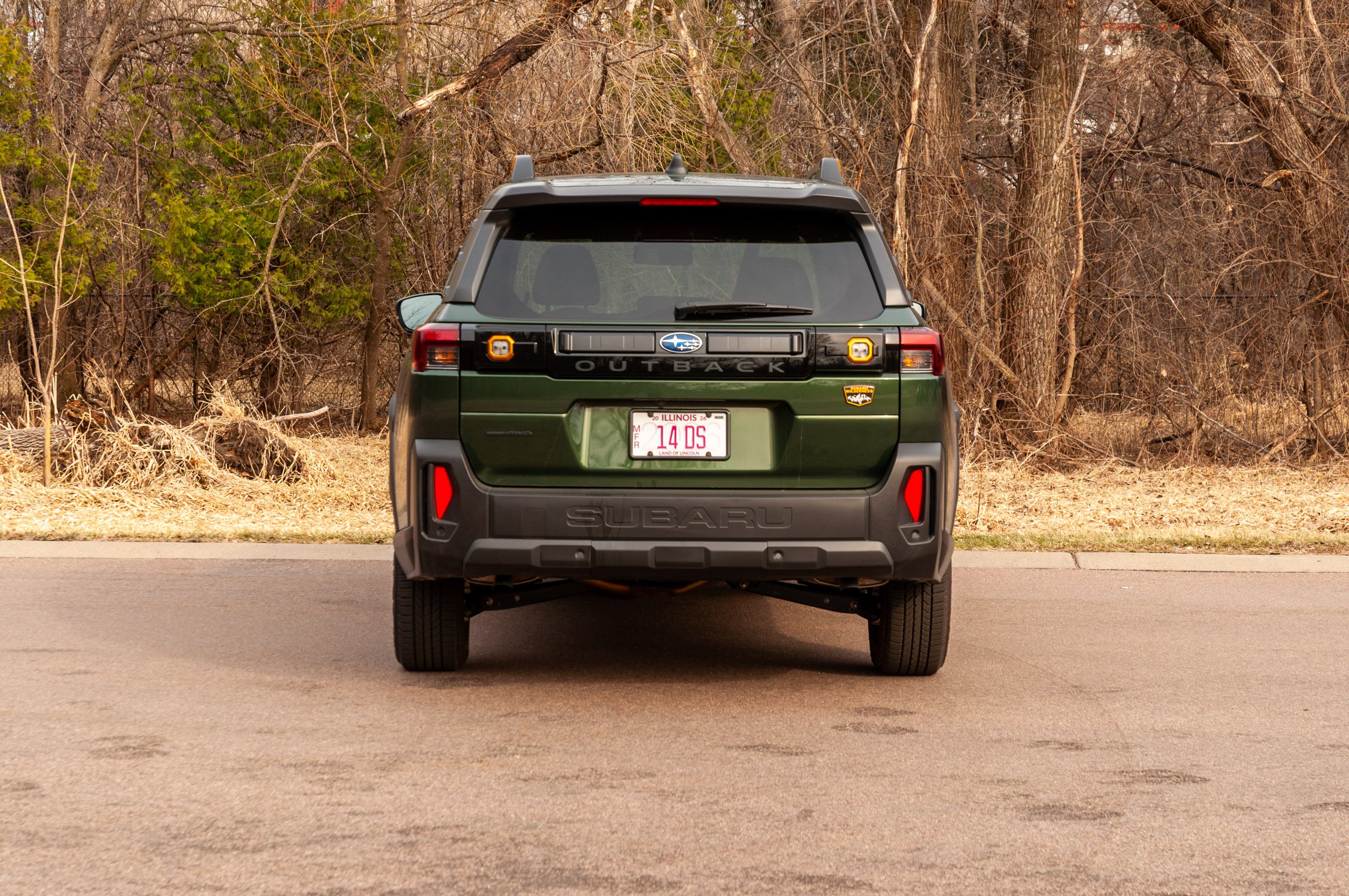
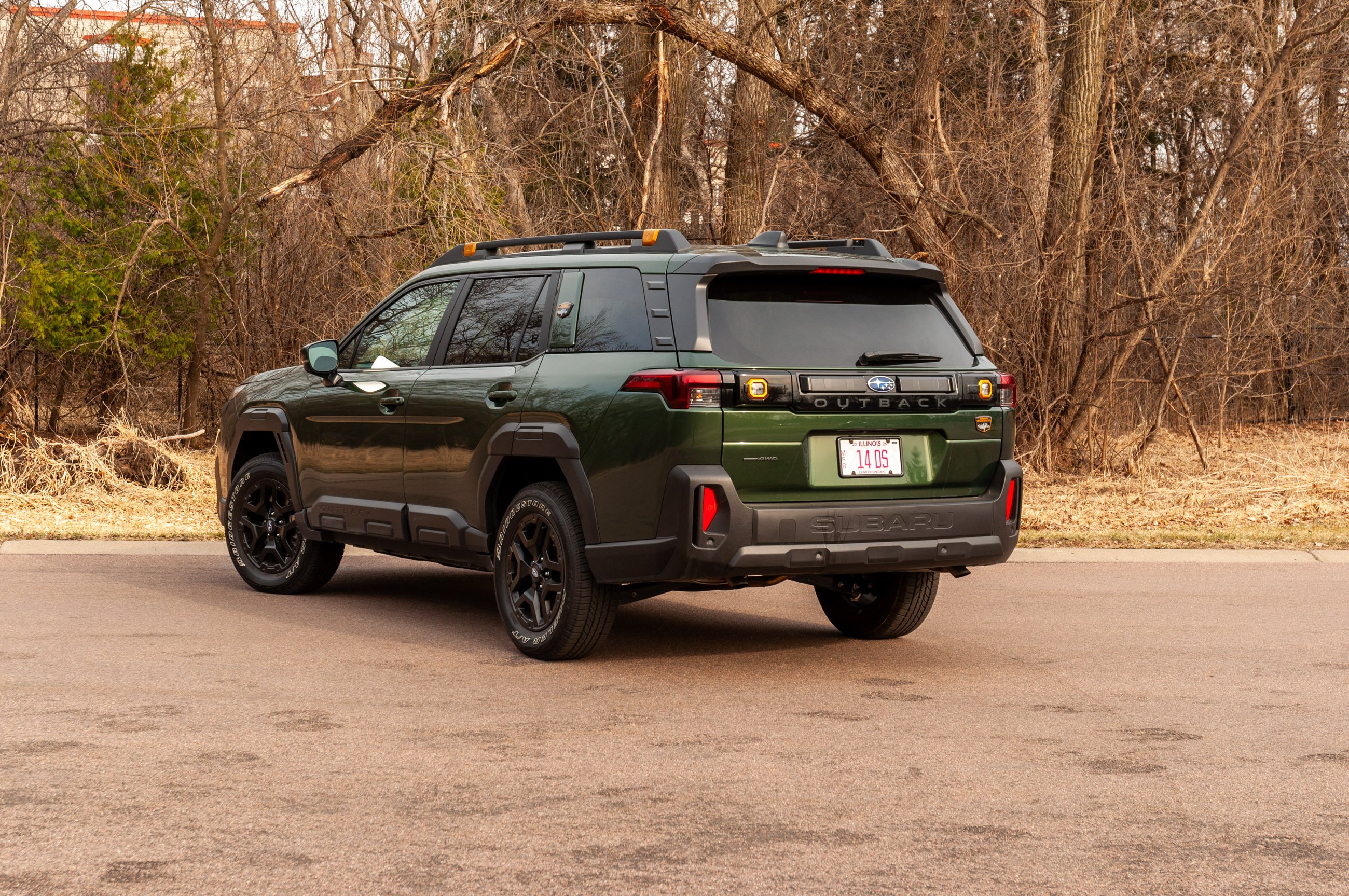
It’s polarizing, but the Outbacks from the ‘90s and early ‘00s were square right down to the headlights. Then the last few generations of Outbacks started getting sweptback designs in the name of efficiency and aerodynamics. Over time they started bulking up again, and now we’ve come full circle. The Wilderness model adds an extra 0.8 inches of ground clearance, bringing the total to 9.5 inches. It also gets the gold trim accents, but man alive, there are a lot of textures. The various plastic bits outside the car feature different finishes, and it’s not exactly cohesive. The rear end is a lot for the eyes to take in, and you’ll know it’s a Subaru, because it’s spelled out across the front grille like it’s a Ferd Fteenthousand or something.
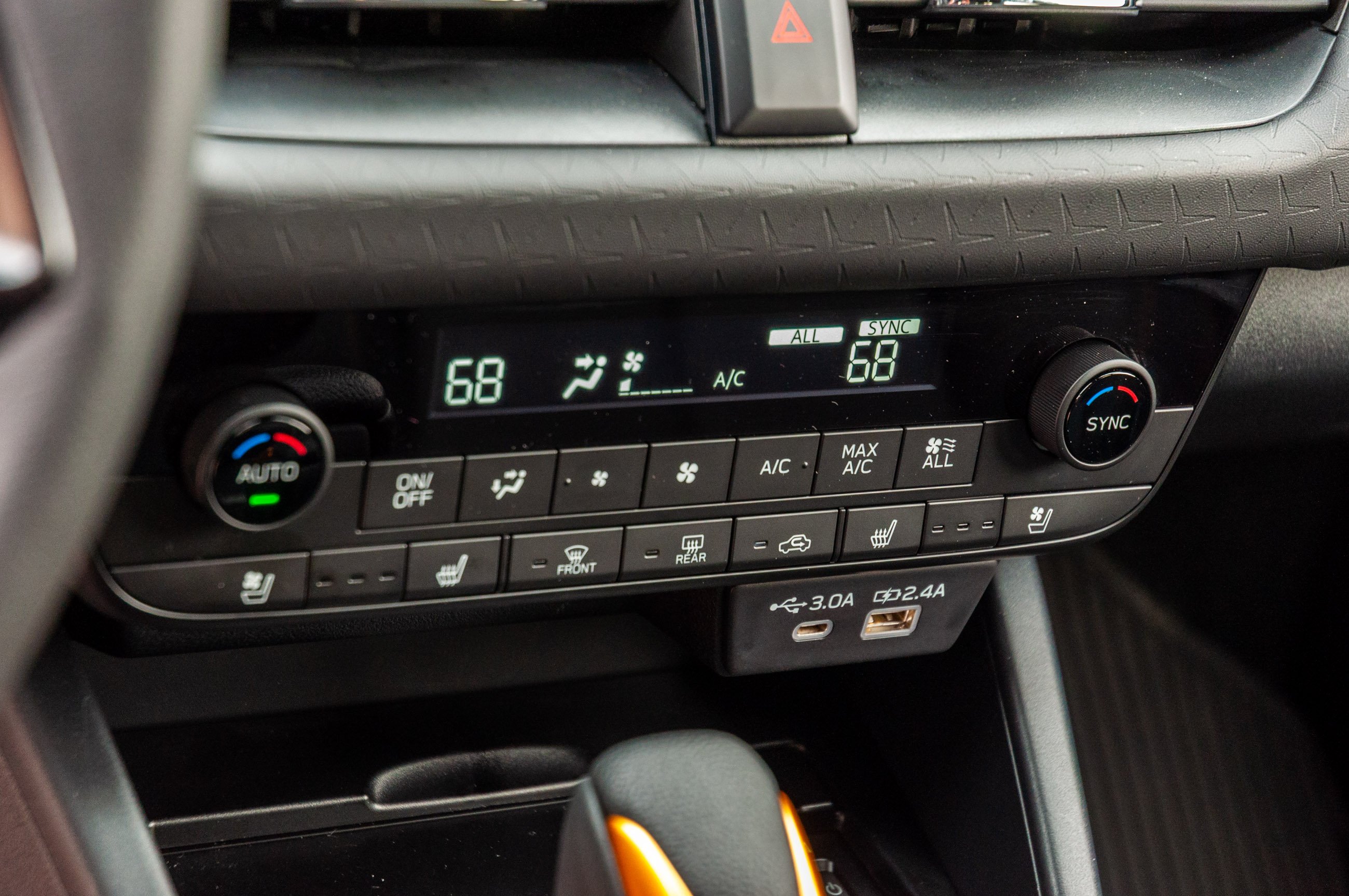
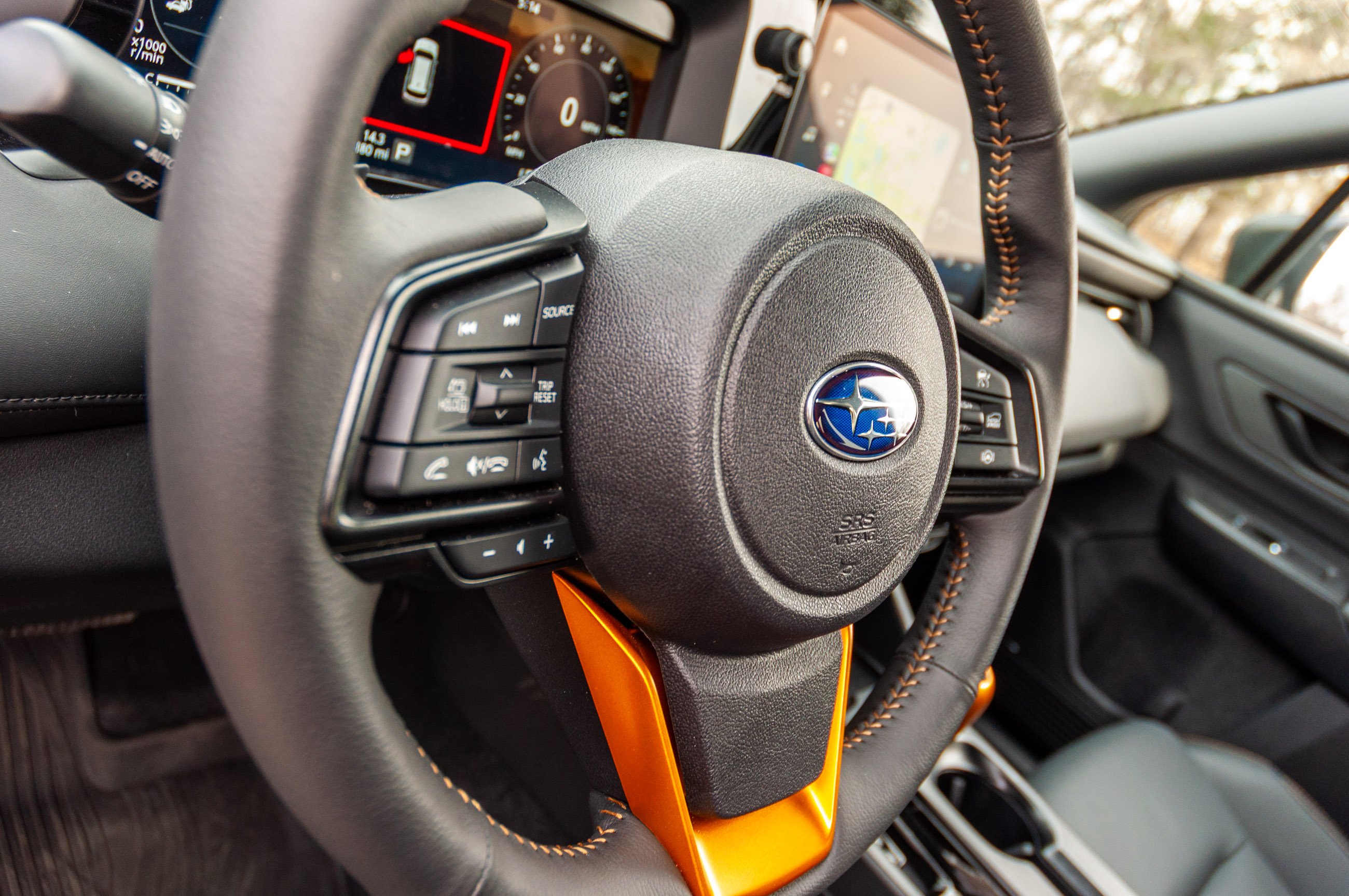
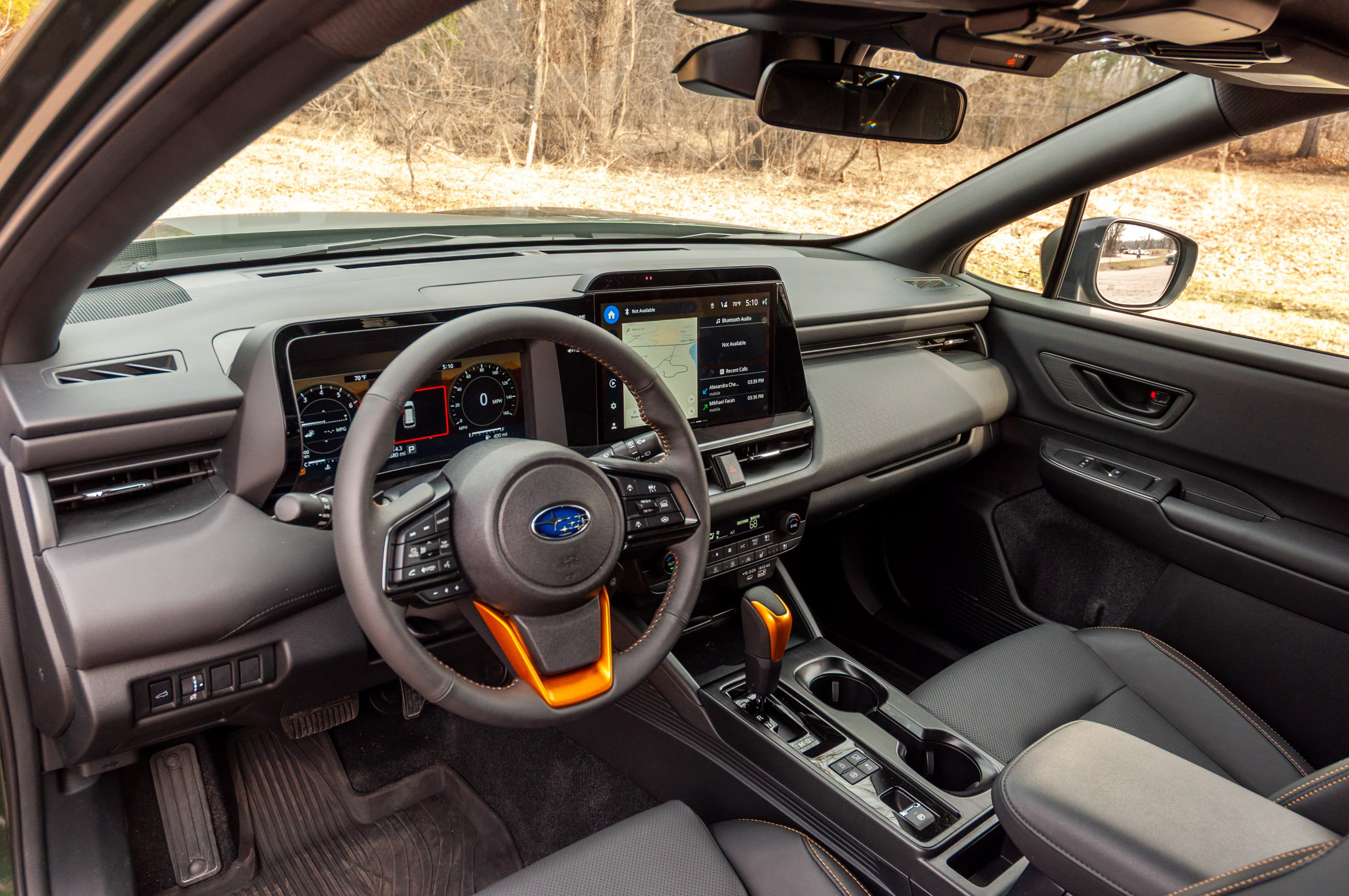
The inside is less divisive in design and puts form with function. The dashboard ditches its neatly organized, vertically oriented center stack in favor of a chunky 12.1-inch horizontal touchscreen and 12.3-inch digital gauge cluster. There’s a real volume knob stuck between the two. The infotainment system’s interface feels really similar in design layout to what Toyota’s using, but it’s not a direct rip. Unlike the old system, the new one boots up instantly, wireless Apple CarPlay works flawlessly and without lag, and it didn’t feel like the processor was underclocked. Personally, I liked the vertical screen in the previous Outback for its integration more than this new, larger screen, but the old system was headache-inducing to use because it was so slow. Hard buttons and knobs still remain for the entire climate control system. Bless you, Subaru. The same goes for the buttons and rockers on the steering wheel, which still provide a satisfying click. I also really appreciated that the steering wheel still features super-tight and neat-looking stitching.
But inside, the materials, both in terms of type, texture, and finish, overwhelm the senses. In just a few inches, I counted five different finishes on the dashboard, all while the car tested had available Nappa leather seats that felt out of place. I missed the standard Outback Wilderness’ wipe-friendly material for when you slide into the car a hot mess after a hike.
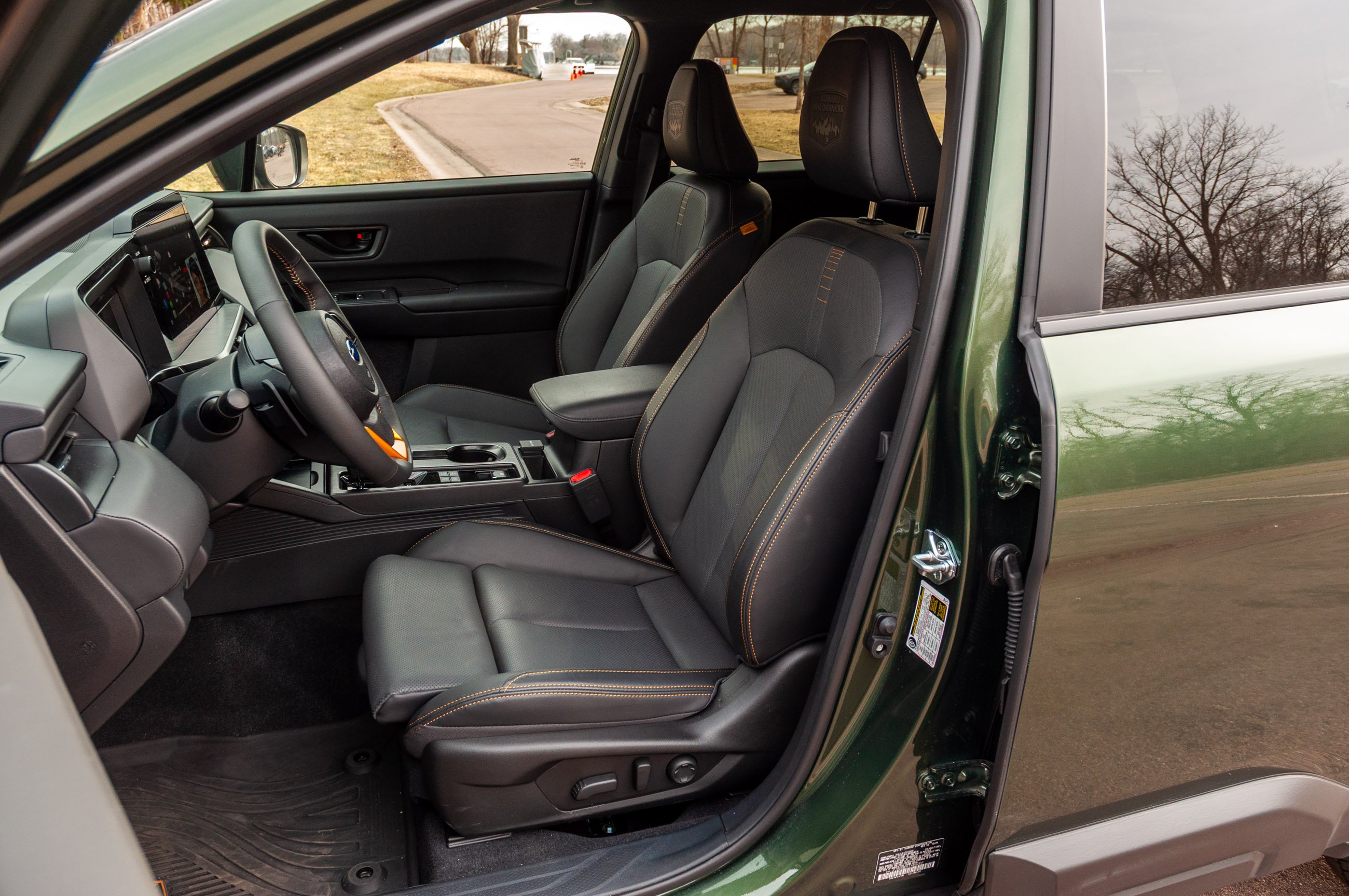
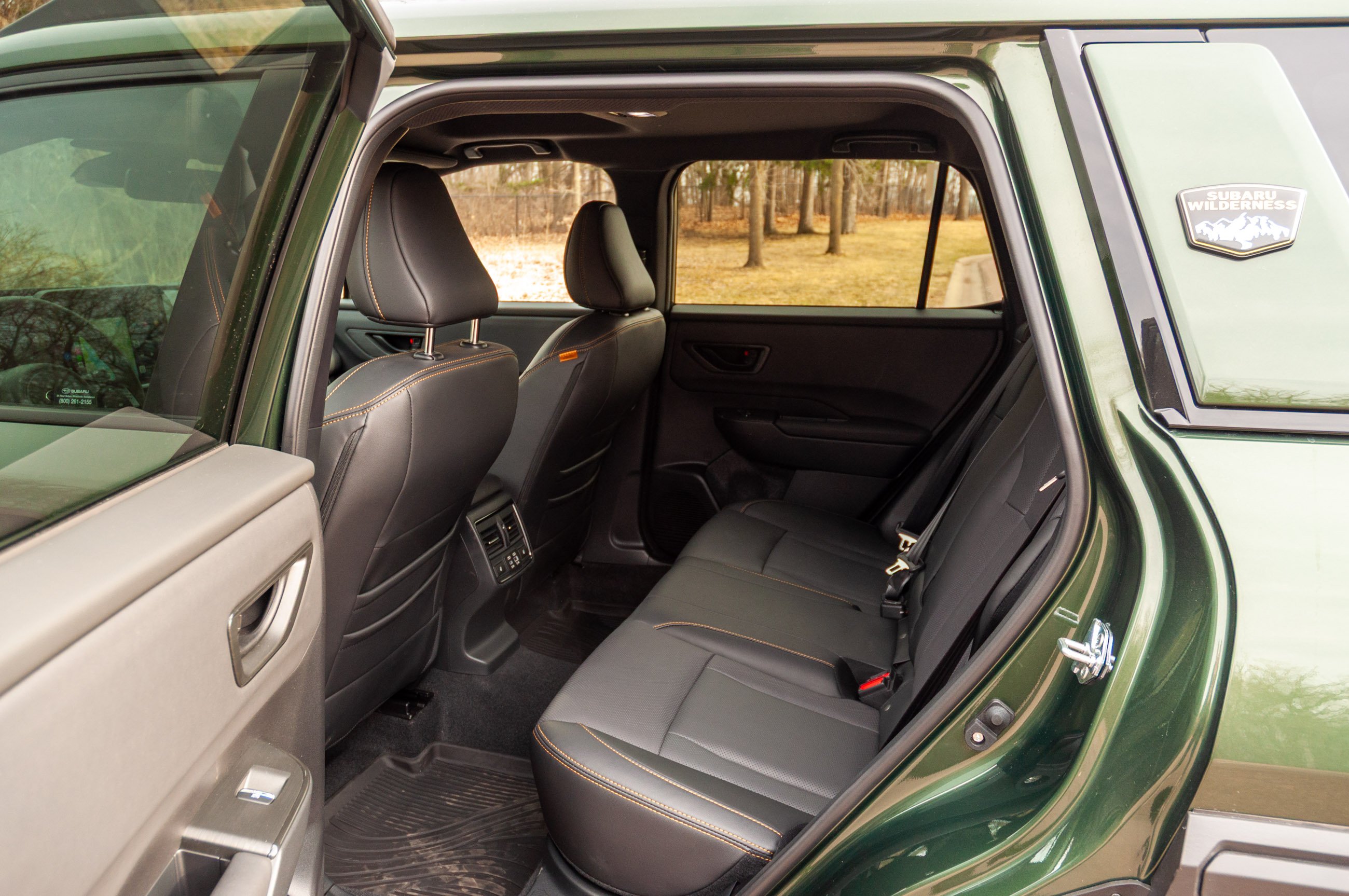
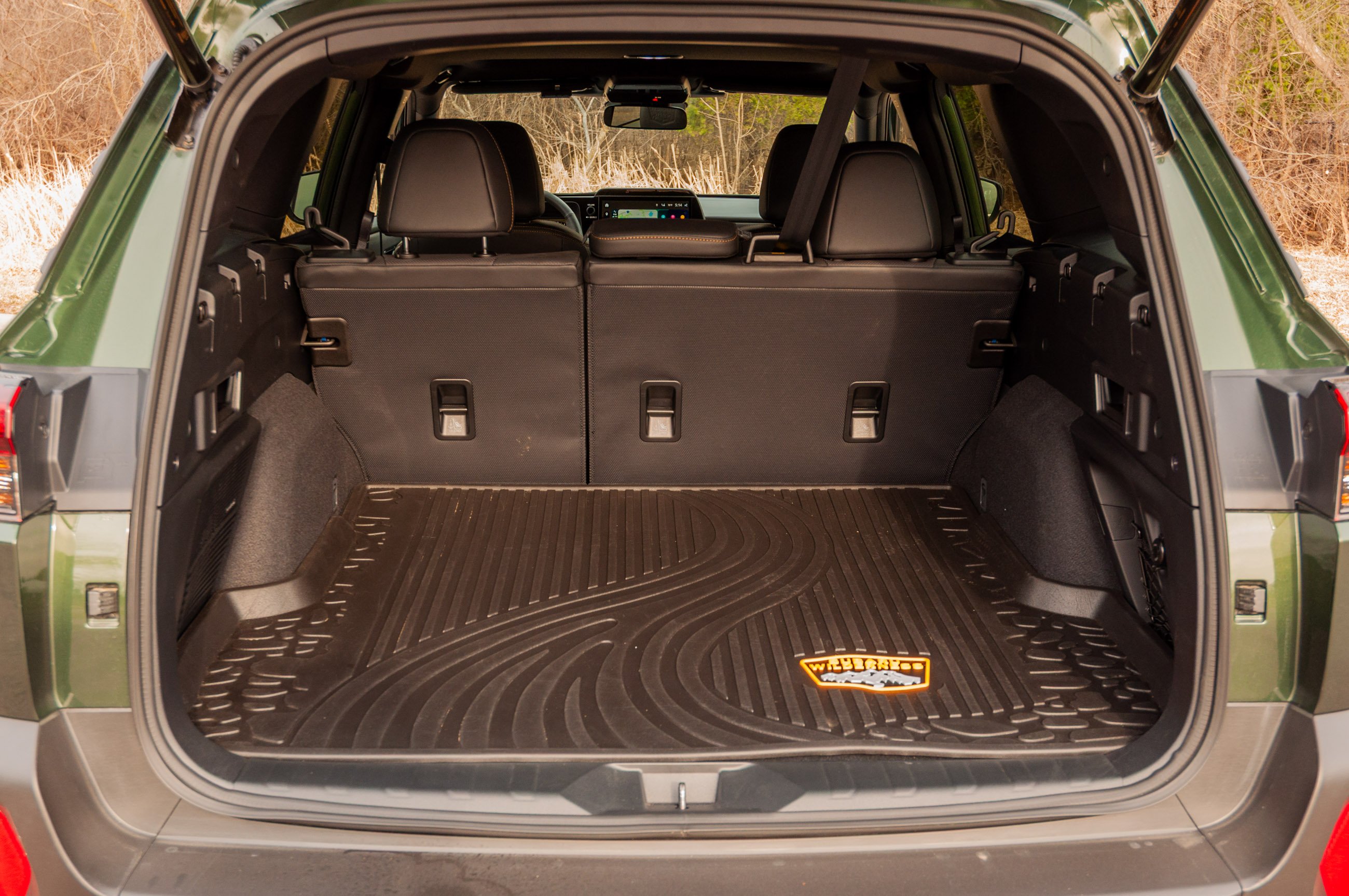
Seat space all around is good with plenty of room both up front and in back. Subaru’s packaged this thing with families in mind, and I (5-foot-10) was able to sit in the rear seat with the front seat adjusted with room to spare. Headroom is truly fantastic, and it’s because of that raised roofline. In the back, the cargo area isn’t just generous; it’s only 3.1 cubic feet shy of the Jeep Grand Cherokee at 34.6 cubic feet. Fold the rear seats down and space swells to 80.5 cubic feet.
Driving the 2026 Subaru Outback Wilderness
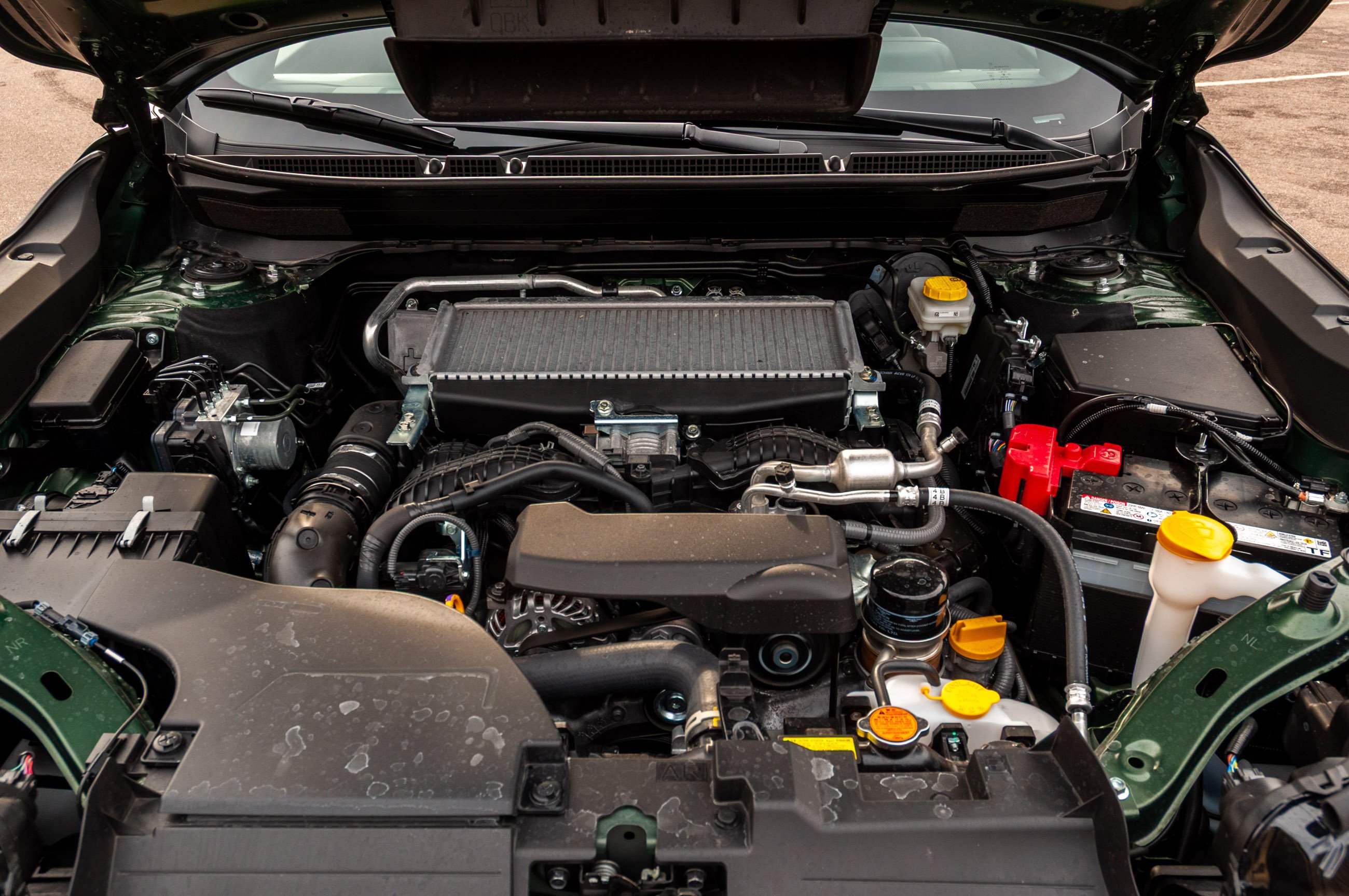
Every Outback Wilderness gets the 2.4-liter turbocharged flat-four with 260 horsepower and 277 lb-ft of torque here. A CVT is still the only transmission option, and it is paired with standard all-wheel drive. But like the previous Outback Wilderness, the latest model still cribs the larger three-row Ascent’s 4.44 final drive ratio to make it quicker off the line and easier to roll up a hill.
A Subaru spokesperson confirmed the powertrain itself didn’t change, so the new Outback Wilderness being smoother comes down to the engineers tuning the powertrain and that final drive ratio to mesh together in harmony. There’s plenty of power on tap for the Outback’s mission at hand.
More impressive is the ride quality with the Wilderness model’s adaptive dampers. Despite the increased ground clearance, the Outback Wilderness doesn’t feel like it’s on stilts and feels planted. All that tall, squared-off glass around the cabin provides fantastic visibility, which I appreciate, especially nowadays where everything feels like driving in a bunker.
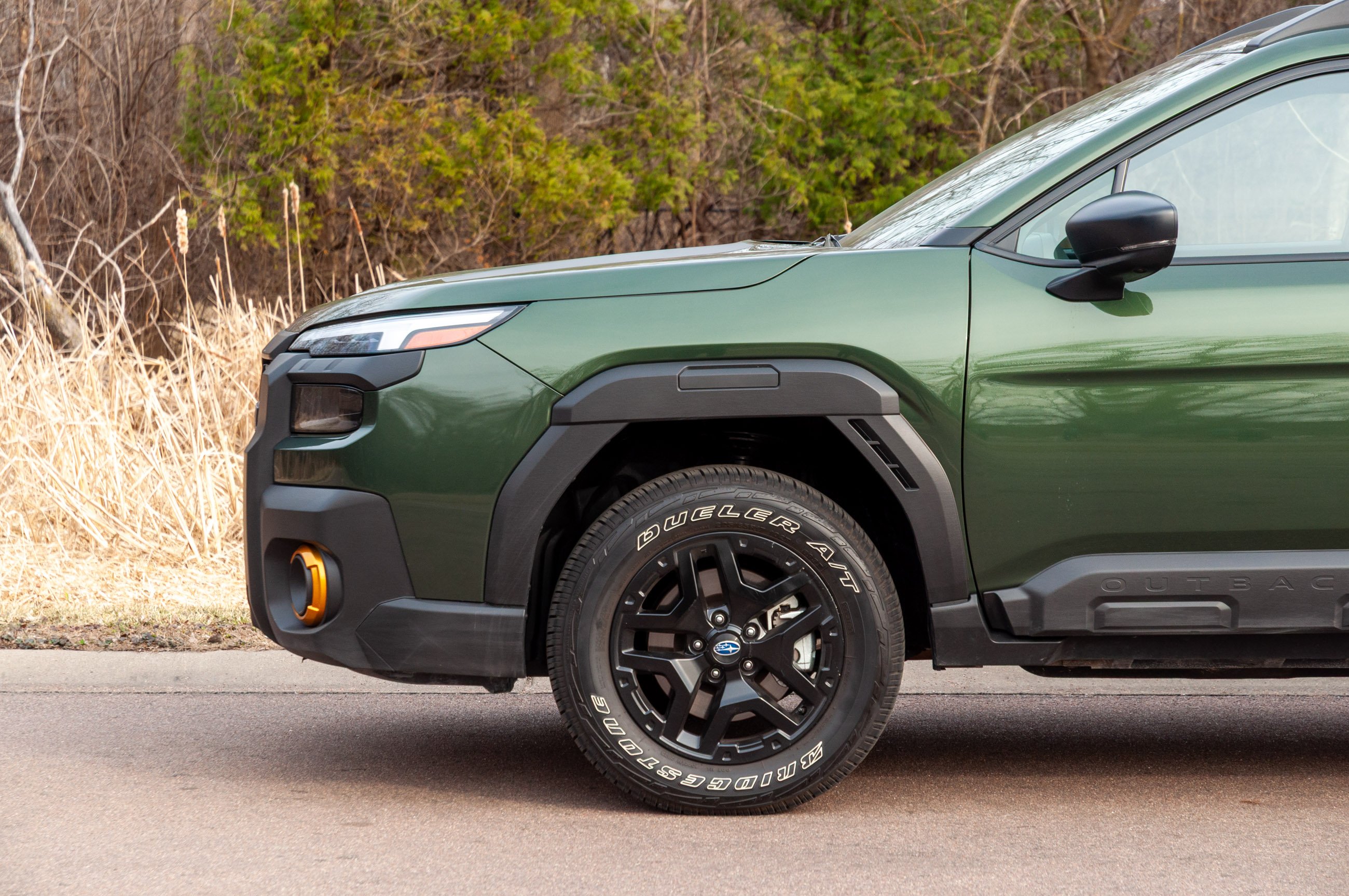
All those positives aside, the 225/65R17 Bridgestone Dueler A/T tires, marketed as all-terrain tires, look like street tires. They don’t appear as knobby as the previous generation’s Yokohama Geolandar A/Ts, which are also on the current Crosstrek Wilderness.
Verdict
The 2026 Subaru Outback costs $36,445 including a $1,450 destination charge, but the Wilderness model costs $46,445. The Emerald Green model tested cost $50,930 thanks to a 4,090 package that included everything from navigation and a power moonroof to a surround-view camera system and black Nappa leather-trimmed upholstery with copper stitching and cooled front seats.
The reality is simple: The 2026 Outback Wilderness delivers on everything it is meant to by bundling a wagon body and driving dynamics with everyday functionality and all-weather capability. Nothing truly competes with it unless you want an SUV or a more complicated luxury wagon for more money. The new design might be more divisive than before, but we live in an era where everything needs to get attention. It’s a crowded timeline.
Subaru provided The Drive with a seven-day loan of this vehicle for the purpose of writing this review.
2026 Subaru Outback Wilderness Specs
| Base Price (Wilderness) | $36,445 ($50,930) |
| Powertrain | 2.4-liter turbocharged flat-four | continuously variable transmission | all-wheel drive |
| Horsepower | 260 @ 5,600 rpm |
| Torque | 277 lb-ft @ 2,000 to 4,800 rpm |
| Seating Capacity | 5 |
| Curb Weight | 3,974 pounds |
| Cargo Volume | 34.6 cubic feet behind second row | 80.5 cubic feet behind first row cubic-feet |
| Ground Clearance | 9.5 inches |
| Off-Road Angles | 20° approach | 21.2° breakover | 23.6° departure |
| EPA Fuel Economy | 21 mpg city | 27 highway | 23 combined |
| Score | 8.5/10 |

Quick Take
Function isn’t always pretty.
Loading comments…
Comments couldn’t be loaded. Please refresh the page.