
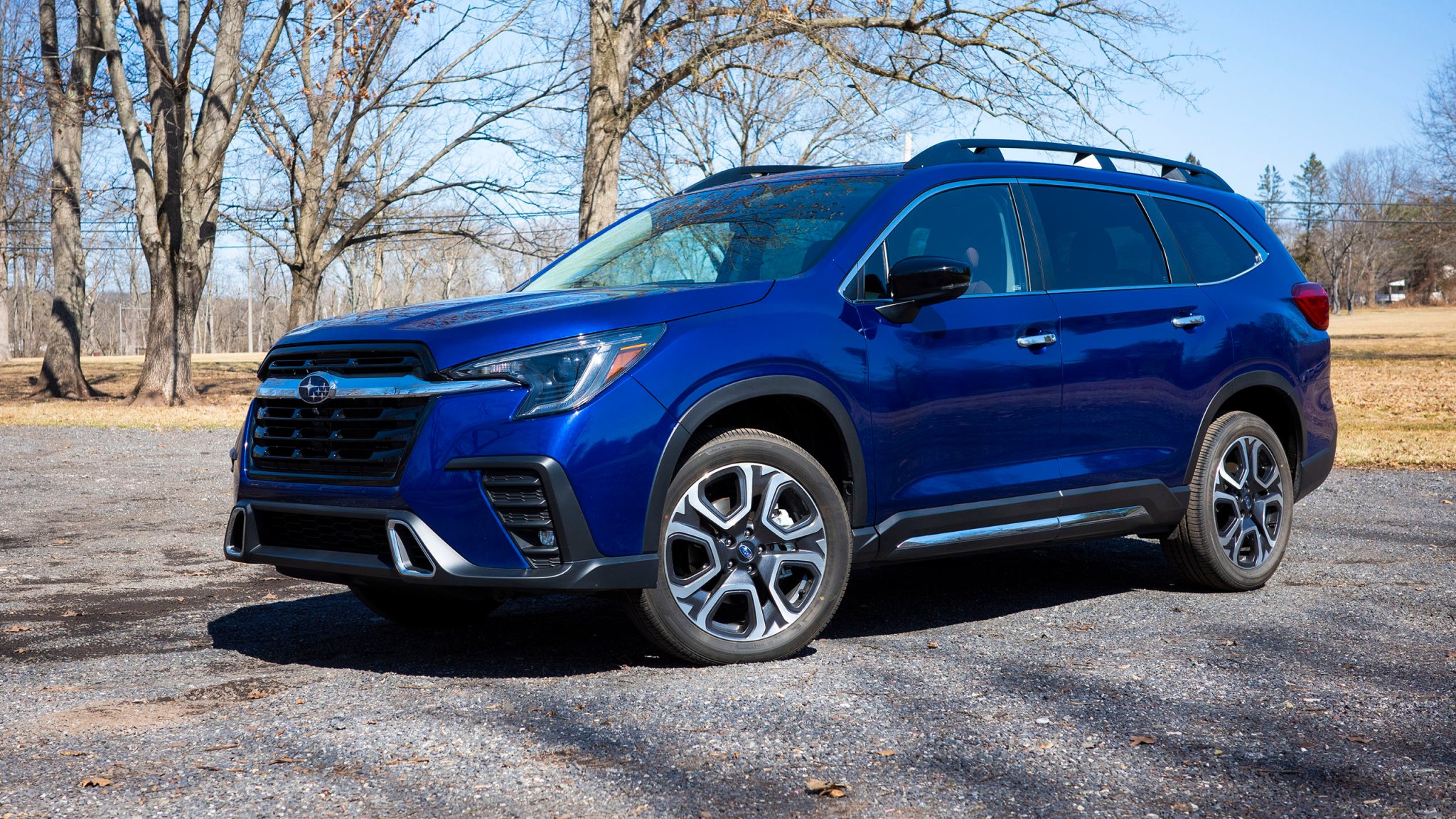
Going into this review, my friends and family weren’t particularly excited for me to test a Subaru Ascent, but I was looking forward to it. When you’re used to spine-shattering sport compacts, a break in a big, cushy SUV certainly has some appeal—especially one that favors comfort above all else.
Being seven years old by this point, if you can believe that, the Subaru Ascent doesn’t really win any comparisons on paper, unless they involve cupholder quantity. It isn’t remarkable to drive, its exterior and interior resemble the products of the last decade that they are, it makes a lot of noise, and it has the most frustrating infotainment system of any car I’ve sampled in recent memory. All things being equal, it’s not the barely-three-row SUV anyone should buy.
Despite all that, I was still a little sad to see it go. What the Ascent lacks in design and tech, it somewhat makes up for—a little, certainly not entirely—in comfort and ease. Subaru should probably replace it in the near future, but its biggest (and oldest) SUV has a certain, strange charm about it.
The Basics
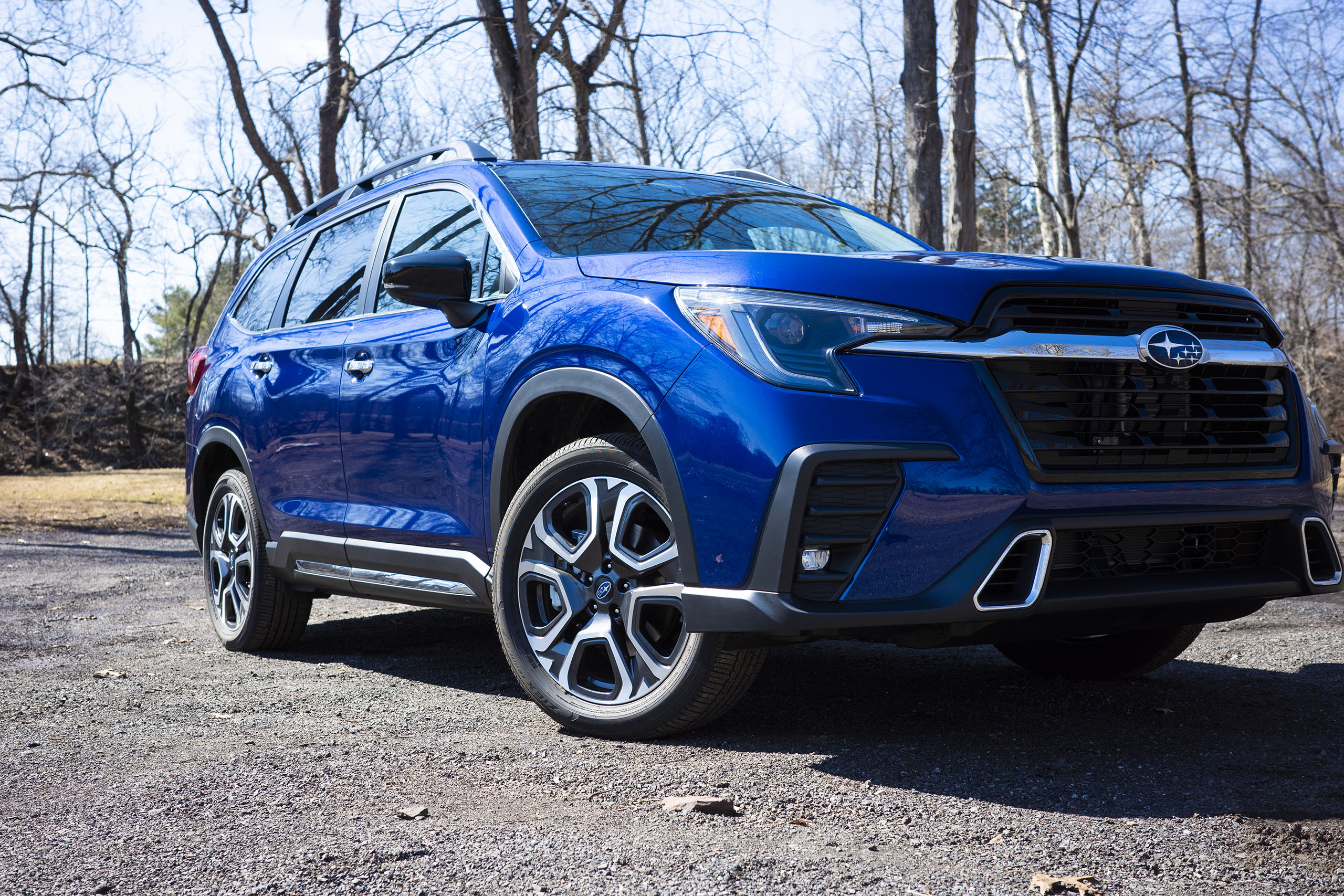
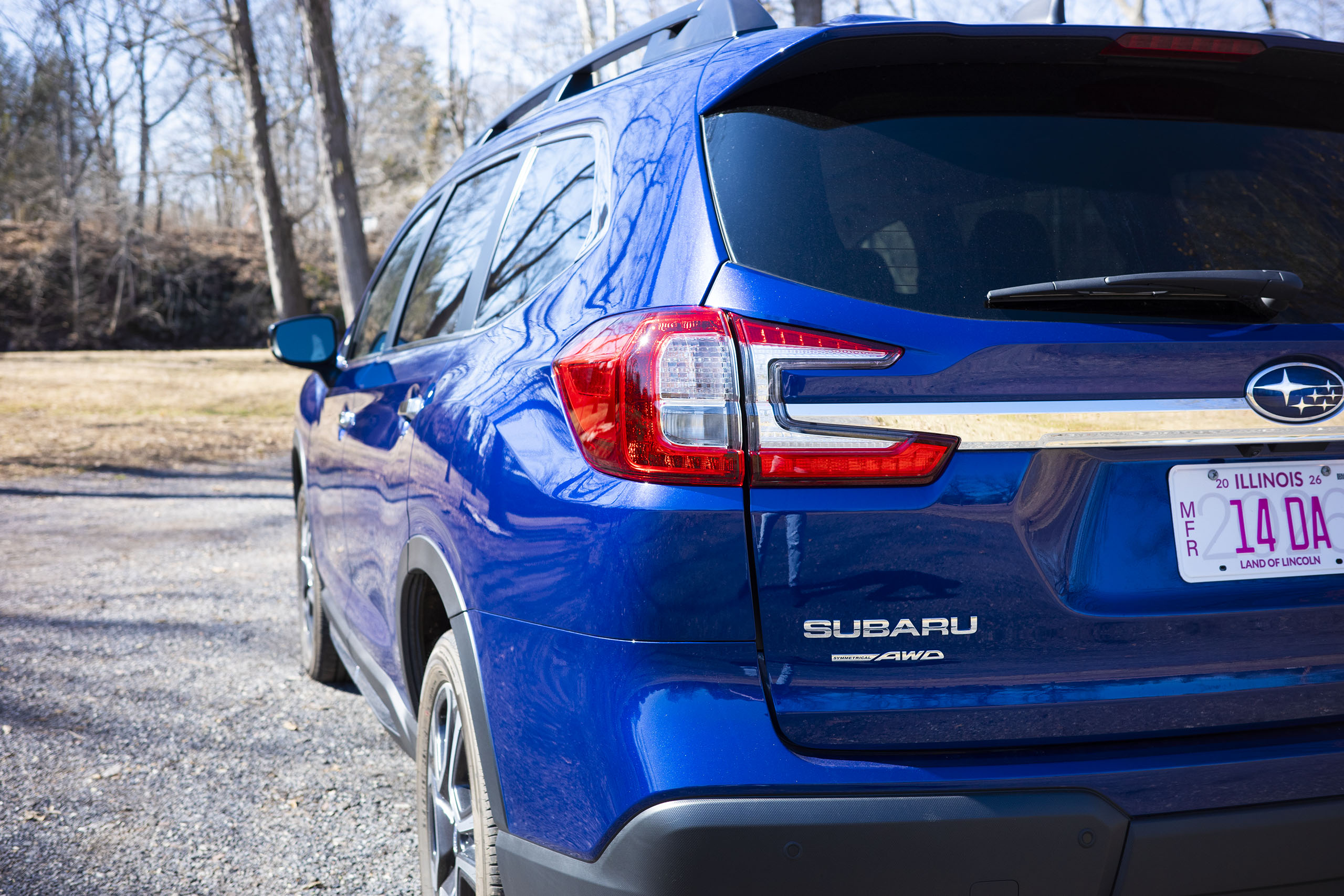
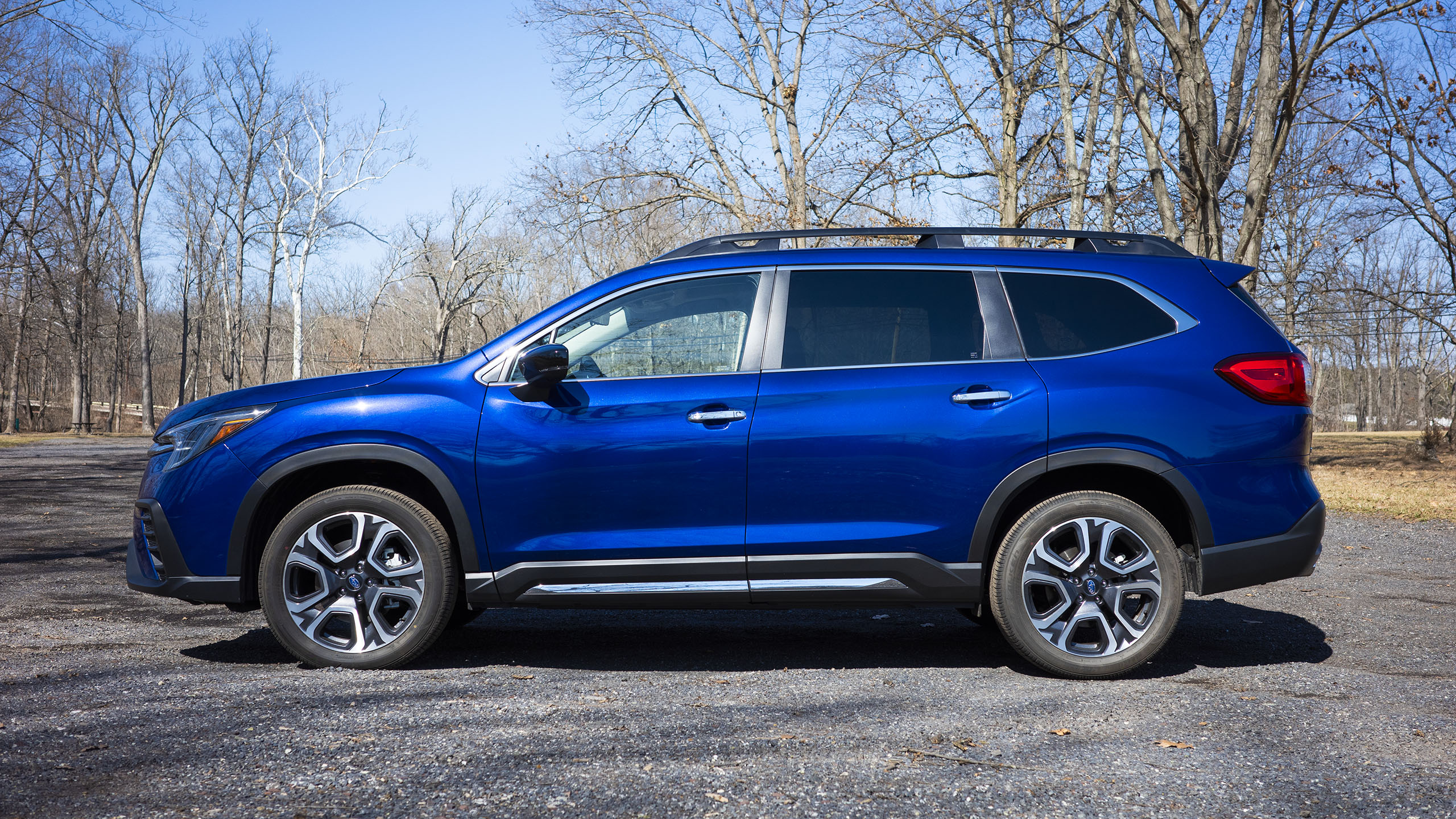
The 2026 Subaru Ascent starts at $42,245, including $1,450 delivery; mine, a range-topping, Onyx Edition Touring model, cost $52,615. All Ascent trims come with Subaru’s turbocharged 2.4-liter flat-four—a version of the WRX’s engine, tuned a little differently for family hauler duty—making 260 horsepower and 277 lb-ft of torque. Power is routed through a CVT to all four wheels.
Every Ascent also comes with three rows of seating. Buyers can opt for a full second row or two captain’s chairs, depending on trim. The AWD system includes X-Mode, which adds two power delivery maps—one for dirt and snow, and another for deeper snow and mud. And the rest of the standard features list is quite solid. A cold-weather package with heated front seats and eight-way adjustable power for the driver, adaptive cruise control, steering-responsive headlights, power-folding mirrors, and a 5,000-pound towing capacity are staples across all grades.
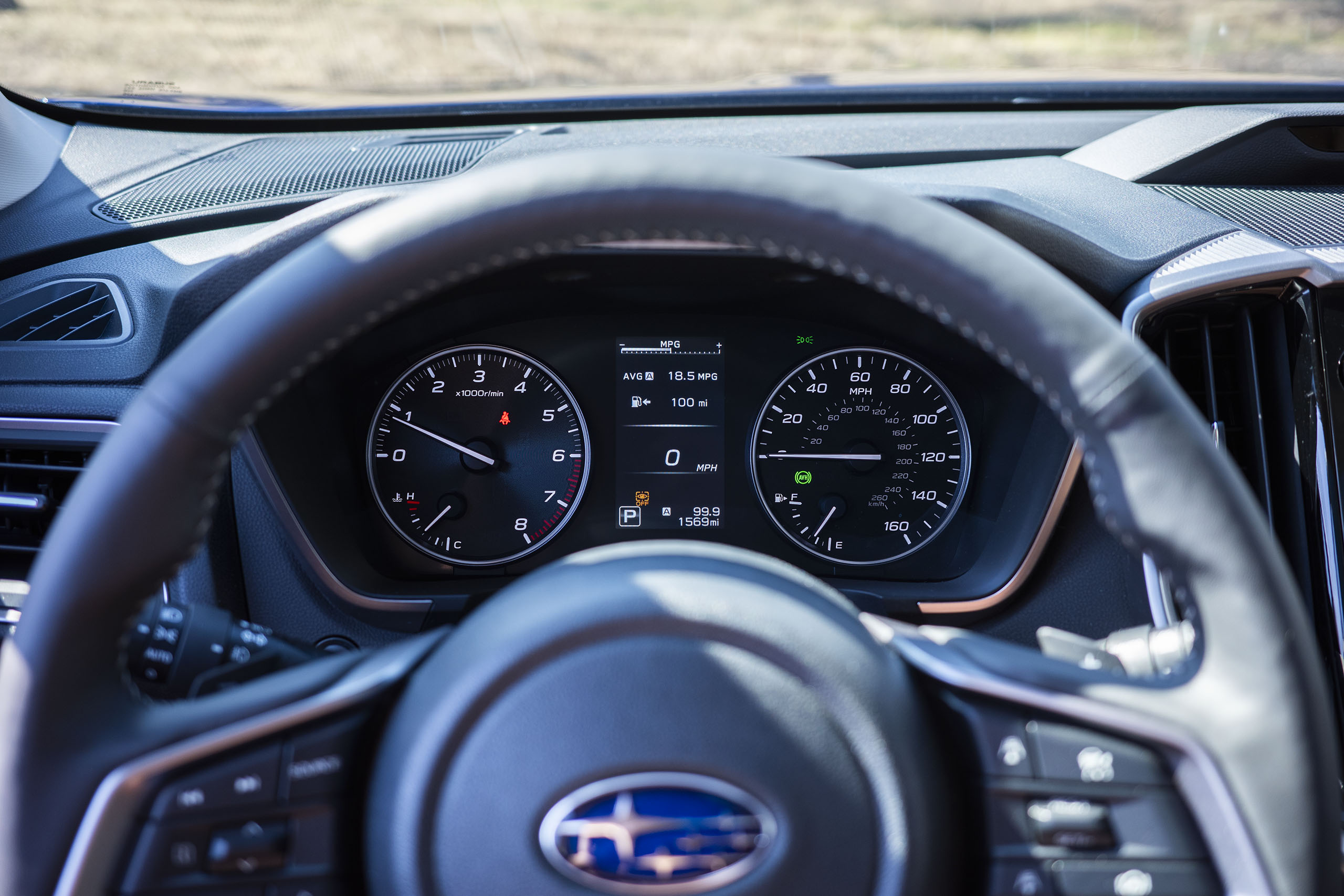
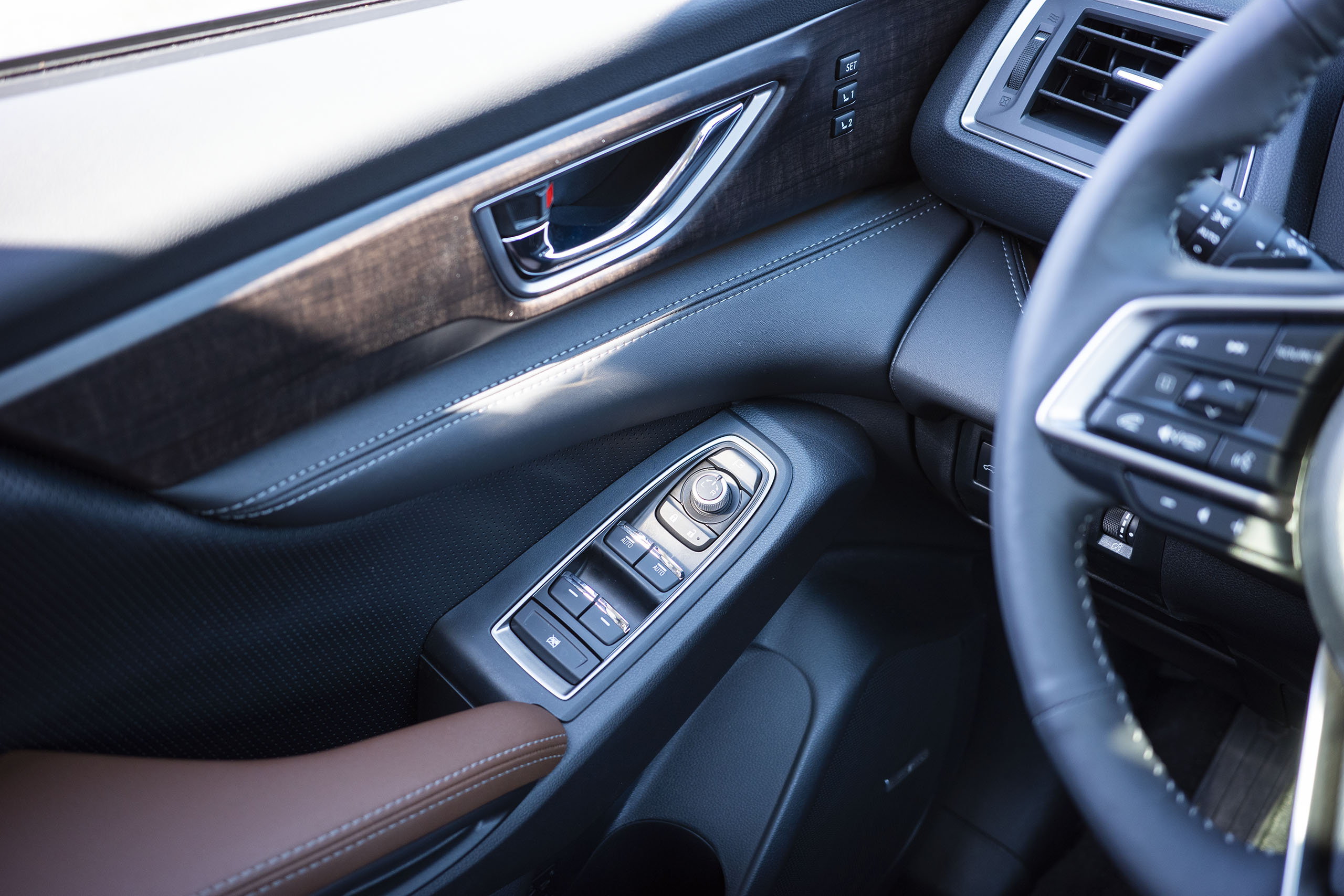
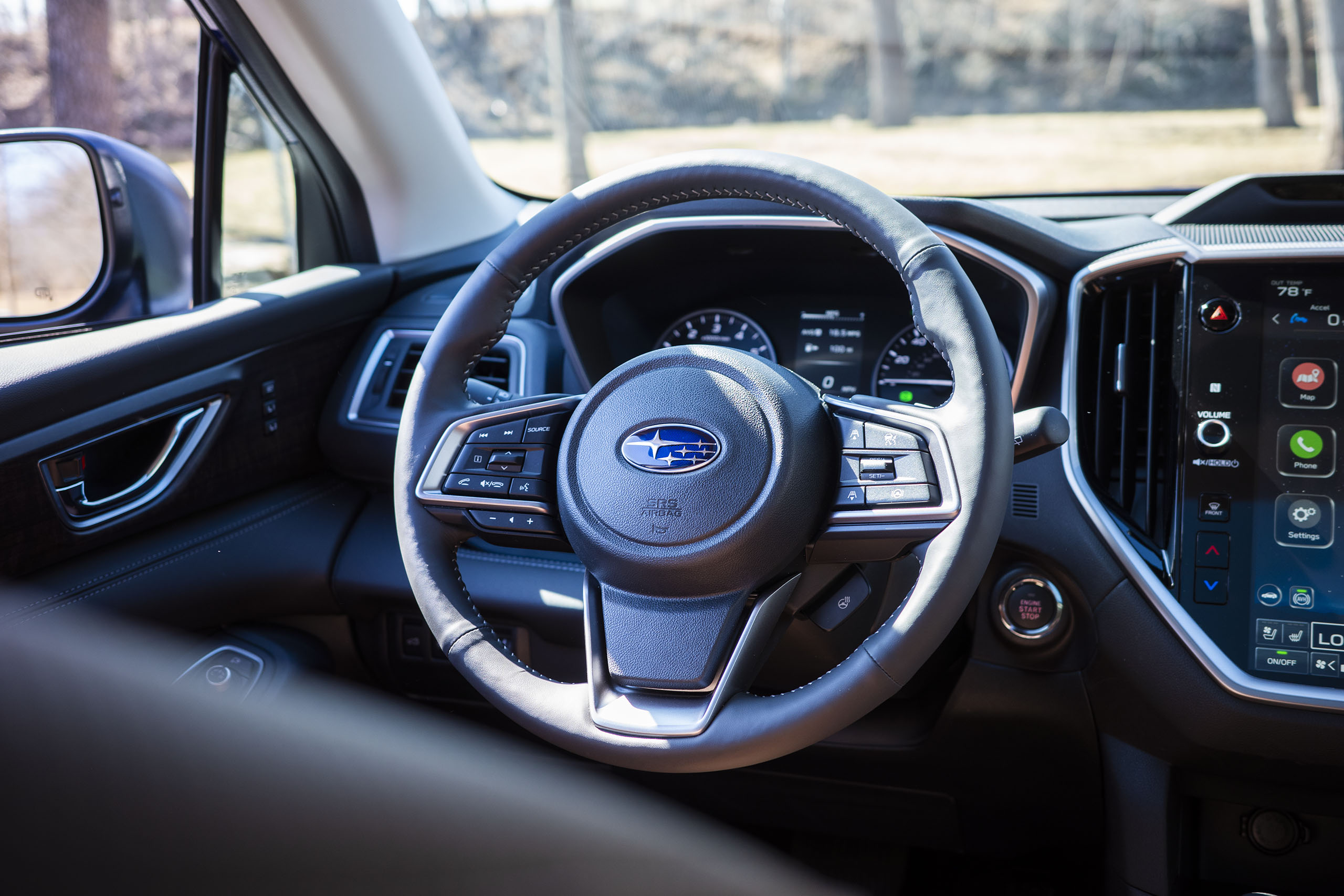
The dashboard is likely where the Ascent shows its age the most. The instrument cluster is mostly physical, save for a tiny screen between the two gauges. For me, personally, this is a very good thing; however, it appropriately sets the tone for what to expect in here.
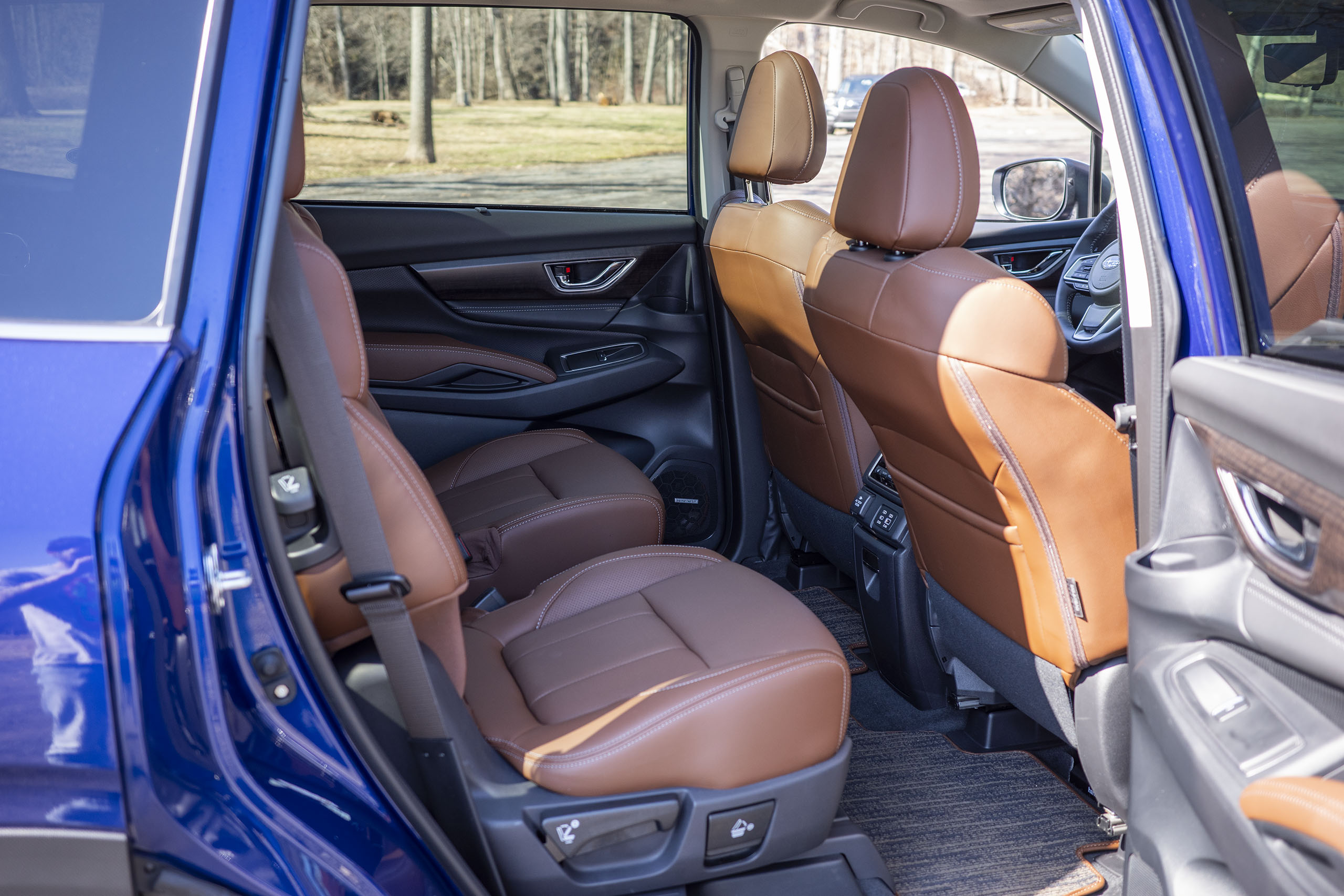
The angular, upright shape to the dash and climate vents was behind the curve by the time the Ascent first hit the market, and age has not been kind to it. It’s just an aesthetic thing, though. Thankfully, visibility is excellent in this car, as are the materials. Everything from the wood trim to the very comfortable Nappa leather seats of this Touring model felt top-class. My 5-foot-10 frame could even fit on the third-row bench, though I wouldn’t want to spend hours back there.
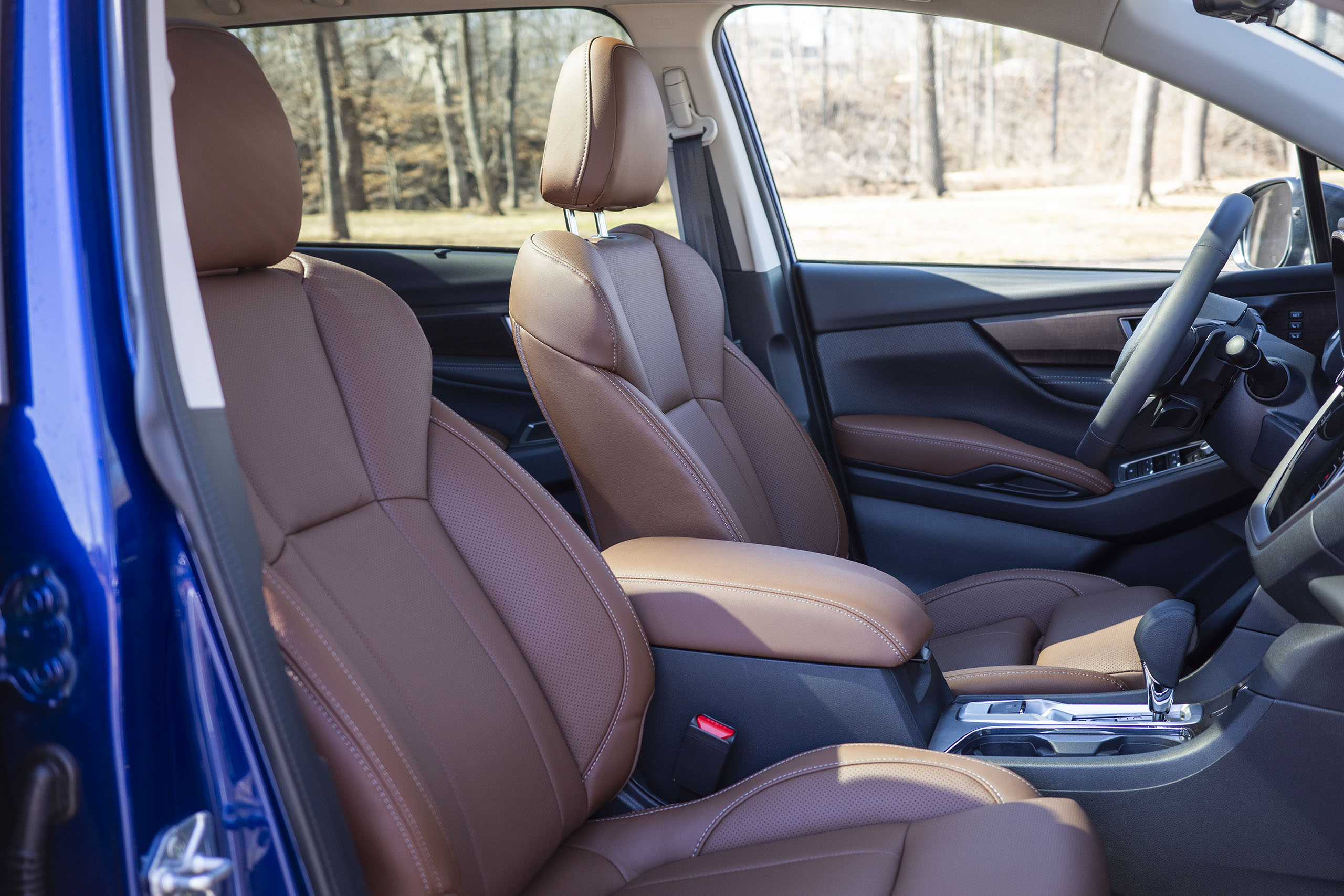
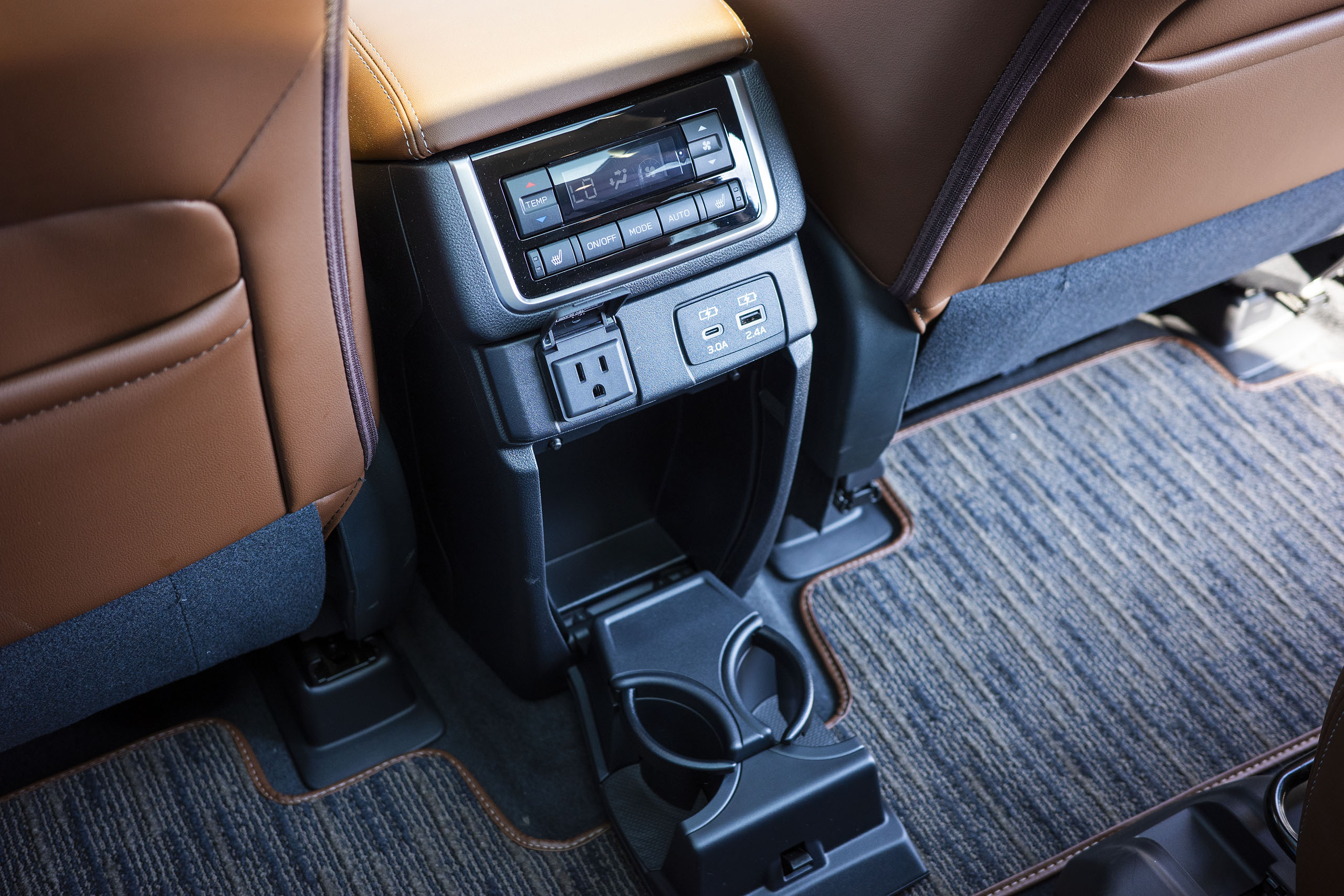
Oh, and you get cupholders—lots of them. I counted 19 in total, including a rather odd three for the right-side third-row passenger, versus two for the left.
The vertically oriented 11.6-inch central touchscreen is also standard equipment, though I wouldn’t necessarily call it a perk. This is Subaru’s old infotainment system, and boy does it feel like it, with busy, garish graphics, a general lag to everything, and a reluctance to register dragging, scrolling motions.
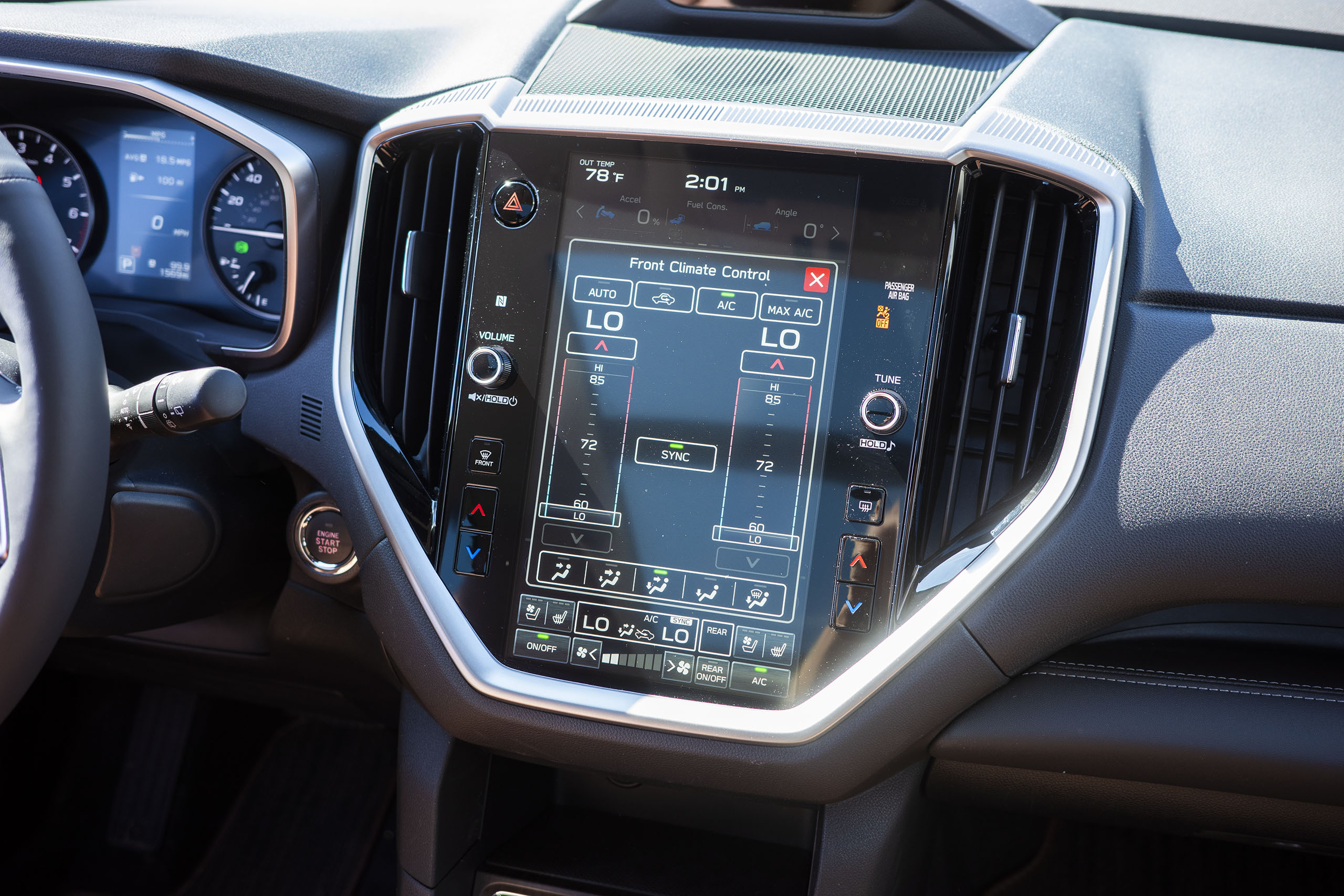
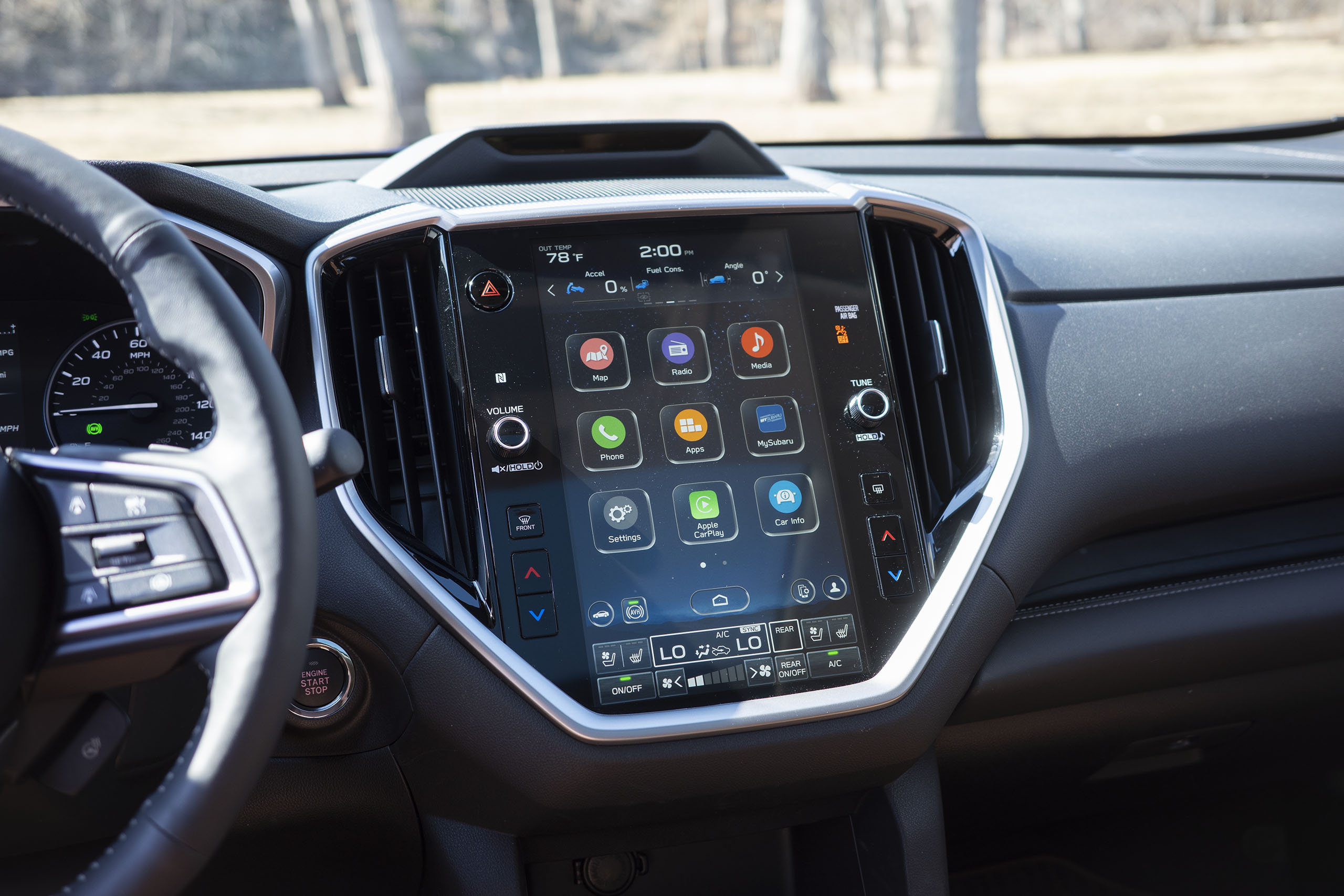
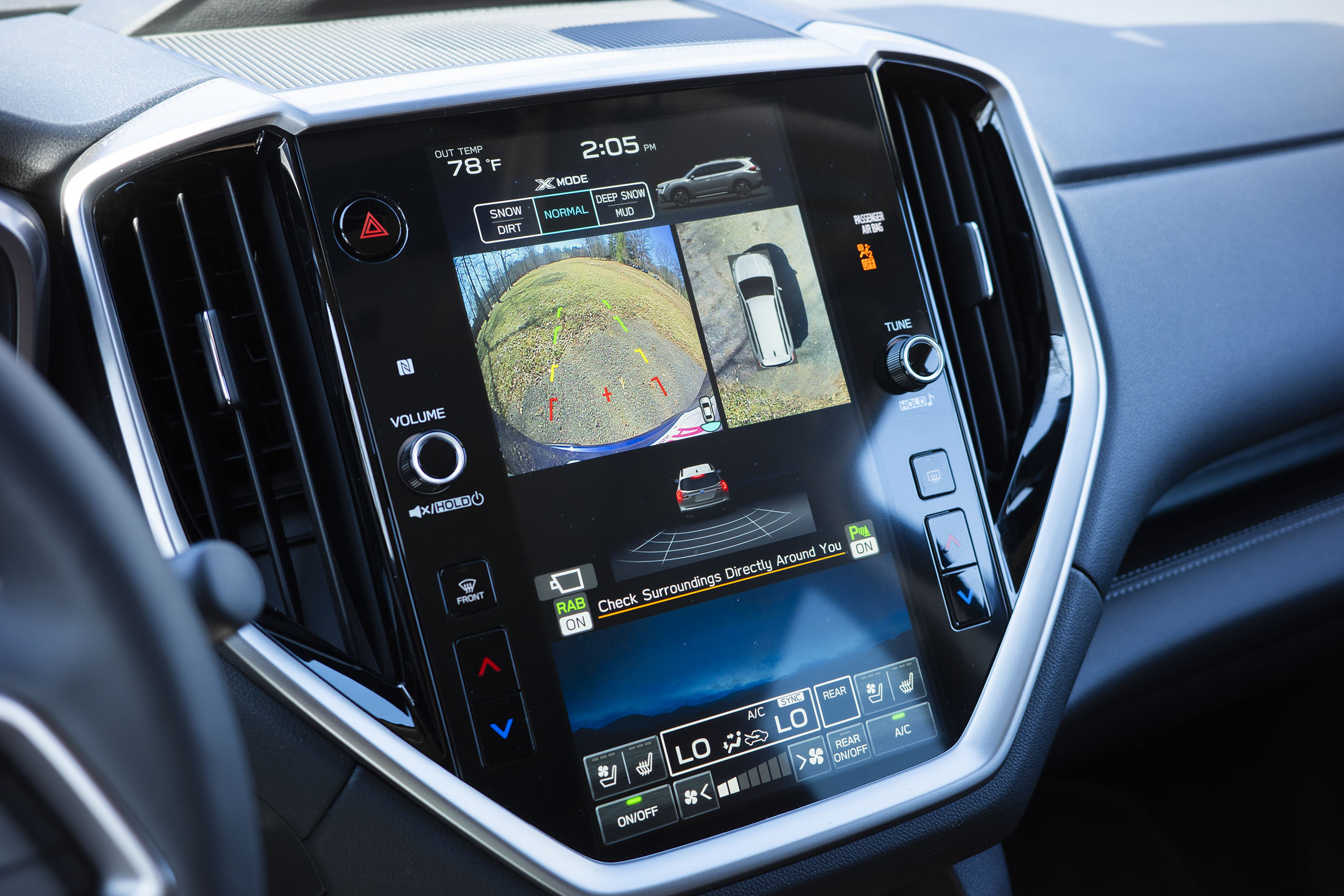
I don’t know if this is a resistive touchscreen—you know, the old-style ones that Palm Pilots used to have, before iPhones let the world swipe with ease—but it might as well be. The interface it runs is also just plain confusing. The top of the display is reserved for customizable widgets, but for the life of me, I could not figure out how to get the one labeled “fuel efficiency” to show any actual data. Most of the climate controls, regrettably, are all contained within a tight frame at the bottom of the panel. Unfortunately, this is one respect in which the Ascent didn’t stick to its dated ways and retain physical HVAC buttons, aside from temperature toggles.
Driving the 2026 Subaru Ascent Touring
Surprise, I know, but the Ascent is a vehicle designed to be easy to drive above all else, and it mostly succeeds in that objective. Steering is very light and the brake pedal has this sort of elasticity to it, making it very responsive to slight pressure. The ride is super compliant, so much so that it could be described as bouncy over potholed roads, as we get in the Northeast come early spring. There’s nothing sporting about the Ascent’s road manners, but at the same time, it doesn’t feel unwieldy or cumbersome on crooked routes, either.
The powertrain conversation, on the other hand, is a little more interesting. While not unique to Subaru, the Ascent’s 2.4-liter flat-four is a unique engine for this segment, with unique quirks. For starters, it’s noisy, and the CVT certainly doesn’t help things. There’s a wheezy quality to the Ascent at speed—my partner specifically said it “sounded like it has a cold”—that you just don’t expect from a three-row SUV. The cabin is otherwise well-insulated from ambient noise, but you’ll just have to tune out the motor’s bronchial rasp with time.
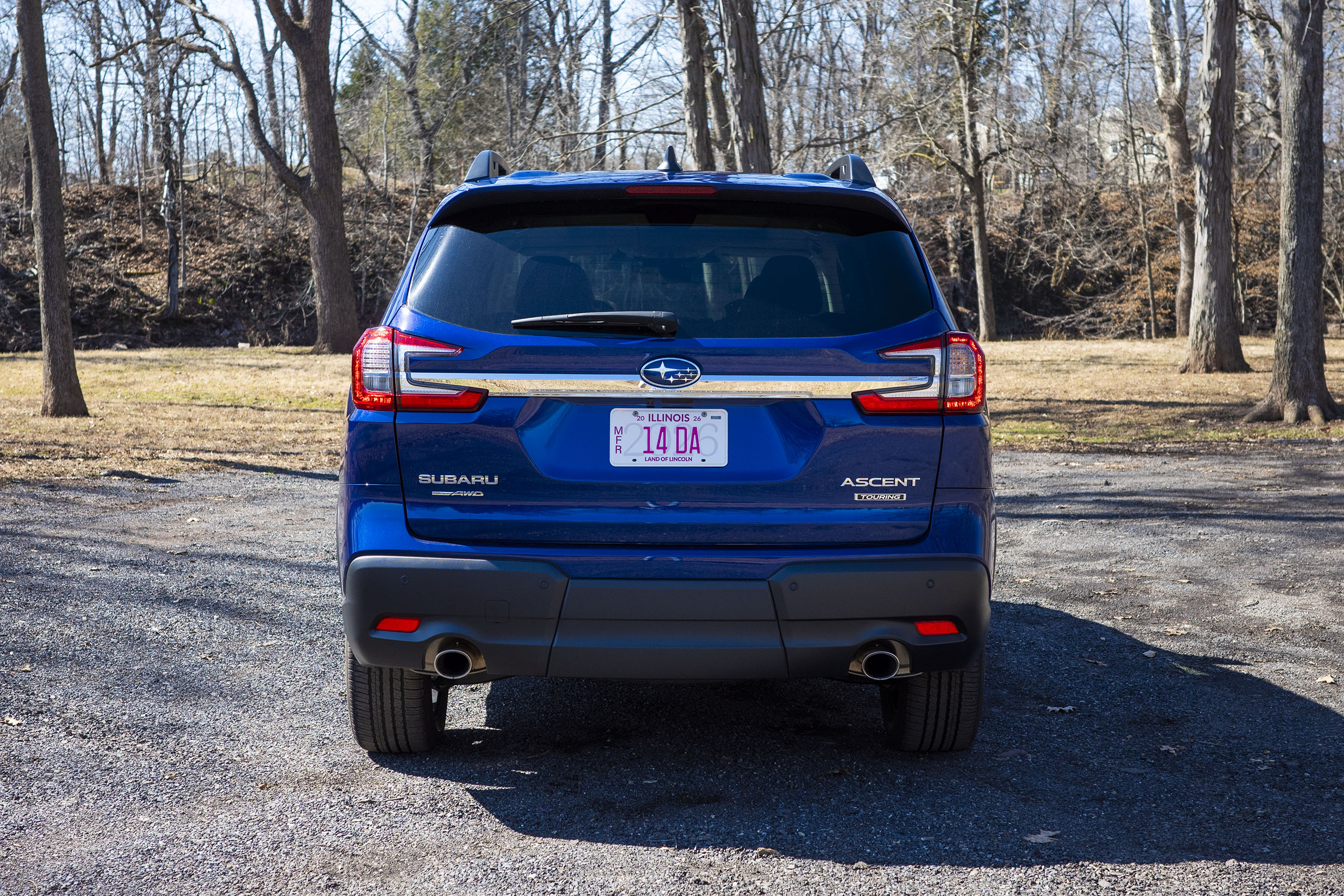
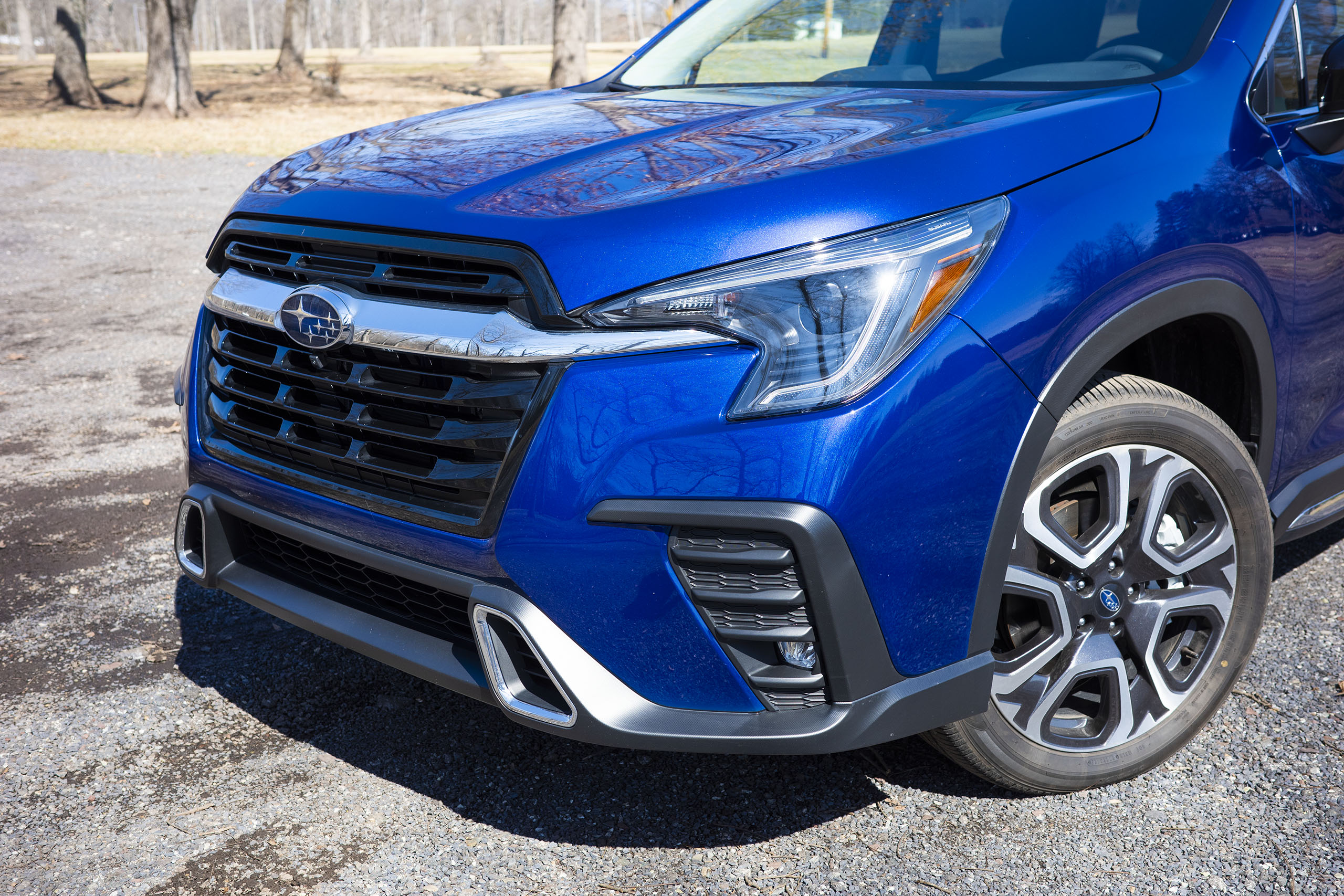
Take all that together, and it’s unsurprising that highway driving leaves Subaru’s biggest SUV feeling the most out of its element. Because, believe it or not, this thing has a surprising bit of pep off the line. The Ascent taps into its healthy 277 lb-ft at just 2,000 rpm, which makes it very ideal for city driving. And, as with other FA24 derivatives, that torque lasts a good while through the rev range.
On the move, though, you always kind of feel like you’re catching the CVT at a bad time whenever you flex the accelerator. It’s like you can hear it stumbling over itself, profusely apologizing for not noticing you there, or realizing you wanted to go for that pass. It’s like the Hugh Grant of powertrains, but less charmingly dotty.
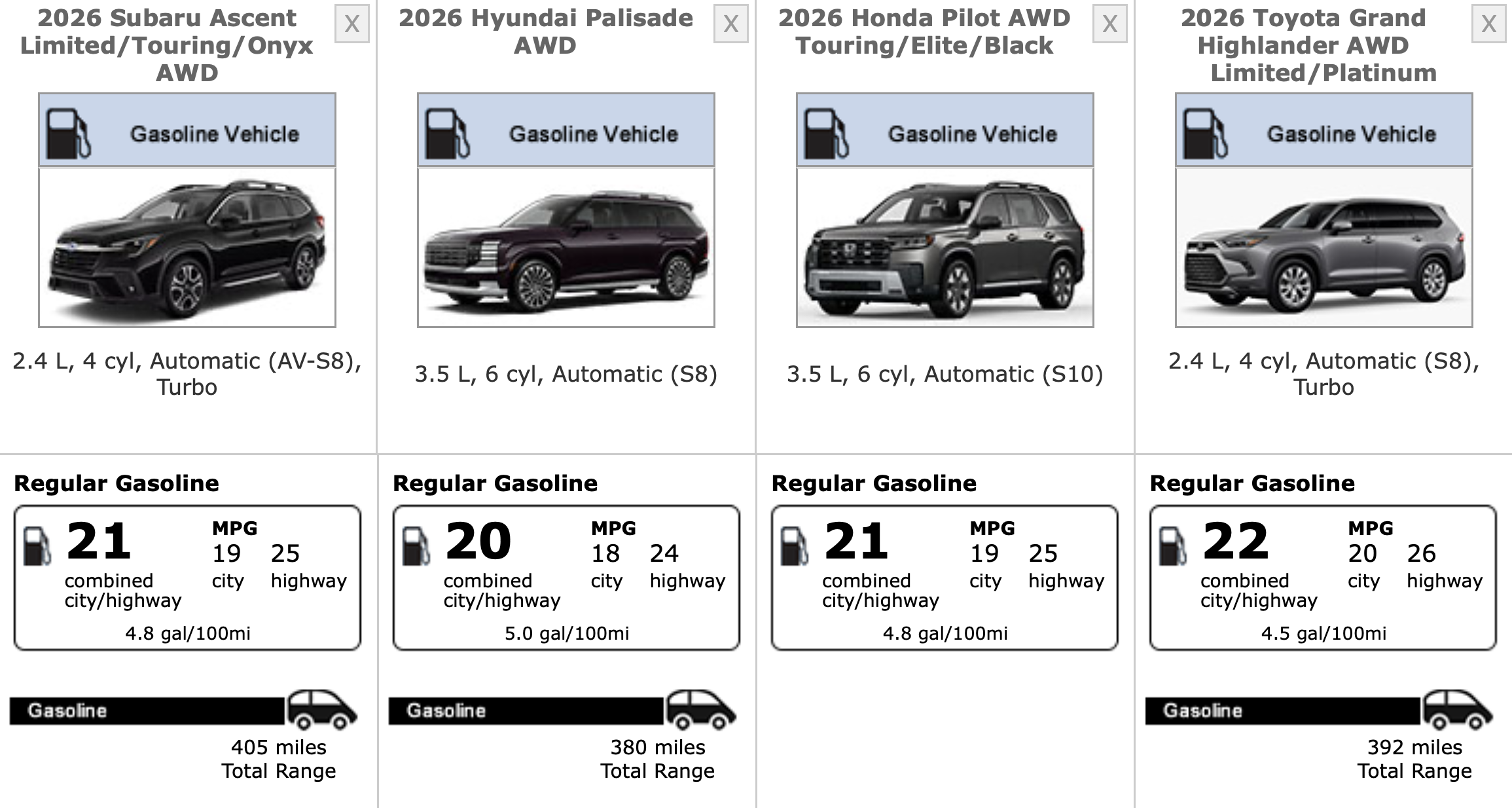
For all these idiosyncrasies, the Ascent manages only mediocre fuel efficiency within the segment. Rated 19 miles per gallon city and 25 mpg highway, I averaged 20.3 mpg predominantly on rural roads, with some interstate travel. That’s but 1 mpg ahead of the Hyundai Palisade, level with the Honda Pilot, and 1 mpg behind the Toyota Grand Highlander, if we’re talking about the base powertrain, all-wheel-drive versions of each.
Quick Verdict
Where the Subaru Ascent wins, at this point in its rather long life, is in the arenas of standard equipment and basic comfort. Those aforementioned competitors might start a hair cheaper, but offer fewer amenities at the low end; conversely, their top-trim offerings are markedly more expensive.
The Ascent targets a bang-for-buck sweet spot, and I found some of its most antiquated characteristics—like its physical gauges and 3.5-mm audio jack—strangely likable. Others, though, were just plain past their prime. In one of the most competitive automotive segments that exists, you can do better. And, I’m willing to bet, so can Subaru.
Subaru provided The Drive with a seven-day loan of this vehicle for the purpose of writing this review.
2026 Subaru Ascent Specs
| Base Price (Onyx Edition Touring as tested) | $42,245 ($52,615 as tested) |
| Powertrain | 2.4-liter turbocharged flat-four | continuously variable transmission | all-wheel drive |
| Horsepower | 260 @ 5,600 rpm |
| Torque | 277 lb-ft @ 2,000-4,800 rpm |
| Seating Capacity | 7 or 8 |
| Curb Weight | 4,449-4,597 pounds |
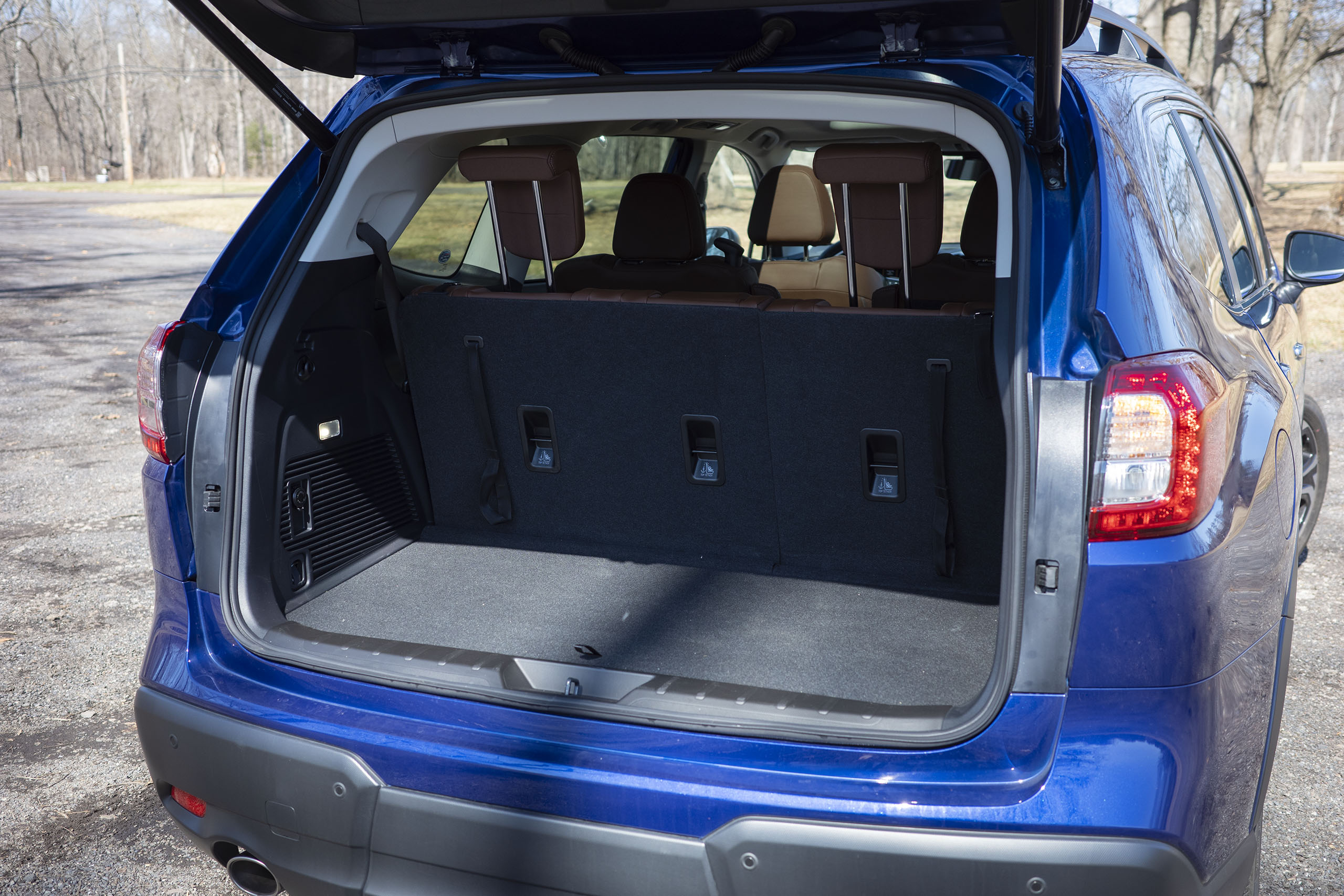
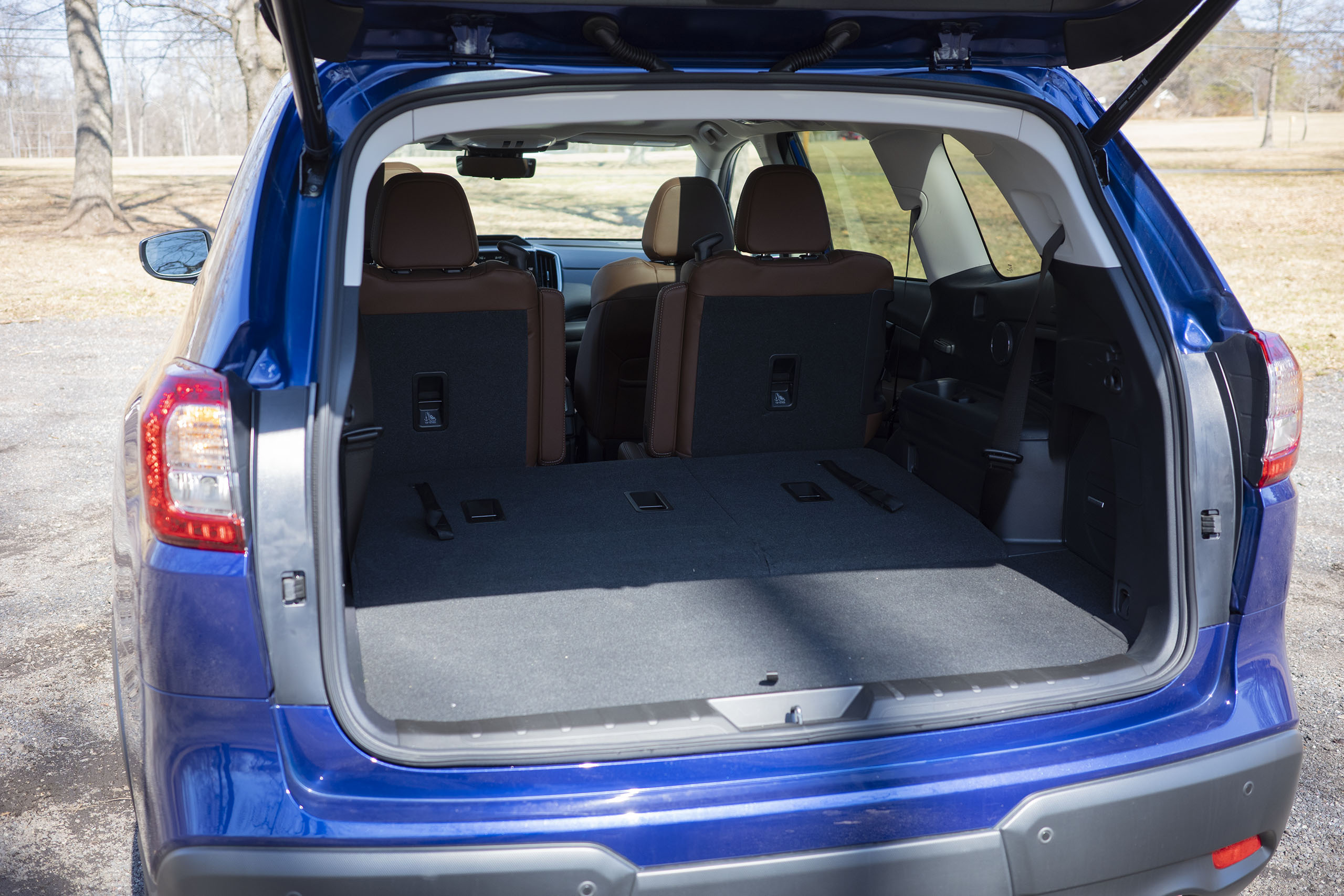
| Cargo Volume | 17.8 cubic feet behind third row | 43.5 cubic feet behind second row | 75.6 cubic feet behind first row |
| Max Towing Capacity | 5,000 pounds |
| EPA Fuel Economy | 19 mpg city | 26 highway (25 for Limited and above) | 21 combined |
| Score | 6/10 |

Quick Take
The Ascent is very good at being comfortable and easy to live with. Unfortunately, so are many other three-row SUVs. Beyond that, what sets it apart is its age.
Loading comments…
Comments couldn’t be loaded. Please refresh the page.