
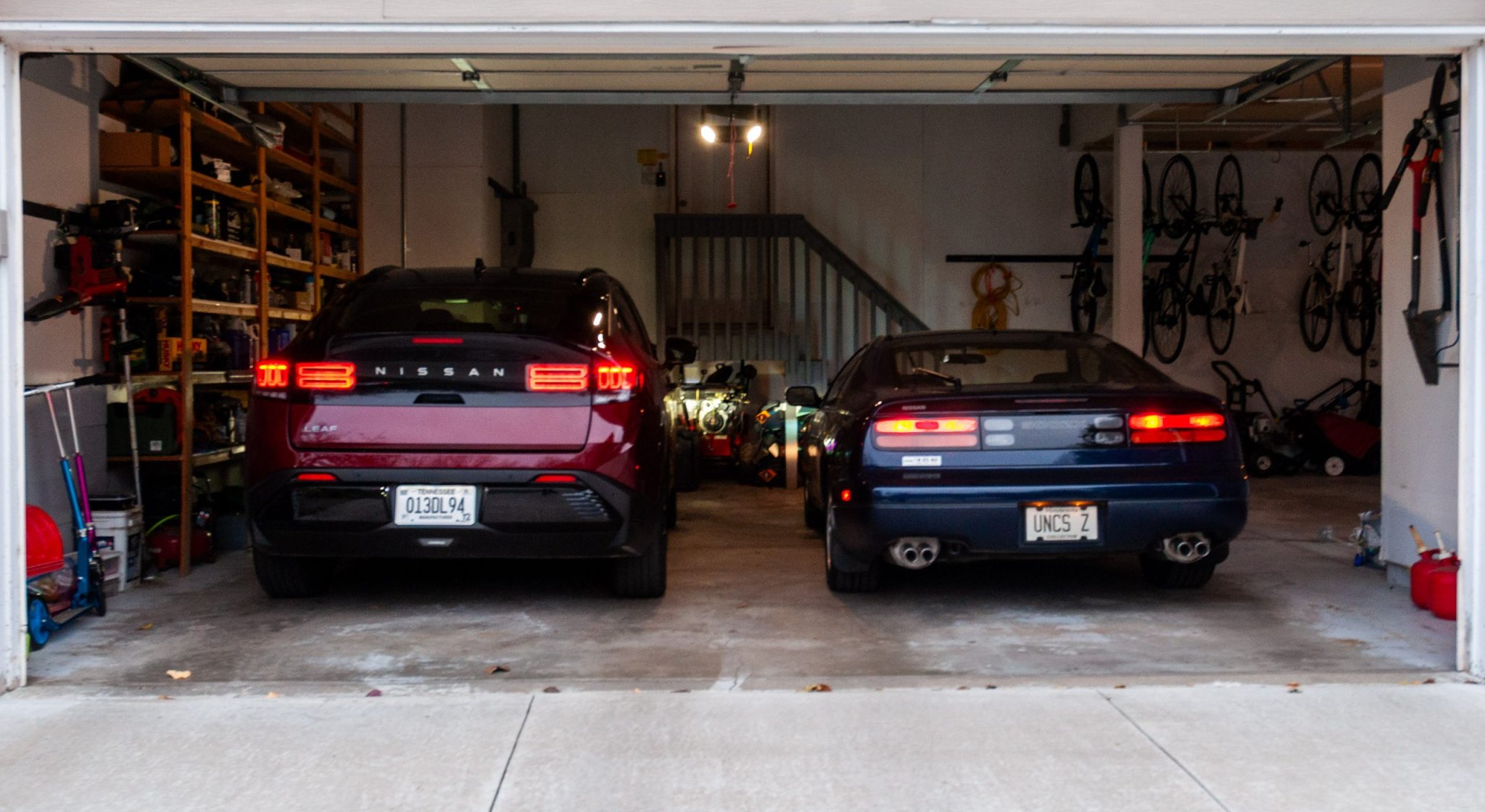
The blue 1990 Nissan 300ZX (Z32) you see above lives in my garage. Meanwhile, the 2026 Nissan Leaf next to it was my test car for a week. As the days went on and I looked more closely, I realized that there was a lot of design influence from the Z32 that carried over into the second-generation Leaf. Interesting, and frankly, a bold choice. Good job, Nissan.
Let’s take a look.

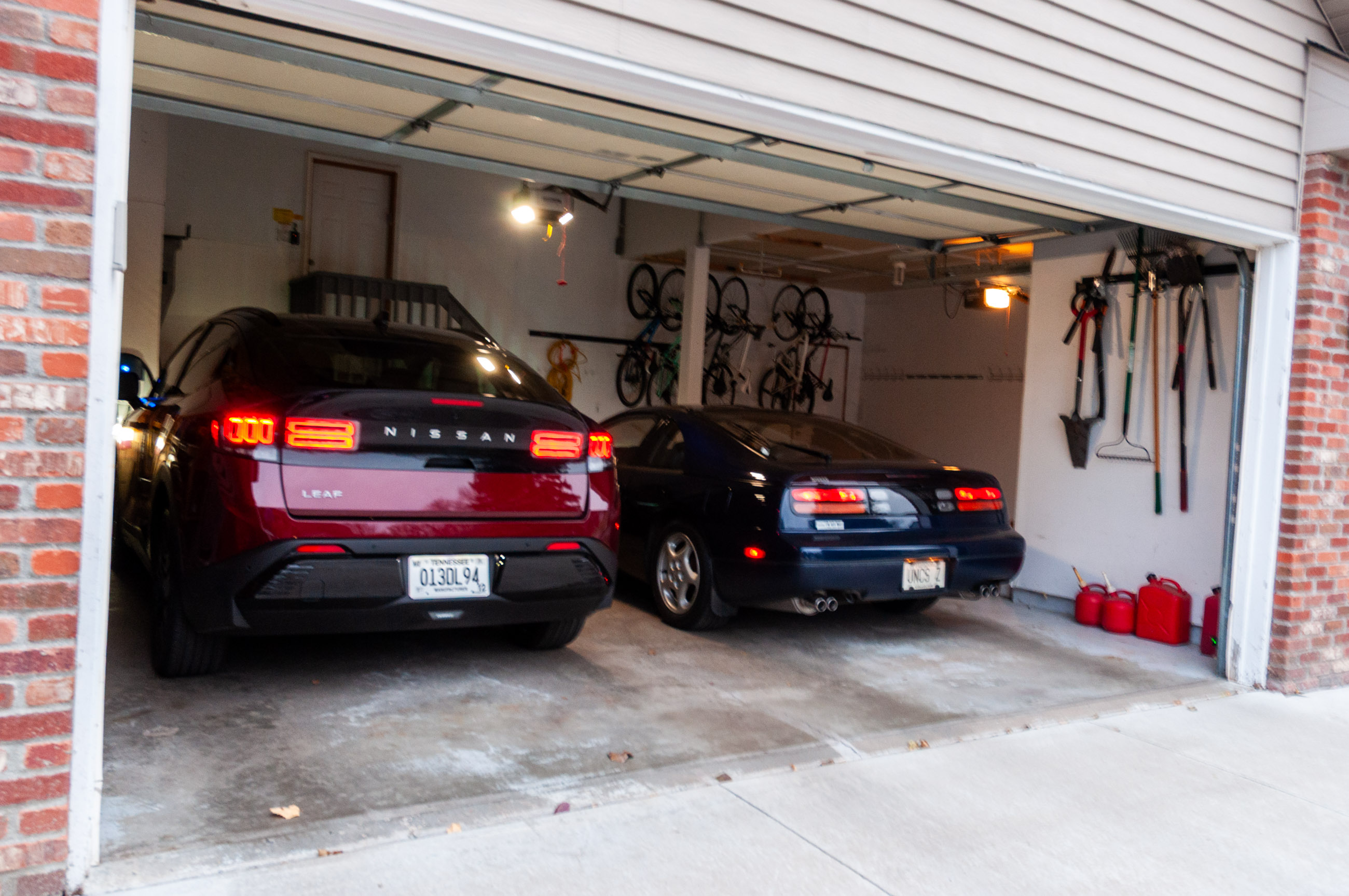
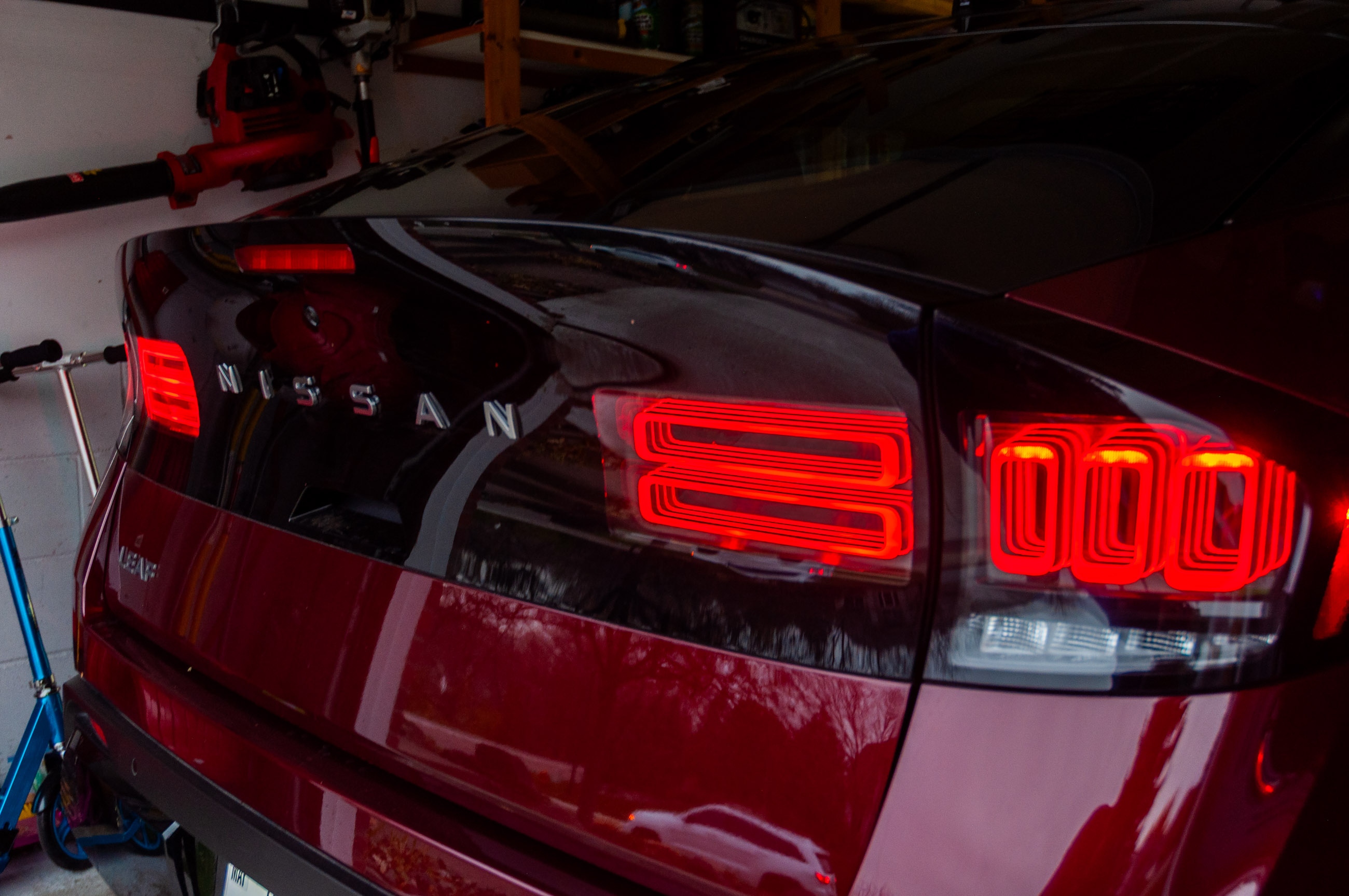
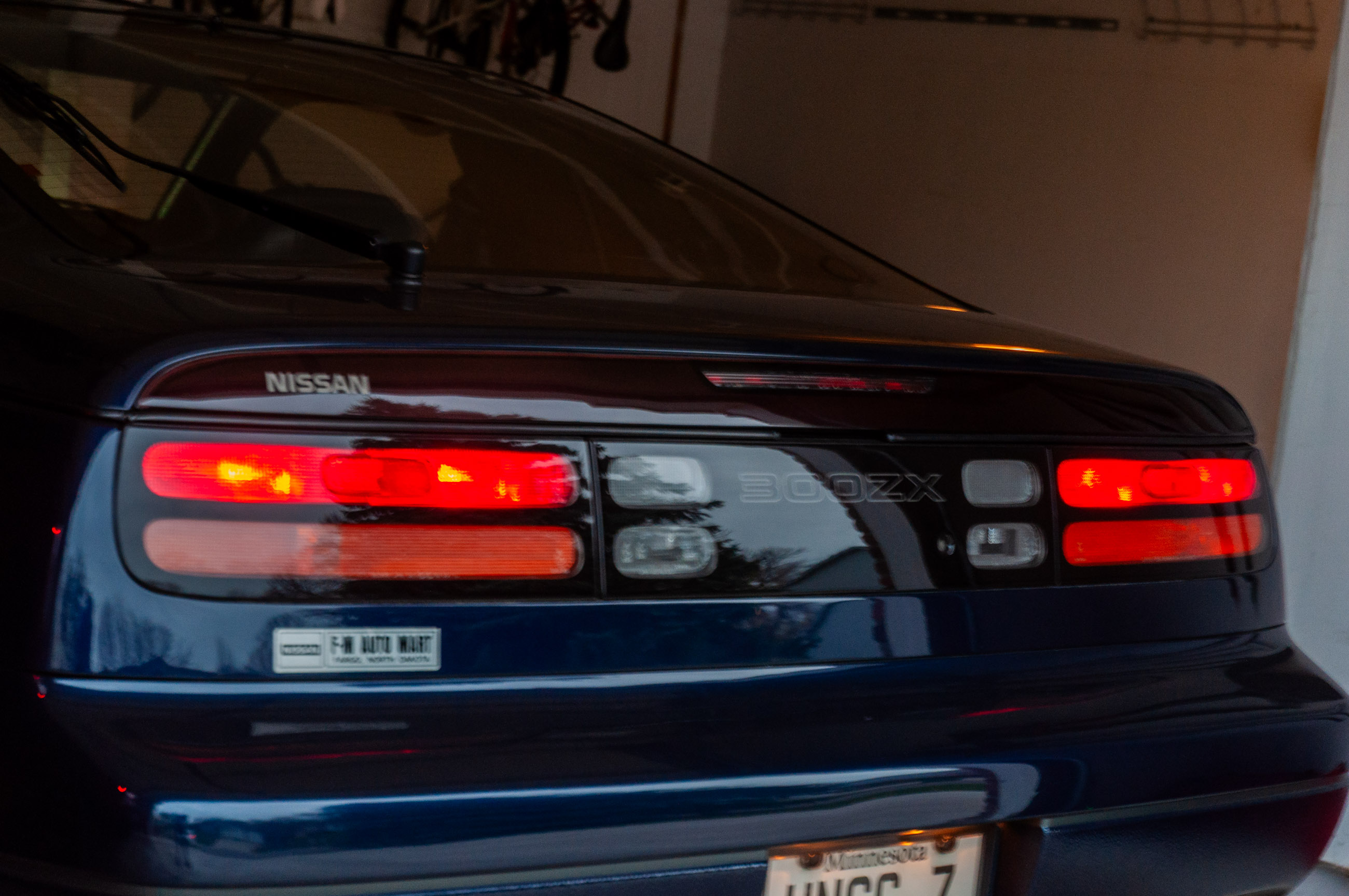
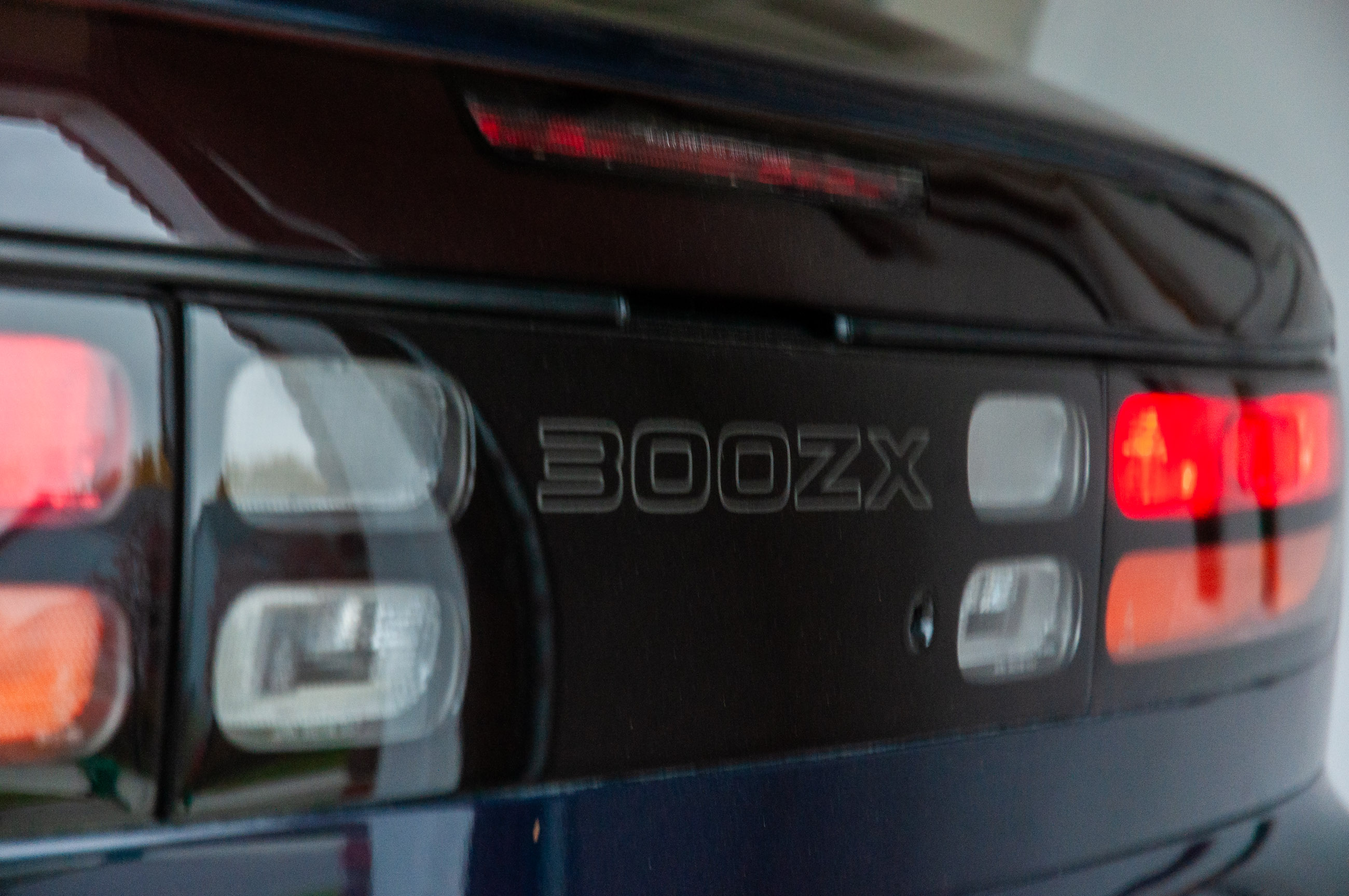


At a surface level, the obvious design connection between the two is the shape of the taillights. The Z32’s taillights clearly inspire the LED oval outlines on the Leaf. The horizontal elements on the EV are akin to the Z32’s running, brake, and turn signals, while the upright ovals are similar to the Z32’s reverse lights, i.e., shorter.
Looking beyond the lights themselves, the Leaf has Nissan spelled out in letters on a black plastic panel between the taillights. This is a direct grab from the Z32, which also has 300ZX spelled out on a black plastic panel between its taillights. The Z32 even had the word “Nissan” spelled out on its rear end, though it was smaller on the upper-left side of the hatch. The Leaf has this, with the model name spelled out on the lower left of the hatch. Sitting above all this is a third brake light at the center of the hatch lip on both the Z32 300ZX and Leaf.
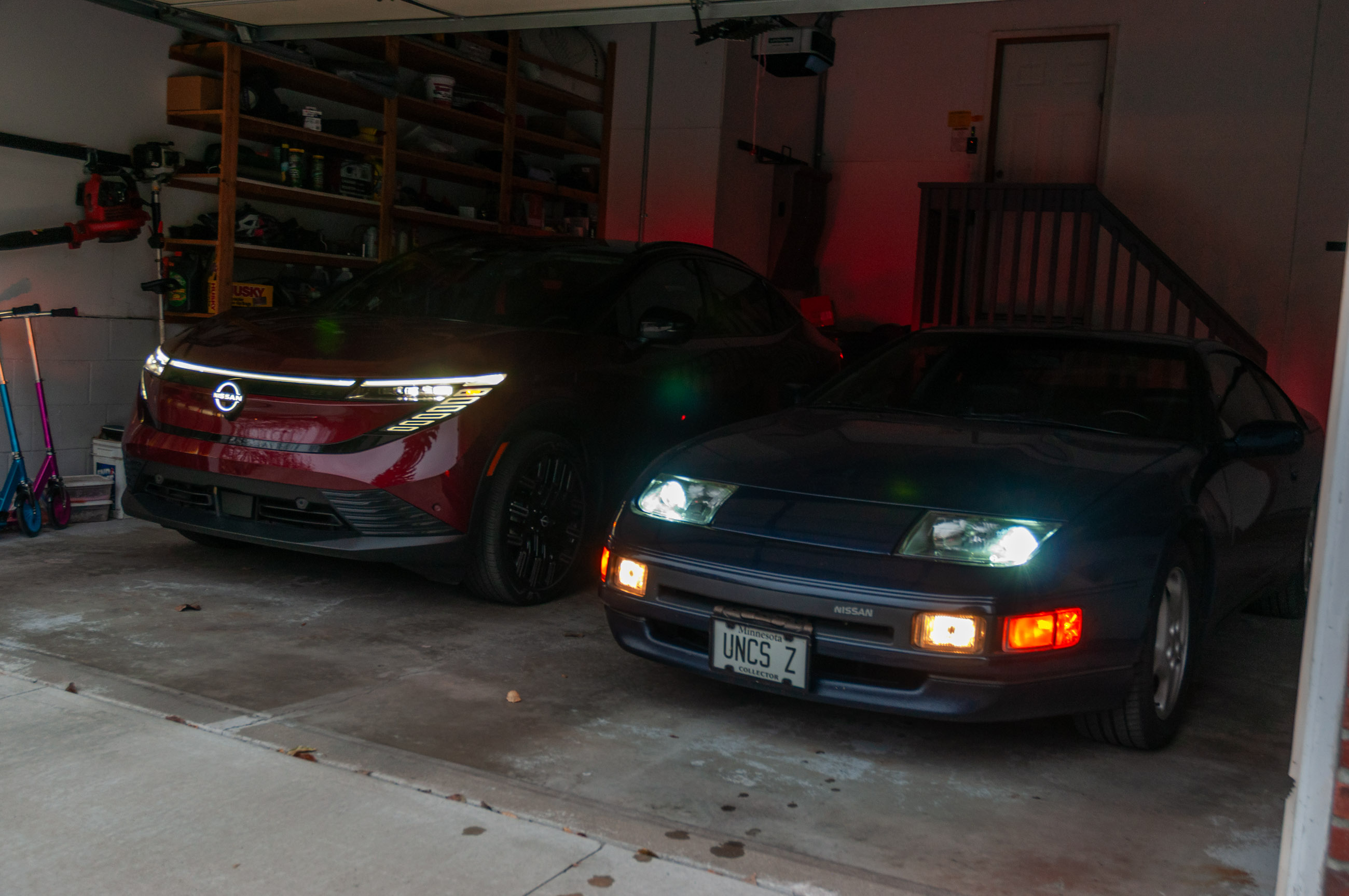


I was more surprised to see the less-obvious design influences on the front end of the Leaf. The shape of the Leaf’s LED headlight housing is a horizontal rectangle, matching that of the Z32 300ZX’s high beams, which are a horizontal rectangle set just inside the projector-style low beams. The earlier Z32 300ZX models had what many referred to as “the mustache,” with the middle of the front bumper featuring a black plastic surround around the running and driving lights. This area was painted on some later models. The Leaf has a version of this with black plastic trim that connects the LED headlight housings across the front end, bottom-to-top, forming a loop.
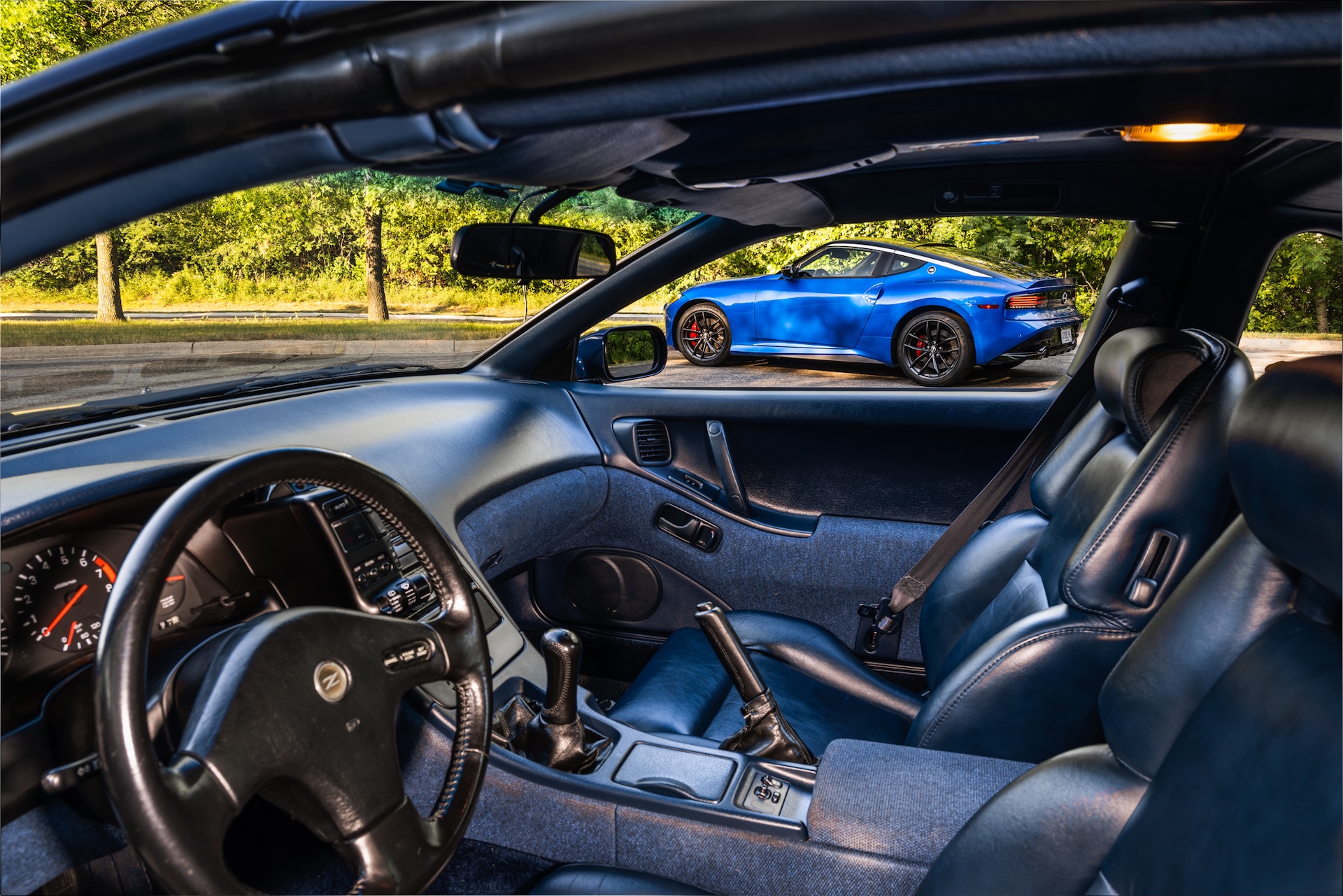

Much more subtle is the design nod to the 300ZX inside the Leaf’s cabin. It’s not common for a modern car to have cloth used as trim on the dashboard and doors, but the Leaf does. The 300ZX used cloth on its dashboard, doors, and center console. The cloth material obviously isn’t the same, but if inspected, the Leaf does have a fine tweed-like finish, and the cloth used in the 300ZX was tweed.
Recently, I learned that Nissan had some of the engineers who worked on the latest Z move over to work on the Leaf. The EV arrived with an 80% stiffer structure and 25% less vibrations than the outgoing Leaf, according to Nissan. Claims that are somewhat hard to verify without backing up the two cars.
Looking at the new Z, the 300ZX in my garage, and the Leaf tells me that Nissan’s finally looking back to its glory days from the ’90s for inspiration. Even the Xterra is coming back, and the Pathfinder might revert to a body-on-frame chassis. If this is the path Nissan’s on, then count me in.
Got a tip about a vehicle design incorporating throwback elements? Send us a line at tips@thedrive.com
Loading comments…
Comments couldn’t be loaded. Please refresh the page.