
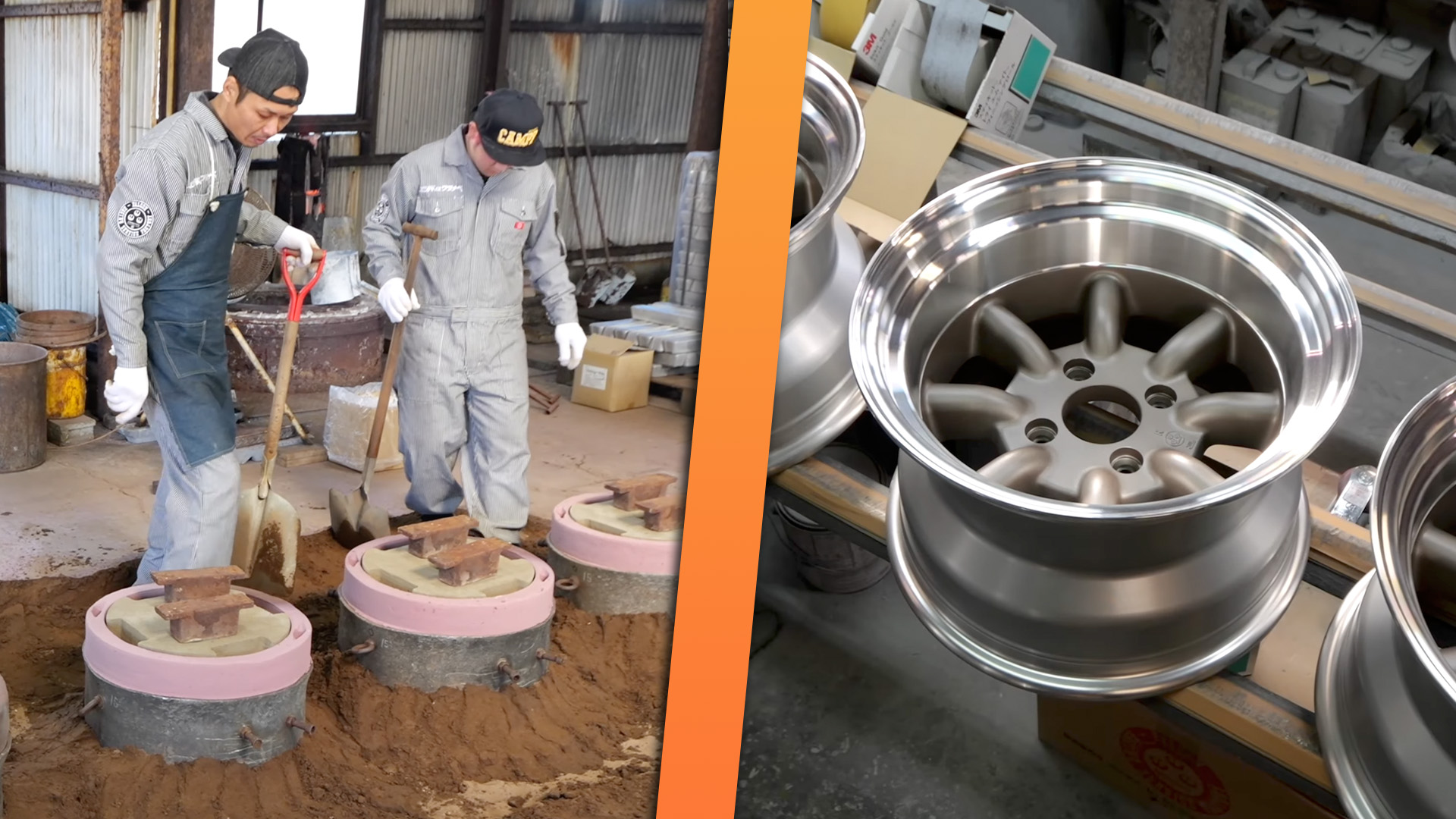
Japan has produced many famous wheel designs over the years, but few are as coveted as those produced by Racing Service Watanabe. RS Watanbes and a Hakosuka Skyline GT-R go together like sushi and wasabi, and the fact that these wheels are still hand-made keeps supplies limited. There’s currently a two-year waiting list for them.
Thankfully, there’s now a detailed video on how these iconic wheels are made. Produced by the straightforwardly named Japanese Industry Process YouTube channel, it clocks in at about 50 minutes and shows every step of the process for both aluminum and magnesium wheels. Either way, that process starts with melting the metal—including leftover scraps—to pour into molds from which the wheels are cast. And that’s done in small furnaces just sitting on the floor of the shop among stacks of molds and tools. Japan has plenty of massive, high-tech factories, but this is not one of them.
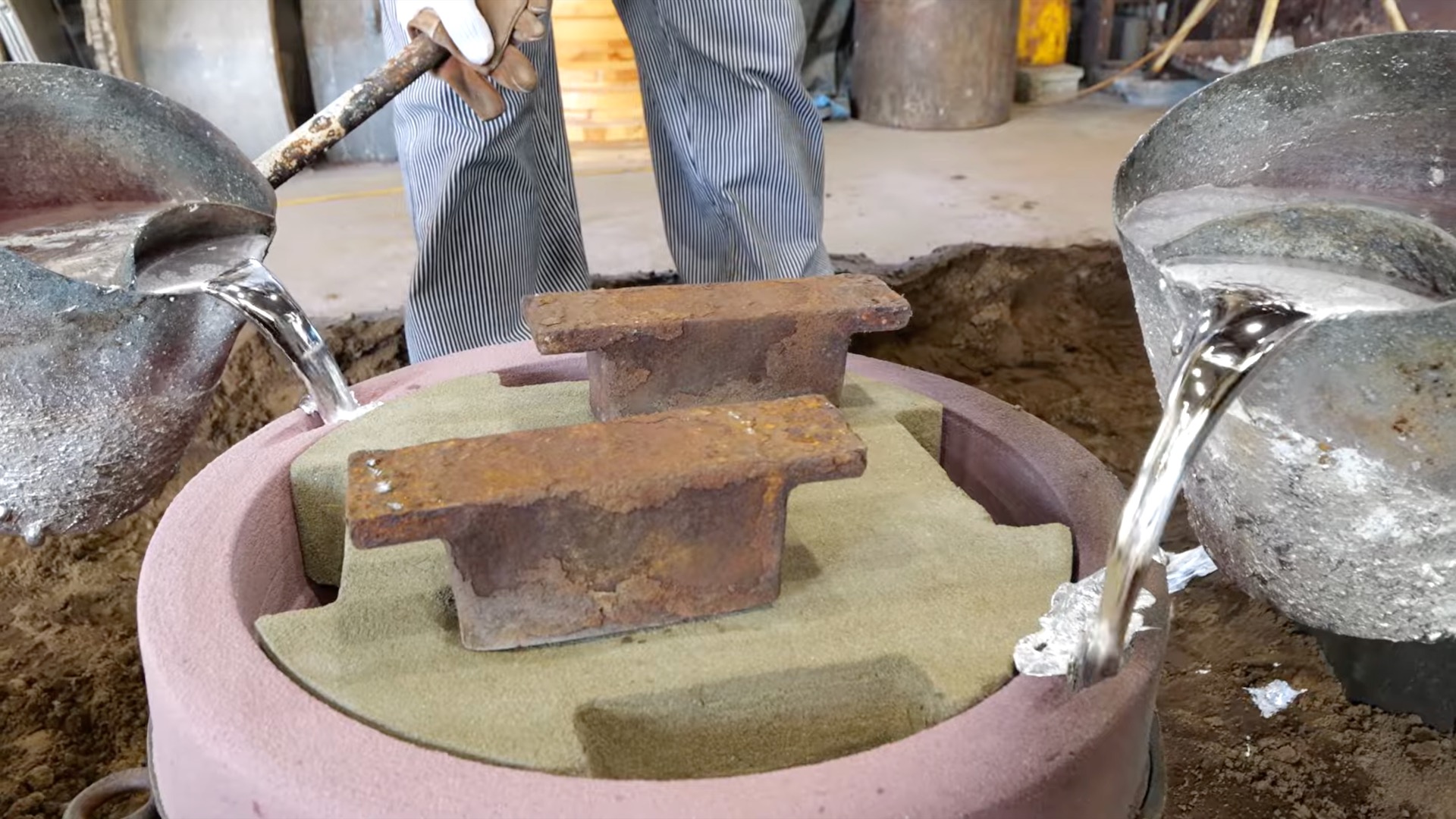
The aluminum is heated to 1,292 degrees Fahrenheit. It’s then scooped out of the furnaces in buckets coated in graphite for heat resistance. Here, the pieces of the mold are also heated, sprayed with air to remove dust, and then again with a release agent to prevent the material from sticking to the mold. Each mold consists of two halves and a central core that’s a mirror image of the wheel’s hub and spokes. These pieces are clamped together before the molten aluminum is poured in and allowed to cool under pressure.
Watanabe makes magnesium wheels with an even more old-school sand casting process. Molds are made from compacted sand, which has to be carefully heated and dried to provide maximum strength and remove moisture, as they would otherwise react violently with the magnesium. The molds are placed in piles of sand, the material is poured in, and then the mold is chipped away to release the wheel.
レーシングホイールを作る。日本のモノづくり精神を体現する工場に密着。手作業での鋳造から加工、梱包まで。
When the wheels pop out of the mold, they’re far from ready to go on a car. Excess aluminum is hammered or sawed off, surfaces are sanded, and dents are fixed by building up more material with a TIG welder and then sanding it back down to smooth surface. Some finishing work is done with a CNC machine—which makes for quite the contrast with the somewhat medieval look of the rest of the shop—but stud holes are still made by a person with a drill press. Finally, the wheels get a coat of gray paint before being boxed up and shipped.
It’s fitting that old-school wheels like this are made with an old-school process. And it’s pretty cool to see bits of metal turned into one of the most recognizable aftermarket wheel designs around.
Loading comments…
Comments couldn’t be loaded. Please refresh the page.