
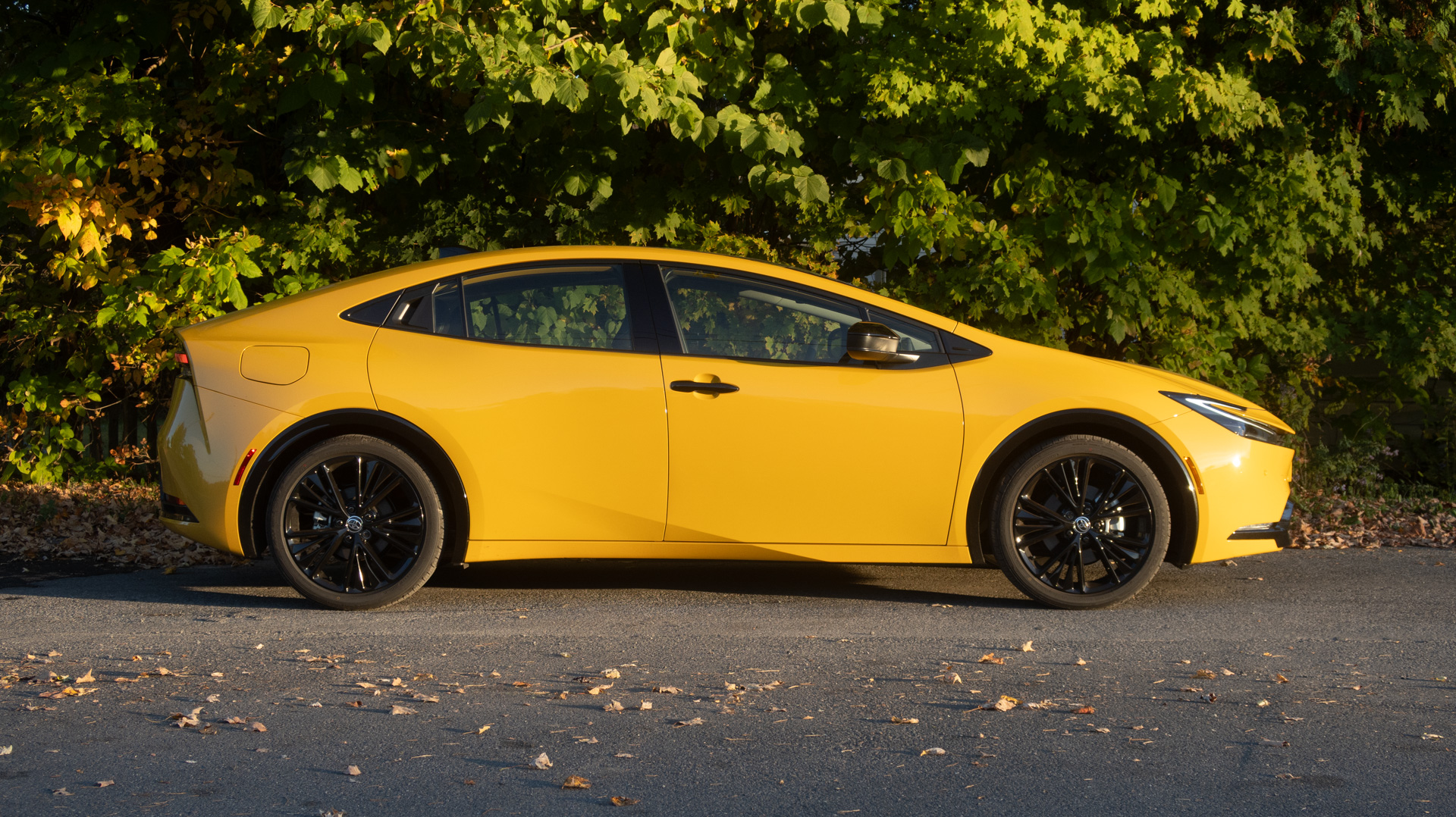
Despite the public shift toward SUVs, the Toyota Prius has endured as a staple of the company’s lineup, and one we’ve come to like a whole lot. My friend Andrew recently had one for a few days and was delightfully surprised by the number of compliments he received from strangers. And I get it—especially in yellow, there’s almost a supercar quality to its design, despite the fact that it very much isn’t one. That’s why we were a little miffed to learn that Toyota has sold a whole lot less of them through the first three months of 2026 compared to last year; 41.5% fewer, to be exact. We wanted to know why, and Toyota told us.
Backing up a bit, Toyota said it shifted 9,737 units of the wedge-shaped hybrid from January through March. At this time last year, that number sat at 16,653. That’s a significant drop, one that prompts questions.
“We saw demand shift toward Camry, largely because of its strong fuel economy,” Derrick Brown of Toyota Motor North America told The Drive. “Fortunately, Camry and Prius share some components, which gave us the flexibility to scale back Prius production and increase Camry production. We’re always working to match production as closely as possible to what customers want, and in this case, we were able to adjust quickly.”
Indeed, Camry sales are up year-to-date versus 2025 by a similar margin, to the tune of 78,255 units against 70,308. While both four-doors are now hybrids—the Camry went 100% electrified for North America with the latest generation that launched two years ago—their internal combustion engines aren’t exactly interchangeable, despite whatever components they share. Here in the U.S., the Prius (including the plug-in hybrid version) sports a 2.0-liter four-cylinder making 150 horsepower, while the Camry is equipped with a 2.5-liter mill making 184 hp before you add their electric motors into the stew.
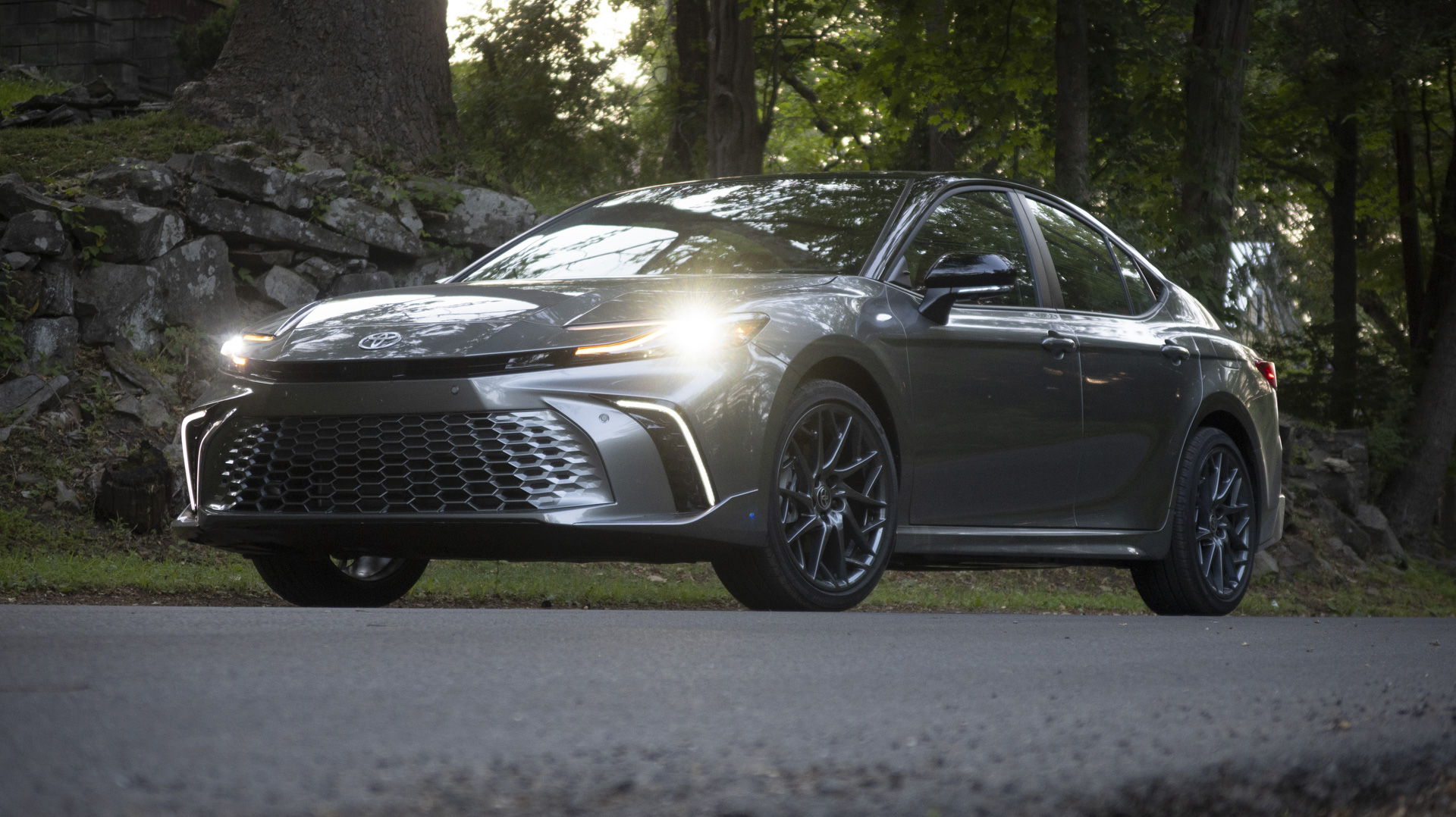

It’s also important to point out that they’re built in different places. Every Prius rolls out of Toyota’s Tsutsumi plant in its namesake city in Japan, while the American-market Camry hails from Toyota Motor Manufacturing Kentucky in Georgetown.
When Toyota says it “saw demand shift toward Camry,” I can believe that; the car was recently redesigned, after all, and became an obvious upsell from the Prius because it’s also a hybrid by default now. At the same time, it favors Toyota to push the models it builds here versus the ones that originate overseas, given the whole tariff frenzy that’s exploded over the last 15 months. A recent report from Automotive News estimated that U.S. tariffs cost Toyota $9.1 billion last year, higher than any other automaker’s bill.
That’s cause for some concern regarding the Prius’ future here in the States. Toyota hasn’t spoken on this in any capacity—this is just commentary—but if the financial case for importing a relatively niche model like this has become harder, and more of those customers have been successfully converted to buying Camrys, the Prius begins to lose its justification for sale here, so long as it isn’t made here. And that’s really sad, because the latest gen is a genuinely fantastic car.
Then again, maybe the model’s name recognition is enough to carry it. “Prius” has been a byword for efficient transportation for 20 years now, and you’d figure that has to count for something, even if its days of being the “it” car have long since passed.
Got a tip? Reach out to tips@thedrive.com
Loading comments…
Comments couldn’t be loaded. Please refresh the page.