
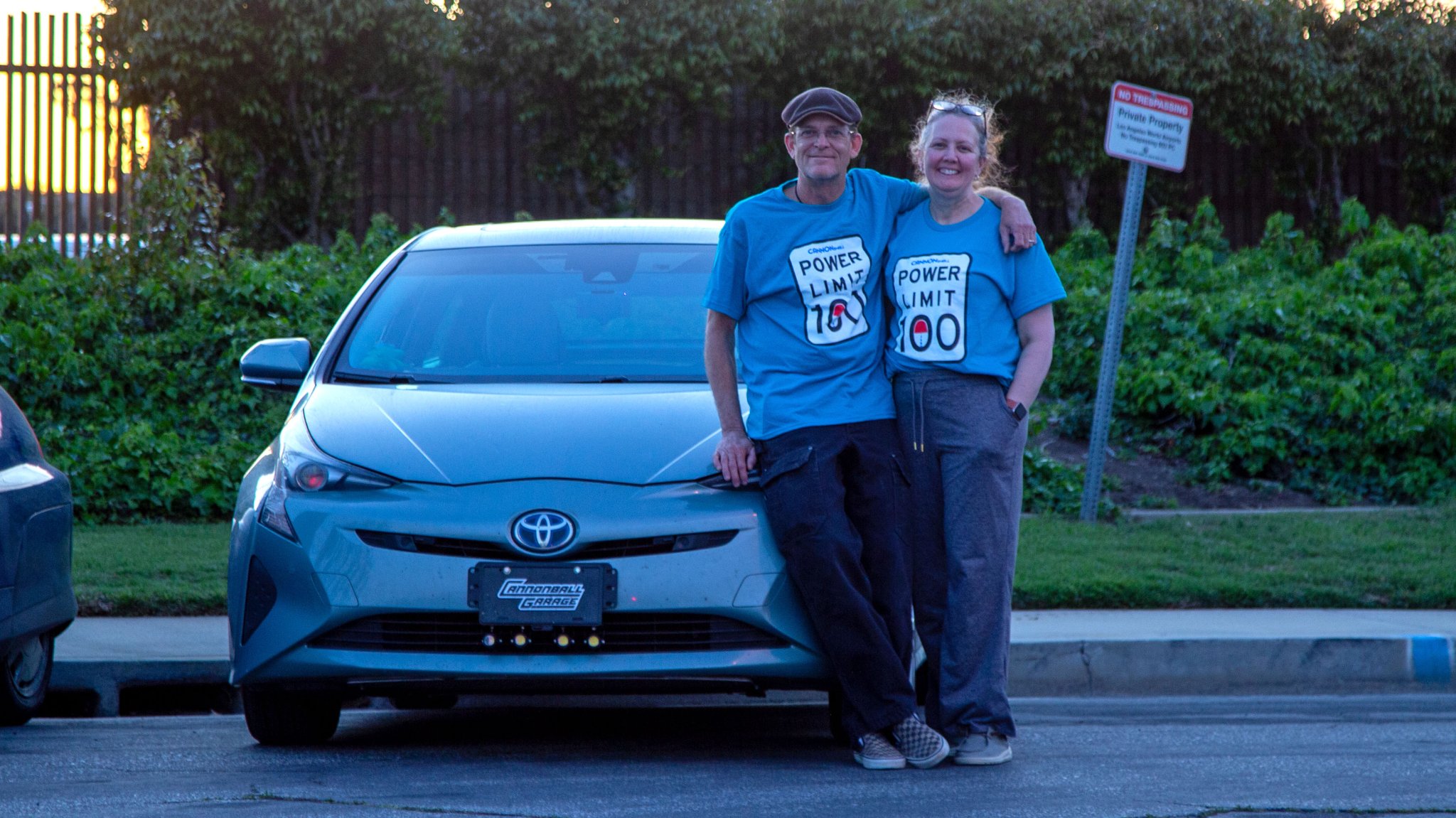
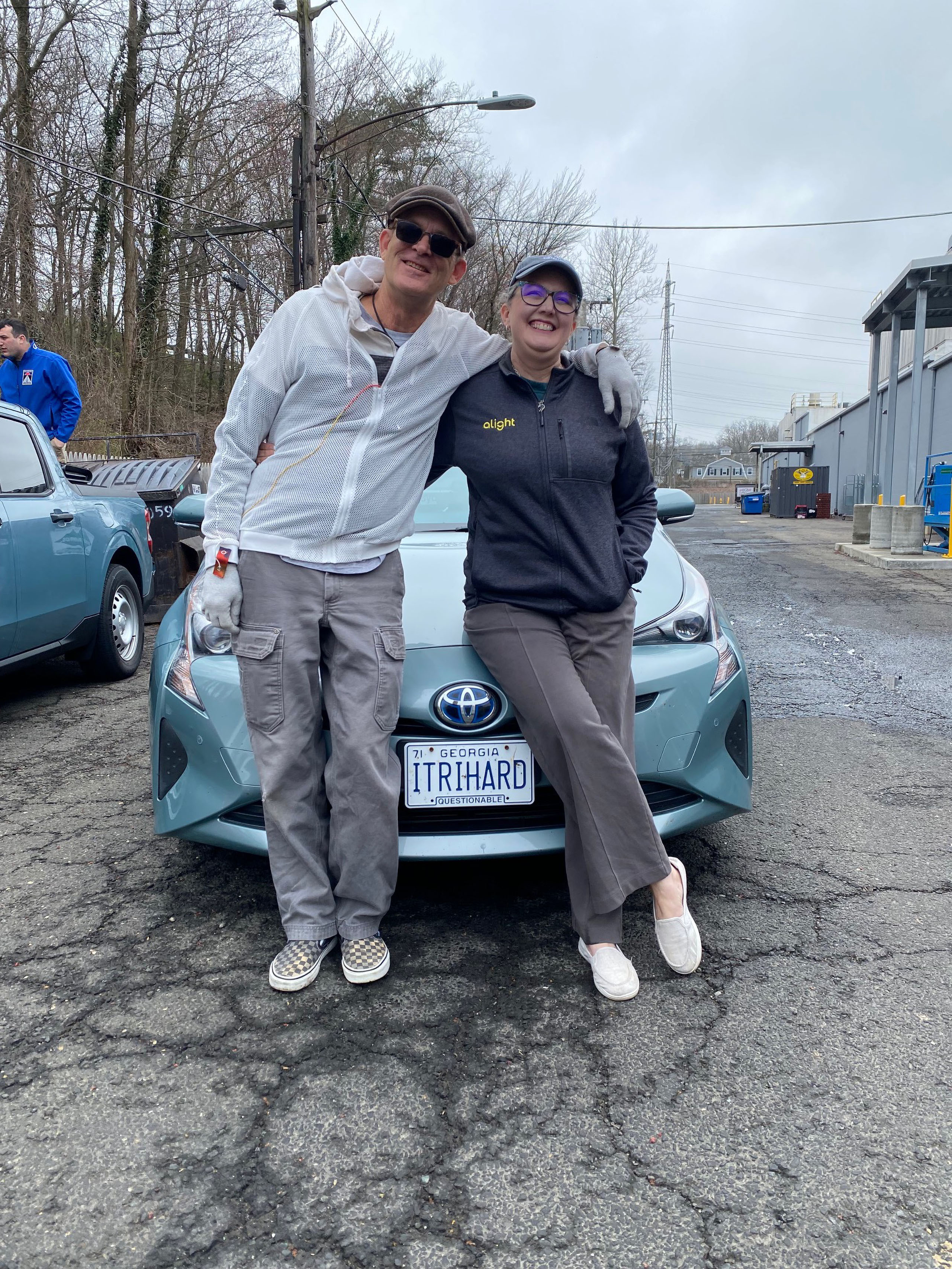
Roughly 1,500 miles into their Cannonball Run attempt heading west, Jay and Gypsy Roberts ran into trouble.
“We were going through Oklahoma, and it was legitimately a tornado [that] had hit just less than two miles off of Interstate 40 while we were on the drive, you know, blowing driving wind,” Jay told me over the phone. “There was standing water on the road, limited visibility, and it was at night, which made it even worse. My wife Gypsy was driving at the time, and we just slowed the speed down and got down to where I think she was doing about 50, 55 miles an hour.”
Dangerous weather could put a pin in any cross-country expedition, but concentration and careful driving wouldn’t really help Jay and Gypsy get through this episode. That’s because their 2017 Toyota Prius was equipped with a gadget called a Comma 3X that was doing the driving for them. This $1,000 gizmo connects to a car’s OBD-II port and mounts on the windshield just below the rearview mirror, giving it expanded semi-autonomous capabilities. According to Comma, it works in more than 325 different models.
In this case, it was guiding an eight-year-old Prius with a quarter-million miles through torrential rain and wind.
Jay told me that the Comma 3X navigated the storm “flawlessly,” where other built-in, sophisticated driver assist systems—like Tesla’s Full Self-Driving—would have disengaged. And that was important, because Jay and Gypsy had embarked on a semi-autonomous Cannonball Run: a version of the coast-to-coast driving challenge that is as much a test of limiting human involvement as it is a race against the clock.
Setting a New Kind of Record
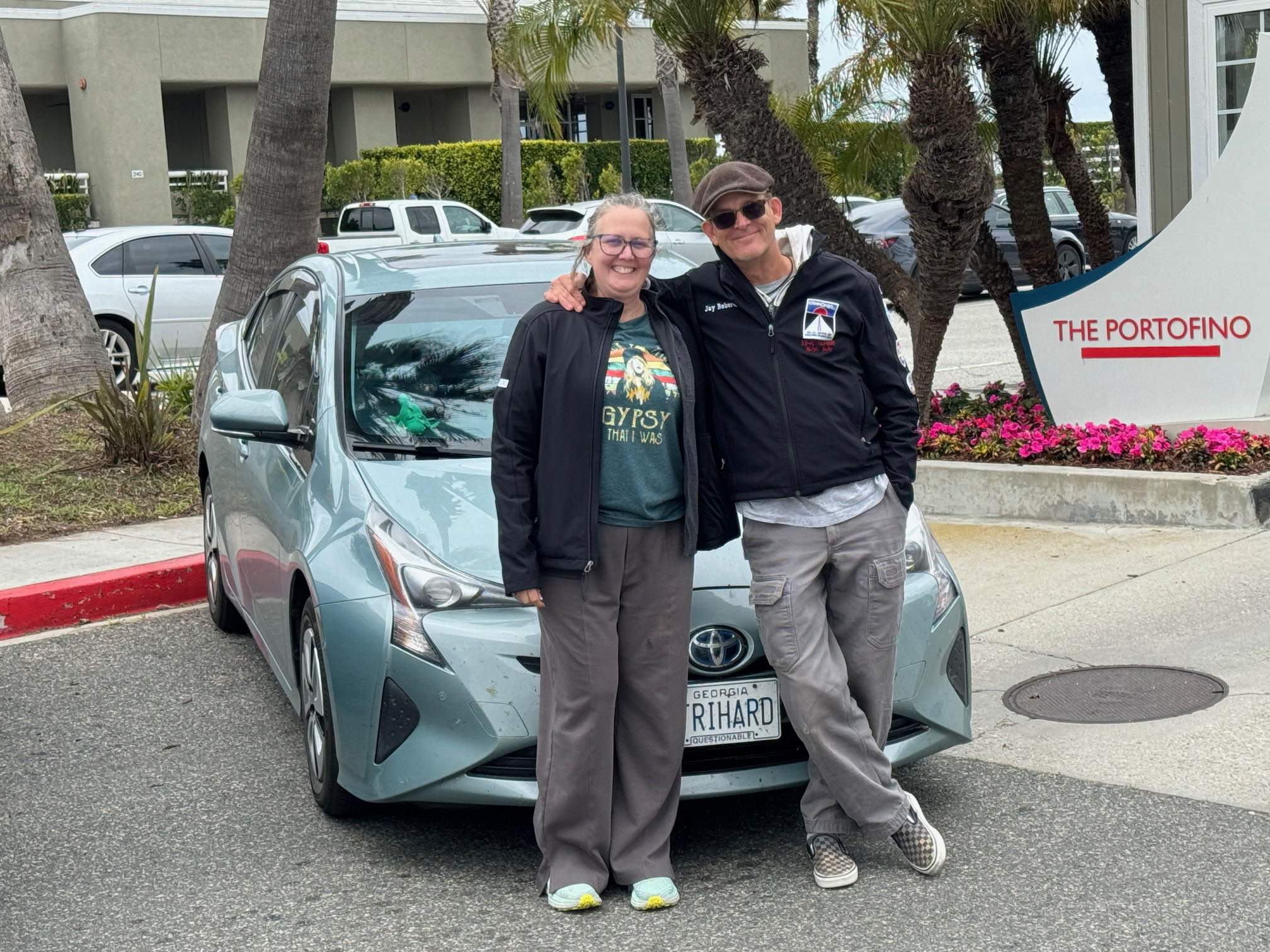
Jay is a Cannonball veteran at this point, having done the trip both manually and assisted a total of five times before this most recent semi-autonomous attempt in April of this year. In 2024 he and Gypsy logged a time of 43 hours and 18 minutes, some 12 hours faster than record-chaser and The Drive contributor Alex Roy managed with his two partners nearly a decade ago in a Tesla Model S.
Of those 43 hours, the husband-and-wife pair reported that they’d touched the Prius’ steering wheel for just 39 minutes and 21 seconds—meaning the Comma 3X piloted the Prius for 98.416% of the journey. In December, Roy completed a 45-hour and 36-minute run in a 2025 Model S, reporting an even higher engagement rate of 98.52%.
Of course, there are fundamental differences in the way a plug-and-play system like Comma operates compared to a built-in stack, and Cannonball and autonomous-driving enthusiasts are free to pore over the data and categorize it all how they see fit. For Jay, he knew he’d left something on the table, and there was room to improve. During the 2024 attempt, a serious accident in West Texas kept traffic in gridlock for three hours. Additionally, Jay hadn’t altered the Prius’ fuel storage in any way for that run, meaning the pair had to stop for fuel six times.
“What we found out, you know, every time there was a fuel stop or a driver change, it added two to three minutes of our hands-on time to the system,” Jay said. For this year’s bid, the Prius was fitted with a 32-gallon auxiliary tank to supplement the stock 11.3-gallon capacity, meaning the pair only had to stop at a gas station once, just east of Amarillo, Texas. That saved them both time and contact with the wheel.
“Going from six fuel stops to one, you know, there just that alone cut out 10 to 15 minutes of hands-on time right there,” Jay said.
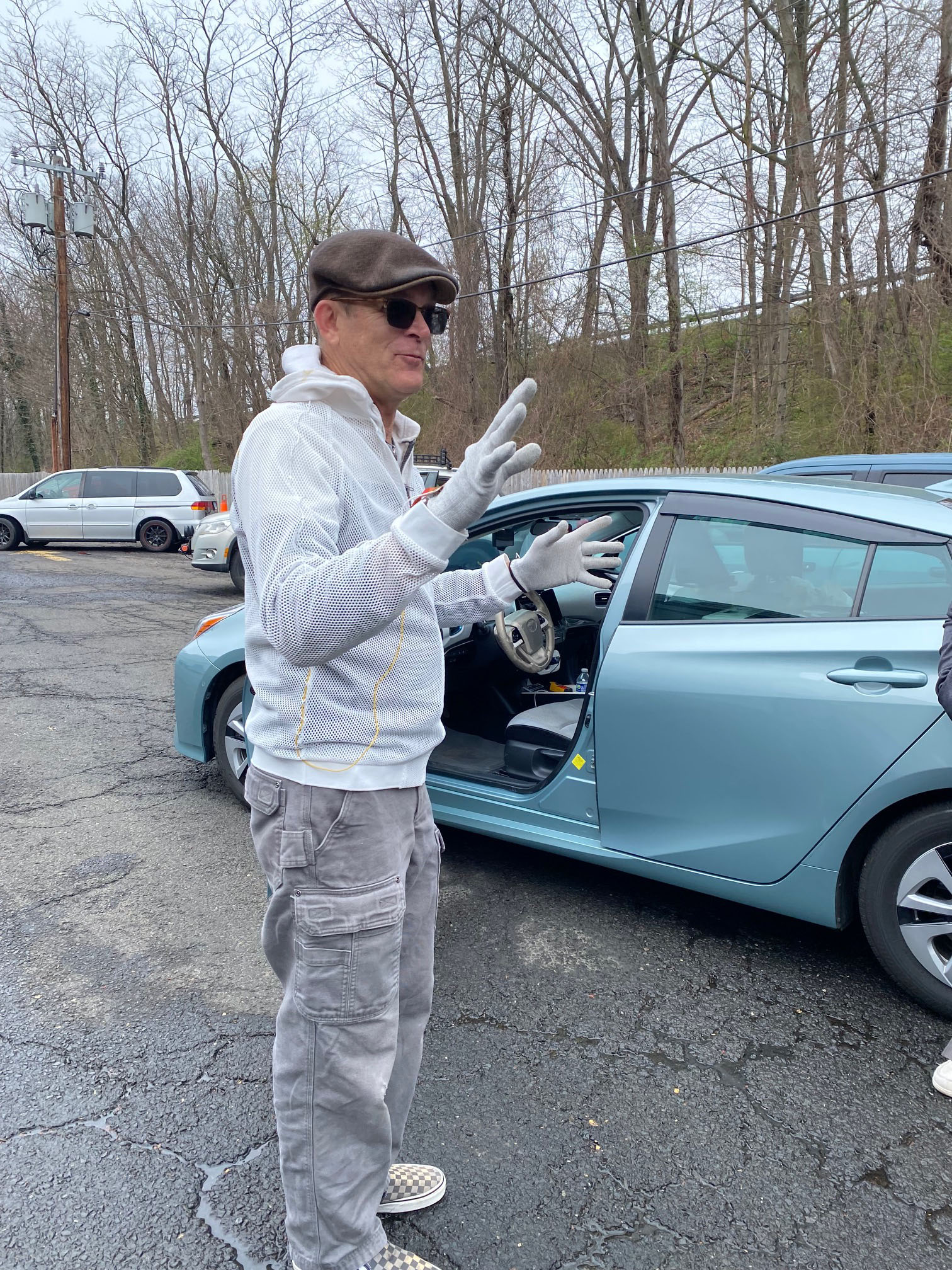
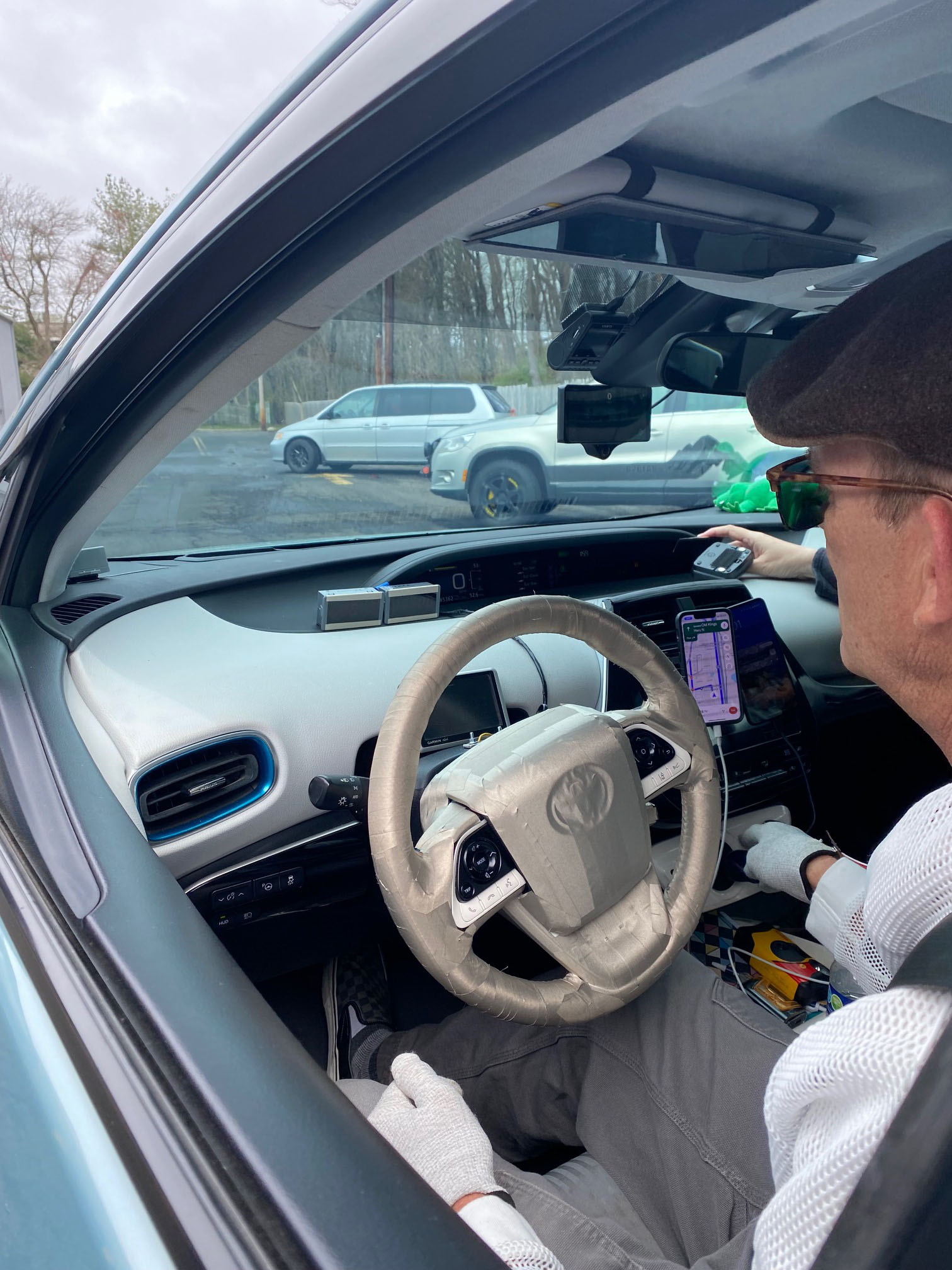
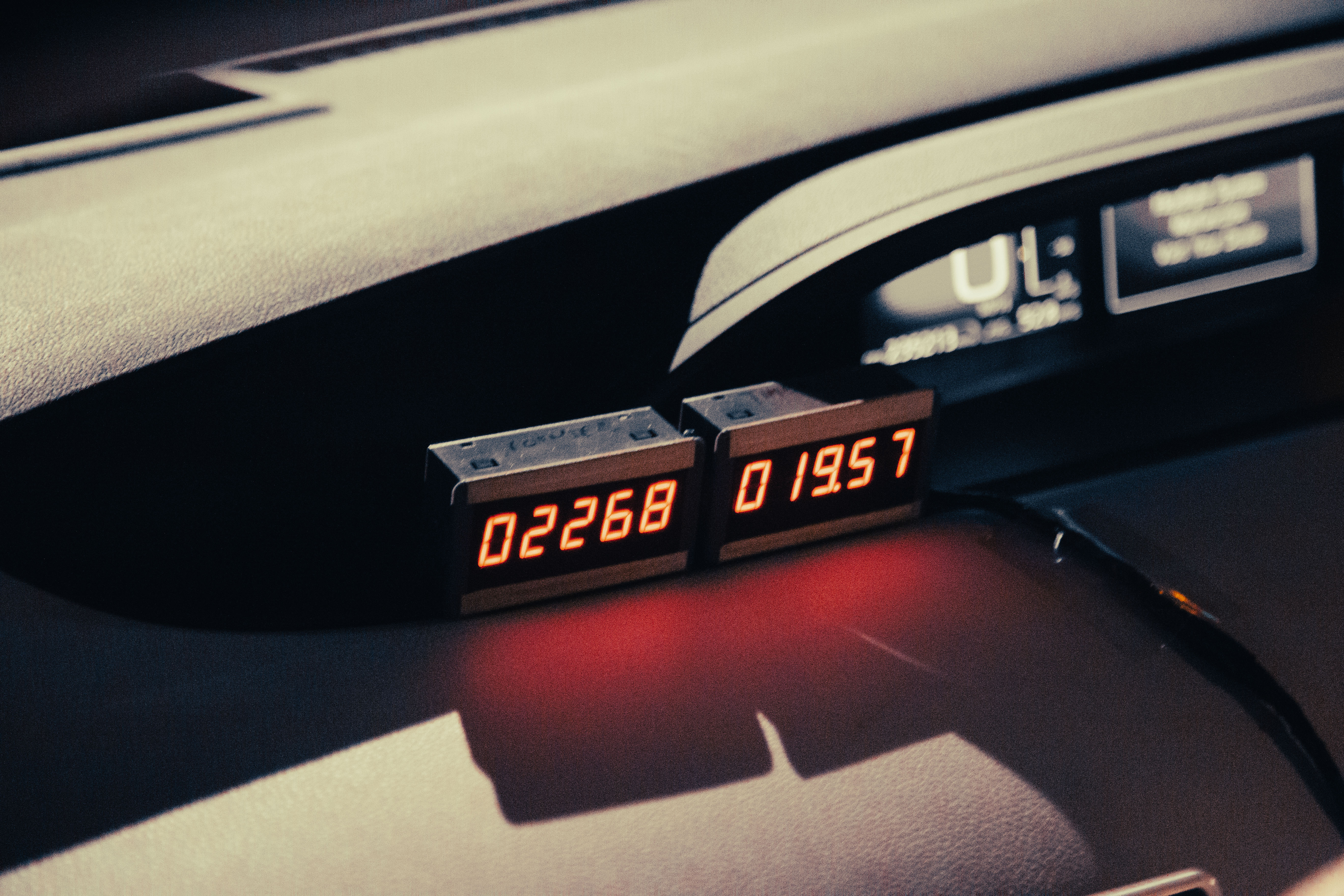
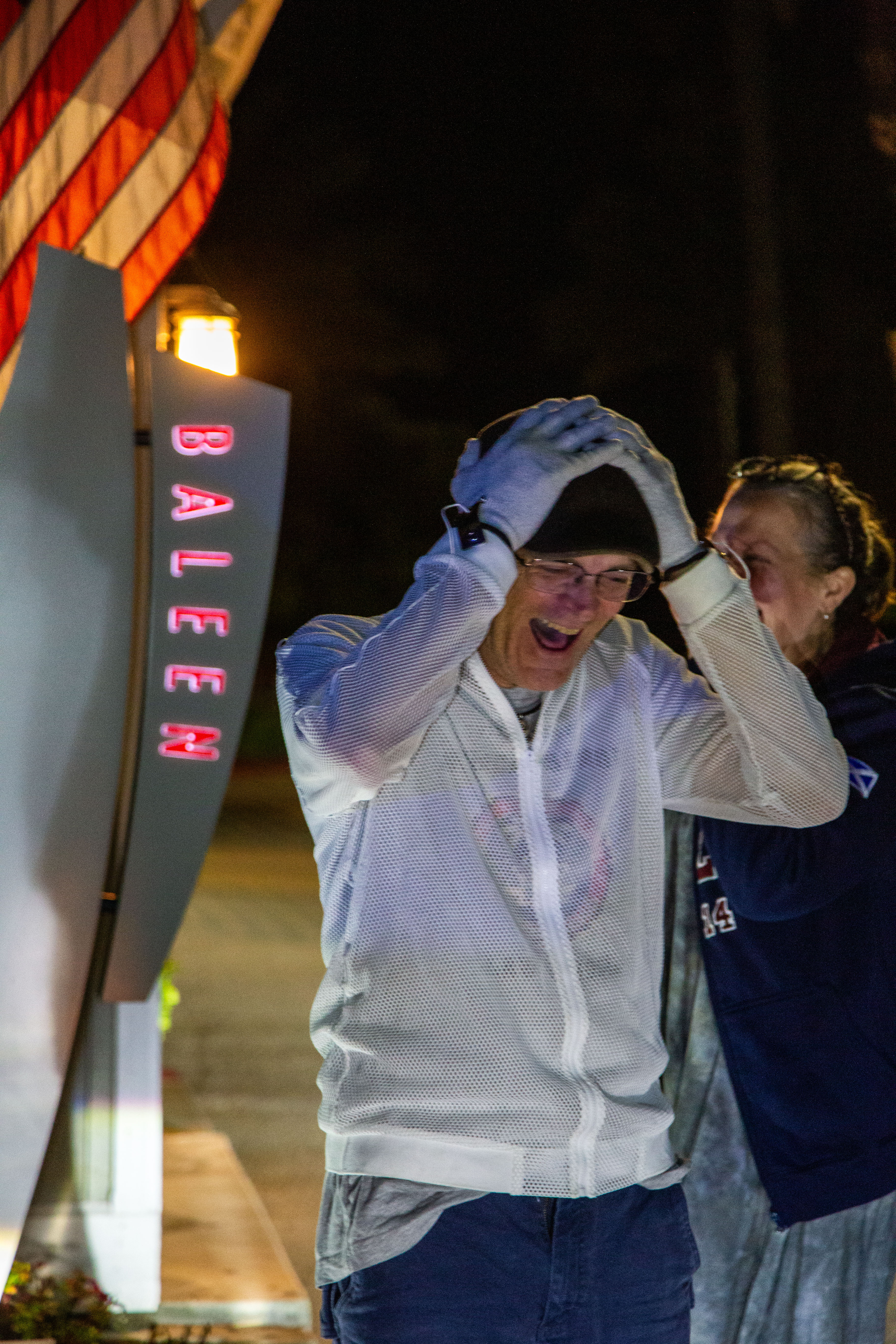
You might wonder how Jay deduced hands-on time; Comma doesn’t record such information, so he had to get creative. His solution was ingenious: Jay wrapped the steering wheel with electrically conductive tape and had Gypsy and himself wear a jacket and gloves that were also conductive and connected to a power supply whenever they were in the driver’s seat. The number of instances of contact, as well as the total time the circuit was completed, were recorded and displayed on two dash-mounted LCD readouts.
As far as the protocol on the road, it was simple. The Comma 3X, using its stock OpenPilot software, was set to cruise at 91 mph, and the Prius kept to the left lane. If a car entered its path, the Prius slowed to match its speed and follow until it went away. Jay and Gypsy never flashed their high beams at cars ahead, and they changed lanes only when absolutely necessary, because the system can’t do that without some human interaction.
The upshot of all this? With just one stop for fuel and no major accidents to stall progress, Jay and Gypsy beat their 2024 time by five hours, making it from Darien, Connecticut to Los Angeles in 38 hours flat—no minutes—with hands-on time reduced to 19 minutes and 57 seconds. Do the math, and Comma was calling the shots 99.125% of the time.
“I was ecstatic,” Jay told me. “I knew 99% or better was possible, and I was ecstatic to do that to prove the technology.”
The Modern Cannonball Run
Jay is a veritable Cannonball student and historian. His commitment to these feats of long-distance driving suggests a lifelong pursuit, but you might be surprised to learn that his Cannonball career only started in 2021.
“I’m of the age—I remember seeing the [1981] Cannonball Run movie, you know, in the theaters. But I really wasn’t aware at that time that it was a real thing that really happened. And so I started going down the rabbit hole of ‘Wait, this is a real thing! They do this.'”
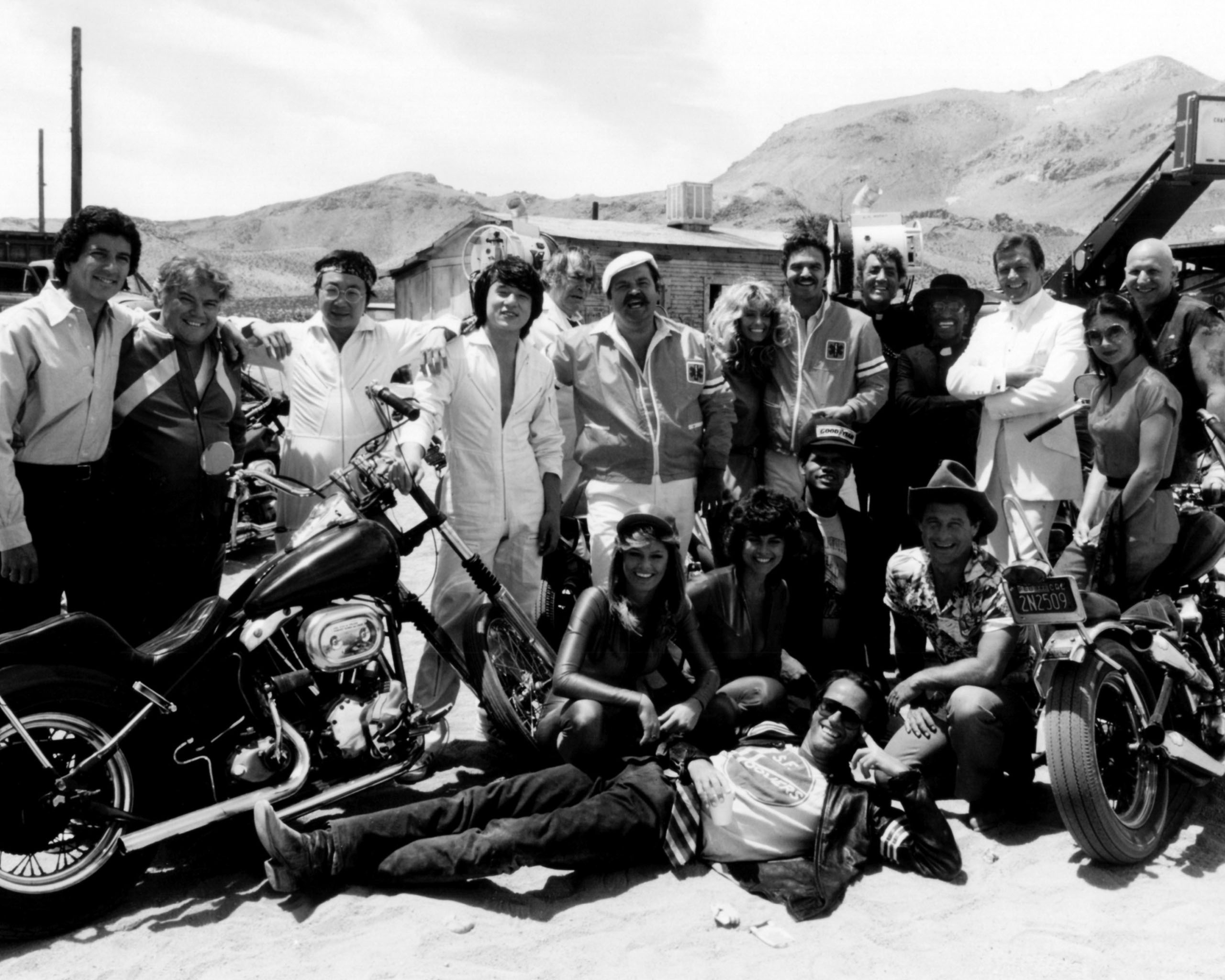
Just before COVID, Jay got hooked on consuming as much Cannonball media as possible, from watching YouTube videos to reading books written by the likes of Brock Yates, Ed Bolian, and, unsurprisingly, Alex Roy. But, to hear Jay tell it, it almost seems like he was preparing for this challenge for much longer than that—he just didn’t know it.
“The more I read, the more I realized and was convinced that this was something I was capable of, because my entire adult life, my working career has been around transportation. From the service industry and the pest control business to [being] a driver for FedEx, all my work has always been involved with driving. So driving, you know, 10-, 12-, 14-hour days, was nothing to me.” While doing his homework, Jay started working as an emergency delivery driver, effectively practicing how to extend himself and his vehicle’s endurance and efficiency.
If you’re an automotive enthusiast on any level, you might have an idea of the Cannonball Run and the people who do it. My assumption, up until recently, involved reckless speeding with a cavalier attitude toward self-preservation, let alone anyone else’s safety or the law. Maybe some Cannonballers have acted that way—I wouldn’t know—but Jay couldn’t be further from that stereotype. And while speaking to him didn’t turn me into a Cannonball evangelist, it did help me see what this challenge means to enthusiasts like him, and how autonomous driving fits into that puzzle.
“If you go all the way back to 1903, when people first started driving across the country, that’s when Erwin George ‘Cannon Ball’ Baker became famous. You know, he made over a hundred drives across the country,” Jay said. “And he did it to prove the technology, to prove that the motorcycles and the cars and the trucks that he was driving were capable of driving across this country. Remember, automobiles were new at this time. We hadn’t even—in 1903, man hadn’t even flown in an airplane yet.”
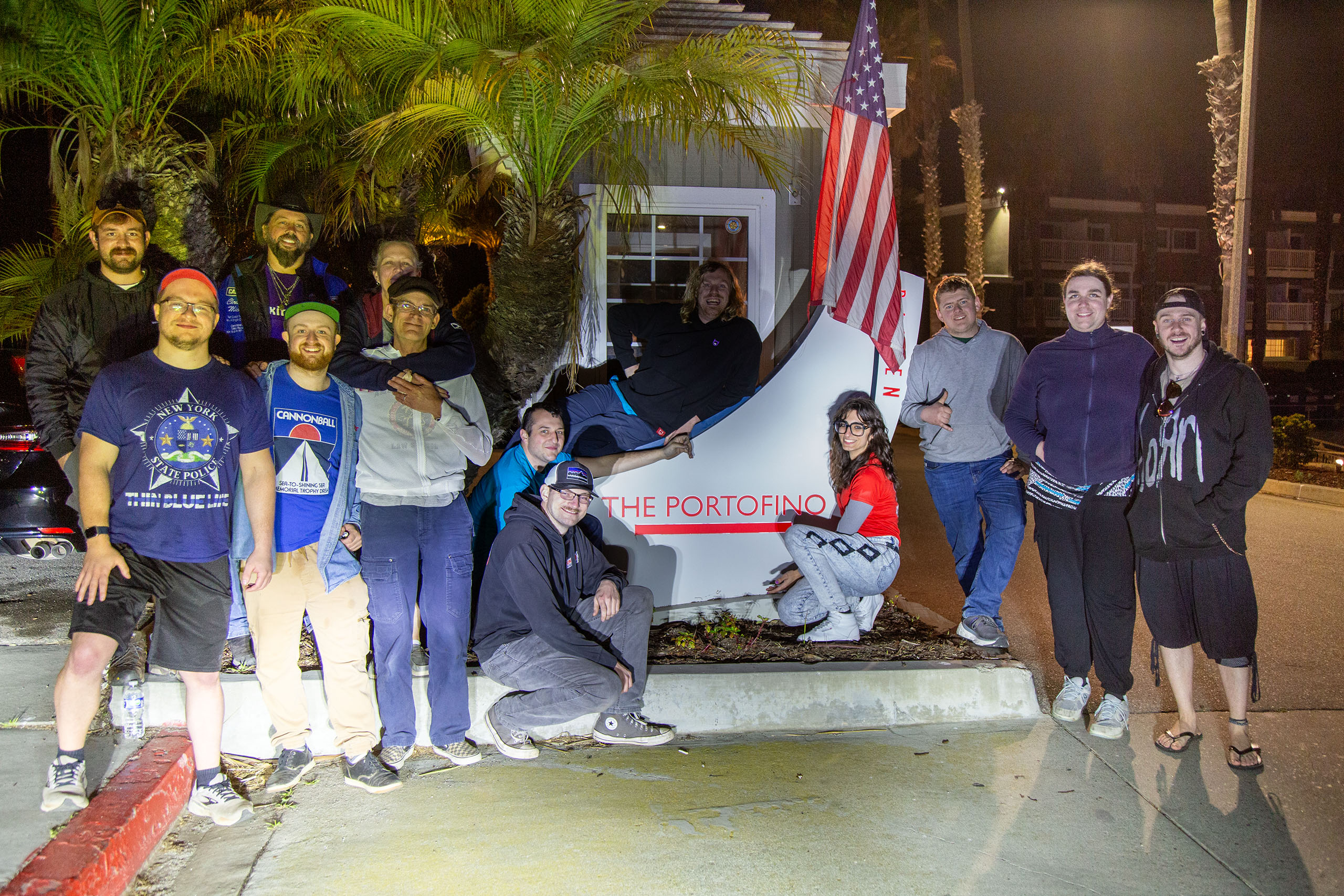
Jay said that he and the community are “trying to show the world that you have to take this technology and put it out there and use it, and prove it to show the people that it’s viable. Because, how many times [do] you hear people say, ‘I’m not going to let a car drive itself, I’m scared’ or ‘I don’t feel comfortable with that’?”
“Here I did a drive from one side of the country to the other in 38 hours and touched the steering wheel for less than 20 minutes, right? And I did it at, you know, slightly above the speed limit, and did it safely.”
His friend Alex summed up that sentiment pretty well after his efforts in December, calling the Cannonball Run “the Nürburgring of Autonomy.”
“The world’s most disciplined Cannonballers don’t speak of horsepower or top speed,” Alex Roy wrote in a LinkedIn blog about setting a new FSD record late last year. “Their language is situational awareness, fuel economy, battery efficiency, powertrain software hacking, OTA updates, radar detection, laser jamming, NOAA, Google Earth, real-time maps, FAA data integration, real-time weather & traffic, crowd-sourced data, apps, mission control, synchronizing external spotters, thermal cameras, image stabilization, ambient temperatures, power management, charger handshakes, voltage regulation, thermal management, range optimization, weight savings, redundant communications, and Starlink.”
As for Jay, I asked him if he’d try the run again and if there was any point, considering he’d crossed the 99% threshold.
“I could improve on it a little bit,” he said. “But the thing about a Cannonball Run, though, is you know you can run it 10 times in the same car and every time is going to be different.” Jay quoted Andrew Pieper, who once set the record for motorcycle riders: “He said, when you’re prepping for a Cannonball Run, you can solve 500 problems before you get to the starting point. But you can have one problem that’s totally out of your control during the run and completely kills it.”
Jay also believes that he’s “just about reached the maximum” of the Comma system’s potential, and the next step is a fully autonomous run. “It’s going to happen, and it’s going to happen sooner than people realize,” he said.
As for today, you can buy a $1,000 gadget that plugs into a great many models—even an eight-year-old Prius that costs $10,000 on the used market—and rely on it to cross the country with limited physical involvement, if you’re so inclined. It sounds like another one of Big Tech’s empty promises, or a pipedream, but it’s neither. That technology exists right now.
Loading comments…
Comments couldn’t be loaded. Please refresh the page.