
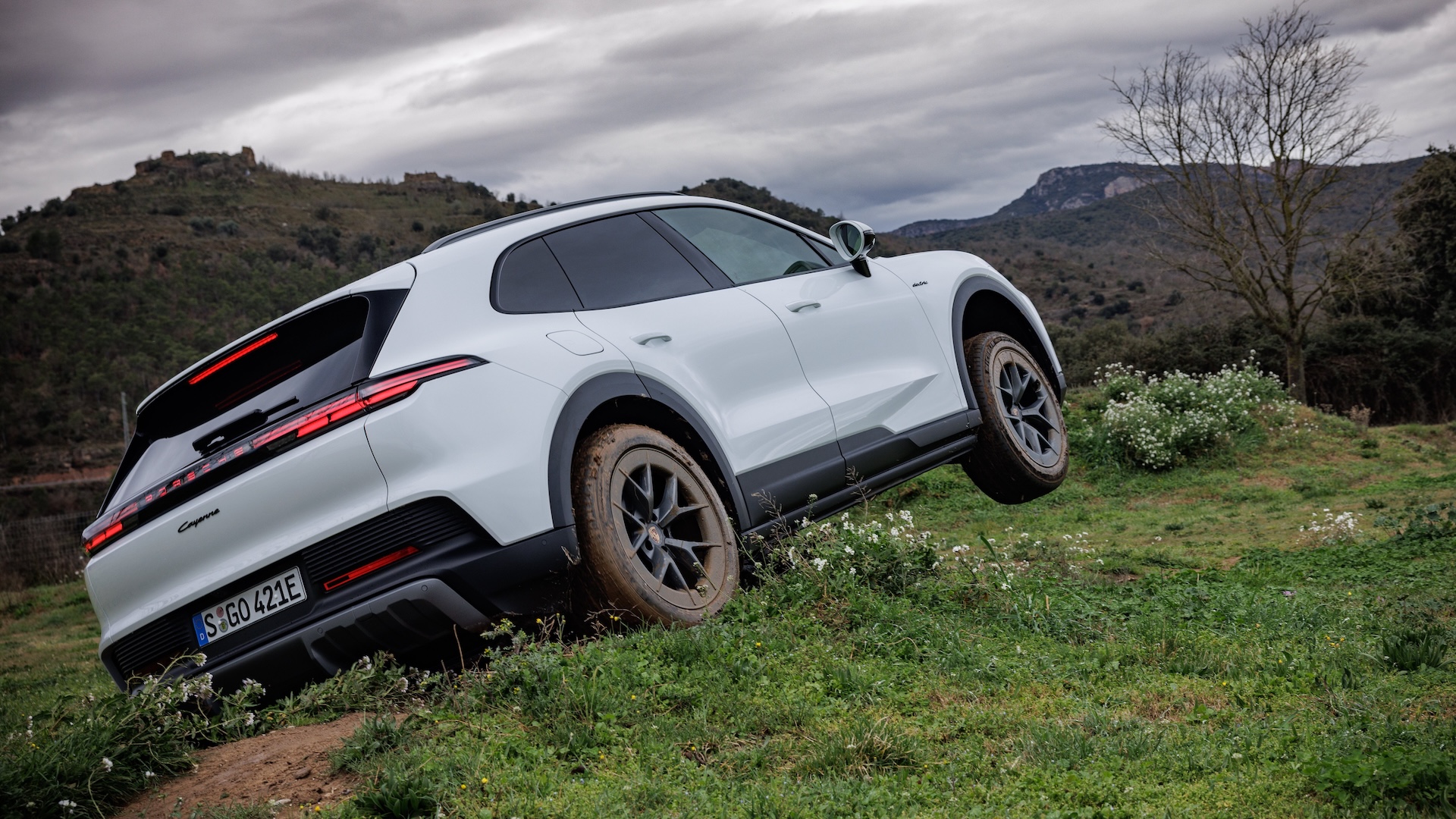
When most people think of driving a Porsche, the last place they imagine going is off-road. That’s doubly true if the Porsche in question is a 2026 Cayenne Electric. Owners would never dream of scratching up their high-dollar SUV on a trail, and also, EV off-roading is a pretty niche activity as it is. However, just because folks won’t do it doesn’t mean the car’s not capable. Quite the contrary, as I found out.
I recently drove the long-awaited Cayenne Electric, and you can read that review here. I spent quite a while behind the wheel of the 435-hp base model and the silly 1,139-hp Turbo, which included piloting both models on a tricky off-road course. (There was also a ride-along with two-time Le Mans winner Timo Bernhard on a high-speed, high-adrenaline rallycross stage.)
Off-Road Course
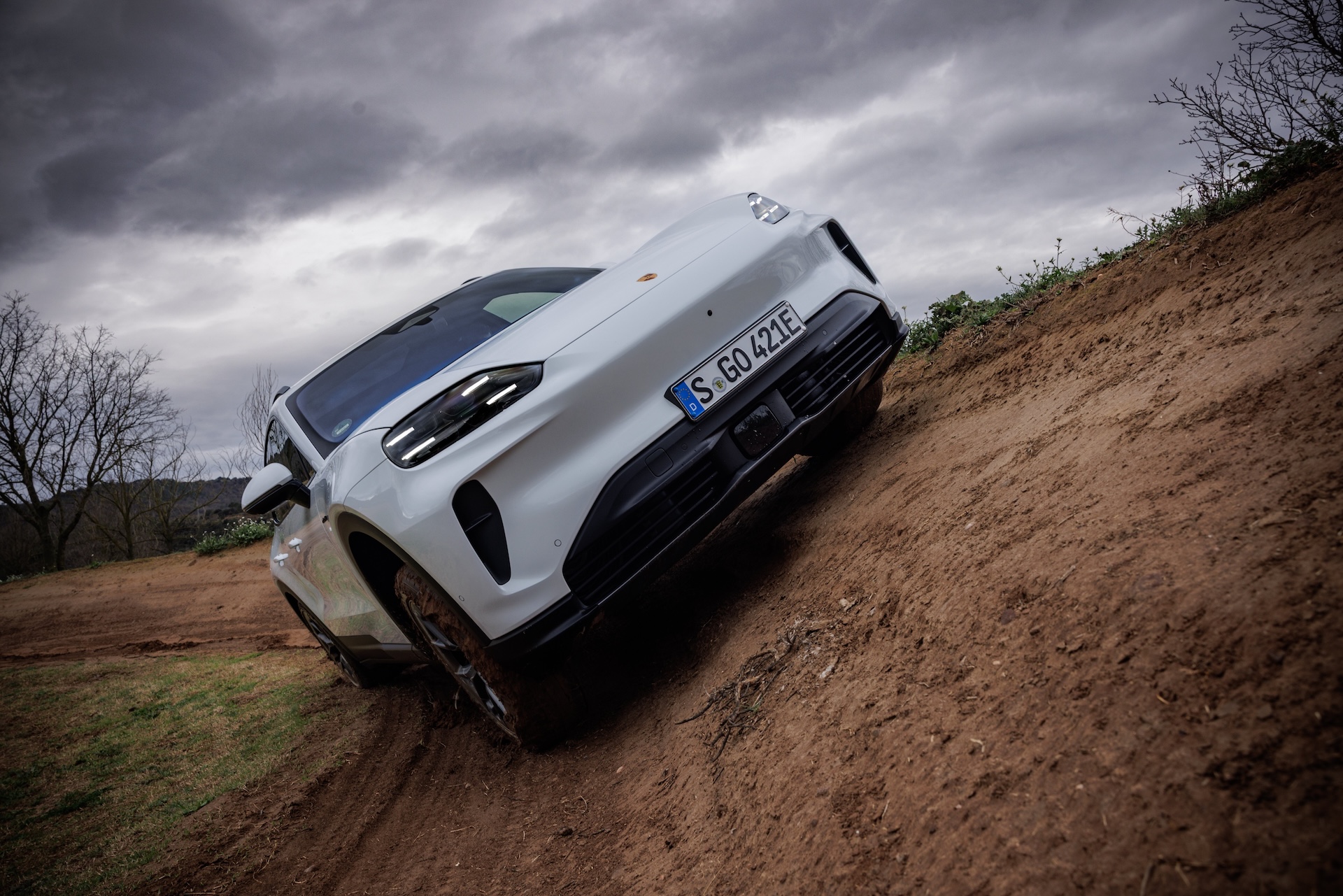
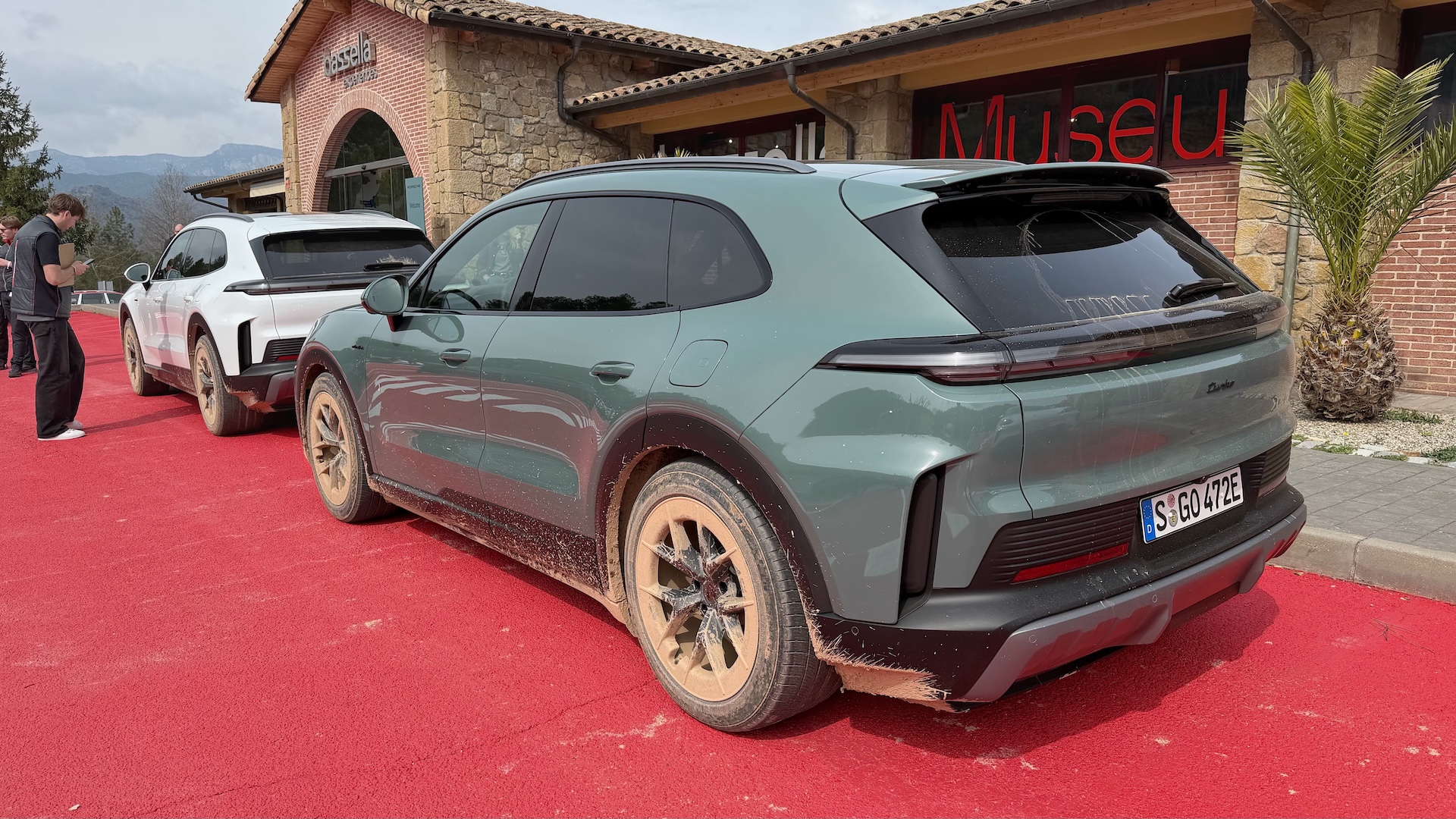
Peep the photos here, and you’ll see that I put the Cayenne Electric through its paces off-road—something not many people will ever do, but that’s never stopped Porsche from engineering its vehicles to meet high standards. The course itself was a loop that consisted of muddy paths, steep inclines, and several deeply rutted segments where the steering wheel didn’t serve much purpose.
With Off-Road mode activated, the Cayenne Electric raised its suspension and adjusted the all-wheel-drive and traction-control settings to better deal with poor traction and possible wheel slip. It also activated the surround-view cameras, which came in handy during climbs—whether I was pointing up or down—and sharp turns.
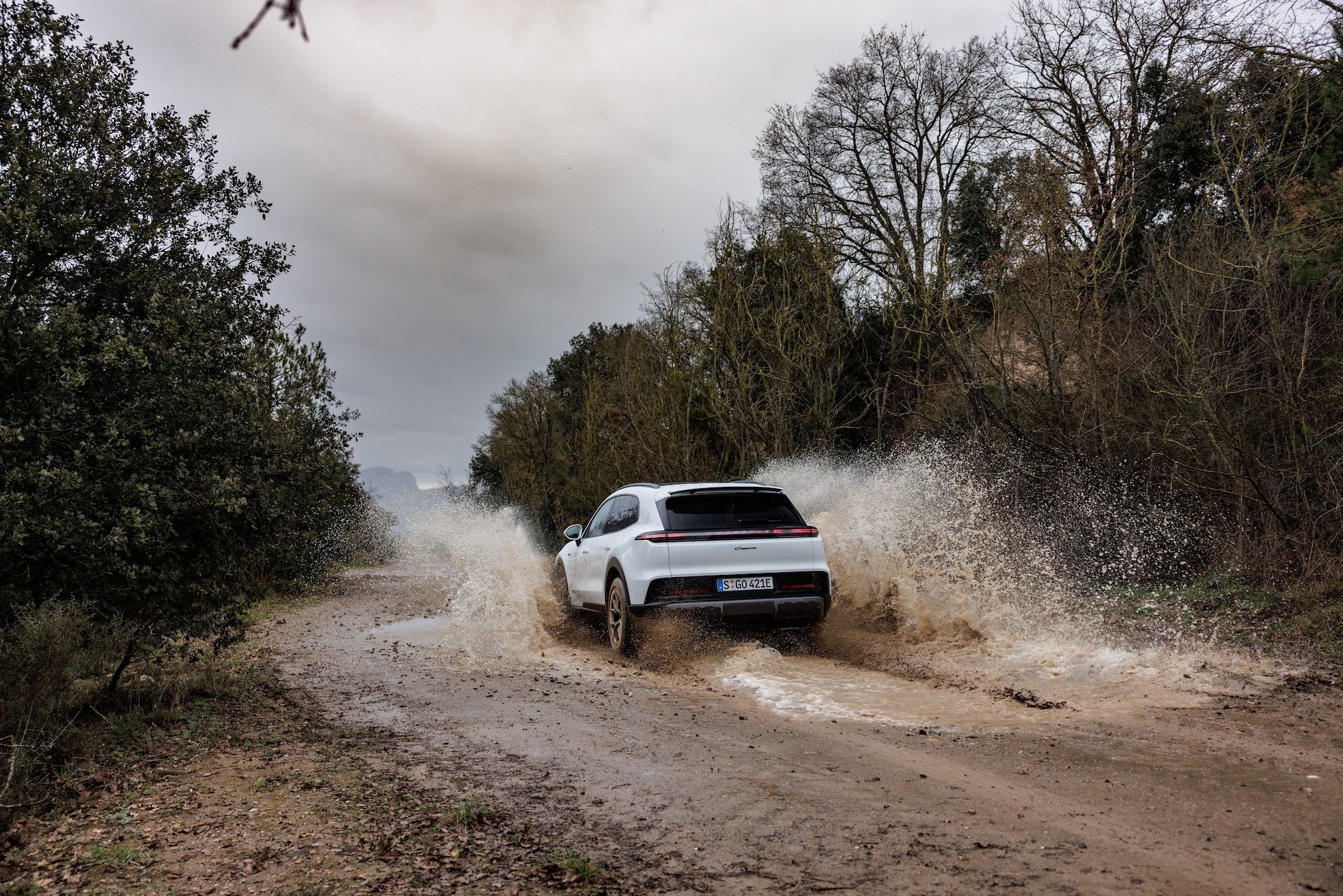
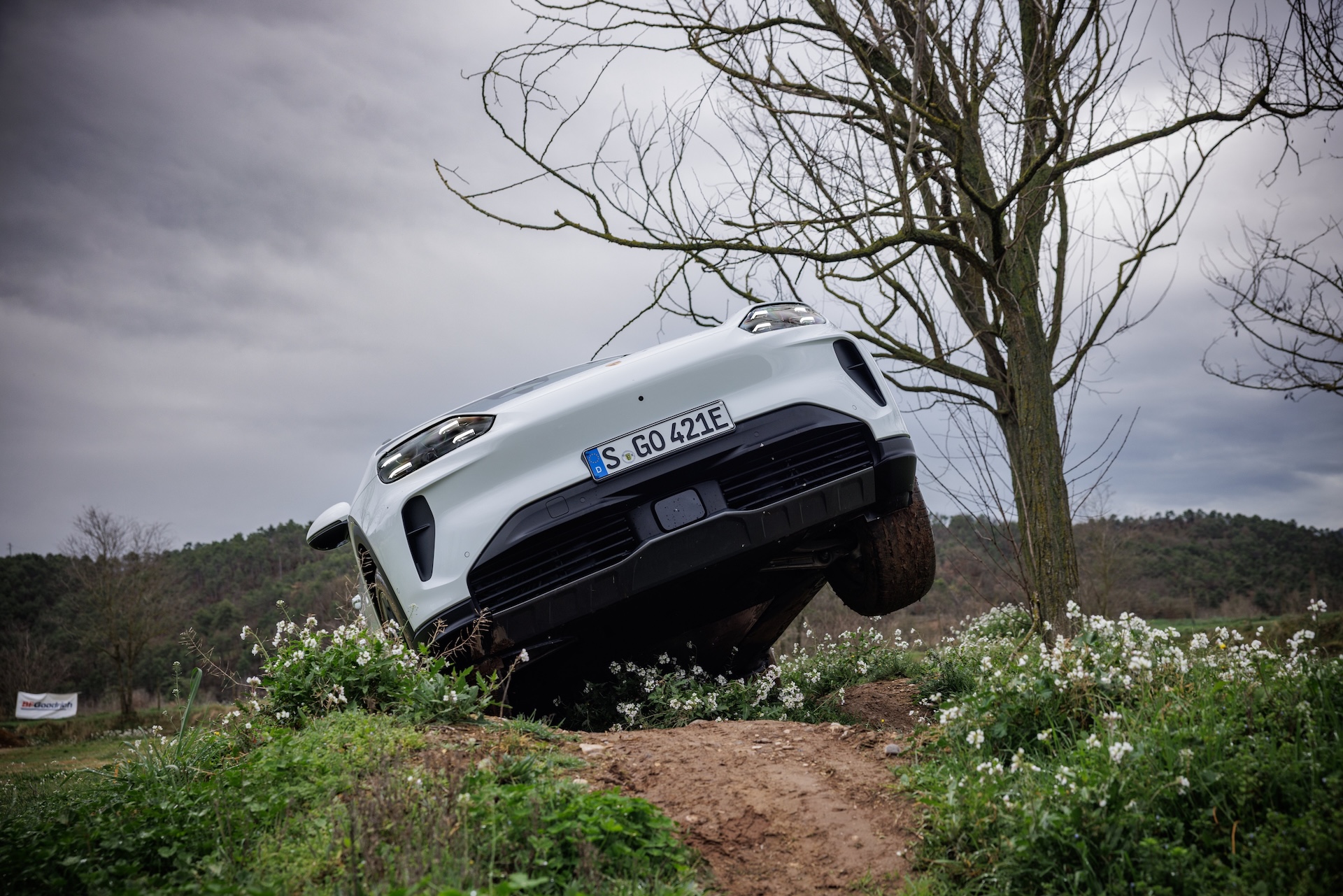
“Not many people are going to do this in the real world, but you still have to know what it’s capable of, in case you take a detour,” my Porsche off-road sherpa told me from the passenger seat.
It’s true. If I bought one of these—no matter if it was a base or a Turbo—I would never do this on purpose. They’re both six-figure SUVs, and unless you get a Defender Octa or something, you don’t buy one of those to let a wheel or two hang off the ground. Still, that’s what I did because Porsche told me to.
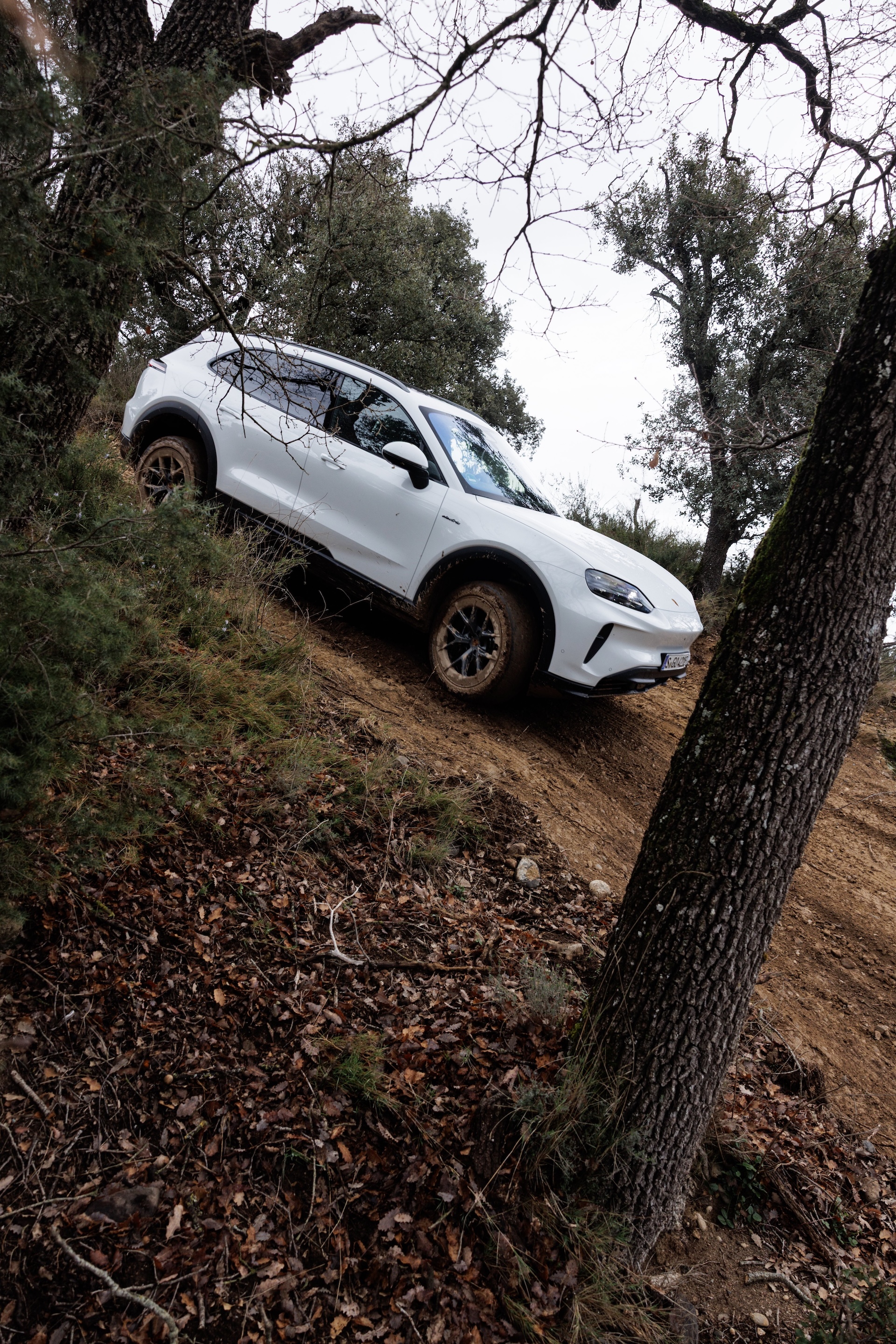
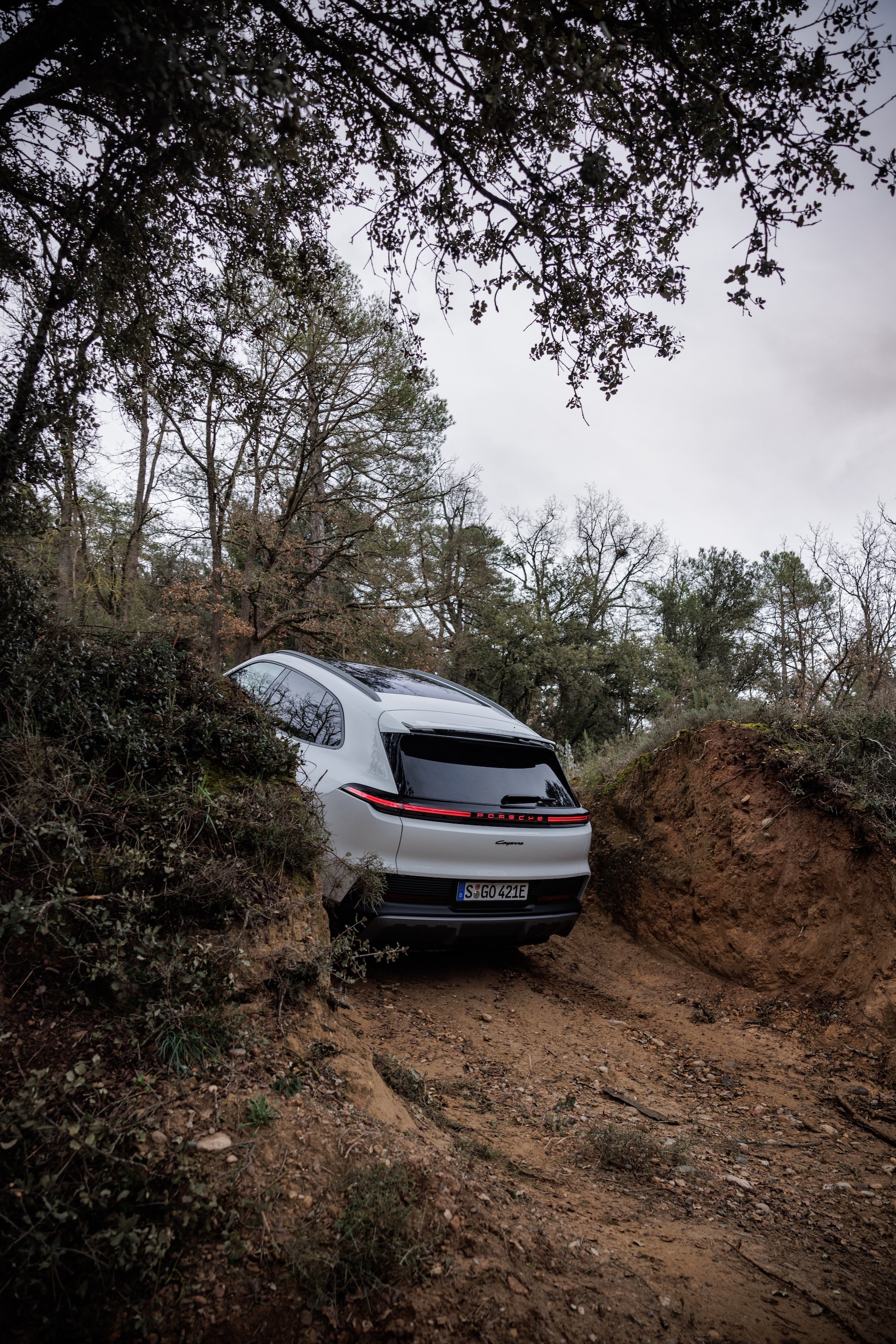
After spending the day driving on WRC-worthy mountain roads, it was the Cayenne Electric’s turn to gently slide down the first of many steep, muddy hills.
I could feel the axle apply regen braking to slow down and keep things under control, which is great considering the EV weighs nearly 6,000 pounds. Each tire could also independently apply the mechanical brakes to ensure the descent was done safely. Even when the terrain was so slick that the ruts often directed where the car was going rather than the steering wheel, traction control applied more power to one side over the other to make sure I was pointing in the right direction.
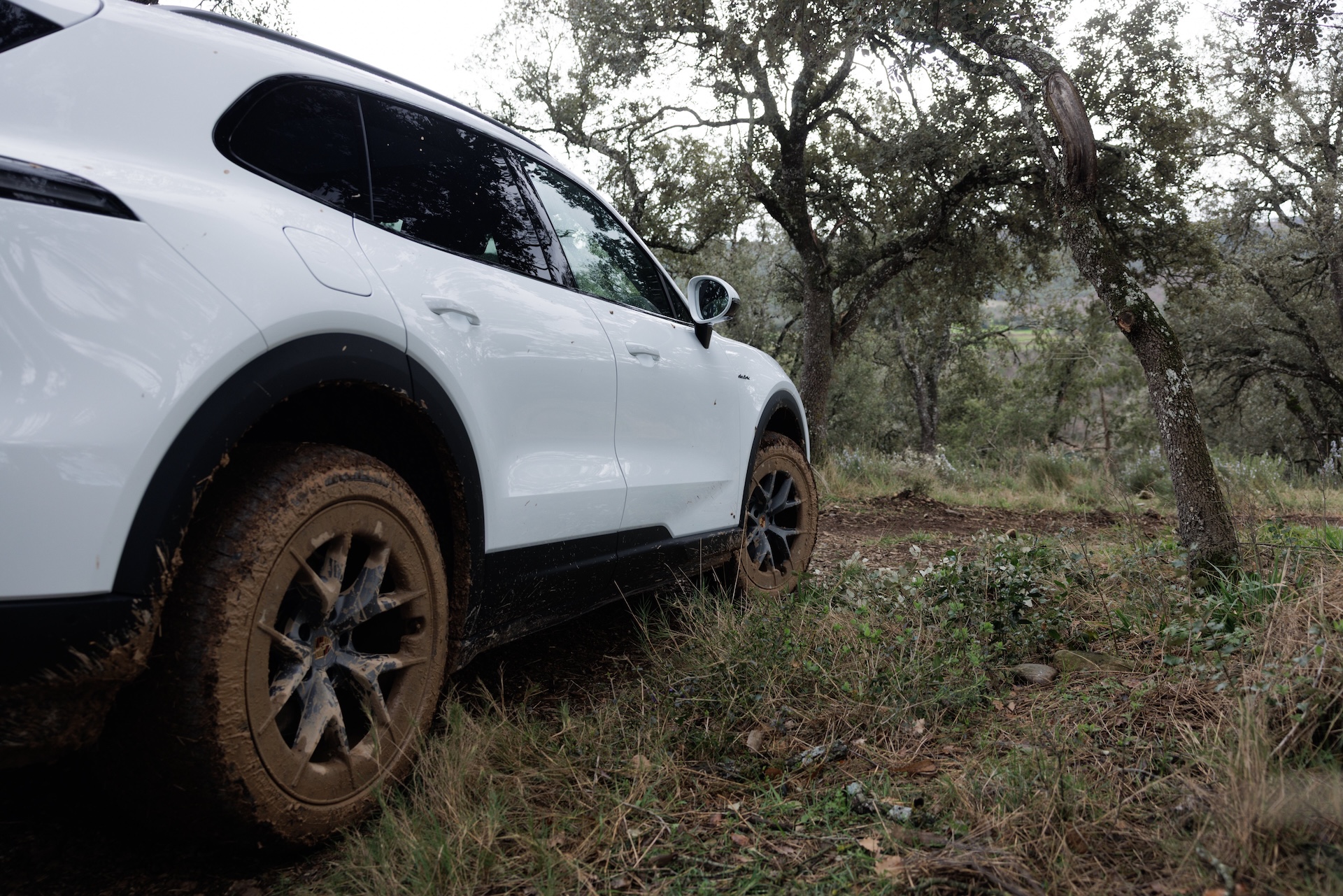
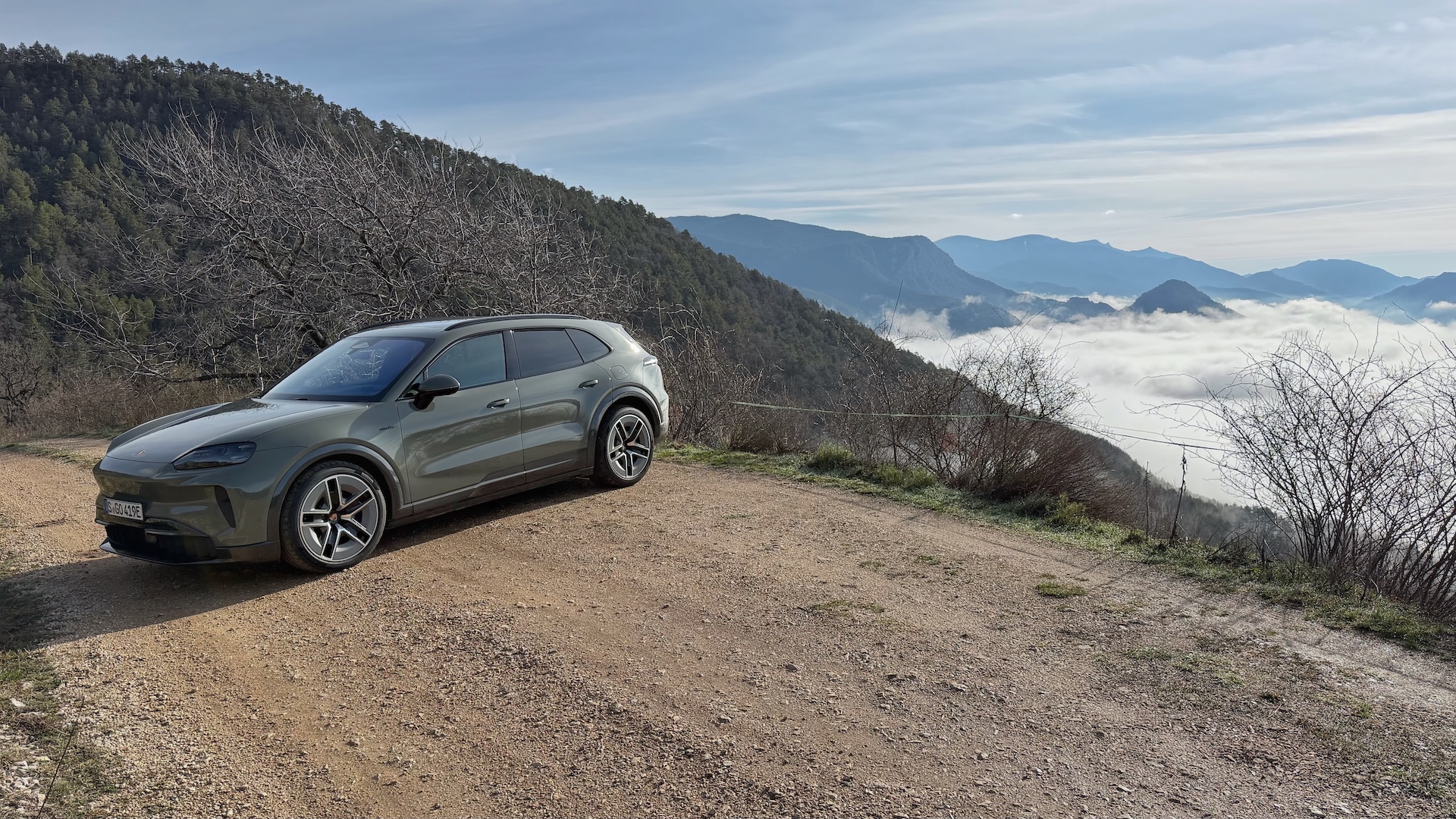
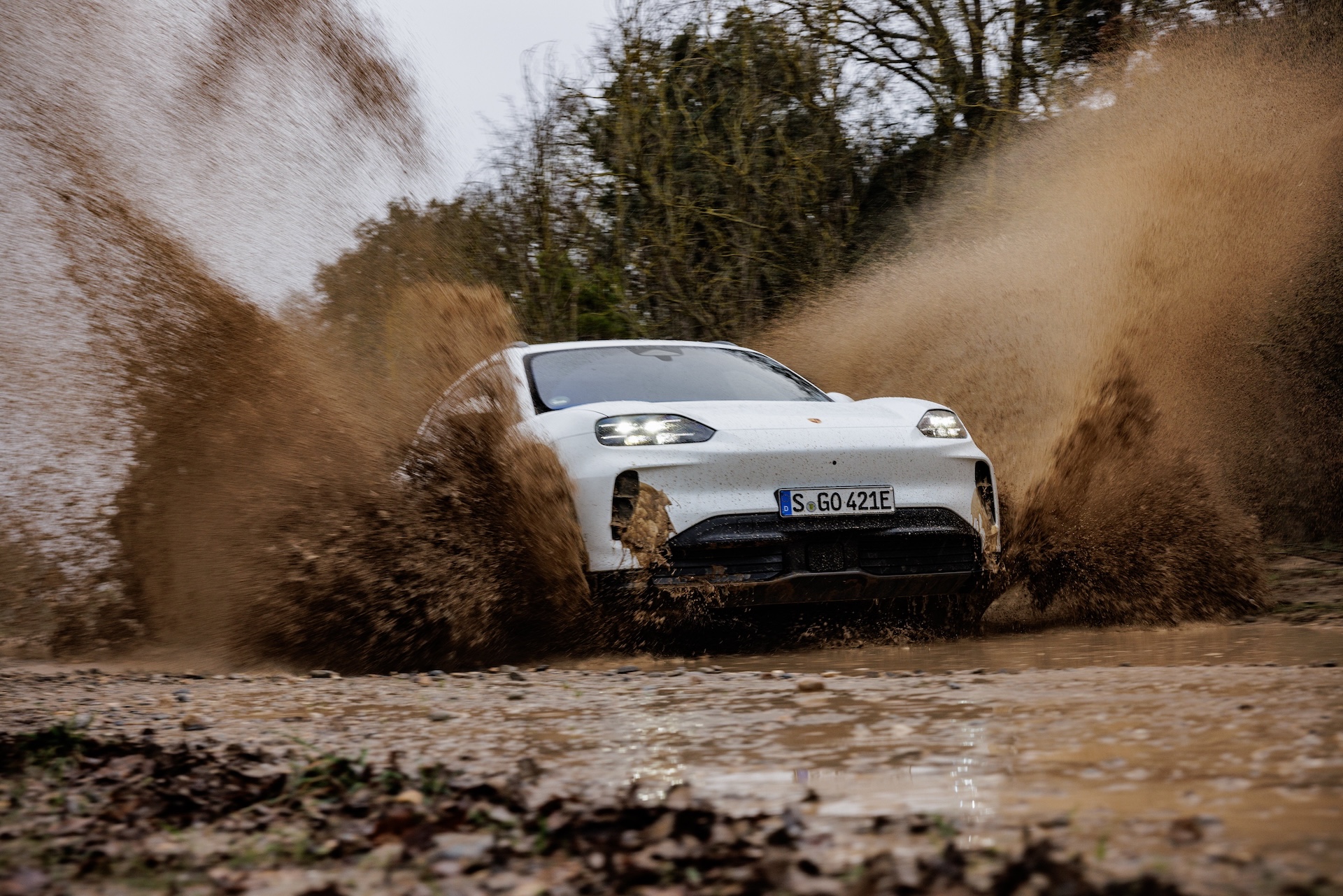
With 9.6 inches of ground clearance in the highest suspension mode, the Cayenne Electric can clear most obstacles found on mild trails. In my experience, and as you can see in these photos, this was more than enough to clear rocks and ruts in my way. In uphills, it felt extremely sure-footed, even though it was riding on all-season street tires that definitely leaned into performance driving rather than off-road conditions.
Rallycross
Who would ever imagine that a wide, tall, and heavy electric SUV could blitz through a rallycross circuit with ease—on street tires? No one. But then again, the Cayenne Turbo Electric and Timo Bernhard aren’t your usual pairing, so when they come together, cool stuff happens.
Like most action settings, the video below doesn’t do the experience any justice. You can’t really appreciate how quickly I was flung backward when he set off the line, how brutal the braking was, how violent the acceleration out of the corners felt, but most of all, how wild it felt to slide sideways through entire corners as Bernhard strung together sections of the course.

Off-roading the 2026 Porsche Cayenne Electric with Timo Bernhard
I won’t try to explain it, because you can just watch the video. Enjoy.
Got a tip? Email us at tips@thedrive.com
Loading comments…
Comments couldn’t be loaded. Please refresh the page.