
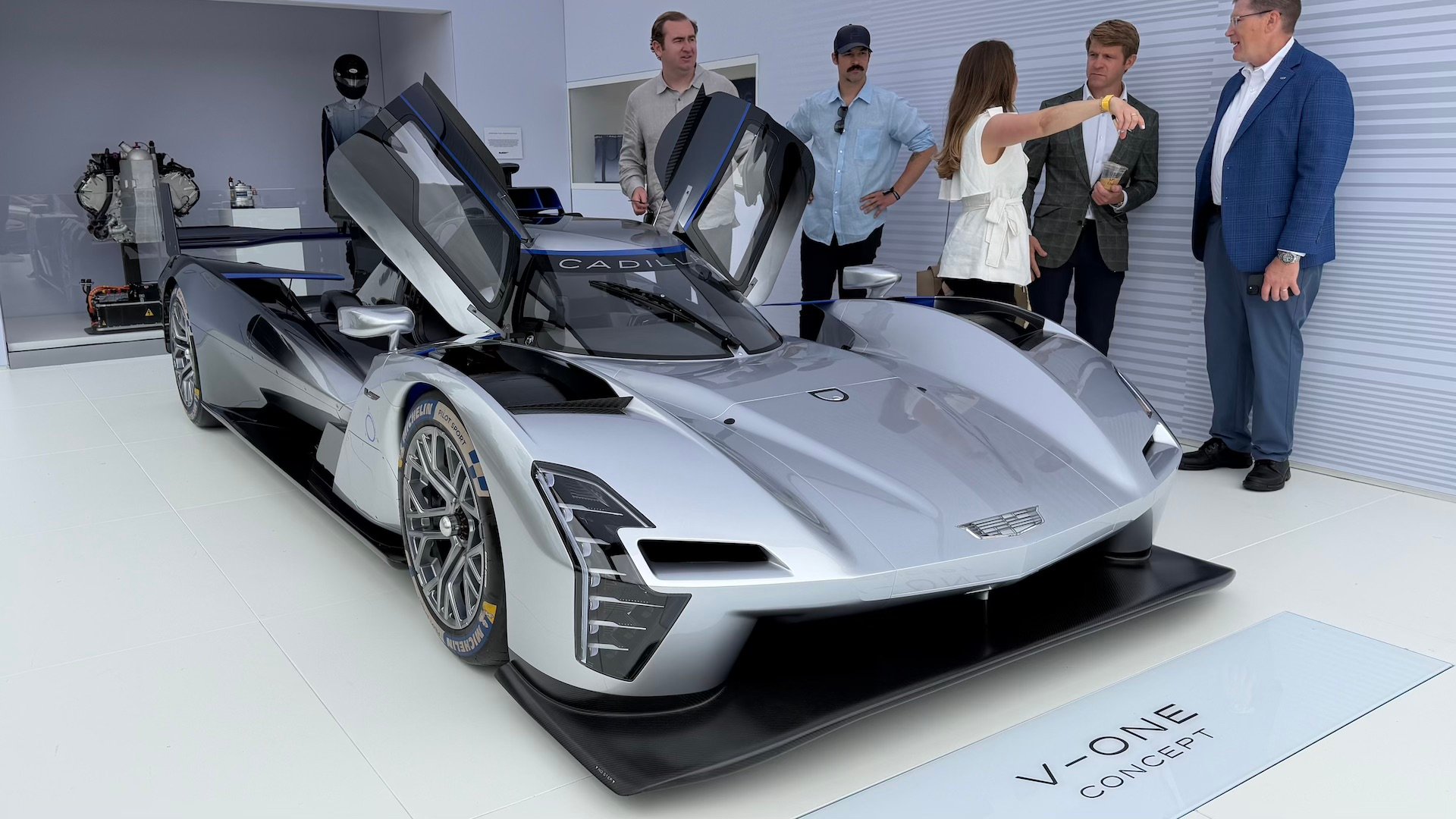
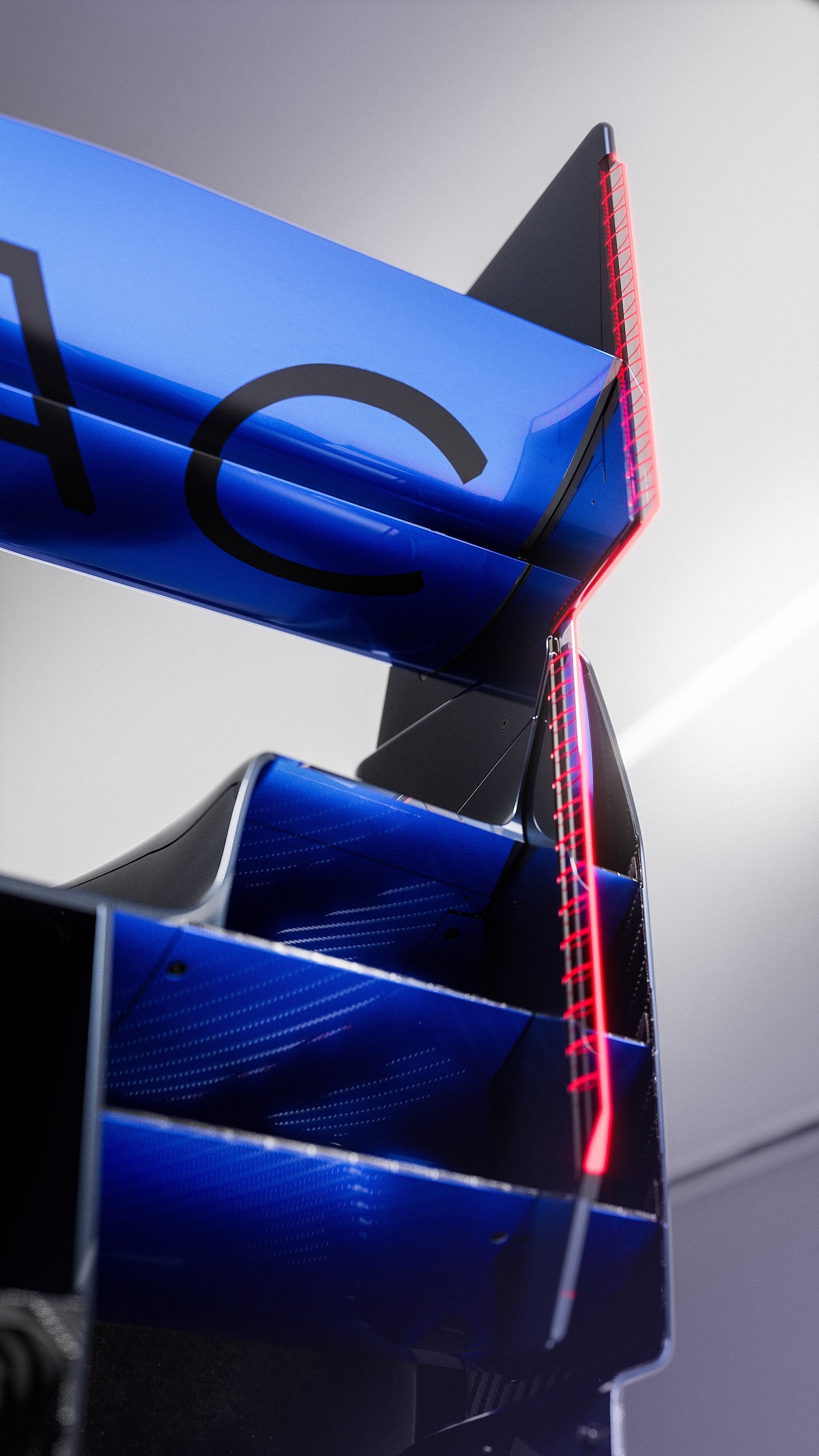
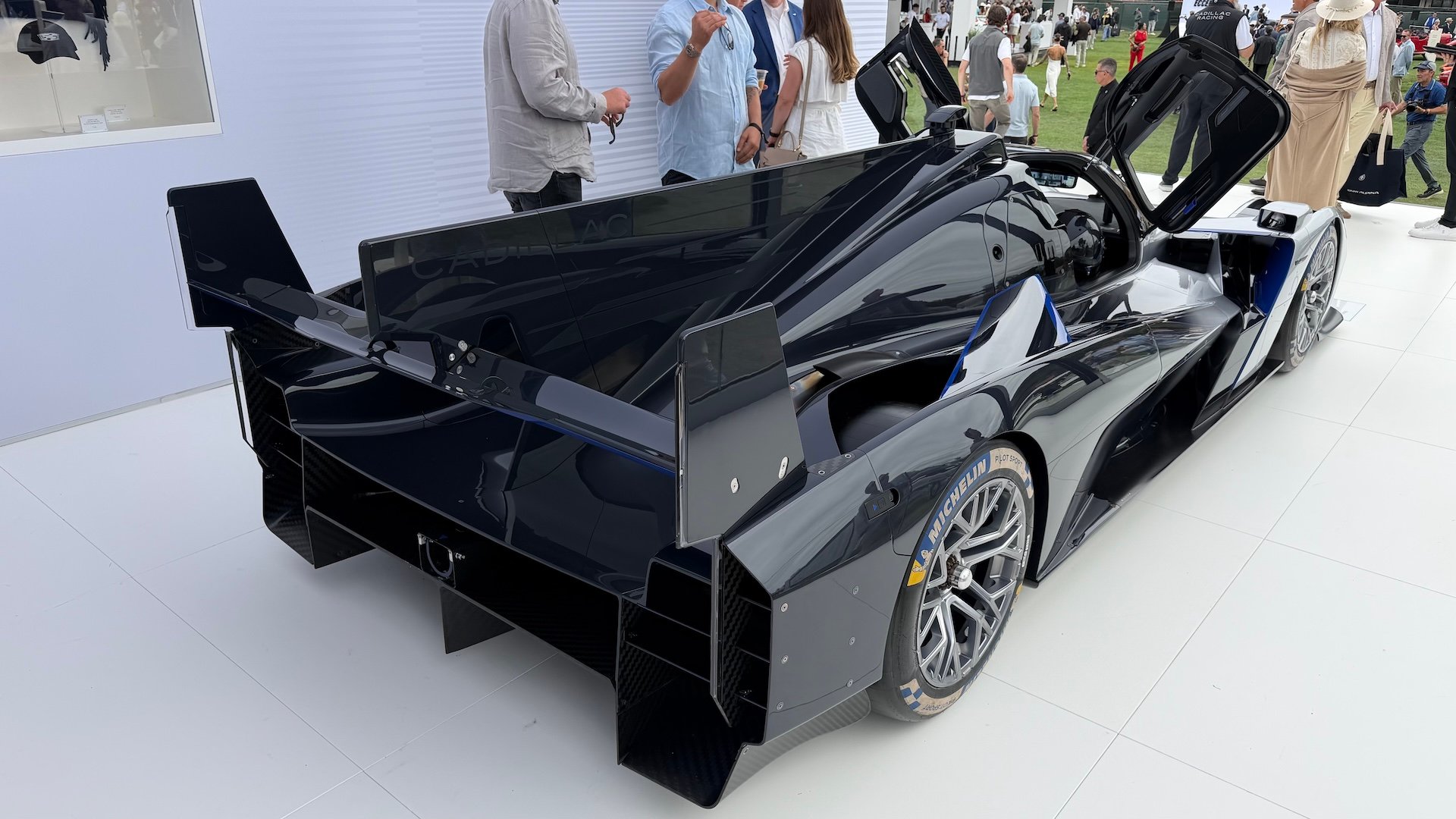
Ask the nice folks at Cadillac about this slick prototype race car displayed at The Quail during Monterey Car Week, and they’ll tell you over and over again that it’s just a “design study,” a “concept,” a “race car project.” Ask folks who have their ears on the ground at paddocks across the globe, and they’ll tell you that the program to sell these simplified Le Mans racers to customers is just about finalized.
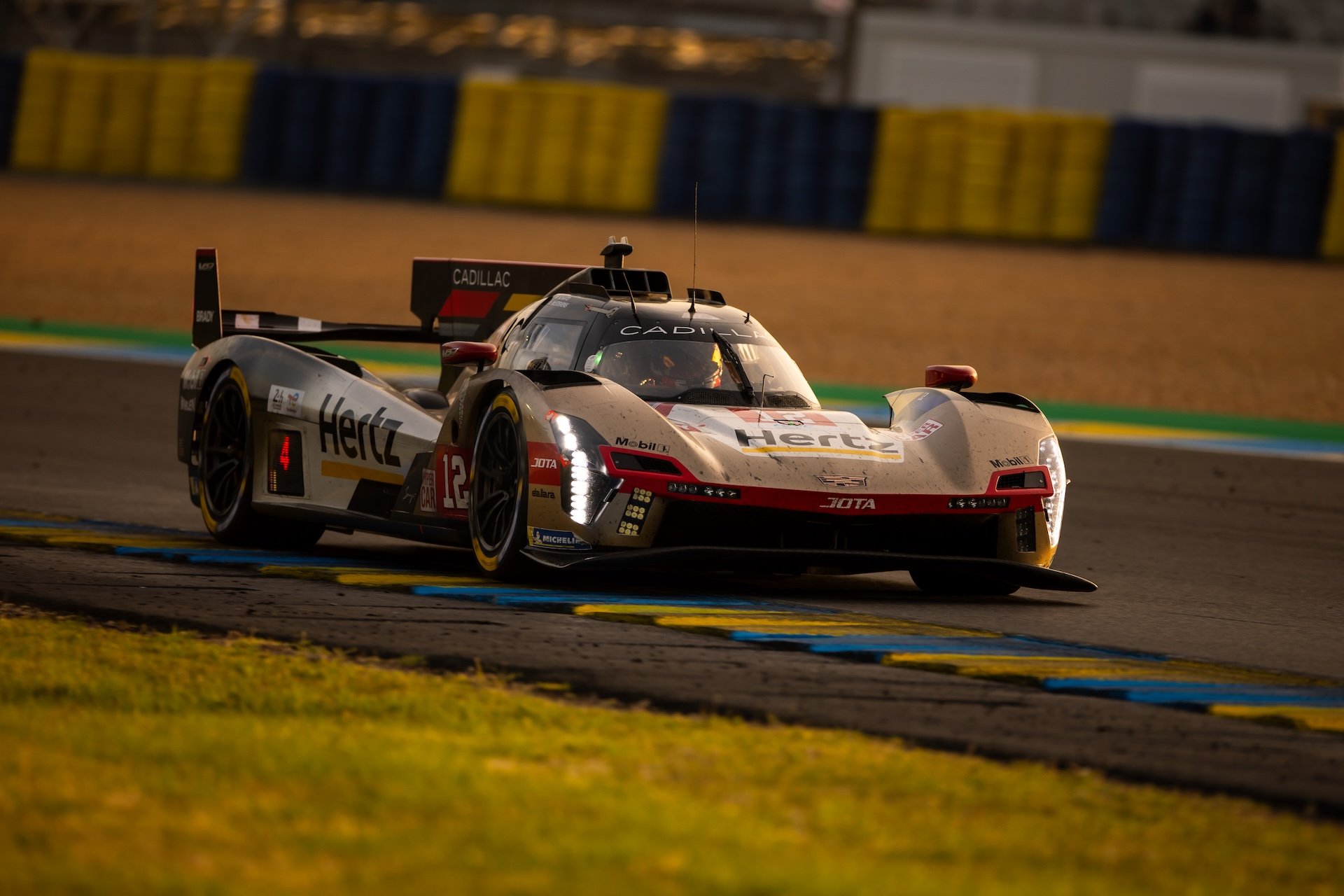
That’s the best way to describe this beauty that Cadillac calls the V-One: an 830-horsepower, simplified Le Mans Hypercar—capital H because the real deal races in WEC’s Hypercar class (and IMSA’s GTP). And regardless of whether General Motors plans on selling these to a wider audience or just a select few—or even just one person like Porsche did for Roger Penske—the task of dumbing down one of the world’s most advanced race cars is no small feat.
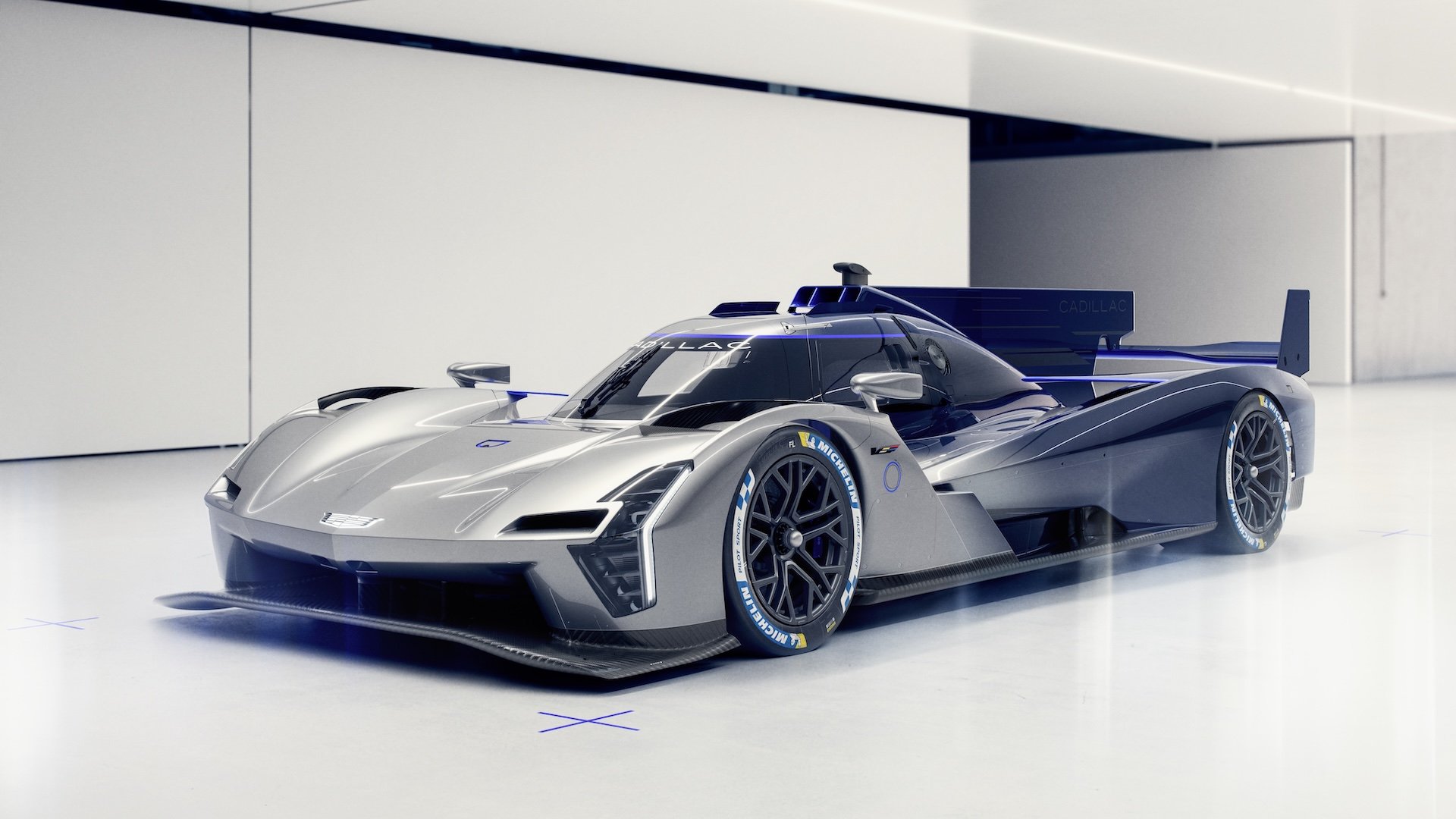
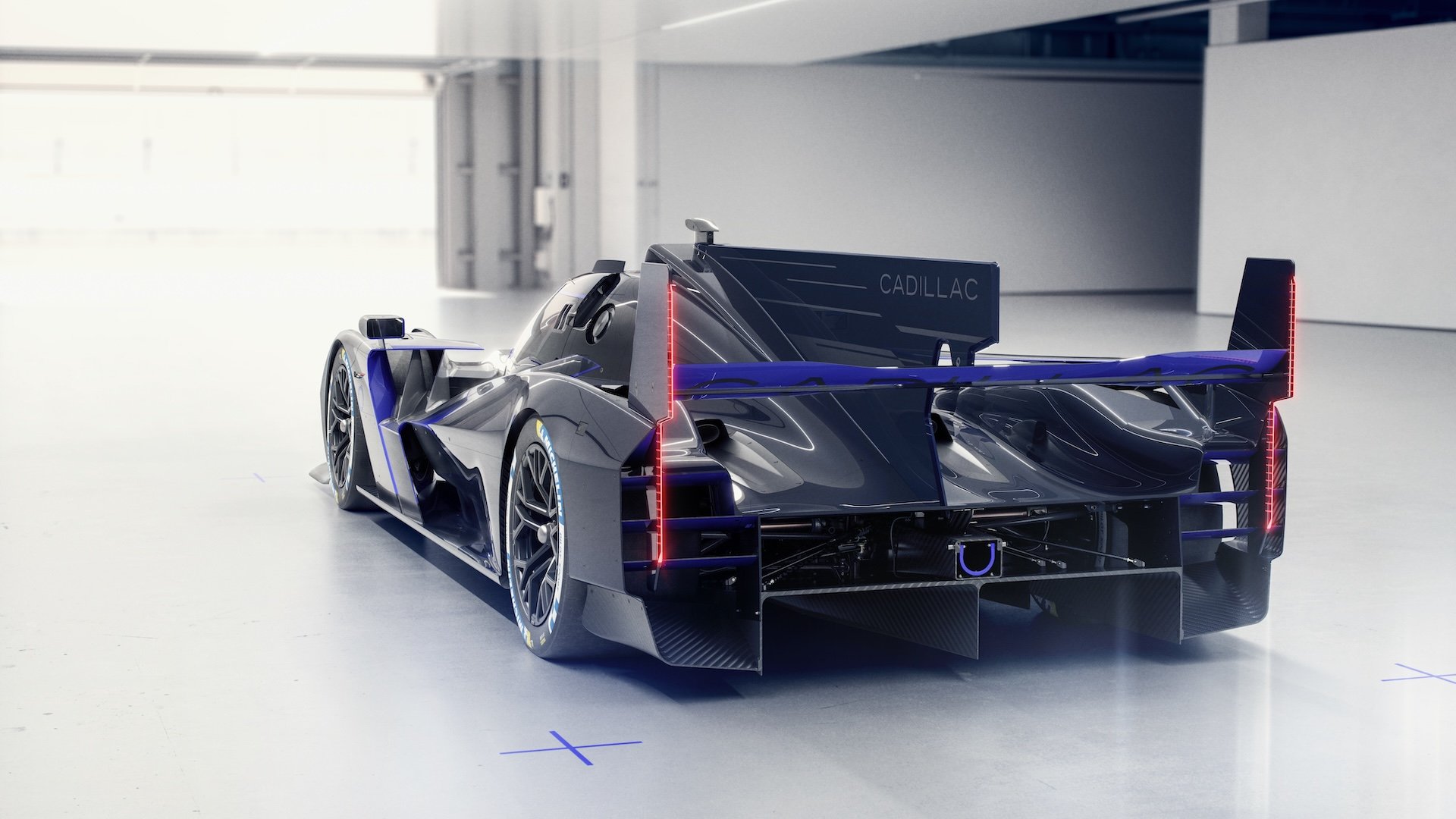
There’s the engine side, the hybrid side, the electronics, suspension, downforce, maintenance intervals that could quickly bankrupt a very wealthy person, and, last but not least, selling a vehicle that 99.9% of people don’t have the skills to drive is a challenge in and of itself. And for those who do have the skills, then there’s the problem of where do you drive it, and how big of an army of engineers do you need to operate it? Where do you store it, and how do you prep it to make sure it starts up again later?
I spoke with Sean O’Shea, the lead propulsion engineer for Cadillac Racing and GM Motorsport’s hybrid powertrains, to get all of those answers and then some. He and I had the chance to explore the V-One up close and learn about what makes this project so ambitious, but also so exciting.
Here’s how Cadillac is building a Le Mans Hypercar that anyone can jump in and drive:
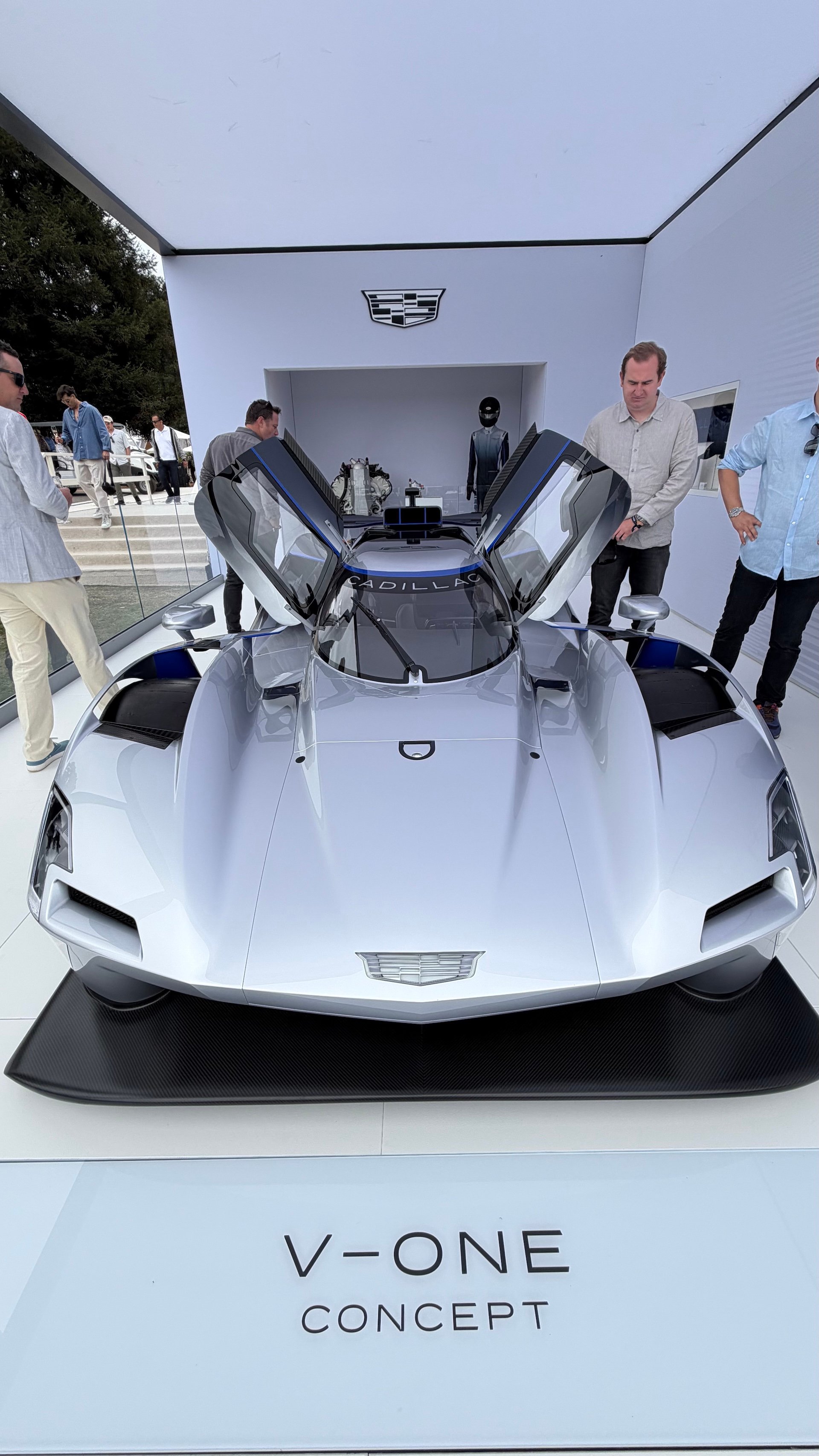
Jerry Perez: I know the official company line is that this is a concept, but what is Cadillac really trying to achieve here? Is the goal to just make a concept that never goes anywhere, or something that will become a reality? And how are you involved in all of this?
Sean O’Shea: As the engineering representative linking the design and the racing program, I’m really trying to make sure that [V-One] doesn’t stray too far from the race-car side and that this could be a reality. It’s a concept now, but everything you see here is very feasible and could be a reality.
I’m a big racing guy; I’ve been racing everything since I was little, like go-karts, cars, dirt bikes, all of it. I love racing, so when I got involved in the project, I wanted to make a track car that was a simplified version of our race car, but still had all the same tools and the same experience you would get as a pro driver, without being overly complicated.
Race cars are known for being complicated, so how do you take a Le Mans racer and make it less complicated?
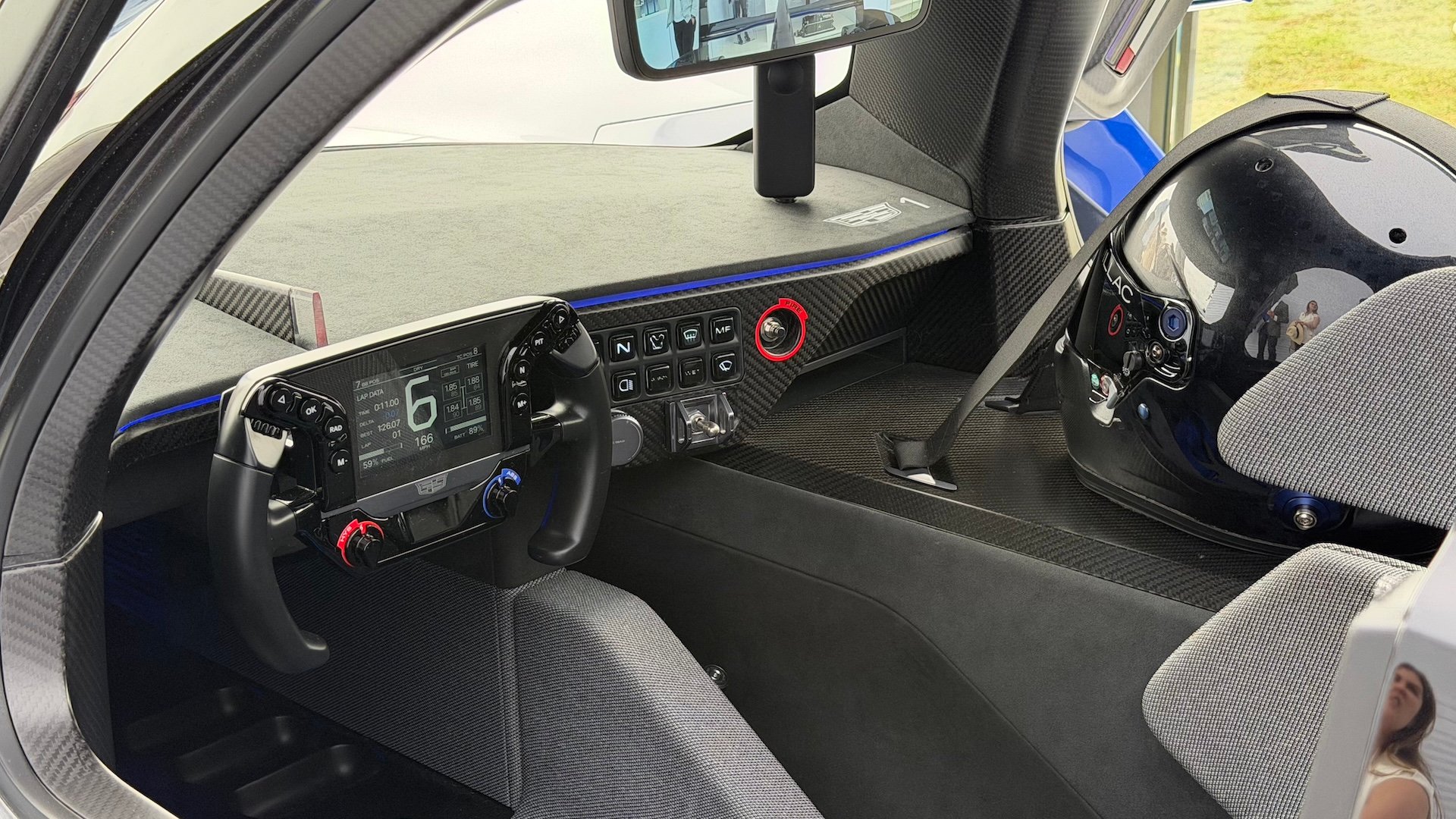
Well, first, I want it to be a really fun track car, and one of the major details is that it needed to be an “ambient start car,” right? This means you can start it at 70 degrees and let it warm up on its own without having to pre-warm it [with auxiliary machinery like an F1 car]. Also, all the differential, traction control, and suspension are a simplified version of the real car. This means you can just go out and just drive the car and have a really good time. However, I didn’t want to take away from the sound, the power, or the downforce you have in a real race car. This way, when you get in it and look around, you get the same view as any of our pro drivers like Earl Bamber, Jack Aitken, or Delatraz. You’ll also have the same buttons around the cockpit, but maybe not all 12 control variations or whatever, right? That’s what I mean by the simplified version: something we mortals can learn, work through, and have a good time with.
I once spoke with Jenson Button while he was racing the Acura ARX at the Rolex 24, and he flat-out told me that the steering wheel and some of the controls of the GTP car—as well as the rear axle, brake balance, and traction control—were more complicated than in an F1 car from his era. If he is saying that, I can’t imagine what a normal person would say.
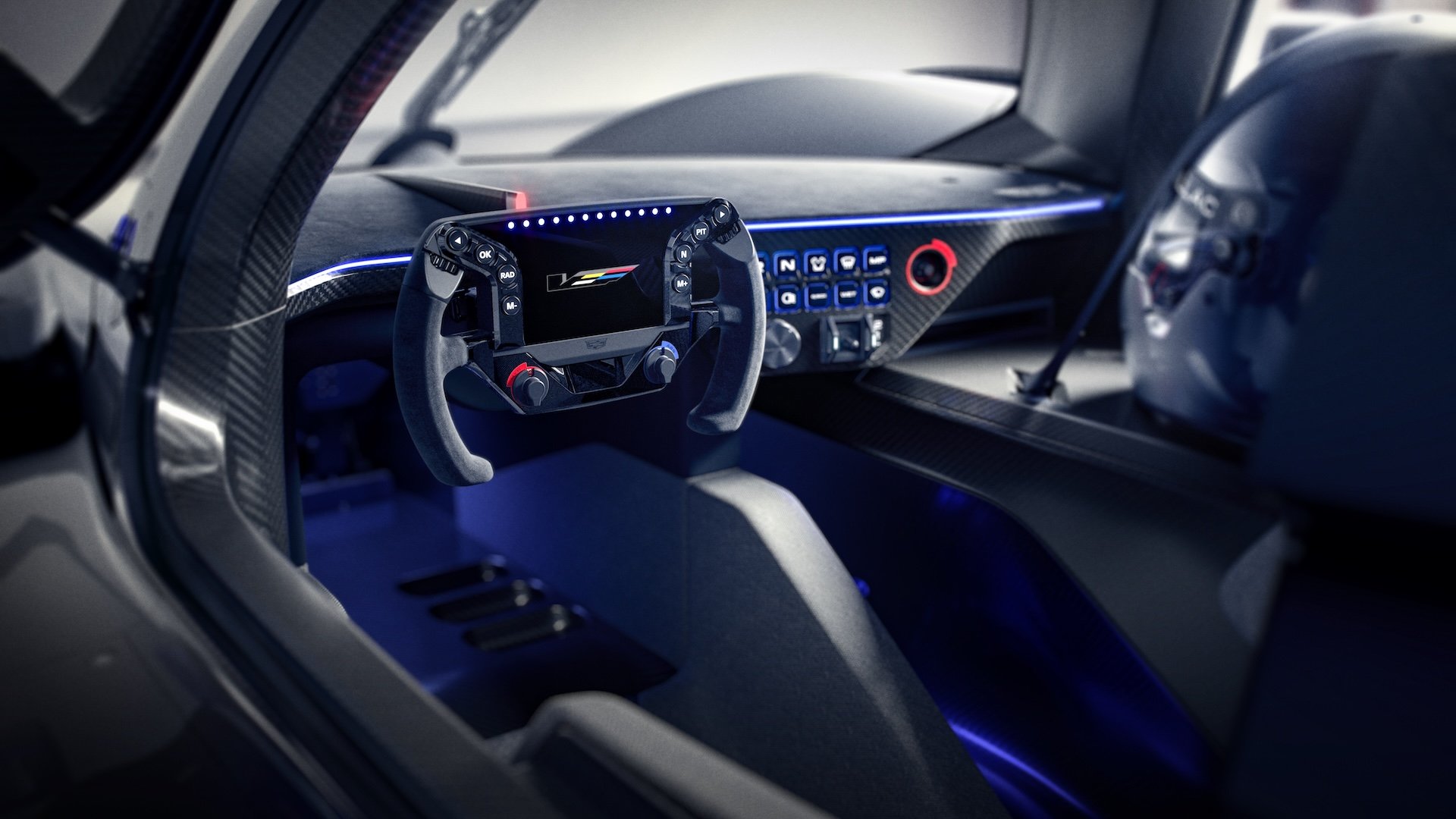
We had Jenson drive the [WEC] car, and yeah, the race car project is so complicated given what they want to accomplish. Between settings, energy recovery, and energy per lap, I worked with our pro drivers and just asked them: what would you like to simplify in the car if you wanted it to be fun? They gave me a lot of ideas, so if you look at the interior, it’s just an LMDh car, just a simplified version of it. We still have traction control with two settings—X and Y for lateral and longitudinal grip—and we really wanted to put ABS in the car, although these cars normally don’t have it. I wanted ABS to kind of eliminate the issues around break-in temperatures, tire warm-up procedures, and all of that. Just let the ABS handle it, then let the driver go out and learn to steer, shift, and go fast.
We worked closely with the [pro] drivers to understand how we can reduce complexity. And on the propulsion side and differential side, we worked with all of our performance engineers to, again, learn how to simplify things. We went to Goodwood last year and this year, and it was like, how can the car be easy to use? You know, we started just kind of throwing calibration ideas out there, so that our driver could just basically drive out of the paddock and drive onto the track and not have a team of engineers with them.
If you were to build this, would the driver just jump in and go?
The idea would be that we jump in, start it, and go. Well, you have to let it warm up before you go anywhere, you know, give it a little care. This is expensive, after all.
Would customers keep their cars at home, or would Cadillac store and transport them to tracks, as Ferrari does with its FXX program?
We have ideas and a kind of plan, but it’s nothing we’re ready to divulge yet. But for me, being just an enthusiast, if I bought this, I would want to keep it at home and impress my neighbors.
Who all has driven the V-One, and what’s their feedback so far?
Our pro drivers are in it since this is really close to the race car. We engineers don’t really drive it at all. I’ve been in the seat and pushed it around on EV drive, but nothing more than that. I really draw on their experience because they also drive our road cars; they’ve helped with the ZR1X programs, and they spend a lot of time in the sim rig. Together, we really looked at the interior [cabin] space and explored how to make it a little bigger. So I was like, can we remove the sway bars? And they were like, no, we need adjustable sway bars. I said, okay, but do you just need the rear and not the front? And the drivers were like, you need both—so we kept both. That type of stuff.
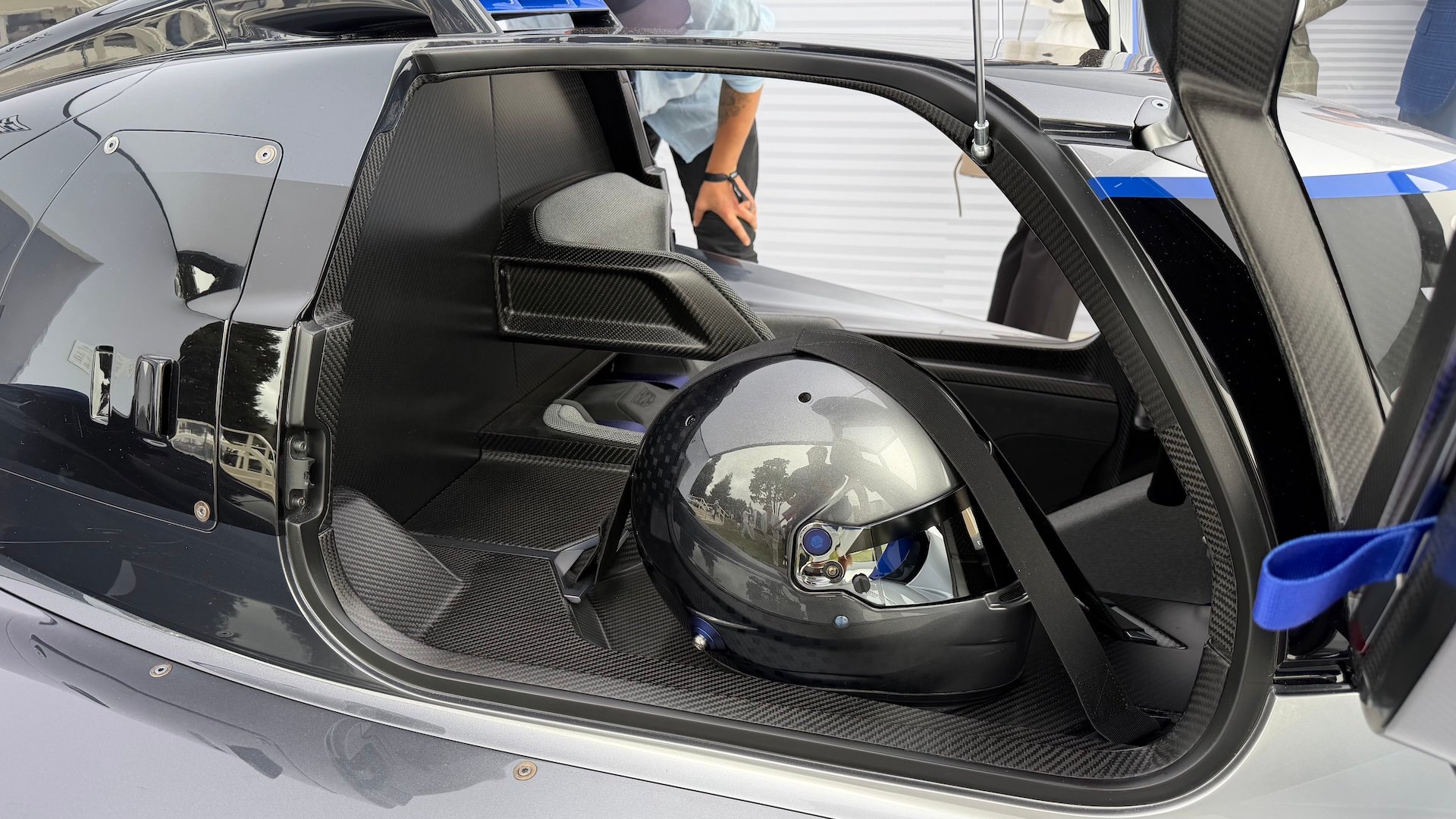
Which buttons did you keep on the dash and steering wheel, and what about the air conditioning?
Yes, there’s AC inside the car. The race car gets very hot, so we knew we wanted to keep that. There’s also pit lane limiter and other buttons to adjust various settings we already discussed.
You kept the loud bang from the transition from electric to ICE, like the race car when leaving pit lane, right?
Right, we didn’t want to change any of that. Plus, these things are miserable at slow speeds, so it’s much easier to maneuver the car on electric power; then you can just drive around. Again, the idea is to make it simple to use. Start the car, let it warm up. When you pull out of the pits, the ICE engine shuts off, and you leave in EV. Then you let one of the paddles go, and it turns the ICE engine on, and you go.
Biggest challenge of this project?
The interior, really. It’s the biggest change from the race car. We just want to make sure that we had space for a normal-sized human in there. And also visibility, because the race car is very claustrophobic. And we had to do all this without changing the tub shape, because if you change the tub, now you gotta make new tooling and homologate everything else. After that, it was just simplifying all the sensors and electronics.
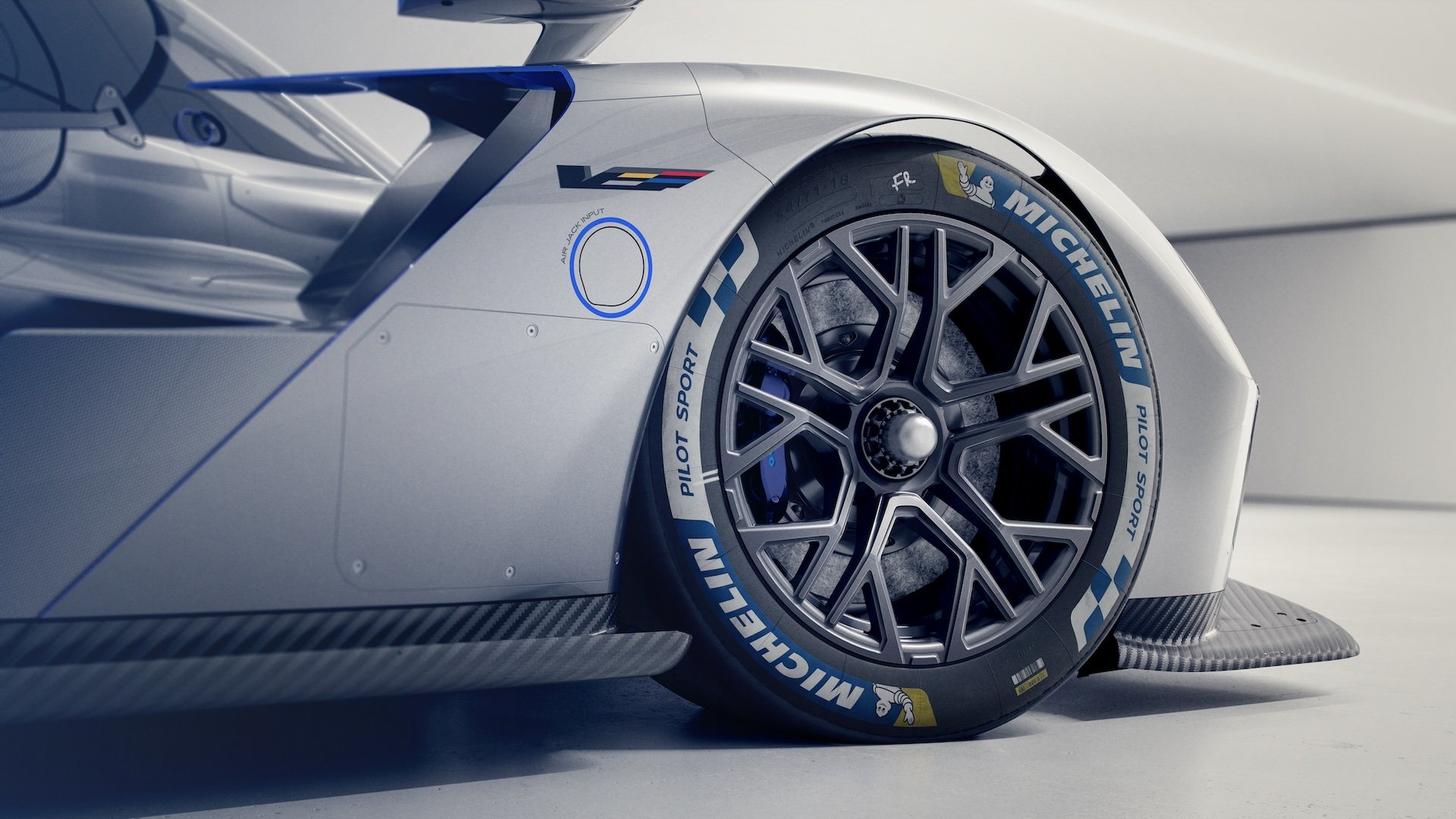
Whenever a car company announces an “F1 car for the road,” it usually ends up rather messy. Whether it’s the McLaren F1, the Mercedes-AMG One, you name it, they’re awesome, but they’re full of gizmos and maintenance and reliability nightmares. I know this isn’t an F1 car, but pretty darn close.
Never driven an AMG One, but I’ve seen a lot about it, including on the forums. But to me, the complication just isn’t necessary. The core experience for me is being in the car, just having a good time, feeling the downforce, feeling the Gs, hearing the sound, and racing the car on a track. So, for everything we did here, I just wanted to simplify the race car and make it reliable and easy to use. The whole point is to give the owner the experience of driving the car, not to mess with gizmos, gadgets, screens, and everything else. Drive the car!
What are maintenance intervals like on one of these?
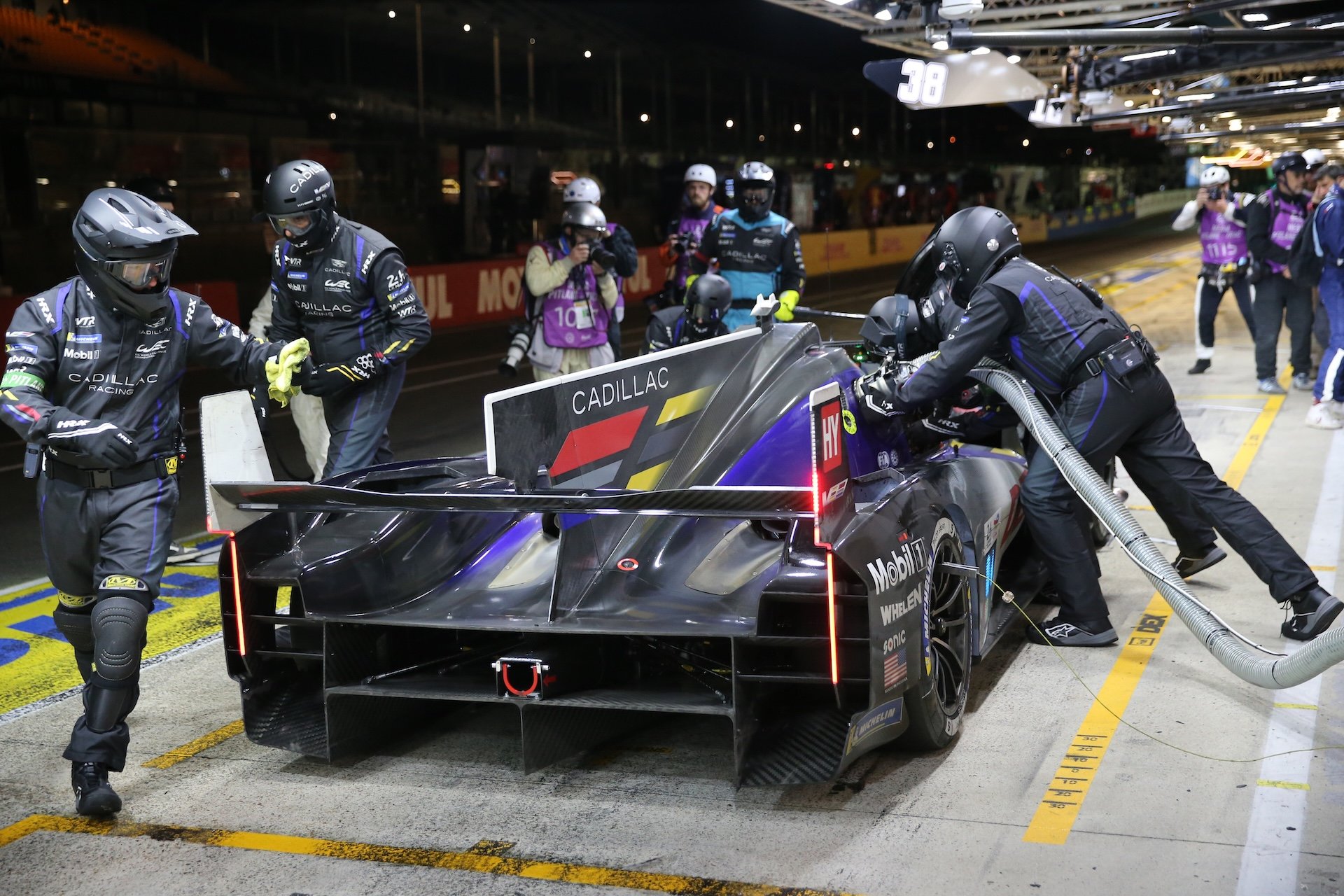
Anytime we do a performance car, anything inside GM, we start with a vehicle technical spec. So you put in what you want the car to do. right? Do you want to have good fuel mileage? Do you want to have faster 0-60 or lap times, all that stuff? When I did the vehicle technical spec for this, we targeted a lap time—it was a little bit slower than in the race car, and I targeted our performance interval, which is our highest in GM, to 24 hours of just changing tires. So, for 24 hours of racing, just add fuel, change tires, and go. If you want to go out and run 24 hours, that’s what the car will need.
Lastly, how will you gauge whether a potential customer can handle a V-One? Can someone who’s never driven a race car just jump in and have fun?
That’s what I hope, and that applies to me too. I’ve driven a lot of stuff in my life, but I’ve never driven a full downforce car, so my ultimate goal is just to drive this and have a good time.
Email the author at jerry@thedrive.com
Loading comments…
Comments couldn’t be loaded. Please refresh the page.