
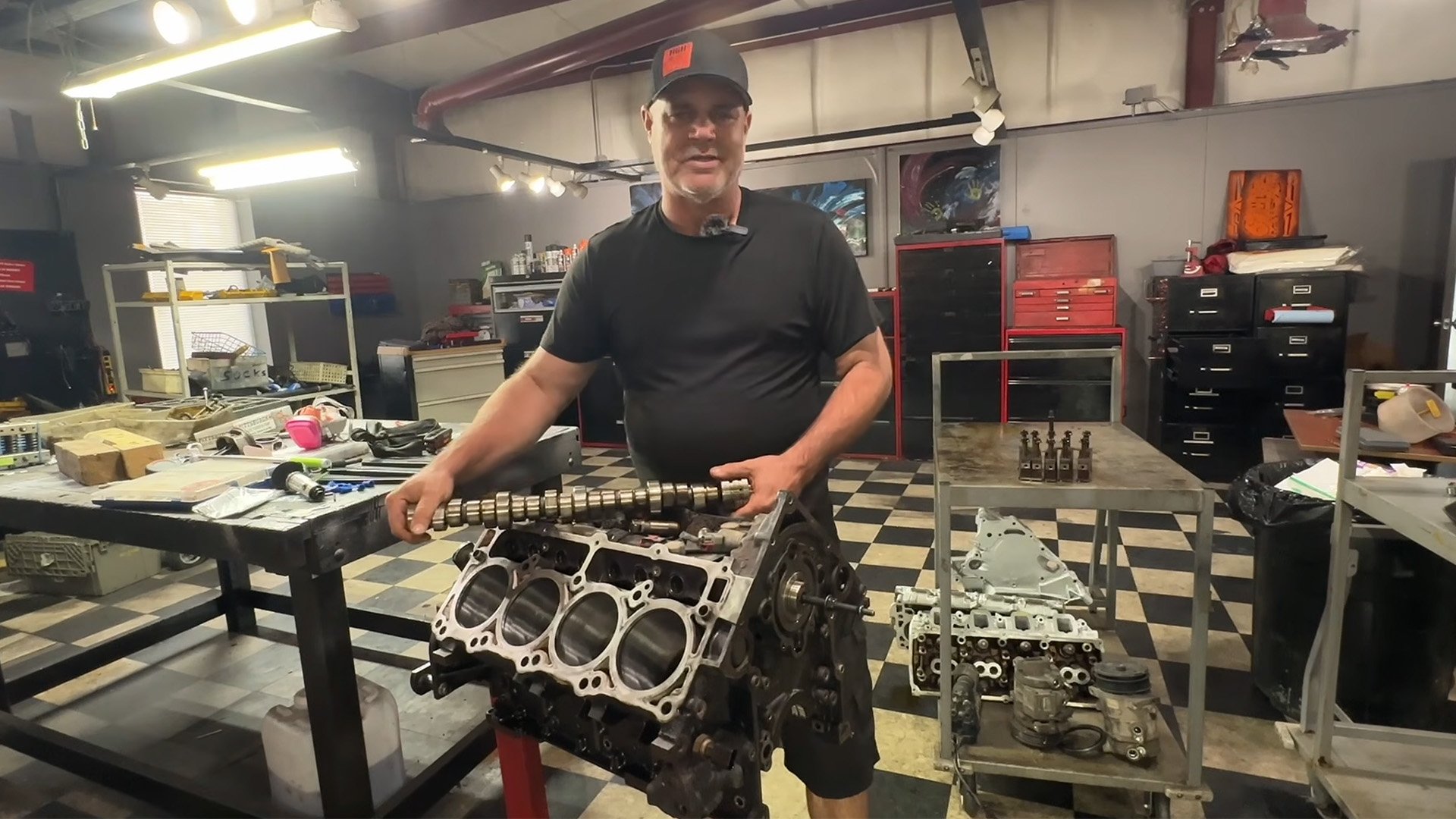
If you’ve spent any time around a late-model Hemi V8 with enough miles on it, you’ve probably heard it go “tick-tick-tick-tick-tick-tick.” Examples of the 5.7-liter and 6.4-liter engines built from 2009 on are notorious for it, and it affects Ram, Jeep, Dodge, and Chrysler vehicles alike. The problem was long ago traced to the valvetrain lifters, but the exact cause has been tricky to pin down—until now, if you believe Dave Miller from Hemi Garage Hacks.
Miller is a Hemi guru, and he estimates that he’s rebuilt more than 2,000 of these engines during his time as a mechanic. I’ve actually written about his work before on The Drive, as he came up with an ingenious head-resurfacing contraption that involves a treadmill and a sander belt. This time around, though, he’s gotten especially technical by revealing the believed design flaw and developing a solution.
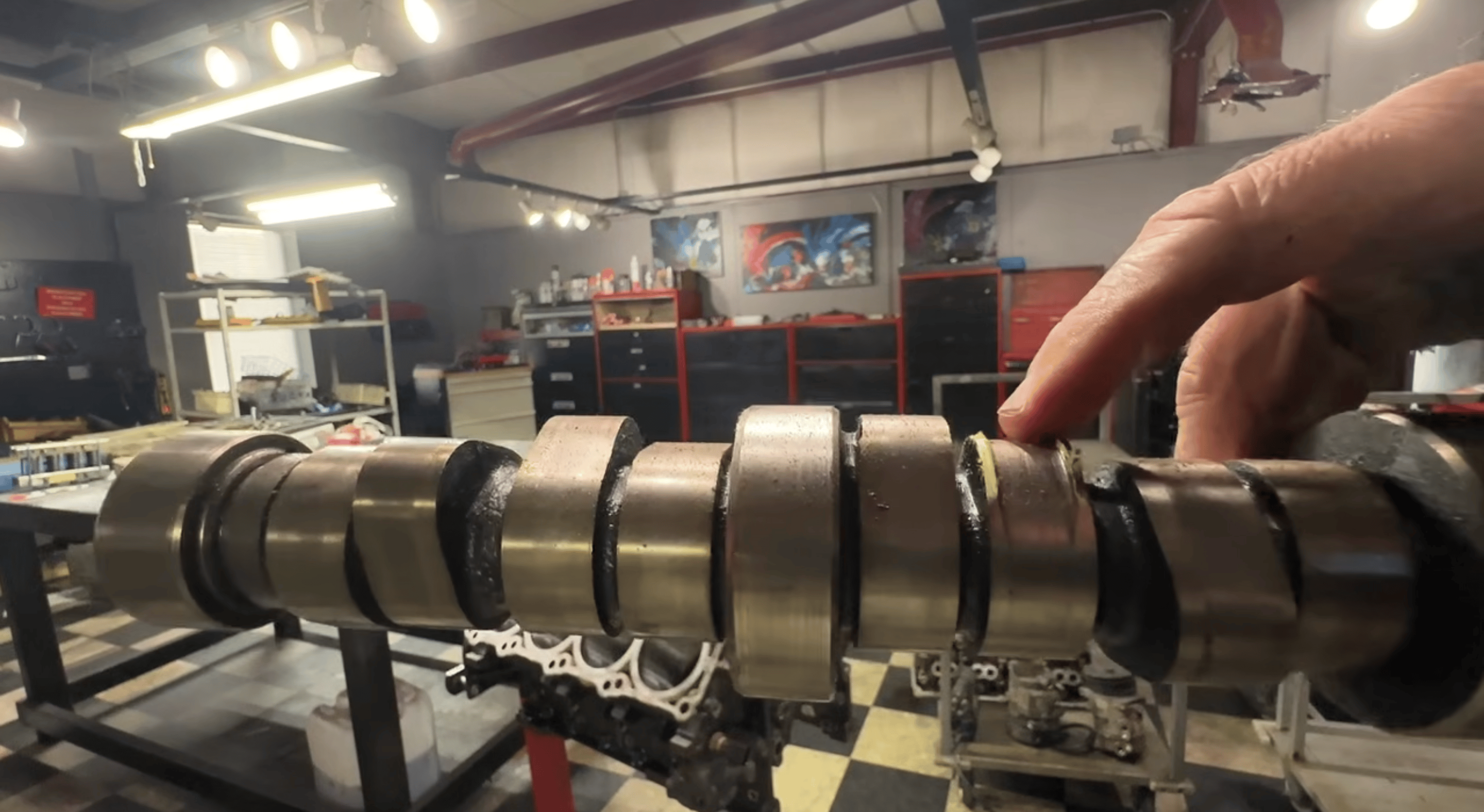
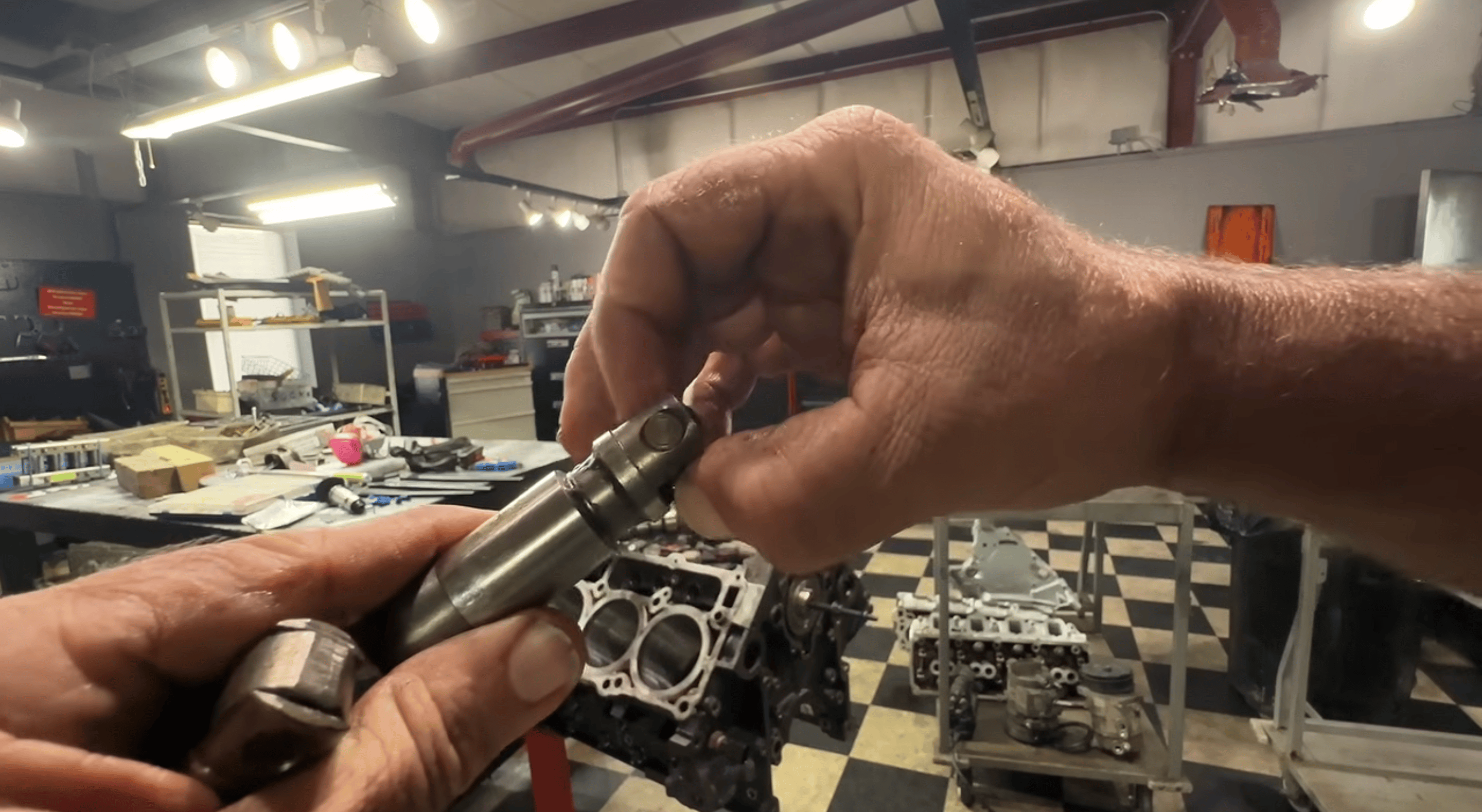
The video kicks off with Miller showing a chewed-up camshaft with one of its lobes ground smooth. It’s a common sight for folks who work on broken Hemis. This happens when the lifter rollers don’t get enough oil and the needle bearings inside disintegrate. Once they stop rolling, the cam lobe starts grinding, and a tick develops (you can hear it in this video if you’re unfamiliar with the sound). Unfortunately, the problems don’t stop there, as this eventually leads to a misfire. Drivers risk a total engine rebuild if they don’t address it soon enough.
But why can’t the lifter rollers on these modern Hemis get the oil they need? Miller claims to have made a pivotal discovery, and he shows his work with a borescope.


He begins with an early Hemi that doesn’t suffer from the infamous tick. By sticking the camera inside an oil gallery and showing the lifter at the top of its rotation, Miller points to a tiny hole that allows lubricant to pour in as the valvetrain component rises and falls. It’s small, but rest assured, it lets in a non-trivial amount of oil.
Miller quickly transitions to a 2009-and-up Hemi, and what he observes is pretty condemning: That oiling hole is totally absent. With the borescope inside the oil gallery, displaying the lifter at the same angle as before, he proves that there’s nowhere for oil to seep in. He says this is due to a cylinder block design change that allows for a longer camshaft snout, as later Hemis require it for their variable valve timing. Meanwhile, the cam journal designs are practically identical.

As drivers tack on the miles, the lifters go up and down continuously with improper lubrication. It’s no wonder why this leads to fried valvetrain components. And to prove that the hole lets in a significant amount of oil, Miller pans over to his lifter test bench and loosens a bolt one-quarter of a turn. Oil just streams out when the bolt is unthreaded ever so slightly, proving that an observable gap lets in plenty of lubrication; without it, the components are doomed.
Commenters on the Hemi Garage Hacks YouTube video seem convinced that Miller is onto something. The pinned comment comes from an alleged 30-year Chrysler service department veteran who backs up Miller’s claims 100 percent. Others are ranting and raving that the guy deserves a Nobel prize. Even though you might laugh at that, I’m sure there are more than a few Hemi owners who are actually that glad to know there’s a potential fix for this trouble that has plagued the platform for more than 15 years.
Miller is developing a modified lifter design, which he hopes will help customers to bulletproof their Hemis. He has a GoFundMe set up for the project, and at the time of publishing, people have donated $4,369 toward Miller’s goal of $5,000. It seems like he has this figured out, which should give owners the peace of mind they’ve lacked since this issue reared its ugly head more than a decade ago.

I found the HEMI Problem and a Solution!
Got a tip or question for the author? Contact them directly: caleb@thedrive.com
Loading comments…
Comments couldn’t be loaded. Please refresh the page.