
By now, you’ve probably heard that diesel prices are going through the roof. If you drive a gasoline-powered car, you may not be too concerned about it. But the reality is that rising diesel prices contribute significantly to the inflating prices of all consumer goods—from electronics to food, and, yes, even cars—because the country’s cargo infrastructure depends on it.
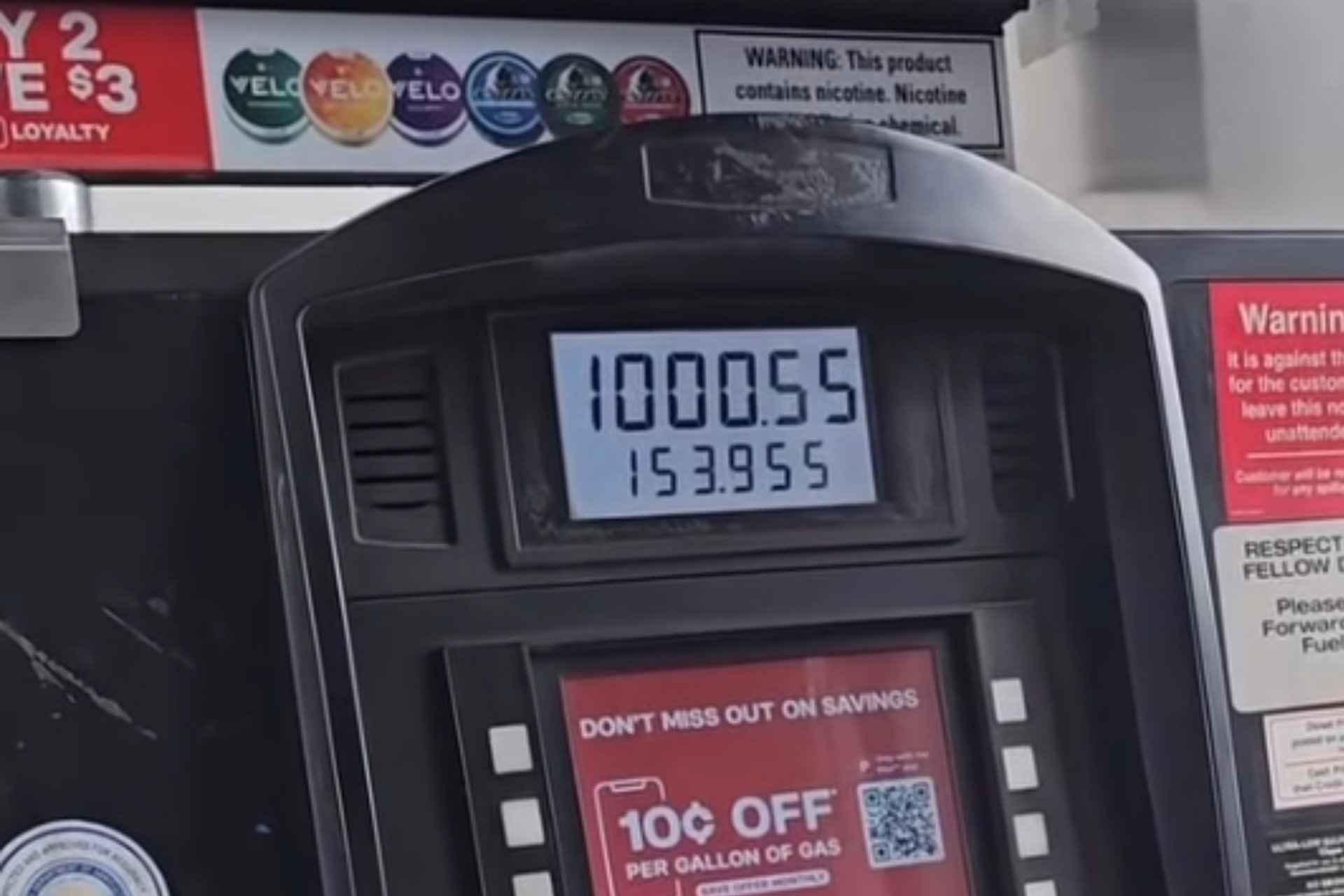
And right now, truckers are paying a pretty penny to fill up. A truck driver who stopped for fuel in Ft. Pierce, Florida, captured a video of his pump ticking over the $1,000 mark before his rig filled up. That’s just over 155 gallons at $6.49 per gallon. Ouch. And if you think that’s wild, here’s another figure for you: at the current average price of diesel in California, the same fill-up would cost nearly $1,300.
Skeptical that somebody could pump this much fuel in a single transaction? Well, you’re likely familiar with retail gas pumps. Most consumer-facing setups cap the amount of fuel that can be dispensed in a single go, both for safety reasons (preventing an unattended leak from spiraling out of control, for example) and to curtail excess thievery (by forcing the user to pay and close out the transaction to continue pumping more fuel). Commercial drivers can bypass those safeguards; otherwise, they’d be wildly inconvenient for operators.
The trucker says in the video that he’s never seen prices that high before. I believe that, but this “new normal” began settling in nationwide earlier this year. And based on the current state of the world, it won’t be going away any time soon. Worse still, the government lacks the ability to do much about it. Gasoline can be diluted with readily available (and thus affordable) alternatives to help defray cost increases; diesel has no such safety valve. And to further compound the situation, the Earth is rotating rapidly on its axis.
Or, to use a slightly less-dated pop culture reference, winter is coming. Winter means the heat comes on, which increases the demand for fuel oil, which is just diesel by a different name. Fewer than 5% of American homes still use oil-based heat, and most of them are in the Northeast, but the rise in demand will impact prices nationwide. Buckle up, folks. This road isn’t getting any smoother.
Got a story tip? Let us know at tips@thedrive.com!
Loading comments…
Comments couldn’t be loaded. Please refresh the page.