
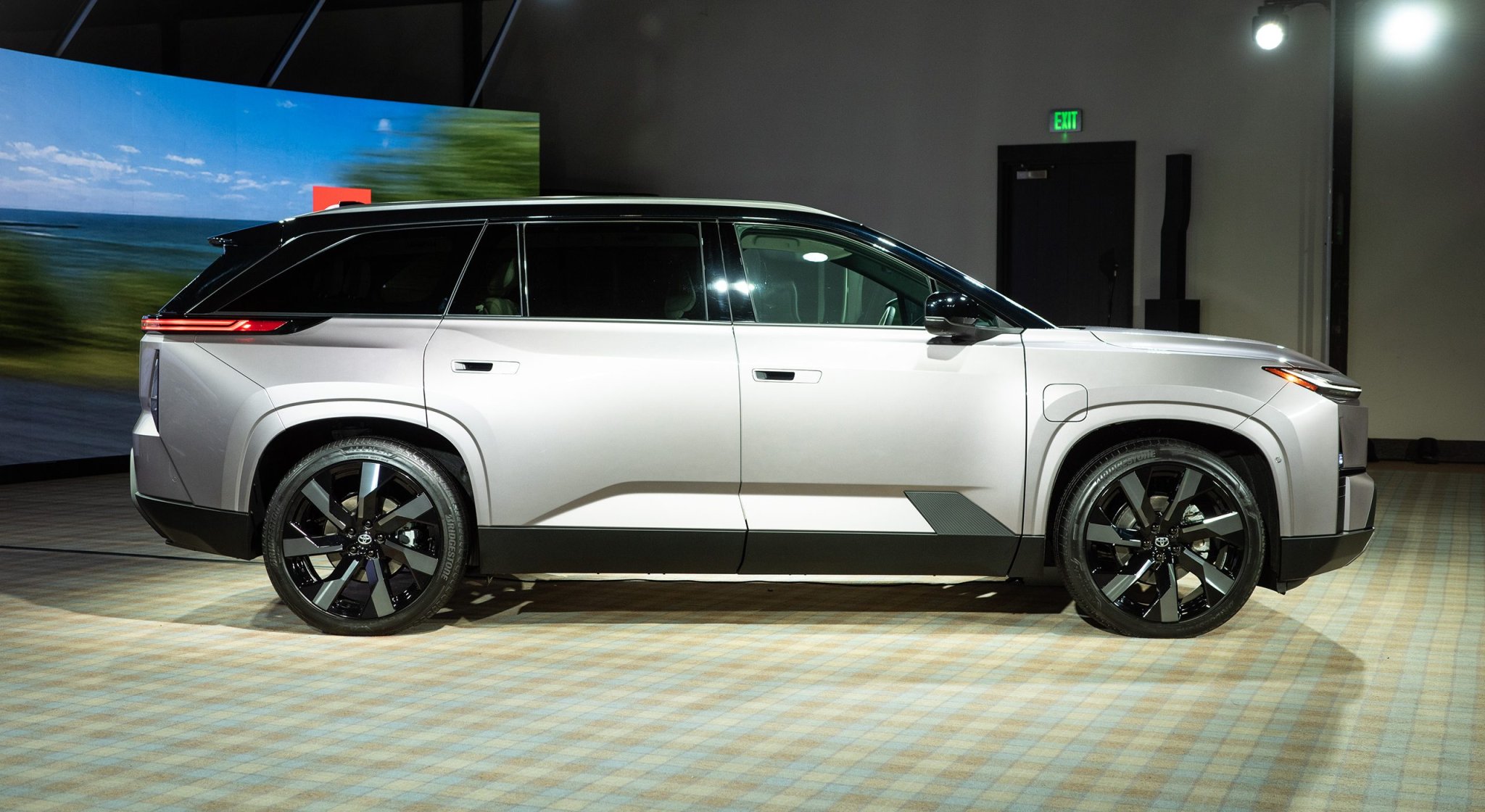
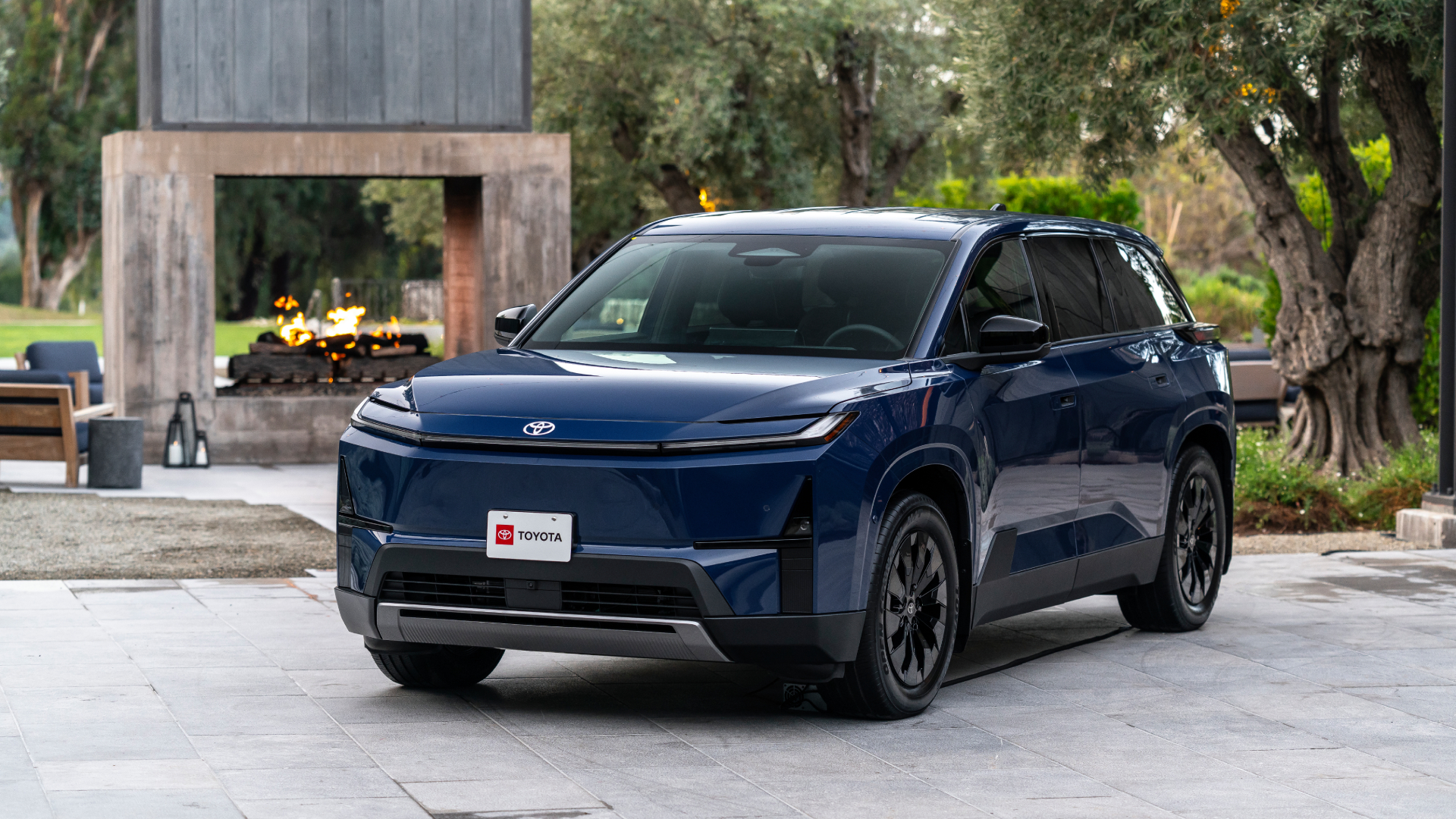
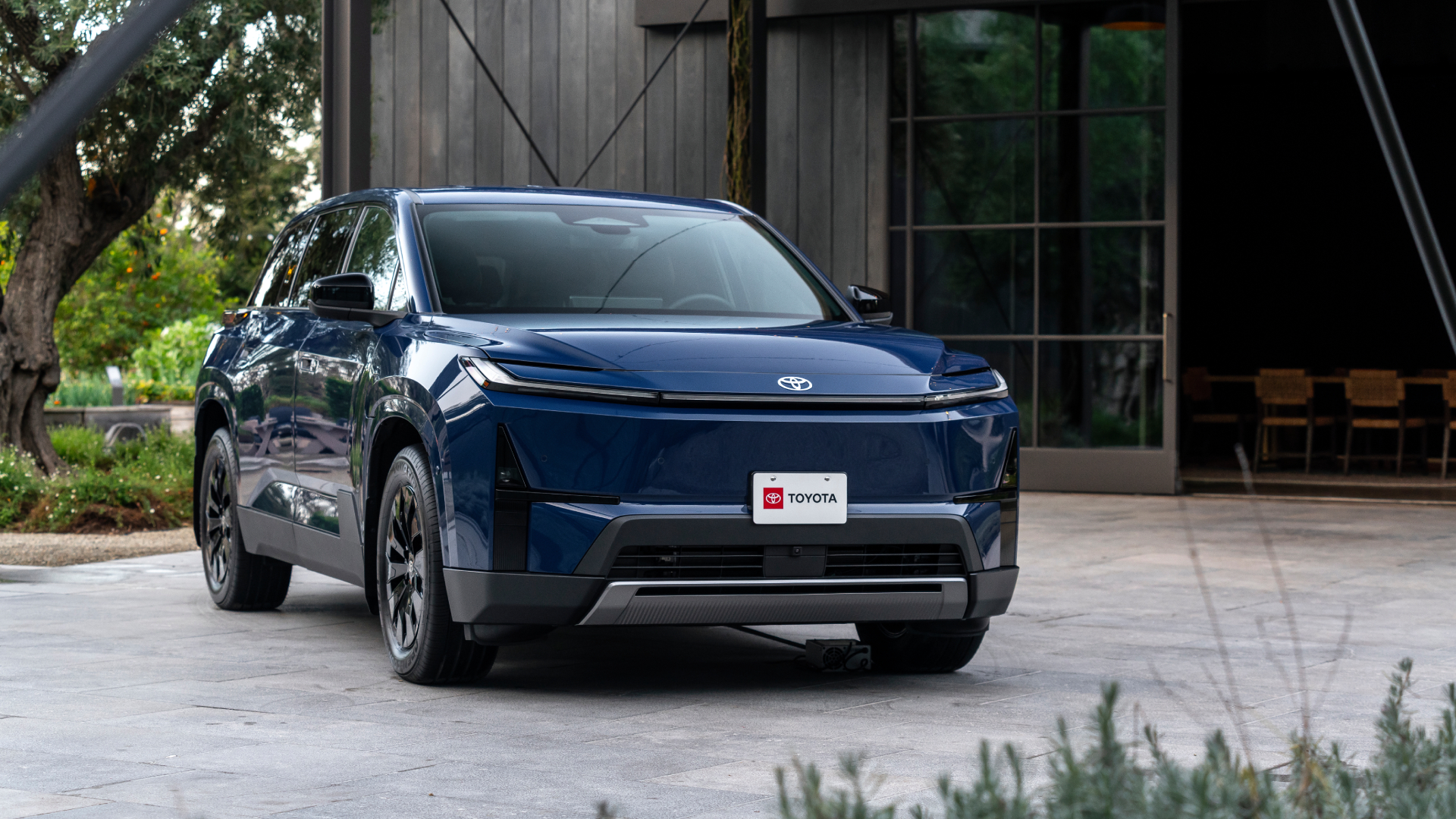
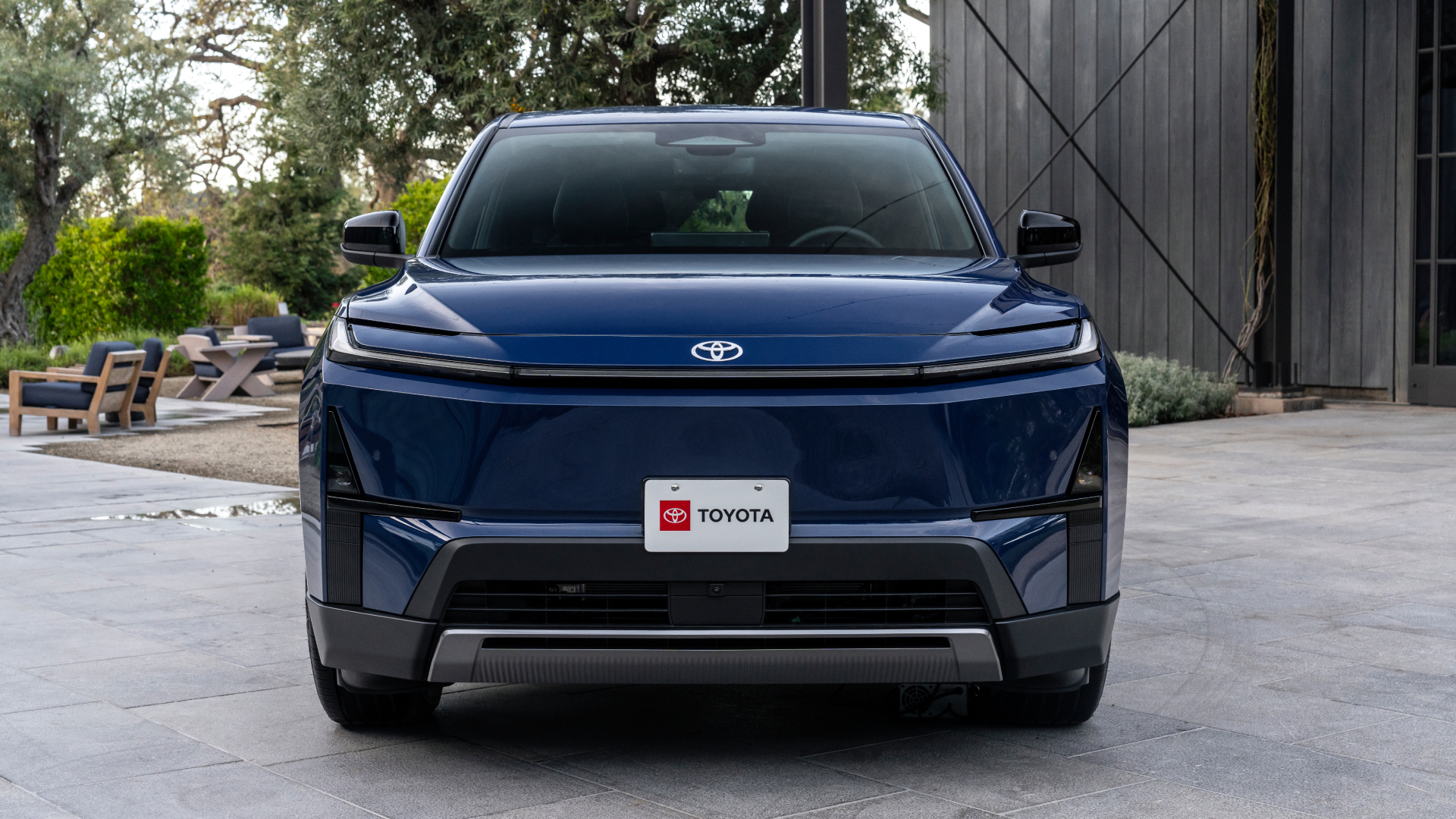
About eight months ago, Toyota herded a group of journalists into a large conference room at their U.S. headquarters in Plano, TX, and told all of us to immediately forget what we were about to see—it didn’t exist, it wouldn’t be spoken of again, and anybody who leaked a word would forever be banished from the circle of trust. I suppose that means that I’m not allowed to tell you that it does exist, we’re speaking of it right now, and, in fact, this is it. So I’m not going to do that. Instead, allow me to introduce you to the all-electric 2027 Toyota Highlander.
That’s right, just Highlander—not the Highlander EV or Highlander Electric. In fact, Toyota is calling this a “re-imagining” of the Highlander formula rather than a separate model. This isn’t just our first glimpse of what Toyota has in mind for the fifth-gen Highlander, this is the fifth-gen Highlander, full stop.
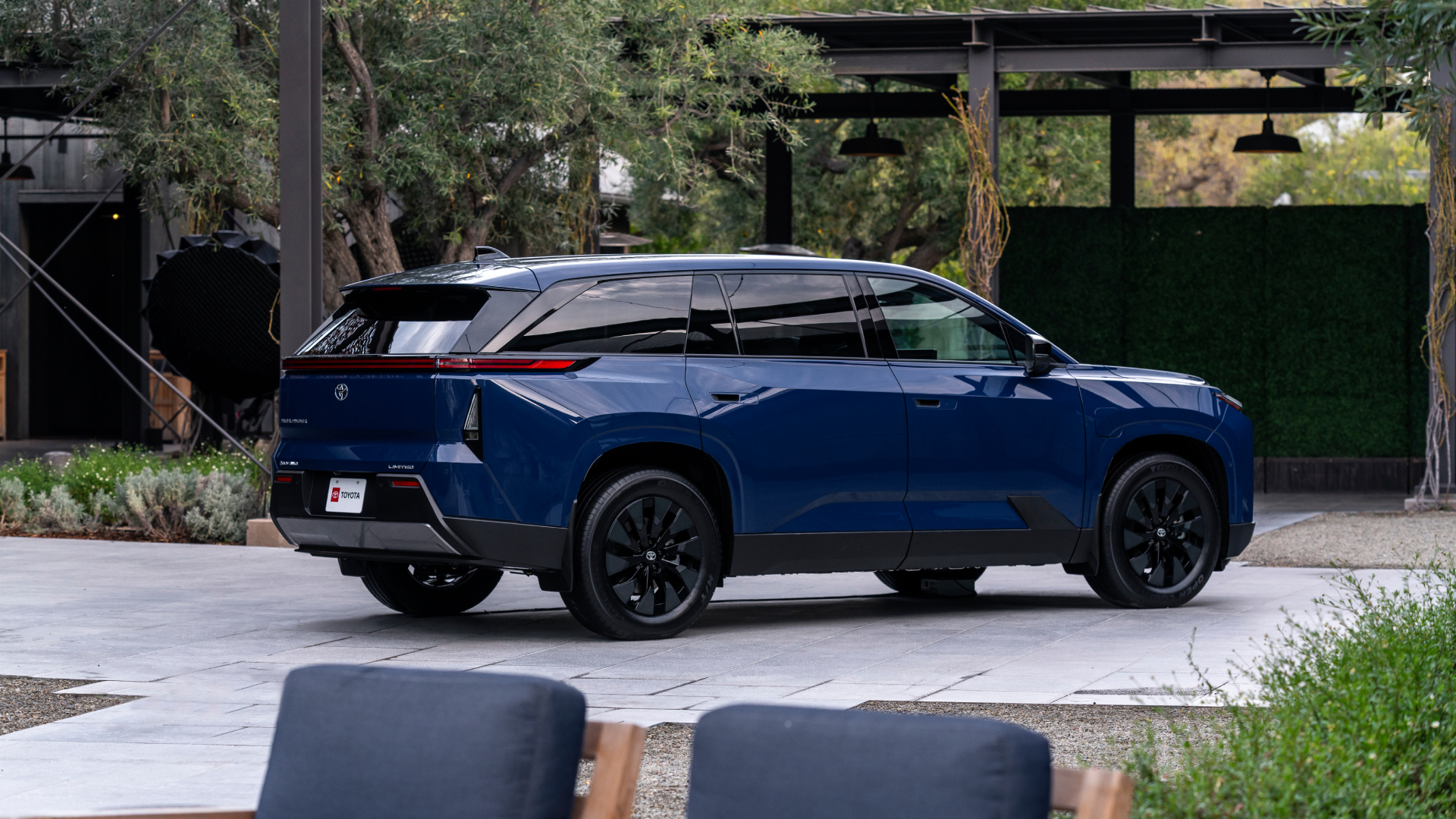
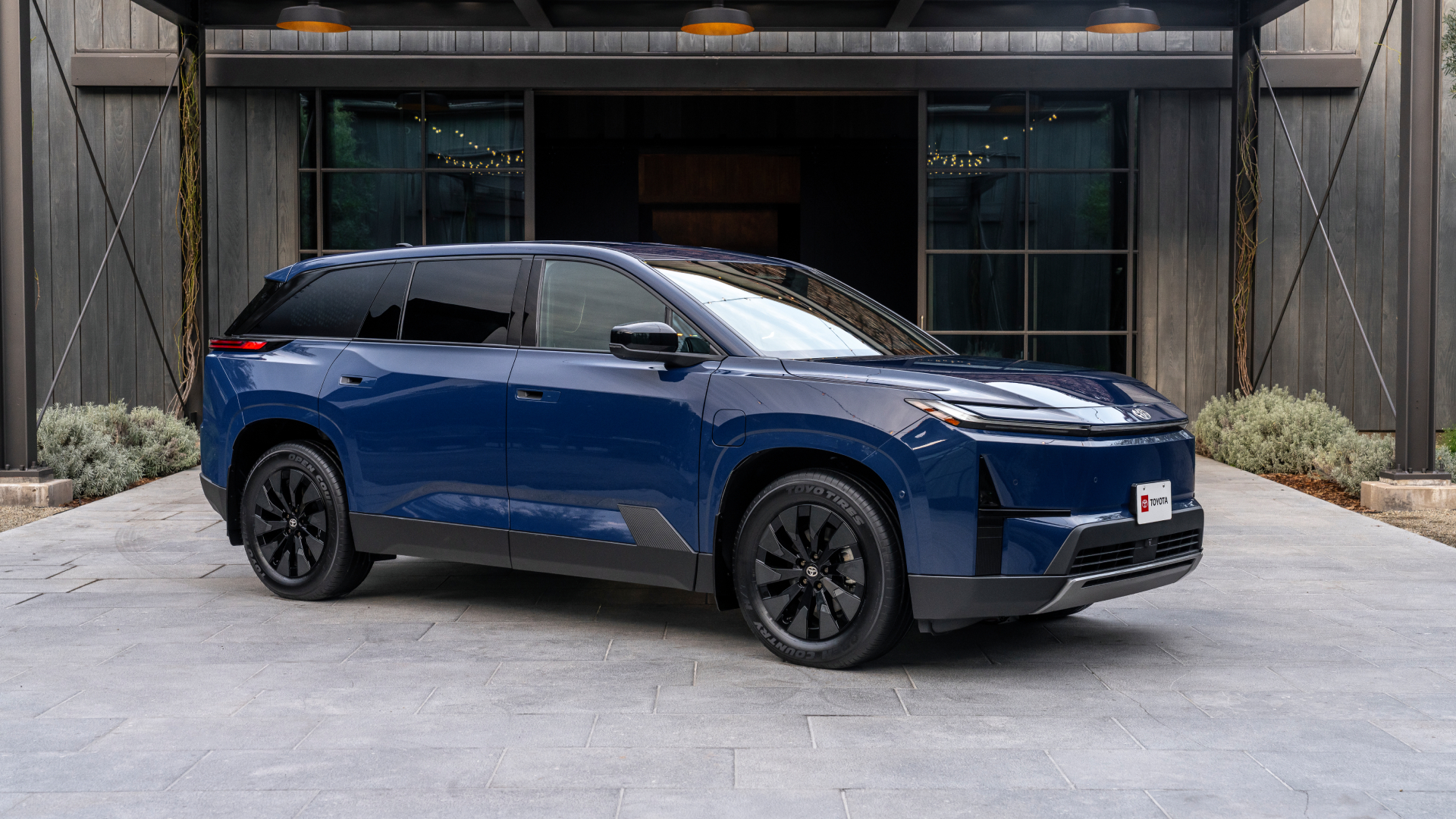
“Our design mission was to create a new Highlander that pursued the robust proportions of an SUV while also capturing the sophisticated, high-tech aspects of all-electric performance,” Chief Designer Masayuki Yamada said in Toyota’s announcement. “To accomplish that goal, we designed a model that balanced aerodynamics, interior space, and capability so it is equally suited for elegant urban or outdoor enthusiast lifestyles.”
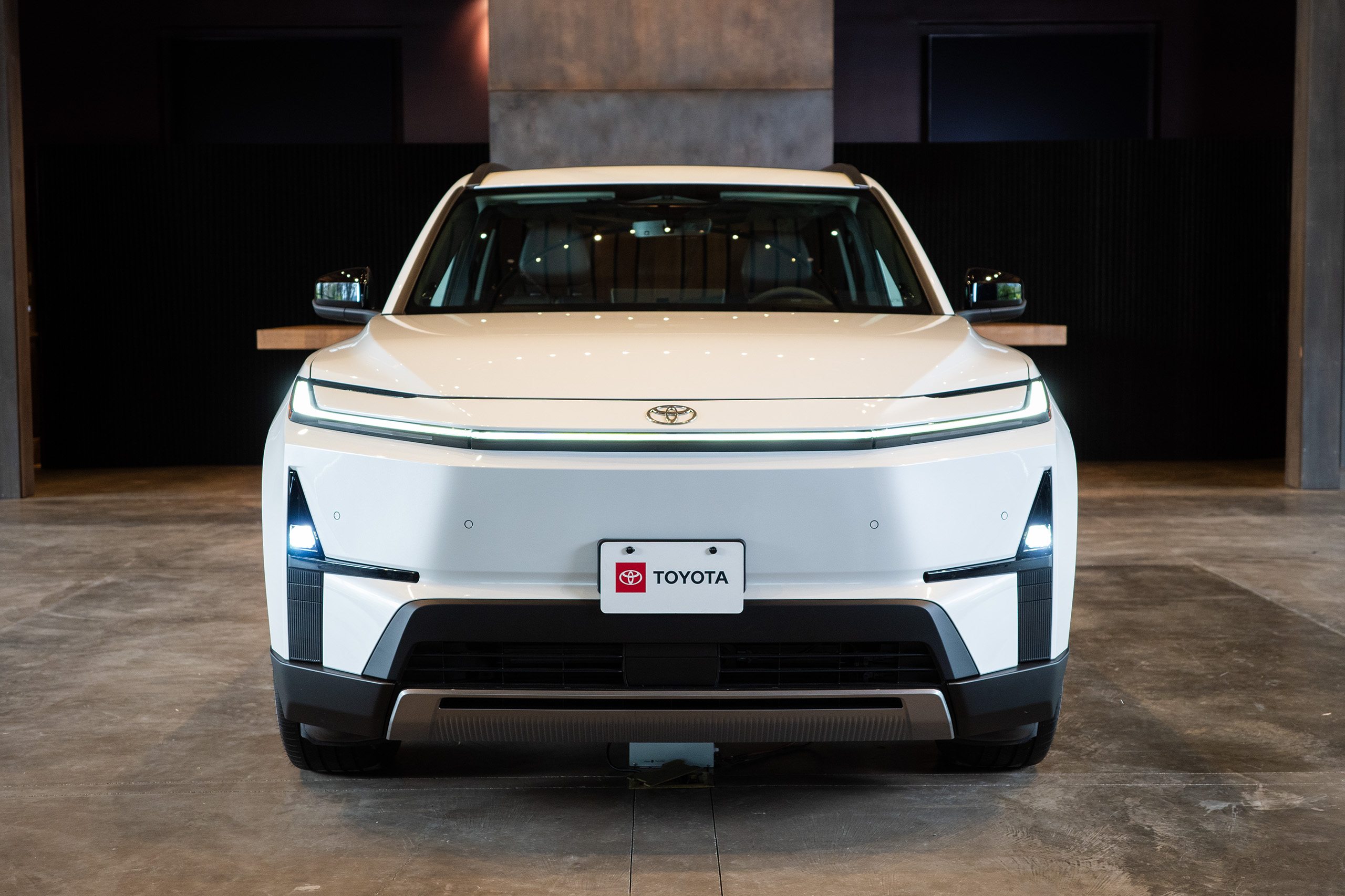
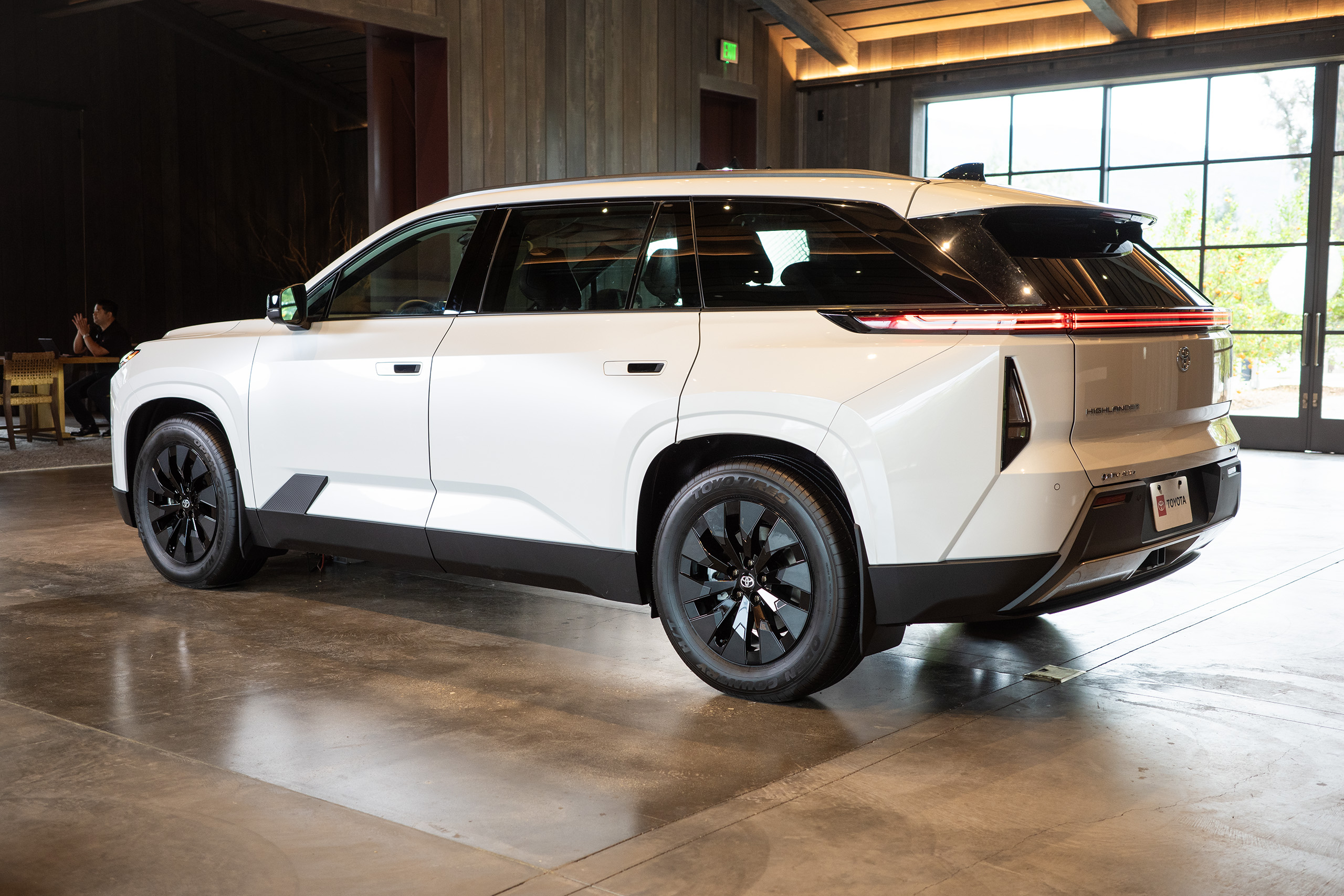
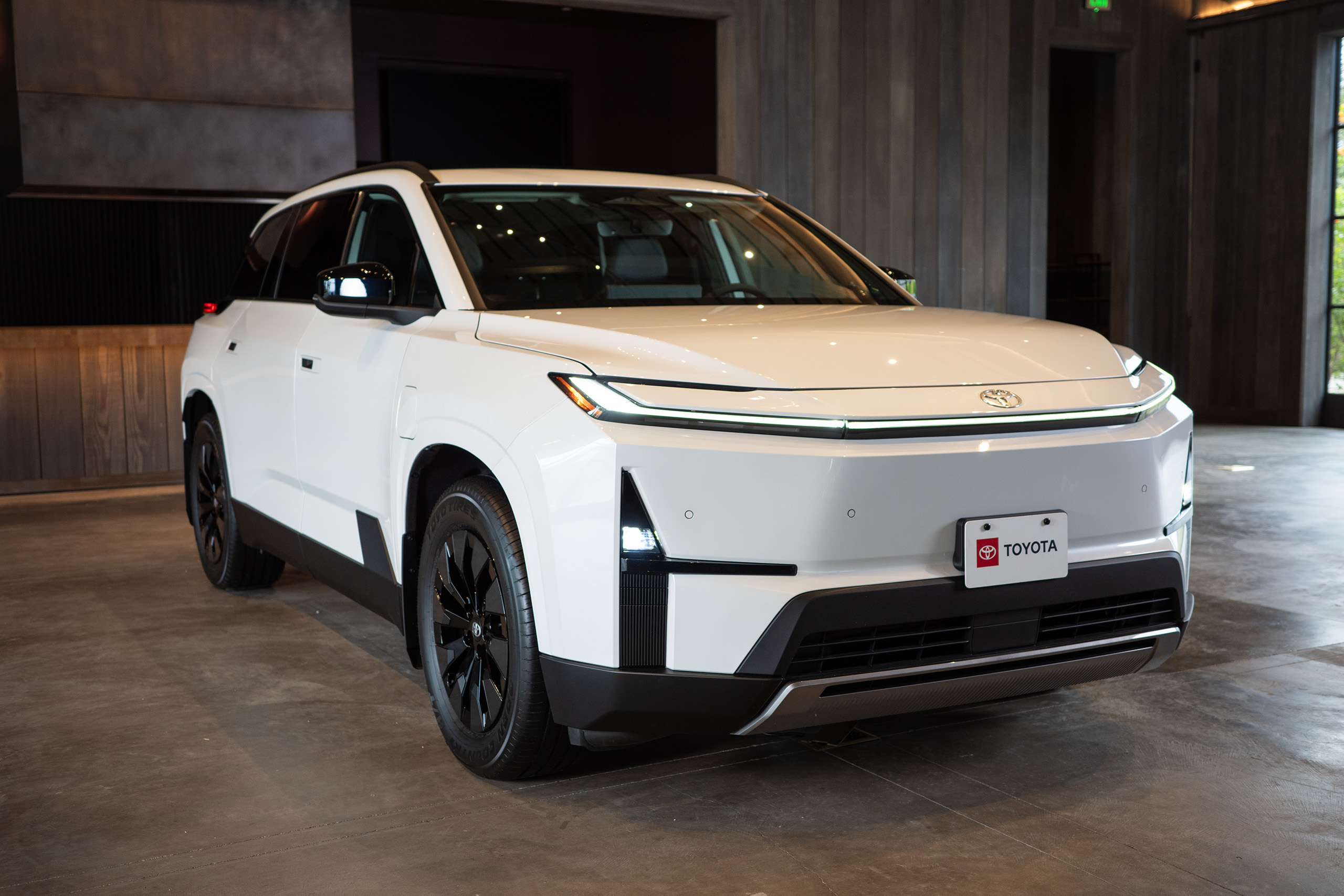
Like the outgoing car, it’s a three row, but its 120-inch wheelbase is longer than even the Grand Highlander’s. At 198.8 inches from nose to tail, it’s nearly as long as the Grand Highlander on the outside too. Despite that, its cargo volume more closely matches that of the standard gas Highlander. The culprit there? Batteries.
There are two of those available. The standard XLE battery has a capacity of 77 kilowatt-hours and a Toyota-estimated range of 287 miles (expect EPA to be close to that, if not identical). Upgrade to AWD and the capacity remains the same, but you lose 17 miles of total range. Both the XLE AWD and the Limited (also AWD) can be optioned with a 95.8-kWh pack with a 320-mile range.
Toyota’s announcement didn’t include full details of the new Highlander’s potential charging speeds, but did note that the car would ship with a native NACS charging port and a dual-voltage Level 1/Level 2 charging cable. The onboard AC charger can handle level 2 charging at up to 11 kilowatts.
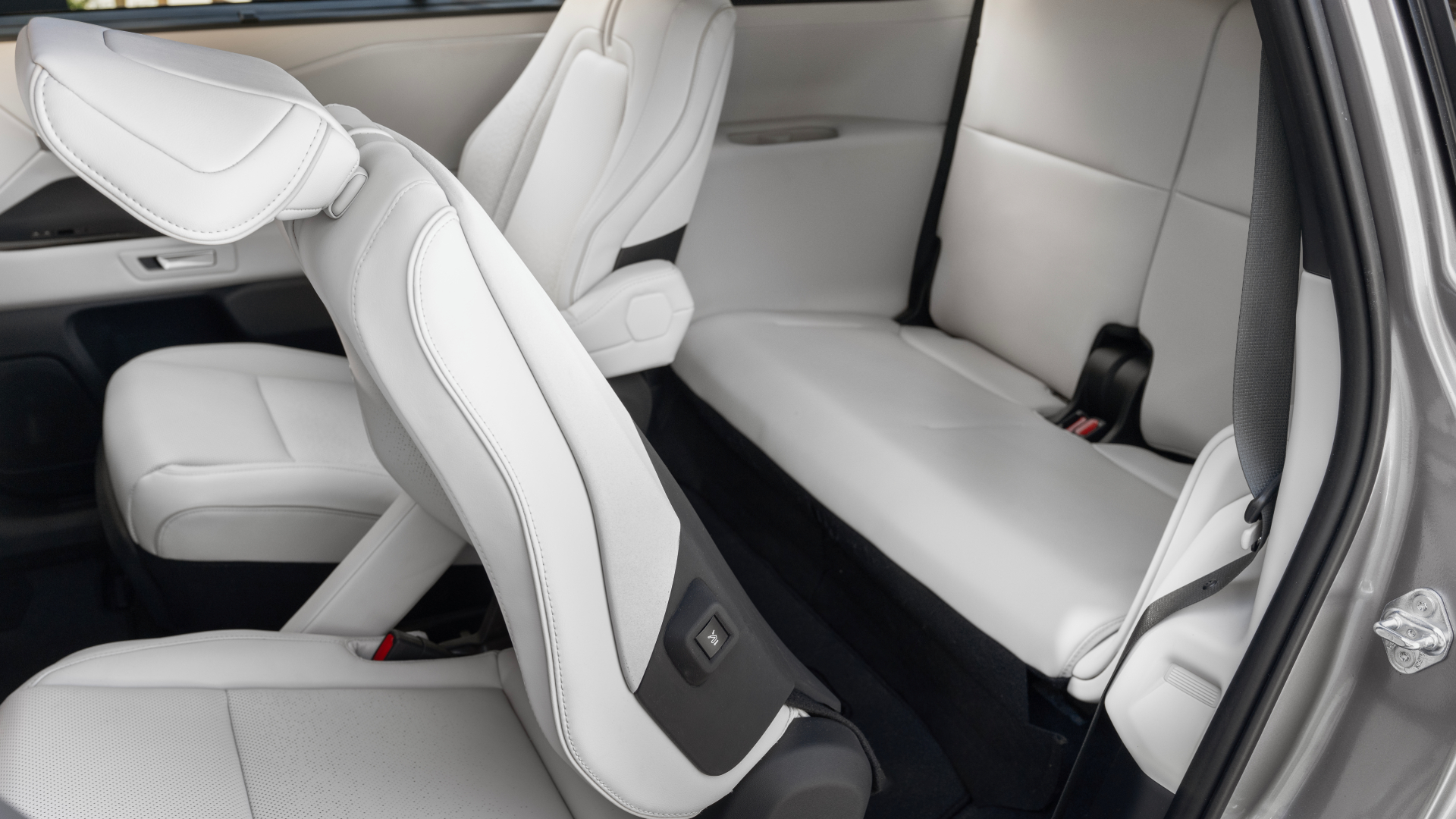
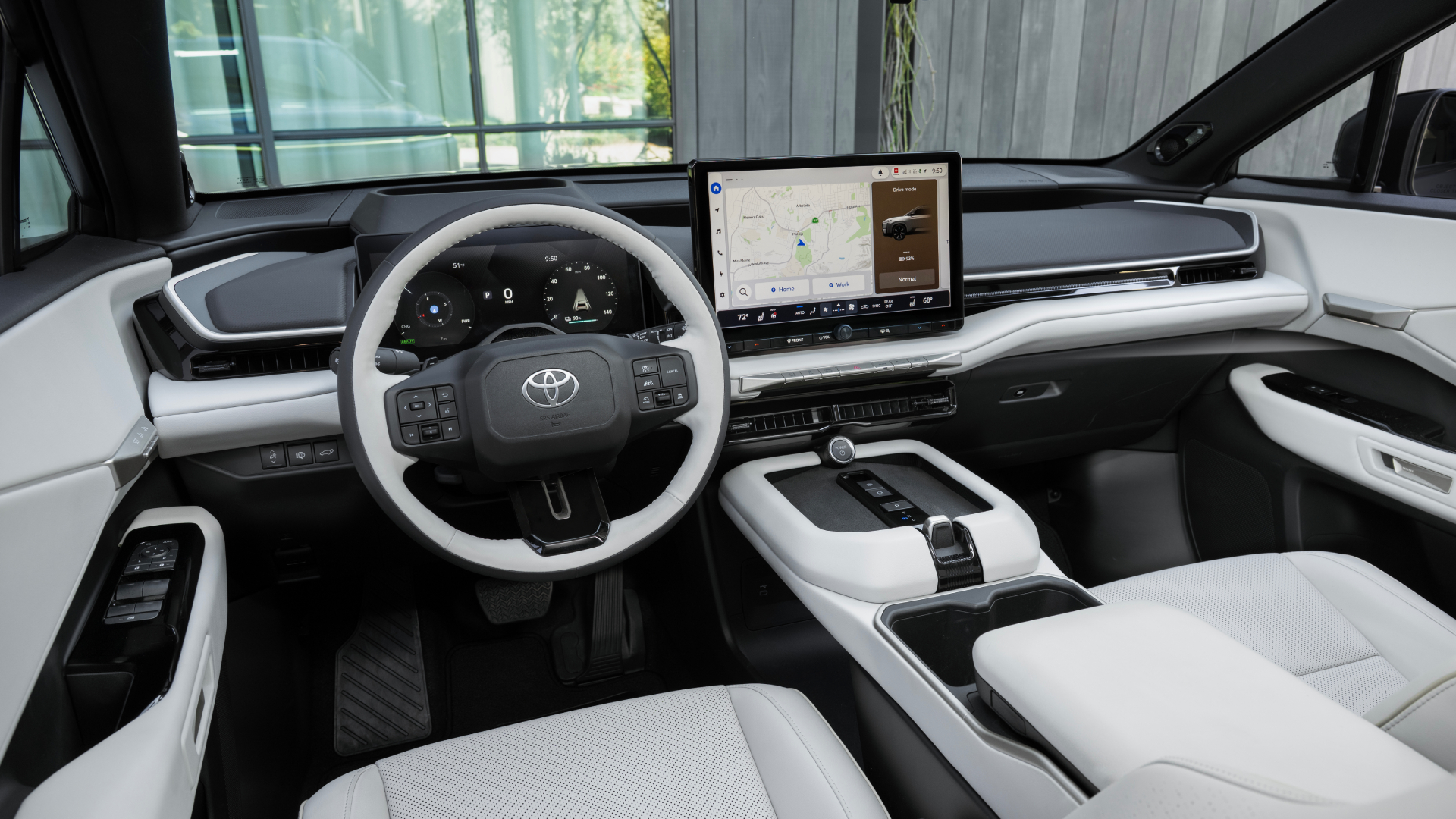
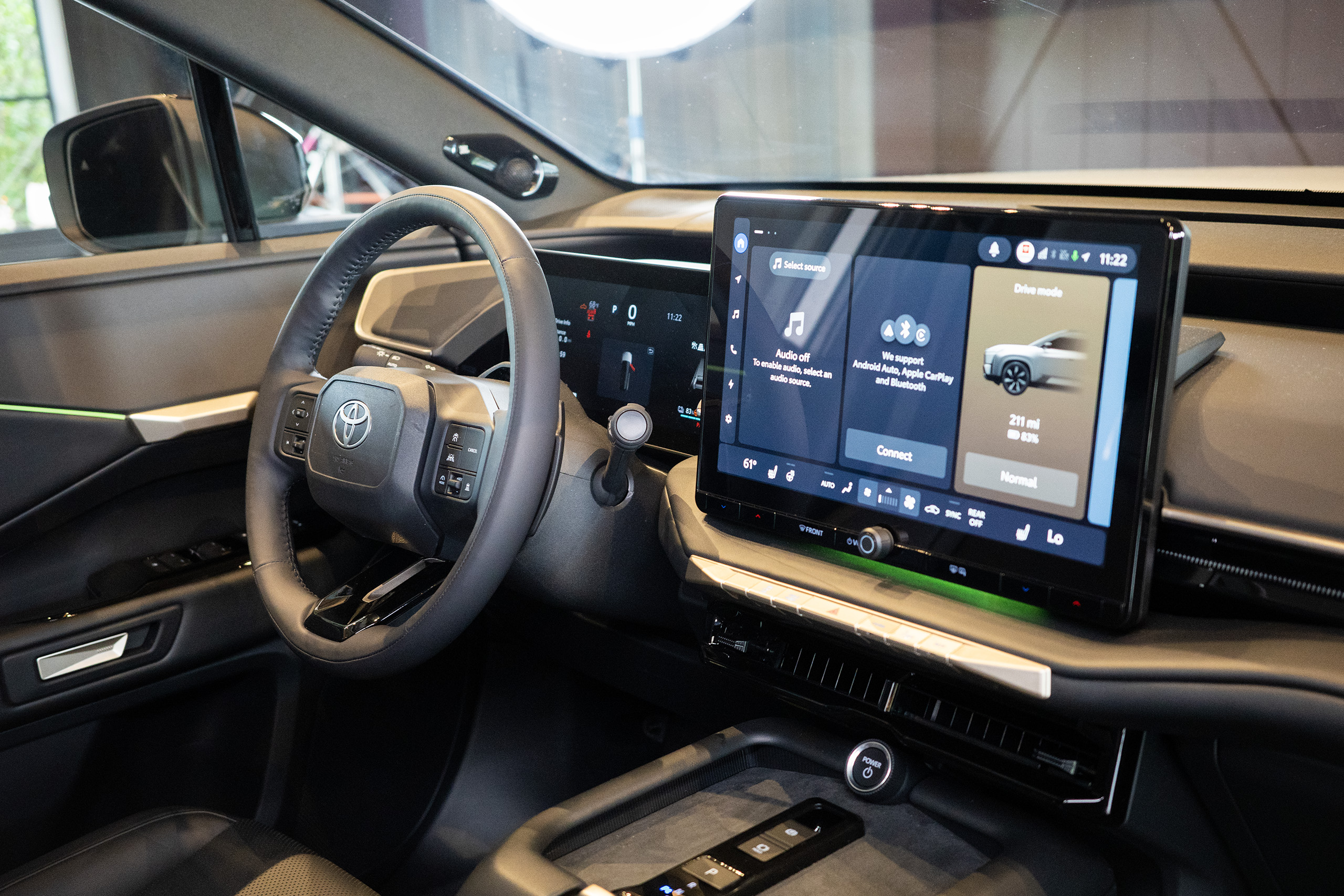
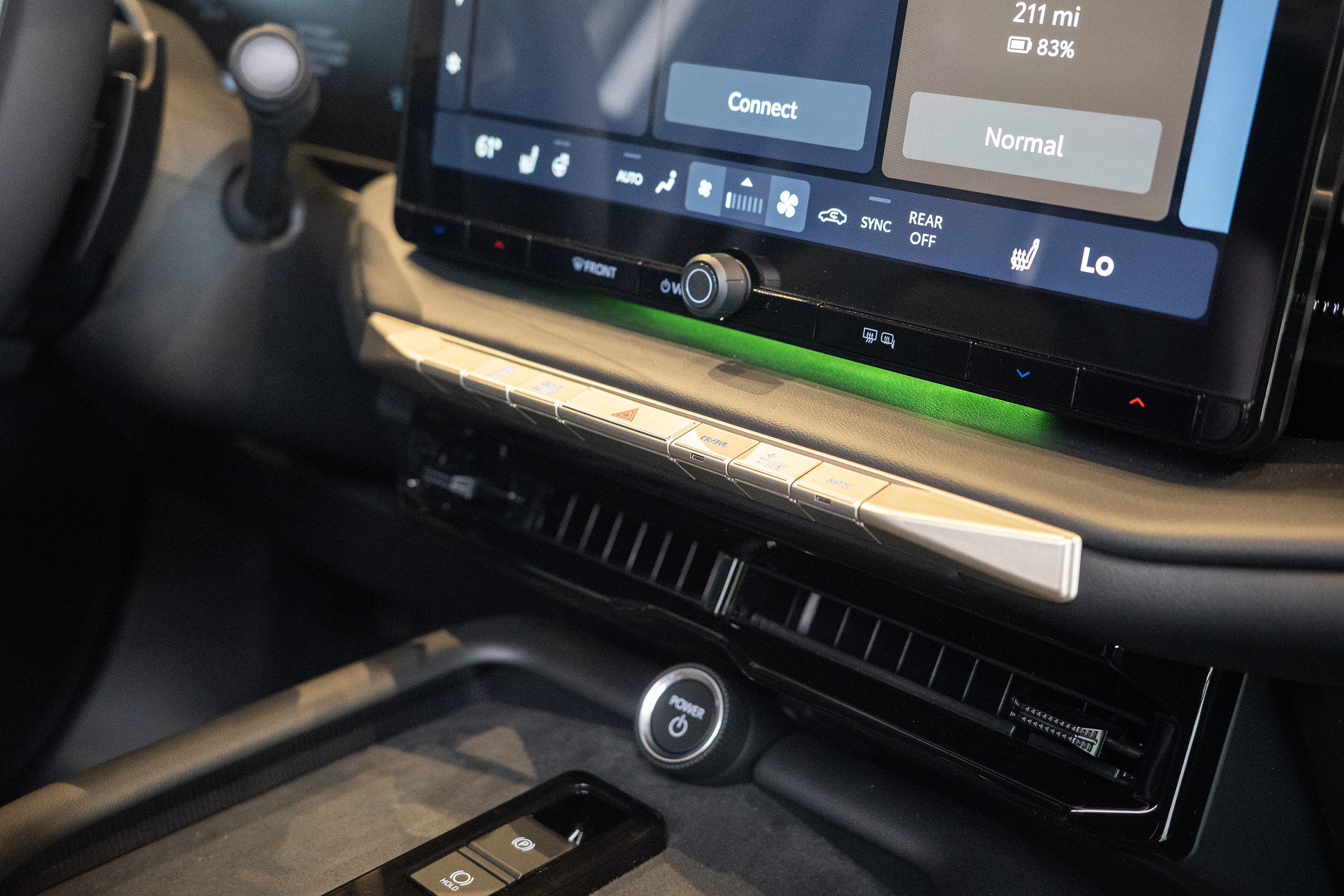
Inside, the Highlander appeals to convention. There’s a standard 12.3-inch digital gauge cluster and 14-inch infotainment screen, along with standard wireless device charging. The front seats and steering wheel are also heated on the XLE, and the second-row seats fold down with a single touch to grant in-cabin access to the third row.
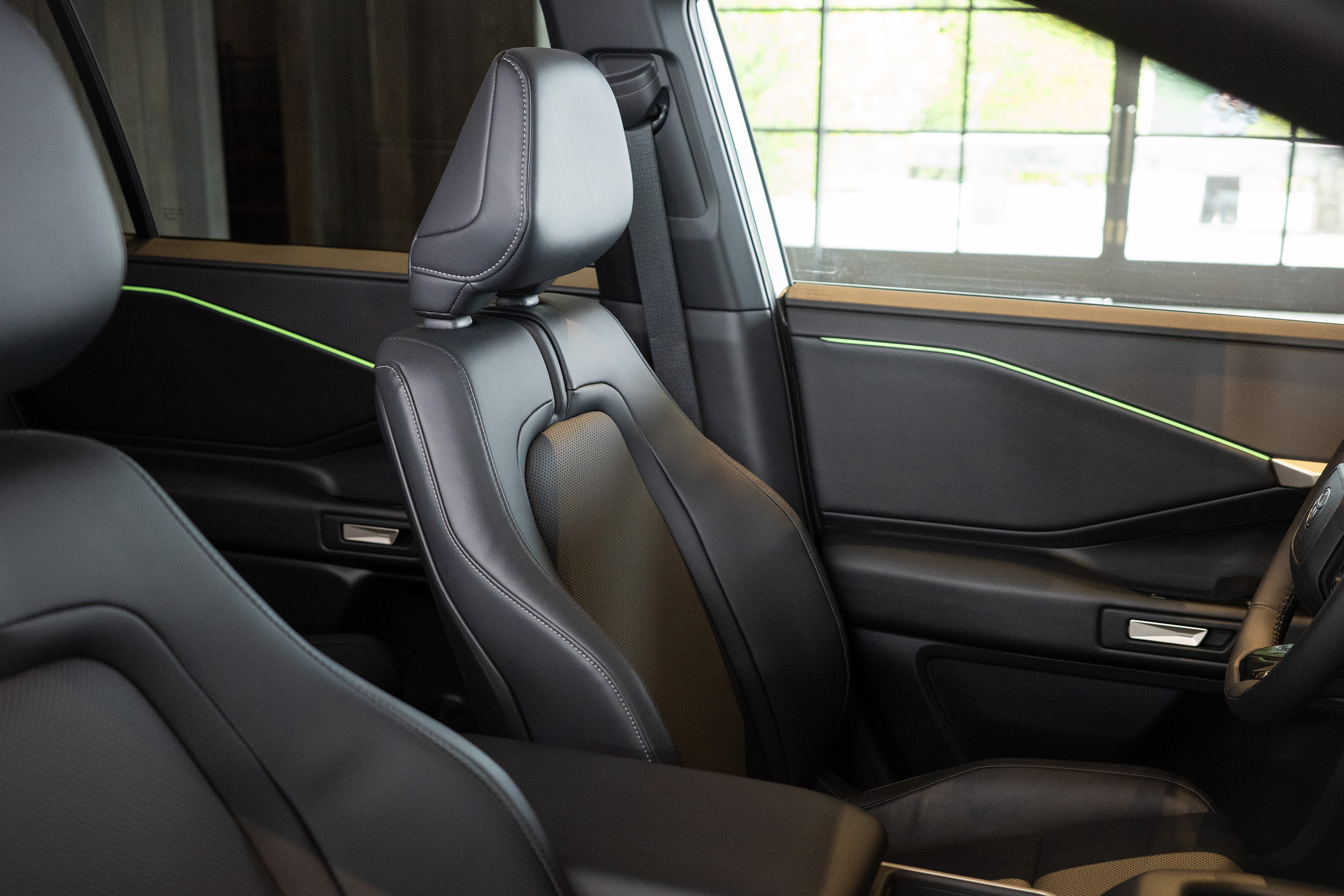
Throw more money at it and you can pile on the advanced driver aids, an 11-speaker JBL audio system, 22-inch wheels (if you live where the asphalt is fresh and smooth) and two-tone paint. Bench seating is also available on the XLE if you’re so inclined; otherwise, you get captain’s chairs.
But more importantly, where does this leave the old-fashioned, gas-burning Highlander? Toyota still sells plenty of them, but it’s rapidly falling behind the larger, better-selling, and higher-priced Grand Highlander. Toyota already offers the latter with a hybrid, so the company has little to lose by dropping the ICE Highlanders entirely. You know the line: There can be only one.
Even if some of its previous customers defect to another midsize rather than upgrading to the Grand Highlander, Toyota will make at least some of that volume back on the new EV—perhaps not as much as they’d hoped when the project was first announced, but not zero.
Critically, though, the new Highlander’s platform gives Toyota flexibility in the event that Highlander sales end up even flatter than anticipated. Since it rides on TNGA-K, Toyota always has the option of adjusting production output to other models on the same architecture. It’s not necessarily a snap-your-fingers-and-make-it-happen type setup, especially given the complexity of global supply chains, but nevertheless, if the situation turns bleak, Toyota has options.
We don’t have word on pricing yet, but there’s some good news for interested shoppers: The 2027 Highlander will be built in Kentucky, so while it won’t benefit from the now-departed EV tax credits it was designed to leverage, it will at least be partly shielded from tariffs. Production is expected to start later this year, with customer deliveries beginning late in 2026/early 2027. Pricing will be announced whenever Toyota finalizes its production schedule.
Got a news tip? Let us know at tips@thedrive.com!
Loading comments…
Comments couldn’t be loaded. Please refresh the page.