
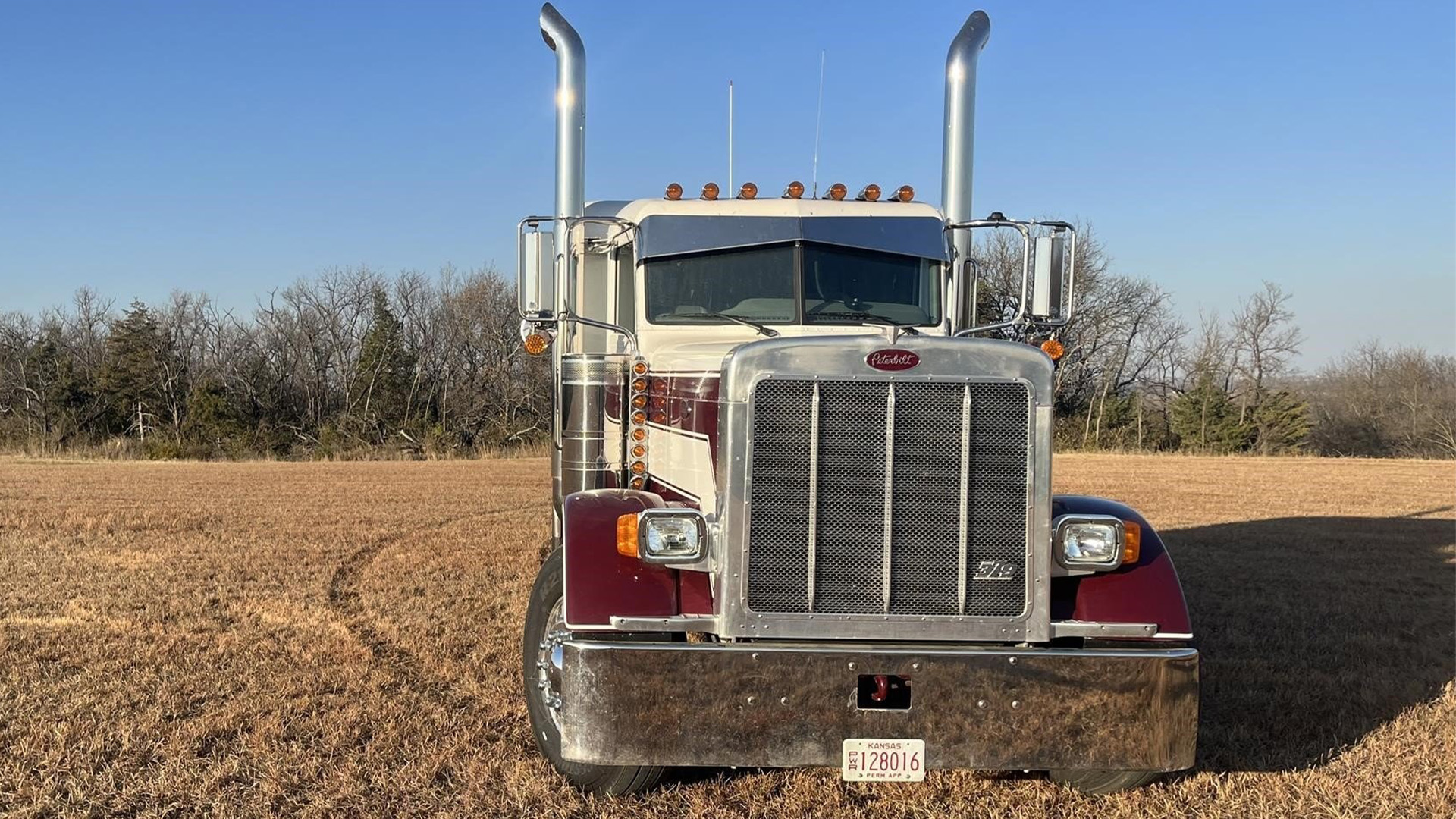
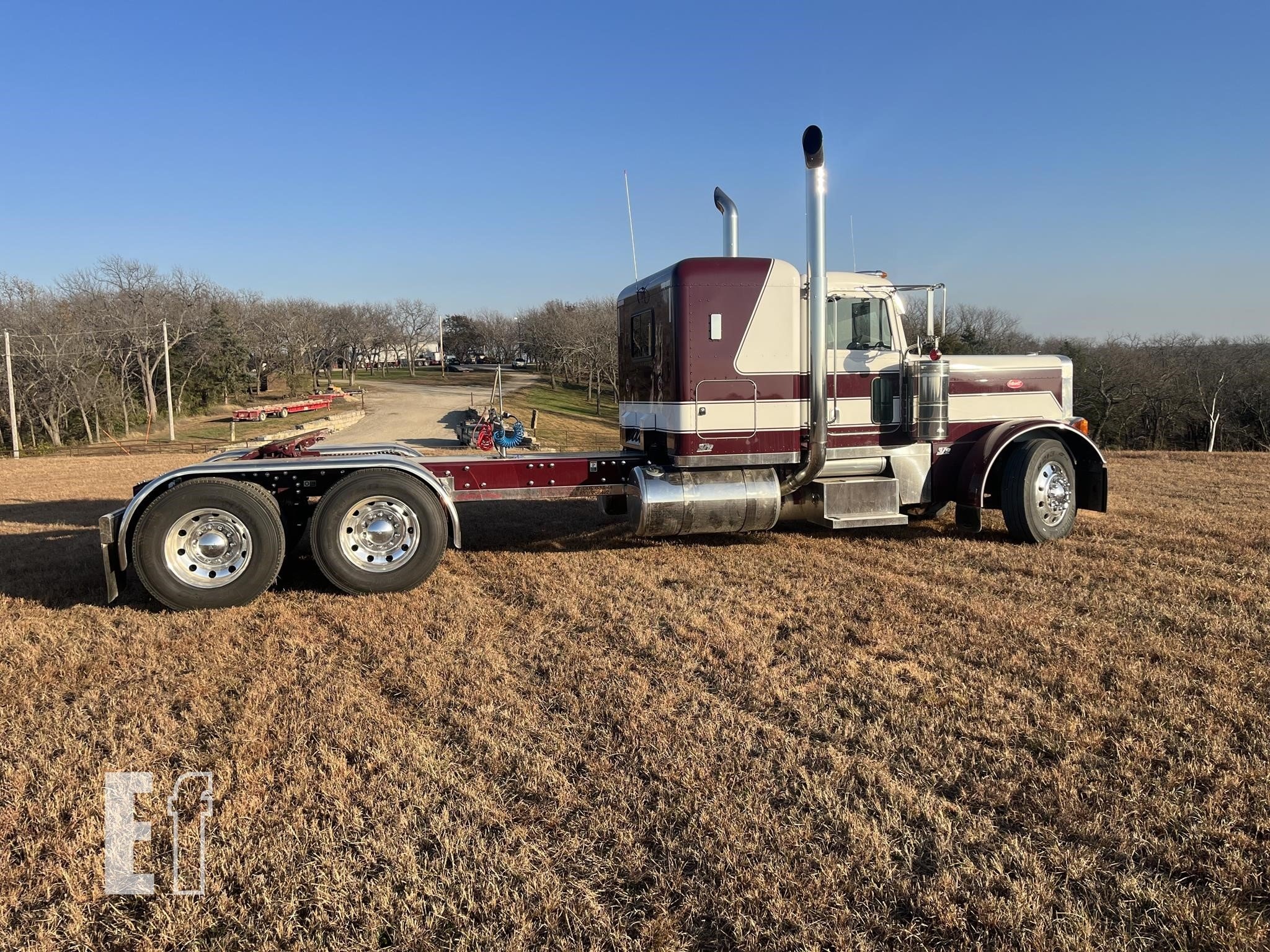
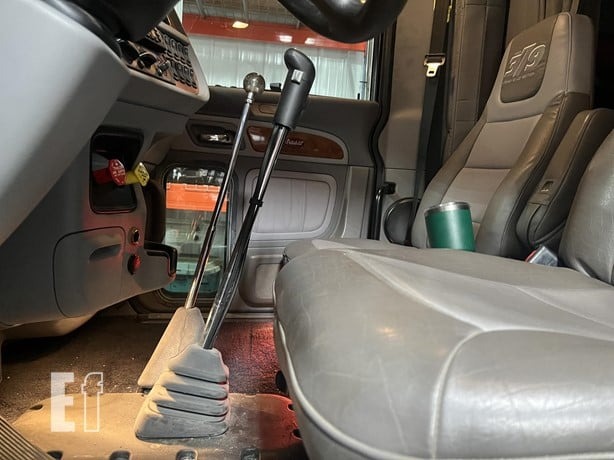
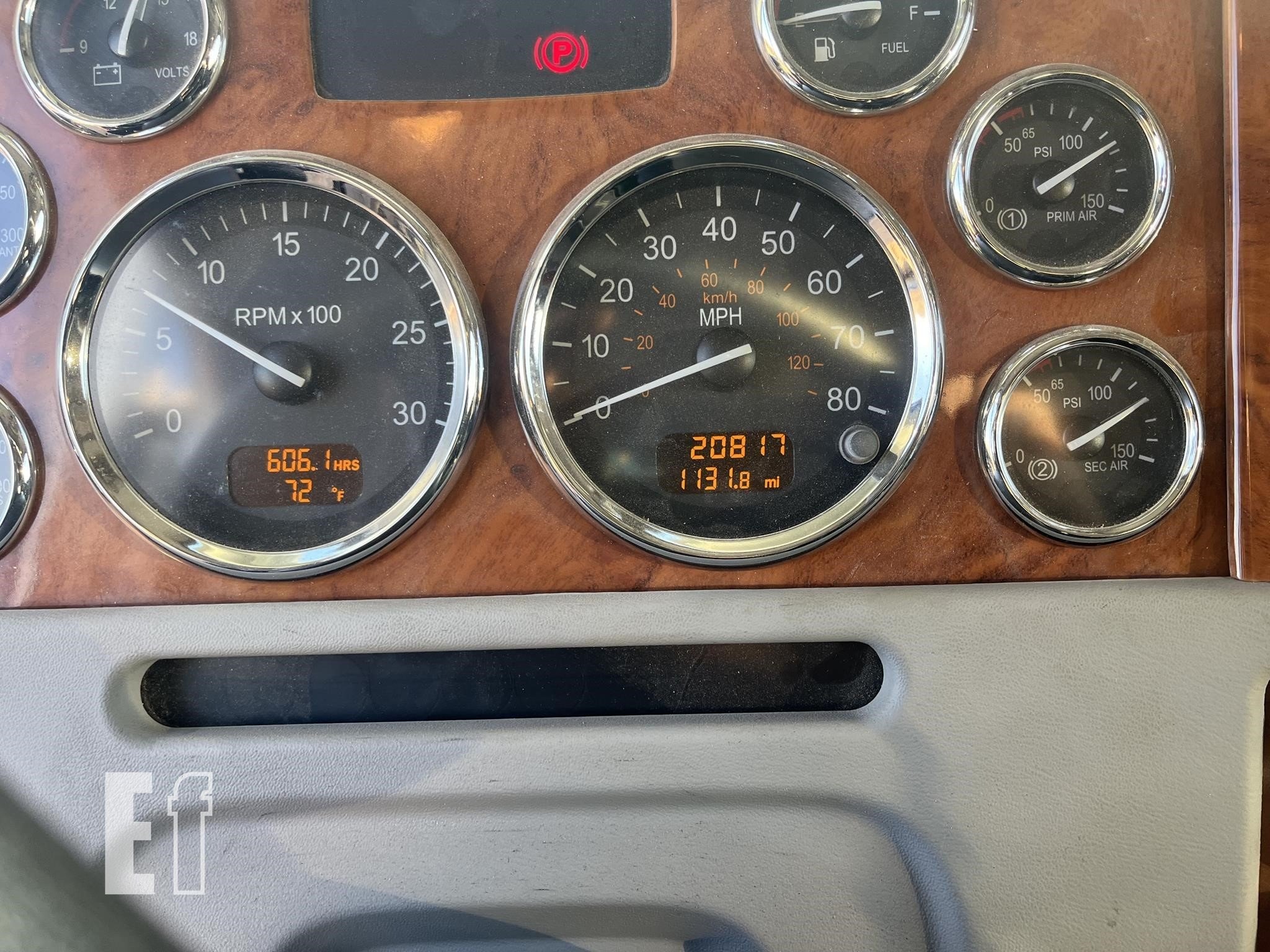
How much do you think an 18-year-old semi-truck is worth? How much would you expect an owner-operator to pay for one? Had you not read the headline on this story, I seriously doubt “$280,000” would have ever come to mind—and shoot, you still might not believe it. But that’s exactly how much this one-owner 2007 Peterbilt 379 with 20,817 miles sold for at auction recently. It’s an indicator of just how much some folks are willing to spend for low-mileage, well-maintained, and perhaps most importantly, pre-DEF rigs.
When I say “pre-DEF,” I’m talking about trucks that were manufactured before diesel exhaust fluid became mandatory in Class 8 semis. If you’re unfamiliar, all you really need to know is that it’s an emissions system that owners and drivers alike love to hate due to increased operating costs and questionable reliability in certain cases. The red-and-white Pete here was built a few years before regulations required trucks to run DEF, which made it a hot-ticket item along with its condition.
The hammer dropped at an Ulmer Auction Services event in mid-December. It caused quite a stir in the ag community, and equipment sales expert Greg Peterson—better known as Machinery Pete—was flabbergasted. He quickly posted about the sale online, noting that it blew past the previous record high of $262,000 for a 379 back in 2022. Peterson is quoted in an Ag Web story as saying, “Auctions don’t lie. They tell you exactly what people want—and right now, that’s used, pre-DEF equipment.”
Peterson went on to write his own op-ed in Ag Web last weekend, saying this trend is something he’s “never seen before.” Now, farmers and fleet operations guys were already paying a premium for pre-DEF vehicles, but the difference this time is that these higher used equipment hammer prices don’t correlate with strengthened new unit sales numbers. In other words, the appetite for brand-new machinery is still lagging drastically despite the uptick in prices for secondhand workhorses.
“It could be just how high the price of new equipment has become,” Peterson wrote. “Those 15% to 25% price jumps back in 2021, 2022, and 2023 never receded. Meanwhile, the grain farmers have been tightening their belts and stretching the life of their current used equipment fleet. Since they weren’t buying new, their focus shifted to buying the exact used equipment they wanted. Good condition pre-DEF, pre-Tier IV items in particular roared higher.”
Peterson points to other examples to support his argument, like a 2000 John Deere 8210 with 3,692 hours that sold for $133,250 in December. Clearly, it’s not just semi-trucks that are affected, as I’ve also written about in the past. There was even a new record-high combine sale in Cut Knife, Saskatchewan, last month: $841,139 USD for a 2025 Case IH AF11. That one is a bit different since it was a nearly new machine with 217 hours and a DEF system, but still, the buyer would rather spend more money than anyone else ever has on a used combine instead of buying a new model.
Much like we saw with the car market during COVID and shortly after the pandemic, this trend is likely to result in a shortage of solid secondhand machinery. Peterson says as much, saying, “You thought used prices were high now. Just wait.”
Got a tip or question for the author? Contact them directly: caleb@thedrive.com
Loading comments…
Comments couldn’t be loaded. Please refresh the page.